
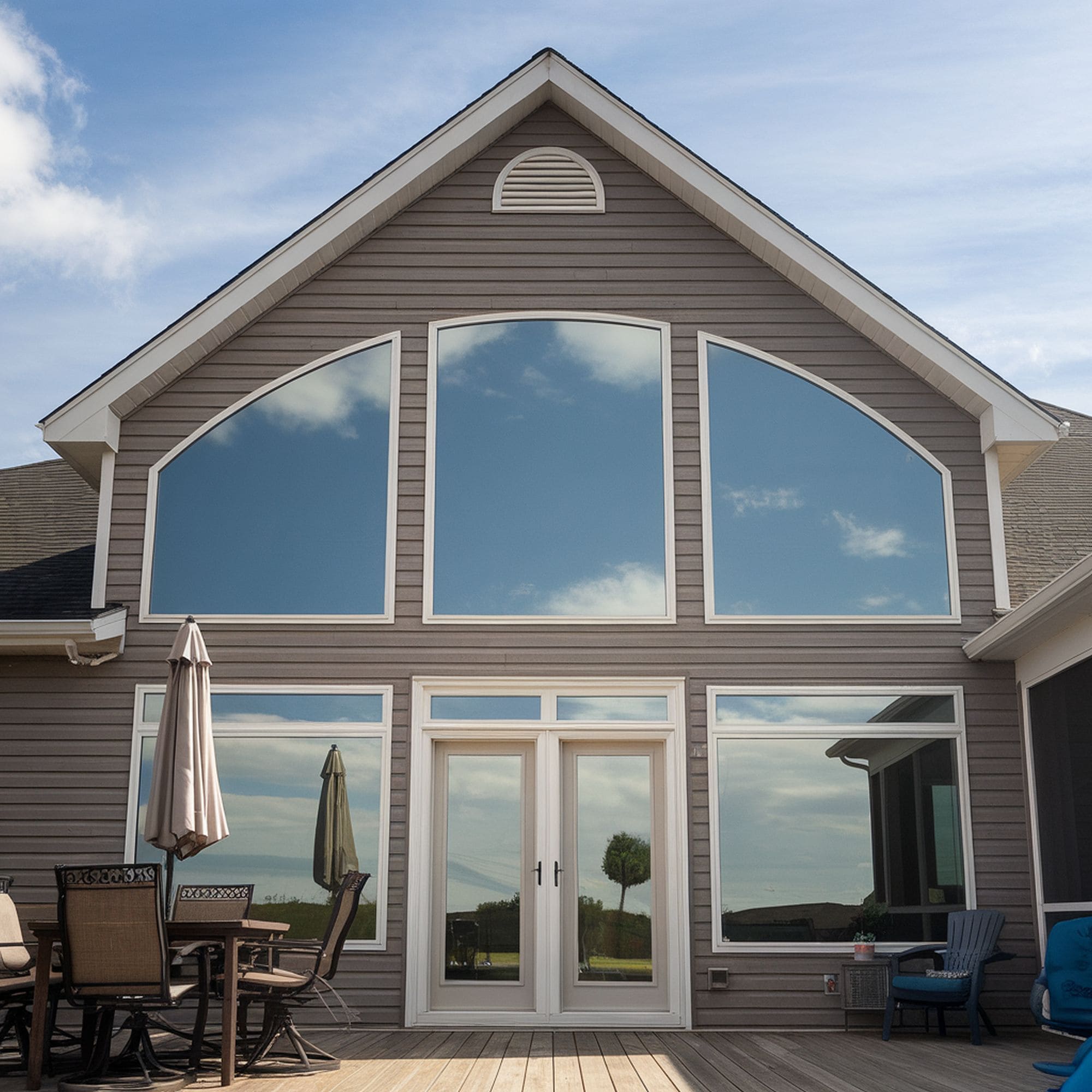
We recommend getting a nice list of some of your favorite exterior colors to paint samples on your home. It’s a smart idea to check the look of the color on various sides of the house and in different lighting conditions. That might sound like a time-consuming process but it could be necessary if you really wish to be more certain of your color choice. It can be quite difficult to change the exterior paint to another color so it’s critical that you’ll be happy with this important decision. If you’re in need of some color inspiration for bringing to life your vision of the ideal house, check out these colorful exterior designs that work very well for many home styles.
1. Forest Green
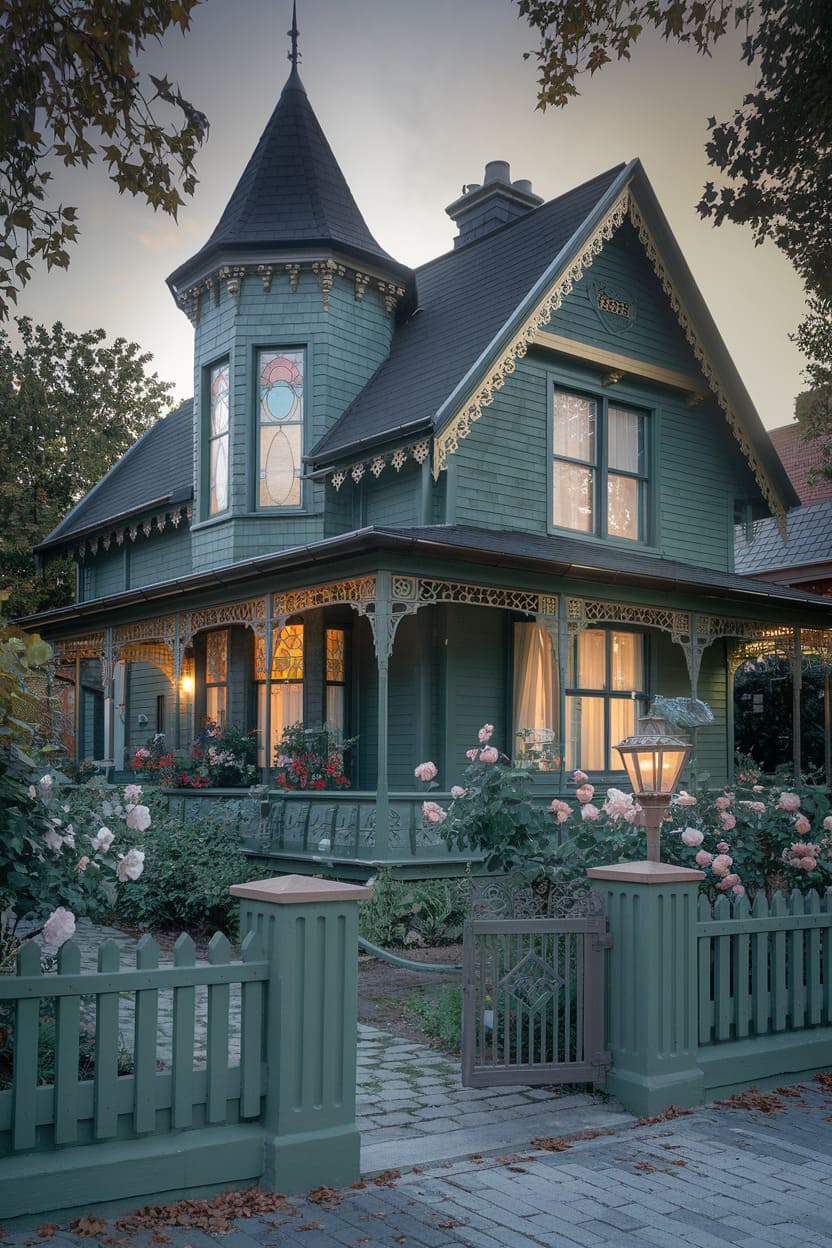
This charming Victorian home has a classic elegance with its steeply pitched roof, decorative gingerbread trim, and prominent turret. A soothing teal forest green hue envelops the exterior, creating a tranquil and inviting ambiance. The wraparound porch, adorned with intricate details, offers a picturesque view of the lush rose garden. The soft glow emanating from within hints at warm and inviting interiors, complementing the home’s romantic exterior.
2. Chartreuse Green
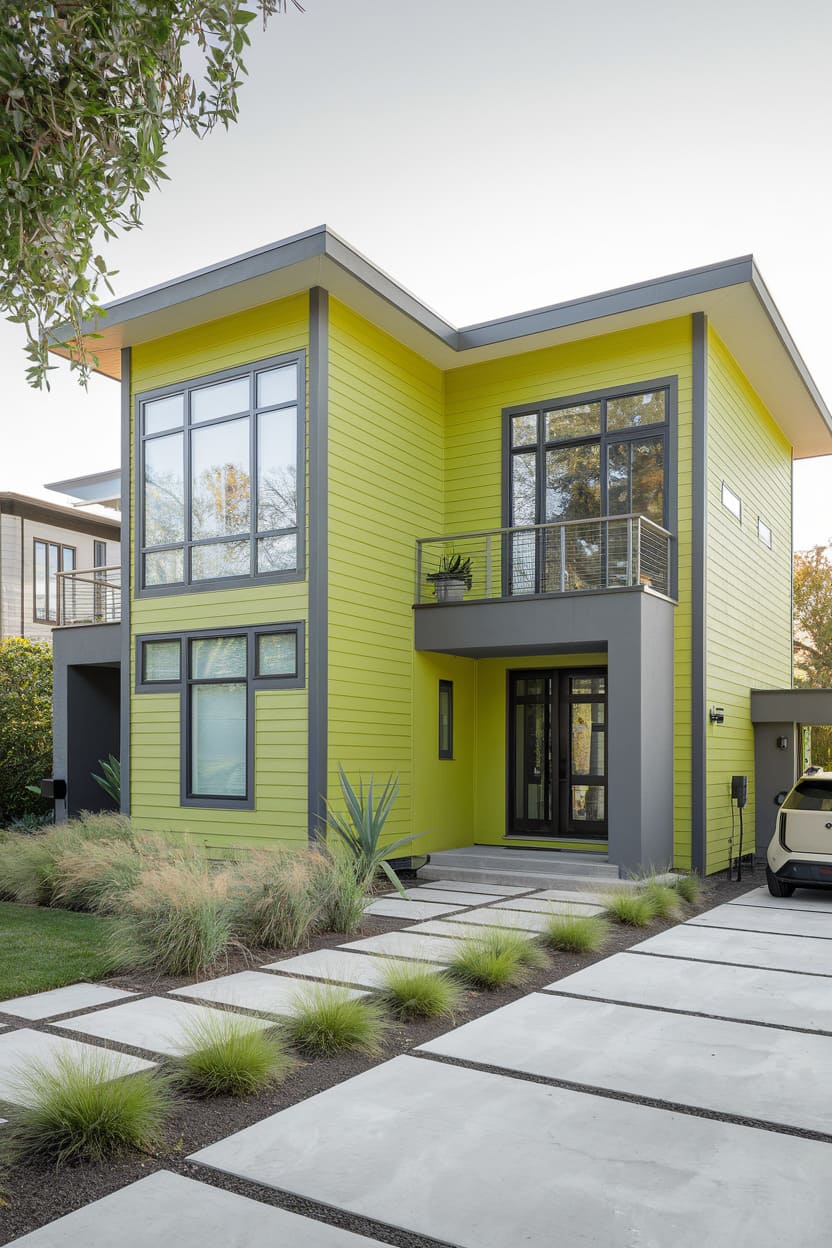
This modern residence showcases a striking two-story design with clean lines and a flat roof, accented by a contrasting gray trim. The exterior is clad in vibrant chartreuse siding, creating a bold and energetic presence. Large windows maximize natural light and offer views from the upper balcony. The landscaping features a mix of grasses and concrete pavers, complementing the home’s contemporary aesthetic.
3. Industrial Navy Blue
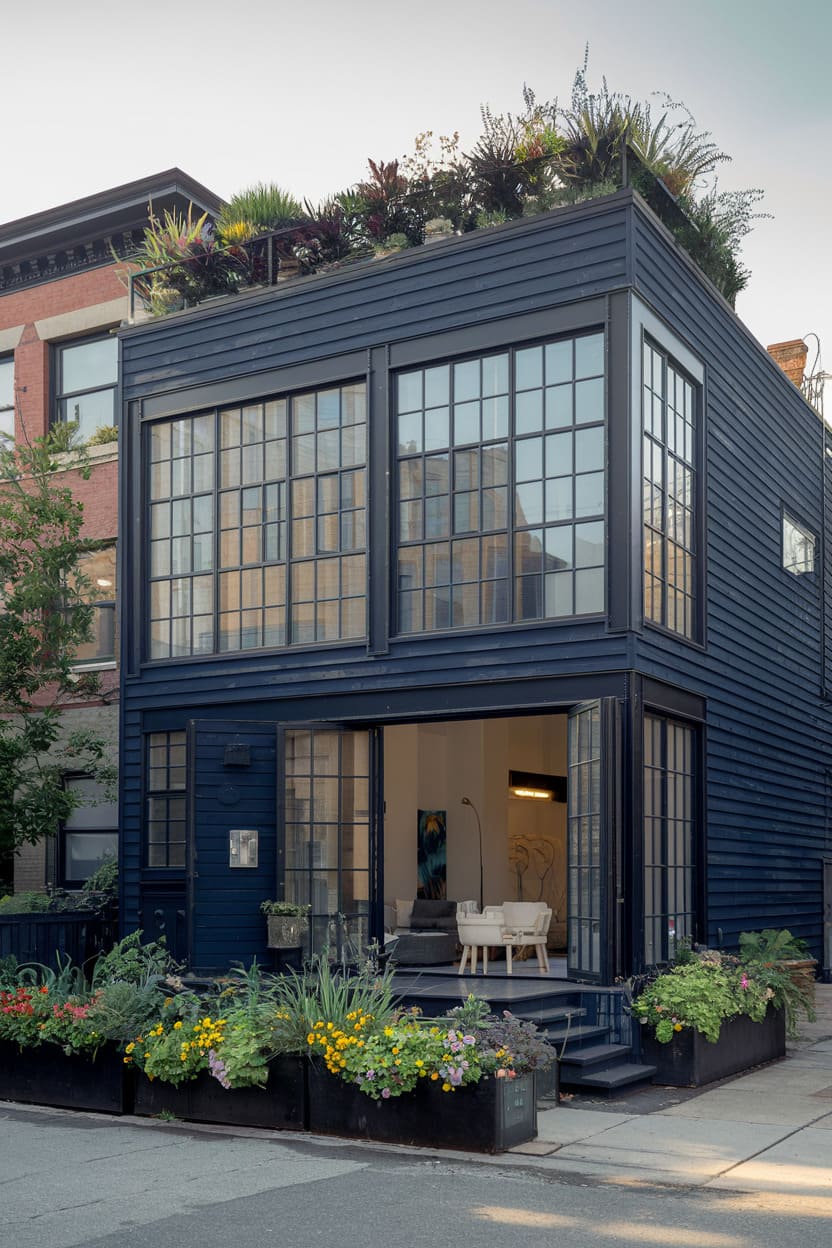
This urban dwelling presents a modern industrial facade with its dark navy, almost black, horizontal siding and expansive grid-pattern windows. The deep, saturated color creates a sophisticated and dramatic street presence. Large bi-fold doors seamlessly connect the interior to a small front patio garden, blurring the lines between indoor and outdoor living. A rooftop garden adds a touch of greenery and softens the building’s strong architectural lines.
4. Soft Blue
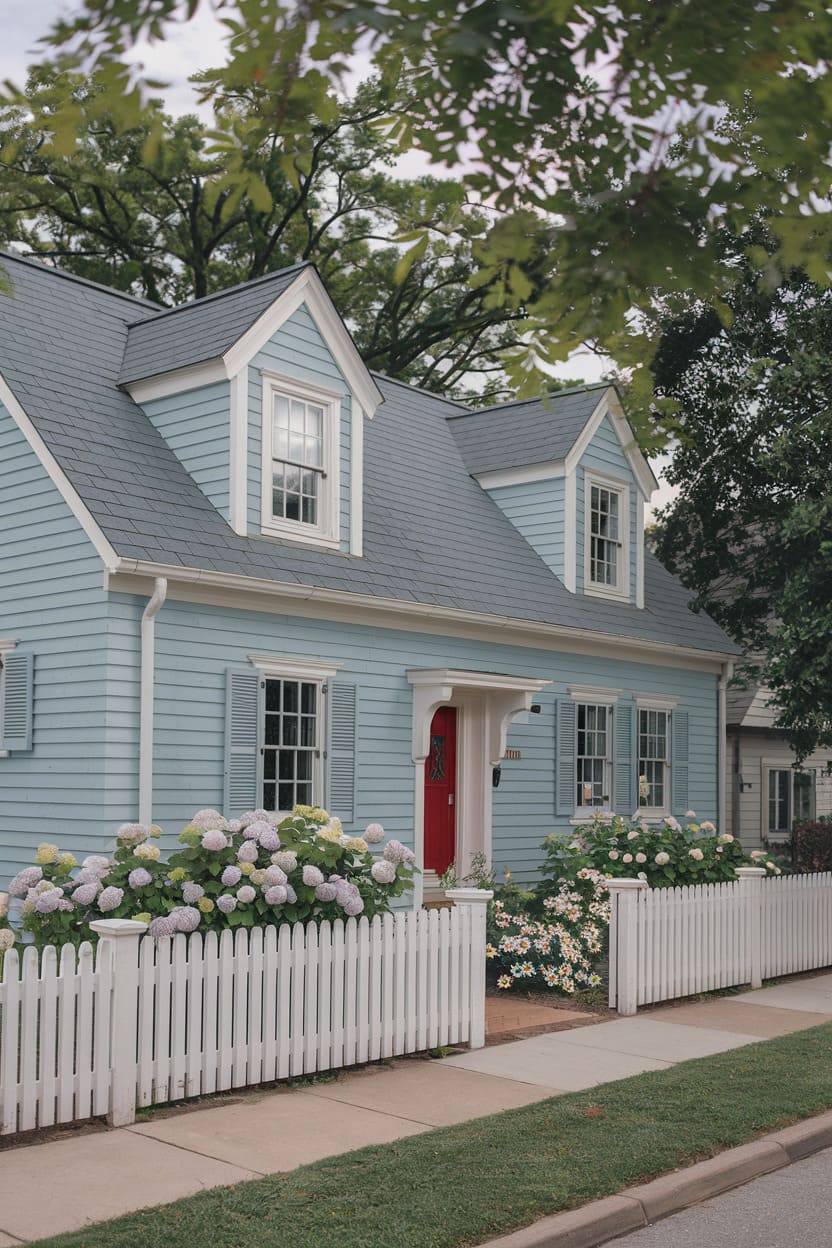
This charming Cape Cod home features a lovely soft blue siding that feels welcoming. Crisp white trim beautifully outlines the windows, door, and roofline, creating a fresh contrast. Dark, almost black, shutters add a touch of traditional elegance against the light blue facade. The overall look is calm, inviting, and perfectly suited for a classic coastal or suburban setting. A simple green lawn and tidy foundation plantings frame the house nicely. This color combination provides a timeless and friendly curb appeal that many homeowners adore.
5. Classic Gray
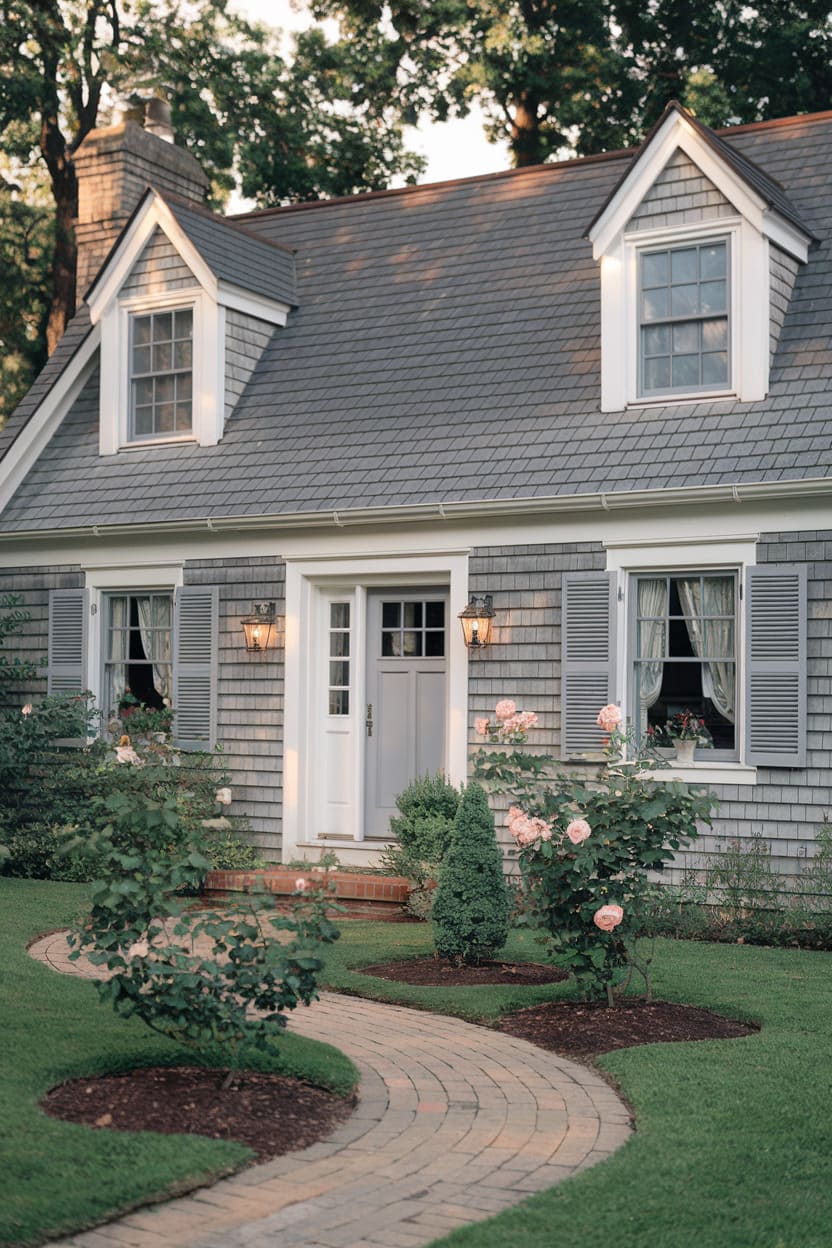
Here is a beautiful Cape Cod house featuring classic gray shingle siding for a textured look. The bright white trim around the windows and along the roofline offers a sharp, clean definition. Black shutters provide a traditional contrast, flanking the upstairs windows neatly. A standout feature is the cheerful red front door, adding a welcoming pop of color. The gray roof complements the siding, maintaining a cohesive neutral base. This color scheme is sophisticated yet approachable, a popular choice for this home style.
6. Classic Brick
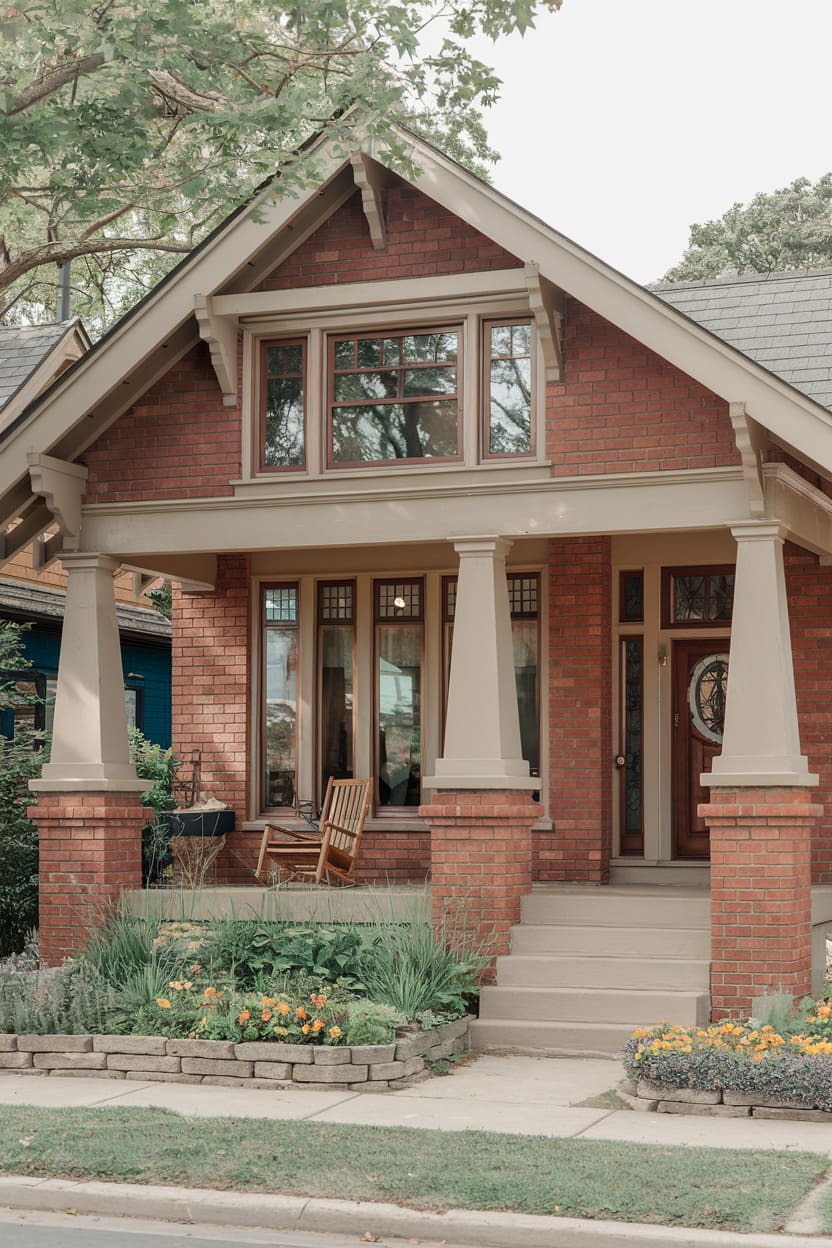
This Craftsman-style home showcases the enduring appeal of classic red brick. The warm tones of the brick provide a rich and earthy base for the exterior. Contrasting dark trim, likely a deep brown or black, accents the porch columns, window frames, and roof eaves. The covered front porch adds to the home’s welcoming character, typical of the Craftsman style. White is used sparingly on the window sashes, adding a subtle highlight. The overall color palette feels grounded, sturdy, and full of traditional charm. Natural materials like brick always offer a timeless exterior finish.
7. Deep Burgundy
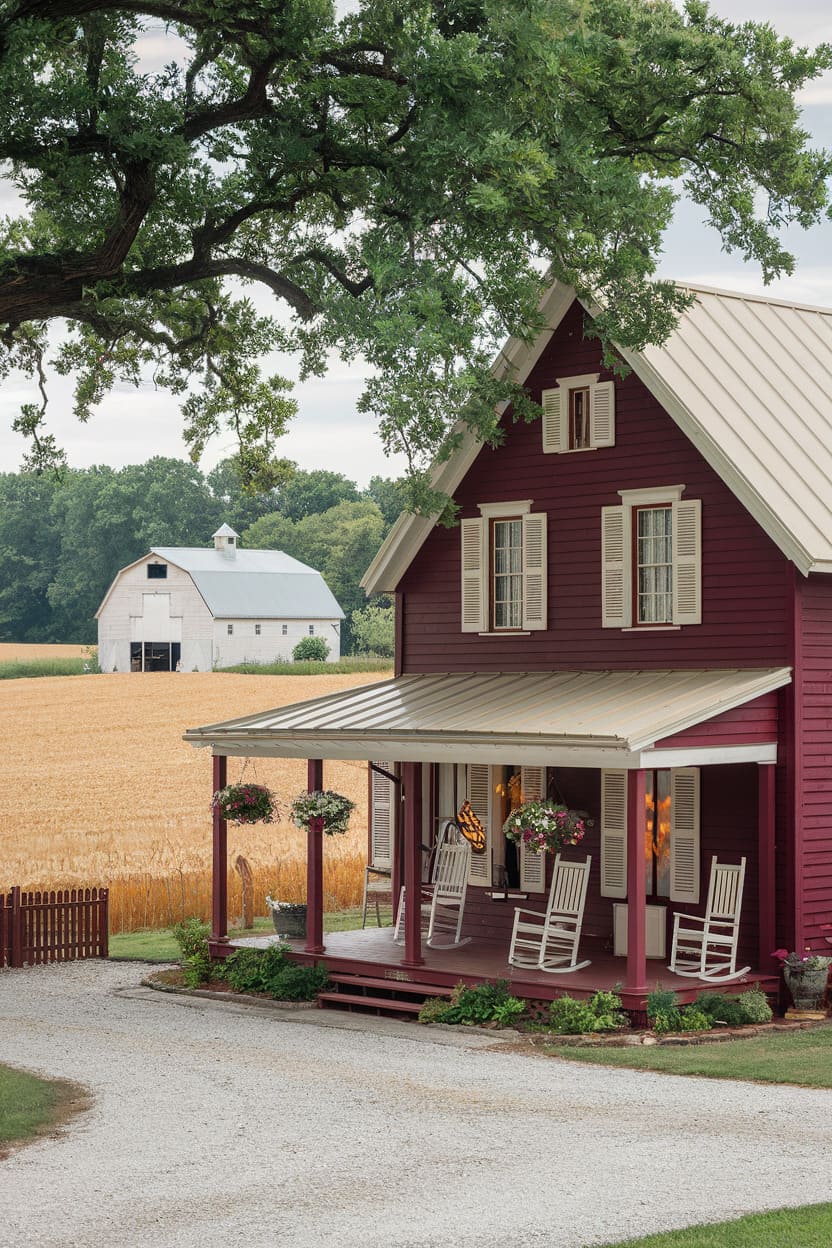
This farmhouse makes a statement with its deep burgundy siding. The rich, wine-like color offers a sense of warmth and sophistication to the home’s exterior. Clean white trim around the windows, door, and porch railings provides a crisp and classic contrast. The combination of burgundy and white is both bold and traditional, fitting the farmhouse style well. A welcoming front porch invites visitors to sit and relax. The dark roof color harmonizes nicely with the deep burgundy siding. This choice creates a memorable and distinguished appearance for the home.
8. Soft Blue
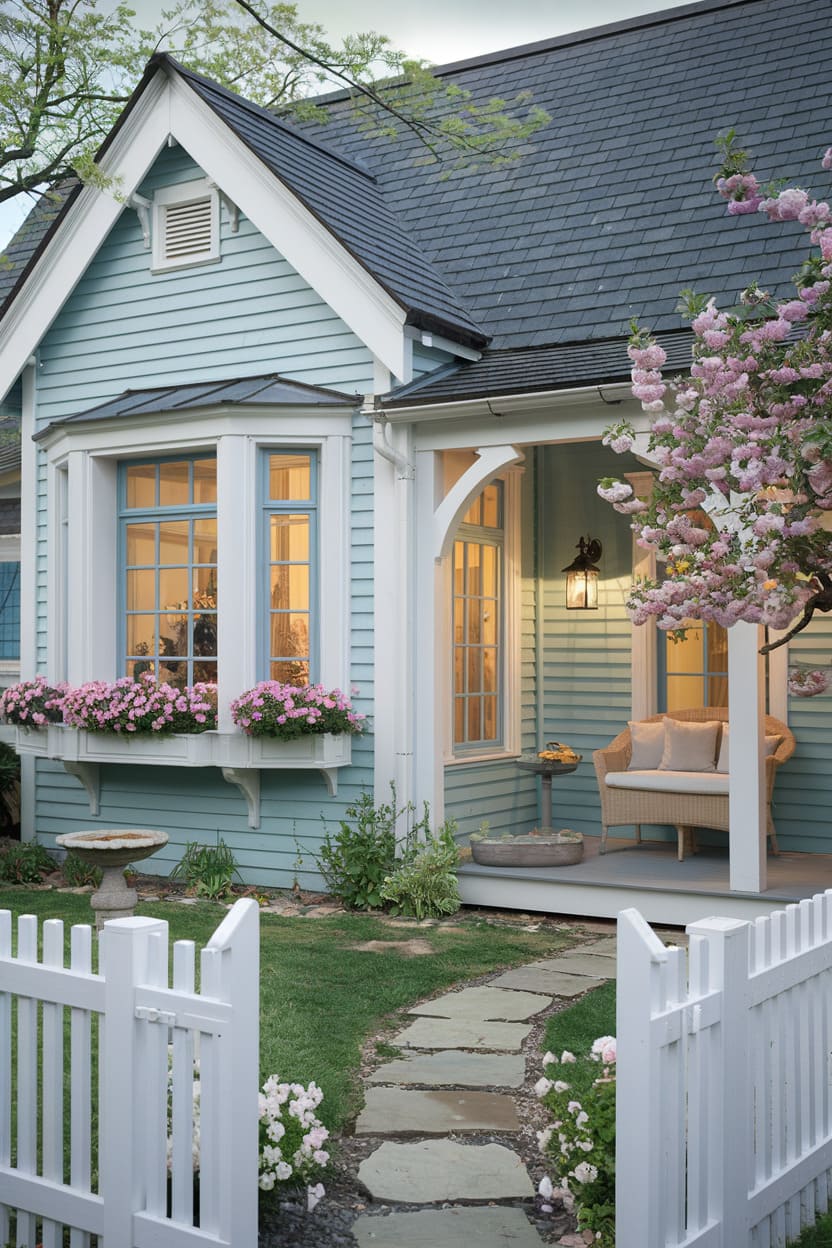
Here we see a charming one-story cottage painted in a gentle, soft blue hue. This calming color gives the house a serene and friendly vibe, perfect for a cottage aesthetic. Bright white trim accents the windows, door, and the charming porch columns and railing. The pairing of soft blue and white creates a light, airy, and classic look. A darker roof provides a grounding contrast to the lighter body color. Lush green landscaping surrounds the home, enhancing its picturesque quality. This simple color scheme is effortlessly beautiful and inviting.
9. Yellow
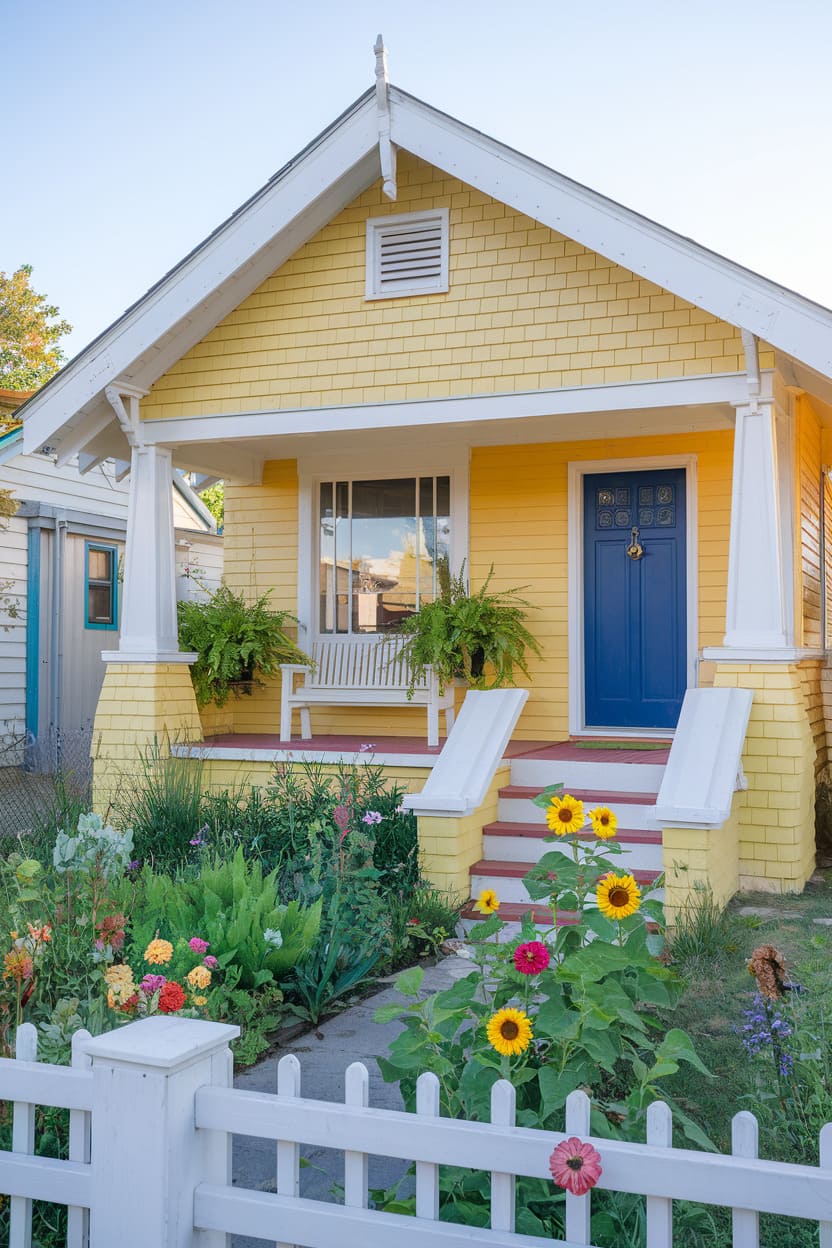
This cheerful bungalow radiates warmth with its sunny yellow exterior siding. The vibrant yellow hue instantly creates a welcoming and optimistic atmosphere. Crisp white trim defines the windows, porch details, and roofline, offering a clean counterpoint to the yellow. The combination is classic and uplifting, enhancing the bungalow’s inherent charm. A dark-colored roof provides visual weight and balances the bright exterior. Simple landscaping allows the home’s happy color to be the main focus. Choosing yellow makes this house a bright spot on the street.
10. Orange With Mint Green Door
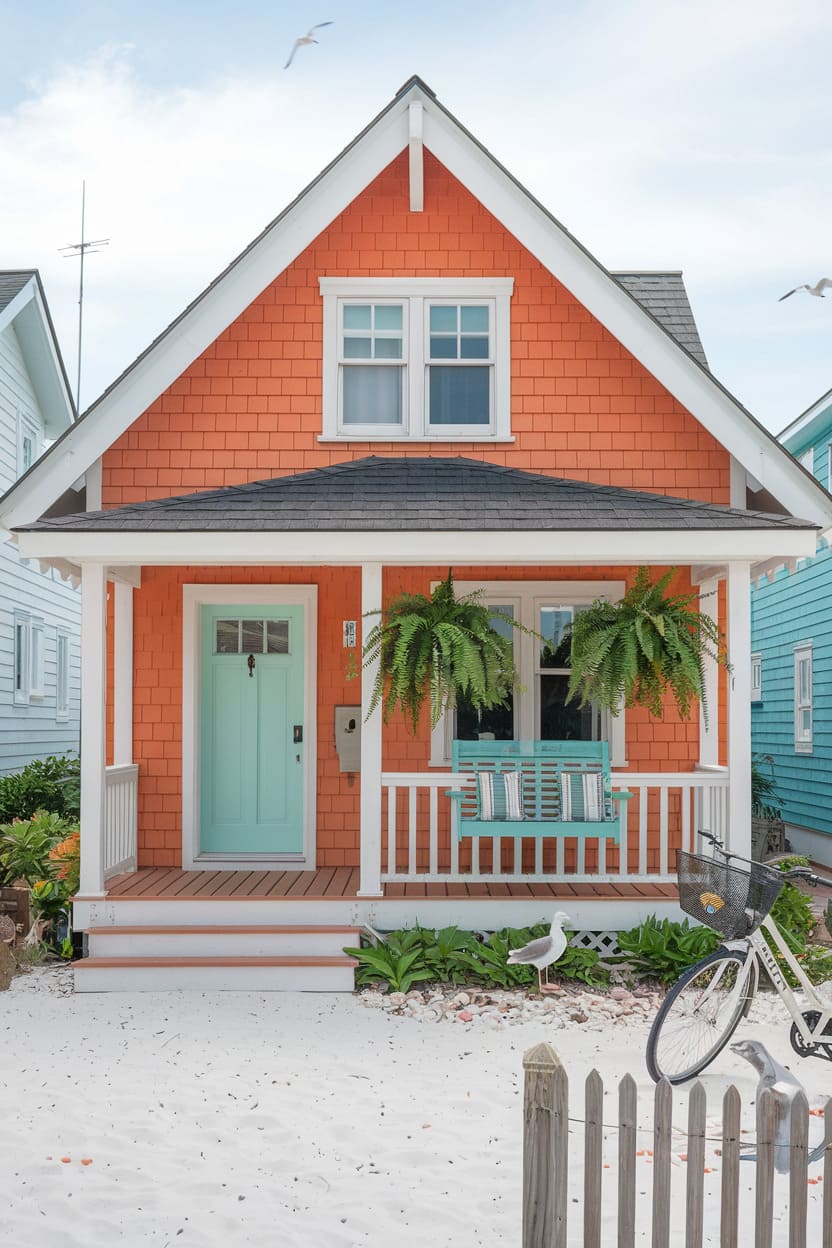
This coastal cottage displays a playful personality with its bright orange siding. The energetic orange makes the home stand out with a fun, tropical feel. White trim around the windows and porch provides a necessary visual break from the intense orange. The standout feature is the cool mint green front door, offering a delightful and unexpected contrast. This unique color pairing adds a whimsical touch perfect for a beach setting. The roof appears to be a neutral gray, letting the vibrant siding and door colors shine. This home embraces bold color choices for a truly unique look.
11. Blue With Bright Red Door
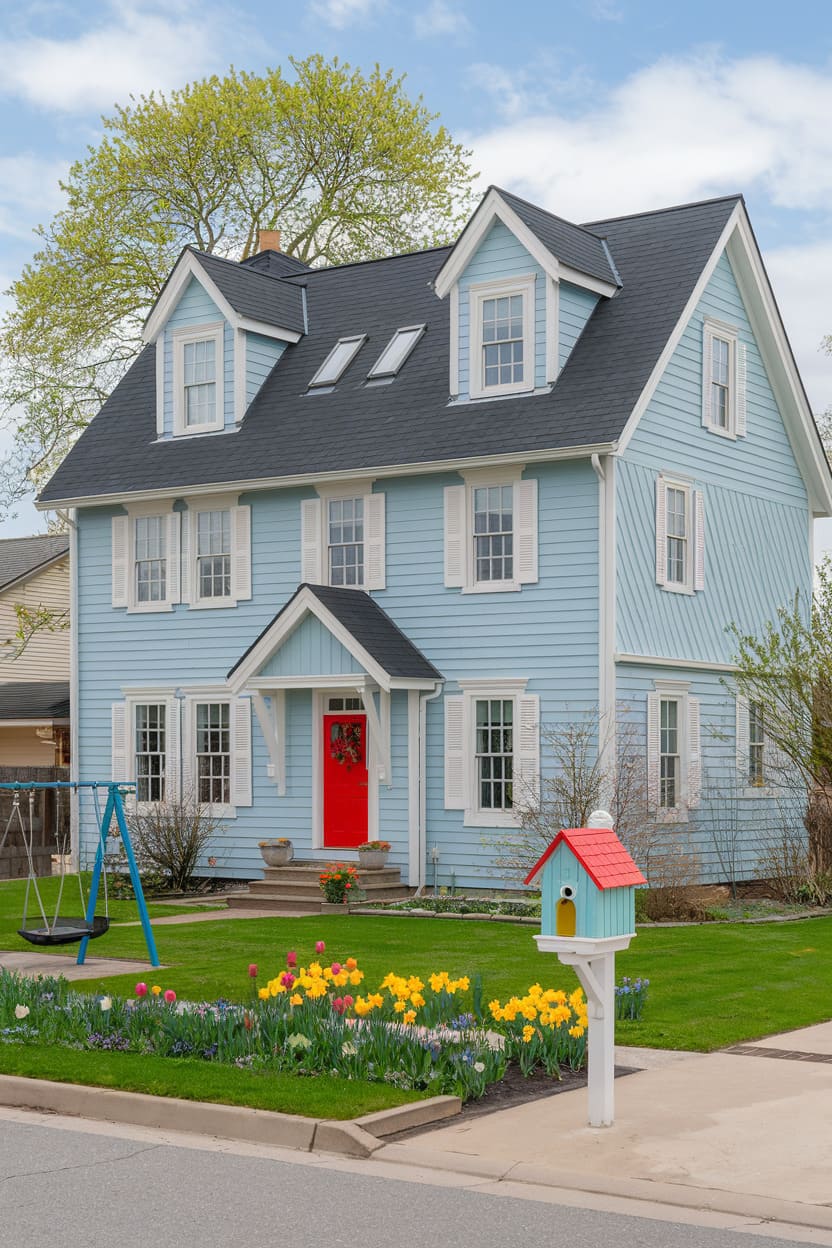
This cheerful two-story suburban home features a lovely medium blue siding. The blue provides a pleasant and popular base color for the exterior. Clean white trim frames the windows, garage door, and accents the porch columns and roofline. The focal point is the vibrant, bright red front door, adding a punch of personality and welcome. This classic combination of blue, white, and red feels patriotic and timeless. The gray roof shingles coordinate well with the blue siding. This is a friendly and appealing color scheme for a family home.
12. Sage Green and Metallic Red Roof
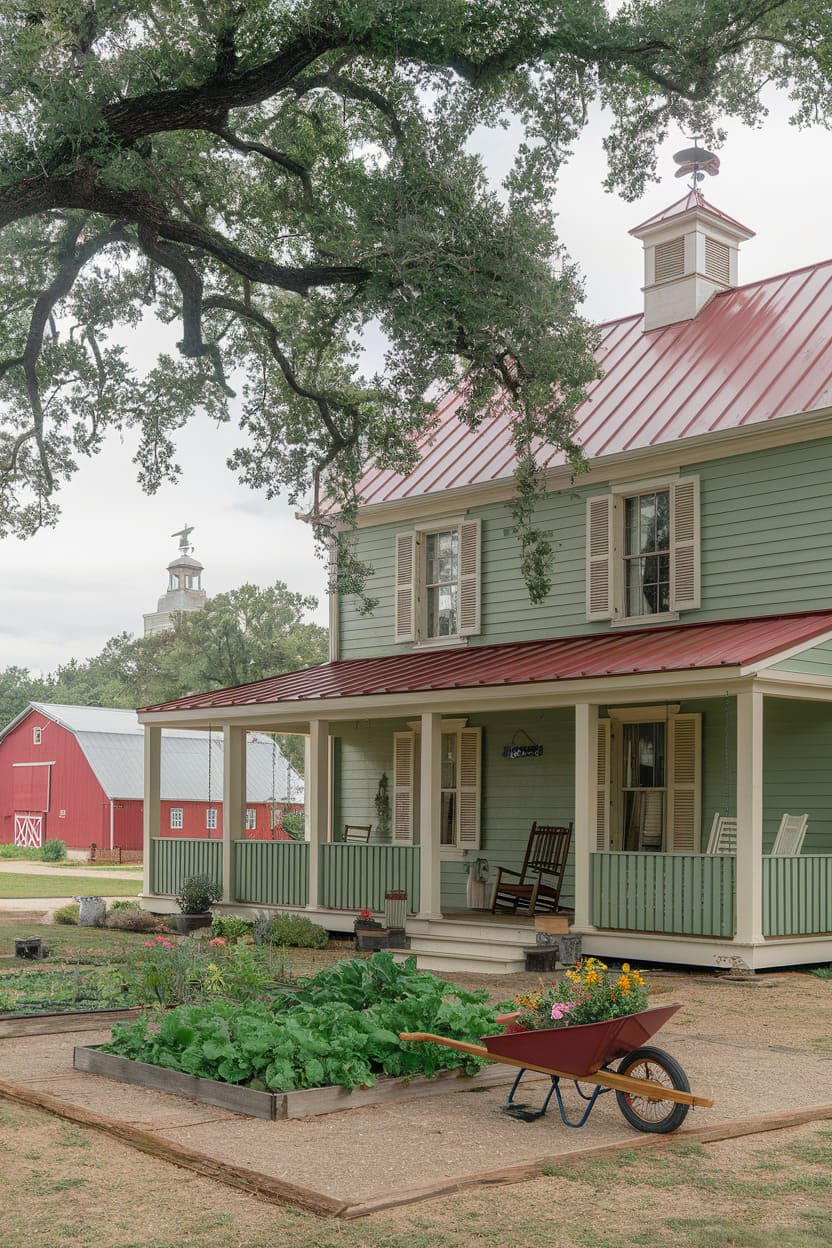
This classic farmhouse is painted in a soothing sage green, blending beautifully with its natural surroundings. The earthy green tone gives the home a calm and grounded appearance. White trim is used for the windows, porch posts, and railings, offering a traditional and clean contrast. A distinctive feature is the metallic red roof, providing durability and a striking visual element against the green siding. The combination of sage green, white, and red creates a updated farmhouse look. This palette is both rustic and refined, perfect for a country setting. The porch adds to the welcoming farmhouse feel.
13. Coastal Gray
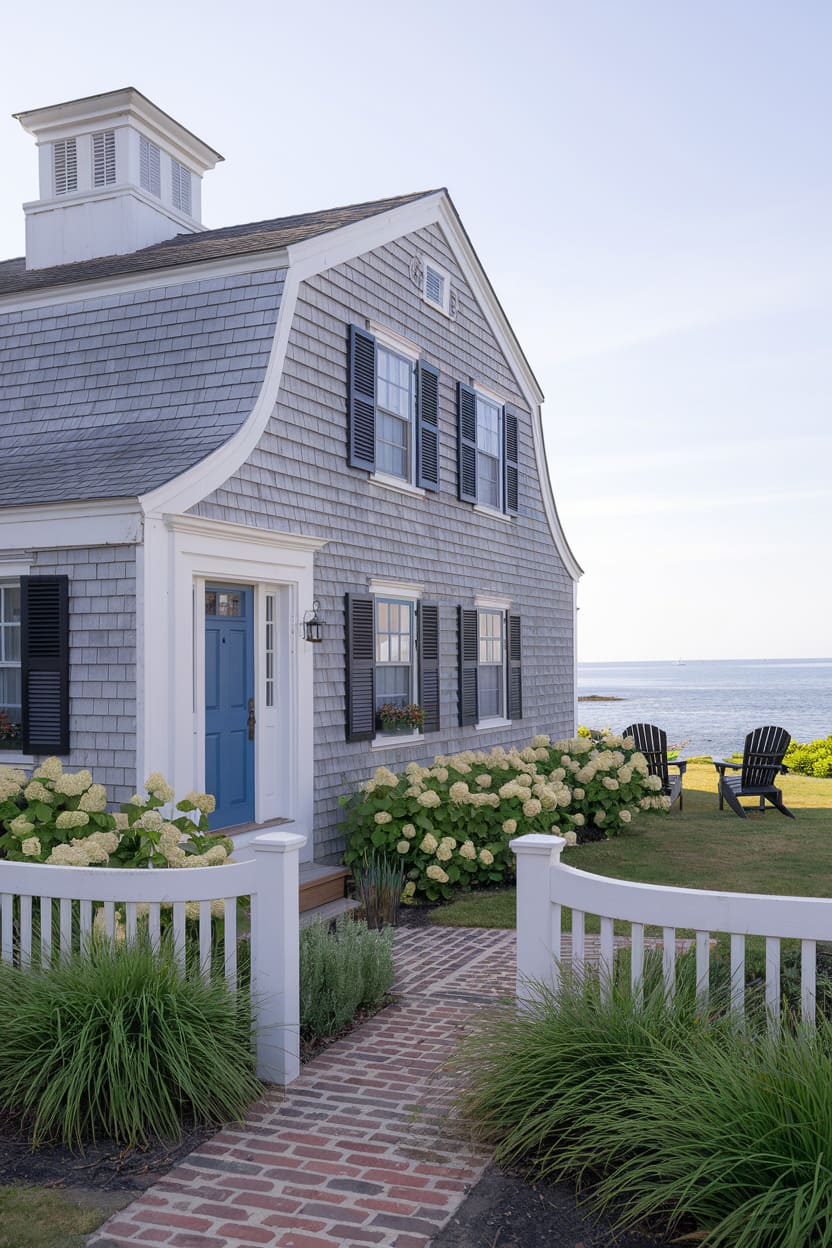
This classic New England style home features a sophisticated coastal gray siding. The neutral gray provides a timeless and elegant base that suits the home’s architecture. Crisp white trim sharply defines the numerous windows, the front door surround, and the roof eaves. Black shutters add a traditional counterpoint to the gray siding and white trim. The combination of gray, white, and black is a hallmark of stately New England design. A dark gray roof completes the cohesive and refined exterior palette. This home exudes classic charm and understated elegance.
14. Brown Brick
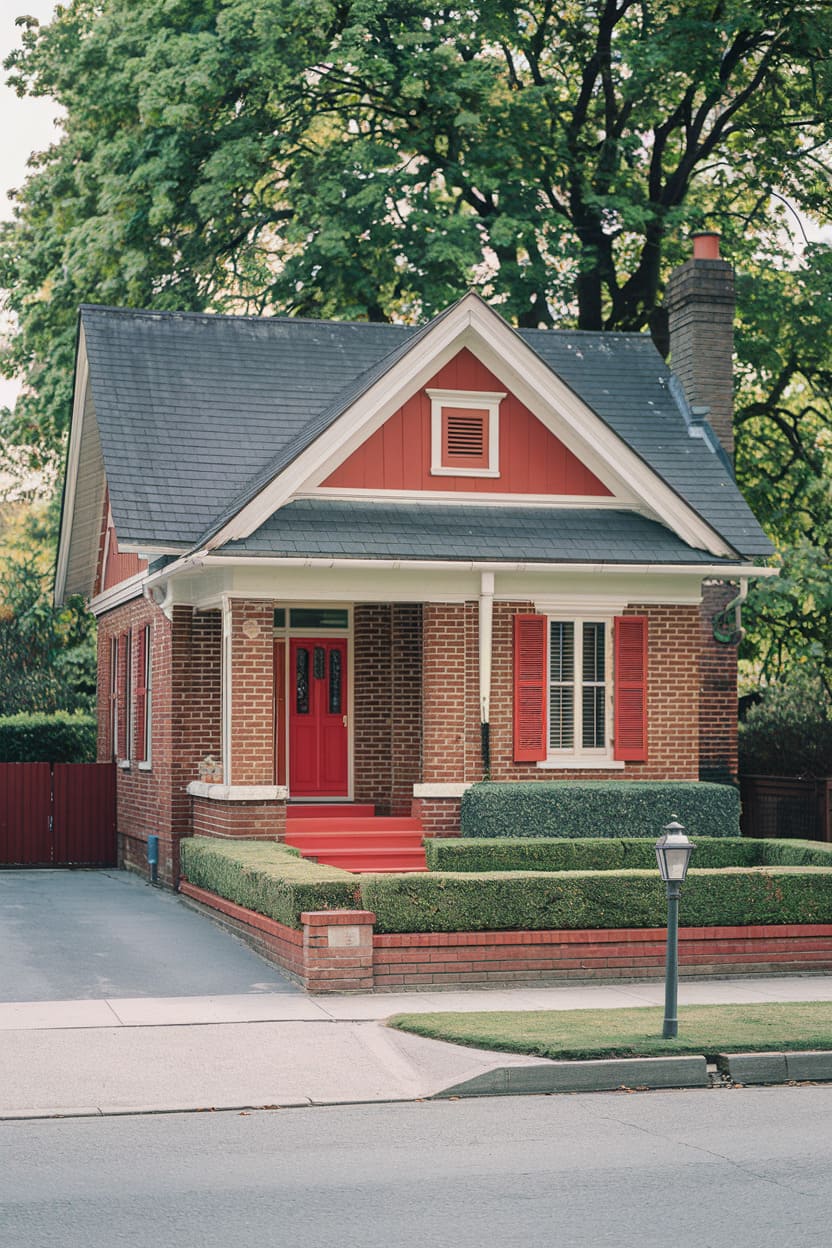
This cozy bungalow is built with a warm, brown-toned brick exterior. The varied shades within the brick add texture and visual interest to the facade. White trim is used around the windows and on the fascia boards under the roofline. The front porch features simple white columns supporting the roof overhang. A welcoming touch is the natural wood front door, complementing the earthy tones of the brick. The roof appears to be a dark, neutral color, balancing the warm brick. This combination creates a solid, traditional, and inviting appearance for the bungalow.
15. English Cottage Brick
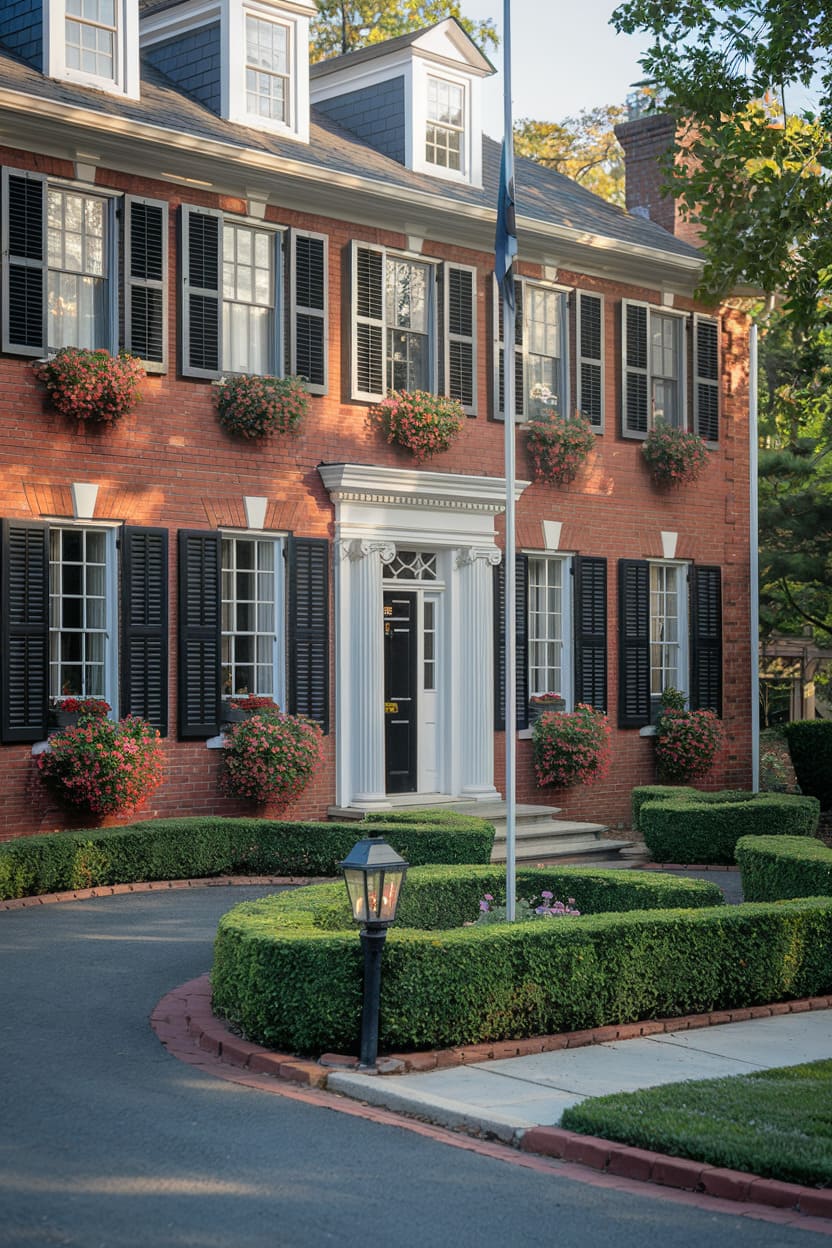
This stately home evokes English cottage charm with its beautiful multi-toned brick exterior. The brickwork features a mix of reds, browns, and creams, creating a rich, textured appearance. Dark trim, possibly a deep brown or black, accents the windows and the prominent gable. White window sashes offer a subtle contrast against the darker frames and brick. The steep roof pitch and tall chimney enhance the home’s traditional European feel. The overall effect is one of timeless elegance and solid construction. The varied brick colors provide enduring visual appeal.
16. Green-Blue Compound
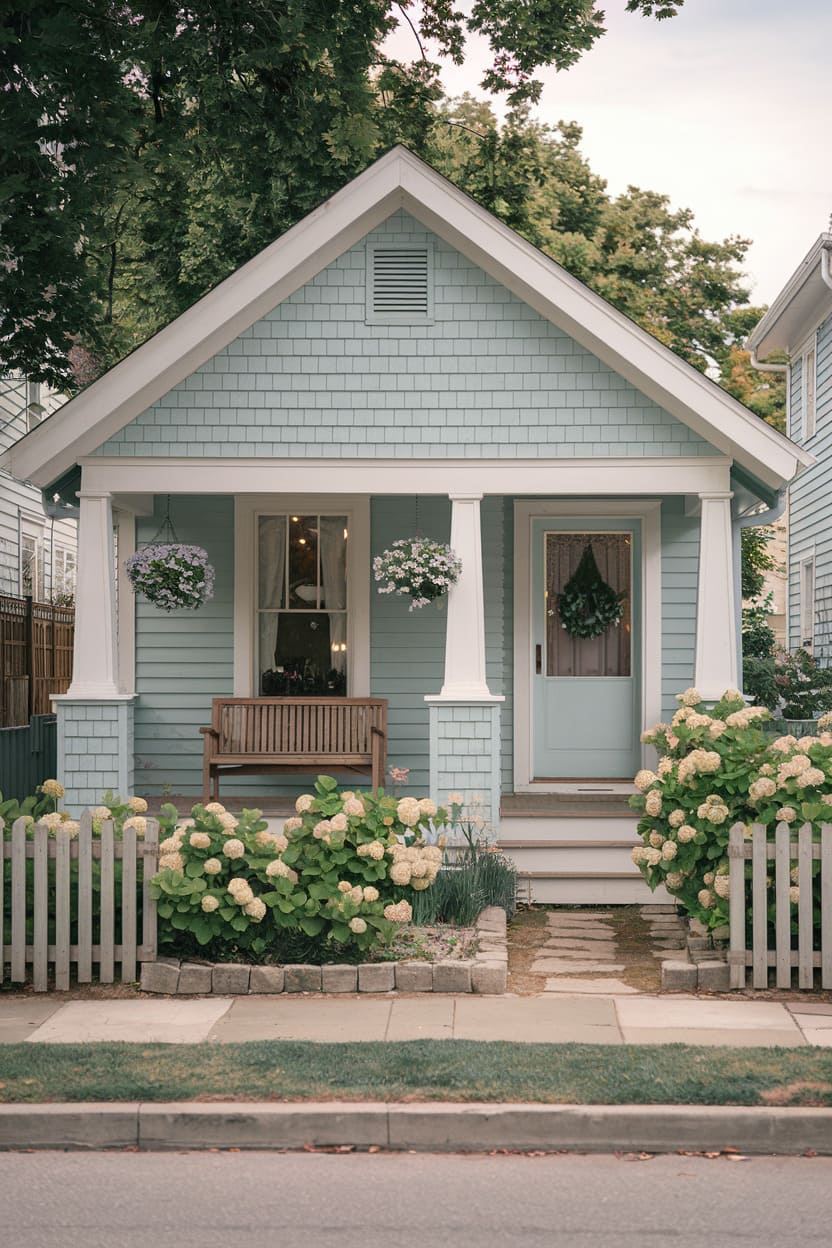
This inviting bungalow features a unique green-blue, or teal, exterior siding color. The rich hue provides a distinctive and appealing look that stands out from typical blues or greens. Creamy off-white trim beautifully frames the windows, door, and porch elements. This softer contrast complements the deep teal siding very well. The porch columns and railing are also painted in the same off-white shade. A dark roof anchors the color scheme effectively. This combination feels both cozy and slightly unconventional, giving the bungalow personality.
17. Scandinavian Deep Yellow
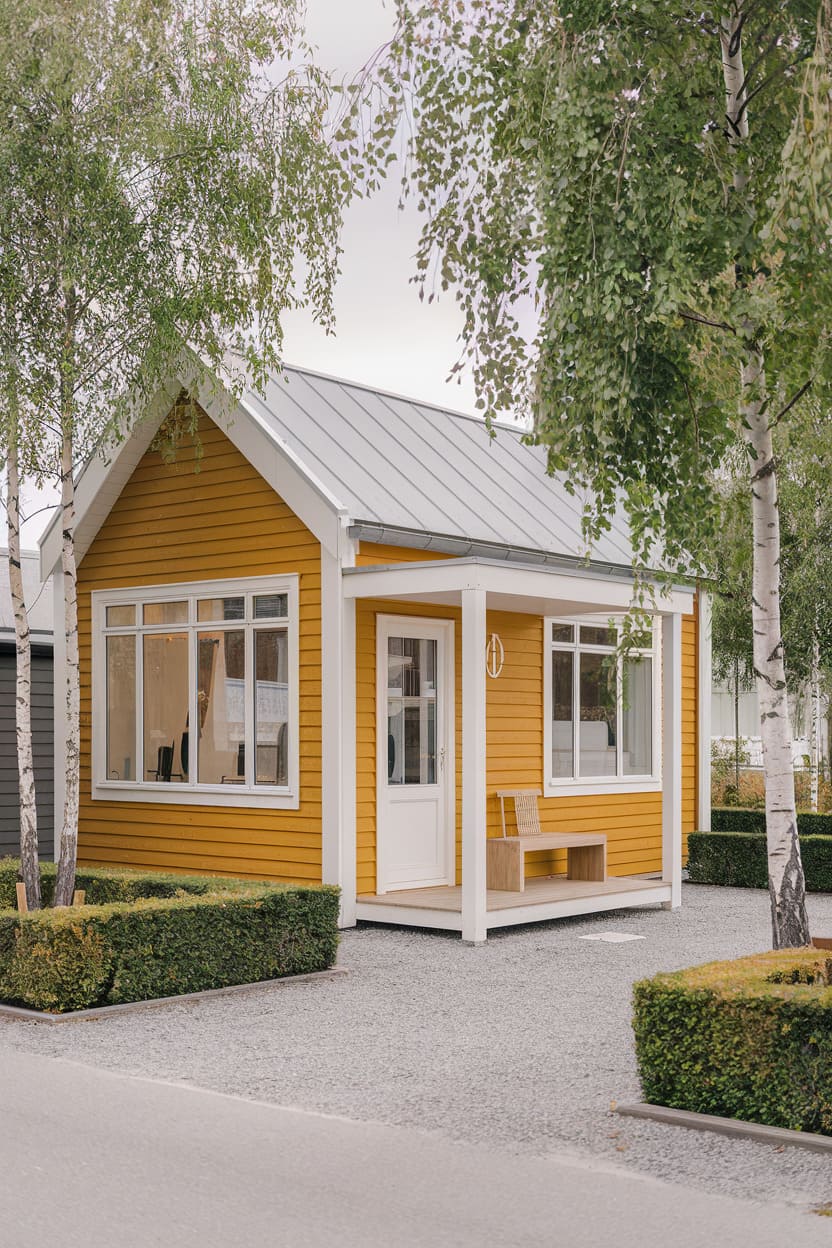
This compact Scandinavian-style house boasts a traditional deep yellow exterior. This particular shade, often called Falun red’s yellow counterpart, is common in Nordic countries. Crisp white trim provides a sharp, clean contrast around the windows and door. The simple lines of the house are characteristic of Scandinavian design. The combination of deep yellow and white is cheerful yet historically grounded. A dark-colored roof completes the classic Nordic look. This color choice is both bold and deeply rooted in regional tradition.
18. Modern White and Gray
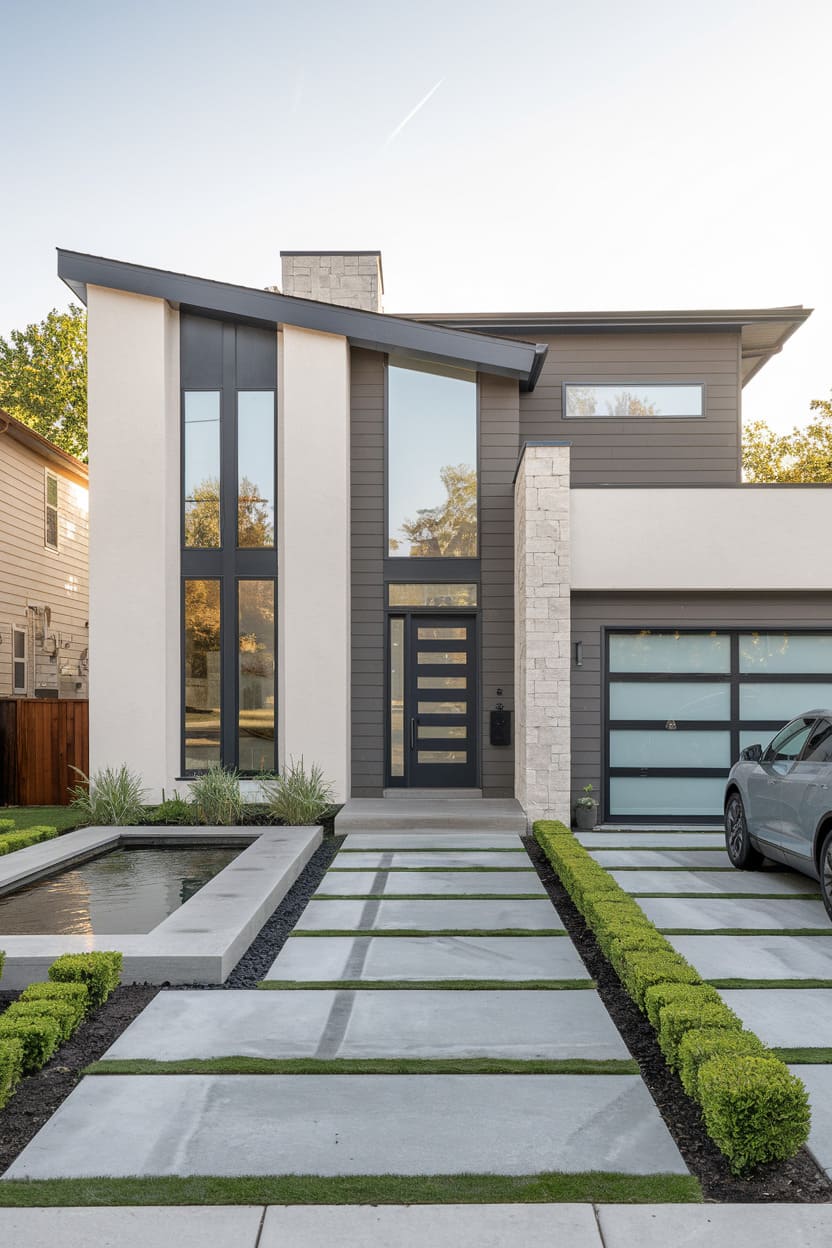
This contemporary suburban home utilizes a sophisticated palette of modern white and gray. The main body of the house appears to be a clean, bright white. Contrasting gray elements, possibly siding or panels, add visual interest and depth, particularly around the garage and entryway. Black window frames provide a sharp, modern accent against the white walls. The mixture of materials and colors creates a sleek and updated aesthetic. The roof is likely a dark gray or black to maintain the cool, neutral scheme. This look is popular for its clean lines and contemporary appeal.
19. Dark Sage Green
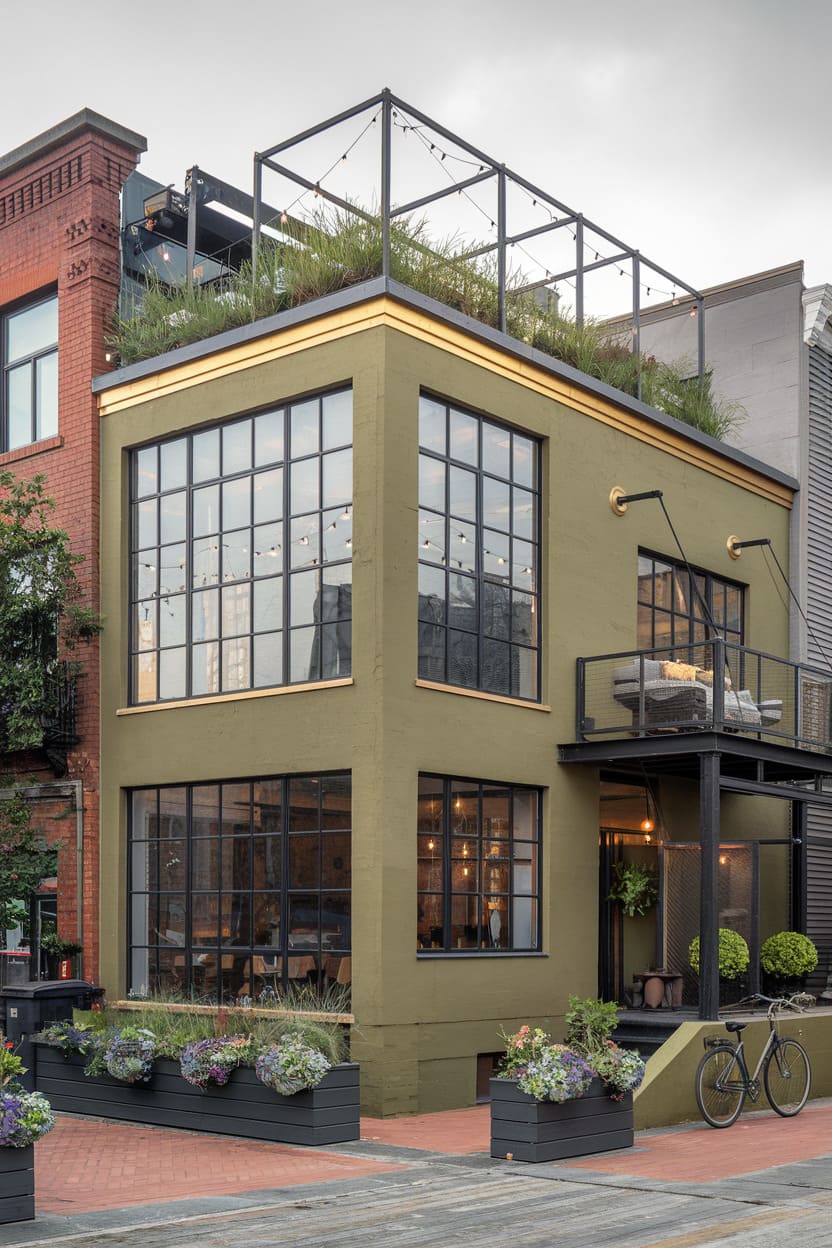
This contemporary urban loft-style house features a moody dark sage green exterior. The deep, muted green offers a sophisticated and slightly industrial feel. Large, dark-framed windows dominate the facade, complementing the dark siding color. Natural wood accents, particularly on the soffits or overhangs, provide warmth and contrast. The combination of dark green, black frames, and wood creates a stylish, modern urban look. Minimal landscaping keeps the focus on the architecture and color palette. This is a chic and understated choice for a modern home.
20. Green
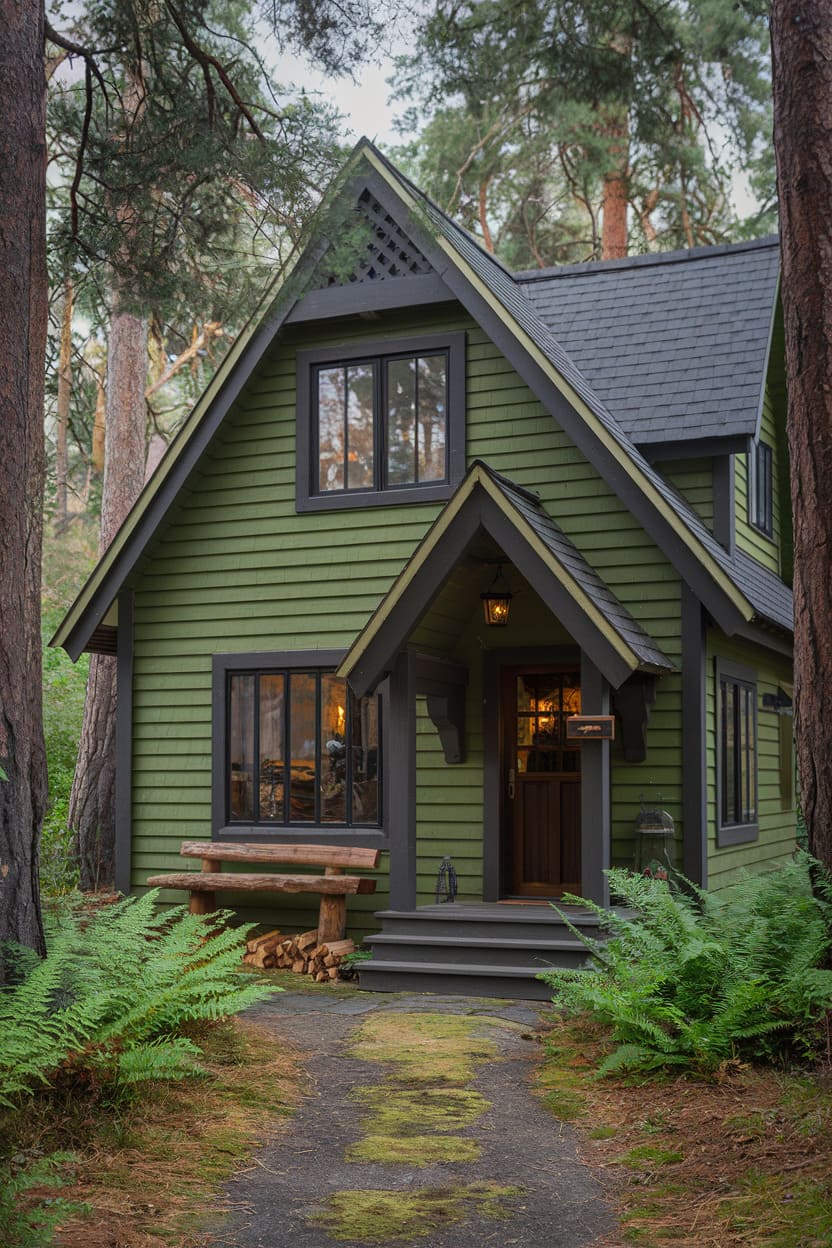
Nestled in a forest setting, this cozy cottage is painted a natural, medium green. The green siding helps the home blend seamlessly with its lush, wooded surroundings. White trim around the windows and door adds a touch of classic cottage charm and brightness. The simple color scheme enhances the home’s connection to nature. A darker roof provides a subtle contrast without detracting from the natural feel. This green is a perfect choice for a home intended as a peaceful retreat. The overall look is tranquil, simple, and perfectly integrated into the landscape.
21. Craftsman Brown
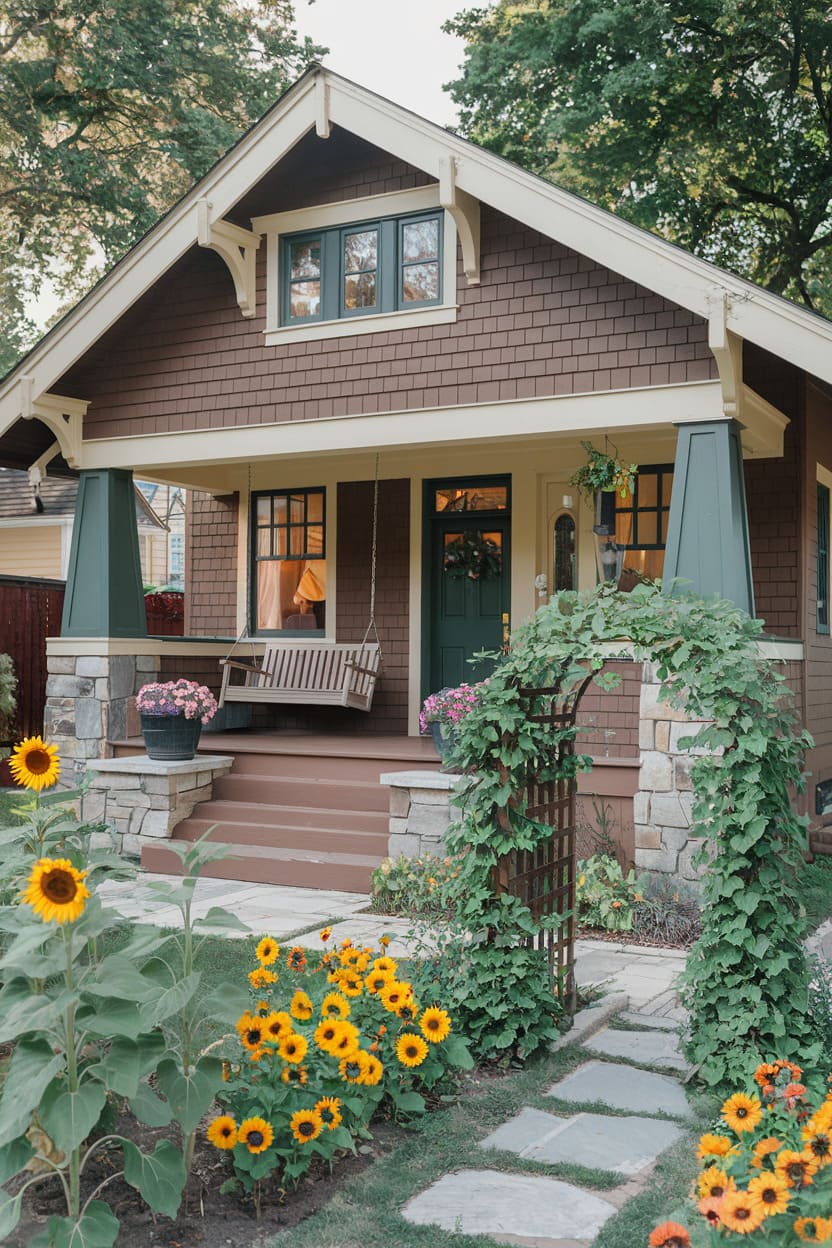
This cozy Craftsman-style home features a warm, medium brown siding color. The earthy brown tone is characteristic of the Craftsman aesthetic, emphasizing natural materials and harmony with the environment. Cream or off-white trim outlines the windows, porch details, and roof eaves, providing a soft contrast. Exposed rafter tails and porch brackets, typical Craftsman features, are highlighted by the trim color. The front door appears to be a natural wood stain, further enhancing the natural palette. This color scheme feels grounded, welcoming, and true to the home’s architectural style.
22. Deep Brown
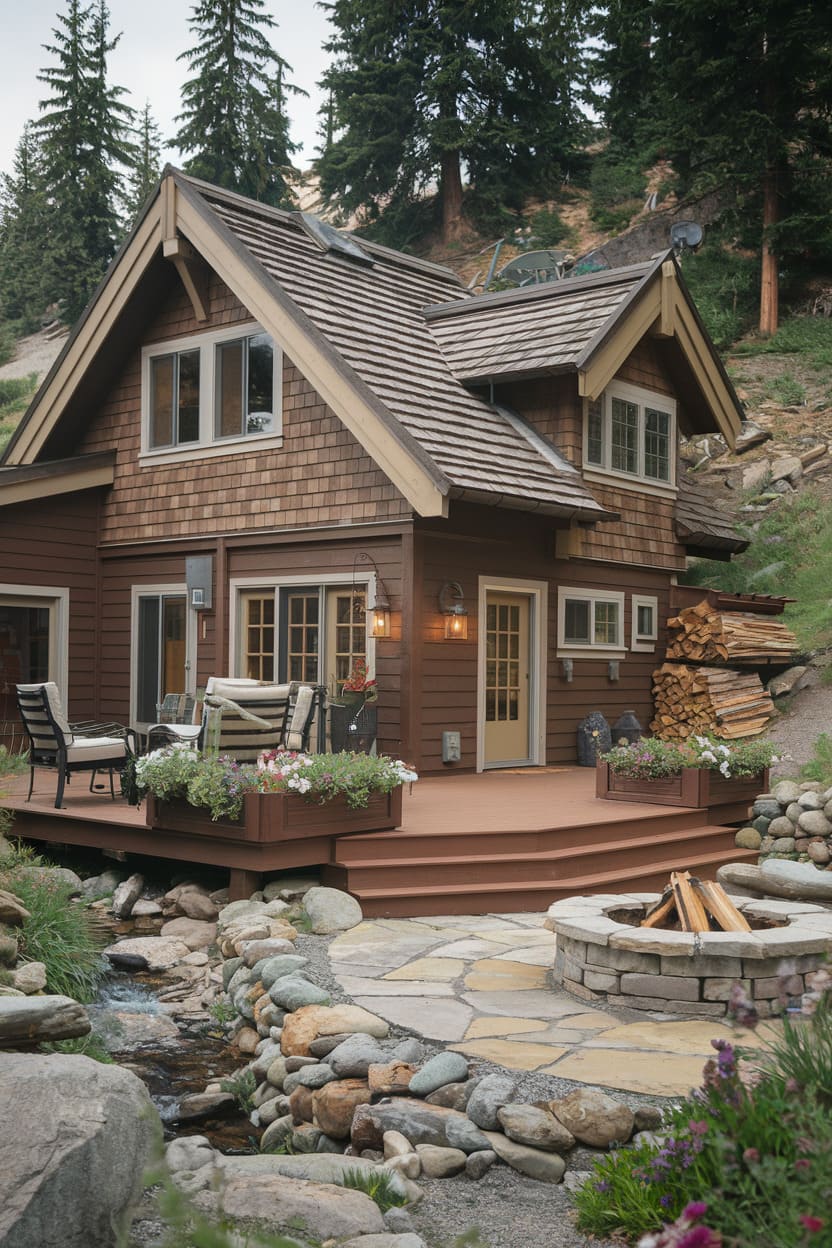
This cozy mountain chalet is enveloped in a rich, deep brown exterior stain or paint. The dark brown color gives the home a rustic and robust appearance, fitting for a mountain setting. Lighter wood trim or accents, perhaps in a natural or honey tone, provide contrast around windows and structural elements. The deep brown helps the chalet blend with the surrounding trees and landscape. Large windows allow enjoyment of the views, framed by the contrasting trim. This color choice emphasizes the home’s connection to nature and its sturdy, cabin-like feel.
23. Warm Yellow
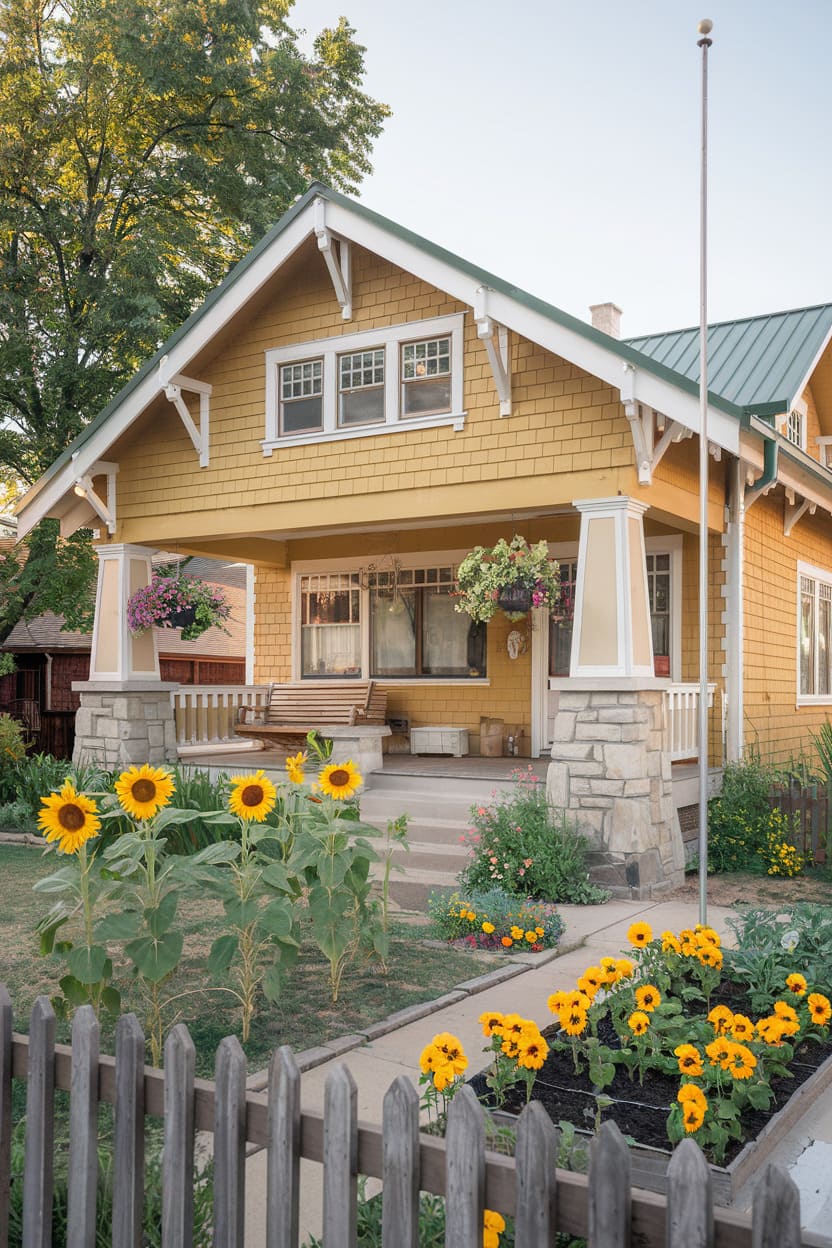
Showcasing Craftsman style, this house features a warm, buttery yellow siding. This inviting yellow hue brings a cheerful and sunny disposition to the home’s exterior. Crisp white trim is used generously on the thick window casings, porch columns, and railings, typical of Craftsman design. The combination of warm yellow and bright white creates a welcoming and classic look. A darker roof color provides a pleasing contrast and visual anchor. Stone accents on the porch foundation add texture and complement the warm color scheme. This palette enhances the home’s friendly and solid character.
24. Cream and Plum
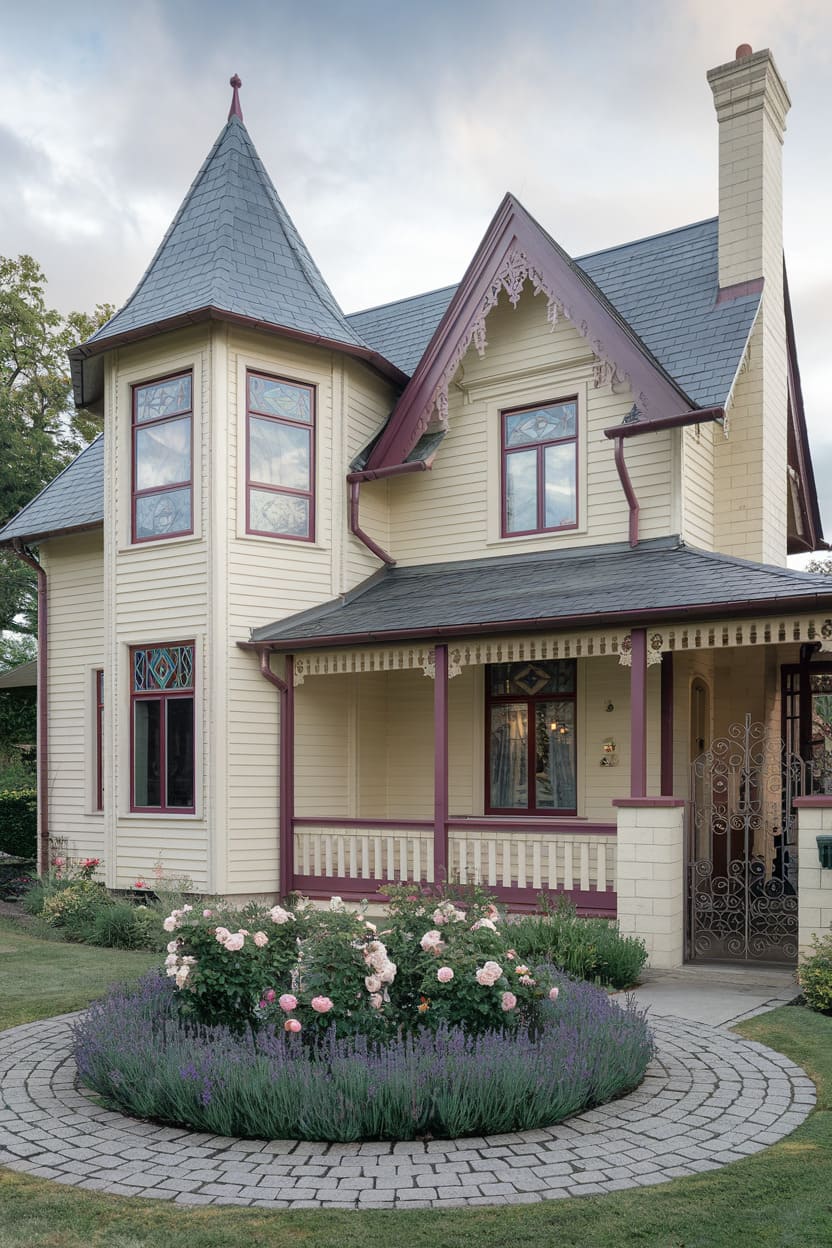
This house features a sophisticated combination of cream siding and deep plum trim. The soft cream color provides a neutral and elegant backdrop for the exterior. Rich, deep plum is used as an accent color for the shutters and possibly the front door, offering a striking contrast. The pairing of cream and plum feels refined and slightly unexpected, adding character to the home. White is likely used for the window frames themselves, creating a layered effect. This color scheme balances neutrality with a touch of bold color beautifully.
25. Burgundy and Off White
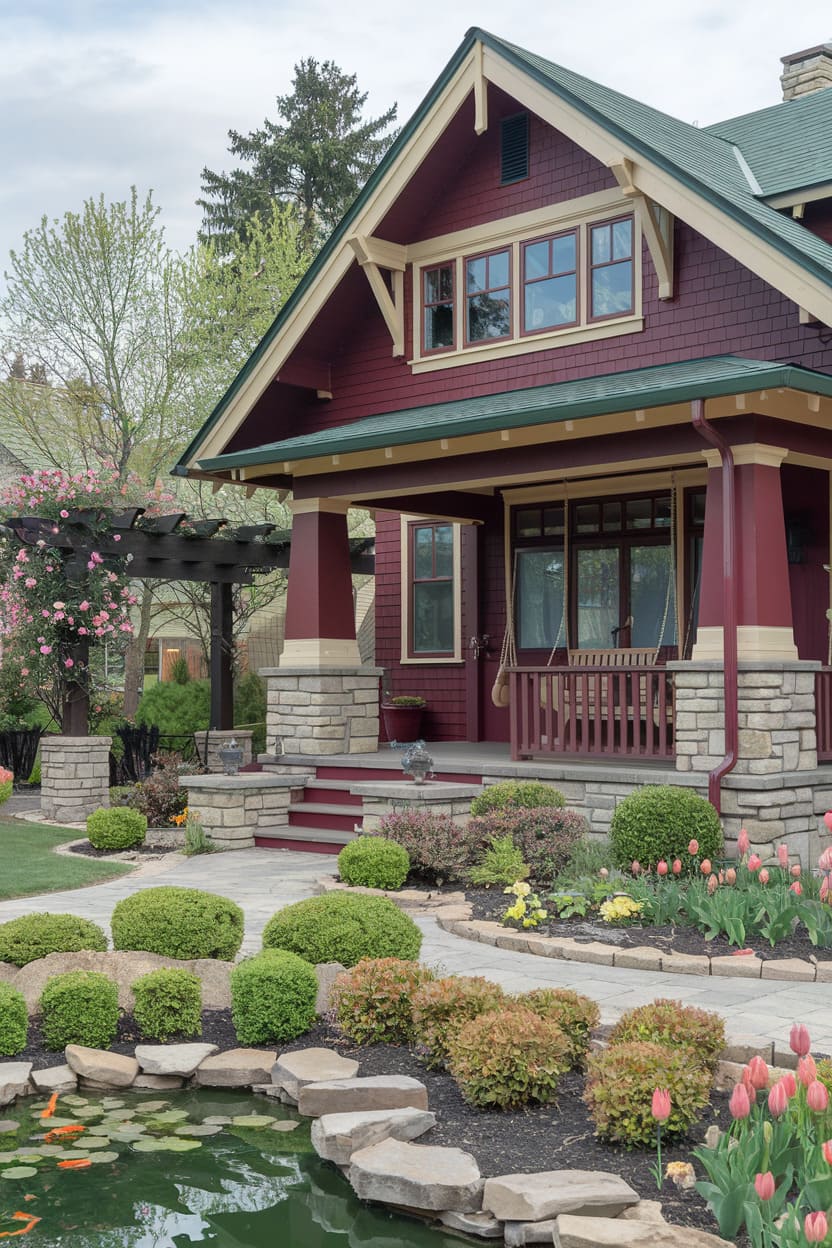
This Craftsman-style house makes a bold statement with its deep burgundy or wine-red siding. The rich color highlights the home’s sturdy architectural features. Soft off-white or cream trim provides a gentler contrast than bright white, accentuating the window frames, porch columns, and roof eaves. This combination feels warm, substantial, and historically appropriate for the Craftsman style. The porch, a key element, is made inviting by this color pairing. Natural elements like stone or wood potentially complement this rich palette. This choice creates a distinguished and memorable exterior.
26. Teal Blue
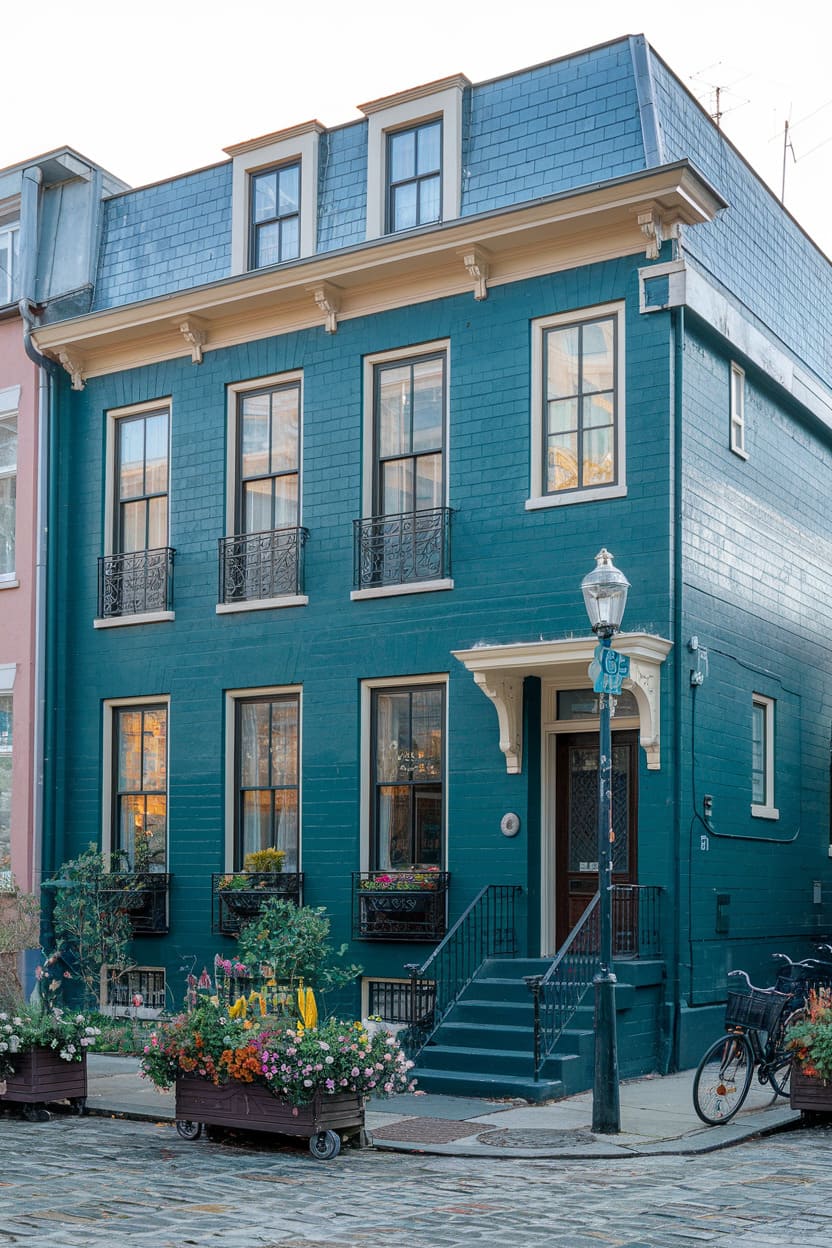
This urban rowhouse features a striking deep teal blue exterior. The saturated blue-green hue gives the home a vibrant and contemporary look within the city setting. Cream-colored trim provides a sophisticated contrast around the windows, door, and cornice detailing. The combination of deep teal and cream feels elegant and modern. The tall, narrow structure typical of rowhouses is well-suited to this bold color choice. Architectural details like the bay window are nicely highlighted by the trim. This palette makes the home stand out stylishly on the block.
27. Natural Wood Color
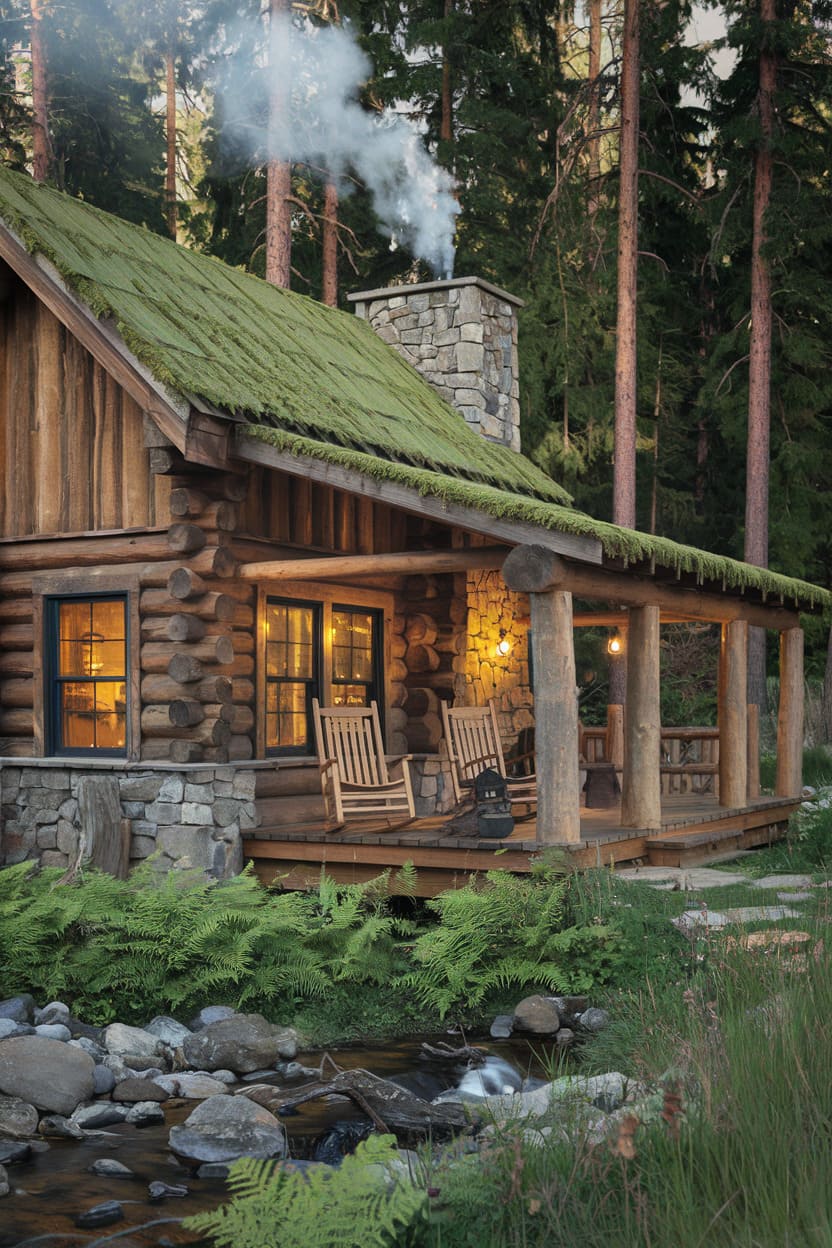
This cozy rustic cabin celebrates the beauty of natural wood colors on its exterior. The logs or wood siding showcase varying shades of brown, tan, and amber, creating an authentic, earthy look. Darker trim or chinking between the logs provides definition and contrast. The natural wood blends perfectly with the surrounding forest environment. This approach emphasizes the cabin’s rustic charm and connection to nature. Metal roofing in a dark color is a practical and fitting choice for this style. Using natural wood tones ensures the cabin feels warm, inviting, and timeless.
28. Sapphire Blue
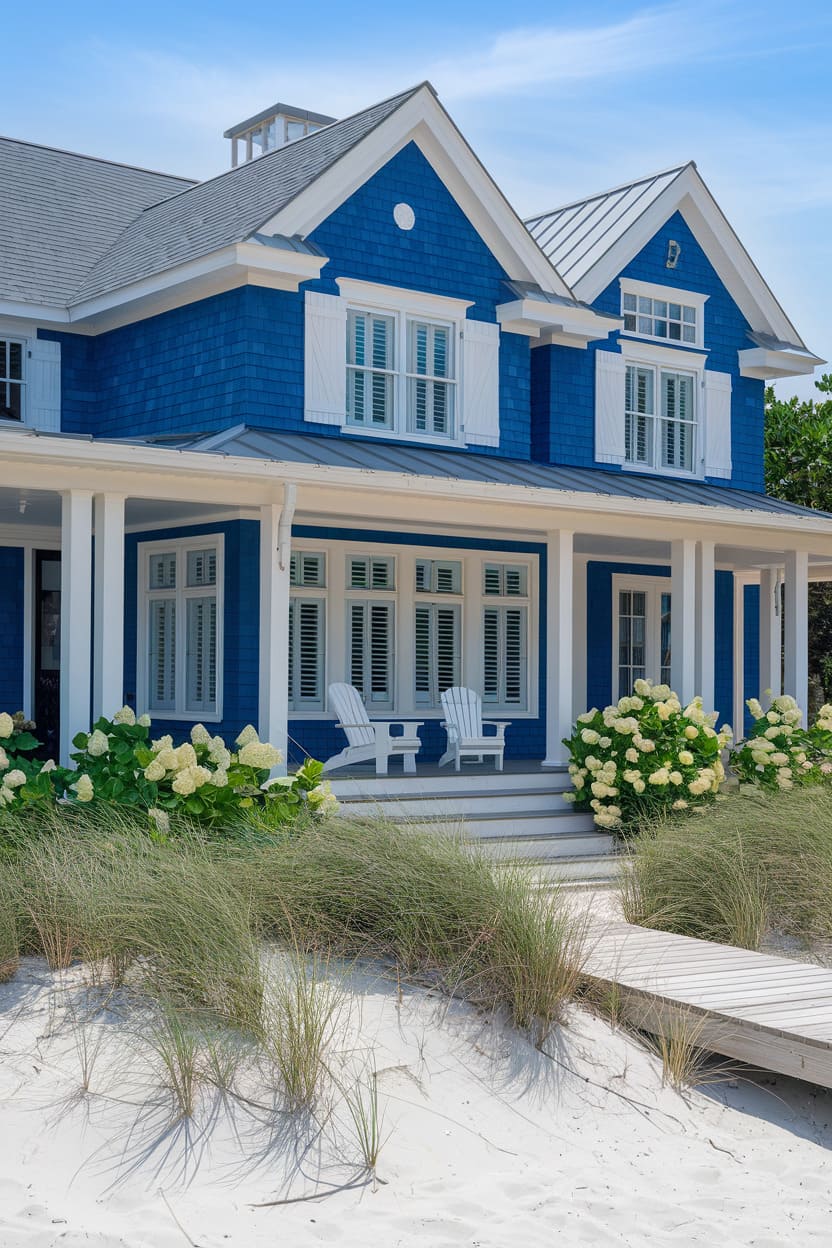
This large coastal home is painted a stunning sapphire blue. The deep, vibrant blue evokes the colors of the ocean and sky, perfect for a seaside location. Bright white trim offers a crisp, nautical contrast around the numerous windows, railings, and architectural details. The combination of rich blue and clean white is classic for coastal homes, feeling fresh and elegant. Multiple balconies and porches take advantage of the setting, highlighted by the white railings. A lighter-colored roof, perhaps gray or tan, complements the blue without competing. This color makes a luxurious coastal statement.
29. Modern Dark Gray
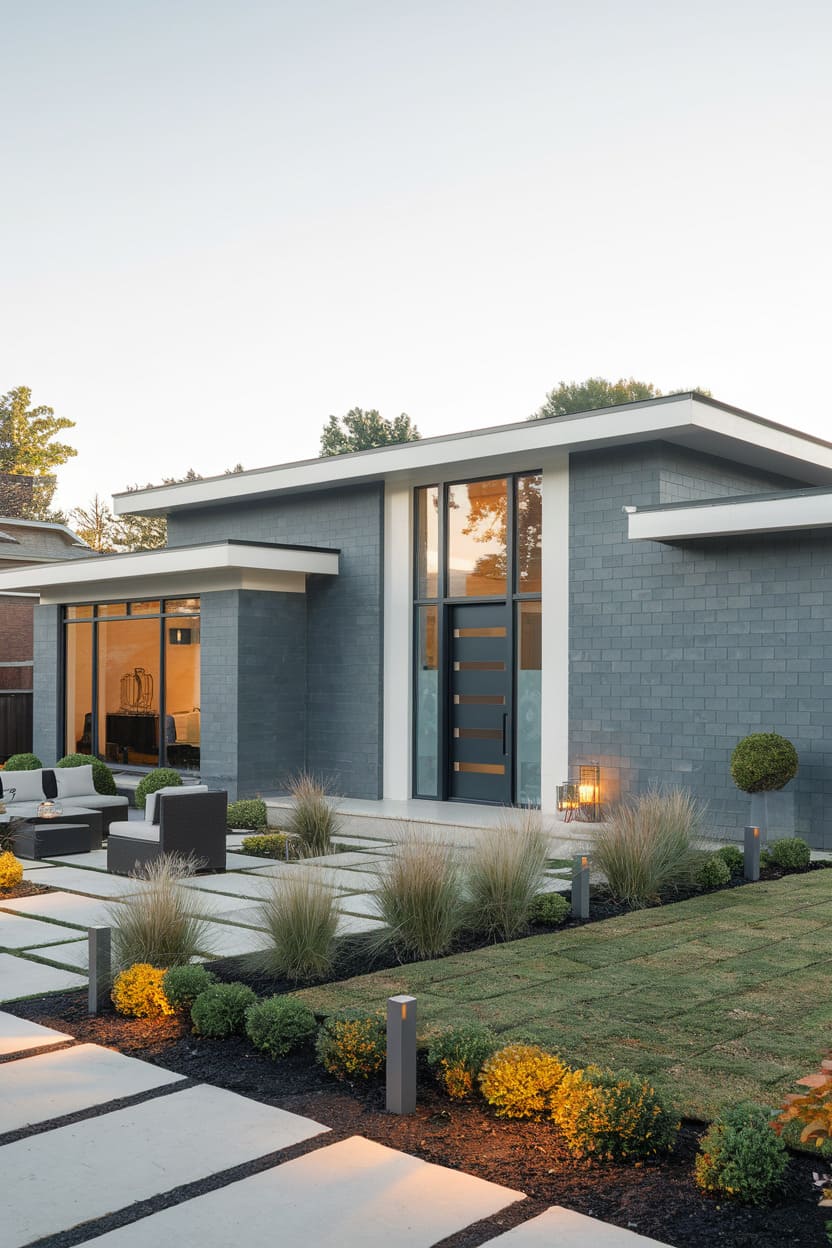
This modern suburban house features a sleek, dark gray exterior. The deep gray provides a sophisticated and contemporary look, emphasizing the home’s clean lines and angles. Contrasting elements, like natural wood accents on the garage door or entryway, add warmth and visual interest. Large windows with dark frames maintain the modern aesthetic. The roofline is simple, likely covered in dark shingles or metal roofing that blends with the siding. This monochromatic or near-monochromatic scheme is popular in modern design for its understated elegance. Minimalist landscaping complements the home’s style.
30. Townhouse Brick
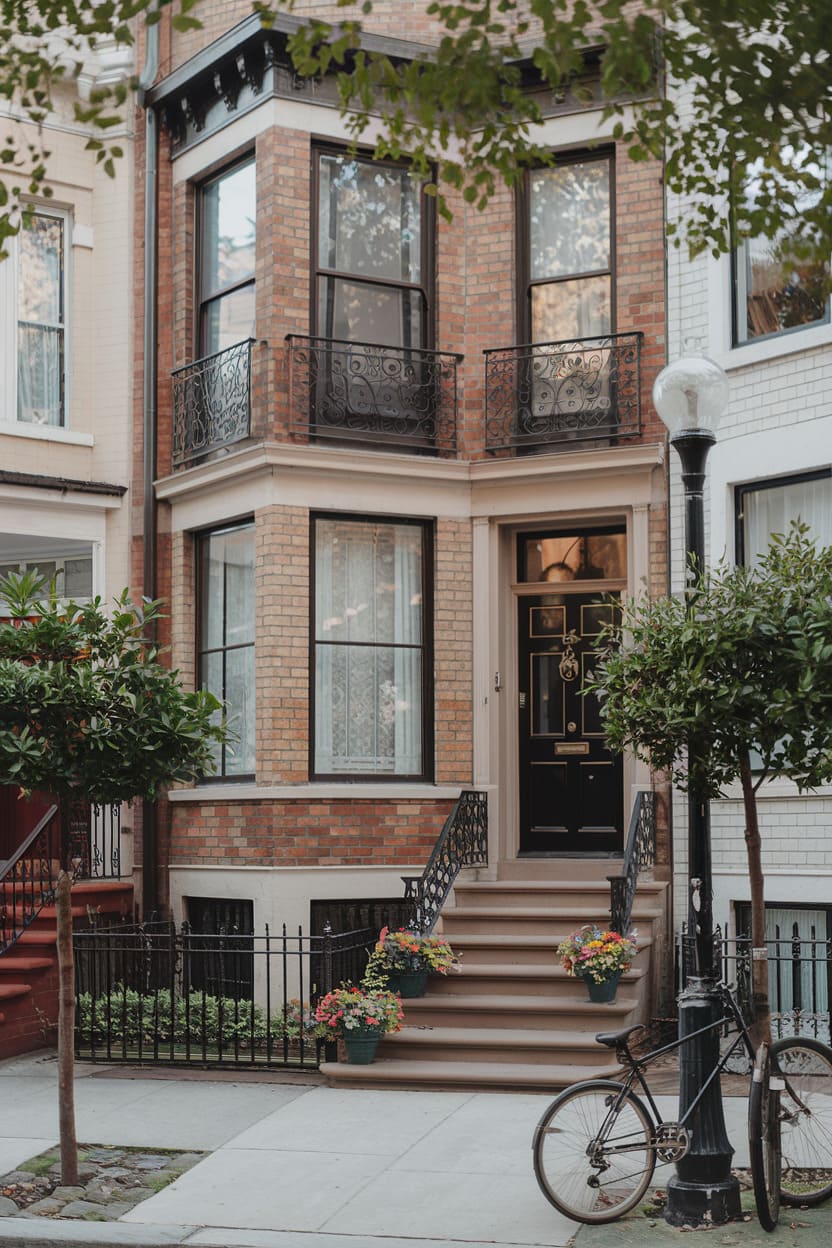
This narrow three-story townhouse utilizes classic red brick for its facade. The traditional brick provides texture, warmth, and a sense of history common in urban townhomes. White trim around the tall windows and the ornate cornice at the roofline creates a sharp contrast. Black shutters flank the upper windows, adding another layer of traditional detail. The combination of red brick, white trim, and black shutters is timeless and elegant. A dark front door, possibly black or deep green, completes the classic look. This palette respects the architectural style while maintaining curb appeal.
31. Tangerine
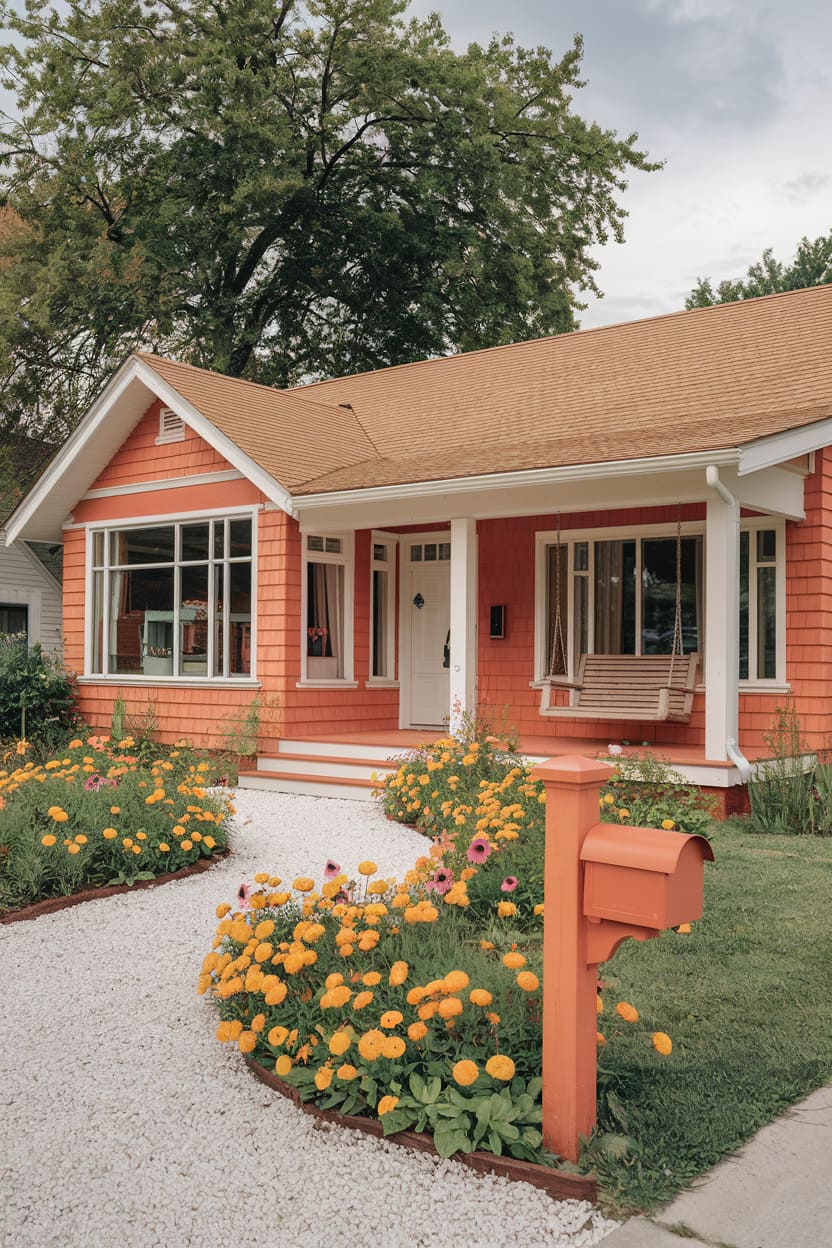
This one-story ranch house makes a bold and cheerful statement painted in a vibrant tangerine orange. The bright, sunny color gives the home a playful and energetic personality. Crisp white trim around the windows, door, and along the roofline provides a clean contrast, preventing the orange from overwhelming. The simple lines of the ranch style serve as a good canvas for such a strong color. A neutral-colored roof allows the tangerine siding to be the star. This is an unconventional choice that expresses individuality and warmth. Greenery in the landscaping pops against the orange background.
32. Pale Green
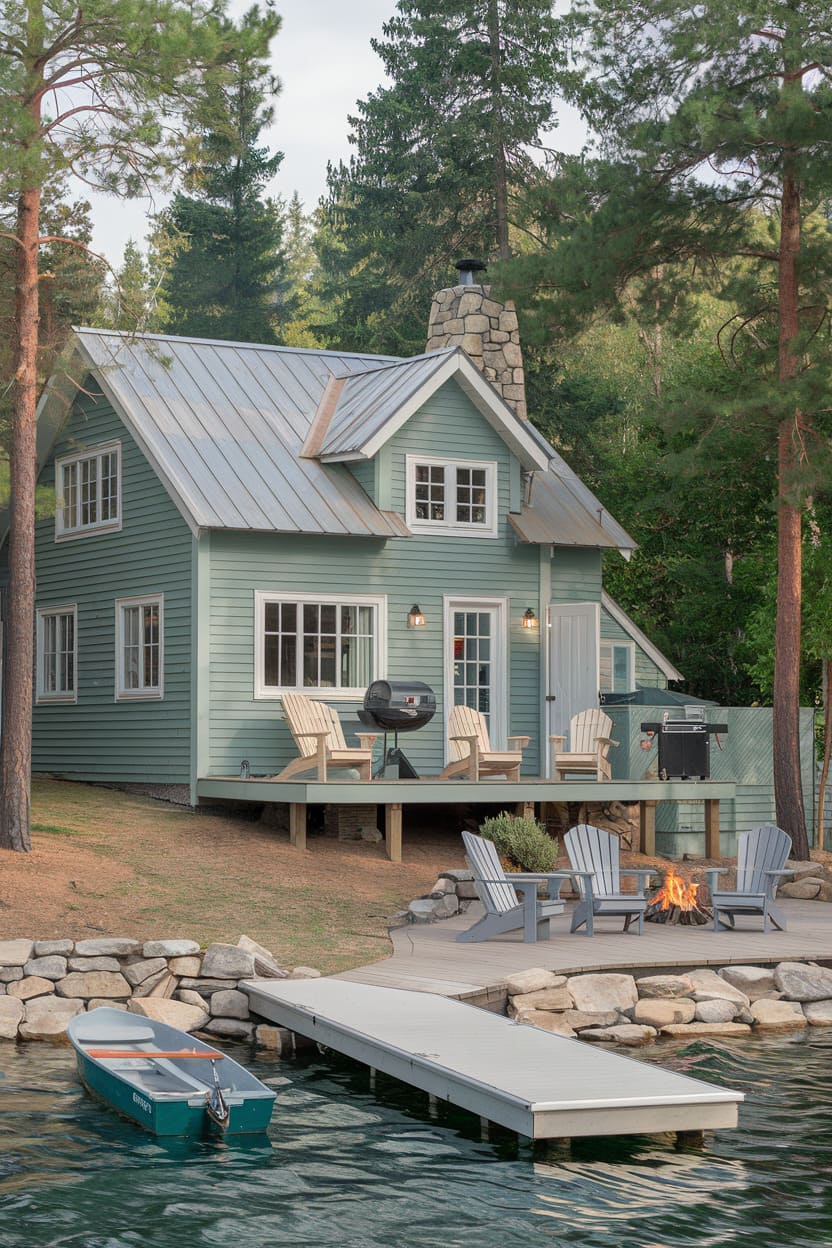
This quaint lakeside cottage features wooden siding painted in a soft, pale green. The light green hue gives the cottage a gentle, serene appearance that complements its waterside location. White trim accents the windows and doorframe, adding a touch of brightness and definition. The combination of pale green and white feels fresh, airy, and perfectly suited for a relaxed cottage vibe. The natural wood deck extends the living space outdoors. A darker roof grounds the light color scheme. This palette enhances the cottage’s charm and connection to its natural setting.
33. Painted Brick
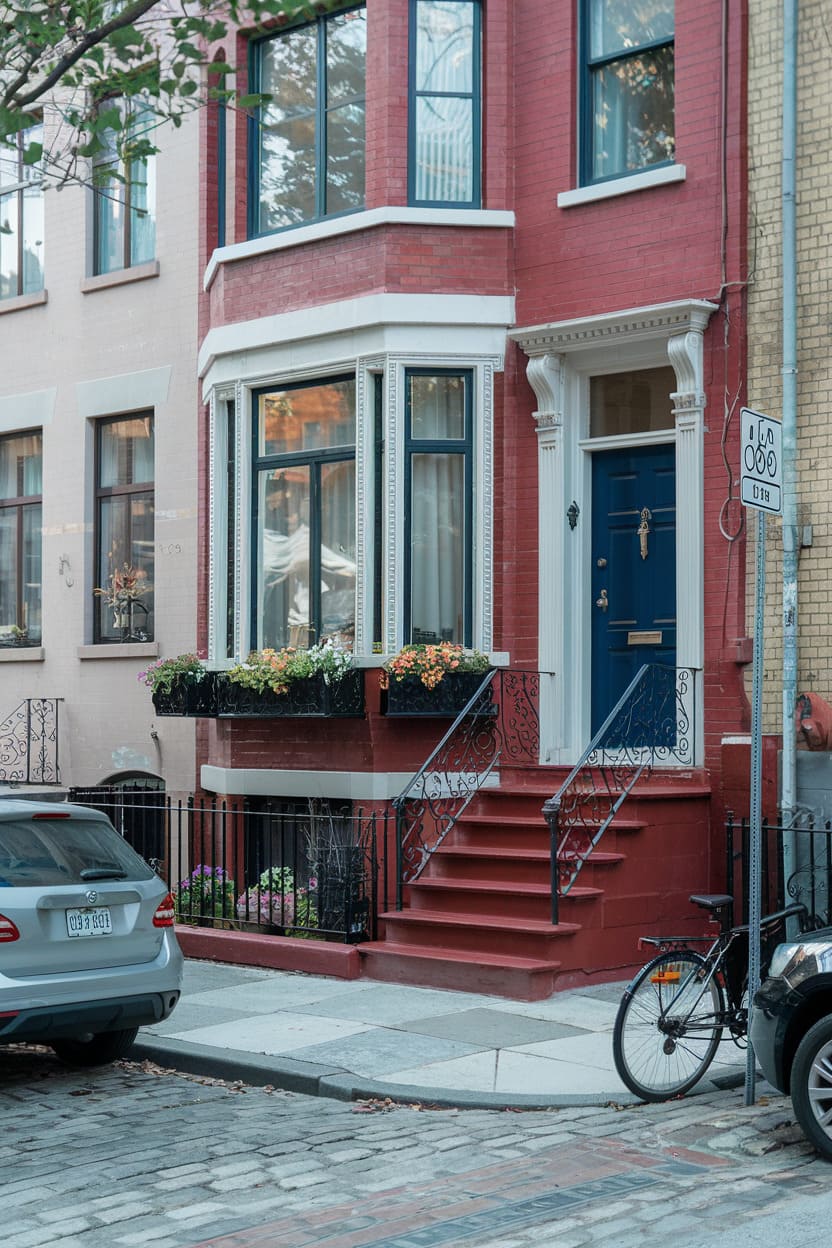
This image shows urban rowhouses, with the focus on one featuring painted brick. The brick appears painted in a muted tone, perhaps a soft gray or beige, unifying the facade. White trim provides contrast around the windows and the prominent bay window structure. A bold red front door creates a vibrant focal point against the more neutral painted brick. The juxtaposition of the painted brick texture with the smooth trim and colorful door adds character. This approach updates the traditional brick while retaining its texture. Black ironwork on the stoop adds another classic urban element.
34. Natural Stone and Deep Brown
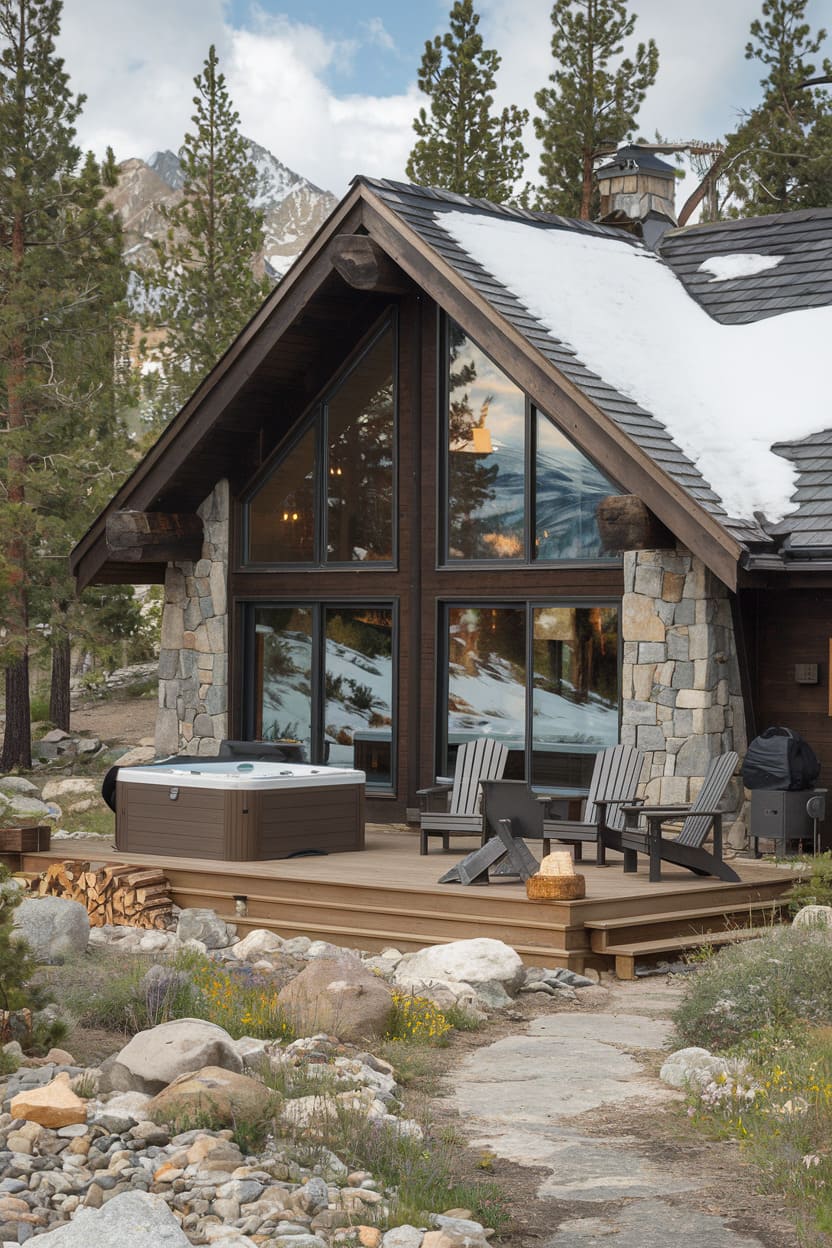
This rustic mountain chalet combines natural stone elements with deep brown wood siding or trim. The rugged texture and earthy tones of the stone foundation or accents ground the structure beautifully. Deep brown wood, used for siding, beams, or trim, complements the stone and enhances the rustic appeal. Lighter trim around the windows prevents the look from becoming too dark. This mix of natural materials is ideal for a mountain setting, blending durability with aesthetic harmony. Large windows likely frame scenic views, contrasting modern function with rustic materials. The overall palette feels warm, sturdy, and connected to the landscape.
35. Sage Green and Rust Red
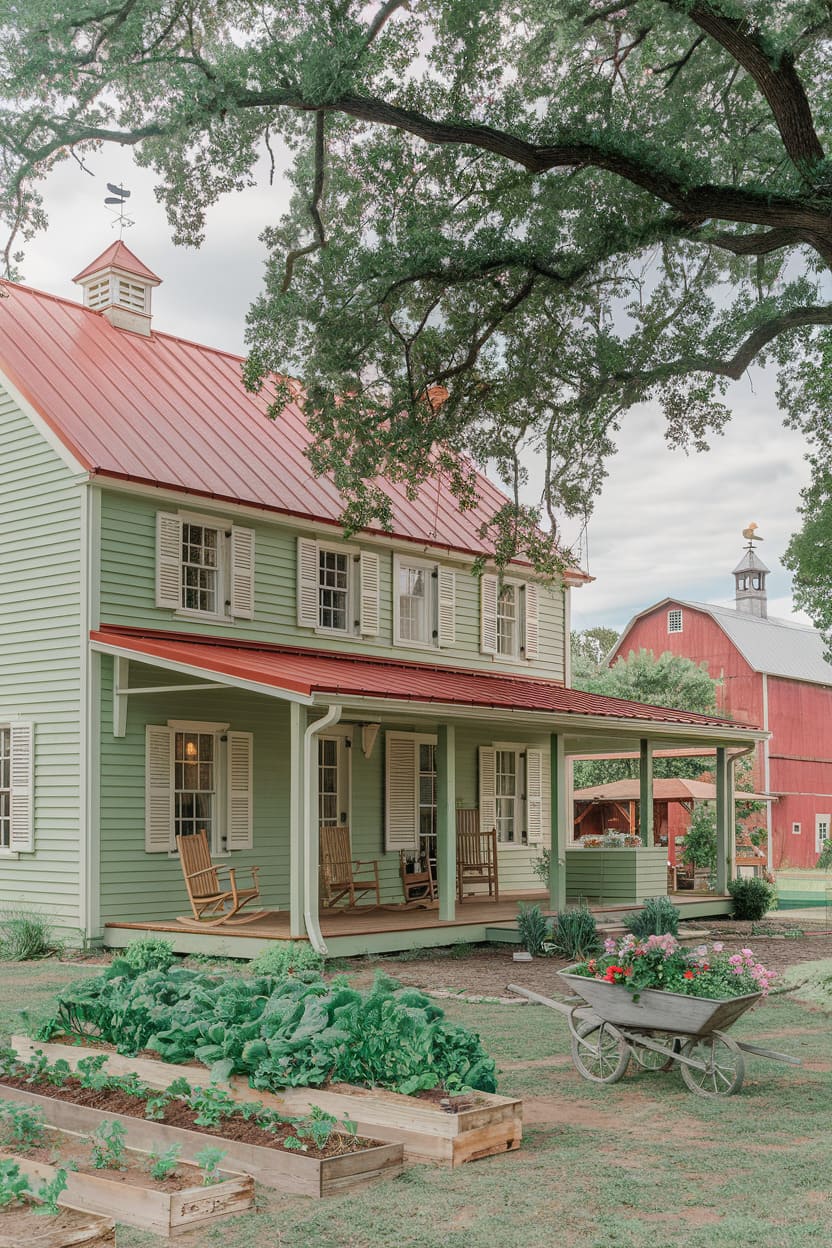
This farmhouse features a lovely combination of sage green siding and a rust-red roof. The soft, earthy sage green body color feels calm and blends well with rural surroundings. The prominent rust-red metal roof provides a striking contrast and a touch of traditional barn color. White trim defines the windows, porch railings, and roofline, adding brightness to the scheme. This trio of colors – sage, rust, and white – creates a refreshed yet classic farmhouse aesthetic. The wraparound porch enhances the welcoming feel. This palette is both stylish and grounded in tradition.
36. Dark Brick and White Siding
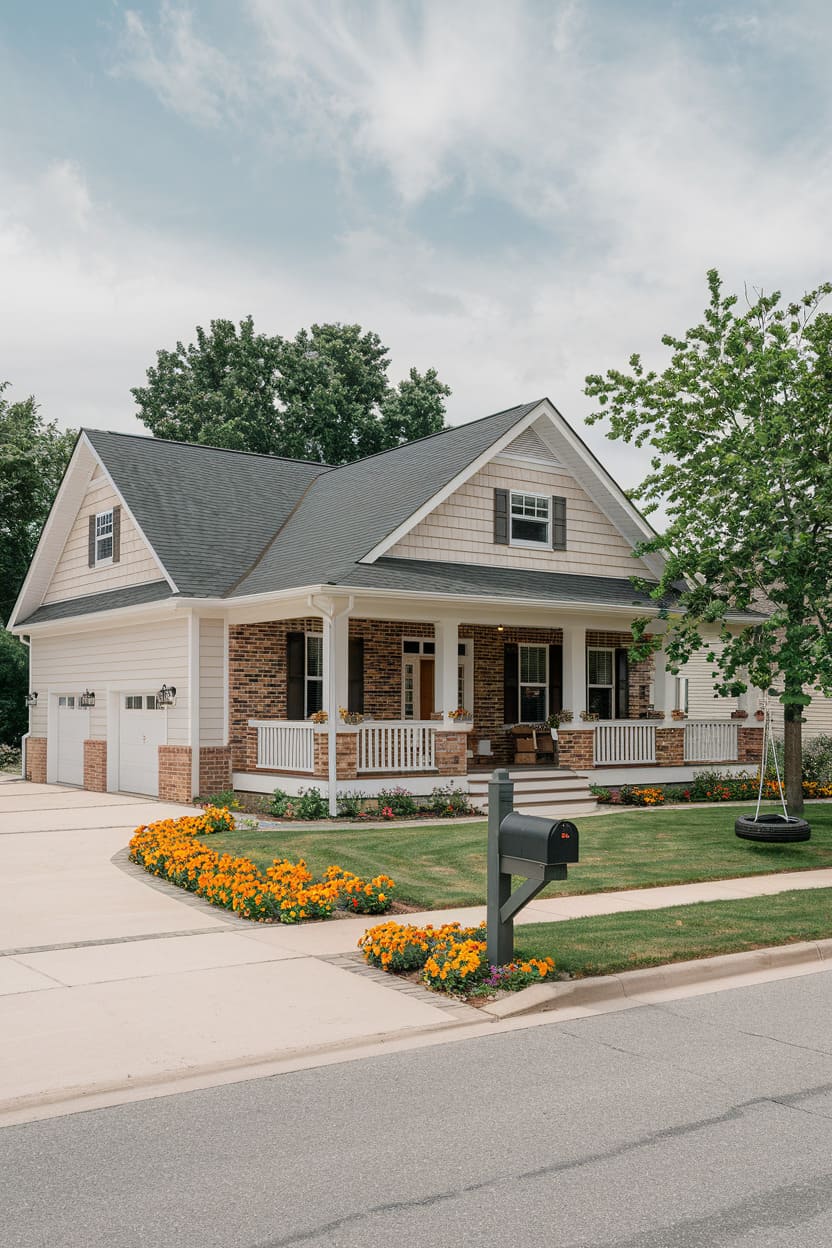
This single-story ranch-style home presents a modern look with contrasting dark brick and white siding. The dark brick, likely a deep gray or charcoal, grounds the lower portion of the house and provides texture. Crisp white siding clads the upper sections or gables, creating a bold, clean contrast. Black trim around the windows and possibly the roofline ties the two main colors together. This high-contrast palette gives the traditional ranch form a contemporary update. A dark roof harmonizes with the brick and trim. The overall effect is sharp, clean, and modern.
37. Desert Orange
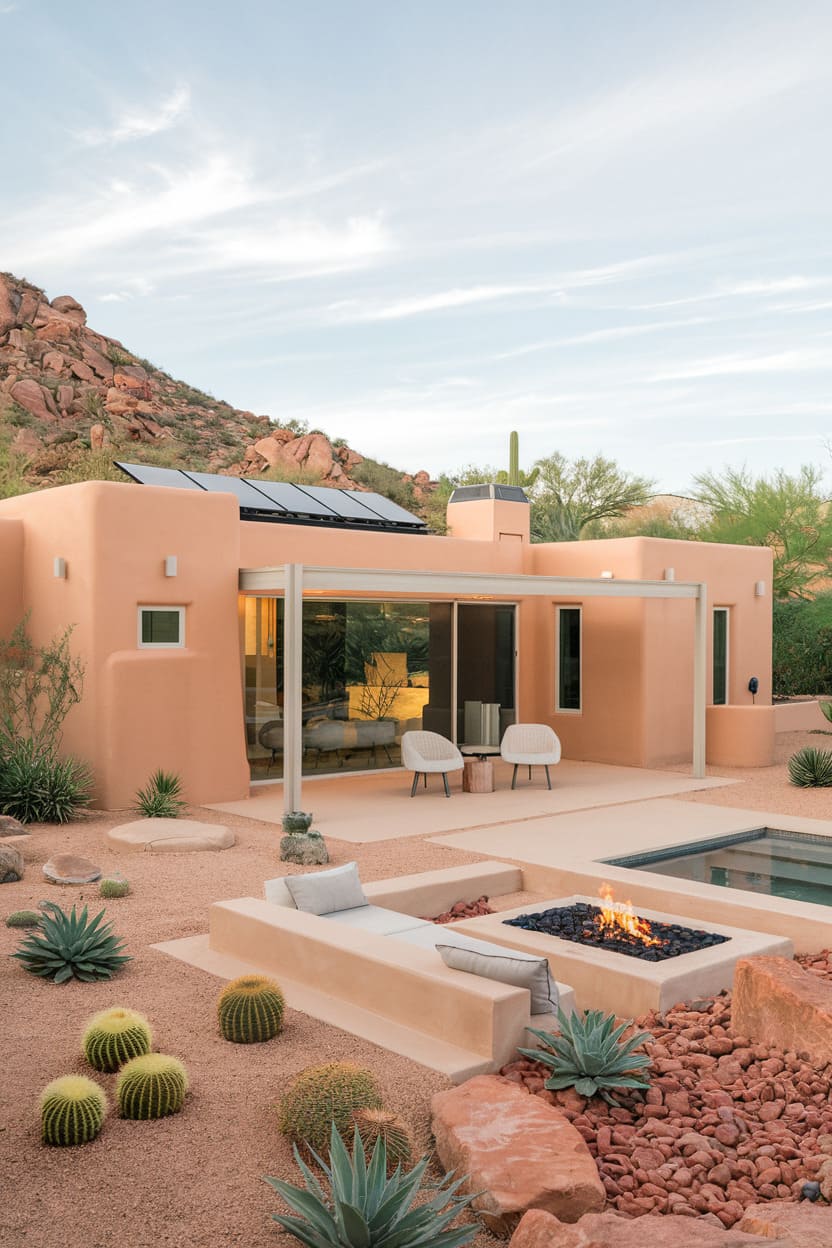
This sleek, minimalist house features a soft desert orange exterior finish, likely stucco. The warm, earthy orange tone connects the modern structure to a desert landscape aesthetic. The minimalist design with clean lines and flat roof planes allows the color itself to be a major feature. Subtle variations in shade or texture potentially add depth without ornamentation. Window frames are likely dark or metallic, providing a clean, contemporary contrast. This color choice feels both modern and organic, suitable for a sunny, arid climate. The focus is on form, color, and integration with the environment.
38. Dark Olive Green
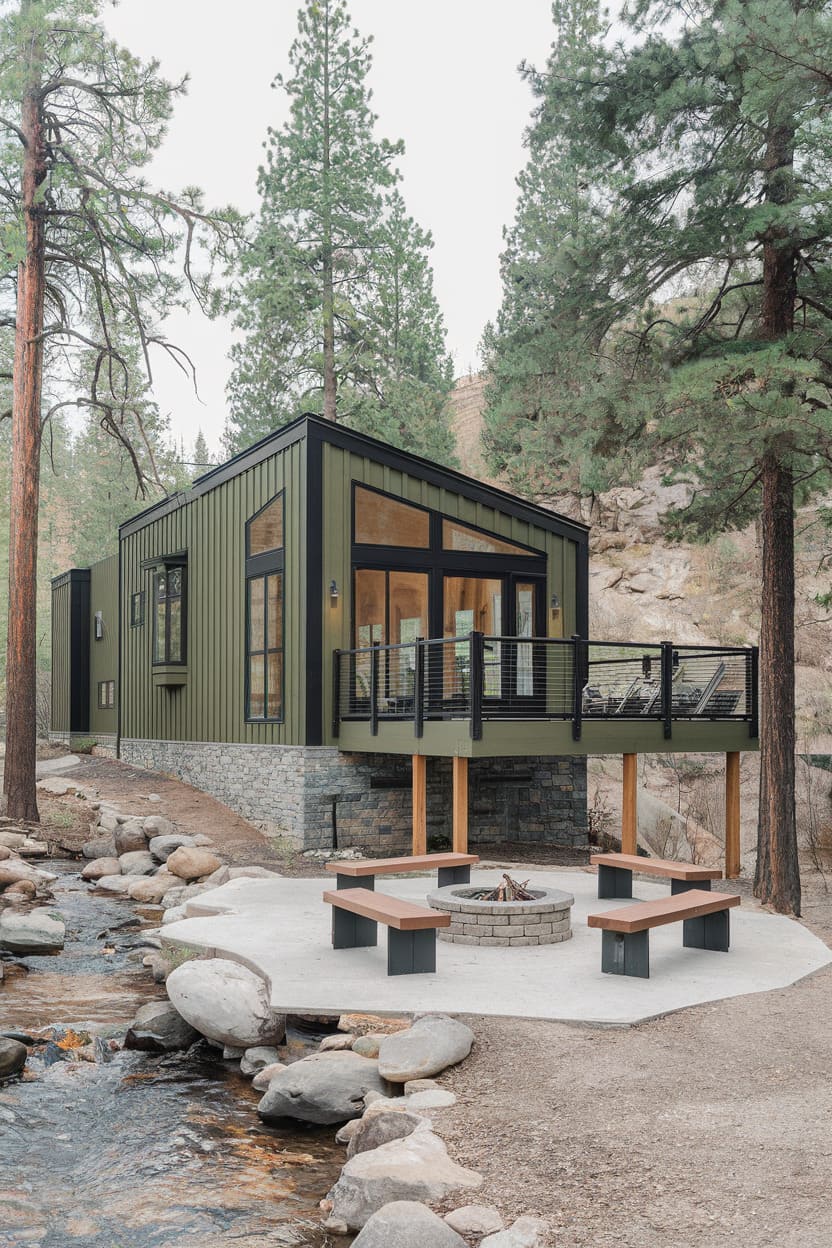
This sleek modern cabin is painted in a sophisticated dark olive green. The deep, muted green offers a contemporary twist on traditional cabin colors, blending well with natural surroundings. Black or dark bronze window frames complement the olive green, maintaining a modern and understated look. Natural wood accents, perhaps on a deck or soffit, would provide warmth against the cool green. The clean lines of the cabin are emphasized by the uniform color application. This palette feels chic, modern, and connected to nature in a refined way.
39.Black
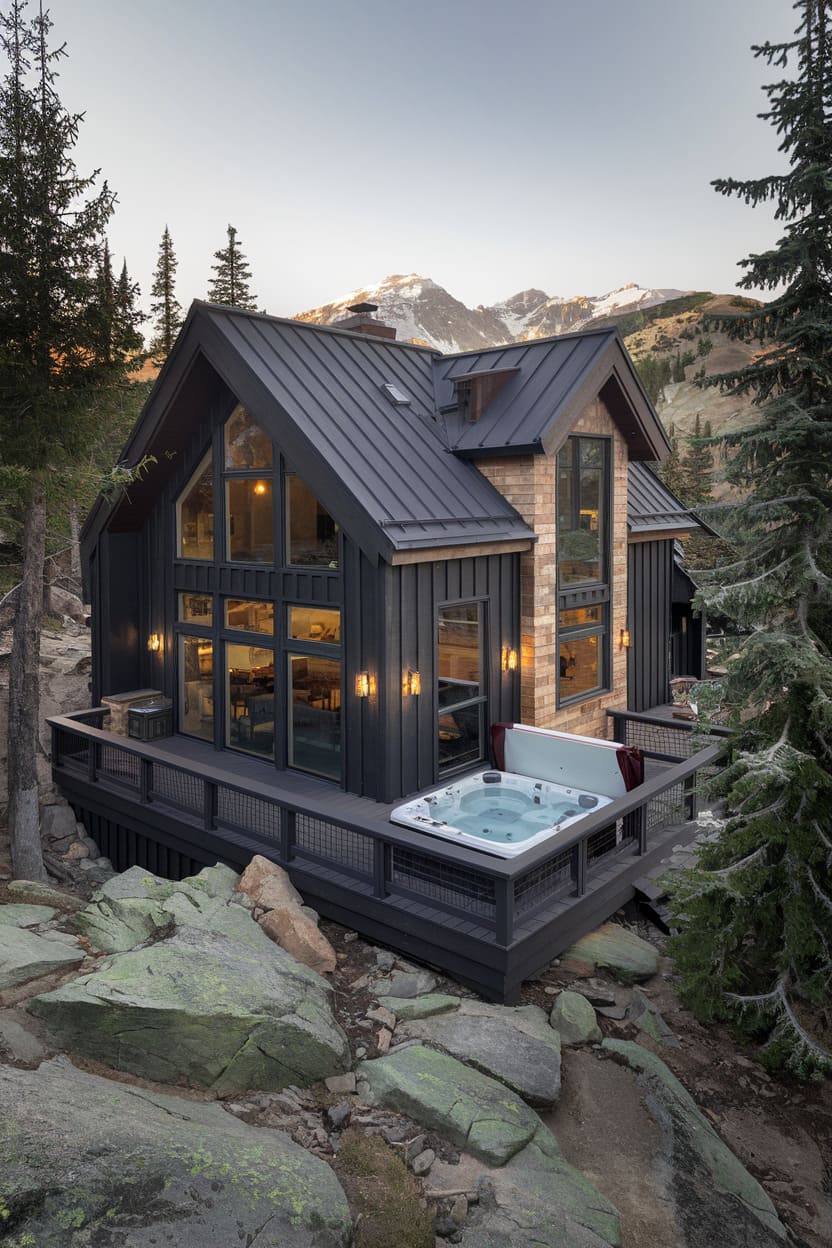
This sleek mountain home makes a bold and dramatic statement with its black exterior. The deep black siding or panels emphasize the home’s modern architectural form and sharp angles. Large windows, likely with black frames, punctuate the dark facade while capturing mountain views. Natural wood elements, such as soffits or accent walls, provide a crucial warm contrast to the black. The combination of black, glass, and wood creates a striking, high-end modern mountain aesthetic. This unconventional choice is sophisticated and blends surprisingly well into wooded or rocky landscapes.
40. Coastal Green and White
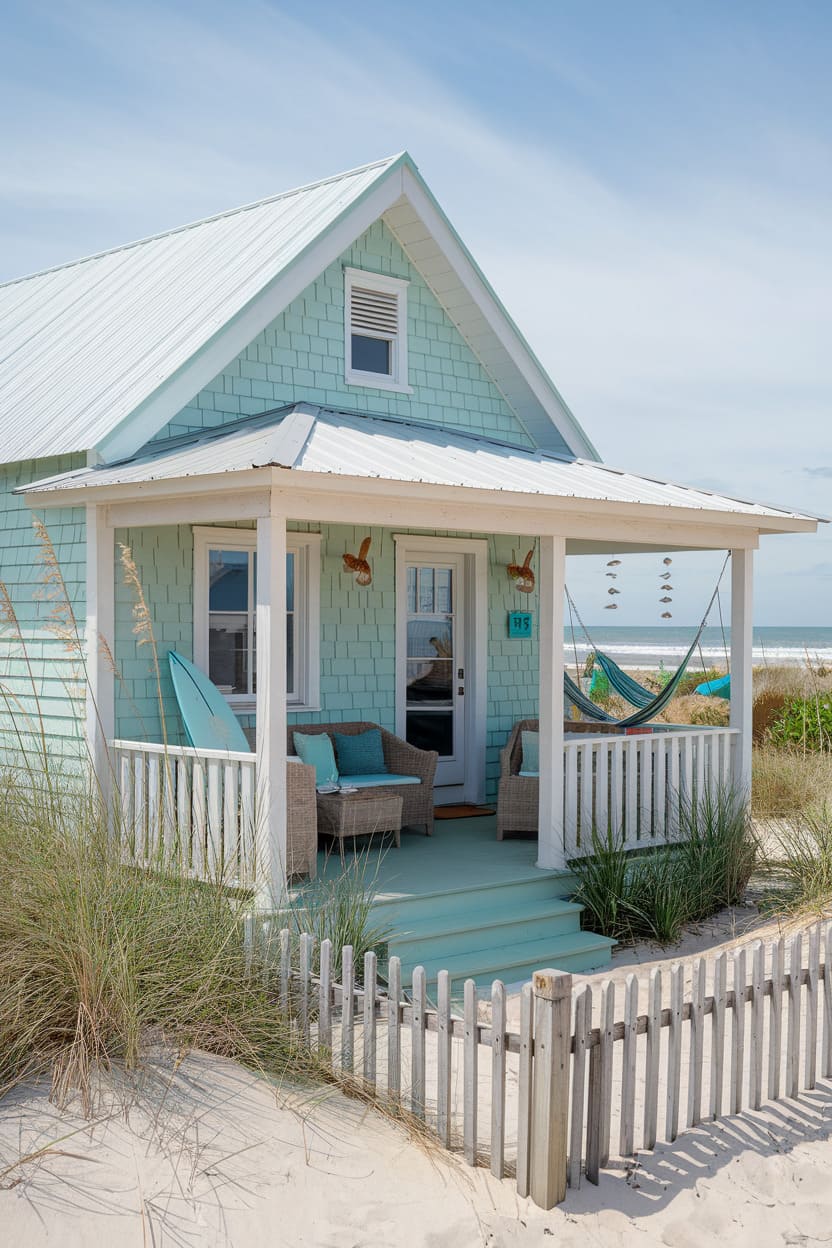
This small beachside cottage features a refreshing coastal green exterior, reminiscent of sea glass. The light, airy green color perfectly captures a relaxed beach vibe. Crisp white trim outlines the windows, door, and roofline, creating a classic and clean contrast. White railings on the porch or deck further enhance the coastal feel. This simple two-color palette is timeless for beach houses, feeling bright and cheerful. The light colors reflect sunlight, keeping the interior cooler. This combination is effortlessly charming and suitable for its seaside setting.
41. Cream Brown
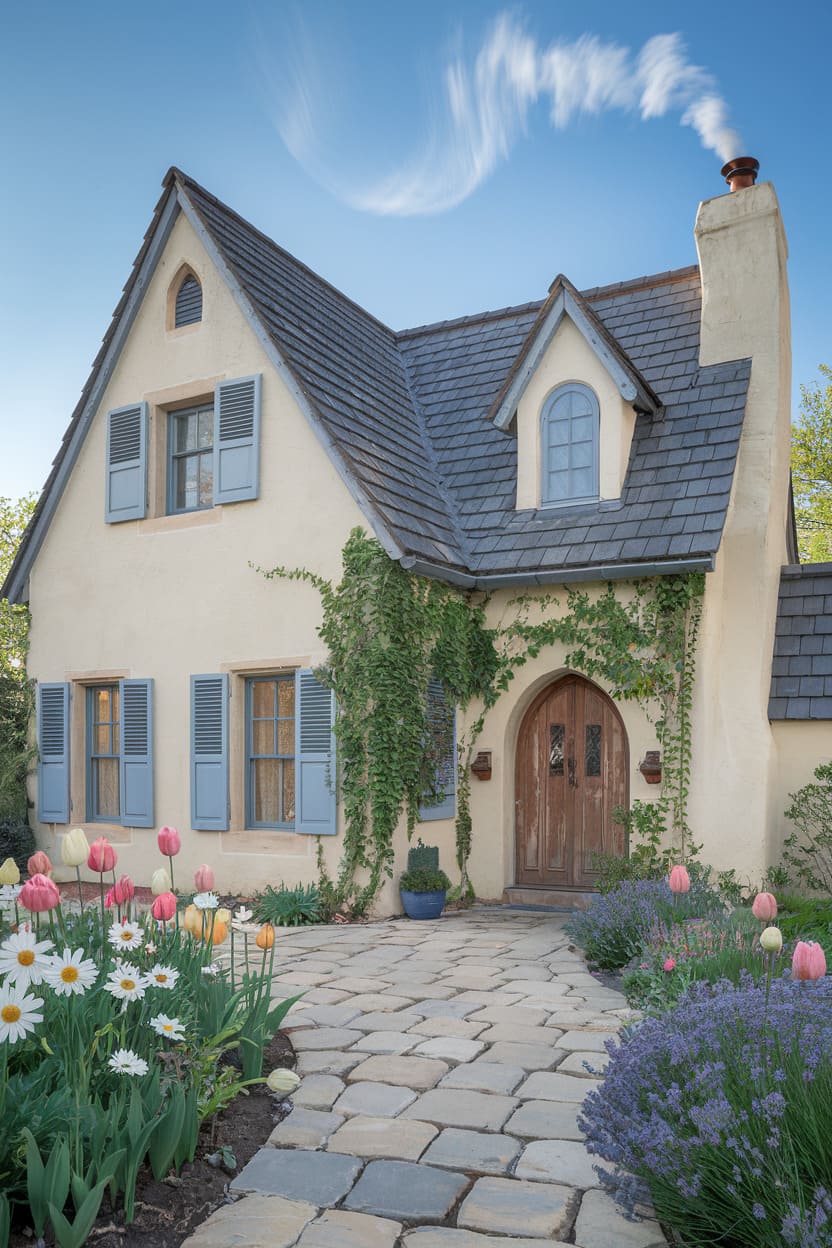
This charming small cottage evokes a storybook feel with its cream-brown exterior. The main body seems to be a warm, light brown or tan stucco or siding. Darker brown trim accents the windows, door, and perhaps half-timbering details, characteristic of storybook styles. The roof is steeply pitched, likely with dark shingles, adding to the picturesque quality. The combination of cream, light brown, and dark brown feels cozy, earthy, and whimsical. This palette enhances the cottage’s unique architectural features and fairytale charm. White might be used sparingly on window sashes for a touch of brightness.
42. Pitch Black
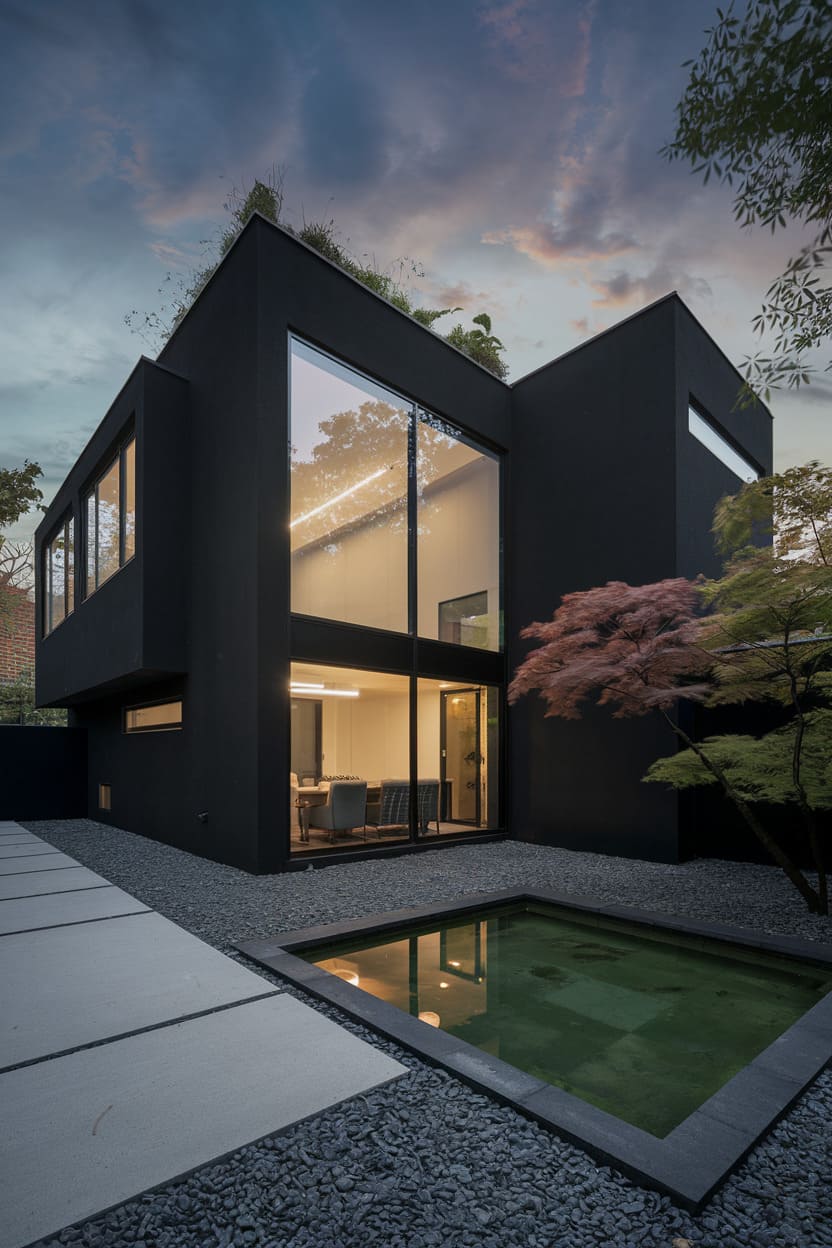
This striking modern house is finished in a dramatic pitch black exterior. The solid black color emphasizes the home’s bold geometric forms and minimalist aesthetic. Large expanses of glass, likely with black frames, integrate seamlessly into the dark facade. The monolithic appearance is intentional, creating a powerful visual statement. Any trim or accent materials are likely kept dark or used very sparingly to maintain the effect. This choice is daring and sophisticated, often used in contemporary architecture to create contrast with the landscape or make a sculptural statement.
43. Mediterranean Orange
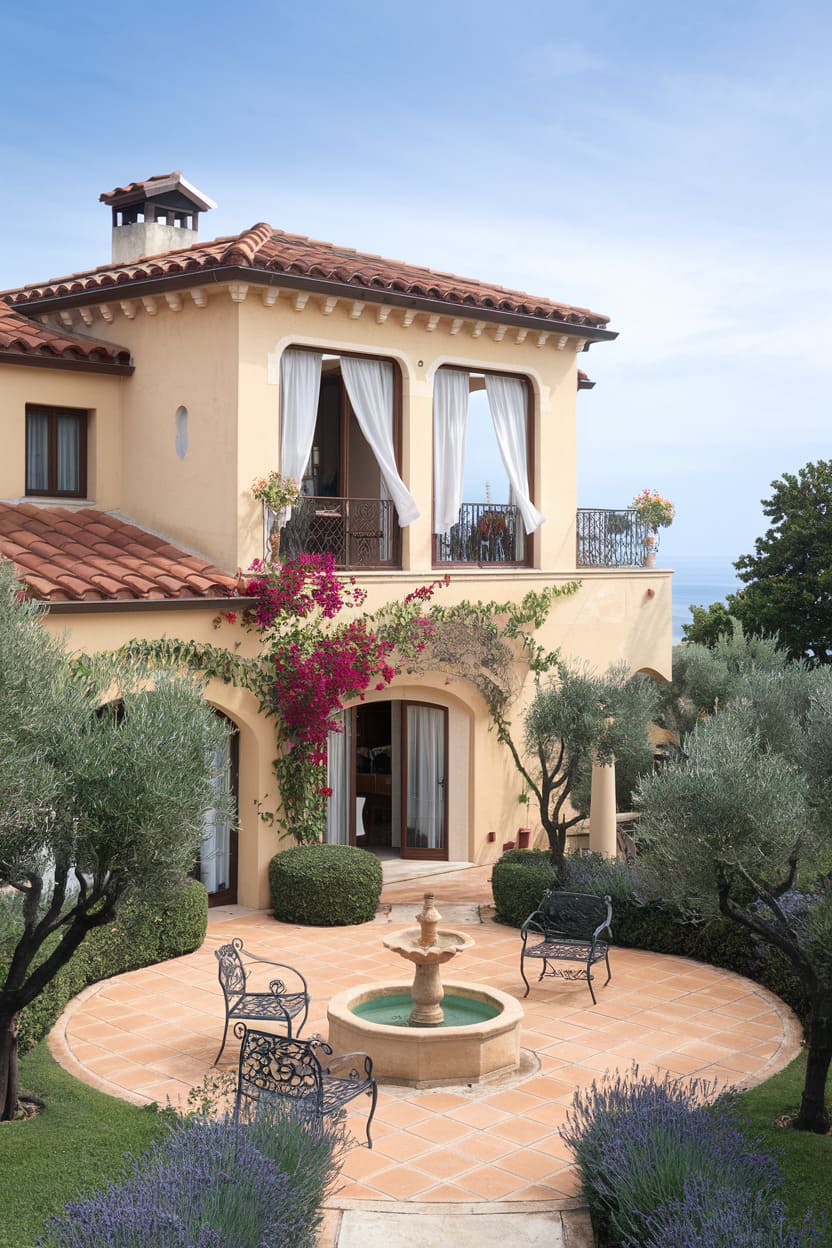
This sun-drenched Mediterranean villa glows with a warm, terracotta-like orange exterior, likely stucco. This earthy orange hue is characteristic of Mediterranean architecture, evoking warmth and sunshine. The traditional red tile roof provides a classic and complementary color pairing. Deep-set windows might feature simple trim or be left untrimmed against the stucco. Arches and wrought iron details, common in this style, add texture and shadow. This color palette feels authentic, warm, and perfectly suited to a sunny climate and the villa’s architectural roots. Lush greenery provides a beautiful contrast.
44. Slate Gray
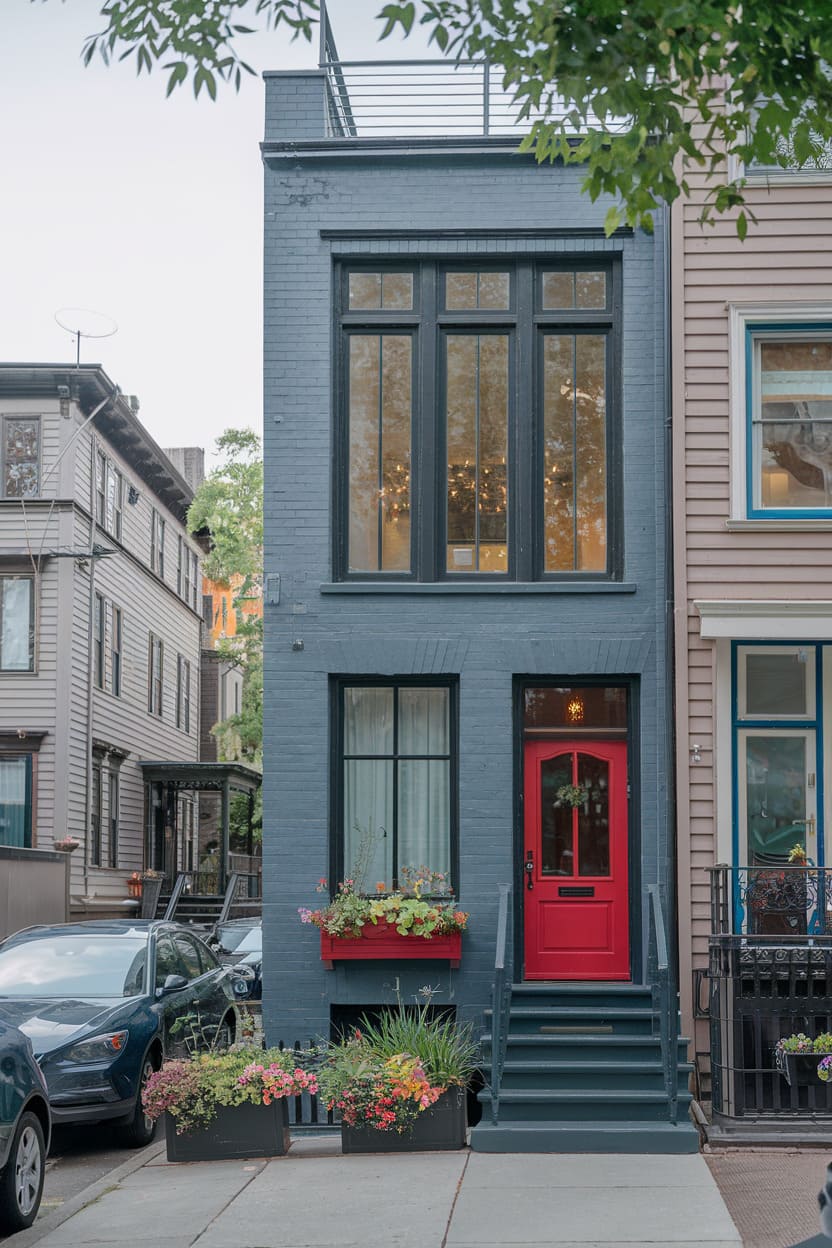
This tall, narrow townhouse features a sophisticated slate gray exterior paint color. The deep, cool gray provides a modern and elegant look suitable for urban settings. White trim sharply defines the tall windows, ornate cornice, and door surround, creating a classic contrast. The combination of slate gray and white highlights the building’s verticality and architectural details. A dark front door, possibly black or a deep color, adds a grounding element. This palette feels timeless, chic, and well-suited to the formal architecture of the townhouse.
45. Dark Tangerine Orange
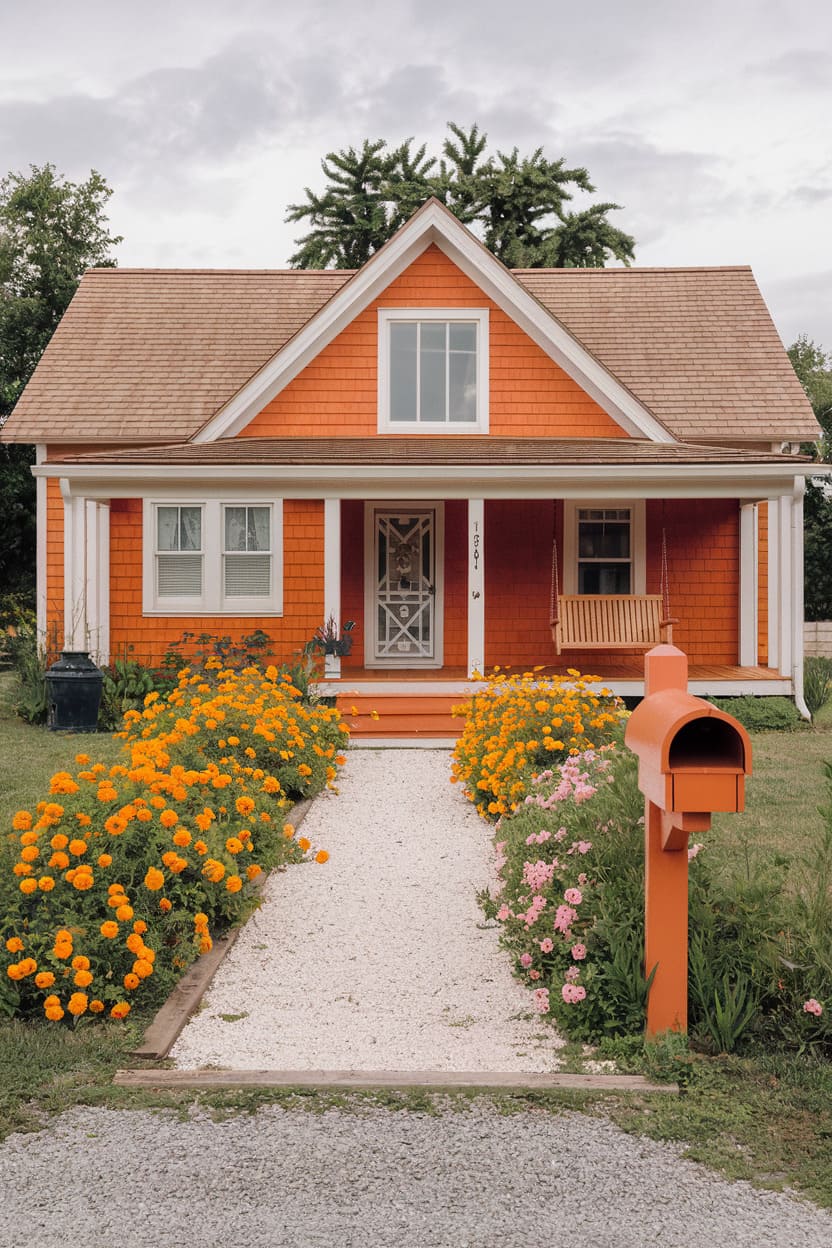
This ranch house showcases a deeper, more muted tangerine orange siding compared to brighter versions. The rich, earthy orange offers warmth without being overly bright. Clean white trim provides a crisp contrast for the windows, door frame, and the fascia along the low-pitched roof. The horizontal lines of the ranch style are emphasized by the color application. This color choice gives the classic ranch a unique personality while remaining grounded. A neutral roof color complements the scheme without distracting from the main color. This dark tangerine feels inviting and slightly retro.
46. Wine Red
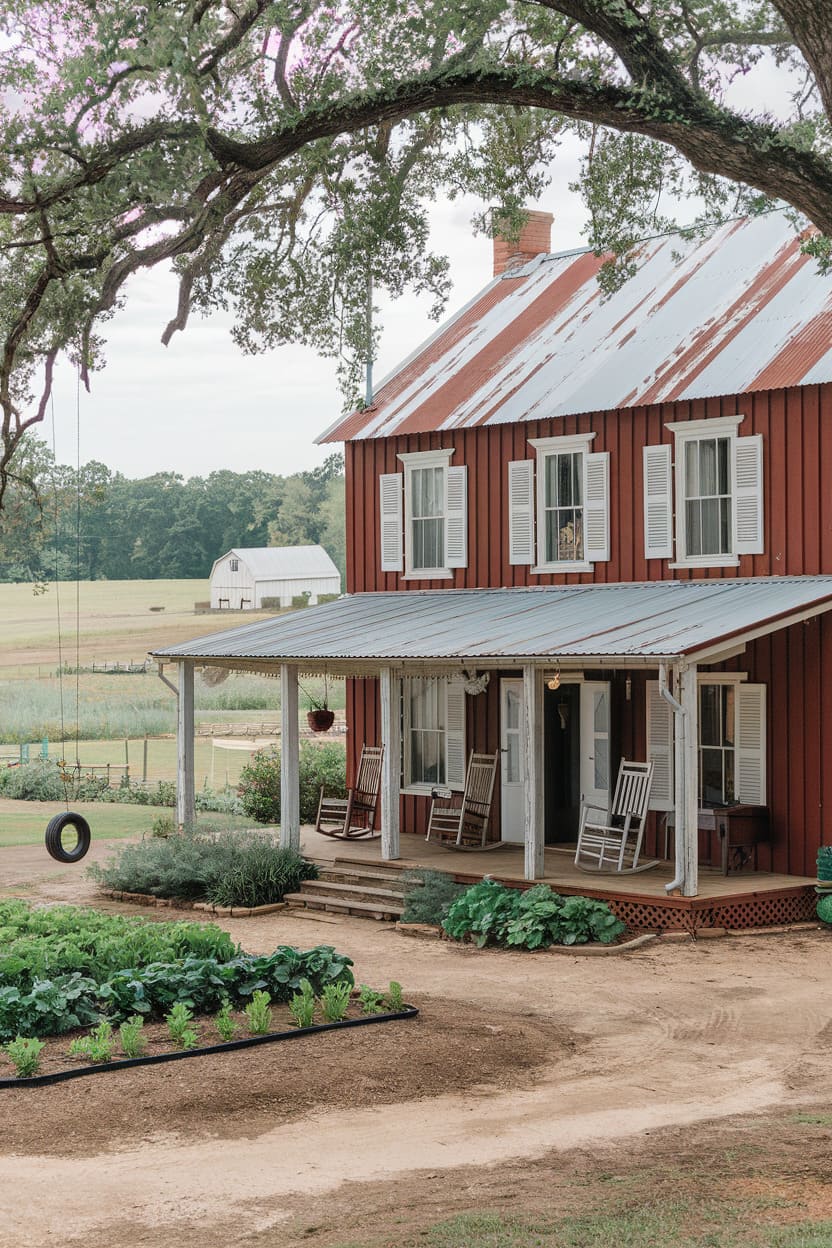
This traditional rural farmhouse is painted a rich wine red, reminiscent of classic barn colors. The deep red provides a bold yet traditional look for the farmhouse structure. Bright white trim sharply contrasts with the red siding, highlighting the windows, door, and porch details. The combination of wine red and white is a timeless choice for farmhouses, feeling both sturdy and welcoming. A simple porch adds to the home’s character. The roof is likely a neutral color like gray or black to balance the strong siding color. This palette gives the farmhouse a strong presence in the rural landscape.
47. Farmhouse White
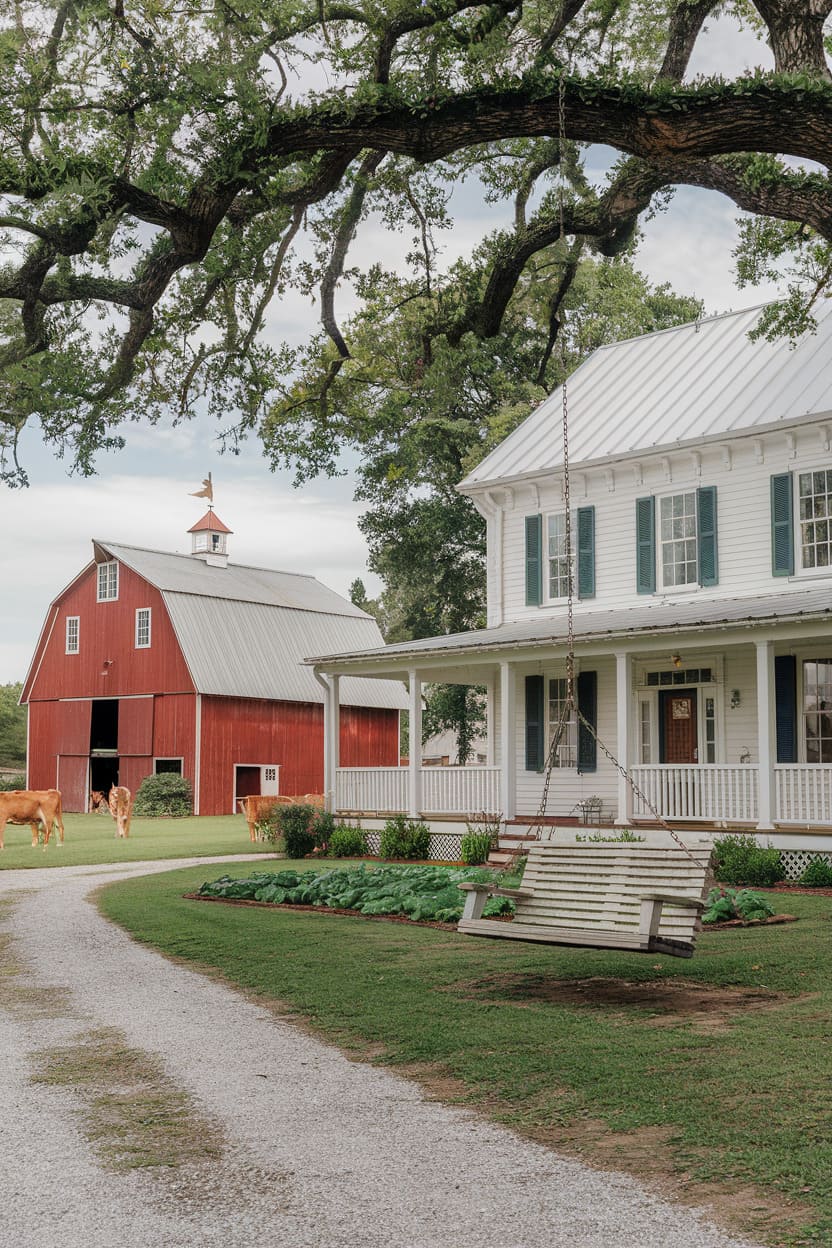
This traditional white farmhouse embodies classic American charm. The crisp white siding gives the home a clean, bright, and timeless appearance. Black or dark-colored shutters provide a striking contrast against the white, adding definition to the windows. The wraparound porch, a quintessential farmhouse feature, is highlighted with white railings and columns. A dark roof, often metal or shingle in gray or black, completes the iconic look. This simple, high-contrast palette is enduringly popular for its fresh yet traditional appeal. Green landscaping looks beautiful against the white backdrop.
48. Pale Pink
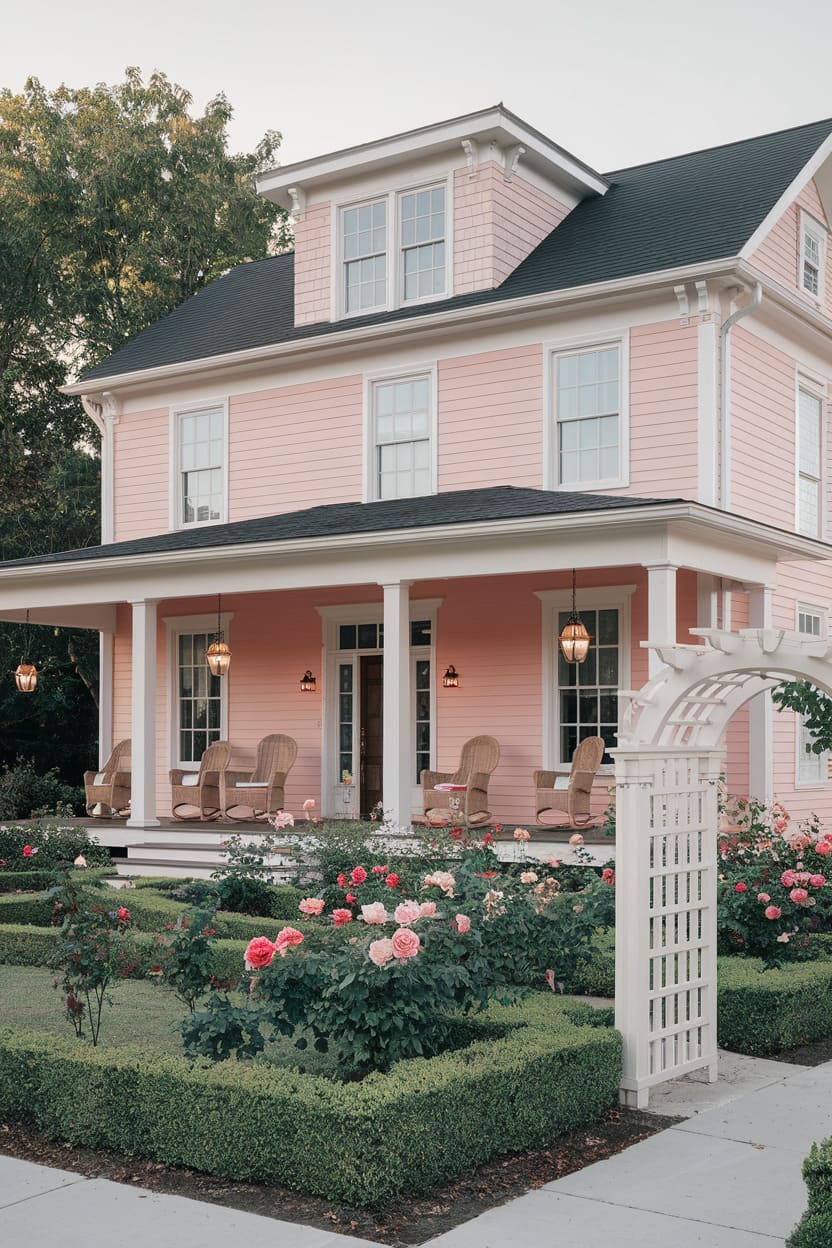
This two-story suburban home features a soft, pale pink exterior. The delicate pink hue offers a unique and gentle look compared to more common neutral tones. White trim provides a clean and necessary contrast around the windows, door, and garage. The combination feels light, airy, and slightly whimsical. Dark shutters add a touch of traditional definition against the pale pink siding. This color choice works well in sunny climates or coastal areas, giving the home a cheerful personality. A neutral roof color helps balance the pink.
49. Light Brown
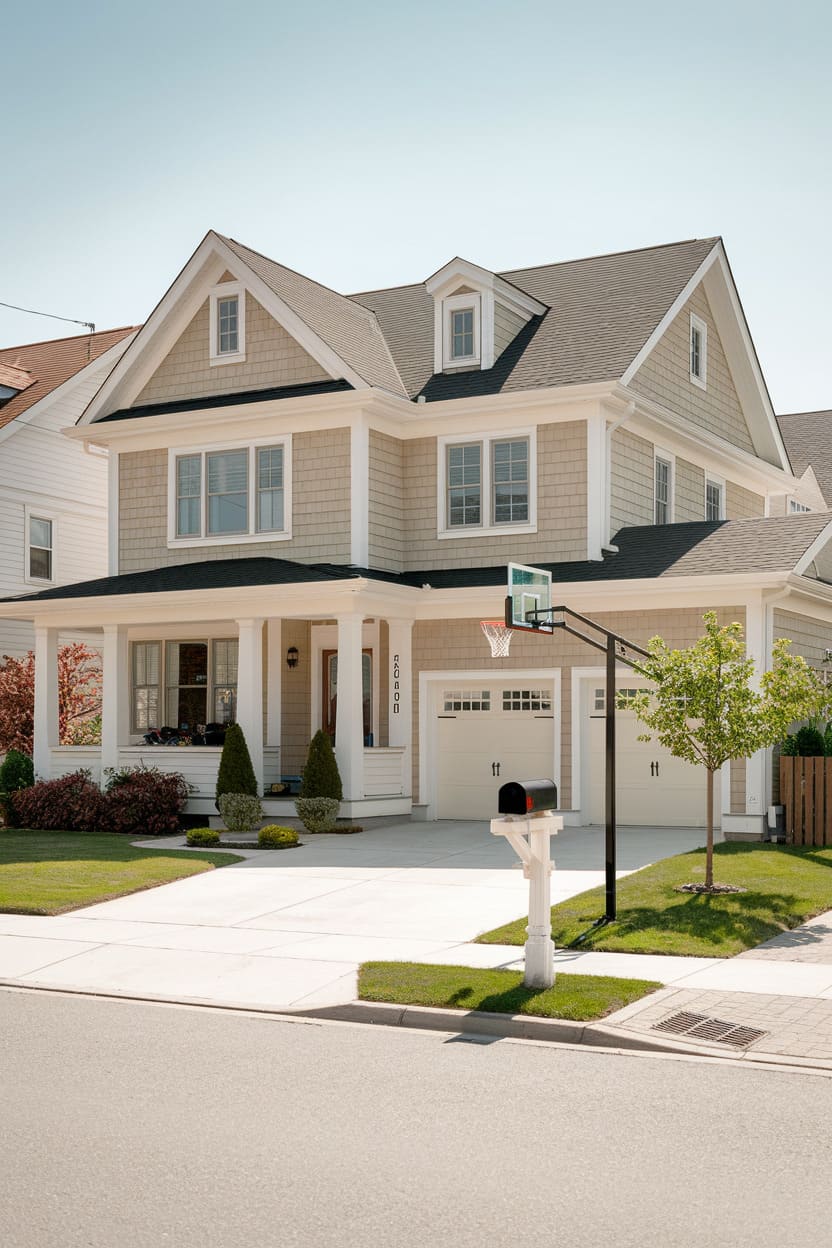
This typical two-story suburban house is painted in a versatile light brown or tan color. This neutral earthy tone provides a warm and approachable exterior appearance. White trim is used to define the windows, garage door, and roofline, offering a clean contrast. Dark shutters, likely black or deep brown, add dimension and traditional appeal. The combination of light brown, white, and dark shutters is a popular and safe choice for suburban homes. A coordinating roof color, perhaps a medium brown or gray, completes the harmonious look. This palette offers broad appeal and timelessness.
50. Coral
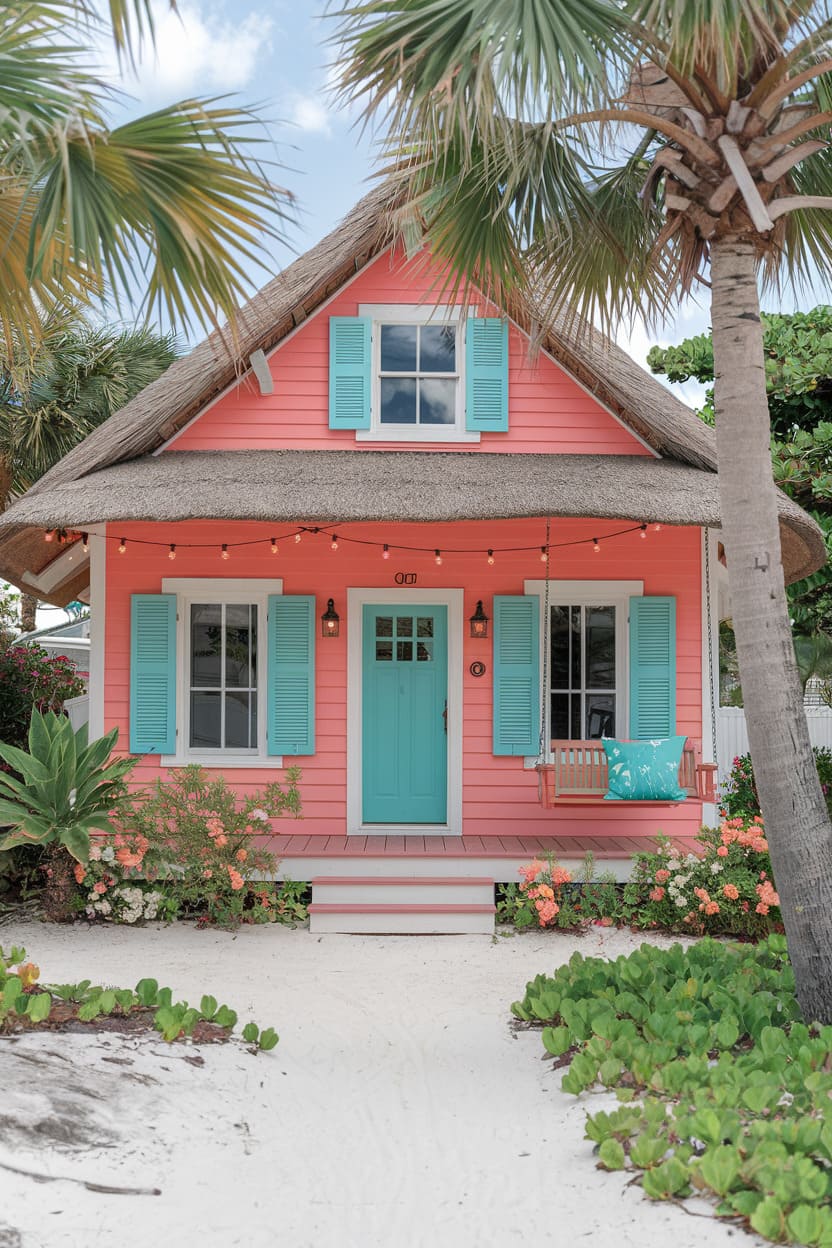
This vibrant coastal cottage shines with its cheerful coral exterior paint. The bright, pinkish-orange hue instantly evokes a tropical, beachy feeling. Crisp white trim provides a sharp contrast around the windows, door, and porch railings, enhancing the coastal vibe. The combination of coral and white feels fun, energetic, and perfect for a sunny seaside location. The simple architecture of the cottage serves as a great backdrop for the lively color. This choice makes the cottage stand out and radiates vacation energy. A light-colored roof would complement this bright scheme.
51. Whimsical Lavender
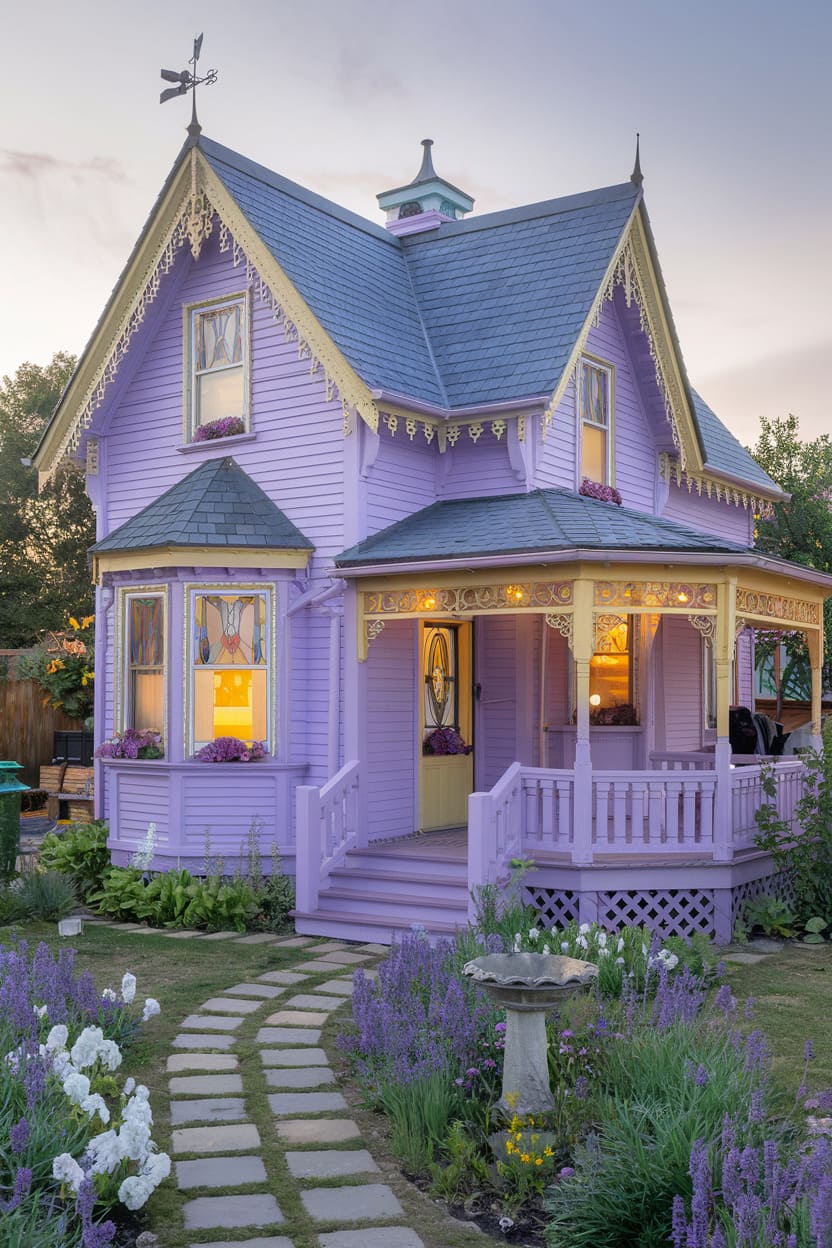
This whimsical Victorian-style house is painted in a charming lavender hue. The soft purple color gives the ornate architecture a playful and unique personality. Contrasting trim, perhaps in cream, white, or even a complementary pastel, highlights the intricate details like gingerbread trim and bay windows. Victorian homes are well-suited for multi-color schemes, and lavender provides a lovely base. Additional accent colors might be used on specific details to enhance the “painted lady” effect. This choice is imaginative and makes the historic home feel enchanting.
52. Burnt Sienna
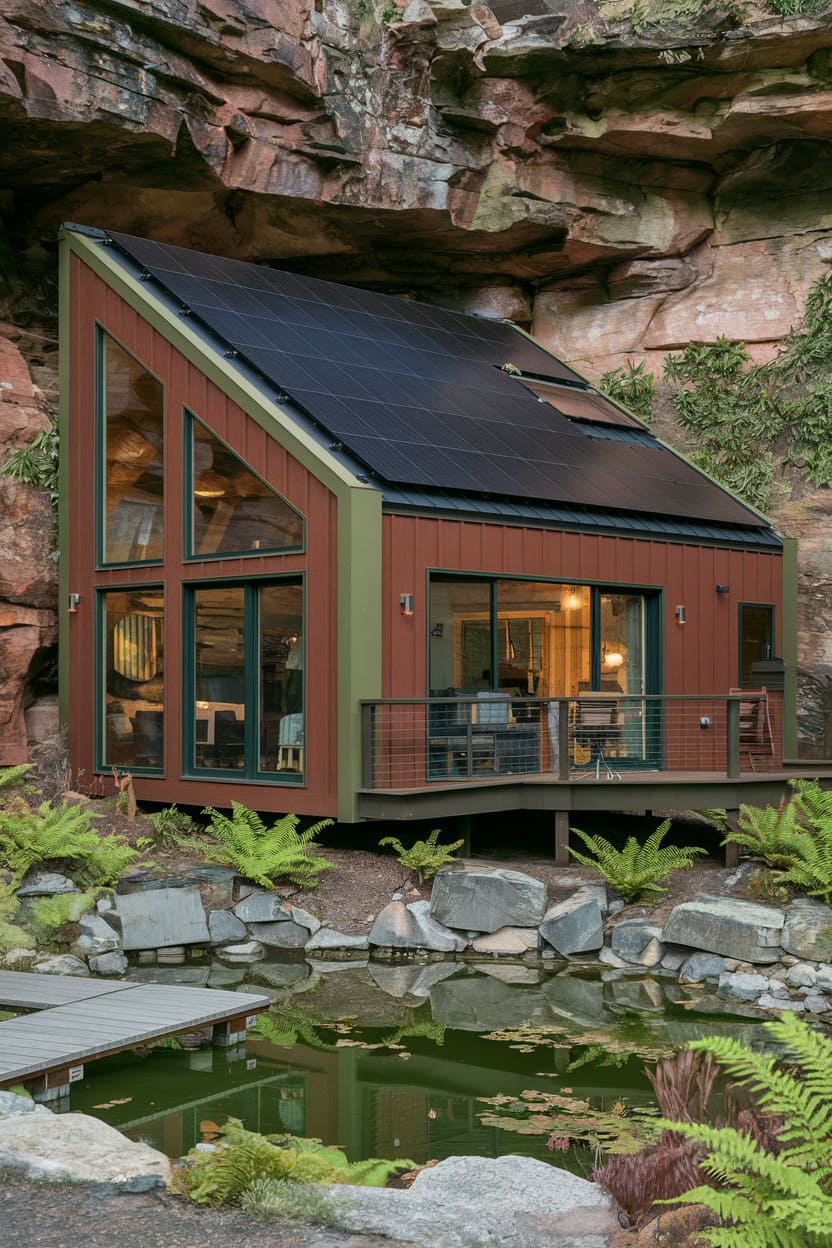
This cabin features a warm, earthy burnt sienna color on its exterior wood siding. The reddish-brown hue gives the cabin a rustic and grounded appearance, blending well with a natural setting. Olive green is used as an accent color, likely on the trim around windows and doors, providing a complementary earthy contrast. This combination of burnt sienna and olive green feels harmonious and deeply connected to nature. The colors enhance the cabin’s cozy and secluded feel. A dark roof completes the rustic palette effectively.
53. Light Yellow and Brown Roof
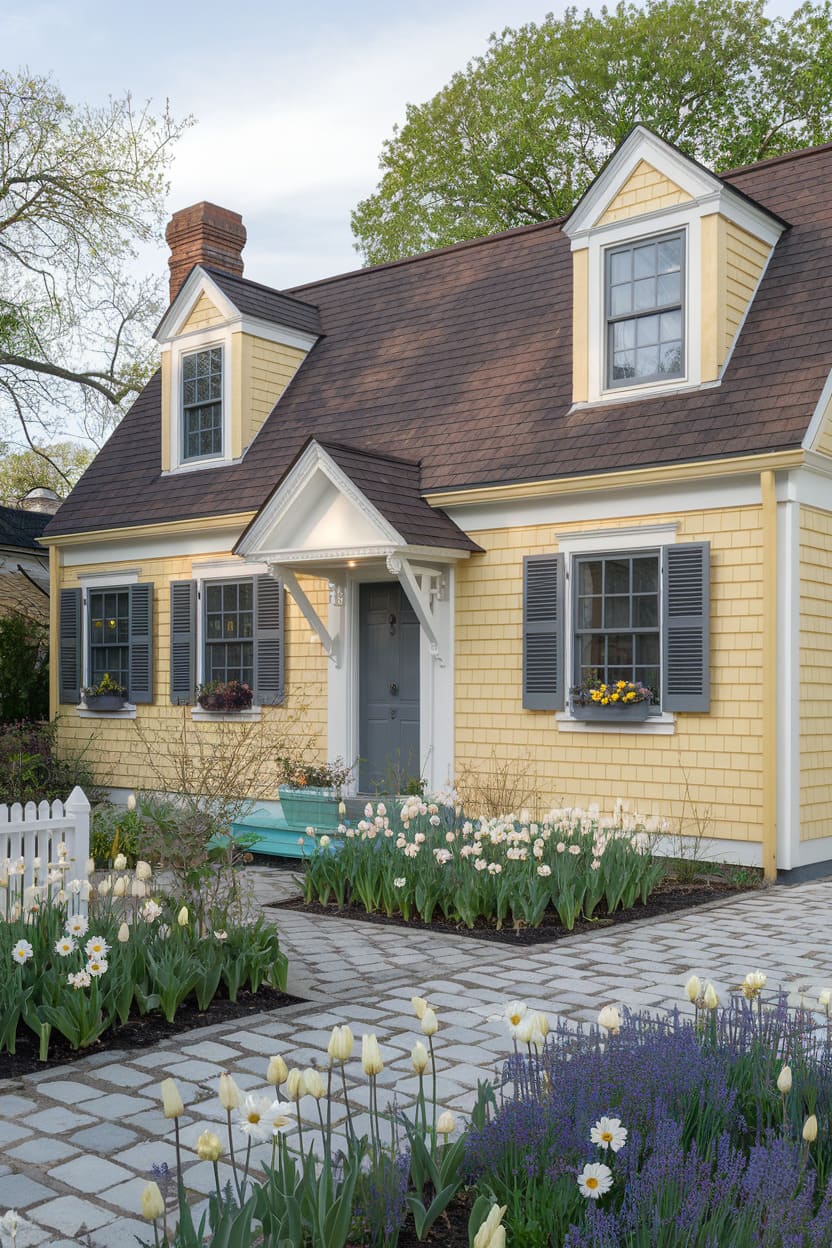
This Cape Cod style home radiates cheerfulness with its light, buttery yellow siding. The soft yellow provides a welcoming and sunny exterior without being overwhelming. Crisp white trim defines the windows, door, and dormers, creating a classic and fresh contrast. The standout pairing is with the medium brown roof shingles, offering a warm, earthy counterpoint to the light yellow. Black shutters add traditional definition to the windows. This color combination feels cozy, inviting, and timelessly appealing for a Cape Cod home.
54. Periwinkle
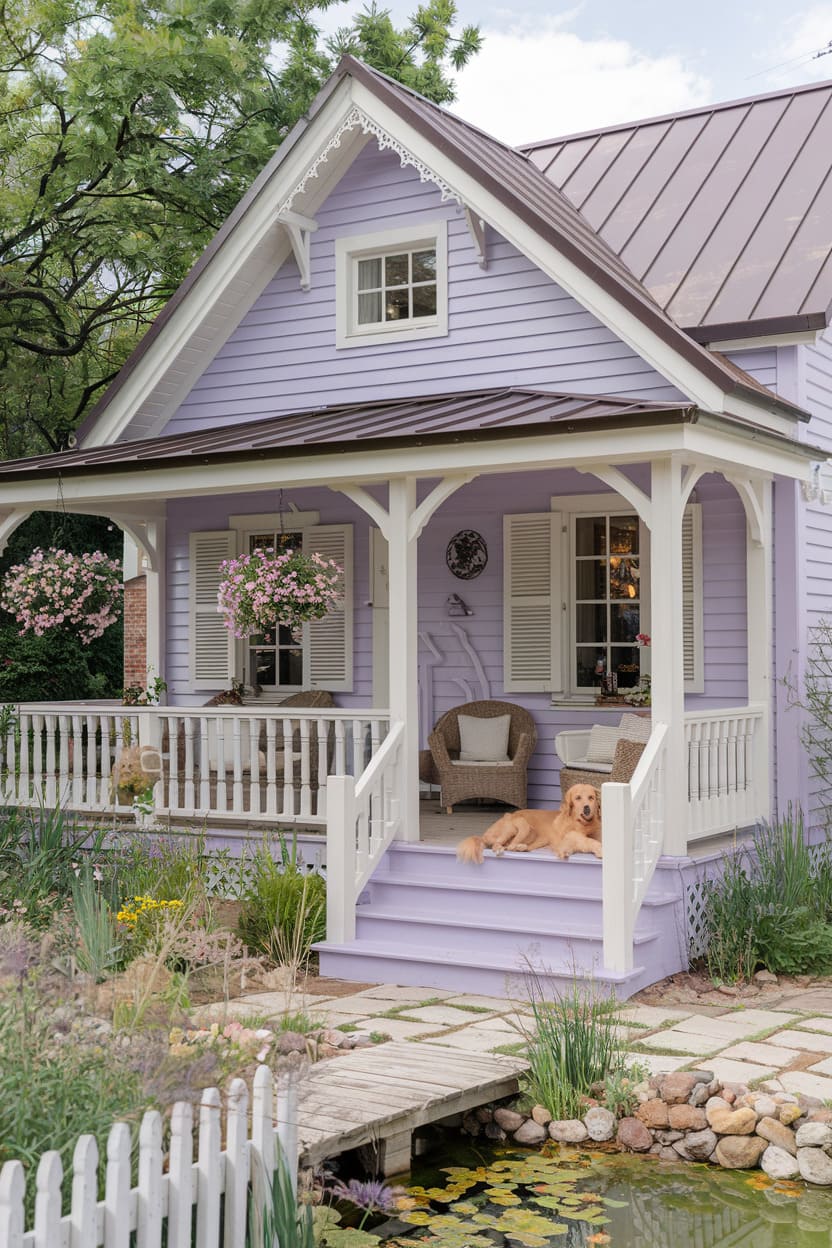
This charming cottage is painted in a lovely periwinkle blue, a soft blue with a hint of purple. The unique color gives the cottage a sweet and slightly whimsical appearance. Bright white trim provides a clean contrast around the windows, door, and porch details. The combination of periwinkle and white feels fresh, cheerful, and inviting. This gentle color is perfect for enhancing the cottage’s cozy character. A darker roof helps ground the light and airy color scheme. This choice offers a unique twist on traditional blue exteriors.
55. Purple and Gold
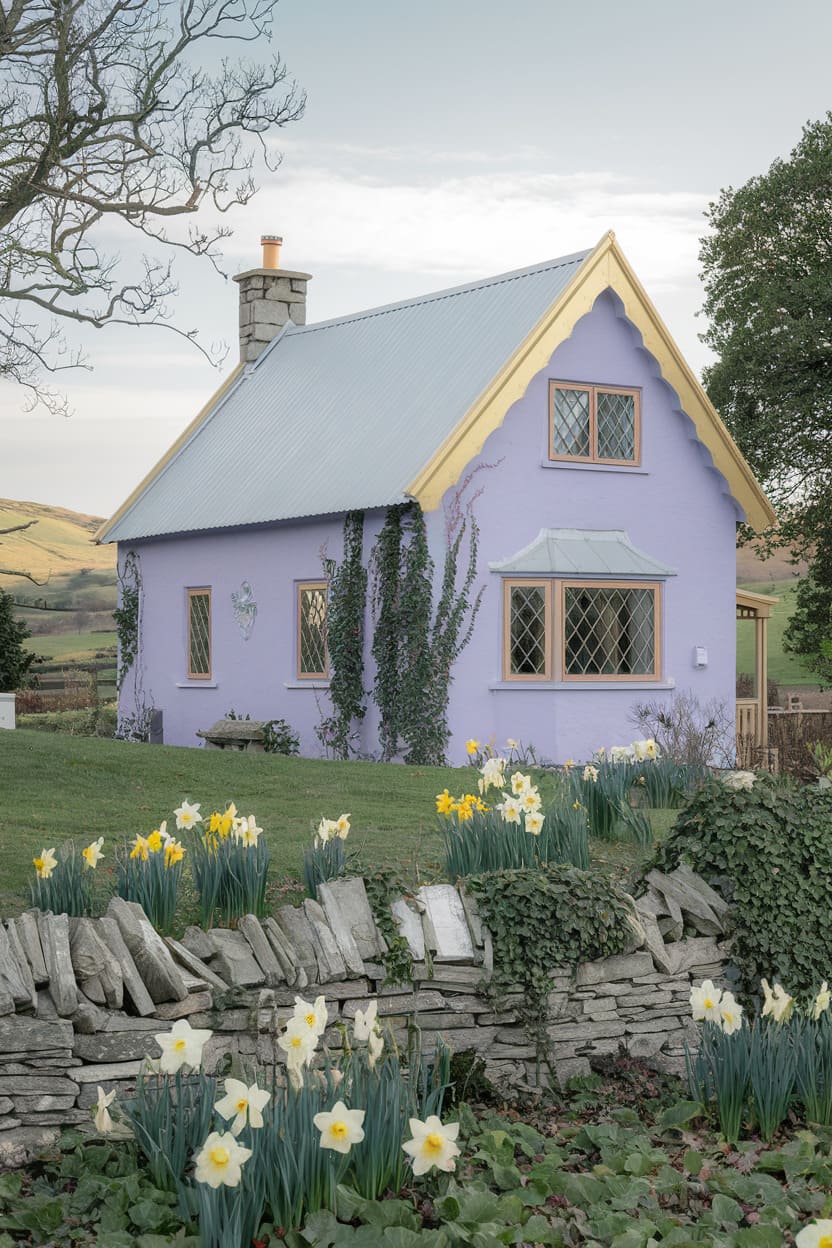
This charming home, possibly Victorian or cottage style, features a regal combination of purple and gold accents. The main body is likely a shade of purple, providing a rich and unconventional base. Gold or mustard yellow is used for trim and architectural details, creating a striking and luxurious contrast. This bold pairing gives the home a distinctive and somewhat Gilded Age appearance. White might be used on window sashes to add a layer of brightness. This is a daring color scheme that showcases personality and highlights ornate details effectively.
56. White-Yellow Compound
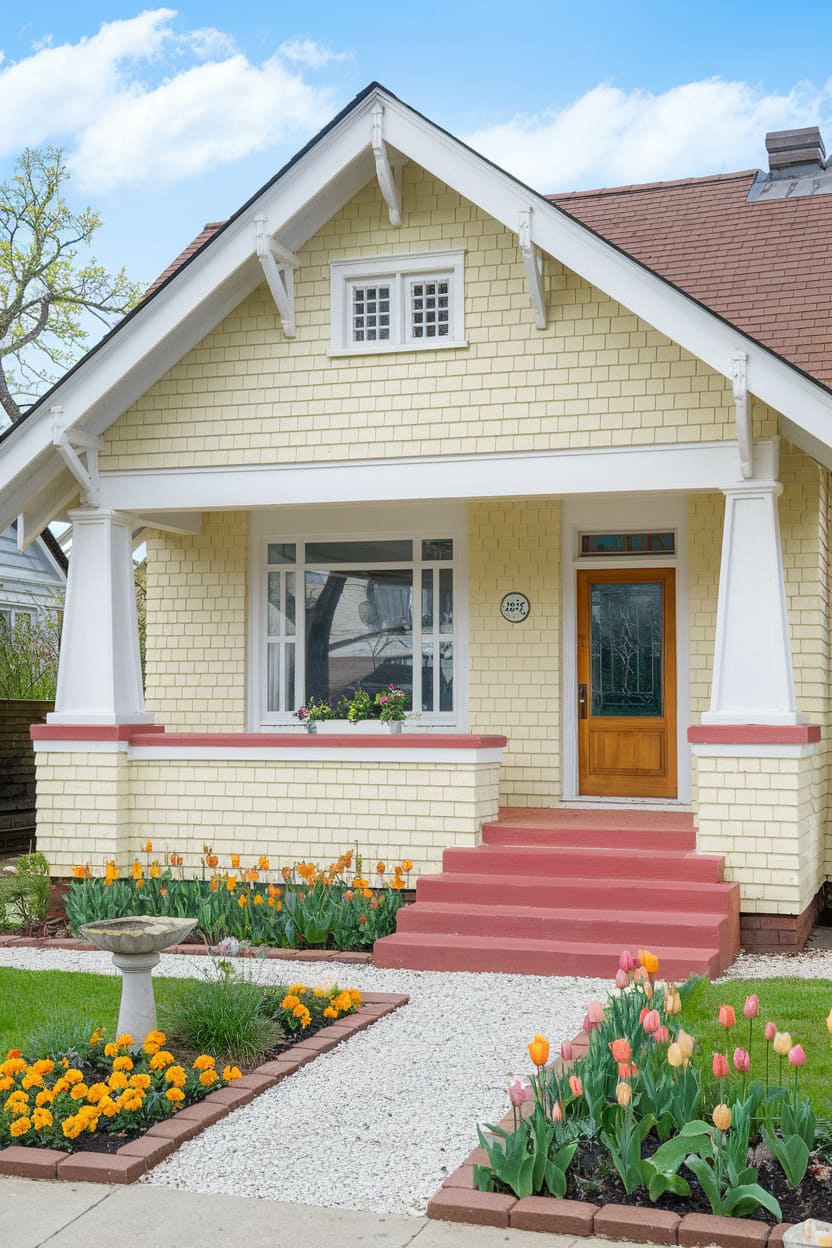
This cheerful Craftsman-style bungalow uses a compound approach with white and yellow. The main siding appears to be a crisp white, giving the home a bright and clean look. Sunny yellow is used as a significant accent, perhaps on the gables, dormers, or porch elements, adding warmth and cheer. Additional white trim defines the windows and classic Craftsman features like porch columns. This combination feels welcoming, sunny, and appropriate for the bungalow style. It balances the neutrality of white with the optimism of yellow effectively.
57. Bright White
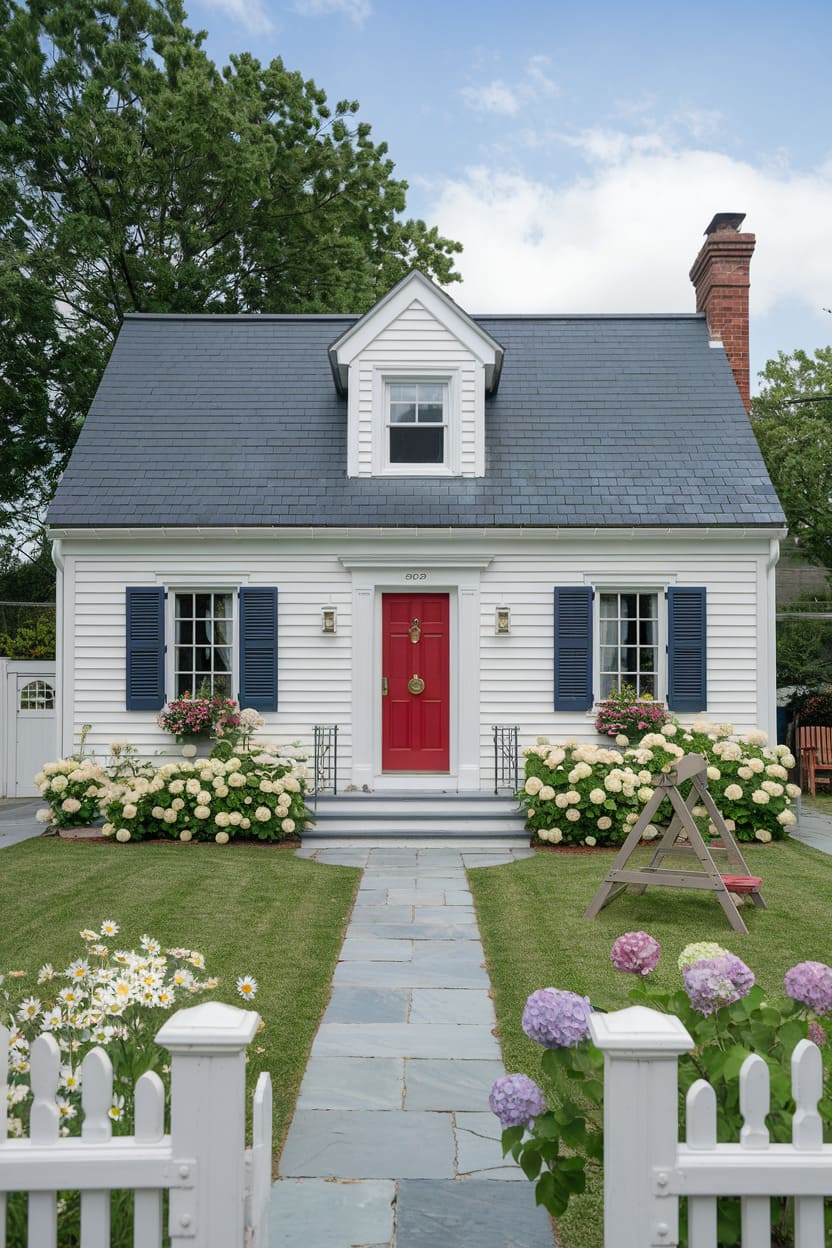
This classic Cape Cod style home is painted a brilliant, bright white. The clean white siding makes the house look crisp, tidy, and reflects sunlight beautifully. Dark shutters, likely black or a very deep green, provide a sharp traditional contrast against the white. The front door might offer a pop of color or be kept dark to match the shutters. White trim around windows and the roofline blends seamlessly with the siding for a unified look. This timeless combination emphasizes the home’s simple, elegant lines and remains perpetually popular.
58. Smoky Off White
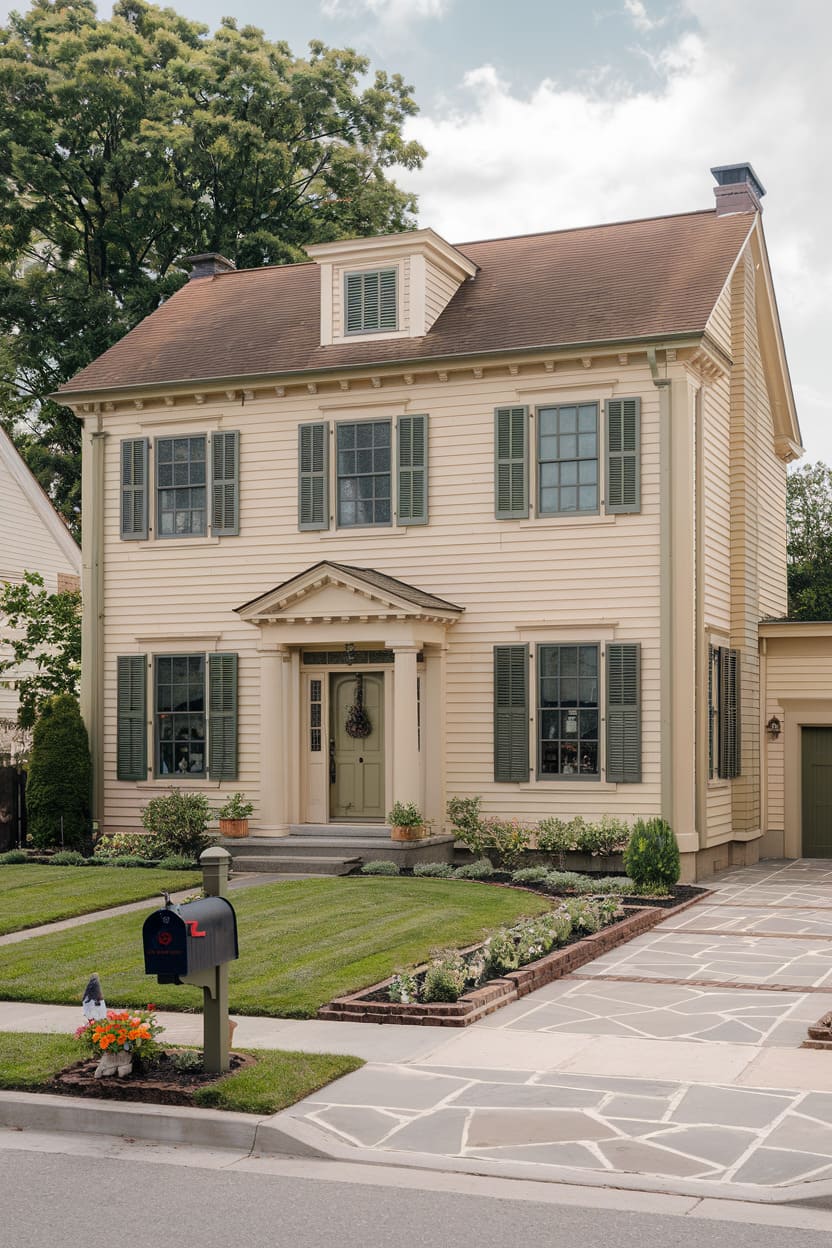
This classic suburban two-story home features a sophisticated smoky off-white exterior. This muted white, with hints of gray or beige, offers a softer look than bright white while remaining neutral and elegant. Contrasting trim, perhaps in a clean white or a slightly darker neutral, defines the windows and architectural lines. Dark shutters add traditional character and visual weight to the facade. The smoky off-white provides a versatile backdrop for landscaping and personal touches. This is a refined and timeless color choice with broad appeal for suburban homes.
59. Colonial Brown
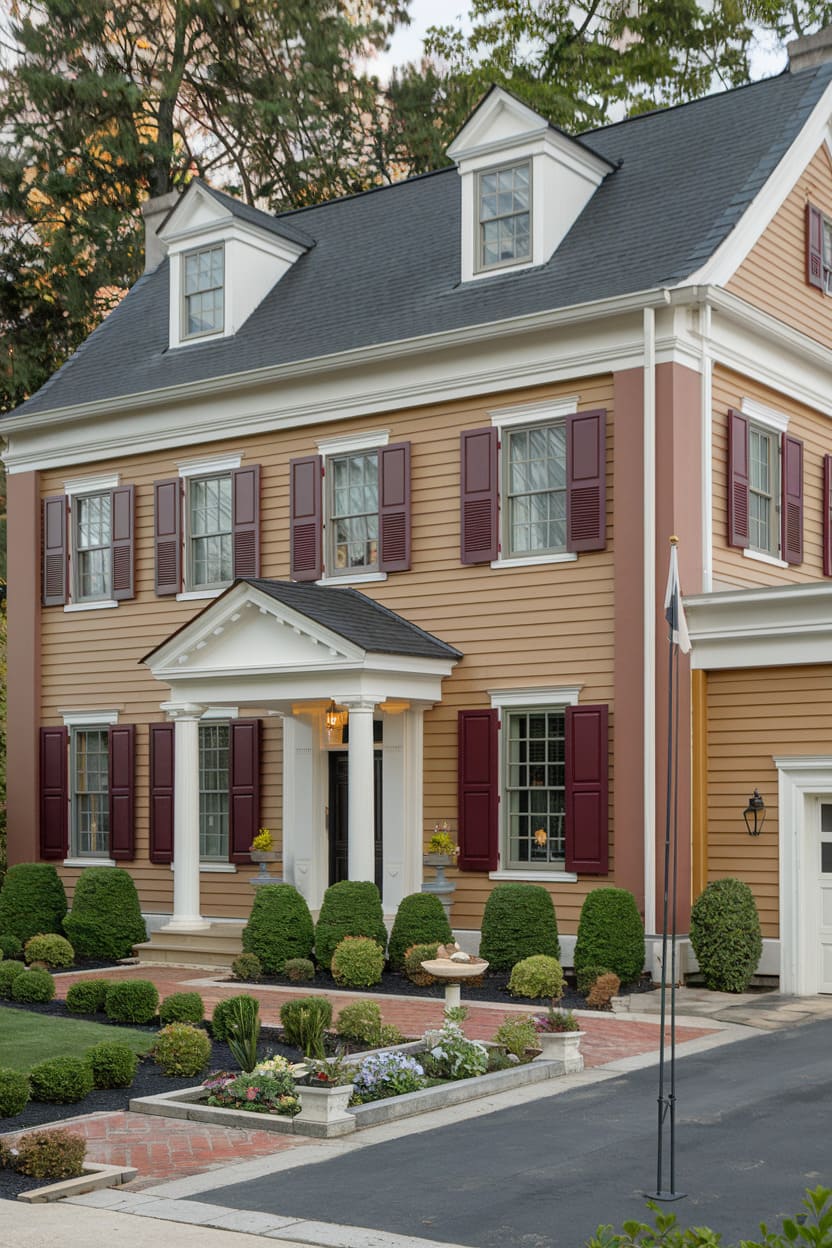
This classic two-story Colonial home is painted in a traditional, medium brown color. The earthy brown siding gives the home a warm, grounded, and historically appropriate appearance. Crisp white trim provides a sharp contrast, highlighting the symmetrical windows, door surround, and roofline typical of Colonial architecture. Black shutters flank the windows, completing the quintessential Colonial color palette. This combination of brown, white, and black feels stately, balanced, and enduringly popular for this architectural style. The brown offers a warmer alternative to more common gray or white Colonials.
60. Canary Yellow
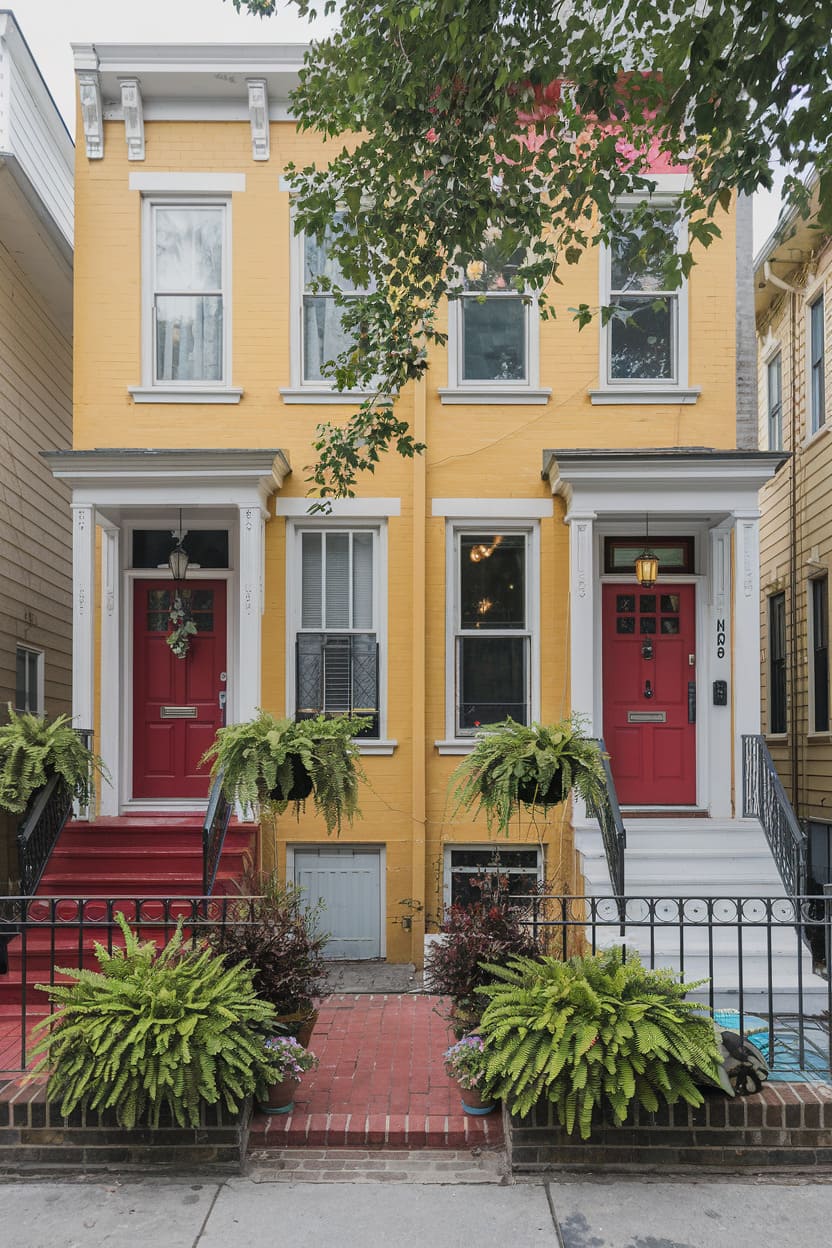
This colorful urban duplex stands out with its vibrant canary yellow exterior. The bright, clear yellow makes a bold and cheerful statement in the urban landscape. White trim provides a clean contrast around the windows, doors, and architectural details like the porch railings and columns. The combination of bright yellow and white feels energetic and optimistic. This color choice gives the duplex a distinct identity and adds vibrancy to the street. A neutral roof color allows the yellow to remain the focal point.
61. Cabin Brown With Emerald Green
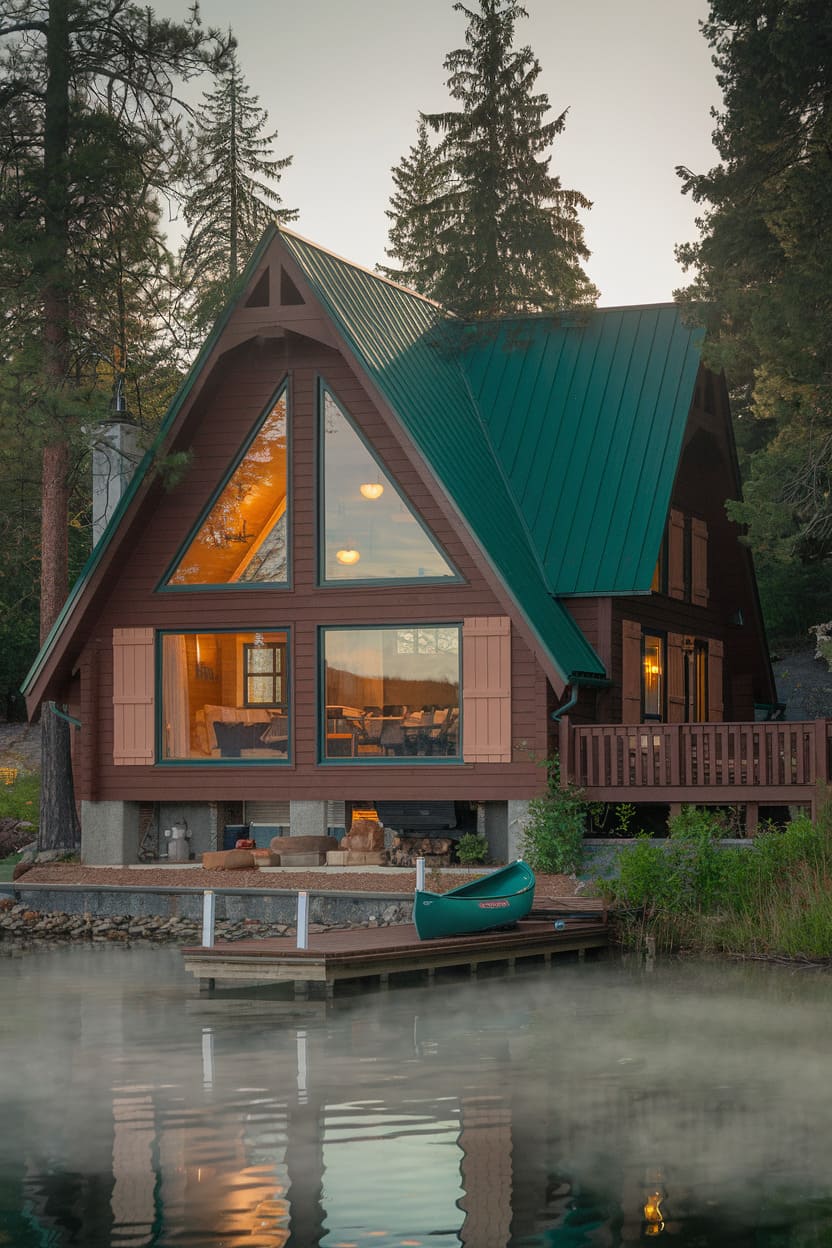
This cozy lakefront cabin features a rich cabin brown exterior, likely a wood stain or paint. The deep brown provides a warm, rustic base appropriate for a cabin setting. A vibrant emerald green is used as a striking accent color, perhaps on the window trim, door, or shutters. This combination of earthy brown and jewel-toned green feels both natural and distinctive. The emerald green adds a pop of unexpected color against the traditional brown. This palette helps the cabin feel integrated with its wooded, lakeside environment while showcasing some personality.
62. Olive-Sage Compound
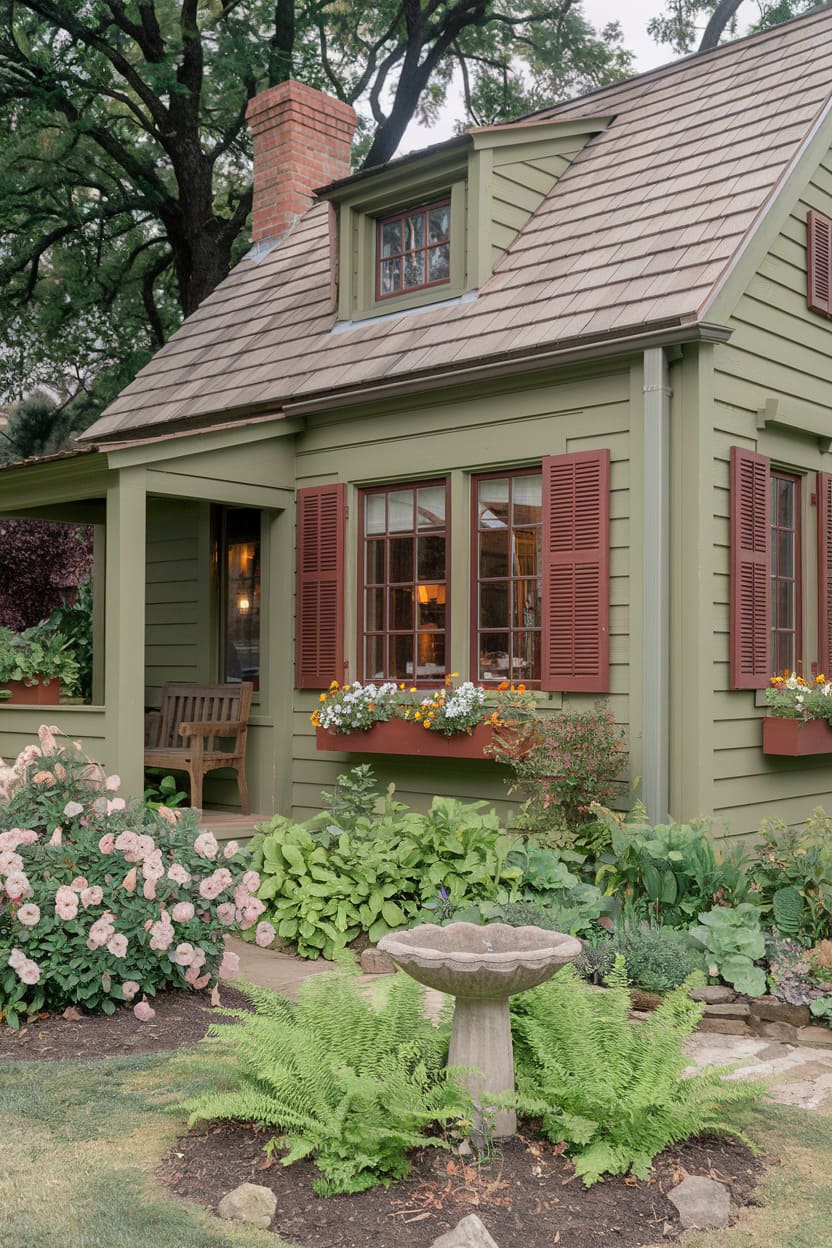
This cozy one-story cottage uses a compound approach featuring shades of olive and sage green. The main body might be a soft sage, while deeper olive green accents trim or architectural features. Cream or off-white trim likely defines windows and doors, offering a gentle contrast to the green tones. This layered green palette creates a subtle, earthy, and harmonious look. It helps the cottage blend beautifully with surrounding gardens and greenery. This nuanced approach to green feels sophisticated and calming, perfect for a cottage retreat.
63. Subtle Peach
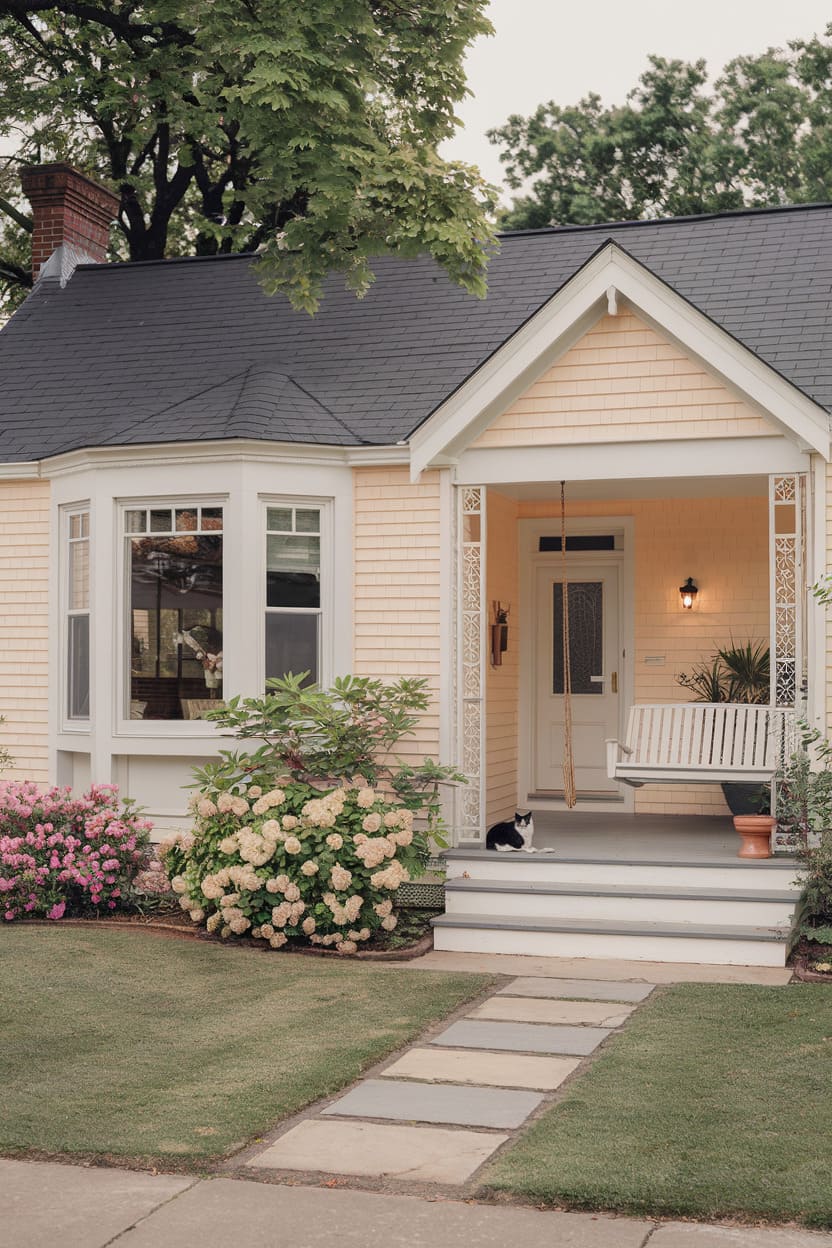
This cozy ranch-style home is painted in a very subtle pale peach color. The soft, warm hue provides a gentle touch of color without being overpowering. White or off-white trim likely accents the windows, door, and roofline, offering a clean and classic contrast. The pale peach feels welcoming, light, and works well with the simple lines of a ranch home. This understated color adds warmth and personality subtly. It serves as a lovely neutral backdrop for landscaping. This is a gentle alternative to beige or cream exteriors.
64. Peach and Mint
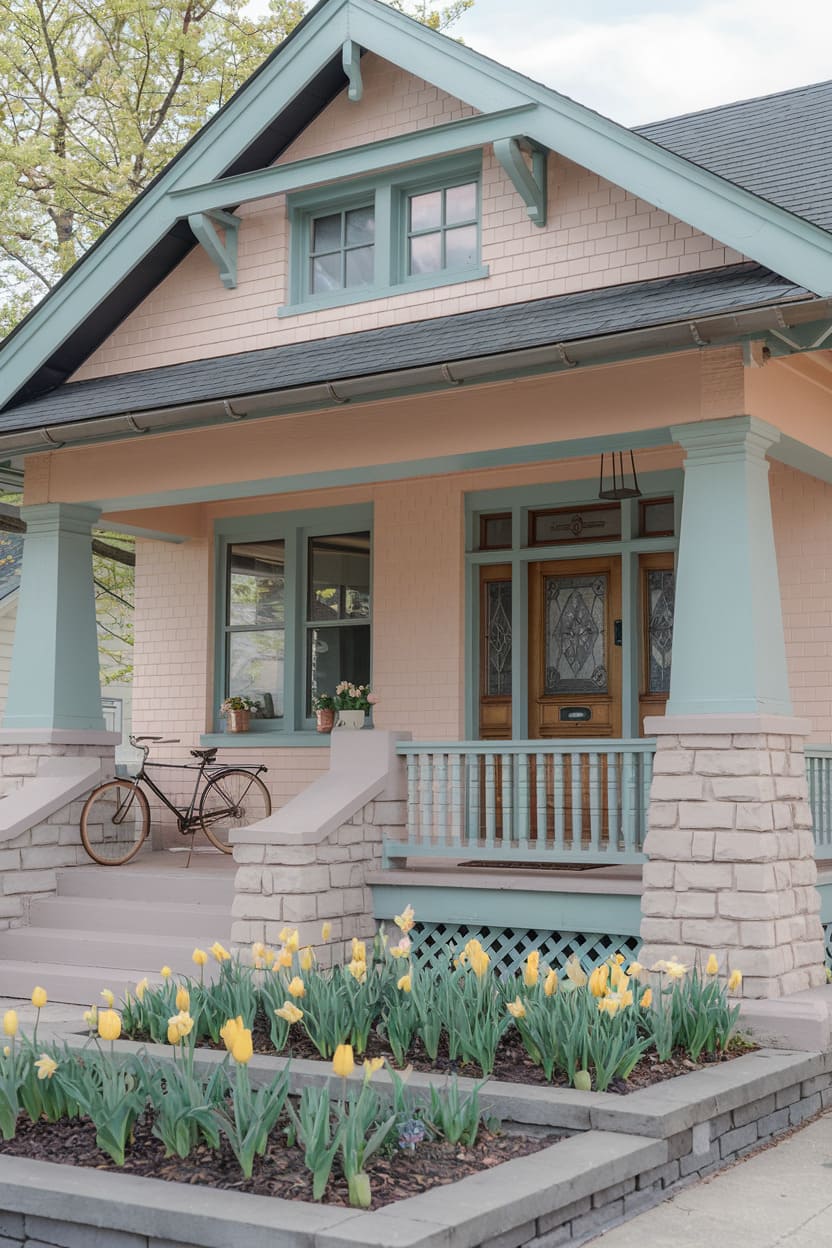
This Craftsman-style bungalow features a delightful combination of soft peach siding and mint green accents. The warm peach body color provides a welcoming base. Cool mint green is used for trim or details, such as window sashes or decorative elements, creating a fresh, retro-inspired contrast. White is also likely used for major trim pieces like porch columns and roof eaves. This pastel pairing feels charming, unique, and slightly whimsical. It highlights the architectural details of the bungalow in a fun way. This palette adds personality while remaining relatively soft.
65. Seafoam Blue
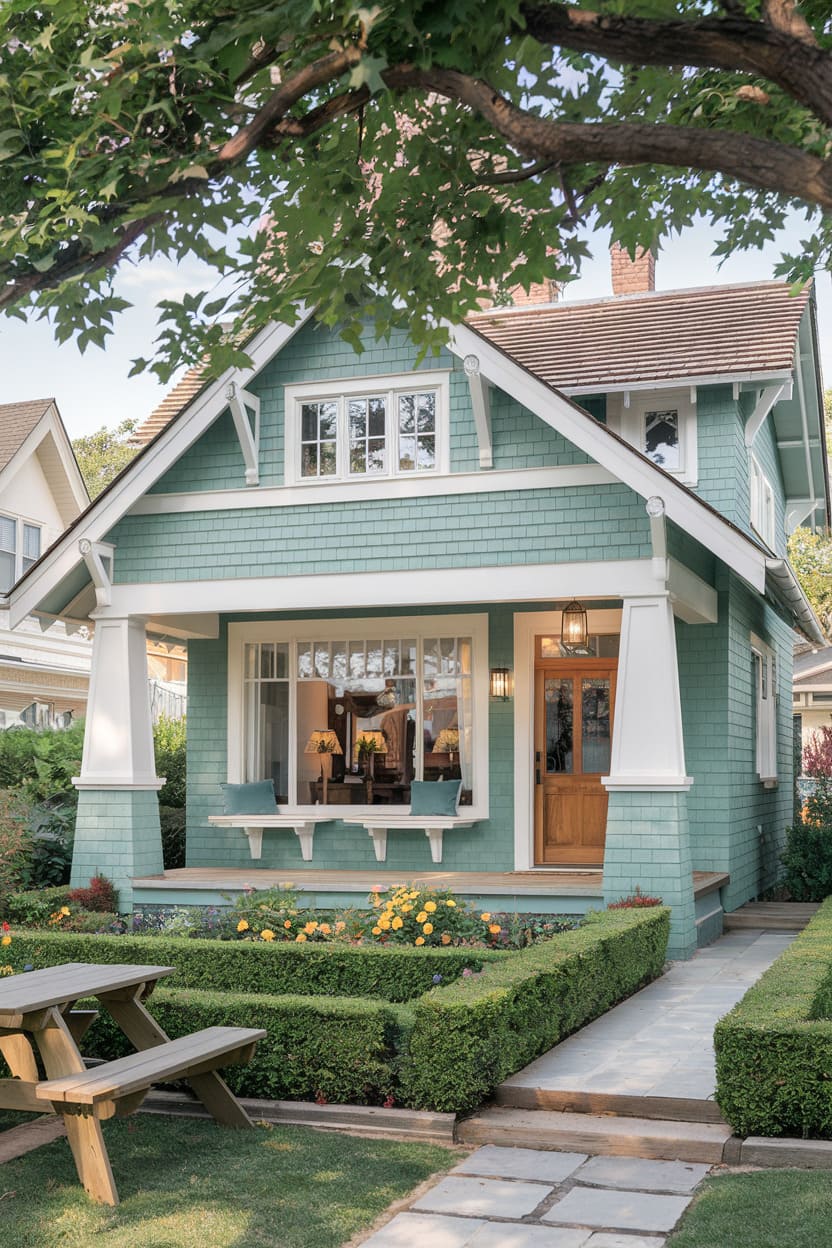
This Craftsman-style home is painted in a refreshing seafoam blue-green color. The light, airy hue brings a coastal sensibility to the sturdy Craftsman architecture. Crisp white trim is generously applied to the windows, porch columns, railings, and roof eaves, providing a bright contrast. This combination feels clean, inviting, and slightly unexpected for a Craftsman home. The seafoam color highlights the home’s details beautifully. A darker roof anchors the light exterior colors. This palette offers a cheerful and unique take on the classic Craftsman style.
66. Farmhouse White With Light Blue Blinds
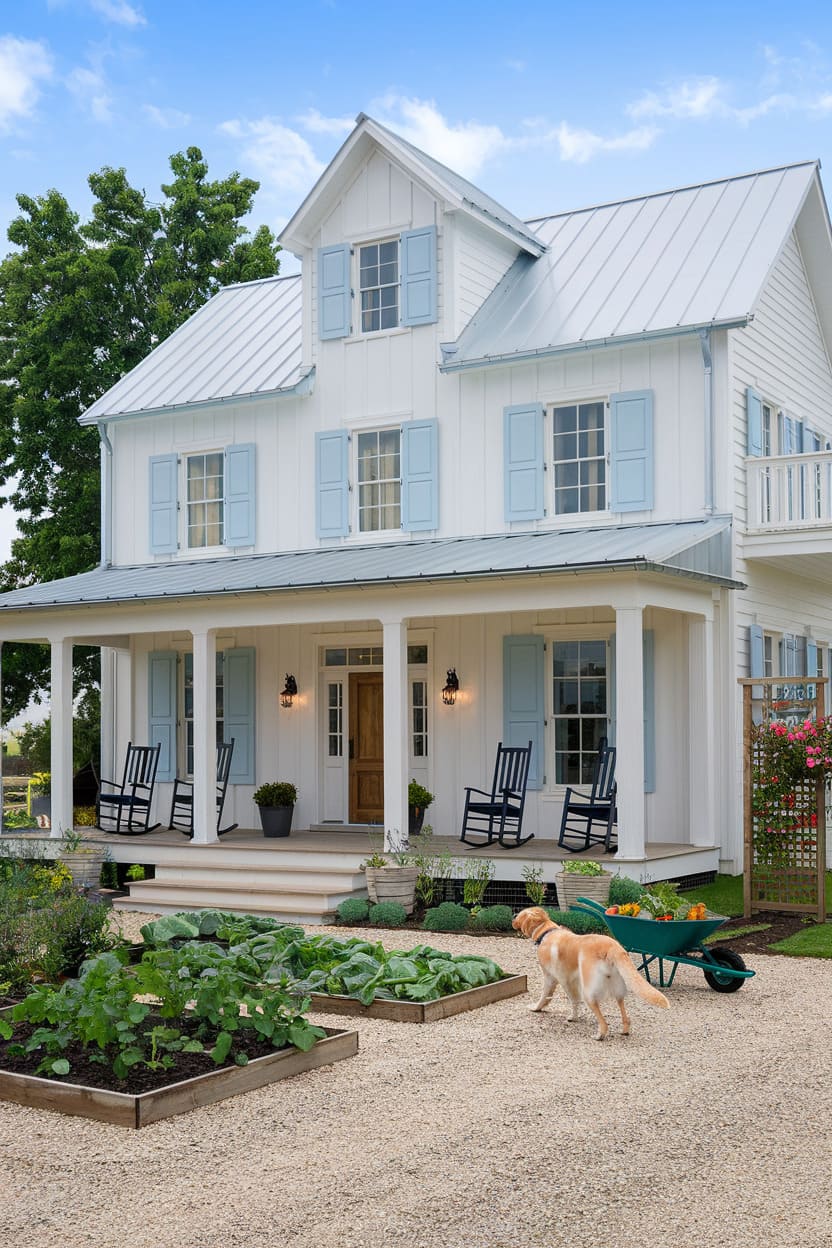
This modern farmhouse features crisp white siding for a clean and classic base. The defining accent color comes from the charming light blue blinds or shutters. This soft blue adds a gentle pop of color and personality against the white exterior. Black or dark bronze is used for window frames and possibly light fixtures, adding a modern touch. The combination of white, light blue, and dark accents creates a fresh, updated farmhouse look. A dark roof provides a grounding contrast. This palette feels airy, inviting, and stylishly current.
67. Deep Sea Blue
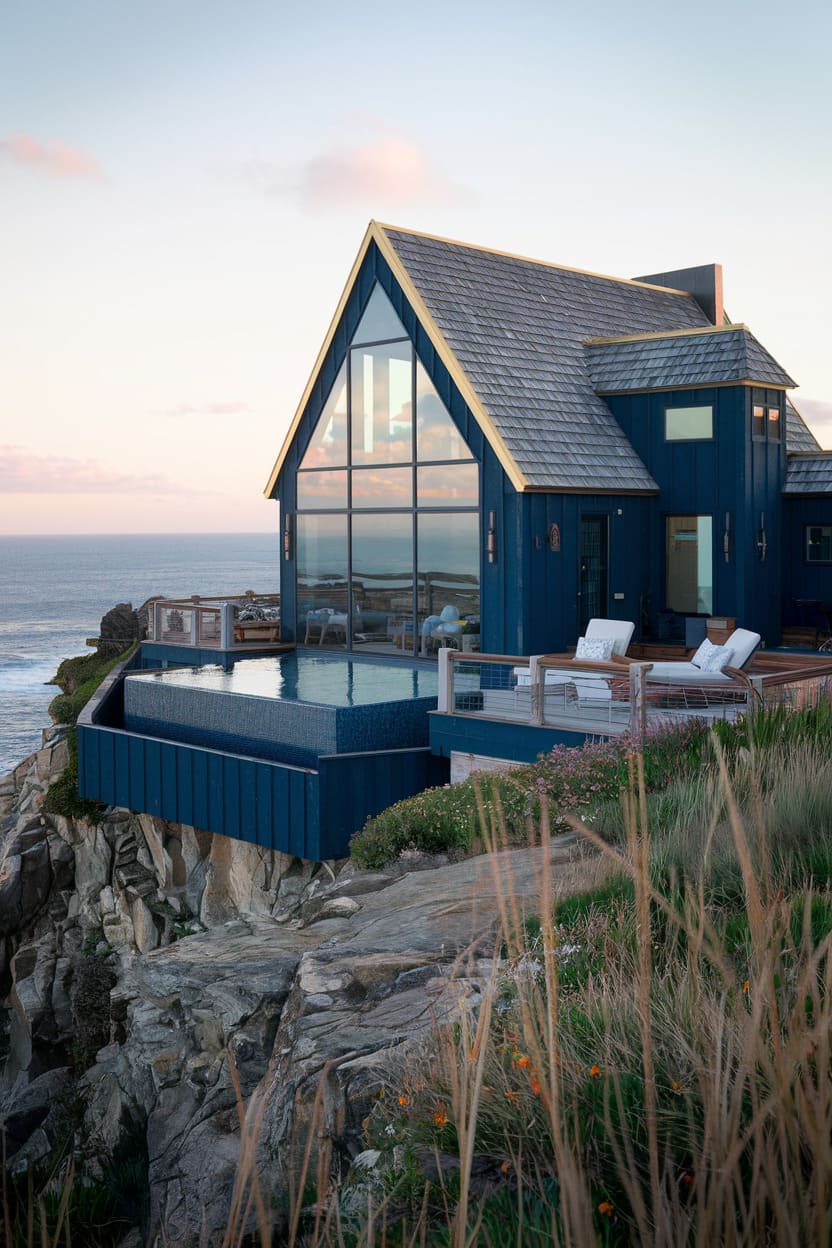
Perched dramatically, this cliffside chalet is painted a deep sea blue. The rich, intense blue color gives the structure a strong presence against the natural backdrop. Natural wood tones are used for trim, decking, and architectural elements, providing a warm, earthy contrast to the cool blue. This combination feels both bold and harmonious with a rugged coastal or mountain environment. Large windows likely capture the dramatic views, framed by the wood trim. The deep blue feels sophisticated and connects the home to the vastness of the sea or sky.
68. Majestic Purple
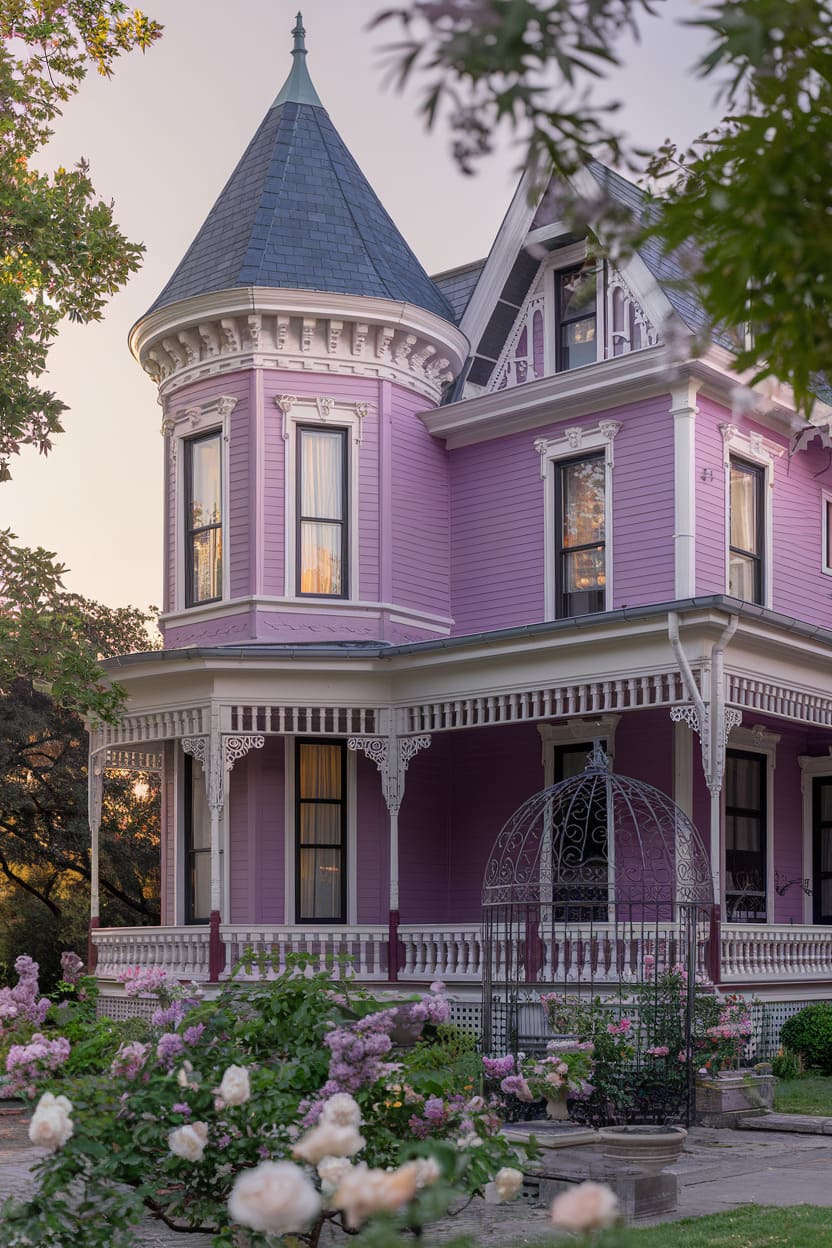
This majestic Victorian villa makes a grand statement with its rich purple exterior. The deep purple hue highlights the home’s complex architecture and ornate detailing. Contrasting trim, possibly in cream, gold, or even a lighter shade of purple, accentuates features like turrets, bay windows, and gingerbread trim. Victorian homes often embrace bold, multi-color palettes, and this purple provides a regal foundation. Additional accent colors further enhance the “painted lady” aesthetic. This choice is unconventional, eye-catching, and perfectly suited to the dramatic Victorian style.
69. Mid Century Beige and Brick
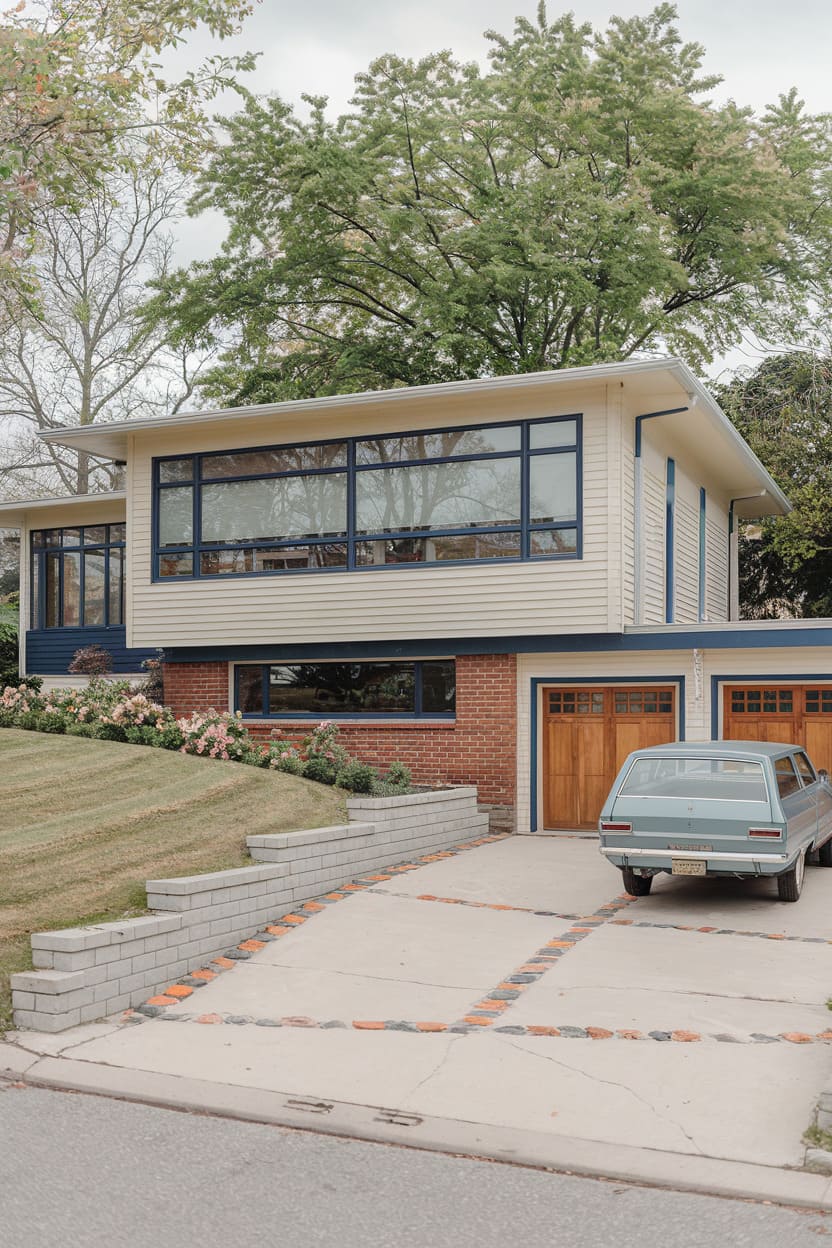
This Mid-Century split-level home combines beige painted siding with natural brick accents. The neutral beige color covers the main body, providing a calm, understated backdrop typical of the era. Warm-toned brick, often used on lower levels or feature walls, adds texture and earthy contrast. Trim is likely minimal and painted in white or a coordinating neutral shade. This blend of painted surfaces and natural materials is characteristic of Mid-Century design. The color palette feels subtle, warm, and respects the home’s architectural period. A low-pitched roof completes the Mid-Century silhouette.
70. Thick Yellow
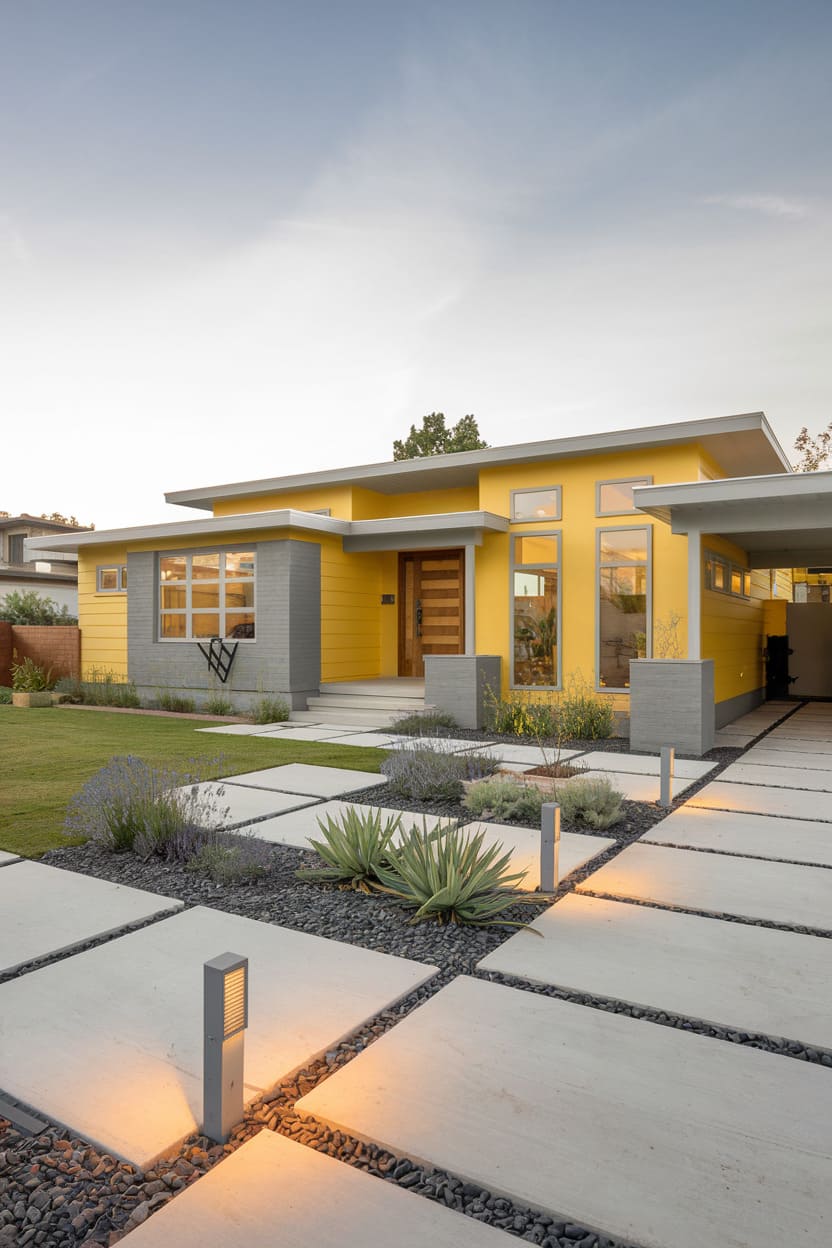
This modern ranch-style home features a thick, saturated yellow exterior. The strong yellow hue, perhaps leaning towards mustard or gold, gives the home a bold, confident look. White or off-white trim provides a clean contrast around the windows and along the roofline. The simple, horizontal lines of the modern ranch are well-suited to this impactful color choice. Natural wood elements, like a front door or garage door, add warmth and texture. This palette feels cheerful, retro, and makes a definite style statement.
71. Burnt Orange Prairie Style
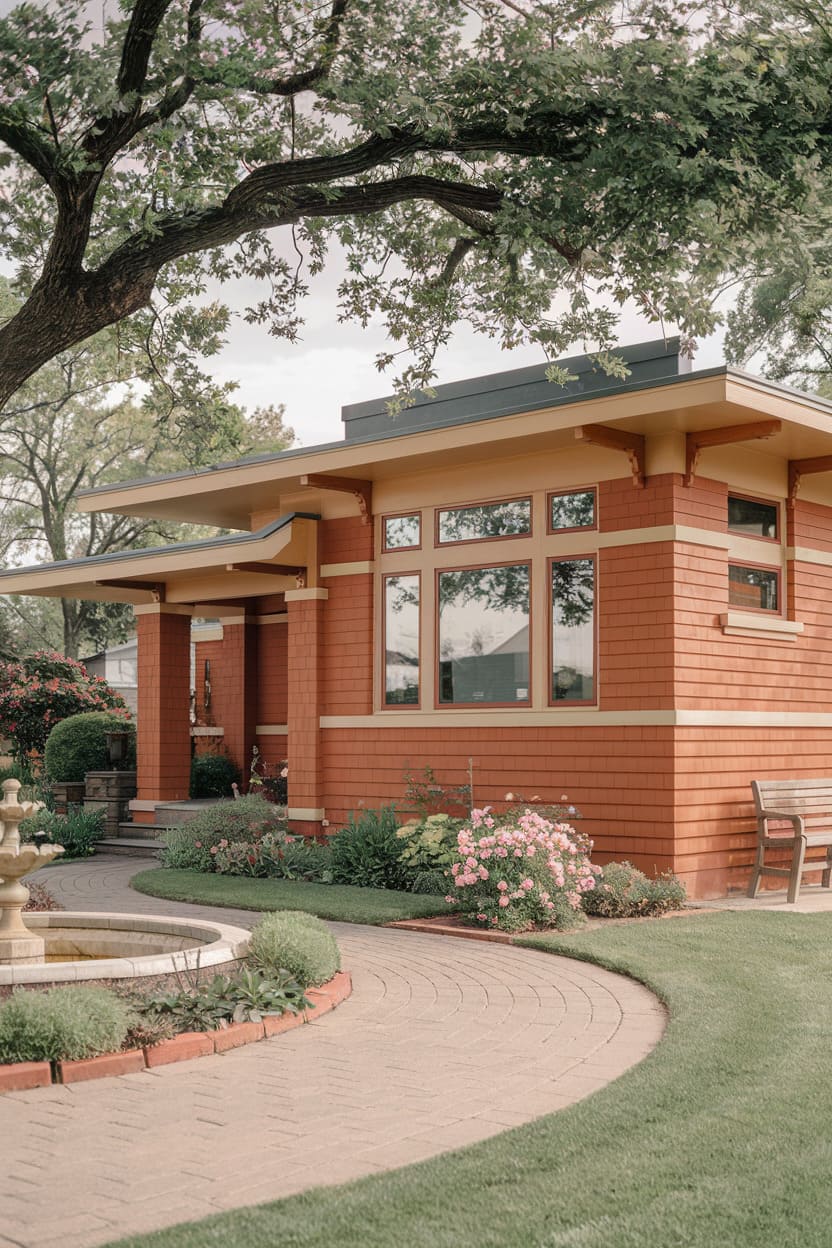
This Prairie-style home is painted in a distinctive burnt orange color. The deep, earthy orange hue complements the horizontal lines and naturalistic aesthetic of the Prairie school of architecture. Cream or beige trim likely defines the windows, broad eaves, and banding details characteristic of the style. The combination feels warm, grounded, and harmonious with a natural landscape. Natural materials like stone or wood might be incorporated into the design as well. This color choice enhances the home’s connection to the earth and its unique architectural heritage.
72. Baby Blue
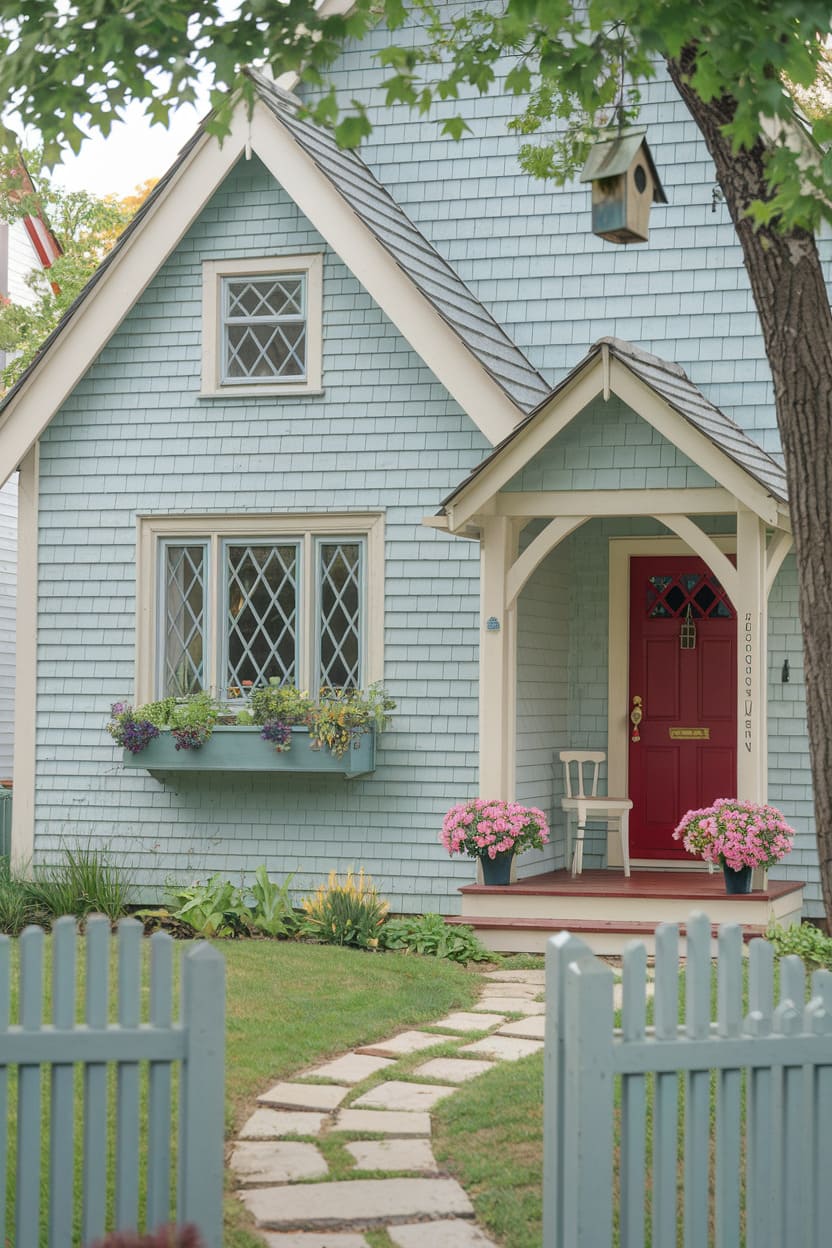
This quaint cottage is painted a gentle baby blue, creating a soft and serene exterior. The light blue hue gives the home a charming and peaceful appearance. Ivory or cream trim provides a warm, subtle contrast around the windows and door, softer than bright white. This pairing enhances the cottage’s cozy and inviting character. Details like window boxes add to the charm. A darker roof color helps ground the light palette. This color scheme is sweet, classic, and perfect for a small, picturesque cottage.
73. Lodge Green
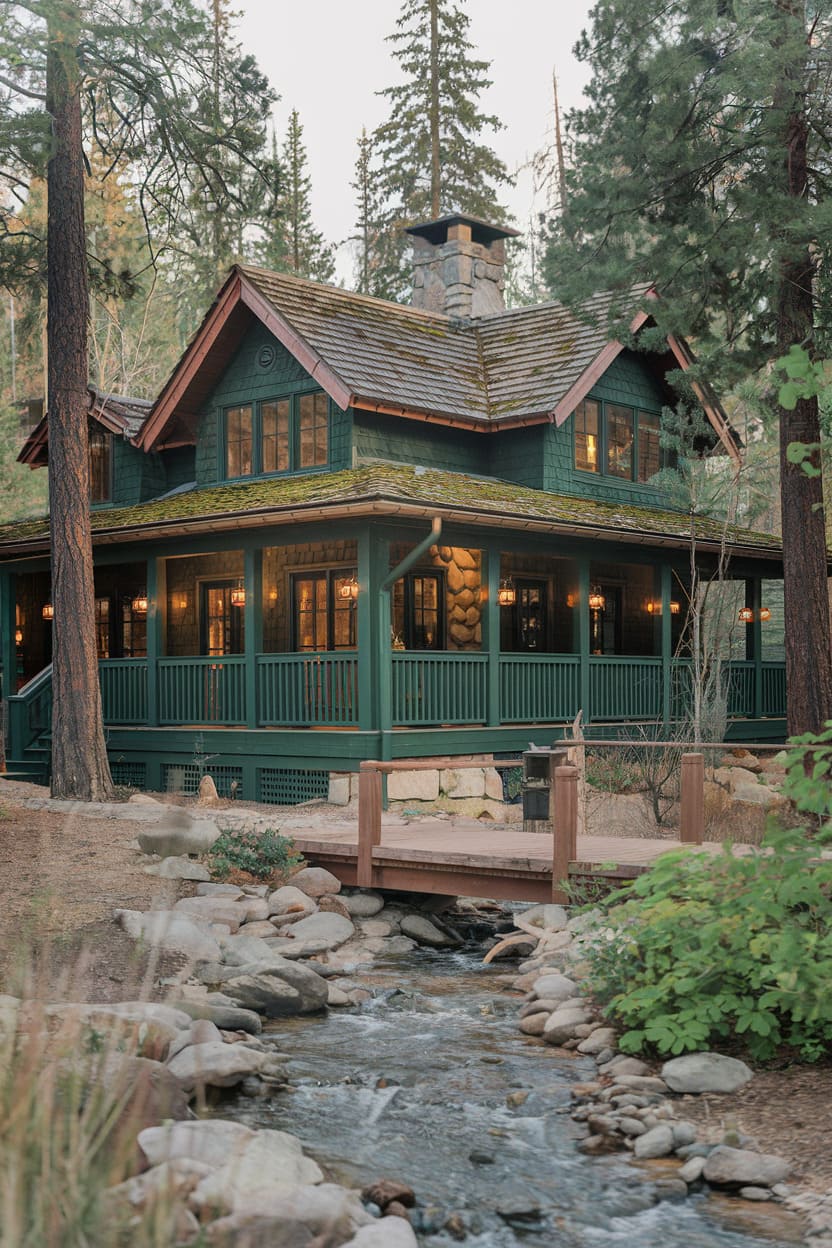
Nestled in the woods, this rustic lodge features a deep lodge green exterior. This natural, forest-like green helps the structure blend beautifully with its surroundings. Darker trim, possibly a deep brown or black, likely accents the windows, logs, or structural beams. The overall palette emphasizes natural tones and textures, fitting for a lodge aesthetic. Stone elements, such as a chimney or foundation, complement the green and brown hues. This color scheme feels sturdy, rustic, and perfectly integrated into the wooded environment, creating a sense of retreat.
74. Sage Green
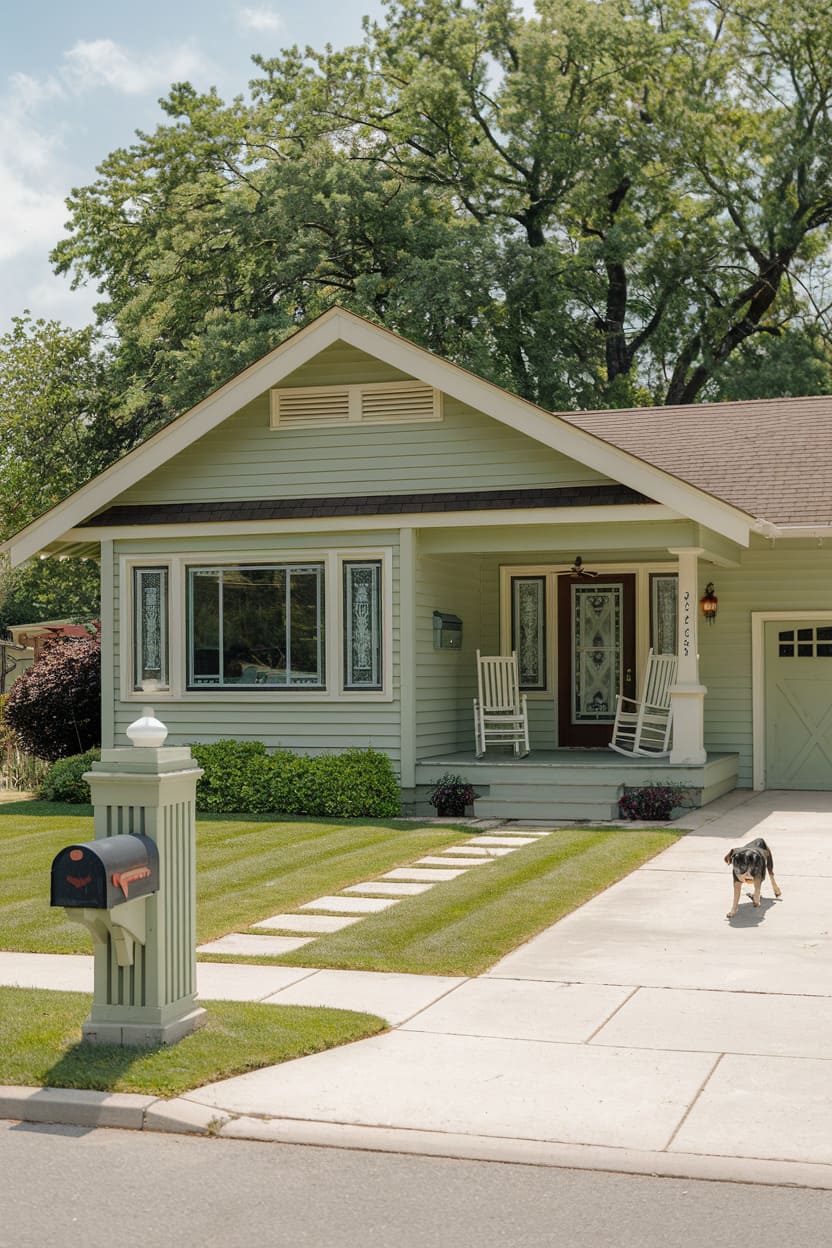
This ranch house is painted a calming sage green, offering a popular and versatile exterior color. The muted green feels natural and sophisticated, working well with the ranch style’s simplicity. Cream trim provides a soft, warm contrast around the windows, door, and along the roofline. This combination is gentler than sage green with bright white, creating a cozy feel. Shutters or garage doors might be painted in the cream color or a darker accent shade. This palette is timeless, earthy, and broadly appealing for suburban homes.
75. Soft Beige
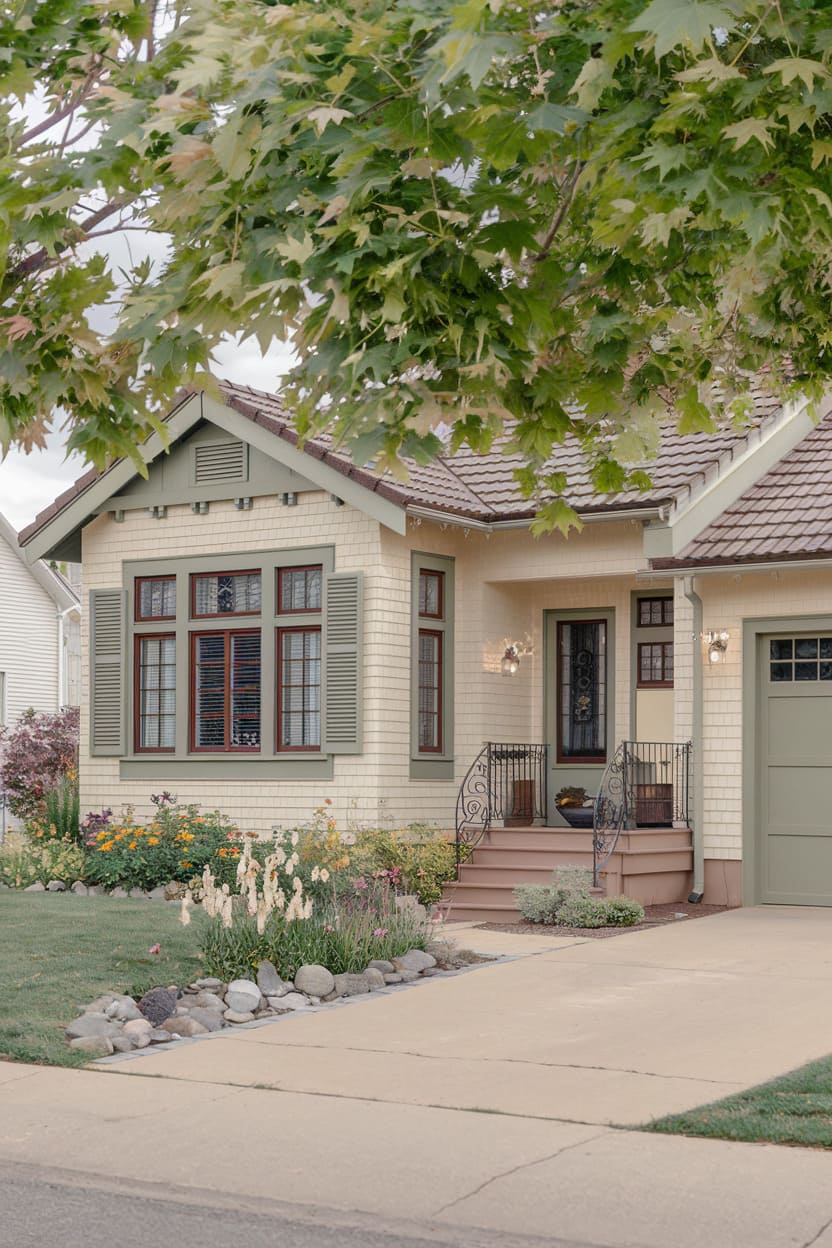
This single-story ranch home features a soft beige exterior paint color. The warm neutral provides a classic, understated look that is highly versatile. White or off-white trim likely defines the windows, door, and roofline, offering a clean contrast. Dark shutters add a traditional touch and visual depth against the light beige siding. This neutral palette allows the home’s landscaping and architectural details to stand out. Soft beige is a safe and popular choice that maintains good resale value. It feels warm, inviting, and timeless.
76. Modern Gray
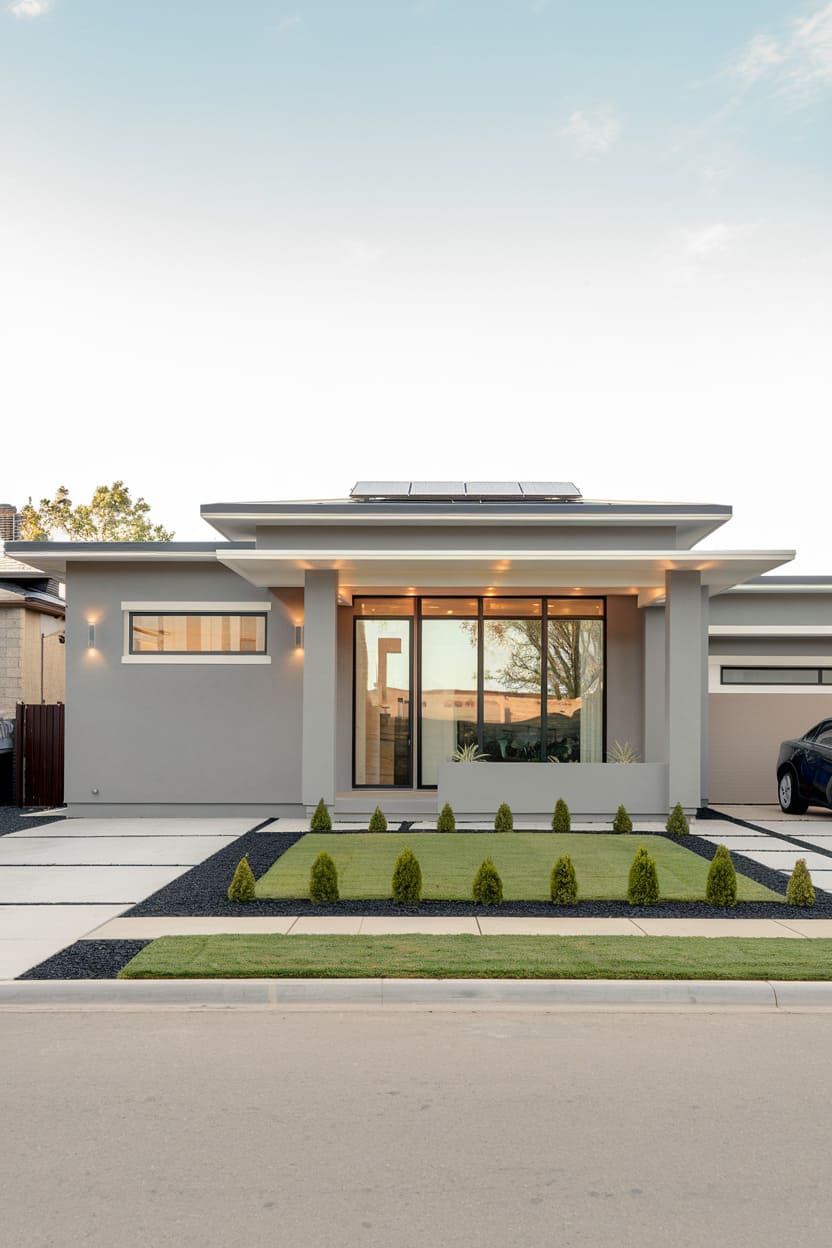
This sleek modern suburban home utilizes a cool, medium gray for its exterior. The neutral gray emphasizes the home’s clean lines, geometric shapes, and contemporary style. Contrasting materials, such as wood paneling or stone accents, might be used to add texture and warmth. Window frames are likely black or dark gray, maintaining the modern aesthetic. The overall look is sophisticated, understated, and current. Minimalist landscaping often accompanies this style, keeping the focus on the architecture. Gray remains a very popular choice for modern home exteriors.
77. Peach Orange
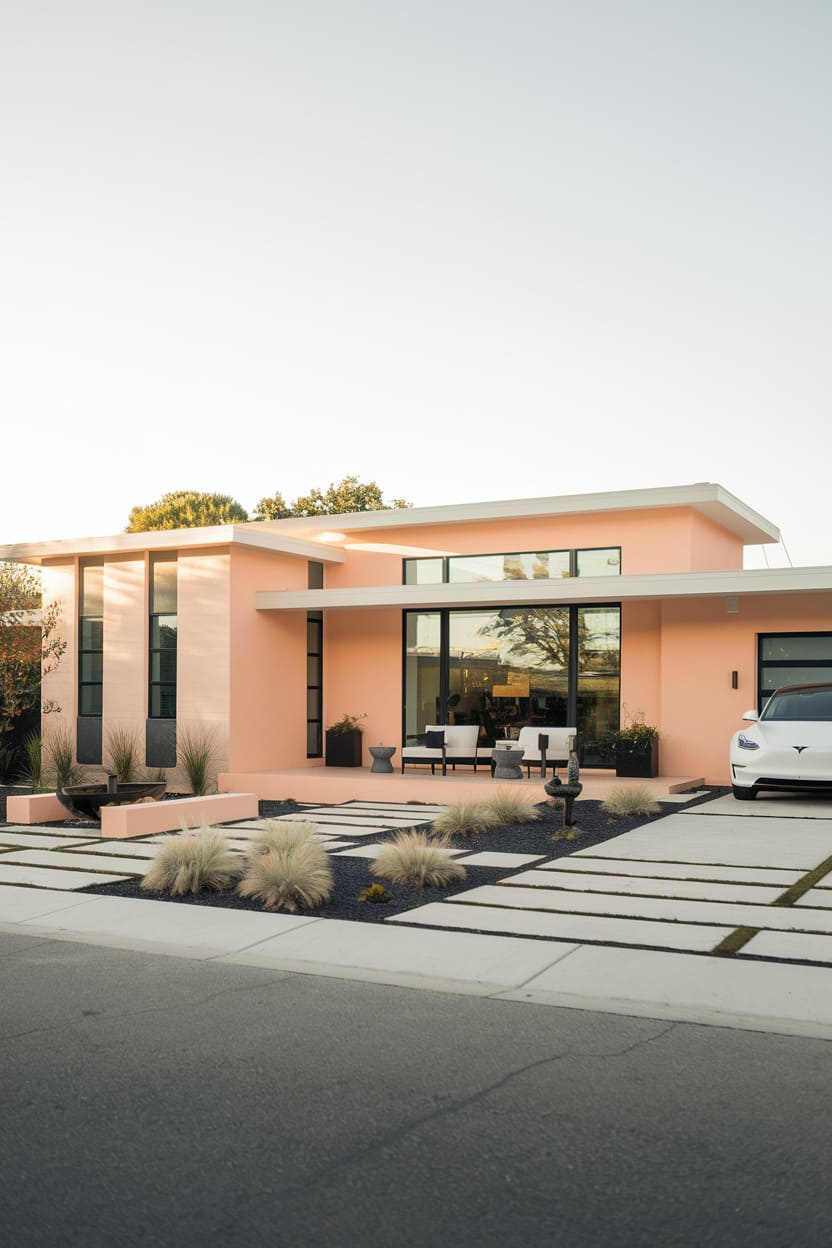
This sleek modern suburban home features an unusual peach-orange exterior color. The warm, somewhat muted orange tone gives the modern architecture a softer, more approachable feel. White or light gray trim likely provides a clean contrast around windows and defines architectural planes. The combination creates a unique look that blends modern lines with warm color. This choice stands out from typical modern palettes while still feeling sophisticated. It works particularly well in sunny locations, reflecting light beautifully. This palette expresses individuality within a modern framework.
78. Burgundy Red and Neutrals
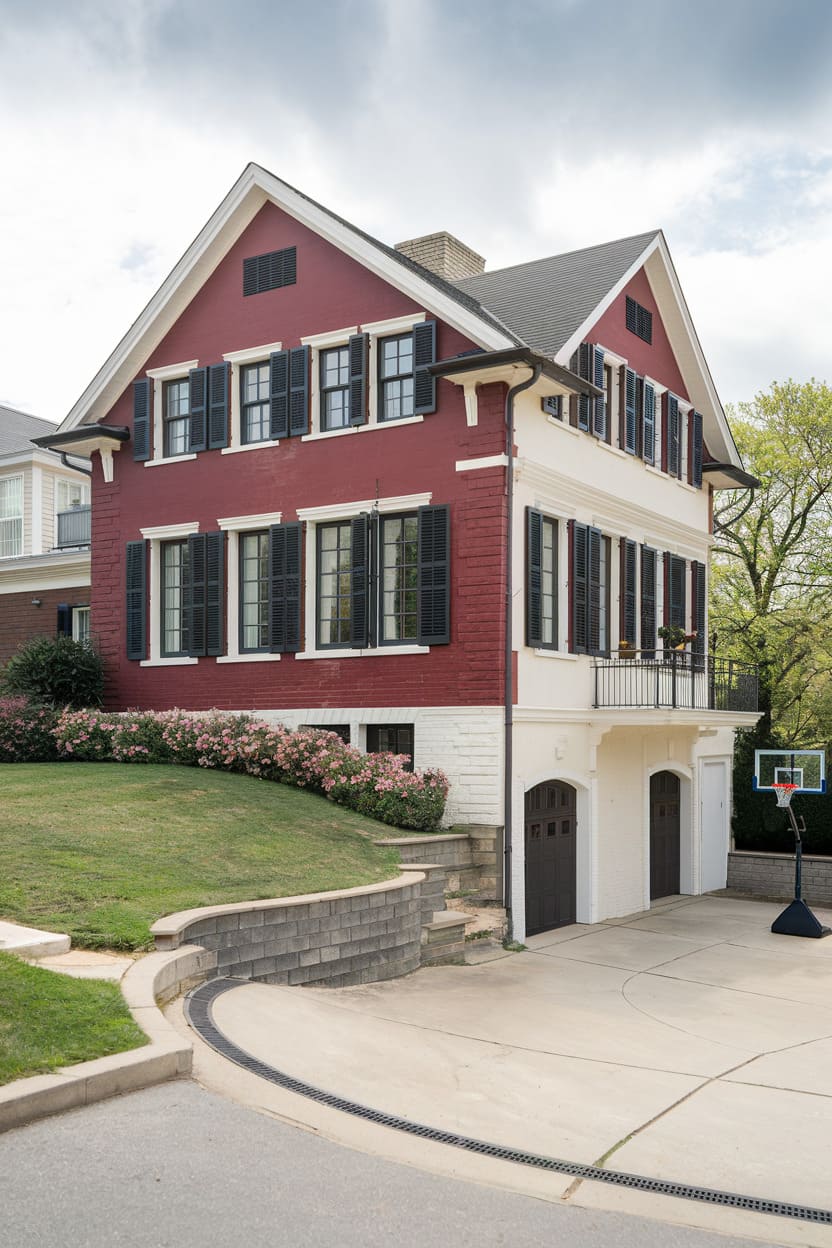
This split-level home uses a combination of burgundy red siding and neutral elements. The rich burgundy red likely covers a significant portion of the facade, providing a bold primary color. Neutral tones, such as beige, gray, or cream, are used on other sections, trim, or the garage door to balance the strong red. This pairing allows for a statement color without overwhelming the entire structure. The contrast highlights the different levels and architectural features of the split-level design. This approach offers a way to incorporate bold color thoughtfully.
79. Rich Teal
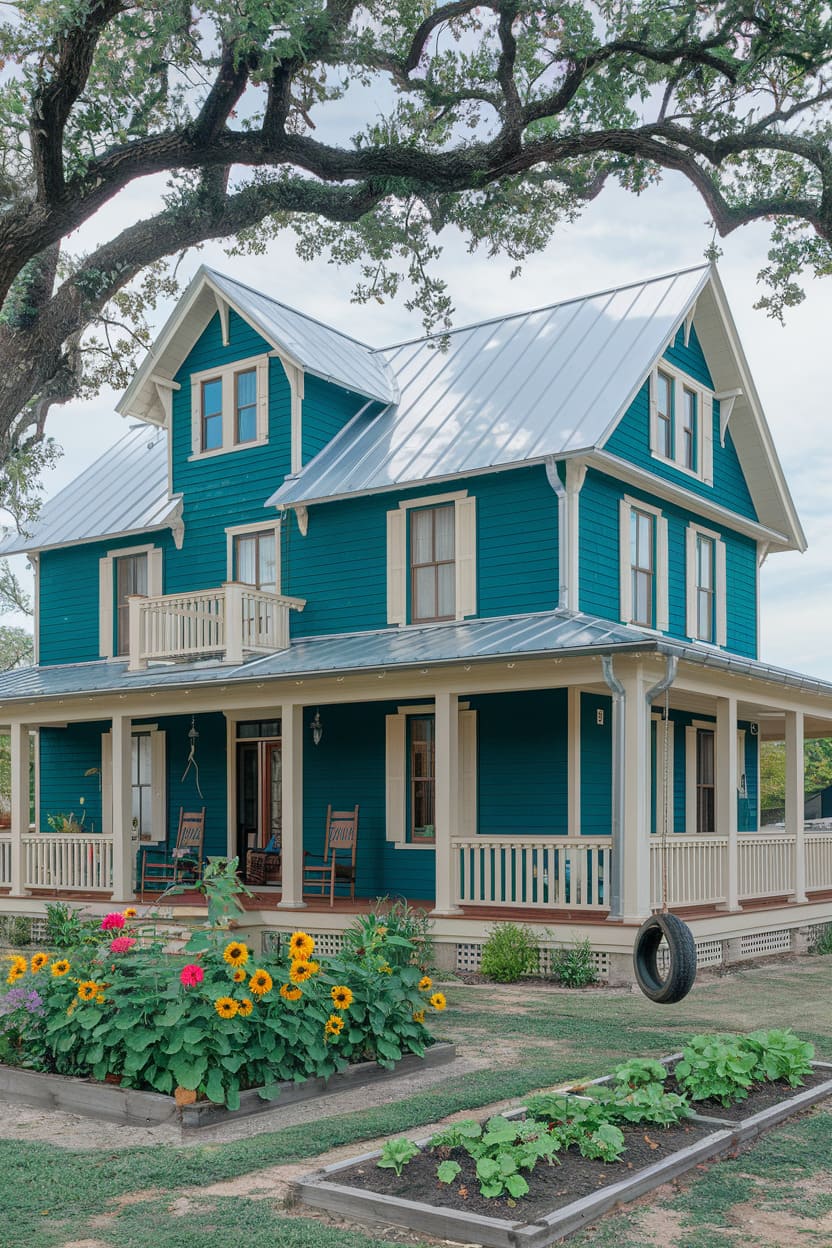
This two-story farmhouse is painted a beautiful rich teal color. The deep blue-green hue offers a sophisticated and slightly modern take on traditional farmhouse colors. Crisp white trim provides a classic contrast, highlighting the windows, porch posts, and roofline. The combination of rich teal and white feels fresh, elegant, and inviting. A welcoming front porch enhances the farmhouse appeal. This color choice gives the traditional form a unique and memorable personality. It stands out beautifully against a green lawn or rural landscape.
80. Sapphire Blue and Yellow
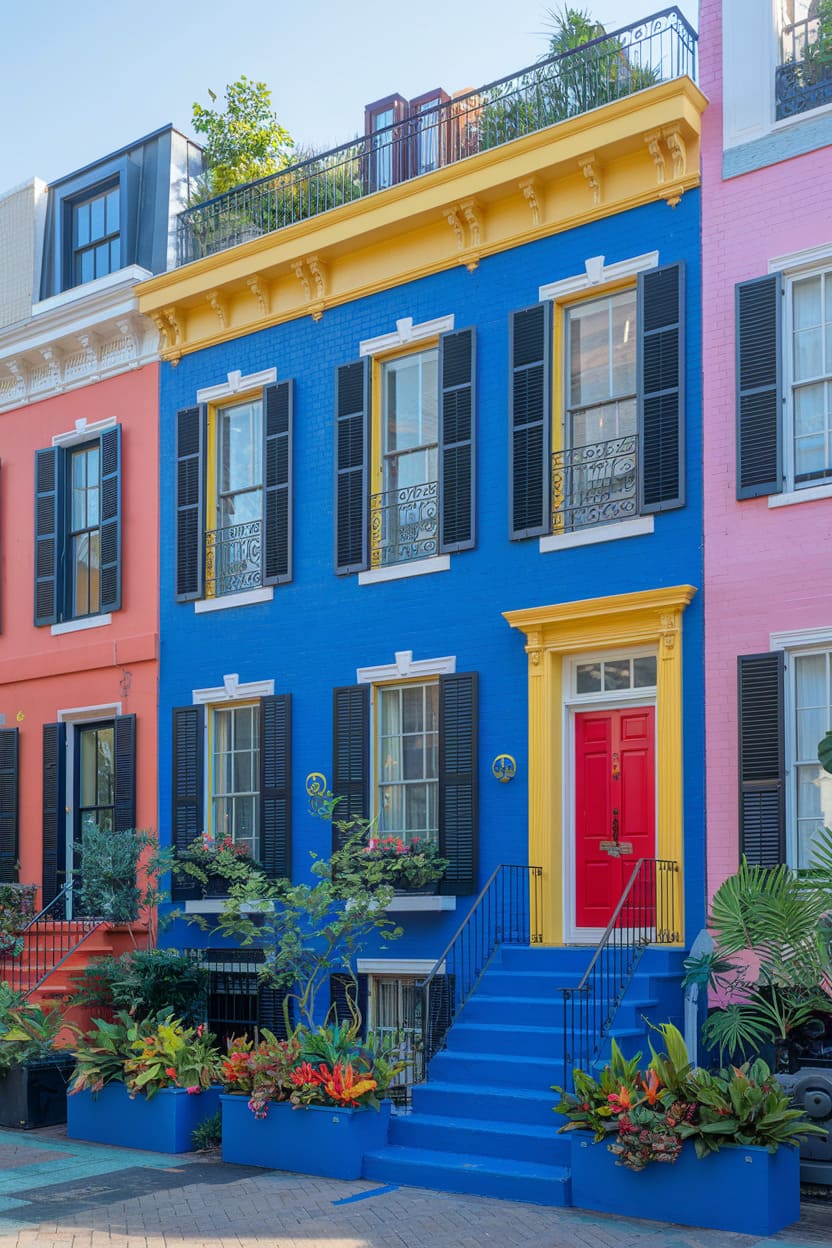
This vibrant urban townhouse utilizes a striking combination of sapphire blue and bright yellow. The deep sapphire blue likely serves as the main body color, providing a rich, jewel-toned base. Sunny yellow is used as a bold accent color for the front door and possibly window trim or other details. This high-contrast, complementary color scheme creates an energetic and eye-catching look. White might be used as a secondary trim color to add brightness. This palette is playful, confident, and makes the townhouse a standout feature on the street.
81. Deep Blue
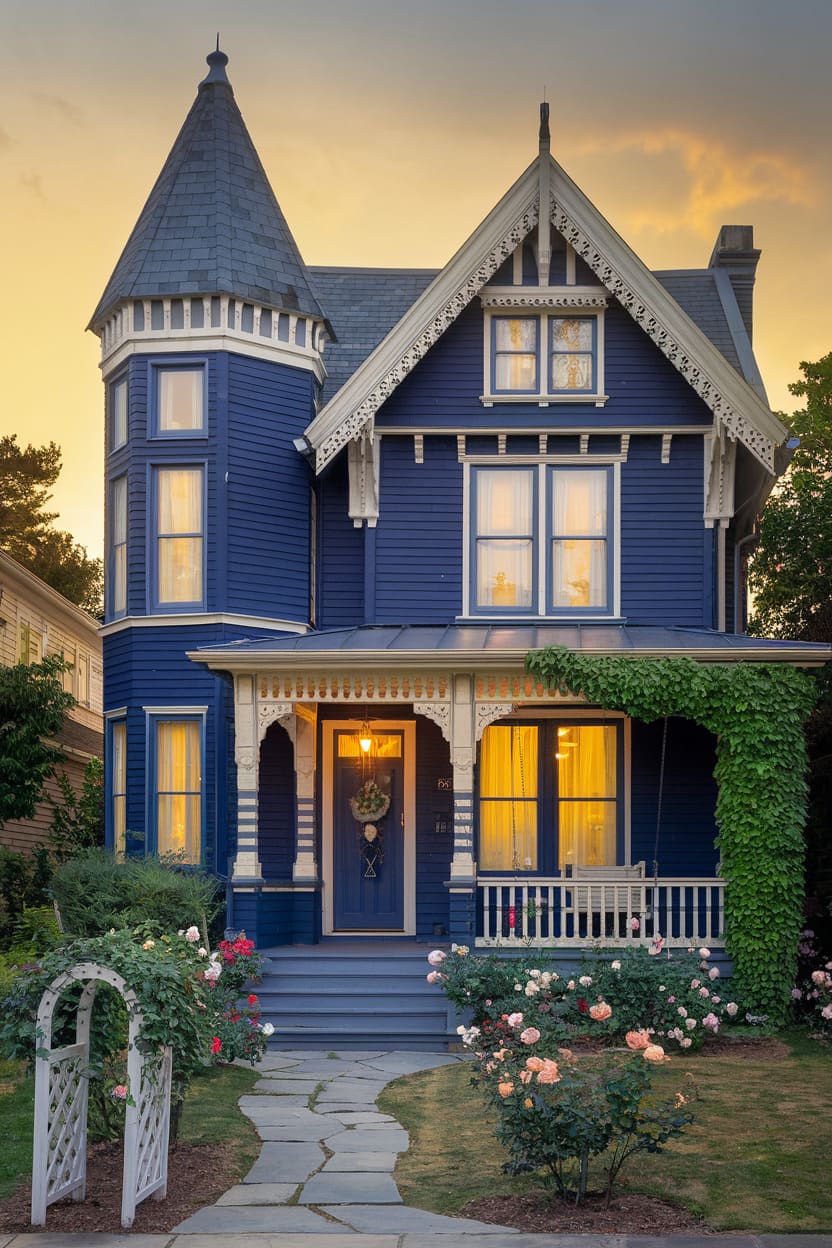
This Victorian-style home is painted a deep, dramatic blue. The rich blue color provides a sophisticated backdrop for the intricate Victorian architecture. Contrasting trim, likely in white, cream, or even a lighter blue, highlights the ornate details such as gables, porches, and window surrounds. Victorian homes often feature multiple colors, so additional accent hues might appear on specific elements. The deep blue base feels stately and allows the decorative trim work to shine. This choice balances boldness with traditional elegance, fitting the Victorian style well.
82. Olive Green With Purple Blinds
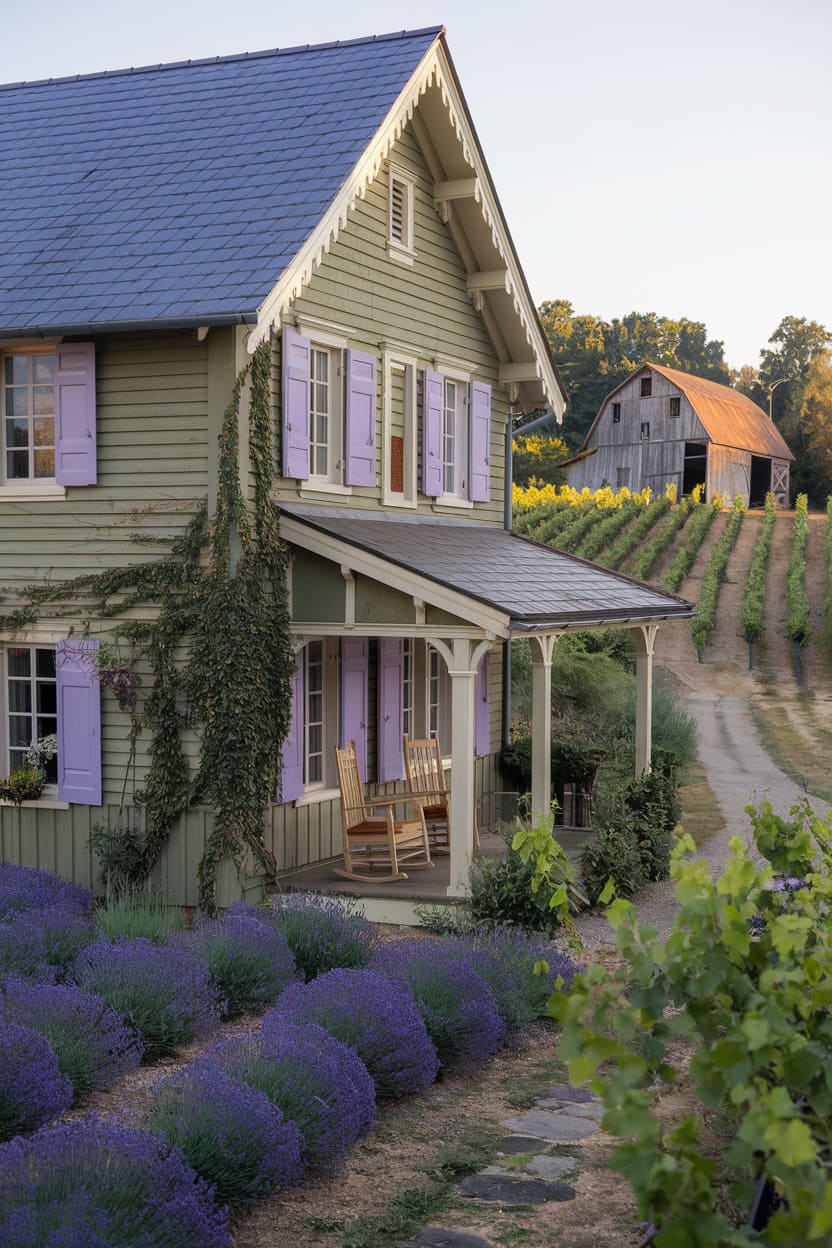
This charming farmhouse features an earthy olive green siding. The muted green provides a natural and calming exterior that suits a rural setting. White trim accents the windows and porch, offering a clean, traditional contrast. The unique element is the addition of purple blinds or shutters, providing an unexpected pop of color. This combination of olive green, white, and purple feels unique and personality-driven. The purple adds a touch of whimsy to the otherwise classic farmhouse palette. This scheme creates a memorable and distinctive look.
83. Classic Gray
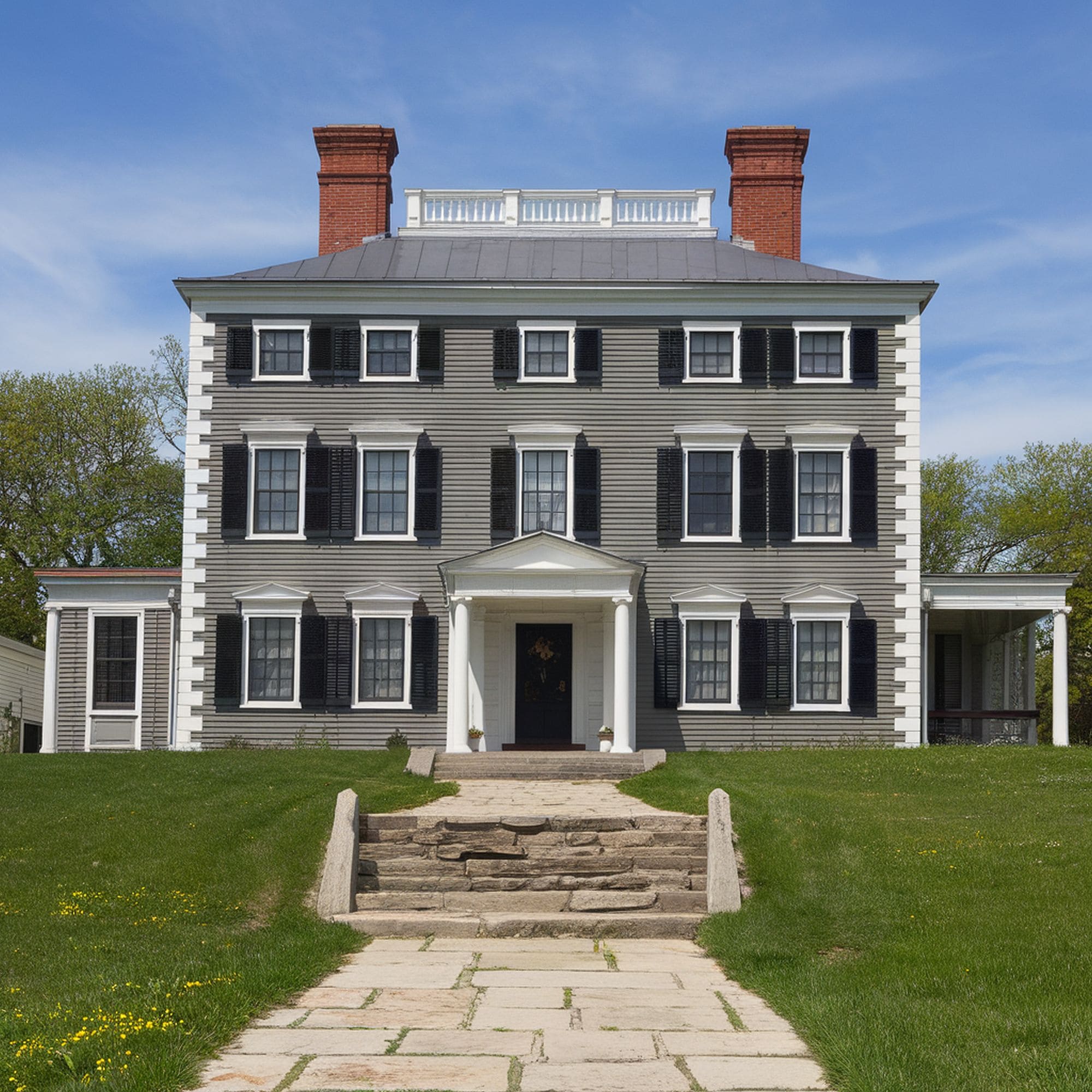
Homeowners that don’t want to attract unnecessary attention through flashy exterior colors can’t go wrong with solid gray paint. This is a classic choice that won’t go out of style anytime soon. It may not make a particularly bold statement but it can give off some refined vibes depending on the exact shade of gray used. This sensible hue of gray makes a ‘safe statement’ that’s undoubtedly attractive.
84. Light Green
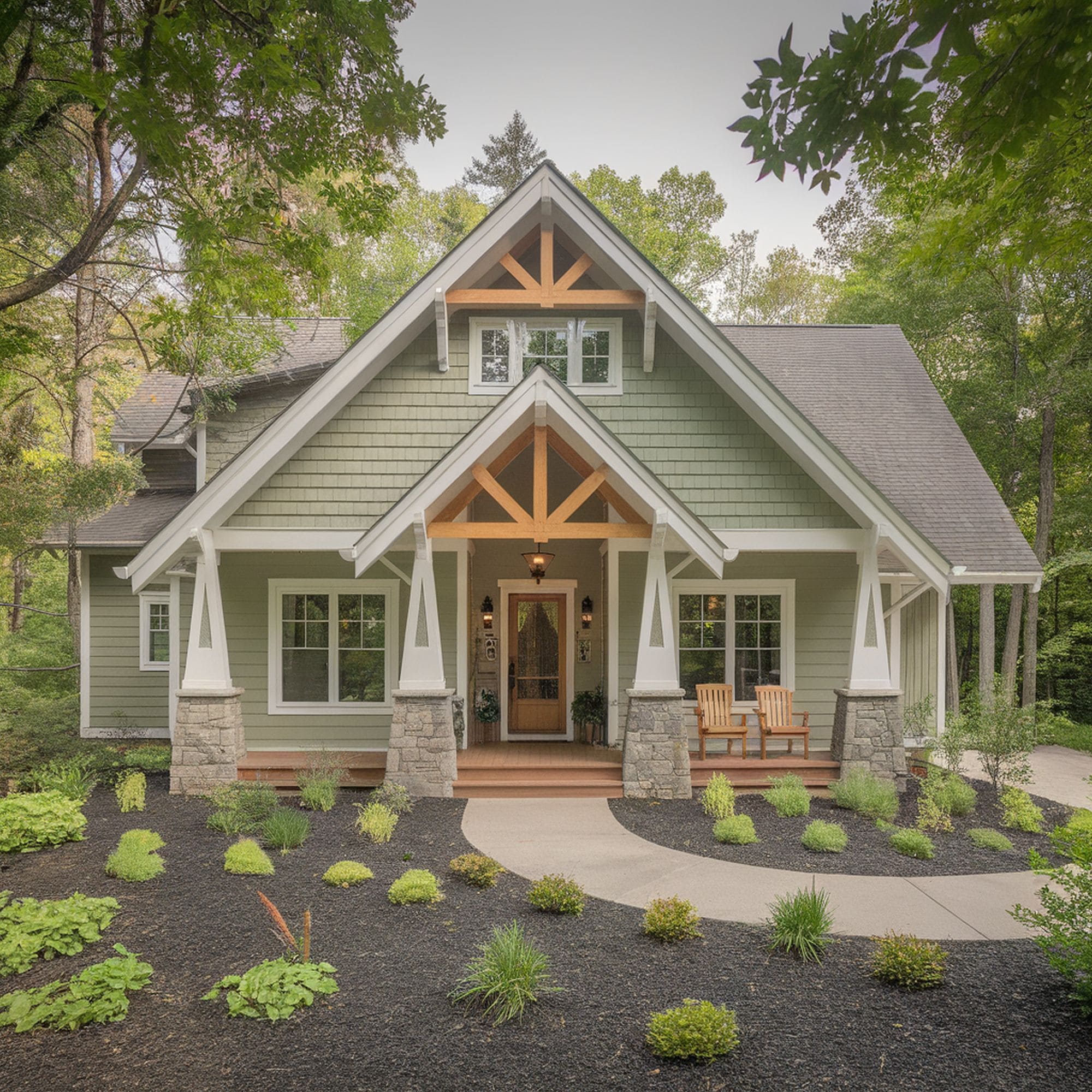
When deciding on the right exterior house color, the home’s surroundings need to be carefully considered for the best results. This beautiful home in the woods seems to be more cohesively integrated with its natural surroundings thanks to the use of light green paint. It’s a fairly subtle yet stylish effect that gives the house a more sustainable look. It’s recommended to opt for a similar approach if your home is close to dense vegetation and lush trees.
85. Farmhouse White
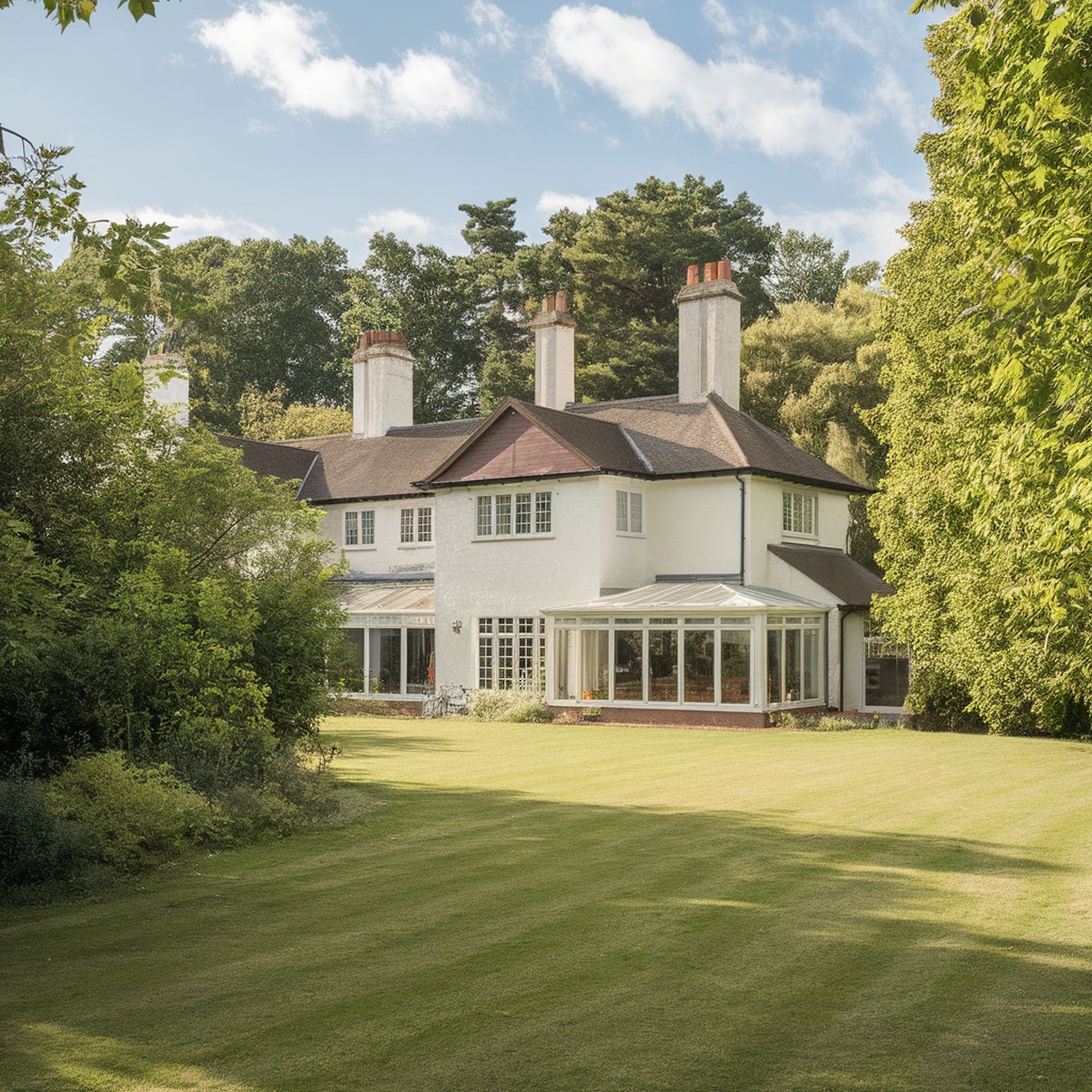
There are few house designs that can be considered as timeless as the iconic American white farmhouse style. This is a simple yet very impactful exterior paint color that can work nicely together with pretty much any details of the home or nearby surroundings. It depends on your particular aesthetic direction, but we recommend sticking to a fluffy shade of white with slight yellow undertones for this look. It’s more effective at capturing this classic appearance compared to stark white.
86. Pale Pink
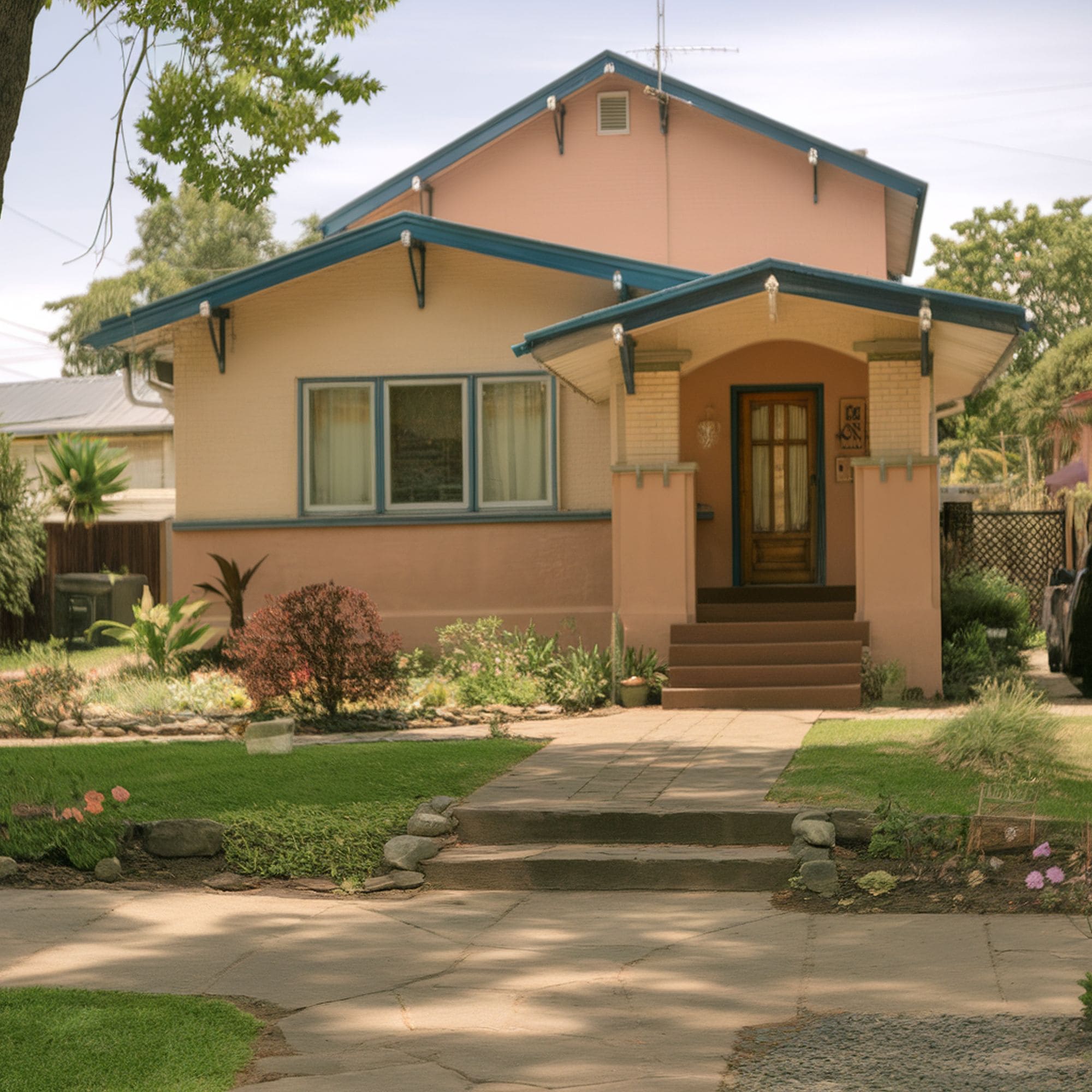
Pulling off a pale pink exterior look for your house can be more difficult compared to other classic shades. This style is recommended if you live in a sunny region close to the ocean where this soft type of pink seems to shine more beautifully. It can make your house stand out compared to the neighboring homes, especially when choosing to mix pale pink with contrasting marine blue or navy.
87. Charcoal Black
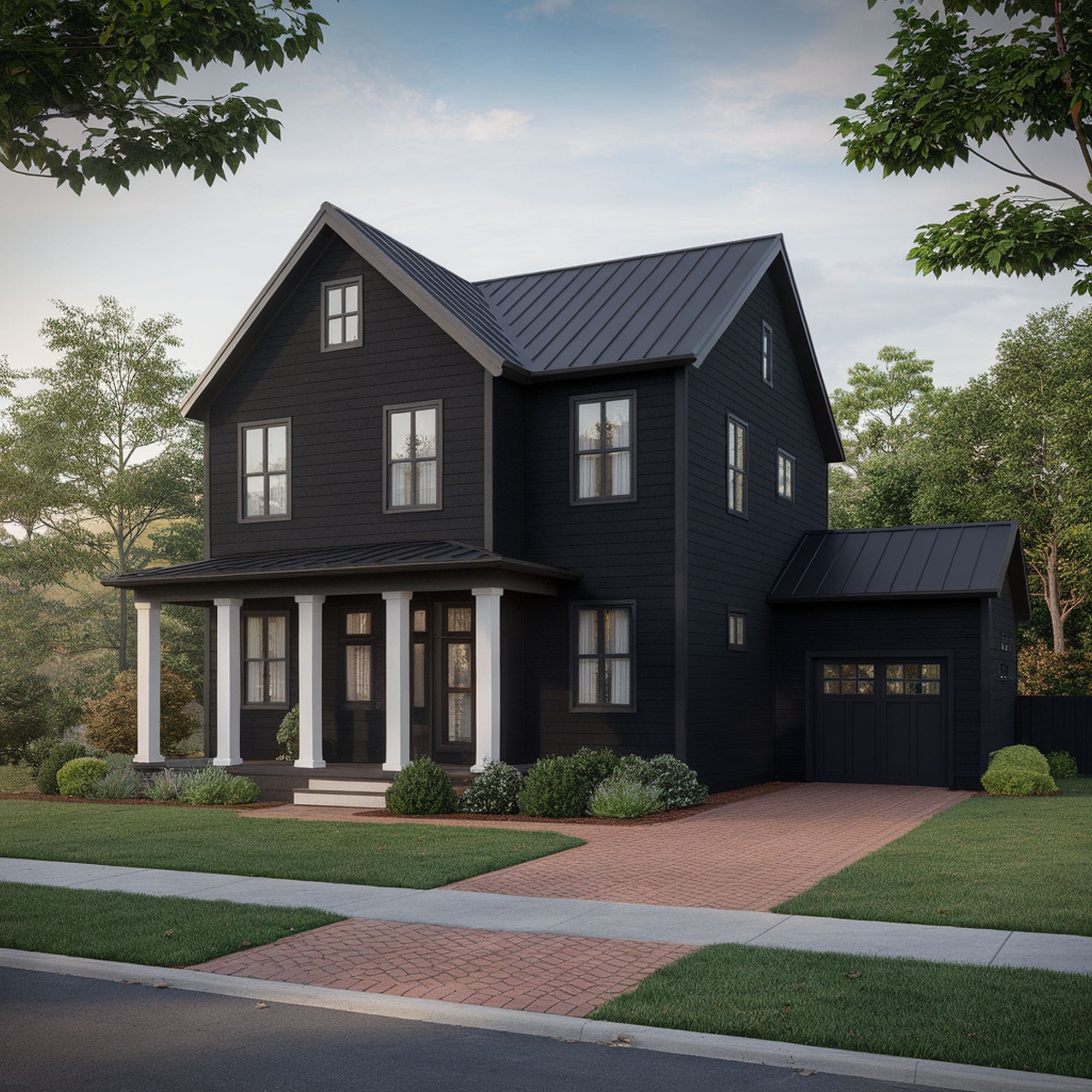
Here’s an interesting choice if you favor a bold approach when selecting an exterior house color. It’s definitely not very common to see a house painted in a dark shade such as charcoal black but it can pay off if you wish to draw attention. This kind of look isn’t really achievable for everyone because you need to take into account your location and neighboring homes in the area to create a harmonious appearance. If painting your house black seems excessive, you can at least use a similarly dark shade for the trim or just the front door.
88. Brick Red
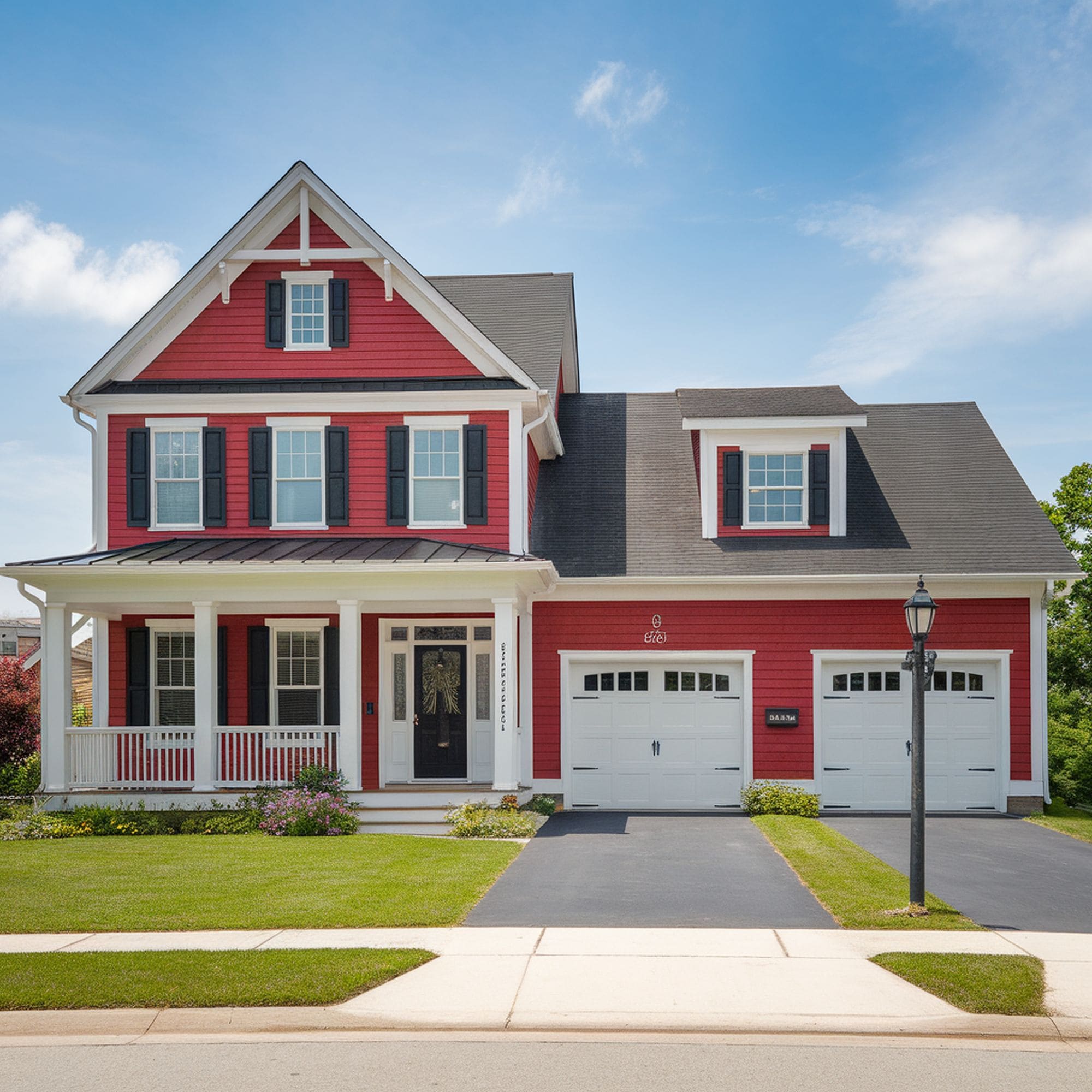
How do you paint your house in such a way to mix traditional and modern aesthetics at the same time? Consider a shade of red like the one shown in this example. Despite the traditional look of the home, the exterior brick red color adds a fresh vibe that makes it stand out beautifully against the clean landscape. Red is usually a bold choice for the exterior of a house but picking the right shade can make it look harmonious and balanced with its surroundings.
89. Desert Tan
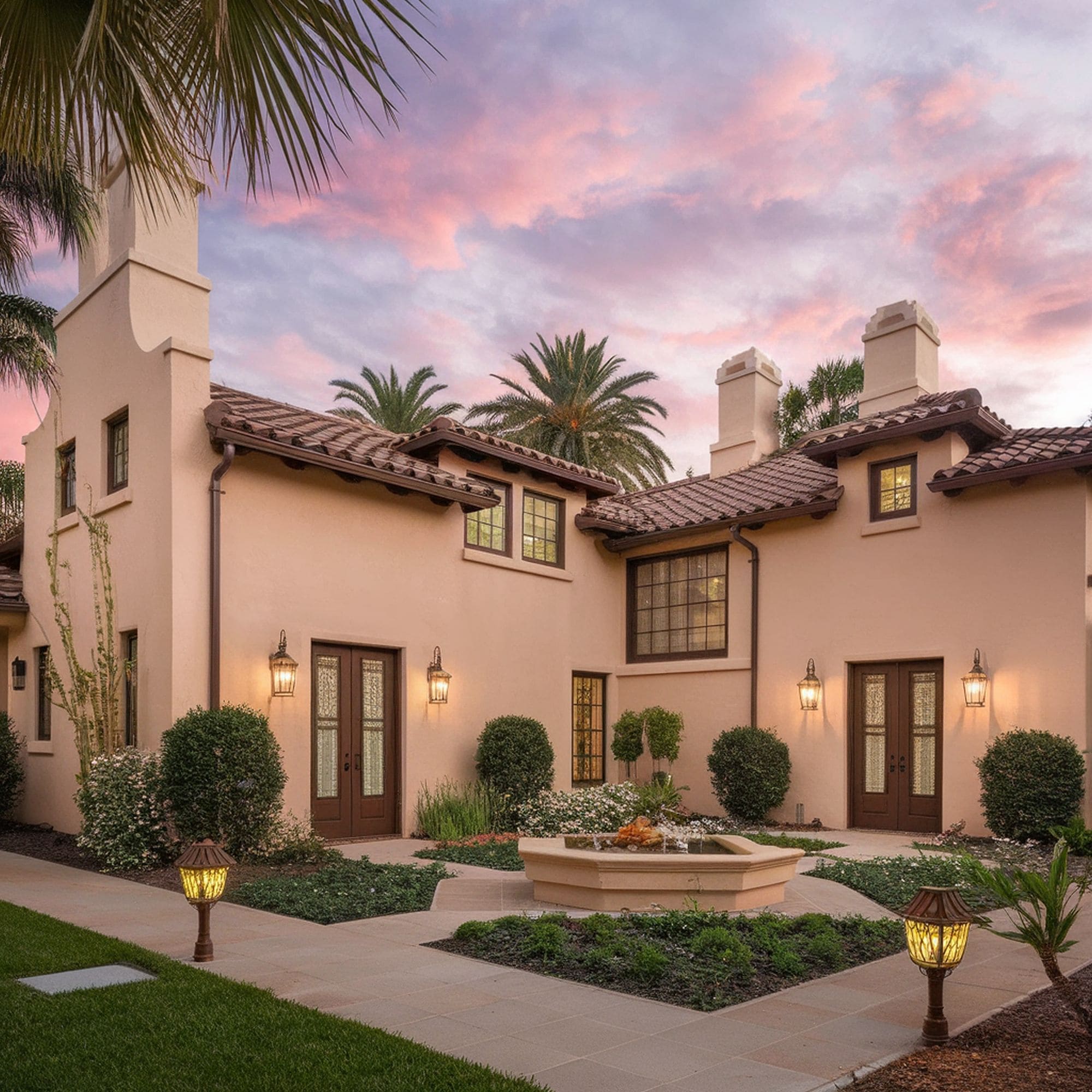
If you live in a hot and dry climate, there are hardly better choices for the exterior of the house than a suitable shade of tan. Check out the look of this home that provides some strong desert heat vibes together with the abundance of cacti and succulent plants. Although this shade of tan isn’t particularly intense, it seems to make the entire area come to life and act as the perfect background for the surrounding elements, including the brilliant blue sky.
90. Cheery Yellow
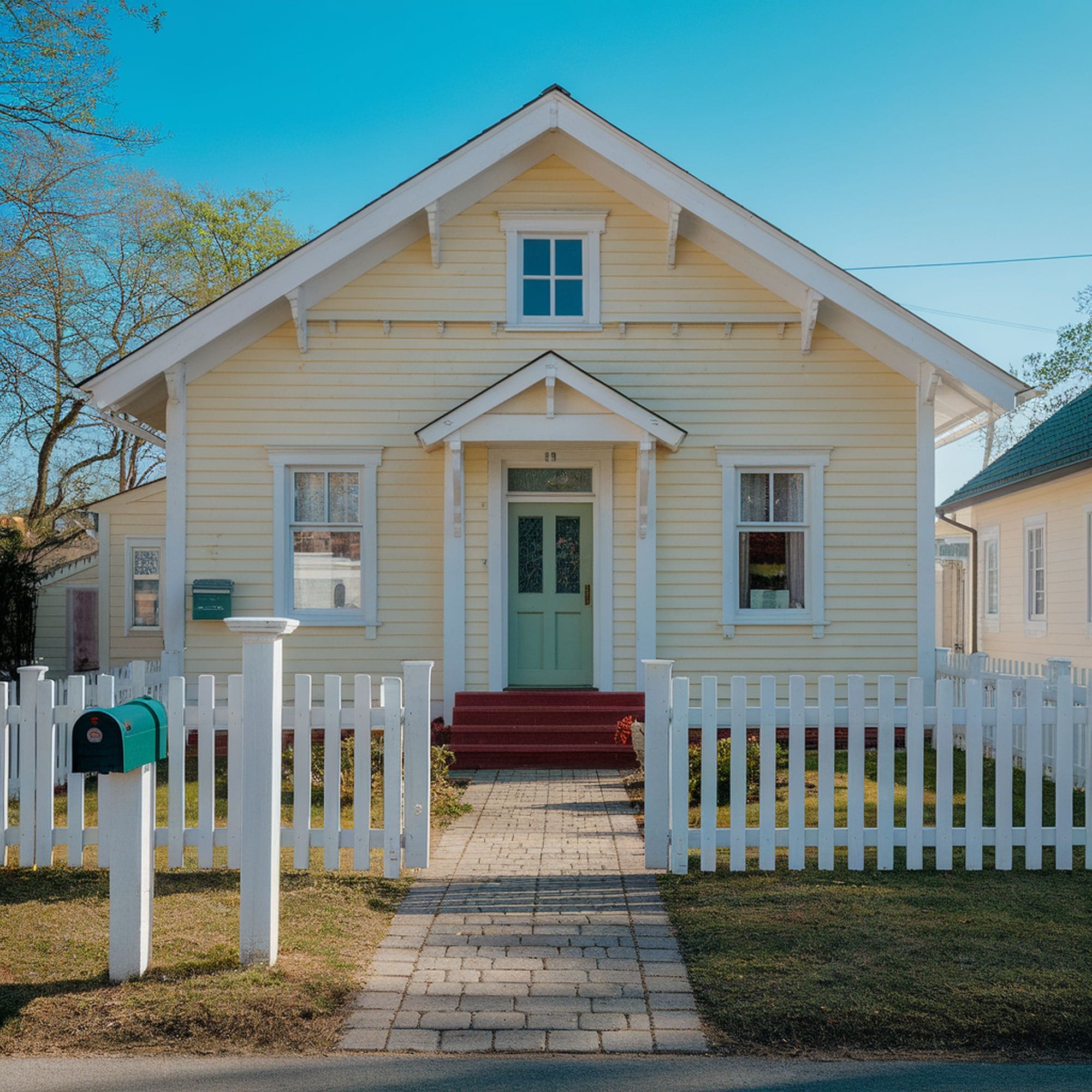
Making the house brighter using color is a simple solution that works great especially with certain types of homes such as craftsman styles. Take a look at the use of yellow paint here that’s elegantly combined with bright white to create a welcoming and cheerful look. Choosing a fun shade of yellow like this one is recommended if you wish to make the house stand out in a more conventional manner. Go for a buttery tone instead of pure yellow shades that can be too flashy even for designers focused on creating optimistic feelings through exterior colors.
91. Deep Blue
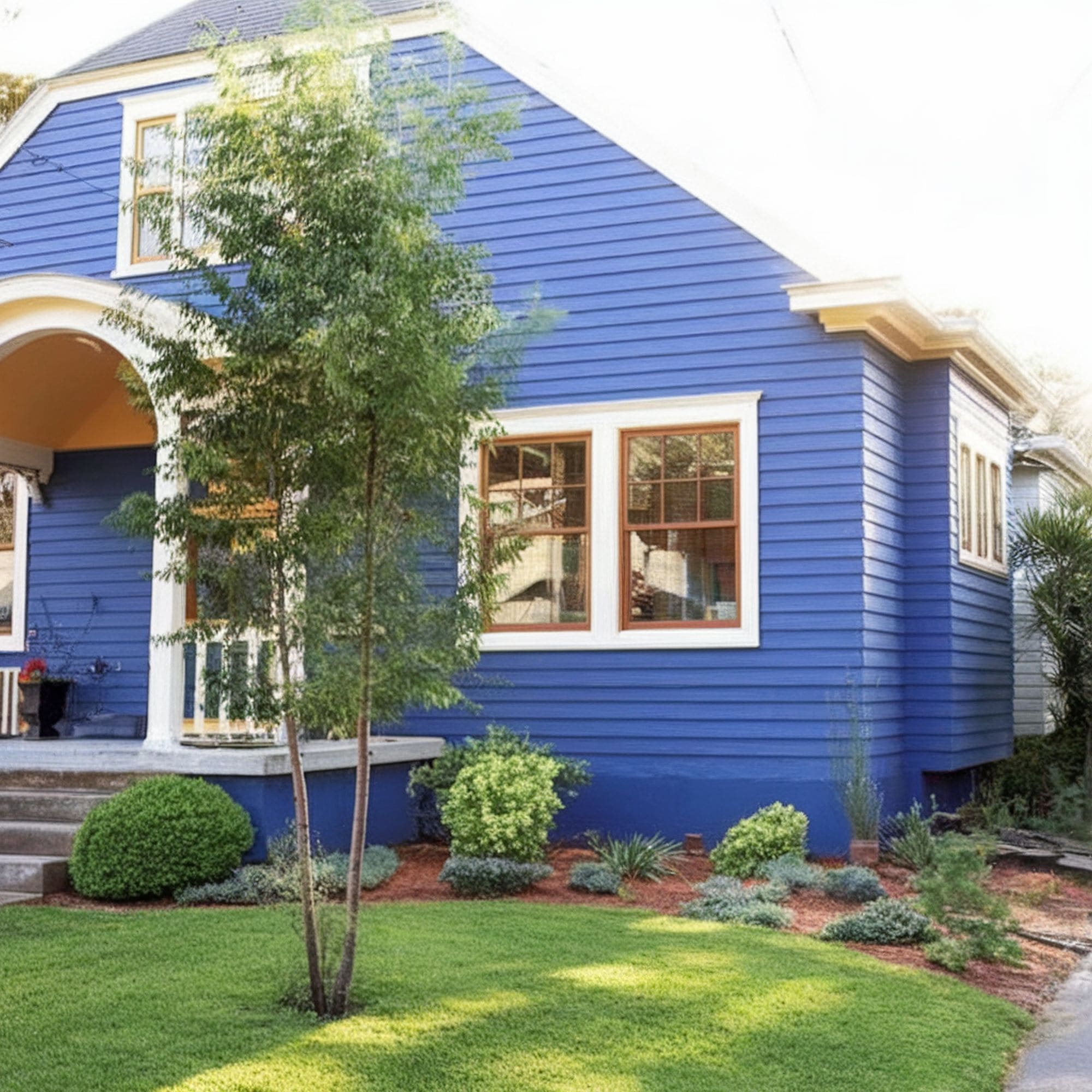
Blue is a popular color for the exterior paint of homes everywhere. It’s not hard to see why considering the relaxing ambiance it creates. While typical choices include very light or very dark shades, here’s an interesting blue hue that stands out some more. This deep blue shade brings some unique cottage charm to the exterior look of the house. Pulling off this type of look can require having certain types of homes and carefully balancing the appearance of the trim so the blue color doesn’t feel out of place.
92. Slate Gray
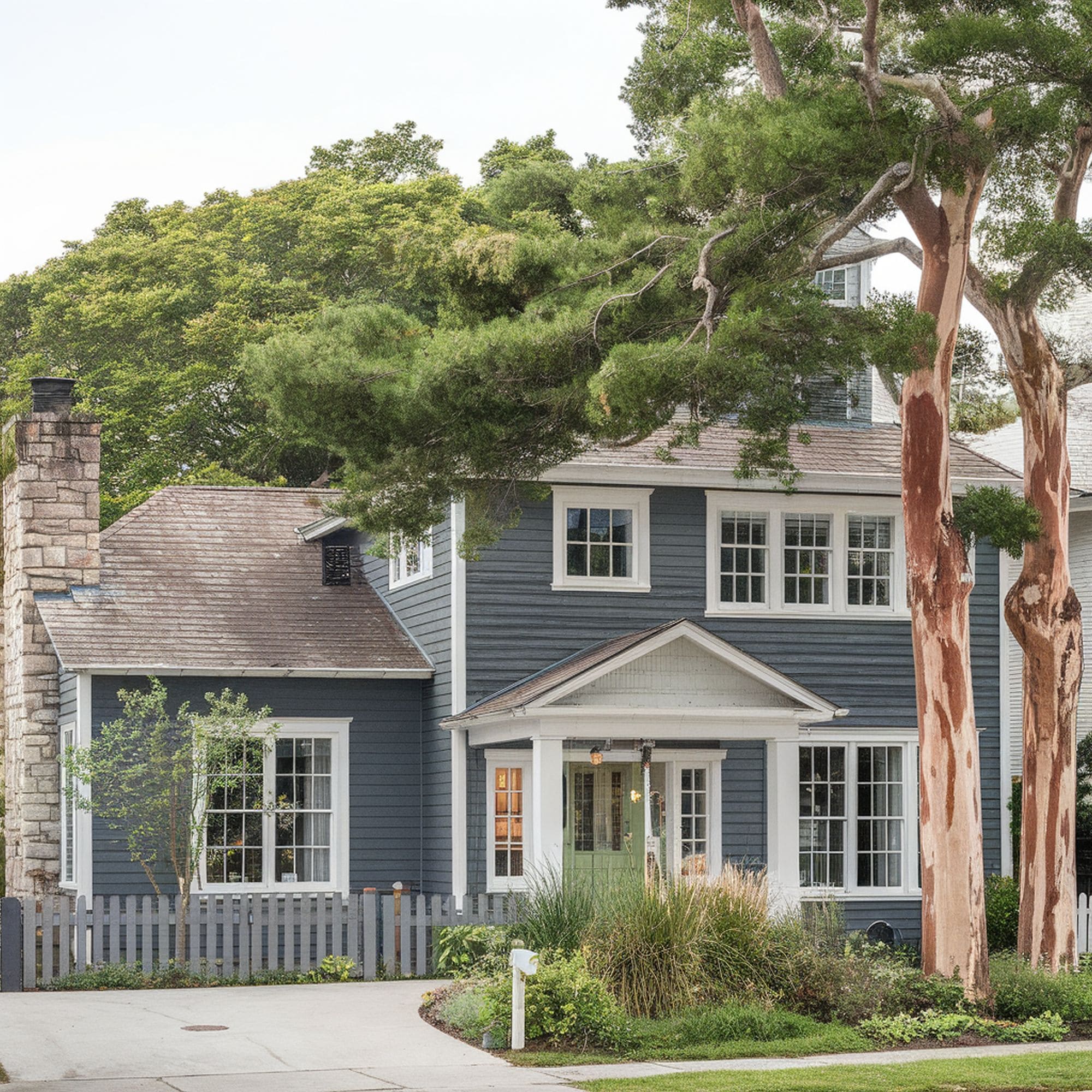
Making your house exude pure elegance isn’t very hard when you pick the right shade of gray. Check out the very subtle green undertones found in this neutral shade of slate gray that looks wonderful together with earthy red tones that highlight its visual impact. This is a classic color that can be used for the exterior paint of the house. There’s a danger of making it appear dated unless it’s properly paired with suitable accent pieces or complementary colors.
93. Off-white
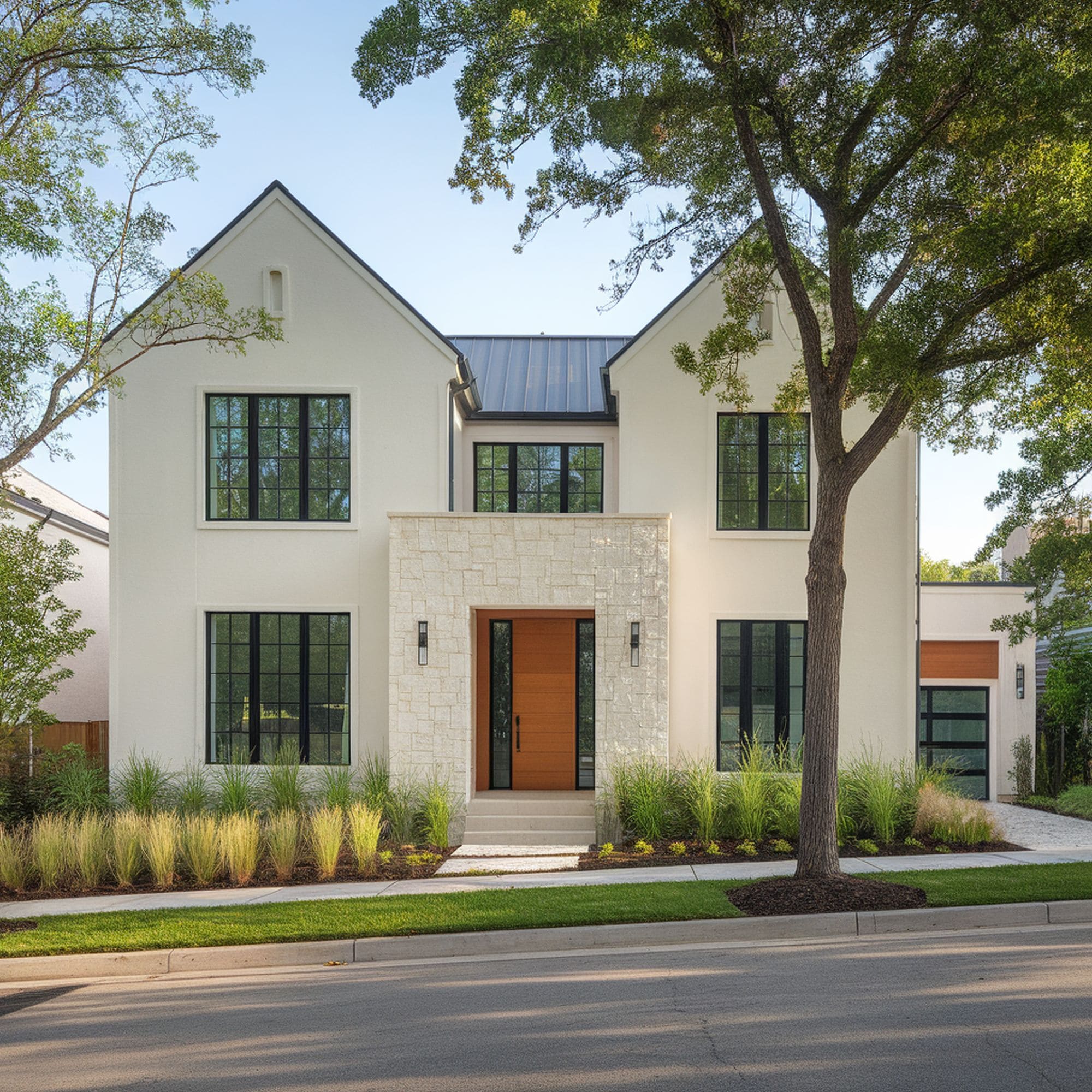
Some people enjoy the idea of a classic white house but wish to avoid a look that seems too conventional. Playing around with different shades of white can help you identify a great look that matches your specific vision. Check out this off-white paint that’s more versatile and goes well together with dark accents that transform it from outdated to modern and fresh. If you don’t want a very strong contrast, you can swap black accents for more neutral tones such as light brown and tan.
94. Cozy Brown
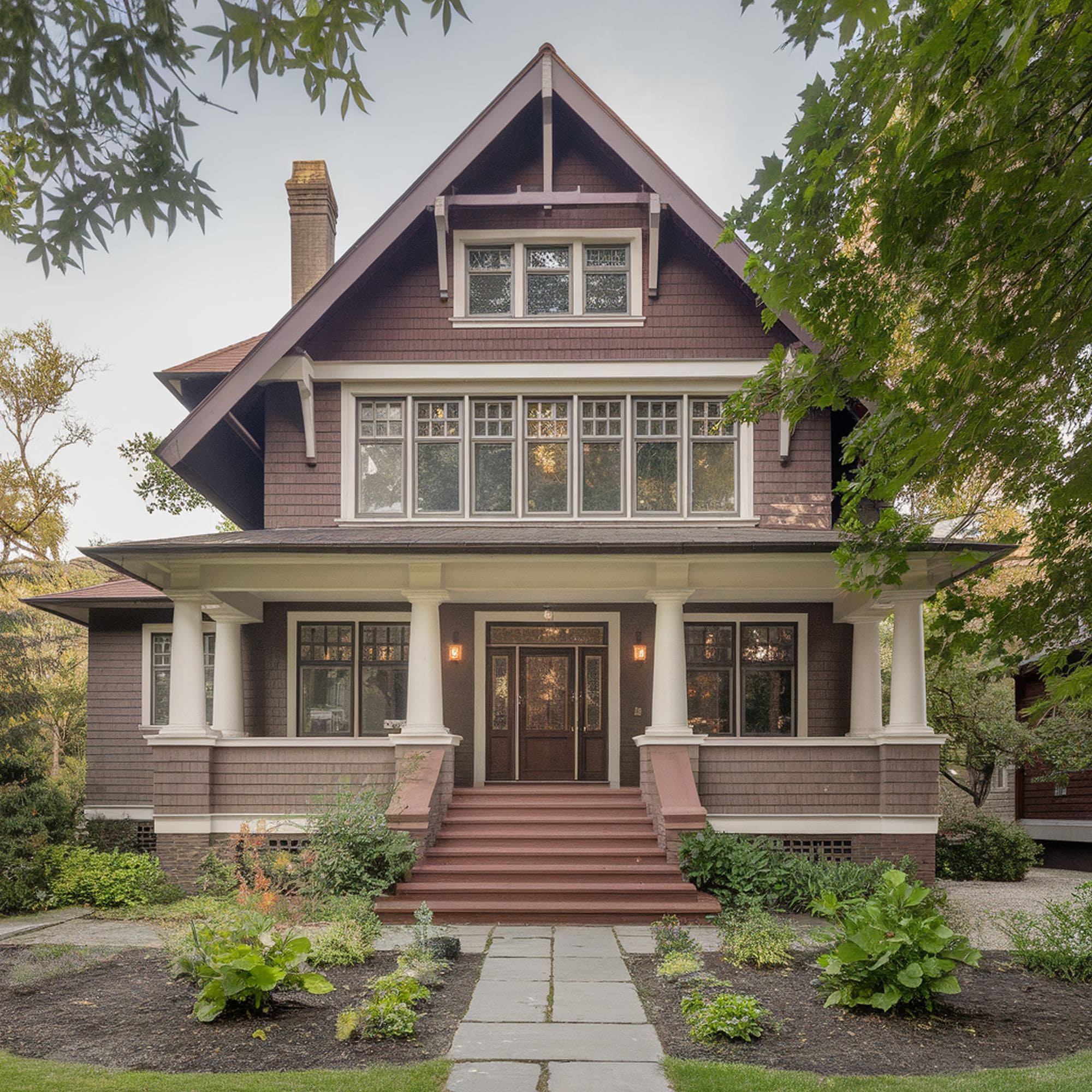
Brown isn’t the first choice of many homeowners looking for an exterior makeover. However, there are lots of attractive shades of brown that can create a classic and cozy visual effect. When you think of brown you shouldn’t necessarily think of dark hues that are hard to pair with the trim or surrounding elements. With a bit of designing work, you can pull off a balanced shade of brown that’s not too harsh on the eyes. Check out this beautiful house that works as a solid example in that regard.
95. Cedar Orange
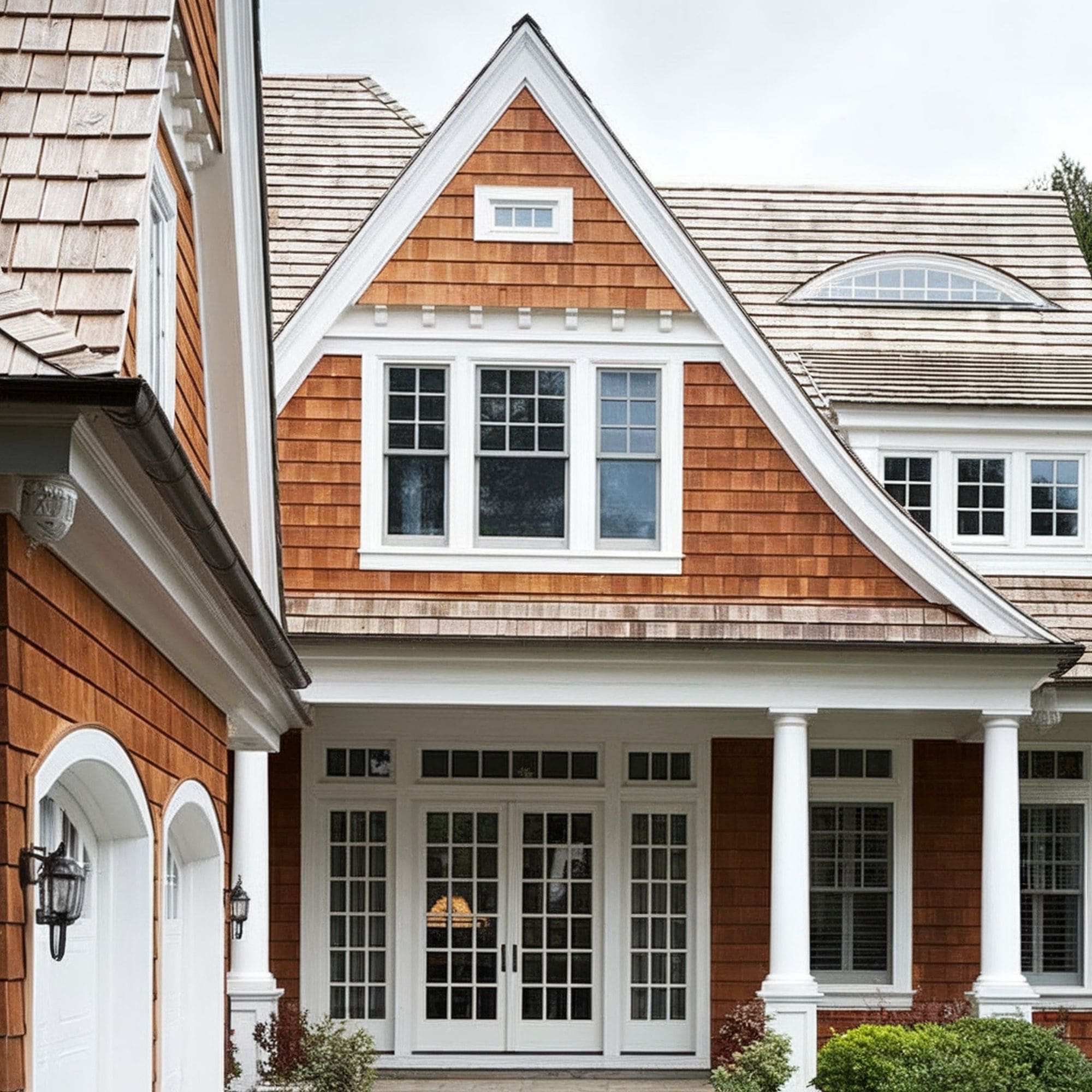
Wood tones can feel at home for lots of exterior home designs. Whether you wish to keep a classic yet fresh look or plan to revive the exterior style and make it cozier, this cedar orange paint can add a lot of beauty. As with other great house colors, you can’t go wrong if you choose white as the accent color. It can brighten up the natural wood tone and give it that traditional vibe that’s not lacking in sophistication.
96. Taupe
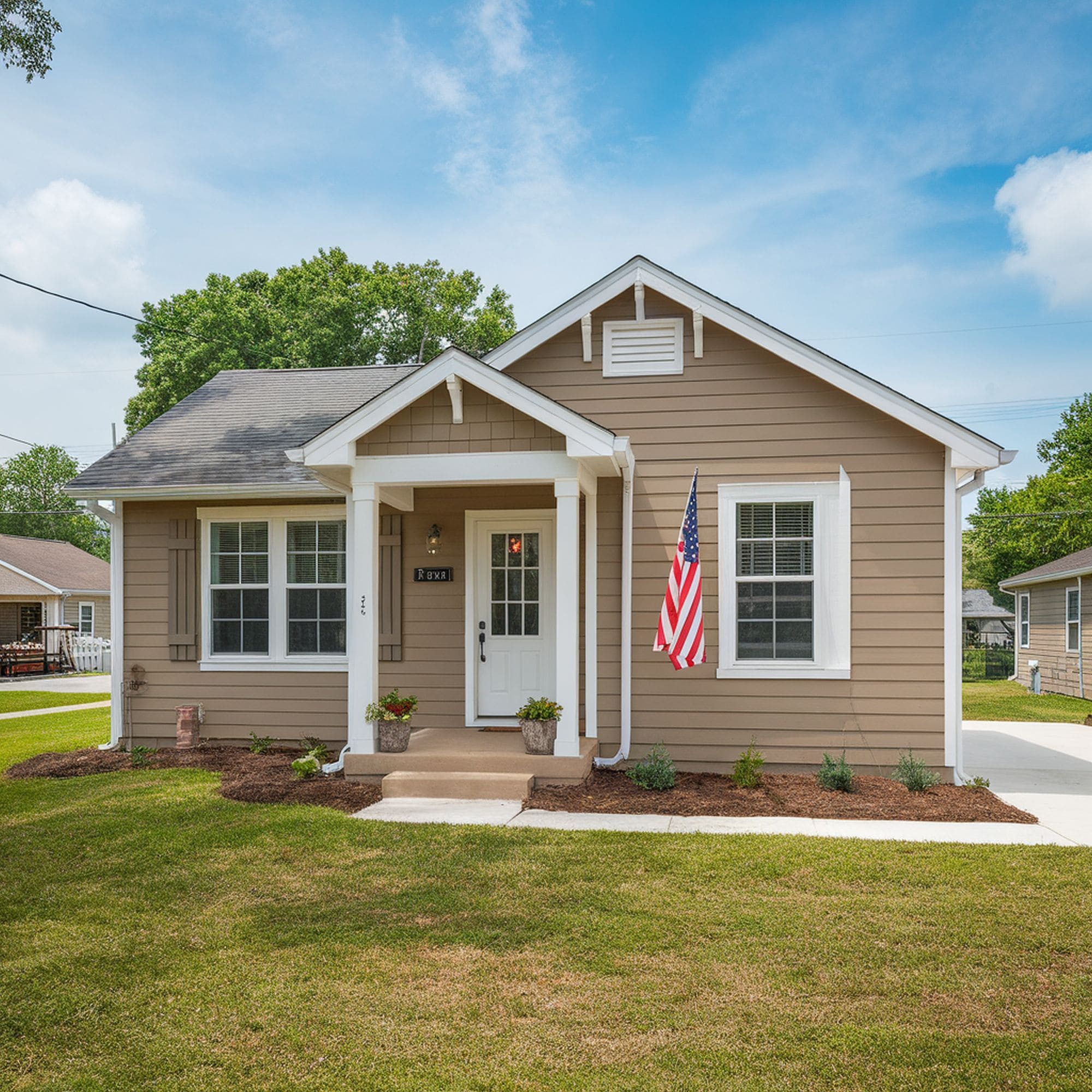
If you’re a fan of the neutral trend, taupe could be an innovative solution as an exterior house color. It’s a simple color that won’t draw too much attention yet still manage to stand out compared to more popular neutral tones that can feel overused. Taupe is also a recommended paint color if you ever plan on selling the house because there’s no risk of diminishing its value. It’s stylish yet never straying too far from the comfort zone so it’s a safe choice for many homeowners.
97. Sage Green
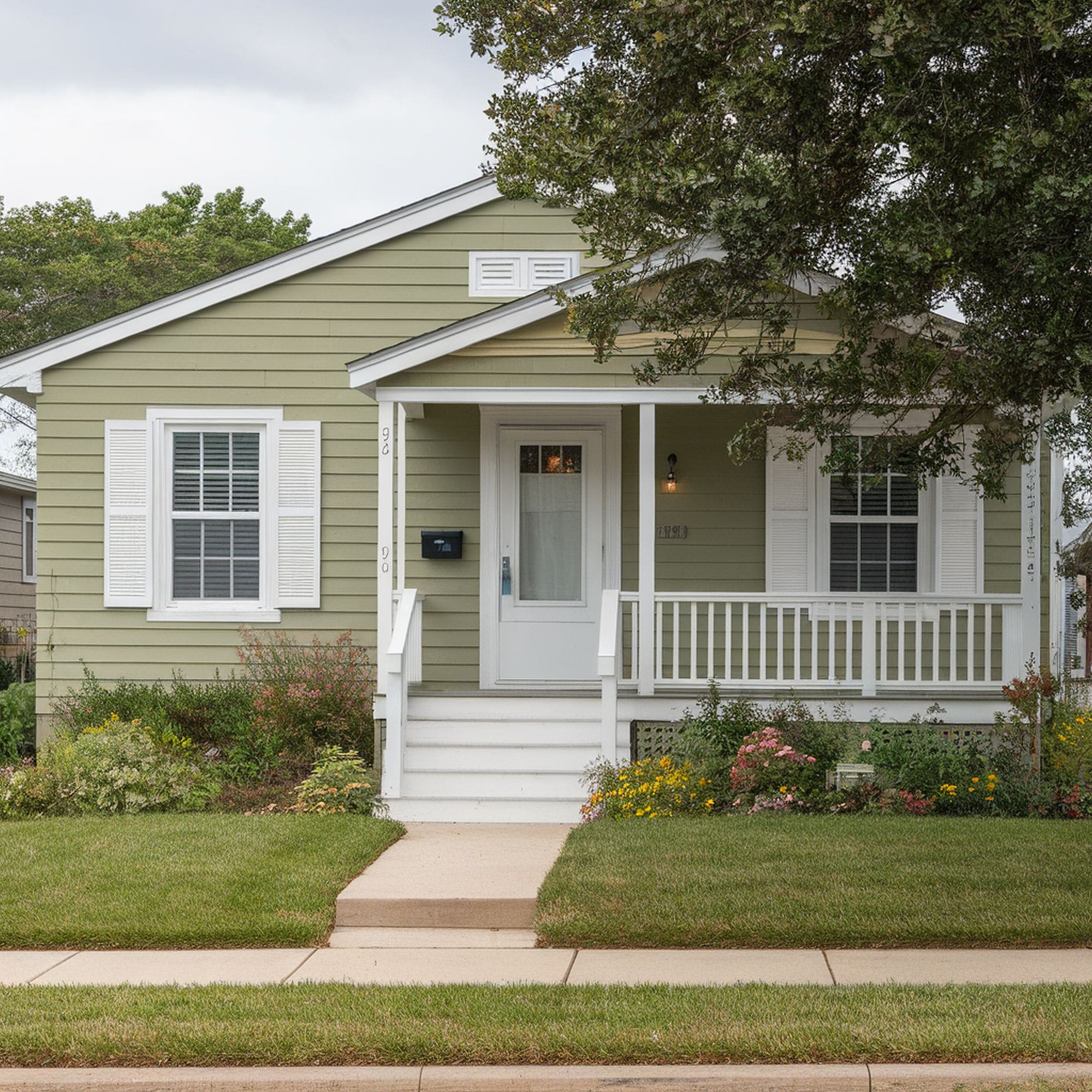
A superb mixture between shades of green and gray, this is a very trendy color for decorating the exterior of your home. It’s a favorite for many homeowners that like earthy tones and a more natural aesthetic. Sage green is cozy and elegant at the same time and represents one of the best green hues to try. Aside from beige or other neutrals, green could be considered the safest exterior house color, especially if you stick to calming shades that mix well with the surroundings.
98. Pastel Blue
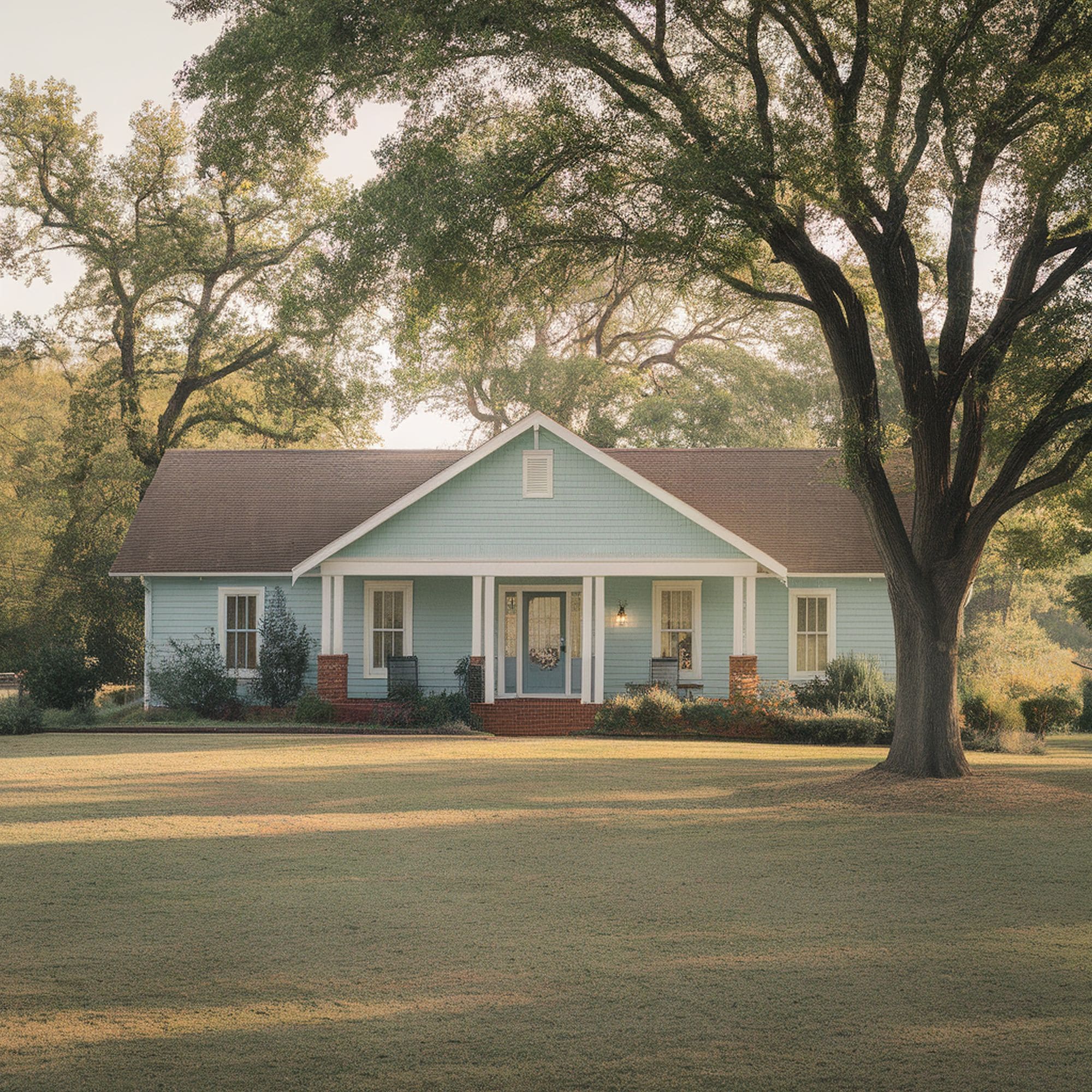
Great for all kinds of homes, ranch styles included, pastel blue can be a delicate choice that gives off serenity vibes. It’s the ideal canvas for natural surroundings although some homeowners can find this shade of blue a little too sappy. This color used to be restricted only to nurseries or kids’ rooms but the pastel shade is charming enough for a full exterior makeover. Light blue colors are popular for homes and the right pastel shade will definitely ensure excellent resale value.
99. Wine Red
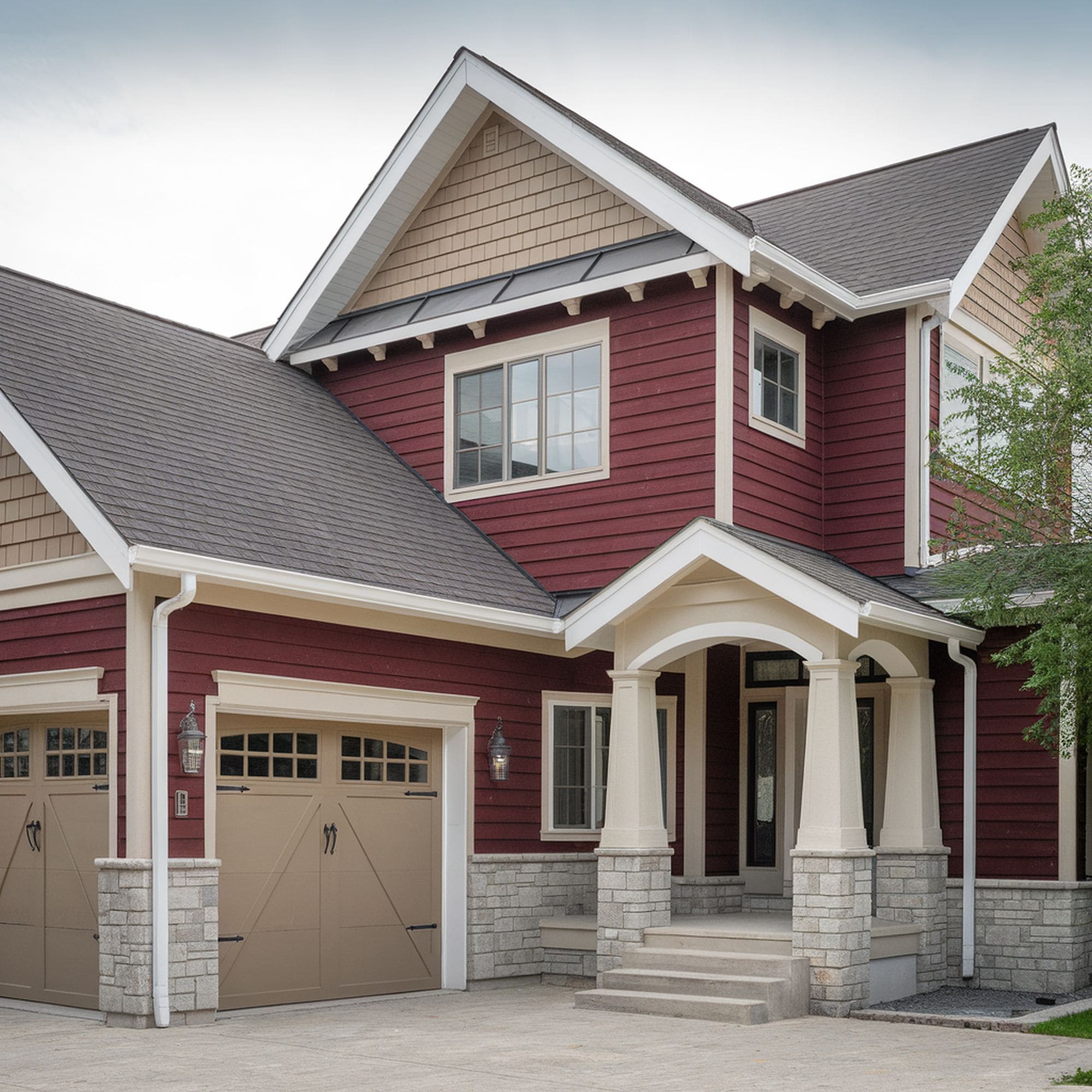
A vibrant color that immediately catches the eye, wine red could be a solid option for the exterior of the house. You can pick some specific shades that lean towards maroon or burgundy if you prefer extra boldness. However, it’s safe to say that any red hue will bring a solid visual impact to the exterior of the home adding a renewed sense of vitality. Mixing similar shades such as the dusty rose on the roof creates a more harmonious look. The complementary shades of light tan and white also contribute to keeping the strong red more subdued.
100. Navy Blue
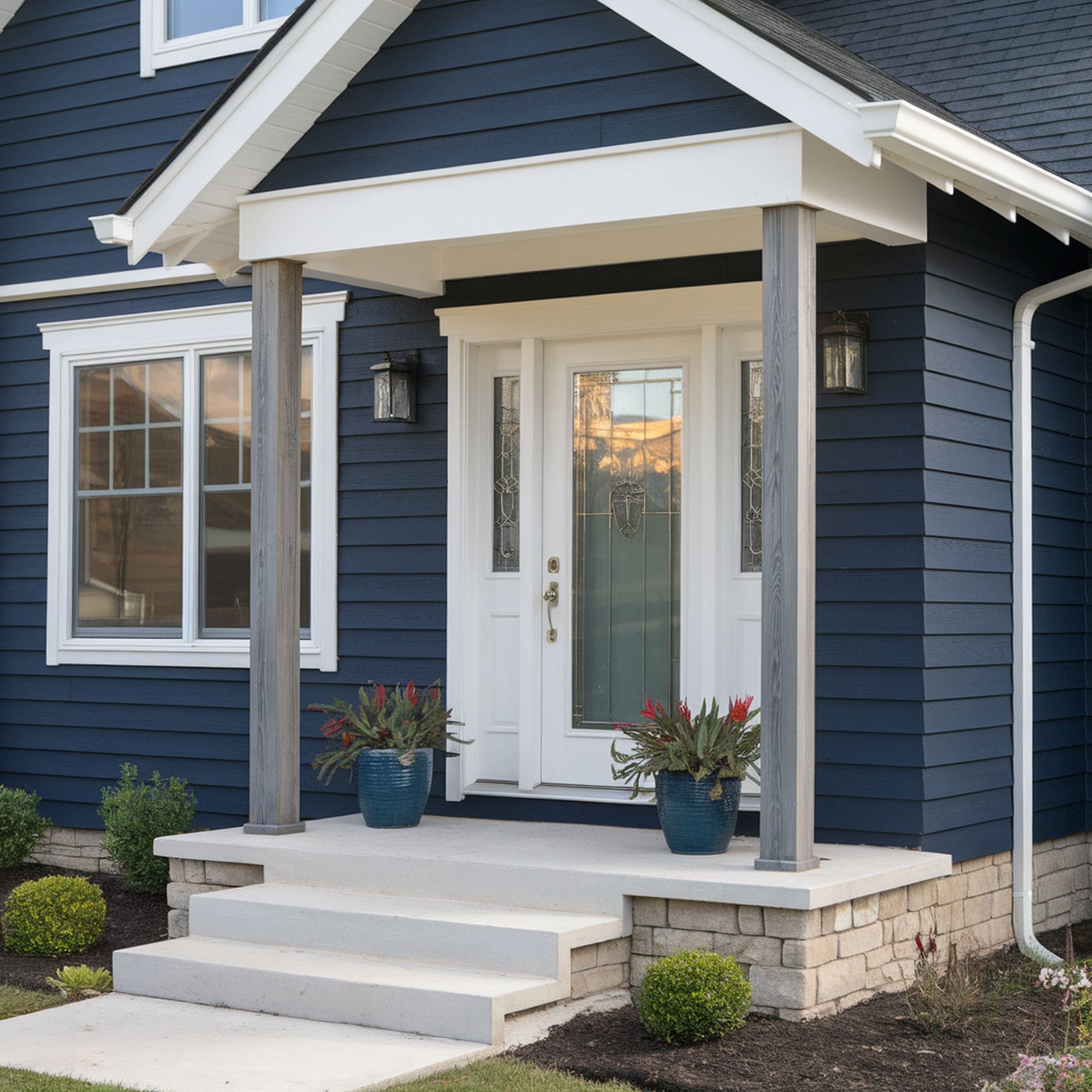
Some people think that navy blue should be reserved for coastal houses but that’s not a strict rule. You can enhance any home’s exterior with a nautical vibe by choosing this dark and rich shade of blue. Crisp accents and bright trim can make it stand out more effectively regardless of the location of the home. Even those afraid of color who want to play it safe can achieve a satisfying look with navy blue thanks to its timeless characteristics.
101. Mustard Yellow
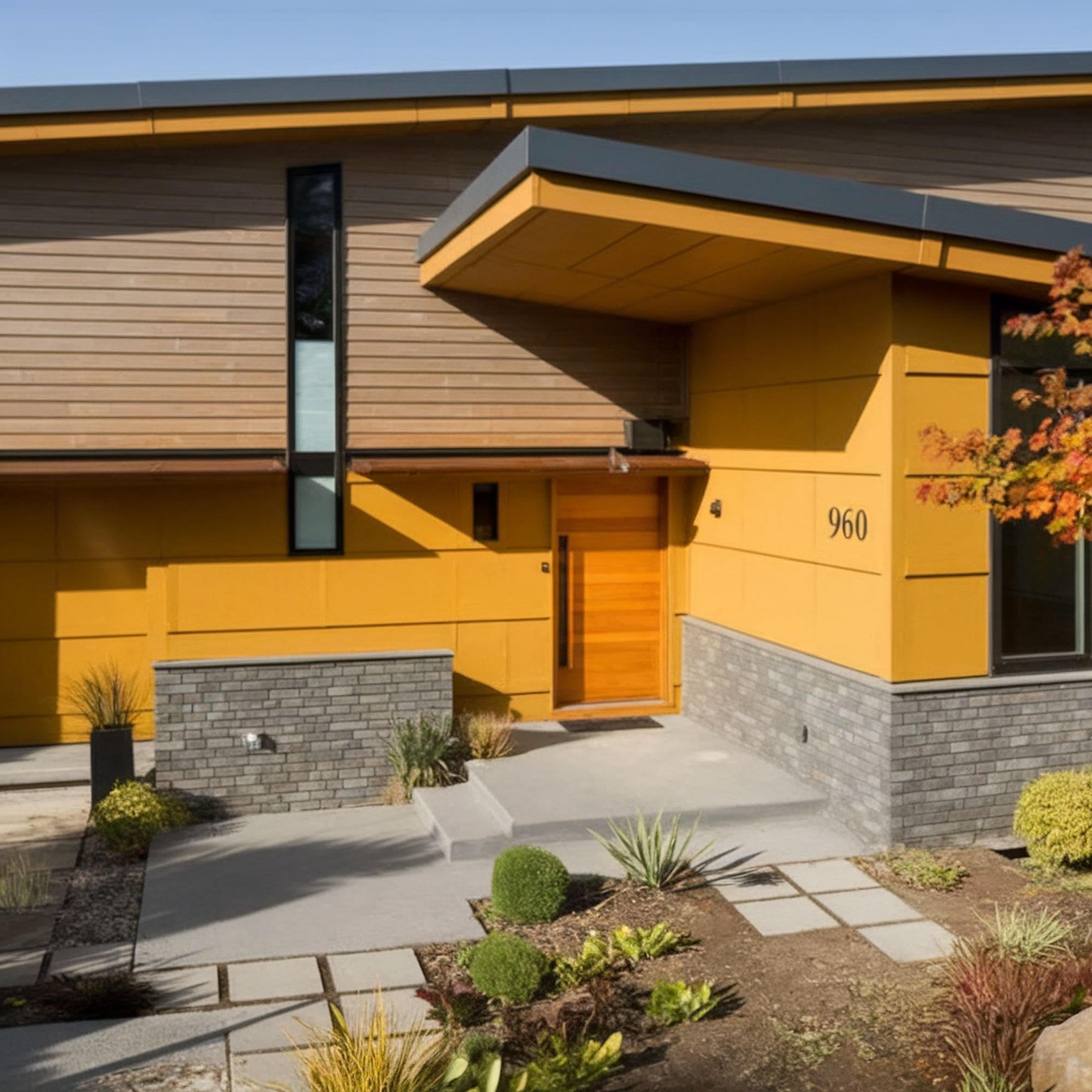
Great for modern or mid-century styled homes, mustard yellow is an excellent choice as exterior paint. Designing the exterior of your home using this color can take some effort but the results will craft a rich visual effect. Those who prefer a one-of-a-kind look should consider the bold approach of mixing the retro feel of mustard yellow with the clean lines of modern design and rigid neutral shades of gray. The unexpected contrast will definitely impress any guests.
102. Warm Brown
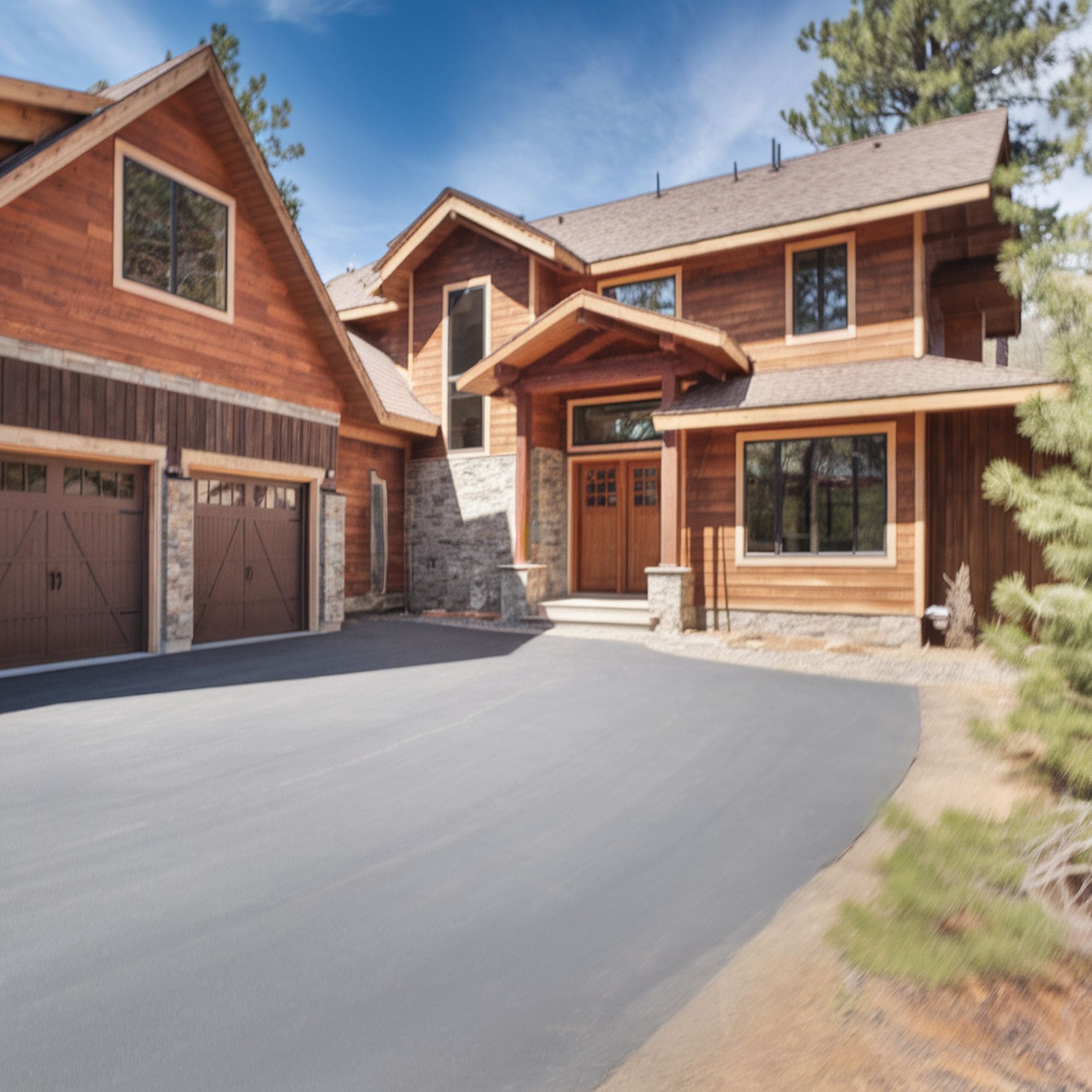
Brown shouldn’t be seen as a boring color. Check out this brilliant house design that relies on warm cinnamon tones that bring a homely feel to the overall structure. It’s certainly a great choice for making the outside of the home seem cozier, especially if there’s plenty of greenery surrounding it. Playing around with shades of brown allows you to customize your home with different aesthetics. It’s highly recommended if you wish to embrace traditional, old-world vibes through an earthy color palette.
103. Light Gray
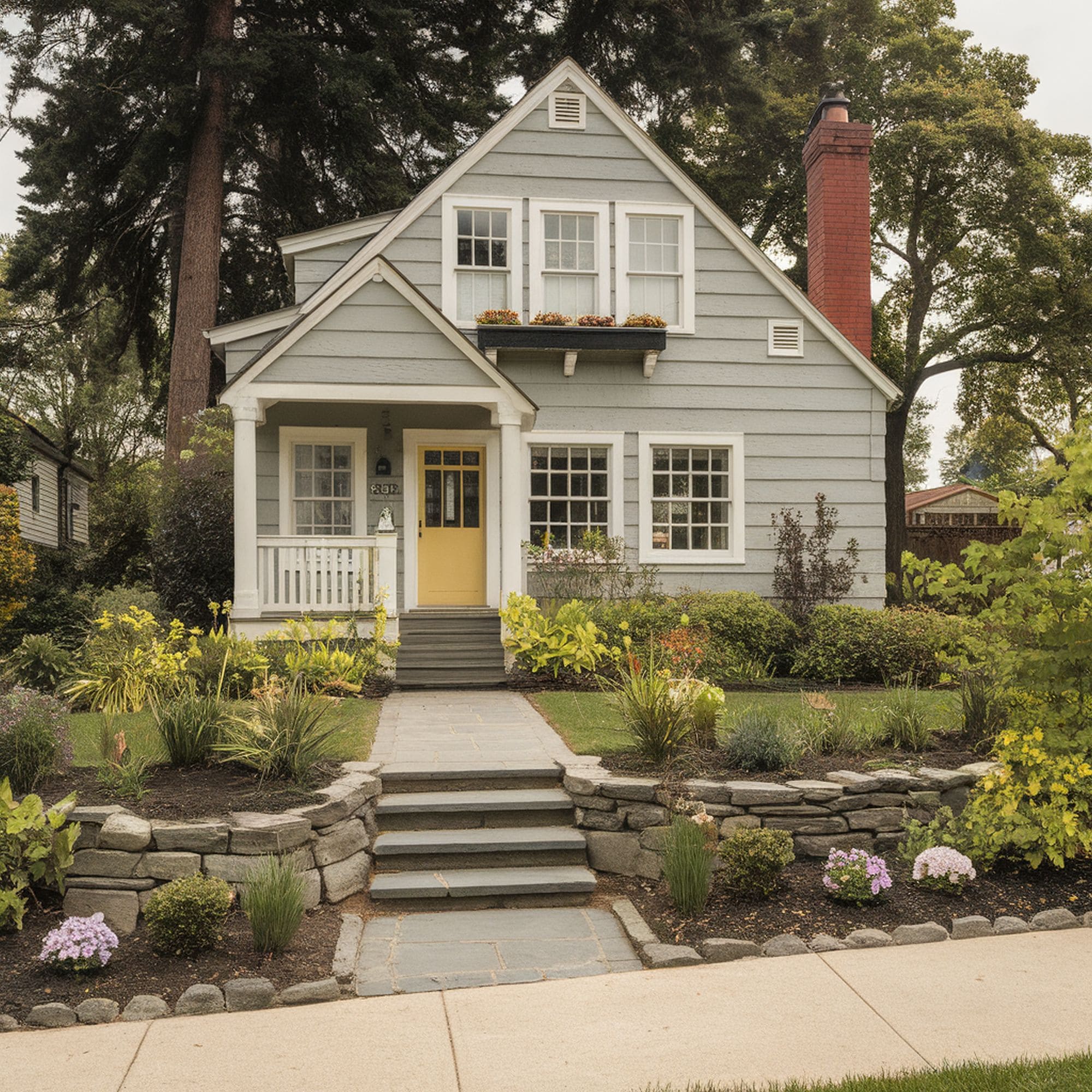
Gray is among the first choices if you plan on creating a stylish exterior for your modern home. That being said, you can also incorporate a light shade of gray as the main color for painting a cottage-styled home. Even houses with a rustic theme can work nicely together with this simple yet elegant color. It lets the surrounding beauty of the bushes and flowers take center stage so it’s a nice solution to create a good contrast with ornate landscaping. If gray appears too cold for your tastes, consider mixing it with warmer accents such as a yellow front door.
104. Classy Beige
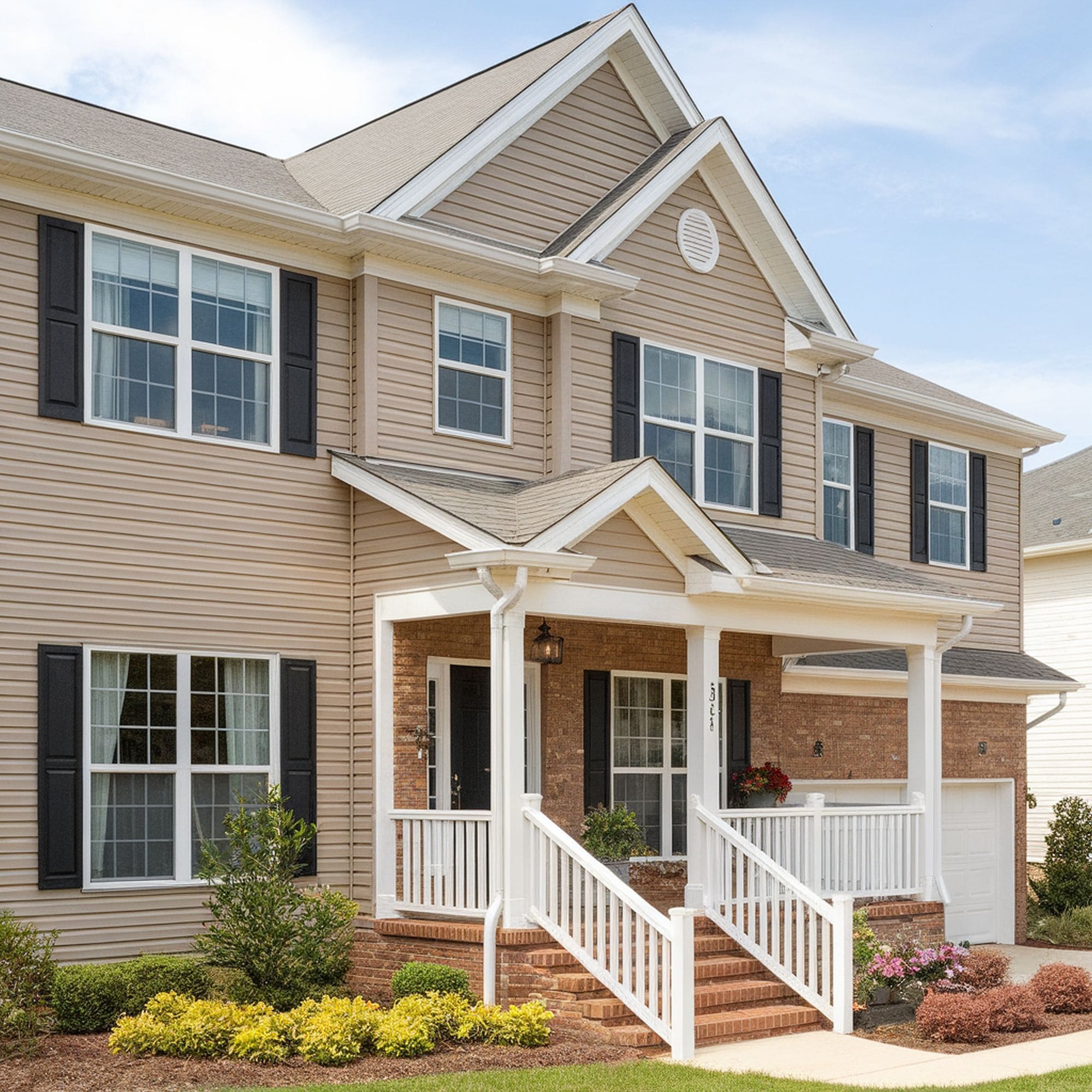
Going for an all-neutral palette is a safe bet if you want to enjoy a house aesthetic that will always be trendy. There are many different shades to choose but we think that a beige tone can be a classy option that appeals to many homeowners. This paint color incorporates a gray hue that makes the exterior of the home seem more refined and sophisticated. It’s not the usual warm and cozy beige that you’d normally expect. The elegance of the home here is further enhanced by the choice of black paint for the shutters.
105. Dark Green
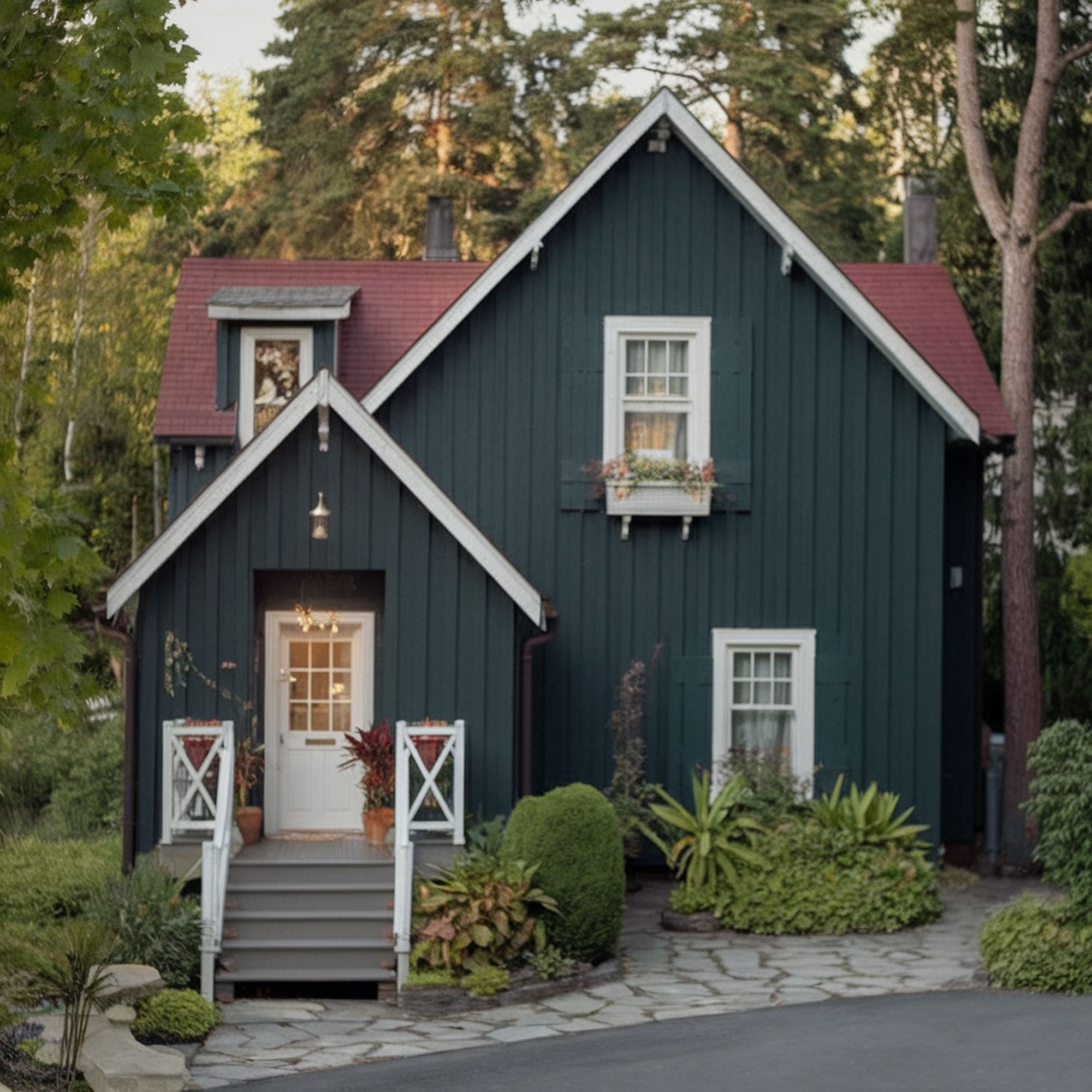
What better color to use for showing off your cozy retreat in the woods? Dark greens or blues are the best choices for the exterior look of the home if you want to take the coziness to a new level. If you’re not sure about the specific shade, the simplest solution is to check the surroundings for inspiration. The natural beauty of the trees and shrubs can offer the ideal background for a tiny house. Focus on a paint color that elegantly complements the woods and makes the structure feel like a part of nature.
106. Blue-Gray
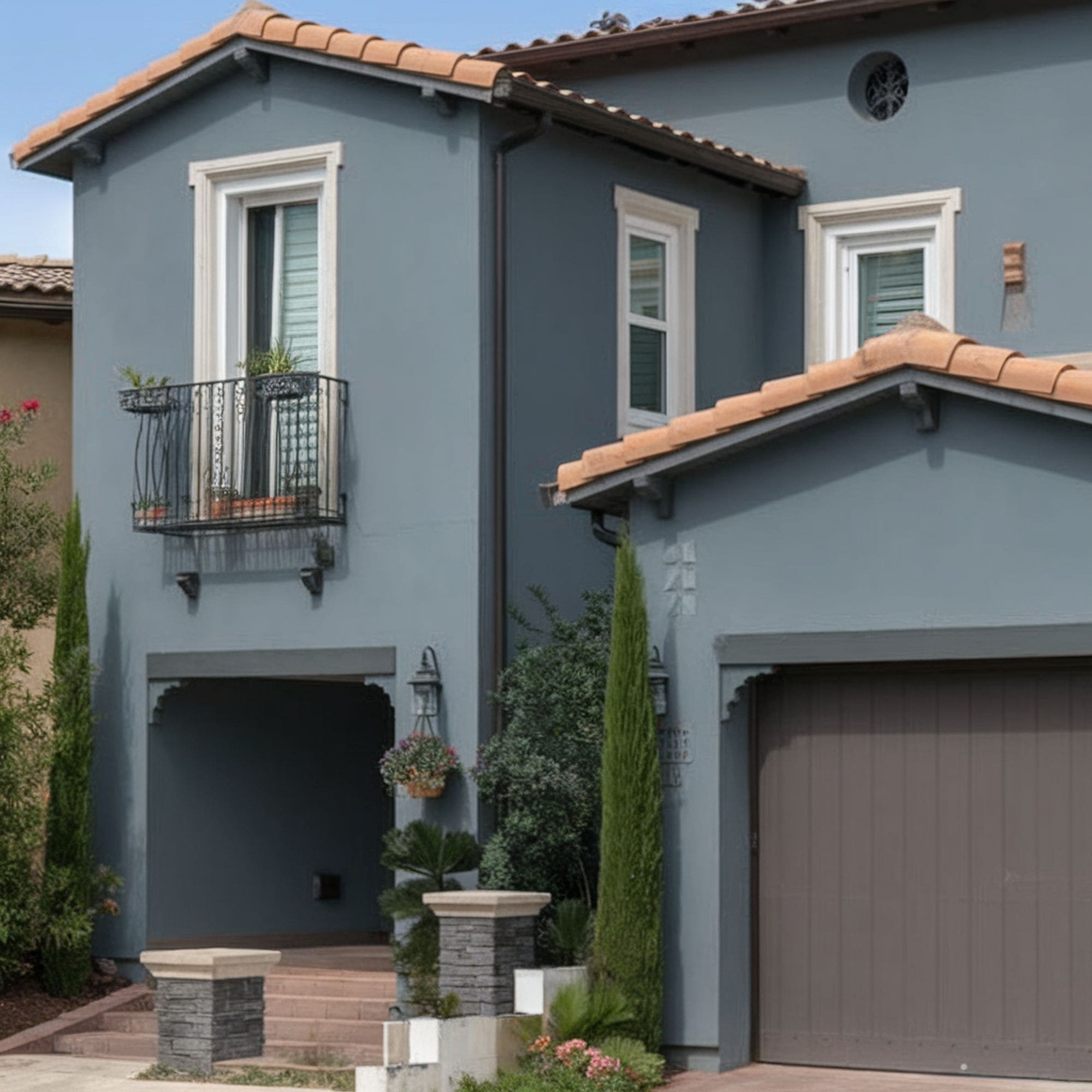
In case you can’t decide between gray and blue for the exterior of your home, perhaps you could try a compromise. A blend of blue and gray hues with the right muted texture can provide an elegant look that’s anything but boring. A dark blue-gray shade can work even better if your home is located in direct sunlight where the cool tones appear brighter yet balanced enough to prevent an exterior look that’s too flashy.
107. Ashy Purple
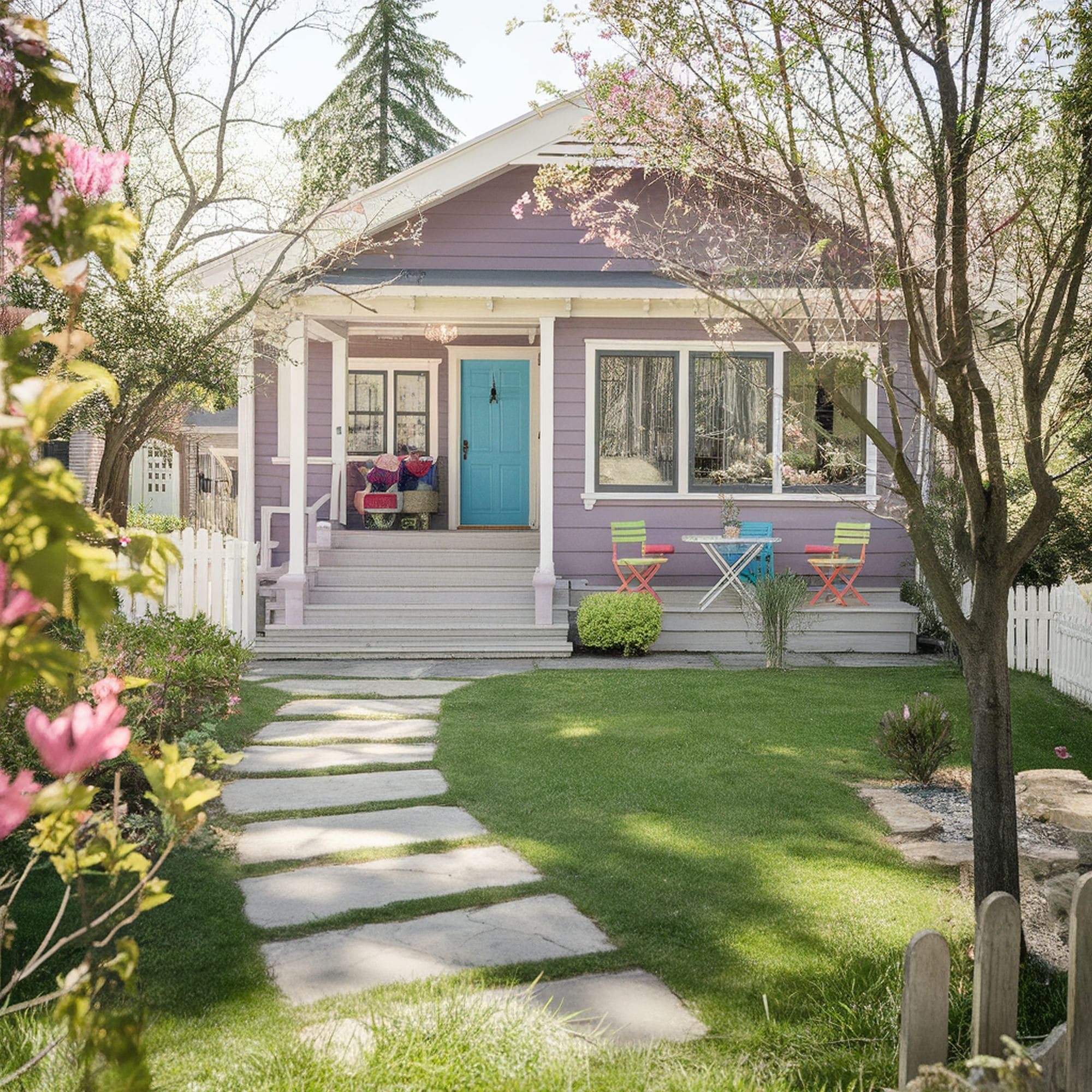
Homeowners that like the idea of a gray exterior color scheme will be pleased to find out that you don’t need to restrict yourself to the typical modern, steely tones. Check out this stylish home that makes use of gray siding with blue undertones that gives it an ashy purple look. It’s just the right amount of color to create a unique house design without standing out too much. Gray is one of the most versatile choices for the exterior of your house and this is an excellent example to inspire you.



Leave a Reply to Joan King Cancel reply