
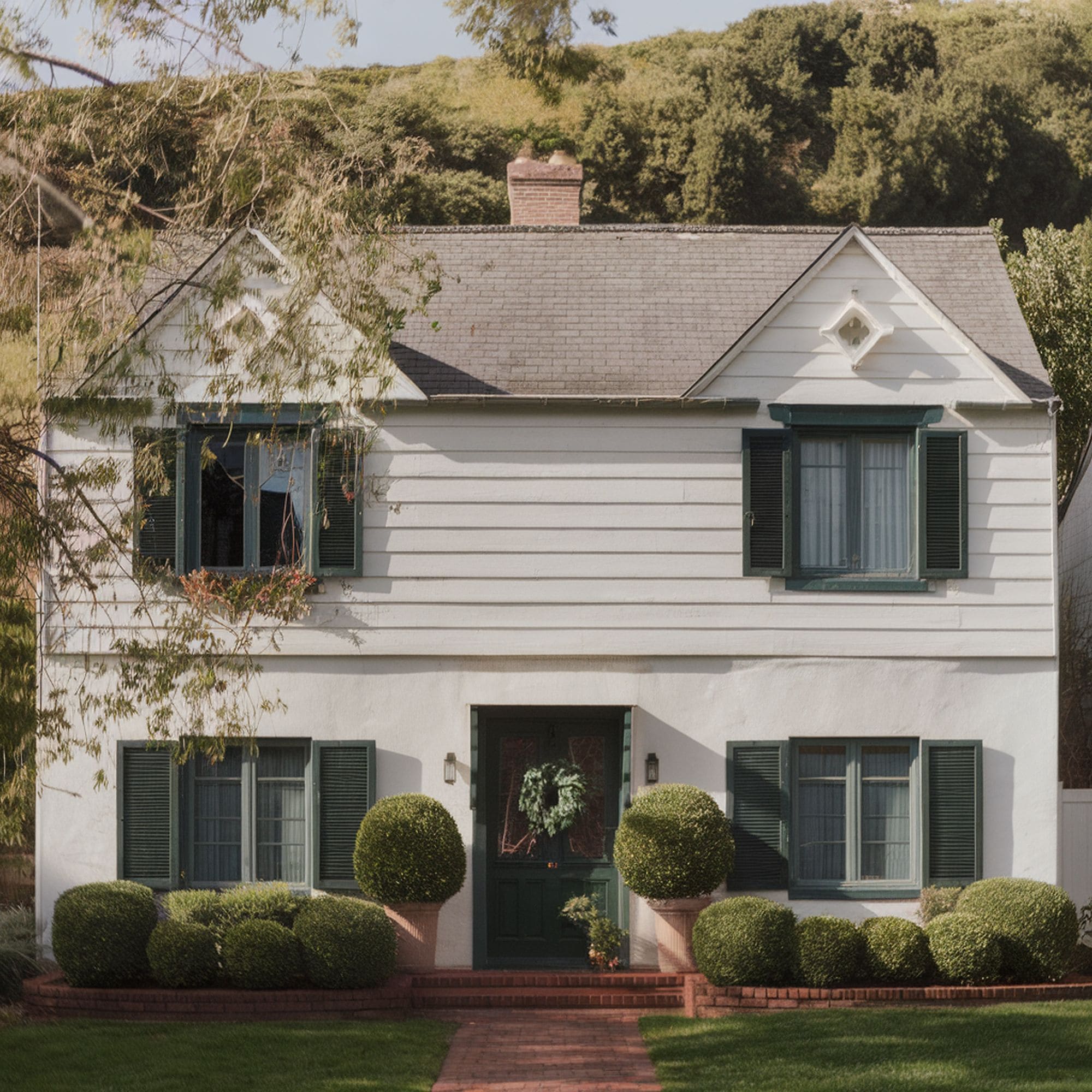
As the name suggests, American Colonial architecture emerged during the colonial rule period in the United States. It’s actually not a single specific style but more like a collection of separate designs that were popular in the early 18th Century. There’s a rich history at play here considering that various colonial influences contributed to the development of what’s now called American Colonial architecture. You can see examples from French, Spanish, or Dutch colonial architecture. However, most people agree that American Colonial architecture usually refers to the strong influence of British Colonial architecture.
Setting apart different American Colonial houses isn’t an easy job because there are many distinctive aspects to consider. American colonies were spread out quite extensively on US territory so there are various differences in terms of available materials and climate conditions. Also, American Colonial buildings designed for urban areas will most likely not resemble the look of rural houses that much. Despite the number of distinctive versions, American Colonial architecture features some key elements that are easy to recognize.
1. Brick Facade
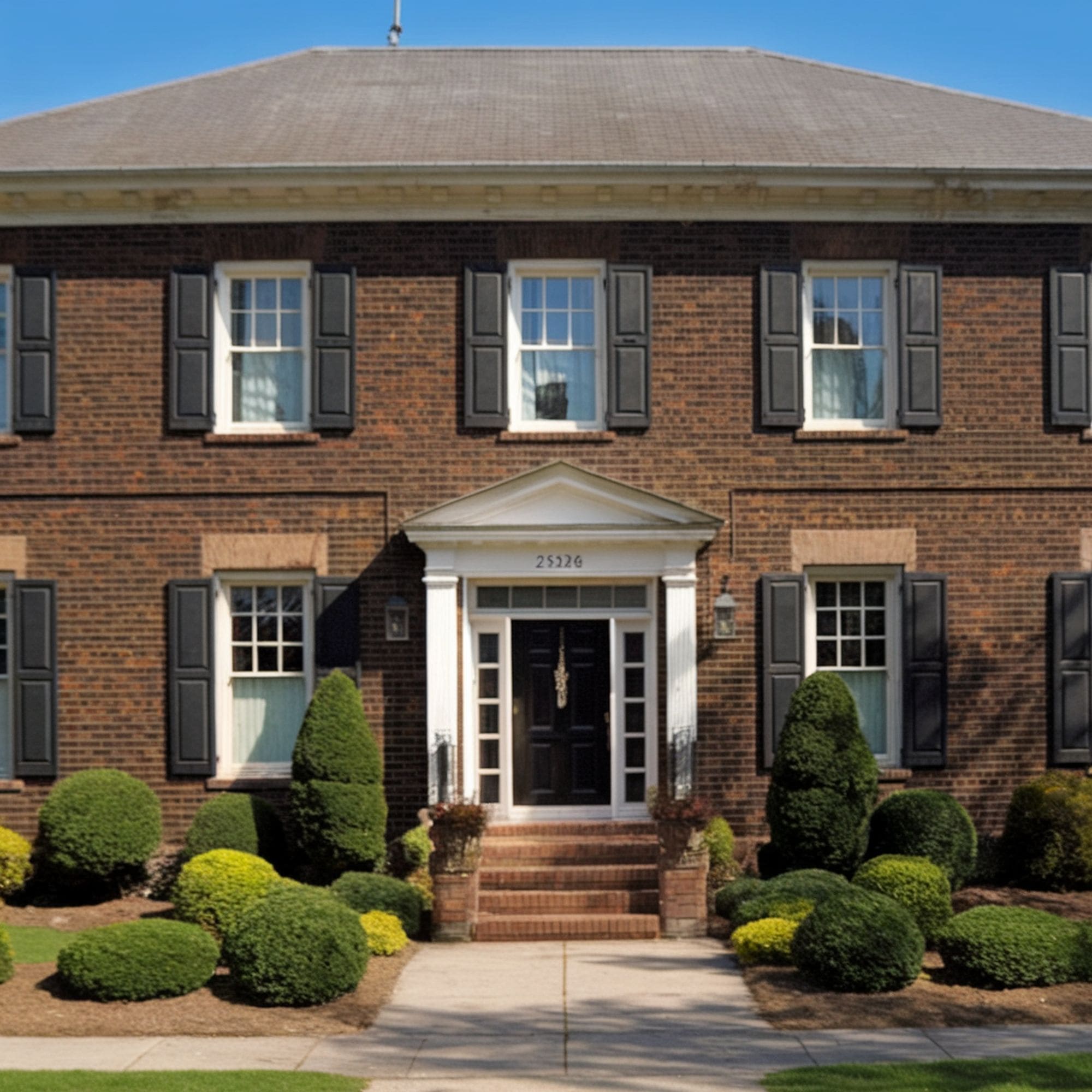
While it’s not necessarily the first choice of a Colonial home, brick can be used quite often for the facade of buildings designed in this style. It’s a more modern approach compared to the historical reliance on clapboard siding.
Brick is a great material for an American Colonial home because the architecture is typically plain and straightforward. The characteristic brick patterns can enliven it and give it that cozy Colonial style.
2. Steeply Pitched Roof
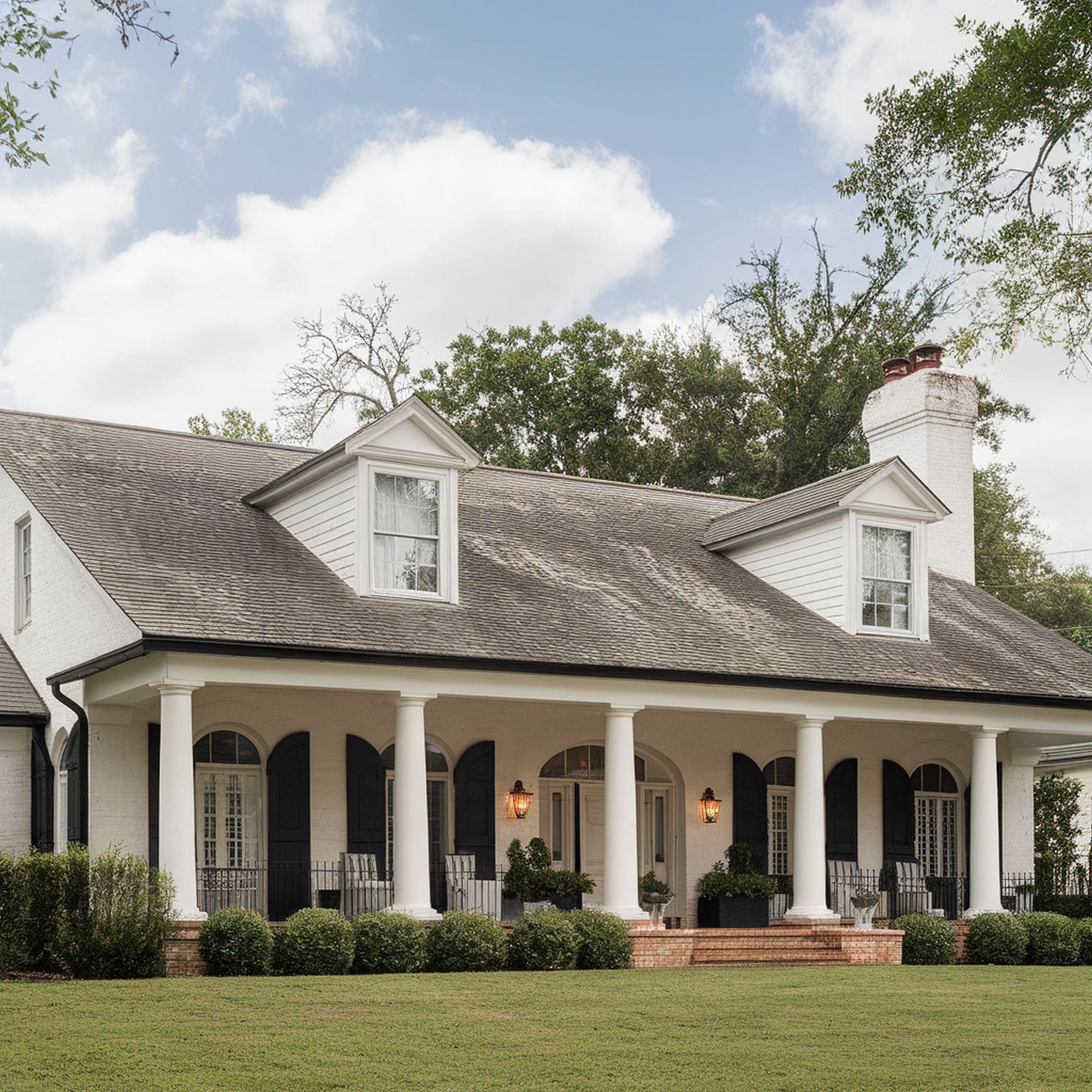
Due to the fact that original Colonial homes had a strong need for efficient drainage, steeply pitched roofs have become a staple for this design style. This kind of roof worked ideally for typical Colonial houses that didn’t require a full second floor.
Builders would save some resources by going for a simpler half-story that pairs nicely with the pitched roof. The result is a convenient attic space that can be furnished for different purposes. Dormer windows became more popular in later iterations of the style.
3. Low Wide Ranch Style American Colonial Home
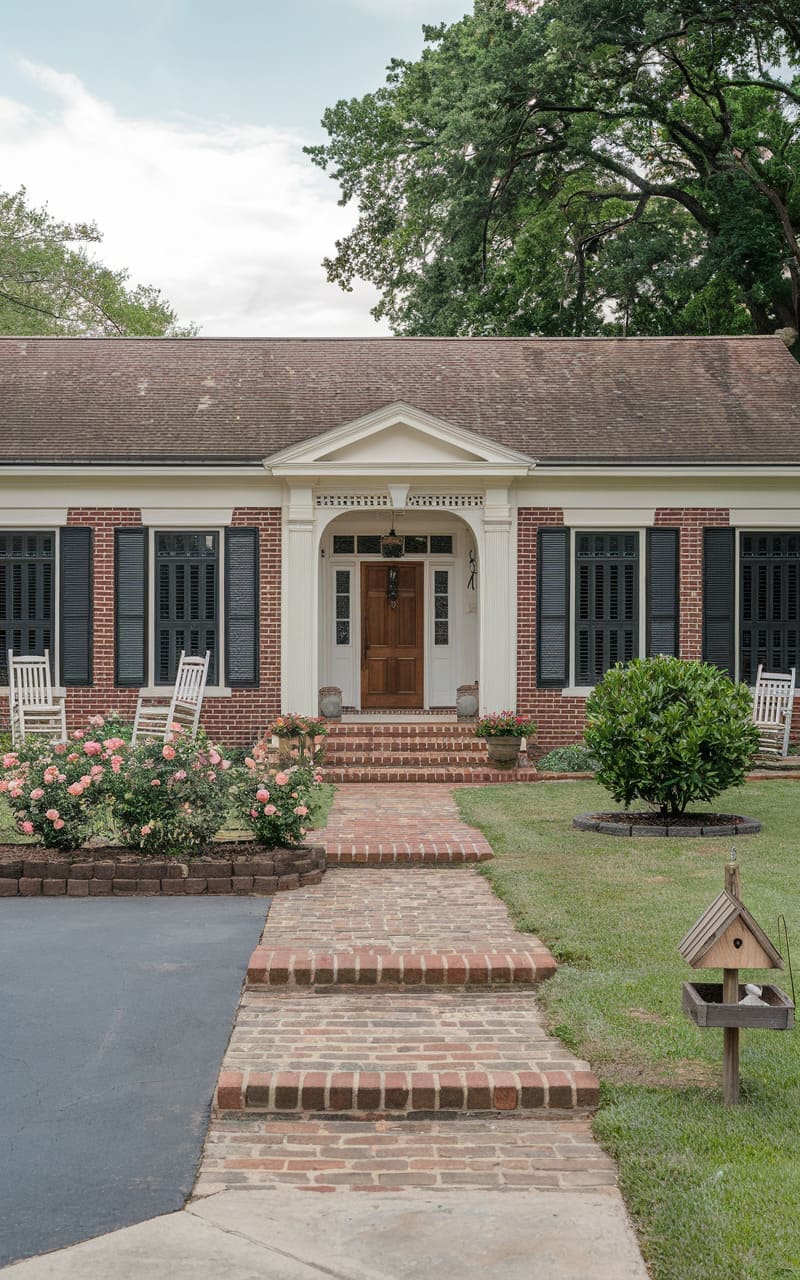
This home blends the low, wide profile of a Ranch house with classic American Colonial touches. It’s a single-story design, making everything easily accessible on one level. The simple, symmetrical windows line the front, contributing to its clean look. Its light-colored siding gives it a fresh and welcoming appearance. The house stretches comfortably across its lot, emphasizing a connection to the surrounding landscape. This practical design offers a cozy and straightforward living experience.
4. Cape Cod Style American Colonial Home
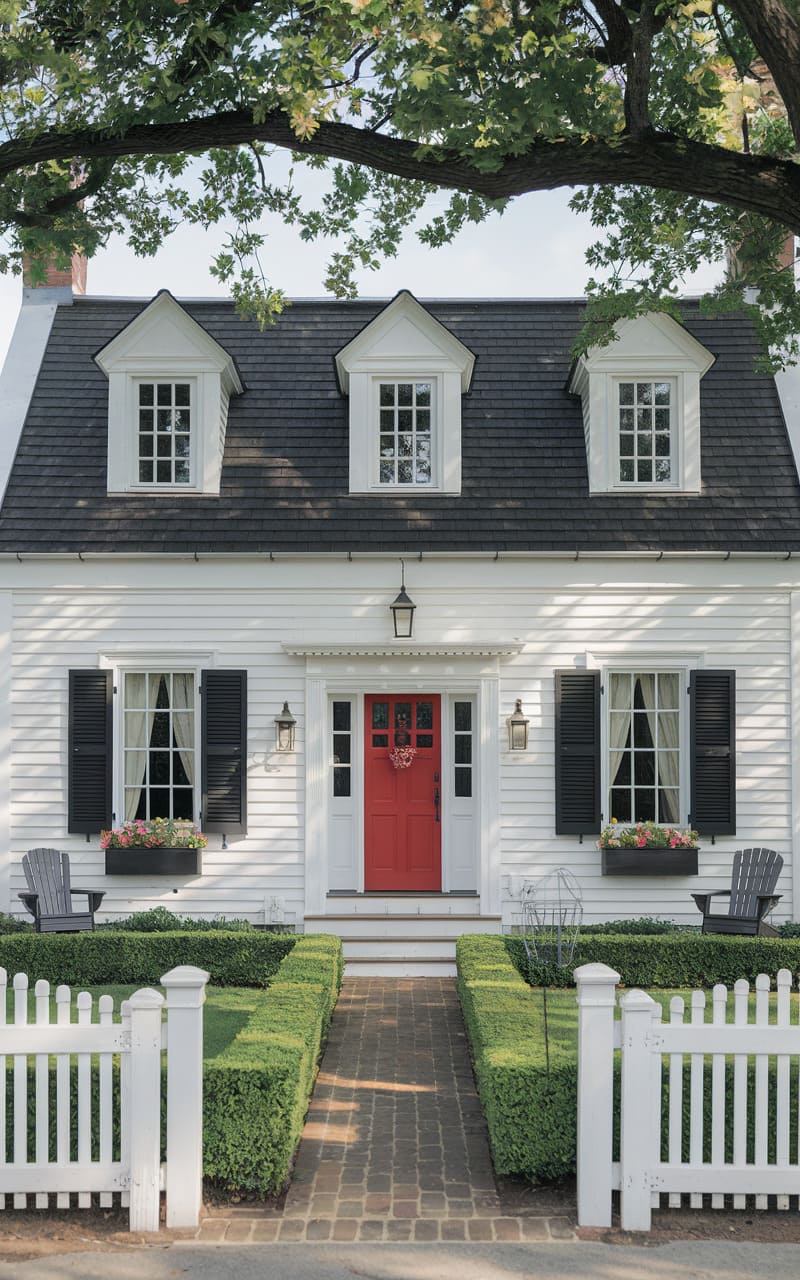
Here is a charming Cape Cod style home, a beloved variation of American Colonial architecture. Its steeply pitched roof and central chimney are defining features of this design. The clean white siding contrasts beautifully with the dark shutters framing the symmetrical windows. A welcoming door sits right in the center, reinforcing the home’s balanced look. Dormer windows peek out from the upper level, adding character and extra light inside. This house represents timeless New England charm and coziness.
5. Split Level Colonial Home
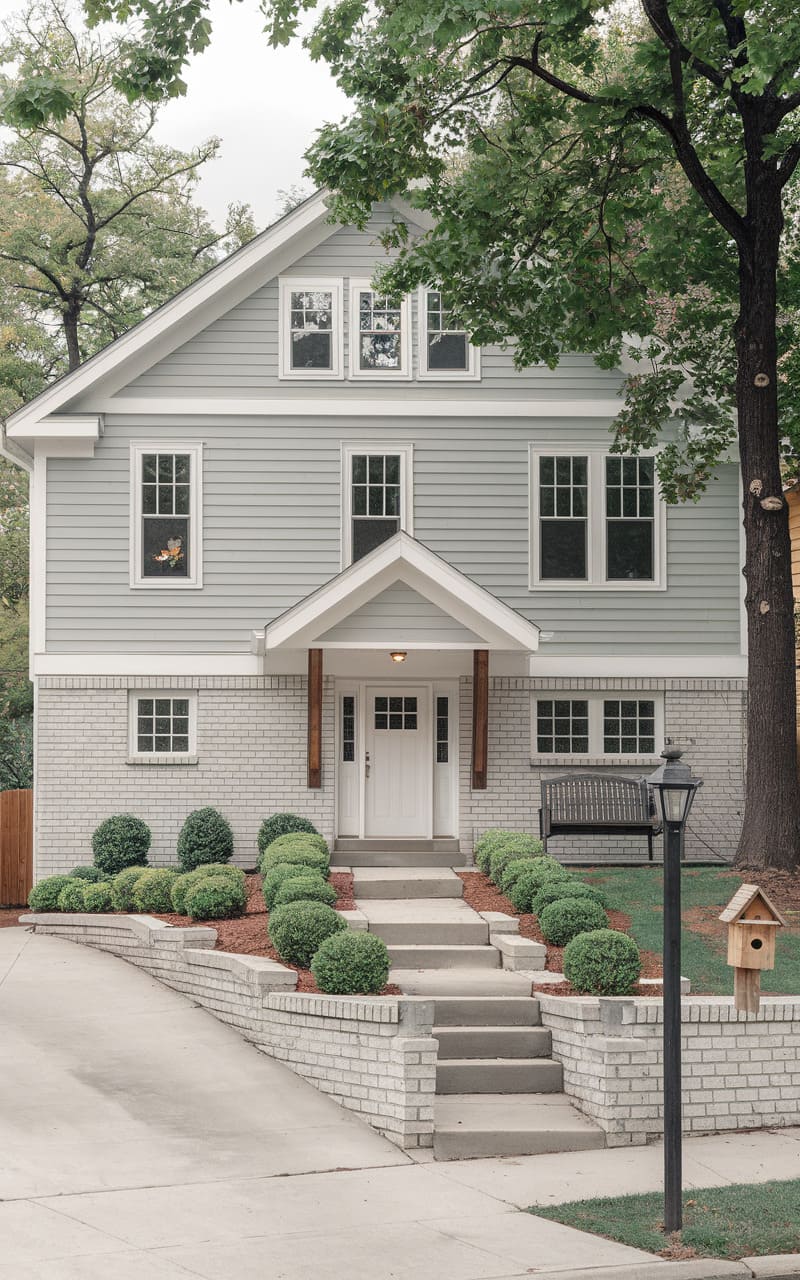
This home showcases a practical split-level layout combined with American Colonial aesthetics. Different sections of the house sit at slightly different heights, creating distinct living zones. Colonial-style windows add traditional character to the facade. The lower level features sturdy brickwork, while the upper sections use siding for contrast. A prominent garage is integrated into the design on one side. This layout offers separation of spaces while maintaining a cohesive Colonial feel.
6. Red Brick American Colonial Style Home
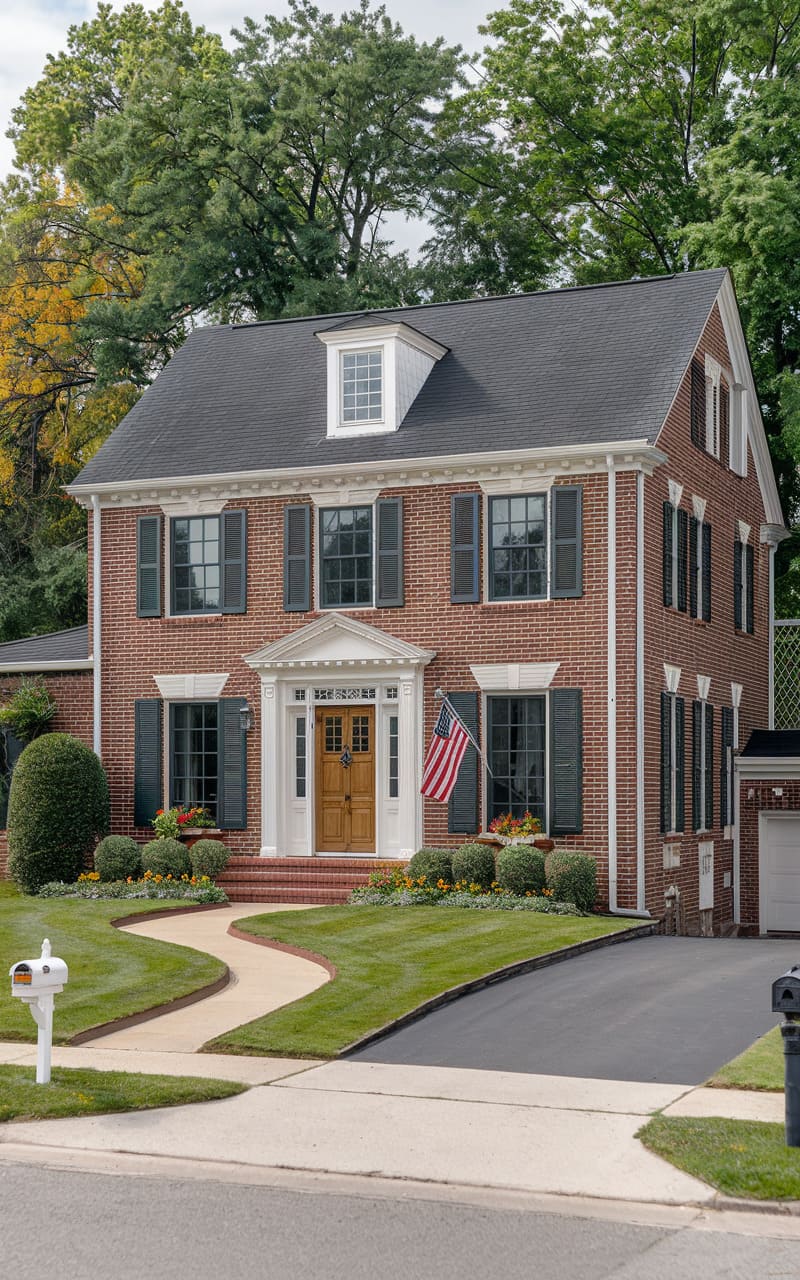
This stately American Colonial home is built with enduring red brick, giving it a warm and traditional appearance. Its two-story structure stands tall and presents a perfectly symmetrical facade. White trim around the windows and the central doorway creates a crisp contrast against the brick. Matching chimneys rise from the roof, balancing the overall design. The multi-pane windows are characteristic of the Colonial style. This house exudes a sense of history, stability, and classic elegance.
7. White Two Story American Colonial Style Home
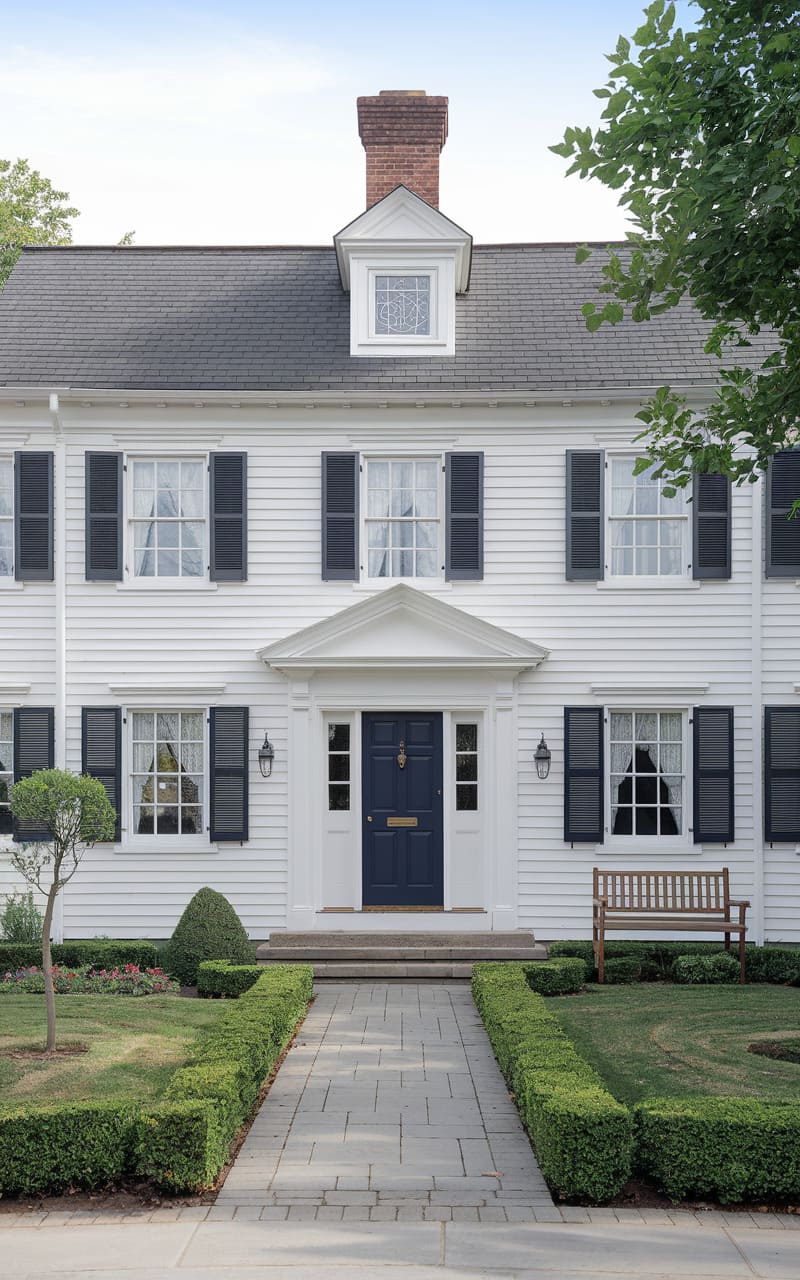
This is a quintessential two-story American Colonial home, painted in classic white with contrasting black shutters. The perfect symmetry of the windows and central doorway creates an inviting and orderly look. Multi-pane windows add to the traditional character and charm of the facade. A simple, elegant entrance welcomes visitors into the heart of the home. The clean lines and balanced proportions are hallmarks of this enduring architectural style. It represents a timeless vision of American domestic life.
8. Southwestern Desert American Colonial Home
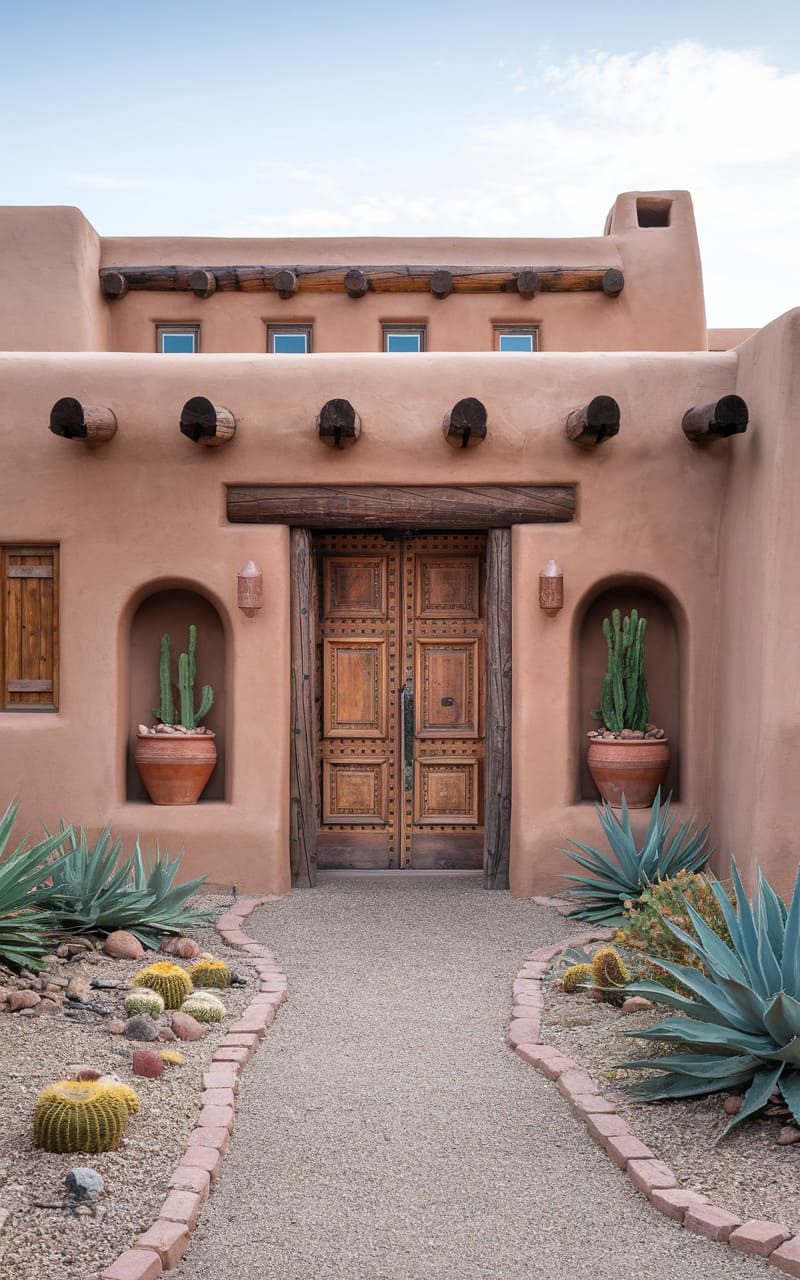
This home creatively blends American Colonial structure with Southwestern desert influences. The underlying symmetry in window placement hints at its Colonial roots. Smooth stucco siding in an earthy tone suits the arid environment perfectly. Arched details and possibly a tile roof add distinct Southwestern flair. The landscaping uses drought-tolerant plants, integrating the home into its desert surroundings. This unique combination results in a home that feels both traditional and regionally appropriate.
9. Grand Colonial Style Mountain Lodge
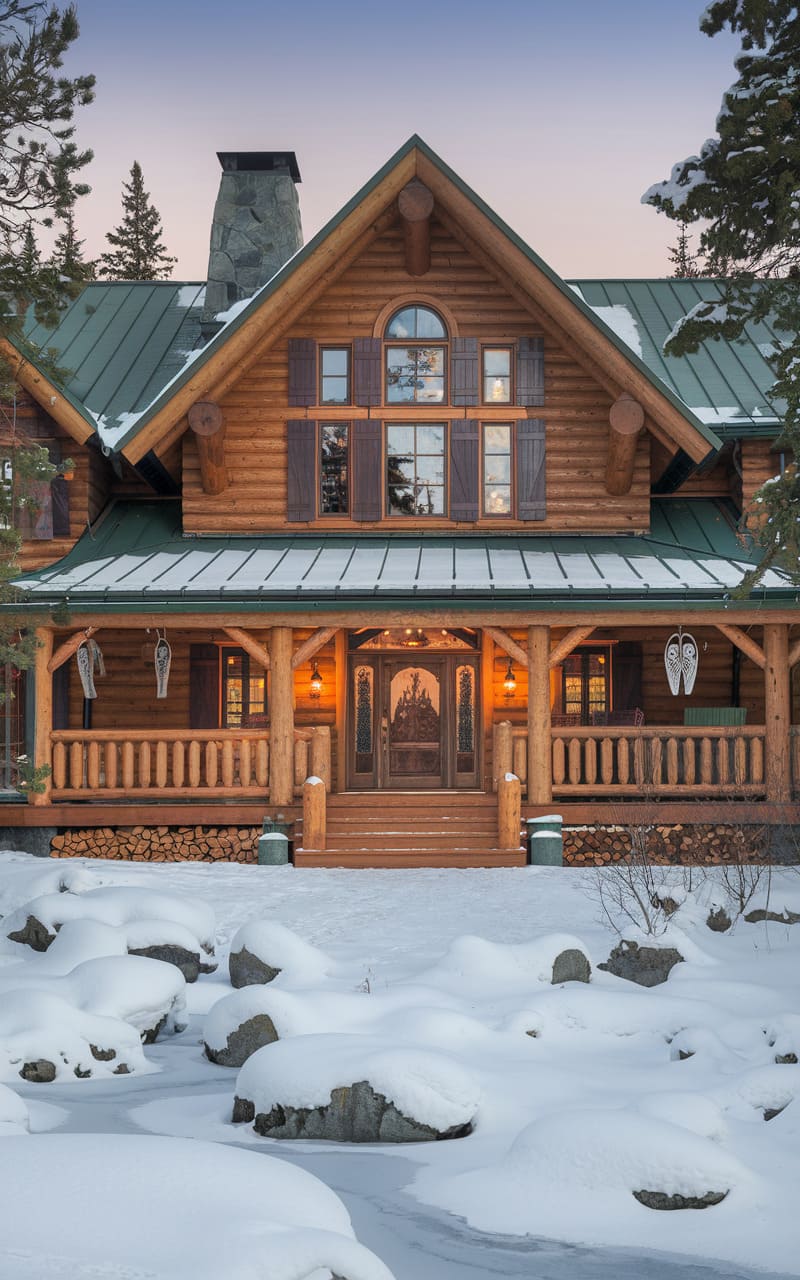
This grand residence takes American Colonial design principles and scales them up for a majestic mountain lodge setting. While maintaining Colonial symmetry, it incorporates rugged materials fitting for the environment, perhaps stone accents or substantial trim. Its large size and impressive presence command attention against the wooded backdrop. Multiple windows ensure views of the surrounding natural beauty. The overall feeling is one of rustic elegance combined with traditional structure. This home offers a luxurious retreat inspired by classic architecture.
10. Coastal American Colonial Home
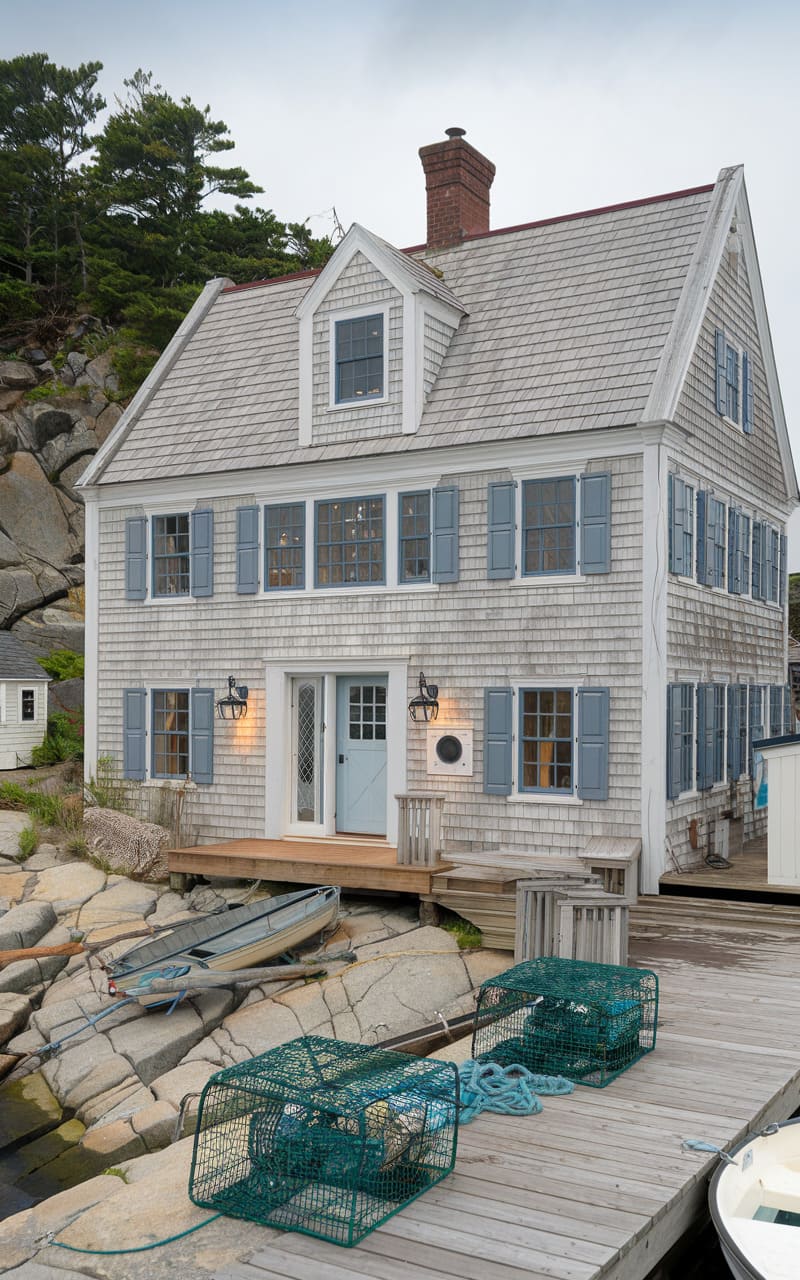
This American Colonial home has a beautifully weathered look suited for its coastal environment. The siding, possibly wood shingles, shows the gentle patina of sun and sea air. Its structure maintains the classic Colonial symmetry with evenly placed windows. Features like a covered porch provide space to enjoy the coastal breezes. The color palette is often light and airy, reflecting the seaside location. This house offers a relaxed, enduring charm perfect for life by the water.
11. California Style American Colonial Home
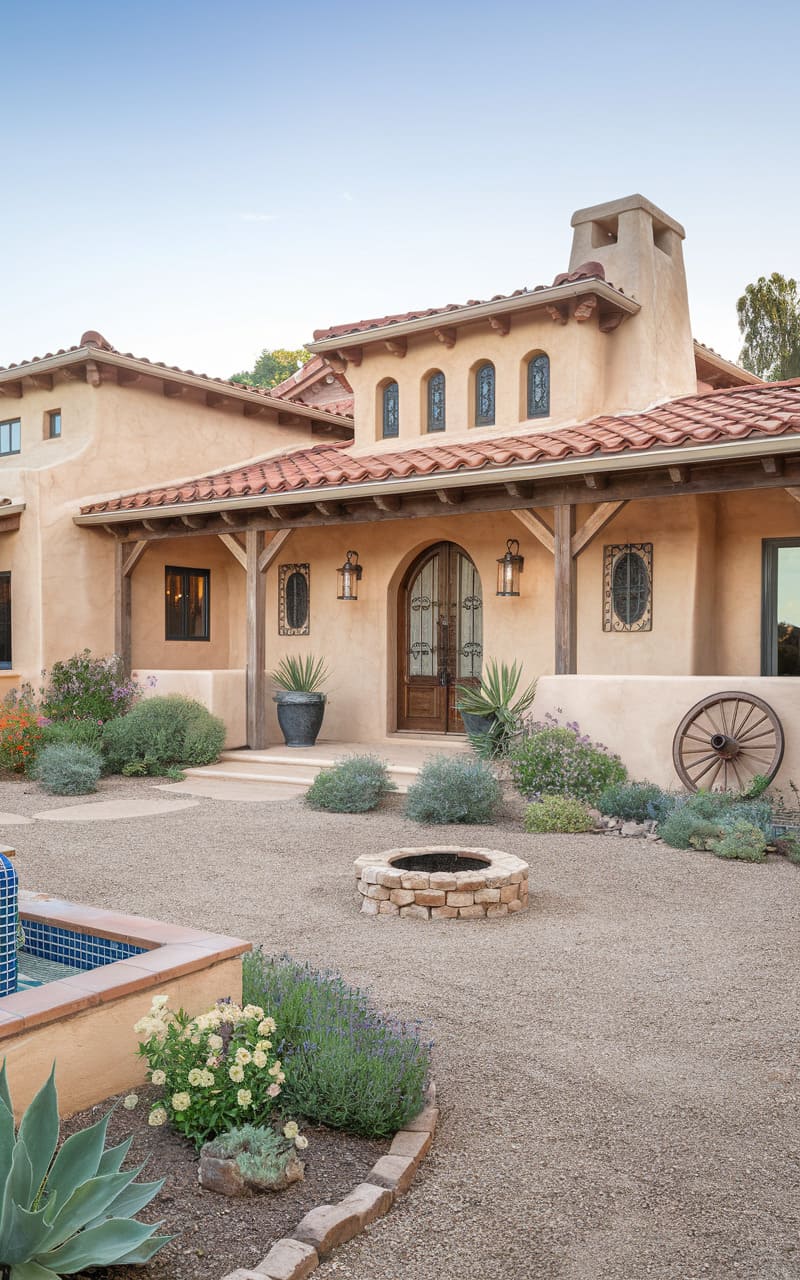
This sprawling home adapts American Colonial style for a sunny California setting. It retains core Colonial features like symmetry but embraces a more relaxed, expansive feel. Light colors and large windows likely fill the interiors with sunshine. Outdoor living spaces, such as patios or porches, seamlessly connect the indoors with the pleasant climate. The landscaping complements the architecture, creating an inviting and comfortable retreat. It’s a beautiful example of classic design meeting West Coast lifestyle.
12. Quintessential Huguenot Colonial Home
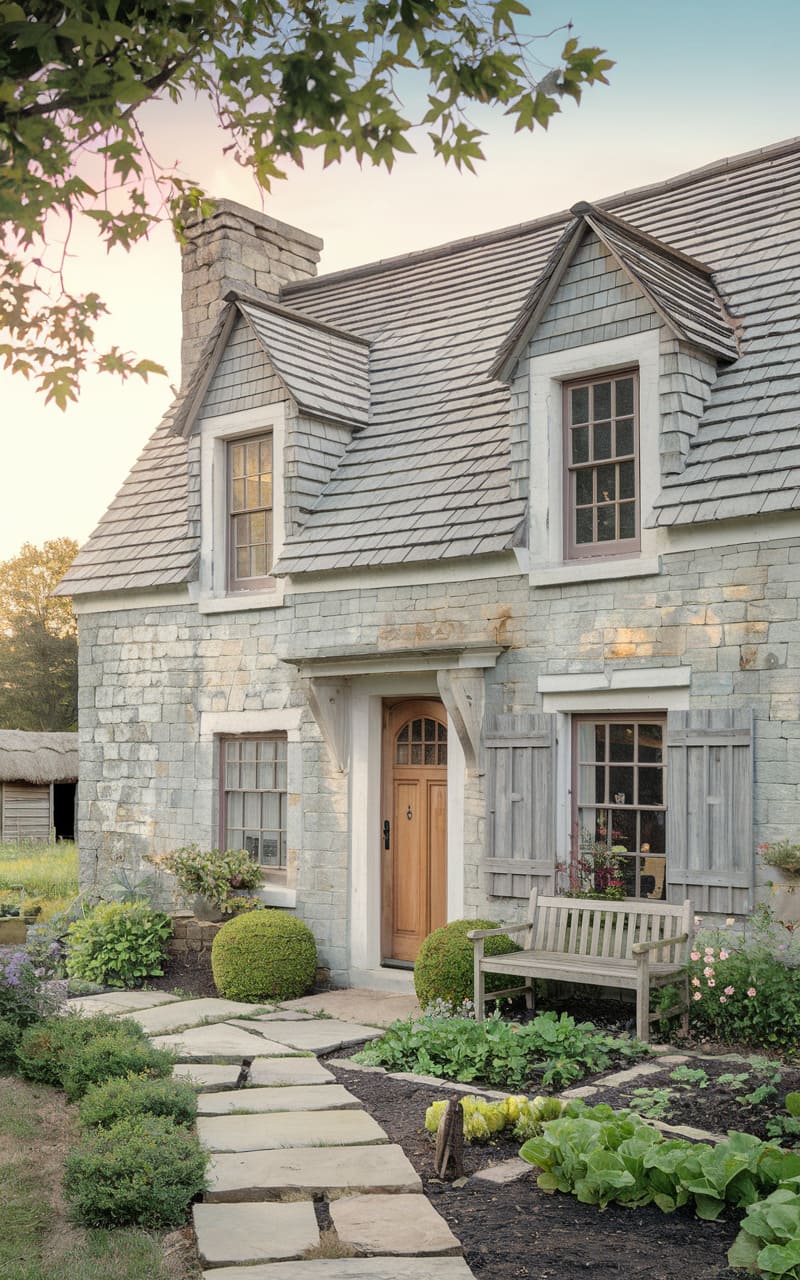
This quaint home represents the Huguenot Colonial style, often characterized by its sturdy stone construction. These homes reflect the building traditions of early French Huguenot settlers in America. The texture of the stone walls gives the house a unique and historic character. Its simple form and gable roof are typical of the style’s practicality. It possesses a rustic charm and a deep connection to early American history. This house stands as a testament to the diverse origins of Colonial architecture.
13. Elegant Colonial Revival American Colonial Home
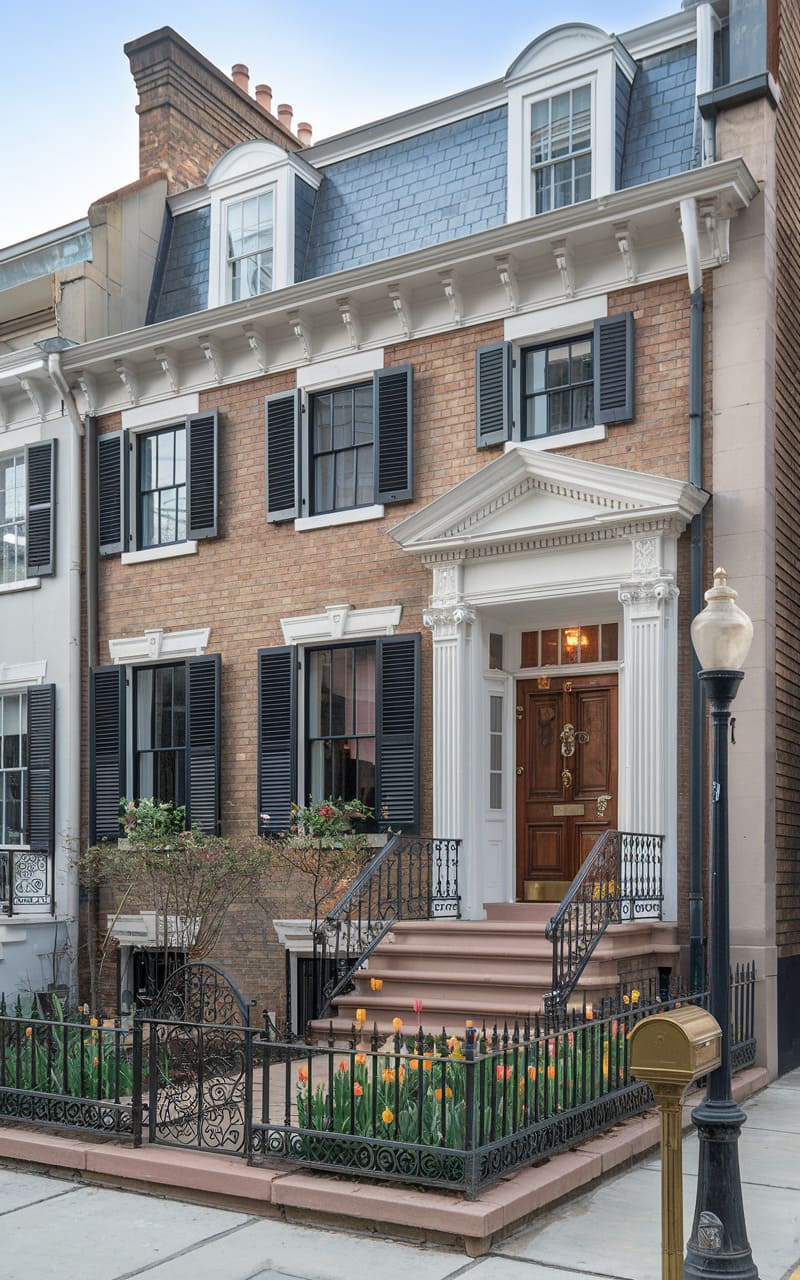
This elegant home is an example of the Colonial Revival style, which celebrated and reinterpreted original Colonial designs. It features the hallmark symmetry and balanced proportions of its predecessors. Often, Revival homes include more elaborate details like a prominent entryway with columns or decorative trim. Multi-pane windows with shutters maintain the traditional aesthetic. The overall impression is one of refined grace and a nod to American history. These homes brought classic design into a new era.
14. Charleston Style American Colonial Style Home
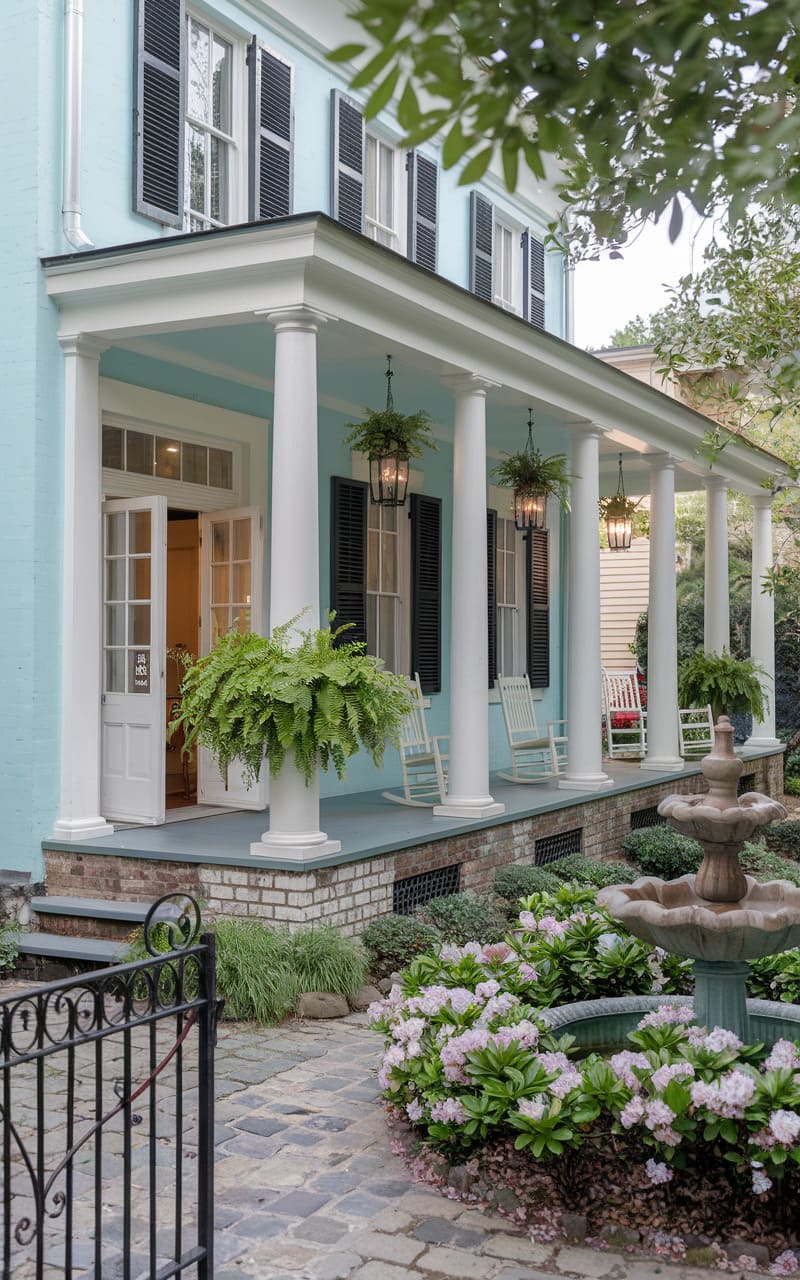
This charming home reflects the unique Charleston style, adapted to the climate and urban lots of the historic South Carolina city. While sharing roots with the colonial period, it features distinctive side porches, known as piazzas. These porches provided shade and captured breezes, essential in the Southern heat. Often painted in bright, cheerful colors, these homes add vibrancy to the streetscape. Their narrow, deep lots influenced their characteristic layout. This house is full of regional character and historic charm.
15. Northern Frontier American Colonial Style Home
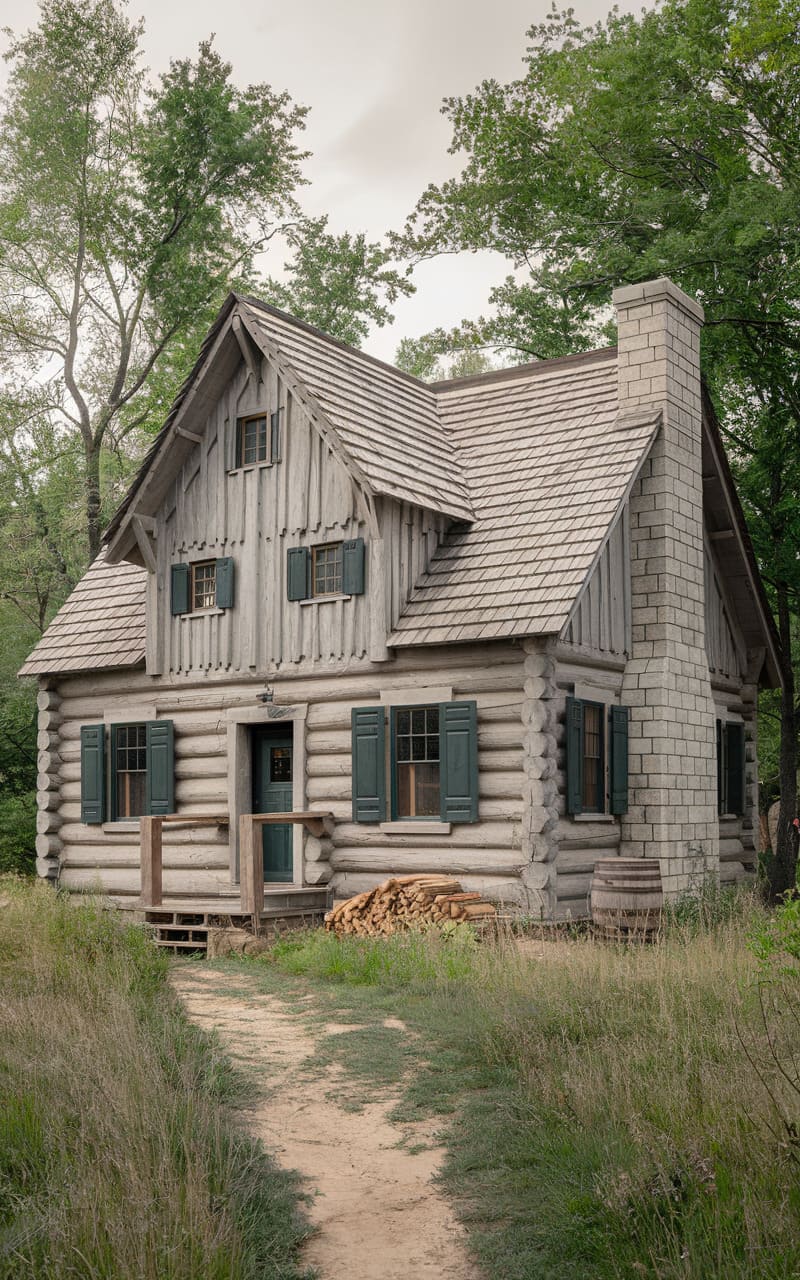
This home embodies a rugged Northern Frontier take on American Colonial architecture. Built for durability in harsher climates, it features a simpler, more robust construction. Materials like timber or clapboard are common, chosen for availability and practicality. The design prioritizes shelter and warmth, often with a central chimney and fewer windows. Its beauty lies in its straightforward form and connection to the landscape. This house speaks to the resourcefulness and resilience of early settlers.
16. Mid Century Modern American Colonial Home
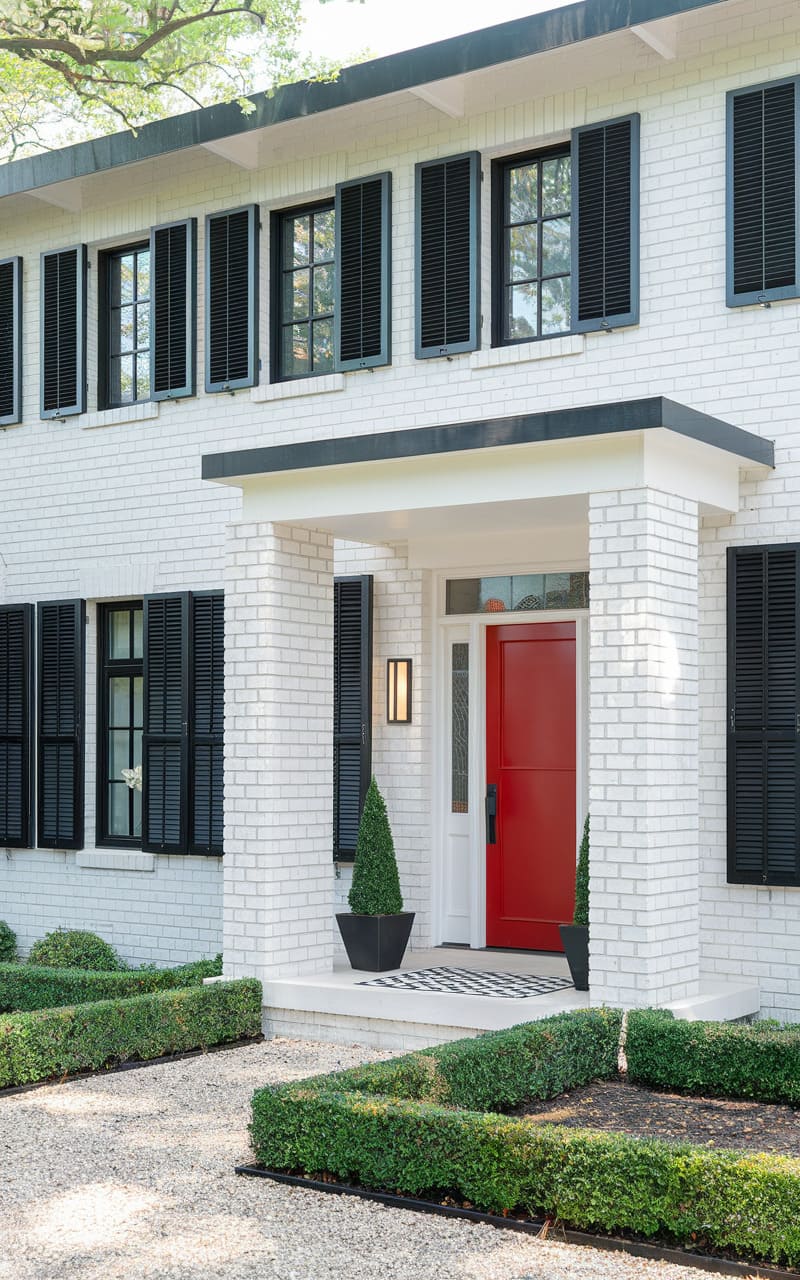
This home presents an interesting fusion of Mid-Century Modern design and American Colonial form. It retains a recognizable Colonial shape, perhaps rectangular with a gabled roof. However, elements like larger window expanses or cleaner lines reflect Mid-Century influences. The blend might involve simplified trim or a more open connection to the outdoors. It represents a period when traditional styles were updated with modern sensibilities. This combination creates a unique architectural statement.
17. Ranch Style Colonial Home
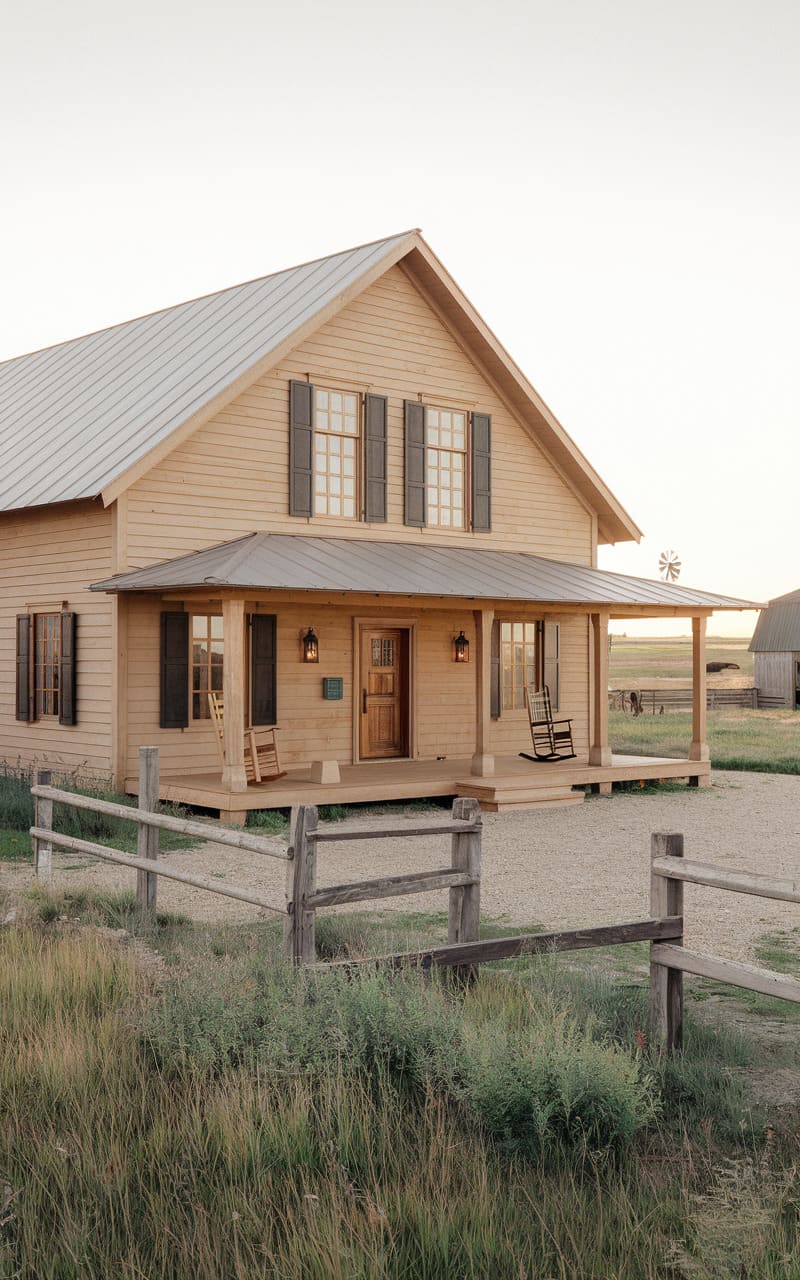
This unique home combines the single-story convenience of a Ranch house with distinct American Colonial details. Its low-slung, horizontal profile is characteristic of the Ranch style. Yet, features like shutters, multi-pane windows, and a degree of symmetry borrow from Colonial traditions. This blend offers easy living on one level while maintaining a classic aesthetic appeal. It’s a practical design that feels both modern and timeless. The result is a comfortable and inviting family home.
18. Connecticut Style Blue American Colonial Home
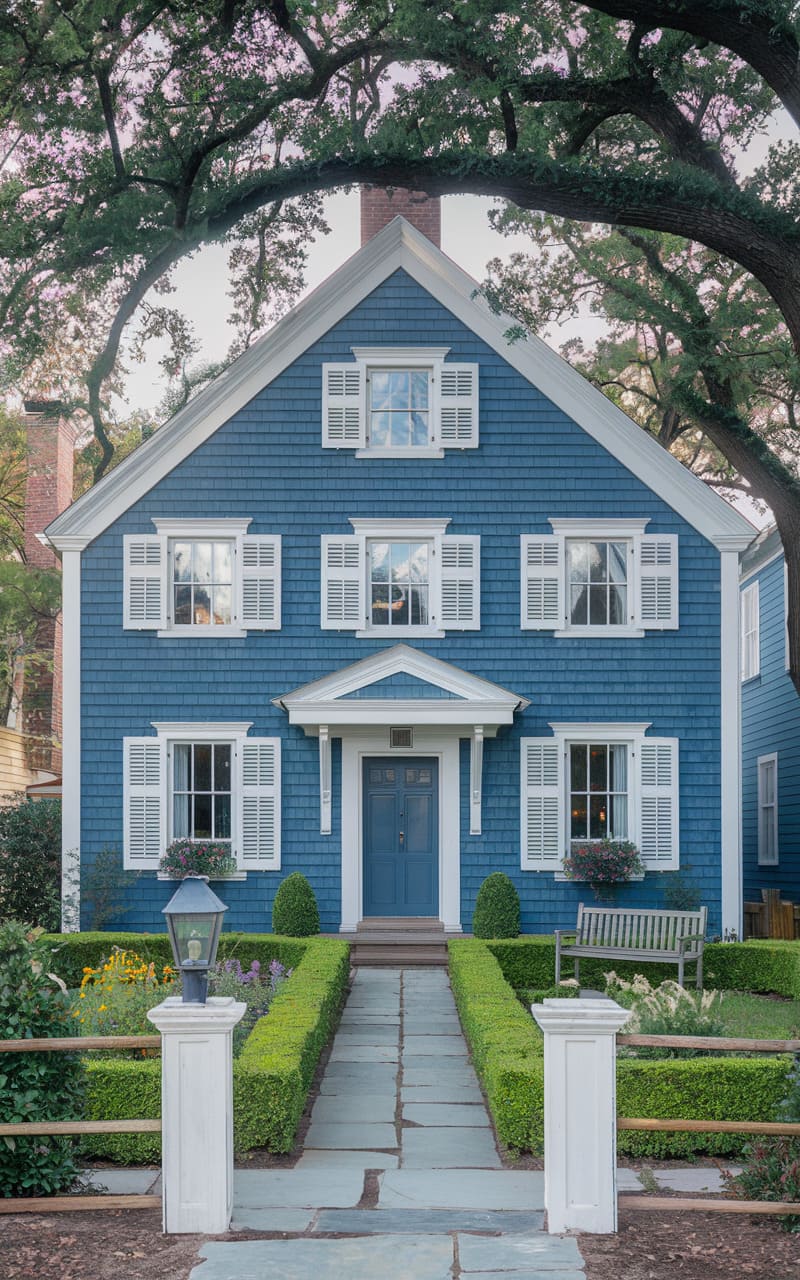
This traditional American Colonial home, painted a lovely shade of blue, is reminiscent of styles found throughout Connecticut. Its classic two-story form features crisp white trim that contrasts nicely with the blue siding. Symmetrical windows with dark shutters line the facade, reinforcing its traditional appeal. A central entryway provides a focal point for the balanced design. This house embodies the enduring charm and simple elegance of New England architecture. It looks welcoming and perfectly settled in its surroundings.
19. Quaker Style American Colonial Home
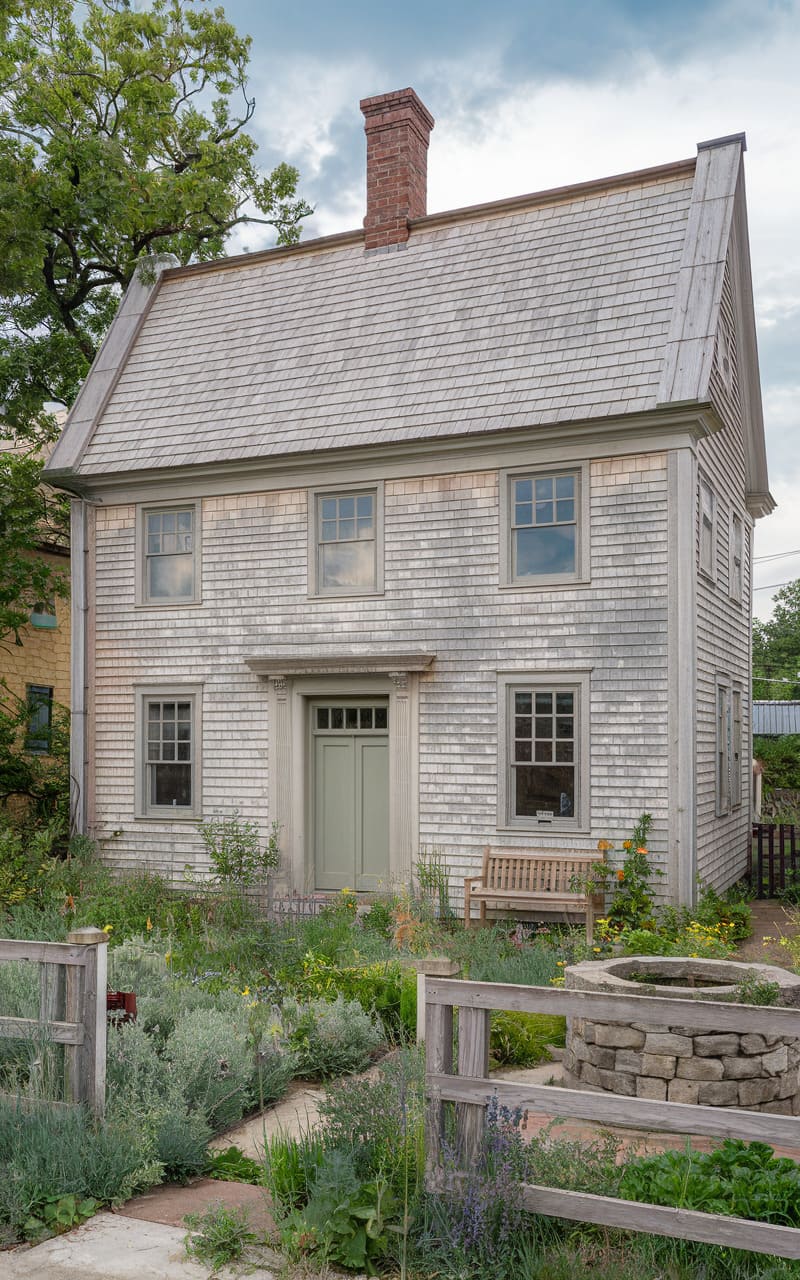
This modest home reflects the principles of Quaker Colonial architecture, emphasizing simplicity and solid craftsmanship. The design avoids elaborate ornamentation, focusing instead on clean lines and practicality. Materials like stone or simple siding contribute to its unadorned aesthetic. Symmetry provides a sense of order and calm, aligning with Quaker values. It’s a style characterized by understated dignity and enduring quality. This house offers a glimpse into a history of quiet strength and functional design.
20. Spanish-American Colonial Home
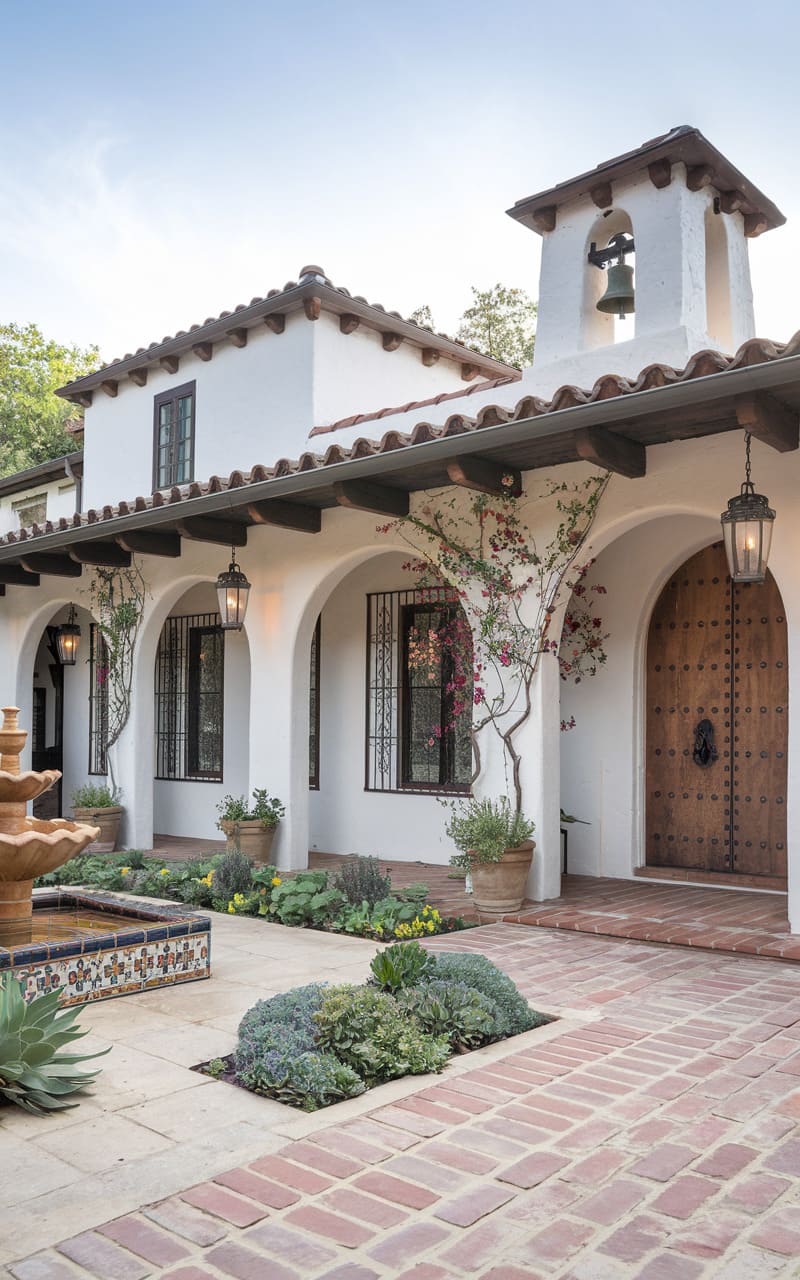
This home showcases the Spanish Colonial style, prevalent in regions influenced by early Spanish settlers. Thick stucco walls, often painted white or earth tones, help keep the interior cool. Low-pitched roofs covered in characteristic red tiles are a defining feature. Details like arched windows or entryways add to its distinct architectural language. Courtyards or patios are often integrated for outdoor living. This style beautifully combines practicality for warm climates with rich historical character.
21. Deep Red New Hampshire Style Home
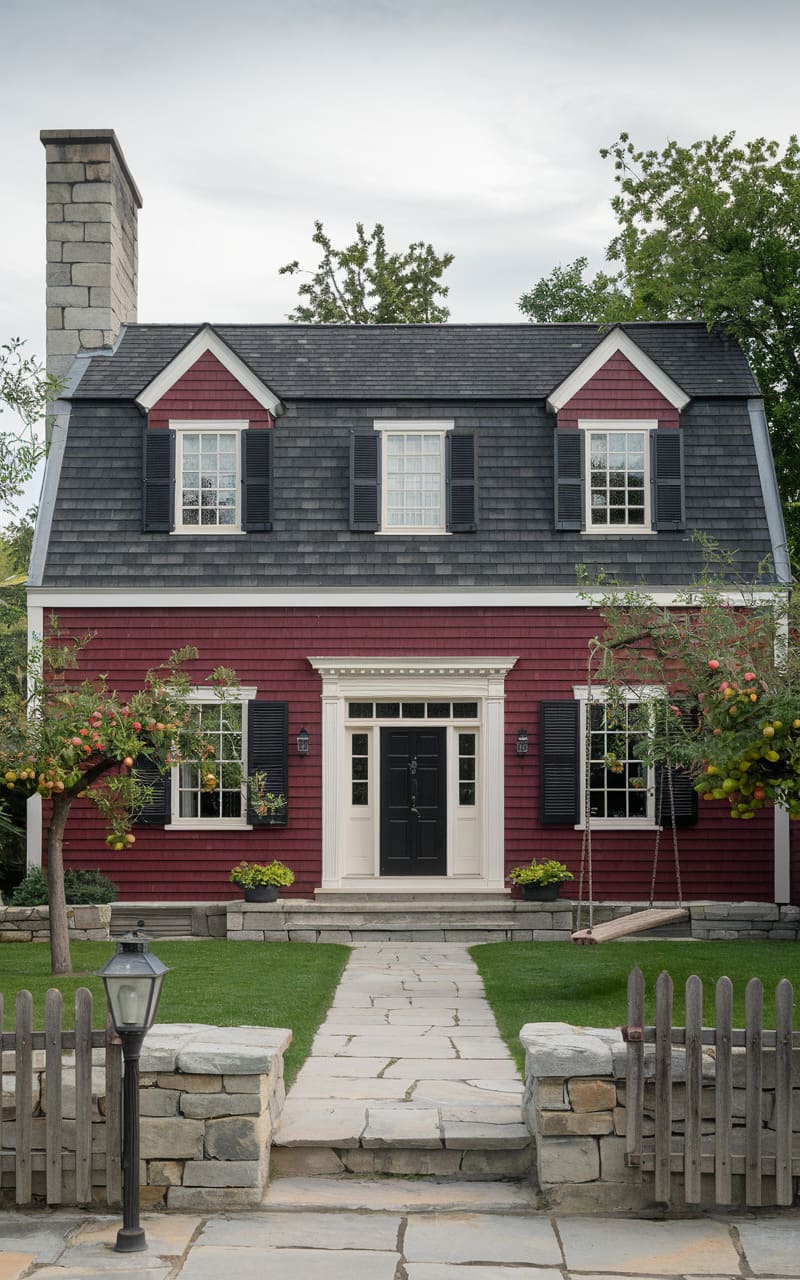
This American Colonial home, painted a deep barn red, evokes the classic scenery of New Hampshire. The rich red color is a traditional choice in New England, contrasting beautifully with crisp white trim. Its form is likely a simple two-story or Cape Cod structure with hallmark symmetry. Evenly spaced windows and a central doorway maintain the balanced Colonial aesthetic. This house feels both historic and vibrant, a cozy fixture in the landscape.
22. Vibrant Creole Colonial Home
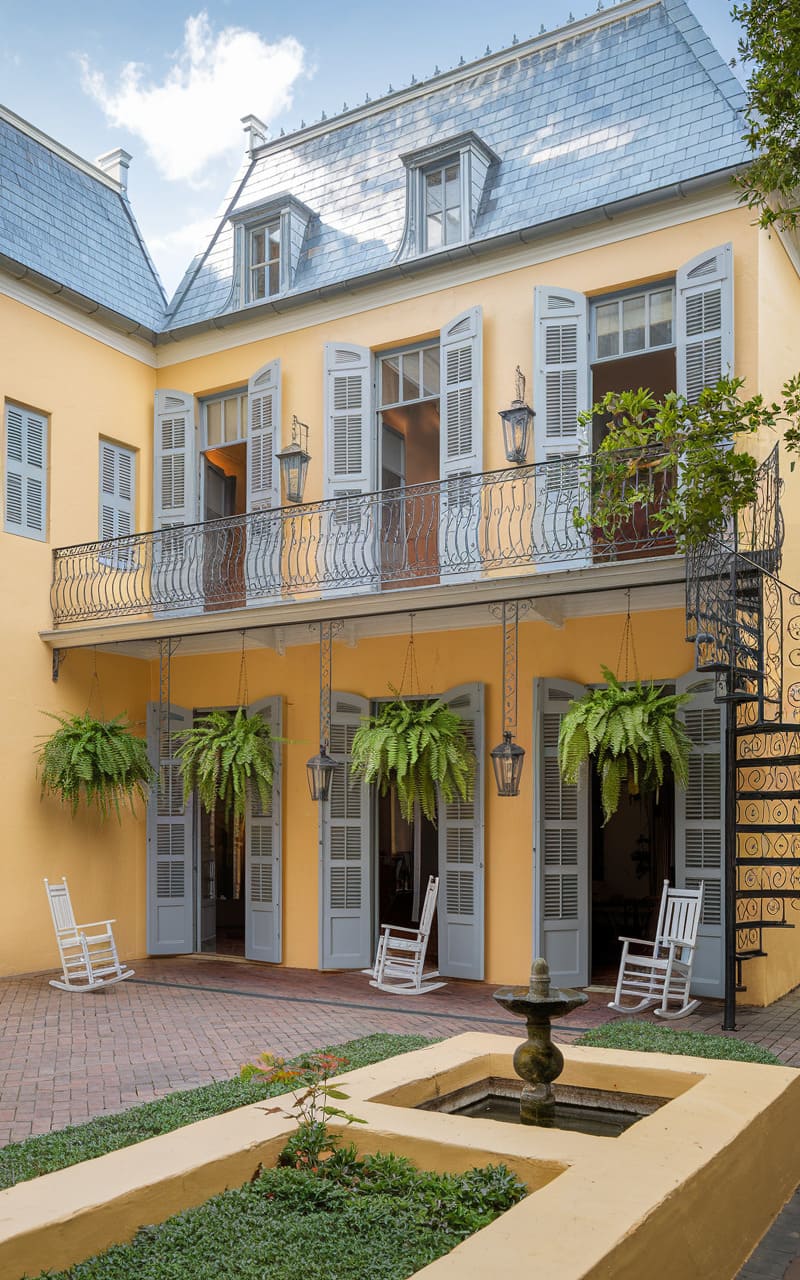
This vibrant home displays characteristics of Creole Colonial architecture, a unique style born in the Gulf Coast region. It often features wide covered porches, sometimes called galleries, perfect for the warm, humid climate. Steeply pitched roofs help shed heavy rain, while the main living floor is sometimes raised to protect against flooding. Bright, lively colors are frequently used, adding to the style’s exuberant character. This architecture reflects a rich blend of cultural influences and practical adaptations.
23. Stately Southern Colonial Home
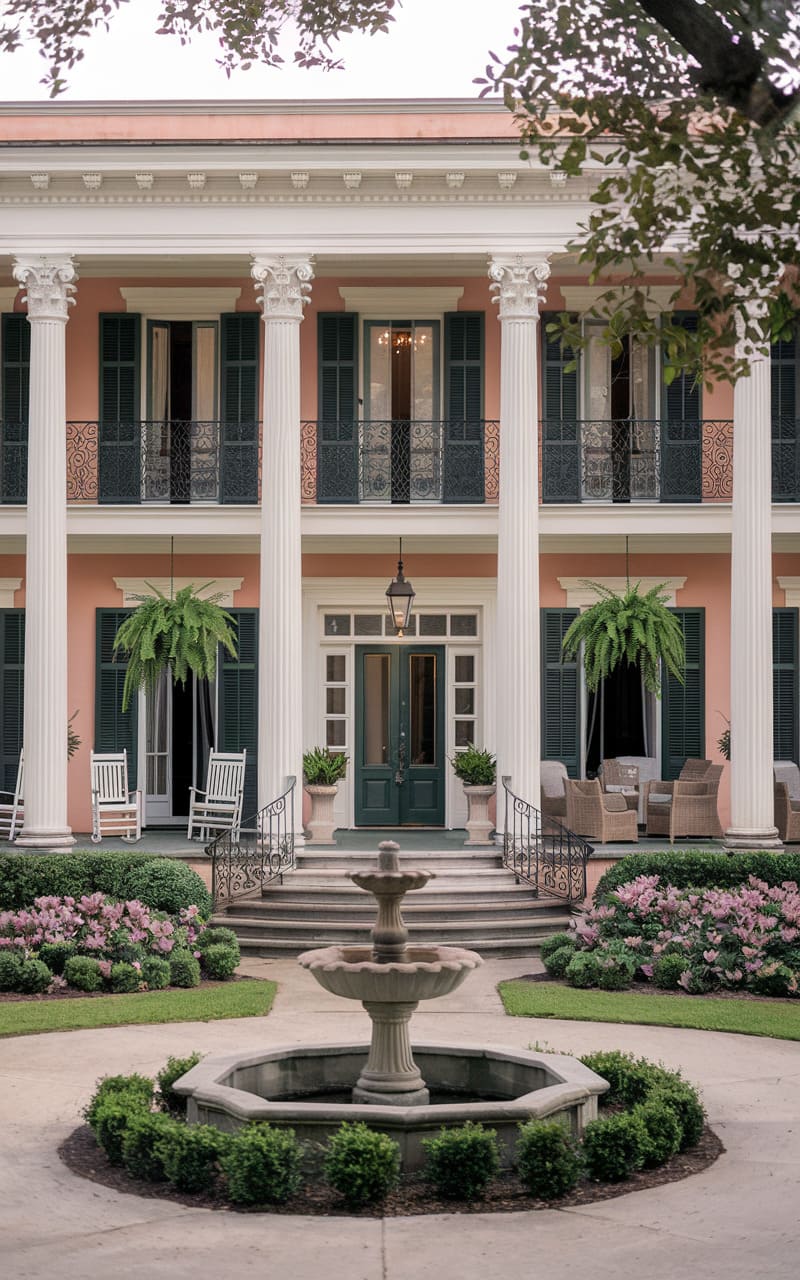
This stately home exemplifies Southern Colonial architecture, known for its grand and elegant appearance. Imposing two-story columns often support a wide front porch or portico, creating an impressive entrance. Perfect symmetry dominates the facade, reflecting classical influences. Usually painted white or light colors, these homes project an air of grace and refinement. This style is often associated with large estates but brings elegance to various settings. It represents a distinct and formal chapter of American architecture.
24. Saltwater Colonial American Home
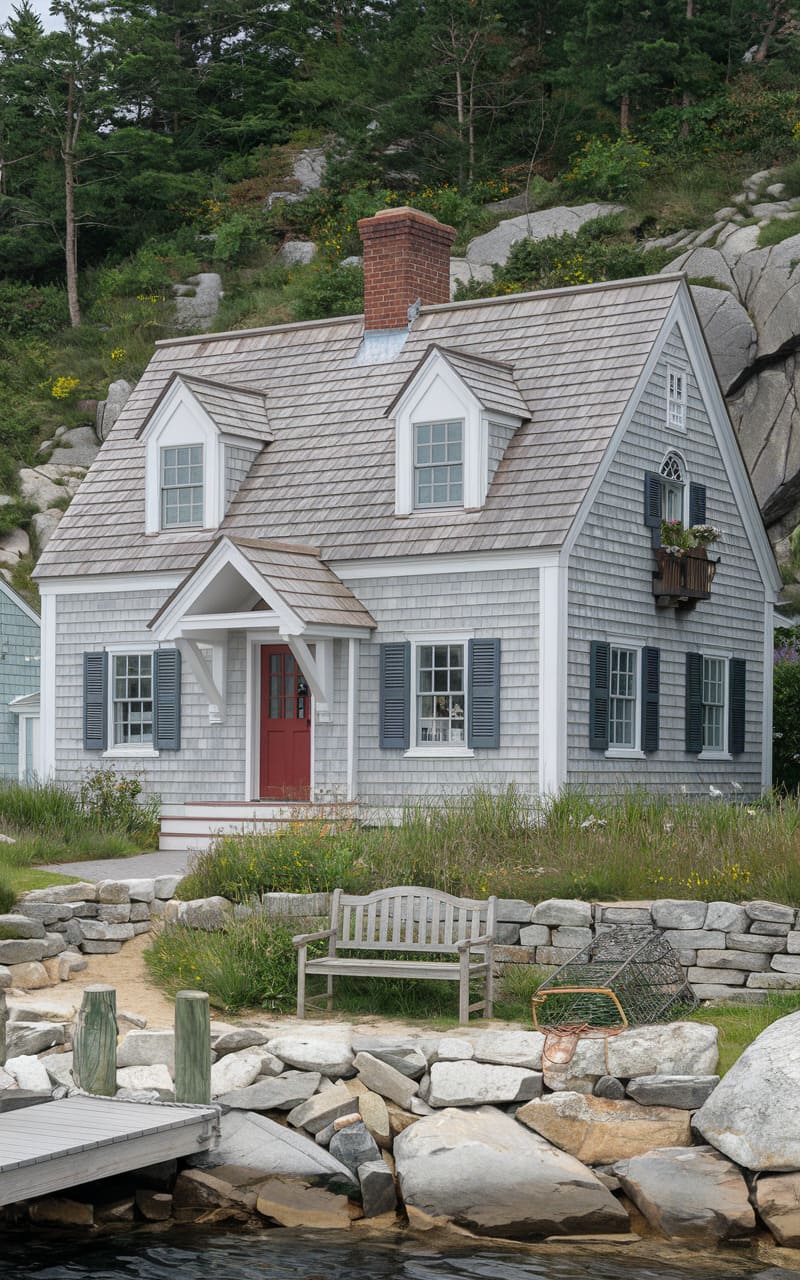
This quaint home is a Saltbox Colonial, a style easily recognized by its distinctive asymmetrical roofline. One side of the roof is much longer than the other, often reaching down to the first-floor level at the back. This design originated in New England, providing extra space under the extended roof. Typically built with wood siding, these homes have a practical, rustic charm. The Saltbox is a fascinating variation within American Colonial architecture.
25. White Spanish Colonial Home
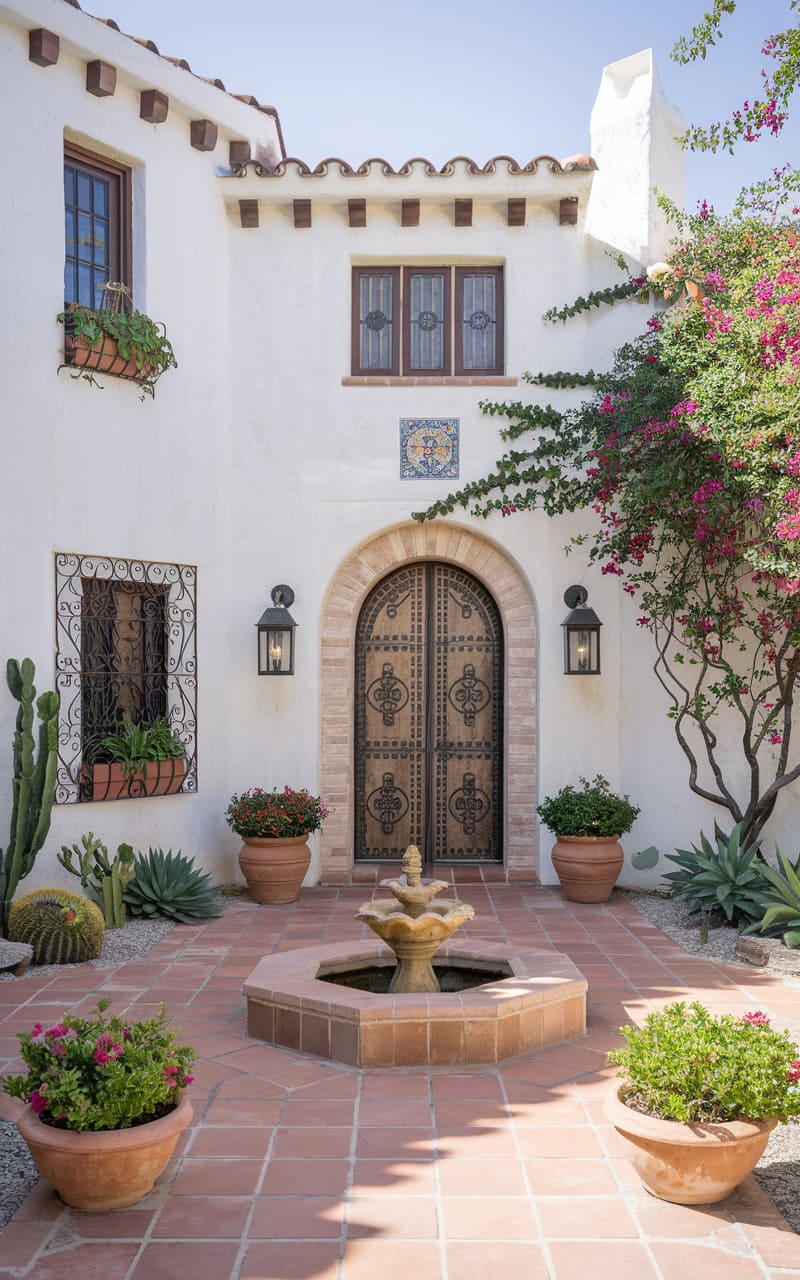
This sun-soaked home is a beautiful example of Spanish Colonial architecture, finished in a brilliant white. The white stucco walls are not only aesthetically pleasing but also practical for reflecting intense sunlight in warm climates. Its low-pitched roof features classic red clay tiles, adding color and texture. Arched windows or doorways contribute to the authentic Spanish Colonial character. This style creates bright, inviting homes that blend seamlessly with sunny landscapes. It embodies a relaxed yet historic elegance.
26. Picturesque Shingle Style Home
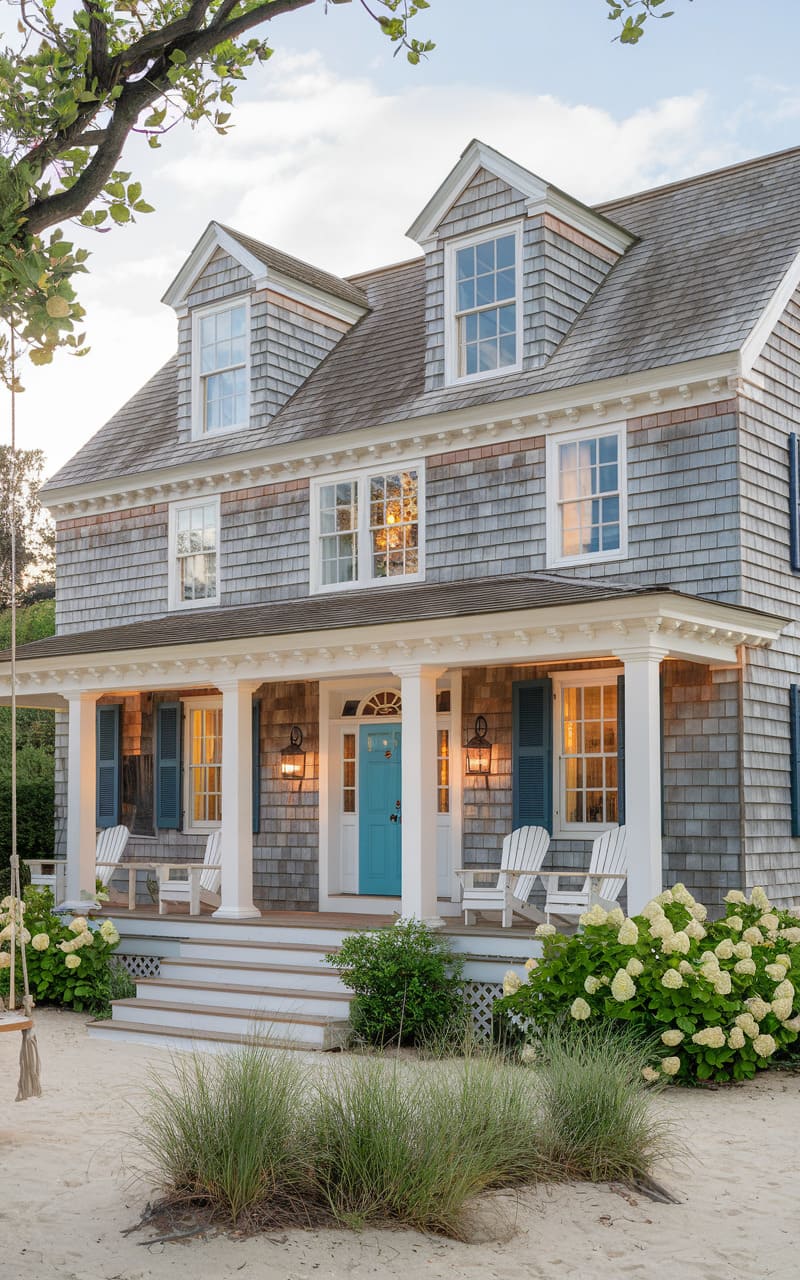
This picturesque home belongs to the Shingle Style, an evolution from earlier Colonial forms popular in the late 19th century. Its most defining feature is the extensive use of wood shingles covering walls and roofs, creating a continuous, flowing surface. Rooflines are often complex, and porches tend to be integrated smoothly into the overall house shape. While related to Colonial Revival, Shingle Style embraces more asymmetry and texture. It offers a romantic, artistic interpretation of American home design.
27. Rustic Midwestern Colonial Style Home
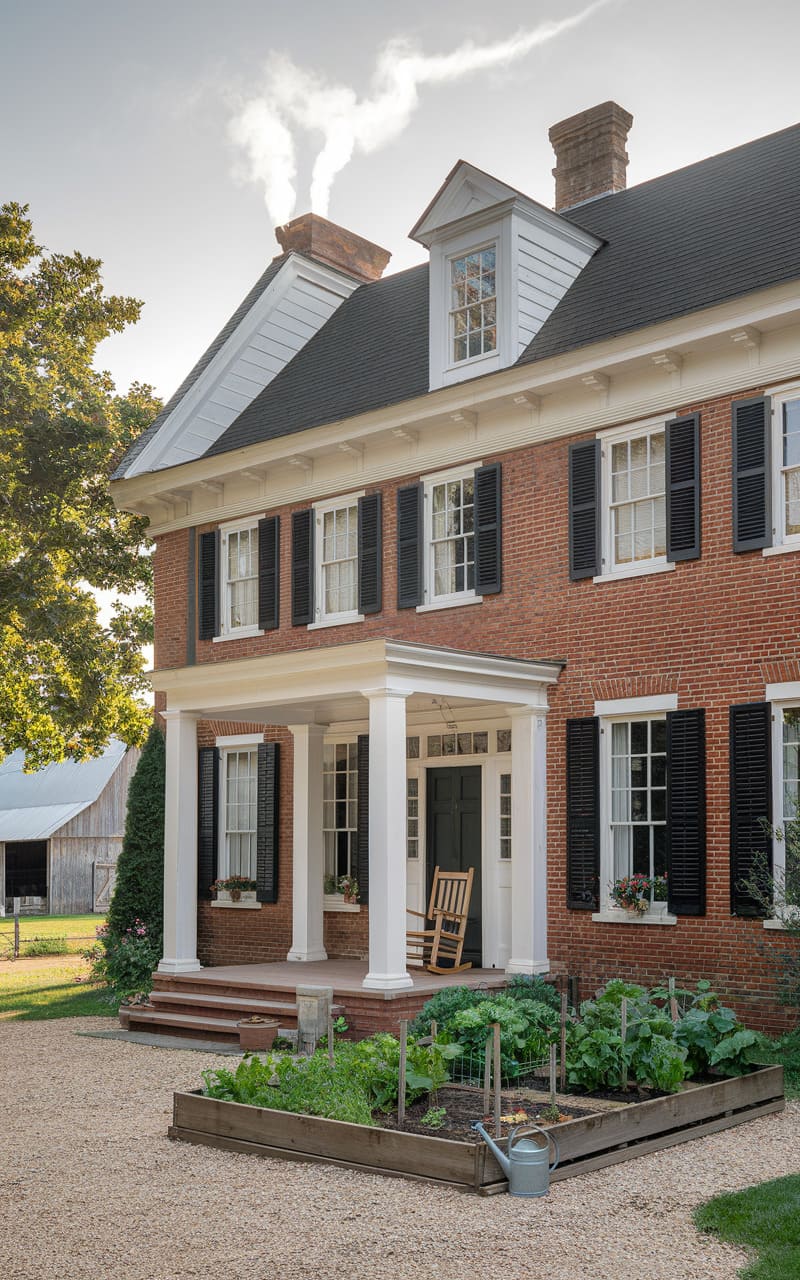
This home shows a rustic Midwestern interpretation of American Colonial style. It maintains the basic symmetrical form but perhaps with simpler detailing suited to the region. Local materials might be used, giving it a distinct regional feel. A welcoming front porch could be a prominent feature, reflecting Midwestern hospitality. The overall impression is one of sturdy practicality and comfortable, unpretentious living. It adapts classic Colonial principles to the heartland landscape.
28. Tidewater Colonial Home
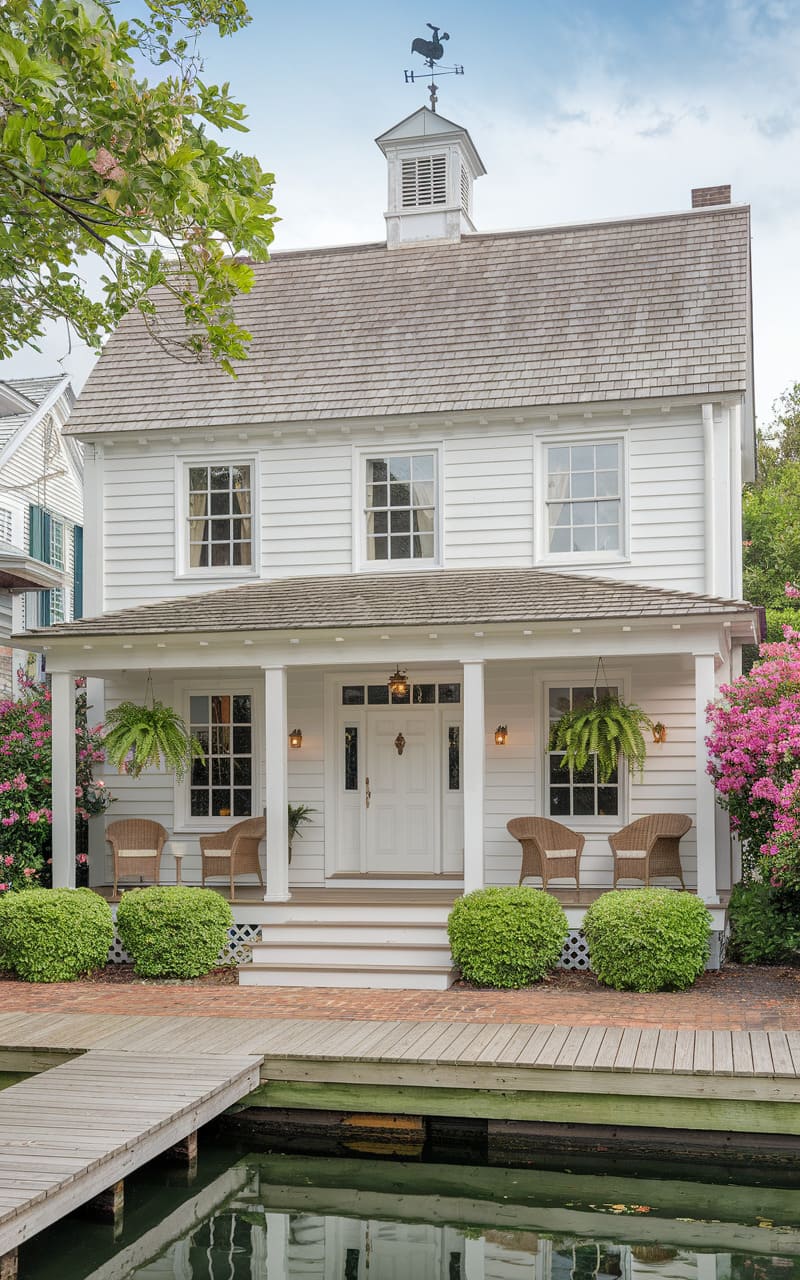
This Tidewater Colonial home is perfectly designed for coastal Southern climates. Its foundation is typically raised to protect against high tides and humidity. Wide, extensive porches, often wrapping around multiple sides, are a hallmark feature, providing shaded outdoor living space. The design maximizes cross-ventilation to keep the interior cool in warm weather. This style represents a practical and elegant adaptation of Colonial architecture to specific environmental conditions. It offers gracious living near the water.
29. Dutch Colonial Cottage Home
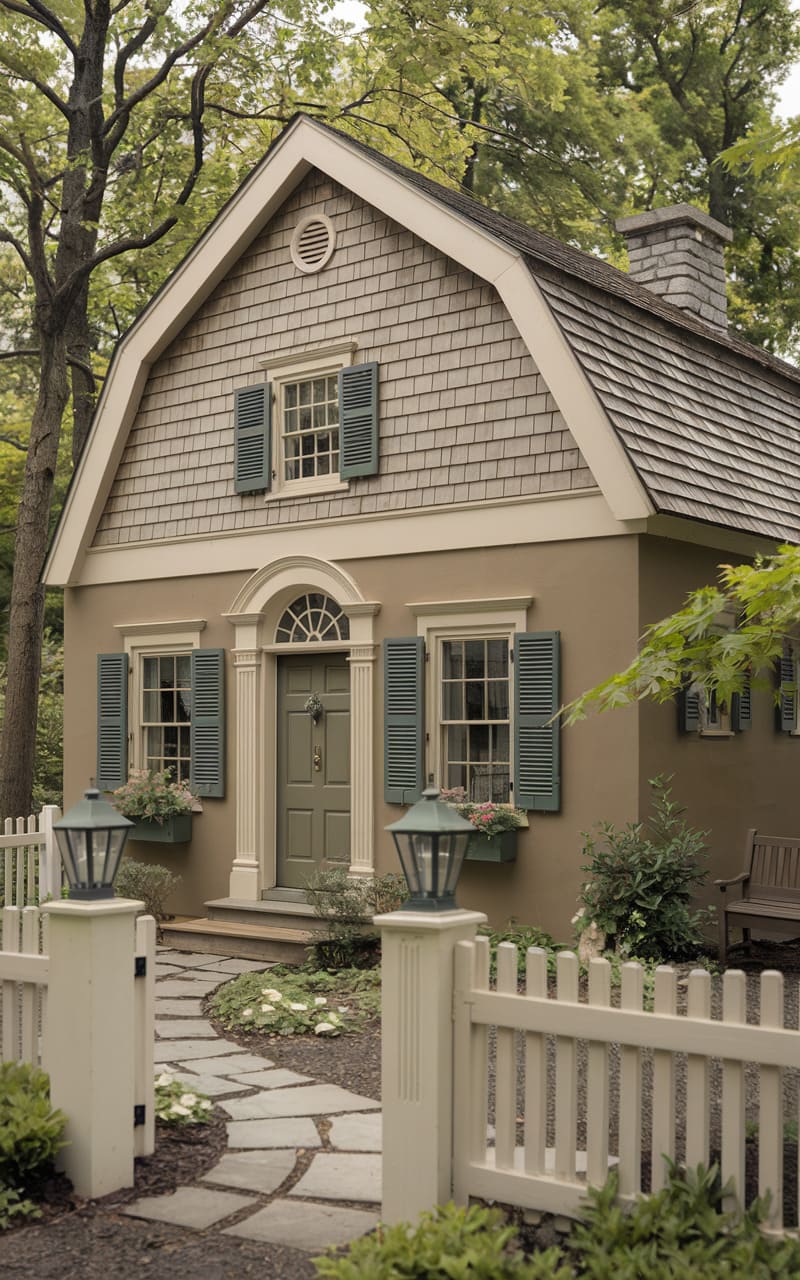
This cozy cottage showcases the distinctive Dutch Colonial style, immediately recognizable by its gambrel roof. This unique roof shape provides more usable space on the upper floor compared to a standard gable roof. Dormer windows often punctuate the roof, adding light and charm. Sometimes, the eaves have a gentle flare at the bottom edge. Built with simple materials, this cottage version offers a warm and inviting presence. It’s a charming reminder of the Dutch influence in early America.
30. French American Colonial Style Home
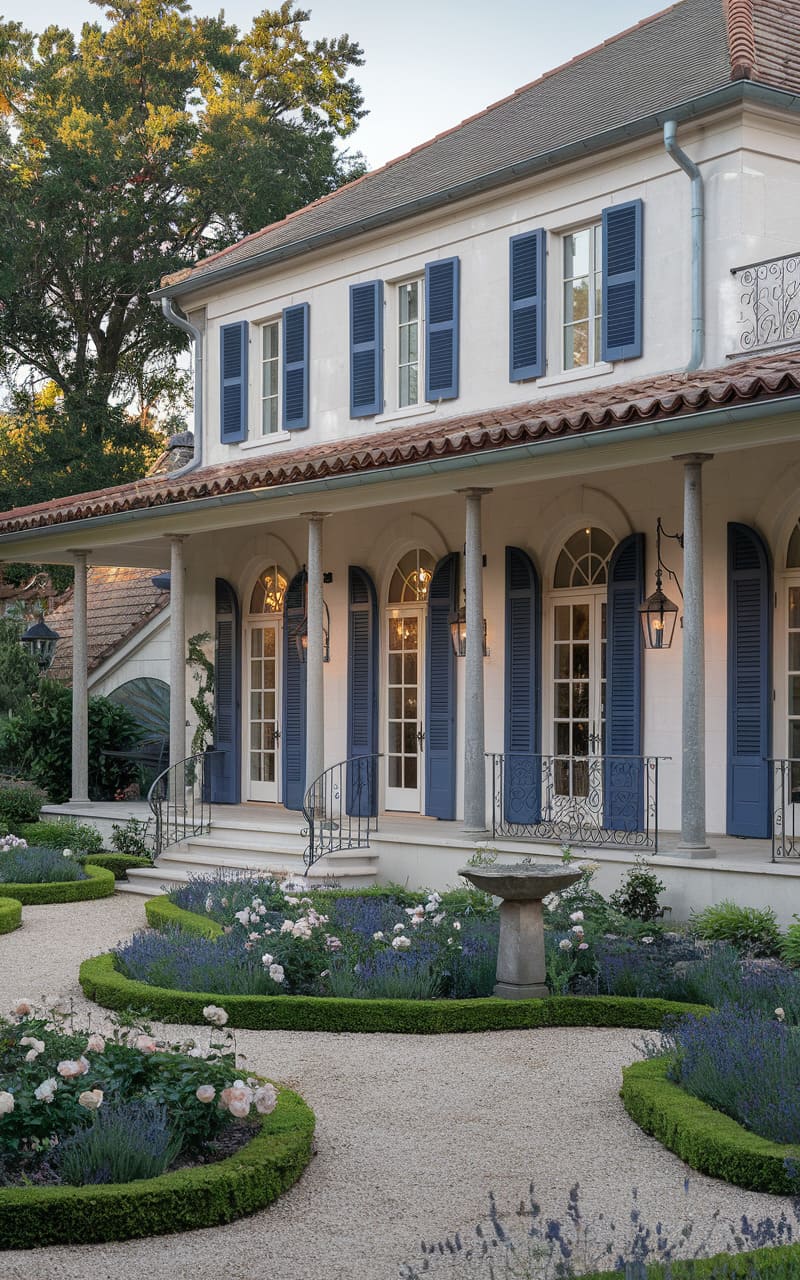
This home reflects French Colonial architecture, adapted by French settlers primarily in the Mississippi Valley and Louisiana. It often features a raised main living level built over a basement or piers. Wide porches, or galleries, frequently surround the house, providing essential shade and outdoor space. Steeply pitched hipped roofs are common, designed to handle rainfall effectively. French doors opening onto the galleries are another characteristic element, enhancing airflow and light.
31. Tropical American Colonial Home
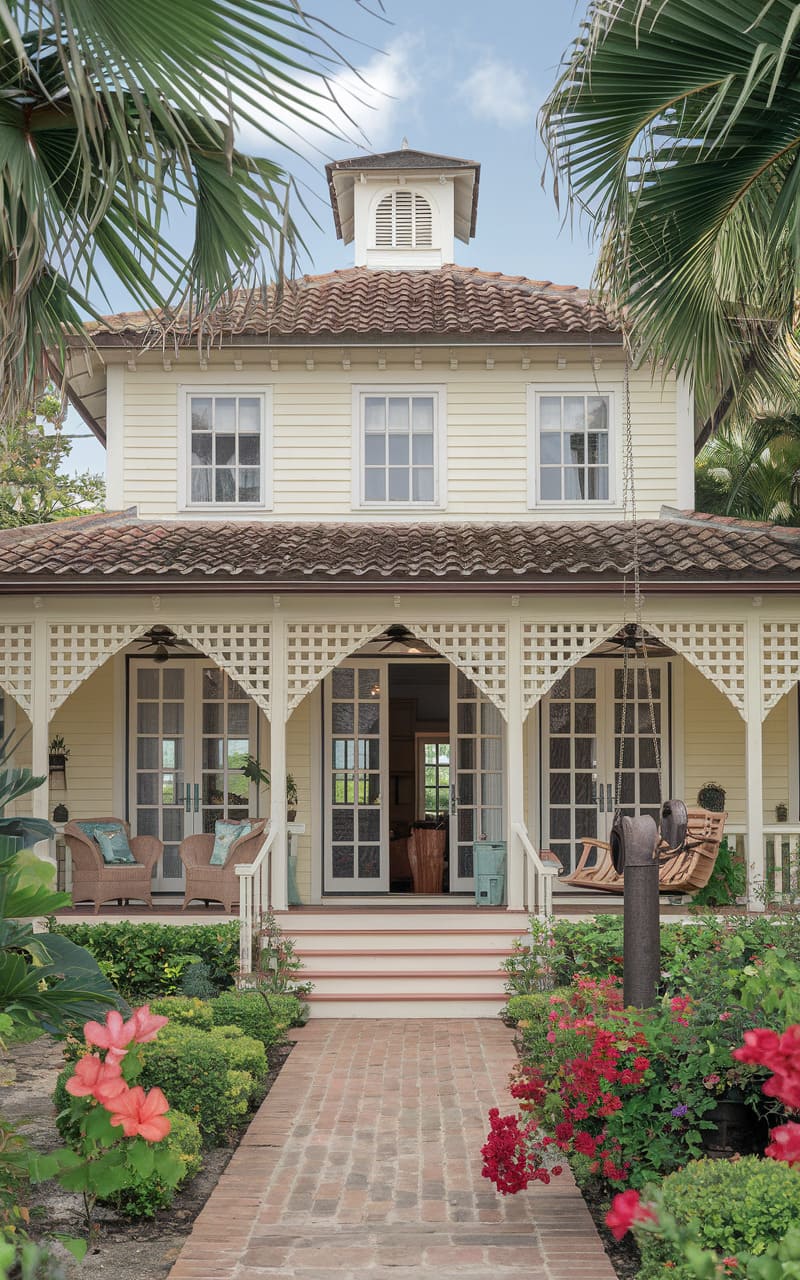
This American Colonial home is adapted for a lush tropical environment. It likely features expansive porches or verandas to provide shade and capture cooling breezes. Large windows and doors encourage natural ventilation, essential in warm, humid climates. Light exterior colors help reflect the sun’s heat, keeping the interior comfortable. The design often incorporates a raised foundation for better airflow underneath. Surrounded by tropical foliage, this home offers an airy and relaxed version of classic Colonial style.
32. Beautiful Symmetry
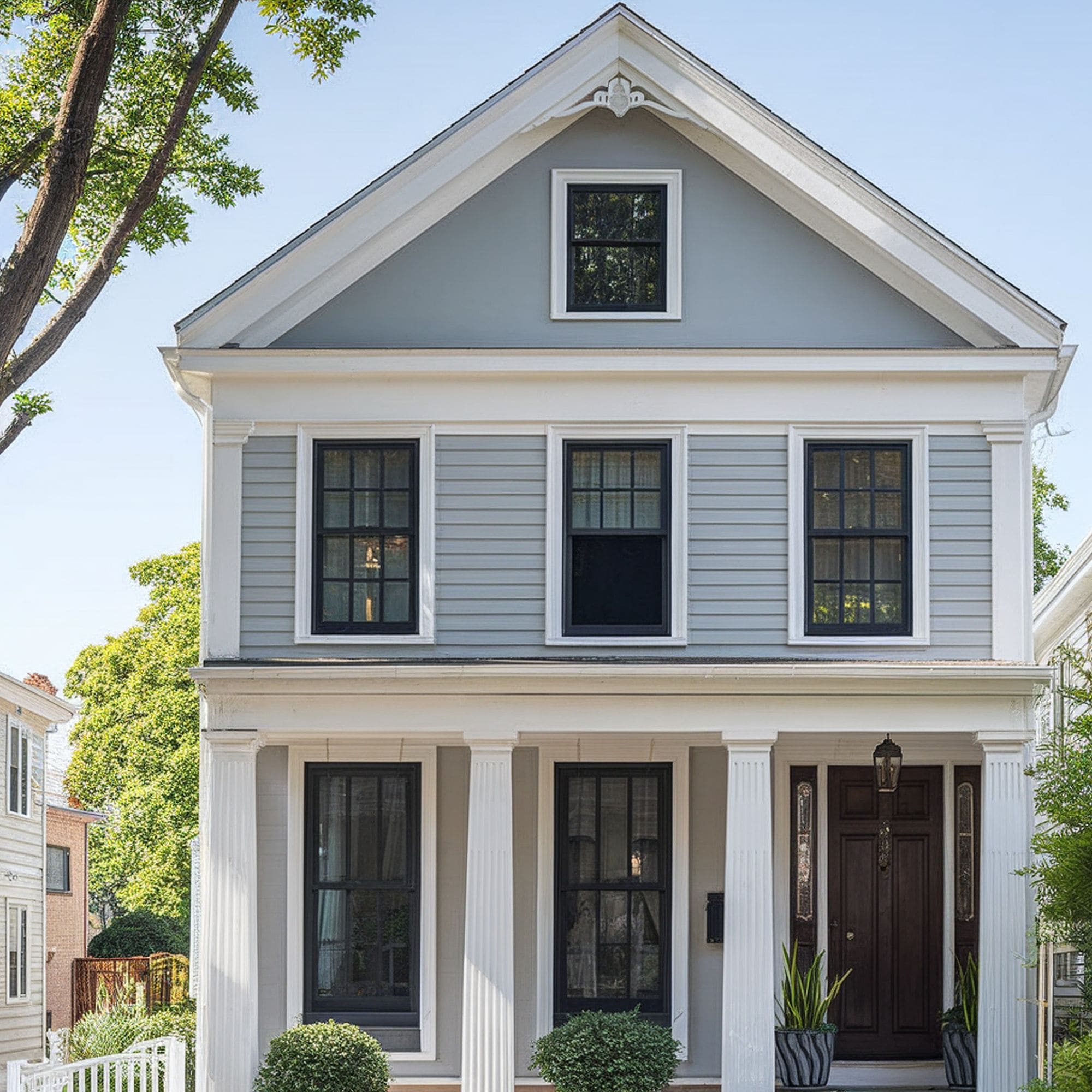
Colonial-style homes tend to favor symmetry to create a more visually pleasing look. There’s a soothing sense of comfort provided by mirroring the arrangement of various elements such as windows and columns such as this American Colonial home shows off.
The symmetrical effect is more noticeable for the house’s exterior but the interior can often follow in the same aesthetic concept to reflect geometrical uniformity.
33. Fireplaces
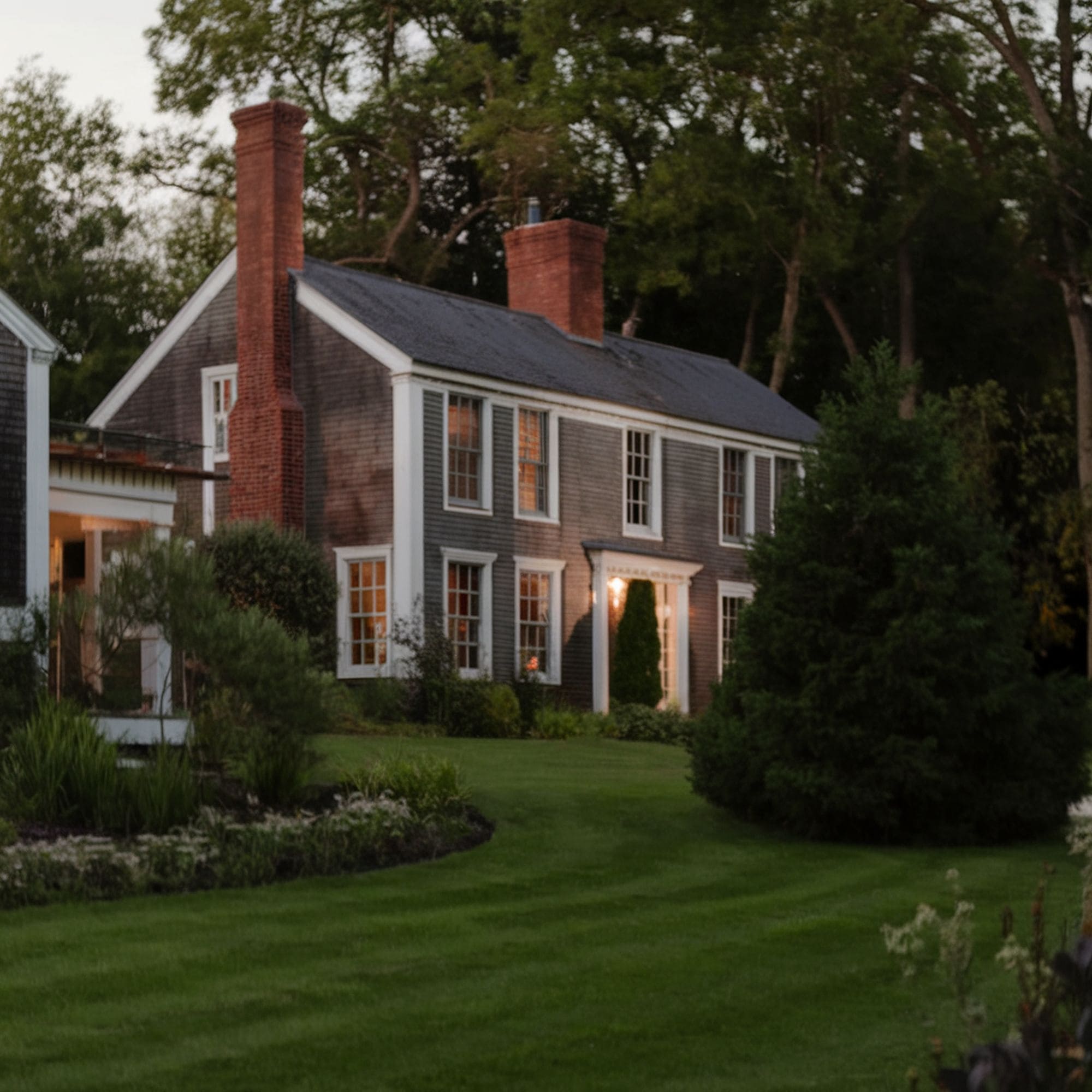
The classic heating method used by a Colonial house will most likely involve fireplaces. That can offer a great design opportunity when it comes to the exterior of the home. Symmetrical brick chimneys are elegantly emphasized to boost the visual impact of the fireplaces.
Even if a particular column isn’t connected to a functional fireplace, you can still take advantage of a stylish symmetry to enhance the exterior look.
34. Colorful Touch
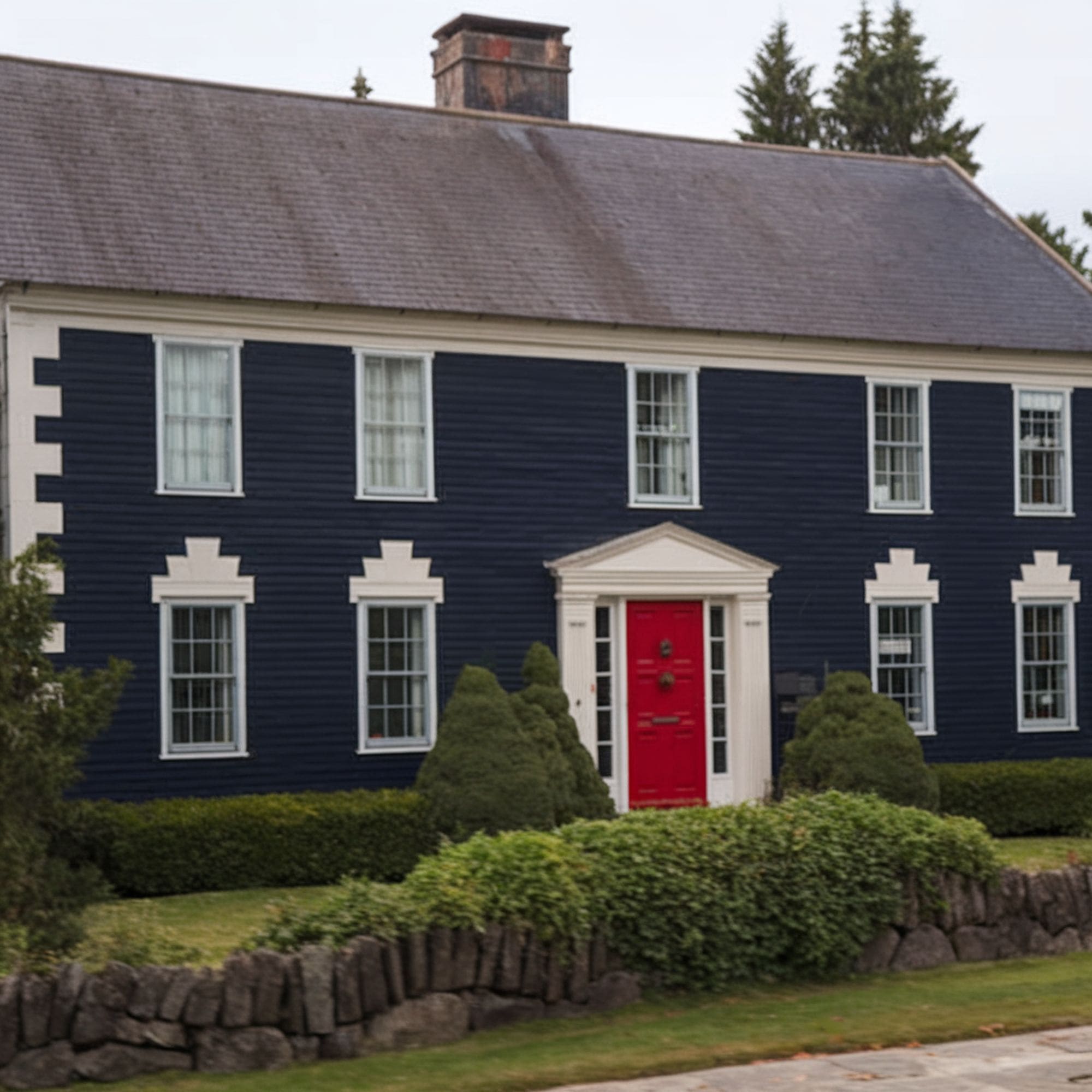
While most American Colonial homes are designed with neutral colors, that doesn’t mean you need to resign yourself to a monotonous look. A colorful accent such as this red front door can bring a touch of personality to beige, dusty gray, or black facades.
Homeowners can use painting to their advantage to let only a certain element stand out more effectively without making the whole house seem too bright and out of place compared to the others in the neighborhood.
35. Painted Shutters
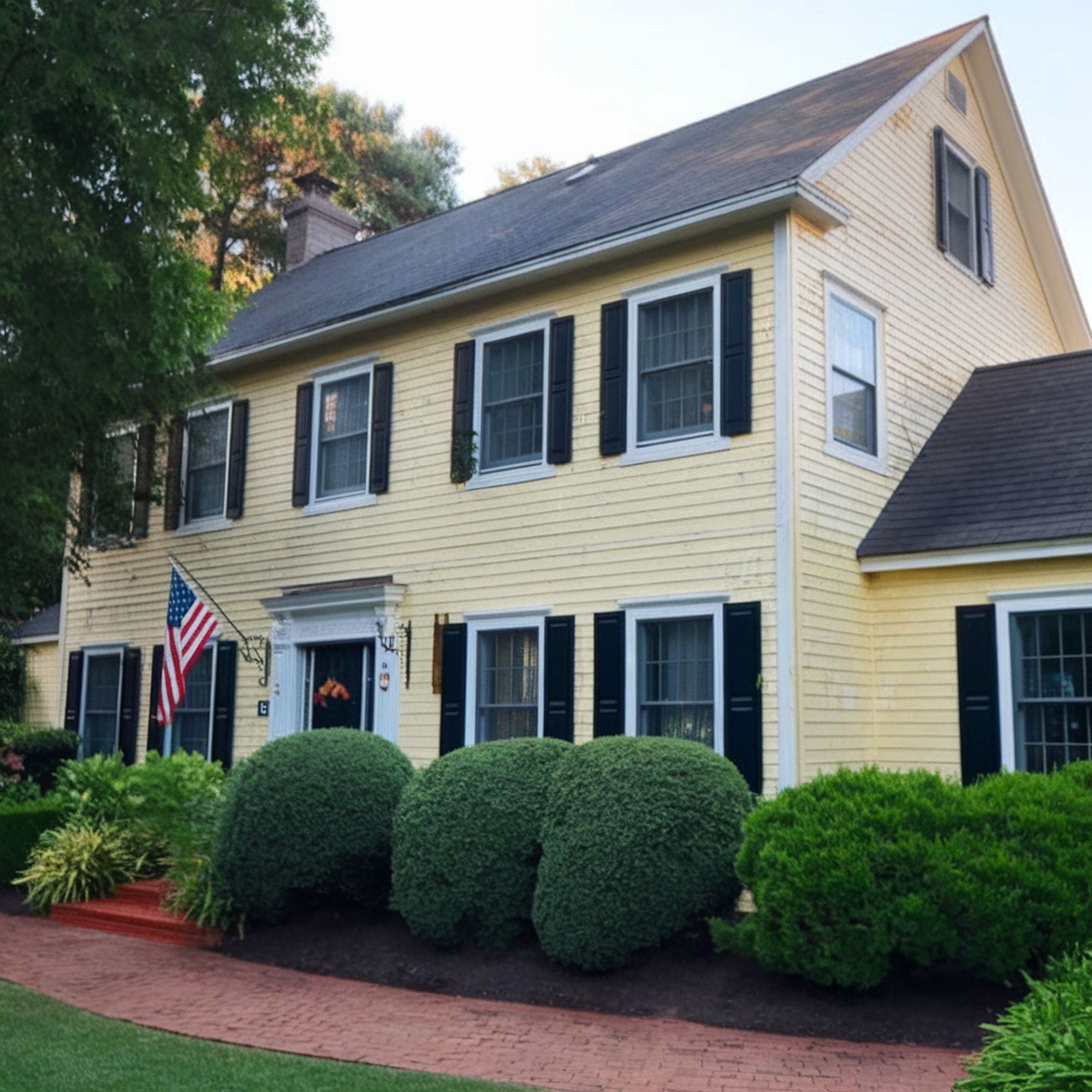
With a refined blend of contemporary yellow and black colors, this house in Maine seems to give off a strong American Colonial vibe. The home benefits from some modernized features but the distinctive Colonial vibe is retained despite the more innovative color contrast between the facade and the shutters. The black painted shutters are very often seen in Colonial architecture and, in this case, they help to make the symmetry of the windows stand out.
36. Two-Story House
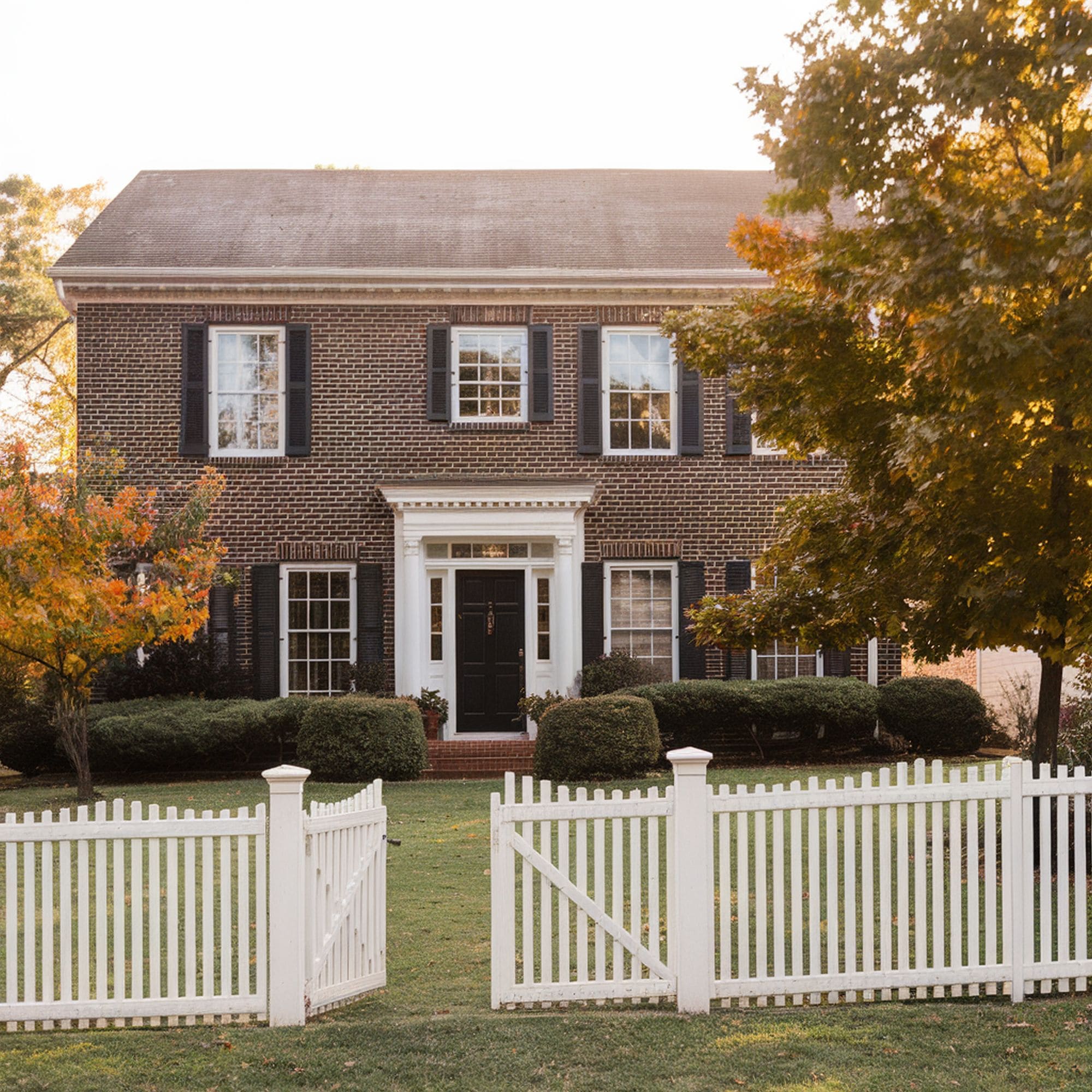
Depending on the regional influences, some Colonial houses can have two or even three stories. This kind of simple layout can be more efficient than others. Whereas modern homes tend to favor open-concept configurations, the interior of these houses is more likely to have separate rooms. There’s a practical reason for that because it’s easier to heat only a specific area in the house. The fairly low ceiling also contributes to that effect.
37. Traditional Interior
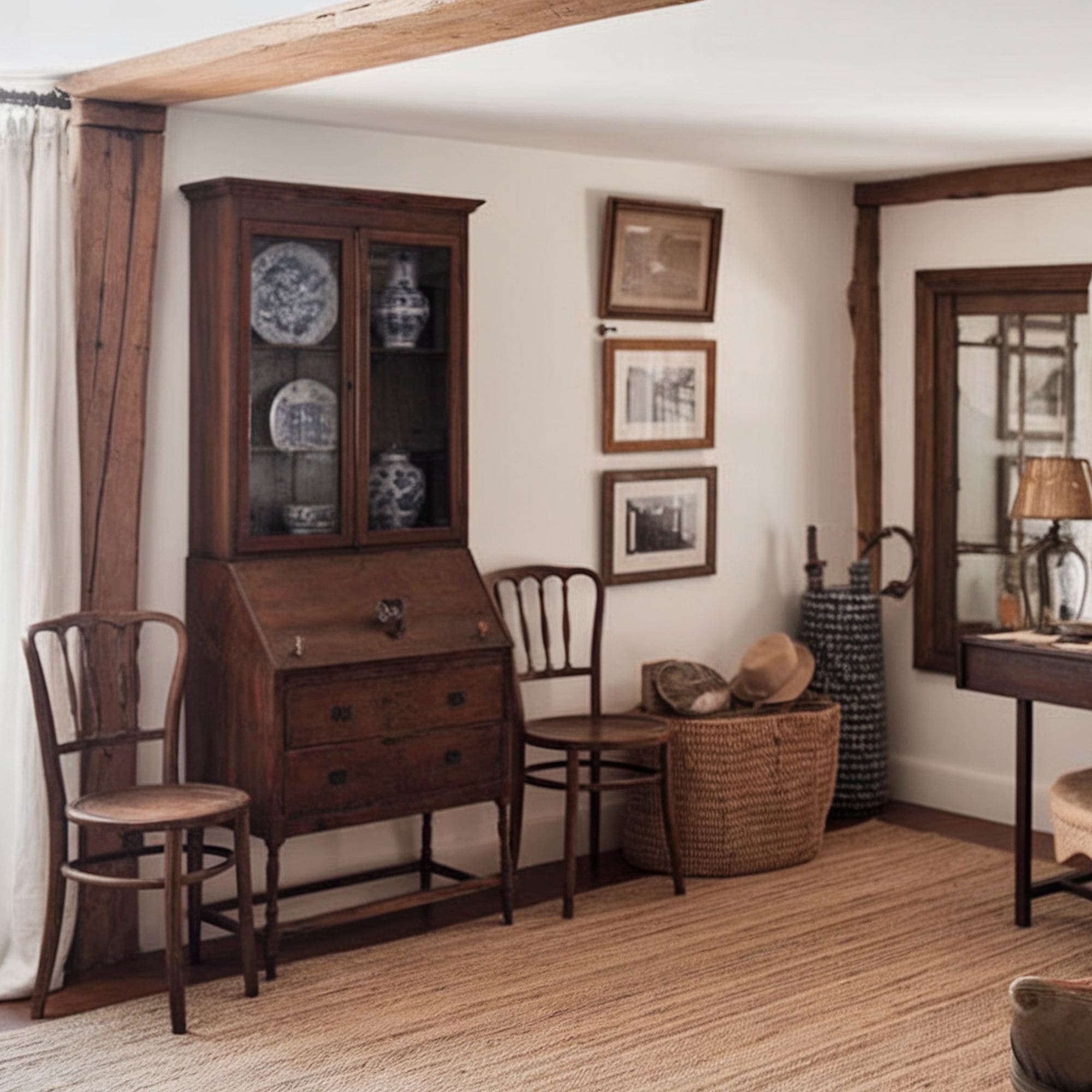
If you’re restoring an old American Colonial home, it can be quite challenging to figure out the best design approach for the interior. Ideally, the interior decor style should mirror the look of the exterior.
For Colonial homes with a rich history, this typically translates to a more traditional style full of antique pieces and a calming neutral-toned color palette. Things such as vintage trunks or chairs can enhance the Old World feel of the home.
38. Colonial-Style Landscaping
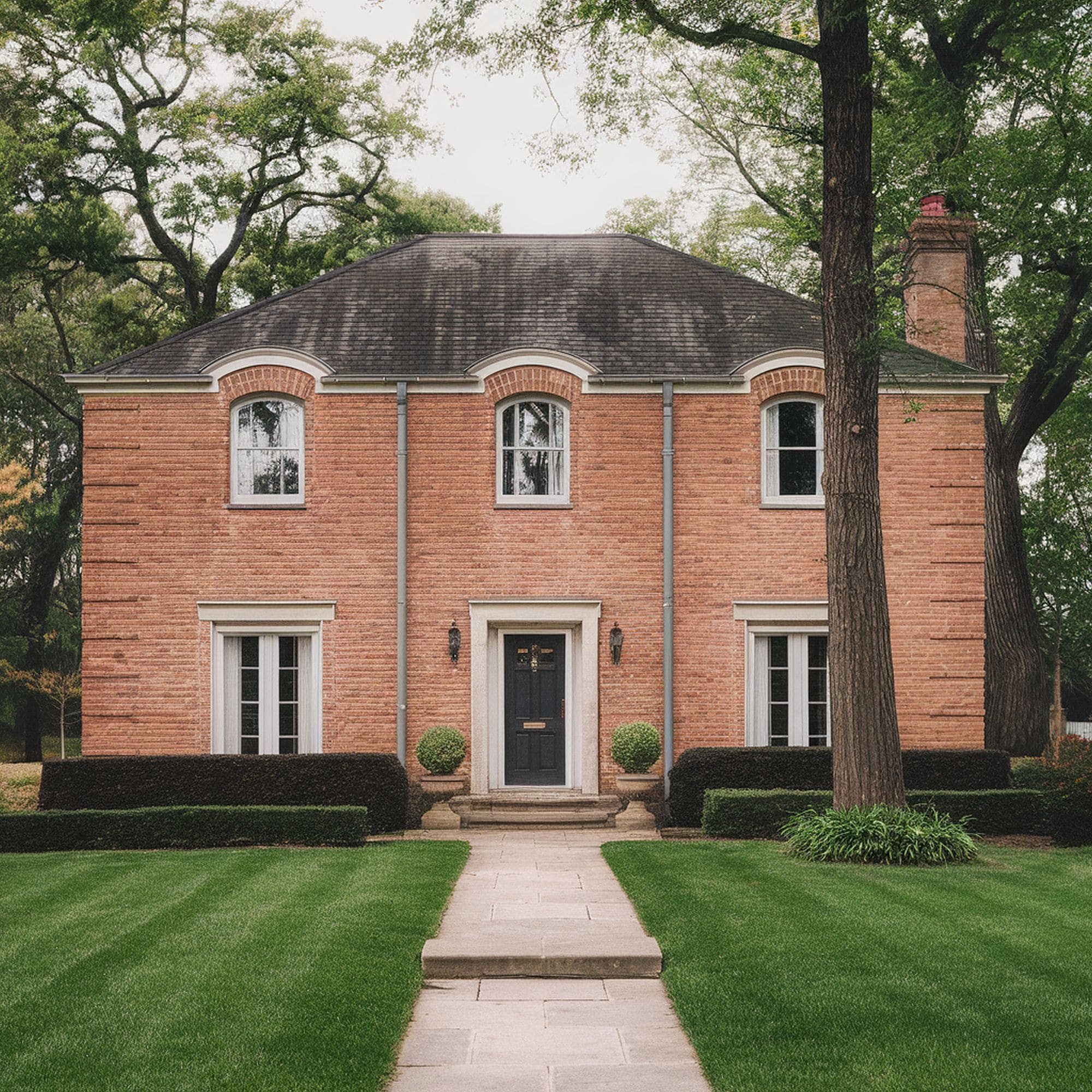
When it comes to the ornamentation of the surrounding landscape, there are a few essential aspects to consider for American Colonial architecture. The style favors inconspicuous decorations for the surrounding area of the house.
With some exceptions, most Colonial-style houses look more authentic if you choose formal landscape designs. No bold or exotic vegetation is used while the shrubs and trees are neatly trimmed to maintain a harmonious geometric look that blends elegantly with the symmetry of the home’s exterior.
39. Colonial Attic
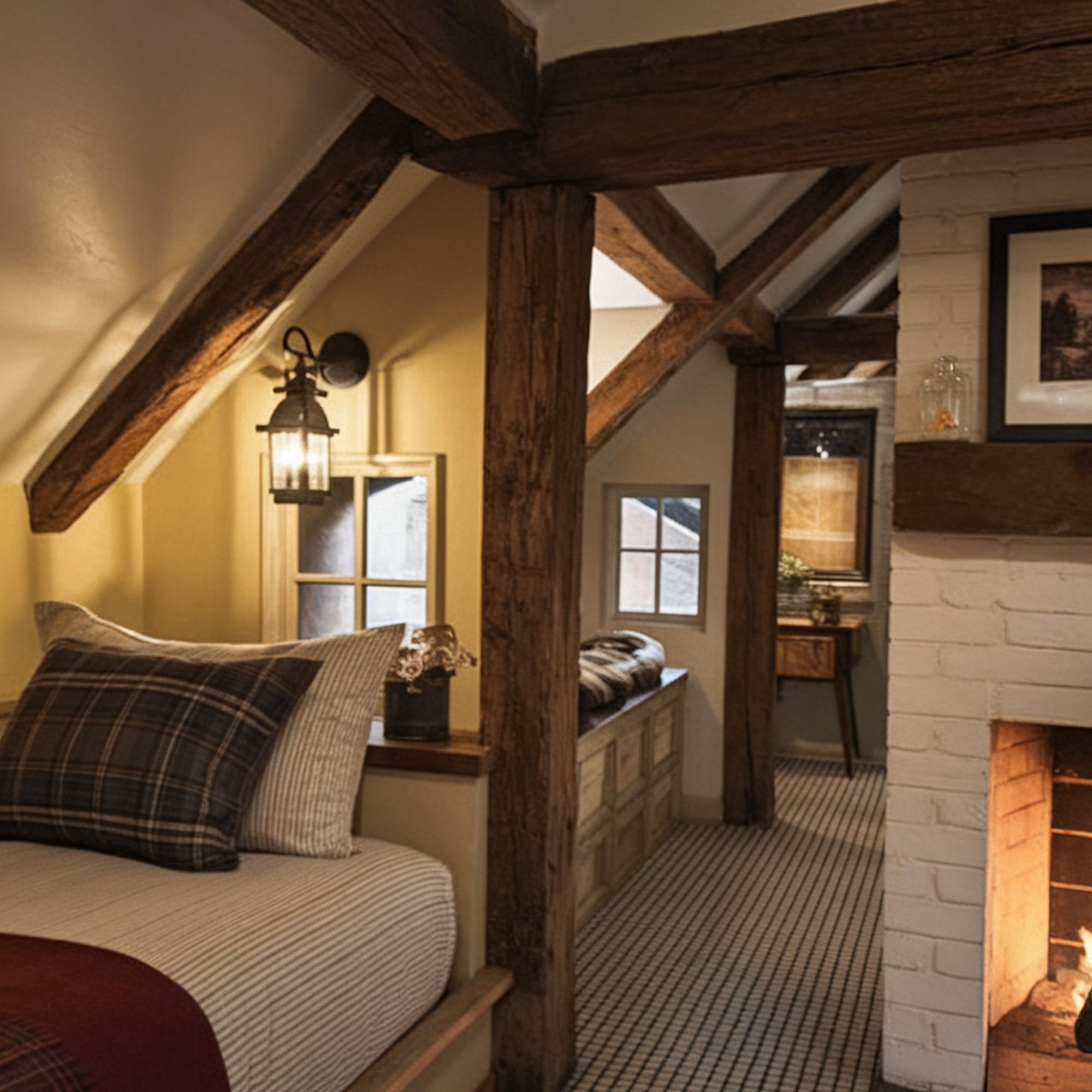
The use of old wooden beams brings some rustic flair to any American Colonial attic. This element can be found in other styles as well but it seems particularly charming when it’s integrated into the attic bedrooms of Colonial-style homes.
It provides a sense of structural solidity while the rough and weathered look seems to contribute to the general coziness of the area. These old beams are often paired with brick fireplaces for an authentic vibe.
40. Simple Geometry
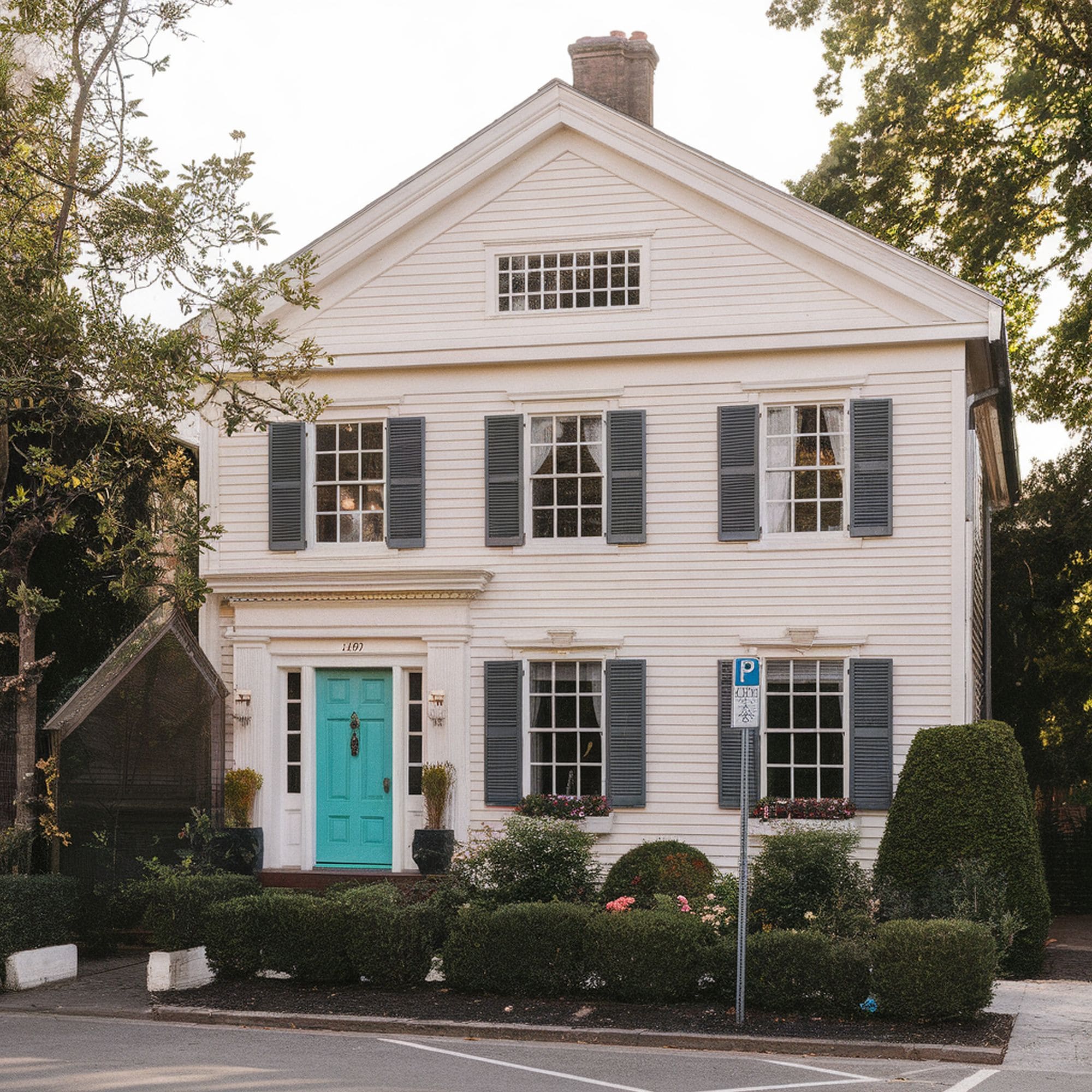
The regularity of the American Colonial home’s geometry appears to be a trademark design feature. This isn’t just an aesthetic choice to keep a uniform style that’s pleasing to the eye but this straightforward approach can be more practical as well.
A square home with symmetrical rectangle windows will be easier to modify in case you want an aesthetic update. Compared to more complicated home designs, Colonial structures are a breeze to renovate and add extra elements.
41. Colonial Farmhouse
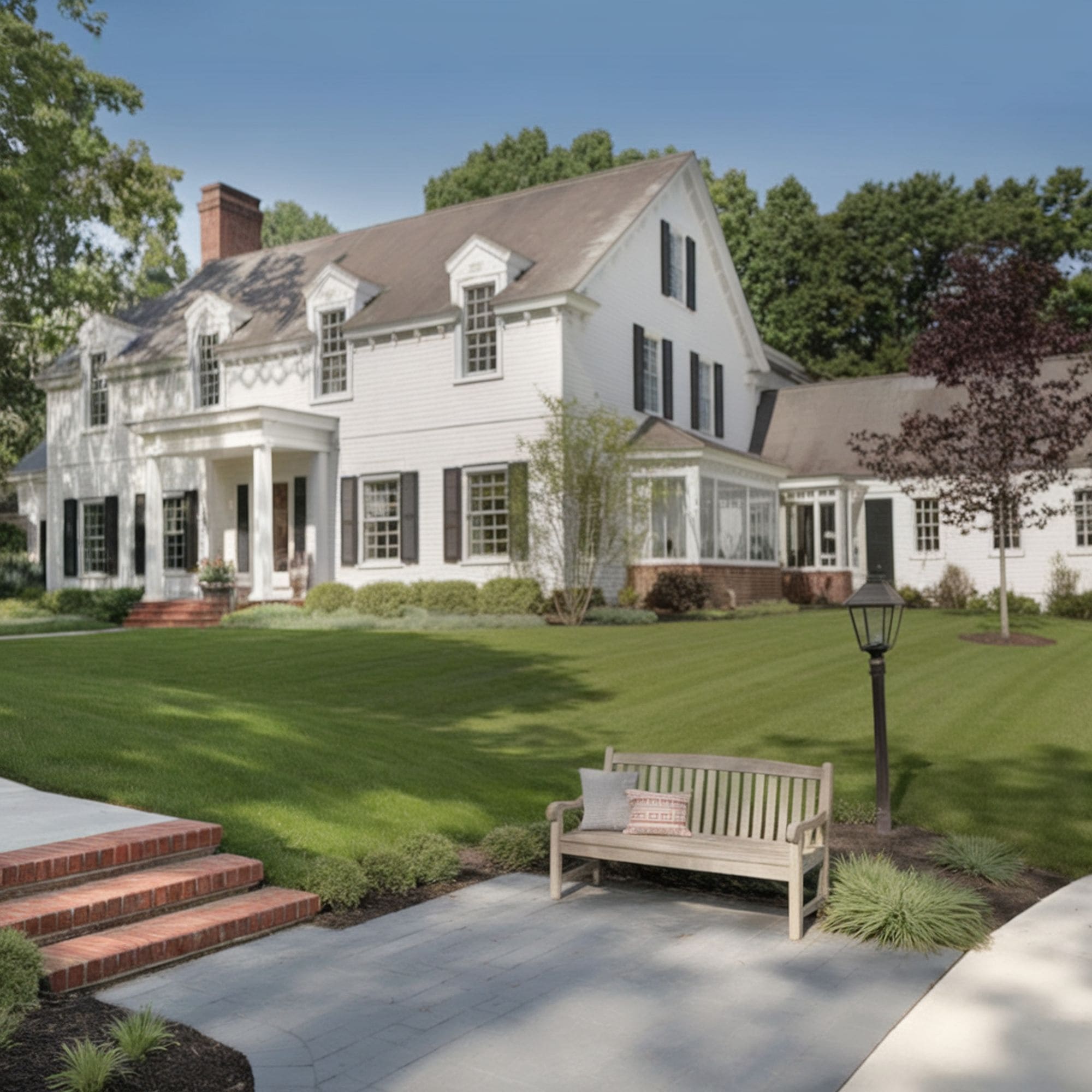
Inspired by the farmsteads in the area, this beautiful Colonial home offers lots of stylish decorative accents for fans of more rustic aesthetics. Even though the interior has been designed to meet the needs of modern life, the exterior style shows off some distinctive farmhouse elements. Notice the use of white cedar cladding and the bold design of the roof lines.
42. Clapboard Siding
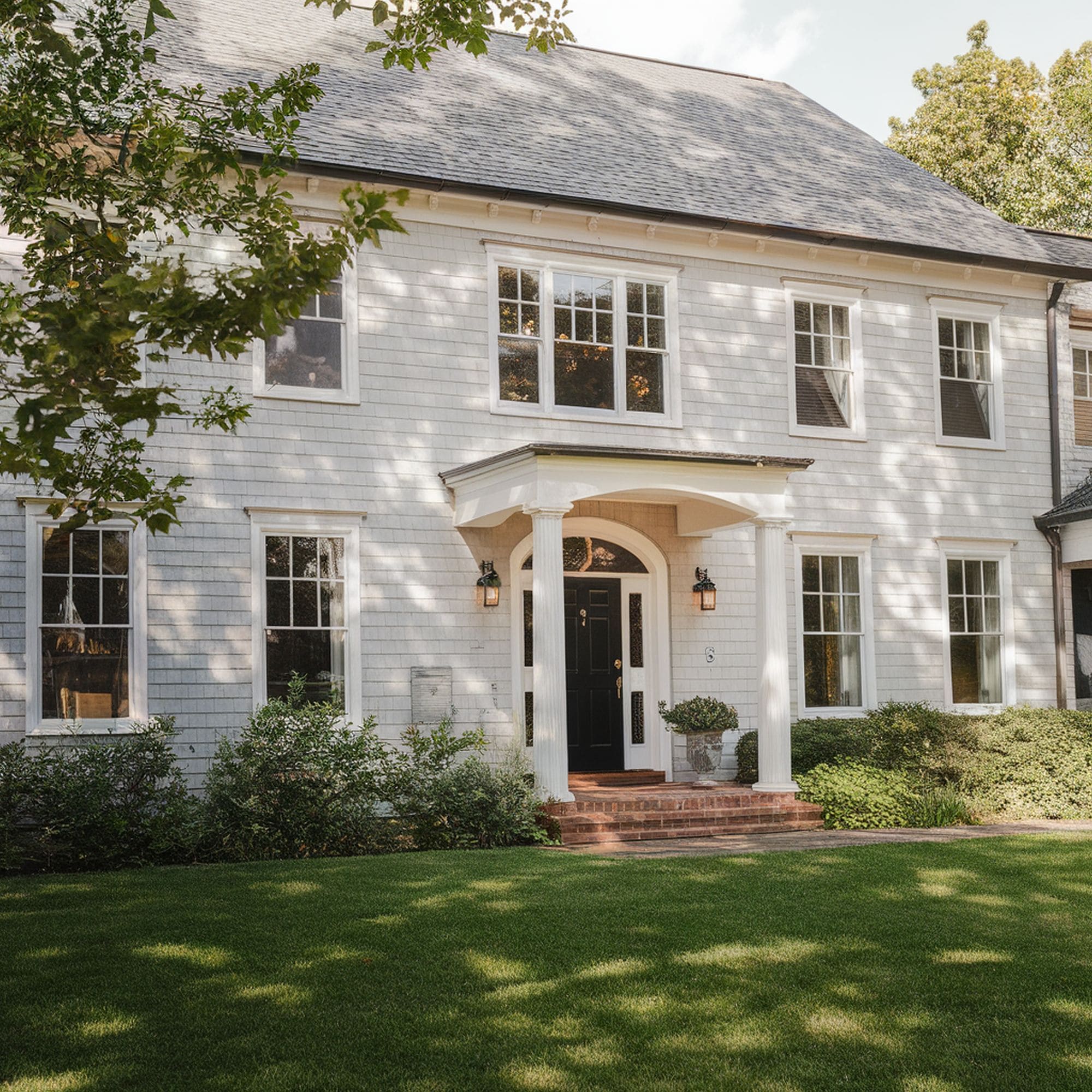
Traditional Colonial homes are crafted using clapboard siding simply because fancier material choices weren’t available in the past. If you wish to recreate the authentic vibe of American Colonial architecture, it’s recommended to focus on local materials such as wood.
Clapboard siding is a safe bet even though you can now purchase many different kinds of siding. Even modern American Colonial homes still use clapboard siding because of its timeless visual appeal.
43. Long Hallway
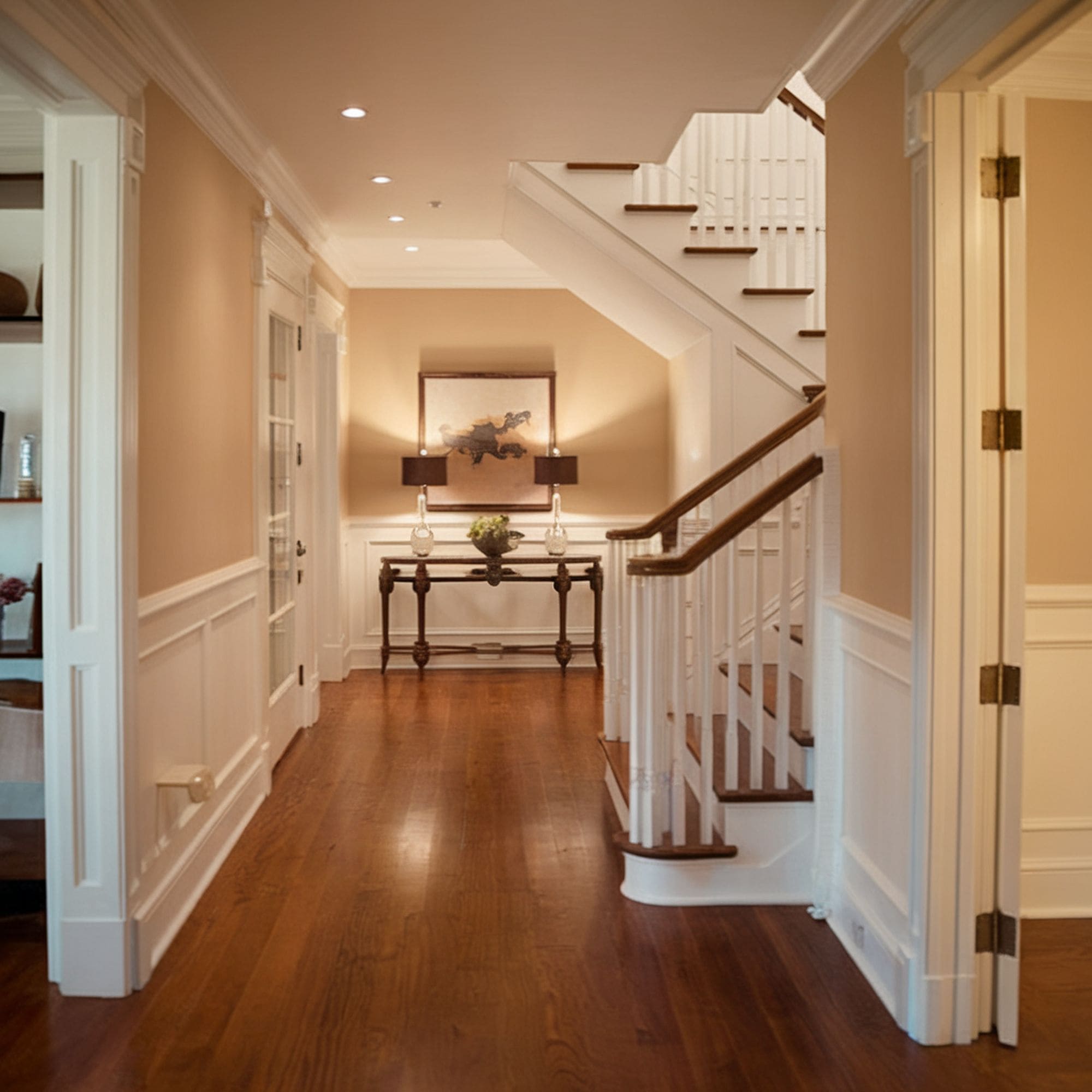
Having a long hallway is a notable characteristic for the interior of American Colonial homes with a Georgian influence, though not necessarily. It’s found on various Colonial-style interiors because the rooms in the house are clearly separated. There’s the need for a long entryway to access all the rooms properly so it serves a functional purpose.
44. Middle Entry Point
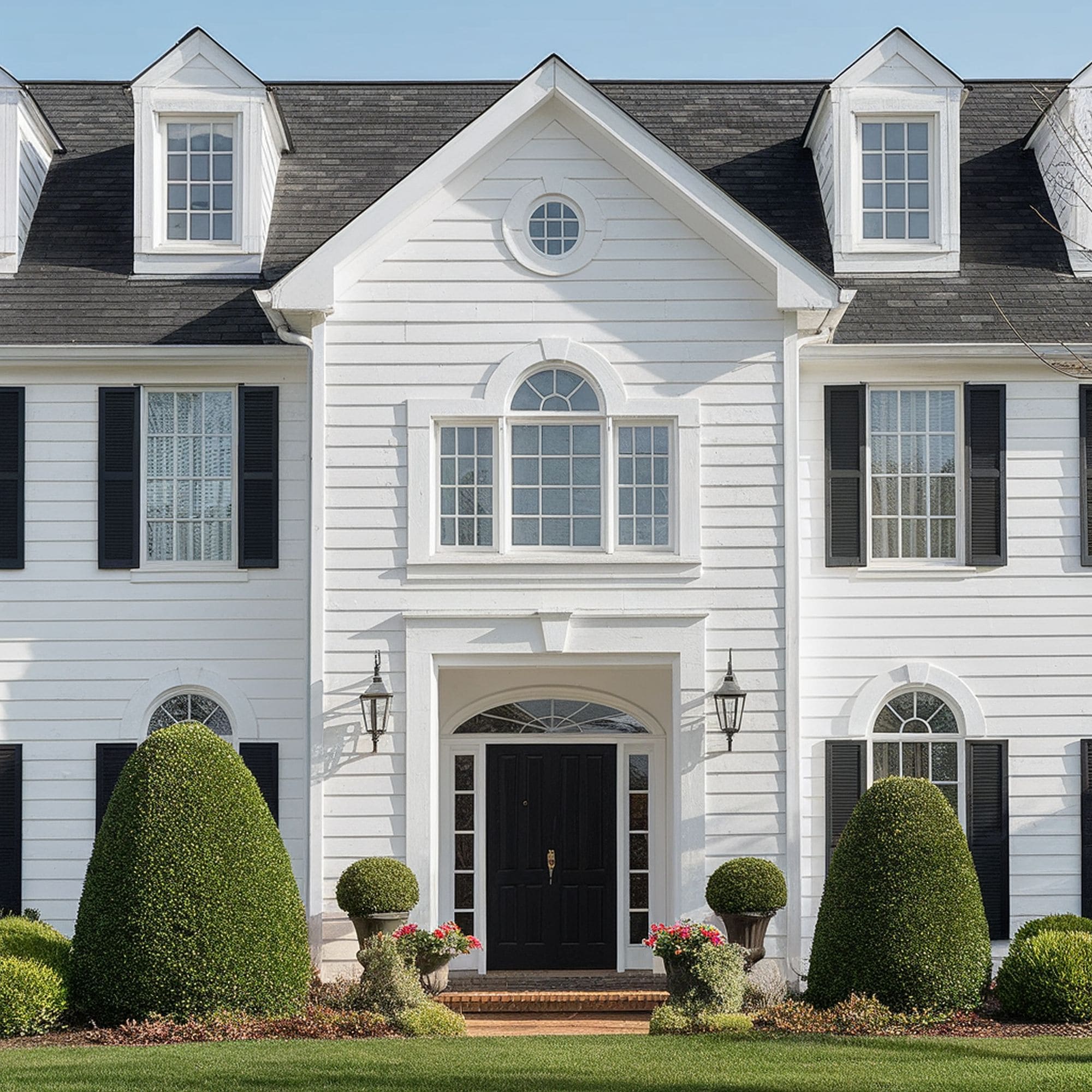
Considering the strong focus on pleasant geometry and symmetric elements, it’s not surprising to see the tradition of Colonial houses featuring a strictly on-center entry. The front door is positioned right in the middle as you look at the front of the house.
This is a classic aesthetic choice for American Colonial architecture that also contributes to an easier placement for the staircase. The result is a practical interior layout that starts with the middle front door, continues on a long hallway, and finally reaches the stairway in the center of the house.
45. Double House Wings
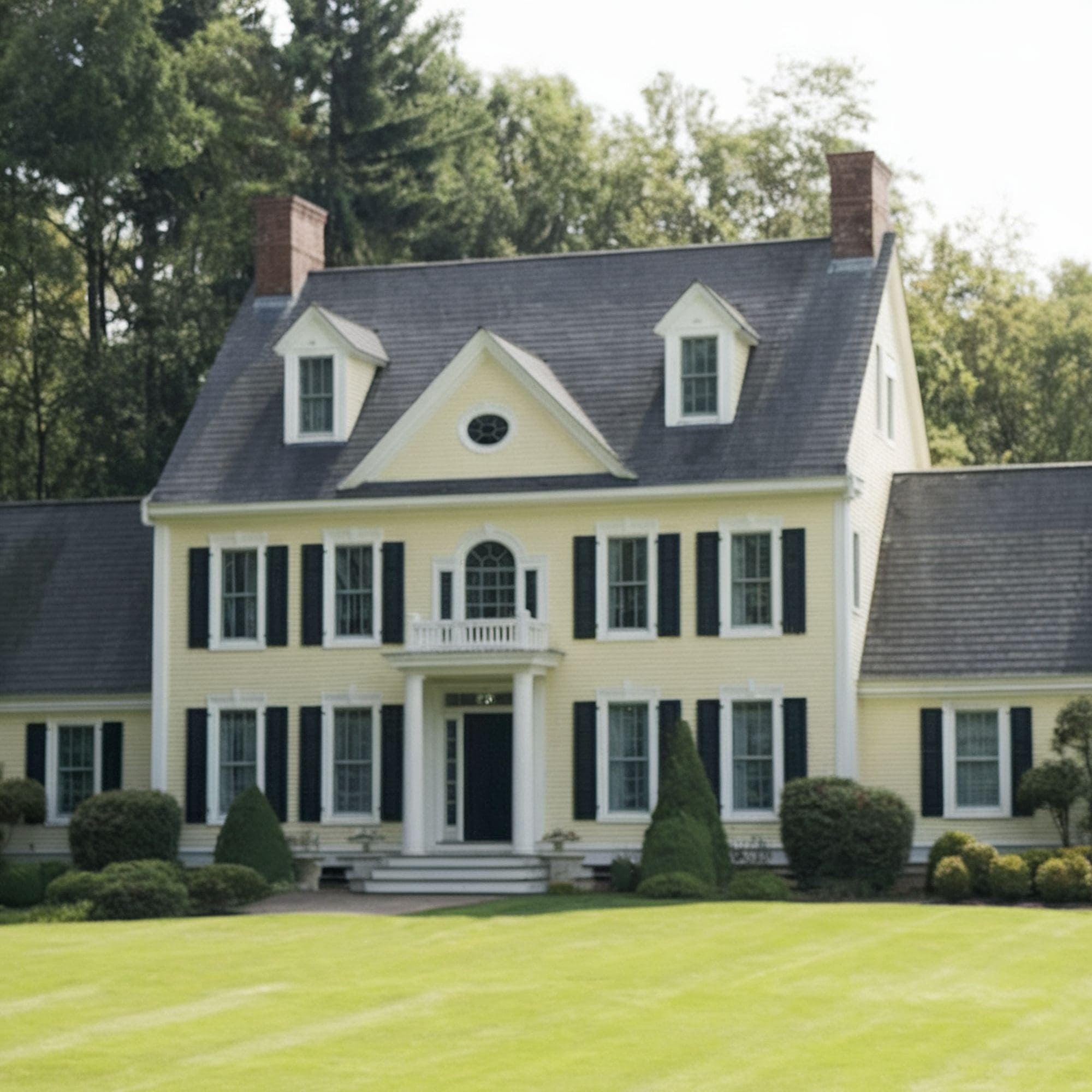
A simple visual trick for enhancing the look of an American Colonial home is to expand it through double side wings. The addition of extra rooms can be welcomed if you prefer the traditional Colonial architecture yet have greater space demands. As a bonus feature, this expansion has great potential when it comes to the overall symmetry of the building. Notice the perfect mirror effect formed by the windows and roofs of the side wings.
46. Columns
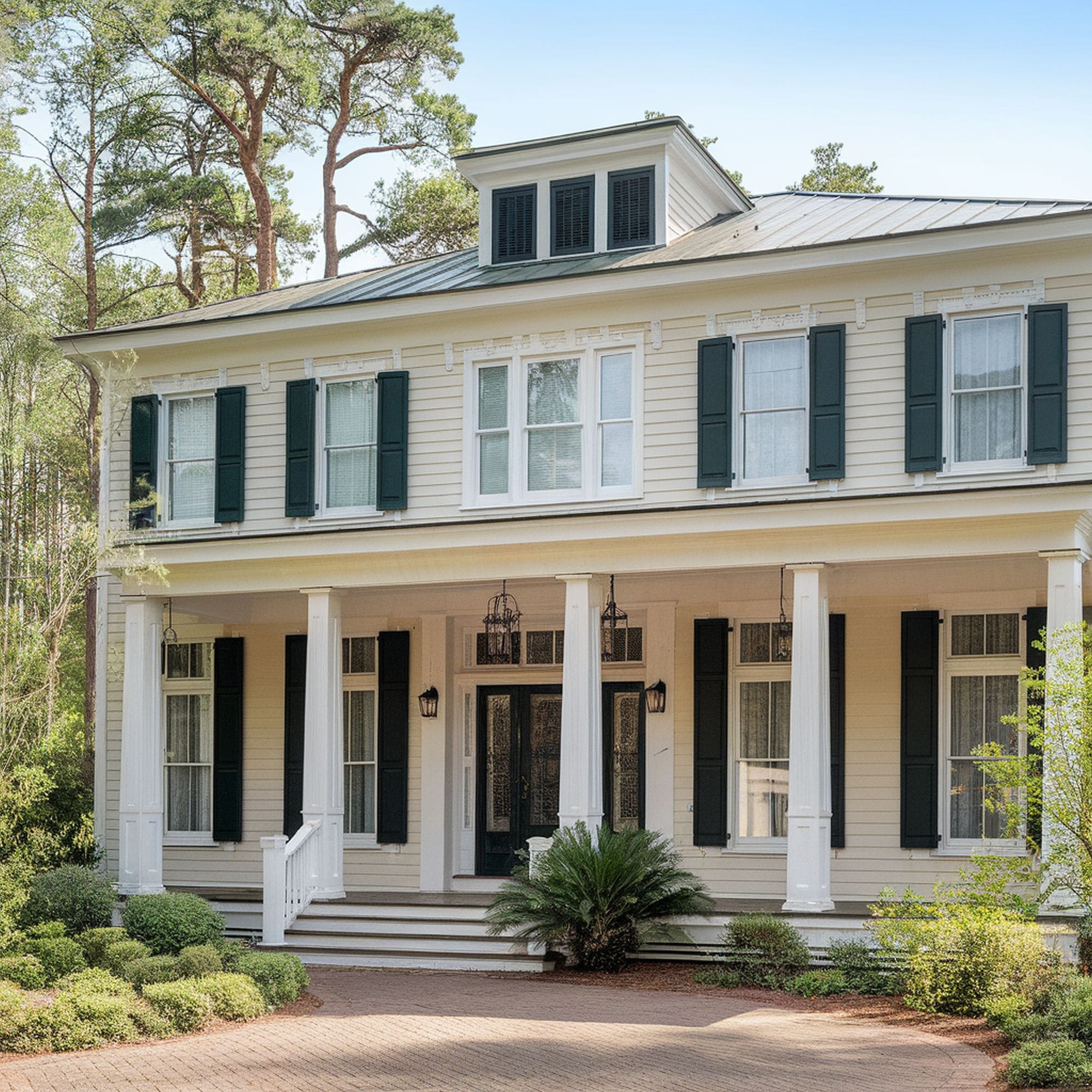
The use of columns in American Colonial homes is strongly related to Greek architecture influence. Lots of grand buildings incorporate the antique charm of a column. Colonists that wished to pay homage to the rich history of their native European countries have incorporated columns when building homes in the US.
This architectural detail is usually found in the front of the house where columns are used for adding support to the portico or the porch. Most classic Colonial-style homes lack columns because they don’t really match the minimalist design approach of the aesthetic. This element is only present in some particular versions of American Colonial homes.
47. Colonial-Style Lake House
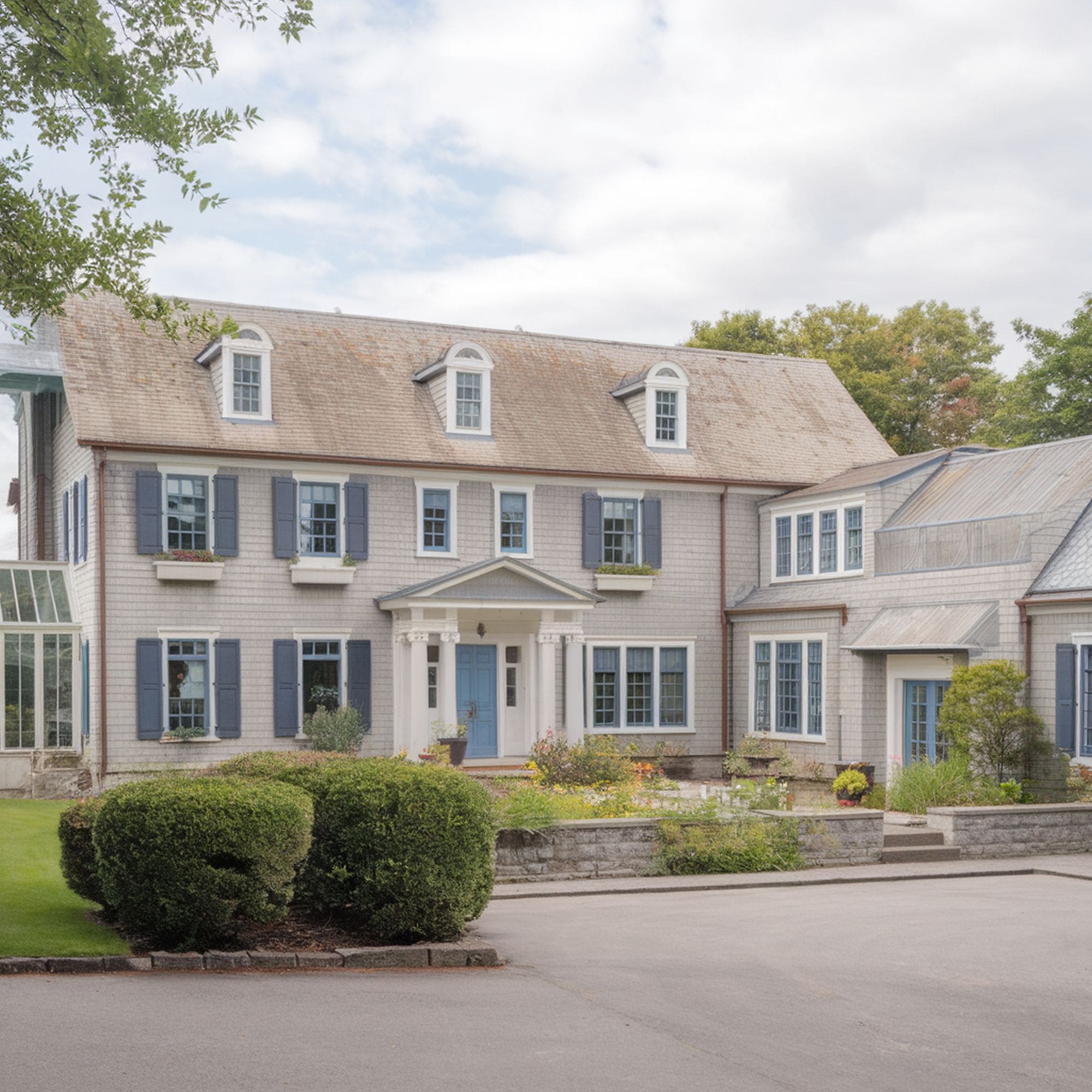
Although American Colonial architecture is known for its understated look with just a few rooms, that doesn’t mean you need to restrict yourself to a tiny home. There are many Colonial-style lake houses such as this one shown here that take the architectural concept to a new level.
Compared to a basic Colonial home, this one has a very large L-shaped floor plan with various additions. It looks even more stunning when taking into account the natural surroundings.
48. Subtle Embellishments
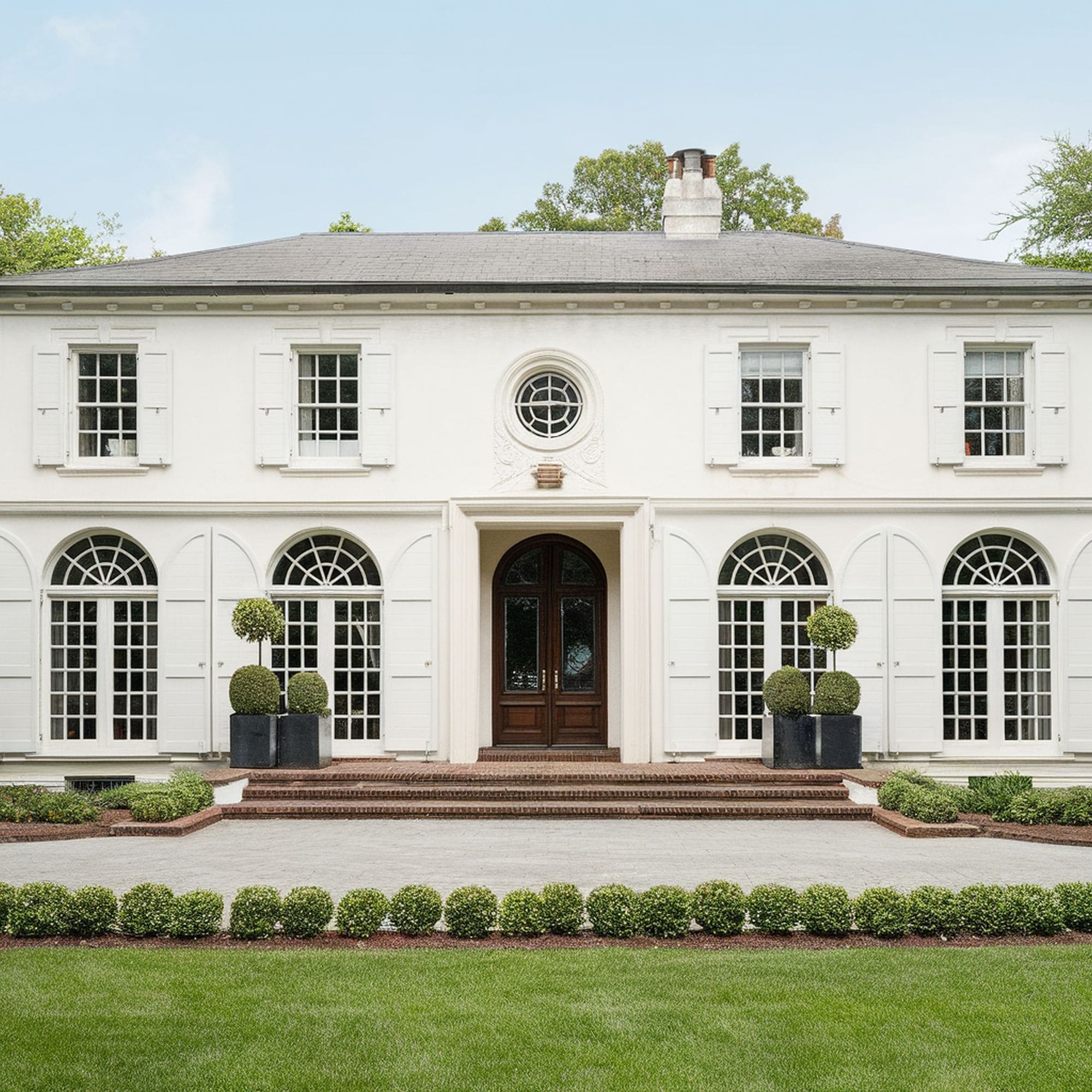
The plain and flat facade of an American Colonial house may not appear very impressive at a first sight. Even larger homes such as this one are designed in a very simple style. To avoid a monotonous look, subtle embellishments can be added for accentuating the elegance of the home’s understated appearance.
This facade is decorated with a stylish arched front door and eye-catching grid patterns on the windows. A small window above the entrance is a usual tradition of Colonial architecture yet here you can find an unexpected round window to provide some extra visual interest. The symmetry is more clearly emphasized by multiple mirrored elements, including transom windows and shutters.
49. Colonial Home With Sunroom
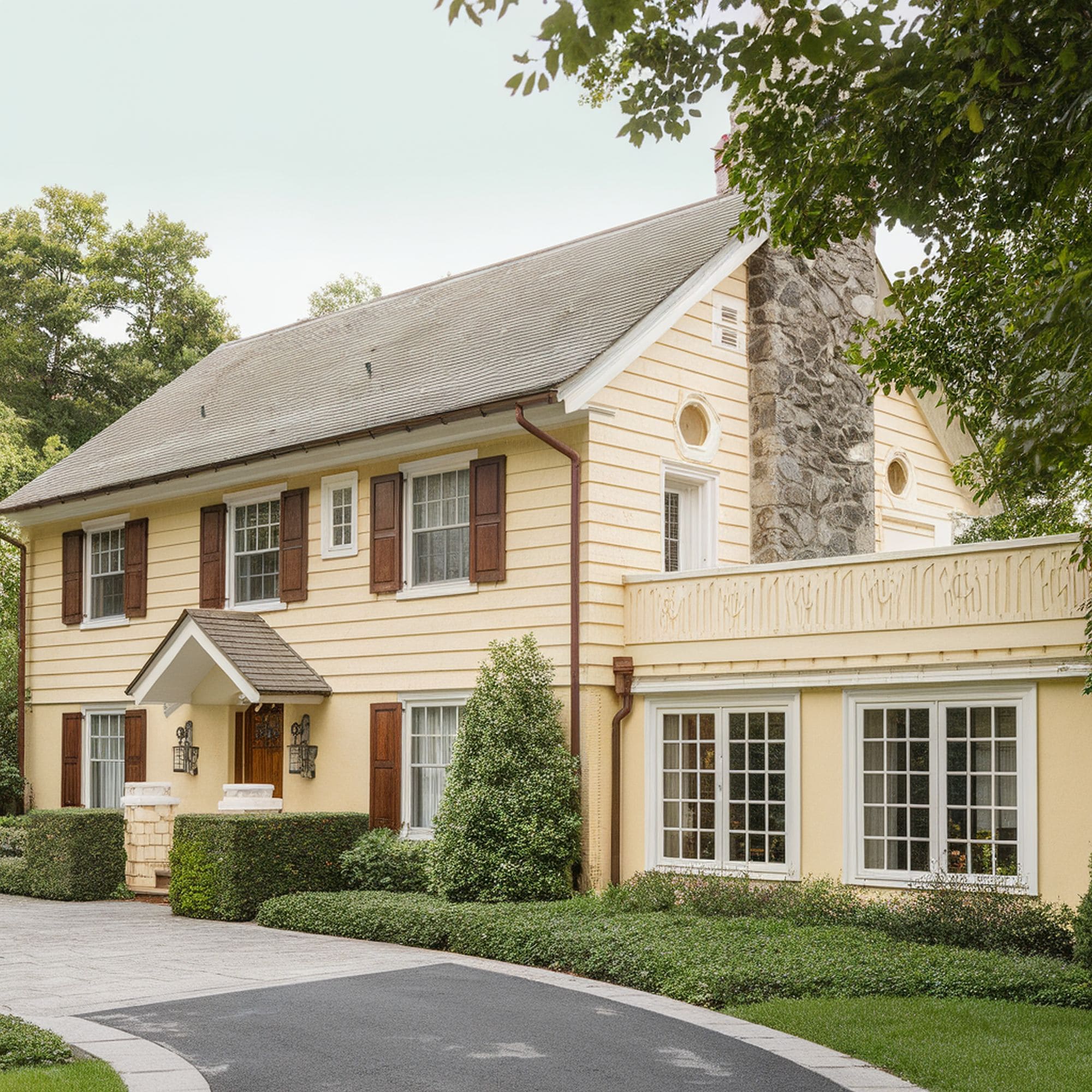
Check out this interesting example of an American Colonial house that benefits from a stylish renovation. The square footage has been increased by including a sunroom on the side. No considerable modifications have been made to the original design of the house to retain the characteristic Colonial flair.
While the building has been created in a four-over-four room configuration, additional expansions are very easy to include without altering the authentic feel of the home.



Leave a Reply