
If you want to grow up and become a desert plant, you’ll have to be very clever indeed. Most people think a desert is a lot of hot air and of course plenty of hot sands, but if you look closely, you might see how ingeniously life has adapted itself to survive and get the most out of an area where temperatures are blazingly high and rain hardly falls. Thanks to the searing heat, even when there is rain, the water evaporates really quickly.
Some, like the Ocotillo, just pretend to die when there is no water though they’re just playing possum. The moment there is the slightest rainfall, they sprout leaves and start partying again. Some plants have figured out that if they push their roots down deep enough, they’ll find water. The mesquite plant, believed to have the deepest roots of any desert plant, has been known to reach down as deep as 80 feet.
Cacti, on the other hand, are too lazy to grow roots and leaves. They just store all the water they need in their stems, plus grow thorns to make sure no one accidentally eats them.
In the midst of this great struggle to just stay, you’d think there wouldn’t be much space for beauty, right? Wrong. Desert plants and flowers have some of the most exquisite, otherworldly and bewitching colors, shapes, and even fragrances you could imagine.
1. Ghost Plant
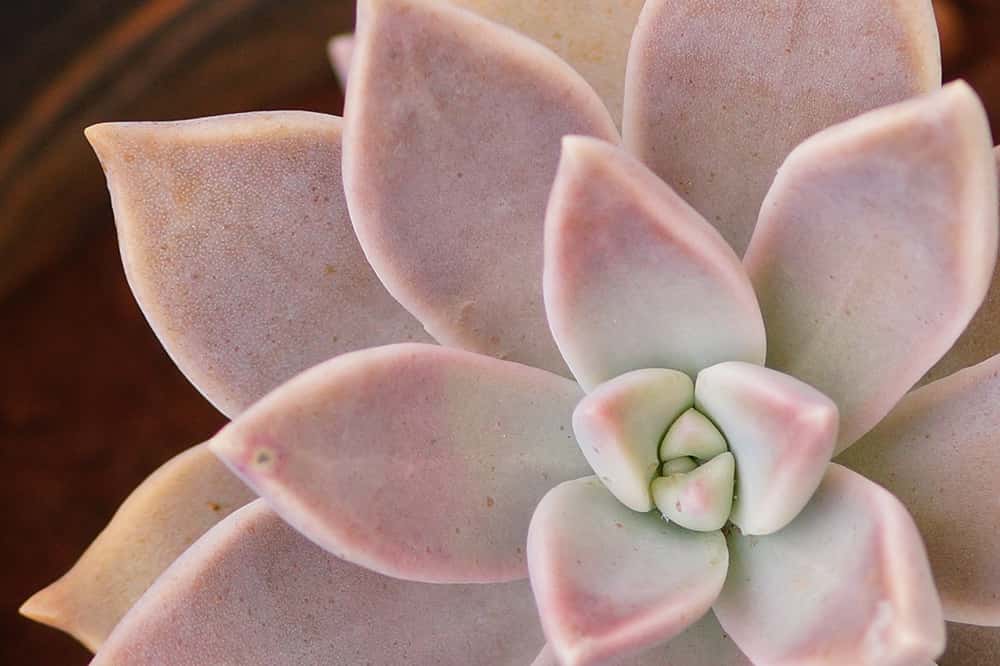
Some people call this the ‘Mother of Pearl’ plant because of the pearlescent color. Its thick spooky leaves grow in a spiral around its stem. Some people call it the Ghost Plant (Graptopetalum paraguayense), though it has relatives with brighter colors. From its botanical name, you might guess it’s a plant from Paraguay, but that’s not true either.
In fact, the only thing true about this gorgeous desert plant is that for a long time even botanists had no idea where it came from. We now know it’s native to Mexican deserts, can grow up to six feet high and that a whole plant could grow out from just a single leaf.
2. Burro’s Tail
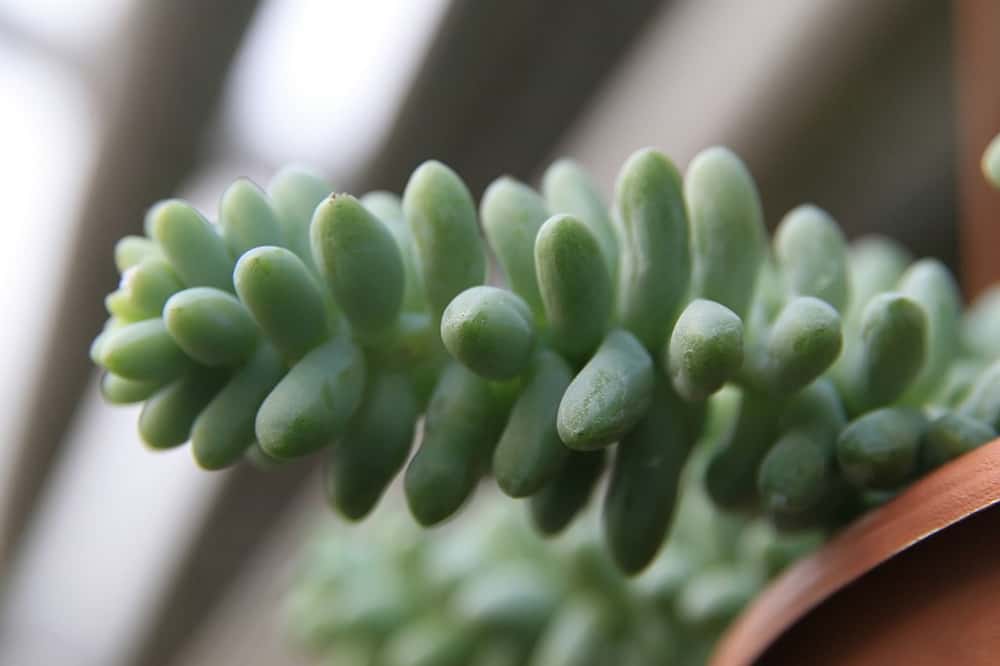
Mexicans call it cola de burro —Donkey’s Tail — because of the way it hangs down from planter bowls. In fact, the big mystery about this trailing desert succulent is that while it was abundant in nurseries Veracruz, Mexico, no one could say where it could be found in the wild. And then, in 2008, two Mexican botanists ran into a ranch owner who showed them lots and lots of Donkey’s Tails hang from the vertical cliffs of two ravines, Mayatla and Ixcacotitla. Of course, the two elderly botanists had had to climb to get their specimens.
3. Jackal Food
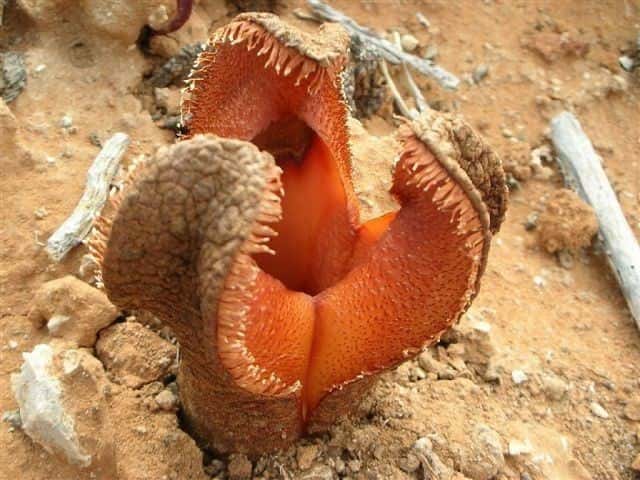
The plant called Jackal Food (Hydnora Africana) has to be one of the strangest plants in the desert world, if not the entire planet. For one, this native south African plant doesn’t have any leaves or stems. It’s a parasitic plant that grows entirely under the ground. One day, it’ll push out an alien-like fleshy orange flower above the ground. It’ll sit there like a freaked out baseball mitt, emitting a smell exactly like poop to attract beetles and other insects. When insects stray in, they get captured and digested at leisure over two days.
The flowers slowly ripen into fruits, each fruit containing about 20,000 seeds. For slow, read real slow, roughly two years.
4. Bookleaf Mallee
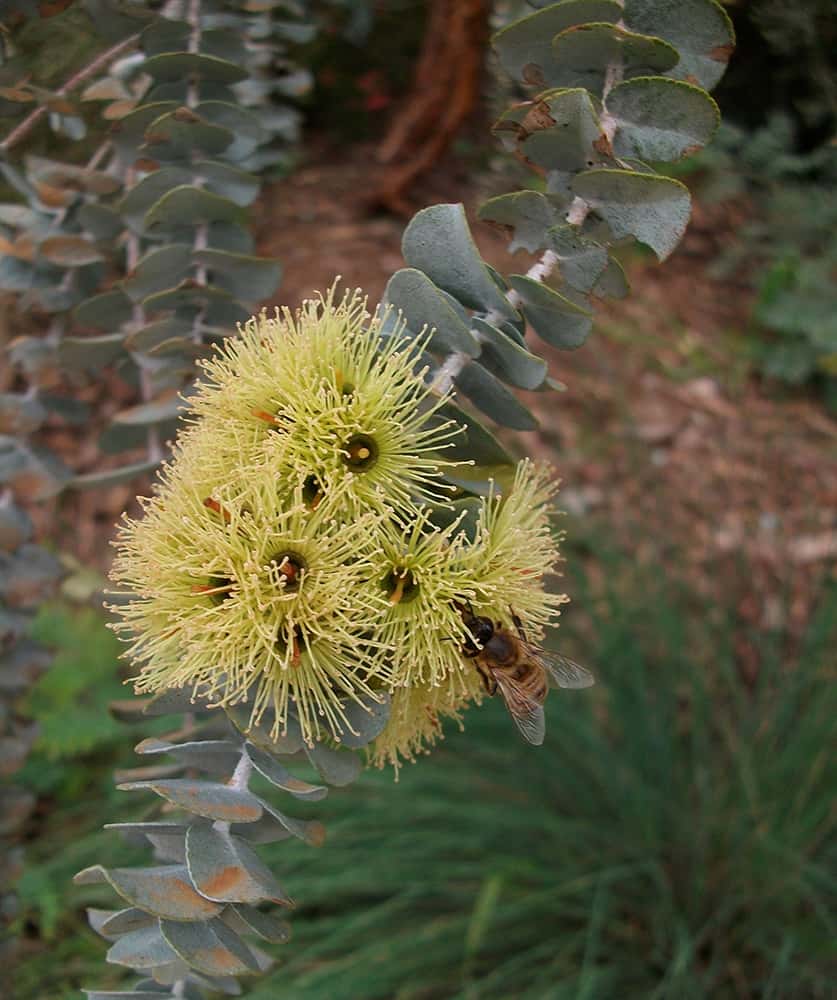
You’ll only find the Bookleaf Mallee (Eucalyptus krusseana) in western Australian deserts, and that too specifically on certain granite rocks east and southeast of Kalgoorlie. It got its Latin name after Johann August Kruse, a German analytical chemist who lived and worked in Australia in the 19th century. Crush its mysterious silver-blue leaves, arranged like a double helix around the stem, and you’ll get a most pleasant aroma. Those yellow flowers are said to be slightly bioluminous. On a good night, you might see them glowing.
5. Prickly Pear
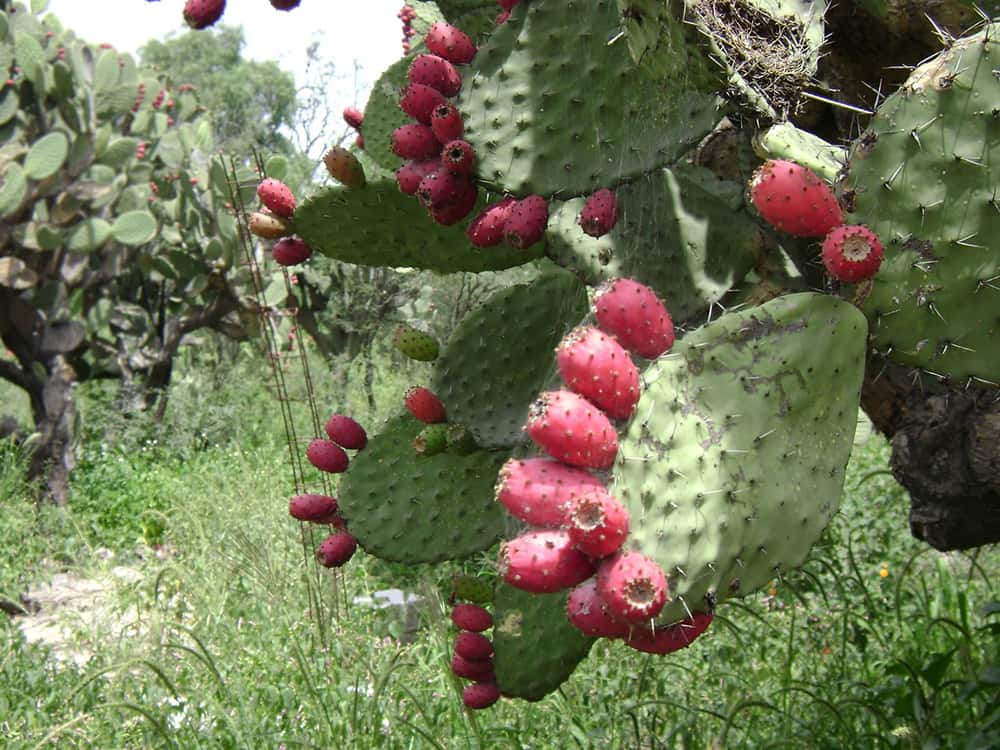
If lobster is Maine’s thing and a cheeseburger is Philly’s schtick, then for sure Arizona’s thing is its Prickly Pear (Opuntia) cactus, also known as Nopal. Come spring, cherry red fruits known as tunas bloom along the edge of its paddle-shaped stems, and Arizonans go hog crazy.
Some say tunas are the love child that came out of a marriage between the strawberry and the raspberry. An even more imaginative gourmet claimed it reminded him of a watermelon laced with bubblegum.
Like all cacti, Prickly Pears are covered with spikes, called glochids, so handle them with gloves on. You can ‘pop’ them off easily enough with a flame. It’s said that a certain old lady in the backwoods of Pima county, Arizona, still has the recipe for making Prickly Pear Sour out of the fruits, and that it makes a great cocktail with a little tequila.
6. Baja Fairy Duster
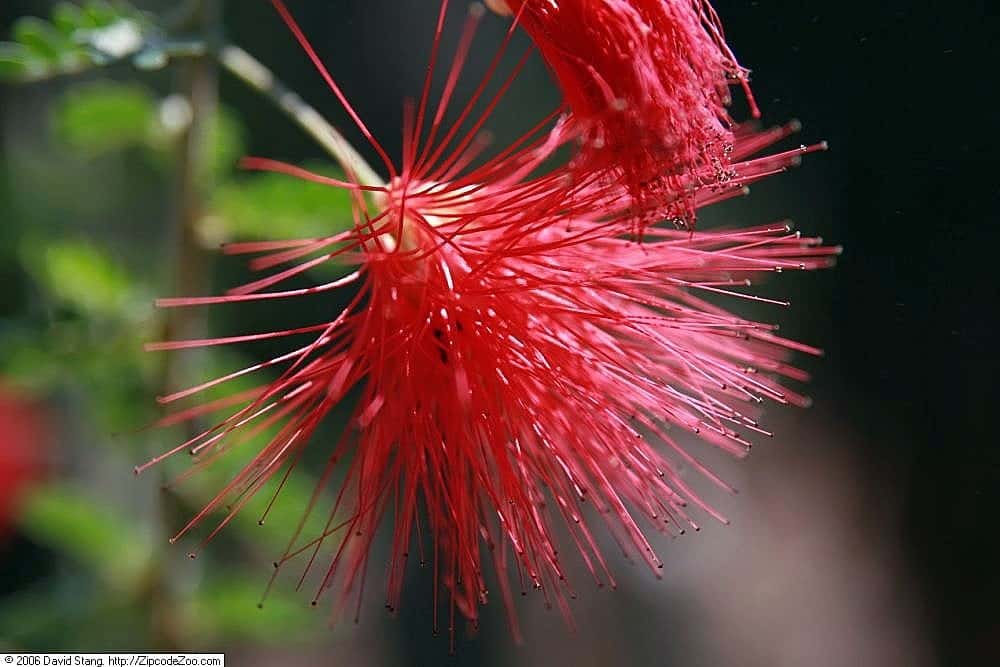
It certainly looks like the mother of all feather dusters or a close relative of a bottlebrush, but it’s actually neither. The so-called Baja Fairy Duster (Calliandra california), which can measure up to two inches in diameter when in full bloom, is actually famous for the secret powers of the flower’s extracted essence. Sold in 10 ml bottles with a dropper, it is regarded as desert medicine perfect for grounding and stabilizing folk who swing between highs and lows, are flighty and oversensitive to stimulation.
7. Agave
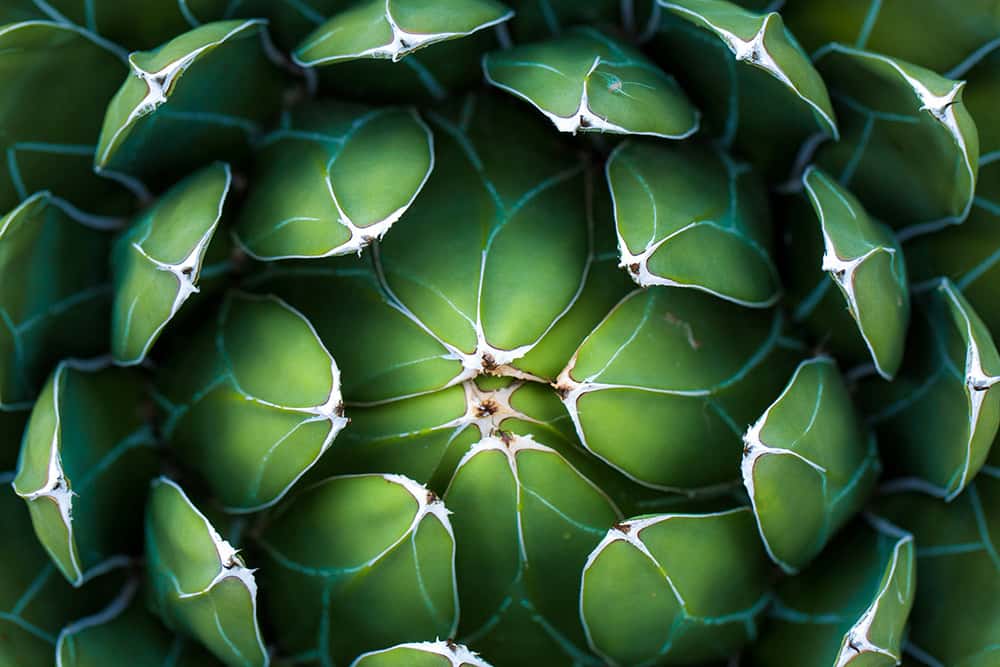
It grows really fast, takes about 12 years to mature, saves water just once in its life and survives perfectly happily even in places with zero rainfall. And once, just once, in its lifetime, the agave will throw up a tall mast-like stem that will shoot up to 40 feet and bear a bunch of tube-like flowers at the top. Which makes it one of the tallest plants on the planet.
There are over 270 species of agave and their sap is toxic — expect nasty allergies if even a drop touches your skin. The processed agave is also respected for a slew of medicinal properties.
Best of all, though, the juice of the agave — specifically, the blue agave — is specially cultivate in Mexicos’s state of Jalisco to make a well-known drink called tequila.
Oh, and no matter what anyone tells you, it’s not a cactus. The golden rule is: all cacti are succulents but not all succulents are cacti.
8. Puya Raimondii
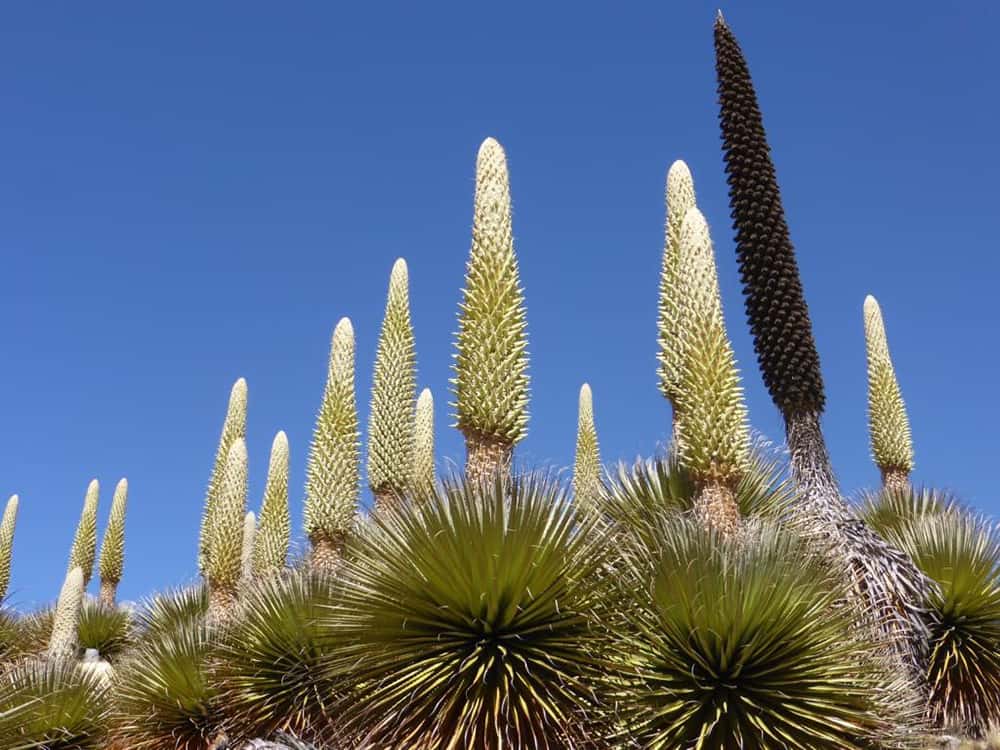
You’re looking at one of the most dramatic cacti on the planet, Puya Raimondii, also known as the Queen of the Andes. Its story starts when its little seeds are violently whipped around the mountains of the Bolivian Andes by screeching winds. Somehow one of them lodges itself in a crack in a rock somewhere between 11,000 and 12,500 feet. For the next hundred years, it grows. And grows. And grows. At this point it looks just like an average, unremarkable cactus bush though its roots would have spread in a wide circle of radius over 50 feet.
One day, around the age of 80, it decides to bloom. It sends out a javelin of flowers high into the air, spiking to almost 40 feet in a month. The outgrowth, the tallest flower spike in the world, is studded with hundreds of little Puya flowers. Birds make their nests between its stalks.
9. Pencil Succulent Plant
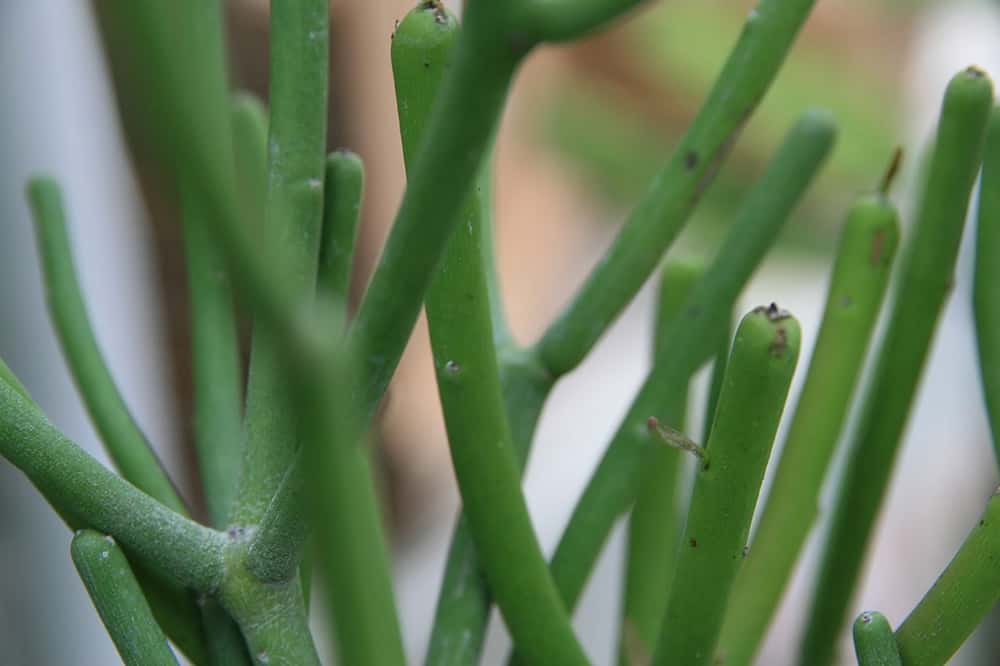
The most attractive thing about the Pencil Plant (Euphorbia tirucalli) is that it gets warmer when it gets cooler. The fresh green color of its pencil-like stems, branching out like candelabra, morph into glowing warm yellows, oranges and reds as the weather moves into winter.
Perhaps this is why it’s called the Firestick Tree in South Africa, though it is also found in the Arabian peninsula and India. It’s incorrectly called a cactus though it’s only a succulent, and they say its sap is used in African folk medicine to treat impotence and snakebites. Probably not a good idea, though, because according to botanists, the sap is definitely toxic.
10. Living Stone Lithops
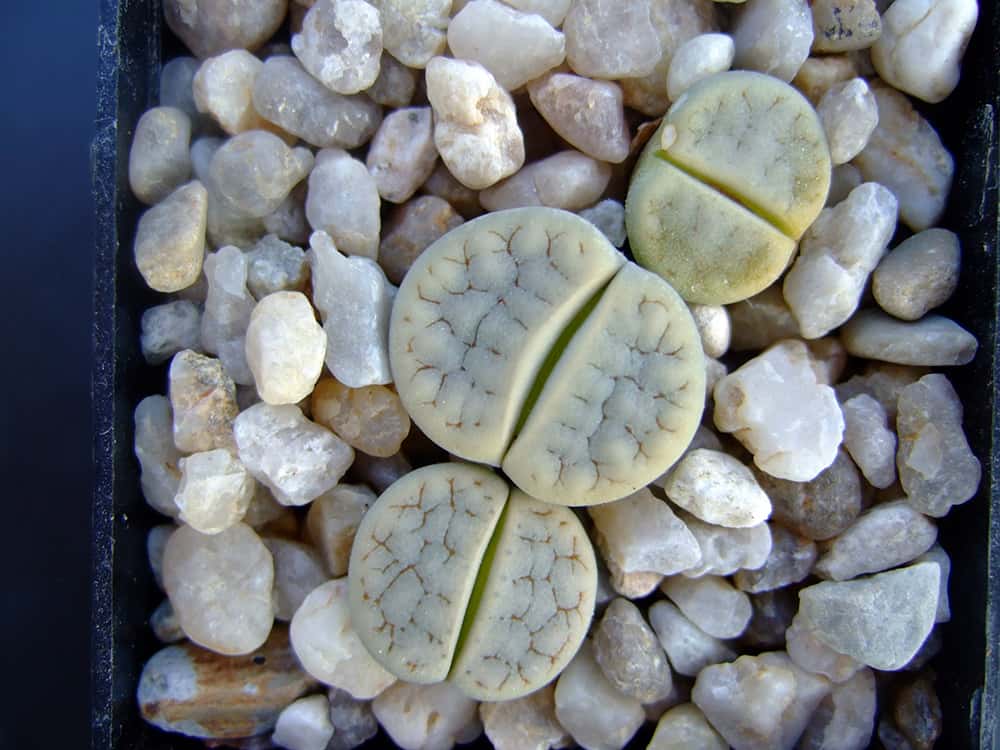
You might walk over a Lithops (Aizoaeceae) without realizing it’s not a rock at all. The Stone Plant of South Africa is an astonishing act of biomimicry. By evolving to look like the stones it grows among, the juicy succulent Lithops avoids being eaten up itself.
Think of them like little water tanks. Thanks to their ability to absorb and retain scarce water, they can thrive in areas so arid that they receive no more than four inches of rain a year. A typical plant might resemble a bar of homemade soap cut into halves but as soon as spring hits the desert, a few flowers will show up exactly along the divide.
11. Baseball Plant
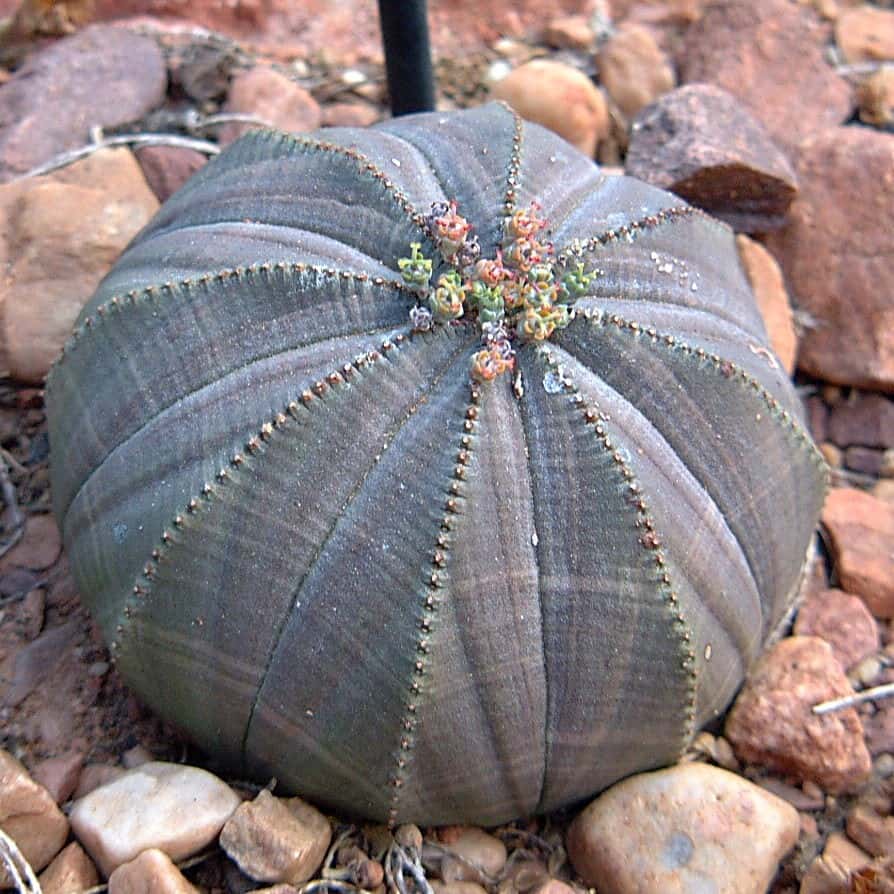
The thing about the so-called Baseball Plant (Euphorbia obese) is that it grows. Early in its life, it might be no bigger than a golf ball, and soon, a tennis ball, 1.5 to 2.5 inches in diameter. Then it gets larger, resembling a baseball. Some have been known to grow as large as 20 inches, looking more like cannonballs.
A rare plant once considered endangered, the Baseball Plant is found almost exclusively in the Karoo desert area of South Africa’s Eastern Cape province. Though each plant contains only two or three seeds, fortunately, it grows easily. Thanks to its growing popularity as a decorative household object, it has been pulled back from extinction.
12. Peacock Flower
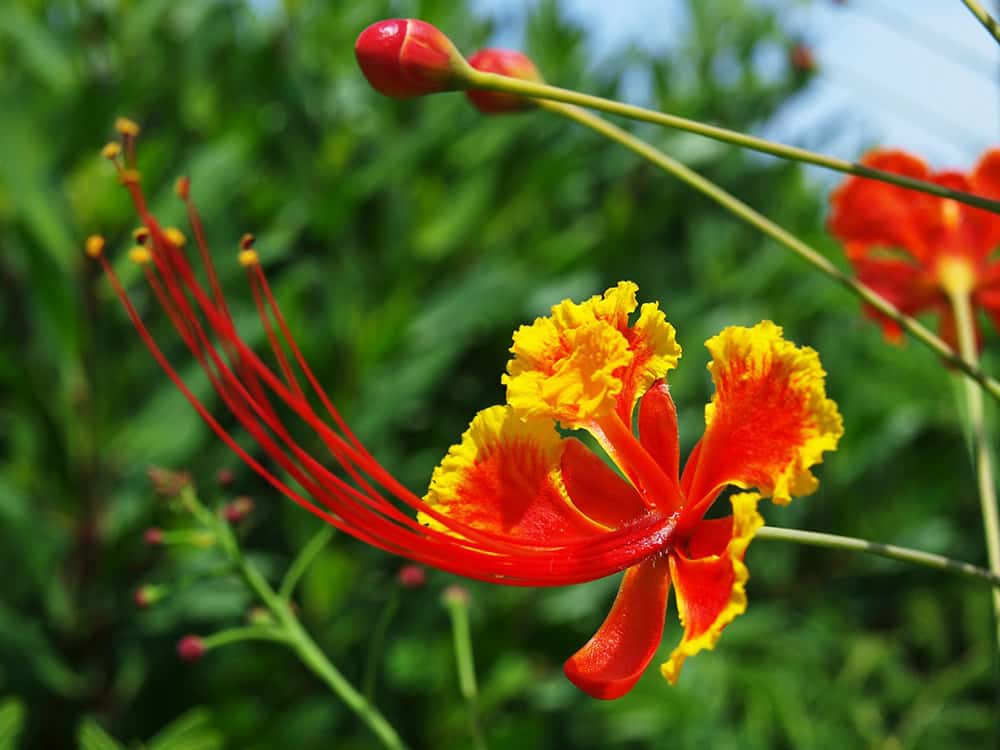
You might wonder why a flower whose colors are completely different from a peacock’s would be named after that bird. The so-called Peacock Flower (Caesalpinia pulcherrima) is indisputably gorgeous with its red, yellow and orange blooms but has none of the iridescent blues and greens of the peacock. You might prefer its other name, Red Bird of Paradise.
This perennial desert flower native to the southwest United States, can grow up to 12 feet in height, springing to full life even after completing withering away the previous winter. People often confuse it with the Gul Mohur or Poinciana of India, whose trees line avenues in Delhi. The Peacock Plant is also sometimes called a Dwarf Poinciana in acknowledgement of this resemblance.
Interesting factoid: its young green seeds are edible but become poisonous when they mature.
13. Paddle Plant
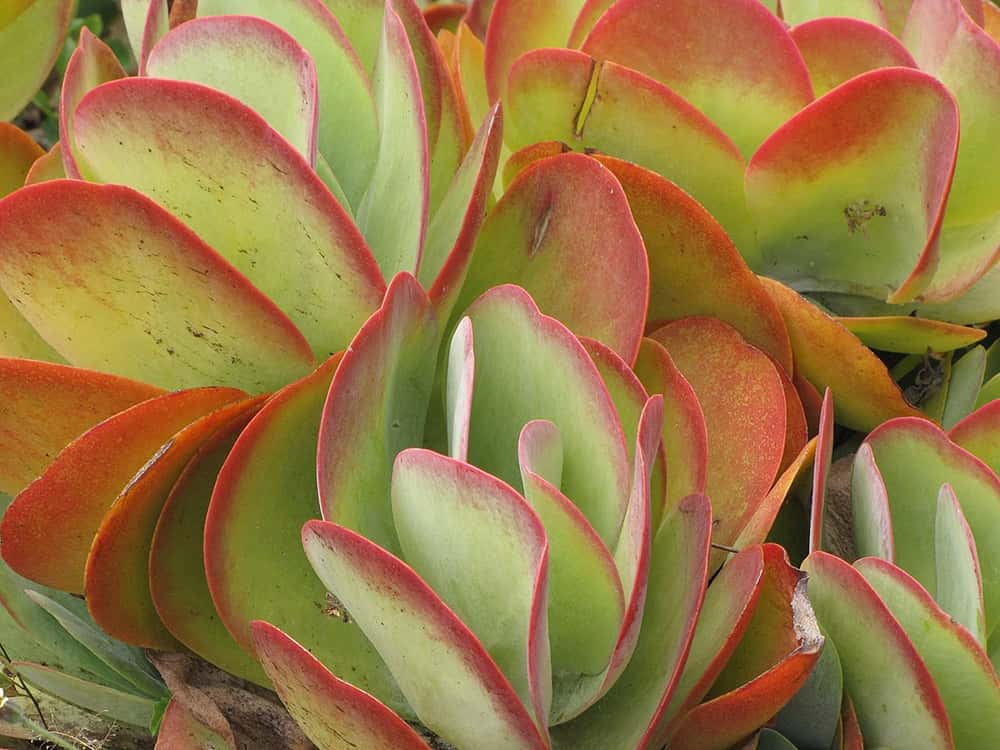
You’ll find this red and green beauty only in a country you might not have heard much about, Botswana, right next to South Africa. There, the Paddle Plant (Kalanchoe thyrsiflora) is also called the Red Pancake Plant. In fact, its distinct shape and colors seem to have fired the imaginations of many, leading to names like Bird’s Brandy, Desert Cabbage, Flapjacks, Ice Sculpture, and White Lady Kalanchoe.
Once upon a time, it used to be found only in the tropics of Madagascar and parts of Asia but in 1927 a German seed merchant, Robert Blossfeld, came upon it at an exposition in Paris. He began to sell Kalanchoe blossfeldiana, humbly named after himself. Soon other botanists found other species of Kalanchoe.
Interesting factoid: you’ll see lots of them in China around Chinese New Year. They’re considered symbols of wealth and prosperity.
14. Crassula Buddha’s Temple
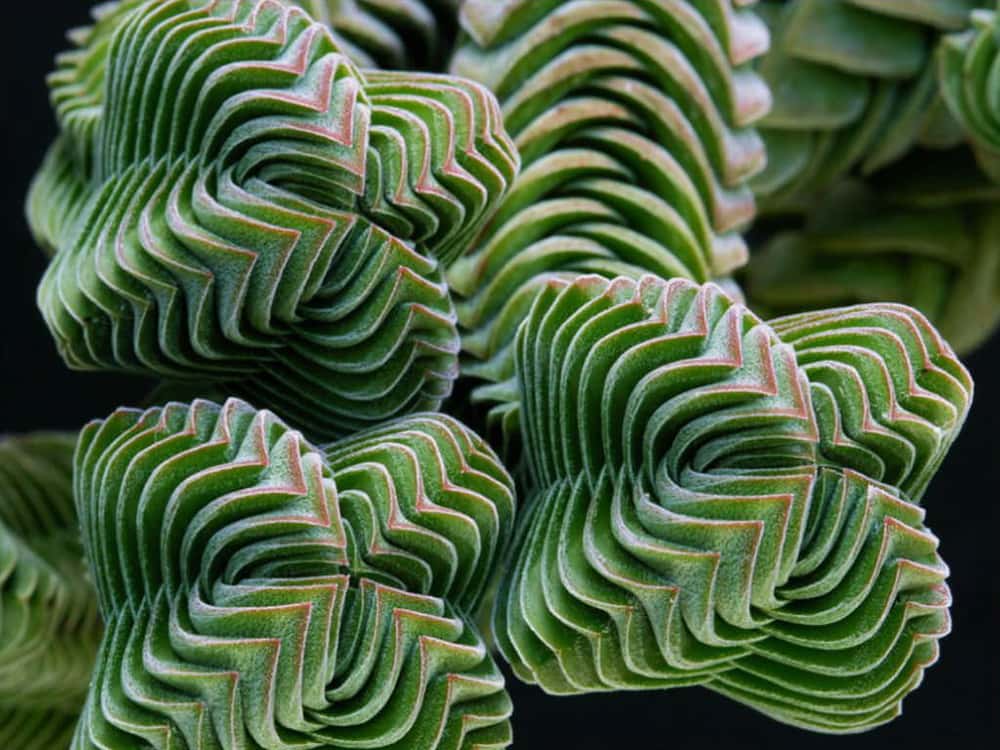
They might remind you a some strange building on planet Tatooine in a Stars Wars sequel with their neat, geometrically stacked leaves. In fact, somewhere in the mists of antiquity, these leaves must have reminded some passing oriental of a temple. And thus was born Crassula Buddha’s Temple (Crassulaceae).
No known connection with China, Chinamen, the Buddha or temples. The plant is native to the hot deserts of Mozambique in South Africa.
15. Silver Torch Cactus
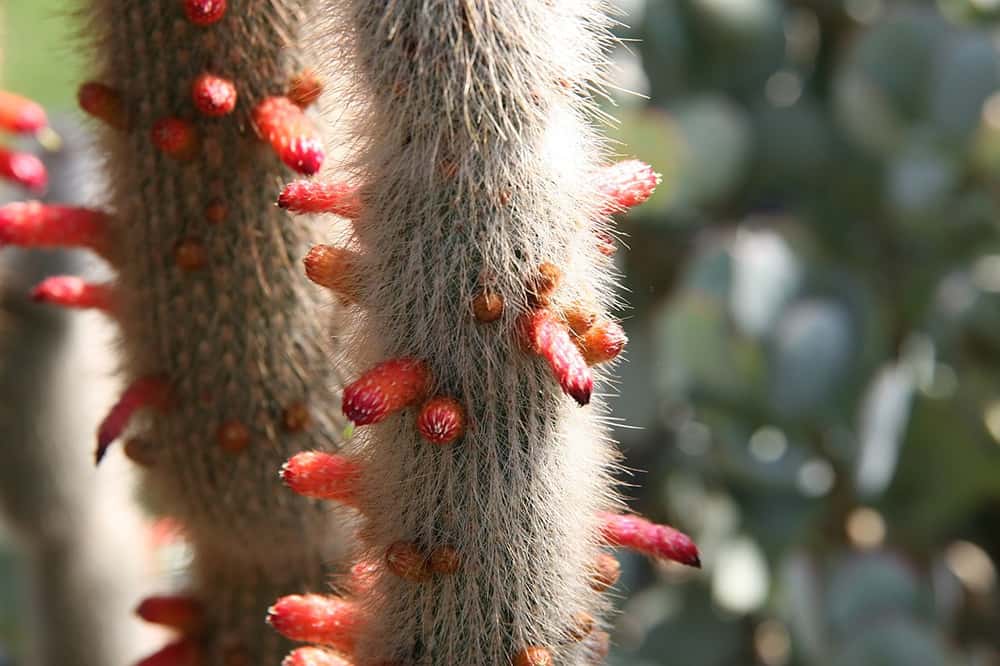
You’re going on your usual walk through the arid part of Bolivia called Tarija. You come upon a slender, hairy, cactus, silvery grey-green, tall but unremarkable. You’ve seen more and better cactuses in your life, so you walk on. Pity.
The so-called Silver Torch cactus (Cleistocactus strausii) becomes eye-candy only once in its life, after being around for about 15 years. If you’re still going for your walks then, you’ll pretty, deep red or burgundy flowers sticking out horizontally from the stem, some of them up to 4 inches long. Yes, you’ll want to eat them.
It’s not toxic and it’s a free world so no one can stop you from eating them. It won’t taste like candy, promise, but maybe you’re one of those people who enjoys allergies.
16. Welwitschia Mirabilis
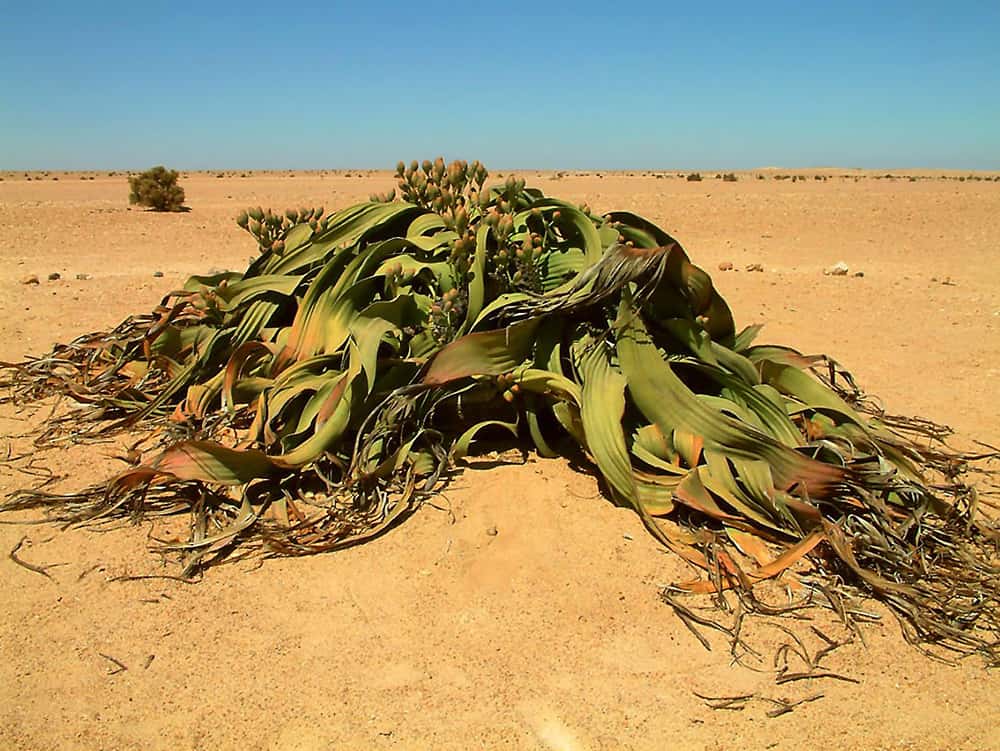
There are several reasons why you should feel a sense of reverence standing in front of the Welwitschia mirabilis, also known as Tree Tumbo. For one, it has a life span of 2,000 years and is thought to have developed in the Jurassic period.
Then, it’s the only plant in its genus. You can only find it in the middle of nowhere, namely in the Namib Desert that spans Namibia and Angola in south Africa. In fact, you’ll only find them along a strip about 600 miles long from Namibia’s Kuiseb River to southern Angola’s Mossamedes.
Oh, one more thing. That must look like a lot of leaves but in fact, this plant only produces two leaves. Two very very long leaves that just never stop growing out.
17. Kangaroo Paw
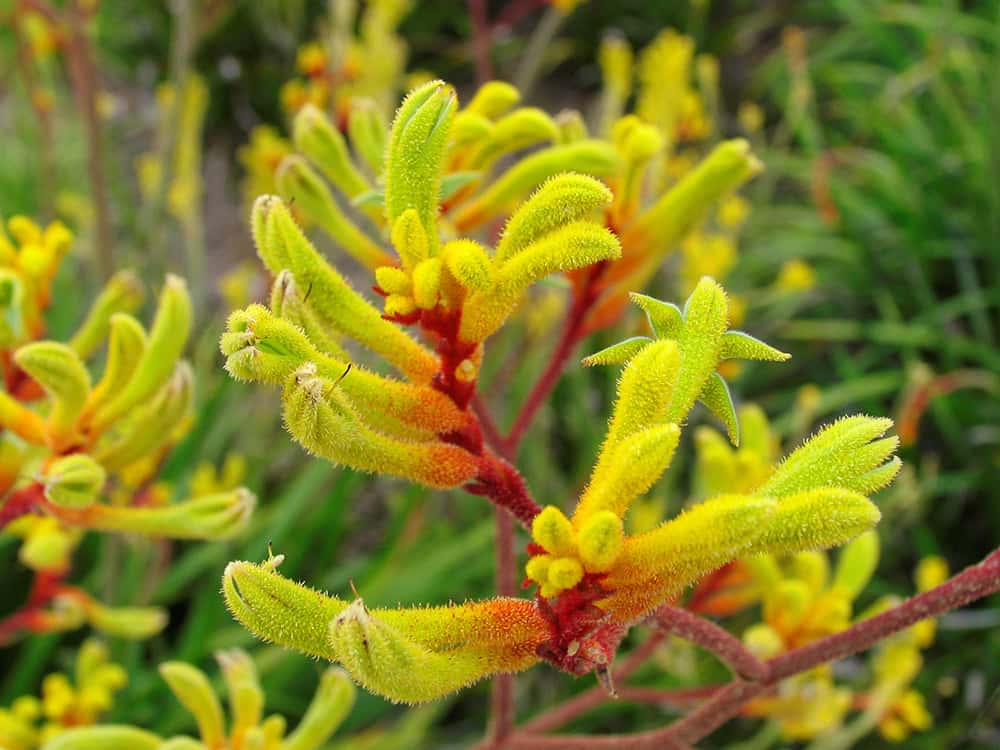
Its flowers kinda look like kangaroo paws which might explain why this native Australian plan is called, um, Kangaroo Paw (Anigozanthos). There are a number of different species in this family and they come in different colors, ranging from yellow, orange and red to pink and purple. Odd factoid: the cooler the weather, the brighter, warmer and more vibrant its colors. Research and tinkering in the labs have now added new colors like blue and lilac to these plants.
Look out for a particularly gorgeous Kangaroo’s Paw species, colored ivy green and Santa Claus Red, just as if it was Christmas again. The Anigozanthos manglesii, also called Kurulbrang, is native to Western Australia province and also the floral emblem of that state.
18. Queen of the Night
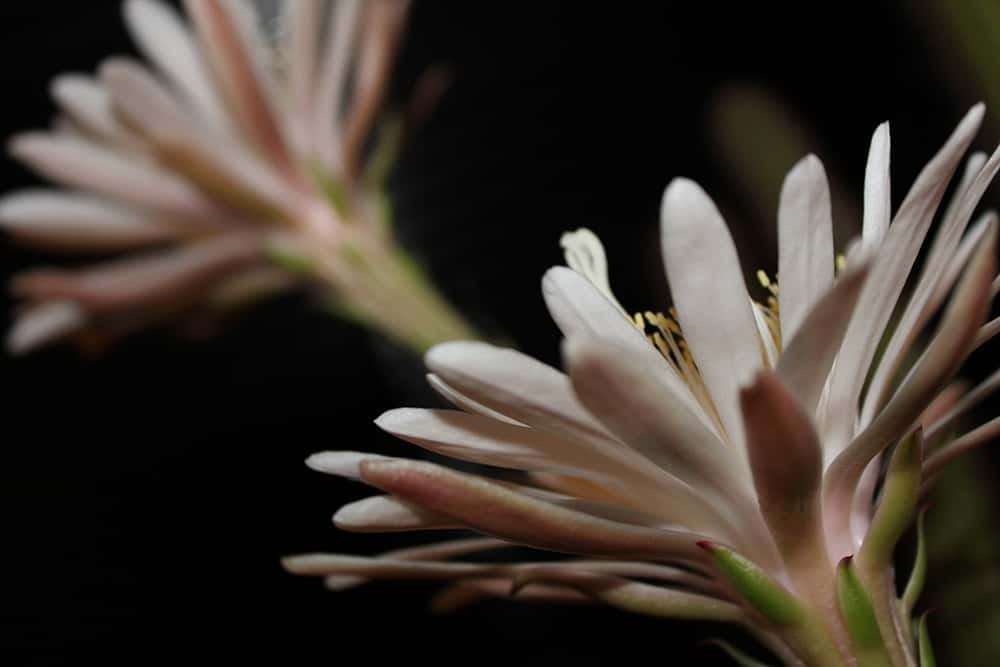
If you’re an early sleeper, you might never see a Queen of the Night (Cereus cactus) flower at all in your life. Especially if you don’t happen to live in the Sonora Desert of Arizona. The Cereus genus has about seven night-blooming cacti, all of them climbers that won’t produce a flower till they’re about five years old.
But those magnificent flowers! To live for!
A typical flower can measure up to seven inches across and blooms only at night, around 9 pm, coming fully open by midnight. By morning, alas, it will have withered and died. But while it’s awake and alive and you’re sound asleep, the Queen of the Night will fill the air around your house with the smell of heaven itself.

Leave a Reply