
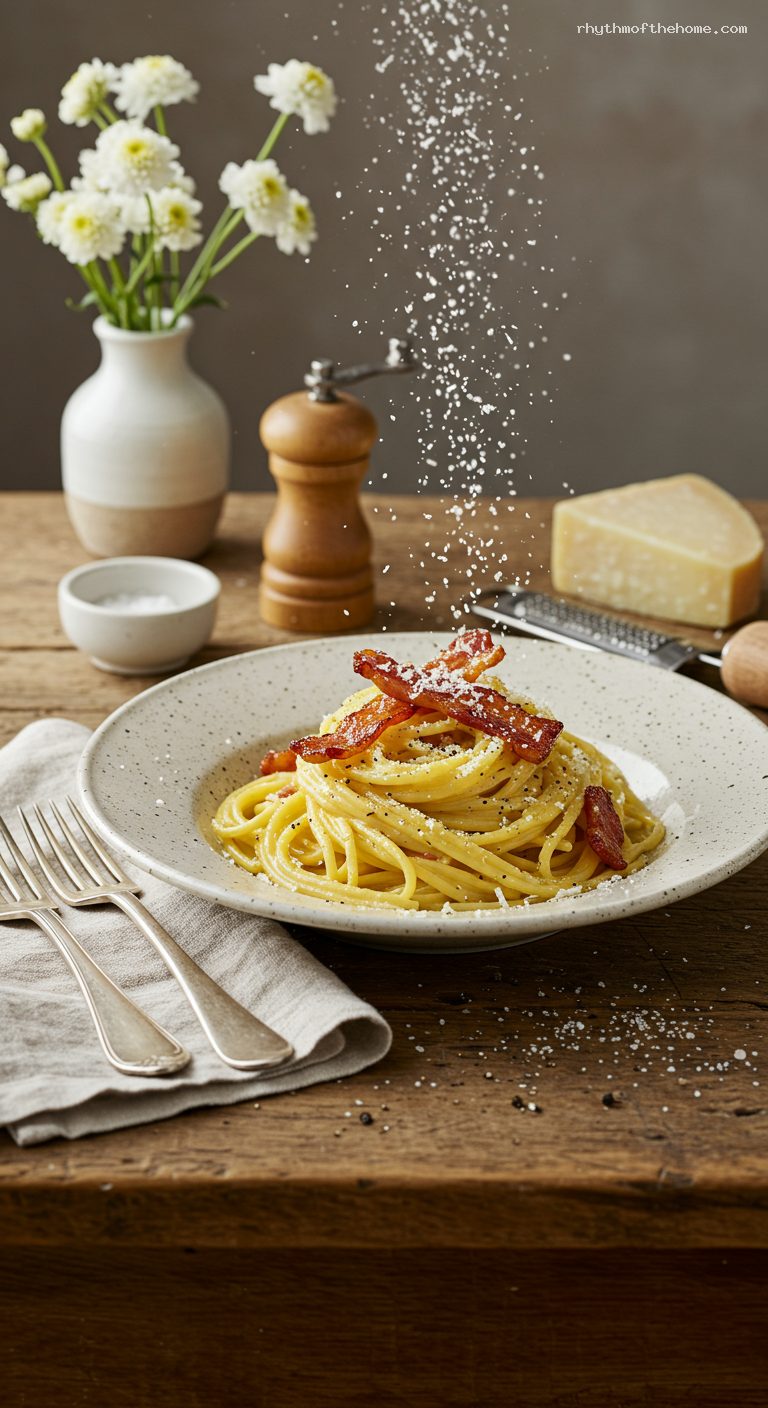
Quick Recipe Version (TL;DR)
Quick Ingredients
- 12 oz (340 g) spaghetti
- 4 oz (115 g) guanciale, cut into 1/4-inch batons
- 2 large eggs + 2 large egg yolks (room temp)
- 1 cup (80 g) very finely grated Pecorino Romano, plus extra to serve
- 2 tsp freshly ground black pepper, plus extra to serve
- 1 tbsp kosher salt (for pasta water)
- Up to 1 cup (240 ml) hot reserved pasta water
Do This
- 1. Whisk eggs, yolks, Pecorino, and pepper into a thick, smooth paste; set aside.
- 2. Boil 4 quarts (3.8 L) water; add 1 tbsp kosher salt. Cook spaghetti until al dente (9–10 minutes). Reserve 1 cup pasta water.
- 3. Render guanciale in a 12-inch skillet over medium heat until crisp, 6–8 minutes. Transfer pieces to a bowl; leave fat in the pan.
- 4. Add drained pasta to the skillet; toss to coat in guanciale fat, then remove pan from heat and let it cool for 30–60 seconds.
- 5. Off heat, whisk 2 tbsp hot pasta water into the egg-cheese paste to temper, then pour over pasta, tossing vigorously. Add hot pasta water a splash at a time until glossy and creamy (aim for 150–155°F if using a thermometer).
- 6. Fold in guanciale. Finish with more Pecorino and pepper. Serve immediately.
Why You’ll Love This Recipe
- True Roman technique: silky egg-and-cheese emulsion, no cream needed.
- Ultra-glossy, peppery sauce that clings to every strand.
- Simple pantry ingredients, restaurant-quality results in 25 minutes.
- Fail-safe temperature and timing cues for confident cooking.
Grocery List
- Produce: None required
- Dairy: Pecorino Romano; eggs
- Pantry: Spaghetti; black pepper; kosher salt; guanciale (cured pork jowl)
Full Ingredients
For the egg-and-cheese emulsion
- 2 large eggs (room temperature)
- 2 large egg yolks (room temperature)
- 1 cup (80 g) Pecorino Romano, very finely grated (Microplane-fine), plus more for serving
- 2 tsp freshly ground black pepper (medium-coarse grind), plus more to taste
For the pasta and guanciale
- 12 oz (340 g) spaghetti
- 1 tbsp kosher salt (for the pasta water)
- 4 oz (115 g) guanciale, cut into 1/4-inch batons
To finish
- 3/4 to 1 cup (180–240 ml) hot reserved pasta water, as needed
- Extra Pecorino Romano and black pepper, to serve
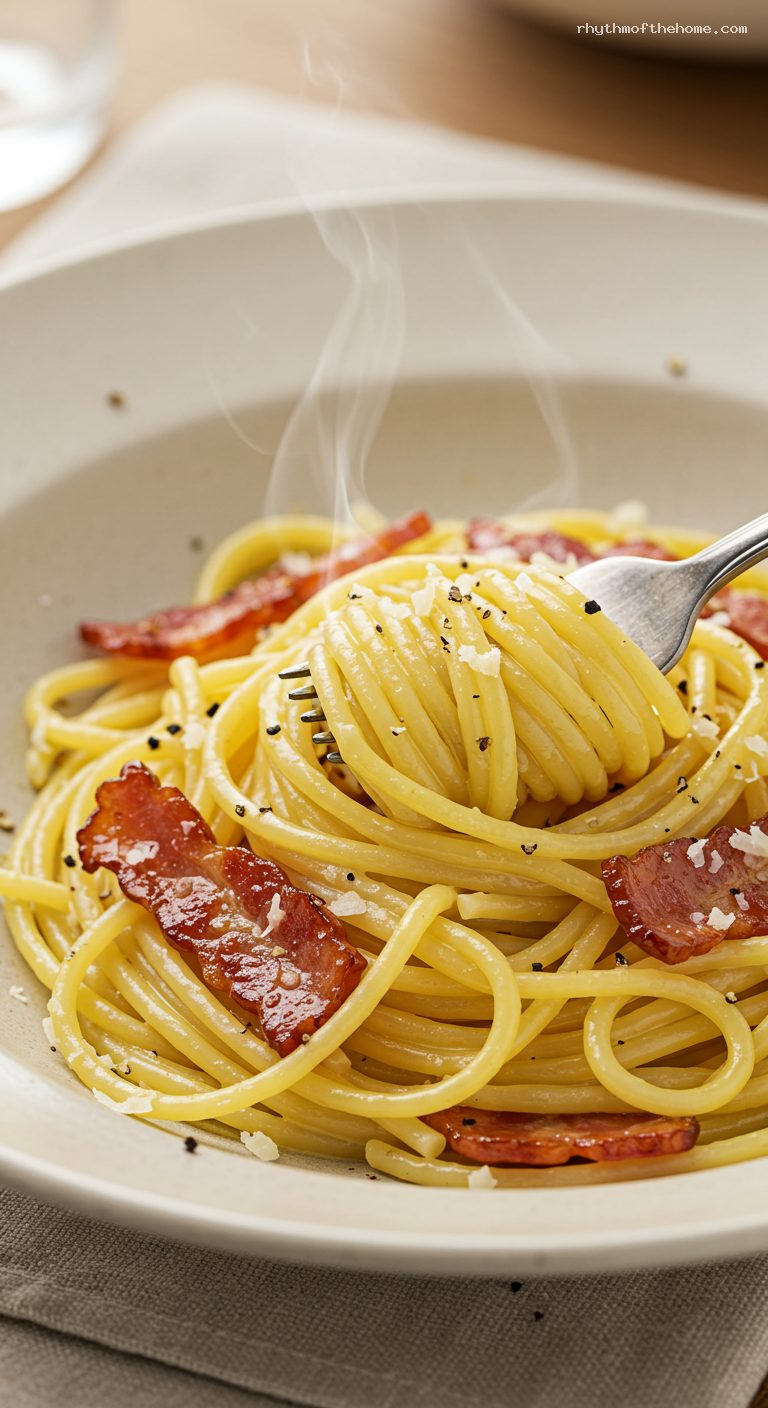
Step-by-Step Instructions
Step 1: Make the egg, cheese, and pepper base
In a medium bowl, whisk together the eggs, yolks, Pecorino, and black pepper until completely smooth and thick, about 30–45 seconds. It should resemble a spreadable paste with no lumps. Set near the stove so it is ready the moment the pasta is cooked.
Step 2: Boil the pasta and reserve starchy water
Bring 4 quarts (3.8 L) of water to a rolling boil. Add 1 tablespoon kosher salt. Drop in the spaghetti and cook until al dente, 9–10 minutes or as directed on the package, stirring a few times to prevent sticking. Before draining, dip out 1 cup (240 ml) of the starchy cooking water and keep it hot. Drain the pasta but do not rinse.
Step 3: Render the guanciale until crisp
While the pasta cooks, place guanciale in a dry 12-inch skillet over medium heat. Cook, stirring occasionally, until the fat renders and the pieces are crisp with mahogany edges, 6–8 minutes. Use a slotted spoon to transfer guanciale to a bowl; leave all the rendered fat in the pan. Optional but delicious: bloom a pinch of the ground pepper in the hot fat for 20–30 seconds, then take the pan off the heat.
Step 4: Coat the pasta in guanciale fat off heat
Transfer the drained spaghetti to the skillet with the guanciale fat and toss to coat. Remove the skillet from the heat and let it cool for 30–60 seconds so it is hot but not sizzling. If using an instant-read thermometer, aim for the pasta/pan environment to be around 150–155°F (65–68°C) to avoid scrambling eggs.
Step 5: Emulsify the sauce with controlled heat
Whisk 2 tablespoons of the hot pasta water into the egg-cheese mixture to temper. Pour this mixture over the pasta off heat, tossing vigorously with tongs. Add more hot pasta water, 2–3 tablespoons at a time, tossing constantly, until the sauce loosens, turns glossy, and clings to the spaghetti strands, about 60–90 seconds. Keep the temperature under 155°F; if it thickens too quickly or looks curdled, add a splash of warm water and keep tossing off the heat.
Step 6: Fold in the guanciale and adjust
Add the crisp guanciale back to the pan and toss. Adjust with a final spoonful or two of hot pasta water for a creamy, flowing consistency. Taste and add more black pepper and Pecorino if desired. The sauce should be silky and coat the pasta without pooling.
Step 7: Plate and serve immediately
Twirl portions into warm bowls. Shower with additional Pecorino and a last grind of black pepper. Serve at once while glossy and hot.
Pro Tips
- Use very finely grated Pecorino (Microplane-fine). Powdery cheese melts smoothly and prevents graininess.
- Temperature is everything: toss off heat and keep the mixture below 155°F (68°C) to avoid scrambling. If nervous, toss the pasta in a large metal bowl instead of the hot pan.
- Reserve more pasta water than you think. The starchy liquid is your “cream” and controls the sauce texture.
- Grind pepper fresh and medium-coarse for maximum aroma; blooming a pinch in the guanciale fat adds depth.
- Use pasteurized shell eggs if you’re concerned about food safety, and work quickly so the carryover heat gently cooks the eggs.
Variations
- Pancetta or bacon swap: If you can’t find guanciale, use 4–5 oz pancetta or thick-cut bacon. Flavor will be slightly less rich but still delicious.
- Cheese blend: Use a 50/50 mix of Pecorino Romano and Parmigiano Reggiano for a mellower, nutty profile.
- Short-pasta twist: Try rigatoni or mezze maniche for a heartier bite; cook to a firm al dente so the sauce clings inside the tubes.
Storage & Make-Ahead
Carbonara is at its best immediately after tossing; the sauce thickens as it cools. For short holds (up to 15 minutes), keep the pasta in the pan off heat and refresh with a splash of hot water while re-tossing. Leftovers can be refrigerated up to 1 day; reheat very gently in a nonstick skillet over low heat with a few tablespoons of hot water, tossing just until creamy again (1–2 minutes). Do not microwave on high or you may scramble the eggs. Make-ahead: dice guanciale and grate cheese up to 3 days ahead; store cheese airtight and guanciale covered in the fridge. Bring eggs to room temperature before cooking for the silkiest emulsion.
Nutrition (per serving)
Approximate values: 590 calories; 25 g fat; 63 g carbohydrates; 27 g protein; 2 g fiber; 980 mg sodium. Values will vary based on exact ingredients and saltiness of guanciale and cheese.

Leave a Reply