
Dutch Colonial homes offer a timeless exterior style that blends historic charm with inviting simplicity. Defined by their iconic gambrel roofs, symmetrical facades, and balanced proportions, these homes create a striking yet welcoming street presence. Exterior details such as flared eaves, shuttered windows, divided light panes, and centered entryways framed by modest porticos enhance their classic appeal. Traditional materials like brick, painted clapboard, and natural stone reinforce a sense of craftsmanship and durability. Thoughtful decor choices, including lantern style lighting, paneled front doors, and carefully curated landscaping, elevate the architectural character while preserving the home’s heritage inspired elegance.
1. The Brick and Shingle Dutch Colonial Home
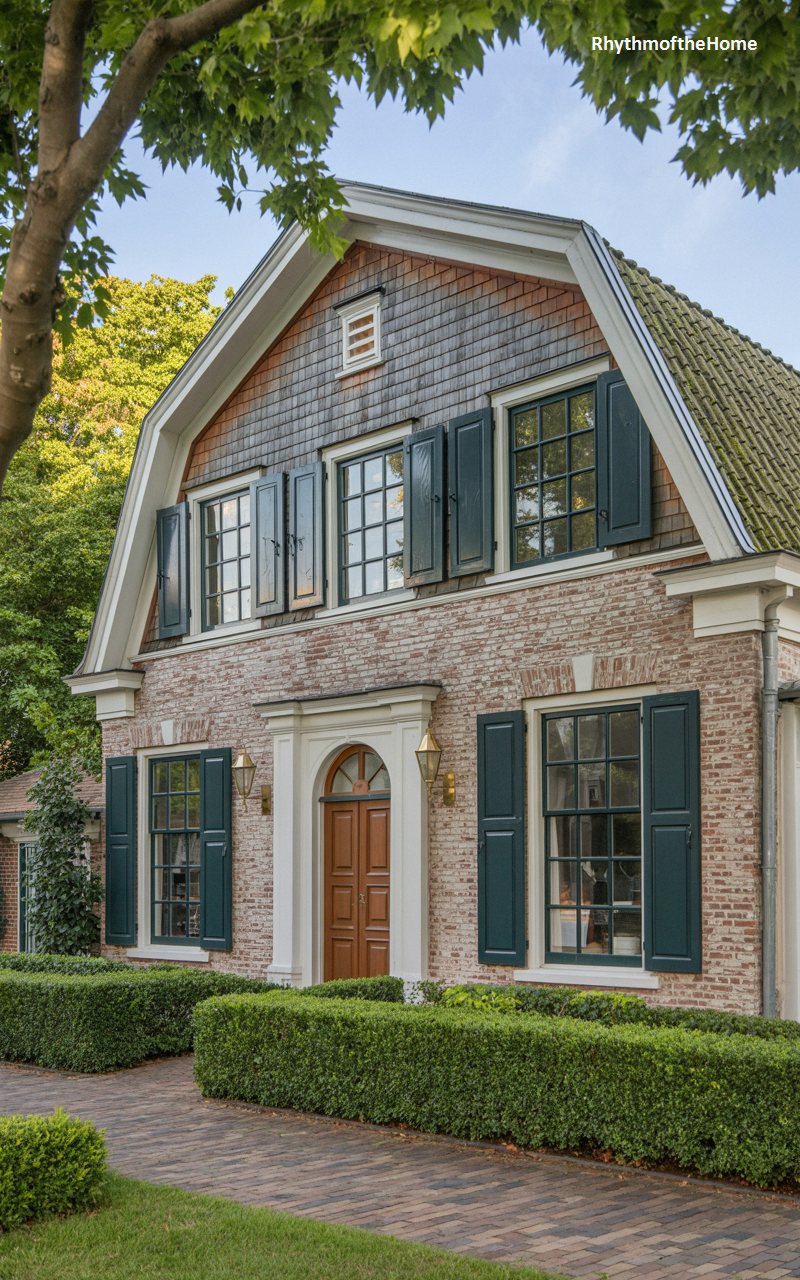
This residence perfectly marries rustic textures with a stately architectural presence, featuring a facade of distressed brick that transitions into a gambrel roof clad in weathered wood shingles. The flared eaves, a hallmark of the style, extend gracefully over the first floor, creating a slight overhang that adds depth to the structure. Dark green shutters frame the multi-paned windows, providing a handsome contrast against the earth tones of the masonry and wood. A classic white portico with a fanlight above the rich wooden door welcomes visitors, while manicured boxwood hedges and a herringbone brick walkway ground the home in a sense of established elegance.
2. The Ivy-Clad Cottage Dutch Colonial Home
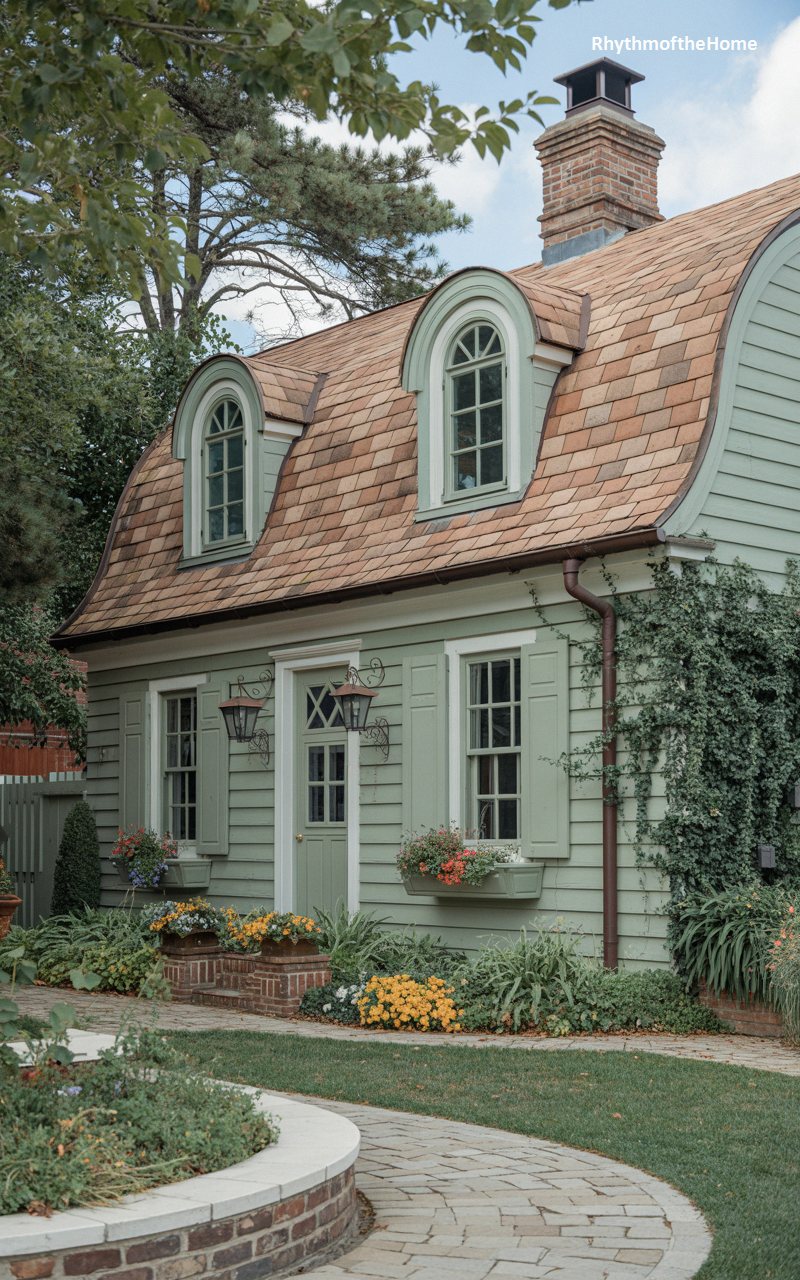
Exuding the charm of a storybook retreat, this enchanting structure features a distinctively curved gambrel roof covered in warm, terracotta-hued shingles. Two prominent arched dormers break the roofline, adding height and light to the upper level, while the pale green siding softens the exterior aesthetic. A robust brick chimney rises confidently from the side, suggesting a cozy hearth within. Nature embraces the architecture here, with thick ivy climbing the right side of the facade and colorful flower boxes overflowing beneath the windows. The scene is completed by a winding stone path and lush garden beds, creating an inviting, picturesque atmosphere.
3. The Stately Manor Dutch Colonial Home
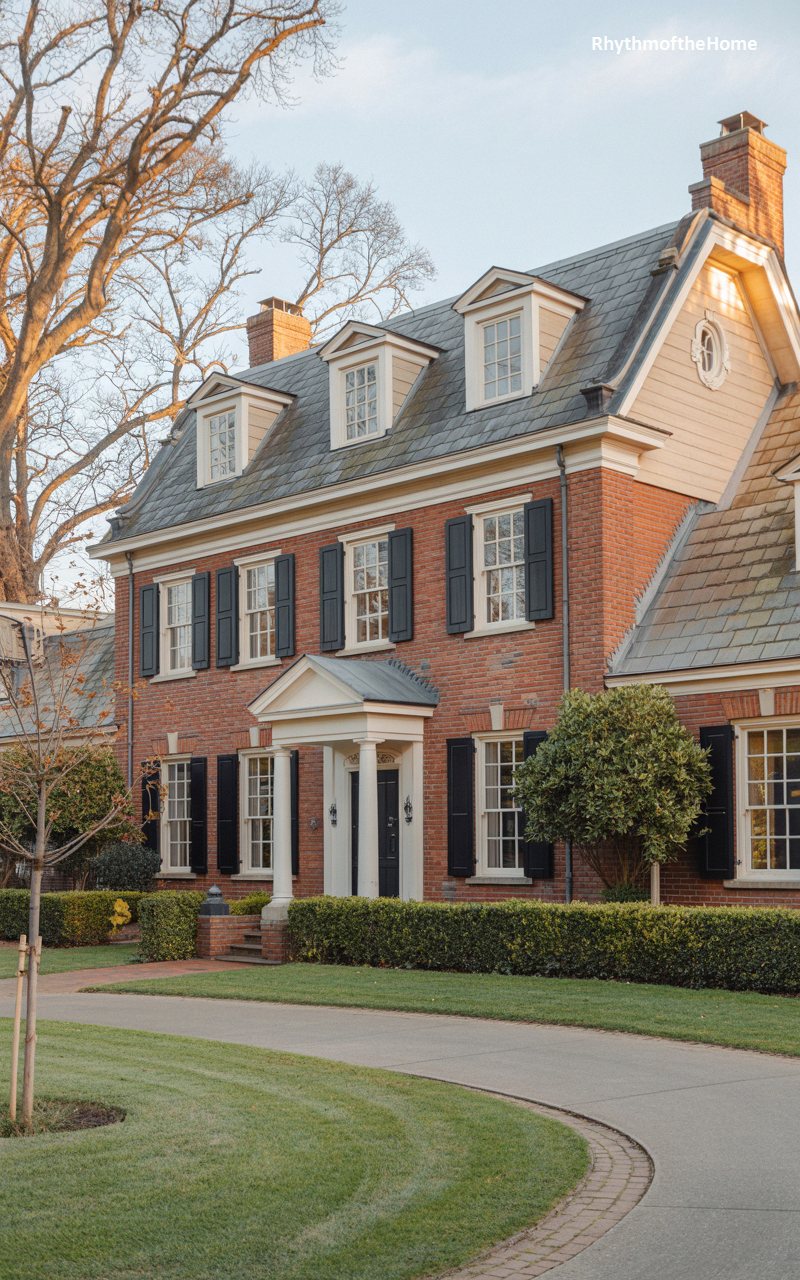
This grand estate showcases the more formal evolution of the architectural style, defined by an expansive red brick facade and a steep, slate-grey gambrel roof. The roofline is punctuated by three classic dormers with white trim, which balance the substantial mass of the home. Black louvered shutters flank the numerous sash windows, creating a rhythmic visual pattern across the front. A central, columned portico serves as the focal point, sheltering the main entrance and adding a touch of Neoclassical influence. The property is framed by towering, bare-branched trees and manicured low hedges, emphasizing the home’s impressive scale and symmetry.
4. The Modern Rustic Dutch Colonial Home
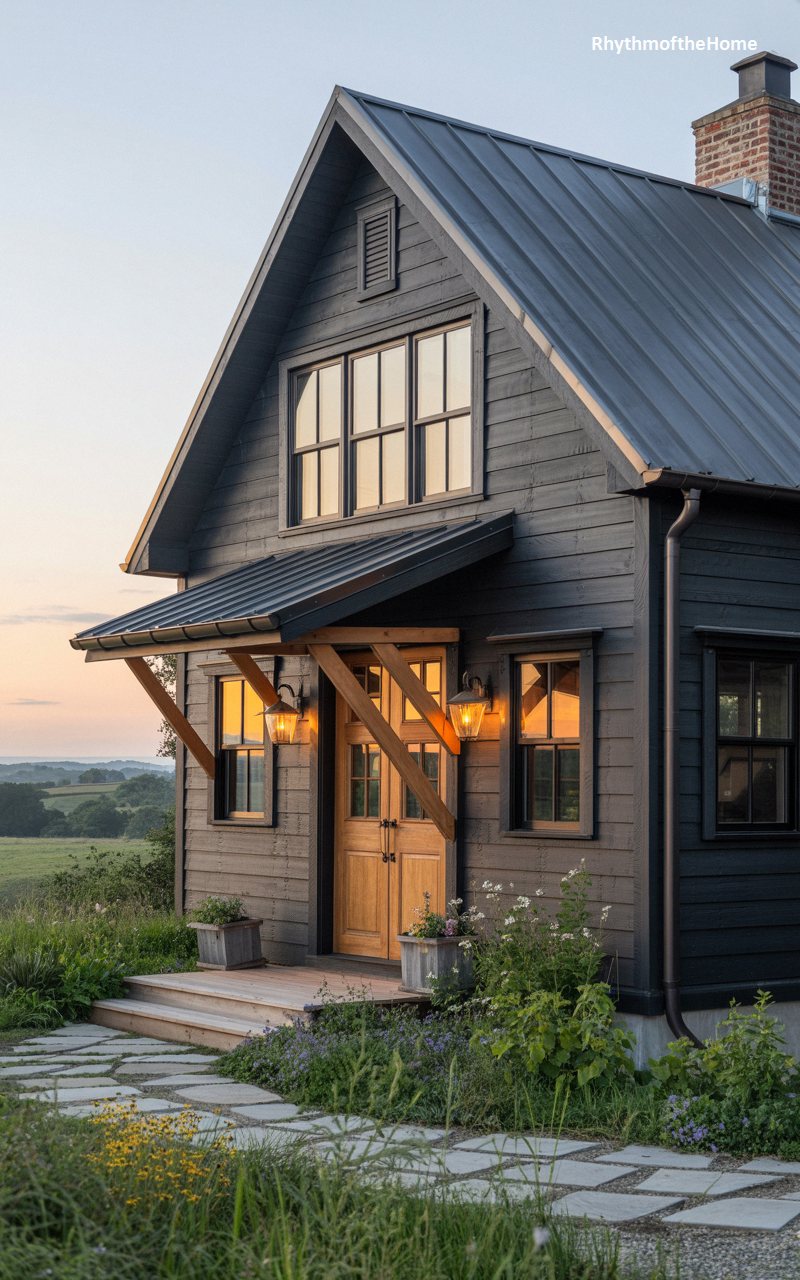
Reimagining traditional forms for a contemporary setting, this home features a sharp, steeply pitched roof clad in dark metal standing seams, offering a striking silhouette against the twilight sky. The exterior is wrapped in dark, moody horizontal siding that contrasts beautifully with the warm glow of the interior lights spilling through large, multi-paned windows. An inviting timber-framed porch extends from the front, supported by angled wooden beams that add a craftsman touch. The setting is serene and pastoral, with wild grasses and stone pathways leading up to the entrance, capturing a blend of historic inspiration and modern rural living.
5. The Hamptons Style Dutch Colonial Home
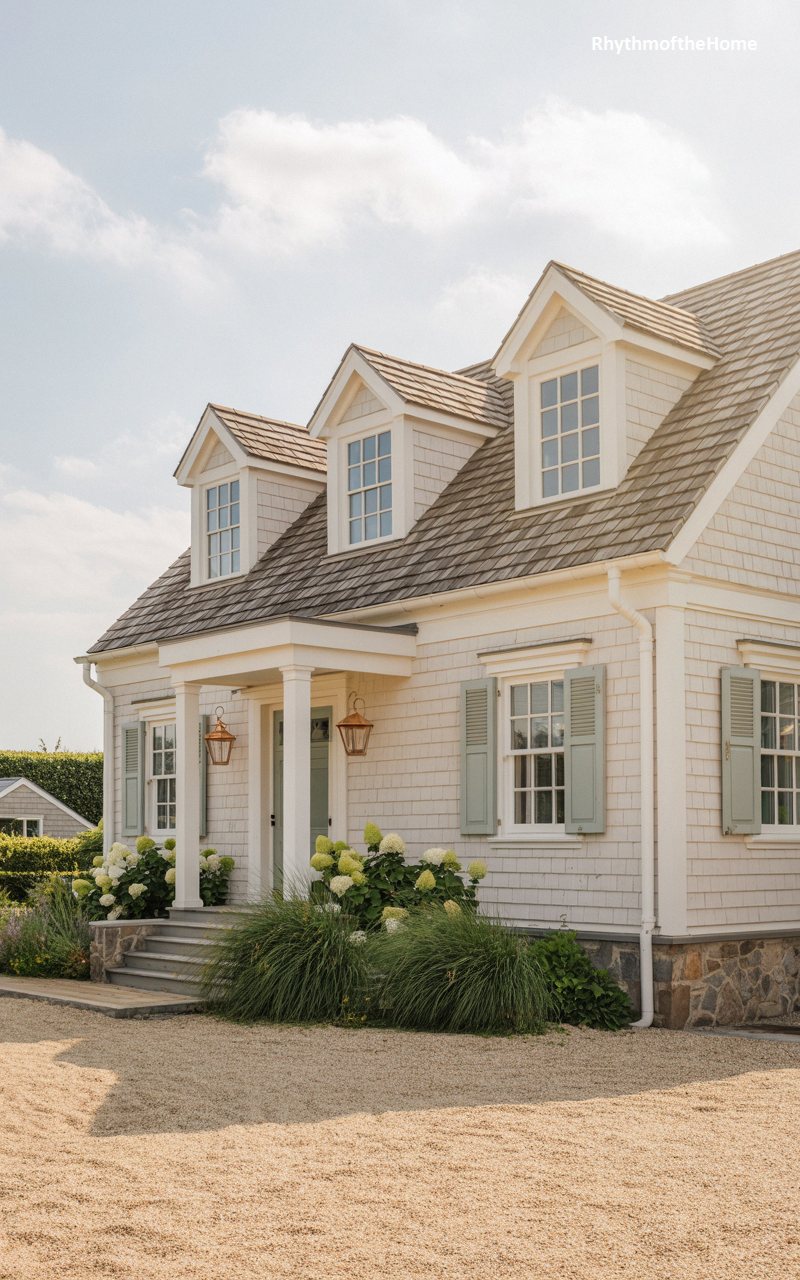
Capturing the essence of coastal luxury, this residence features crisp white cedar shake siding and a complex roofline with multiple gables and varied pitches. The wood-shingled roof is textured and earthy, grounding the pristine white walls. Three identical dormer windows peer out from the upper level, adding symmetry and charm. The entrance is understated yet elegant, with copper lanterns flanking the door and a welcoming overhang supported by square columns. Lush white hydrangea bushes and tall ornamental grasses line the foundation, softening the transition between the architecture and the pea-gravel driveway, evoking breezy summer days by the sea.
6. The Lakeside Blue Dutch Colonial Home
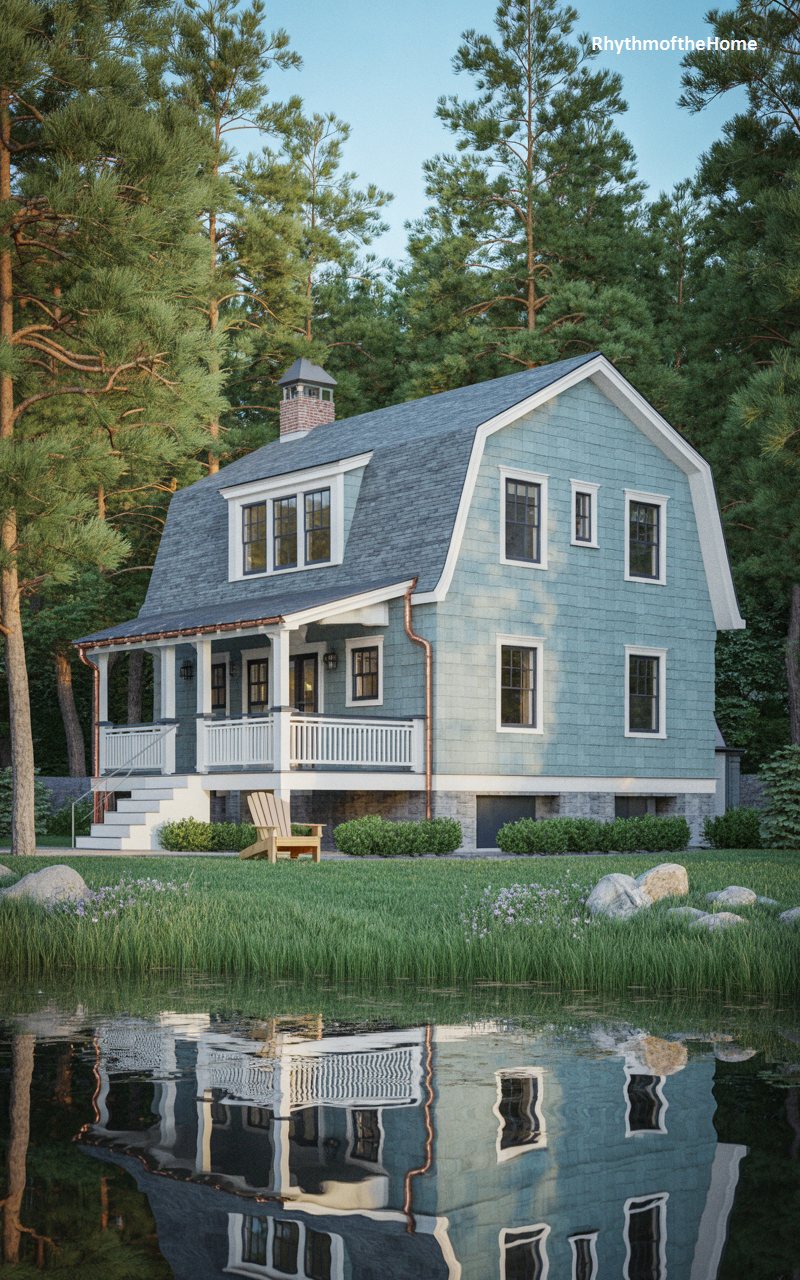
Perched tranquilly at the edge of a reflective pond, this home is a vibrant study in color and form. The exterior acts as a canvas of textured blue shingles, topped by a grey asphalt shingle gambrel roof that maximizes the second-story living space. White trim outlines the windows and the architectural contours, making the blue pop against the green forest backdrop. A wraparound porch with white railings offers a perfect vantage point for water views. The scene is digitally pristine, highlighting the relationship between the structure and its environment, where the house appears to float above the grassy banks and still water.
7. The Cape Dutch Colonial Home
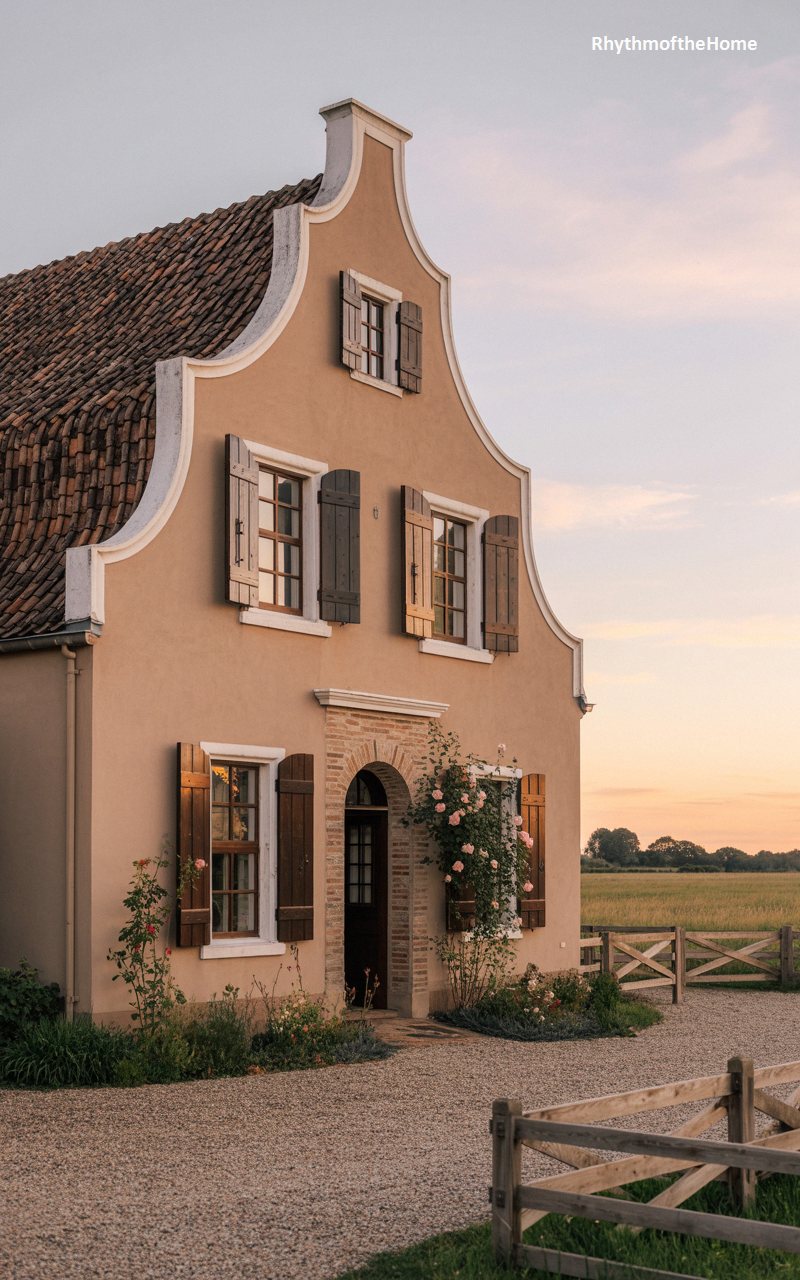
This structure draws inspiration from the specific architectural lineage of the Cape Dutch style, characterized by its elaborate, curved gable that rises gracefully above the roofline. The exterior is finished in a smooth, warm-toned stucco that glows in the soft light of the setting sun. Heavy wooden shutters flank the windows, adding weight and rustic authenticity to the facade. The roof is tiled in dark, weathered clay, providing texture that contrasts with the smooth walls. Climbing roses soften the entrance, and a rustic wooden fence lines the property, placing this home firmly within a romantic, pastoral landscape surrounded by golden fields.
8. The Urban Row Dutch Colonial Home
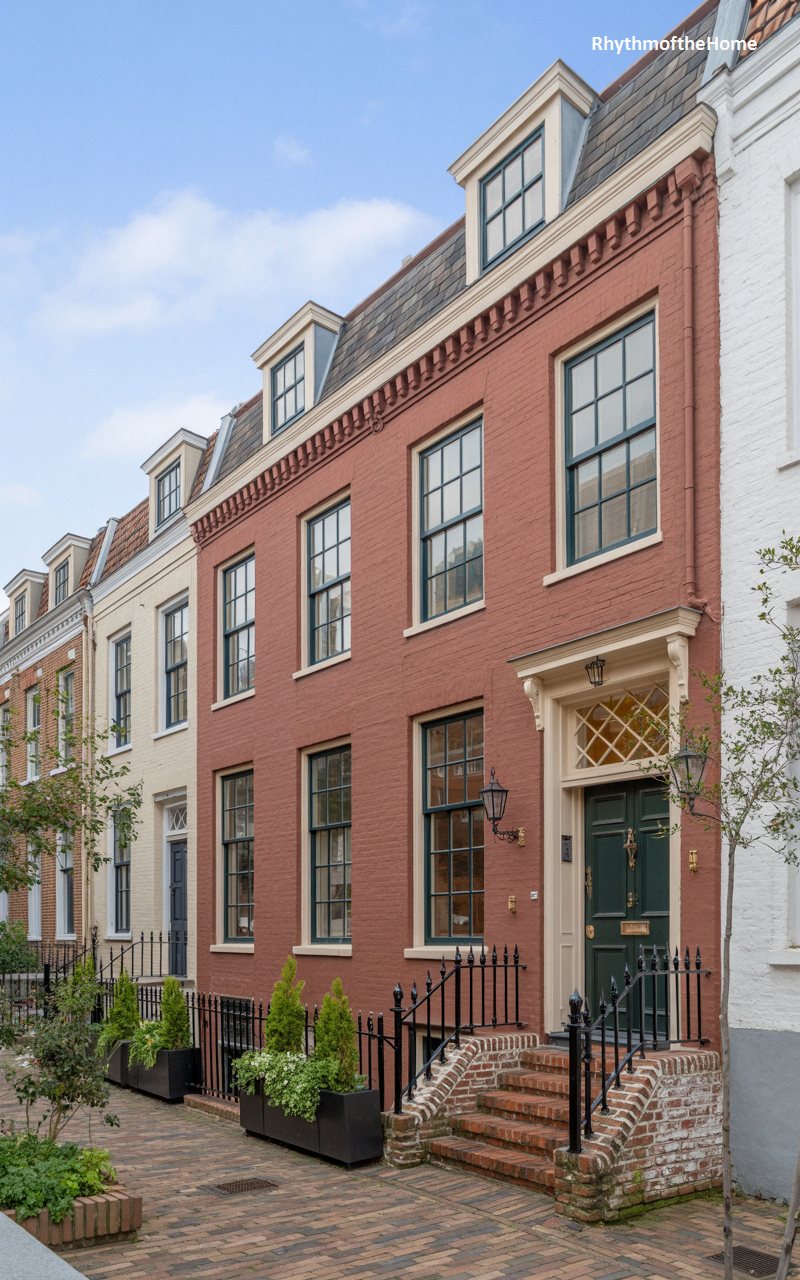
Adapting the aesthetic for a city environment, this townhouse stands tall with a flat, red-brick facade and a slate mansard-style roof that hints at Dutch influences in its steep pitch and dormer placement. The brickwork is meticulously detailed, with a decorative cornice line adding visual interest. Tall, narrow windows with dark sashes allow ample light into the interior, while the ground floor features a classic entryway with a paneled door and transom window. A black wrought-iron fence separates the small front garden from the brick sidewalk, integrating the home into the historic urban streetscape while maintaining a sense of private dignity.
9. The Whitewashed Modern Dutch Colonial Home
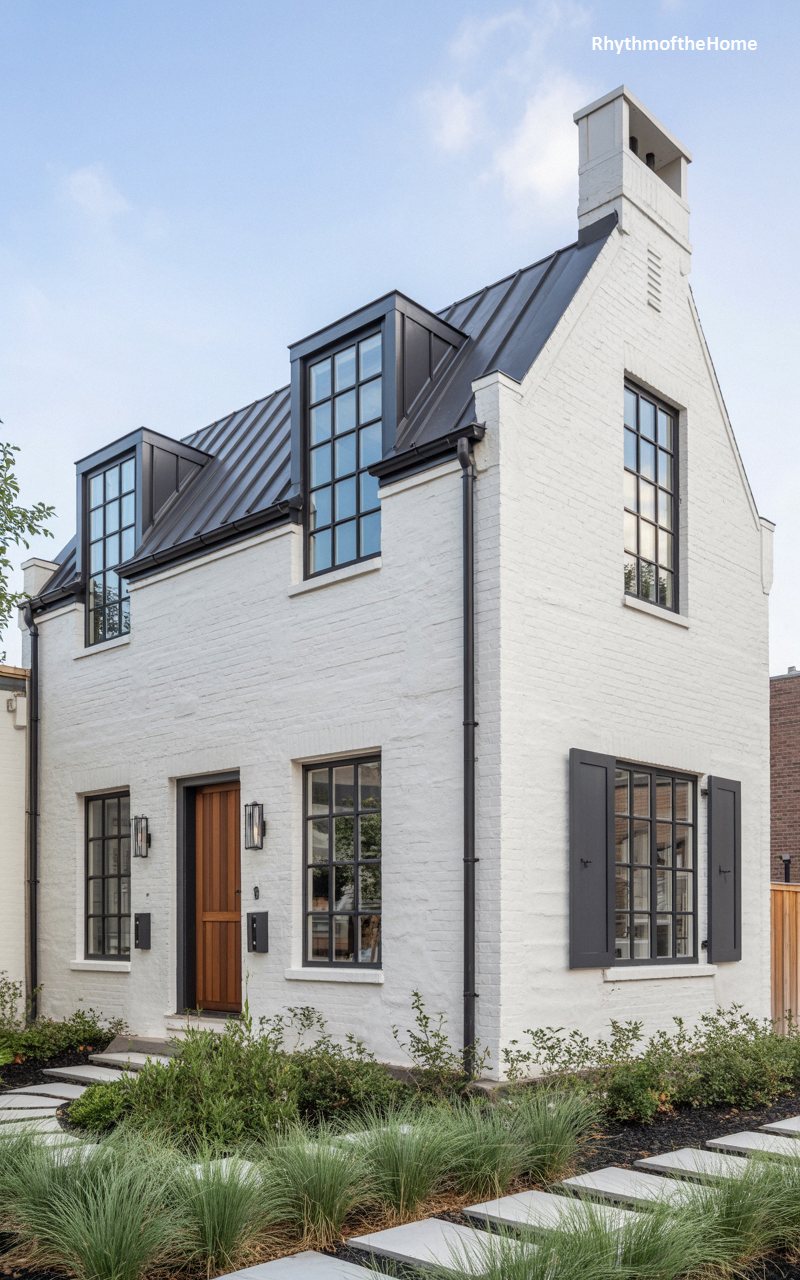
Stripped of excess ornamentation, this home presents a minimalist interpretation of the style. The brick exterior has been painted a uniform, crisp white, creating a monolithic and clean appearance. The dark metal roof features a steep pitch with sharp, clean lines and two boxy dormers that break the plane. Black window frames provide a high-contrast modern edge against the white masonry. The landscaping is equally structured, with ornamental grasses and low shrubs framing a stone walkway. This design focuses on silhouette and contrast rather than traditional detailing, resulting in a fresh, architectural update to a classic form.
10. The Limestone Estate Dutch Colonial Home
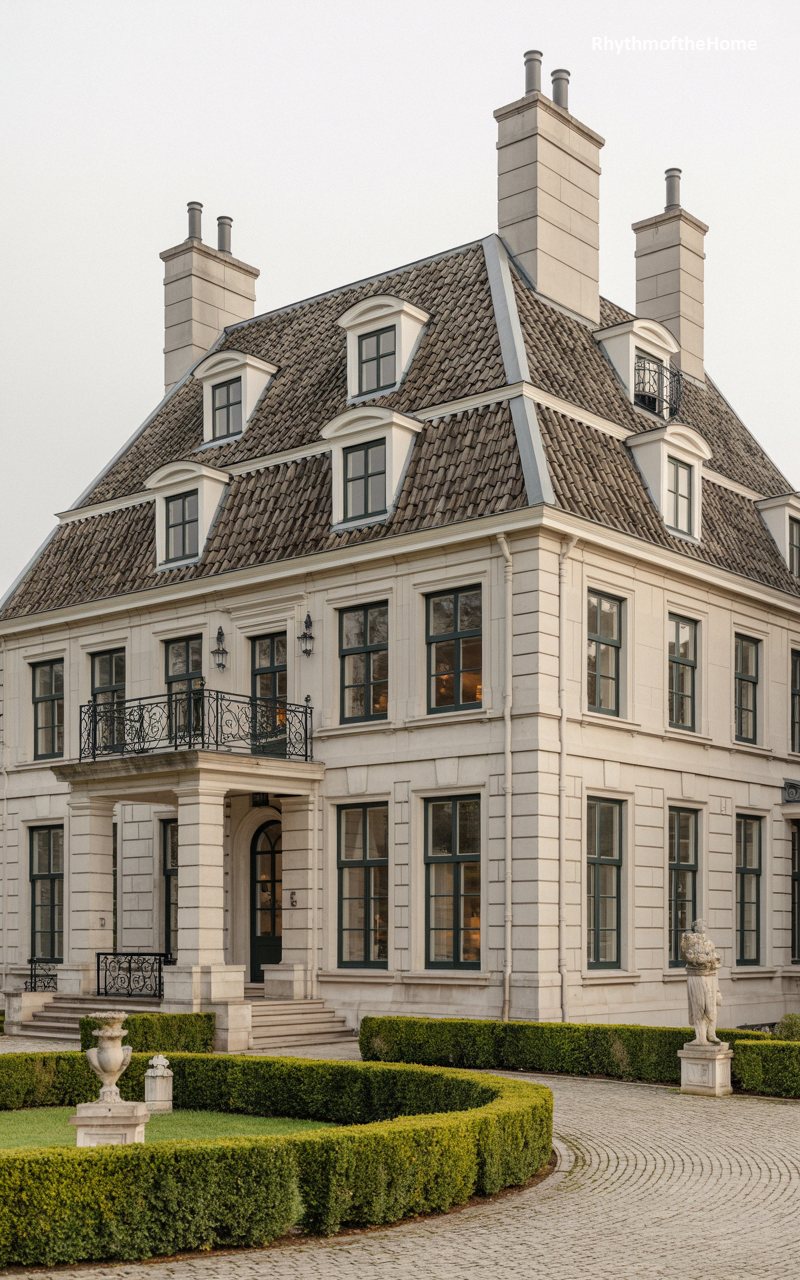
This imposing residence is constructed from pale limestone blocks, lending it an air of permanence and European grandeur. The high, hipped roof is covered in dark tiles and pierced by arched dormers that add a sense of rhythm to the top floor. The facade is strictly symmetrical, with tall windows and a central balcony featuring intricate iron railings. Large chimneys rise from the sides, anchoring the composition. The setting is formal and manicured, with a curved cobblestone driveway and sculpted boxwood hedges leading the eye to a classical stone statue, reinforcing the home’s aristocratic and timeless bearing.
11. The Waterside Stone Dutch Colonial Home
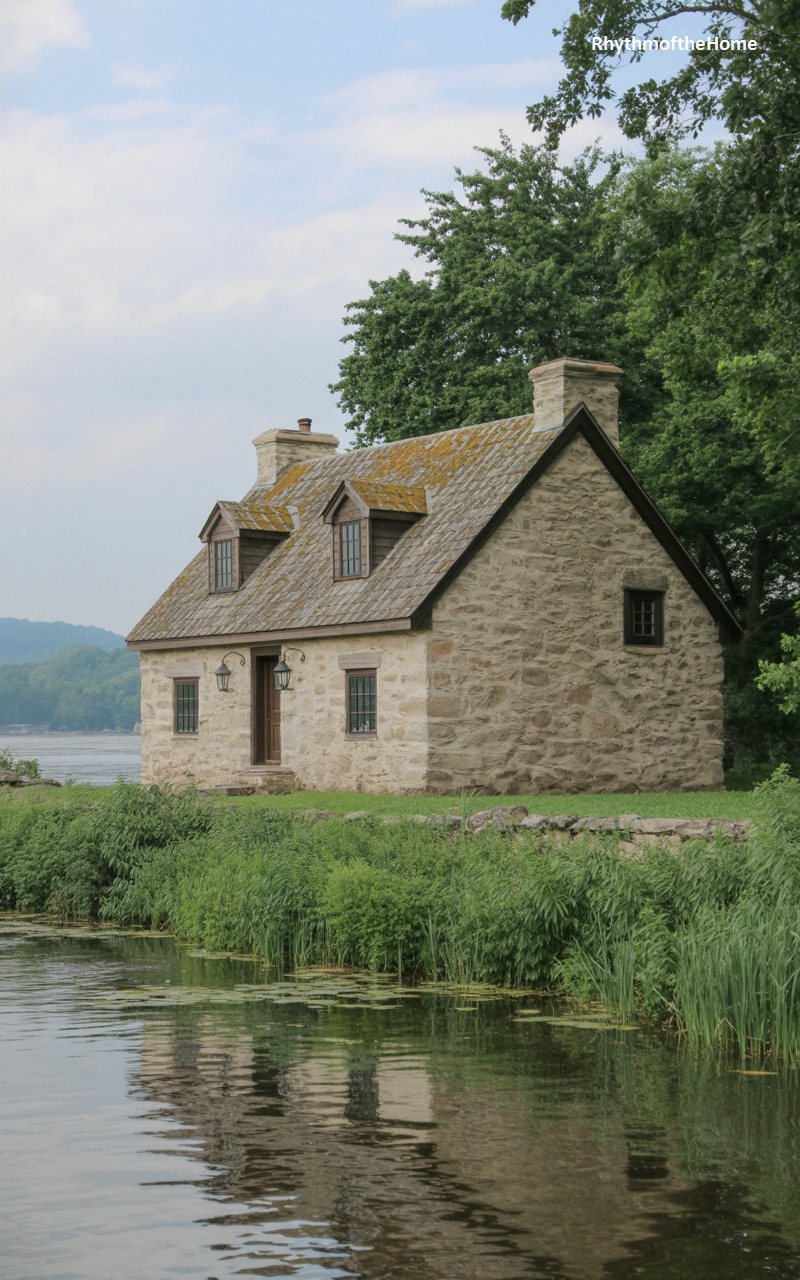
Nestled directly on the banks of a calm body of water, this stone cottage feels like a relic from a bygone era. The walls are crafted from rough-hewn stone in varying shades of beige and grey, blending seamlessly with the natural environment. The steep, moss-dappled roof suggests age and resilience against the elements. Small dormer windows poke through the roofline, offering views of the lake. The surroundings are lush and untamed, with tall grasses and green foliage hugging the foundation, making the house appear as though it has grown organically out of the landscape over centuries.
12. The Historic Settlement Dutch Colonial Home
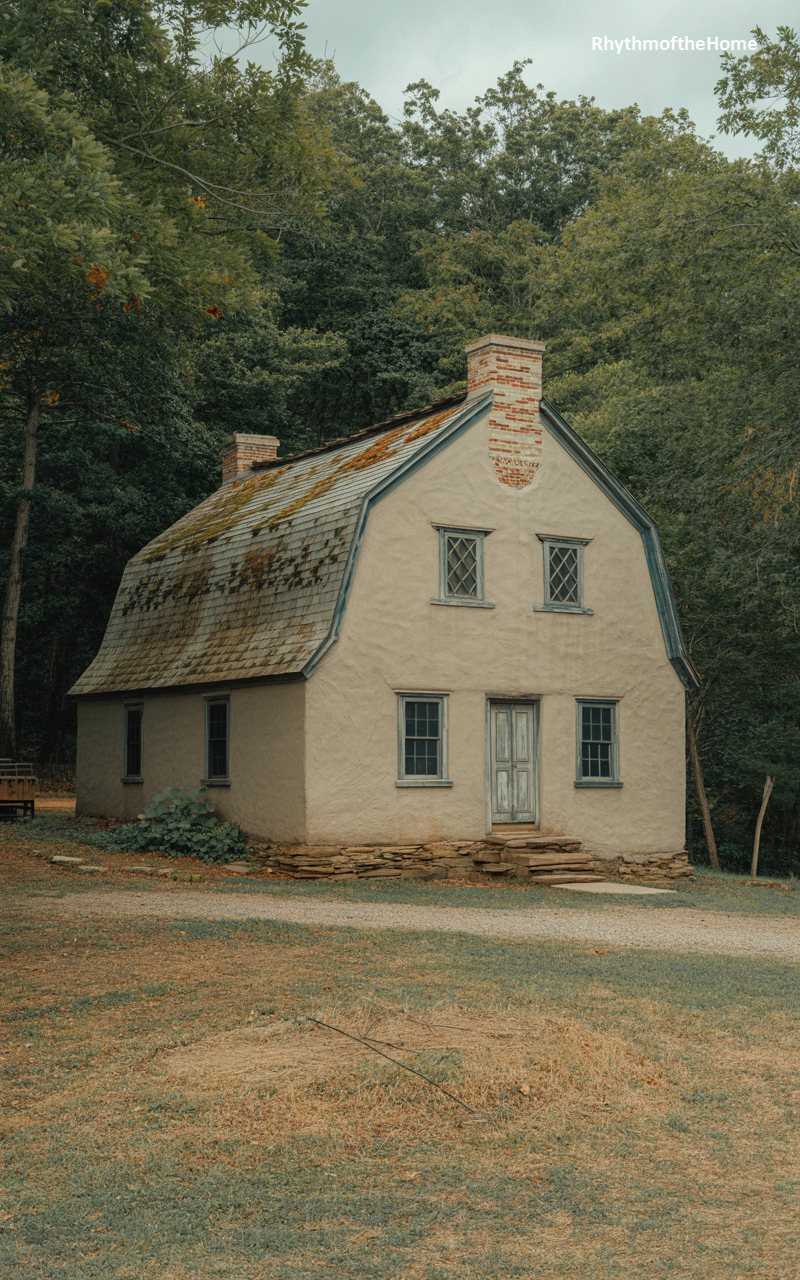
This structure captures the essence of early colonial architecture with its sweeping gambrel roof that extends almost to the ground on the sides, maximizing interior headroom in the attic space. The roof is covered in wood shakes that are weathered and covered in patches of moss, indicating distinct age. The walls are finished in a rough stucco or plaster, painted a creamy beige. Small, diamond-paned windows add a medieval touch to the facade. A simple stone foundation and a dirt approach emphasize the humble, utilitarian origins of this style, set against a backdrop of dense, dark forest.
13. The Chimney Cottage Dutch Colonial Home
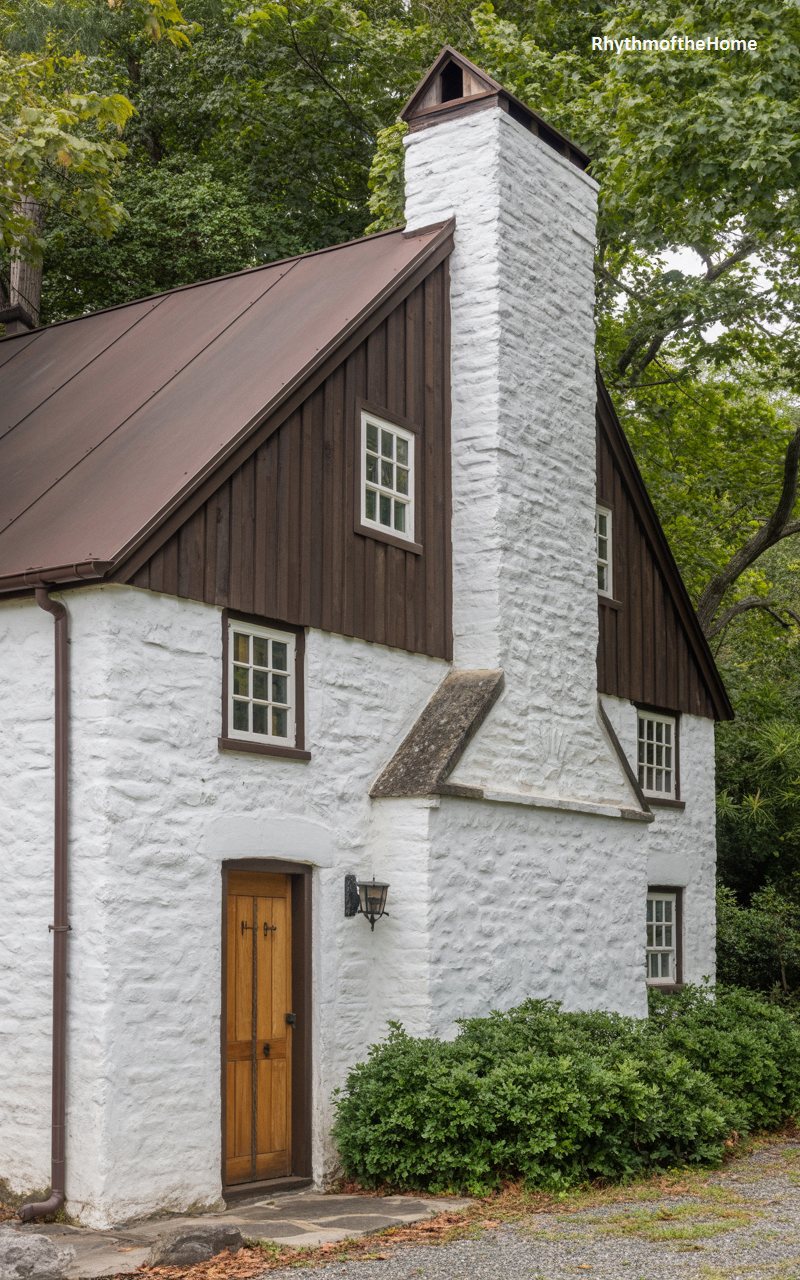
Dominated by a massive, whitewashed stone chimney that rises continuously from the ground to the roof peak, this cottage is a striking example of form following function. The main structure features rough white stone walls, contrasted by a steep roof clad in dark brown metal and gable ends sided with vertical dark wood planking. The entrance is modest, with a narrow wooden door featuring decorative iron hinges. Lush green bushes surround the base, and the setting feels secluded and private. The interplay of the bright white stone and the dark, moody wood creates a visually arresting graphic quality.
14. The Stone Farmhouse Dutch Colonial Home
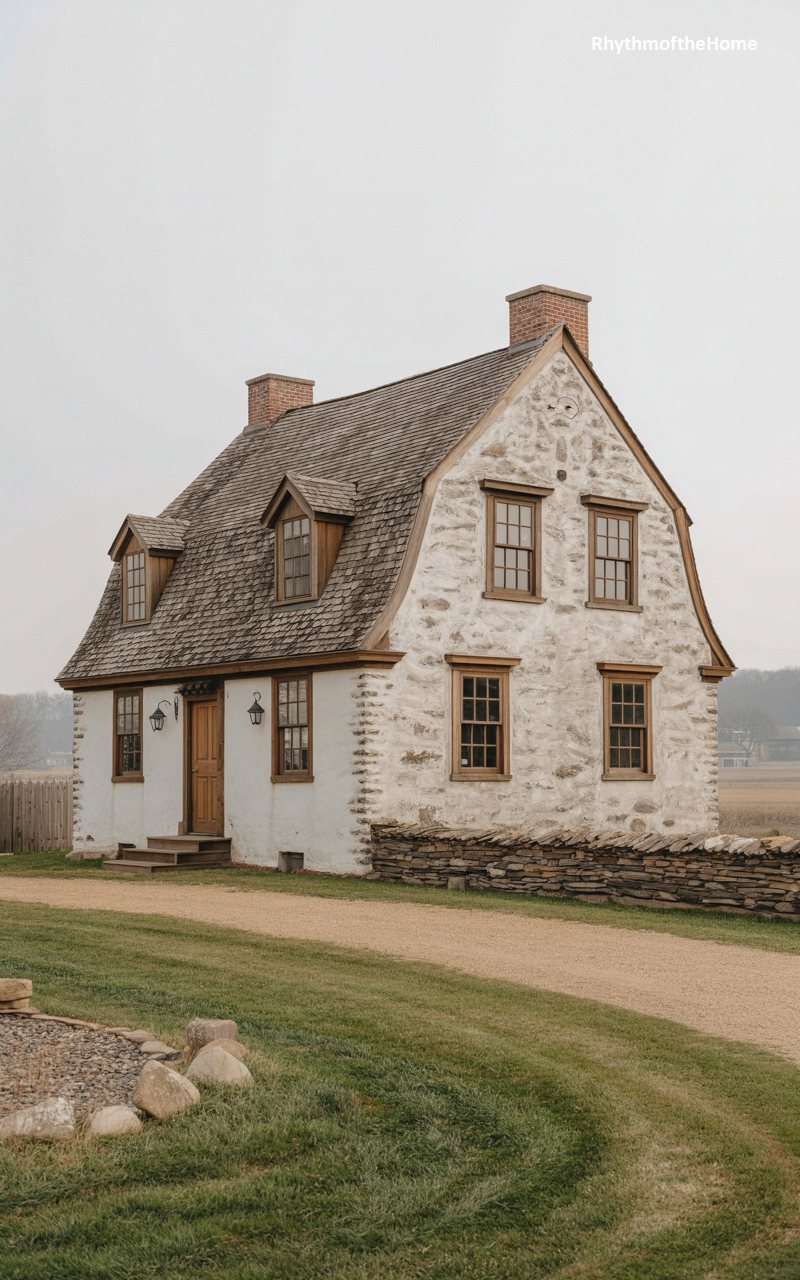
Sturdy and expansive, this home is built from fieldstone, showcasing the craftsmanship of traditional masonry. The gambrel roof is a defining feature, covered in weathered grey wood shingles that curve gently at the eaves. Three dormer windows with peaked roofs project from the steep slope, providing light to the upper story. The windows on the main level are symmetrically placed with simple wooden trim. A low stone wall runs along the foreground, echoing the materials of the house, while a gravel driveway sweeps across the front. The overall impression is one of solid, enduring comfort in a rural landscape.
15. The Brownstone Dutch Colonial Home
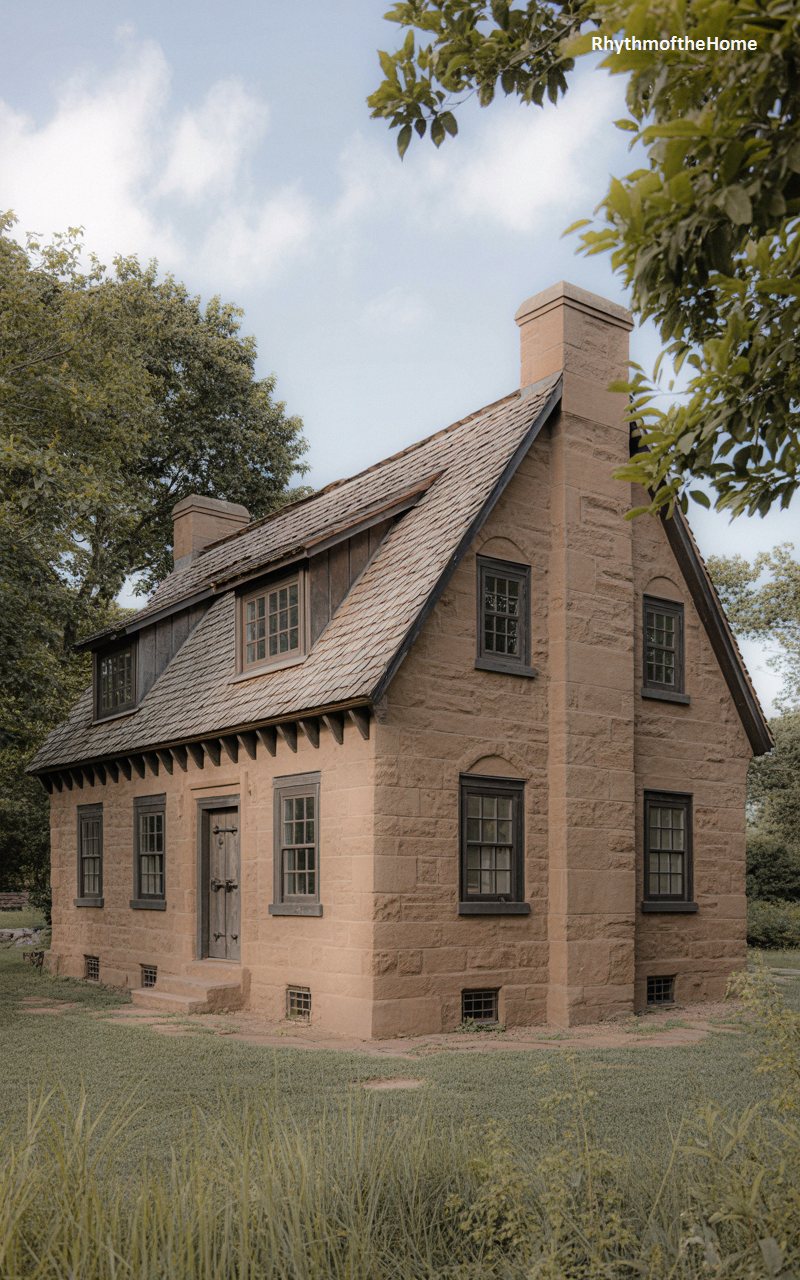
Constructed from blocks of reddish-brown sandstone, this house has a distinctive, warm coloration that sets it apart. The steep, dual-pitched roof is clad in wood shingles, featuring a subtle change in angle characteristic of the style. A central chimney rises through the ridge, hinting at a central hearth layout. The windows are small and multi-paned, typical of older construction methods designed to conserve heat. The lawn is overgrown with tall grass and wildflowers, giving the property a somewhat abandoned or preserved historic feel, with tree branches framing the upper corners of the view.
16. The Rustic Stone Dutch Colonial Home
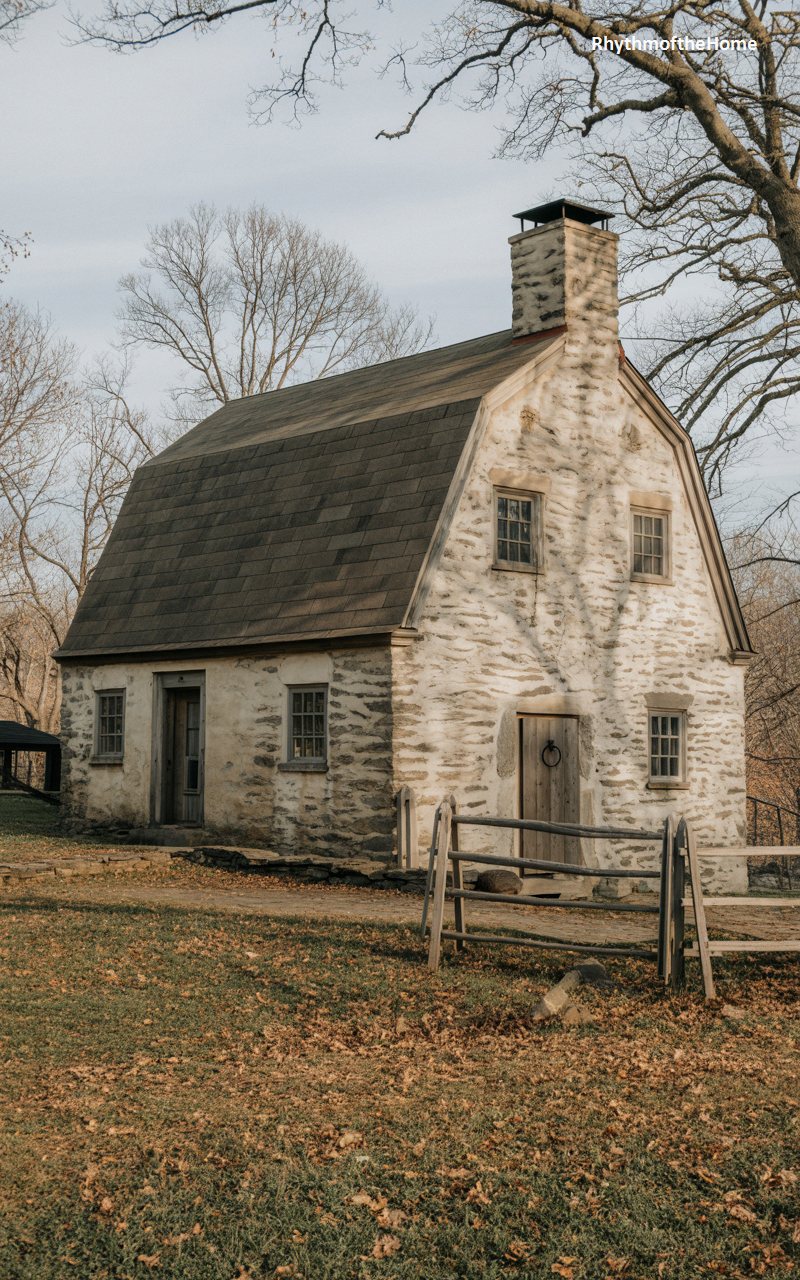
This compact stone structure is defined by its incredibly steep gambrel roof, which dominates the visual profile of the building. The roof is covered in dark, textured asphalt or composite shingles. The stonework is irregular and whitewashed in places, giving it a textural, aged appearance. Two small windows on the upper gable end and two on the lower level provide symmetry. A rustic wooden split-rail fence runs across the foreground, and fallen autumn leaves scatter the grass, enhancing the feeling of a historic homestead preparing for winter. The architecture speaks of utility and survival in a new world.
17. The Porch-Front Dutch Colonial Home
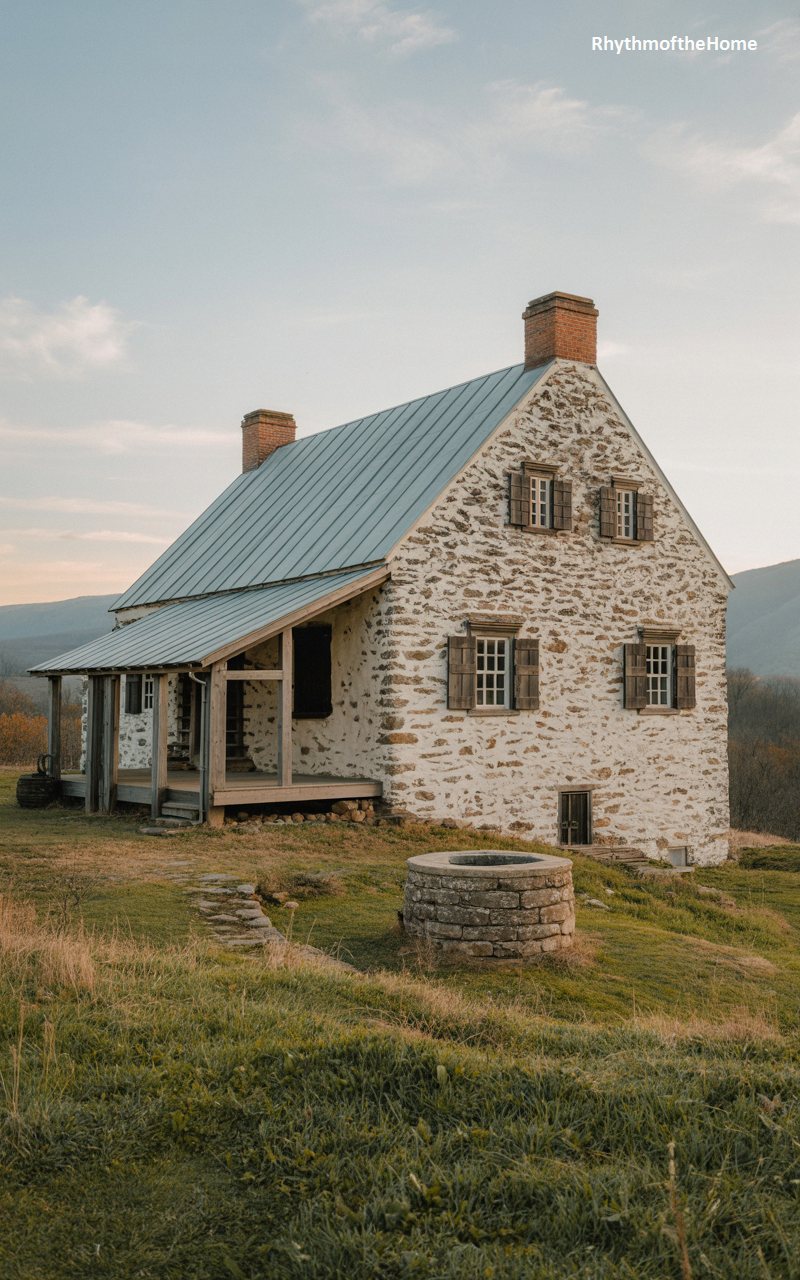
Set against a backdrop of rolling hills and distant mountains, this stone house features a prominent metal roof that slopes down to cover a wide front porch. The porch is supported by simple wooden posts and offers a shaded respite overlooking the landscape. The stone walls are white-washed or mortared with a heavy hand, creating a textured, bright surface. A traditional stone well sits in the grassy foreground, serving as a nostalgic focal point. The windows are shuttered, and the overall vibe is one of a working farmhouse that has stood watch over the valley for generations.
18. The Tiny Cottage Dutch Colonial Home
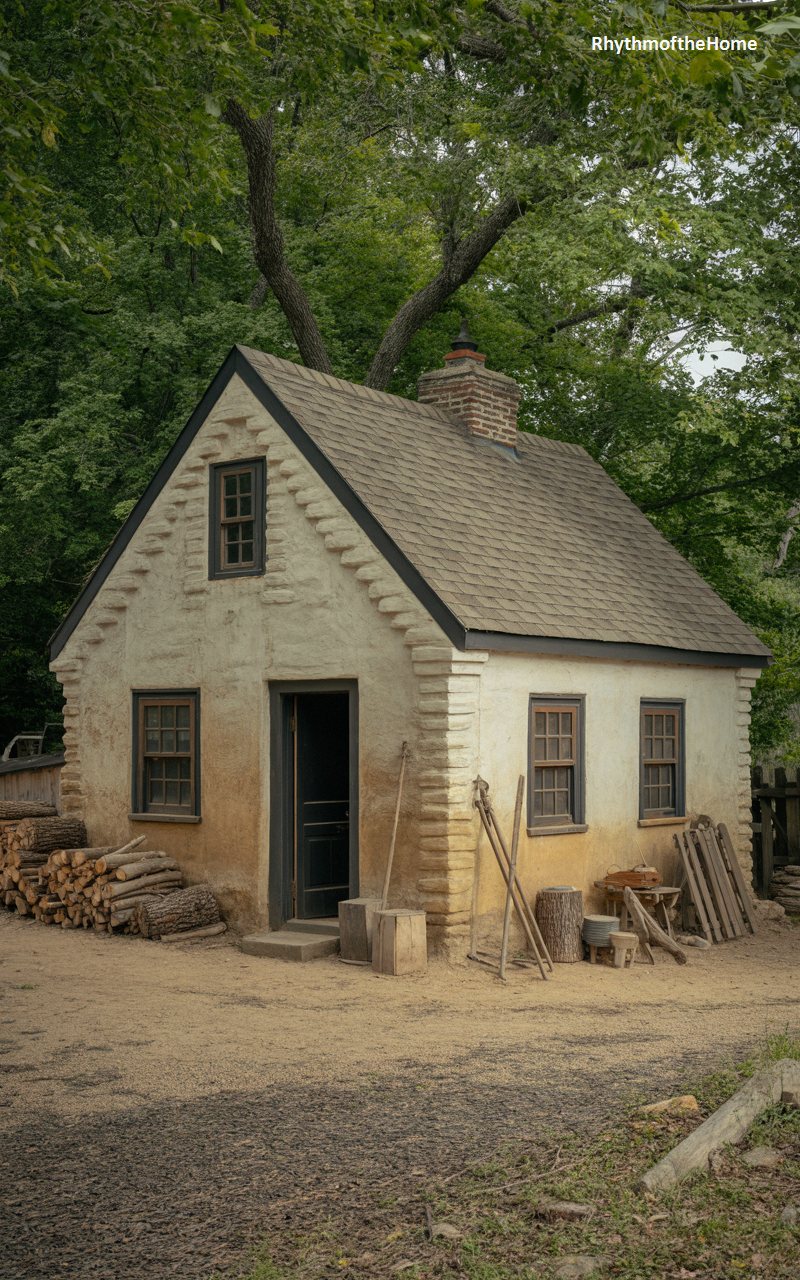
This diminutive structure serves as a perfect miniature example of the architectural style. It features a steep, dark shingled roof and walls made of rough stucco or mud plaster over stone. A single small window with dark trim pierces the gable end, and a dark doorway invites entry into the shadowy interior. A large pile of cut firewood is stacked neatly against the side wall, suggesting the home is heated by a wood stove. The surrounding ground is dirt and gravel, and the dense canopy of trees overhead creates a secluded, woodland hideaway atmosphere.
19. The White Block Dutch Colonial Home
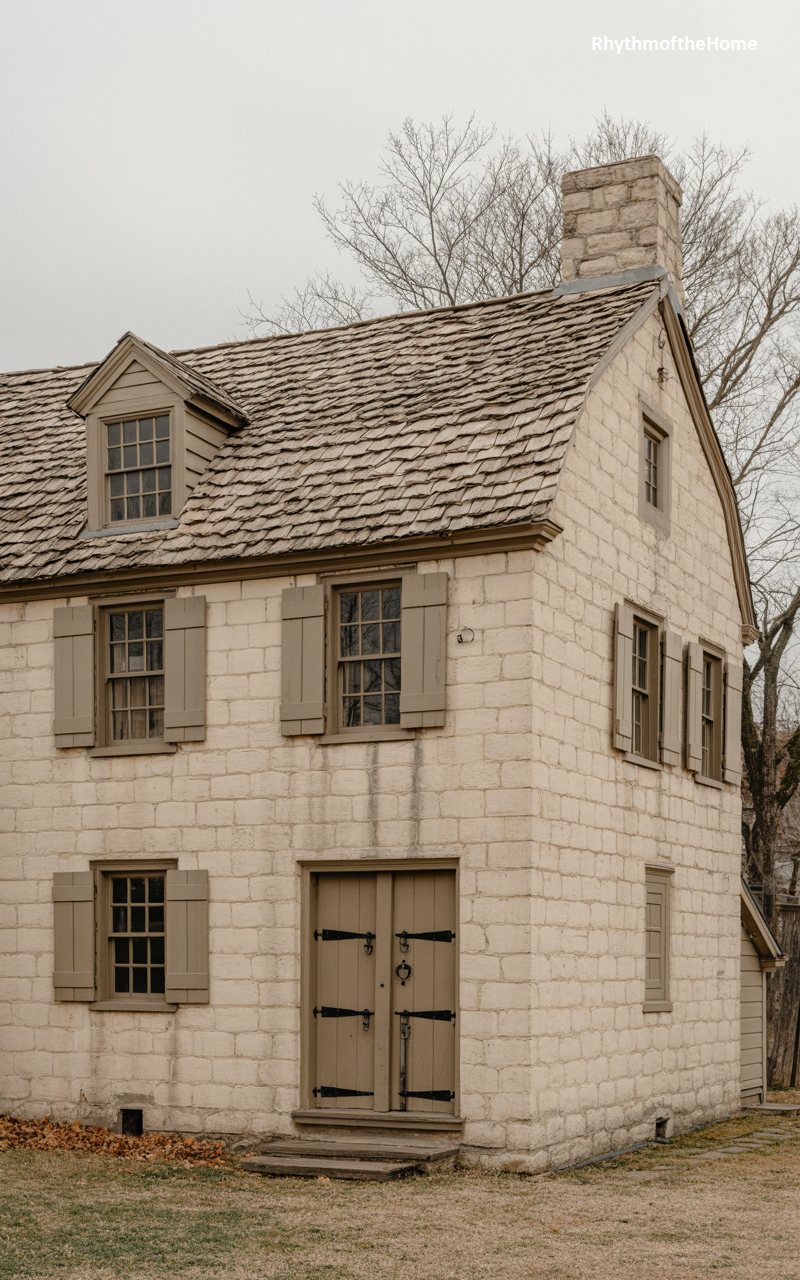
Built from cut stone blocks painted a creamy white, this two-story home exudes a sense of orderly history. The roof is covered in wood shakes, weathered to a silver-grey. A distinctive dormer window protrudes from the roof, featuring a pediment top. The windows on the main facade are tall and narrow, fitted with dark shutters that contrast sharply with the pale stone. A central double door with heavy iron strap hinges serves as the main entrance. The house stands on a patch of dry grass, suggesting a preservation site or a historic park setting.
20. The Garden Path Dutch Colonial Home
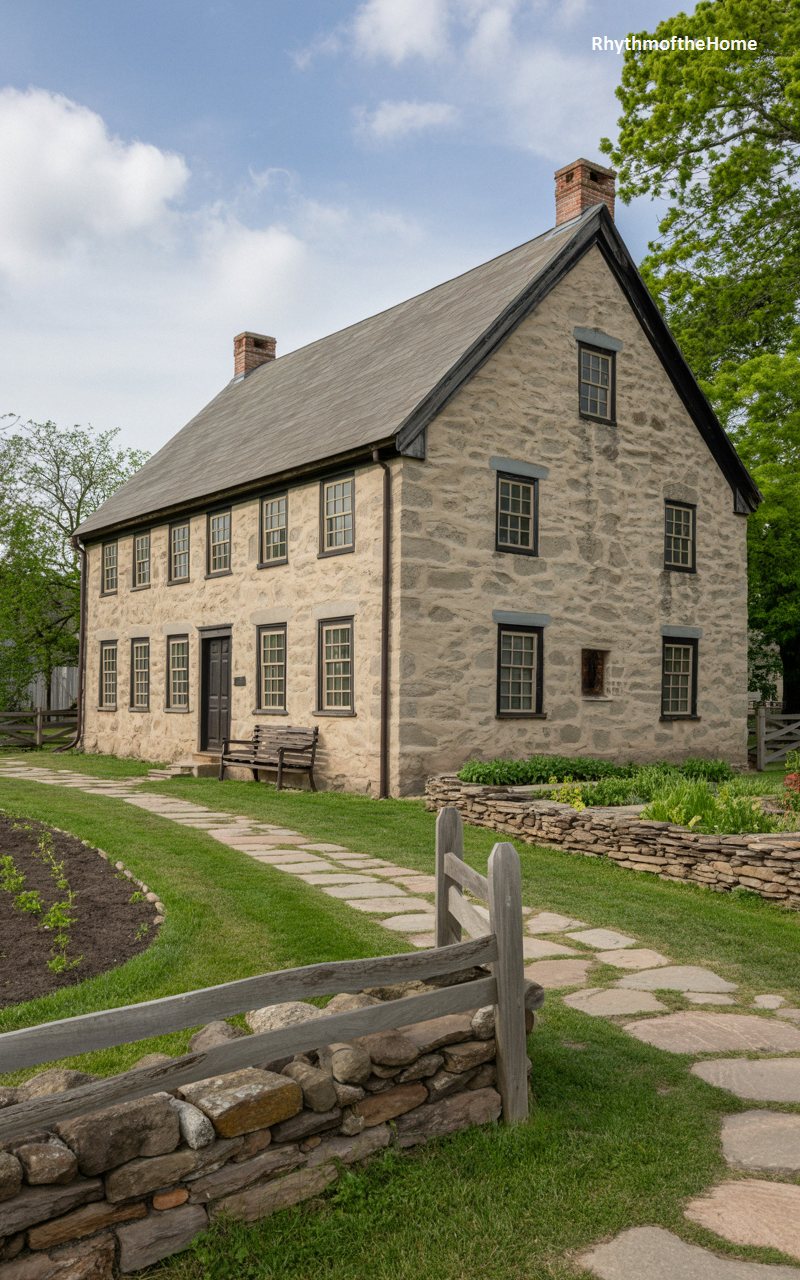
This picturesque stone house is framed by a lush, green landscape and a winding stone pathway that invites visitors to the front door. The masonry is a mix of grey and tan fieldstone, creating a mosaic-like surface. The roof is simple and steep, with a single brick chimney on the far end. Black shutters frame the windows, and the landscaping includes varied garden beds and a low stone wall that mimics the house’s construction. A rustic wooden gate and fence add to the charm, creating a scene that feels like a peaceful country retreat in full spring bloom.
21. The Brick Gable Dutch Colonial Home
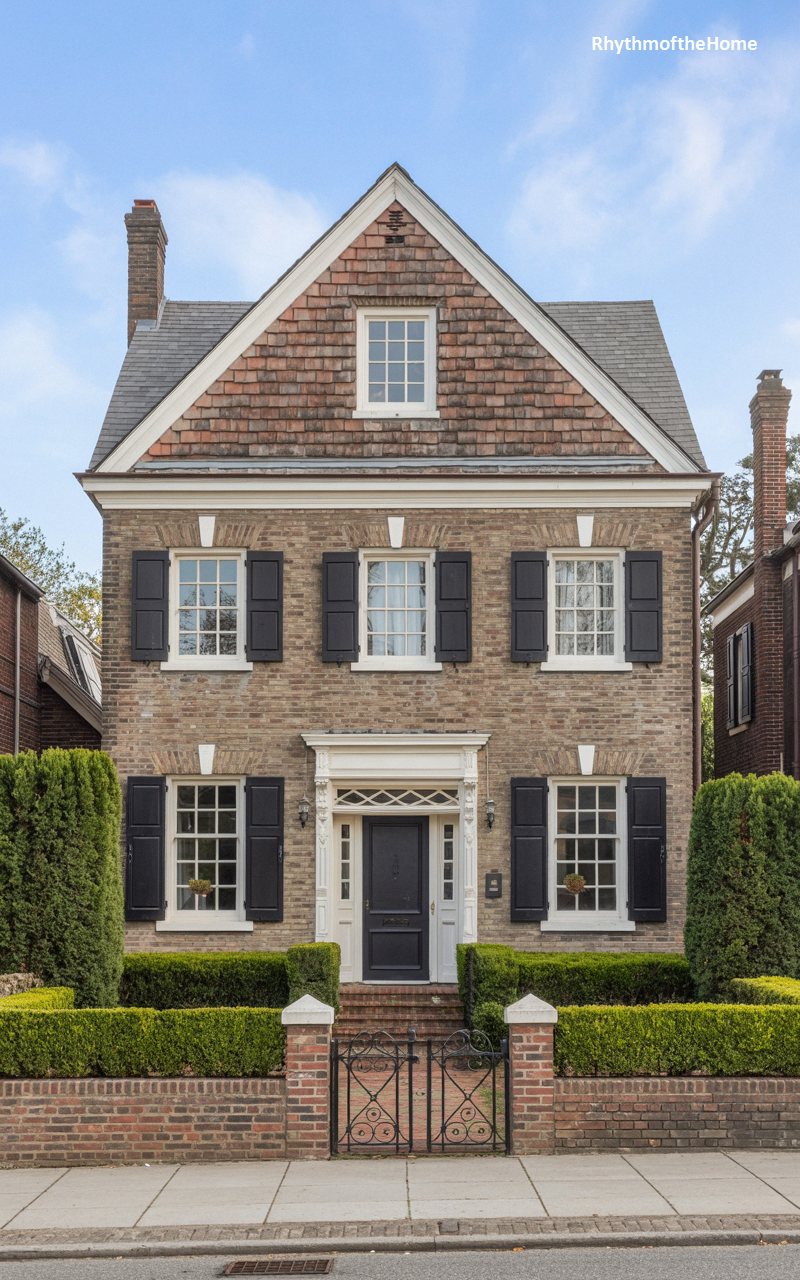
Standing tall and narrow, this home features a high-pitched roof and a facade of variegated brick in shades of red and brown. The design includes a central dormer window that breaks the roofline, adding a third story of livable space. Black shutters flank the large, white-framed windows on the lower levels, providing a classic, crisp look. The entrance is centered and flanked by manicured green hedges and a small wrought-iron gate, giving the property a formal, possibly suburban or village distinctiveness. The architecture balances verticality with traditional colonial detailing.
22. The Curvilinear Gable Dutch Colonial Home
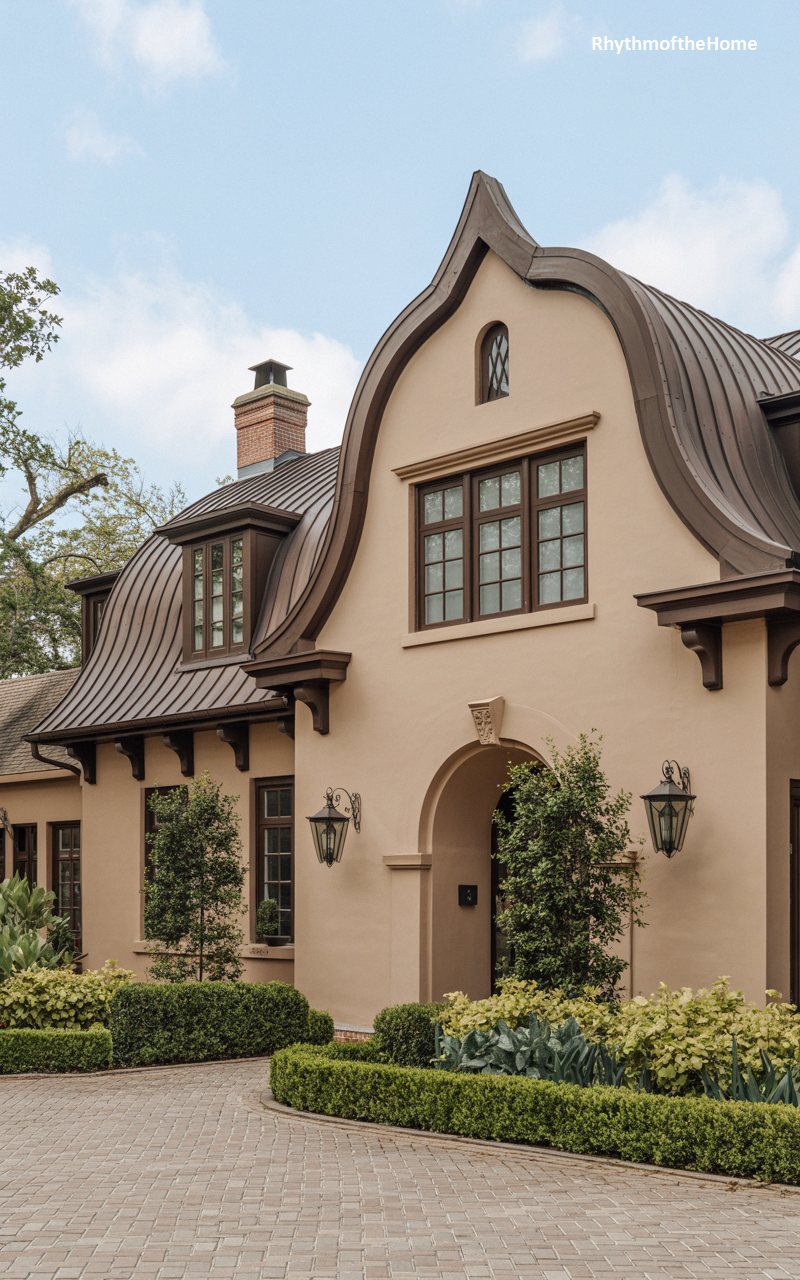
This home is a stunning example of the Cape Dutch revival style, featuring an elaborate, curved gable that creates a dramatic silhouette against the sky. The exterior is rendered in smooth stucco painted a warm beige, with a dark, sloping metal roof flanking the central gable. Dark brown window frames with multiple panes add contrast, while a central arched entryway draws the eye inward. Iron lanterns are mounted on the facade, adding decorative flair. The landscaping is immaculate, with sculpted boxwood hedges lining a herringbone brick driveway, emphasizing the home’s graceful and artistic curves.
23. The Twilight Gambrel Dutch Colonial Home
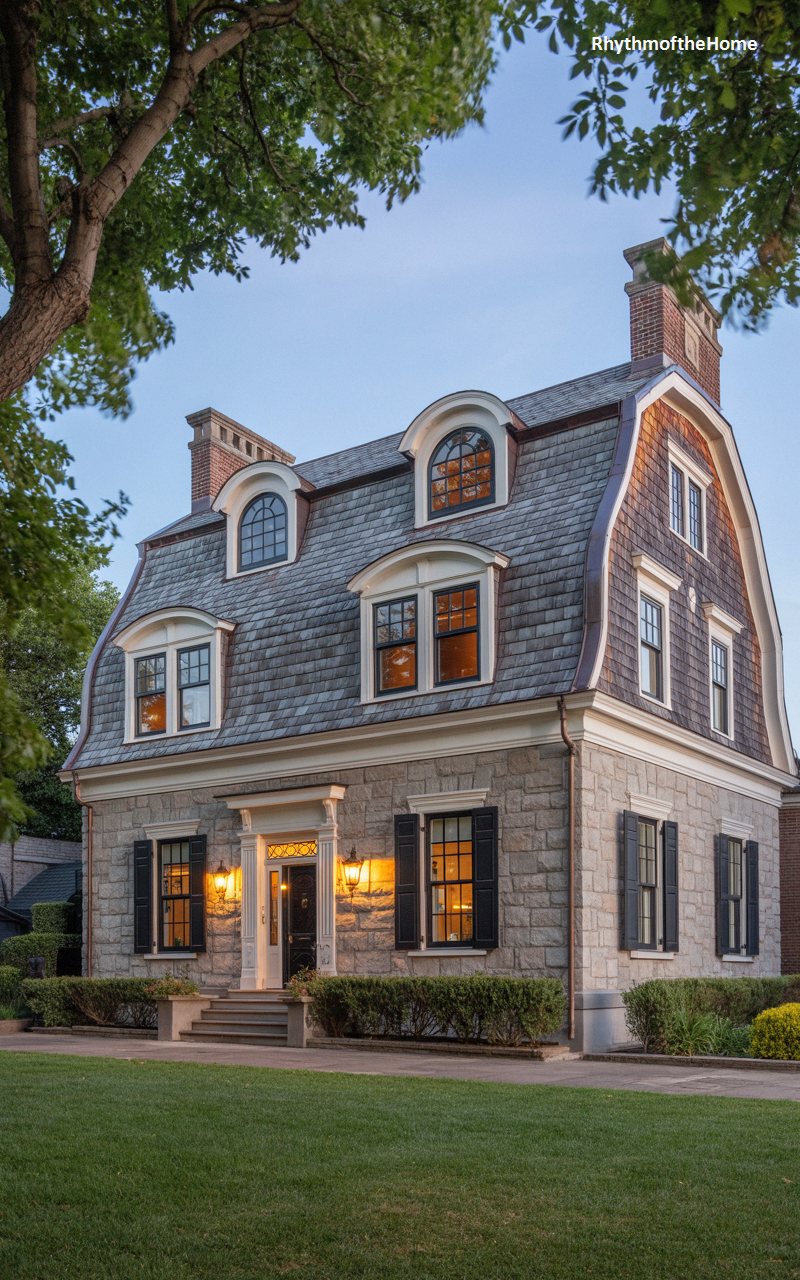
Captured at dusk, this home radiates warmth from within, with golden light spilling from the multi-paned windows. The structure features a heavy stone base on the first floor, transitioning to a shingled gambrel roof on the second story. The roofline is unique, with deep, flared eaves and arched dormer windows that soften the angles. A massive brick chimney rises on the side, anchoring the design. The manicured lawn is vibrant green, and the composition highlights the cozy, inviting nature of the home as evening falls, blending rugged materials with domestic comfort.
24. The Clapboard Classic Dutch Colonial Home
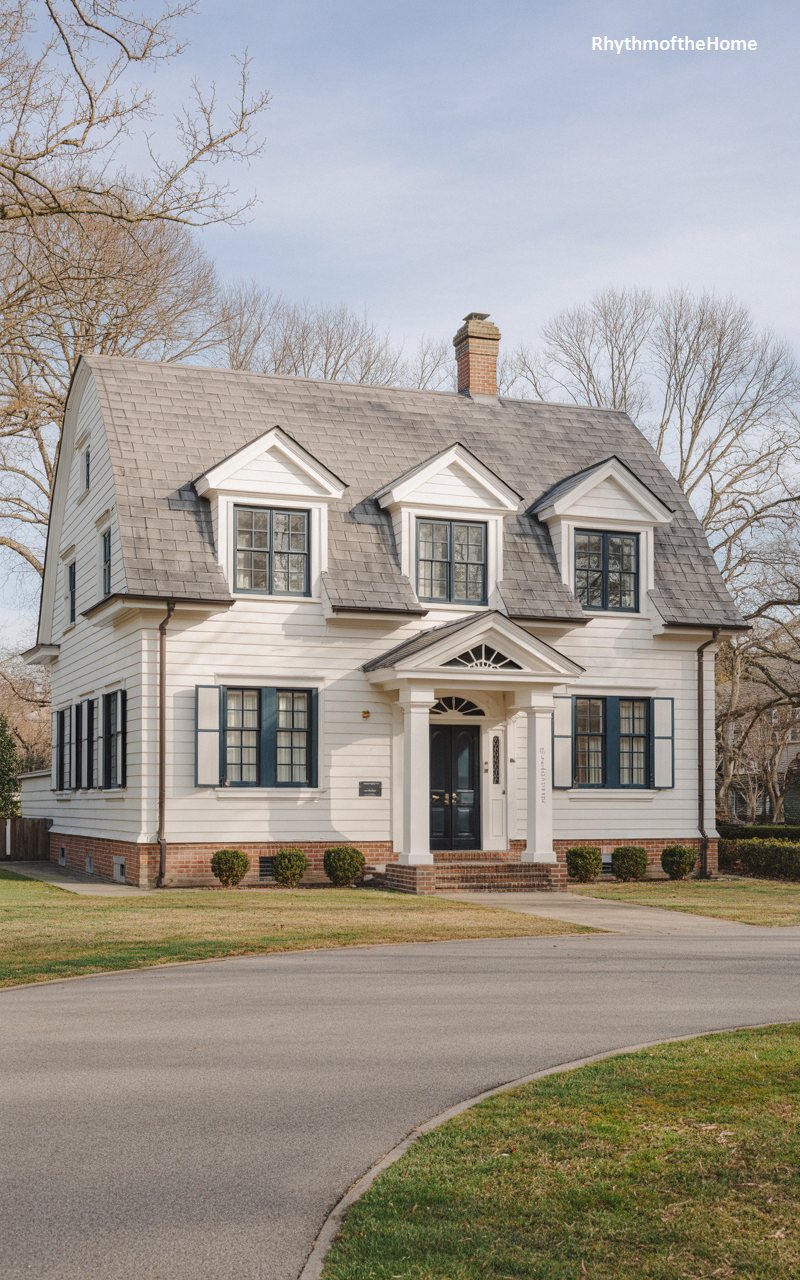
This residence is the quintessential American suburban interpretation of the style. It features bright white horizontal clapboard siding and a grey shingled gambrel roof. Three gabled dormers are evenly spaced across the roof, creating perfect symmetry. The front entrance is highlighted by a classic portico with white columns and a fanlight detail above the door. Black shutters on the lower windows provide a grounding contrast. The house sits on a flat, grassy lot with a paved driveway, representing a timeless, family-oriented architectural design commonly found in established neighborhoods.
25. The Red Brick Manor Dutch Colonial Home
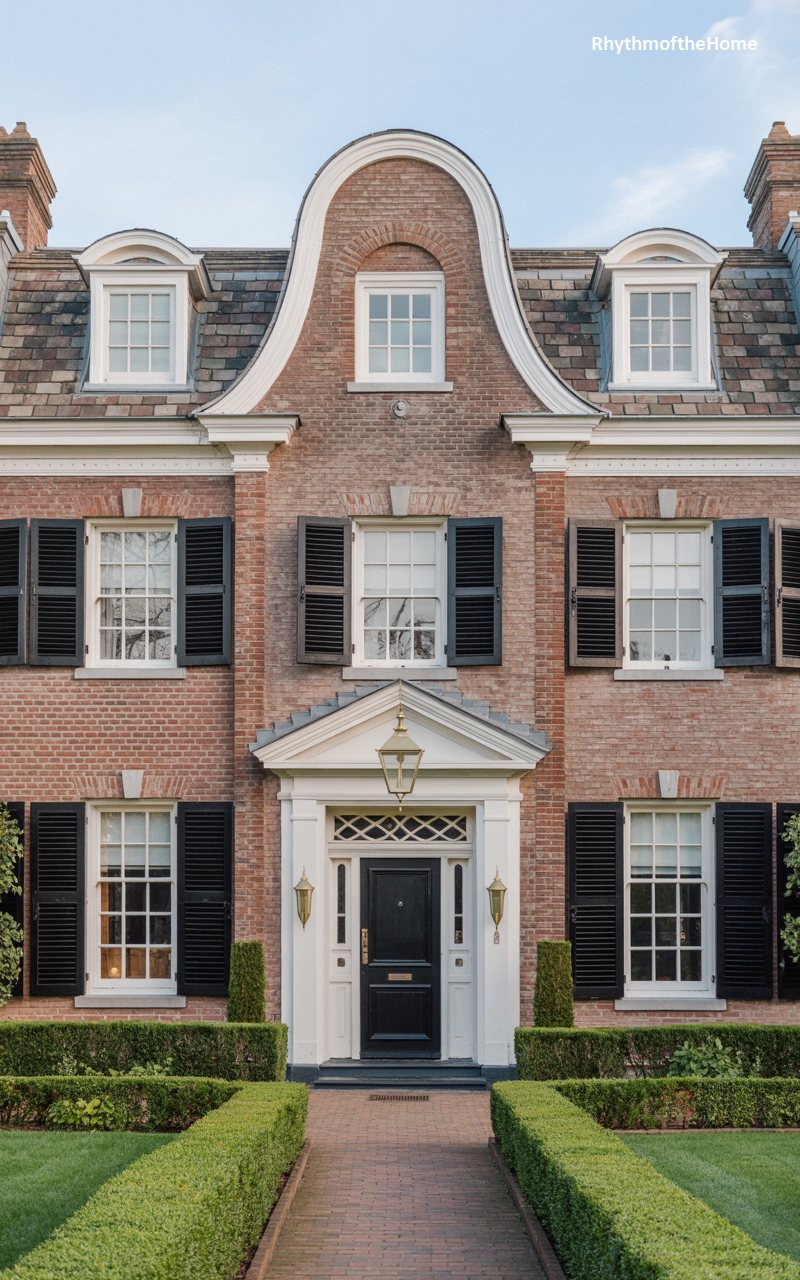
Grand and imposing, this estate features a central, bell-shaped gable that rises above the roofline, a signature of high-style Dutch architecture. The facade is composed of red brick with white stone detailing around the windows and corners (quoins). The roof is slate or dark tile, adding to the premium feel. Symmetrical chimneys flank the main structure. The entrance is formal, with a white door surround and lantern lighting. In the foreground, perfectly trimmed boxwood hedges line a brick walkway, leading the viewer toward the house with a sense of ceremony and order.
26. The Classic Manor Dutch Colonial Home
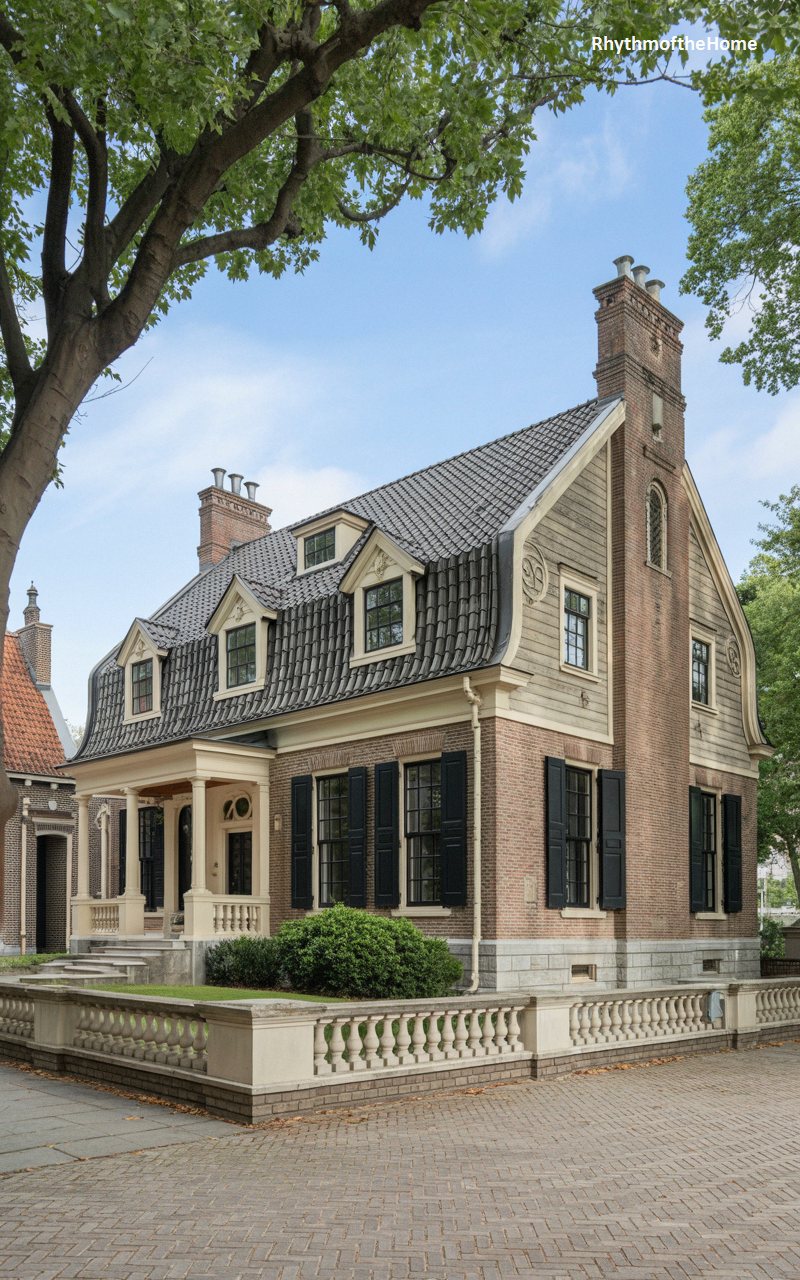
This residence is a sophisticated example of the style, blending formal masonry with colonial woodwork. The ground floor features warm red brickwork, while the upper story and gable ends are clad in horizontal wood siding painted a soft taupe. The gambrel roof is covered in dark, distinctively shaped tiles, giving the home a European flair. Three dormer windows with pedimented tops break the roofline, adding architectural interest. A defining feature is the low, ornamental balustrade wall that wraps around the corner of the property, enclosing a manicured lawn and creating a stately transition from the paved courtyard to the home itself.
27. The Cape Gable Dutch Colonial Home
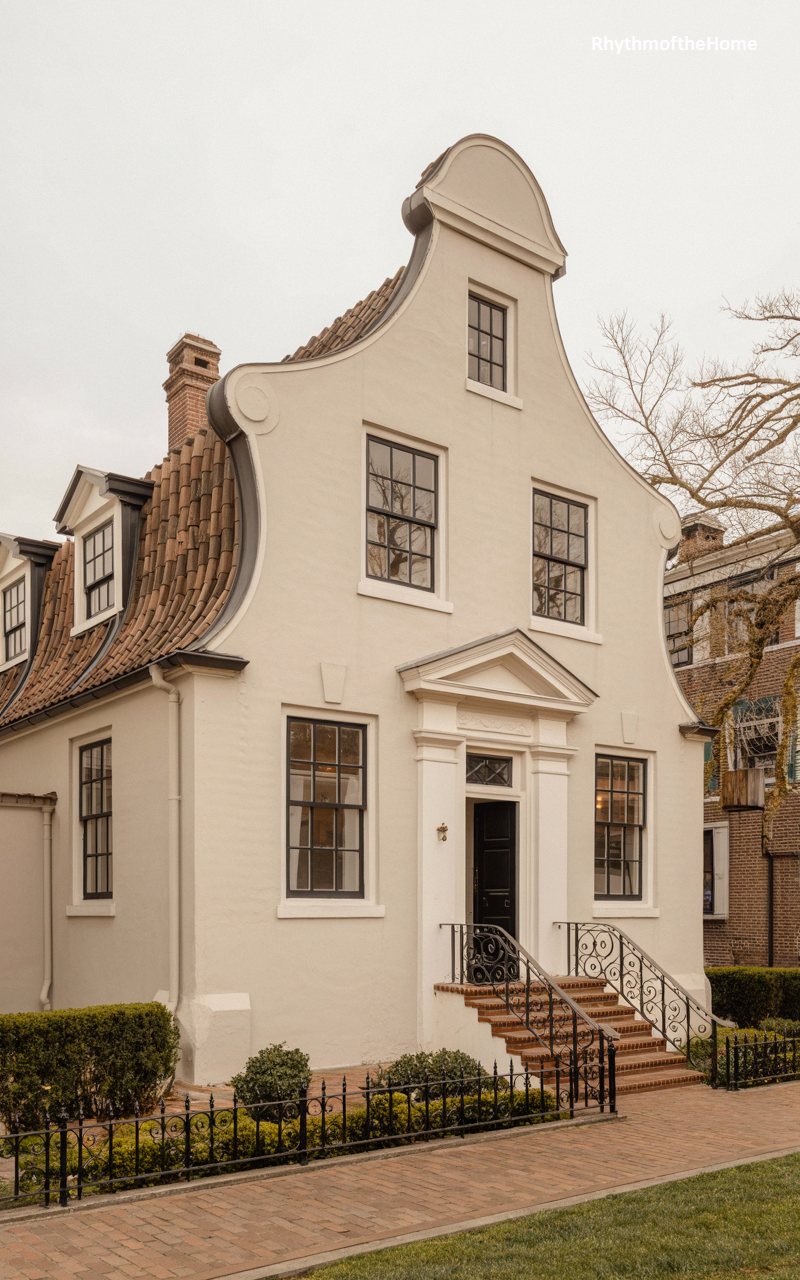
Drawing inspiration from the distinctive Cape Dutch architecture of South Africa and the Netherlands, this home features a magnificent, curvilinear gable that dominates the facade. The smooth stucco exterior is painted a creamy off-white, providing a clean canvas for the dark, contrasting window frames and the heavy black front door. The roof is tiled in terracotta, adding warmth to the palette. A classical pediment sits above the entrance, supported by pilasters, lending a touch of Greco-Roman influence. The intricate wrought-iron railing leading up the brick steps adds a layer of delicacy to the robust and curvaceous silhouette of the building.
28. The Brick Cottage Dutch Colonial Home
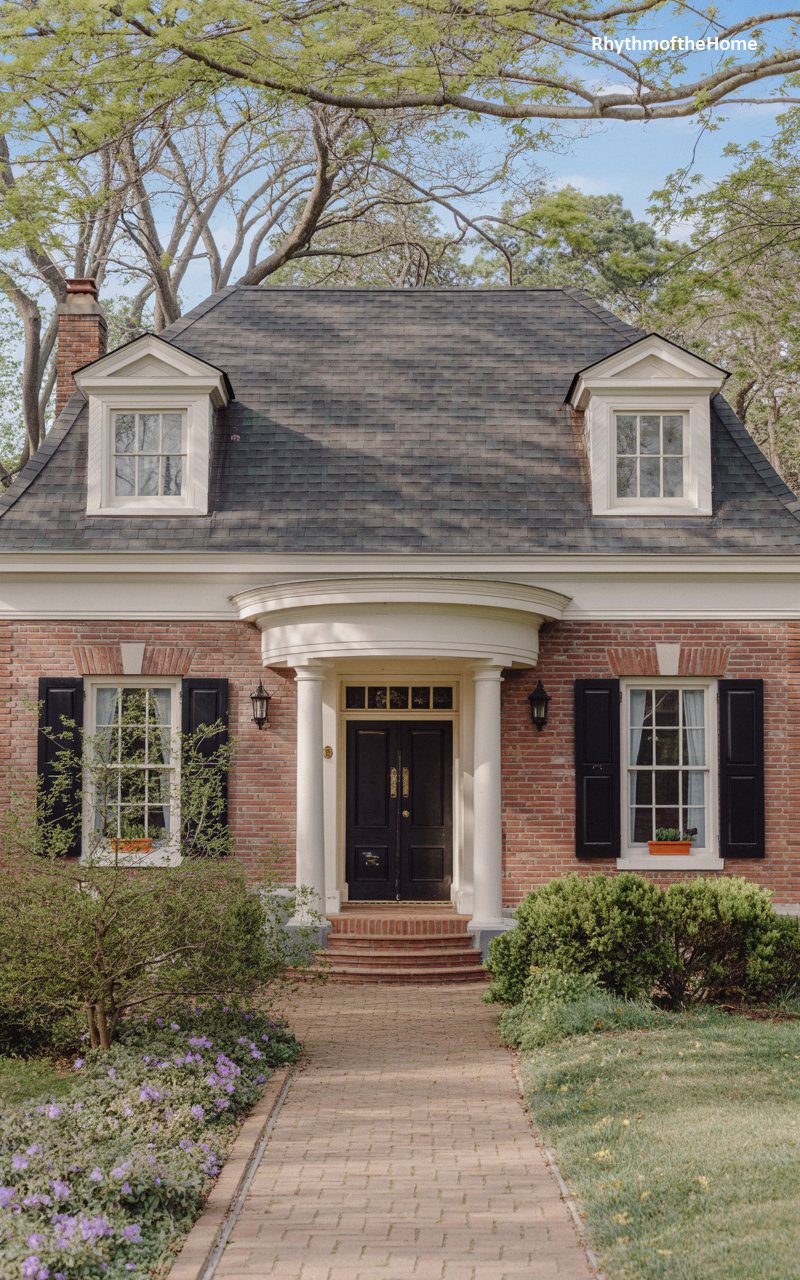
This charming structure presents a compact and symmetrical interpretation of the colonial aesthetic. The facade is constructed of variegated red brick, offering rich texture and color. A large, dark shingled gambrel roof encompasses the upper living space, pierced by two white dormer windows that look out like watchful eyes. The central entrance is highlighted by a curved, white portico supported by classic columns, creating a welcoming focal point. Surrounded by lush purple flowers and a brick pathway, the home feels nestled within its garden, evoking a sense of cozy, suburban permanence and timeless design.
29. The Grand Stone Dutch Colonial Home
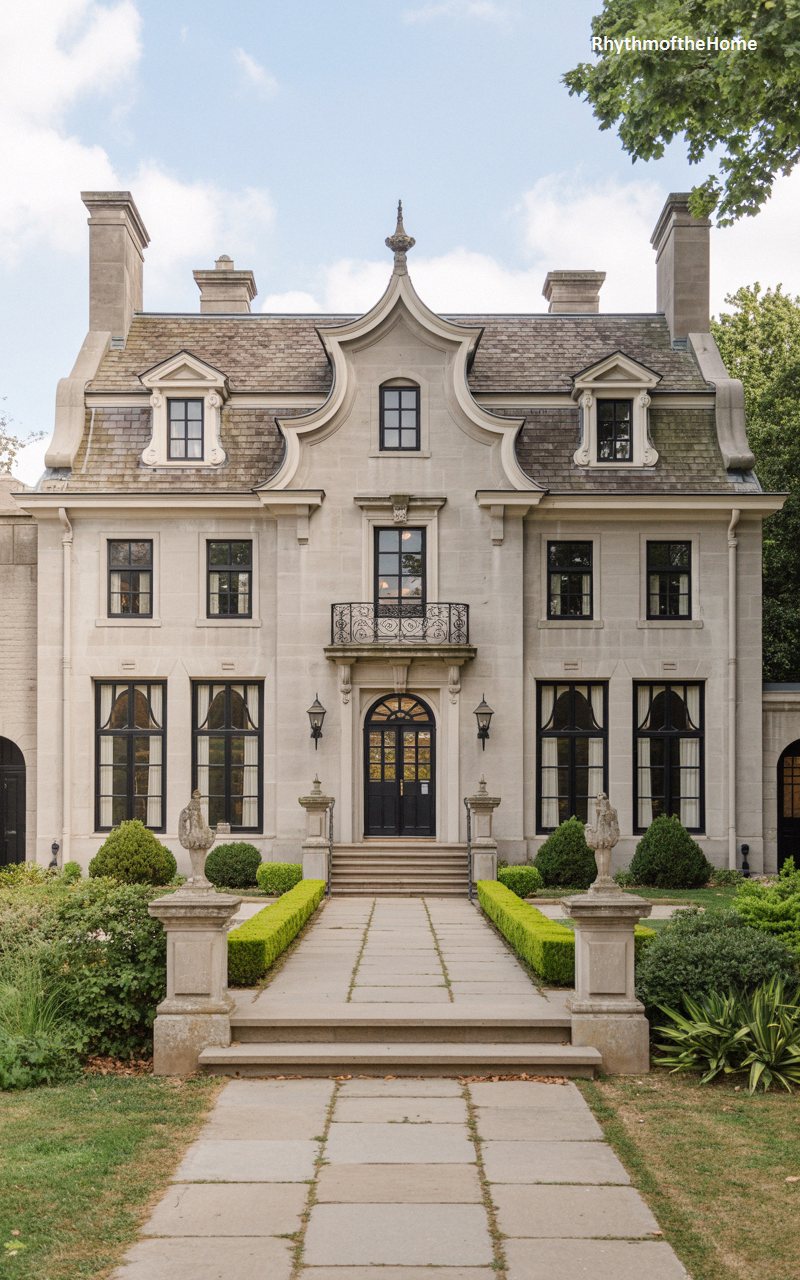
Exuding an air of aristocratic grandeur, this expansive estate is built from pale, smooth-cut stone. The roofline is complex, featuring a central decorative gable that curves upward, flanked by dormers with triangular pediments. A black wrought-iron balcony sits above the main entrance, adding a touch of French flair to the Dutch-inspired silhouette. The tall, dark-framed windows are symmetrically arranged, emphasizing the home’s formal balance. A straight stone pathway cuts through manicured hedges and bright green lawns, leading the eye directly to the imposing front door, reinforcing the property’s majestic and orderly presence.
30. The Elegant Clapboard Dutch Colonial Home
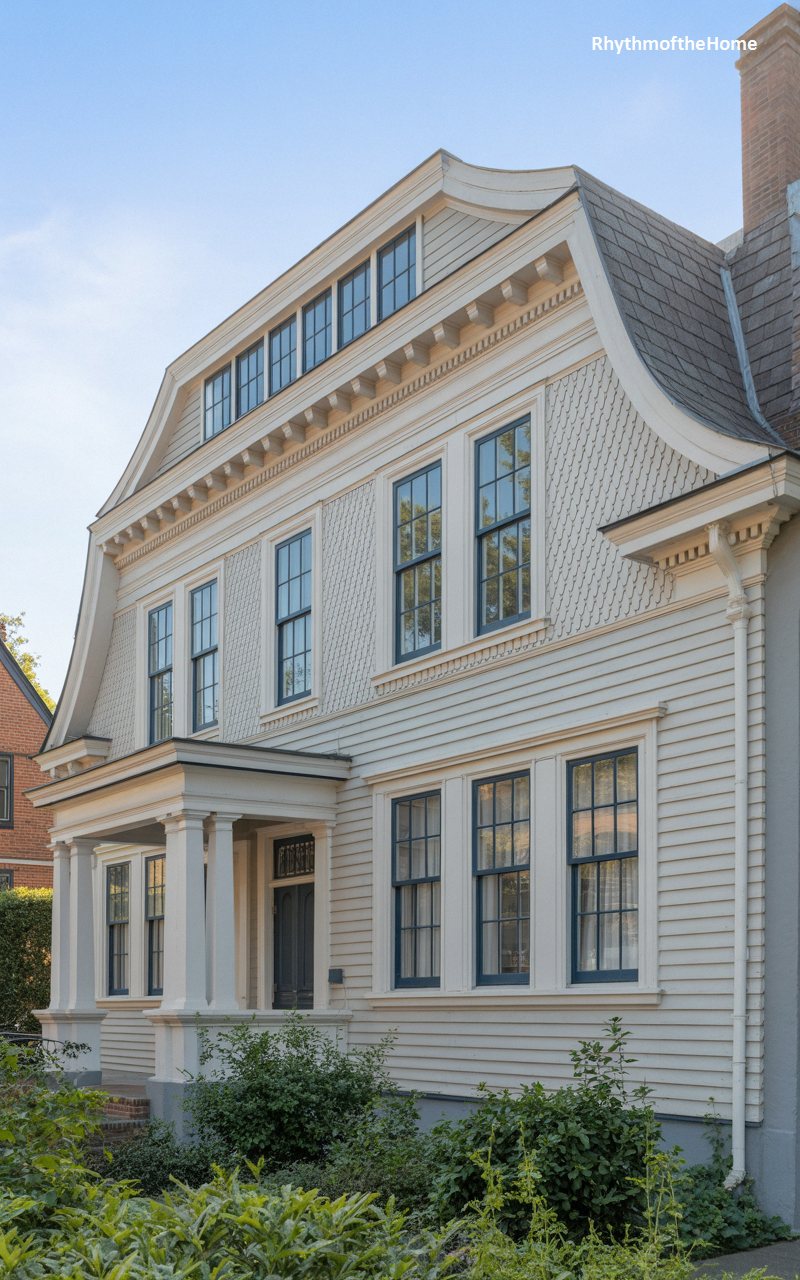
This striking white residence showcases immaculate woodworking details. The exterior is clad in crisp white clapboard siding, contrasted by a grey shingled gambrel roof. A unique feature is the decorative dentil molding or corbels running beneath the eaves, adding texture and depth to the roofline. The windows are large and framed in a deep, slate blue, which stands out beautifully against the white facade. A welcoming porch with sturdy columns spans the entrance, while lush greenery at the base anchors the house. The tall brick chimney adds a vertical element, balancing the horizontal lines of the siding.
31. The Pastoral White Dutch Colonial Home
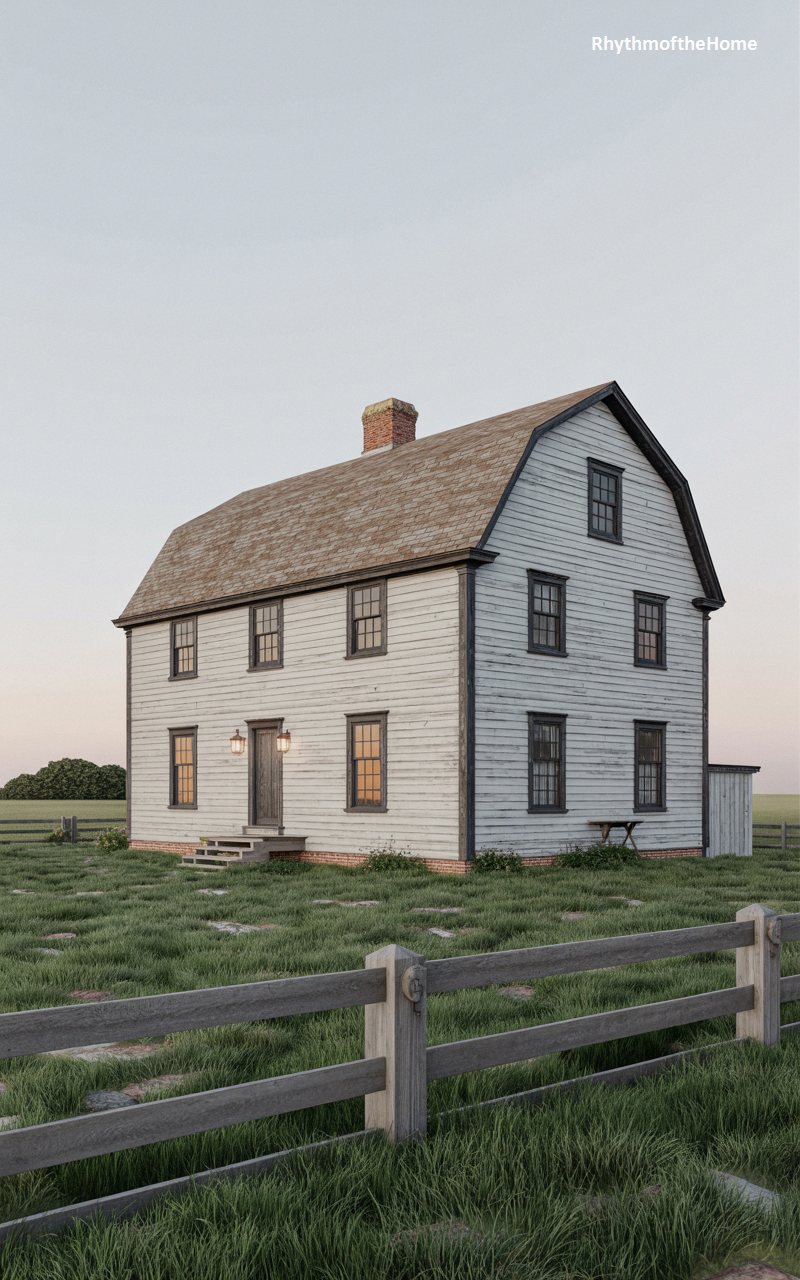
Set in a wide, open field, this home captures the spirit of a historic farmhouse. The exterior features weathered white horizontal siding that bears the marks of time and elements. The gambrel roof is covered in brown shingles, sloping gently to cover the two-story structure. Dark window sashes provide a stark contrast to the pale walls, while lantern-style lights flank the simple wooden front door. A rustic wooden fence runs along the foreground, separating the wild, grassy meadow from the home, enhancing the feeling of a solitary, peaceful existence on the frontier of a new settlement.
32. The Formal Estate Dutch Colonial Home
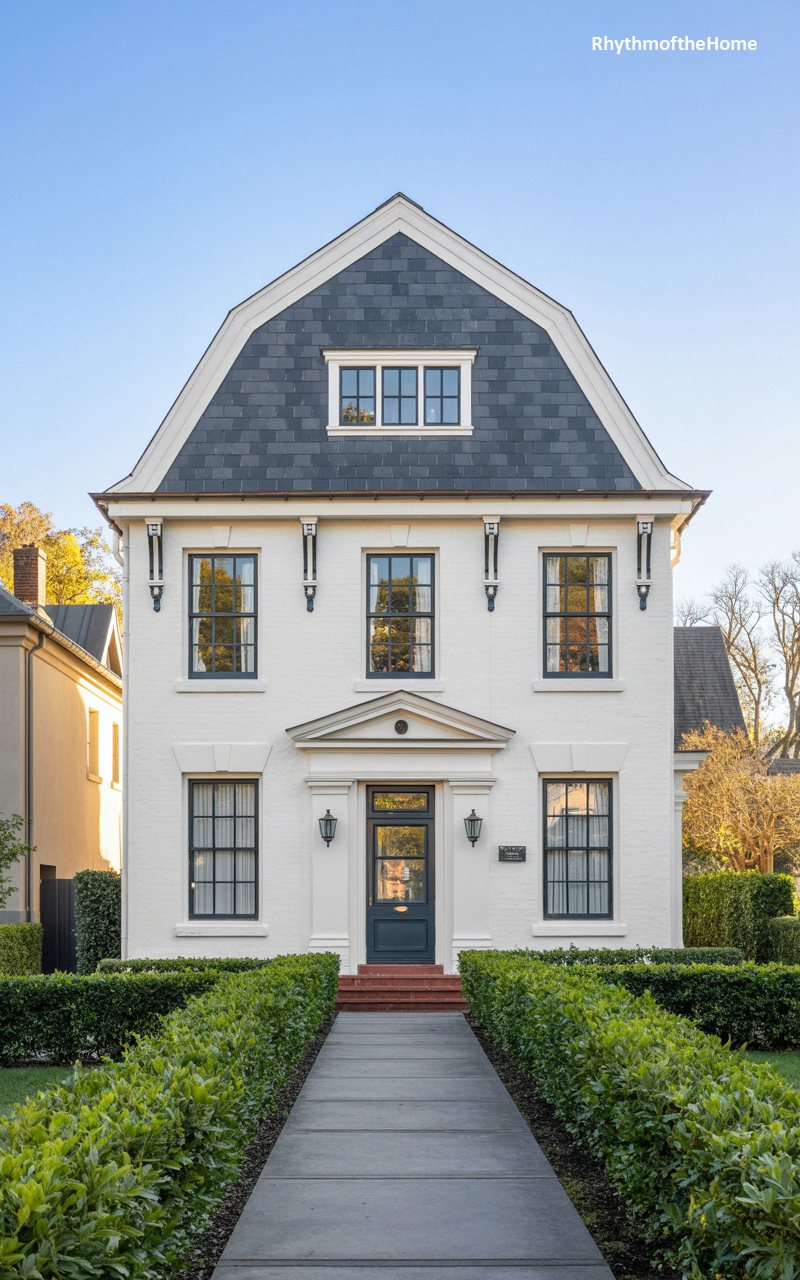
This home is a study in symmetry and contrast, featuring a facade of white-painted brick that gleams against the blue sky. The roof is a steep gambrel shape covered in dark slate tiles, which adds a sense of weight and permanence. Black louvered shutters flank the windows, reinforcing the classic color scheme. The entrance is centered and adorned with a modest pediment. A pristine concrete walkway leads to the front door, lined by perfectly sculpted low boxwood hedges and larger manicured shrubs, creating a disciplined and elegant landscape that complements the rigorous architecture.
33. The Rustic Shingle Dutch Colonial Home
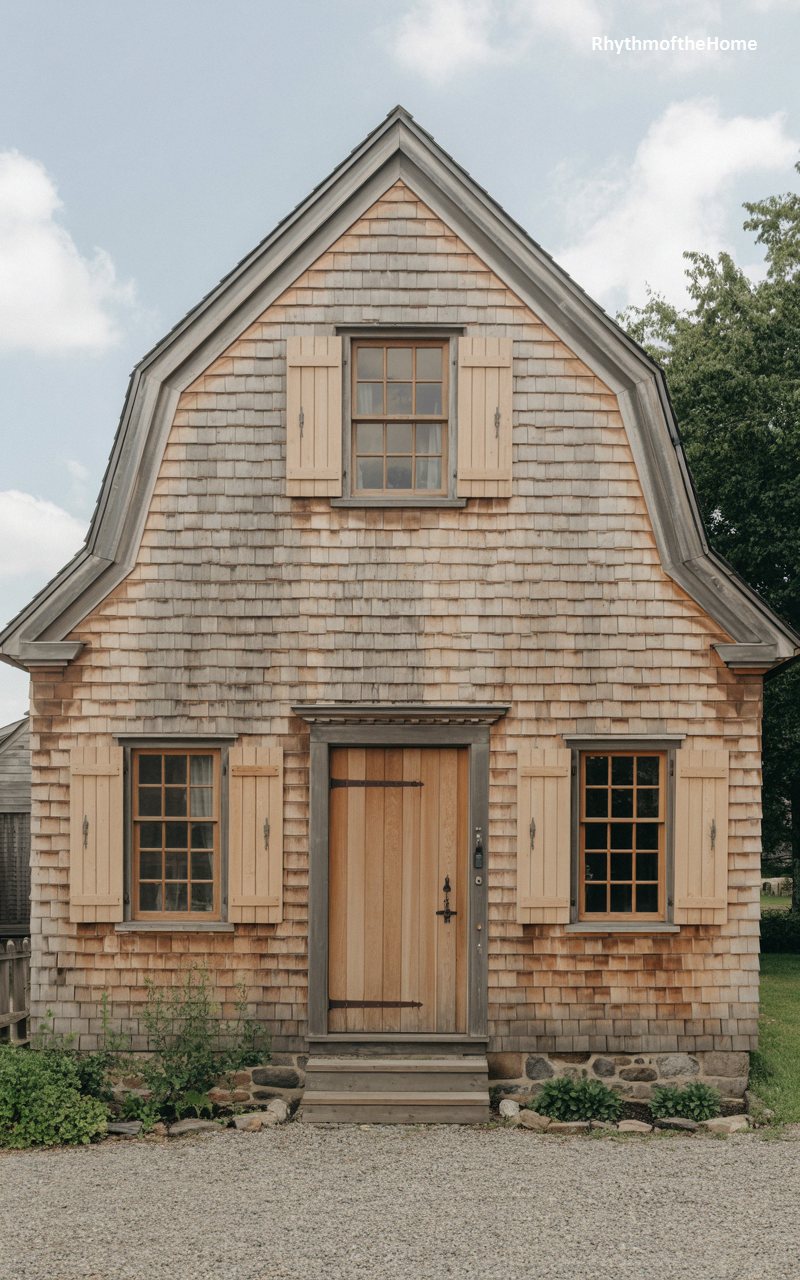
Embracing a raw, natural aesthetic, this cottage is clad entirely in cedar shakes that have weathered to a soft, warm tan. The gambrel roofline is distinct, framing the upper story. The windows are simple with wooden frames, and the shutters are made of solid wood planks, adding to the rustic charm. The front door is a solid, vertical-plank wooden piece with heavy iron hinges, reminiscent of a barn or stable. Stone steps lead up to the entrance, and the surrounding vegetation is loose and natural, making the home feel like an organic extension of the landscape.
34. The Garden Brick Dutch Colonial Home
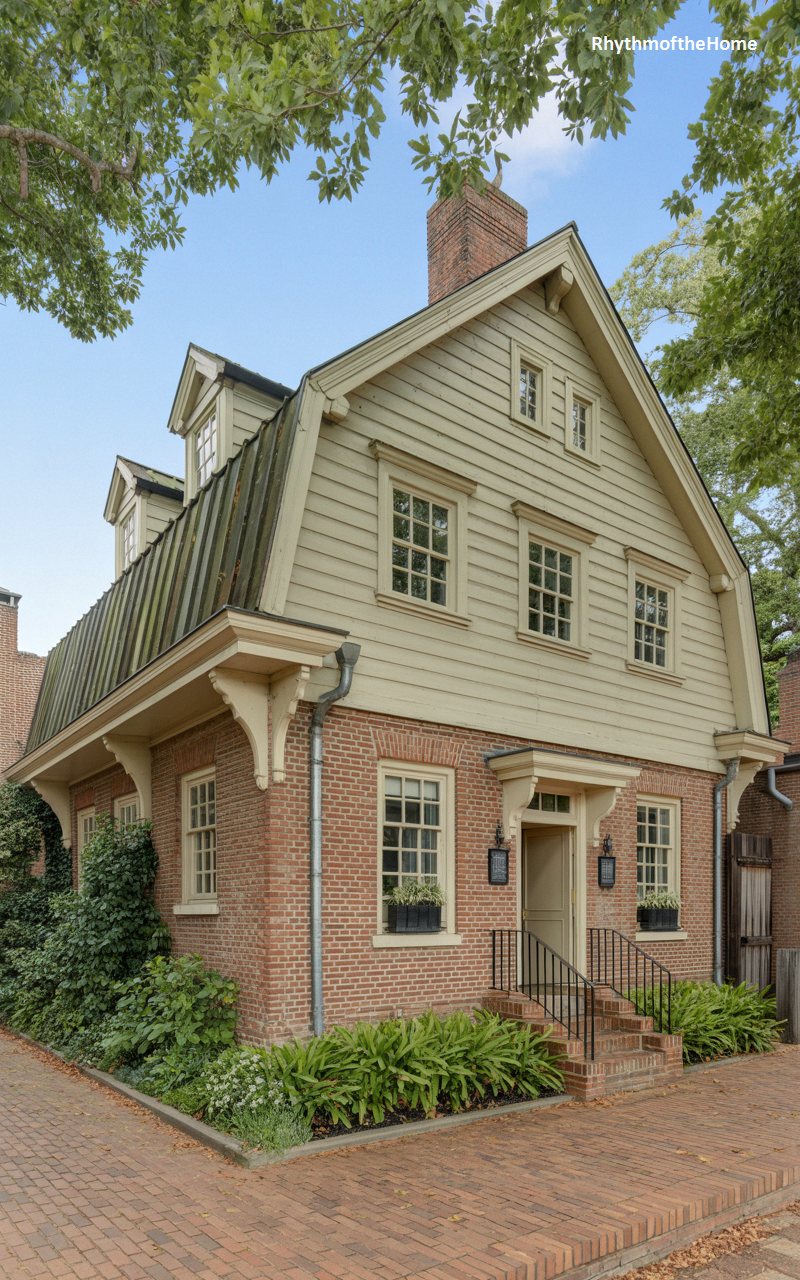
This perspective highlights the side profile of a charming brick home, showcasing the steep pitch of the gambrel roof covered in dark metal or slate. The upper gable end features cream-colored wood siding, creating a pleasing material contrast with the red brick below. Two dormer windows poke out from the roof, adding light to the attic space. The home is surrounded by a vibrant garden, with ivy climbing near the foundation and lush ferns and bushes crowding the brick patio. The scene feels intimate and lived-in, capturing the essence of a well-loved historic home in a leafy neighborhood.
35. The Metal Roof Dutch Colonial Home
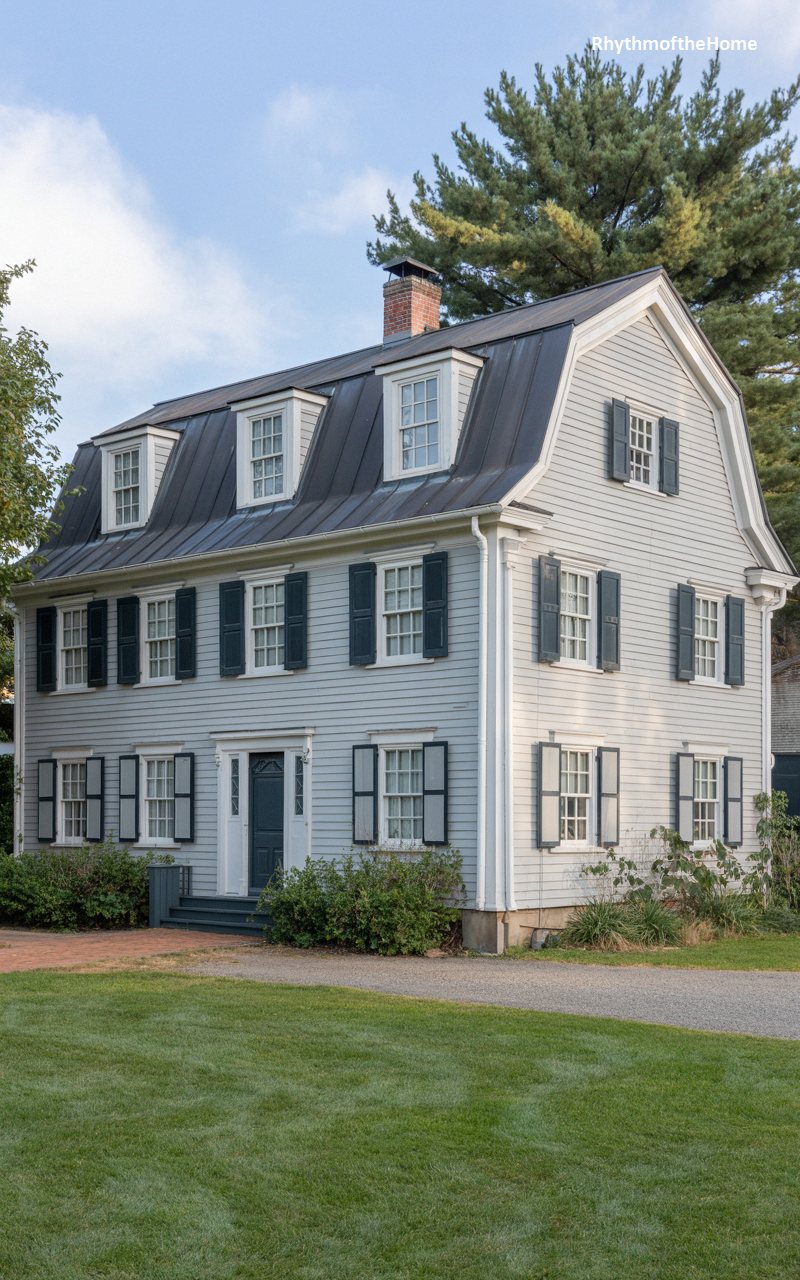
Blending traditional forms with industrial materials, this house features a striking dark metal standing-seam roof that covers the gambrel structure. The exterior is clad in light grey horizontal siding, keeping the palette cool and modern. Three dormer windows are evenly spaced across the roof, maintaining classic symmetry. The front door is painted a deep navy blue, offering a subtle pop of color. The landscaping is simple and green, with a paved driveway leading up to the side, presenting a clean, updated take on the colonial style that feels fresh and contemporary.
36. The Weathered Shake Dutch Colonial Home
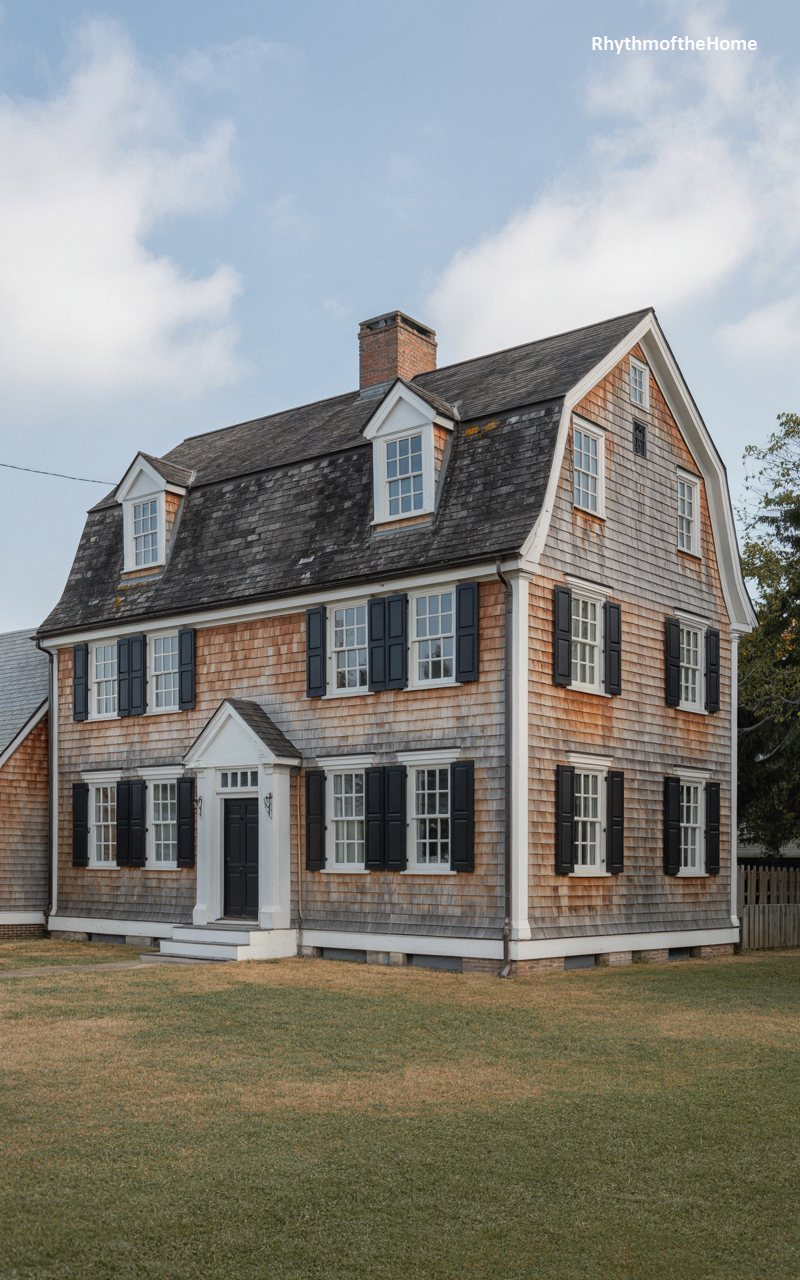
This large residence is wrapped in grey cedar shingles, giving it a quintessential coastal appearance. The gambrel roof is expansive, covered in dark asphalt shingles, with two shed dormers providing ample space for the upper floor. Black shutters frame the numerous white-sashed windows, creating a rhythmic pattern across the facade. A white entryway surround with pilasters adds a touch of formality to the otherwise rustic shingle style. The home sits on a sprawling green lawn, suggesting a spacious property likely situated near the sea or in a country setting.
37. The Mixed Material Dutch Colonial Home
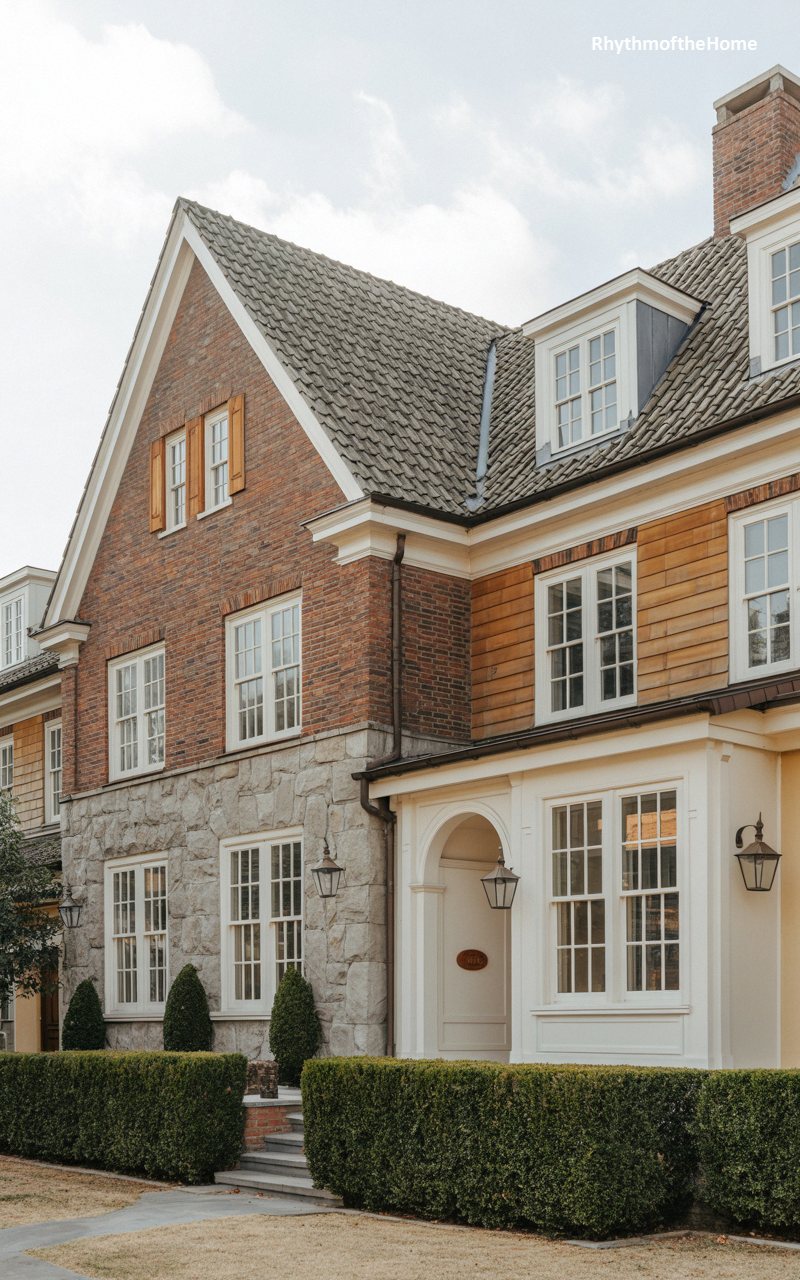
This home visually separates its stories through material choices, with a rugged grey stone facade on the ground floor and warm wood siding on the upper level and gable end. The roof is tiled in dark grey, featuring a subtle flare at the eaves. The windows are white with multiple panes, brightening the exterior. A side entrance with an arched doorway adds architectural intrigue. The landscaping includes manicured hedges and a stone path, blending the constructed elements with the natural surroundings. The mix of stone, wood, and brick creates a rich, textural tapestry.
38. The Woodland Cottage Dutch Colonial Home
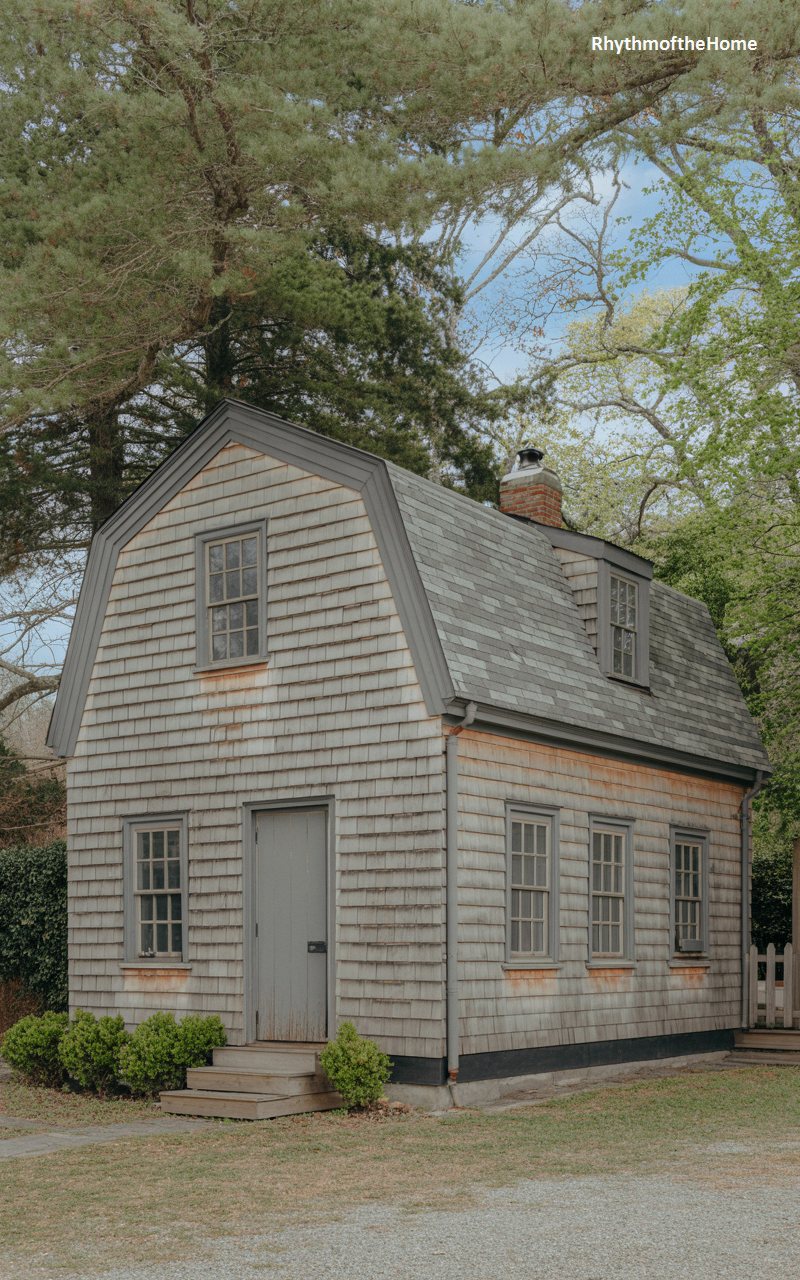
Hidden away amongst tall pine trees, this small structure feels like a secret retreat. It features a classic gambrel roof covered in grey asphalt shingles, which overhang the grey wood-shingled walls. A single dormer window is visible on the side, and a brick chimney rises from the rear. The windows are small and multi-paned, typical of older cottages. Lush green bushes surround the base, and the overall atmosphere is one of quiet seclusion. It looks like a perfect guest house or artist’s studio tucked away in a forest clearing.
39. The Overhang Dutch Colonial Home
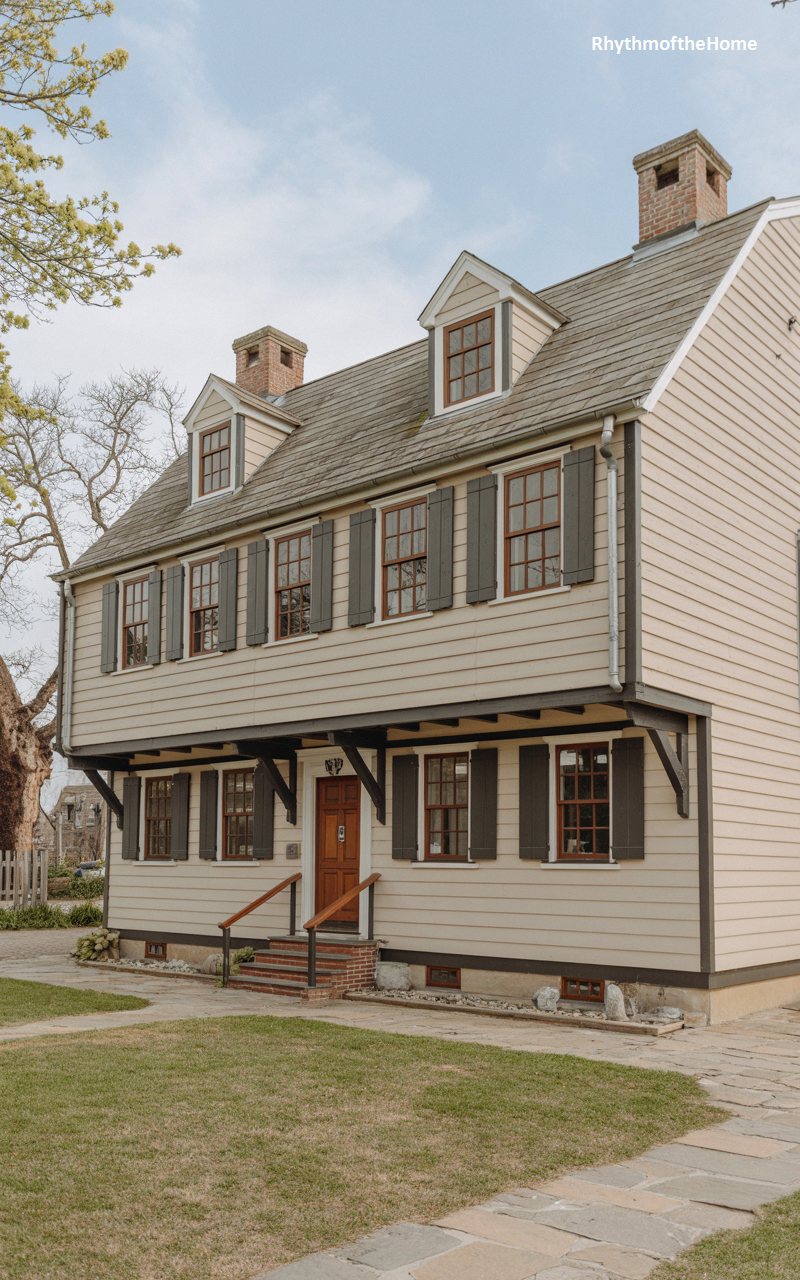
This house features a “jetty” or overhang where the second floor extends slightly beyond the first, a medieval construction technique often found in colonial architecture. The siding is painted a soft beige or cream, with dark brown shutters and trim providing contrast. The roof is shingled in wood shakes. A massive brick chimney dominates one side of the house. The windows are small and diamond-paned in some places, adding a Tudor influence. A rustic wooden fence and stone landscaping complete the historic, storybook look of the property.
40. The Townhouse Dutch Colonial Home
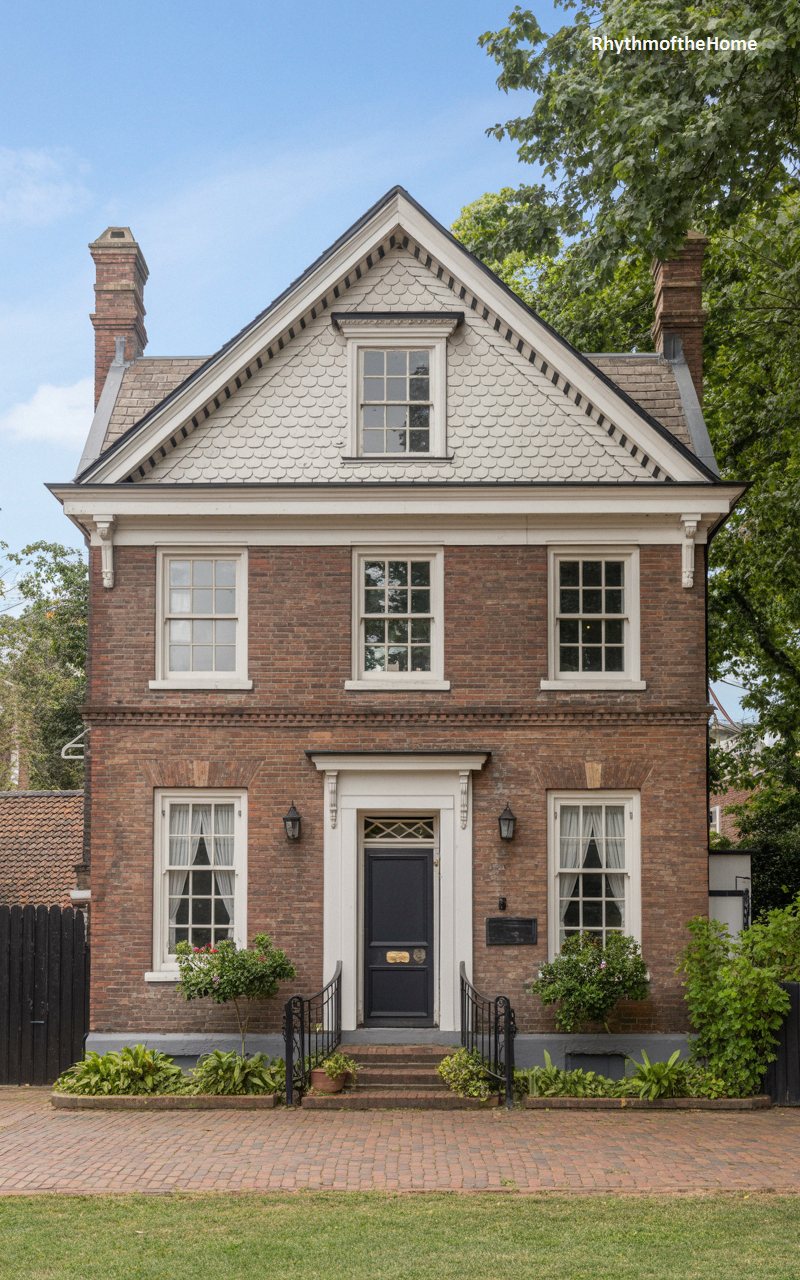
Standing with urban dignity, this home features a red brick facade on the lower levels and a decorative, scalloped white shingle detail in the upper gable. The roof is steeply pitched with slate tiles. The windows are white sash style, arranged symmetrically. The front entrance is marked by a classic white door frame with a pediment. A black wooden fence separates the private front yard from the public street, and the brick paving in the foreground suggests a city setting. The architecture marries the verticality of a townhouse with colonial details.
41. The Blue Coastal Dutch Colonial Home
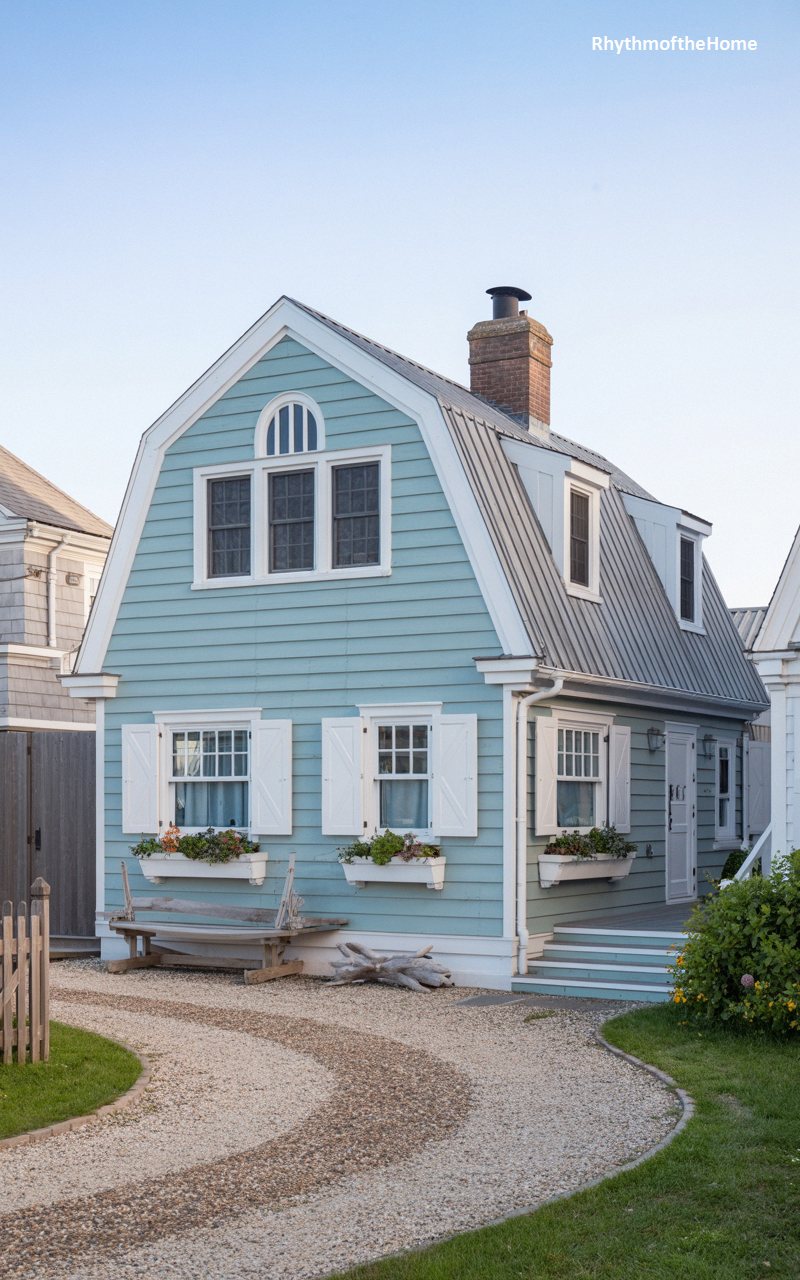
Radiating beachy charm, this house is clad in light robin’s-egg blue siding. The roof is a grey metal standing seam, which adds a modern, durable touch suitable for coastal weather. A distinctive Palladian-style window sits in the upper gable, adding a decorative flourish. White shutters and flower boxes filled with colorful blooms adorn the lower windows. A weathered wooden bench sits on the front porch, inviting relaxation. The gravel driveway and manicured green lawn create a tidy, welcoming approach to this cheerful seaside abode.
42. The Dune Path Dutch Colonial Home
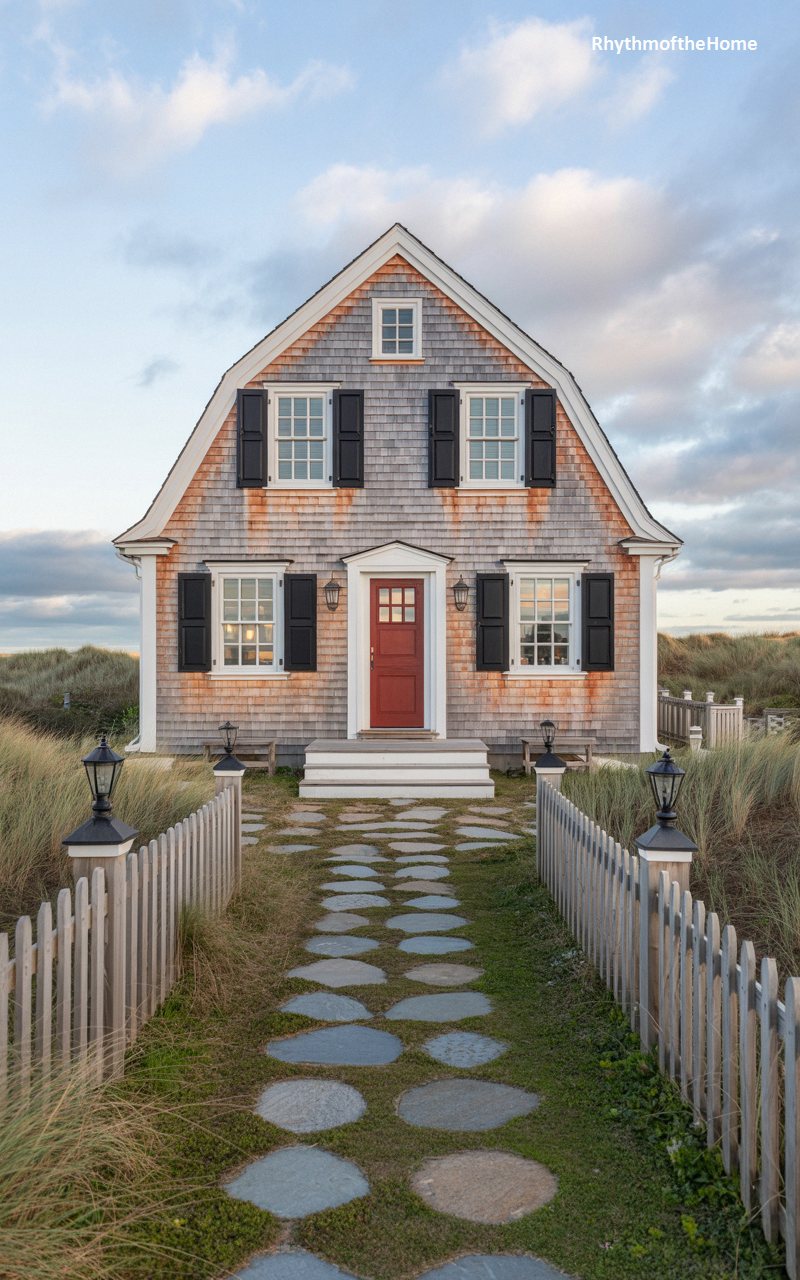
Perfectly situated in a landscape of rolling sand dunes and wild grasses, this home features natural cedar shingle siding that has weathered to a silver-grey. The steep gambrel roof mirrors the siding material. A bold red front door provides the only splash of bright color, drawing the eye to the center. Black shutters flank the white windows. A stone pathway winds through the dunes, lined by a rustic wooden picket fence, leading guests from the sandy surroundings up to the welcoming entrance of this quintessential beach cottage.
43. The Pondside Luxury Dutch Colonial Home
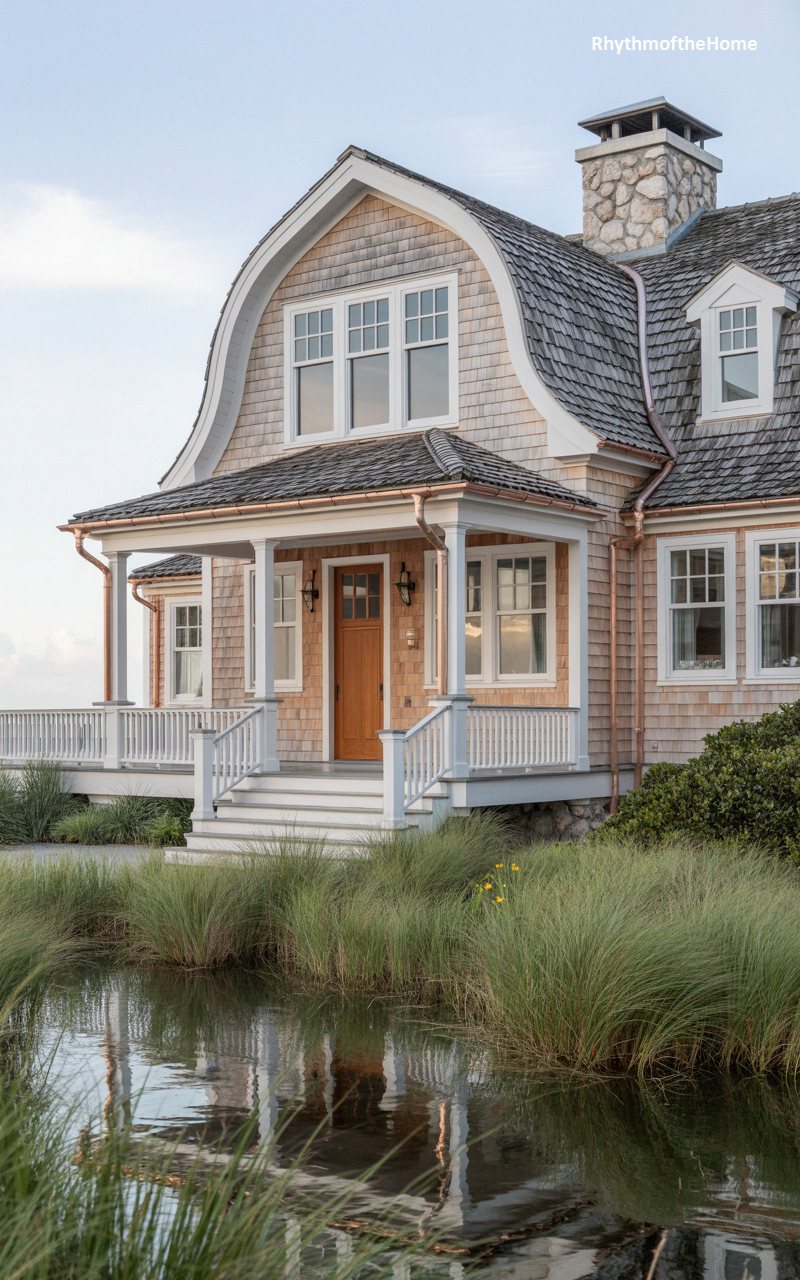
This magnificent home sits at the water’s edge, reflecting its beauty in the calm pond below. The exterior is clad in light cedar shingles, with a complex roofline featuring a curved gambrel shape and shake shingles. Copper gutters and downspouts add a touch of luxury and warmth. A deep porch with white columns wraps around the front, offering a shaded place to view the water. Lush aquatic grasses and reeds line the bank, softening the transition between the manicured architecture and the natural water feature.
44. The White Beach Dutch Colonial Home
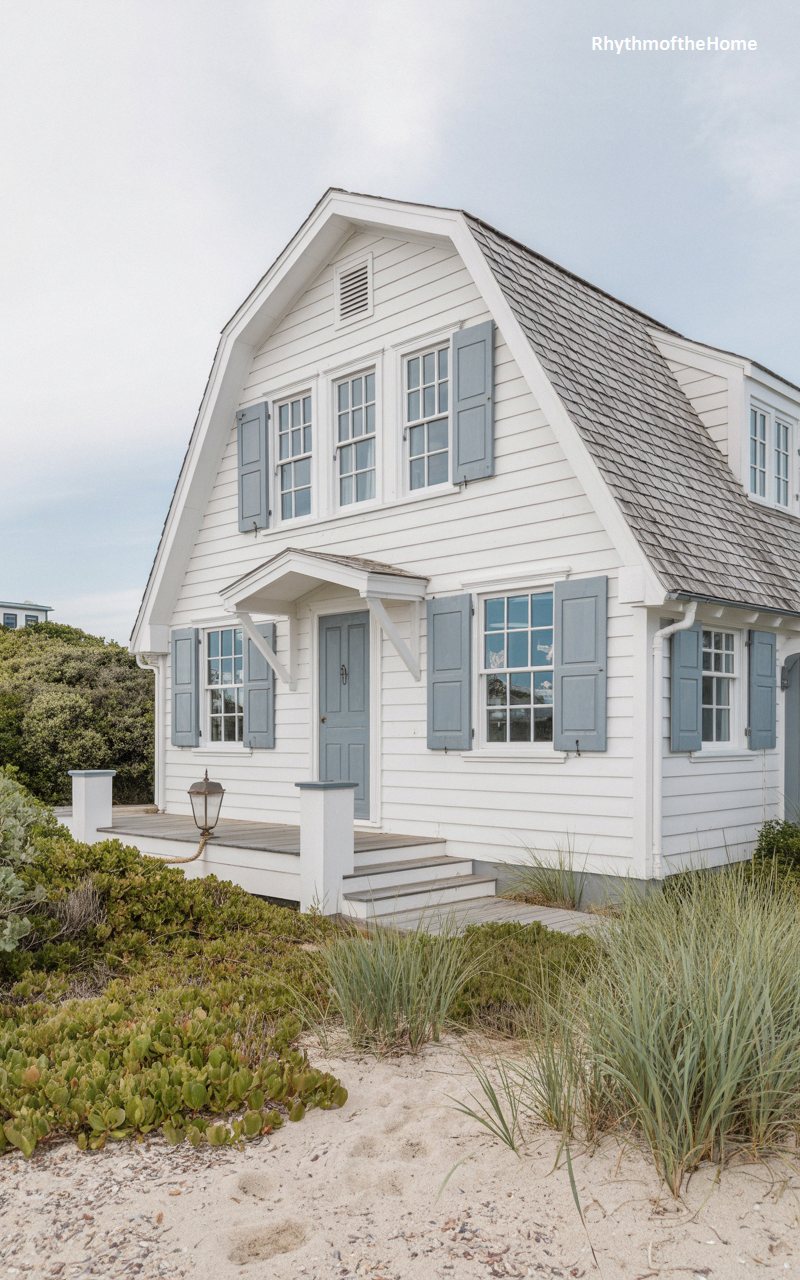
Bright and airy, this home features white horizontal siding that reflects the coastal sunlight. The roof is a grey shingled gambrel with a slight flare at the eaves. Light blue shutters frame the windows, echoing the colors of the sea and sky. The front door is painted a matching soft blue. A wooden boardwalk path leads through the tall dune grasses to the entrance, firmly placing this home in a beach environment. The overall aesthetic is clean, crisp, and perfectly adapted to a seaside lifestyle.
45. The Copper Lantern Dutch Colonial Home
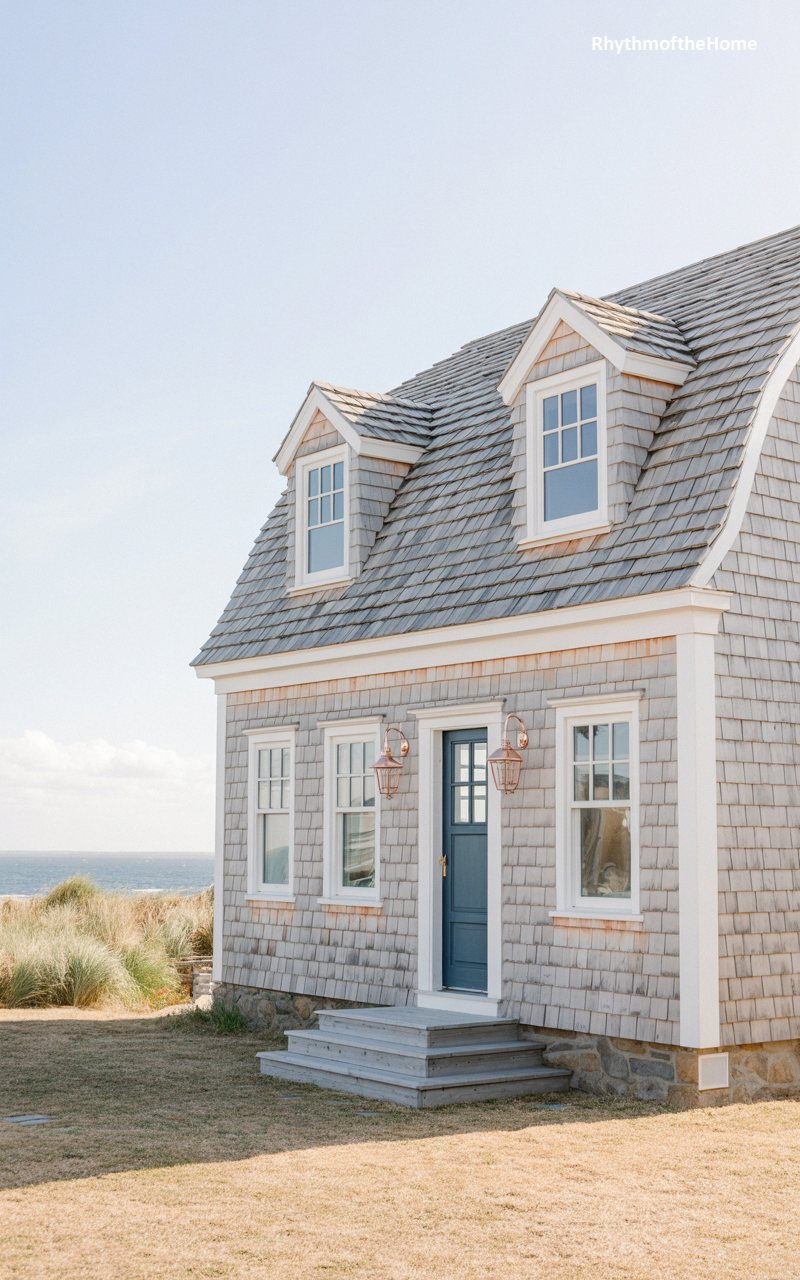
This charming cottage features weathered grey shingles that cover both the walls and the roof, creating a unified, textured look. Two dormer windows with gabled roofs project from the upper story. The front door is painted a deep blue, flanked by elegant copper lanterns that add a metallic warmth. White trim around the windows and door sharpens the appearance. The home sits on a grassy bluff overlooking the ocean in the distance, with a simple stone step leading to the entry, embodying a rugged yet refined coastal elegance.
46. The Ocean View Dutch Colonial Home
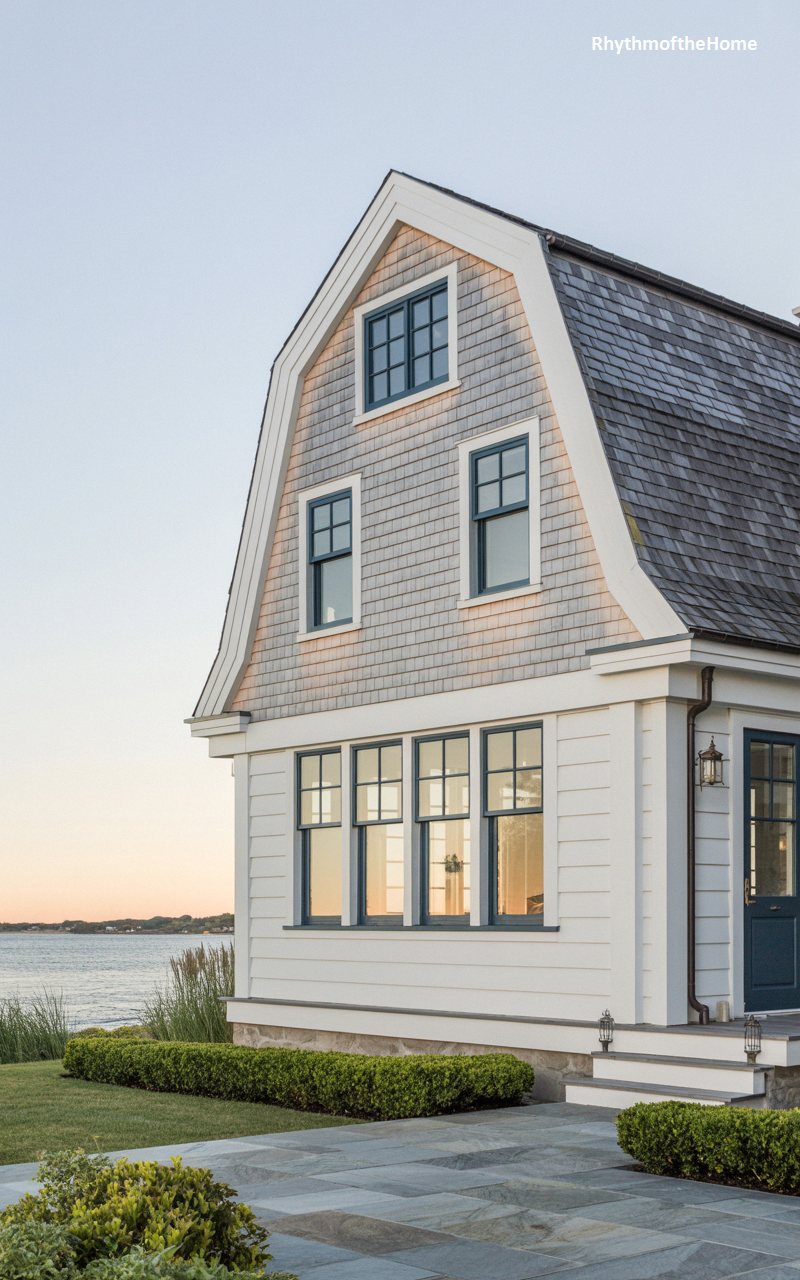
Designed to maximize the stunning waterfront location, this home features a tall, grey-shingled facade with a gambrel roof. The most striking features are the large windows on both levels that offer expansive views of the sea. The trim is painted a dark charcoal or blue, providing a modern contrast to the light shingles. A stone terrace wraps around the base, and manicured green hedges line the lawn. The water stretches out to the horizon in the background, making the landscape a key component of the home’s architectural experience.
47. The Boardwalk Dutch Colonial Home
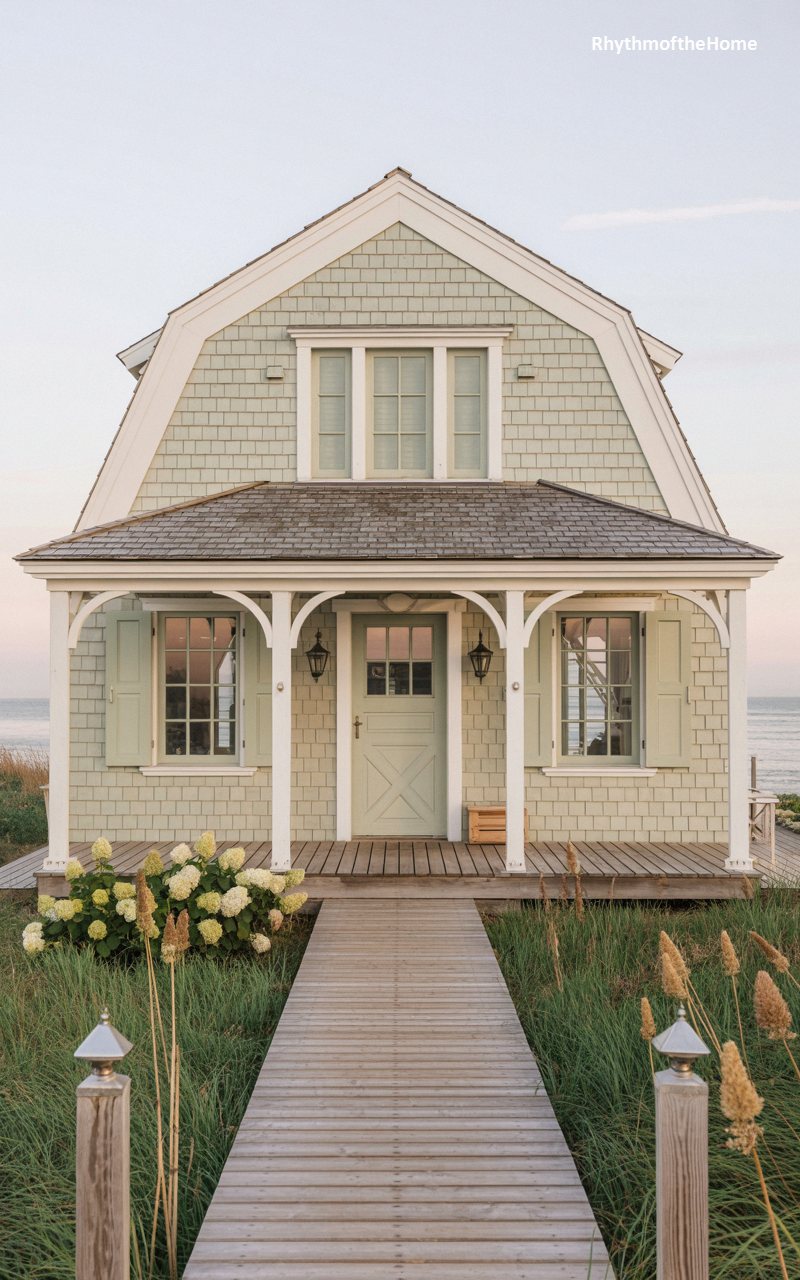
This inviting home is finished in light green cedar shakes, giving it a soft, natural appearance that blends with the dune grass. The gambrel roof is covered in grey shingles. A wide front porch spans the width of the house, supported by delicate columns and featuring decorative brackets. A wooden boardwalk serves as the walkway, guiding visitors over the sand and grass to the steps. The scene is bathed in the warm light of sunset, enhancing the cozy, nostalgic feel of a summer beach house.
48. The White Brick Dutch Colonial Home
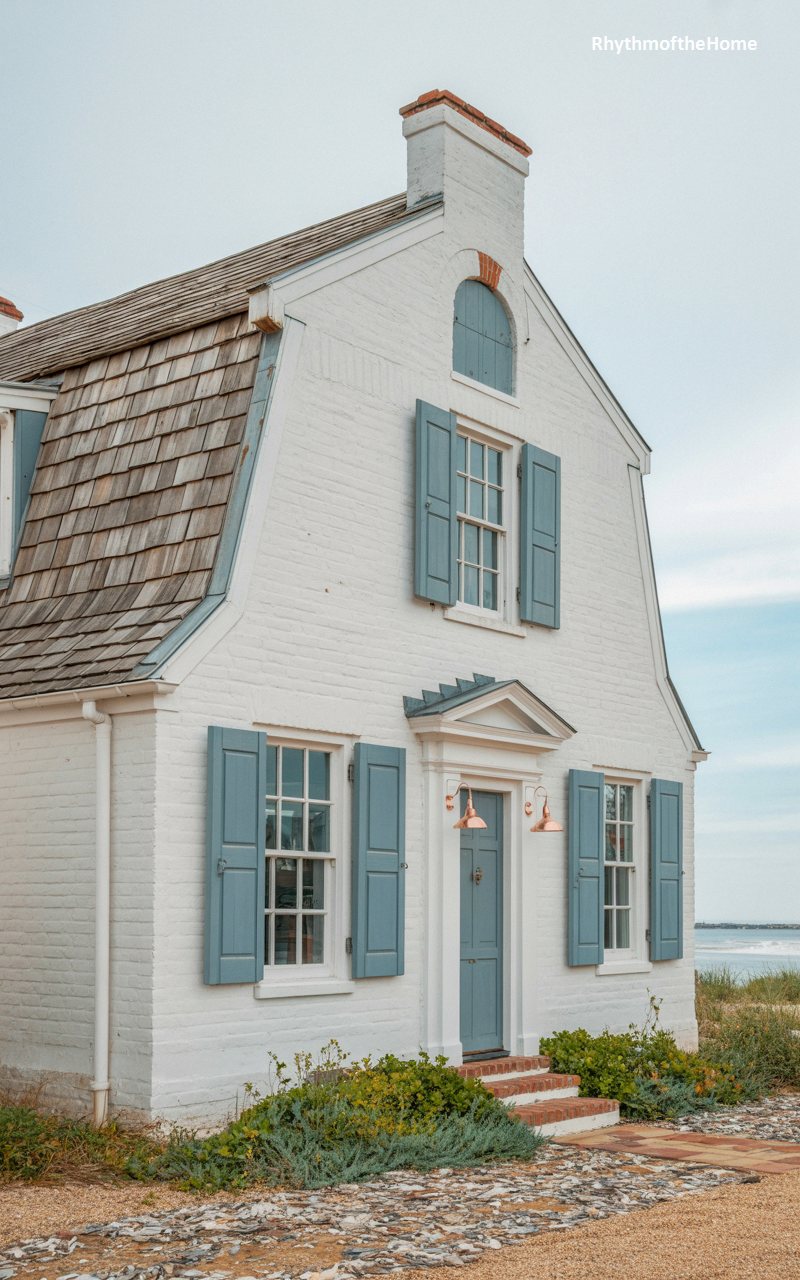
This structure combines the solidity of masonry with the lines of Dutch design. The exterior is painted white brick, giving it a clean, textured look. The roof is a standard shingle gambrel. Blue shutters add a classic colonial color accent to the windows. The entrance features a pediment and pilasters, with copper light fixtures flanking the door. A brick pathway leads up to the house, bordered by low, sprawling shrubs. The setting appears to be coastal, with sand and crushed shell ground cover visible in the foreground.
49. The Sand Dune Dutch Colonial Home
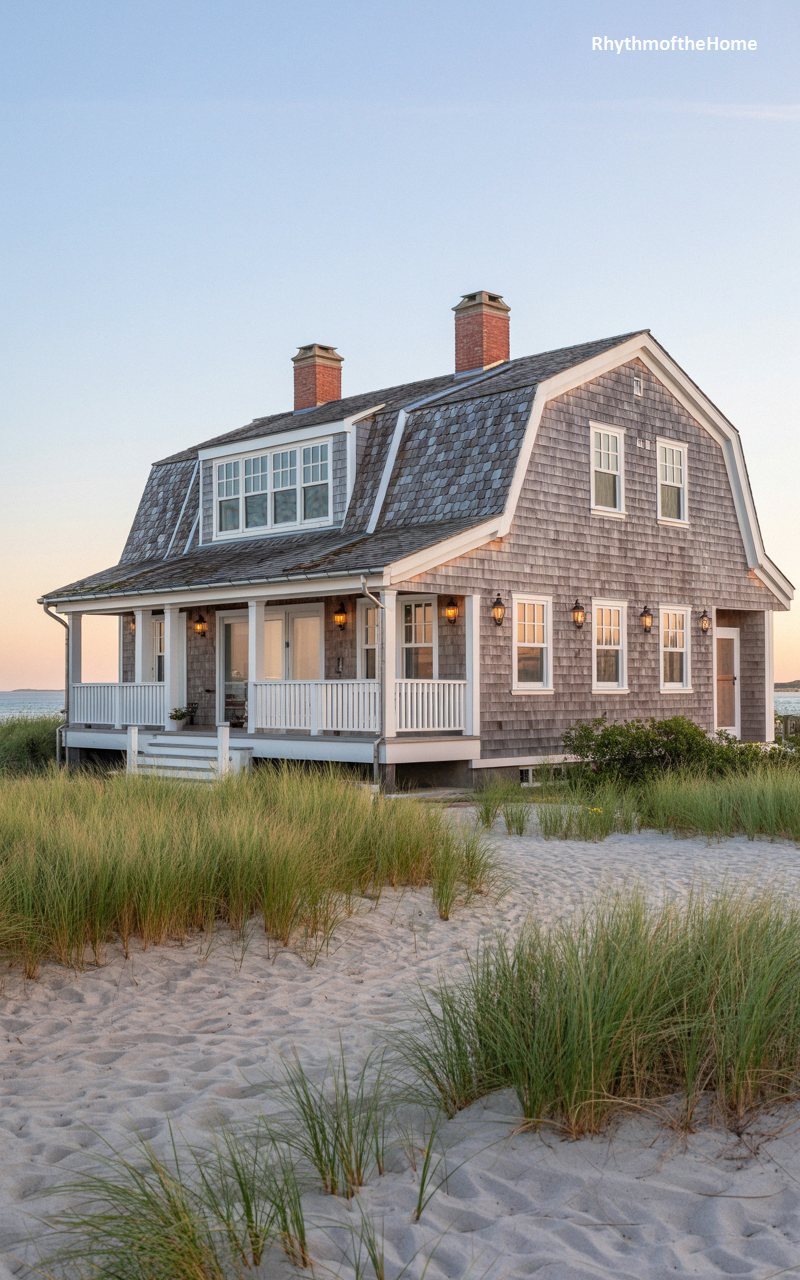
Nestled amongst sandy dunes and beach grass, this large residence is clad in grey cedar shingles that help it merge with the coastal environment. The roof is a complex gambrel with slate or dark grey tiles. A covered porch runs along the first floor, providing shade and outdoor living space. White columns and trim contrast with the weathered wood. The sandy terrain leads right up to the house, emphasizing its beachfront location. The soft lighting suggests early evening, creating a serene and peaceful maritime atmosphere.
50. The Seaside Terrace Dutch Colonial Home
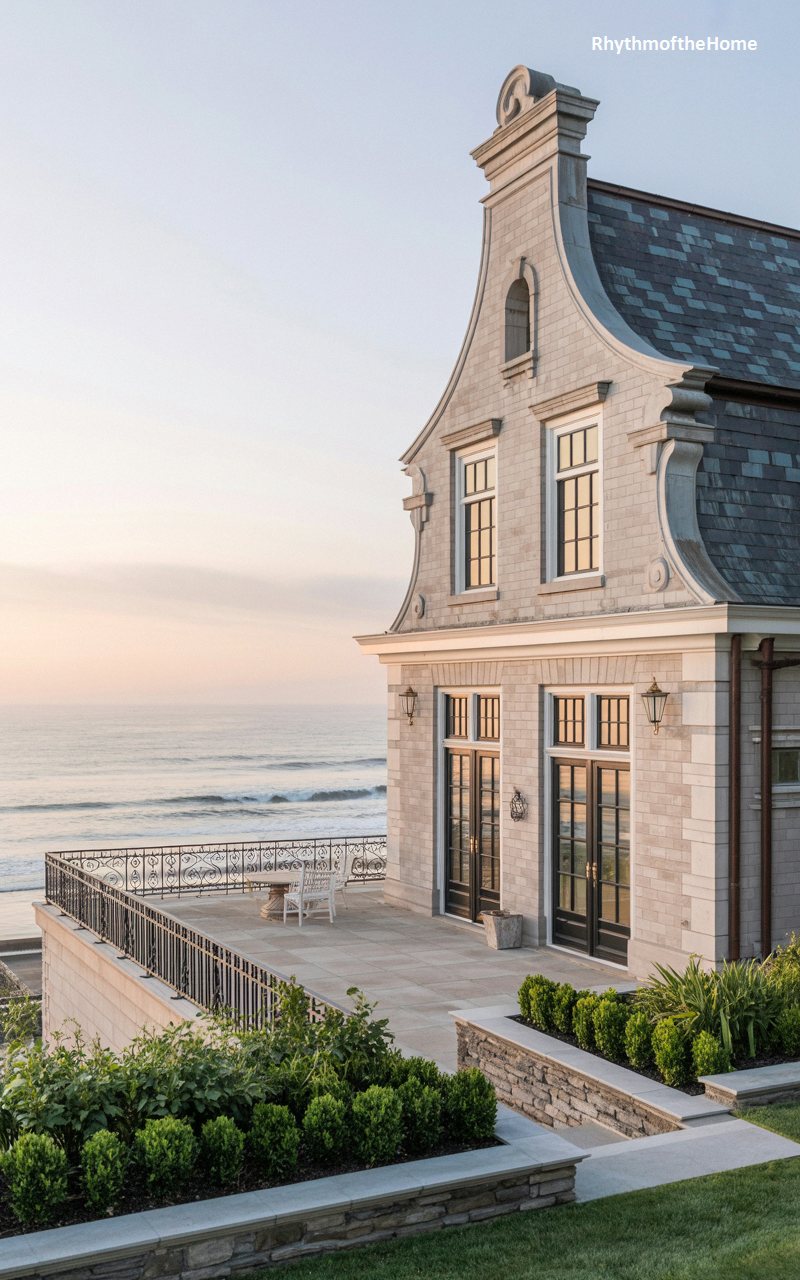
This luxurious home features a facade of light grey stone blocks, lending it a sense of permanence and grandeur. The roof is a steep, dark slate gambrel with ornate curved gables. Large French doors open onto a spacious stone terrace that overlooks the ocean, blurring the line between indoor and outdoor living. A black wrought-iron railing surrounds the terrace, adding a graphic detail against the sea and sky. The setting is dramatic, perched on a cliff or dune edge with the waves visible in the background, representing the height of coastal elegance.
51. Modern Whitewashed Brick Dutch Colonial Home
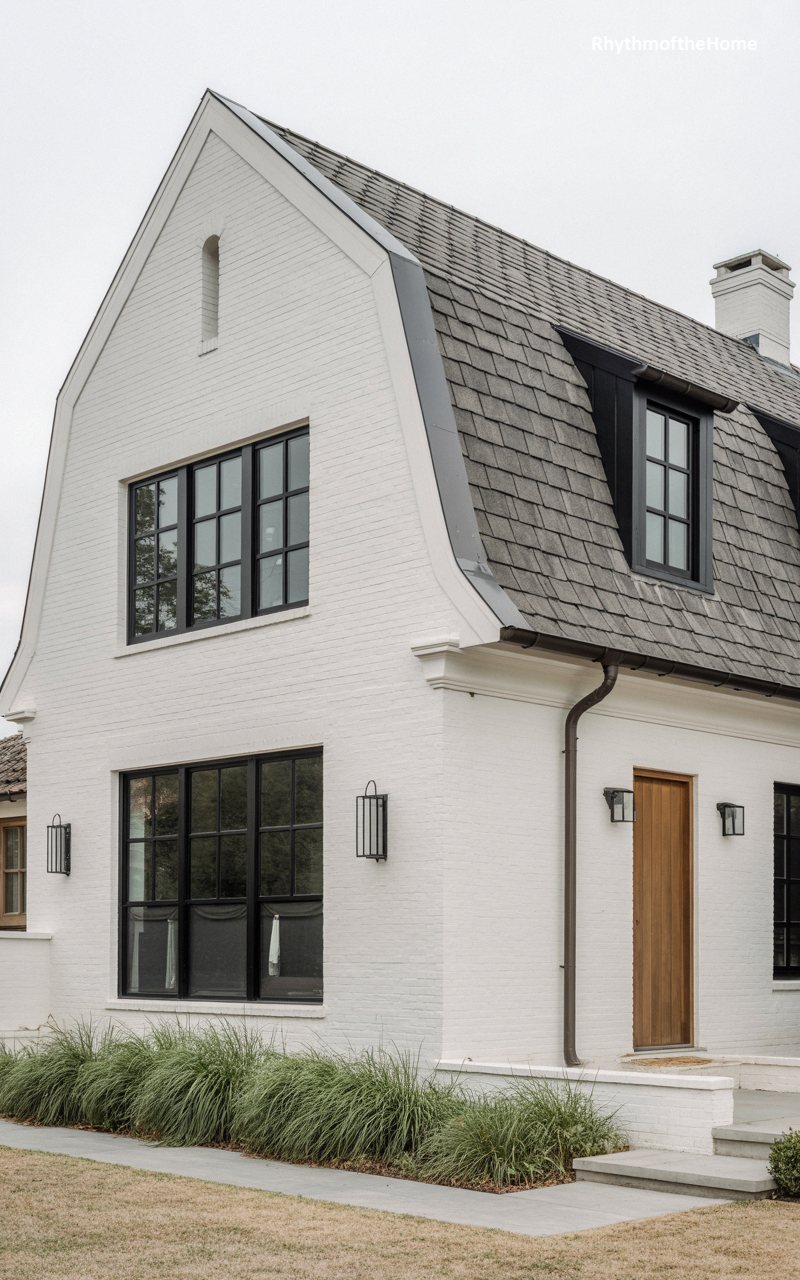
This residence offers a striking contemporary interpretation of traditional architecture, marrying the iconic gambrel roofline with a crisp, modern farmhouse aesthetic. The facade is defined by a textured whitewashed brick that rises to meet a steep, dark charcoal roof, creating a bold monochromatic contrast. Black-framed windows, featuring a grid pattern, punch through the masonry, adding geometric rigor to the soft curves of the eaves. The absence of shutters and excessive ornamentation allows the structural silhouette to take center stage, while a simple copper downspout adds a subtle touch of antique warmth to the pristine white exterior.
52. Dark Vertical Siding Dutch Colonial Home
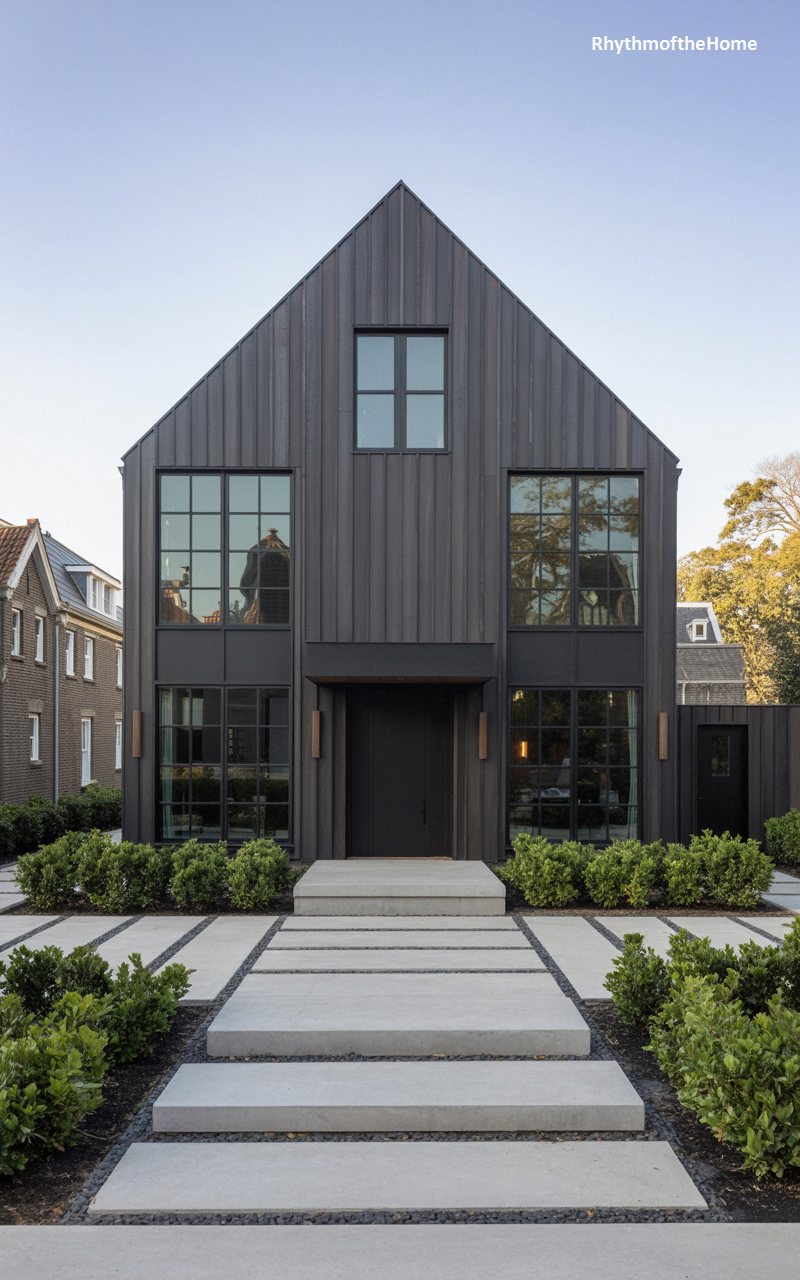
Cloaked in a moody, dark charcoal finish, this home reimagines the Dutch vernacular through a sleek, minimalist lens. The structure features a sharp, high-pitched gable that nods to historical forms while utilizing vertical wood siding to emphasize verticality and height. A grand, recessed entryway provides a shadowed welcome, flanked by large, multi-paned windows that reflect the surrounding greenery. The approach is marked by a precise arrangement of concrete pavers set in gravel, leading the eye directly to the front door. The landscaping is restrained and manicured, reinforcing the architectural precision and the dramatic, shadowy presence of the building.
53. Mixed Material Modern Dutch Colonial Home
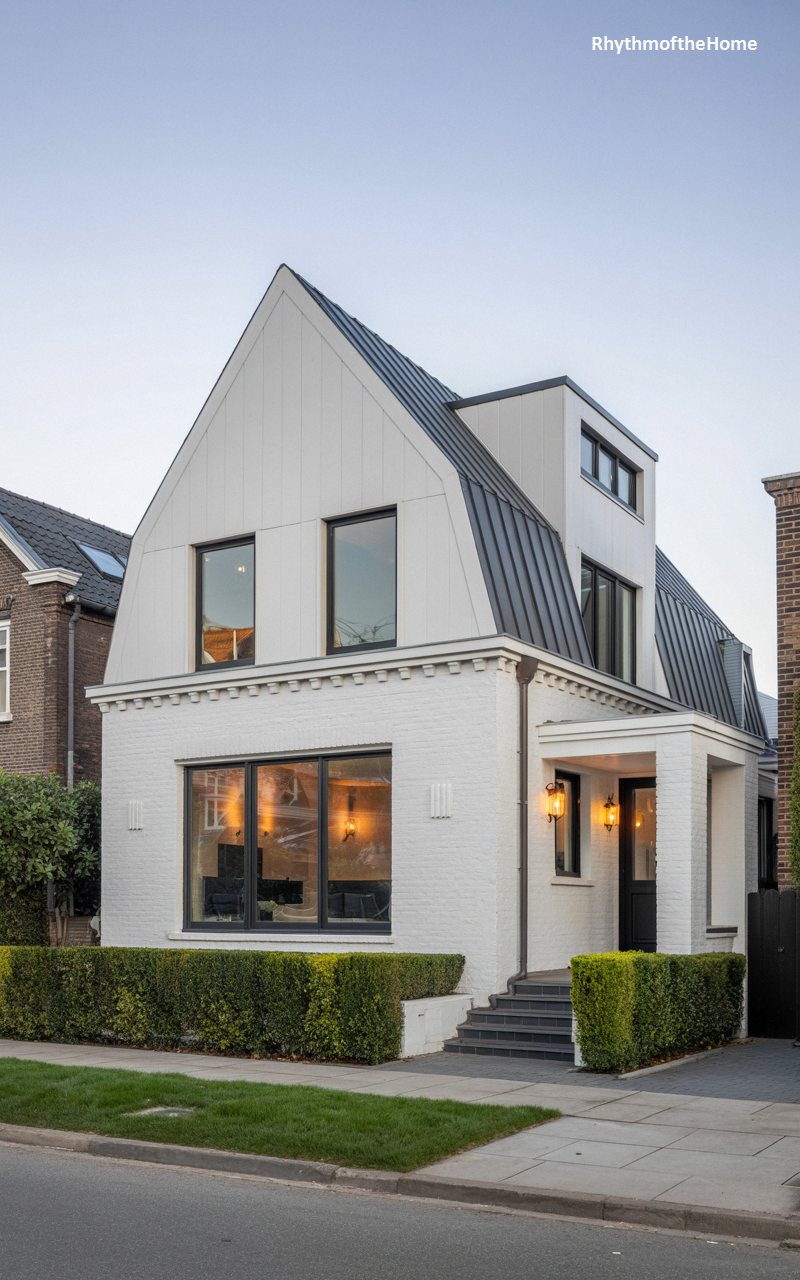
This architectural gem presents a fascinating duality, combining a grounded white brick lower level with a lightweight, metal-clad upper story. The roofline is a distinct gambrel shape, executed in dark standing seam metal that cascades down the sides, seamlessly integrating the dormer window. The transition between the tactile brick and the smooth metal creates a dynamic visual tension. Large picture windows on the ground floor offer a glimpse into a warm, illuminated interior, contrasting with the cool exterior tones. The design feels compact yet lofty, utilizing the volume of the Dutch roof to maximize interior space without overwhelming the footprint.
54. Blonde Wood Sided Dutch Colonial Home
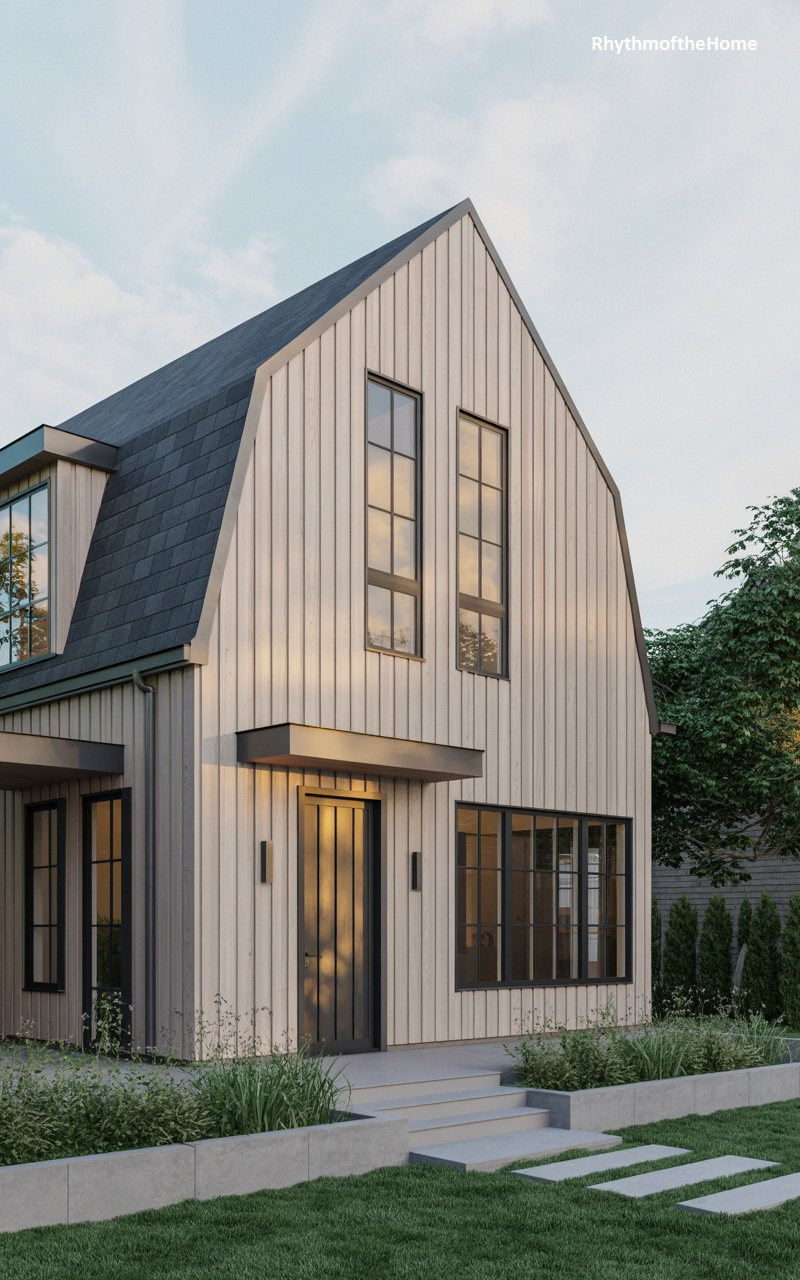
Radiating a warm, organic glow, this home utilizes pale, vertical timber siding to soften the angularity of its double-height design. The structure is capped by a dark, textured roof that follows the classic broken pitch of the Dutch style, yet the execution feels distinctly Scandinavian and airy. Tall, narrow windows stretch across the facade, capturing the golden hour light and reflecting the sky. A flat-roofed overhang protects the entryway, introducing a modernist horizontal line to balance the verticality. The surrounding landscaping is integrated into concrete planters, grounding the ethereal wood tones with the solidity of stone and greenery.
55. Minimalist Stucco Dutch Colonial Home
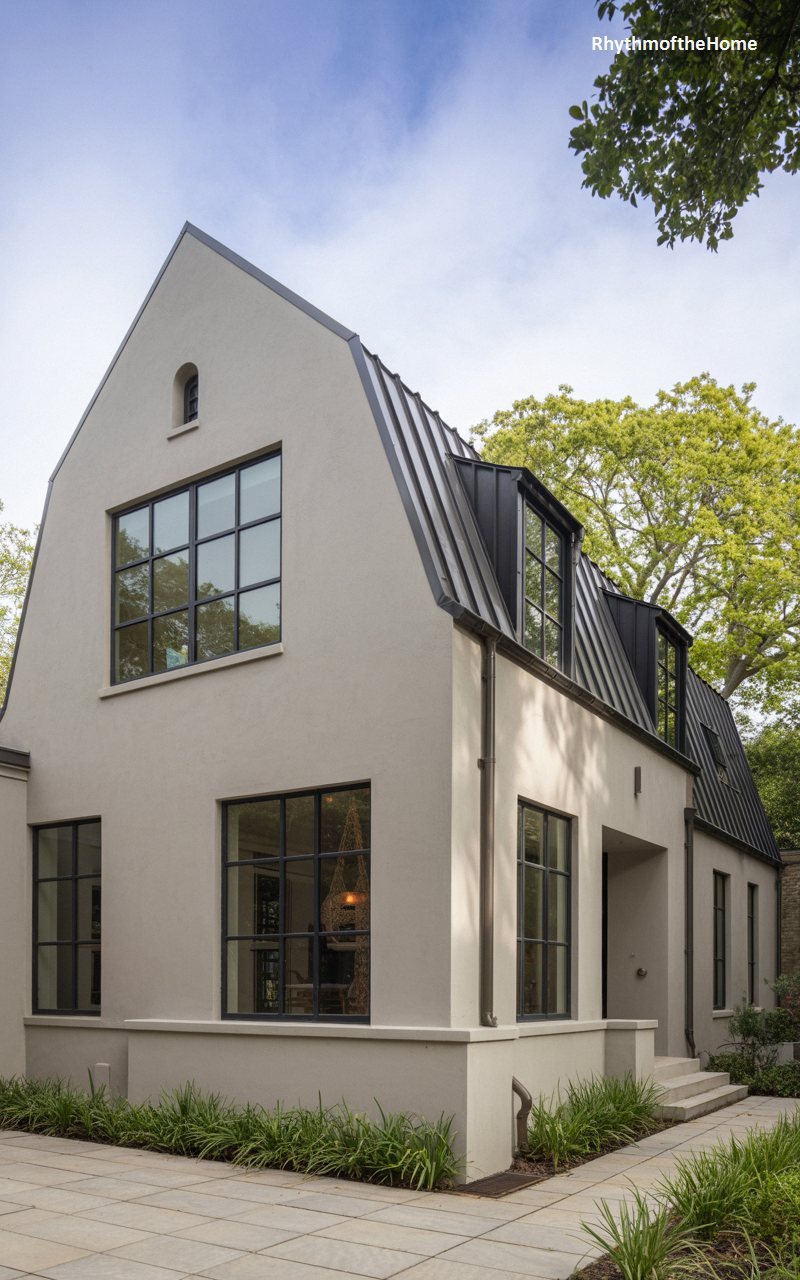
Simplicity is the defining characteristic of this elegant structure, which features a smooth, pale stucco exterior that curves gracefully into the eaves. The roof is clad in dark standing seam metal, accentuating the dramatic pitch and the unique, swooping silhouette typical of Dutch-influenced architecture. A single, small arched window near the peak adds a touch of whimsy and historical reference, while the large, black-framed window below anchors the facade. The absence of overhangs or decorative molding gives the home a sculptural quality, appearing almost carved from a single block, blending timeless European forms with modern restraint.
56. Contemporary A-Frame Dutch Colonial Home
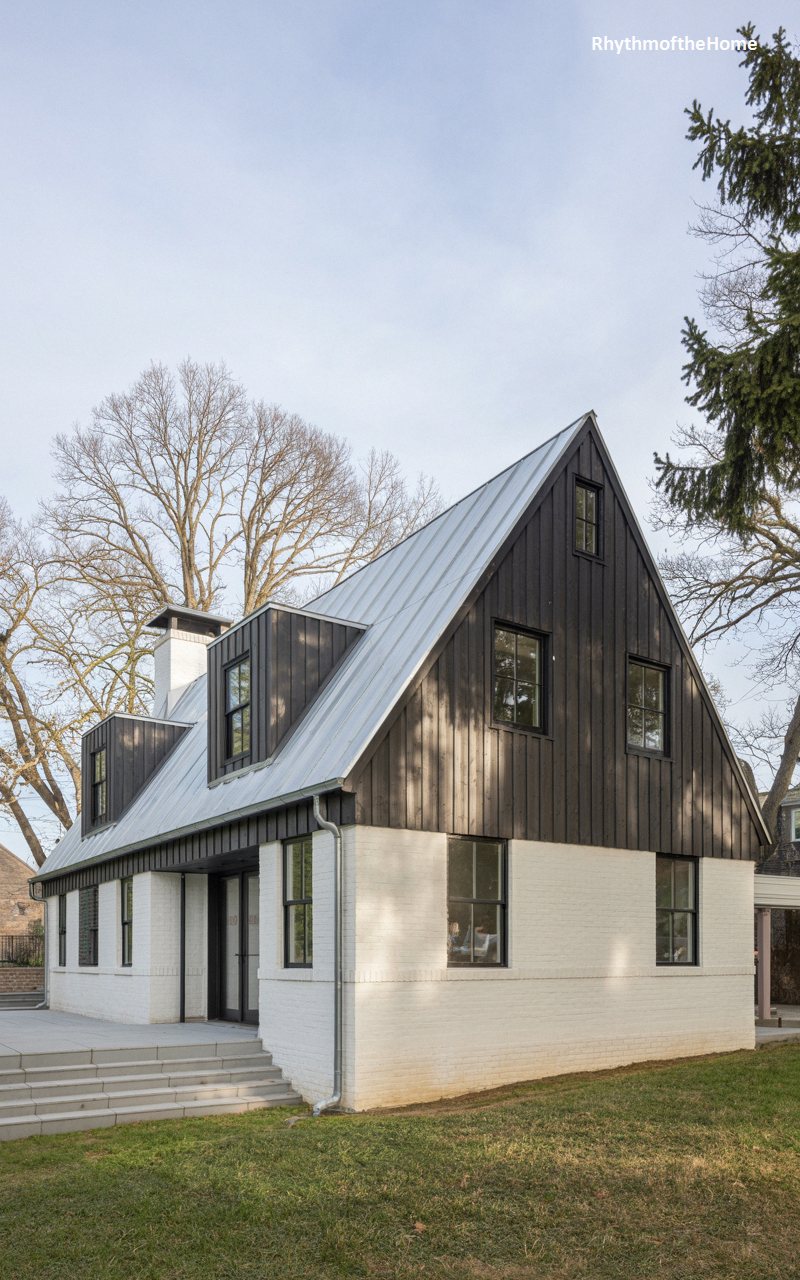
This residence creates a bold profile by hybridizing the sharp peak of an A-frame with the lower masonry walls of a cottage. The upper portion is clad in dark, vertical wood siding, contrasting heavily with the painted white brick base. The roof is a bright, reflective metal that slopes aggressively, broken by boxy dormers that add volume to the upper story. The side profile reveals the depth of the structure, highlighting the interplay between the dark, rustic wood textures and the clean, bright brickwork. It sits confidently on a grassy lawn, bridging the gap between rustic barn architecture and refined residential design.
57. Traditional Stone Facade Dutch Colonial Home
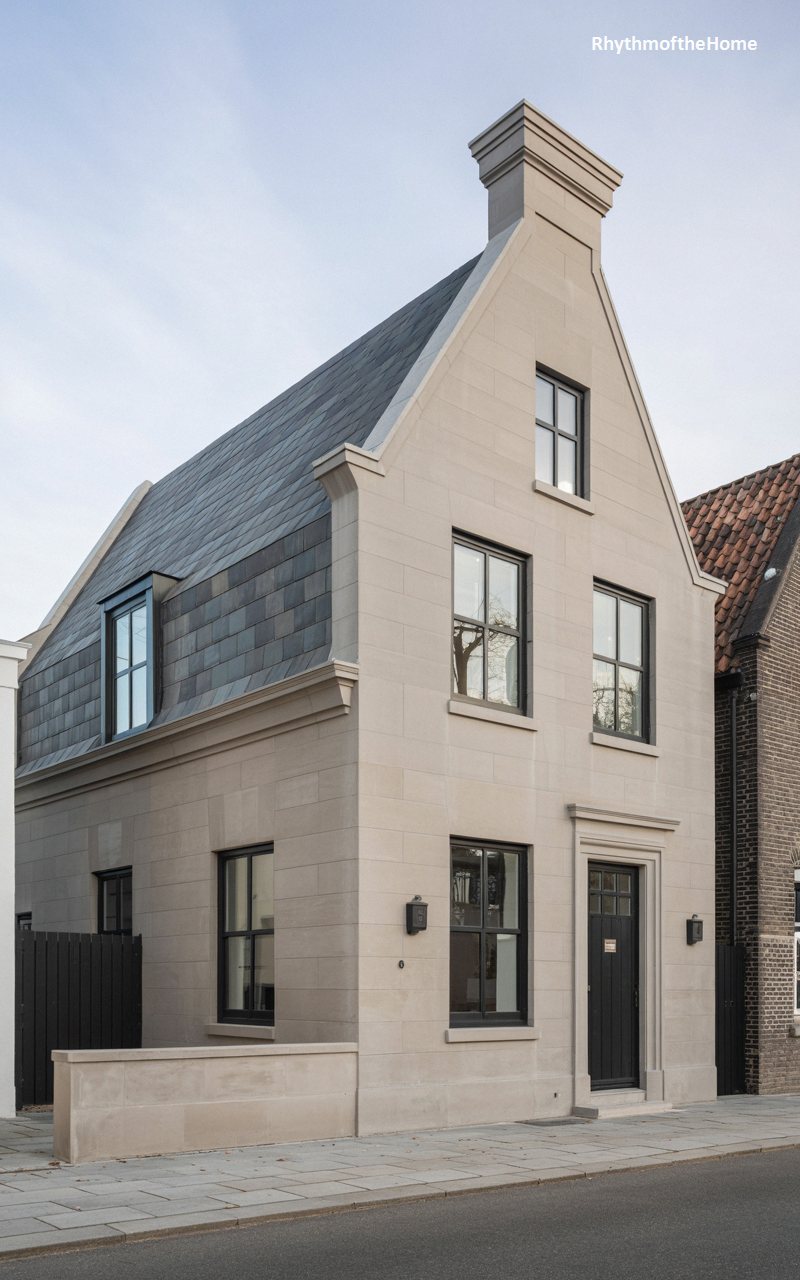
Evoking the historic townhomes of Amsterdam or Antwerp, this building stands tall with a facade of smooth, beige limestone blocks. The architecture is characterized by a stepped-back roofline clad in slate tiles, and a prominent parapet wall that hints at urban Dutch heritage. Black sash windows are set deep into the stone, providing rhythm and symmetry to the vertical face. The entrance is marked by a classic paneled door and stone molding, exuding a sense of permanence and formality. The street-level approach is clean and paved, suggesting a home that belongs in a sophisticated, density-conscious European neighborhood.
58. Grey Brick and Metal Dutch Colonial Home
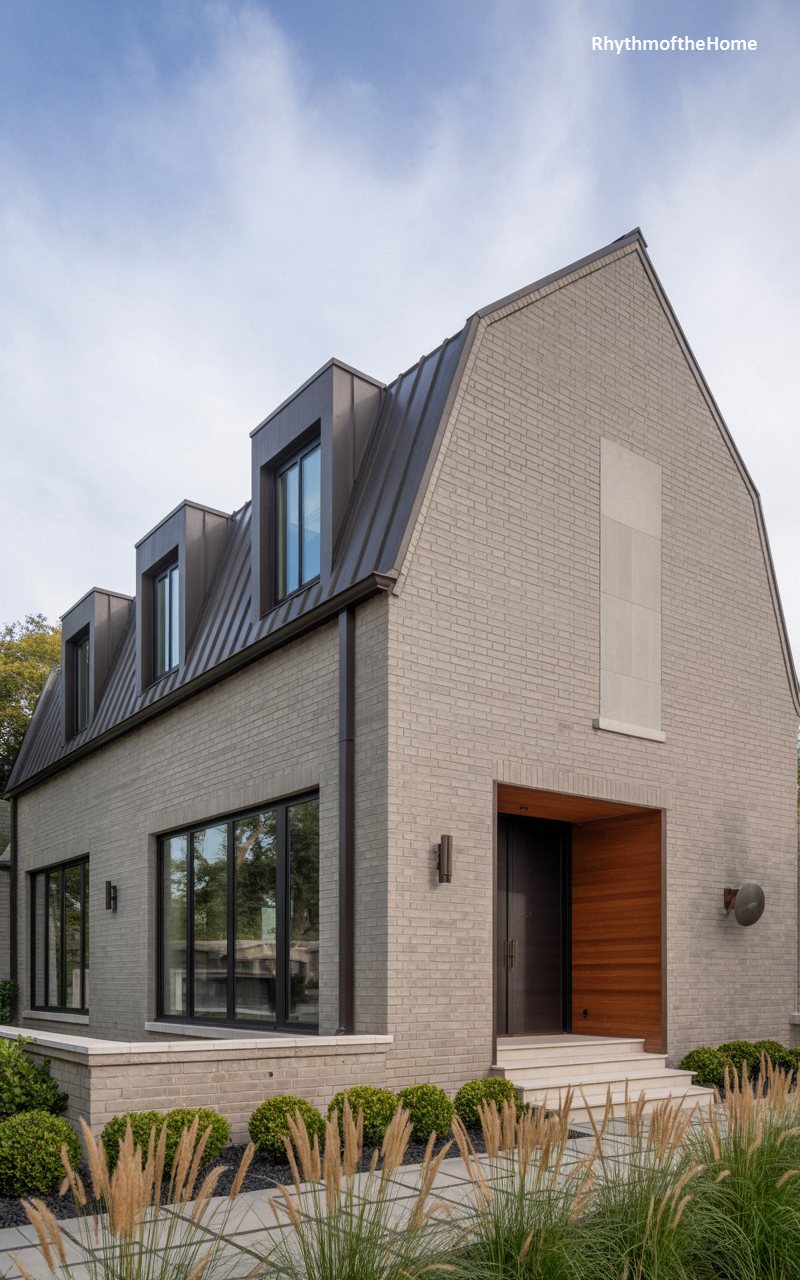
This home masterfully blends industrial materials with domestic comfort, featuring a facade of grey brickwork that adds texture and grit. The roof is a dark, sweeping metal gambrel that dominates the silhouette, punctuated by sharp dormer windows that break the roof plane. A recessed entryway, lined with warm-toned wood, provides a welcoming contrast to the cool grey exterior, drawing visitors in. The windows are large and unobstructed, allowing for ample natural light. Grasses in the foreground soften the hardscaping, creating a balance between the architectural severity and the natural landscape, resulting in a modern yet livable fortress.
59. Farmhouse Revival Dutch Colonial Home
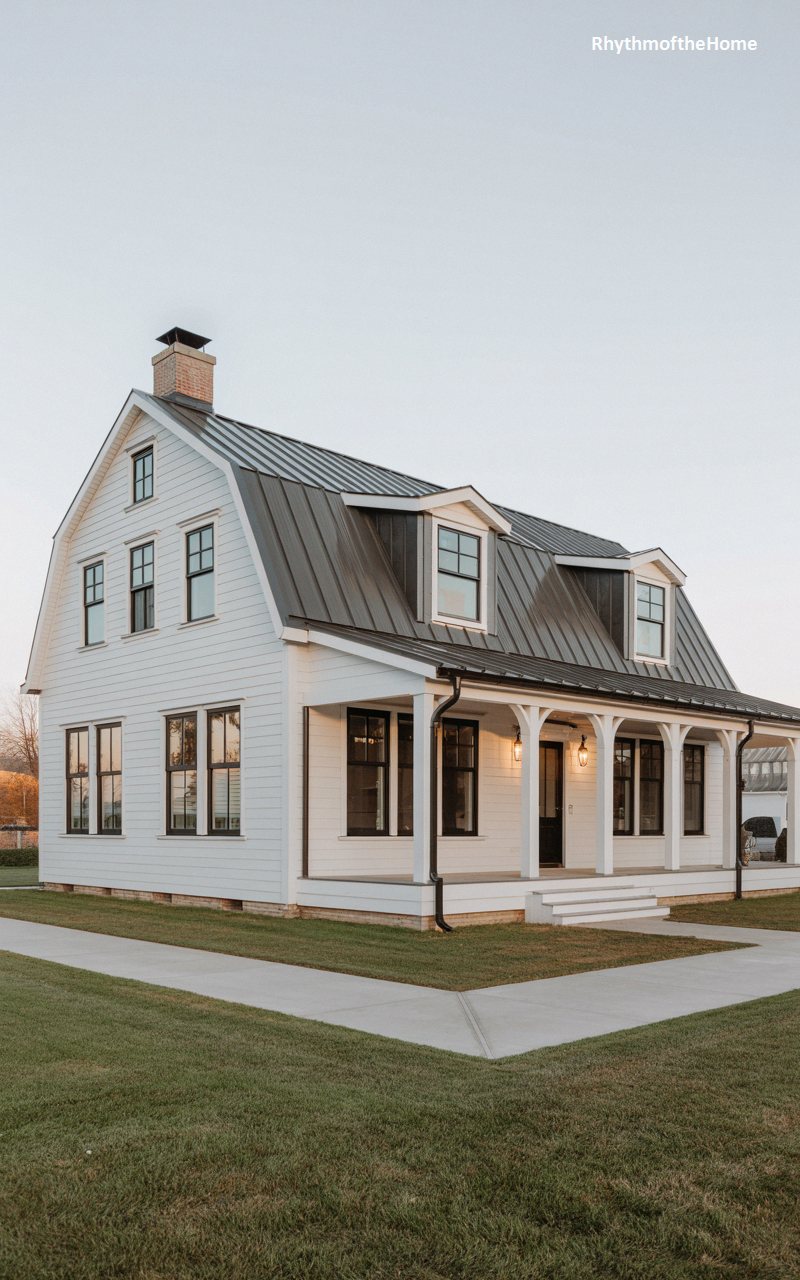
Capturing the spirit of the rural American landscape, this white clapboard home features a prominent gambrel roof clad in dark metal. The design includes a deep, wrap-around porch supported by simple columns, offering a gracious transition between the indoors and the outdoors. The white siding is crisp and bright, contrasted by the black window frames and the dark roof, a classic farmhouse palette. Dormer windows poke through the roofline, adding charm and functionality to the second floor. The manicured lawn and concrete path lead up to the porch, inviting relaxation and suggesting a lifestyle connected to the outdoors and tradition.
60. Petite Stucco Carriage Dutch Colonial Home
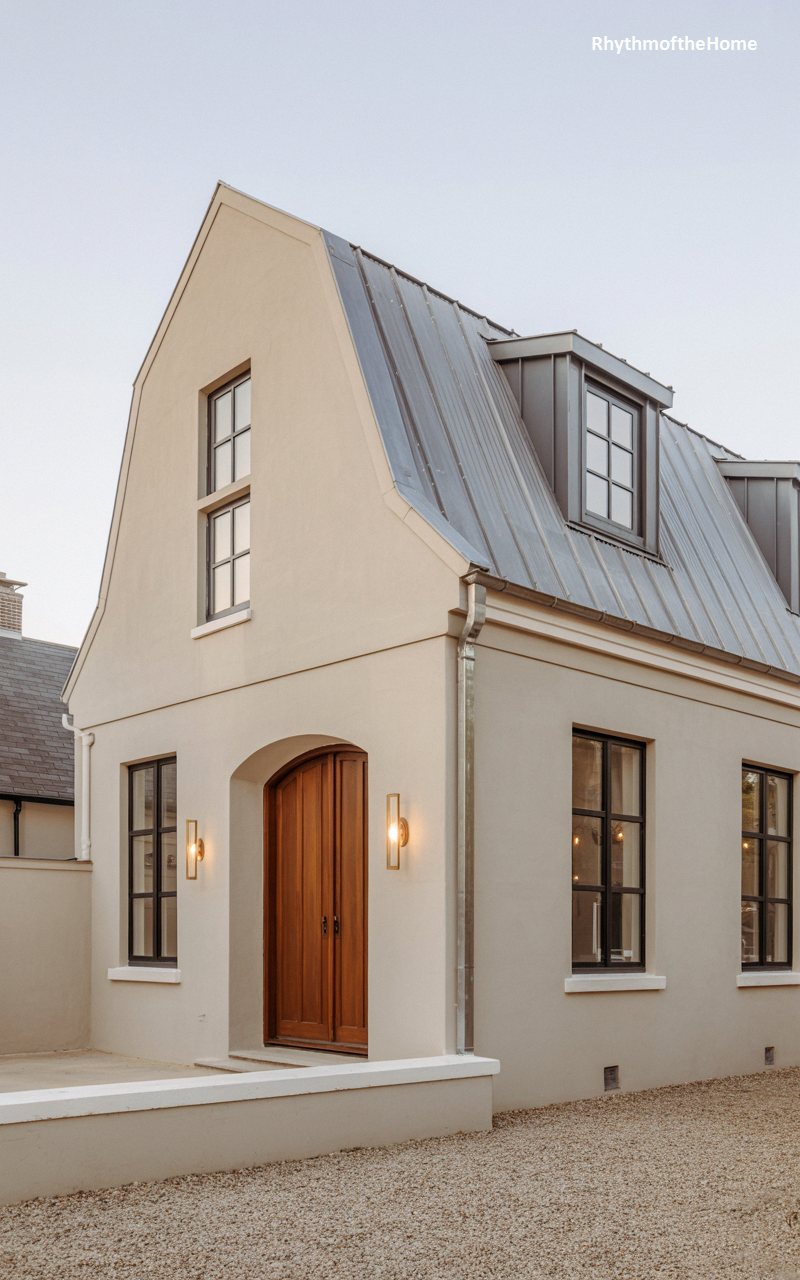
Resembling a converted carriage house or a fairytale cottage, this small structure charms with its steep, oversized gambrel roof that nearly overwhelms the walls below. The exterior is rendered in a warm, creamy stucco, providing a smooth canvas for the dark metal roof and copper gutters. An arched wooden double door serves as the focal point, flanked by modern sconces, hinting at a rustic past reimagined for modern luxury. The side facade features tall, narrow windows that maintain the vertical emphasis. Set on a bed of gravel, the home feels intimate, secluded, and purposefully designed as a private retreat.
61. Sage Green Clapboard Dutch Colonial Home
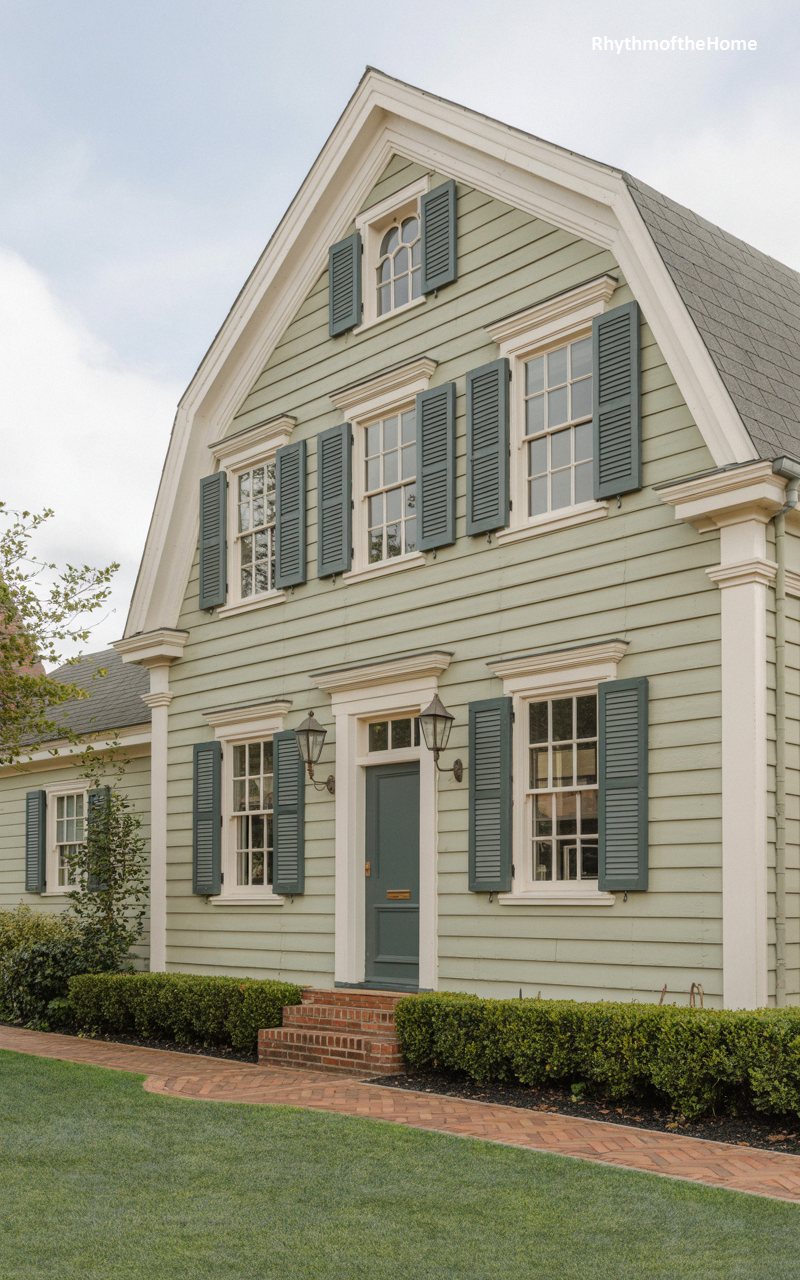
This residence embraces a classic aesthetic with its horizontal sage green siding, which harmonizes beautifully with the natural surroundings. The gambrel roof is shingled in grey, featuring a subtle flare at the eaves that is characteristic of the style. Dark green shutters frame the multi-paned windows, adding depth and a layer of traditional ornamentation. The front door is painted a deep, welcoming shade, centered under a modest entablature. The brick walkway laid in a herringbone pattern adds a touch of texture and craftsmanship to the approach, reinforcing the home’s commitment to timeless, colonial-era design principles and suburban elegance.
62. Formal European Estate Dutch Colonial Home
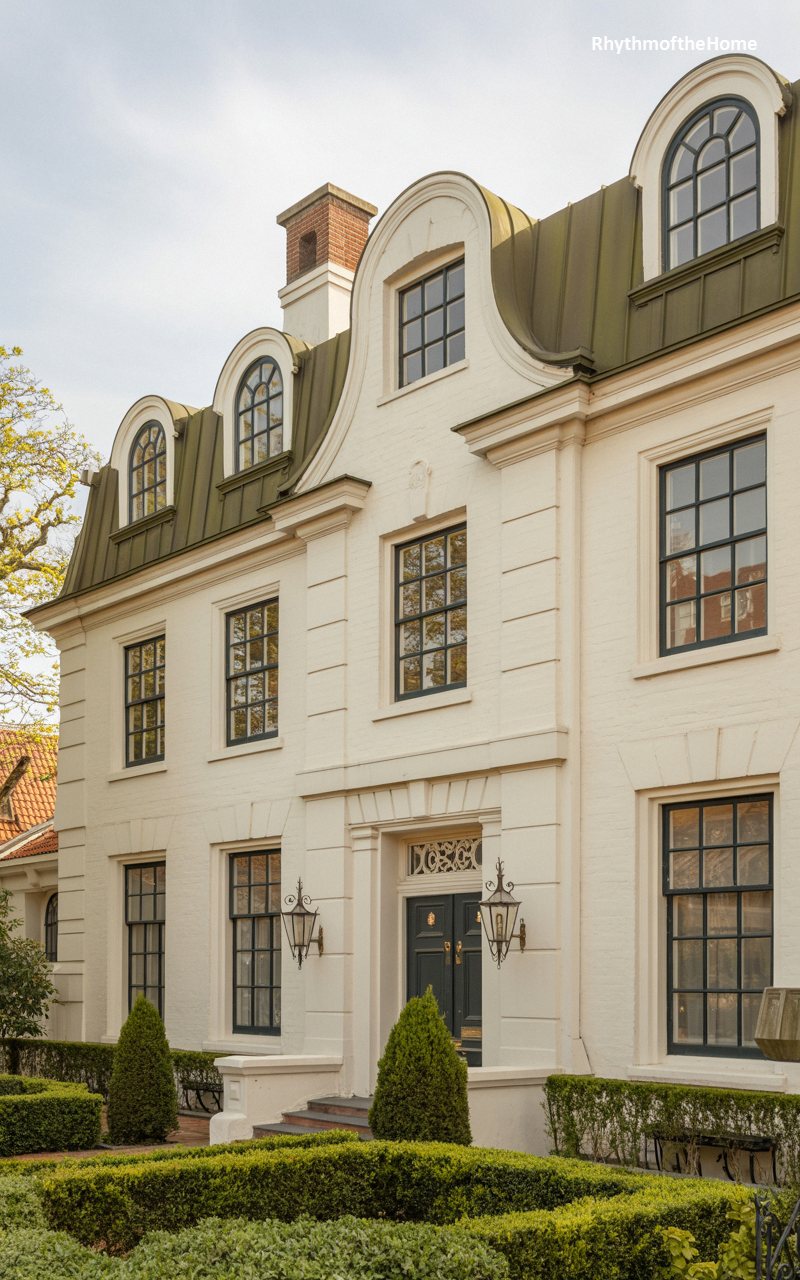
This majestic home draws inspiration from the Cape Dutch style, featuring curvilinear gables and a high, sloping roof clad in olive-toned metal. The creamy painted brick exterior is accented by quoins and distinct molding, giving the structure a sense of weight and history. Arched dormer windows protrude from the roof, adding rhythmic visual interest. The landscaping is exceptionally formal, with manicured boxwood hedges and a geometric garden layout that mirrors the symmetry of the house. The overall effect is one of grandeur and aristocratic heritage, suggesting a property that has stood the test of time and is maintained with meticulous care.
63. Grey Shingle Style Dutch Colonial Home
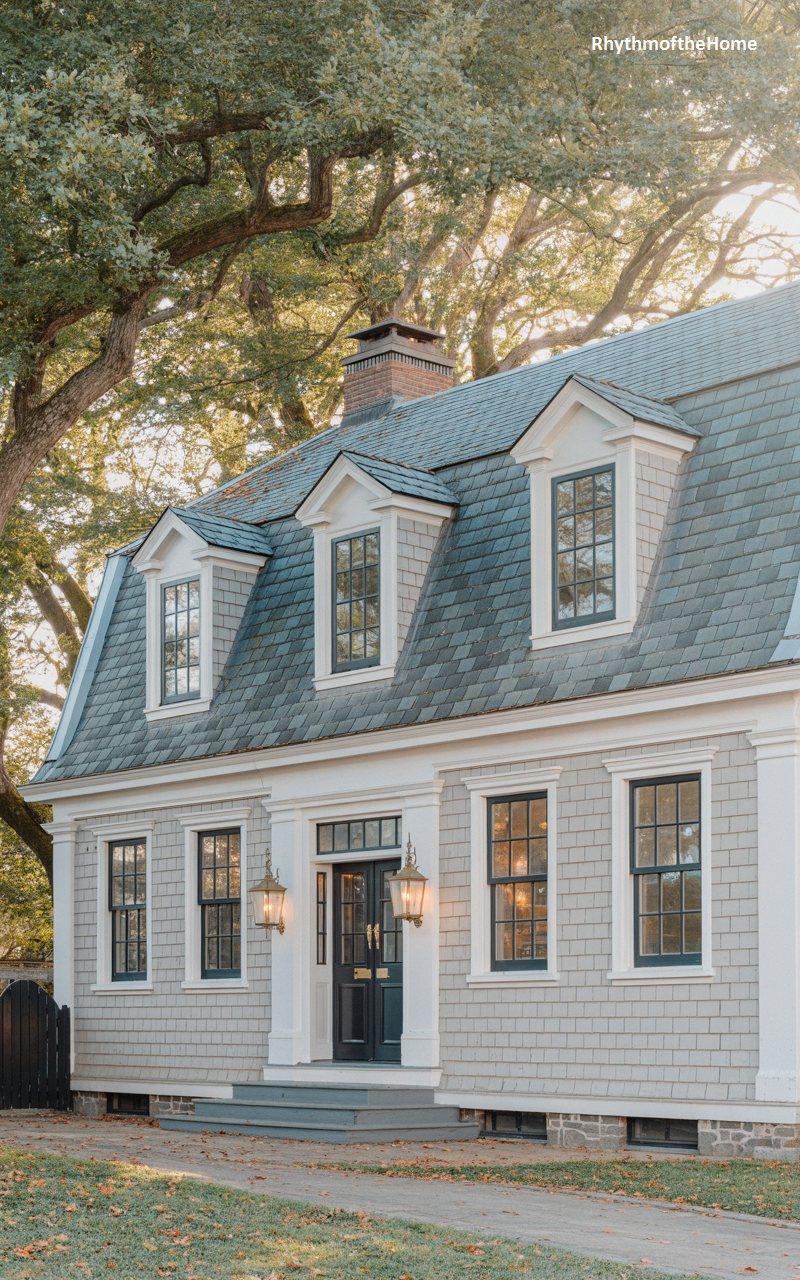
Draped in grey cedar shakes, this home sits nestled under the canopy of mature oak trees, exuding a sense of established elegance. The roof is a classic slate gambrel, punctuated by white-trimmed dormers with pediment tops. The siding texture adds a rustic yet refined quality, typical of coastal or country estates. Lantern-style sconces flank the entrance, casting a warm glow against the grey facade. The windows are generous, with traditional muntins, maintaining the historical accuracy of the design. It feels like a generational family home, blending seamlessly into the wooded landscape while asserting a strong, traditional architectural presence.
64. Yellow Siding and Copper Roof Dutch Colonial Home
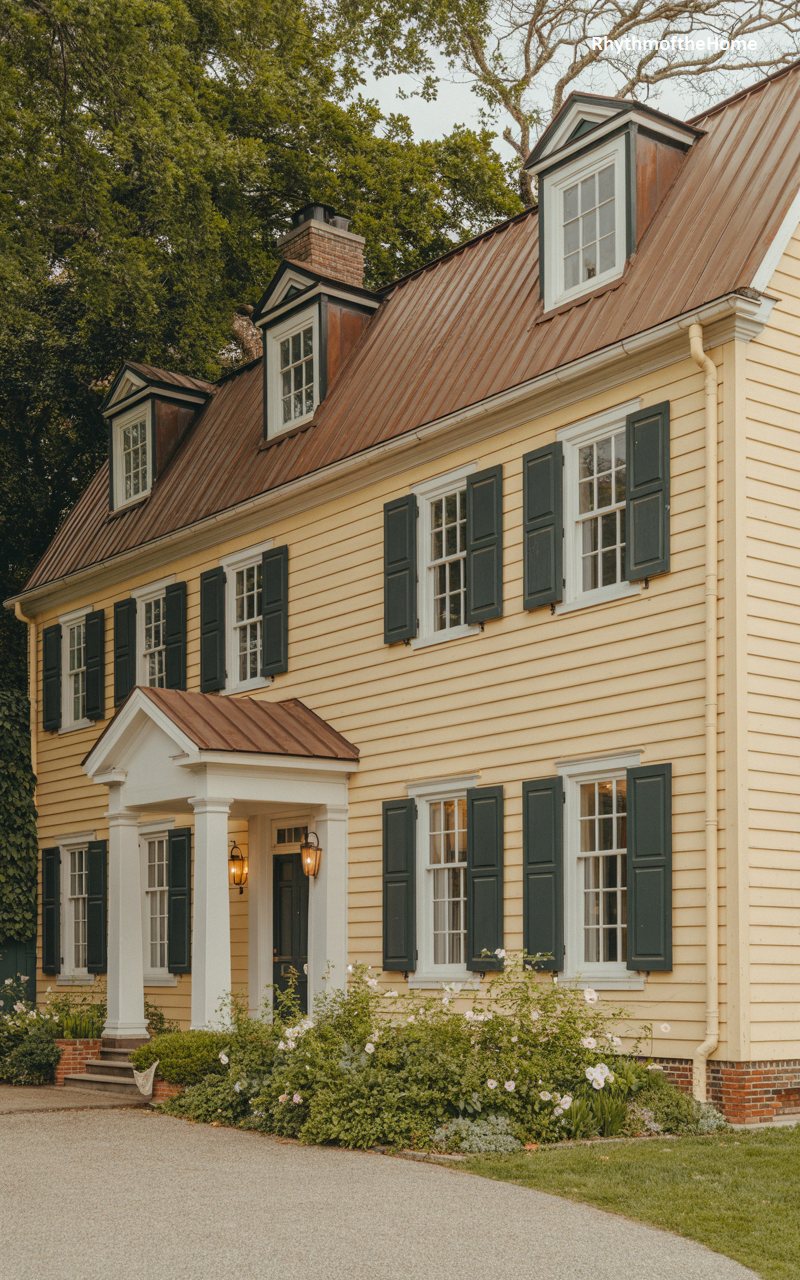
Cheerfully bright, this home features pale yellow horizontal siding that contrasts beautifully with a striking copper-toned metal roof. The roofline is complex, with multiple dormers and a intersecting gable that adds volume to the interior. Black louvered shutters frame the white sash windows, providing a graphic pop against the sunny exterior. A classic portico supported by columns shelters the front door, offering a traditional formal entry. The landscaping is lush with flowering bushes, enhancing the cottage-like appeal of the house. The combination of the warm metal roof and the pastel siding creates a unique, inviting, and memorable curb appeal.
65. Red Brick Georgian Dutch Colonial Home
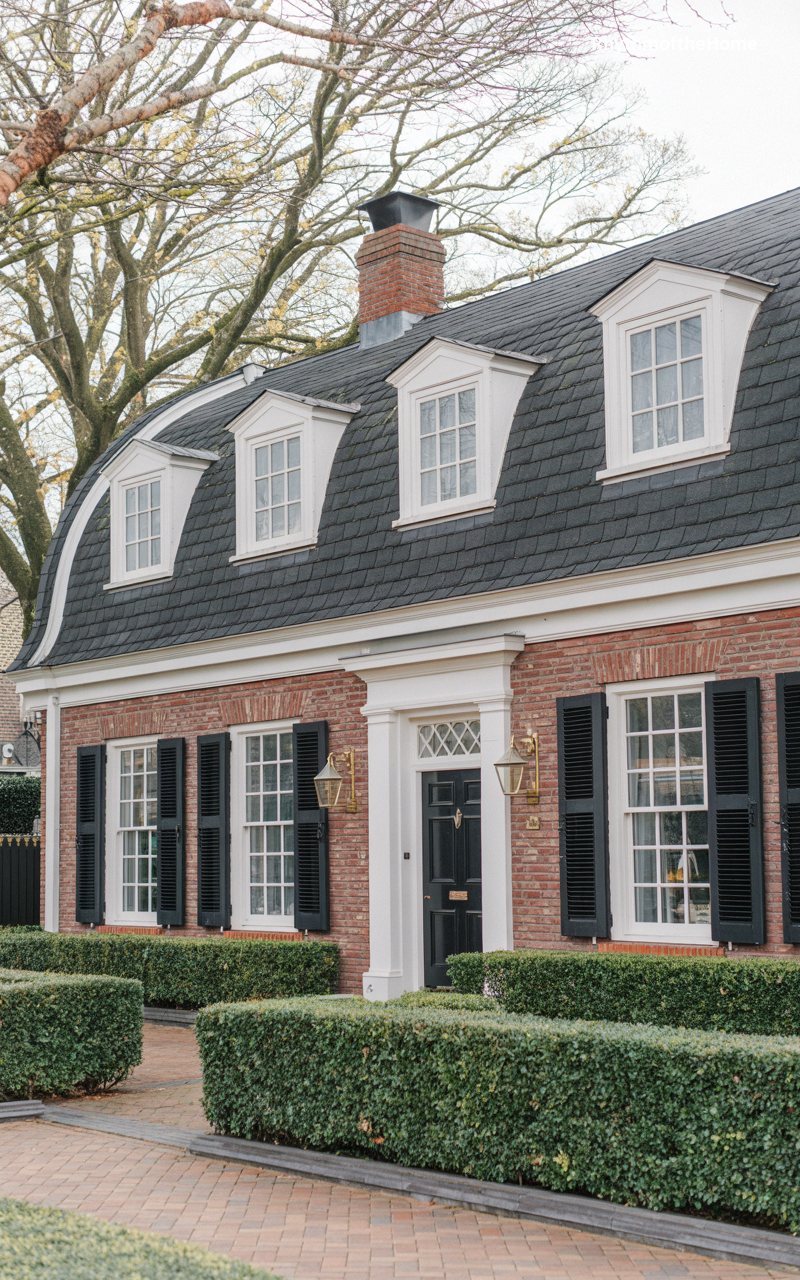
Anchored by red variegated brick, this home presents a solid, enduring face to the world. The roof is a heavy, dark slate gambrel that curves gently at the eaves, housing classic white dormers with triangular pediments. The windows are dressed with black shutters, reinforcing the Georgian symmetry and order. The entrance features a white door surround with a transom window, a hallmark of colonial design. A low hedge of boxwoods lines the brick walkway, guiding the eye to the front door. The architecture speaks of stability and tradition, utilizing high-quality materials to create a residence that feels both historic and immaculately preserved.
66. Navy Blue Seaside Dutch Colonial Home
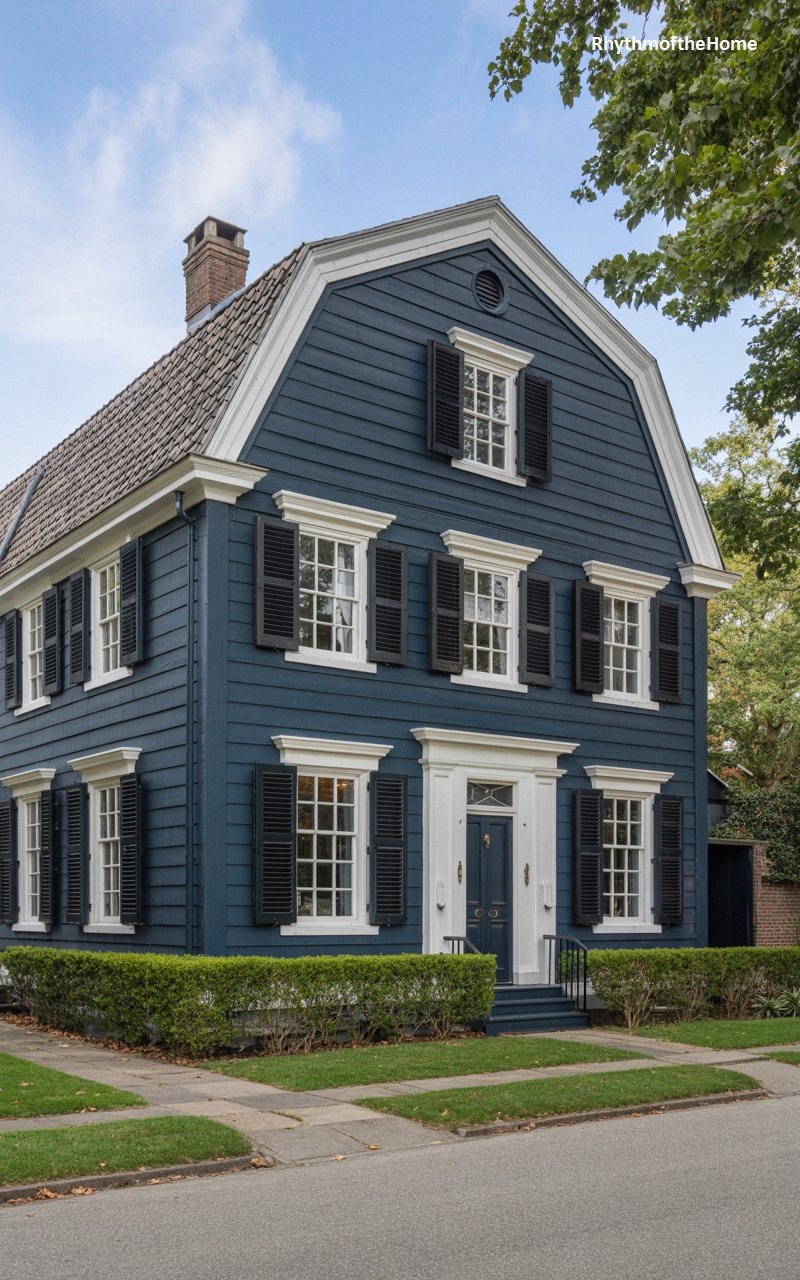
Evoking a nautical atmosphere, this home is clad in deep navy blue siding, which makes the crisp white trim and window casings pop dramatically. The large gambrel roof is covered in dark shingles, giving the house a hunched, cozy appearance typical of the style. The windows are arranged symmetrically, with shutters on the upper level adding to the colonial charm. The landscaping is kept low and neat with green hedges, ensuring the bold color of the house remains the focal point. It has the feel of a captain’s house in a coastal town, sturdy against the elements yet refined and welcoming.
67. Tan Stucco Manor Dutch Colonial Home
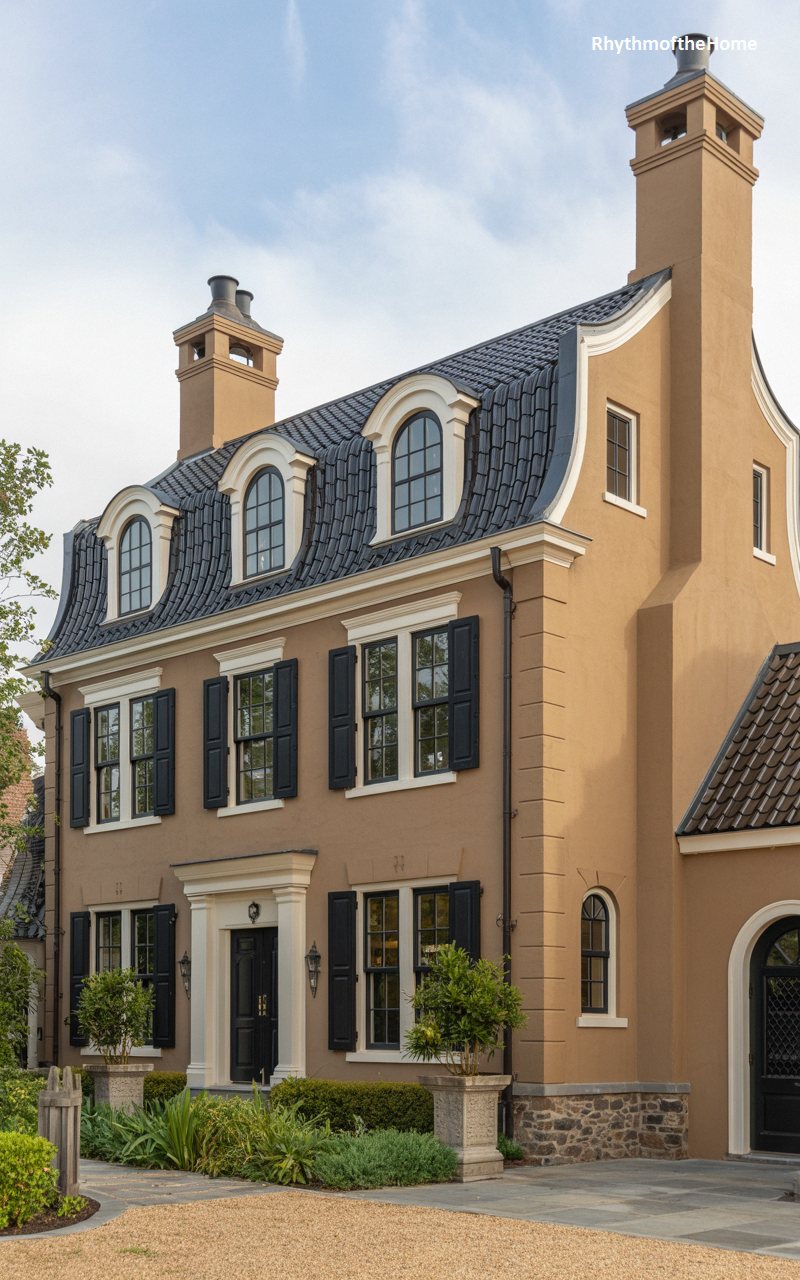
This grand residence features a smooth tan stucco exterior that highlights the architectural lines of the parapet walls and towering chimneys. The roof is a dark, tiled gambrel with a distinctive flair, housing arched dormer windows that add a touch of romance. The windows are adorned with black shutters, providing contrast to the earth-toned walls. An arched breezeway or garage entrance adds to the expansive feel of the estate. The foreground is filled with loose gravel and flagstone paths, bordered by lush greenery. The home exudes a continental European flair, blending Dutch structural forms with a warm, Mediterranean-influenced color palette.
68. White Clapboard Garden Dutch Colonial Home
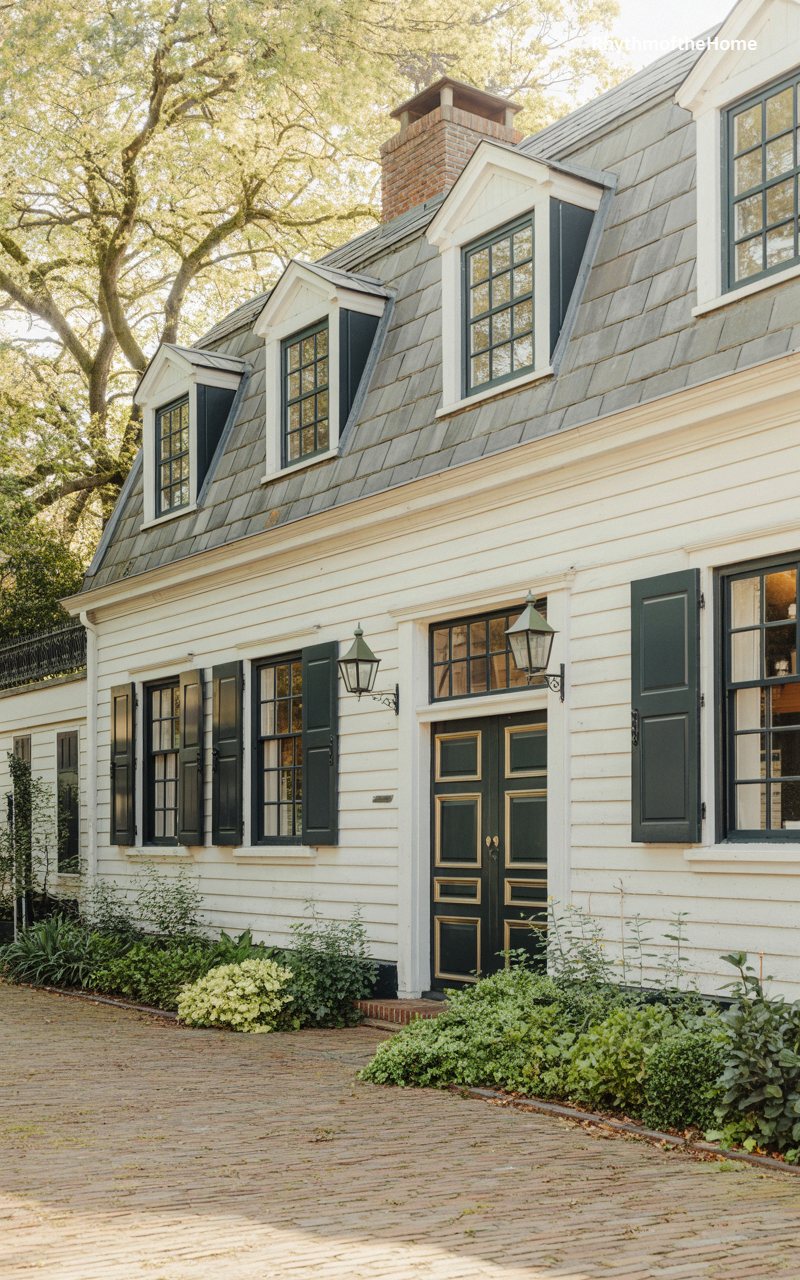
Fresh and pristine, this home features white horizontal siding that gleams in the sunlight, topped by a grey slate roof. The dormers are particularly prominent, with gabled roofs that mimic the main structure. Black shutters flank the windows, providing the classic “tuxedo” look of white and black. The entryway is centered and inviting, with a simple stoop. The expansive brick patio in the foreground adds a rustic, textured element that contrasts with the smooth lines of the house. Surrounded by large trees, the home feels like a peaceful sanctuary, embodying the quintessential American suburban dream with its clean lines and traditional detailing.
69. Tiled Roof Elegant Dutch Colonial Home
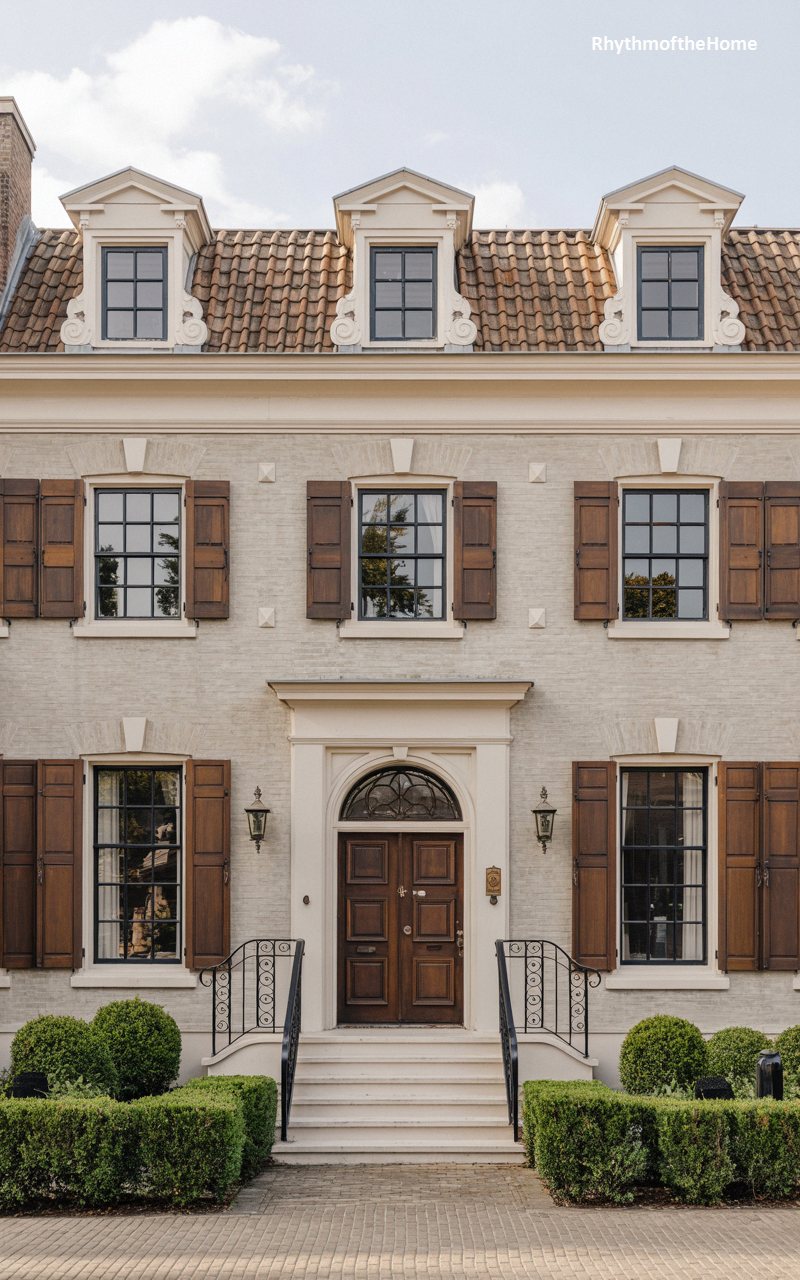
This sophisticated home is distinguished by its light grey brick facade and a roof clad in reddish-brown pantiles, a nod to traditional Dutch roofing materials. The dormers are ornate with scrollwork detailing on the sides, adding a layer of craftsmanship. Dark brown wooden shutters frame the large windows, warming up the cool tones of the brick. The entrance is marked by a grand arched doorway with a fanlight, accessible via a short flight of steps. Neatly trimmed topiary and hedges line the front, enhancing the formal, orderly appearance. The house feels stately and refined, mixing textures and colors with expert balance.
70. Light Blue Shingled Dutch Colonial Home
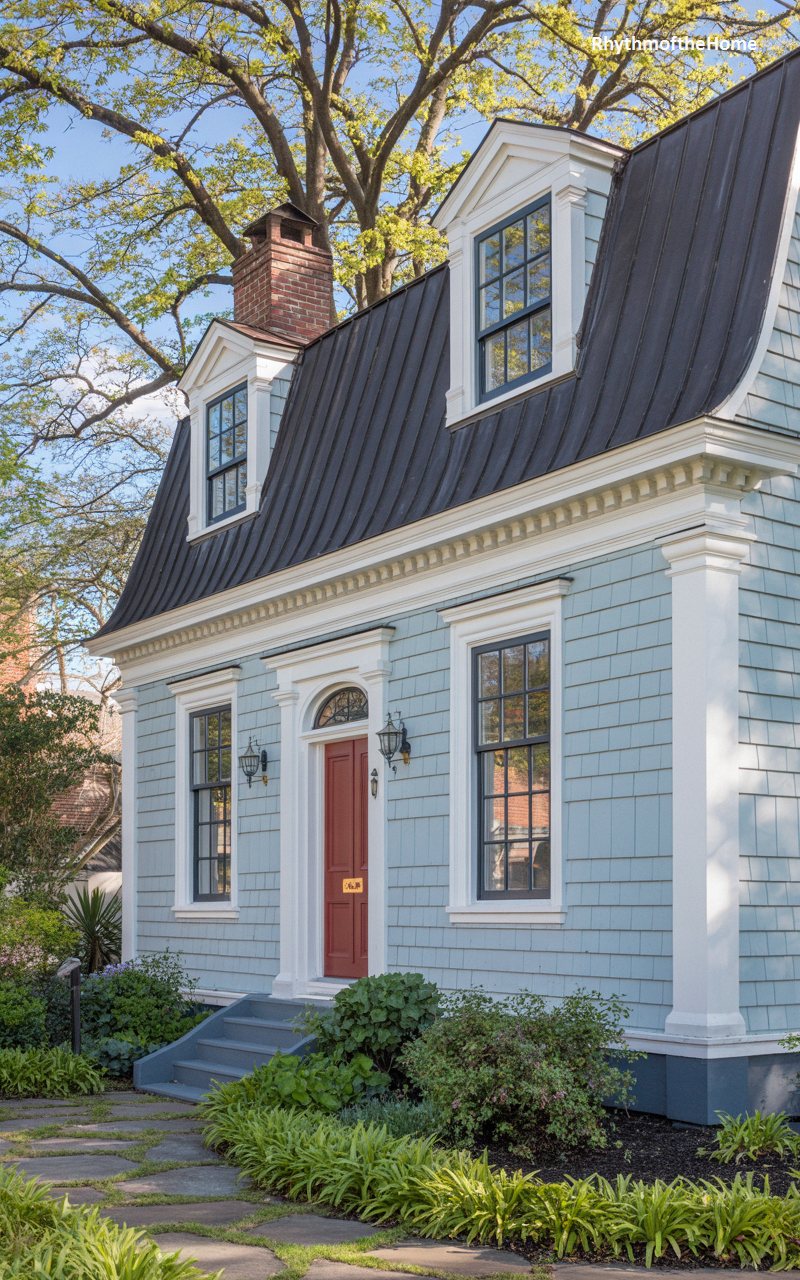
Playful and inviting, this cottage features light blue cedar shake siding that gives it a textured, coastal vibe. The roof is a dark, standing seam metal gambrel that curves dramatically, almost reaching the first floor. White trim outlines the architectural features, while a bold red front door provides a surprising and delightful focal point. The windows are tall and narrow, emphasizing the height of the facade. A stone path meanders through the grass leading to the entrance, surrounded by low-lying ground cover. This home feels approachable and whimsical, a modern and colorful twist on the classic Dutch colonial form.
71. Stone and Slate Formal Dutch Colonial Home
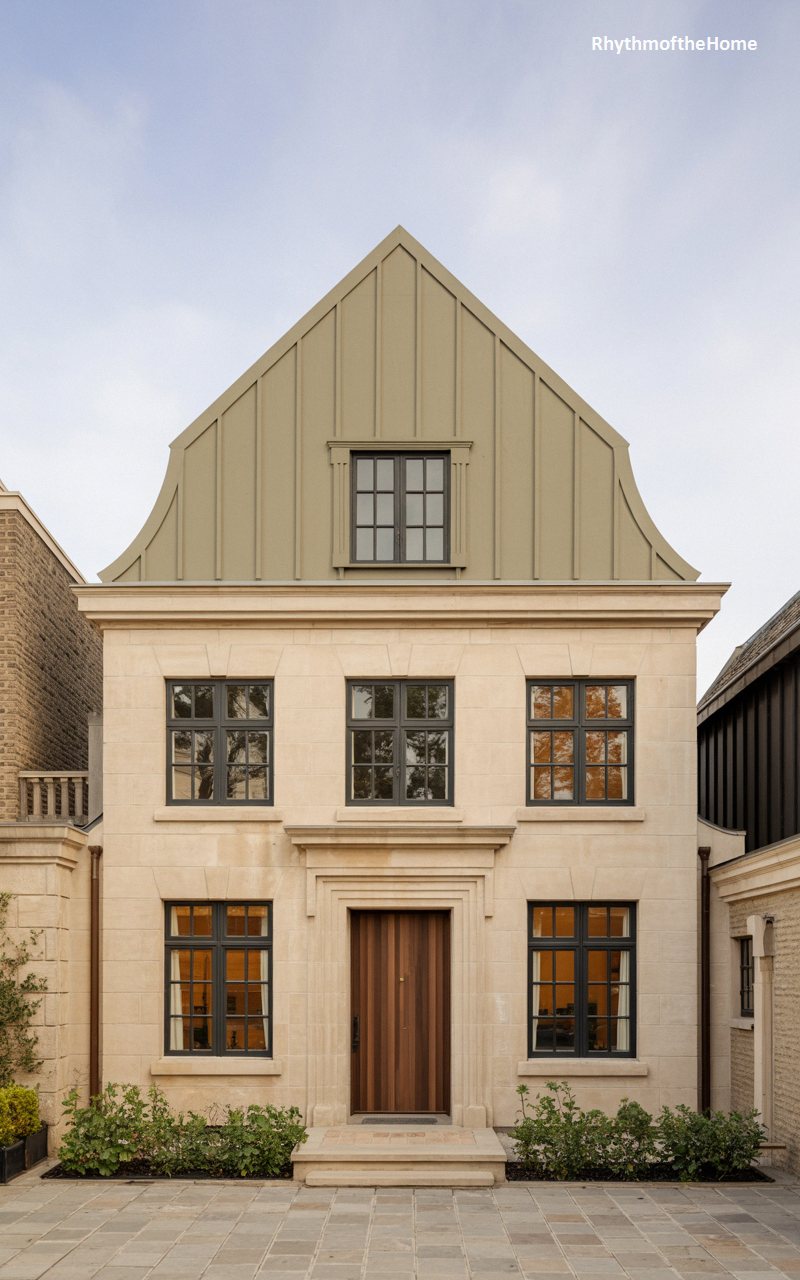
This imposing structure is built from pale, dressed stone, giving it a monumental and permanent quality. The roof is a massive, steeply pitched gambrel covered in greenish-grey slate or metal, which flares out at the eaves in a distinct bell shape. The facade is strictly symmetrical, with three windows across the top and two flanking the central wooden door below. The lack of shutters or excessive trim draws attention to the quality of the stone and the precision of the architecture. It sits on a paved courtyard, evoking the feeling of a French or Belgian country manor designed with rigorous attention to proportion.
72. Modern Black Barn Dutch Colonial Home
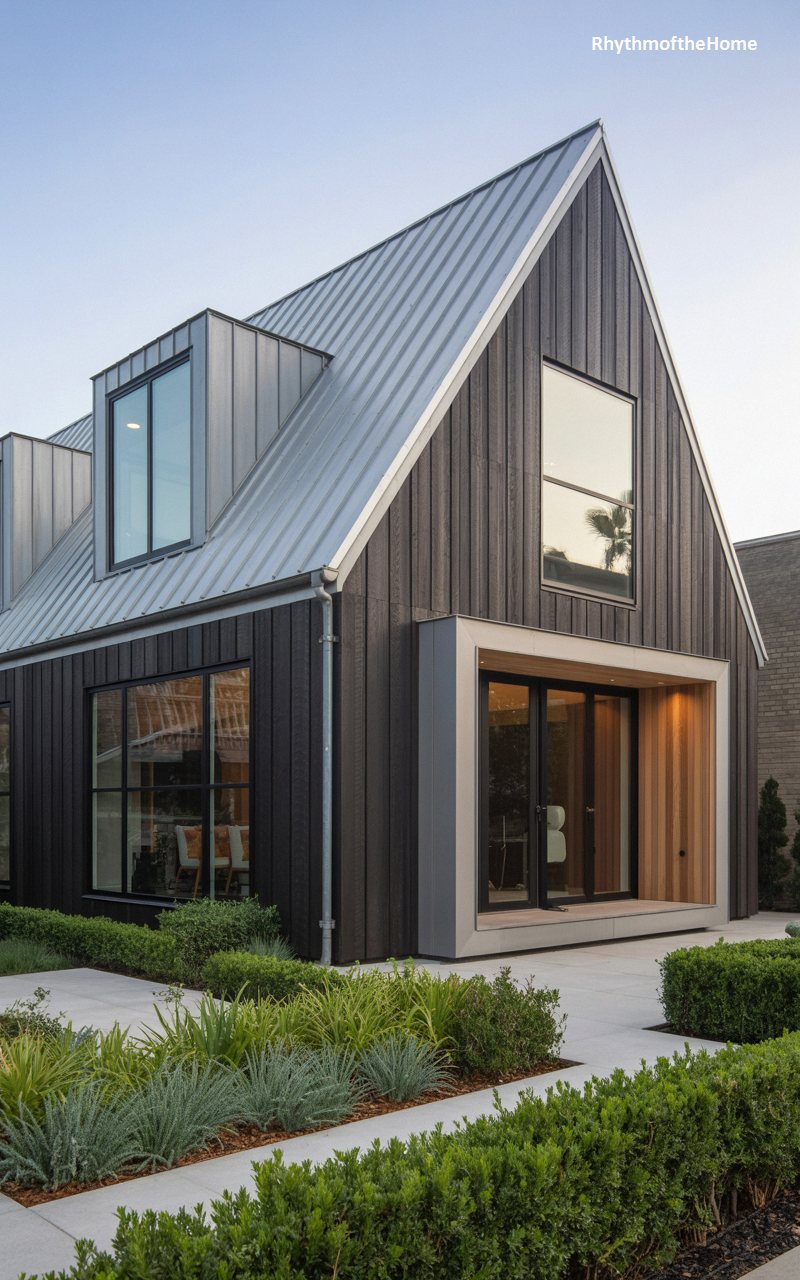
This striking structure takes the gambrel form and strips it down to a sleek, modernist icon. Clad entirely in vertical black siding with a matching metal roof, the home reads as a singular, unified volume. A large, boxy protrusion frames a section of glass doors, lined with warm wood to create a sheltered porch area. The large upper window reflects the sky, breaking up the dark facade. The landscaping is minimal and structural, with manicured bushes and concrete pavers. This home is a bold statement, transforming the rustic barn shape into a sophisticated, high-design residence suitable for contemporary living.
73. Two-Tone Blue and Stucco Dutch Colonial Home
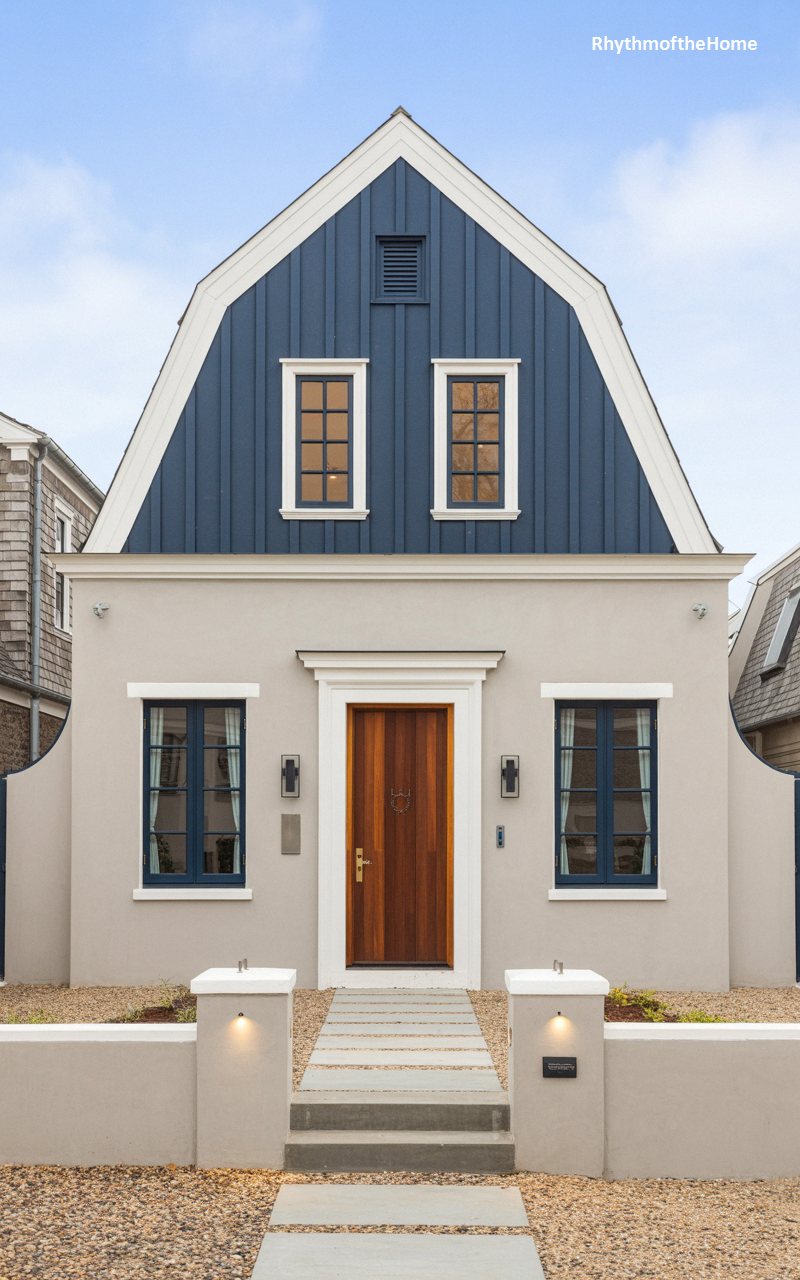
Charming and eclectic, this home features a unique material split: the ground floor is smooth, neutral stucco, while the oversized gambrel gable above is clad in vertical blue board-and-batten siding. Two small windows with white trim peer out from the blue upper section, resembling eyes. The central front door is made of rich, dark wood, set within a simple white frame. Low walls and pillars flank the entrance, integrated with lighting. The gravel driveway adds a casual, crunchy texture. The design feels almost storybook-like, playing with proportion and color to create a friendly, memorable, and distinctively styled small home.
74. Urban Brick Infill Dutch Colonial Home
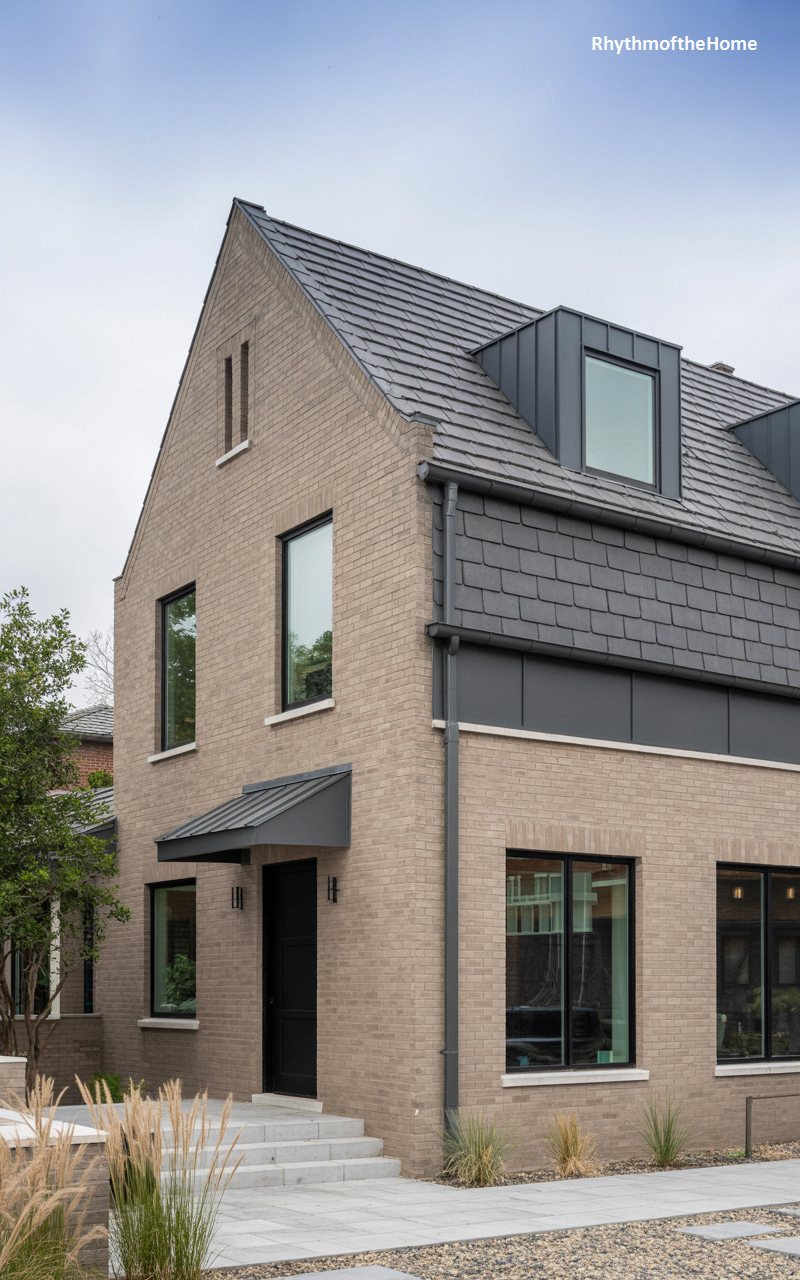
Designed for a denser urban environment, this home utilizes a narrow footprint but maximizes space with a steep roofline. The exterior is a uniform tan brick, providing a textured, monochromatic look. The roof is dark grey slate, with a flat-roofed dormer clad in metal that projects from the side. A metal awning protects the side entrance, adding an industrial touch. Large, black-framed windows are set deep into the brick, offering privacy and light. Grasses and simple landscaping soften the base. It is a smart, modern adaptation of the style, fitting the volume of a Dutch Colonial into a compact, city-ready form.
75. White Stucco and Slate Dutch Colonial Home
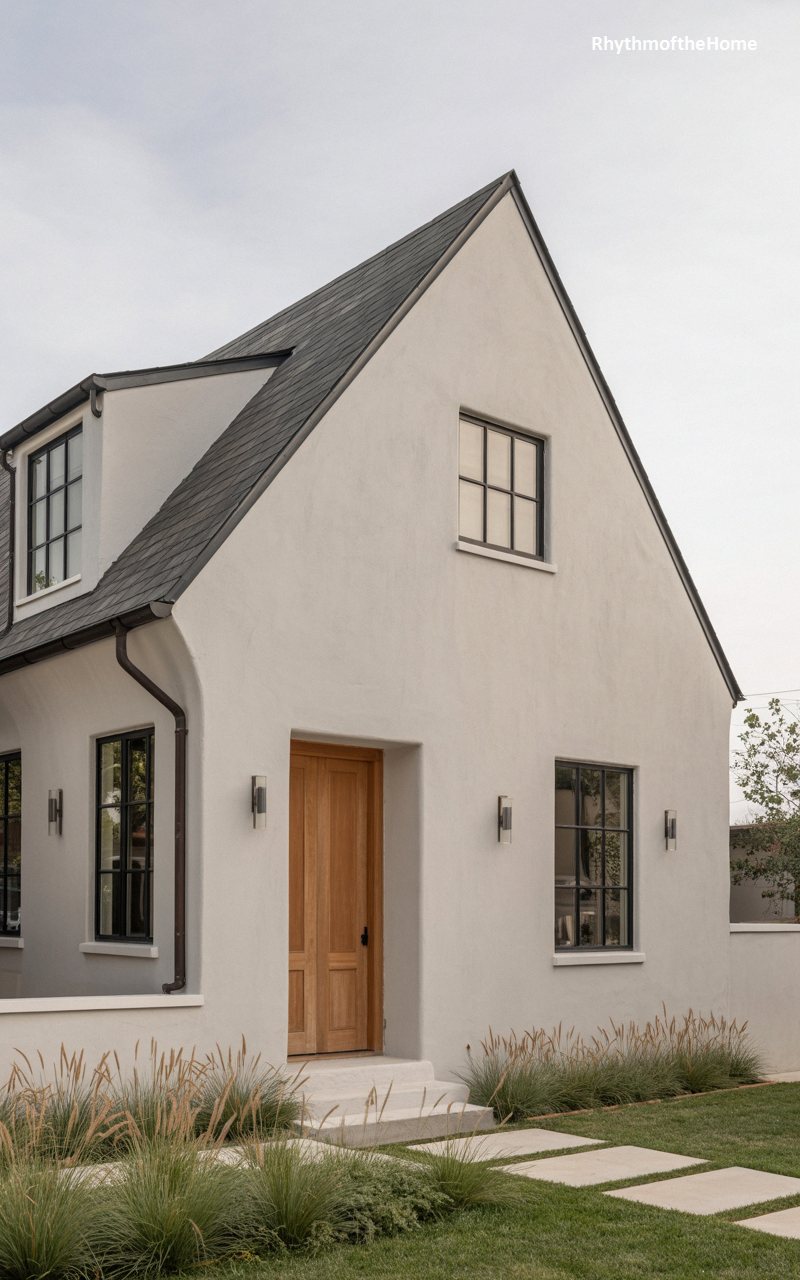
This serene home features a pristine white stucco exterior that contrasts softly with a dark, slate-tiled roof. The roofline is an asymmetric gambrel that sweeps low on one side, creating a dynamic silhouette. A single dormer window breaks the roof plane, while the main facade features large, black steel-framed windows that look modern and industrial. The front door is a warm, natural wood, offering a tactile entry point. The landscaping includes tall, feathery grasses that add movement and softness against the smooth walls. The overall aesthetic is one of quiet luxury, blending California modernism with the historic lines of Dutch architecture.
76. A Modern Stucco Dutch Colonial Home
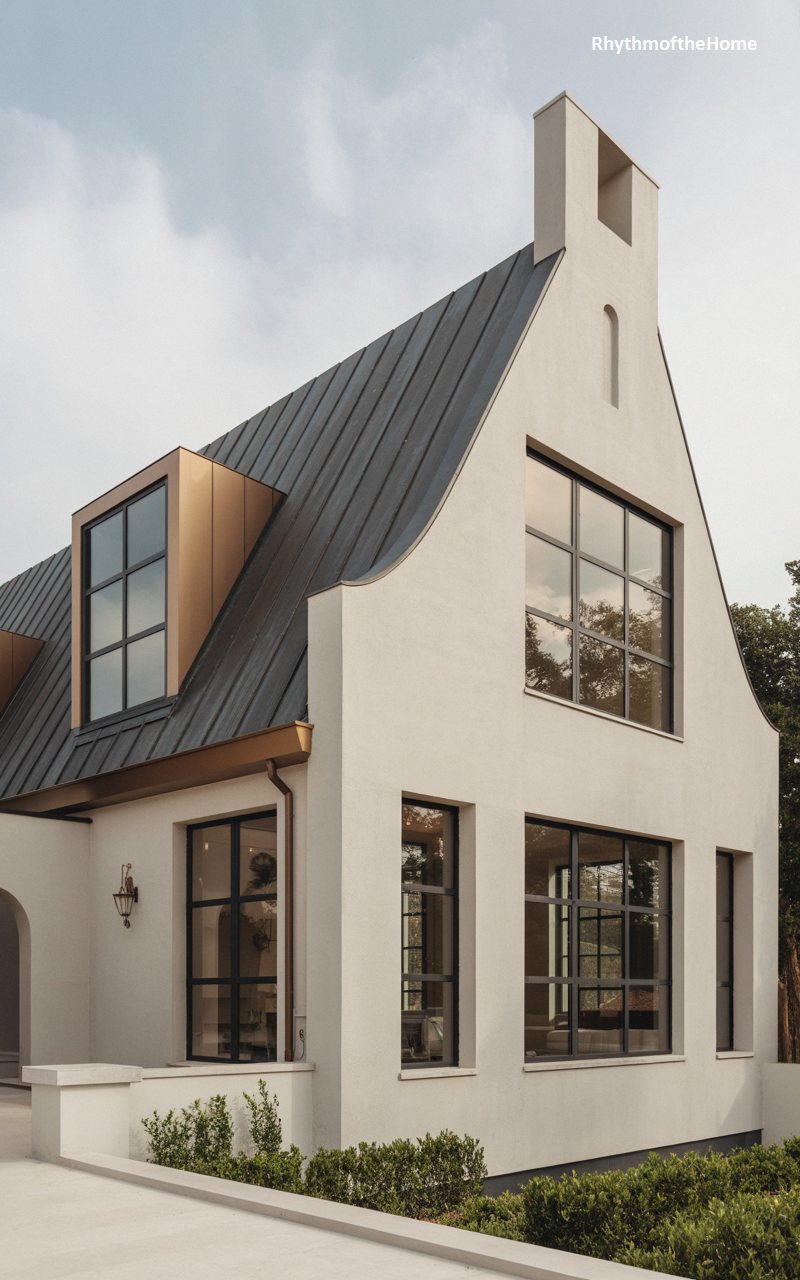
This striking residence reinterprets the classic parapet gabled roofline often found in Cape Dutch architecture through a thoroughly modern lens. The exterior is clad in a smooth, creamy white stucco that provides a minimalist canvas, allowing the architectural geometry to take center stage. A steep, dark grey metal roof creates a sharp contrast, accentuating the dramatic pitch and the unique, curved eaves. A standout feature is the boxy, copper-clad dormer which introduces a warm, metallic texture against the cool roof tones. Expansive, black-framed grid windows dominate the facade, flooding the interior with light and bridging the gap between historic silhouettes and contemporary industrial chic.
77. The Contemporary Green Dutch Colonial Home
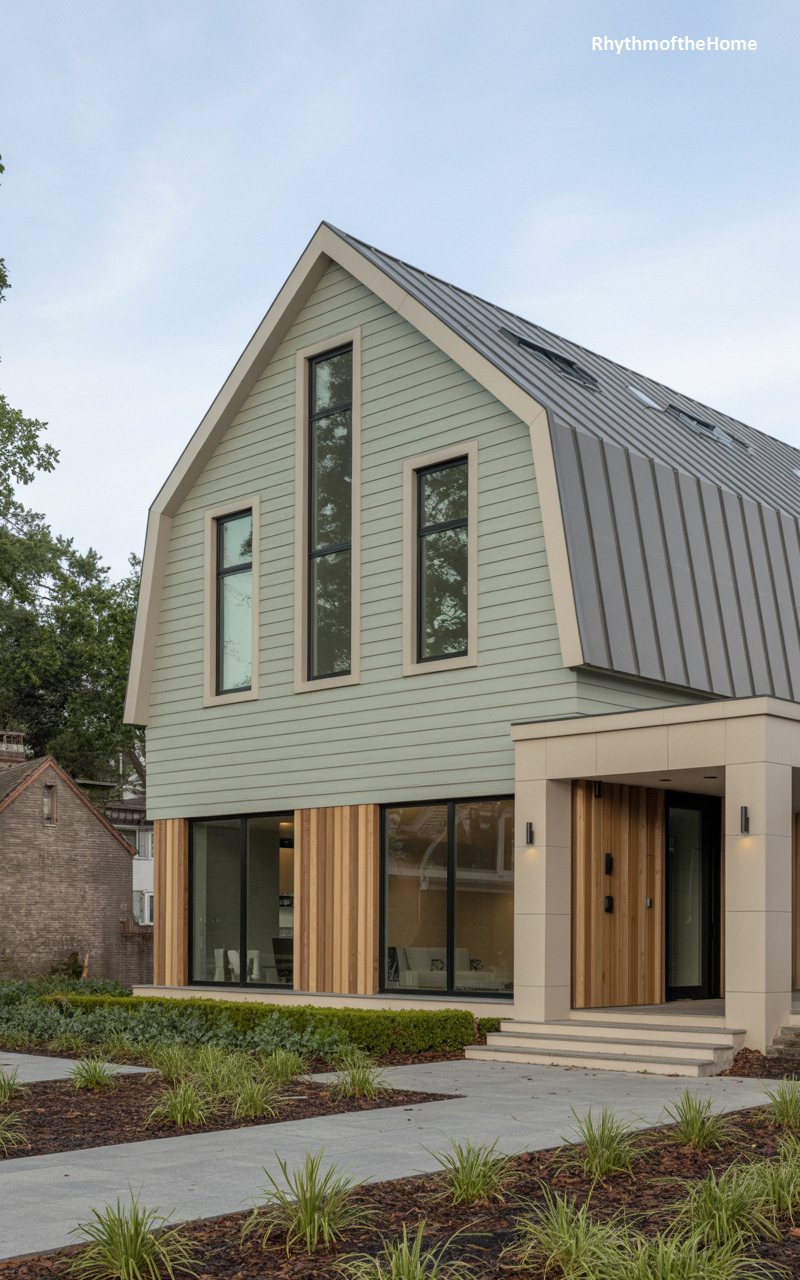
Here, the traditional gambrel roof is given a fresh update with sage green horizontal siding and a sleek standing-seam metal roof in a dark charcoal hue. The home features a distinct material split; the upper levels showcase the painted siding while the ground floor incorporates warm, natural wood slatting around the large glass sliders, grounding the structure in organic tones. Vertical, narrow windows on the upper facade add height and a modern rhythm to the face of the house. The deep, recessed entryway, framed in light stone, invites visitors in while maintaining the clean, geometric lines that define this fusion of farmhouse charm and modern design.
78. An Urban Brick Dutch Colonial Home
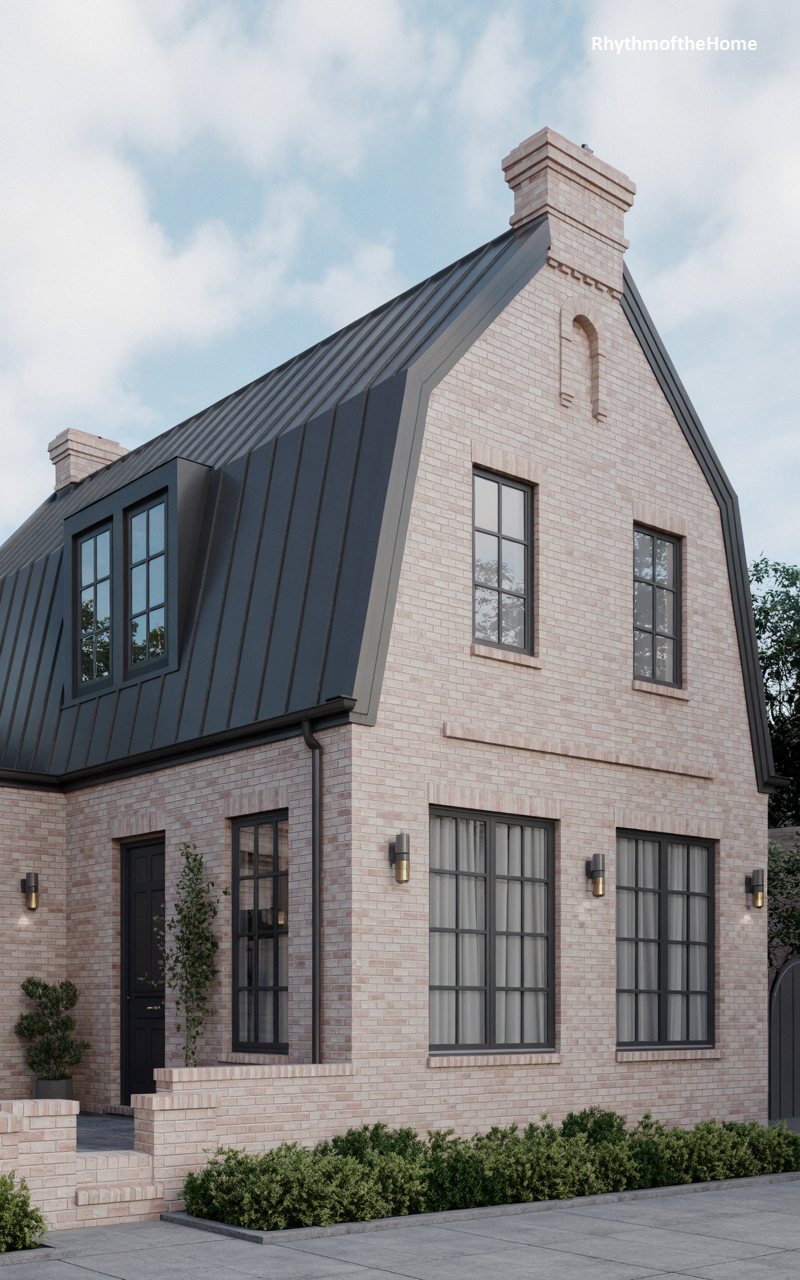
Set against a cloudy sky, this home utilizes a textured, light-washed brick facade that evokes a sense of established permanence. The defining feature is the prominent mansard-style roof with a steep pitch, clad in dark standing-seam metal that cascades down the sides, wrapping the upper story in a protective shell. Two symmetrical dormer windows break the roofline, offering balance to the composition. Decorative brickwork, including subtle arch details above the upper windows and a recessed arch near the peak, adds depth and craftsmanship. The juxtaposition of the rugged brick texture against the sleek, modern metal roof creates a sophisticated transitional aesthetic suitable for an urban setting.
79. The Minimalist Plaster Dutch Colonial Home
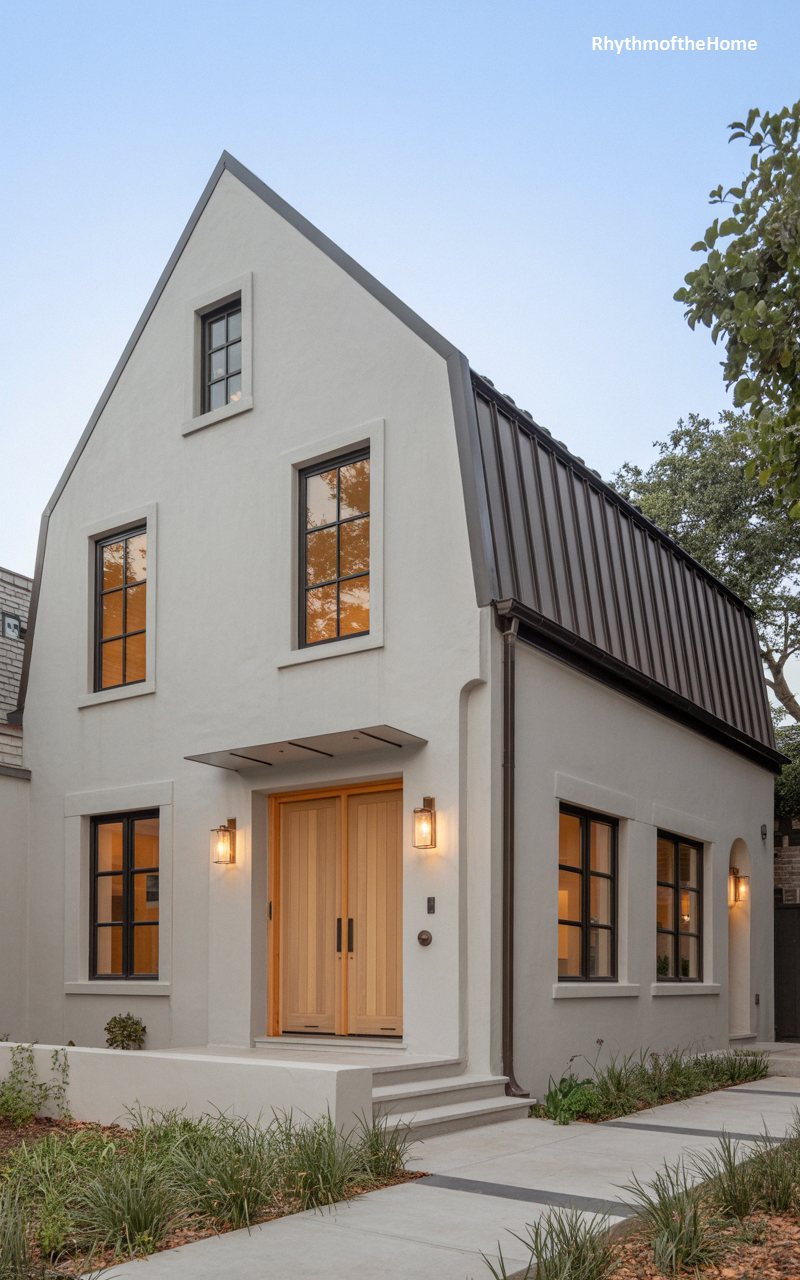
This structure presents a stark, sculptural take on the Dutch vernacular, featuring a steeply pitched roof that extends seamlessly from the ridge to the lower walls. The exterior is finished in a uniform, textured off-white plaster, giving the home a monolithic and grounded appearance. A dark metal roof contrasts sharply with the pale walls, emphasizing the unique silhouette that hints at a barn-like influence. The entry is marked by a modern metal awning and double doors made of warm, light-stained wood, providing the only burst of color. Black-framed windows are placed asymmetrically, adding a touch of playful modernity to the otherwise austere and disciplined facade.
80. A White Clapboard Dutch Colonial Home
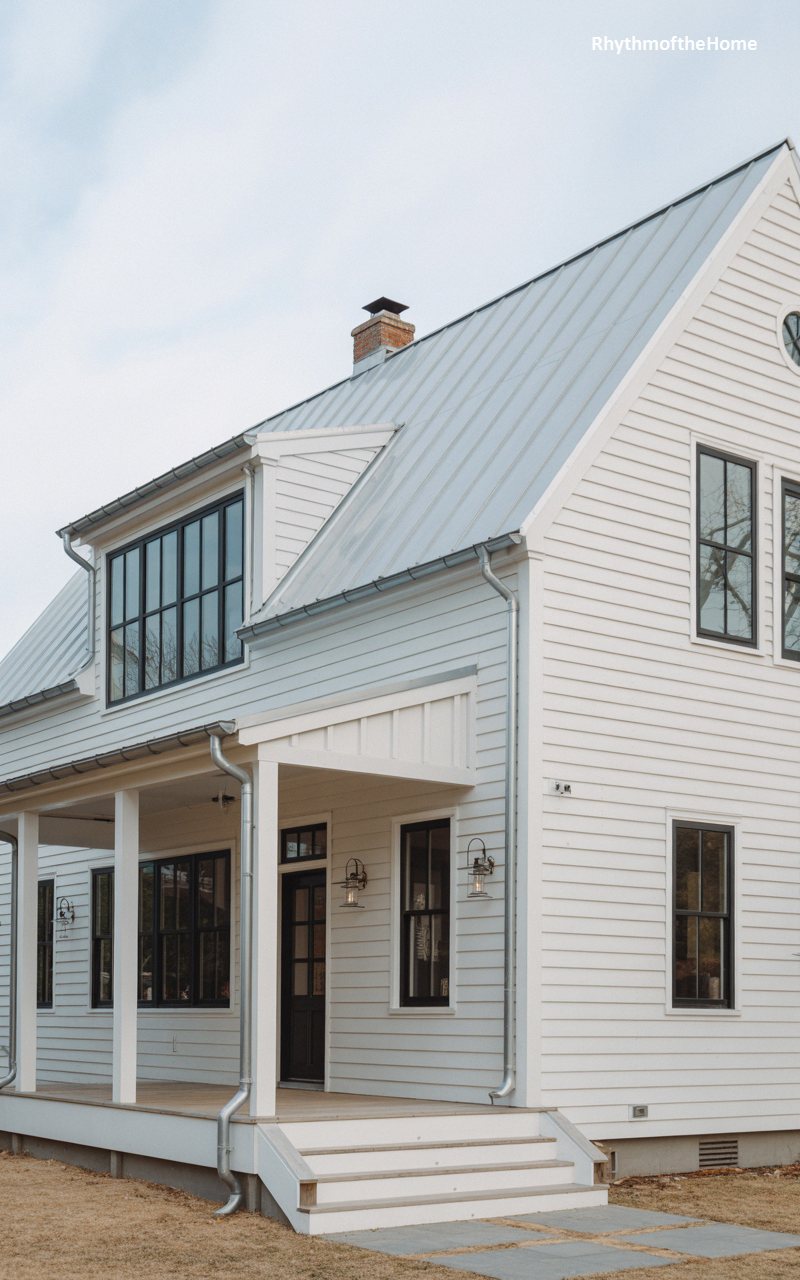
Exuding the charm of a countryside estate, this home features crisp white horizontal lap siding and a classic silver metal roof. The architecture blends the gambrel roofline typical of Dutch Colonial styles with the wrap-around porch of an American farmhouse. The porch is supported by simple, square columns and provides a welcoming, shaded outdoor living space. Black grid windows punch through the white facade, creating a timeless high-contrast look. A prominent dormer on the side breaks up the roof plane, adding visual interest and interior volume. The overall effect is one of breezy, casual elegance, perfectly suited for a spacious lot or rural setting.
81. The Charcoal Shingle Dutch Colonial Home
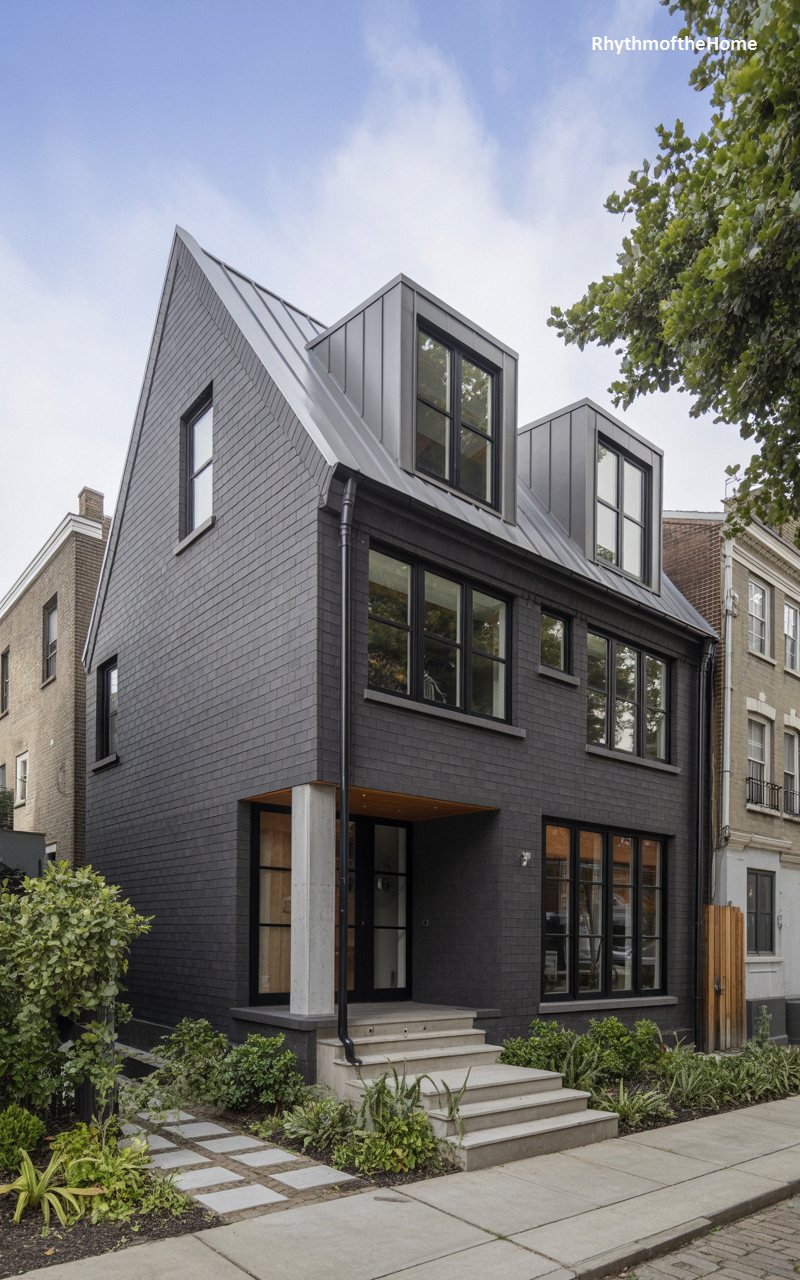
This residence takes a bold approach with a monochromatic dark grey palette. The entire exterior is clad in dark shingles, creating a unified and textured surface that feels both modern and moody. The steep roofline is punctuated by large, boxy dormers clad in smooth metal panels, which project outward to maximize upper-level space. An exterior drainpipe runs vertically down the facade, acting as a subtle linear architectural element. The entryway is recessed under a warm wood soffit, providing a sheltered transition point. Surrounded by lush greenery, the dark structure recedes into its environment while maintaining a strong, confident architectural presence in the neighborhood.
82. A Historic Yellow Dutch Colonial Home
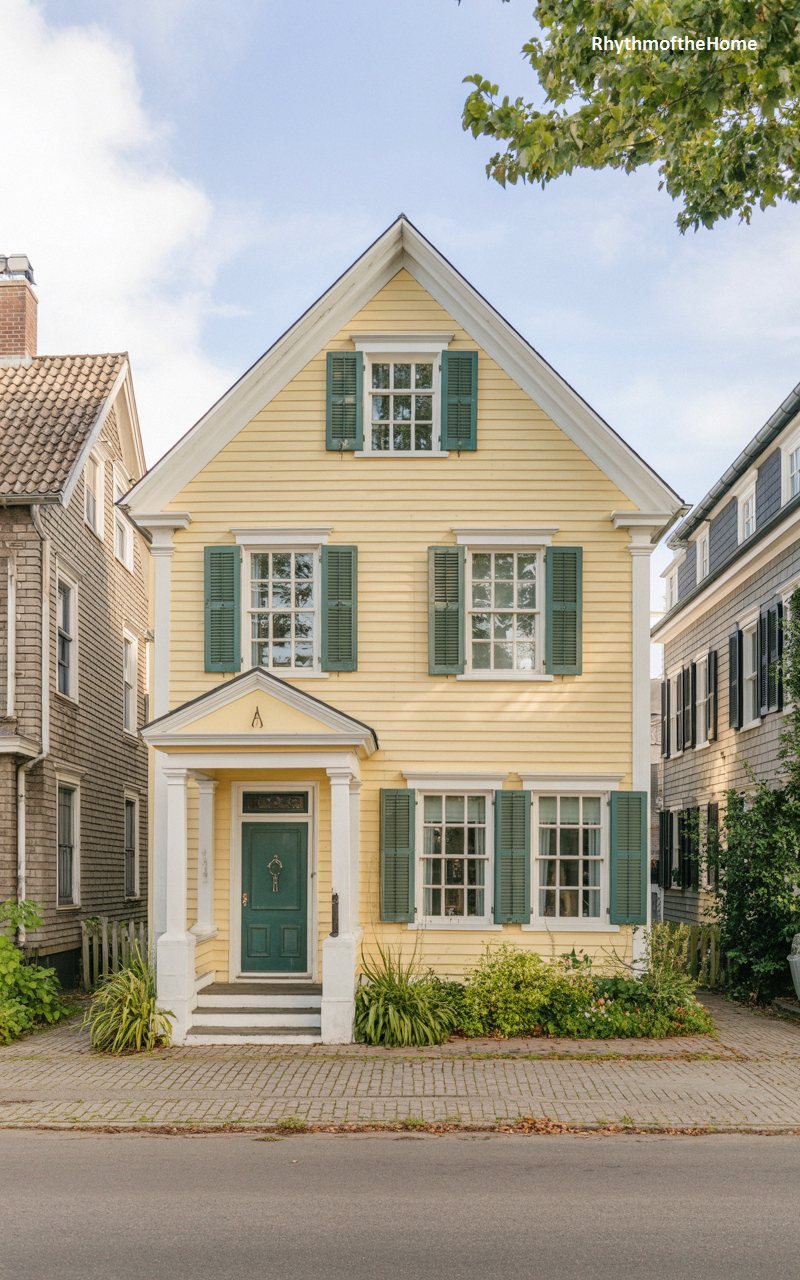
Capturing the essence of early American settlements, this home features a front-facing gambrel roof, a hallmark of the style. The exterior is painted a cheerful, buttery yellow, complemented by crisp white trim and fascia. Dark green louvered shutters flank the sash windows, adding a layer of traditional color contrast. The central entrance is highlighted by a classic pediment and pilasters, framing a deep green door that matches the shutters. The building’s narrow, tall profile allows it to fit neatly into a dense streetscape, while the slight overhang of the eaves and the detailed carpentry speak to a preservation of historical architectural integrity.
83. The Townhouse Style Dutch Colonial Home
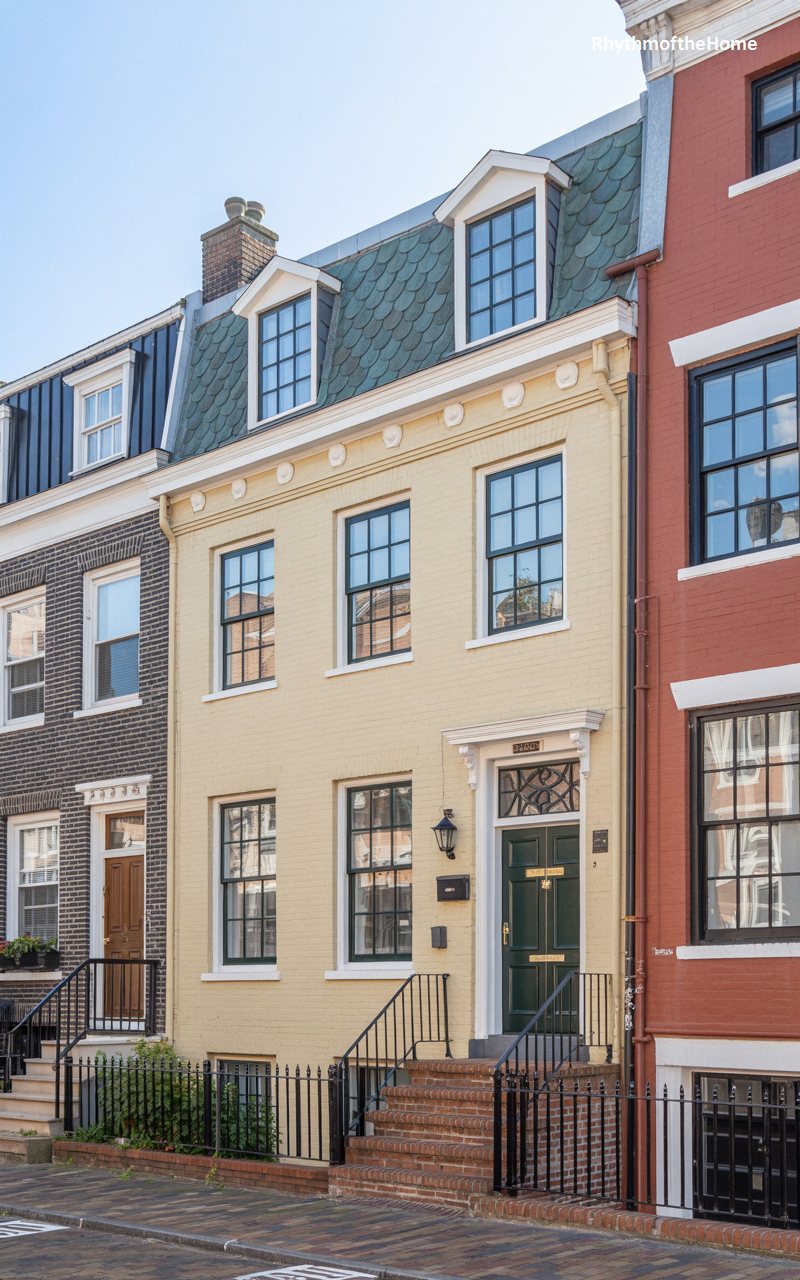
This rowhouse adapts Dutch influences for city living, featuring a distinct mansard roof covered in scalloped slate tiles. The facade is constructed of pale yellow brick, offering a soft brightness against the red and brown brick of its neighbors. Three dormer windows with white casings protrude from the slate roof, adding rhythm to the top floor. The large sash windows on the main levels are detailed with black framing, emphasizing the verticality of the structure. A raised entryway with brick steps and black iron railings leads to a stately dark green door, completing the dignified and historic appearance of this urban dwelling.
84. The Sharp Gable Dutch Colonial Home
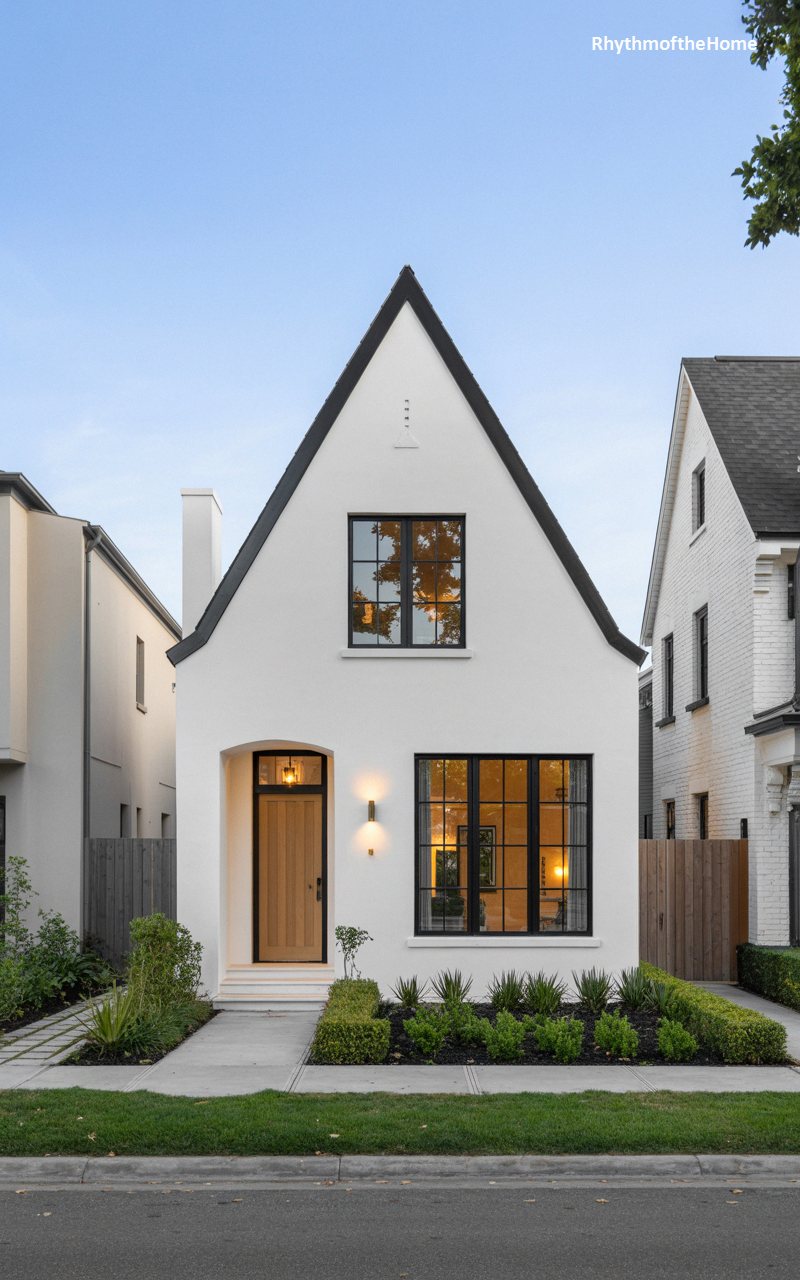
This home features a dramatic, steeply pitched triangular roofline that dominates the visual profile, referencing the steep gables of Northern European architecture. The exterior is rendered in a smooth, bright white stucco, which serves to reflect the surrounding light and emphasize the building’s sharp geometry. A singular, centered window on the upper level aligns perfectly above the arched entryway, creating a strong vertical axis. The warm wood front door, set within a deep arch, provides a natural focal point and softening element against the stark white walls. Flanking black iron lanterns and manicured landscaping ground the ethereal structure, blending modern minimalism with storybook charm.
85. A Manor Estate Dutch Colonial Home
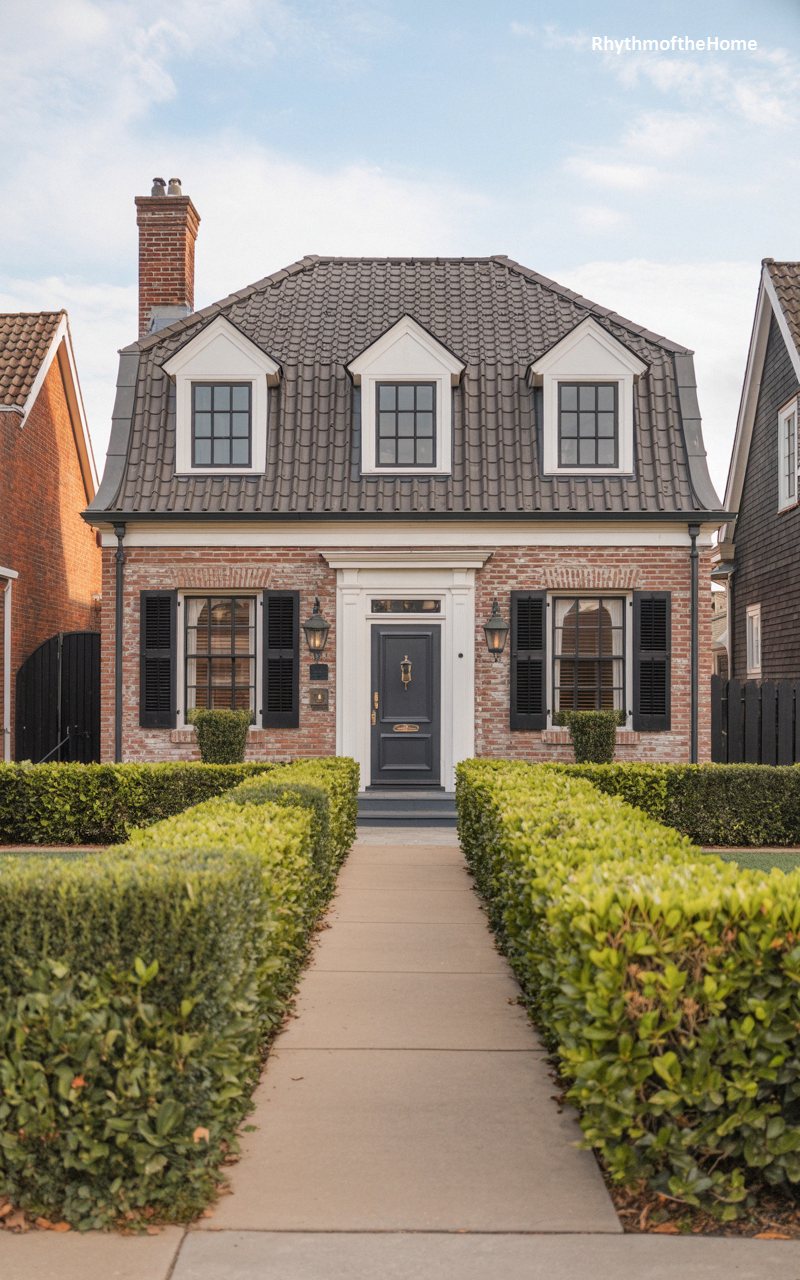
This stately residence showcases a broad, side-gabled gambrel roof covered in dark, textured tiles, giving it a heavy and permanent feel. Three classic white dormers with pediments project from the roof, providing symmetry and balance. The main body of the house is constructed of variegated red brick with a “weeping mortar” style, adding significant texture and age to the facade. Black louvered shutters frame the lower windows, contrasting with the white window sashes and the elaborate white door surround. A manicured path flanked by structured boxwood hedges leads directly to the central entrance, reinforcing the formal and traditional nature of this grand estate.
86. The Limestone Facade Dutch Colonial Home
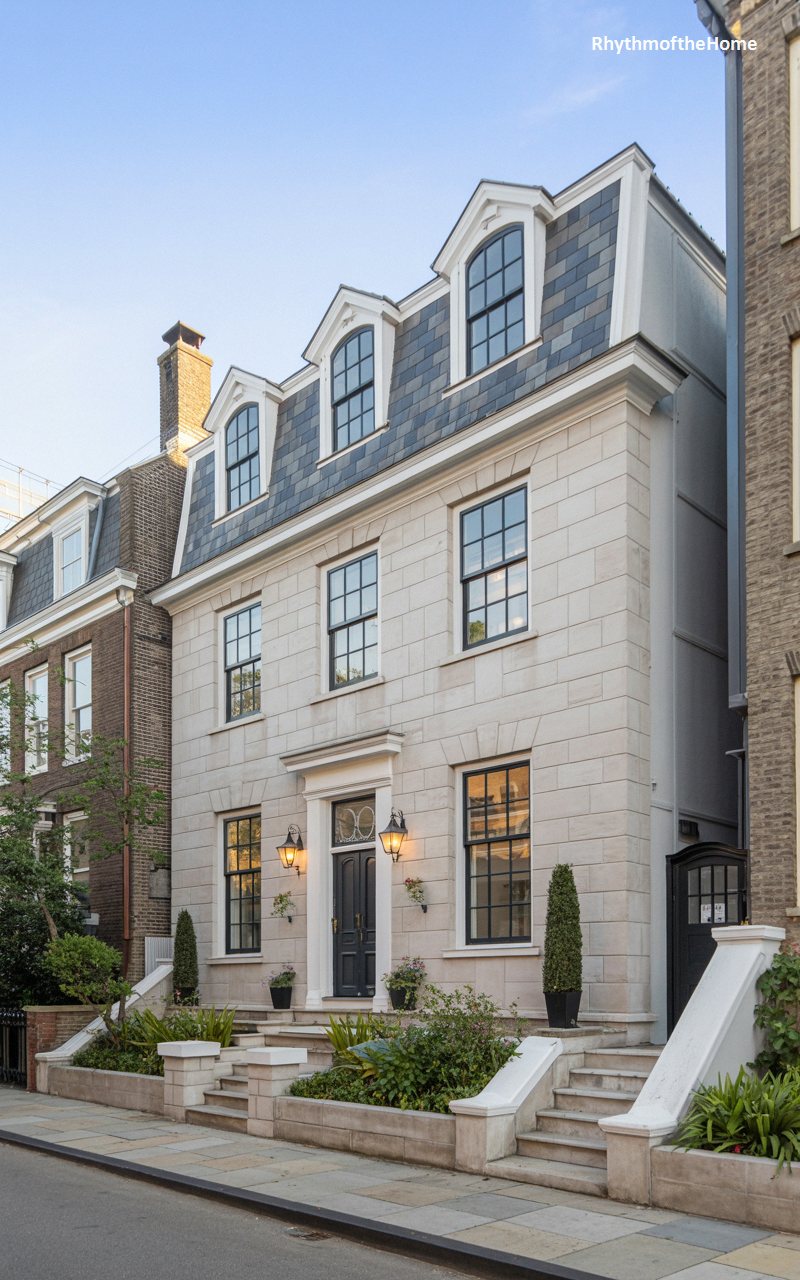
Elegant and imposing, this home features a facade of smooth, pale limestone blocks that convey luxury and solidity. The roof is a complex mansard style with dark grey slate tiles, pierced by arched dormer windows that add a touch of French flair to the Dutch influence. The windows are tall and multi-paned, framed in black, which creates a graphic pop against the light stone. The entryway is grand, with stone steps leading to a dark double door flanked by carriage lanterns. The overall composition is one of refined urbanity, blending historical architectural motifs with high-end materials to create a timeless, sophisticated residence.
87. A Sage Green Gambrel Dutch Colonial Home
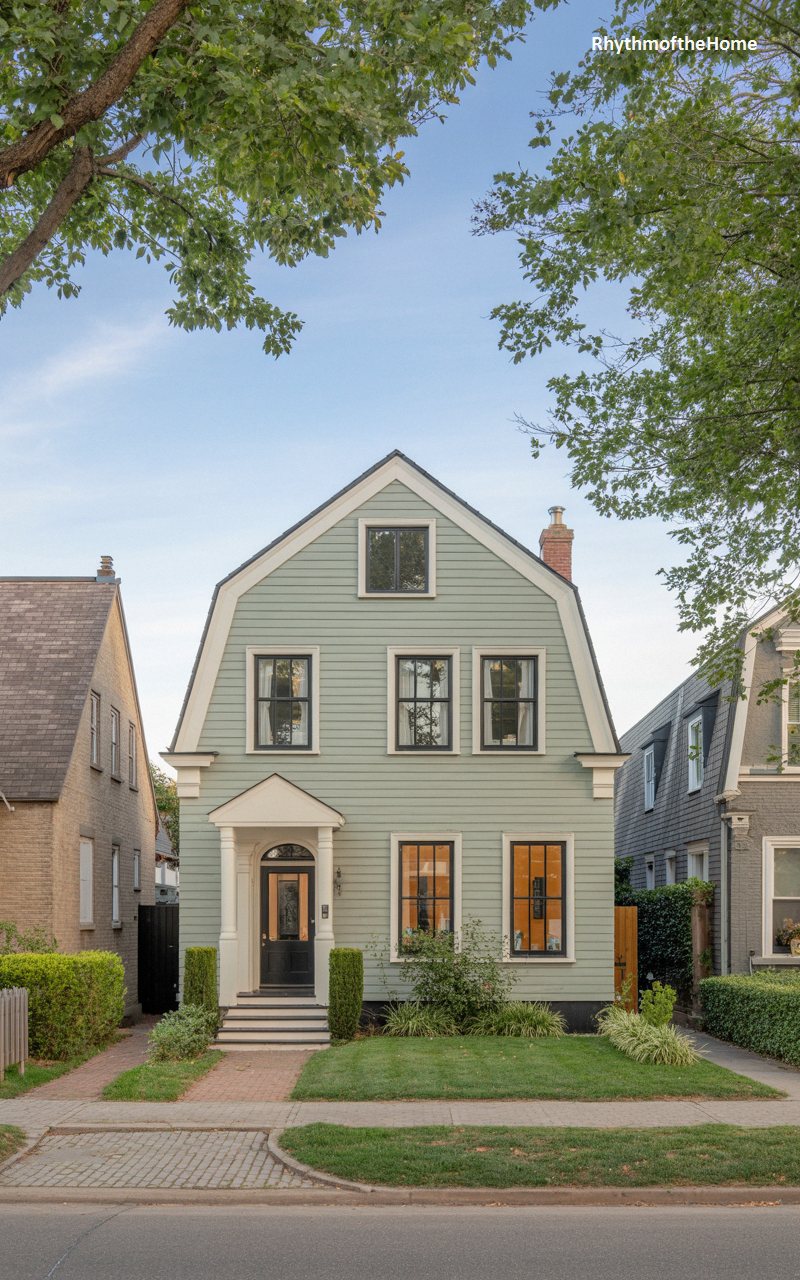
This charming home utilizes a classic gambrel roof profile, clad in light sage green horizontal siding that harmonizes beautifully with the natural surroundings. The roof itself features a dark shingle, providing a grounding cap to the lighter walls below. The front facade is symmetrical, with three windows across the top and two flanking the central entrance on the bottom. The entrance is sheltered by a portico supported by white columns, a traditional welcoming gesture. A paved walkway leads through a lush green lawn to the front steps. The design feels approachable and family-oriented, embodying the quintessential suburban adaptation of the Dutch Colonial style.
88. The Parapet Gable Dutch Colonial Home
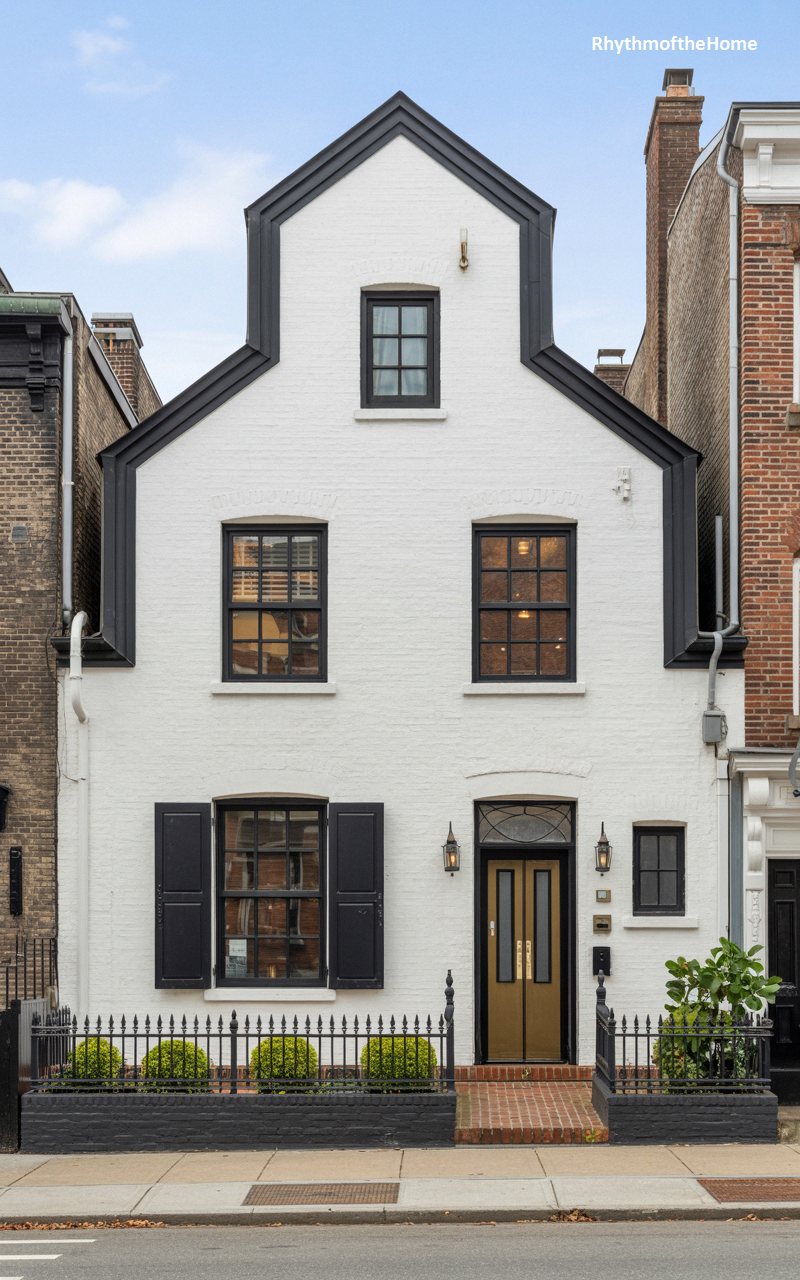
Drawing inspiration from the Cape Dutch style of South Africa, this home features a distinctive curved parapet gable that rises above the roofline. The brick exterior is painted a brilliant white, contrasting sharply with the dark grey trim of the roof and window frames. A tall, narrow window is centered in the gable, drawing the eye upward. The entrance is marked by double doors with gold detailing, flanked by tall, narrow sidelights. The lack of overhangs on the gable ends gives the house a crisp, silhouette-like appearance against the sky. Iron fencing and manicured shrubbery complete the polished, high-contrast look of this unique architectural gem.
89. A Stucco Infill Dutch Colonial Home
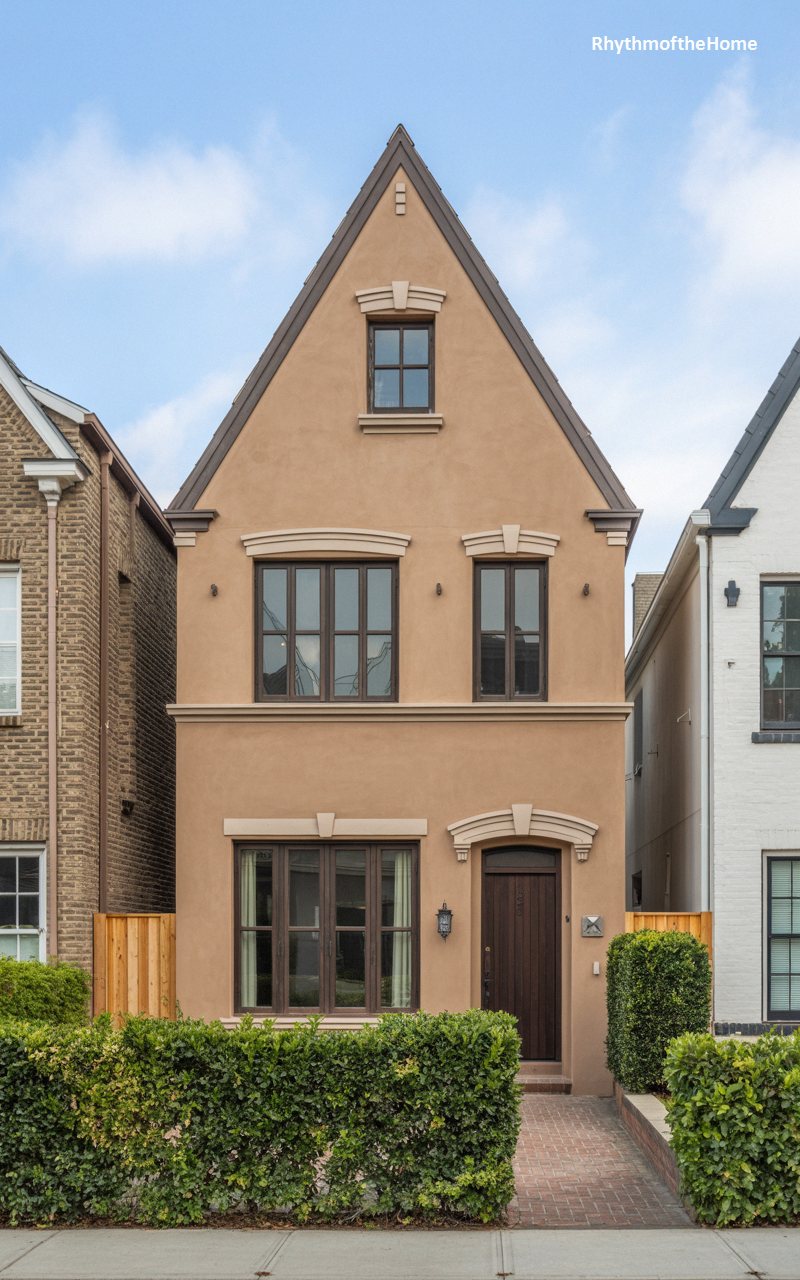
Squeezed into a narrow urban lot, this home maximizes vertical space with a steep, front-facing gable roof. The exterior is finished in a warm, tan stucco, which gives it an earthy, Mediterranean-influenced feel while retaining the Dutch structural form. The roof flares slightly at the eaves, a subtle nod to traditional Dutch construction. Dark brown window frames and a matching solid wood door provide a rich tonal contrast to the lighter walls. The windows are arranged symmetrically, with a small attic window perched high in the peak. A low wooden fence and dense green hedge provide privacy, grounding the tall, slender house in its neighborhood context.
90. The Blue Shingled Dutch Colonial Home
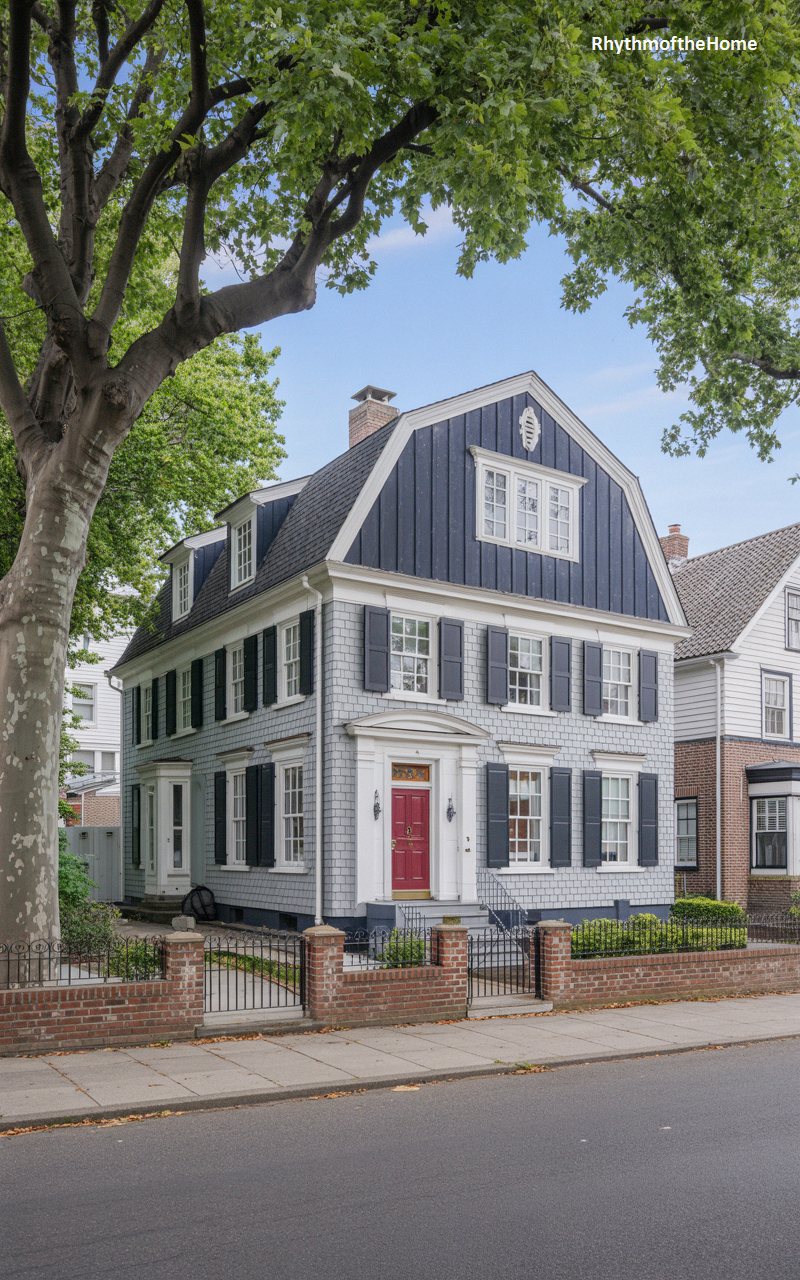
This house presents a playful mix of materials and colors. The massive gambrel roof dominates the structure and is clad in dark blue vertical siding, while the lower level features grey cedar shakes, creating a two-tone effect. A large, mature tree frames the left side of the house, casting dappled shadows on the facade. The white trim around the windows and the intricate cornice work add a layer of refinement. A low brick wall with iron railings defines the property line, giving the home a sense of separation from the street. The red front door provides a vibrant focal point, inviting visitors into this eclectic and texture-rich residence.
91. A Marshland Cottage Dutch Colonial Home
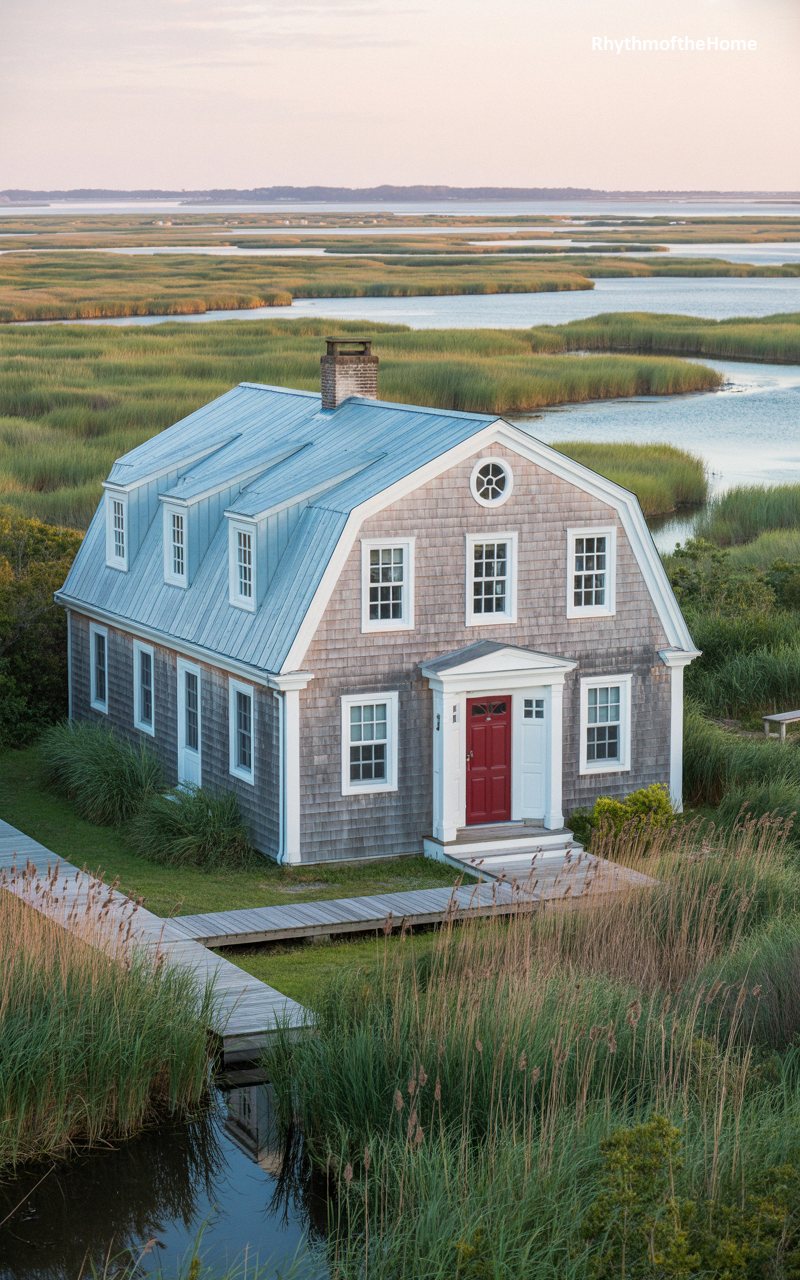
Situated in a serene wetland environment, this home is raised slightly above the water, suggesting a resilience to the tides. The exterior is clad in weathered grey wood shingles that help the structure blend into the natural landscape. A bright, galvanized metal roof reflects the sky and offers durability against the elements. The roofline is a classic gambrel shape, featuring three dormers that look out over the marsh. A vibrant red door offers a striking contrast to the muted tones of the siding and the surrounding reeds. A wooden boardwalk connects the house to the water, emphasizing its harmonious relationship with the tranquil, aquatic setting.
92. The Vineyard Estate Dutch Colonial Home
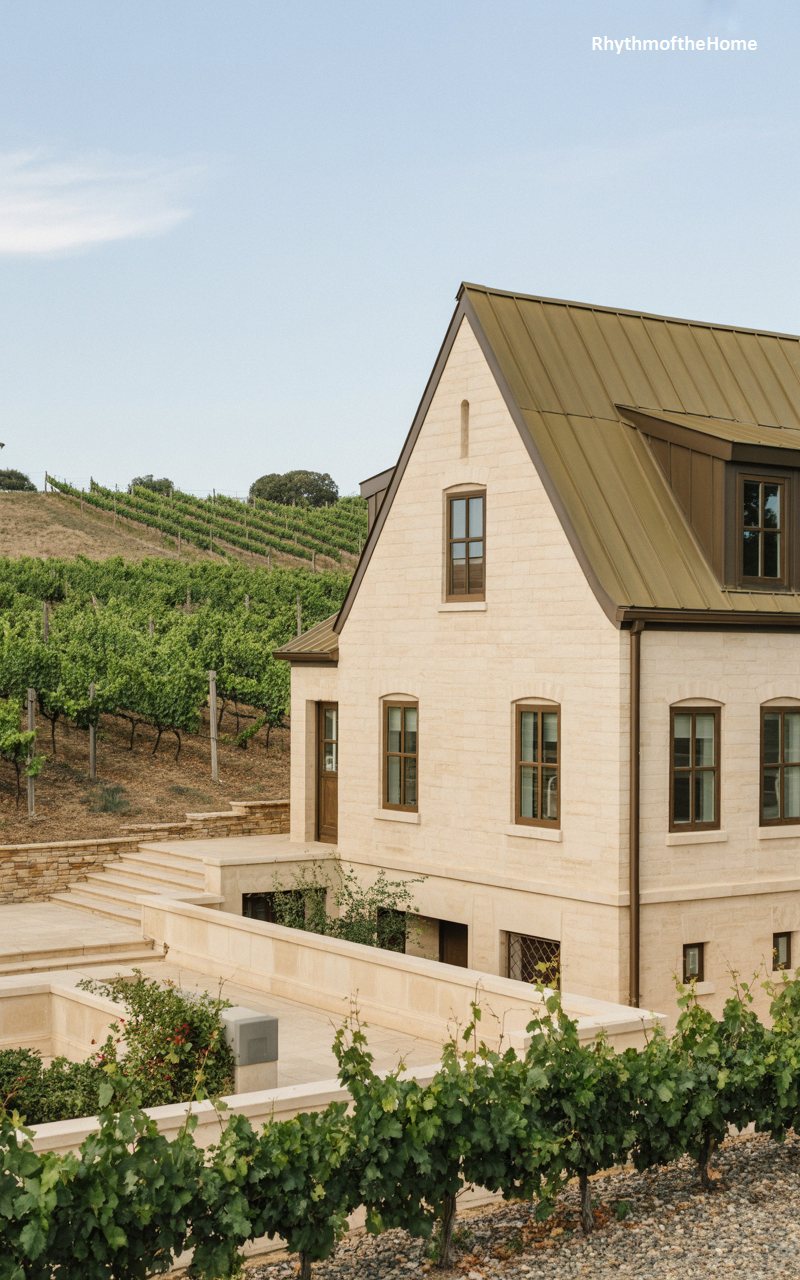
Nestled among rolling hills and rows of grapevines, this home features a pale stone exterior that glows in the sunlight. The steep roof is clad in a bronze-colored metal, which complements the earthy tones of the landscape. A prominent dormer window with a metal roof projects from the main slope, adding architectural interest. The windows are tall and narrow with dark frames, allowing for views of the vineyard. Terraced stone walls and steps lead down from the house, integrating the architecture into the sloping terrain. The overall aesthetic is one of rustic luxury, combining the sturdy forms of Dutch architecture with the romance of a wine country estate.
93. A Rustic Weathered Dutch Colonial Home
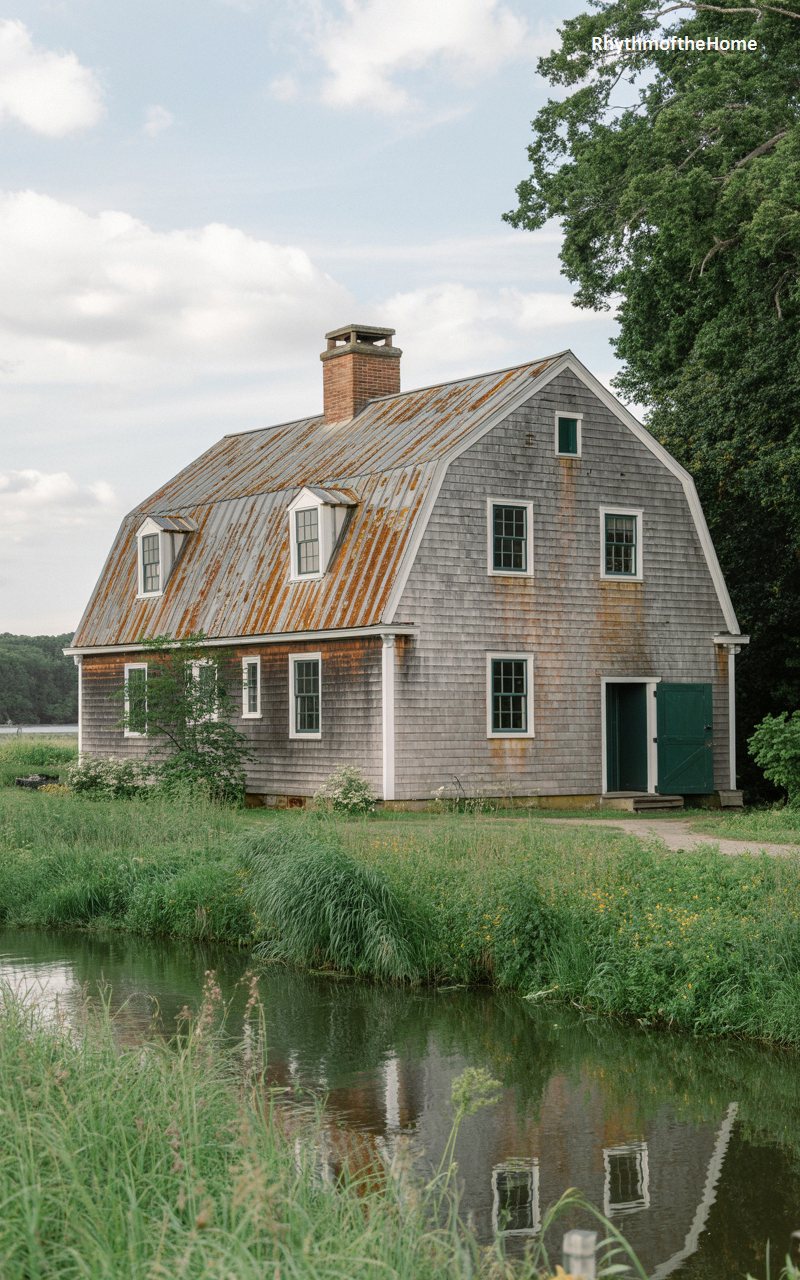
This building appears to be a historic structure, possibly a converted barn or mill, sitting right on the edge of a canal or pond. The gambrel roof is covered in standing-seam metal that shows significant signs of rust and weathering, adding to its antique character. The siding is made of grey, weathered wood shingles that have stood the test of time. Windows are simple and sparse, with white frames that stand out against the grey wood. A mossy green lawn grows wild around the base, and the reflection of the house in the water doubles its visual impact. It captures a sense of history and quiet solitude in a rural landscape.
94. The Modern Glass and Stucco Dutch Colonial Home
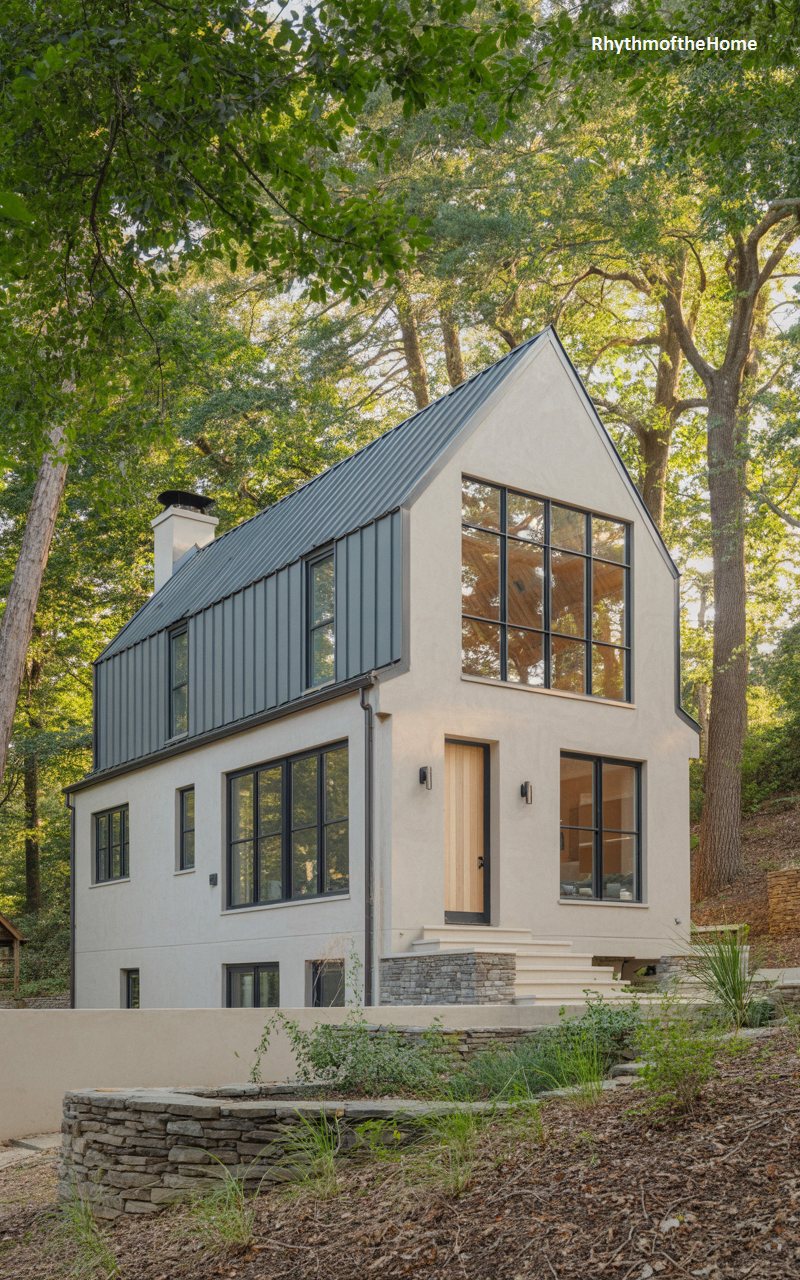
Set in a dense forest, this home combines the traditional steep gable form with modern transparency. The side walls are finished in smooth, light grey stucco, while the roof and the upper portion of the side walls are clad in dark grey standing-seam metal. The defining feature is the massive, multi-paned glass window that takes up the majority of the gable end, blurring the line between the interior living space and the surrounding trees. A simple light wood door provides a warm, organic touch. Stone retaining walls and native plantings ground the house, making it feel like a modern retreat seamlessly integrated into nature.
95. A Red Brick Farmhouse Dutch Colonial Home
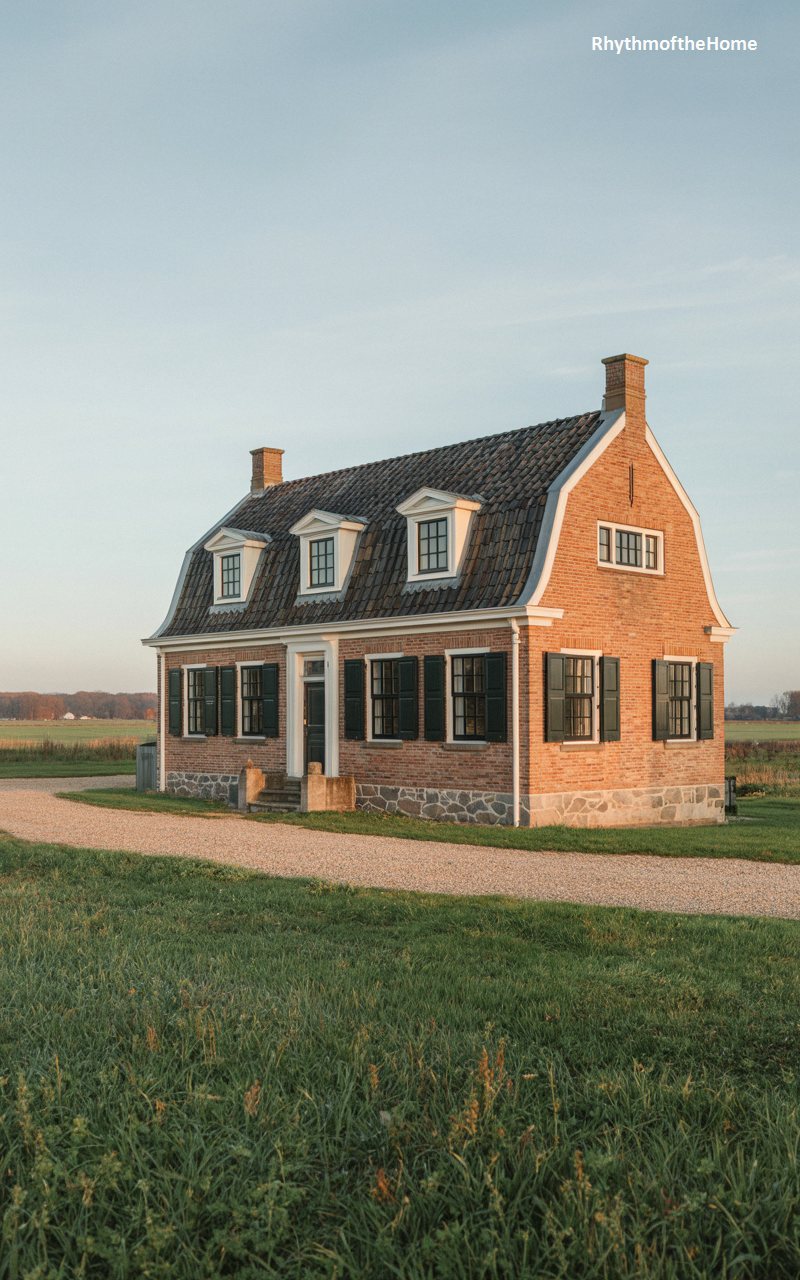
Standing alone in an open field, this home is a robust example of Dutch masonry. The walls are constructed of red brick, providing a warm, textured surface. The roof is a classic gambrel shape, covered in dark tiles, with white trim outlining the distinctive profile. Two chimneys rise from the ridge, hinting at multiple fireplaces within. Shutters flank the windows on the lower level, while the upper level features dormers and windows set into the gable ends. A gravel driveway curves up to the house, and the surrounding green grass highlights the red of the brick. It is a timeless image of rural domesticity and sturdy construction.
96. The Waterfront Stone Dutch Colonial Home
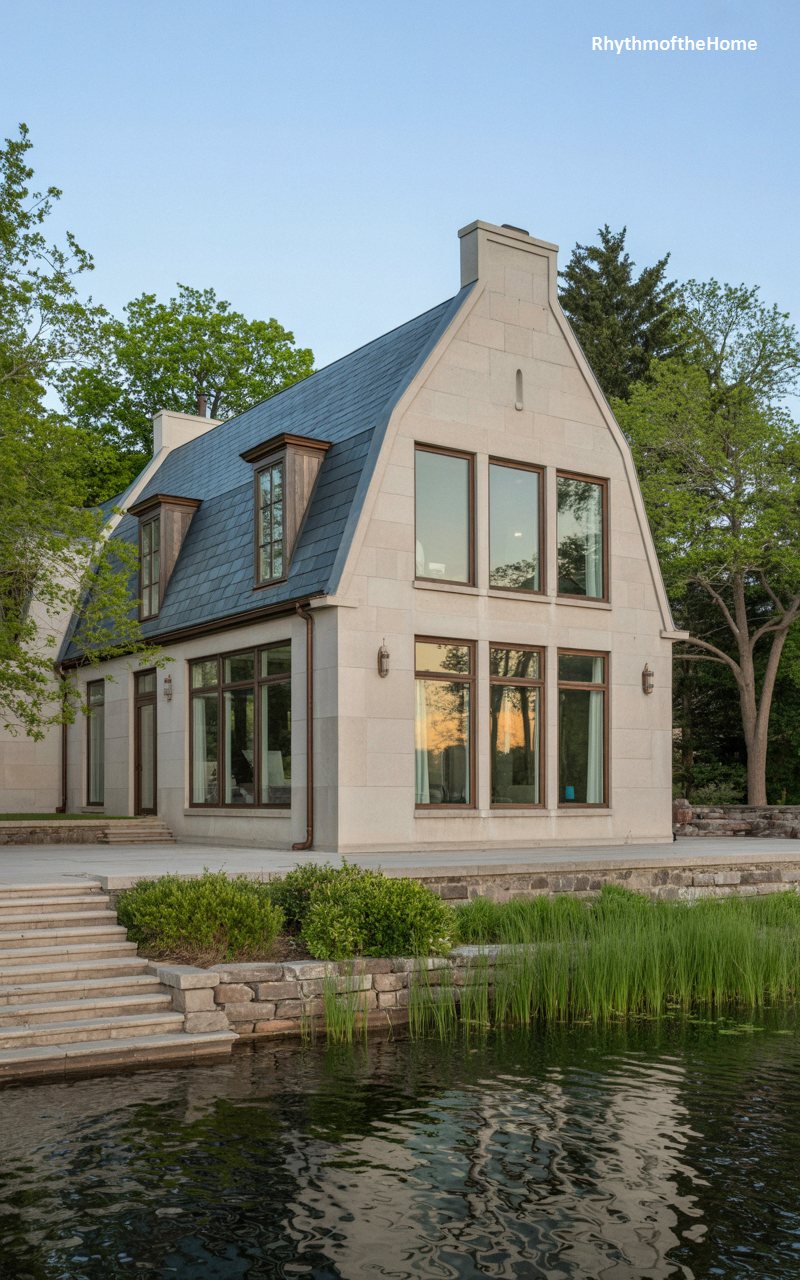
Overlooking a calm body of water, this luxurious home features a facade of large, cut stone blocks in a light grey hue. The roof is a steep gambrel clad in dark slate tiles, with copper gutters and downspouts adding a touch of metallic warmth. Large windows on both levels offer expansive views of the water and flood the interior with light. A stone terrace wraps around the base of the house, with steps leading down to the water’s edge. Lush landscaping, including ornamental grasses and shrubs, softens the stone architecture. The design balances the solidity of stone with the openness of glass, creating a serene lakeside sanctuary.
97. A Green Clapboard Cottage Dutch Colonial Home
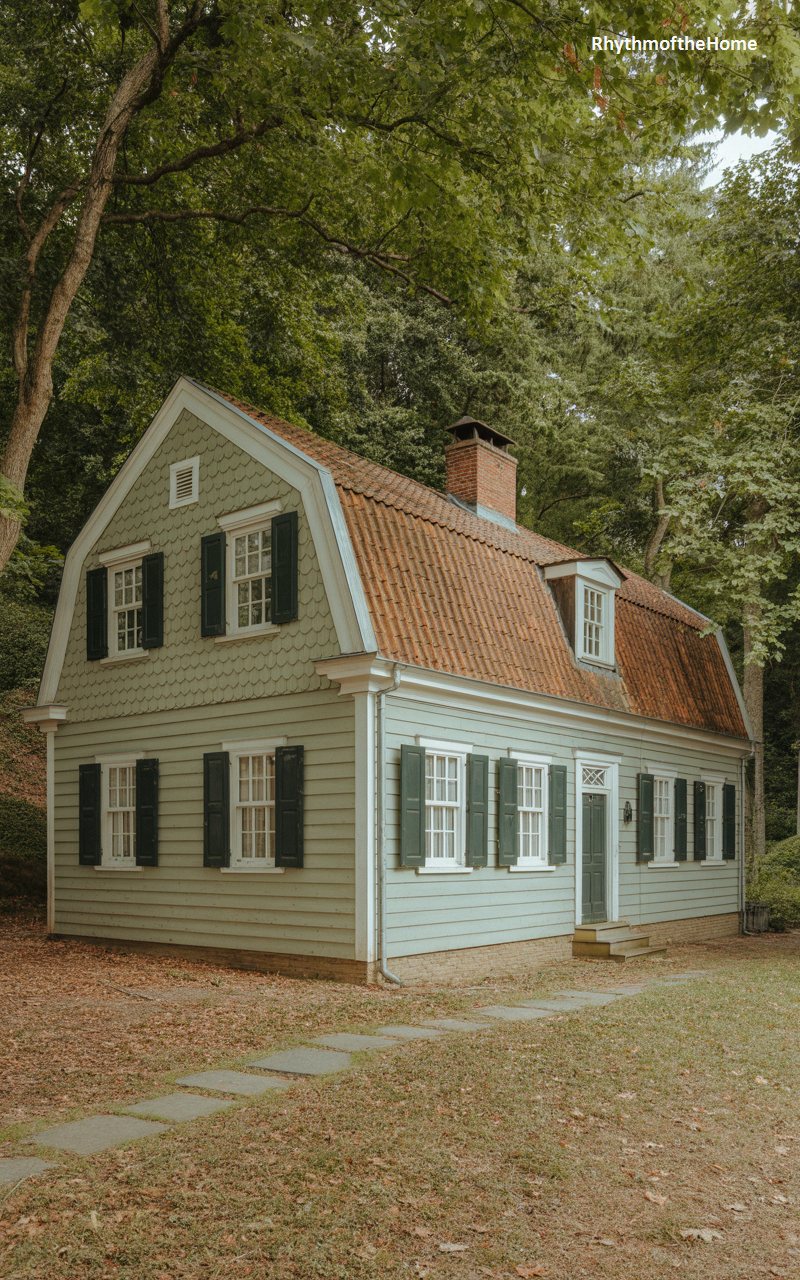
This quaint cottage is tucked away in a wooded glade. The exterior features light green clapboard siding that mimics the colors of the forest. The roof is a gambrel shape covered in reddish-brown terracotta tiles, which adds a warm, earthy contrast to the green walls. A central brick chimney anchors the structure. The windows are dressed with dark shutters, and a simple white door serves as the entrance. A stone path winds through the grass to the front door, enhancing the storybook quality of the home. The overall feeling is one of coziness and seclusion, a perfect hideaway in the woods.
98. The White Farmhouse Dutch Colonial Home
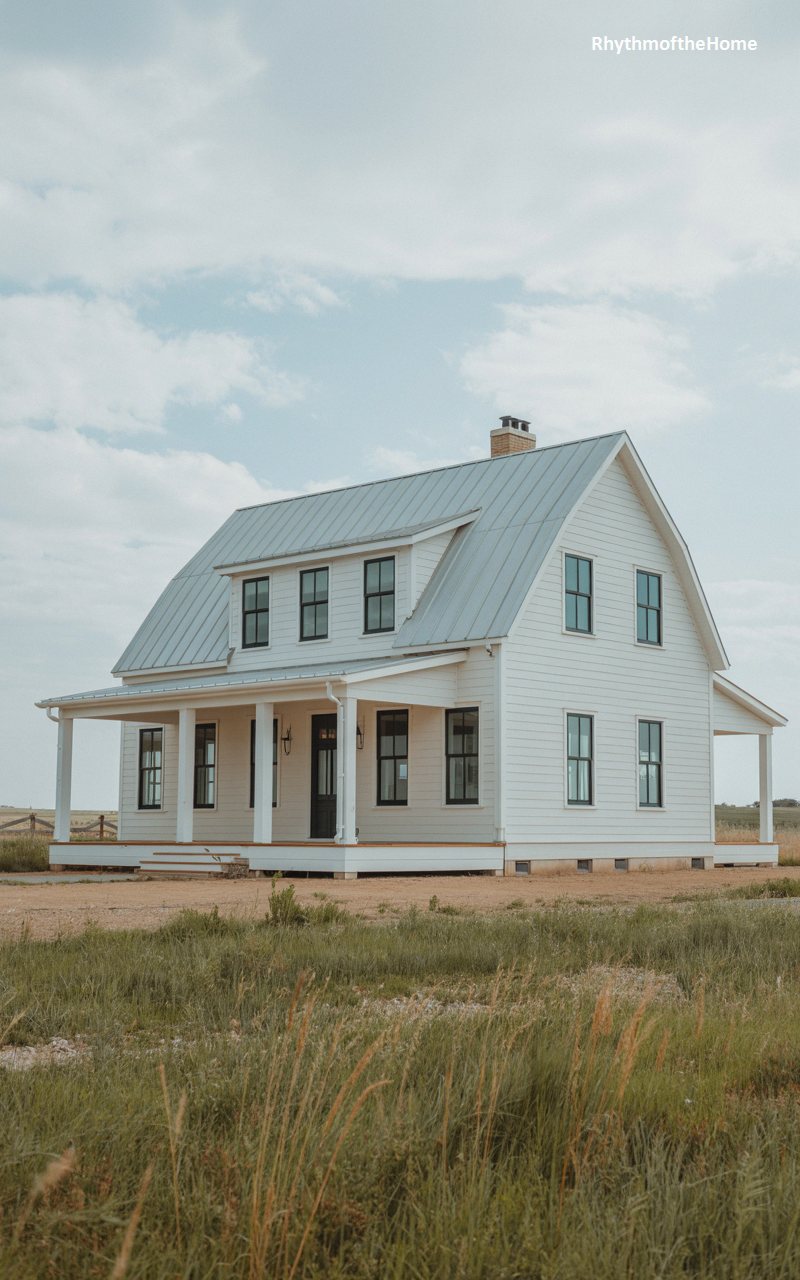
Located on a flat, grassy plain, this house is a beacon of brightness with its all-white horizontal siding. The roof is a silver metal gambrel that reflects the expansive sky above. A wide, covered porch wraps around the front and side, supported by simple white columns, inviting outdoor relaxation. Black window frames provide a modern contrast to the white exterior. The house sits on a slight rise, giving it a commanding view of the surrounding fields. The design is a clean, crisp interpretation of the farmhouse aesthetic, blending the practical gambrel roof form with the leisure of a wrap-around porch.
99. A Cape Dutch Revival Home
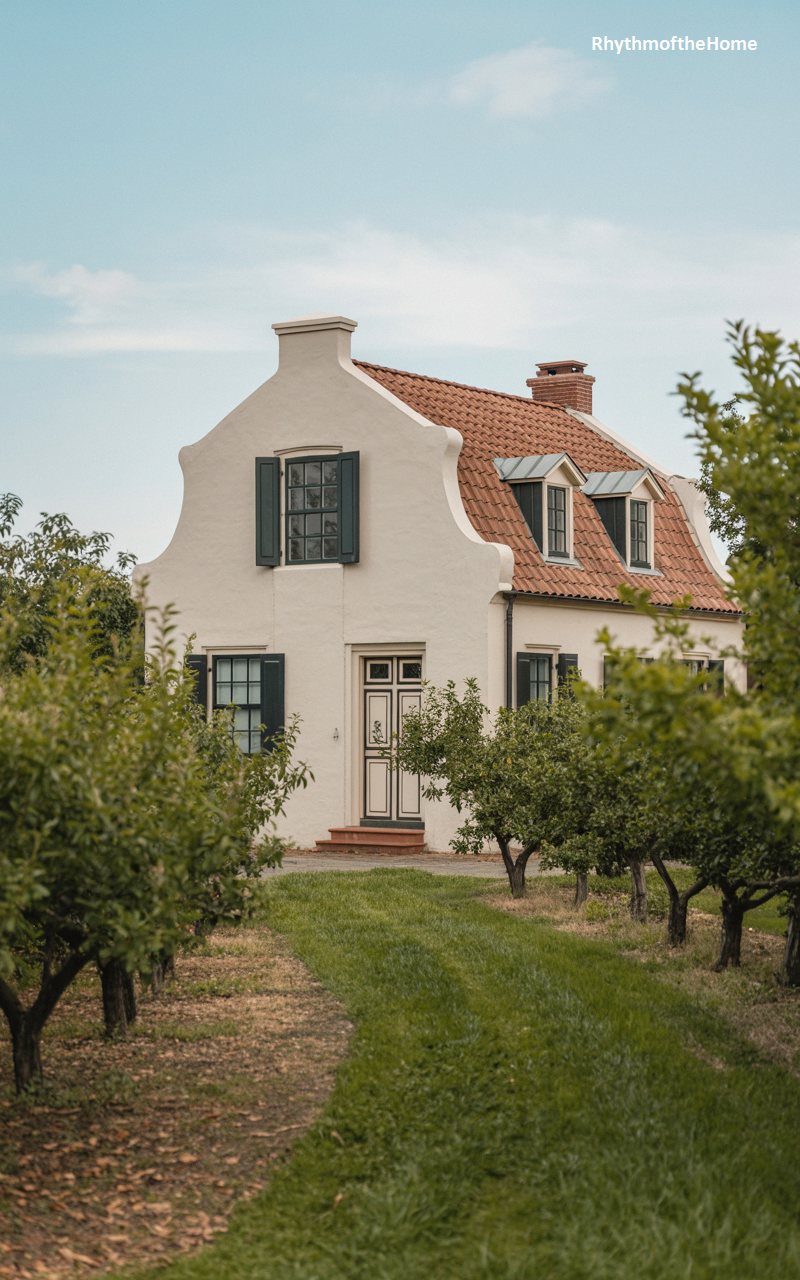
This home is a quintessential example of Cape Dutch architecture, distinguished by its elaborate, curvilinear central gable. The walls are finished in a textured, cream-colored plaster/stucco, and the roof is covered in red clay tiles. Dark green shutters flank the small, multi-paned windows, providing a traditional color contrast. The front door is centered below the gable, with a fanlight window above it. The house is surrounded by an orchard of fruit trees, reinforcing its agricultural roots. The curvaceous lines of the gable soften the rectangular mass of the house, creating a building that is both elegant and historically resonant.
100. The Scandinavian Noir Dutch Colonial Home
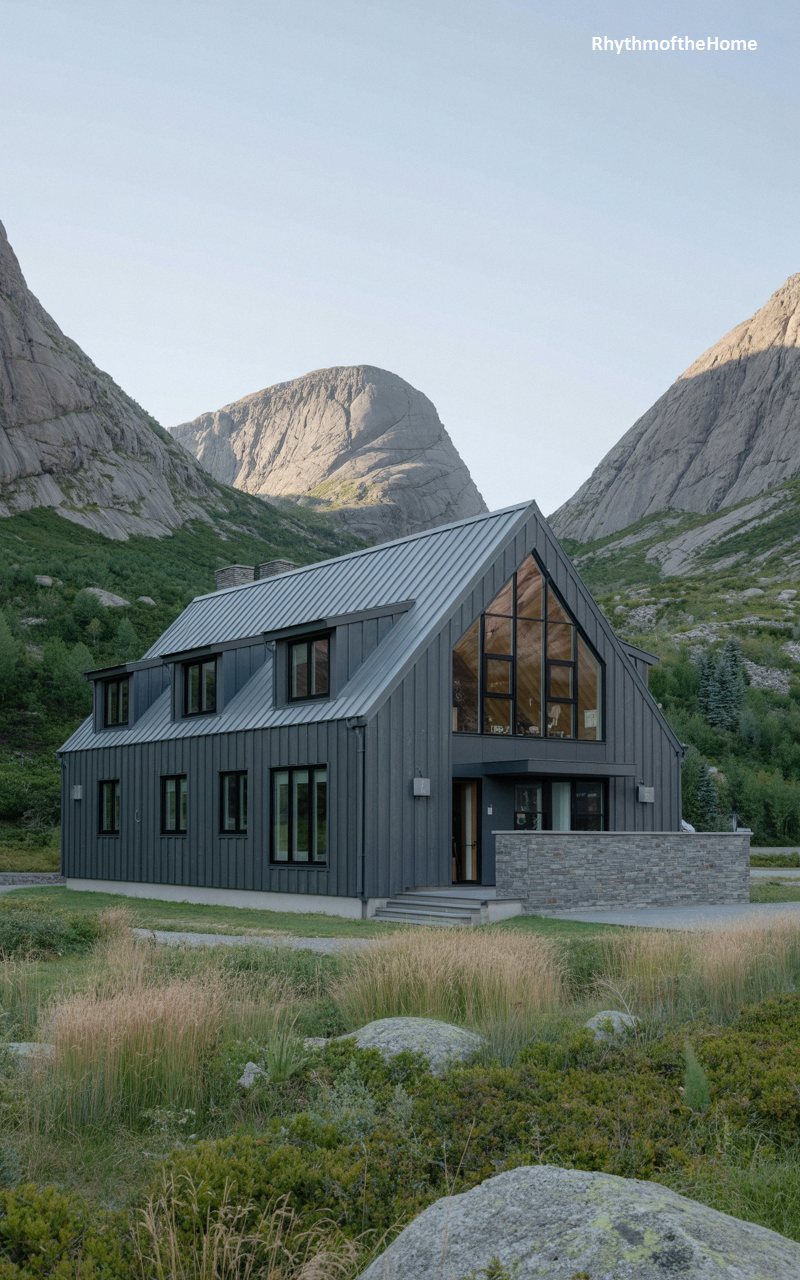
Set against a dramatic backdrop of rocky mountains, this home takes a dark, moody approach to the Dutch form. The exterior is clad entirely in vertical dark grey siding, which mimics the color of the surrounding stone. The roof is a simple gable, clad in matching dark metal, creating a unified, monochromatic silhouette. A large section of the facade is devoted to floor-to-ceiling glass, reflecting the rugged landscape and allowing for passive solar heating. A low stone wall defines the front terrace. The design is stark and elemental, a modern shelter that asserts its presence through bold geometry and a cohesive dark palette in a wild setting.

Leave a Reply