
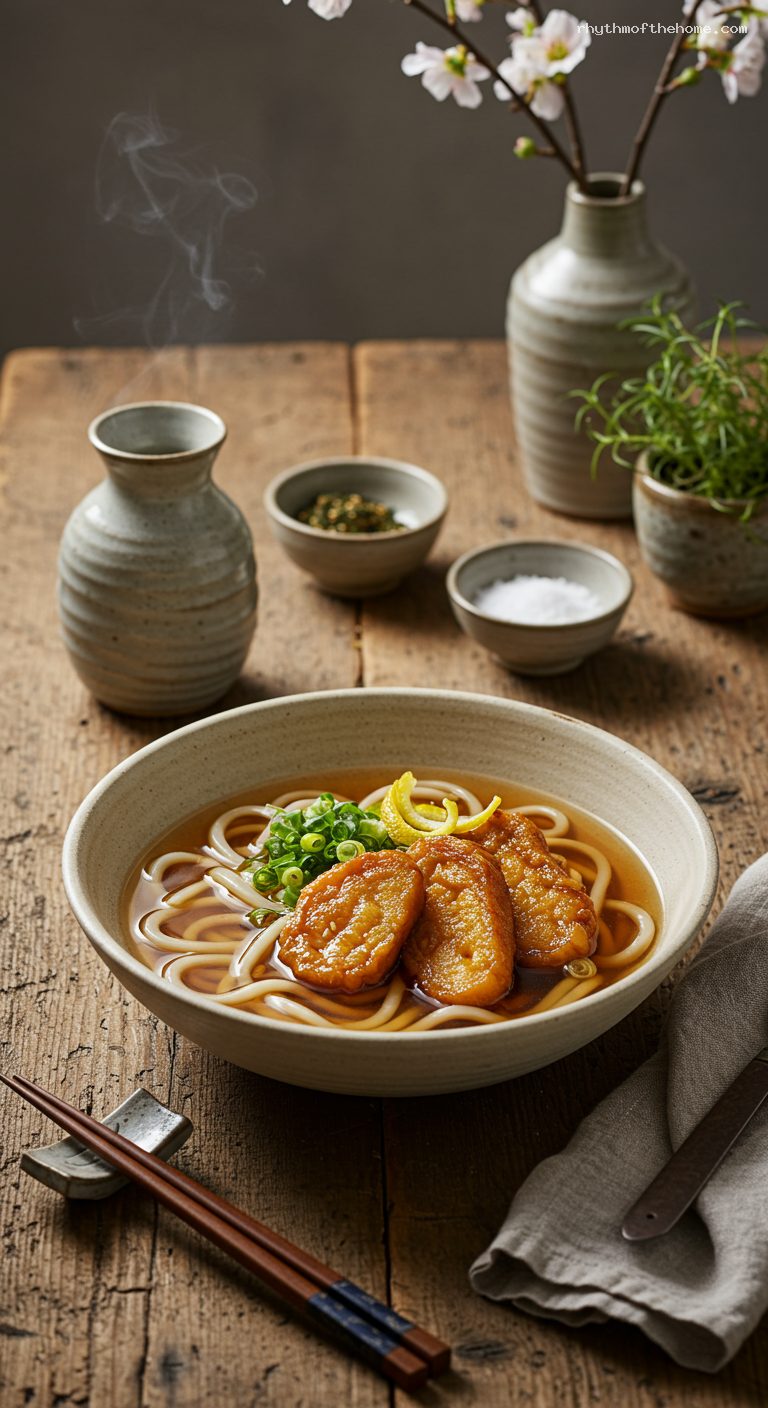
Quick Recipe Version (TL;DR)
Quick Ingredients
- 2 aburaage (fried tofu pouches)
- For simmering aburaage: 1/2 cup dashi, 2 tbsp soy sauce, 2 tbsp mirin, 1 tbsp sugar
- 4 cups dashi (from granules or homemade)
- 2 tbsp soy sauce (preferably usukuchi/light)
- 1 tbsp mirin, 1/2 tsp sugar, 1/4–1/2 tsp fine salt
- 14 oz fresh or frozen udon noodles (or 7 oz dried)
- 2 scallions, thinly sliced; 2 thin curls yuzu peel (or lemon peel)
- Optional: shichimi togarashi
Do This
- 1) Blanch aburaage in boiling water (212°F/100°C) for 30 seconds; drain and press out excess oil.
- 2) Simmer aburaage in 1/2 cup dashi, soy, mirin, sugar over low heat for 8–10 minutes; let rest in liquid.
- 3) Warm 4 cups dashi to a gentle simmer (about 185°F/85°C); season with soy, mirin, sugar, and salt.
- 4) Boil udon until tender (fresh/frozen 2–4 minutes; dried 7–9 minutes); drain well.
- 5) Divide noodles between bowls; top with the sweet-simmered aburaage.
- 6) Ladle hot broth over; garnish with scallions, a curl of yuzu peel, and optional shichimi.
Why You’ll Love This Recipe
- Weeknight-friendly: 30 minutes from start to slurp.
- Comfort in a bowl: springy udon in a gentle, clean dashi.
- Classic kitsune topping: sweet-simmered aburaage that soaks up flavor.
- Bright finish: scallions and fragrant yuzu peel lift every sip.
Grocery List
- Produce: Scallions, yuzu (or lemon) for peel
- Dairy: None
- Pantry: Aburaage, udon noodles, dashi (granules or kombu + katsuobushi), soy sauce (usukuchi or regular), mirin, sugar, salt, shichimi togarashi (optional)
Full Ingredients
Sweet-Simmered Aburaage
- 2 aburaage (fried tofu pouches), about 3 x 4 inches each
- Boiling water, as needed, for blanching
- 1/2 cup dashi
- 2 tbsp soy sauce
- 2 tbsp mirin
- 1 tbsp sugar
Gentle Dashi Broth
- 4 cups dashi (see optional from-scratch section)
- 2 tbsp soy sauce (usukuchi/light is traditional; regular is fine)
- 1 tbsp mirin
- 1/2 tsp sugar
- 1/4–1/2 tsp fine sea salt, to taste
Noodles & Garnish
- 14 oz fresh or frozen udon noodles (or 7 oz/200 g dried udon)
- 2 scallions, thinly sliced on the bias
- 2 thin curls yuzu peel (or lemon peel), pith removed
- Optional: shichimi togarashi, to serve
Optional: Quick Awase Dashi From Scratch (Makes 4 Cups)
- 4 cups (960 ml) cold water
- 10 g kombu (dried kelp)
- 20 g katsuobushi (bonito flakes)
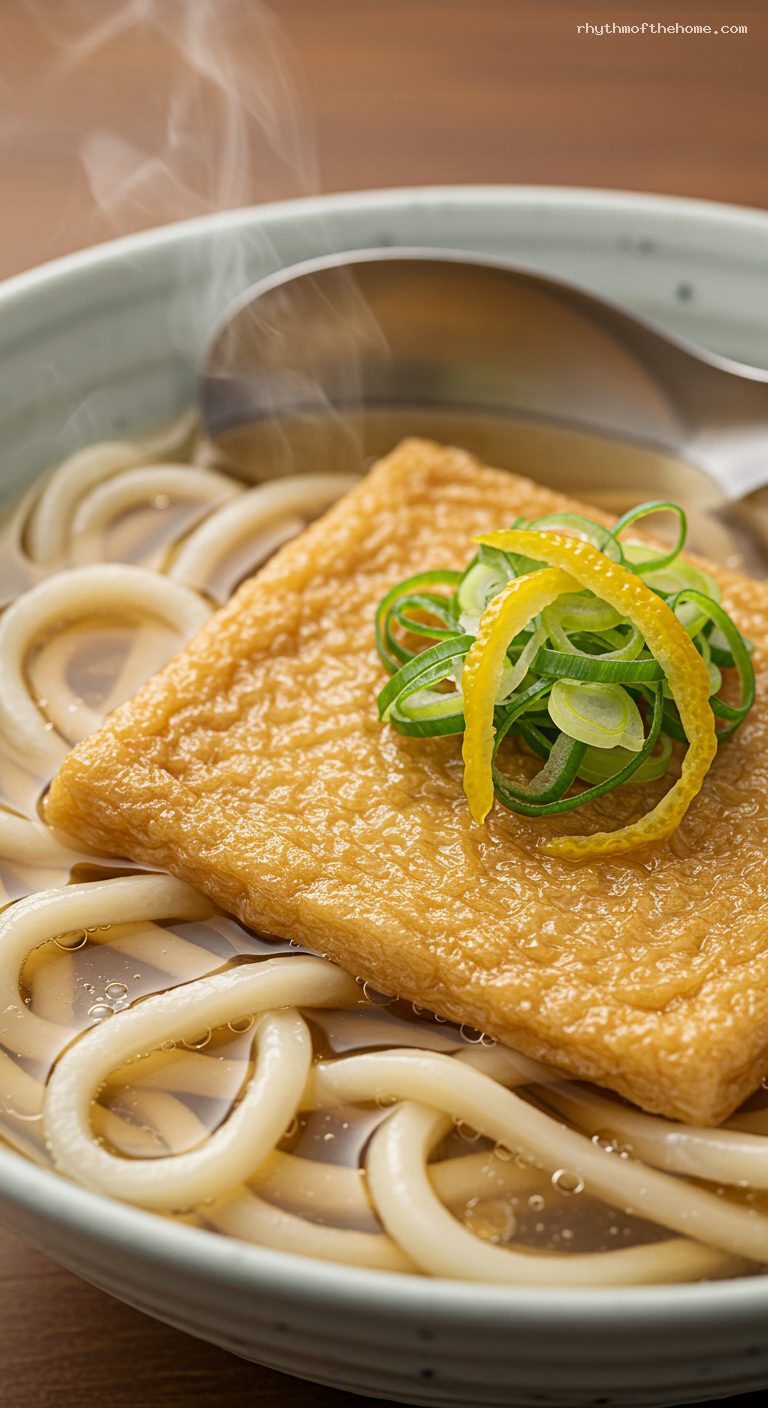
Step-by-Step Instructions
Step 1: Prep aromatics and aburaage
Thinly slice the scallions and set aside for garnish. Use a peeler or paring knife to cut 2 thin curls of yuzu (or lemon) peel, avoiding the bitter white pith. Pat the aburaage with paper towels to remove surface oil.
Step 2: Blanch and drain the aburaage
Bring a small pot or kettle of water to a rolling boil (212°F/100°C). Place the aburaage in a heatproof sieve or bowl and pour the boiling water over to remove excess oil, about 30 seconds. Drain well, then gently press each pouch between paper towels to expel water without tearing.
Step 3: Sweet-simmer the aburaage
In a small saucepan, combine 1/2 cup dashi, 2 tbsp soy sauce, 2 tbsp mirin, and 1 tbsp sugar. Bring to a gentle simmer over medium-low heat (about 185°F/85°C). Add the aburaage and simmer uncovered for 8–10 minutes, turning occasionally, until the liquid is mostly absorbed and the pouches are richly seasoned. Turn off the heat and let them rest in the pan for 2 minutes to reabsorb flavor, then slice each pouch in half if desired.
Step 4: Make the gentle dashi broth
In a medium pot, warm 4 cups dashi to a gentle simmer (about 185°F/85°C); avoid a hard boil to keep the broth clean-tasting. Season with 2 tbsp soy sauce, 1 tbsp mirin, 1/2 tsp sugar, and 1/4–1/2 tsp salt to taste. Keep hot over low heat.
If making dashi from scratch: Soak 10 g kombu in 4 cups cold water for 10 minutes. Heat slowly until small bubbles appear (170–185°F/77–85°C); remove kombu just before boiling. Add 20 g katsuobushi, turn off the heat, steep 2–3 minutes, then strain through a fine sieve or cloth. Proceed with seasoning as above.
Step 5: Cook the udon noodles
Bring a large pot of water to a boil (212°F/100°C). Cook fresh or frozen udon for 2–4 minutes (dried udon 7–9 minutes) until bouncy and tender. Drain well. For the clearest broth, briefly rinse cooked noodles under hot water to remove excess starch, then drain again thoroughly.
Step 6: Assemble the bowls
Divide the hot noodles between 2 warmed bowls. Arrange the sweet-simmered aburaage on top. Ladle the hot seasoned dashi over the noodles, ensuring each bowl gets ample broth.
Step 7: Finish and serve warm
Garnish with scallions and add a delicate curl of yuzu peel to each bowl. Serve immediately with shichimi togarashi on the side for optional heat.
Pro Tips
- Keep the broth below a boil (around 185°F/85°C) for a gentle, clear flavor.
- Blanching aburaage is key—it removes excess oil so it soaks up the sweet-savory sauce.
- Rinse cooked udon briefly under hot water to shed surface starch without cooling too much.
- Usukuchi soy sauce seasons without darkening the broth; if using regular soy, you may need a pinch more salt.
- Twist the yuzu peel gently over the bowl to release aromatic oils just before serving.
Variations
- Vegetarian dashi: Use kombu and dried shiitake (no bonito) for a deep, mushroomy base.
- Onsen egg: Top each bowl with a softly poached or onsen-style egg for added richness.
- Greens boost: Slip in blanched spinach or watercress for color and freshness.
Storage & Make-Ahead
Store broth and aburaage separately from noodles. Refrigerate the broth and simmered aburaage for up to 3 days; reheat gently. Cook noodles just before serving for best texture. The simmered aburaage freezes well for up to 1 month; thaw in the refrigerator and warm in its sauce.
Nutrition (per serving)
Approximate: 480 calories; 10 g fat; 82 g carbohydrates; 15 g protein; 1,500–1,800 mg sodium. Values will vary based on noodle brand and soy sauce.

Leave a Reply