
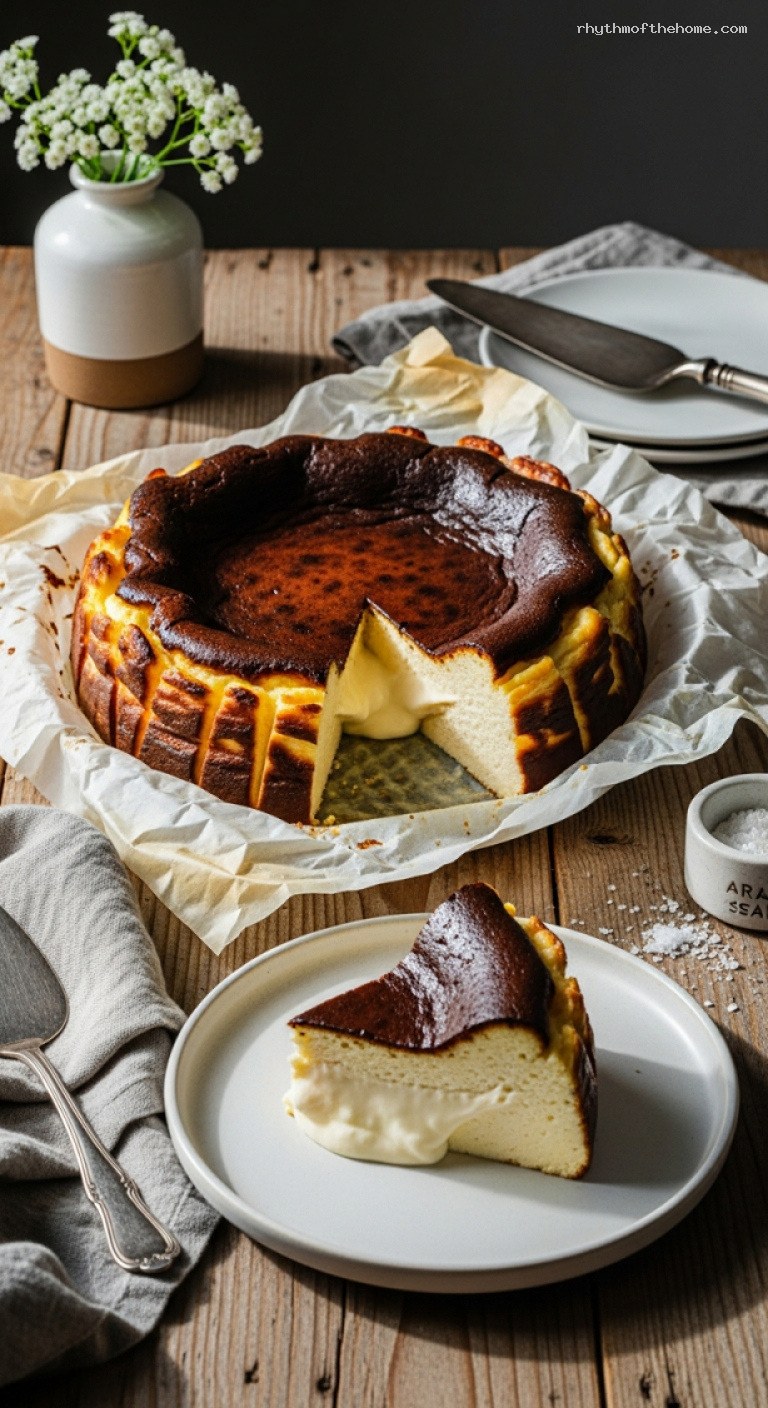
Quick Recipe Version (TL;DR)
Quick Ingredients
- 900 g (2 lb) full-fat cream cheese, room temperature
- 300 g (1 1/2 cups) granulated sugar
- 5 large eggs, room temperature
- 360 ml (1 1/2 cups) heavy cream
- 30 g (1/4 cup) all-purpose flour
- 2 tsp pure vanilla extract
- 3/4 tsp fine sea salt
- Soft butter or nonstick spray, for the pan
- Parchment paper (for lining the pan)
Do This
- 1. Preheat oven to 220°C / 425°F (conventional). Butter a 23 cm / 9-inch springform pan and line it with two overlapping sheets of parchment with plenty of overhang.
- 2. Beat cream cheese until very smooth, then add sugar and beat until fluffy and lump-free, scraping the bowl well.
- 3. Beat in eggs one at a time on medium-low just until combined.
- 4. Add heavy cream, vanilla, salt, and sifted flour. Mix on low until smooth; do not overbeat.
- 5. Pour batter into pan. Bake 30–35 minutes until deeply browned on top with a 6–8 cm jiggly center.
- 6. Cool in pan 45–60 minutes, then remove the ring and cool completely at room temperature.
- 7. Chill at least 4 hours or overnight. Peel back parchment, slice with a warm knife, and serve slightly cool or at room temperature.
Why You’ll Love This Recipe
- Authentic Basque-style cheesecake: no crust, deeply caramelized top, and a silky, custard-like center.
- Surprisingly simple: one batter, one pan, no water bath or complicated steps.
- Make-ahead friendly: bakes in about half an hour but tastes best when chilled and rested.
- Elegant yet rustic: impressive enough for guests, easy enough for a relaxed weekend bake.
Grocery List
- Produce: None (optional: fresh berries for serving on the side)
- Dairy: Full-fat cream cheese, heavy cream, large eggs, butter (or nonstick spray)
- Pantry: Granulated sugar, all-purpose flour, pure vanilla extract, fine sea salt, parchment paper
Full Ingredients
Basque Burnt Cheesecake
- 900 g (2 lb) full-fat cream cheese, at room temperature
- 300 g (1 1/2 cups) granulated sugar
- 5 large eggs, at room temperature
- 360 ml (1 1/2 cups) heavy cream, at room temperature
- 30 g (1/4 cup) all-purpose flour, sifted
- 2 tsp pure vanilla extract
- 3/4 tsp fine sea salt
For the Pan
- Soft butter or neutral oil (or nonstick baking spray), for greasing
- 2 large sheets parchment paper (to fully line a 23 cm / 9-inch springform pan with overhang)
Step-by-Step Instructions
Step 1: Prepare the pan and preheat the oven
Set an oven rack in the middle position. Preheat the oven to 220°C / 425°F, conventional (do not use fan/convection if possible, as it can over-darken the top too quickly).
Lightly grease the bottom and sides of a 23 cm / 9-inch springform pan with soft butter or nonstick spray. Cut two large sheets of parchment paper. Lay one sheet over the pan, pressing it down into the base and up the sides, letting it wrinkle naturally and extend several centimeters above the rim. Rotate the pan and repeat with the second sheet, angling it so the entire interior is completely covered. The wrinkled parchment is part of the traditional look, so do not worry about making it perfectly smooth.
Place the parchment-lined springform pan on a sturdy baking sheet. This makes it easier to move and catches any possible drips.
Step 2: Beat the cream cheese and sugar until ultra smooth
In a large mixing bowl or the bowl of a stand mixer fitted with the paddle attachment, add the 900 g cream cheese. Beat on medium speed for about 2–3 minutes, scraping down the sides and bottom halfway through, until the cream cheese is completely smooth with no lumps.
Add the 300 g sugar gradually and continue beating on medium speed for another 2–3 minutes. The mixture should look thick, glossy, and velvety. Take your time here; a perfectly smooth base is the key to that custardy, restaurant-quality texture.
Step 3: Add the eggs gently
Switch the mixer to medium-low. Crack in the 5 large eggs one at a time, mixing for about 15–20 seconds after each addition, just until the egg is fully incorporated before adding the next. Scrape down the bowl once or twice during this process so no streaks of egg or cream cheese remain.
Avoid whipping too much air into the batter. You want it to be silky and pourable, not fluffy, so the cheesecake bakes dense and creamy rather than airy and cakey.
Step 4: Mix in cream, vanilla, flour, and salt
With the mixer on low speed, pour in the 360 ml heavy cream in a slow, steady stream. Add the 2 tsp vanilla extract and 3/4 tsp fine sea salt. Mix just until combined.
Sprinkle in the 30 g sifted all-purpose flour and continue mixing on low for another 15–20 seconds, or fold in by hand with a spatula, just until no dry flour is visible. Do not overmix.
For an extra-smooth texture, you can pour the batter through a fine-mesh sieve into a clean bowl, pressing gently with a spatula. This optional step helps eliminate any tiny lumps or bubbles.
Step 5: Pour, bake hot, and caramelize the top
Pour the batter into the prepared, parchment-lined pan. Tap the pan lightly on the counter a few times to pop any large air bubbles.
Transfer the baking sheet with the pan to the preheated oven. Bake at 220°C / 425°F for 30–35 minutes. The cheesecake will puff dramatically and the top will turn a deep, mottled caramel brown, even approaching black in spots. This deeply burnt-looking top is exactly what you want for a traditional Basque cheesecake.
The edges should be set, but the center (about a 6–8 cm circle) should still wobble like soft custard when you gently jiggle the pan. If the top is not dark enough, you can bake for an additional 2–5 minutes, watching closely. If desired, you may briefly switch to the broiler for 1–2 minutes at the end, but stay right there so it does not scorch beyond your liking.
Step 6: Cool slowly to keep the center creamy
Remove the cheesecake from the oven and place the baking sheet on a wire rack. The cake will be puffed up and may look almost too soft in the center; as it cools, it will deflate, settle, and firm up.
Let it cool in the pan for about 45–60 minutes. During this time, the residual heat gently finishes cooking the core without overbaking it. After it has cooled somewhat and is no longer extremely hot, unlatch the springform ring and carefully remove it, leaving the parchment in place around the sides to support the cake.
Allow the cheesecake to continue cooling at room temperature until it is no longer warm to the touch, about 2–3 hours total from when it came out of the oven.
Step 7: Chill, slice, and serve
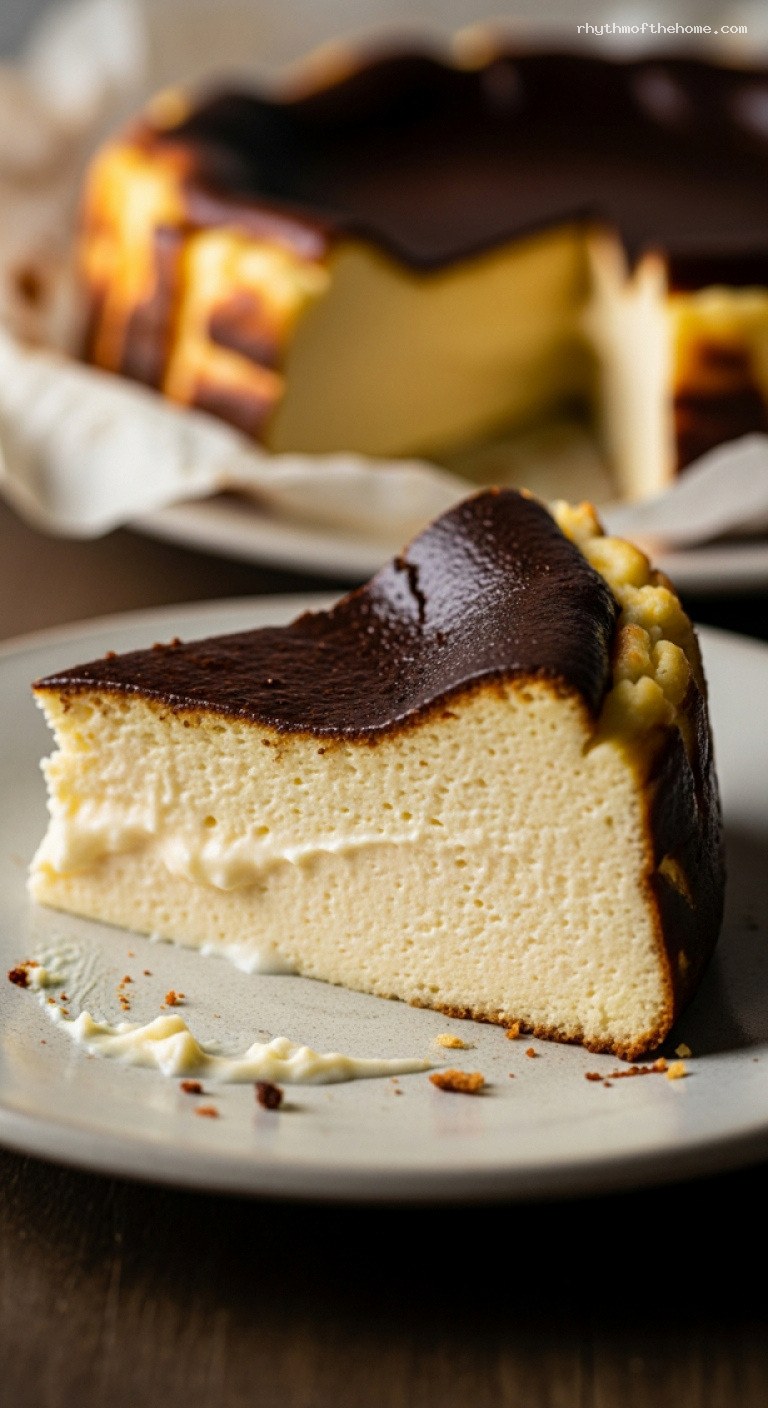
Once completely cool, transfer the cheesecake (still on its base and in the parchment) to the refrigerator. Chill for at least 4 hours, or preferably overnight. This resting time is crucial: the center will transform into an ultra-creamy, custard-like texture that slices cleanly but still feels lush and soft.
When ready to serve, gently peel the parchment back from the sides to reveal the wrinkled, caramelized edges. Use a long, sharp knife warmed in hot water and wiped dry between cuts to get neat slices. Serve slightly cool or let the slices sit at room temperature for 20–30 minutes for the softest texture.
Basque burnt cheesecake is traditionally served plain, allowing the flavor of the caramelized top and rich custard center to shine. If you like, offer a small bowl of fresh berries on the side, but do not cover the top of the cake itself.
Pro Tips
- Use room-temperature ingredients. Cold cream cheese or eggs can create lumps and a less silky batter. Take everything out of the fridge 45–60 minutes before baking.
- Do not overbake. The center should still jiggle when you take it out. It will continue to set as it cools and chills; overbaking will lose that custardy texture.
- Trust the burnt look. The very dark, almost black top is part of the traditional Basque character and adds a gentle bitterness that balances the sweetness.
- Use an oven thermometer if possible. High heat is key here; if your oven runs cool, the top may not caramelize deeply. Adjust by 10–15°C (25°F) as needed.
- Line the pan generously. Tall, overlapping parchment walls support the cheesecake as it puffs and prevent leaks, while also giving the cake its rustic, crinkled edges.
Variations
- Citrus-scented Basque cheesecake: Add the finely grated zest of 1 lemon or 1 small orange along with the vanilla for a bright, fragrant twist without losing the traditional simplicity.
- Coffee Basque cheesecake: Dissolve 2 tsp instant espresso powder in 1–2 tbsp hot cream (taken from the measured cream) and cool before adding to the batter. The subtle coffee notes pair beautifully with the caramelized top.
- Mini Basque cheesecakes: Divide the batter among 8–10 parchment-lined mini springform pans or large muffin tins. Bake at the same temperature but check at 18–22 minutes. Great for individual servings.
Storage & Make-Ahead
Once fully chilled, cover the cheesecake tightly with plastic wrap or transfer slices to an airtight container. Store in the refrigerator for up to 4 days. The flavor actually improves after a day as it mellows and the texture settles.
For longer storage, freeze individual slices on a parchment-lined tray until firm, then wrap each slice well and place in a freezer bag. They will keep for about 1 month. Thaw overnight in the refrigerator, then let sit at room temperature for 20–30 minutes before serving.
This recipe is perfect for making a day ahead of serving, since it needs several hours of chilling time anyway.
Nutrition (per serving)
Approximate values for one of 12 servings:
Calories: ~470 kcal; Protein: ~8 g; Fat: ~36 g; Saturated Fat: ~22 g; Carbohydrates: ~31 g; Sugars: ~27 g; Fiber: 0 g; Sodium: ~260 mg.
These numbers are estimates and will vary based on specific ingredients and portion sizes.

Leave a Reply