
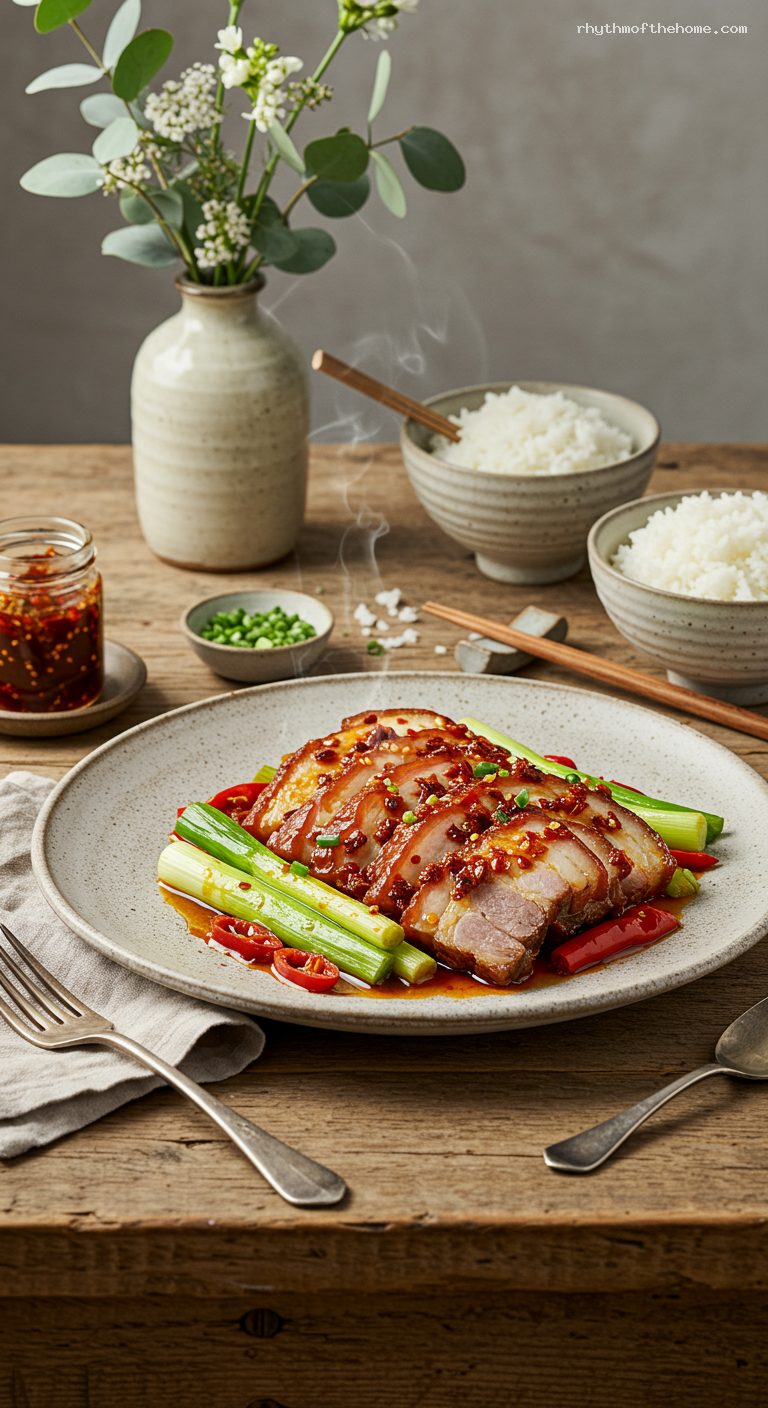
Quick Recipe Version (TL;DR)
Quick Ingredients
- 1 lb (450 g) skin-on pork belly, whole slab
- 6 cups (1.4 L) water + 3 slices ginger + 1 scallion + 1 star anise (for simmering)
- 1 medium leek (8 oz/225 g), sliced on a bias
- 1 red bell pepper, thinly sliced
- 2 cloves garlic, thinly sliced; 4-5 thin ginger matchsticks
- 1.5 tbsp Pixian doubanjiang; 1 tbsp sweet bean paste (tianmianjiang)
- 1 tbsp light soy sauce; 1/2 tsp dark soy; 1 tbsp Shaoxing wine; 1 tsp sugar
- 3 tbsp water or unsalted stock; 1 tsp neutral oil (if needed)
Do This
- 1. Simmer pork belly in 6 cups water with ginger, scallion, and star anise at 185–195°F (85–90°C) for 40–50 minutes until just tender.
- 2. Chill 10–15 minutes (ice bath) to firm, then slice across the grain into 1/8-inch (2–3 mm) pieces.
- 3. Mix sauce: doubanjiang, sweet bean paste, light and dark soy, Shaoxing wine, sugar, and 3 tbsp water/stock.
- 4. Heat a wok on high until smoking; add pork slices. Render and sear 2–3 minutes until edges are golden. Spoon off excess fat, leaving 1–2 tbsp.
- 5. Add ginger and garlic; stir-fry 15–20 seconds until fragrant.
- 6. Add leek and bell pepper; stir-fry 60–90 seconds until bright and crisp-tender.
- 7. Push aside; fry doubanjiang and sweet bean paste in the fat 30 seconds, then add the sauce. Toss 30–60 seconds until glossy. Serve hot with rice.
Why You’ll Love This Recipe
- Classic Sichuan flavors with a friendly, home-cook method.
- Make-ahead friendly: simmer the pork belly in advance for weeknight-fast stir-frying.
- Balances spicy, savory, and gently sweet notes with crisp-tender veggies.
- Restaurant-style glossy coating without cornstarch—just properly rendered pork and bloomed chili bean paste.
Grocery List
- Produce: Leek, red bell pepper, fresh ginger, garlic, scallions (optional), fresh green chilies (optional)
- Dairy: None
- Pantry: Pork belly slab, Pixian doubanjiang (chili broad bean paste), sweet bean paste (tianmianjiang), light soy sauce, dark soy sauce, Shaoxing wine, sugar, neutral oil, star anise, rice (for serving)
Full Ingredients
Pork and Simmering Aromatics
- 1 lb (450 g) pork belly, skin-on if available (skinless works too)
- 6 cups (1.4 L) water
- 3 slices fresh ginger (1/8-inch thick)
- 1 scallion, cut into 2-inch pieces
- 1 star anise pod
- 1 tbsp Shaoxing wine
- 1 tsp kosher salt
Sauce
- 1.5 tbsp Pixian doubanjiang (Sichuan chili broad bean paste)
- 1 tbsp sweet bean paste (tianmianjiang; hoisin can substitute in a pinch)
- 1 tbsp light soy sauce
- 1/2 tsp dark soy sauce (for color)
- 1 tbsp Shaoxing wine
- 1 tsp sugar
- 3 tbsp water or unsalted chicken stock
- Optional: 1/4 tsp ground roasted Sichuan peppercorn for a citrusy finish
- Optional: 1/2 tsp toasted sesame oil to finish
Stir-Fry Aromatics and Vegetables
- 1 tsp neutral oil (only if the wok looks dry)
- 2 cloves garlic, thinly sliced
- 4–5 thin matchsticks fresh ginger (about 1 tsp)
- 1 medium leek (about 8 oz/225 g), white and light green parts, cleaned and sliced on a 1/2-inch bias
- 1 red bell pepper, seeded and thinly sliced
- Optional: 1–2 mild fresh green chilies, sliced on a bias
- Optional garnish: 1 scallion, thinly sliced
For Serving
- Steamed rice (jasmine or medium-grain), hot
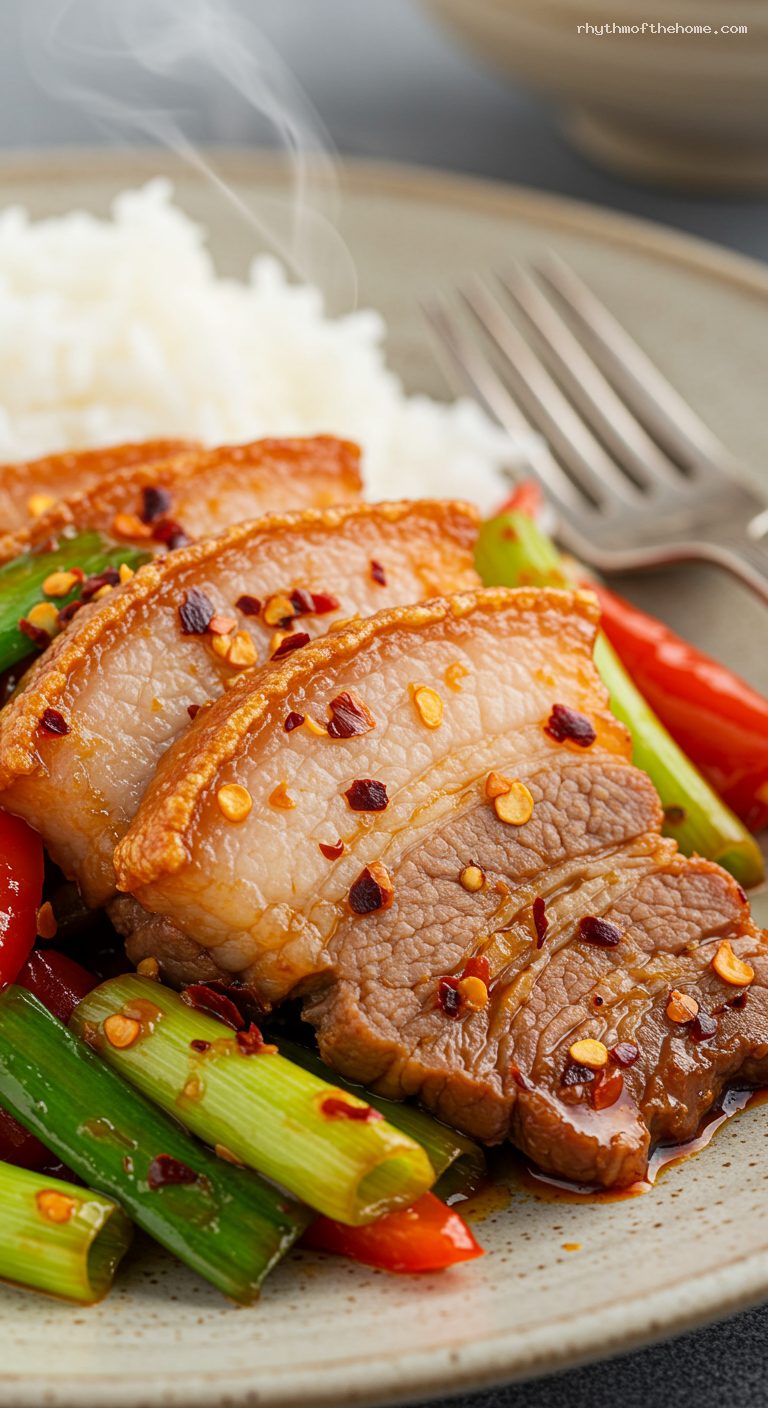
Step-by-Step Instructions
Step 1: Simmer the pork belly gently
Place the pork belly, water, ginger slices, scallion, star anise, Shaoxing wine, and salt in a medium pot. Bring to a boil over high heat, then immediately reduce to a bare simmer at 185–195°F (85–90°C). Partially cover and cook 40–50 minutes, until a chopstick or thin skewer meets slight resistance but passes through. The meat should be tender yet cohesive, not falling apart.
Step 2: Cool and slice thin
Transfer the pork to an ice bath for 10–15 minutes to firm up (or refrigerate 30 minutes). Pat dry. Slice across the grain into 1/8-inch (2–3 mm) pieces. Keep slices in a loose stack so they separate easily in the wok.
Step 3: Mix the sauce
In a small bowl, combine doubanjiang, sweet bean paste, light soy sauce, dark soy sauce, Shaoxing wine, sugar, and water/stock. If using, stir in ground roasted Sichuan peppercorn. Set within arm’s reach of the stove.
Step 4: Render and sear the pork
Heat a carbon-steel wok or 12-inch skillet over high heat until just smoking. If your wok is dry, add 1 tsp neutral oil. Add the pork slices in a single layer. Stir-fry 2–3 minutes until the edges curl and turn golden, rendering enough fat to lightly coat the wok. Spoon off excess fat, leaving 1–2 tbsp behind for flavor and gloss.
Step 5: Fry aromatics briefly
Add the ginger matchsticks and garlic slices to the rendered fat. Stir-fry 15–20 seconds until fragrant and just starting to turn pale gold—do not brown.
Step 6: Flash-fry the vegetables
Add the leek and red bell pepper (and green chilies, if using). Stir-fry over high heat for 60–90 seconds until the leeks turn vivid green and slightly wilt while the peppers remain crisp-tender. Keep the food moving to avoid steaming.
Step 7: Bloom pastes and glaze
Push pork and vegetables up the sides of the wok, leaving a small pool of fat in the center. Add the doubanjiang and sweet bean paste mixture to the fat and stir-fry 20–30 seconds until the oil turns a deep red and the paste is fragrant. Pour in the rest of the sauce mixture and toss everything together for 30–60 seconds until the pork and vegetables are evenly coated and glossy. Turn off heat, finish with sesame oil if using, and taste—add a splash of light soy or a pinch of sugar if needed. Serve immediately with hot rice.
Pro Tips
- Chill the simmered belly briefly for ultra-clean, thin slices that sear without shredding.
- Bloom the doubanjiang in rendered pork fat—this unlocks color, aroma, and that restaurant-style red gloss.
- Keep the wok fiercely hot. High heat prevents the sauce from thinning and keeps vegetables crisp.
- Adjust salt carefully: doubanjiang varies in salinity by brand. Taste before adding extra soy.
- Save the pork-simmering broth for cooking rice or a quick noodle soup.
Variations
- Classic cabbage: Replace leek and bell pepper with 3 cups thin-sliced napa cabbage or green cabbage; cook 1–2 minutes longer.
- Garlic shoots version: Swap leek for Chinese garlic scapes or young green garlic for a pungent, springy profile.
- Extra-spicy: Add 2–3 dried erjing tiao or chile de árbol, or increase doubanjiang to 2 tbsp.
Storage & Make-Ahead
Simmer the pork belly up to 3 days ahead; keep whole or sliced, tightly covered, in the fridge (or freeze up to 2 months). The finished stir-fry is best fresh but will keep 2–3 days refrigerated; reheat in a hot wok or skillet 1–2 minutes to re-gloss. If the sauce tightens, splash in 1–2 tbsp water or stock to loosen.
Nutrition (per serving)
Approximate: 640 calories; 15 g protein; 52 g fat; 18 g carbohydrates; 3 g fiber; 1150 mg sodium. Values will vary by brand of doubanjiang and pork belly fat content.

Leave a Reply