
Quick Recipe Version (TL;DR)
Quick Ingredients
- 4 lb capon parts (or 3 lb beef shank + 1 lb marrow bones)
- 5 qt cold water; 1 onion, 2 carrots, 2 celery ribs, 1 leek (opt.), parsley stems
- 12 peppercorns, 2 bay leaves; salt to finish
- 2 cups (240 g) 00 or all-purpose flour; 3 large eggs; 1 tsp olive oil; 1/2 tsp salt
- 4 oz pork loin; 1 tbsp butter; 3 oz mortadella; 3 oz prosciutto
- 3/4 cup (60 g) Parmigiano Reggiano; 1 egg; 1/4 tsp nutmeg; lemon zest; white pepper
- Extra Parmigiano for serving; pinch of nutmeg; optional drizzle of olive oil
Do This
- 1. Start broth: cover capon or beef with 5 qt cold water; bring to a bare simmer (185–195°F), skim, add aromatics; simmer 3–3.5 hours.
- 2. Make dough: mix flour, eggs, oil, salt; knead 8–10 minutes; rest 30 minutes.
- 3. Cook pork in butter; cool. Process pork, mortadella, prosciutto; mix with Parmigiano, egg, nutmeg, zest; chill.
- 4. Roll dough thin (1/16 inch); keep sheets covered to prevent drying.
- 5. Cut 1.5-inch squares; add 1/2 tsp filling; fold to triangles; wrap and seal into tortellini.
- 6. Strain and season broth to taste; keep at a gentle simmer.
- 7. Cook tortellini in the broth 2–3 minutes; serve with Parmigiano and a whisper of nutmeg.
Why You’ll Love This Recipe
- Classic Northern Italian comfort food with a crystal-clear, deeply savory brodo.
- Silky, delicate pasta wrapped around a traditional pork–prosciutto–mortadella filling.
- Elegant enough for holidays, simple enough for a cozy weekend project.
- Make-ahead friendly: broth and tortellini freeze beautifully.
Grocery List
- Produce: 1 large onion, 2 carrots, 2 celery ribs, 1 leek (optional), parsley stems, 2 garlic cloves (optional), 1 lemon
- Dairy: Parmigiano Reggiano, unsalted butter, eggs
- Pantry: 00 or all-purpose flour, extra-virgin olive oil, whole black peppercorns, bay leaves, fine sea salt
- Meat: Capon parts (backs/wings/necks) or beef shank plus marrow bones; pork loin; mortadella; prosciutto crudo
Full Ingredients
Clear Capon or Beef Brodo
- Choose one protein:
- 4 lb (1.8 kg) capon parts (backs, wings, necks; skin-on)
- or 3 lb (1.4 kg) beef shank with bone + 1 lb (450 g) beef marrow/soup bones
- 5 qt (4.7 L) cold water
- 1 large onion, halved (leave peel on for color)
- 2 medium carrots (about 10 oz/280 g), cut in chunks
- 2 celery ribs, cut in chunks
- 1 leek, white part only, rinsed well (optional)
- 10–12 parsley stems
- 12 whole black peppercorns
- 2 bay leaves
- Fine sea salt, to taste (start with 2 to 2.5 tsp for 8 cups finished broth)
Egg Pasta Dough
- 2 cups (240 g) 00 flour or all-purpose flour, plus more for dusting
- 3 large eggs (about 150 g without shells)
- 1 tsp extra-virgin olive oil
- 1/2 tsp fine sea salt
Traditional Tortellini Filling
- 4 oz (115 g) pork loin, trimmed
- 1 tbsp unsalted butter
- 3 oz (85 g) mortadella, roughly chopped
- 3 oz (85 g) prosciutto crudo, roughly chopped
- 3/4 cup (60 g) very finely grated Parmigiano Reggiano
- 1 large egg
- 1/4 tsp freshly grated nutmeg
- 1 tsp finely grated lemon zest
- 1/8 tsp white pepper
- 1/4 tsp fine sea salt (adjust to taste; cured meats vary in saltiness)
- 1–2 tbsp warm broth (as needed to loosen into a cohesive paste)
To Finish
- 8 cups (1.9 L) hot, clear brodo (from above; keep at 185–195°F / 85–90°C)
- 1/2 cup (40 g) finely grated Parmigiano Reggiano, for serving
- Freshly grated nutmeg, a light dusting at the table
- Optional: 1–2 tsp extra-virgin olive oil for a glossy finish
Step-by-Step Instructions
Step 1: Build a clear, deeply savory brodo
Place the capon parts or beef bones and shank in a large stockpot and cover with 5 qt cold water. Bring slowly to a bare simmer over medium heat (185–195°F / 85–90°C), skimming off foam and gray impurities for the first 20–30 minutes. Add the onion (halves facing down), carrots, celery, leek (if using), parsley stems, peppercorns, and bay leaves. Maintain a gentle, uncovered simmer—never a boil—for 3 to 3.5 hours. Do not stir; stirring clouds the broth.
Step 2: Strain, degrease, and season the broth
Ladle the broth through a fine-mesh strainer lined with damp cheesecloth into a clean pot. If time allows, chill until the fat solidifies, then lift off. Alternatively, skim the surface with a spoon. Return to the stove and season to taste with fine sea salt (about 2–2.5 tsp for 8 cups). Keep hot at a bare simmer (185–195°F) while you make the pasta.
Step 3: Make and rest the pasta dough
On a clean surface, mound the flour and make a wide well. Beat in the eggs, olive oil, and salt with a fork, gradually drawing flour from the edges. When a shaggy dough forms, knead by hand until smooth and elastic, 8–10 minutes. If sticky, dust with a pinch of flour; if dry, wet your hands lightly and continue kneading. Wrap and rest at room temperature for 30 minutes.
Step 4: Cook pork and prepare the filling
Season the pork loin lightly with salt. In a small skillet, melt the butter over medium heat and cook the pork until just cooked through, 4–6 minutes total (internal temp about 145°F / 63°C). Cool completely. In a food processor, pulse the pork, mortadella, and prosciutto to a fine mince. Add Parmigiano, egg, nutmeg, lemon zest, white pepper, and salt; pulse to combine. Add 1–2 tbsp warm broth as needed until the mixture is a firm, pipe-able paste that holds its shape. Transfer to a piping bag or small bowl; chill 20 minutes.
Step 5: Roll the pasta thin
Divide dough into 4 pieces; keep covered. Working with one piece at a time, roll through a pasta machine to thin (about 1/16 inch; setting 6–7 on most machines), dusting lightly with flour as needed. Lay sheets on a floured surface and keep covered with a barely damp towel so they do not dry out.
Step 6: Cut, fill, and shape tortellini
Cut the sheets into 1.5-inch (4 cm) squares. Pipe or place about 1/2 tsp filling in the center of each. Fold into a triangle, pressing out air and sealing the edges firmly. Wrap the two corners around your fingertip, overlap, and pinch to seal into classic tortellini. Place on a floured tray. Repeat with remaining dough and filling.
Step 7: Cook the tortellini in brodo
Bring the seasoned broth to a gentle simmer (185–195°F). Slide in the tortellini and cook until they float and the pasta is tender, 2–3 minutes for fresh tortellini (4–5 minutes if frozen). Avoid a hard boil, which can burst the pasta and cloud the broth.
Step 8: Serve with Parmigiano and a whisper of nutmeg
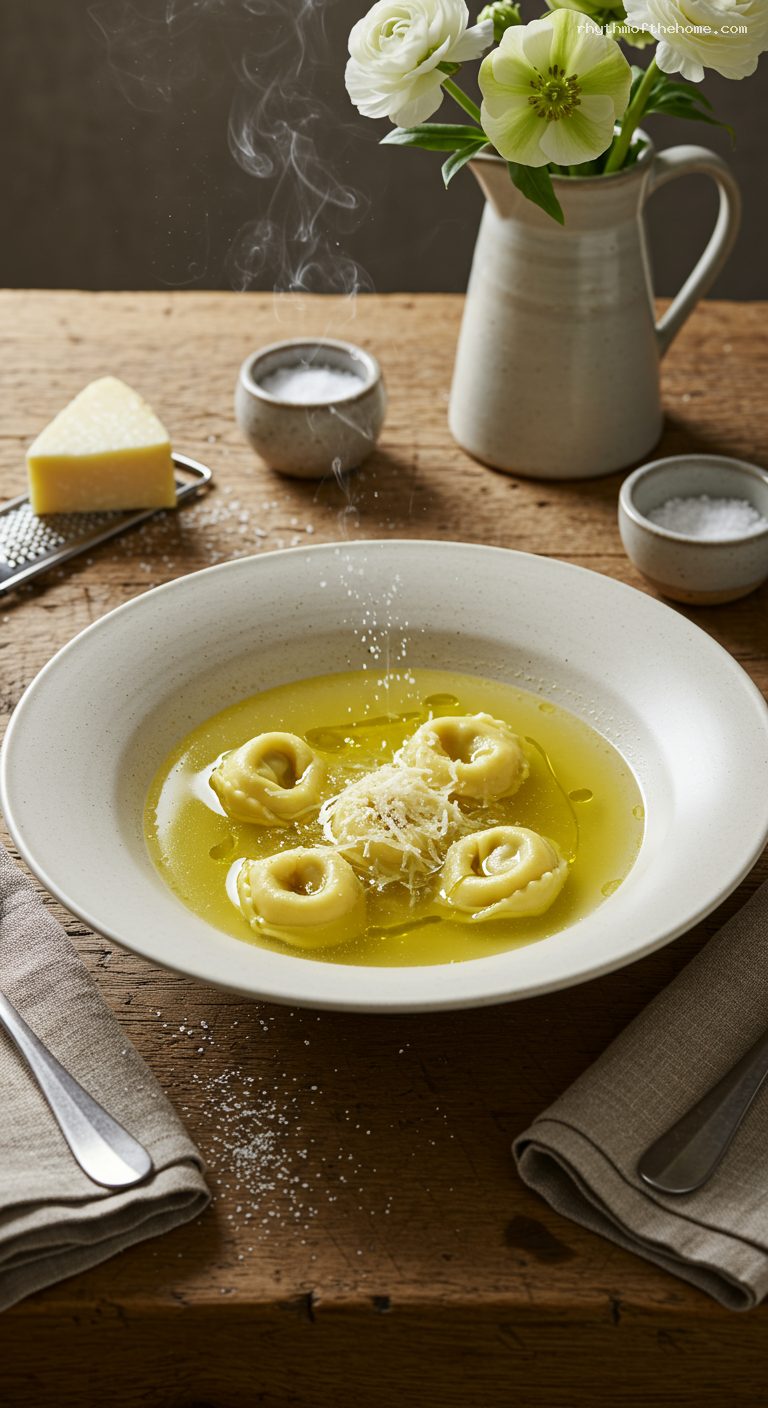
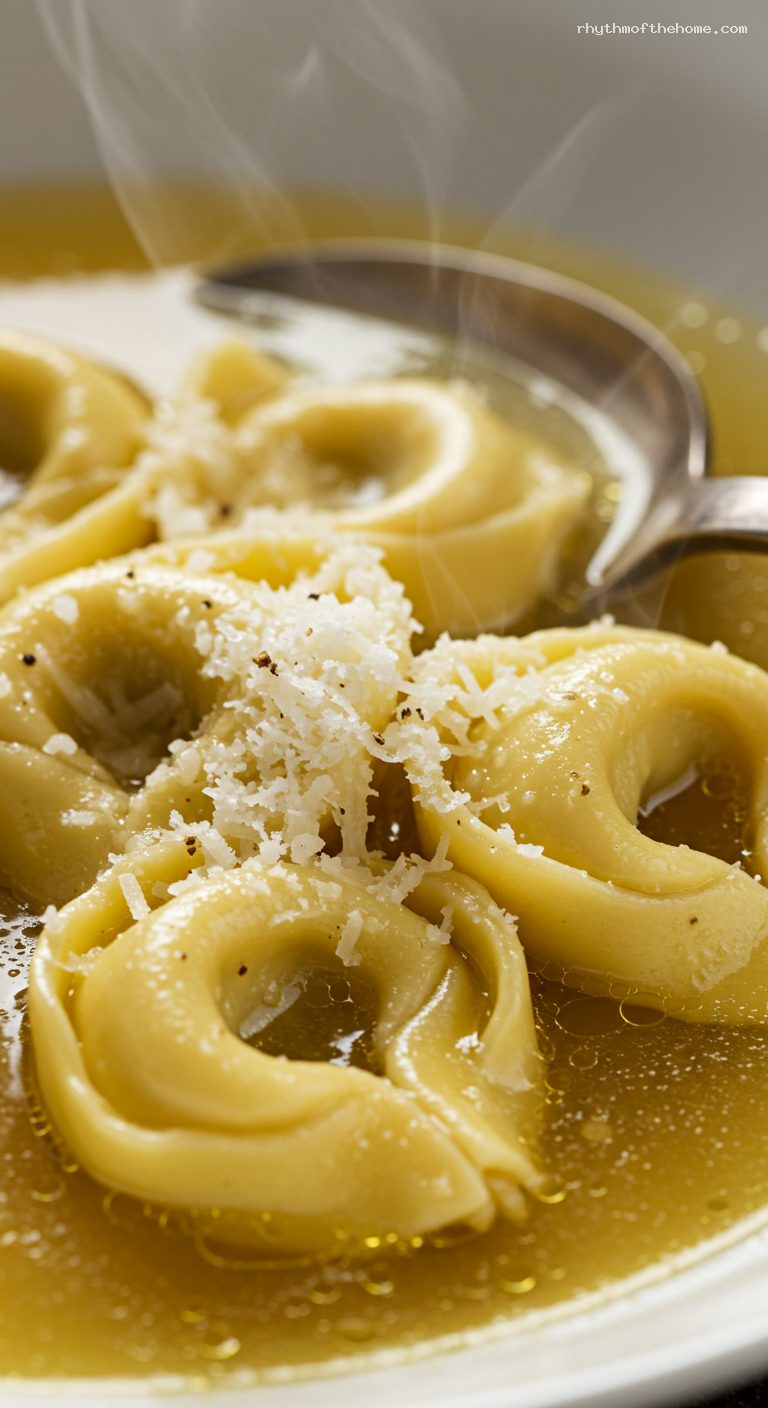
Ladle tortellini and clear brodo into warmed bowls. Finish with a generous snowfall of finely grated Parmigiano Reggiano and the lightest dusting of freshly grated nutmeg. Add a drop or two of extra-virgin olive oil if you like. Serve immediately, piping hot.
Pro Tips
- For crystal clarity, never boil the broth and avoid stirring; skim regularly and strain through cheesecloth.
- Chill the filling before shaping—it makes neat, compact tortellini and prevents leaks.
- Work in batches and keep dough sheets covered; pasta dries quickly and won’t seal well if exposed.
- Season the broth at the end. Aiming for about 0.75–1% salt by weight of the finished broth keeps flavors bright without tasting salty.
- Freeze tortellini on a tray, then bag. Cook straight from frozen in gently simmering broth, 4–5 minutes.
Variations
- Beef brodo: Use beef shank and marrow bones for a darker, richer broth with a subtle gelatinous body.
- Capon holiday brodo: Capon parts produce a golden, delicately sweet broth traditional for festive meals.
- Weeknight shortcut: Use high-quality store-bought fresh tortellini and a good butcher’s broth; finish with Parmigiano and nutmeg as directed.
Storage & Make-Ahead
Brodo keeps 4 days in the refrigerator or 3 months in the freezer. Tortellini can be shaped up to 1 day ahead and refrigerated, or frozen for 2 months (cook from frozen). Leftover soup keeps 2 days in the fridge; rewarm gently without boiling to keep the broth clear and the pasta tender.
Nutrition (per serving)
Approx. 420 calories; 20 g fat; 34 g carbohydrates; 23 g protein; 1,000–1,300 mg sodium (varies with salting and cured meats). Values are estimates.

Leave a Reply