
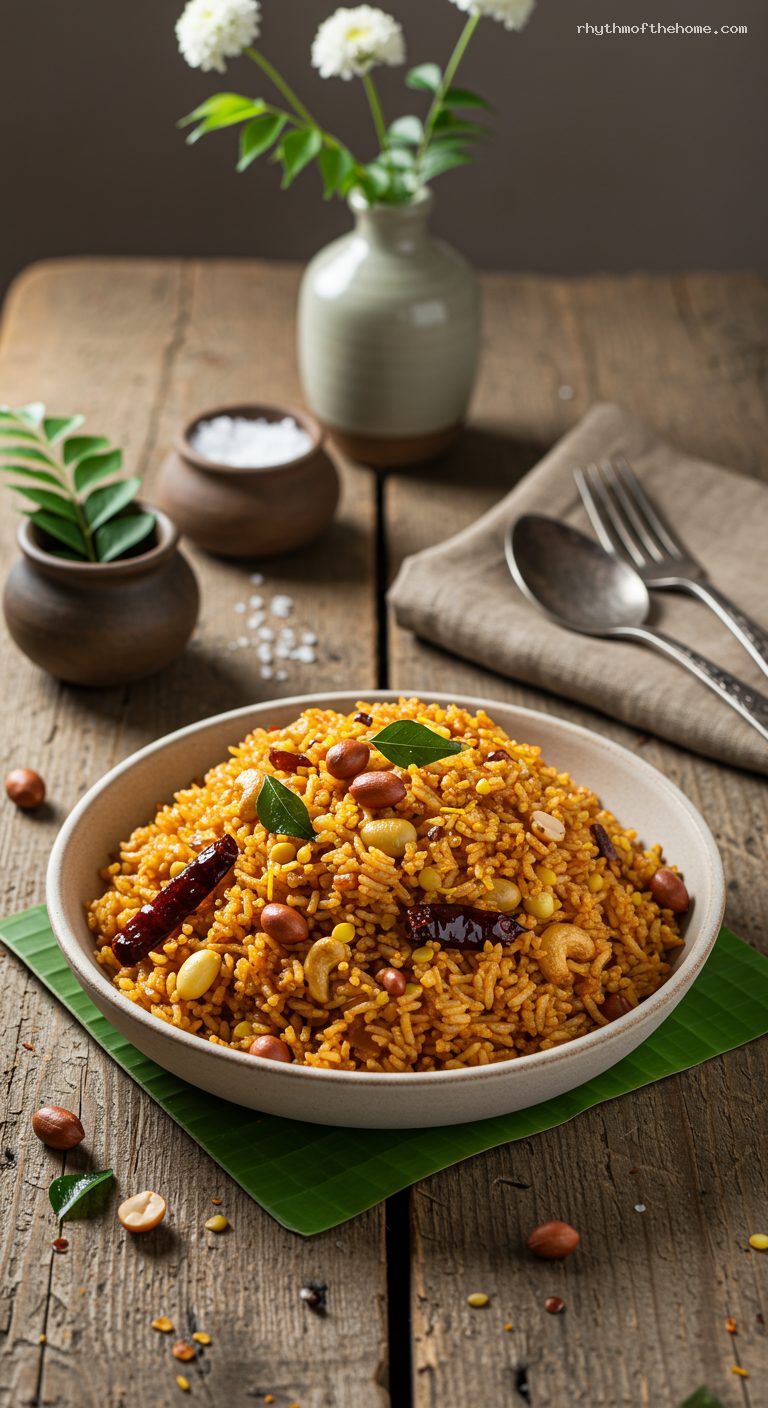
Quick Recipe Version (TL;DR)
Quick Ingredients
- 1.25 cups sona masoori (or other medium-grain) rice
- 2.25 cups water, 1 tsp oil, 1/2 tsp salt (for rice)
- 60 g tamarind (or 3 tbsp tamarind paste) + 1 cup hot water
- 3 tbsp gingelly (sesame) oil + 1 tbsp for finishing
- 2 tbsp grated jaggery
- 1.5 tbsp white sesame seeds
- 1/2 tsp fenugreek seeds
- 8 dried red chilies (6 for spice powder, 2 for tempering)
- 1 tsp mustard seeds, 1/4 tsp asafoetida, 1/2 tsp turmeric
- 1/3 cup raw peanuts, 1.5 tbsp chana dal, 1 tbsp urad dal
- 12–15 curry leaves, 1 to 1.25 tsp fine salt
Do This
- 1. Rinse rice; cook with 2.25 cups water, 1 tsp oil, 1/2 tsp salt. Simmer 12 minutes, rest 10, then spread to cool.
- 2. Soak 60 g tamarind in 1.25 cups just-boiled water 5 minutes; strain to get 1 cup extract (or mix paste with hot water).
- 3. Dry-roast sesame (3–4 min), fenugreek (30–45 sec), and 6 chilies (30–45 sec); cool and grind to a coarse powder.
- 4. Heat 3 tbsp sesame oil; splutter mustard. Fry peanuts (2–3 min), then chana and urad dals (1–2 min) until golden.
- 5. Add curry leaves, 2 broken chilies, asafoetida, turmeric; then add tamarind extract, salt, jaggery. Simmer 8–12 min to a glossy, thick gojju. Stir in spice powder; cook 1 min.
- 6. Toss cooled rice with 2/3–3/4 cup gojju; drizzle 1 tbsp sesame oil. Rest 15 minutes; serve or pack.
Why You’ll Love This Recipe
- Deep, tangy flavor from a tamarind–jaggery reduction balanced with nutty sesame and gentle bitterness from fenugreek.
- Crunch in every bite from peanuts, chana dal, and urad dal.
- Perfect for travel and make-ahead; it tastes even better after resting.
- Uses pantry staples and straightforward techniques for a reliable, restaurant-quality result.
Grocery List
- Produce: Fresh curry leaves
- Dairy: None
- Pantry: Sona masoori rice, tamarind (or paste), jaggery, gingelly (sesame) oil, white sesame seeds, fenugreek seeds, dried red chilies, mustard seeds, chana dal, urad dal, peanuts, turmeric powder, asafoetida (hing), salt
Full Ingredients
For the Rice
- 1.25 cups sona masoori (or other medium-grain) rice
- 2.25 cups water
- 1 teaspoon neutral oil or sesame oil
- 1/2 teaspoon fine salt
Sesame–Fenugreek–Red Chili Powder
- 1.5 tablespoons white sesame seeds
- 1/2 teaspoon fenugreek seeds
- 6 dried red chilies (mild Byadagi/Kashmiri for color or a mix with spicier chilies)
Tamarind–Jaggery Reduction (Puliyodarai Gojju) with Crunchy Tempering
- 3 tablespoons gingelly (sesame) oil, plus 1 tablespoon for finishing
- 1 teaspoon black mustard seeds
- 1/3 cup raw peanuts
- 1.5 tablespoons chana dal
- 1 tablespoon urad dal
- 12–15 fresh curry leaves
- 2 dried red chilies, broken
- 1/4 teaspoon asafoetida (hing) powder (use 1/2 teaspoon if using a compound blend; for gluten-free, use pure hing or omit)
- 1/2 teaspoon ground turmeric
- 1 cup thick tamarind extract (from 60 g tamarind soaked in 1.25 cups just-boiled water and strained), or 3 tablespoons tamarind paste + 1 cup hot water
- 2 tablespoons grated jaggery, firmly packed
- 1 to 1.25 teaspoons fine salt, to taste
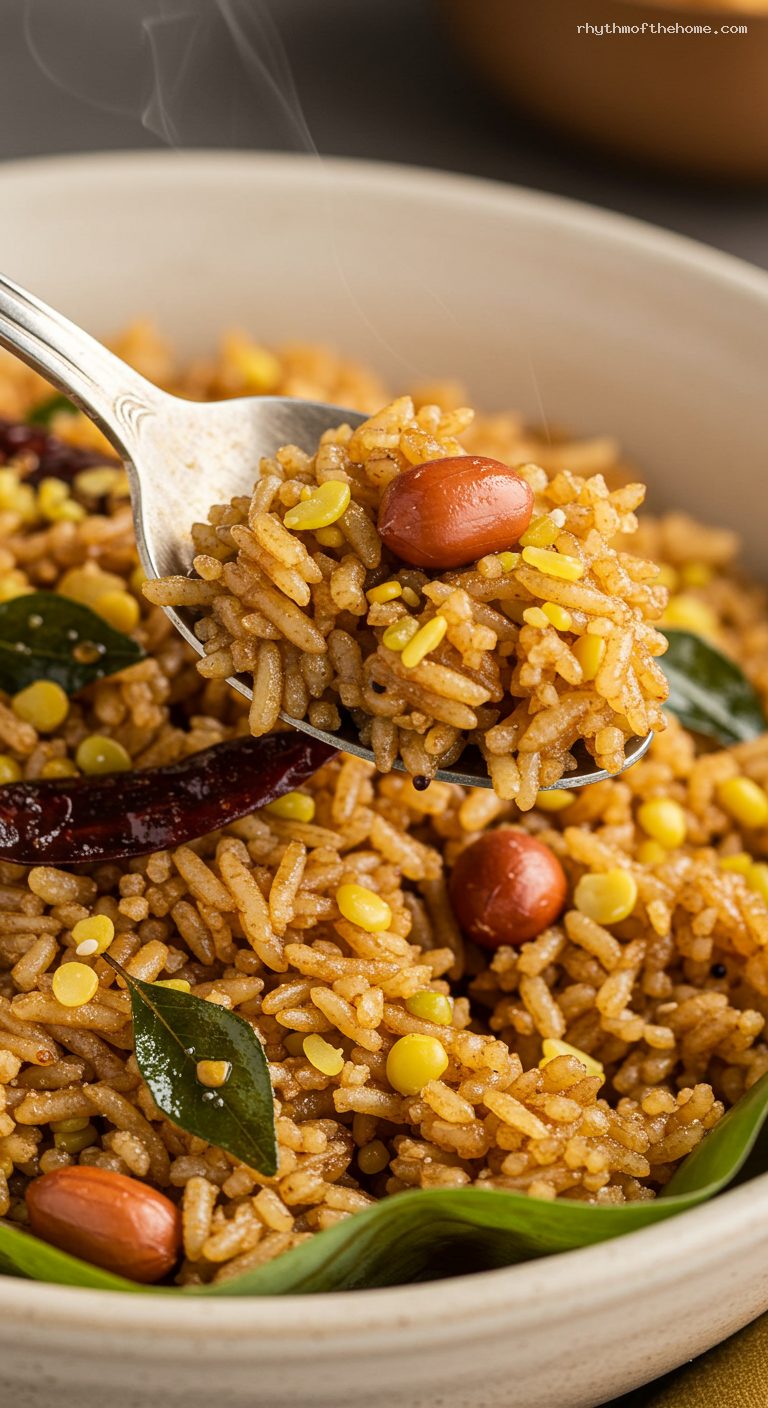
Step-by-Step Instructions
Step 1: Cook rice for fluffy, separate grains
Rinse the rice in cool water 2–3 times until the water runs mostly clear. Combine rice, 2.25 cups water, 1 teaspoon oil, and 1/2 teaspoon salt in a medium saucepan. Bring to a boil over medium-high heat, then cover and reduce to low. Simmer for 12 minutes. Turn off the heat and let stand, covered, for 10 minutes. Spread the rice on a wide tray to cool and dry slightly for 10–15 minutes; gently fluff with a fork. Separate, cool rice is key to non-mushy puliyodarai.
Step 2: Make tamarind extract
Place 60 g tamarind in a bowl and cover with 1.25 cups just-boiled water. Soak 5–10 minutes, squeeze well, and strain to yield 1 cup thick extract. Alternatively, mix 3 tablespoons tamarind paste with 1 cup hot water until smooth. Set aside.
Step 3: Dry-roast and grind sesame, fenugreek, and chilies
In a dry skillet over medium-low heat, roast sesame seeds for 3–4 minutes until fragrant and a few seeds start to pop. Transfer to a plate. In the same pan, roast fenugreek seeds for 30–45 seconds until lightly browned and aromatic (do not burn; they turn bitter). Dry-roast 6 dried red chilies for 30–45 seconds until crisp. Cool completely, then grind the sesame, fenugreek, and chilies to a coarse powder. Reserve.
Step 4: Build the crunchy tempering
Heat 3 tablespoons gingelly oil in a heavy skillet over medium heat (about 2 minutes). Add mustard seeds; when they splutter, add peanuts and fry for 2–3 minutes until a shade darker. Add chana dal and urad dal; fry 1–2 minutes until golden. Stir in curry leaves and 2 broken dried chilies; sizzle for 10 seconds. Add asafoetida and turmeric; stir for 5 seconds.
Step 5: Simmer the tamarind–jaggery reduction (gojju)
Immediately pour in the 1 cup tamarind extract, add 1 teaspoon salt (to start), and 2 tablespoons jaggery. Bring to a boil, then reduce to a gentle simmer (medium-low). Cook 8–12 minutes, stirring occasionally, until the mixture thickens, turns glossy, and oil beads on the surface. You should have about 2/3 cup thick gojju that coats the back of a spoon. Stir in the sesame–fenugreek–chili powder and simmer 1 minute more. Turn off the heat and rest 5 minutes.
Step 6: Fold the gojju into the rice
Place the cooled rice in a wide mixing bowl. Add about 1/2 cup gojju and toss gently until every grain is coated. Taste and add more gojju 1–2 tablespoons at a time until the rice is a deep bronze and well-seasoned (typically 2/3–3/4 cup total for 3.5–4 cups cooked rice). Drizzle with the remaining 1 tablespoon gingelly oil and toss again. Rest 15 minutes to let the flavors bloom.
Step 7: Serve or pack for the road
Serve warm or at room temperature with papad or yogurt on the side. For travel, cool to room temperature, pack in an airtight container, and keep out of direct heat. The natural acidity and oil help the rice stay fresh for several hours.
Pro Tips
- Use day-old or fully cooled rice for the best texture. Heat causes the grains to break when mixing.
- Roast fenugreek lightly; a hint of bitterness balances the jaggery, but too much will dominate.
- Gojju-to-rice guide: about 2 tablespoons gojju per cup of cooked rice, then adjust to taste.
- Gingelly (sesame) oil is essential for authentic aroma and a glossy finish. Do not substitute with strong-flavored oils.
- If avoiding gluten, use pure asafoetida resin powder or omit, as some commercial hing contains wheat.
Variations
- Temple-style aroma: Add 1 teaspoon black sesame seeds along with white sesame before grinding.
- No-peanut version: Swap peanuts with roasted cashews or toasted sunflower seeds.
- Whole-grain option: Use brown sona masoori; cook 1.25 cups rice with 2.75 cups water for 25–28 minutes, then proceed.
Storage & Make-Ahead
Make the gojju (tamarind reduction) up to 2 weeks ahead; store refrigerated in a clean jar with a thin layer of oil on top, or freeze for up to 3 months. The cooked, mixed rice keeps 3–4 days refrigerated; bring to room temperature or warm gently before serving. For travel, pack the mixed rice once fully cooled and consume within the day. You can also carry cooled rice and a small jar of gojju separately, then mix just before eating for maximum crunch.
Nutrition (per serving)
Approximate values: 470 kcal; 20 g fat; 62 g carbohydrates; 9 g protein; 4 g fiber; 640 mg sodium. Values will vary based on exact brands and salt level.

Leave a Reply