
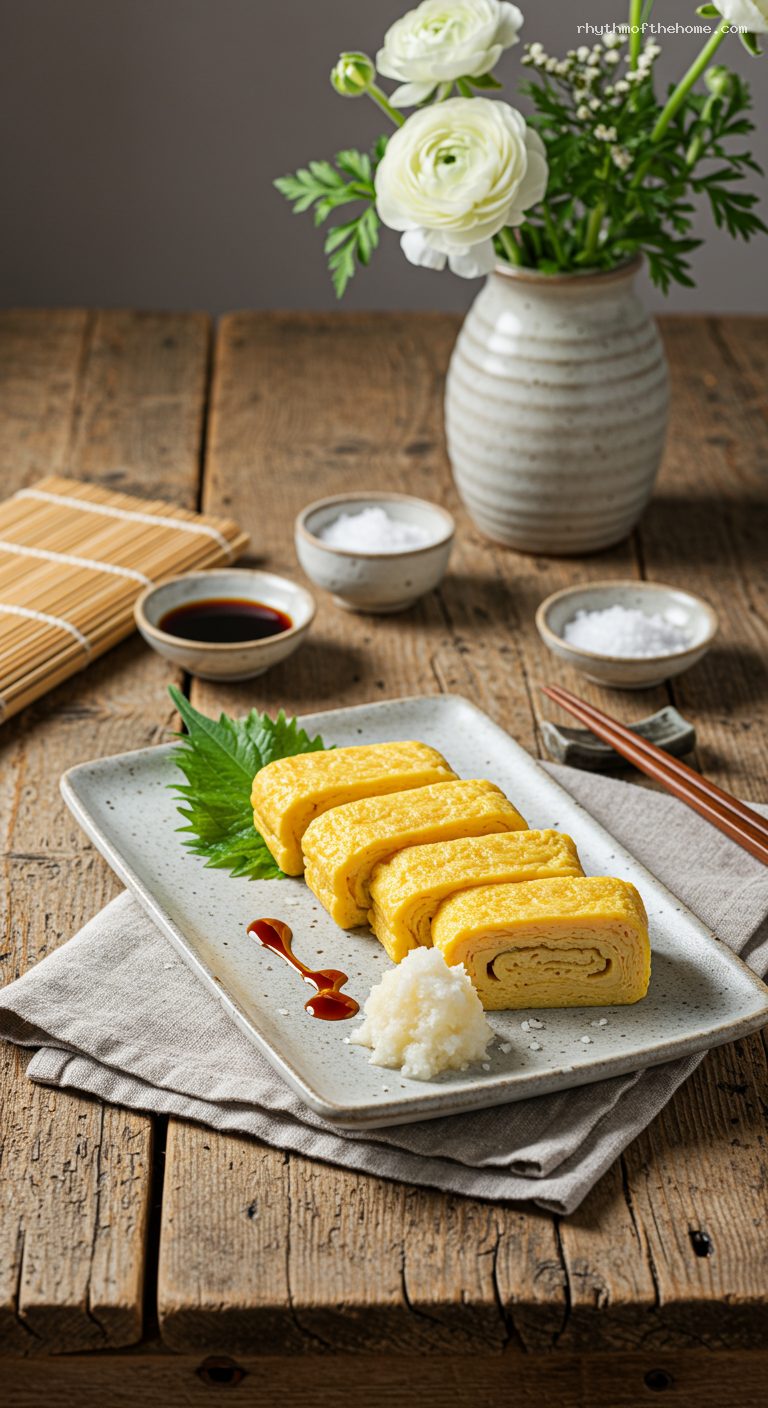
Quick Recipe Version (TL;DR)
Quick Ingredients
- 5 large eggs
- 3 tbsp dashi (or 1/2 tsp instant dashi in 3 tbsp hot water)
- 1 1/2 tbsp sugar
- 1 tbsp mirin
- 1 tsp soy sauce
- 1/4 tsp fine salt
- 1 tbsp neutral oil (for greasing pan)
- 1 cup grated daikon (daikon oroshi), well-drained
- 2 tbsp soy sauce (for dipping/drizzling)
- Optional: 2 shiso leaves or thinly sliced scallions
Do This
- 1. Whisk eggs, dashi, sugar, mirin, soy, and salt until just combined; strain through a fine sieve.
- 2. Heat a rectangular tamagoyaki pan or 8-inch nonstick skillet over medium-low (surface about 325°F/165°C). Lightly oil.
- 3. Pour a thin layer of egg to just coat the pan. When mostly set but still glossy on top, begin rolling toward one side.
- 4. Re-oil exposed pan; pour more egg, lifting the roll so egg flows underneath. When set, roll back over it.
- 5. Repeat layering and rolling (4–6 layers total) until all egg is used, keeping heat low to avoid browning.
- 6. Gently press and shape the roll; rest 2 minutes.
- 7. Slice into 1/2-inch pieces. Serve warm or at room temp with grated daikon and soy.
Why You’ll Love This Recipe
- Tender, custardy layers with a balanced sweet–savory dashi flavor.
- Beginner-friendly technique with clear visual cues for each layer.
- Great warm for breakfast or tucked into bentos—keeps its shape well.
- Elegant presentation with minimal ingredients and quick cook time.
Grocery List
- Produce: Daikon radish, optional shiso leaves or scallions
- Dairy & Eggs: 5 large eggs
- Pantry: Dashi or instant dashi, sugar, mirin, soy sauce, neutral oil (canola, grapeseed, or vegetable)
Full Ingredients
For the Tamagoyaki
- 5 large eggs
- 3 tbsp dashi stock (or 1/2 tsp instant dashi dissolved in 3 tbsp hot water; cool to lukewarm)
- 1 1/2 tbsp granulated sugar
- 1 tbsp mirin
- 1 tsp soy sauce
- 1/4 tsp fine salt
- 1 tbsp neutral oil, plus more as needed for brushing the pan
For Serving
- 1 cup finely grated daikon (daikon oroshi), squeezed of excess liquid
- 2 tbsp soy sauce (for dipping or drizzling)
- Optional garnishes: 2 shiso leaves, thinly sliced scallions, or a small strip of nori
Step-by-Step Instructions
Step 1: Mix and strain the egg mixture
In a medium bowl, whisk the eggs just until the yolks and whites are combined—avoid whipping in too much air. Add the dashi, sugar, mirin, soy sauce, and salt; whisk until the sugar dissolves. Strain the mixture through a fine-mesh sieve into a measuring cup with a spout. This removes chalazae and bubbles, giving ultra-smooth layers.
Step 2: Preheat and oil the pan
Heat a rectangular tamagoyaki pan (makiyakinabe) or an 8-inch nonstick skillet over medium-low. Lightly oil using a folded paper towel or brush; the surface should look glossy but not puddled. Aim for a surface temperature around 325°F/165°C if you have an infrared thermometer. Too hot will brown the egg; too cool will stick.
Step 3: Cook the first thin layer
Pour in just enough egg to thinly coat the pan (about 2–3 tablespoons). Swirl to spread. Cook 30–45 seconds until the edges are set and the center is mostly set but still shiny and slightly wet. This moisture will act as “glue” for the roll.
Step 4: Roll to one side
Using chopsticks or a silicone spatula, lift the far edge and roll the sheet toward you (or to the left/right depending on pan orientation) into a loose log. Slide the log back to the far side of the pan to make room for the next layer. Re-oil the exposed part of the pan lightly.
Step 5: Add the second layer and tuck under
Pour another thin layer of egg into the empty space, lifting the existing roll so the fresh egg flows underneath it. When almost set (still glossy on top), roll the log back over the new layer to incorporate it. Keep heat gentle to avoid browning; adjust as needed.
Step 6: Repeat to build 4–6 layers
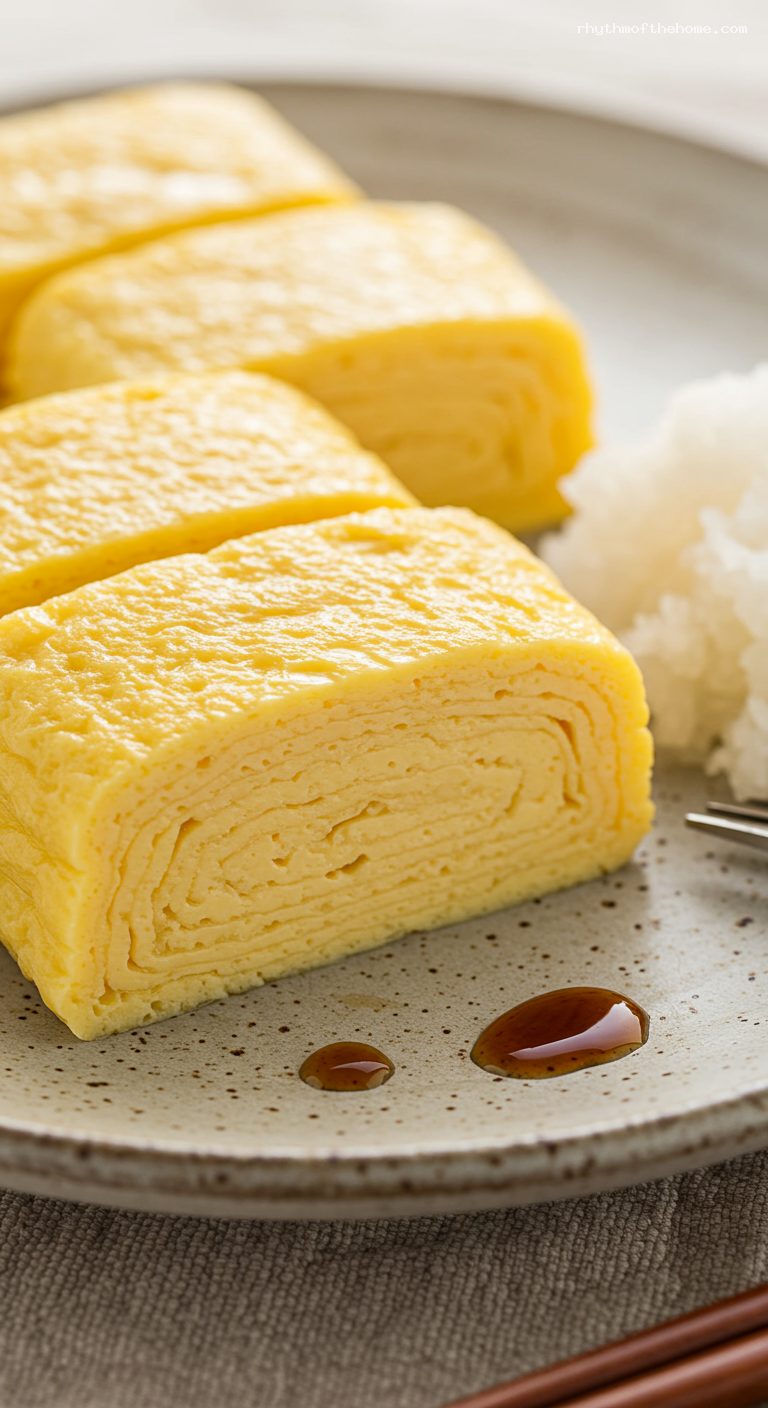
Continue oiling lightly, adding a thin layer, letting it mostly set, then rolling. Each layer takes about 30–45 seconds; total cooking time is 10–12 minutes. When all the egg is used, gently press the roll on all sides with the spatula to firm up. For extra definition, wrap the warm roll in a clean sushi mat (or parchment) and shape into a neat rectangle for 30–60 seconds.
Step 7: Rest, slice, and serve
Let the roll rest 2 minutes to set. Transfer to a cutting board and slice into 1/2-inch pieces with a sharp, damp knife. Serve warm or at room temperature with a small mound of grated daikon and a dish of soy sauce for dipping or drizzling. Garnish with shiso or scallions if using.
Pro Tips
- Strain the egg mixture for glassy-smooth layers with no streaks.
- Keep the heat low; pale yellow is ideal. Browning can make the omelet taste bitter.
- Use a lightly oiled, folded paper towel to swipe the pan between layers—just enough oil to prevent sticking.
- Let the top of each layer stay slightly glossy before rolling; it helps layers adhere.
- Shape with a sushi mat after cooking for a tidy, bento-ready rectangle.
Variations
- Extra-Dashi Dashimaki: Increase dashi to 4 tbsp and add 1/2 tsp potato starch, whisked in, for an even softer, juicier omelet.
- Savory Scallion & Nori: Sprinkle a pinch of sliced scallions and a thin strip of nori over one inner layer before rolling.
- Less Sweet: Reduce sugar to 2 tsp and omit mirin for a more savory breakfast style.
Storage & Make-Ahead
Cool completely, then wrap tightly and refrigerate up to 3 days. Slice just before serving. For bentos, pack at room temperature but keep grated daikon and soy separate until eating. Reheat gently in a nonstick pan over low heat or in the microwave at 30–40% power in short bursts. Freezing isn’t ideal (texture becomes spongy), but if needed, wrap well and freeze up to 1 month; thaw overnight in the refrigerator.
Nutrition (per serving)
Approx. 190 calories; 11 g protein; 9 g carbohydrates; 11 g fat; 0 g fiber; about 520 mg sodium (includes 2 tsp soy for dipping). Values are estimates and will vary with oil and dipping amounts.

Leave a Reply