
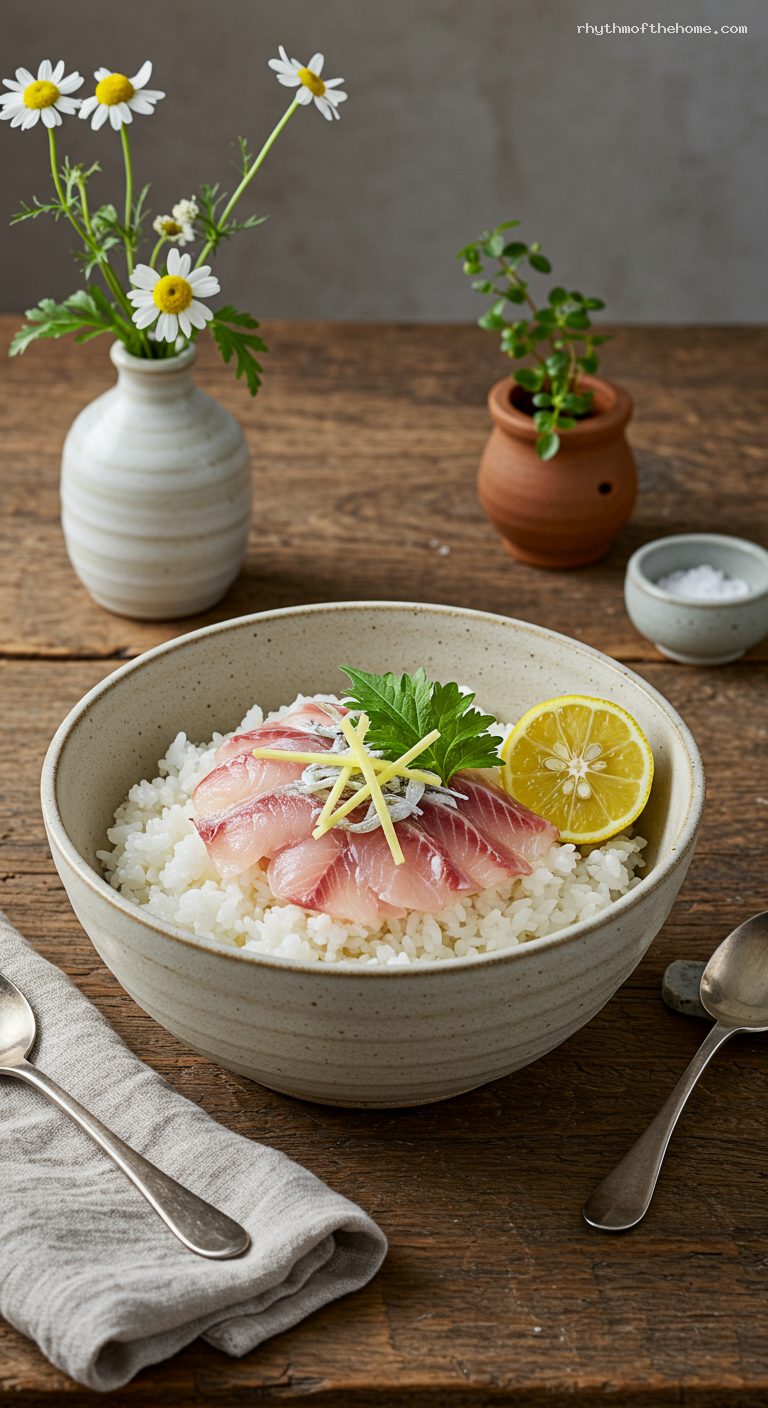
Quick Recipe Version (TL;DR)
Quick Ingredients
- 2 cups (380 g) Japanese short-grain rice
- 360 ml cold water
- 60 ml sake
- 2 tbsp (30 ml) light soy sauce (Japanese usukuchi)
- 1 piece kombu (about 10 x 10 cm), wiped
- 20 g fresh ginger, cut into fine matchsticks
- 350–450 g sea bream fillet, skin-on (or 1 whole bream, 600–800 g), scaled and pin-boned
- 1 tsp kosher salt (for the fish)
- 1 tsp neutral oil
- Mitsuba (small bunch) and citrus wedges (yuzu/sudachi/lemon), to finish
Do This
- 1) Rinse rice until water runs almost clear; soak 30 minutes, then drain well.
- 2) Salt fish (1 tsp), rest 15 minutes; pat dry. Score skin 2–3 shallow slashes.
- 3) Sear fish in 1 tsp oil, skin-side down: 1–2 min (fillet) or 2–3 min (whole); flip 30 sec.
- 4) In a heavy pot, combine drained rice, 360 ml water, 60 ml sake, 2 tbsp light soy. Top with kombu and ginger; lay fish skin-side up.
- 5) Bring to a boil, then cover and simmer on low 12 minutes. Rice cooker: use “white/mixed rice” setting (about 45–55 minutes).
- 6) Off heat, keep covered 10 minutes to steam.
- 7) Remove fish and kombu; flake fish (discard bones), fold into rice. Top with mitsuba and a squeeze of citrus.
Why You’ll Love This Recipe
- Classic Japanese comfort: fragrant rice infused with kombu, sake, and ginger.
- Restaurant-worthy, but weeknight-friendly and mostly hands-off.
- Works with a single fillet or a whole fish—your choice.
- Leftovers make incredible onigiri or next-day Ochazuke.
Grocery List
- Produce: Fresh ginger, mitsuba (or parsley/cilantro), citrus (yuzu, sudachi, or lemon).
- Dairy: None.
- Pantry: Japanese short-grain rice, kombu, sake, light soy sauce (usukuchi), neutral oil, sea bream (fish counter).
Full Ingredients
Seasoned Rice Base
- Japanese short-grain rice: 2 cups (380 g), rinsed and soaked 30 minutes
- Cold water: 360 ml
- Sake: 60 ml (junmai preferred)
- Light soy sauce (usukuchi): 2 tbsp (30 ml). If using regular soy (koikuchi), use 1 tbsp + 1 tsp plus a small pinch of salt to maintain color.
- Kombu: 1 piece, about 10 x 10 cm (4 x 4 in), gently wiped with a damp towel
- Fresh ginger: 20 g, peeled and cut into fine matchsticks
Fish
- Sea bream (tai): 350–450 g skin-on fillet, pin-boned; or 1 whole fish, 600–800 g, scaled and gutted
- Kosher salt: 1 tsp (for salting fish)
- Neutral oil (e.g., canola or rice bran): 1 tsp, for searing
To Finish
- Mitsuba: 1 small bunch (about 15 g), roughly chopped (sub: equal parts flat-leaf parsley and cilantro)
- Citrus wedges: yuzu or sudachi if available, otherwise lemon
- Optional: 1 tsp toasted sesame seeds
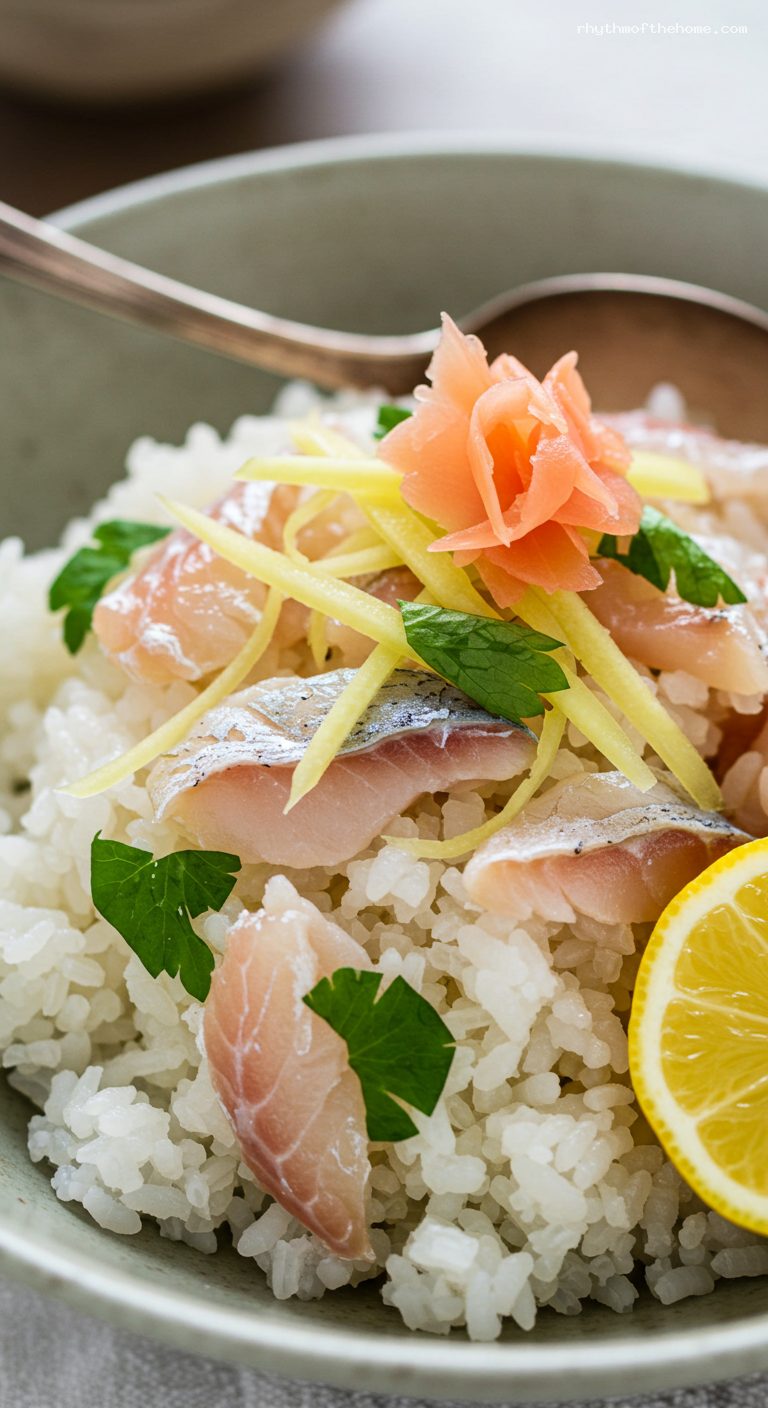
Step-by-Step Instructions
Step 1: Rinse and soak the rice
Place the rice in a bowl, cover with plenty of cold water, and swirl with your hand. Drain and repeat until the water runs almost clear (3–4 rinses). Cover the rice with fresh cold water and soak for 30 minutes, then drain thoroughly in a sieve for 5 minutes. Proper rinsing and soaking ensure evenly cooked, glossy grains.
Step 2: Prep and salt the fish
If using a fillet, run your fingers along the center to feel for pin bones and remove with tweezers; check that the skin is scaled. If using a whole fish, confirm it is scaled and gutted. Pat dry. Score the skin with 2–3 shallow diagonal cuts to prevent curling. Sprinkle evenly with 1 tsp kosher salt and let rest 15 minutes to season and firm the flesh; pat dry again.
Step 3: Lightly sear for aroma
Heat 1 tsp neutral oil in a skillet over medium-high until shimmering. Place the fish skin-side down and sear just to lightly crisp the skin and build aroma: 1–2 minutes for a fillet, 2–3 minutes for a whole fish. Flip for 20–30 seconds, then remove to a plate. The fish will finish cooking on the rice.
Step 4: Build the pot
In a heavy 2–3 quart (2–3 liter) lidded pot or donabe, combine the drained rice, 360 ml water, 60 ml sake, and 2 tbsp light soy. Swirl gently to level. Lay the kombu on top of the rice. Scatter the julienned ginger evenly. Place the fish skin-side up on top; avoid stirring from this point.
Rice cooker method: Add the drained rice to the cooker bowl. Pour in the water, sake, and soy (same amounts). Add kombu and ginger. Place the fish on top and select “white rice” or “mixed rice” setting.
Step 5: Cook gently
Stovetop: Bring to a gentle boil over medium-high heat. Once you see steam or small bubbles around the edges, reduce to low, cover tightly, and simmer for 12 minutes. Do not lift the lid during this time. The fish should reach 63°C / 145°F at the thickest part by the end of cooking.
Rice cooker: Let it complete its cycle (typically 45–55 minutes). No need to adjust temperatures.
Step 6: Steam off heat
Turn off the heat and keep the pot covered for 10 minutes. This rest finishes cooking the rice and redistributes moisture for fluffy, separate grains. Resist the urge to peek.
Step 7: Flake, fold, and finish
Lift out the fish and kombu. Discard the kombu. Remove and discard any skin and bones (or chop the crisp skin finely and fold it back in if you enjoy the texture). Flake the fish into bite-size pieces. Return flakes to the pot and gently fold through the rice with a rice paddle, lifting and cutting rather than mashing. Taste; if you prefer a touch more seasoning, sprinkle in 1–2 tsp soy and fold again. Spoon into bowls, top with chopped mitsuba, and finish with a generous squeeze of citrus. Sprinkle sesame seeds if using.
Pro Tips
- Total liquid check: The combined water + sake + soy here is 450 ml, ideal for 2 cups (380 g) soaked short-grain rice. If using a large whole fish (700–800 g), reduce the water by 1–2 tbsp (15–30 ml) to account for juices.
- Use light soy (usukuchi) for a clean, pale color. With regular soy (koikuchi), reduce to 1 tbsp + 1 tsp and add a small pinch of salt.
- Do not stir during cooking; agitation releases starch and can turn the pot starchy or mushy.
- Check for bones twice when using a whole fish. A small pair of tweezers is invaluable.
- Donabe users: Keep heat moderate to avoid scorching. If you like a crust (okoge), increase heat to medium for the last 60–90 seconds before the rest.
Variations
- Red snapper or sea bass: Substitute equal weight; the method remains the same.
- Mushroom tai-meshi: Add 150 g sliced shimeji or shiitake on top of the rice with the ginger (no other changes).
- Clam twist: Scatter 250 g scrubbed littleneck clams over the rice with the fish; reduce water by 2 tbsp (30 ml) to balance their brine.
Storage & Make-Ahead
Refrigerate leftovers in a shallow, airtight container for up to 2 days. Reheat gently in a lidded skillet with a splash of water, or microwave covered at 60–70% power until hot. For longer storage, portion and freeze up to 1 month; reheat from frozen, covered, with a spoonful of water. Great as onigiri: form warm rice into triangles, brush lightly with soy, and pan-sear to make crisp yaki-onigiri.
Nutrition (per serving)
Approximate values (with 400 g fish fillet): 470 kcal; 68 g carbohydrates; 23 g protein; 6 g fat; 1,000 mg sodium.

Leave a Reply