
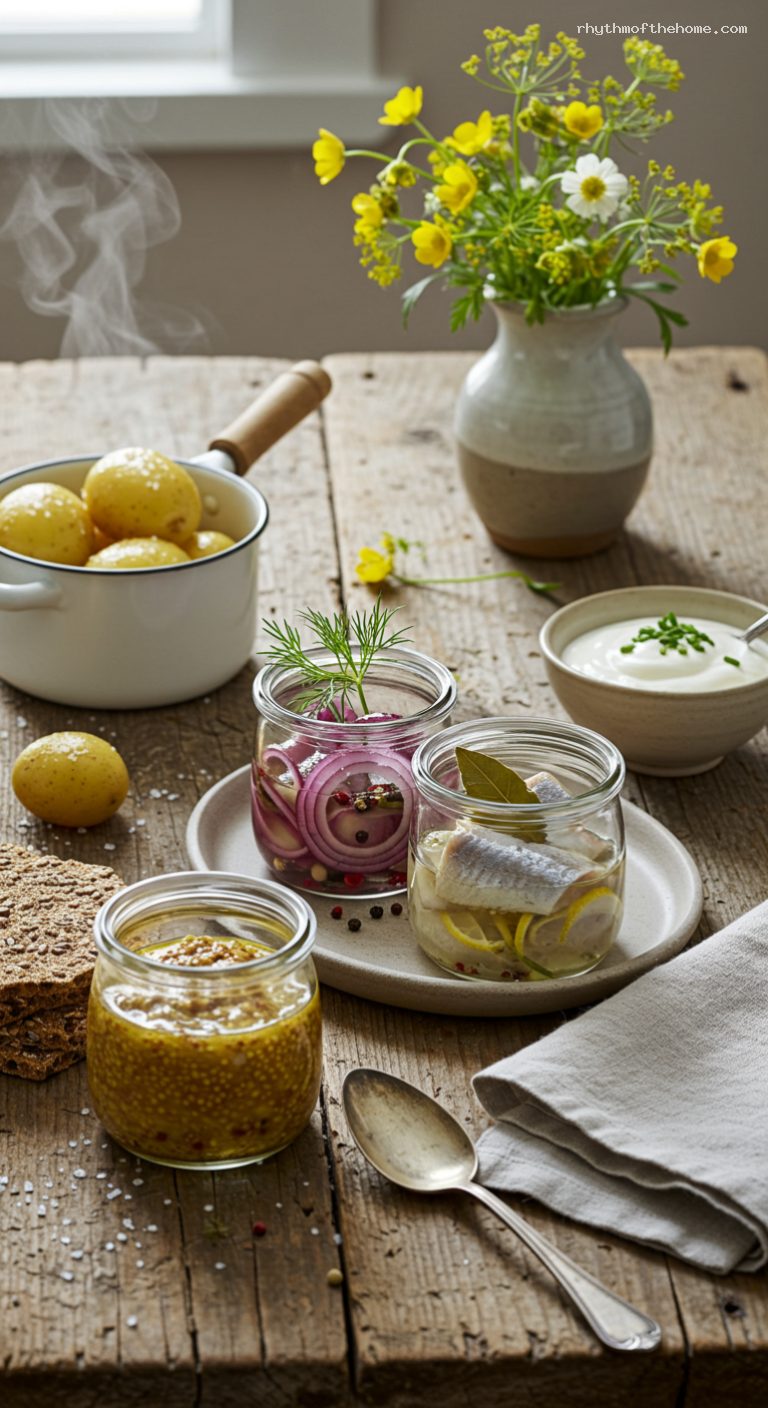
Quick Recipe Version (TL;DR)
Quick Ingredients
- 700 g salt-cured herring fillets, rinsed
- 2 L cold water (for soaking)
- Pickling brine (1–2–3 lag): 1 cup (240 ml) 12% white vinegar, 2 cups (400 g) sugar, 3 cups (720 ml) water, 10 allspice, 10 white peppercorns, 2 bay leaves, 1 small onion (sliced)
- Mustard–dill marinade: 3 tbsp Swedish sweet mustard, 1 tbsp Dijon, 2 tbsp sugar, 2 tbsp reserved brine, 1/3 cup (80 ml) neutral oil, 3 tbsp finely chopped dill
- Onion variation: 1 small red onion (thinly sliced), 2 cups (480 ml) reserved brine, 1 bay leaf, 1 tsp mustard seeds
- Horseradish variation: 2 tbsp freshly grated horseradish, 1 tsp lemon zest, 1 tbsp lemon juice, 2 cups (480 ml) reserved brine
- To serve: 1 kg new potatoes, 1 cup (240 ml) sour cream, 3 tbsp chopped chives, 6–8 crispbread
Do This
- 1) Soak herring 12–24 hours in cold water in the fridge, changing water once.
- 2) Make brine: simmer water, sugar, spices, and onion 2 minutes; off heat, stir in vinegar; cool completely.
- 3) Cut herring into 2–3 cm pieces, pack with some sliced onion, cover with brine; chill 24 hours.
- 4) Drain, reserve 4–5 cups brine. Divide herring into three equal portions.
- 5) Mustard–dill: whisk mustard, sugar, brine; slowly whisk in oil; stir in dill; fold in one-third of herring.
- 6) Onion jar: layer red onion, add 2 cups brine and spices; add one-third of herring. Horseradish jar: mix brine, horseradish, lemon; add last third.
- 7) Chill 12–24 hours. Boil new potatoes 15–18 minutes; serve warm with sour cream, chives, and crispbread.
Why You’ll Love This Recipe
- Classic Swedish flavors in three distinctive jars—mustard–dill, bright onion, and zesty horseradish.
- Mostly hands-off: the fridge does the work while flavors deepen.
- A complete smörgåsbord moment with warm new potatoes, sour cream, chives, and crispbread.
- Flexible: start from salt-cured herring or use store-bought plain pickled herring.
Grocery List
- Produce: 1 small yellow onion, 1 small red onion, fresh dill, fresh chives, fresh horseradish root, 1 lemon, 1 kg new potatoes
- Dairy: Sour cream
- Pantry: Salt-cured herring fillets, distilled white vinegar (12% preferred), granulated sugar, neutral oil, Swedish sweet mustard, Dijon mustard, whole allspice, white peppercorns, bay leaves, mustard seeds, crispbread (knäckebröd), kosher salt
Full Ingredients
For the Herring and Base Pickling Brine (1–2–3 lag)
- 700 g salt-cured herring fillets (salt sill), rinsed
- 2 L cold water (for soaking)
- 3 cups (720 ml) water
- 2 cups (400 g) granulated sugar
- 1 cup (240 ml) distilled white vinegar, 12% acidity (see Pro Tips if using 5%)
- 10 whole allspice berries
- 10 white peppercorns
- 2 bay leaves
- 1 small yellow onion, thinly sliced
Mustard–Dill Herring (Senapssill)
- 3 tbsp Swedish sweet mustard (or honey mustard)
- 1 tbsp Dijon mustard
- 2 tbsp granulated sugar
- 2 tbsp reserved pickling brine (from above)
- 1/3 cup (80 ml) neutral oil (rapeseed/canola)
- 3 tbsp finely chopped fresh dill (about 10 g)
- Freshly ground white pepper and a pinch of salt, to taste
Onion Herring (Löksill)
- 1 small red onion, very thinly sliced into rings
- 2 cups (480 ml) reserved pickling brine
- 1 bay leaf
- 1 tsp mustard seeds
- 4 whole allspice berries
Horseradish Herring (Pepparrotssill)
- 2 cups (480 ml) reserved pickling brine
- 2 tbsp freshly grated horseradish (about 15 g)
- 1 tsp finely grated lemon zest
- 1 tbsp freshly squeezed lemon juice
- 6 white peppercorns
- Optional: 1 tsp sugar to round the heat
To Serve
- 1 kg new potatoes, scrubbed
- 1 tsp kosher salt (for potato water)
- 1 cup (240 ml) sour cream
- 3 tbsp finely chopped chives
- 6–8 crispbread (knäckebröd)
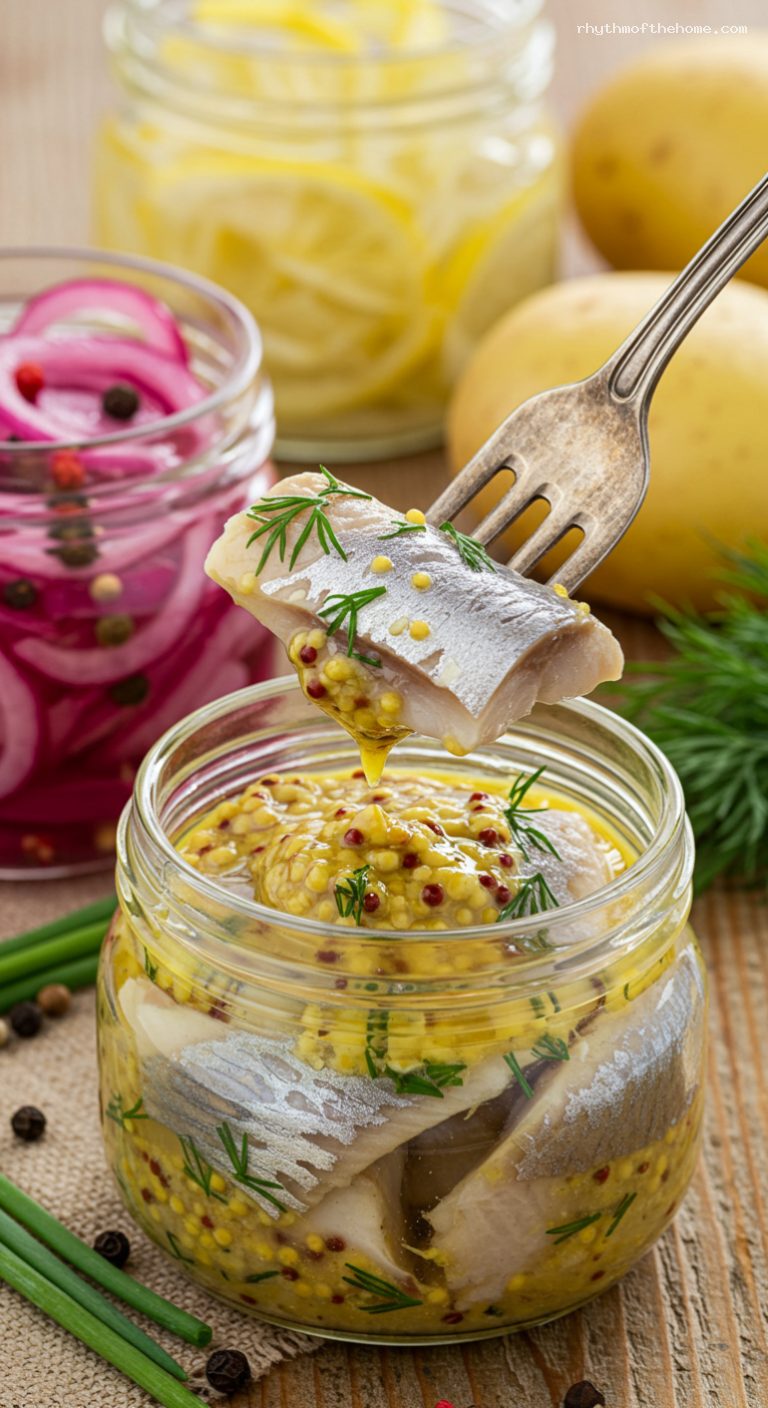
Step-by-Step Instructions
Step 1: Desalt the herring
Place the salt-cured herring fillets in a large bowl and cover with 2 L cold water. Refrigerate 12–24 hours, changing the water once halfway. This removes excess salt and softens the fillets for pickling.
Step 2: Make and cool the 1–2–3 brine
In a medium pot, combine 3 cups (720 ml) water, 2 cups (400 g) sugar, allspice, white peppercorns, bay leaves, and the sliced yellow onion. Bring just to a gentle simmer (about 90–95°C / 195–205°F) and stir for 2 minutes until the sugar fully dissolves. Remove from heat, then stir in 1 cup (240 ml) 12% vinegar. Cool the brine completely to refrigerator-cold; speed this up by placing the pot over an ice bath.
Step 3: Cut and pickle the herring (24 hours)
Drain the herring and pat dry. Cut into 2–3 cm pieces. Pack the pieces with some of the sliced yellow onion into a clean 1–1.5 L jar. Pour the cold brine over to cover. Seal and refrigerate 24 hours to gently pickle and firm the fish.
Step 4: Drain and divide the fish
Strain the herring, reserving 4–5 cups (about 1–1.2 L) of the clear brine for the onion and horseradish variations. Divide the fish into three equal portions for the trio. Keep chilled while you mix the marinades.
Step 5: Make the mustard–dill marinade and jar it
In a bowl, whisk together the sweet mustard, Dijon, sugar, and 2 tbsp reserved brine. While whisking constantly, slowly stream in the neutral oil to form a glossy, spoon-coating sauce. Stir in the chopped dill and season lightly with white pepper and a pinch of salt. Fold one-third of the herring into the sauce and transfer to a 500 ml jar. Cover and chill.
Step 6: Build the onion herring
Layer the red onion rings into a clean 500–700 ml jar. Add the bay leaf, mustard seeds, and allspice. Add one-third of the herring, then pour in 2 cups (480 ml) reserved brine to cover. Seal and chill.
Step 7: Build the horseradish herring
In another jar, combine 2 cups (480 ml) reserved brine, grated horseradish, lemon zest, lemon juice, and white peppercorns (add 1 tsp sugar if you like a softer heat). Add the final third of the herring and submerge. Seal and chill.
Step 8: Rest, cook potatoes, and serve
Let all three jars sit in the refrigerator 12–24 hours for best flavor (you can taste after 4 hours). Near serving time, simmer new potatoes in lightly salted water (1 tsp salt per 2 L) at a gentle boil (96–100°C / 205–212°F) until tender, 15–18 minutes. Drain. Serve the herring trio with warm potatoes, a bowl of sour cream topped with chives, and crispbread.
Pro Tips
- Using jarred plain pickled herring? Skip Steps 1–3. Drain, then proceed directly to Steps 4–7. Chill 4–12 hours before serving.
- No 12% vinegar? If using 5% vinegar, use 2 cups (480 ml) 5% vinegar, 2 cups (400 g) sugar, and 2 cups (480 ml) water for a similar acidity level and volume.
- Cool the brine fully before pouring over fish; warm brine can toughen herring.
- Slice onions very thinly (1–2 mm) for a delicate bite that complements the fish.
- Flavor grows with time: the mustard version shines at 12–24 hours; the clear brine jars are great up to a week.
Variations
- Creamy horseradish: Stir 1/2 cup (120 ml) sour cream into the horseradish jar and reduce reserved brine to 1 cup (240 ml) for a silky, mild heat.
- Beet–onion sill: Add 1/2 small raw beet, julienned, and 1 small tart apple matchsticks to the onion jar for color and sweetness.
- Aquavit twist: Add 2 tbsp aquavit (or dry gin) to either clear brine jar for a subtle herbal note.
Storage & Make-Ahead
After the initial 24-hour pickling stage, the fish keeps in its base brine up to 1 week refrigerated. Once divided into flavors: mustard–dill keeps 4–5 days; onion and horseradish (clear brine) keep 7–10 days. Always store tightly sealed in the coldest part of the fridge and use clean utensils to serve. Cook potatoes just before serving; leftovers keep 3 days refrigerated and reheat gently. The sauces can be mixed 1 day ahead.
Nutrition (per serving)
Approximate, including 120 g herring, 200 g potatoes, 2 tbsp sour cream, and one crispbread: 520 kcal; 28 g fat; 47 g carbohydrates; 23 g protein; 980 mg sodium. Values will vary based on brine consumption and brand of herring.

Leave a Reply