
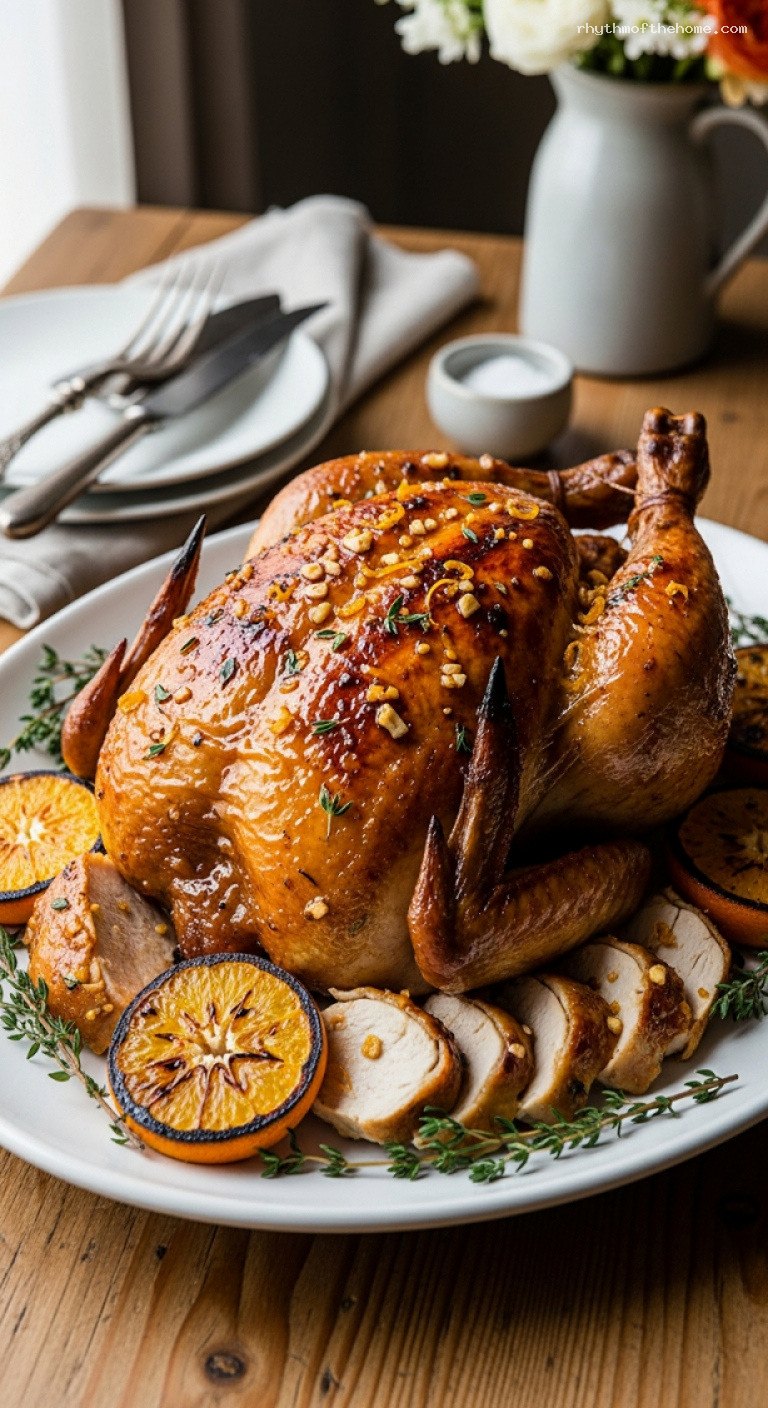
Quick Recipe Version (TL;DR)
Quick Ingredients
- 1 whole chicken (3.5–4 lb)
- 2 tsp kosher salt, 1 tsp black pepper
- 1 tbsp olive oil
- 2 large oranges (zest + about 1 cup juice)
- 1/3 cup honey
- 2 tbsp light brown sugar
- 3 tbsp unsalted butter (plus 1 tbsp for sauce, optional)
- 4 garlic cloves, minced
- 8 whole cloves (or 1/2 tsp ground cloves)
- 1 tbsp fresh thyme leaves, plus extra for garnish
- 1 tsp Dijon mustard
- 1 tbsp soy sauce or tamari
- 1/4 tsp red pepper flakes (optional)
- 1/2 cup low-sodium chicken broth (optional, for pan sauce)
- 1 tsp cornstarch mixed with 1 tbsp water (optional, for pan sauce)
Do This
- 1. Preheat oven to 425°F. Pat chicken very dry, rub with olive oil, salt, and pepper. Place breast-side up on a rack in a roasting pan.
- 2. Make glaze: simmer orange juice and zest, honey, brown sugar, butter, garlic, cloves, thyme, Dijon, soy, and red pepper flakes for 6–8 minutes until syrupy. Remove from heat and reserve 1/4 cup in a clean bowl.
- 3. Roast chicken for 25–30 minutes unglazed to start browning.
- 4. Reduce oven to 400°F. Brush chicken with some glaze and keep roasting 20–30 minutes, basting with more glaze every 10 minutes, until skin is deep golden and internal temperature is 165°F in thickest part of thigh.
- 5. Transfer chicken to a board and rest 15 minutes, loosely tented with foil.
- 6. Optional sauce: deglaze roasting pan with chicken broth and remaining drippings, thicken with cornstarch slurry, then swirl in butter and a spoonful of reserved glaze.
- 7. Carve chicken, drizzle with reserved glaze and/or pan sauce, garnish with thyme and orange slices, and serve.
Why You’ll Love This Recipe
- Sticky, glossy orange-honey glaze infused with cloves, garlic, and thyme that tastes like a cozy winter roast but works any time of year.
- Whole roasted chicken means impressive presentation with very little hands-on work.
- Simple, everyday ingredients come together into a restaurant-worthy main dish.
- Leftovers are fantastic in salads, sandwiches, and grain bowls.
Grocery List
- Produce: 2 large oranges, 4 garlic cloves, 1 small bunch fresh thyme
- Dairy: Unsalted butter
- Pantry: Whole chicken, olive oil, kosher salt, black pepper, honey, light brown sugar, whole or ground cloves, Dijon mustard, soy sauce or tamari, red pepper flakes, low-sodium chicken broth, cornstarch
Full Ingredients
For the Orange-Clove Glazed Chicken
- 1 whole chicken (3.5–4 lb), giblets removed
- 2 tsp kosher salt (use 1 1/2 tsp if using table salt)
- 1 tsp freshly ground black pepper
- 1 tbsp olive oil
For the Orange-Clove Glaze
- Zest of 2 large oranges (about 2 tsp finely grated)
- Freshly squeezed juice from 2 large oranges (about 1 cup)
- 1/3 cup honey
- 2 tbsp light brown sugar, packed
- 3 tbsp unsalted butter
- 4 garlic cloves, finely minced
- 8 whole cloves or 1/2 tsp ground cloves
- 1 tbsp fresh thyme leaves, plus extra sprigs for garnish
- 1 tsp Dijon mustard
- 1 tbsp soy sauce or tamari
- 1/4 tsp red pepper flakes (optional, for a gentle heat)
- Pinch of salt, to taste (optional, depending on saltiness of soy sauce)
For the Optional Pan Sauce and Finishing
- 1/2 cup low-sodium chicken broth
- 1 tsp cornstarch mixed with 1 tbsp cold water
- 1 tbsp unsalted butter
- Reserved 1/4 cup orange-clove glaze (from above)
- Extra fresh thyme sprigs and orange slices or wedges, for serving (optional but highly recommended)
Step-by-Step Instructions
Step 1: Prep the chicken and preheat the oven
Preheat your oven to 425°F. Place a rack in the lower-middle position so the chicken has room to roast without burning the top. Line a roasting pan or large rimmed baking sheet with foil for easier cleanup, and set a metal rack inside if you have one.
Remove the chicken from its packaging and take out any giblets from the cavity. Pat the chicken very dry all over with paper towels, inside and out. This step is important: dry skin equals crisp, golden, beautifully bronzed skin later.
Place the chicken breast-side up on the rack. Tuck the wing tips under so they do not burn, and tie the legs loosely with kitchen twine if desired for a neater shape. Rub the chicken all over with the olive oil, then sprinkle evenly with the kosher salt and black pepper, including a light sprinkle inside the cavity.
Step 2: Make the orange-clove glaze
In a small saucepan, combine the orange zest, orange juice, honey, brown sugar, 3 tbsp butter, minced garlic, whole cloves (or ground cloves), thyme leaves, Dijon mustard, soy sauce, red pepper flakes (if using), and a small pinch of salt.
Set the saucepan over medium heat and bring to a gentle simmer, stirring occasionally. Once it starts to bubble, reduce the heat to medium-low and let it simmer for 6–8 minutes, stirring often, until slightly thickened and glossy. It should reduce to about 2/3 cup and coat the back of a spoon.
Remove the glaze from the heat. If you used whole cloves, fish them out with a spoon and discard so no one bites into one later. Let the glaze cool for 5–10 minutes; it will thicken a bit more as it stands. Transfer 1/4 cup of the glaze to a clean bowl and set aside for serving later. The remaining glaze will be used for brushing the chicken as it roasts.
Step 3: Start roasting the chicken
With the oven at 425°F, place the seasoned chicken (still unglazed at this point) in the oven. Roast for 25–30 minutes to begin rendering the fat and browning the skin. Starting the roast without glaze helps the skin crisp and keeps the sugars in the glaze from burning too early.
While the chicken roasts, keep the saucepan with the remaining glaze nearby. If it thickens too much to brush easily, you can warm it over low heat for a minute and thin it with a teaspoon or two of water or orange juice.
Step 4: Glaze and roast until sticky and caramelized
After the initial 25–30 minutes, carefully remove the roasting pan from the oven and reduce the oven temperature to 400°F. Using a heat-safe brush, generously brush the chicken all over with a layer of the orange-clove glaze from the saucepan. Be sure to coat the breast, legs, and thighs; you do not need to flip the chicken.
Return the chicken to the oven and continue roasting for another 20–30 minutes, brushing with more glaze every 10 minutes. Each layer will build a deeper, stickier, more caramelized coating. If any spots begin to darken too quickly, you can gently tent that area with a small piece of foil.
The chicken is done when the thickest part of the thigh registers 165°F on an instant-read thermometer and the juices run clear when pierced. Total roasting time will typically be 45–60 minutes for a 3.5–4 lb chicken.
Step 5: Rest the chicken and make the pan sauce (optional)
Transfer the finished chicken to a cutting board, tipping any juices from the cavity into the roasting pan first. Tent the chicken loosely with foil and let it rest for 15 minutes. Resting allows the juices to redistribute so the meat stays tender and moist when carved.
For an optional pan sauce, pour the drippings from the roasting pan into a heatproof measuring cup and let them settle. Spoon off some of the excess fat if there is a lot, leaving mostly the flavorful juices. Place the roasting pan on the stovetop over medium heat (or pour the drippings into a small skillet).
Add the chicken broth to the pan and bring to a simmer, scraping up all the caramelized browned bits with a wooden spoon. Stir in the de-fatted drippings. Whisk in the cornstarch slurry and simmer for 1–2 minutes until slightly thickened. Remove from heat and whisk in 1 tbsp butter and 1–2 tbsp of the reserved glaze. Taste and adjust seasoning with salt and pepper if needed.
Step 6: Carve, garnish, and serve
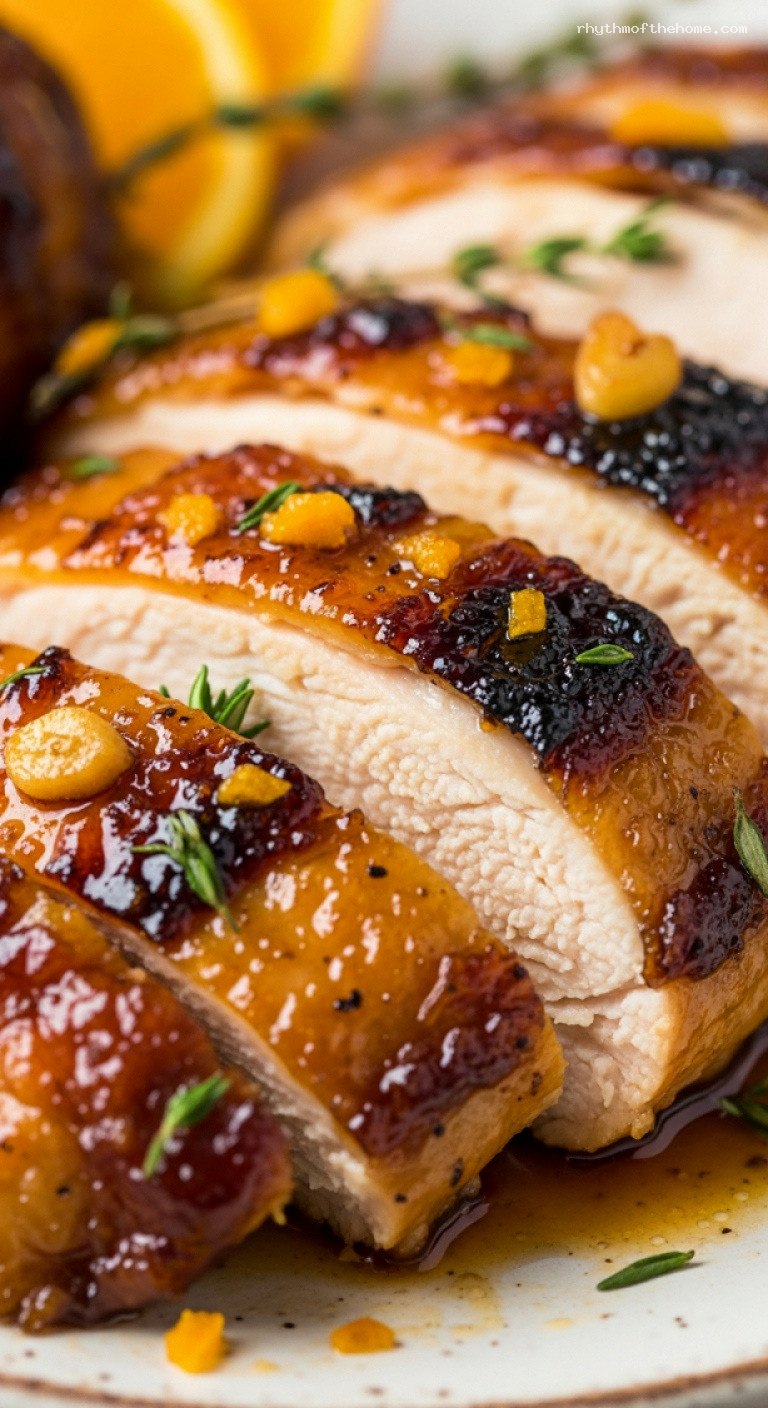
Once rested, carve the chicken: remove the legs and thighs, separate the drumsticks and thighs, then slice off the breasts and cut them crosswise into thick slices. Arrange the pieces on a warm serving platter.
Lightly warm the reserved 1/4 cup glaze if it has thickened too much to drizzle (a few seconds in the microwave or over low heat on the stove is plenty). Spoon or brush some of this glaze over the carved chicken for a final glossy sheen and bright hit of orange-clove flavor.
Garnish with fresh thyme sprigs and orange slices or wedges. Serve immediately with the warm pan sauce on the side for drizzling at the table.
Pro Tips
- Dry the chicken well. Extra-dry skin is the secret to crisp, bronzed roasted chicken. Take an extra minute with those paper towels.
- Use a thermometer. Chickens vary in size and ovens vary in accuracy. An instant-read thermometer is the best way to avoid undercooking or drying it out.
- Layer the glaze. Several thin coats during roasting create a deep, sticky, caramelized finish. One thick coat at the end will not develop the same flavor or texture.
- Watch for burning. If the glaze starts to darken too fast in spots, tent just that area with foil and continue roasting until the interior is done.
- Keep some glaze “clean.” Reserve a portion of glaze in a separate bowl before you start brushing the raw chicken so you have a safe, untouched glaze for finishing and serving.
Variations
- Spatchcocked chicken: For faster, more even cooking, remove the backbone and flatten the chicken before seasoning. Roast at 425°F the whole time; it will usually cook in 40–50 minutes total.
- Spicier version: Increase the red pepper flakes to 1/2–3/4 tsp, and add 1 tsp smoked paprika to the chicken’s dry seasoning for a sweet-smoky kick.
- Citrus twist: Replace half the orange juice with fresh lemon or blood orange juice for a more tangy or dramatic-colored glaze.
Storage & Make-Ahead
Leftover chicken can be cooled completely, then stored in an airtight container in the refrigerator for up to 3–4 days. The meat reheats gently in a covered skillet with a splash of water or broth, or can be enjoyed cold in salads and sandwiches.
The orange-clove glaze can be prepared up to 2 days ahead. Store it covered in the refrigerator and gently rewarm until fluid before using. If making the pan sauce, it will keep in the refrigerator for up to 3 days; reheat over low heat, adding a splash of water or broth if it thickens too much.
For longer storage, carved chicken (without bones) can be frozen for up to 3 months in a freezer-safe container. Thaw overnight in the refrigerator before reheating.
Nutrition (per serving)
Approximate values for 1/4 of the chicken with skin and a drizzle of glaze and a small amount of pan sauce: about 450 calories; 40 g protein; 25 g fat; 15 g carbohydrates; 12 g sugar; 700 mg sodium. Actual values will vary based on the size of your chicken, how much skin you eat, and how much glaze and sauce you use.

Leave a Reply