
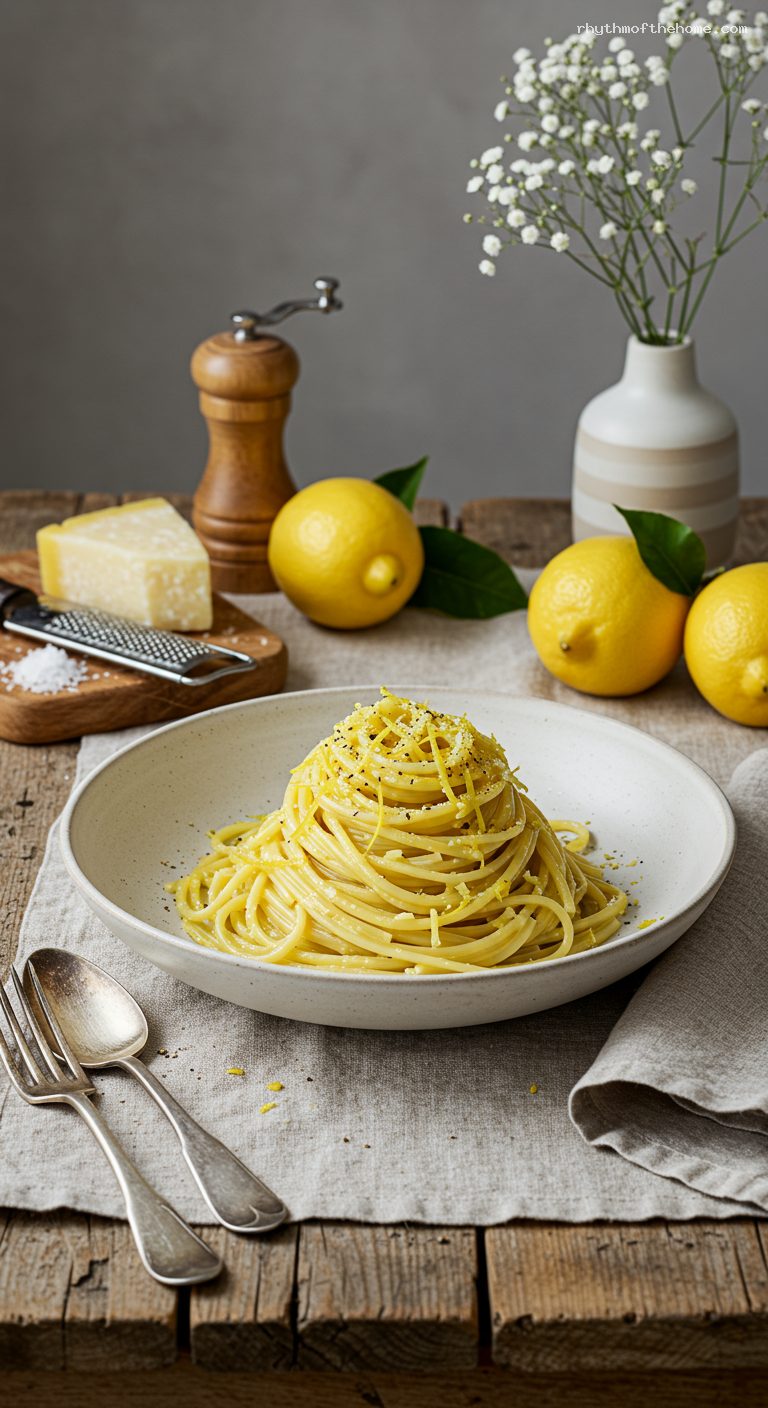
Quick Recipe Version (TL;DR)
Quick Ingredients
- 12 oz (340 g) spaghetti
- 2 large lemons (2 tbsp finely grated zest, divided; 1/4 cup/60 ml juice)
- 6 tbsp (85 g) unsalted butter, cold and cut into 6 pieces
- 1 cup (85 g) finely grated Parmigiano-Reggiano, plus extra for serving
- 1 tbsp (15 ml) extra-virgin olive oil (optional)
- 1/2 tsp freshly ground black pepper, plus more to taste
- Kosher salt (for pasta water)
- 1 3/4 cups (415 ml) reserved pasta cooking water
Do This
- 1. Boil 4 qt water; salt with 2 tbsp Diamond Crystal or 1 tbsp Morton. Cook spaghetti to very al dente (7–8 minutes). Reserve 1 3/4 cups water.
- 2. In a wide pan on medium-low, warm olive oil. Bloom half the zest and pepper 30 seconds.
- 3. Add 3/4 cup pasta water and the lemon juice; simmer 1 minute.
- 4. Reduce heat to low (no bubbling). Whisk in butter, one piece at a time, until glossy and emulsified.
- 5. Transfer spaghetti to the pan; toss vigorously. Add more pasta water, a splash at a time, until silky.
- 6. Off heat, gradually toss in Parmigiano. Adjust with more water for a creamy, clinging sauce.
- 7. Finish with remaining zest, black pepper, and extra cheese. Serve immediately.
Why You’ll Love This Recipe
- Bright, sunny flavor from fresh lemon zest and juice balanced by buttery richness.
- Restaurant-style gloss thanks to a simple lemon-butter and pasta-water emulsion.
- Ready in under 30 minutes with minimal ingredients you likely have on hand.
- Ultra-comforting yet elegant—perfect for weeknights or a dinner party starter.
Grocery List
- Produce: 2 large lemons
- Dairy: Unsalted butter, Parmigiano-Reggiano
- Pantry: Spaghetti, extra-virgin olive oil, kosher salt, black pepper
Full Ingredients
Core Ingredients
- 12 oz (340 g) dried spaghetti
- 2 large lemons: 2 tbsp finely grated zest, divided; 1/4 cup (60 ml) fresh juice
- 6 tbsp (85 g) unsalted butter, cold and cut into 6 pieces
- 1 cup (85 g) finely grated Parmigiano-Reggiano, plus more for serving
- 1 tbsp (15 ml) extra-virgin olive oil (optional, for roundness)
- 1/2 tsp freshly ground black pepper, plus more to taste
- Kosher salt (for pasta water: 2 tbsp Diamond Crystal or 1 tbsp Morton per 4 qt/3.8 L)
- 1 3/4 cups (415 ml) reserved starchy pasta cooking water
Optional Finishes
- Additional lemon zest for garnish
- Extra Parmigiano for serving
- Drizzle of olive oil (optional)
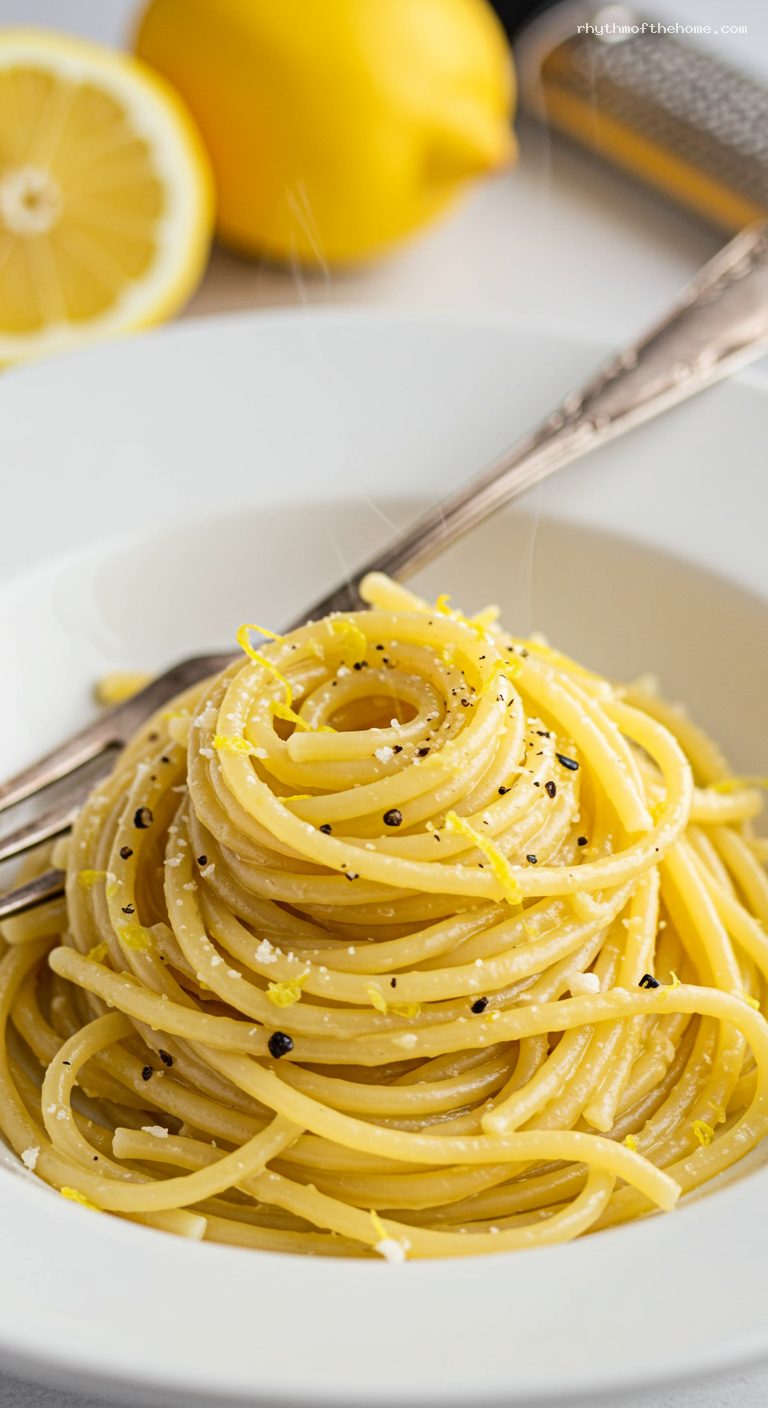
Step-by-Step Instructions
Step 1: Prep the lemons and cheese
Finely zest the lemons (you want 2 tablespoons total). Divide the zest: set aside half for the sauce and half for finishing. Juice the lemons and measure 1/4 cup (60 ml). Grate the Parmigiano very finely (a microplane or rasp-style grater works best). Cut the cold butter into 6 pieces so it emulsifies easily.
Step 2: Boil the spaghetti and reserve pasta water
Bring 4 quarts (3.8 L) of water to a rolling boil (about 212°F / 100°C). Salt generously: 2 tablespoons Diamond Crystal or 1 tablespoon Morton kosher salt. Cook the spaghetti until very al dente, typically 7–8 minutes (1–2 minutes less than package directions). Just before draining, scoop out and measure 1 3/4 cups (415 ml) of the starchy pasta water. Drain the pasta.
Step 3: Build the lemon base
In a wide sauté pan or Dutch oven, warm the olive oil over medium-low heat. Add half the lemon zest and the black pepper; gently bloom for 30 seconds until aromatic (do not brown). Pour in 3/4 cup of the reserved pasta water and all of the lemon juice. Bring to a gentle simmer for 1 minute to meld flavors.
Step 4: Emulsify with cold butter
Reduce the heat to low so the liquid is hot but not bubbling. Whisk in the butter, one piece at a time, letting each piece emulsify before adding the next. Keep it below a simmer (aim for gentle steam, roughly 180–190°F / 82–88°C). You should have a glossy, slightly thickened lemon-butter base.
Step 5: Marry the pasta and sauce
Add the spaghetti to the pan. Toss vigorously with tongs, adding reserved pasta water a splash at a time as needed (start with 1/4 cup) to loosen and create a silky sauce that clings to the strands. Keep the heat on low and toss for 1–2 minutes, just until the pasta is al dente and coated.
Step 6: Add the Parmigiano off heat
Remove the pan from the heat. Gradually sprinkle in the Parmigiano while tossing continuously, letting it melt into the emulsion. If the sauce tightens, add more reserved pasta water, a tablespoon at a time, until it becomes creamy and glossy, coating the pasta without pooling.
Step 7: Season and serve
Taste and adjust. Add more black pepper and a pinch of salt if needed (the cheese and pasta water may already be salty). Toss in the remaining lemon zest for fresh, bright aroma. Twirl into warm bowls, top with extra Parmigiano, and finish with a light drizzle of olive oil if you like. Serve immediately while the sauce is silky.
Pro Tips
- Use finely grated cheese. Fluffy, powdery Parmigiano melts smoothly and won’t clump like thicker shreds.
- Keep the sauce below a simmer once butter goes in. Heat that’s too high will break the emulsion.
- Reserve more water than you think you need. It’s your tool to thin and gloss the sauce on demand.
- Zest first, then juice. Avoid the white pith for pure lemon aroma without bitterness.
- Warm your bowls. A warm plate helps keep the sauce fluid and glossy at the table.
Variations
- Creamy: Stir in 1/4 cup (60 ml) heavy cream just after the butter emulsifies for a richer, silkier sauce.
- Herby: Fold in 1/4 cup finely chopped parsley or basil at the end for fresh, green notes.
- Spark of heat: Add a pinch of red pepper flakes when blooming the lemon zest for a gentle kick.
Storage & Make-Ahead
This dish is best enjoyed immediately while the emulsion is at its glossiest. Leftovers can be refrigerated in an airtight container for up to 2 days. Reheat gently in a pan over low heat with a splash of water and a small knob of butter, tossing until creamy again. You can prep ahead by zesting/juicing the lemons, pre-grating the cheese, and cutting the butter; keep everything chilled and ready to cook.
Nutrition (per serving)
Approximate: 560 calories; 27 g fat; 63 g carbohydrates; 19 g protein; 3 g fiber; sodium varies with salt level. Calculated with olive oil included.

Leave a Reply