
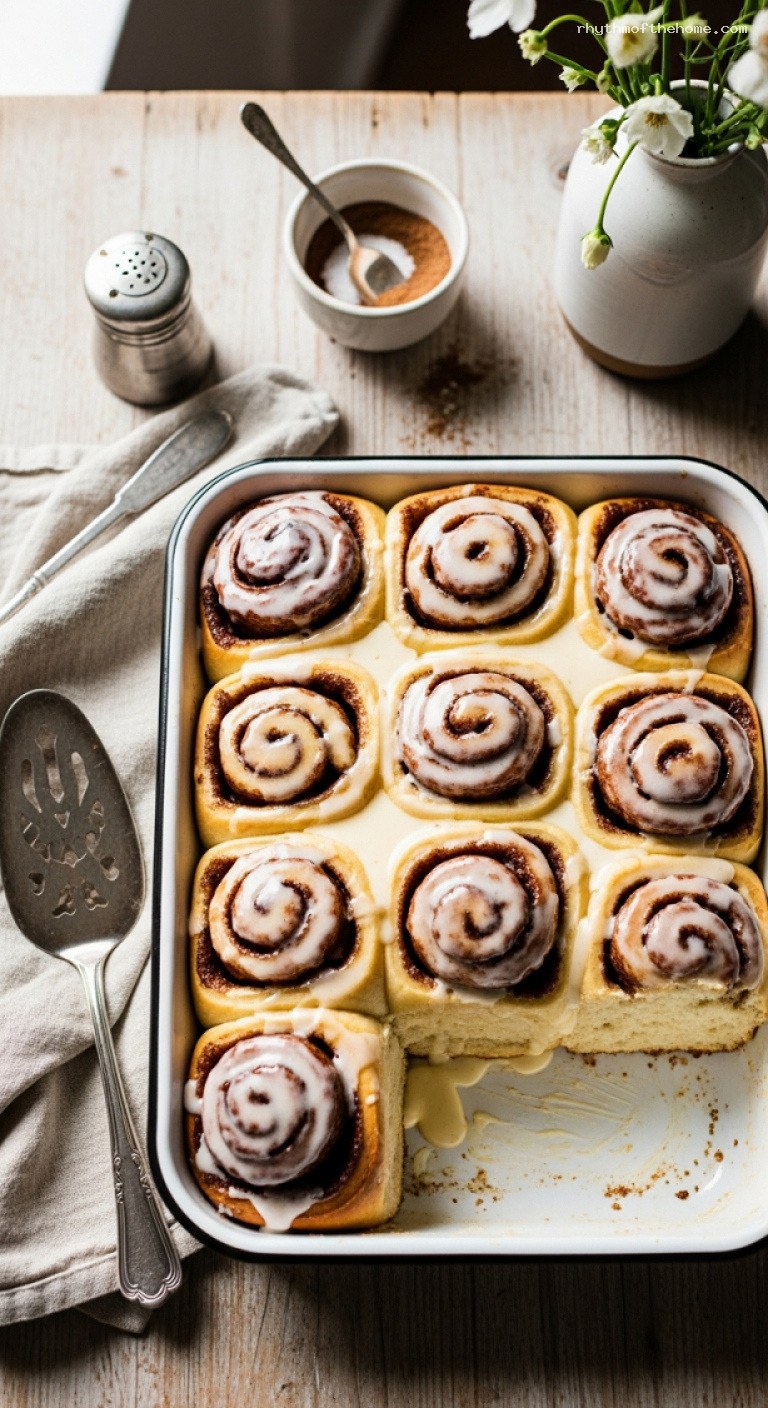
Quick Recipe Version (TL;DR)
Quick Ingredients
- 3/4 cup (180 ml) warm whole milk (105–115°F)
- 1/4 cup (50 g) granulated sugar
- 2 1/4 tsp (7 g) active dry yeast
- 3 to 3 1/4 cups (360–390 g) all-purpose flour
- 1 tsp fine sea salt
- 2 large eggs, room temperature
- 1/4 cup (57 g) unsalted butter, very soft (for dough)
- 1 tsp vanilla extract
- 4 tbsp (56 g) unsalted butter, very soft (for filling)
- 1/2 cup (100 g) packed light brown sugar
- 2 1/2 tsp ground cinnamon + pinch salt
- 4 oz (113 g) cream cheese, softened
- 2 tbsp (28 g) unsalted butter, softened (for icing)
- 1 cup (120 g) powdered sugar
- 2–3 tbsp whole milk
- 1 tsp vanilla + 1–2 tsp fresh lemon juice
Do This
- 1. Combine warm milk, sugar, and yeast. Let stand 5–10 minutes until foamy.
- 2. Mix in eggs, vanilla, soft butter, salt, and flour. Knead until smooth. Let rise 1–1 1/2 hours, until doubled.
- 3. Stir brown sugar, cinnamon, and a pinch of salt. Butter a 9×13 inch (23×33 cm) pan.
- 4. Roll dough to about 12×16 inches (30×40 cm). Spread with 4 tbsp butter, sprinkle cinnamon sugar, roll up tightly.
- 5. Slice into 12 rolls, arrange in pan. Cover and let rise 35–45 minutes. Preheat oven to 350°F (175°C).
- 6. Bake 22–25 minutes until puffed and lightly golden, but still soft in the center.
- 7. Beat cream cheese, butter, powdered sugar, vanilla, lemon juice, and milk until pourable. Spread over warm rolls and serve.
Why You’ll Love This Recipe
- Soft, enriched dough that bakes up tall, fluffy, and tender every time.
- Generous swirl of buttery cinnamon-brown sugar that melts into a sticky, gooey center.
- Tangy cream-cheese icing that seeps into the warm rolls for a bakery-style finish.
- Detailed, step-by-step instructions that keep everything beginner-friendly but impressive.
Grocery List
- Produce: 1 small lemon (for optional tangy icing)
- Dairy: Whole milk, unsalted butter, cream cheese, eggs
- Pantry: All-purpose flour, granulated sugar, light brown sugar, powdered sugar, active dry yeast, ground cinnamon, vanilla extract, fine sea salt
Full Ingredients
For the Enriched Dough
- 3/4 cup (180 ml) whole milk, warmed to 105–115°F (40–46°C)
- 1/4 cup (50 g) granulated sugar
- 2 1/4 tsp (7 g) active dry yeast (1 standard packet)
- 3 to 3 1/4 cups (360–390 g) all-purpose flour, plus extra for dusting
- 1 tsp fine sea salt
- 2 large eggs, at room temperature
- 1/4 cup (57 g) unsalted butter, very soft (almost room-temperature spreadable)
- 1 tsp vanilla extract
For the Cinnamon-Sugar Filling
- 4 tbsp (56 g) unsalted butter, very soft
- 1/2 cup (100 g) packed light brown sugar
- 2 1/2 tsp ground cinnamon
- 1/4 tsp fine sea salt
For the Tangy Cream-Cheese Icing
- 4 oz (113 g) cream cheese, softened to room temperature
- 2 tbsp (28 g) unsalted butter, softened
- 1 cup (120 g) powdered sugar, sifted
- 2–3 tbsp whole milk, as needed for consistency
- 1 tsp vanilla extract
- 1–2 tsp fresh lemon juice (to taste, for tang)
- Pinch of fine sea salt
For the Pan
- 1–2 tsp butter or neutral oil, for greasing the baking pan
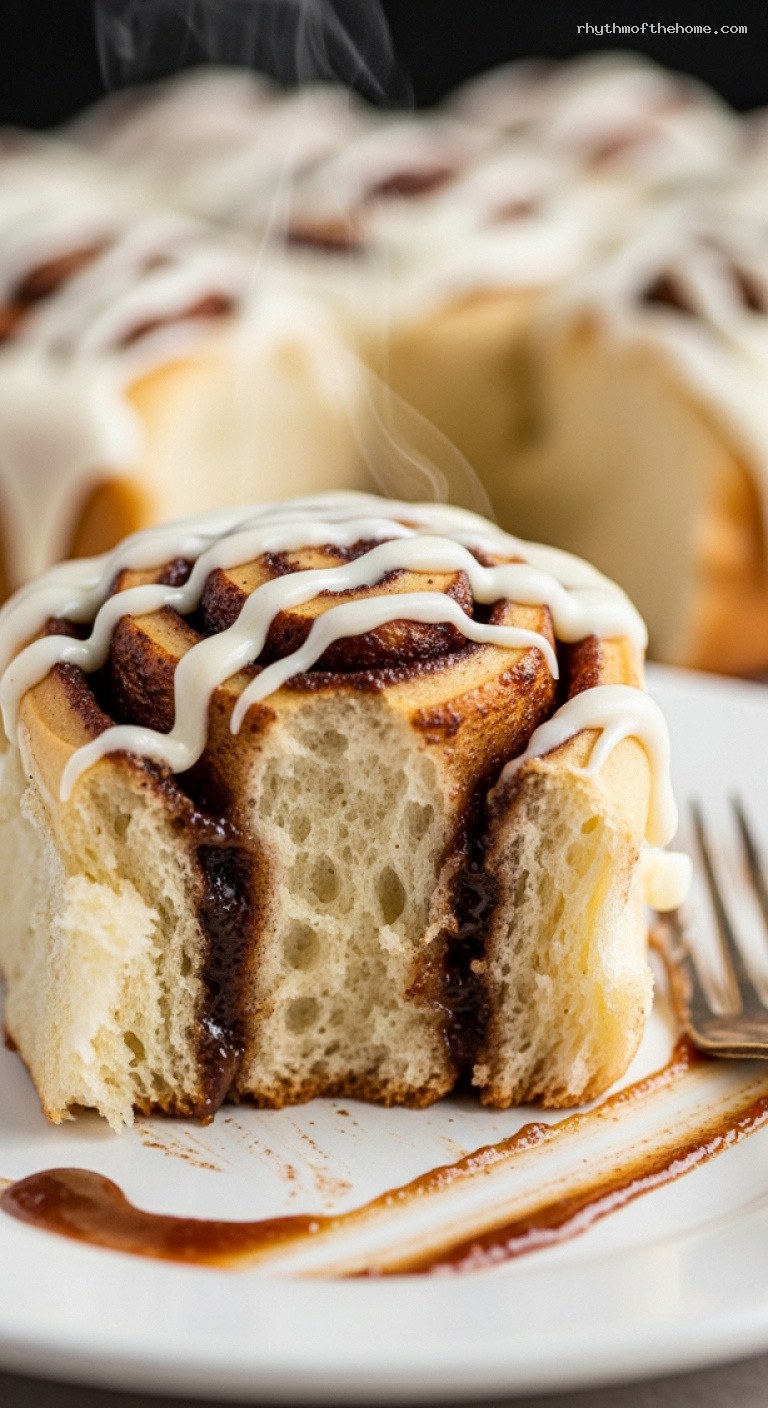
Step-by-Step Instructions
Step 1: Warm the milk and activate the yeast
In a small saucepan or microwave-safe cup, gently warm the milk until it reaches 105–115°F (40–46°C). It should feel warm but not hot to the touch. Pour the warm milk into a large mixing bowl (or the bowl of a stand mixer). Stir in the granulated sugar until dissolved, then sprinkle the active dry yeast over the surface.
Let the mixture stand for 5–10 minutes, without stirring, until it looks foamy and creamy on top. This means the yeast is active. If nothing happens and it stays flat, your yeast may be dead or the milk too hot or too cold—start over with fresh yeast.
Step 2: Make the enriched dough
Once the yeast is foamy, add the eggs, vanilla extract, and 1/4 cup (57 g) very soft butter to the bowl. Whisk or mix until the eggs are mostly incorporated (it is fine if the butter is a bit lumpy at this stage).
In a separate bowl, combine 3 cups (360 g) of the flour with the salt. Add this dry mixture to the wet ingredients. Stir with a sturdy spoon, dough whisk, or use the dough hook on a stand mixer on low speed until a shaggy dough forms and no dry flour remains.
If the dough is extremely sticky (more like thick batter than dough), add additional flour 1 tablespoon at a time, up to 1/4 cup (30 g) more, until it is soft and slightly tacky but holds together. Knead by hand on a lightly floured surface or with the dough hook on medium-low speed for 8–10 minutes, until the dough is smooth, elastic, and only slightly tacky to the touch.
Step 3: First rise (let the dough puff up)
Shape the dough into a smooth ball and place it in a lightly greased bowl, turning once to coat all sides with a thin layer of oil or butter. Cover the bowl tightly with plastic wrap or a clean, damp kitchen towel.
Let the dough rise in a warm, draft-free spot for 1–1 1/2 hours, or until it has roughly doubled in size. A slightly warm oven (turned off) or a sunny countertop works well. While the dough rises, grease a 9×13 inch (23×33 cm) baking pan with butter or neutral oil.
Step 4: Prepare the filling and roll out the dough
In a small bowl, mix together the light brown sugar, ground cinnamon, and 1/4 tsp salt until evenly combined. Set aside. Make sure the 4 tbsp (56 g) butter for the filling is very soft and spreadable.
Once the dough has doubled, gently punch it down to deflate. Turn it out onto a lightly floured surface and roll it into a rectangle about 12×16 inches (30×40 cm), with the longer side facing you. Try to keep the thickness even, around 1/4 inch (6 mm).
Spread the 4 tbsp of soft butter all over the surface of the dough, leaving a 1/2 inch (1 cm) border along the long edge farthest from you. Sprinkle the cinnamon-brown sugar mixture evenly over the buttered area, then gently pat it down with your hands so it sticks.
Step 5: Shape the cinnamon rolls and second rise
Starting from the long edge closest to you, roll the dough up tightly into a log, keeping the roll as even as possible and pulling gently as you go to keep it snug. Pinch the seam to seal it, and turn the log seam-side down.
Trim the very ends if they are uneven. Using a sharp serrated knife or unflavored dental floss, slice the log into 12 even pieces, each about 1 1/4 to 1 1/2 inches (3–4 cm) thick. Arrange the rolls in the prepared 9×13 inch pan with a little space between them.
Cover the pan loosely with plastic wrap or a clean kitchen towel. Let the rolls rise in a warm spot for 35–45 minutes, or until puffy and nearly touching. During the last 15 minutes of rising, preheat the oven to 350°F (175°C), with a rack in the center.
Step 6: Bake until soft, puffy, and lightly golden
When the rolls are nicely puffed, uncover the pan and place it in the preheated 350°F (175°C) oven. Bake for 22–25 minutes, until the rolls are lightly golden on top and the centers look set but still soft. If you have an instant-read thermometer, the internal temperature in the center of a roll should be around 190–195°F (88–90°C).
If the tops are browning too fast before the centers are baked, tent the pan loosely with foil for the last 5 minutes of baking. Remove the pan from the oven and let the rolls cool for 10–15 minutes while you prepare the icing. They should still be warm when you ice them so the frosting melts slightly into all the nooks and crannies.
Step 7: Make the tangy cream-cheese icing and finish
In a medium bowl, beat the softened cream cheese and 2 tbsp (28 g) softened butter together with a hand mixer (or vigorously by hand) until totally smooth and creamy, with no lumps. Add the powdered sugar, vanilla extract, 1 tsp lemon juice, a pinch of salt, and 2 tbsp milk.
Beat until smooth and glossy, adding up to 1 more tbsp milk if needed to reach a thick but pourable consistency. Taste and add up to 1 more tsp lemon juice if you like a slightly tangier icing.
Spoon or drizzle the icing generously over the warm cinnamon rolls, spreading gently so it seeps into the spirals. Serve the rolls warm and sticky, straight from the pan, with extra icing scraped from the corners for the lucky ones.
Pro Tips
- Check your milk temperature: Too hot will kill the yeast, too cold will slow it down. Aim for pleasantly warm bathwater, 105–115°F (40–46°C).
- Use weight for flour if possible: Measuring 360 g flour by weight helps avoid heavy, dense rolls. If using cups, lightly spoon and level the flour rather than scooping.
- Soft, not sticky dough: The dough should feel soft and slightly tacky, but not clingy. Add extra flour a tablespoon at a time—too much will make the rolls tough.
- Proof in the right spot: If your kitchen is cool, briefly preheat your oven to the lowest setting, turn it off, and let the covered dough rise inside with the door slightly ajar.
- Slice cleanly: Unflavored dental floss wrapped around the dough log and pulled tight gives very neat, round rolls without squashing them.
Variations
- Overnight cinnamon rolls: After slicing and placing in the pan, cover tightly and refrigerate overnight. Next morning, let them sit at room temperature for 45–60 minutes until puffy, then bake as directed.
- Pecan cinnamon rolls: Sprinkle 1/2–3/4 cup (60–90 g) chopped toasted pecans over the cinnamon-sugar filling before rolling. You can also scatter a few extra pecans on top after icing.
- Cardamom-orange twist: Replace 1 tsp of cinnamon with 1 tsp ground cardamom and add 1 tsp finely grated orange zest to the filling. Use orange juice instead of lemon juice in the icing for a fragrant, citrusy finish.
Storage & Make-Ahead
Store leftover cinnamon rolls, tightly covered, at room temperature for up to 1 day or in the refrigerator for up to 4 days. For the softest texture, rewarm individual rolls in the microwave for 15–25 seconds or in a 300°F (150°C) oven for 8–10 minutes, covered loosely with foil. You can also bake the rolls slightly underdone (by 2–3 minutes), cool completely, cover well, and reheat the whole pan the next day at 325°F (165°C) for 10–15 minutes, then add a fresh drizzle of icing if desired. The shaped, unbaked rolls can be refrigerated overnight (see Overnight variation above), making them perfect for stress-free brunch.
Nutrition (per serving)
Approximate values per roll (1 of 12), including icing: 360 calories; 12 g fat; 7 g saturated fat; 55 g carbohydrates; 3 g fiber; 24 g sugar; 7 g protein; 260 mg sodium. These numbers are estimates and will vary based on exact ingredients and portion sizes.

Leave a Reply