
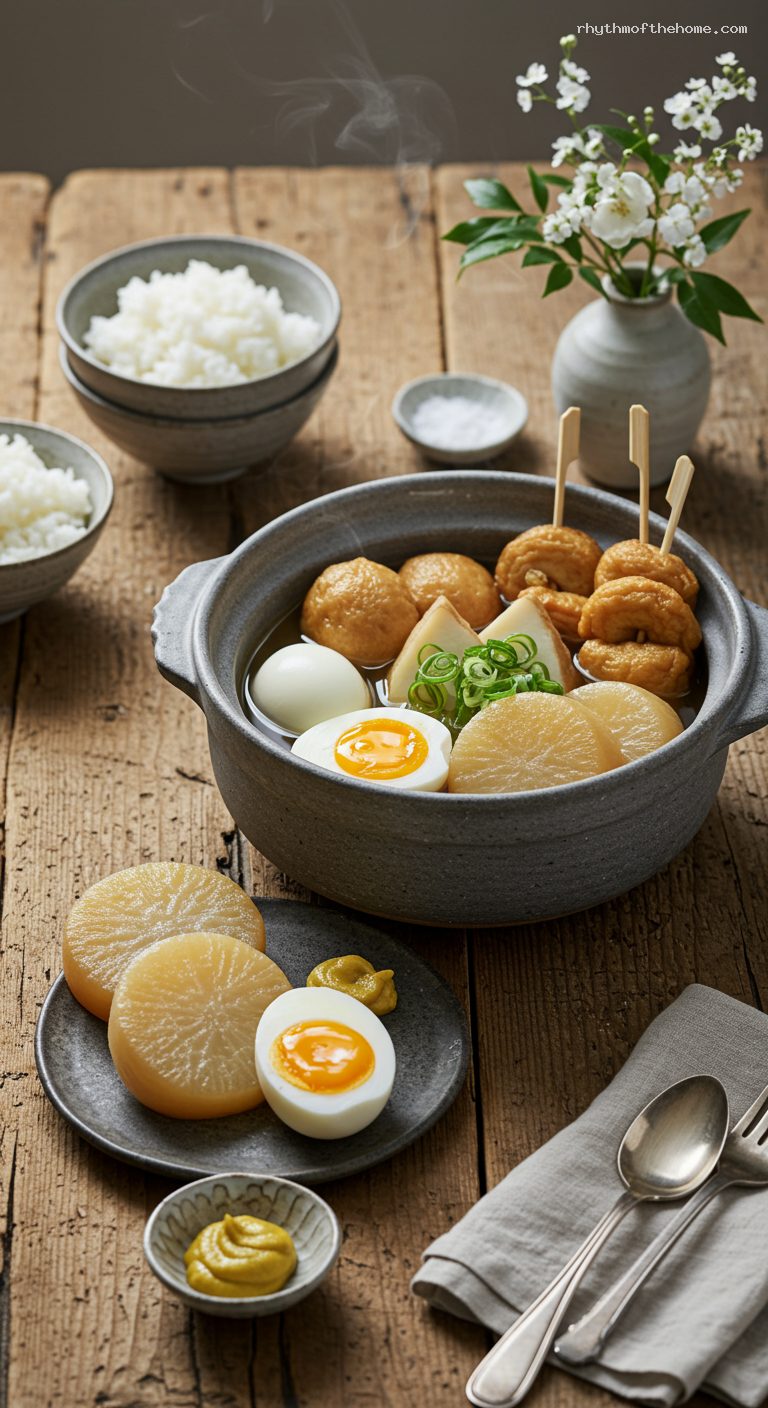
Quick Recipe Version (TL;DR)
Quick Ingredients
- 8 cups (1.9 L) water
- 15 g kombu (kelp)
- 20 g katsuobushi (bonito flakes)
- 3 tbsp light soy sauce (usukuchi)
- 3 tbsp mirin
- 2 tbsp sake
- 1 tsp sugar, 1/2 tsp fine salt
- 1 large daikon (about 600 g)
- 6 large eggs
- 1 block konnyaku (250 g)
- 4 sheets aburaage (fried tofu)
- 4 chikuwa sticks, 6 satsuma-age, 1 large hanpen
- Karashi (Japanese hot mustard), for serving
- 6 bowls cooked short-grain white rice
Do This
- 1. Make dashi: Soak kombu in 8 cups water 10 minutes, heat to 190°F/88°C, remove kombu, add katsuobushi; simmer 1 minute, steep 5 minutes, strain.
- 2. Season broth: Stir in soy, mirin, sake, sugar, and salt; keep at a gentle simmer (185–195°F / 85–90°C).
- 3. Prep daikon: Peel, cut into 1.25–1.5 in (3–4 cm) rounds, bevel edges; score a shallow X; parboil 20 minutes in water with 1 tbsp rice or rice-rinse water; drain.
- 4. Prep konnyaku/aburaage: Boil konnyaku 2 minutes, drain, score crosshatch and cut into triangles. Pour boiling water over aburaage, squeeze dry, cut each sheet in half into triangles.
- 5. Eggs: Boil 10 minutes, shock in ice water, peel.
- 6. Simmer base: Add daikon, konnyaku, and aburaage to broth; cover with a drop-lid if you have one; simmer 30 minutes.
- 7. Finish: Add chikuwa, satsuma-age, and eggs; simmer 20 minutes. Add hanpen for the final 5 minutes. Serve steaming with karashi and hot rice.
Why You’ll Love This Recipe
- Gentle, restaurant-clear dashi with deep flavor from kombu and bonito.
- Cozy, make-ahead friendly: the broth tastes even better the next day.
- Balanced textures: tender daikon, bouncy fish cakes, silky eggs, springy konnyaku, and plush tofu pouches.
- Weeknight-easy thanks to store-bought oden fish cakes and simple prep.
Grocery List
- Produce: Daikon, green onions (optional garnish), small strip of yuzu peel (optional)
- Dairy: Eggs
- Pantry: Kombu, katsuobushi, light soy sauce (usukuchi) or regular soy, mirin, sake, sugar, salt, konnyaku, aburaage (fried tofu sheets), chikuwa, satsuma-age, hanpen, karashi mustard, short-grain rice
Full Ingredients
Light Soy–Dashi Broth
- 8 cups (1.9 L) cold water
- 15 g kombu (about a 3 x 5 in/8 x 13 cm piece)
- 20 g katsuobushi (about 2 cups loosely packed)
- 3 tbsp light soy sauce (usukuchi); if using regular soy, start with 2 tbsp and adjust
- 3 tbsp mirin
- 2 tbsp sake
- 1 tsp sugar
- 1/2 tsp fine sea salt, plus more to taste
Oden Hot Pot Items
- 1 large daikon (about 600 g), peeled
- 6 large eggs
- 1 block konnyaku (250 g), rinsed
- 4 sheets aburaage (fried tofu), thawed if frozen
- 4 chikuwa sticks (about 200 g total)
- 6 satsuma-age (about 300 g total)
- 1 large hanpen (about 100 g)
To Serve
- Karashi (Japanese hot mustard), to taste
- Cooked short-grain white rice, 6 bowls (about 1.5 cups/285 g uncooked rice makes 6 modest bowls)
- Thinly sliced green onions or fine slivers of yuzu peel (optional garnish)
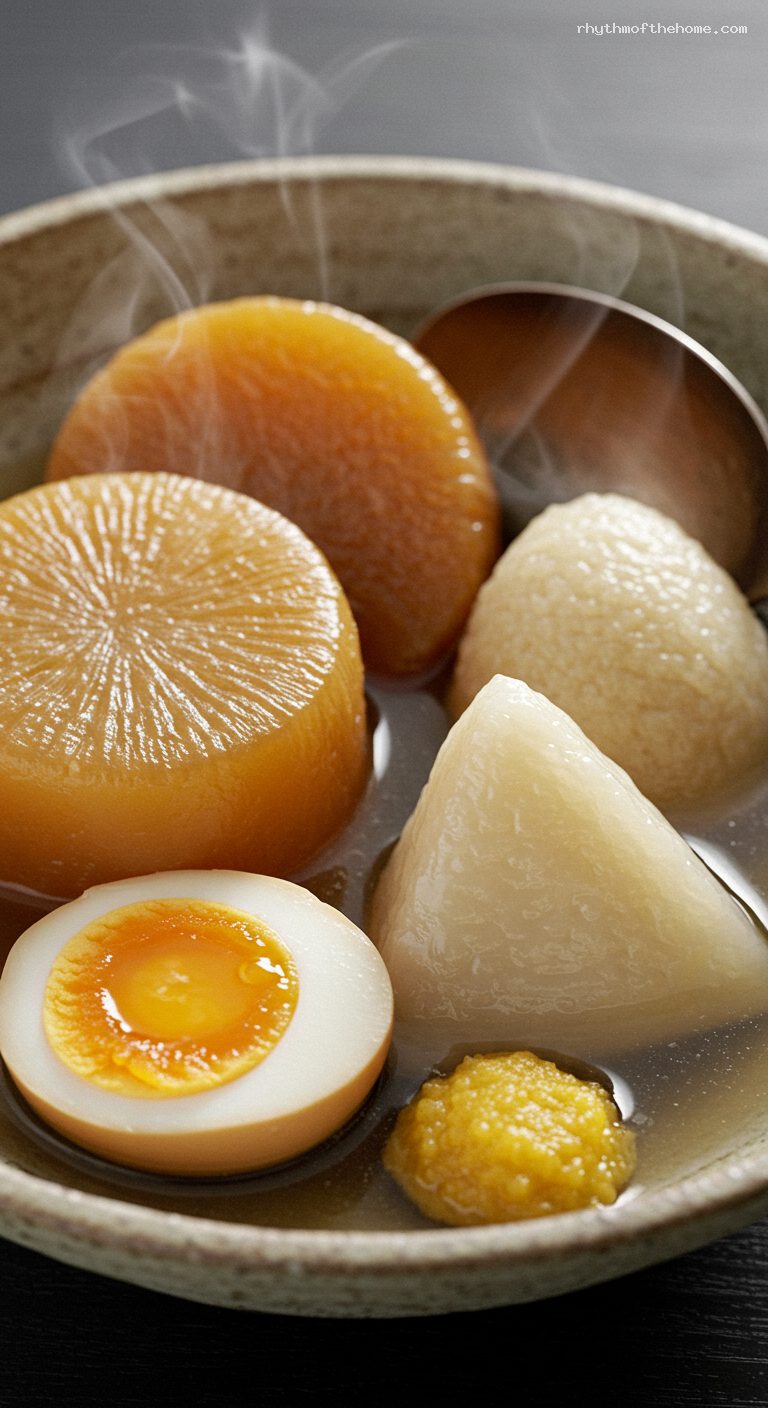
Step-by-Step Instructions
Step 1: Make clear, aromatic dashi
Combine the water and kombu in a medium pot and soak 10–15 minutes. Heat over medium until small bubbles appear around 190°F/88°C; do not boil. Remove the kombu. Add katsuobushi, simmer 1 minute, then turn off heat and steep 5 minutes. Strain through a fine mesh sieve or cheesecloth into a 4–5 qt (3.8–4.7 L) pot or donabe.
Step 2: Season the broth
Stir in light soy sauce, mirin, sake, sugar, and salt. Taste and adjust salt to a pleasant savoriness. Keep the broth at a gentle simmer (185–195°F / 85–90°C) while you prep the components.
Step 3: Prep and par-cook the daikon
Peel the daikon and cut into 1.25–1.5 in (3–4 cm) thick rounds. Bevel the edges (mentori) with a paring knife to prevent splitting. Score a shallow X on one face to help the broth penetrate. Place in a saucepan, cover with water and 1 tbsp uncooked rice (or rice-rinse water), bring to a gentle boil, and cook 20 minutes until a skewer meets slight resistance. Drain and rinse.
Step 4: Tame the konnyaku and prep tofu pouches
Bring a small pot of water to a boil. Add the konnyaku and boil 2 minutes to remove odor. Drain, pat dry, score a light crosshatch on both sides, and cut into triangles. For aburaage, pour boiling water over both sides to remove excess oil; squeeze gently, then cut each sheet in half to form 8 triangles. Secure with toothpicks if desired to keep their shape.
Step 5: Cook and peel the eggs
Lower eggs into boiling water and cook 10 minutes for firm yolks. Transfer immediately to an ice bath for 5 minutes, then peel. Keep at room temperature until needed.
Step 6: Build the oden and slow-simmer
Add the daikon, konnyaku, and aburaage to the seasoned dashi. Cover with a drop-lid (otoshibuta) or partially cover the pot. Maintain a gentle simmer at about 190°F/88°C for 30 minutes, skimming any foam to keep the broth clear.
Step 7: Finish with fish cakes and eggs, then serve
Add the chikuwa, satsuma-age, and peeled eggs. Simmer 20 minutes more so they absorb the broth. Add hanpen for the final 5 minutes only; it is delicate and will puff slightly. Taste the broth and adjust salt if needed. Ladle a bit of everything into warm bowls with plenty of broth. Serve steaming hot with a dab of karashi on the side and bowls of freshly cooked rice. Garnish with green onions or a whisper of yuzu peel if you like.
Pro Tips
- Gentle heat is key: keep the pot at a bare simmer to preserve a clear, clean broth and tender textures.
- Use a drop-lid (otoshibuta) or a round of parchment to keep ingredients submerged for even seasoning.
- Parboiling daikon in rice-rinse water softens fibers and removes bitterness, giving that signature translucent glow.
- Add fish cakes and hanpen later so they do not overcook or cloud the broth.
- For deeper flavor, cool the oden, chill overnight, then reheat gently the next day.
Variations
- Vegetarian Oden: Make a kombu–shiitake dashi (omit katsuobushi), and swap fish cakes for atsuage (thick fried tofu), ganmodoki, and more vegetables (taro, carrots, potatoes).
- Mochi-Kinchaku: Tuck half a small mochi rice cake into each aburaage triangle, secure with a toothpick, and simmer as directed.
- Seafood Deluxe: Add octopus chunks or crab legs; simmer 10–15 minutes, removing as soon as tender to avoid overcooking.
Storage & Make-Ahead
Refrigerate cooled oden (broth and solids submerged) for up to 4 days. The flavor improves on day two. Reheat slowly over low heat to a gentle simmer; avoid boiling. If the broth reduces, top up with a little hot water and adjust salt. Freezing is not recommended for fish cakes, eggs, or daikon due to texture changes.
Nutrition (per serving)
Approximate, including broth and toppings but not rice: 430–520 kcal; 26–32 g protein; 20–26 g fat; 30–38 g carbohydrates; 1,400–1,800 mg sodium. Add about 250–300 kcal per serving if enjoying a bowl of rice.

Leave a Reply