
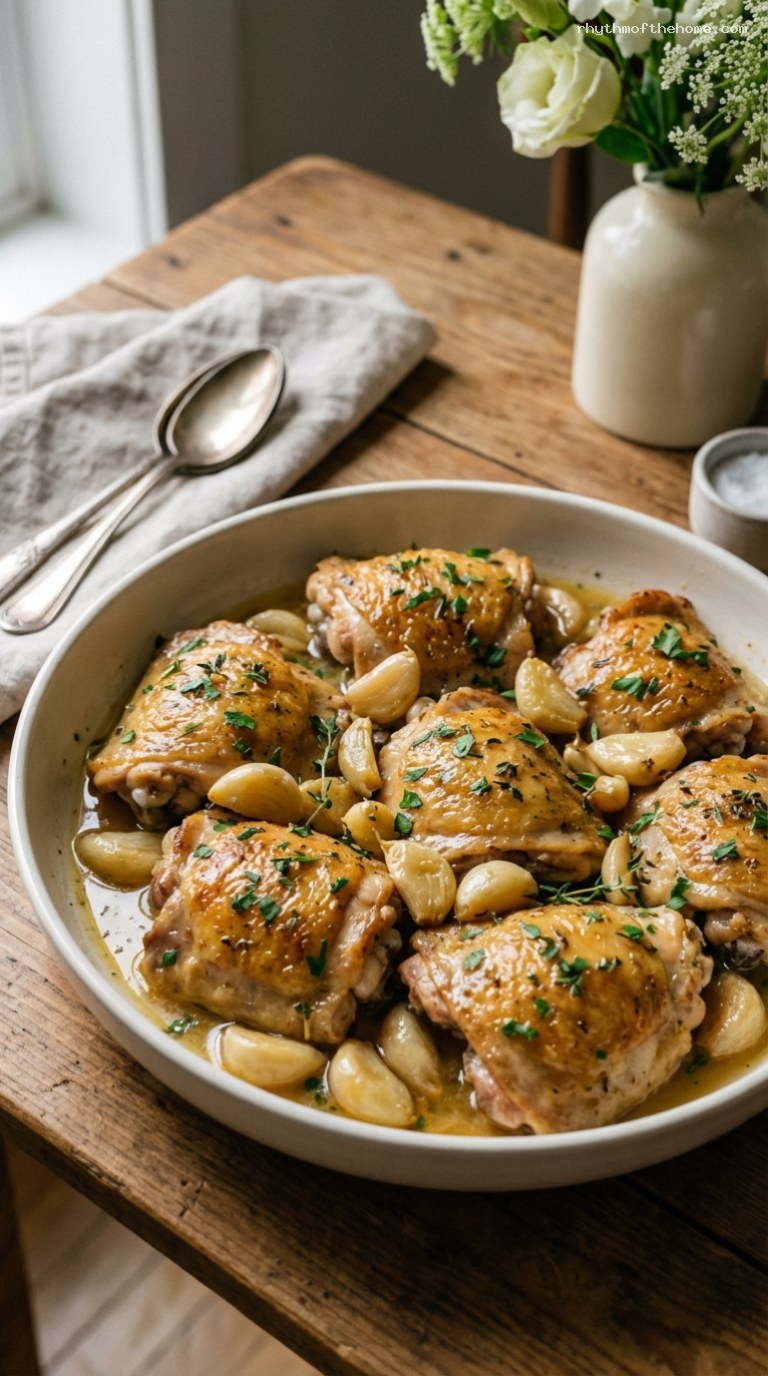
Quick Recipe Version (TL;DR)
Quick Ingredients
- 8 bone-in, skin-on chicken thighs (about 3 lb / 1.4 kg)
- 1 1/2 tsp kosher salt, 1 tsp black pepper
- 2 tbsp olive oil
- 2 tbsp unsalted butter
- 40 garlic cloves (about 3 heads), peeled
- 2 small shallots, thinly sliced (optional but tasty)
- 2 tbsp fresh thyme leaves or 2 tsp dried thyme
- 1 tsp finely chopped fresh rosemary or 1/2 tsp dried
- 1 bay leaf
- 1 cup (240 ml) dry white wine
- 1 cup (240 ml) low-sodium chicken broth
- 1/4 cup (60 ml) heavy cream (optional)
- 1 tbsp fresh lemon juice
- 2 tbsp chopped fresh parsley, for garnish
Do This
- 1. Heat oven to 325°F (165°C). Pat chicken dry and season all over with salt and pepper.
- 2. In a large oven-safe skillet or Dutch oven, brown chicken in olive oil and 1 tbsp butter, skin-side down first, until deeply golden. Remove to a plate.
- 3. Add remaining 1 tbsp butter, garlic cloves, and shallots. Cook until lightly golden and fragrant, 3–5 minutes.
- 4. Stir in thyme, rosemary, and bay leaf. Pour in white wine and simmer 2–3 minutes, scraping up browned bits.
- 5. Add chicken broth. Nestle chicken thighs back in, skin-side up. Bring to a gentle simmer, cover, and transfer to oven. Braise 40–45 minutes, until chicken is very tender.
- 6. Move pot back to stovetop. Transfer chicken to a warm plate. Discard bay leaf. Simmer sauce 5–10 minutes to reduce slightly, then stir in cream and lemon juice. Season to taste.
- 7. Return chicken to the pan or plate on a platter. Spoon the garlicky sauce and soft garlic cloves over top, sprinkle with parsley, and serve hot with crusty bread or mashed potatoes.
Why You’ll Love This Recipe
- The 40 cloves of garlic turn sweet, mellow, and spreadable, perfuming the whole dish without being harsh.
- Slow braising keeps the chicken thighs incredibly juicy, with beautifully crisp, golden skin.
- A white wine and herb sauce gives cozy French-bistro vibes, yet is easy enough for a weeknight.
- It is perfect for serving guests: rustic and homey, but feels special and luxurious.
Grocery List
- Produce: 3 heads garlic (40 cloves), 2 small shallots, fresh thyme, fresh rosemary, fresh parsley, 1 lemon
- Dairy: Unsalted butter, heavy cream (optional)
- Pantry: Bone-in, skin-on chicken thighs, olive oil, kosher salt, black pepper, bay leaf, dry white wine, low-sodium chicken broth
Full Ingredients
For the Chicken and Garlic
- 8 bone-in, skin-on chicken thighs (about 3 lb / 1.4 kg)
- 1 1/2 tsp kosher salt, plus more to taste
- 1 tsp freshly ground black pepper
- 2 tbsp olive oil
- 2 tbsp unsalted butter, divided
- 40 garlic cloves, peeled (about 3 medium heads of garlic)
- 2 small shallots, thinly sliced (or 1/2 medium yellow onion, thinly sliced)
- 2 tbsp fresh thyme leaves, lightly packed (or 2 tsp dried thyme)
- 1 tsp finely chopped fresh rosemary (or 1/2 tsp dried rosemary, crumbled)
- 1 bay leaf
- 1 cup (240 ml) dry white wine (such as Sauvignon Blanc, Pinot Grigio, or Chardonnay)
- 1 cup (240 ml) low-sodium chicken broth
For Finishing and Serving
- 1/4 cup (60 ml) heavy cream (optional, for a richer, silkier sauce)
- 1 tbsp freshly squeezed lemon juice (about 1/2 lemon), plus extra to taste
- 2 tbsp chopped fresh flat-leaf parsley, for garnish
- Crusty bread, mashed potatoes, rice, or polenta, for serving (optional but highly recommended)
Step-by-Step Instructions
Step 1: Prep the chicken and garlic
Pat the chicken thighs very dry with paper towels; this is important for getting the skin nicely browned and crisp. Sprinkle both sides evenly with the kosher salt and black pepper, and let them sit at room temperature for about 10–15 minutes while you prepare the other ingredients.
Peel the garlic cloves. You should end up with about 40 cloves; a little more or less is fine. If you want to save time, you can use pre-peeled garlic cloves from the store, but choose ones that are fresh and firm, not yellowed or sprouting. Slice the shallots (or onion), chop the herbs, and measure out the wine and broth so everything is ready to go once you start cooking.
Step 2: Brown the chicken
Preheat your oven to 325°F (165°C). Choose a large, heavy, oven-safe skillet or Dutch oven with a lid (at least 3.5–4 quarts). Place it over medium-high heat and add the olive oil and 1 tablespoon of the butter.
When the oil is hot and shimmering, place the chicken thighs in the pan skin-side down, working in batches if needed so you do not overcrowd the pan. Let them sear without moving for 6–8 minutes, until the skin is deep golden brown and crisp. Flip and cook the second side for 3–4 minutes more, just until lightly browned. Transfer the browned chicken to a plate and set aside. Do not wipe out the pan; you want to keep all those browned bits and flavored fat.
Step 3: Gently brown the garlic and shallots
Reduce the heat to medium. Add the remaining 1 tablespoon of butter to the same pan. When melted, add the peeled garlic cloves and sliced shallots. Stir to coat them in the fat, then spread them into an even layer.
Cook, stirring occasionally, for 3–5 minutes, until the garlic and shallots are lightly golden in spots and smell very fragrant. You want them to soften and pick up a little color, but not burn. If the pan seems too hot or anything starts to darken too quickly, reduce the heat. Stir in the thyme, rosemary, and bay leaf, and cook for about 30 seconds more to wake up the herbs.
Step 4: Deglaze with wine and add broth
Pour in the white wine and immediately use a wooden spoon to scrape up any browned bits stuck to the bottom of the pan; those bits add a ton of flavor to the sauce. Let the wine simmer briskly for 2–3 minutes, reducing slightly and cooking off the sharp alcohol smell.
Add the chicken broth and stir to combine. Bring the mixture back to a gentle simmer. Taste the liquid and add a pinch of salt if it seems under-seasoned, keeping in mind that it will concentrate slightly as it cooks.
Step 5: Nestle in the chicken and braise
Return the browned chicken thighs to the pan, placing them skin-side up in a single layer. Nestle them down into the garlic and shallots so that the meaty portions are submerged in the liquid but the skin is mostly above the surface; this helps the skin stay more crisp while the rest of the chicken braises and becomes tender.
Once the liquid is gently simmering again, cover the pan with its lid (or tightly with foil) and transfer it to the preheated oven. Braise for 40–45 minutes, until the chicken is very tender and registers at least 175°F (80°C) in the thickest part. Dark meat becomes more succulent at slightly higher temperatures than white meat, so do not worry if it goes a bit higher.
Step 6: Reduce and enrich the sauce
Carefully remove the pan from the oven and place it back on the stovetop over medium heat. Use tongs or a slotted spoon to transfer the chicken thighs to a warm plate or shallow serving dish, keeping the skin-side up. Loosely tent with foil to keep warm.
Discard the bay leaf. If you prefer a slightly thicker, more concentrated sauce, let the braising liquid simmer uncovered for 5–10 minutes, stirring occasionally, until it has reduced by about one-third. The garlic cloves should be very soft and creamy at this point.
Stir in the heavy cream (if using) and the lemon juice. Simmer for 1–2 minutes more to warm through. Taste and adjust seasoning with additional salt, pepper, or lemon juice as needed. The sauce should be rich, savory, and gently tangy, with sweet, mellow garlic flavor.
Step 7: Serve with all the garlic and sauce
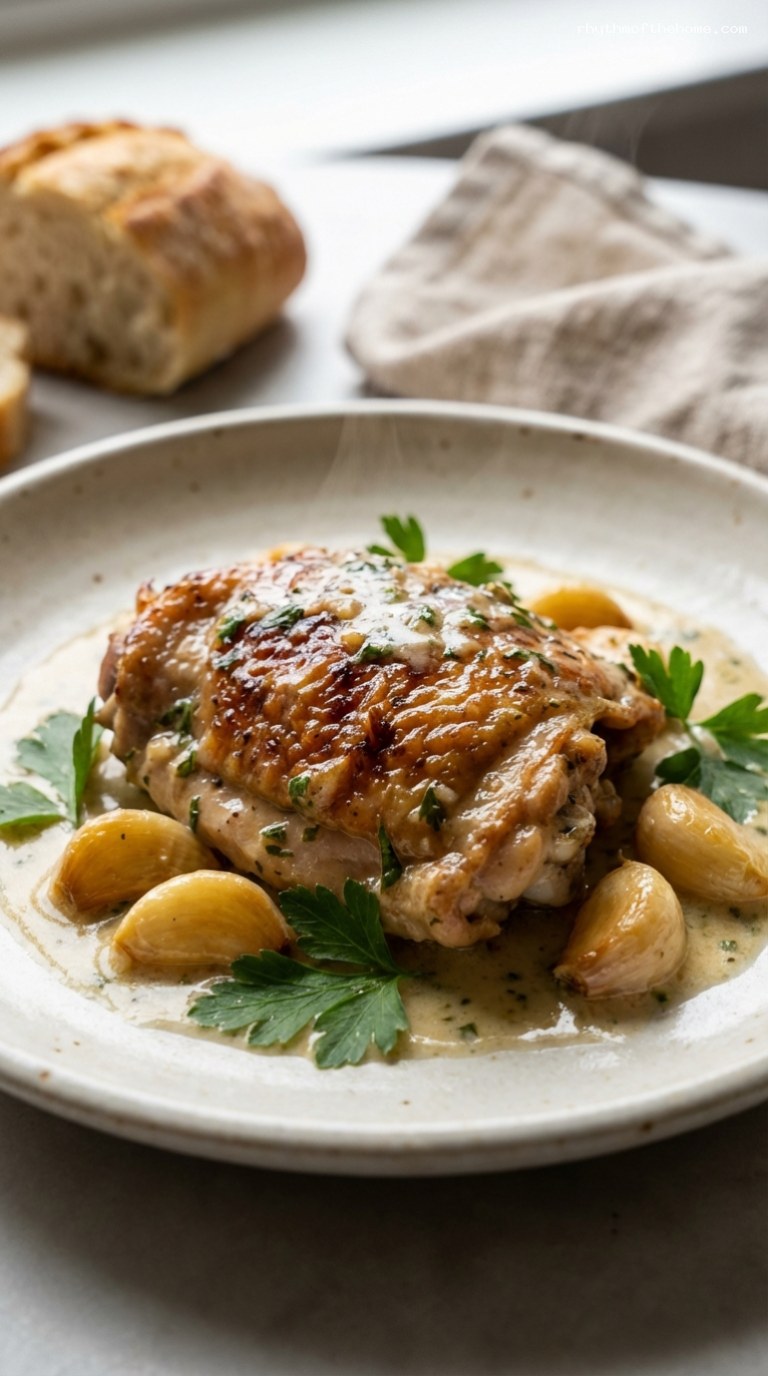
You can either return the chicken thighs to the pan of sauce and serve straight from the pot, or arrange the chicken on a warmed serving platter. Spoon the garlic cloves and creamy sauce generously over and around the chicken.
Scatter the chopped parsley over the top for a fresh, green finish. Serve hot, making sure everyone gets plenty of the soft, sweet garlic cloves in their portion. Encourage diners to spread the garlic onto crusty bread or mashed potatoes and drizzle with extra sauce. This dish pairs beautifully with a green salad, roasted vegetables, or simple buttered noodles.
Pro Tips
- Use bone-in, skin-on thighs: They stay juicier during long cooking and contribute more flavor to the sauce than boneless, skinless pieces.
- Do not rush the browning: Deeply browned chicken and lightly caramelized garlic are key to a rich, layered flavor. Let them take on color without burning.
- Buy pre-peeled garlic to save time: If peeling 40 cloves feels like too much, good-quality pre-peeled garlic works well. Rinse and pat dry before cooking.
- Control the salt: Use low-sodium broth so the sauce does not end up too salty as it reduces. Adjust seasoning at the very end.
- Oven-free option: If you prefer, you can braise entirely on the stovetop at a very gentle simmer, covered, for the same amount of time. Just keep the heat low so the bottom does not scorch.
Variations
- Extra-creamy version: Increase the heavy cream to 1/2 cup and stir in 1–2 teaspoons of Dijon mustard at the end for a slightly tangy, velvety sauce.
- Herb and lemon twist: Add strips of lemon zest and a few sprigs of fresh tarragon or sage to the pot before braising for a brighter, more herbal flavor.
- Root vegetable braise: Add 2 cups of 1-inch chunks of carrots and parsnips to the pan along with the garlic. They will cook in the sauce and turn sweet and tender by the time the chicken is done.
Storage & Make-Ahead
Let leftovers cool to room temperature, then transfer the chicken, garlic cloves, and sauce to an airtight container. Refrigerate for up to 3 days. Reheat gently in a covered skillet over low heat, adding a splash of water or broth if the sauce has thickened too much. The flavors often deepen and improve by the next day, so this is an excellent make-ahead dish for entertaining.
For longer storage, you can freeze the chicken and sauce together for up to 2 months. Thaw overnight in the refrigerator, then reheat slowly on the stovetop until warmed through. The sauce may separate slightly if it contains cream, but a gentle whisking as it reheats usually brings it back together.
Nutrition (per serving)
Approximate values for 1 of 4 servings (without bread or sides): about 610 calories; 42 g fat (15 g saturated); 7 g carbohydrates; 1 g fiber; 2 g sugar; 45 g protein; 420 mg sodium. Adding cream will increase the fat and calorie content slightly.

Leave a Reply