
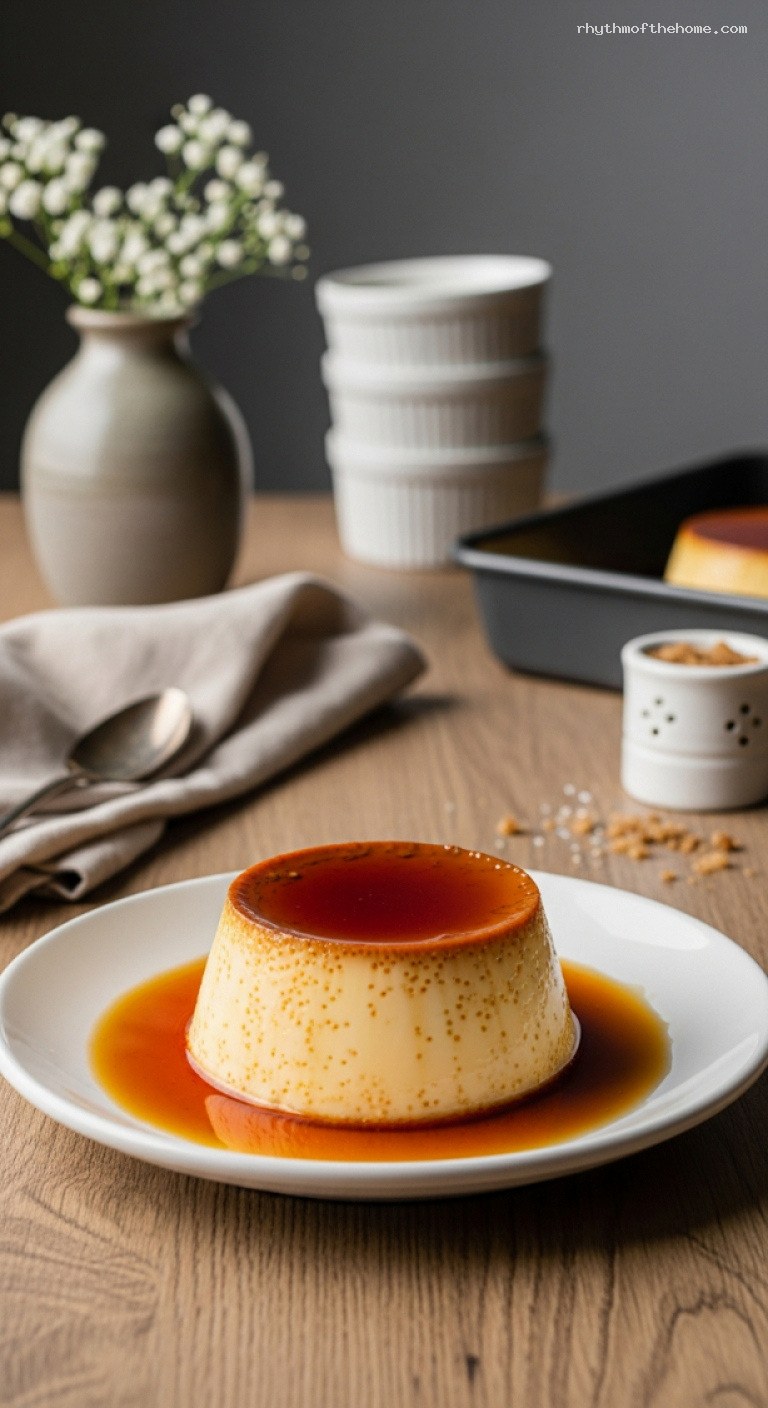
Quick Recipe Version (TL;DR)
Quick Ingredients
- 1 cup (200 g) granulated sugar (for caramel)
- 1/4 cup (60 ml) water (for caramel)
- 2 cups (480 ml) whole milk
- 1 cup (240 ml) heavy cream
- 1/2 cup (100 g) granulated sugar (for custard)
- 4 large eggs + 2 large egg yolks
- 2 tsp vanilla extract (or seeds from 1 vanilla bean)
- Pinch fine salt
Do This
- 1. Preheat oven to 300°F (150°C). Place 6 ramekins in a deep roasting pan.
- 2. Cook 1 cup sugar with 1/4 cup water until deep amber; immediately divide caramel among ramekins.
- 3. Gently heat milk and cream with vanilla until steaming, not boiling.
- 4. Whisk eggs, yolks, 1/2 cup sugar, and salt; slowly whisk in warm milk mixture to make custard.
- 5. Strain custard, skim foam, and pour into caramel-lined ramekins.
- 6. Pour hot tap water into pan to reach halfway up ramekins; bake 35–45 minutes until just set with a slight jiggle.
- 7. Cool, then chill at least 4 hours; loosen edges and invert onto plates to serve.
Why You’ll Love This Recipe
- Ultra-silky custard with a perfectly smooth texture, thanks to a gentle water bath.
- Deep amber caramel that melts into a glossy sauce when you turn the custards out.
- Elegant enough for dinner parties, but simple and budget-friendly for any night.
- Make-ahead friendly: prepare the day before and just unmold when you are ready to serve.
Grocery List
- Produce: Fresh berries and mint leaves for garnish (optional)
- Dairy: Whole milk, heavy cream, large eggs
- Pantry: Granulated sugar, vanilla extract (or vanilla bean), fine salt
Full Ingredients
For the Caramel
- 1 cup (200 g) granulated sugar
- 1/4 cup (60 ml) water
For the Custard
- 2 cups (480 ml) whole milk
- 1 cup (240 ml) heavy cream
- 1/2 cup (100 g) granulated sugar
- 4 large eggs
- 2 large egg yolks
- 2 tsp vanilla extract or seeds scraped from 1 vanilla bean
- 1/8 tsp fine salt
Optional Garnishes
- Fresh berries (such as raspberries or sliced strawberries)
- Small mint leaves
Step-by-Step Instructions
Step 1: Prepare the oven and equipment
Preheat your oven to 300°F (150°C). Place six 6-ounce (about 175 ml) ramekins in a deep roasting pan or baking dish with high sides. Make sure there is enough room around each ramekin for water to flow; this is important for an even water bath.
Put a full kettle of water on to heat, or plan to use very hot tap water. You will need enough to come about halfway up the sides of the ramekins once they are filled. Have a fine-mesh strainer and a large heatproof jug or bowl ready for the custard later.
Step 2: Make the deep amber caramel
In a medium, light-colored saucepan (so you can see the color change), combine the 1 cup (200 g) sugar and 1/4 cup (60 ml) water. Stir gently just until all the sugar is moistened. Place the pan over medium heat and bring to a simmer without stirring further. If sugar crystals form on the sides, you can brush them down with a wet pastry brush.
Let the syrup bubble gently, swirling the pan occasionally, until it turns a deep amber color, 8–12 minutes depending on your stove and pan. Watch closely once it starts to turn golden; it can burn quickly. When it reaches a rich, reddish-amber color and smells pleasantly toasty (not burnt), immediately remove from the heat.
Working quickly and carefully (the caramel is extremely hot), divide the caramel among the ramekins, pouring an even layer into the bottom of each. Tilt and swirl each ramekin so the bottom is fully coated. Set the pan of caramel-lined ramekins aside to cool while you make the custard. The caramel will harden; that is exactly what you want.
Step 3: Heat the milk, cream, and vanilla
In a medium saucepan, combine the whole milk and heavy cream. Add the vanilla extract, or scrape the seeds from a vanilla bean into the pan and add the pod as well. Warm over medium-low heat, stirring occasionally, until the mixture is steaming and small bubbles appear around the edges, 5–8 minutes. Do not let it boil.
Once heated, remove the pan from the heat and discard the vanilla pod if using. Let the mixture sit for 2–3 minutes to cool slightly. This gentle heating infuses the dairy with vanilla and helps the sugar dissolve smoothly later.
Step 4: Whisk the eggs and sugar, then temper with warm dairy
In a large mixing bowl, whisk together the 4 whole eggs, 2 egg yolks, 1/2 cup (100 g) sugar, and the salt until the mixture is smooth and slightly lightened, about 30–60 seconds. You do not want to incorporate a lot of air; whisk just until everything is well blended.
Slowly pour the warm milk and cream mixture into the egg mixture in a thin stream while whisking continuously. This process is called tempering and prevents the eggs from scrambling. Once about half of the hot liquid is incorporated, you can add the rest a bit more quickly, still whisking gently.
When all the dairy is combined with the eggs, you should have a smooth, pale custard base. Tap the bowl lightly on the counter to release any large air bubbles.
Step 5: Strain, skim, and fill the ramekins
Place a fine-mesh strainer over a large heatproof jug or bowl and pour the custard through it. Straining removes any tiny bits of cooked egg or chalazae and helps ensure an ultra-silky texture.
If there is a layer of foam on top of the custard, skim it off gently with a spoon; this reduces bubbles on the surface of the baked custard. Carefully pour the strained custard into the caramel-lined ramekins, dividing it evenly. Leave a little space at the top of each ramekin.
Gently tap the roasting pan on the counter once or twice to pop any remaining surface bubbles.
Step 6: Bake gently in a water bath
Place the roasting pan with the filled ramekins on the middle oven rack. Carefully pour hot tap water (or recently boiled water that has cooled for a minute) into the roasting pan, avoiding splashes into the custard. The water should come about halfway up the sides of the ramekins.
Bake at 300°F (150°C) for 35–45 minutes. Check starting at 30 minutes. The custards are done when the edges are set but the centers still wobble slightly like soft gelatin when you gently jiggle a ramekin. If you insert an instant-read thermometer into the center, it should read about 175–180°F (80–82°C).
Carefully remove the roasting pan from the oven. Using tongs or thick oven mitts, lift the ramekins out of the water and place them on a cooling rack. Let them cool to room temperature, about 45–60 minutes.
Step 7: Chill thoroughly, then unmold and serve
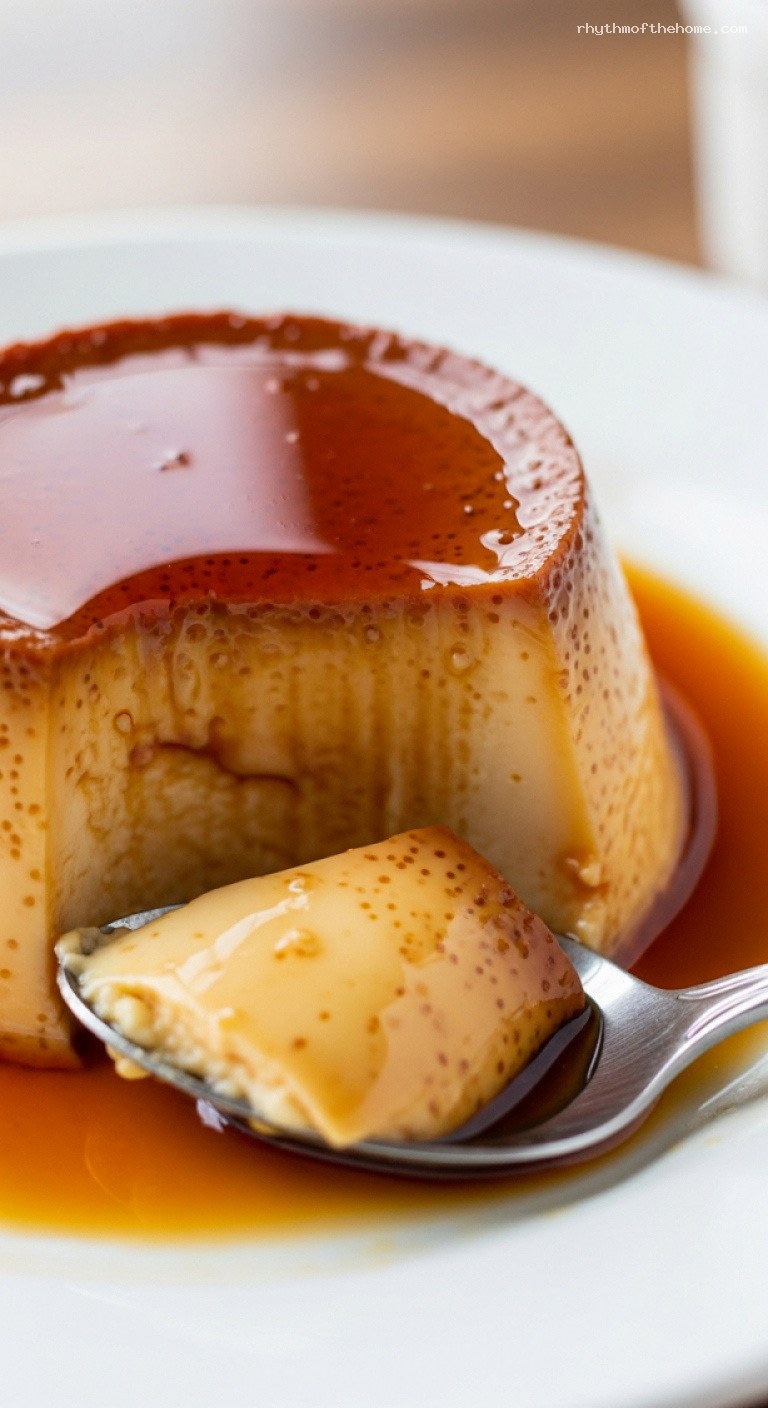
Once the ramekins have cooled to room temperature, cover each one with plastic wrap and refrigerate until completely chilled and set, at least 4 hours and preferably overnight. During this time, the hardened caramel will slowly dissolve into a beautiful sauce.
To unmold, run a thin knife around the inside edge of a ramekin to loosen the custard. Place a dessert plate upside down over the top of the ramekin, then quickly invert the two together. Gently lift off the ramekin; the crème caramel should slide out, and the caramel sauce will flow over and around it.
Spoon any remaining caramel sauce from the ramekin onto the custard. Garnish with a few fresh berries and tiny mint leaves if you like. Serve well chilled.
Pro Tips
- Watch the caramel closely: The difference between deep amber and burnt is less than a minute. If it smells acrid or very dark, start over for the best flavor.
- Do not overbake: Custard that bakes too long will become grainy. Take it out while the center still has a gentle wobble; it will firm up as it cools.
- Strain for silkiness: Straining the custard base is a simple step that makes the texture restaurant-smooth with no tiny lumps.
- Avoid bubbles: Whisk gently (do not whip) and skim foam before baking. Tapping the pan on the counter helps remove trapped air.
- Use a light-colored pan for caramel: It is much easier to judge color in stainless steel or light aluminum than in a dark nonstick pan.
Variations
- Coffee Crème Caramel: Stir 2 tsp instant espresso powder into the hot milk and cream, or replace 1/2 cup (120 ml) of the milk with strong brewed coffee. This adds a gentle, aromatic coffee flavor that pairs beautifully with caramel.
- Citrus Vanilla: Add 1–2 tsp finely grated orange or lemon zest to the warm milk and cream and let it steep for 10 minutes before straining and proceeding. The bright citrus notes lighten the dessert.
- Coconut Twist: Replace 1 cup (240 ml) of the whole milk with full-fat coconut milk. The result is slightly richer with a subtle coconut aroma that feels tropical but still classic.
Storage & Make-Ahead
Crème caramel is an ideal make-ahead dessert. Once cooled to room temperature, cover each ramekin tightly and refrigerate for up to 3 days. The caramel will continue to soften and turn more syrupy as it sits. Do not freeze, as freezing damages the delicate custard texture. For serving, unmold the custards straight from the fridge so they keep their shape nicely. If a bit of caramel seems stuck in the ramekin, warm the bottom briefly in your hands or dip the ramekin in warm water for 5–10 seconds before inverting.
Nutrition (per serving)
Approximate values per serving (1 of 6): about 460 calories; 9 g protein; 47 g carbohydrates; 27 g fat; 1 g fiber; 45 g sugars. These numbers are estimates and will vary based on exact ingredients, serving size, and how much caramel sauce you eat.

Leave a Reply