
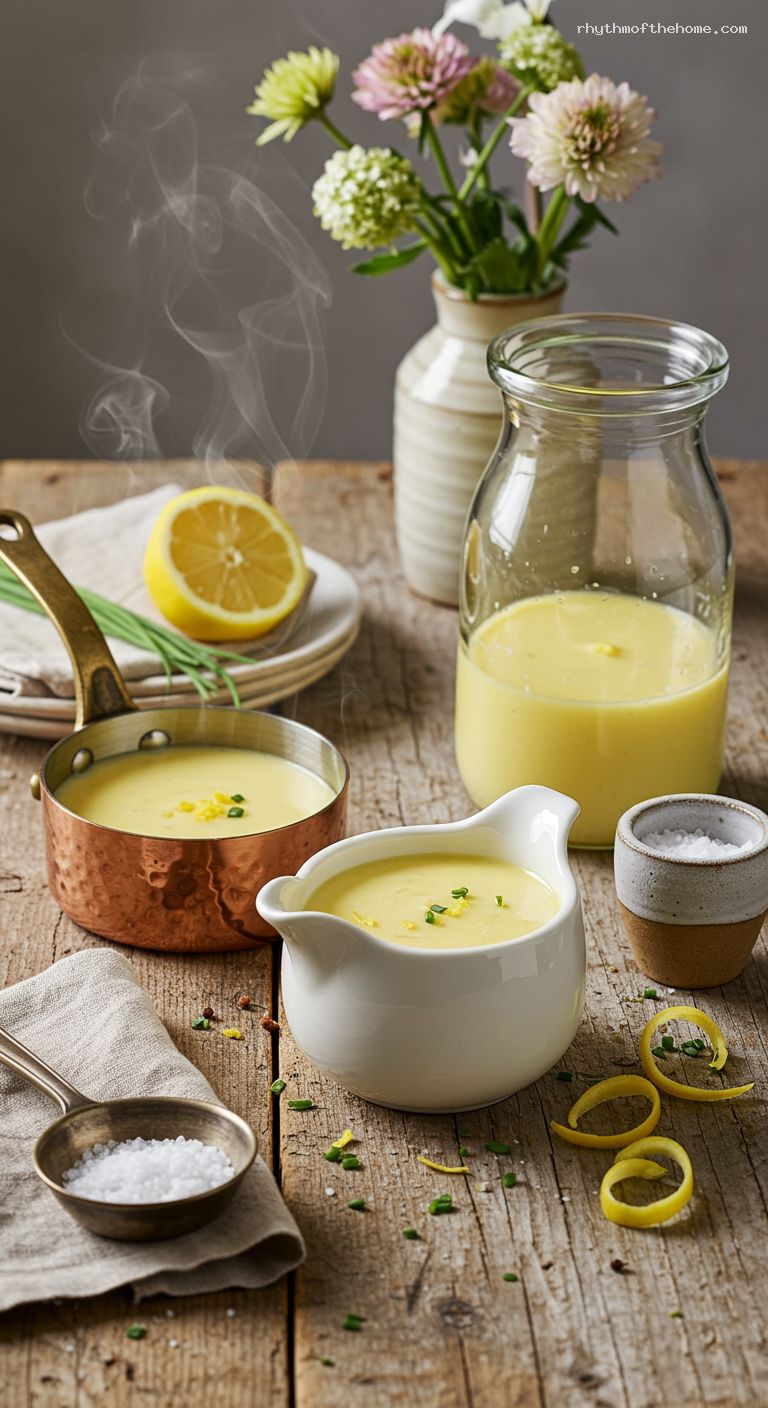
Quick Recipe Version (TL;DR)
Quick Ingredients
- 1/2 cup (120 ml) dry white wine
- 2 tbsp (30 ml) white wine vinegar
- 1/4 cup (35 g) finely minced shallots
- 12 tbsp (170 g) cold unsalted butter, cut in 1/2-inch cubes
- 1 to 2 tsp fresh lemon juice
- 1/4 tsp fine sea salt, plus more to taste
- Pinch white pepper (optional)
- 1 tbsp heavy cream (optional, for extra stability)
Do This
- 1. Chill butter cubes until very cold. Mince shallots finely.
- 2. Simmer wine, vinegar, and shallots over medium heat until reduced to 2 tbsp, 5 to 7 minutes.
- 3. Optional: Stir in cream and simmer 15 seconds; strain for smooth sauce or keep shallots for rustic texture.
- 4. Off heat, whisk in 2 to 3 butter cubes until melted and creamy.
- 5. Add remaining butter a few cubes at a time, whisking constantly; return to low heat briefly only as needed to keep warm (120 to 140°F / 49 to 60°C).
- 6. Whisk in lemon juice, salt, and white pepper. Serve warm; do not boil.
Why You’ll Love This Recipe
- Silky, glossy, restaurant-quality sauce that comes together in under 25 minutes.
- Balanced acidity from wine and vinegar with a delicate butter richness.
- Flexible texture: strain for smooth elegance or keep shallots for a rustic finish.
- Holds gently for service and can be rescued if it starts to separate.
Grocery List
- Produce: Shallots, lemons
- Dairy: Unsalted butter, heavy cream (optional)
- Pantry: Dry white wine, white wine vinegar, fine sea salt, white pepper (optional)
Full Ingredients
Beurre Blanc
- 1/2 cup (120 ml) dry white wine (Sauvignon Blanc or Pinot Grigio)
- 2 tbsp (30 ml) white wine vinegar
- 1/4 cup (35 g) finely minced shallots
- 12 tbsp (170 g) unsalted butter, very cold, cut into 1/2-inch cubes
- 1 to 2 tsp fresh lemon juice, to taste
- 1/4 tsp fine sea salt, plus more to taste
- Pinch white pepper (optional)
- 1 tbsp heavy cream (optional but helpful for stability)
Step-by-Step Instructions
Step 1: Prep and chill your butter
Cut the unsalted butter into 1/2-inch cubes and keep it refrigerated (or briefly in the freezer for 5 to 10 minutes). Cold butter is essential—its gradual melting is what forms a stable emulsion.
Step 2: Make the wine–shallot reduction
In a small light-colored saucepan, combine the white wine, white wine vinegar, and minced shallots. Bring to a lively simmer over medium heat and cook until almost dry, with about 2 tablespoons of liquid remaining, 5 to 7 minutes. Do not brown the shallots; adjust heat as needed.
Step 3: Optional smoothing step
If using heavy cream, stir it into the reduction and simmer for 15 seconds. For a smooth sauce, strain the reduction through a fine-mesh sieve into a clean saucepan, pressing on the solids; for a more rustic sauce, skip straining and keep the shallots in.
Step 4: Start the emulsion off the heat
Remove the pan from heat. Whisk in 2 to 3 cubes of cold butter until fully melted and creamy. This jumpstarts the emulsion at a safe temperature (ideally 120 to 130°F / 49 to 54°C).
Step 5: Build the sauce gradually
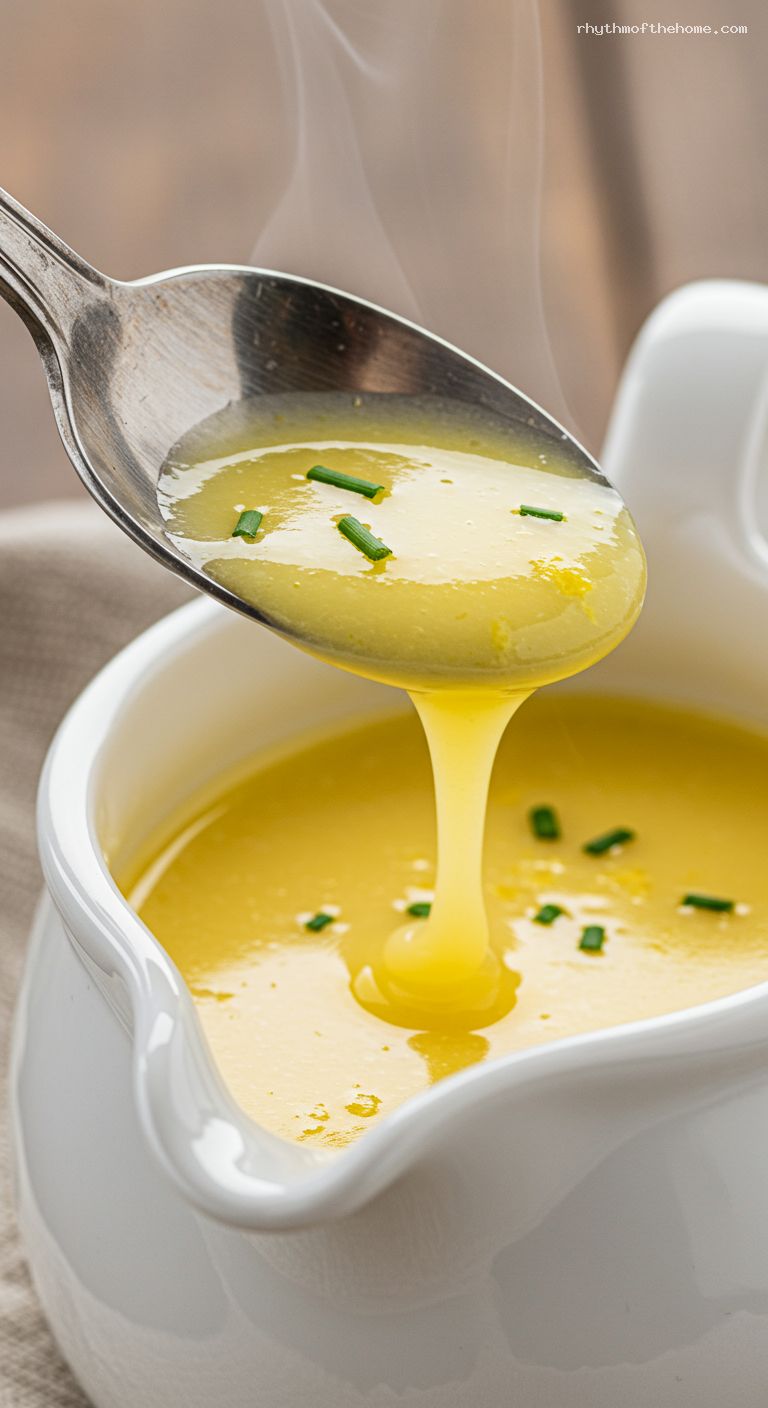
Continue adding butter 2 to 3 cubes at a time, whisking constantly. If the pan cools too much to melt the butter, briefly return it to the lowest heat, then take it off again. Keep the sauce warm but never hot—stay below 140°F (60°C) to prevent breaking. The sauce should become pale, thick, and glossy after 5 to 7 minutes.
Step 6: Season and balance
Whisk in 1 to 2 teaspoons lemon juice, 1/4 teaspoon salt, and a pinch of white pepper (if using). Taste and adjust acidity and salt to preference. If the sauce is too thick, whisk in 1 to 2 teaspoons warm water; if too thin, whisk in another cold butter cube.
Step 7: Hold and serve
Hold the beurre blanc warm (110 to 130°F / 43 to 54°C) for up to 30 minutes in a warm spot or insulated container, stirring occasionally. Do not boil. If it starts to separate, whisk in 1 tablespoon cold water or a cold butter cube to bring it back.
Pro Tips
- Use a light-colored saucepan so you can see the reduction and prevent browning.
- Cold butter is non-negotiable—chill the cubes well for a stable emulsion.
- Keep it warm, not hot: aim for 120 to 140°F (49 to 60°C). Heat is the main reason beurre blanc breaks.
- For extra insurance, add 1 tablespoon heavy cream to the reduction before mounting with butter.
- Choose a crisp, dry white wine; avoid oaky wines, which can taste heavy or bitter when reduced.
Variations
- Citrus Beurre Blanc: Replace lemon juice with a mix of lemon and orange juice (1 tsp each). Finish with a little grated lemon zest.
- Herb Beurre Blanc: Stir in 1 to 2 tablespoons finely chopped chives, tarragon, or parsley at the end for a fresh, green note.
- Champagne Beurre Blanc: Use dry Champagne in place of still wine for a brighter, more delicate aroma.
Storage & Make-Ahead
Beurre blanc is best made close to serving time. You can hold it for up to 30 to 45 minutes in a warm place (110 to 130°F / 43 to 54°C), such as an insulated mug or thermos. If it thickens, whisk in a teaspoon of warm water. Refrigeration is not ideal, but leftovers can be stored up to 2 days. Reheat very gently over low heat with a splash of water, whisking constantly; if it separates, whisk in a cold butter cube to re-emulsify. Freezing is not recommended.
Nutrition (per serving)
Approximate for 2 tablespoons: 170 calories; 17 g fat (10.5 g saturated); 1 g carbohydrates; 0 g protein; 70 mg sodium. Values will vary based on salt and exact ingredients.

Leave a Reply