
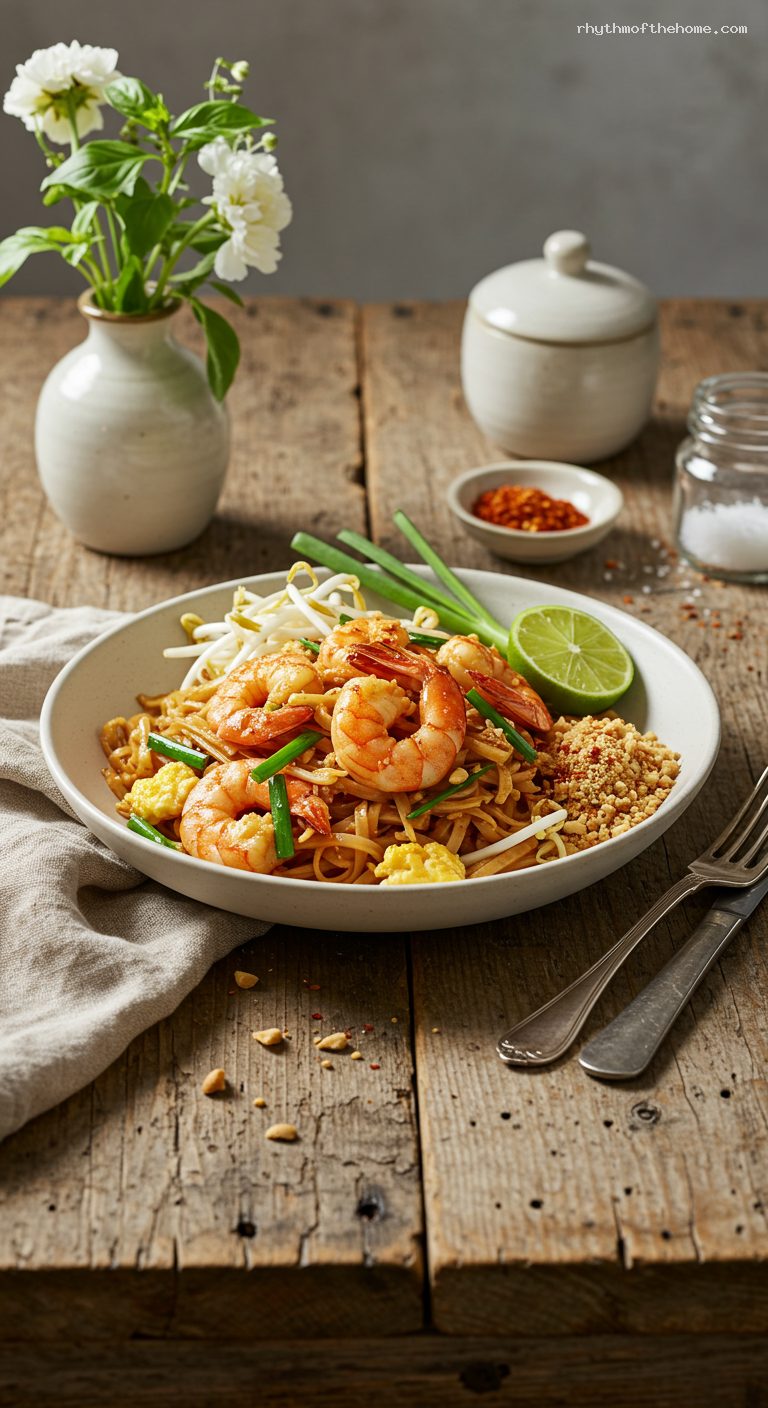
Quick Recipe Version (TL;DR)
Quick Ingredients
- 8 oz dried flat rice noodles (3 mm/Pad Thai width)
- 10 oz large shrimp (16/20), peeled and deveined
- 2 large eggs
- 1 cup bean sprouts, plus extra to serve
- 3 oz garlic chives (about 1 cup), cut into 1.5-inch batons
- 3 cloves garlic, minced; 1 small shallot, thinly sliced
- 1 tbsp preserved salted radish, chopped (optional)
- 2–3 tbsp neutral oil (peanut, canola, or rice bran)
- 1/4 cup roasted unsalted peanuts, roughly chopped
- 1 lime, cut into wedges
- 1/2–1 tsp Thai chili powder or red pepper flakes
- Sauce (make once): 3 tbsp tamarind concentrate, 3 tbsp fish sauce, 3 tbsp palm sugar, 2–3 tbsp water
Do This
- 1) Soak noodles in very hot tap water 20–30 minutes until pliable but not mushy; drain well.
- 2) Simmer sauce ingredients 2–3 minutes until the sugar dissolves; keep warm.
- 3) Heat a wok over medium-high until lightly smoking (425–500°F surface). Add 1 tbsp oil; sear shrimp 60–90 seconds total until just opaque; remove.
- 4) Add 1 tbsp oil; stir-fry garlic, shallot, and salted radish 20–30 seconds.
- 5) Add noodles plus 5 tbsp sauce; toss 2–3 minutes until glossy and nearly tender. Splash in 1–2 tbsp water if dry.
- 6) Push noodles aside; add 1 tsp oil and scramble eggs 30–45 seconds. Fold in eggs, shrimp, half the sprouts and chives; add more sauce to taste.
- 7) Plate; top with peanuts, remaining sprouts and chives, a pinch of chili powder, and lime wedges. Serve immediately.
Why You’ll Love This Recipe
- Balanced, restaurant-style Pad Thai sauce that’s tangy, sweet, and savory in harmony.
- Fast weeknight stir-fry: dinner on the table in 30 minutes.
- Home-wok friendly technique with clear cues for heat, timing, and texture.
- Customizable heat and garnishes so everyone gets their perfect bite.
Grocery List
- Produce: Garlic, shallot, garlic chives, bean sprouts, lime
- Dairy: Eggs
- Pantry: Dried rice noodles, fish sauce, tamarind concentrate, palm sugar (or light brown sugar), neutral oil, roasted peanuts, Thai chili powder/red pepper flakes, preserved salted radish (optional)
Full Ingredients
Noodles & Sauce
- 8 oz dried flat rice noodles (about 3 mm wide)
- 3 tbsp tamarind concentrate (Thai style; not sweetened drink)
- 3 tbsp fish sauce
- 3 tbsp palm sugar (or firmly packed light brown sugar)
- 2–3 tbsp water (to loosen the sauce)
Protein
- 10 oz large shrimp (16/20 count), peeled and deveined, tails on or off
- 2 large eggs
Vegetables & Aromatics
- 3 cloves garlic, minced
- 1 small shallot, thinly sliced
- 1 tbsp preserved salted radish, rinsed and finely chopped (optional but classic)
- 3 oz garlic chives, cut into 1.5-inch batons (about 1 cup)
- 1 cup bean sprouts, plus extra to serve
Garnish & Pantry
- 2–3 tbsp neutral oil (peanut, canola, or rice bran), divided
- 1/4 cup roasted unsalted peanuts, roughly chopped
- 1 lime, cut into wedges
- 1/2–1 tsp Thai chili powder or red pepper flakes, to taste
- Pinch white pepper (optional)
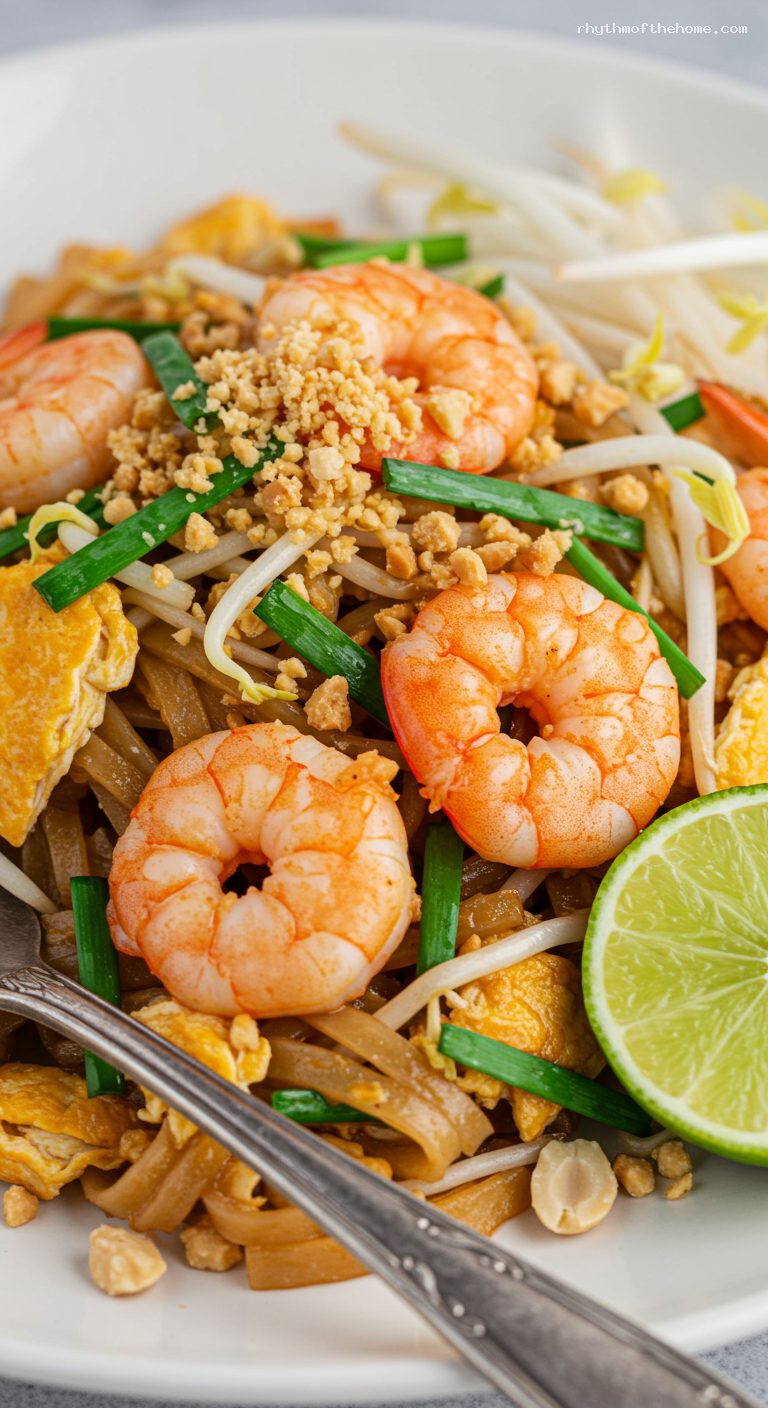
Step-by-Step Instructions
Step 1: Soak the rice noodles
Place the dried rice noodles in a large bowl and cover with very hot tap water. Soak for 20–30 minutes until the strands are pliable, flexible, and turn opaque white, but still have a firm core. Drain well and set aside. If they begin to clump, toss with 1–2 teaspoons of oil.
Step 2: Make the tamarind sauce
In a small saucepan over low heat, combine tamarind concentrate, fish sauce, palm sugar, and 2 tablespoons water. Simmer gently, stirring, for 2–3 minutes until the sugar fully dissolves and the sauce is syrupy but pourable. Add up to 1 more tablespoon water if it seems too thick. Keep warm. Taste for balance: add a touch more sugar if too sour, a splash of water if too salty, or a bit more tamarind if too sweet.
Step 3: Prep the shrimp and aromatics
Pat the shrimp very dry and season lightly with a pinch of salt and white pepper (if using). Mince the garlic, slice the shallot, chop the salted radish, and cut the garlic chives. Have bean sprouts rinsed and drained. Keep everything near the stove—Pad Thai moves quickly once the wok is hot.
Step 4: Heat the wok and sear the shrimp
Set a carbon steel wok or large skillet over medium-high heat until lightly smoking; aim for a surface temperature of about 425–500°F if using an infrared thermometer. Add 1 tablespoon oil and swirl. Sear shrimp 60–90 seconds total, just until they curl and turn opaque (about 120°F internal). Transfer to a plate; they will finish cooking later.
Step 5: Build flavor with aromatics and noodles
Return the wok to heat and add 1 tablespoon oil. Stir-fry garlic, shallot, and salted radish for 20–30 seconds until fragrant. Add drained noodles and 5 tablespoons of the warm sauce. Toss continuously with a wok spatula for 2–3 minutes until the noodles look glossy and begin to turn translucent. If the wok dries out, splash in 1–2 tablespoons water to keep things moving without sticking.
Step 6: Add the egg, shrimp, and greens
Push noodles to one side. Add 1 teaspoon oil to the cleared space and pour in the beaten eggs. Scramble just to soft curds, about 30–45 seconds, then fold into the noodles. Return shrimp to the pan along with half the bean sprouts and half the garlic chives. Add 1–3 more tablespoons sauce, to taste, and toss for 30–60 seconds until everything is hot and the noodles are tender with a slight chew.
Step 7: Garnish and serve immediately
Transfer to warm plates. Top with chopped peanuts, the remaining bean sprouts and garlic chives, and a light pinch of Thai chili powder. Serve with lime wedges for squeezing at the table. Pad Thai is best enjoyed right away while the noodles are bouncy and the sprouts are crisp.
Pro Tips
- Soak, don’t boil: Hot-water soaking preserves the noodles’ springy chew and prevents mushiness.
- Work hot and fast: A lightly smoking wok (425–500°F) gives you sizzle without sogginess.
- Keep the sauce warm: Warm syrupy sauce coats noodles evenly; cold sauce can seize and make sticking more likely.
- Cook in batches if doubling: Overcrowding cools the pan and leads to broken, sticky noodles.
- Balance at the end: Too sour? Add a touch more sugar. Too salty? Add a splash of water. Not bright enough? Squeeze more lime.
Variations
- All-shrimp Goong Supreme: Use 14 oz shrimp and skip the egg for a lighter, protein-forward plate.
- Vegetarian Pad Thai: Swap fish sauce for vegetarian fish sauce or light soy plus a dash of mushroom sauce; replace shrimp with firm tofu cubes.
- Bangkok Street-Style: Add 1 tablespoon chopped dried shrimp with the aromatics for a deeper, savory punch.
Storage & Make-Ahead
Pad Thai is best fresh. If you have leftovers, refrigerate in an airtight container for up to 2 days. Reheat in a hot wok or skillet with 1–2 tablespoons water to loosen, tossing just until hot. Do not freeze. The tamarind sauce can be made up to 2 weeks ahead and refrigerated; warm gently before using. You can also soak and drain the noodles up to 4 hours ahead—store at room temperature, covered, so they don’t dry out.
Nutrition (per serving)
Approximate values for 1 of 3 servings: 680 calories; 34 g protein; 88 g carbohydrates; 22 g fat; 3 g saturated fat; 1450 mg sodium; 20 g sugars; 3 g fiber. Values will vary based on exact ingredients and brands.

Leave a Reply