
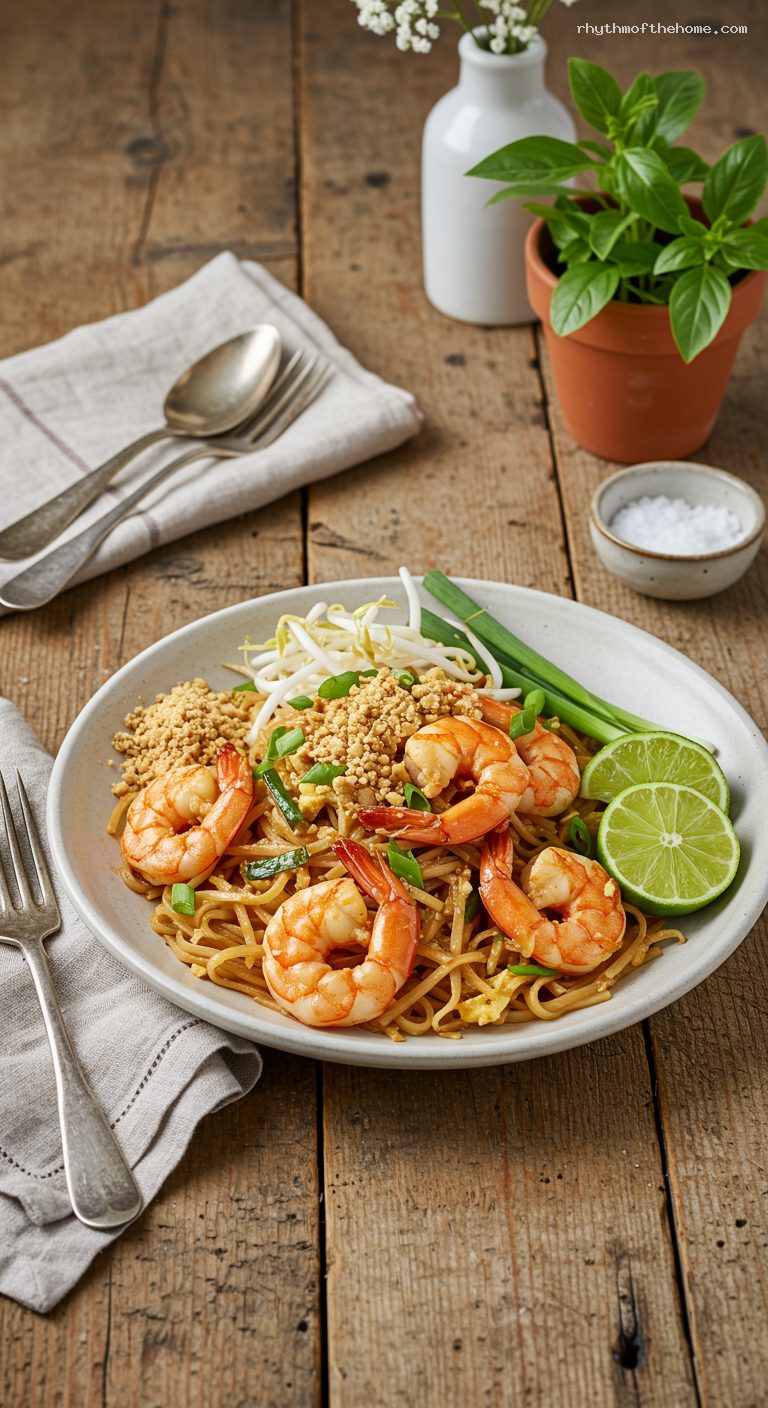
Quick Recipe Version (TL;DR)
Quick Ingredients
- 8 oz (225 g) flat rice noodles
- 12 oz (340 g) large shrimp, peeled and deveined
- 2 large eggs, lightly beaten
- 2 cups (140 g) bean sprouts
- 4 scallions, sliced (whites and greens separated)
- 3 cloves garlic, minced; 1 small shallot, thinly sliced
- 3 tbsp neutral oil (peanut or vegetable)
- 1/3 cup (45 g) roasted peanuts, chopped; 2 limes, cut into wedges
- Sauce: 2 tbsp tamarind concentrate, 3 tbsp fish sauce, 3 tbsp palm or brown sugar, 3 tbsp warm water, 1 tsp rice vinegar (optional), pinch chili flakes
Do This
- 1. Soak noodles in very hot water (about 190°F) for 6–8 minutes; drain and rinse.
- 2. Simmer sauce ingredients 2–3 minutes until syrupy; set aside.
- 3. Pat shrimp dry; season lightly with salt and white pepper.
- 4. Stir-fry shrimp in 1 tbsp oil over high heat, 45–60 seconds per side; remove.
- 5. Sauté shallot and garlic in 1 tbsp oil 30 seconds; scramble eggs until softly set.
- 6. Add noodles, remaining oil, and sauce; toss 1–2 minutes, then return shrimp. Fold in sprouts and scallion greens; top with peanuts and serve with lime.
Why You’ll Love This Recipe
- True pad Thai balance: bright tamarind, salty fish sauce, and gentle sweetness.
- Weeknight-fast: on the table in about 30 minutes.
- Restaurant-style texture: chewy noodles, juicy shrimp, crisp sprouts, and crunchy peanuts.
- Flexible heat level: mild by default, easy to make spicy.
Grocery List
- Produce: 2 limes, 4 scallions, 2 cups bean sprouts, 3 garlic cloves, 1 small shallot
- Dairy: 2 large eggs
- Pantry: Rice noodles, tamarind concentrate, fish sauce, palm or brown sugar, neutral oil, roasted peanuts, rice vinegar, red pepper flakes, kosher salt, white pepper
Full Ingredients
Pad Thai Sauce
- 3 tbsp (45 ml) fish sauce
- 2 tbsp (30 ml) tamarind concentrate (unsweetened)
- 3 tbsp (36 g) palm sugar or light brown sugar, packed
- 3 tbsp (45 ml) warm water
- 1 tsp (5 ml) rice vinegar (optional, for extra brightness)
- 1/4 tsp red pepper flakes (or to taste)
Noodles & Shrimp
- 8 oz (225 g) flat rice stick noodles (about 1/4-inch wide)
- 12 oz (340 g) large shrimp (16–20 count), peeled and deveined, tails on optional
- 1/4 tsp kosher salt + 1/8 tsp ground white pepper (for shrimp)
- 3 tbsp (45 ml) neutral oil (peanut, canola, or vegetable), divided
- 2 large eggs, beaten
Aromatics & Veg
- 3 garlic cloves, minced
- 1 small shallot, very thinly sliced
- 4 scallions, sliced (whites and greens separated)
- 2 cups (140 g) fresh bean sprouts, rinsed and drained well
To Serve
- 1/3 cup (45 g) roasted unsalted peanuts, roughly chopped
- 2 limes, cut into wedges
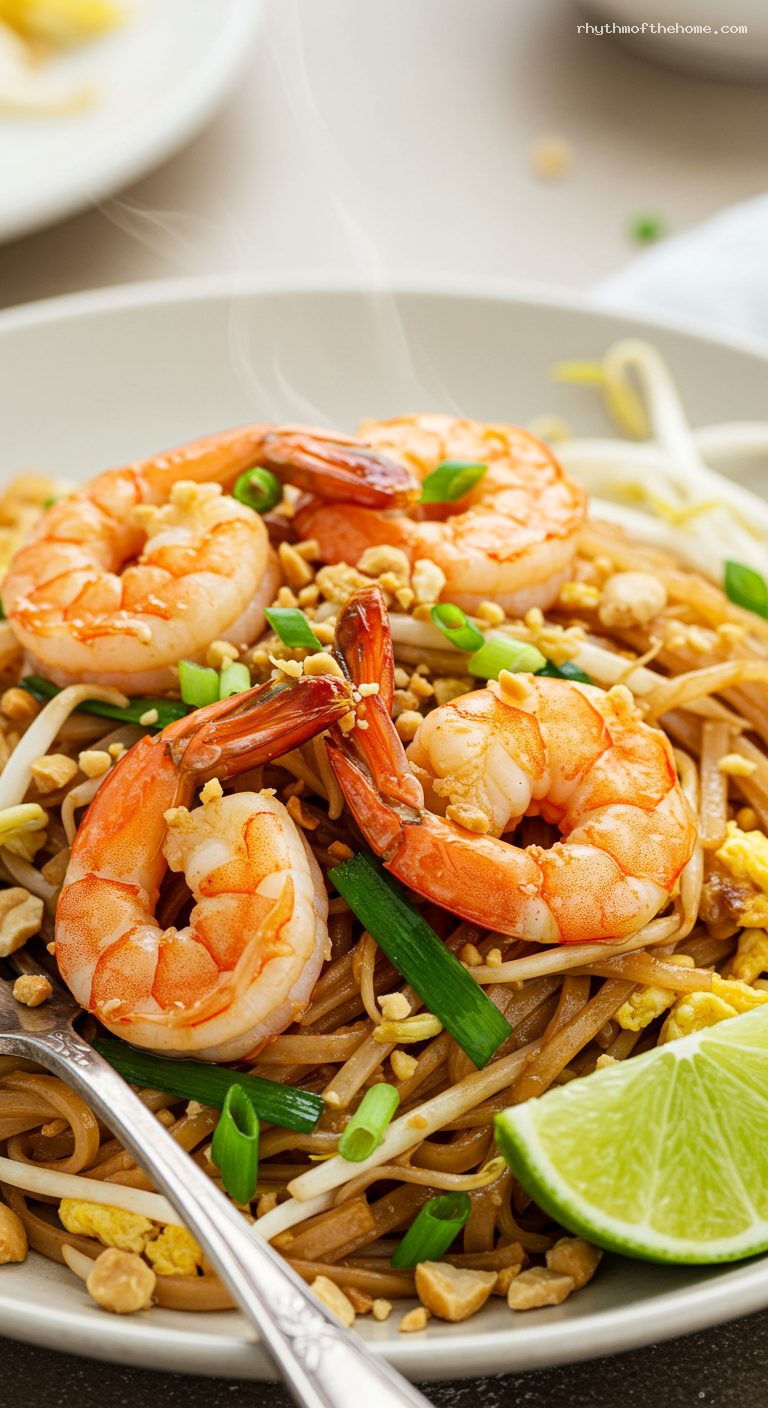
Step-by-Step Instructions
Step 1: Soak the noodles
Bring a kettle or pot of water to a near-boil (about 190°F). Place the rice noodles in a large heatproof bowl and pour the hot water over to cover by 2 inches. Soak 6–8 minutes, stirring once or twice, until pliable and just shy of tender. Drain and rinse under cool water, then shake off excess water. Toss with 1 teaspoon oil to prevent sticking and set near the stove.
Step 2: Make the tamarind sauce
In a small saucepan, combine fish sauce, tamarind concentrate, sugar, warm water, rice vinegar (if using), and red pepper flakes. Bring to a gentle simmer over medium-low heat and cook 2–3 minutes, stirring, until the sugar dissolves and the sauce lightly coats the back of a spoon. Remove from heat and keep warm. Taste: it should be tangy, salty, and slightly sweet.
Step 3: Prep the shrimp and aromatics
Pat the shrimp dry with paper towels and season with kosher salt and white pepper. Beat the eggs in a small bowl. Keep the sliced shallot, minced garlic, and scallions (whites and greens separated) within arm’s reach, along with the bean sprouts. Stir-frying goes quickly, so have everything ready.
Step 4: Sear the shrimp
Heat a wok or a 12-inch skillet over high heat for 2 minutes, until a wisp of smoke appears. Add 1 tablespoon oil, then the shrimp in a single layer. Sear 45–60 seconds per side until just opaque and curled (internal temp about 120°F). Transfer to a plate; they will finish in the sauce later.
Step 5: Cook aromatics and eggs
Add 1 tablespoon oil to the wok. Stir-fry the shallot and garlic for 30 seconds until fragrant but not browned. Push to one side. Pour in the beaten eggs and scramble 30–60 seconds until just set into soft curds. Keep everything in the pan.
Step 6: Sauce the noodles
Add the remaining 1 tablespoon oil and the drained noodles. Stir-fry 30 seconds, then splash in 2 tablespoons water. Pour in all the tamarind sauce and toss continuously for 1–2 minutes until the noodles are glossy and tender. Return the shrimp and add the scallion whites; toss 30 seconds to heat through and meld flavors.
Step 7: Finish and serve
Remove from heat. Fold in the bean sprouts and half of the scallion greens for 20–30 seconds—the residual heat softens them while keeping a crisp bite. Plate immediately. Top with chopped peanuts and the remaining scallion greens. Serve with lime wedges for squeezing at the table; add extra chili flakes if you like more heat.
Pro Tips
- If your tamarind product is very thick or sweetened, start with 1 tbsp and adjust to taste; if using block tamarind pulp, dissolve 1 tbsp pulp in 3 tbsp hot water and strain.
- Wok too crowded? Cook in two smaller batches for best sear and springy noodles.
- If noodles clump, loosen with 1–2 tablespoons water while tossing; keep the heat high.
- Don’t overcook shrimp—pull them as soon as they turn opaque and curled, then finish in the sauce.
- Mise en place matters: have every ingredient measured and by the stove before you begin.
Variations
- Chicken Pad Thai: Swap shrimp for 12 oz thinly sliced chicken thighs; stir-fry 3–4 minutes until cooked through before proceeding.
- Tofu Pad Thai: Use 12 oz extra-firm tofu, pressed and cubed; sear until golden on all sides. For vegetarian, swap fish sauce with a vegan fish sauce or 2 tbsp light soy + 1 tbsp mushroom sauce.
- Spicy Street-Style: Add 1–2 finely sliced Thai bird’s-eye chiles to the aromatics and finish with extra chili flakes.
Storage & Make-Ahead
Pad Thai is best fresh. You can make the sauce up to 1 week ahead (refrigerated in a sealed jar) or freeze up to 1 month; stir before using. Soaked noodles should be cooked right away, though rinsed, drained noodles can sit up to 30 minutes tossed with a little oil. Leftovers keep 2–3 days refrigerated in an airtight container. Reheat in a hot skillet with a splash of water (1–2 tbsp) for 1–2 minutes, or microwave 60–90 seconds, stirring halfway. Freezing cooked rice noodles is not recommended.
Nutrition (per serving)
Approx. 530 calories; 18 g fat (2.5 g sat); 64 g carbohydrates; 3 g fiber; 13 g sugars; 28 g protein; ~1250 mg sodium. Values are estimates and will vary with ingredient brands and portion sizes.

Leave a Reply