
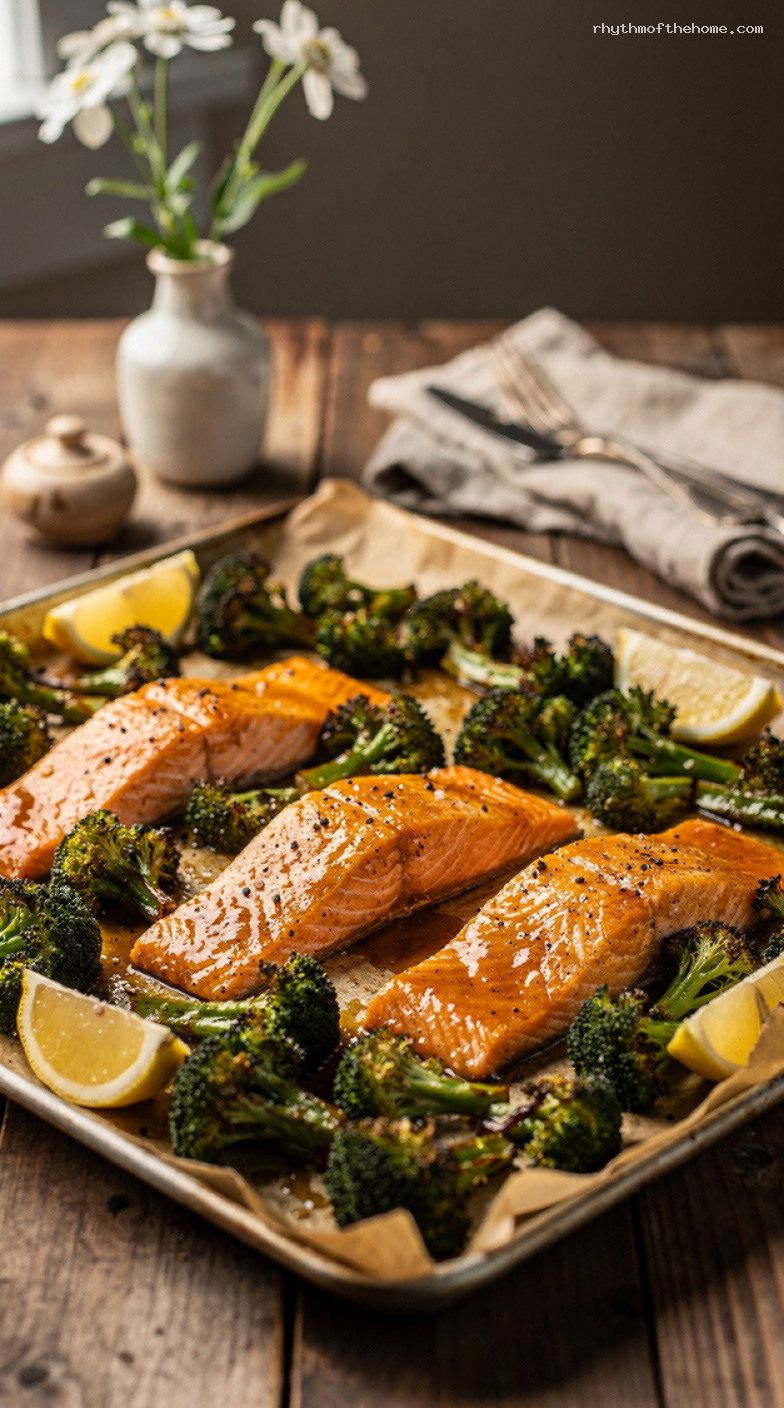
Quick Recipe Version (TL;DR)
Quick Ingredients
- 4 salmon fillets (about 6 oz each; total 1 1/2 lb)
- 4 cups broccoli florets (about 12 oz)
- 2 tbsp extra-virgin olive oil
- 3/4 tsp kosher salt, divided
- 1/2 tsp freshly ground black pepper, divided
- 2 tbsp Dijon mustard
- 2 tbsp pure maple syrup
- 2 garlic cloves, finely grated or minced
- 1 tbsp lemon juice, plus lemon wedges for serving
Do This
- 1) Heat oven to 425°F and line a rimmed sheet pan with parchment.
- 2) Toss broccoli with olive oil, 1/2 tsp salt, and 1/4 tsp pepper; spread on pan.
- 3) Roast broccoli 5 minutes to get it started.
- 4) Stir Dijon, maple syrup, garlic, and lemon juice; brush over salmon.
- 5) Push broccoli to the sides; add salmon to the center and roast 7–11 minutes more.
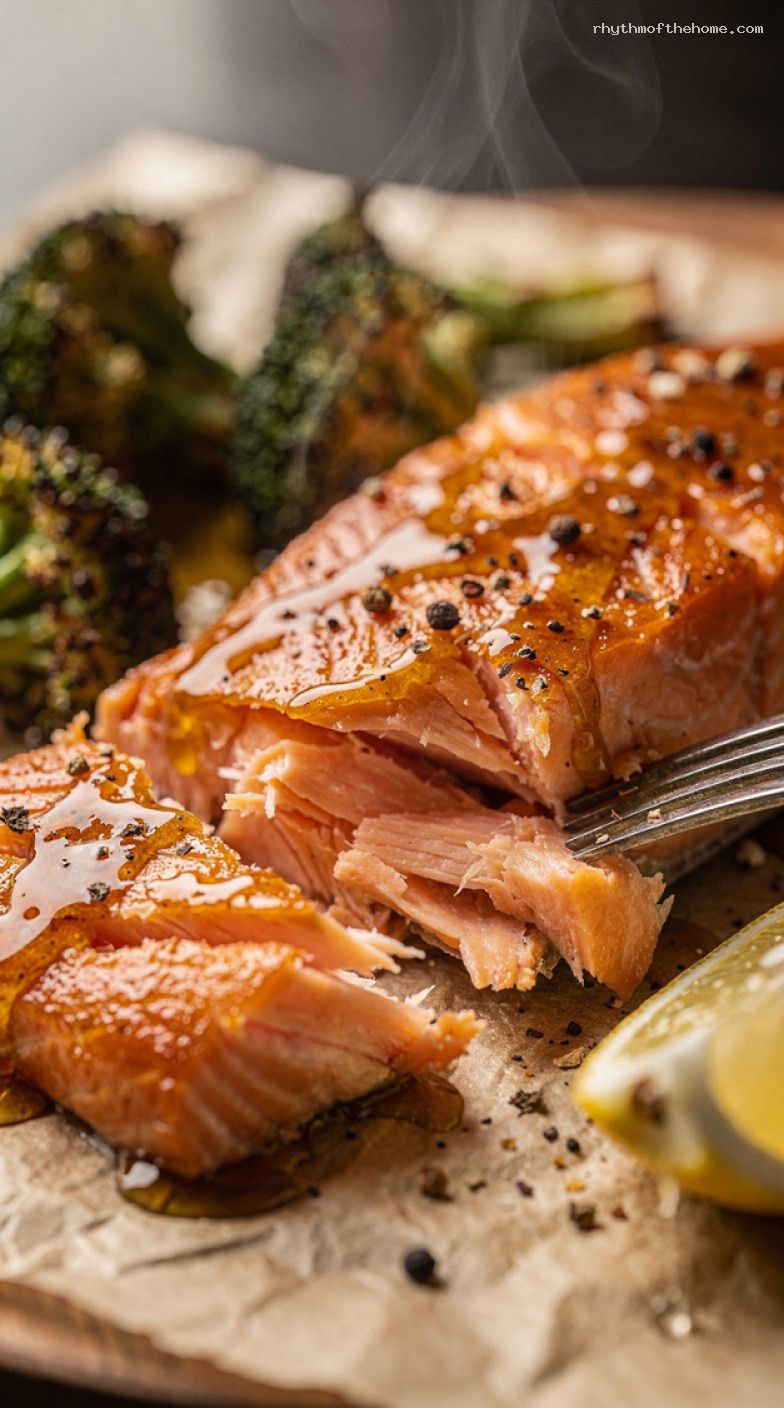
- 6) Pull when salmon flakes easily (125–130°F for medium); broccoli should be crisp-edged.
- 7) Finish with lemon wedges and more black pepper; serve right away.
Why You’ll Love This Recipe
- One pan, minimal cleanup: salmon and broccoli roast together.
- That maple-Dijon glaze turns glossy, savory-sweet, and garlicky in the oven.
- Weeknight-fast: on the table in about 25 minutes.
- Crisp-edged broccoli plus tender, flaky salmon makes a satisfying, balanced meal.
Grocery List
- Produce: 1 large head broccoli (or 1 lb asparagus), 1 lemon, 2 garlic cloves
- Dairy: None (optional: butter for serving)
- Pantry: Dijon mustard, pure maple syrup, extra-virgin olive oil, kosher salt, black pepper
Full Ingredients
Salmon
- 4 salmon fillets, skin-on or skinless (about 6 oz each; total about 1 1/2 lb), pin bones removed
Maple-Dijon Garlic Glaze
- 2 tbsp Dijon mustard
- 2 tbsp pure maple syrup
- 2 garlic cloves, finely grated or minced (about 2 tsp)
- 1 tbsp fresh lemon juice
- 1/4 tsp kosher salt
- 1/4 tsp freshly ground black pepper
Vegetables
- 4 cups broccoli florets (about 12 oz), cut into bite-size pieces
- 2 tbsp extra-virgin olive oil
- 1/2 tsp kosher salt
- 1/4 tsp freshly ground black pepper
To Finish
- Lemon wedges, for serving
- Extra freshly ground black pepper, to taste
Step-by-Step Instructions
Step 1: Heat the oven and set up the pan
Arrange an oven rack in the middle position. Preheat the oven to 425°F. Line a rimmed sheet pan with parchment paper (or foil, lightly oiled). This helps prevent sticking, especially if you use skinless salmon.
Step 2: Season and start roasting the broccoli
Add the broccoli florets to the sheet pan. Drizzle with 2 tbsp olive oil, then sprinkle with 1/2 tsp kosher salt and 1/4 tsp black pepper. Toss right on the pan until evenly coated, then spread into a single layer.
Roast the broccoli for 5 minutes. This head start helps it get crisp edges by the time the salmon is done.
Step 3: Mix the maple-Dijon glaze
While the broccoli starts roasting, in a small bowl stir together 2 tbsp Dijon mustard, 2 tbsp maple syrup, 2 tsp grated/minced garlic, 1 tbsp lemon juice, 1/4 tsp kosher salt, and 1/4 tsp black pepper. The mixture should look glossy and thick enough to cling to the fish.
Step 4: Glaze the salmon
Pat the salmon fillets dry with paper towels (this helps the glaze stick and the surface roast nicely). Brush the glaze generously over the top and sides of each fillet, using all of it.
If using skin-on salmon, glaze only the flesh side; keep the skin dry so it roasts cleanly against the pan.
Step 5: Add salmon to the pan
Carefully remove the pan from the oven after the broccoli’s 5-minute head start. Use a spatula to scoot broccoli to the edges of the pan, leaving space in the center for the salmon.
Place salmon fillets on the cleared area, leaving a little space between pieces for even roasting. Return the pan to the oven.
Step 6: Roast until the salmon is flaky and broccoli is crisp-edged
Roast for 7–11 minutes, depending on salmon thickness:
- Thinner fillets (about 1 inch): start checking at 7 minutes
- Thicker center-cut pieces (1 1/2 inches): may take 10–11 minutes
The salmon is done when it flakes easily with a fork and looks slightly translucent only at the very center (if you like it medium). For best accuracy, use an instant-read thermometer inserted into the thickest part:
- 125–130°F for medium (very juicy)
- 135°F for medium-well
- 145°F for fully cooked (USDA guidance; firmer texture)
The broccoli should be tender with browned, crisp edges. If the salmon finishes first, transfer it to a plate and let the broccoli roast 2–4 minutes longer.
Step 7: Finish with lemon and pepper, then serve
Squeeze fresh lemon over the salmon and broccoli right before serving. Add a few grinds of black pepper to brighten the flavors. Serve straight from the sheet pan, with extra lemon wedges on the side.
Pro Tips
- Dry the salmon: Patting it dry helps the glaze cling and keeps the surface from steaming.
- Cut broccoli evenly: Similar-size florets cook at the same speed and get those crisp edges together.
- Don’t overcrowd the pan: If the broccoli is piled up, it steams instead of roasting. Use a second sheet pan if needed.
- Use a thermometer if you can: Pulling salmon at 125–130°F keeps it tender; it will rise a few degrees as it rests.
- For extra browning: After the salmon comes out, you can broil the broccoli alone for 1–2 minutes, watching closely.
Variations
- Asparagus swap: Replace broccoli with 1 lb asparagus, trimmed. Skip the 5-minute head start and roast everything together for 10–12 minutes.
- Spicy maple-Dijon: Add 1/2 tsp crushed red pepper flakes or 1 tsp sriracha to the glaze.
- Herby finish: Sprinkle with 2 tbsp chopped fresh dill or parsley after roasting for a fresh, bright finish.
Storage & Make-Ahead
Store leftover salmon and broccoli in an airtight container in the refrigerator for up to 3 days. Reheat gently to avoid drying out the salmon: warm on a sheet pan at 300°F for 8–12 minutes, or microwave at 50% power in short bursts until just warmed through.
Make-ahead tip: mix the glaze up to 2 days in advance and refrigerate. Bring it to room temperature for 10 minutes and stir before brushing on the salmon.
Nutrition (per serving)
Approximate (based on 4 servings): 430 calories, 35 g protein, 27 g fat, 14 g carbohydrates, 3 g fiber, 9 g sugars, 620 mg sodium.

Leave a Reply