
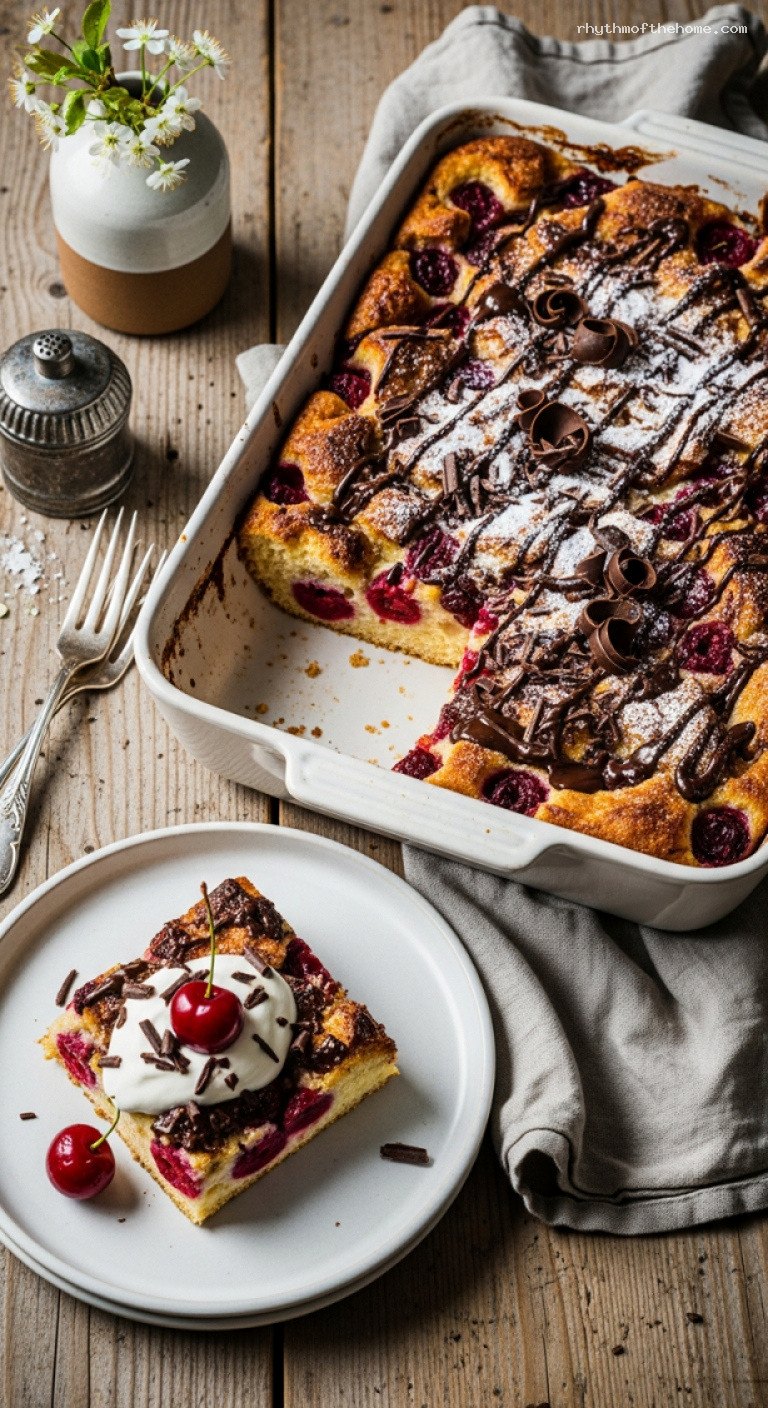
Quick Recipe Version (TL;DR)
Quick Ingredients
- 8 stale white rolls (about 400 g), torn
- 600 ml whole milk
- 4 large eggs
- 120 g (about 1/2 cup + 2 tbsp) sugar
- 1 tsp vanilla extract
- 1–2 tbsp Kirsch (cherry schnapps), optional
- 1 jar sour cherries, drained (about 350–400 g drained weight)
- 75 g dark chocolate, finely chopped or shaved
- 40 g butter (for pan and dotting on top)
- Pinch of salt, plus butter and breadcrumbs or sugar for the dish
Do This
- 1. Butter a 20 x 30 cm (9 x 13 in) baking dish and sprinkle with fine breadcrumbs or sugar. Preheat oven to 180°C top/bottom heat (350°F).
- 2. Warm milk until just hot, then whisk in sugar, vanilla, salt, and Kirsch. Pour over torn rolls in a large bowl; soak 30 minutes, stirring once or twice.
- 3. Whisk eggs, then fold into the soaked bread mixture until well combined but still chunky.
- 4. Spread half the bread mixture into the dish, scatter over half the cherries and half the chocolate. Repeat with remaining bread, cherries, and chocolate.
- 5. Dot top with small pieces of butter. Bake 45–50 minutes until puffed, deep golden, and just set in the center.
- 6. Rest 10–15 minutes, then serve warm or at room temperature with a dusting of powdered sugar and a spoonful of whipped cream, if you like.
Why You’ll Love This Recipe
- A clever and delicious way to use up stale rolls or bread.
- Classic flavors from Baden: tart cherries, rich custard, and dark chocolate.
- Rustic and forgiving – perfect for home cooks, family gatherings, and potlucks.
- Easy to scale, simple ingredients, and no fancy equipment required.
Grocery List
- Produce: None required; use jarred or canned sour cherries (or fresh when in season, optional for garnish).
- Dairy: Whole milk, butter, eggs, whipping cream (optional for serving).
- Pantry: Stale white rolls or bread, sugar, vanilla extract, dark chocolate, salt, breadcrumbs (or extra sugar) for the dish, Kirsch (cherry schnapps, optional), powdered sugar for dusting.
Full Ingredients
Bread and Custard Base
- 8 stale white rolls (Brötchen), about 400 g total, torn into bite-size pieces
- 600 ml whole milk
- 120 g sugar (about 1/2 cup plus 2 tablespoons)
- 4 large eggs, at room temperature if possible
- 1 tsp vanilla extract (or 1 packet vanilla sugar)
- 1–2 tbsp Kirsch (cherry schnapps), optional but traditional
- 1/4 tsp fine salt
Cherries and Chocolate
- 1 large jar sour cherries in light syrup (about 680–720 ml), well drained (350–400 g drained weight)
- 75 g dark chocolate (at least 60% cocoa), finely chopped or shaved
For the Dish and Topping
- 40 g unsalted butter, divided (about 2 tbsp for dotting, remainder for greasing)
- 2–3 tbsp fine dry breadcrumbs or granulated sugar, for coating the dish
To Serve (Optional)
- Lightly sweetened whipped cream, crème fraîche, or vanilla ice cream
- Powdered sugar, for dusting
- Extra dark chocolate shavings or a few fresh cherries, for garnish
Step-by-Step Instructions
Step 1: Prepare the baking dish and preheat the oven
Grease a 20 x 30 cm (about 9 x 13 in) baking dish generously with butter, making sure to get into the corners and up the sides. Sprinkle the inside with fine breadcrumbs or a thin layer of granulated sugar, tilting and tapping the dish so it coats evenly. Tip out any excess. This coating helps prevent sticking and adds a light, crisp edge.
Preheat your oven to 180°C top/bottom heat (350°F). Place a rack in the middle of the oven. This gives you time to assemble the Kirschplotzer while the oven heats.
Step 2: Soak the stale rolls in warm milk
Tear the stale rolls into bite-size pieces and place them in a large mixing bowl. The pieces do not need to be perfectly even; a rustic texture is ideal.
In a saucepan, gently heat the milk over medium-low heat until it is steaming but not boiling. Take it off the heat and whisk in the sugar, vanilla extract, salt, and Kirsch (if using) until the sugar is dissolved.
Pour the warm, sweetened milk mixture over the torn rolls. Press the bread down lightly with a spoon or your hands so everything gets moistened. Set aside to soak for about 30 minutes, stirring once or twice, until most of the liquid is absorbed and the bread is very soft.
Step 3: Prepare the cherries and chocolate
While the bread is soaking, drain the sour cherries very well. Tip them into a sieve set over a bowl and let them sit for several minutes, shaking the sieve occasionally. Too much liquid will make the pudding soggy.
Pat the cherries gently with a paper towel to remove any excess moisture. Do not crush them; you want whole or mostly whole cherries in the pudding.
Finely chop or shave the dark chocolate. You can use a sharp knife, a vegetable peeler along the edge of a chocolate bar, or the coarse side of a grater. Aim for small pieces that will melt into streaks and little pockets of chocolate throughout the bake.
Step 4: Add the eggs and finish the bread mixture
After the bread has soaked and is very soft, check that the mixture is just warm or at room temperature, not hot. If it is still quite warm, let it cool a little before adding the eggs, so they do not scramble.
In a separate bowl, lightly whisk the eggs until the yolks and whites are well combined. Pour the beaten eggs over the soaked bread.
Gently fold everything together with a large spoon or spatula until the eggs are evenly distributed. Break up any very large chunks of bread, but keep some smaller lumps for a nice, rustic texture. The mixture should be thick, spoonable, and moist, but not soupy.
Step 5: Layer the Kirschplotzer with cherries and chocolate
Spoon about half of the bread mixture into the prepared baking dish and spread it into an even layer, pressing it lightly into the corners.
Scatter half of the drained cherries evenly over this layer, followed by half of the chopped or shaved chocolate.
Top with the remaining bread mixture, again spreading gently and evenly. Finish by sprinkling over the remaining cherries and chocolate. Use a spoon or your fingers to press some of the cherries and chocolate slightly into the surface so they are partially embedded but still visible.
Cut the remaining butter into small pieces and dot them all over the top. This helps create a lovely golden, slightly crisp surface.
Step 6: Bake until golden, set, and fragrant
Place the dish on the middle rack of the preheated oven. Bake for 45–50 minutes, or until the top is deep golden brown, the sides are bubbling slightly, and a knife inserted in the center comes out without wet custard (it may be a little moist from melted chocolate or cherry juice, which is fine).
If the top is browning too quickly before the center is set, loosely tent the dish with aluminum foil for the last 10–15 minutes of baking.
Remove from the oven and allow the Kirschplotzer to rest for 10–15 minutes. This helps it firm up slightly and makes it easier to portion, while still serving it pleasantly warm.
Step 7: Serve warm, with rustic flair
Dust the top lightly with powdered sugar. Cut into generous squares or scoop out rustic spoonfuls. Serve warm or at room temperature.
For a traditional and comforting finish, add a spoonful of lightly sweetened whipped cream, a dollop of crème fraîche, or a scoop of vanilla ice cream. If you like, garnish with extra chocolate shavings and a few fresh or reserved sour cherries.
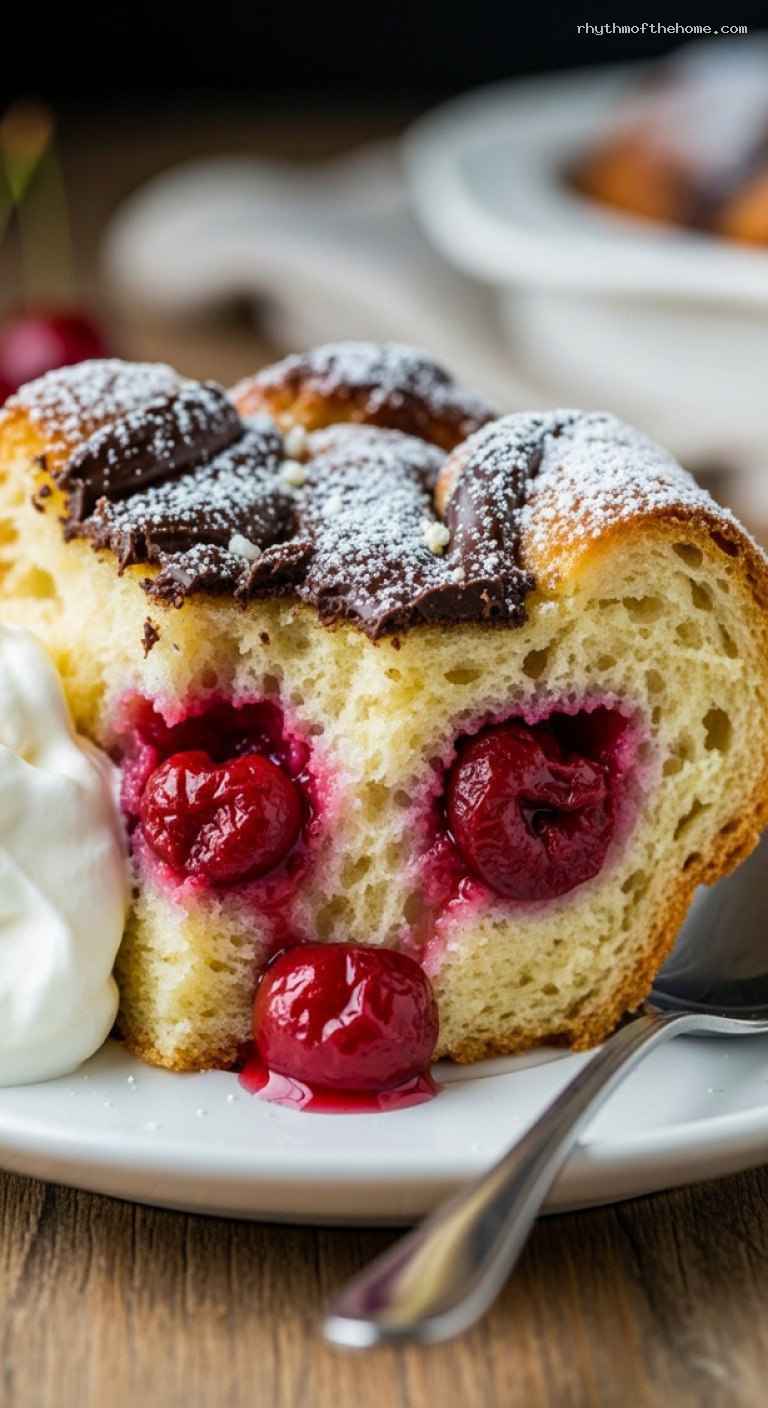
Kirschplotzer is at its best on the day it is baked, when the contrast between the soft, custardy interior, the juicy cherries, and the slightly crisp top is most pronounced.
Pro Tips
- Use properly stale bread: Rolls that are 1–3 days old work best. Fresh bread can make the pudding too soft; if yours is fresh, dry the torn pieces in a low oven (120°C / 250°F) for 10–15 minutes before soaking.
- Drain cherries thoroughly: Excess juice will make the pudding heavy and soggy. Let them sit in a sieve and pat them gently dry.
- Do not overmix the bread: Some texture is desirable. Keep small chunks for a more interesting, rustic crumb rather than a completely smooth mass.
- Adjust sweetness to taste: If your cherries are very sweet or your chocolate is mild, you can reduce the sugar by 1–2 tablespoons; with very tart cherries and dark chocolate, the full amount is ideal.
- Kirsch for aroma, not for booziness: The alcohol mostly bakes off, leaving a subtle cherry aroma. If serving children or avoiding alcohol, simply omit it; the dessert is still excellent.
Variations
- Almond Kirschplotzer: Add 50 g sliced almonds to the top before baking, and replace 50 ml of the milk with cream for an even richer texture and a delicate nutty crunch.
- Chocolate-forward version: Increase the dark chocolate to 100–120 g and use a slightly darker chocolate (70%) for a more intense chocolate-cherry flavor.
- Spiced winter Kirschplotzer: Add 1/2 tsp ground cinnamon and a good pinch of ground cloves or allspice to the warm milk mixture for a cozy, holiday-style dessert.
Storage & Make-Ahead
Allow any leftover Kirschplotzer to cool completely, then cover the baking dish tightly or transfer portions to an airtight container. Store in the refrigerator for up to 3 days.
To reheat, warm individual portions in the microwave on medium power for 30–60 seconds, or reheat larger amounts in a low oven (150°C / 300°F) for 10–15 minutes until warmed through. Add a splash of milk or cream if it seems a little dry.
You can assemble the dish up to the point of baking, cover, and refrigerate for up to 12 hours. When ready to bake, let it sit at room temperature while the oven preheats, then bake as directed; you may need to add 5–10 minutes to the baking time if it is very cold going into the oven.
Nutrition (per serving)
Approximate values for 1 of 8 servings, without toppings:
- Calories: ~380 kcal
- Protein: ~9 g
- Total Fat: ~13 g
- Carbohydrates: ~55 g
- Fiber: ~2 g
- Sugars: ~28 g
- Sodium: ~260 mg
These values are estimates and will vary based on the exact ingredients and brands you use.

Leave a Reply