
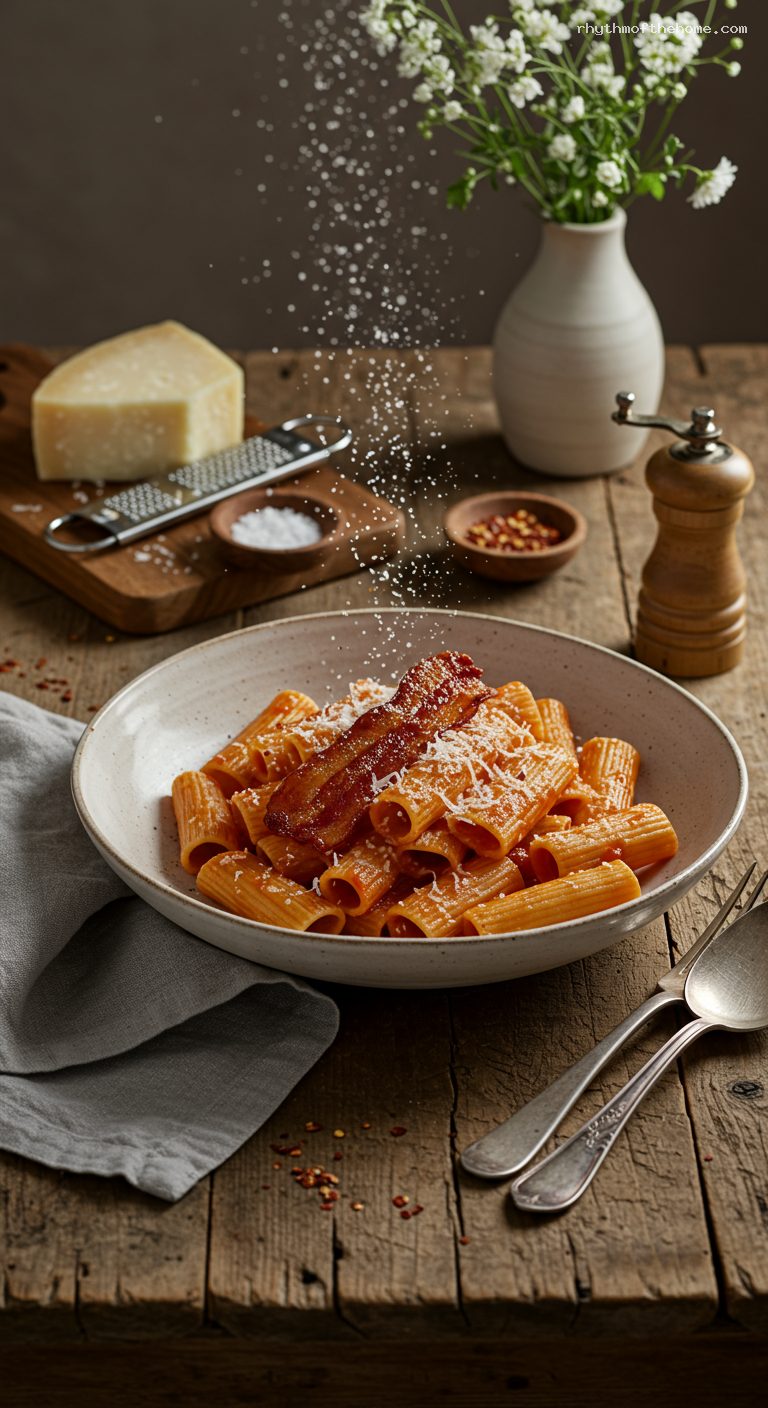
Quick Recipe Version (TL;DR)
Quick Ingredients
- 12 oz (340 g) rigatoni
- 5 oz (140 g) guanciale, cut into 1/4-inch strips
- 1 tsp extra-virgin olive oil (optional)
- 1/4 cup (60 ml) dry white wine
- 1 (28 oz/794 g) can whole peeled tomatoes, crushed
- 1 cup (80 g) finely grated Pecorino Romano, plus extra to serve
- 1 tsp freshly ground black pepper
- 1/4 tsp red pepper flakes (optional)
- 4 qt (3.8 L) water + 2 tbsp kosher salt for boiling
- 3/4 cup (180 ml) reserved pasta water
Do This
- 1. Bring 4 qt water to a rolling boil (212°F) and salt with 2 tbsp kosher salt.
- 2. From a cold pan, render guanciale with 1 tsp oil over medium heat 8–10 minutes until golden and crisp; keep 2–3 tbsp fat in the pan.
- 3. Deglaze with 1/4 cup white wine; simmer 1–2 minutes, scraping up browned bits.
- 4. Add crushed tomatoes and optional flakes; simmer 12–15 minutes at a gentle 190–200°F.
- 5. Cook rigatoni until 1 minute shy of al dente; reserve 3/4 cup pasta water.
- 6. Toss pasta in sauce with 1/2 cup pasta water for 1–2 minutes; off heat, add Pecorino while tossing, plus more water as needed to get a glossy sauce. Finish with black pepper and serve.
Why You’ll Love This Recipe
- Classic Roman comfort: salty-sweet guanciale, tangy tomatoes, and peppery bite.
- Restaurant-level gloss thanks to a silky Pecorino emulsion that clings to every ridge of rigatoni.
- Weeknight-friendly: 35 minutes, one skillet, and pantry staples.
- Purist-approved technique with just a splash of white wine for brightness.
Grocery List
- Produce: None (all pantry staples)
- Dairy: Pecorino Romano
- Pantry: Rigatoni, guanciale, canned whole peeled tomatoes, dry white wine, black pepper, red pepper flakes (optional), extra-virgin olive oil, kosher salt, fine sea salt
Full Ingredients
Pasta
- 12 oz (340 g) rigatoni
- 4 qt (3.8 L) water
- 2 tbsp kosher salt (for the pasta water)
Sauce
- 5 oz (140 g) guanciale, cut into 1/4-inch (6 mm) batons
- 1 tsp extra-virgin olive oil (optional, helps start rendering)
- 1/4 cup (60 ml) dry white wine
- 1 (28 oz/794 g) can whole peeled tomatoes, preferably DOP San Marzano, crushed by hand
- 1/4 tsp red pepper flakes (optional)
To Finish
- 1 cup (80 g) Pecorino Romano, very finely grated, plus more for serving
- 1 tsp freshly ground black pepper, plus more to taste
- 3/4 cup (180 ml) reserved pasta cooking water
- 1/8 tsp fine sea salt, only if needed
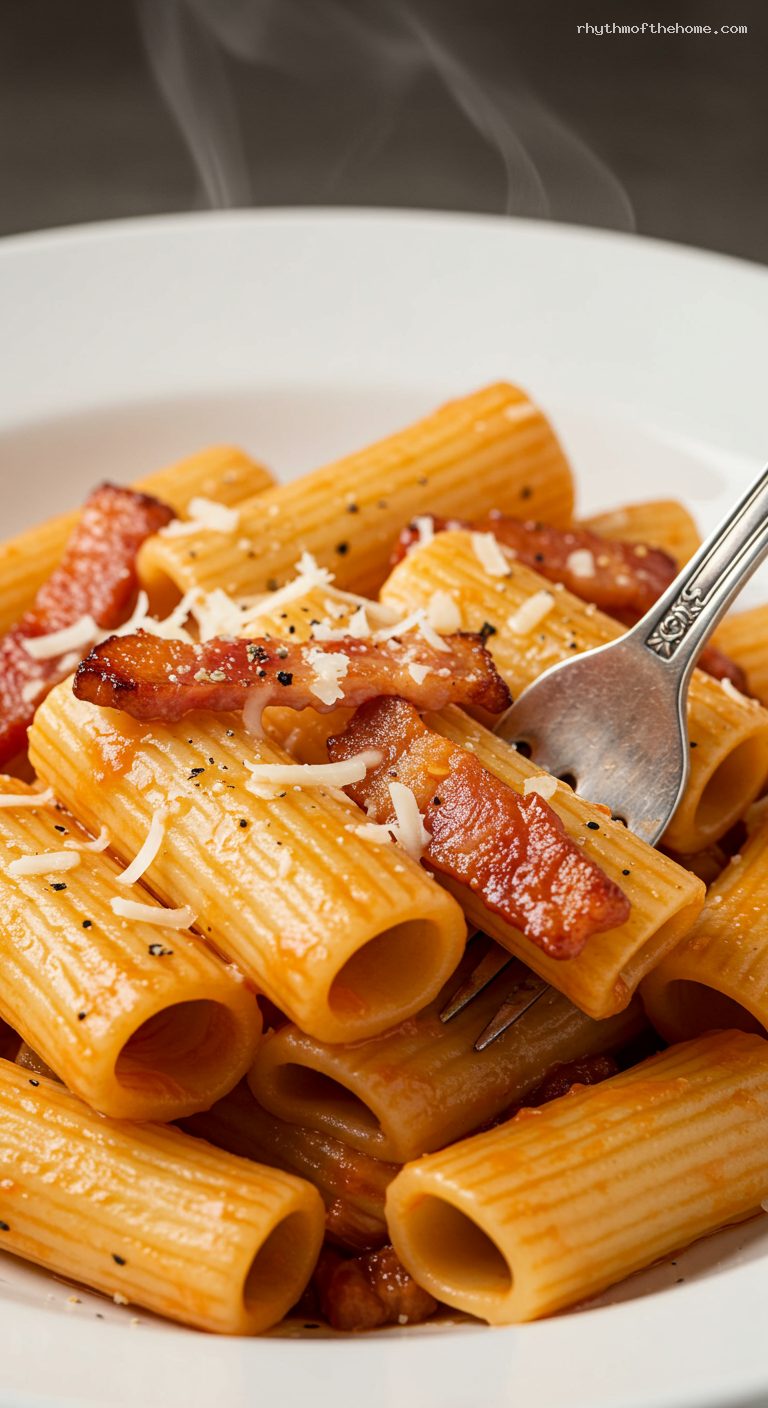
Step-by-Step Instructions
Step 1: Prep your ingredients
Cut the guanciale into 1/4-inch batons. Crush the tomatoes by hand in a bowl, discarding any tough stem ends. Finely grate the Pecorino Romano (a microplane or very fine grater prevents clumps later). Set a large pot of water to boil for the pasta and measure 2 tablespoons kosher salt.
Step 2: Render and crisp the guanciale
Place guanciale in a large skillet or sauté pan while the pan is still cold. Add 1 teaspoon olive oil if your guanciale is very lean. Cook over medium heat, stirring occasionally, until the fat renders and the meat turns golden and crisp, 8–10 minutes. Spoon off excess fat, leaving 2–3 tablespoons in the pan for the sauce. Keep the crispy guanciale in the pan.
Step 3: Deglaze with white wine
Increase heat to medium-high and pour in the white wine. It should sizzle. Scrape up browned bits with a wooden spoon and simmer until the wine reduces by roughly half, 1–2 minutes. This adds brightness and dissolves flavorful fond into the fat.
Step 4: Add tomatoes and gently simmer
Add the crushed tomatoes and optional red pepper flakes. Reduce heat to maintain a gentle simmer, about 190–200°F, and cook 12–15 minutes, stirring occasionally. The sauce should thicken slightly and the fat should emulsify into the tomatoes, turning glossy and brick-red. Taste; you likely won’t need salt yet because the guanciale and Pecorino are salty.
Step 5: Boil the rigatoni
When the sauce has about 8 minutes left, salt the boiling water with 2 tablespoons kosher salt and add the rigatoni. Cook until 1 minute shy of al dente (check package timing; typically 9–11 minutes). Reserve 3/4 cup (180 ml) pasta water at a rolling boil (212°F) before draining.
Step 6: Marry pasta and sauce
Transfer drained rigatoni to the skillet with the sauce. Add 1/2 cup reserved pasta water and toss over medium heat for 1–2 minutes so the pasta absorbs the sauce and finishes cooking. You’re looking for a lightly fluid, glossy consistency—add splashes of water if it looks dry or tight.
Step 7: Emulsify with Pecorino and finish with pepper
Remove the pan from heat. Sprinkle in the finely grated Pecorino a little at a time, tossing vigorously between additions to create a creamy emulsion that clings to the ridges. Adjust with more pasta water as needed to keep it silky and flowing, not pasty. Season with 1 teaspoon freshly ground black pepper and a pinch of fine sea salt only if needed. Serve immediately with extra Pecorino and more black pepper at the table.
Pro Tips
- Start guanciale in a cold pan so the fat renders slowly and evenly—crisp edges, no scorching.
- Simmer gently, not furiously. A soft 190–200°F simmer keeps the sauce glossy rather than greasy.
- Grate Pecorino ultra-fine. Fine shavings melt smoothly and won’t clump when tossed off heat.
- Control consistency with pasta water. Add it in small splashes to keep the sauce fluid as you add cheese.
- Cook pasta 1 minute shy of al dente; finishing in sauce is key to flavor absorption and a cohesive texture.
Variations
- Pancetta Swap: If you can’t find guanciale, use 5–6 oz pancetta. Flavor is cleaner and less porky, so keep the wine for brightness.
- Extra Heat: Stir in 1/2 tsp Calabrian chili flakes or a teaspoon of chopped Calabrian chili paste with the tomatoes.
- Bucatini or Mezze Rigatoni: Swap the pasta shape; ridges and hollow centers that trap sauce work best.
Storage & Make-Ahead
The sauce (without cheese) can be made up to 3 days in advance; refrigerate airtight and rewarm gently before tossing with pasta and Pecorino. Assembled pasta is best eaten right away. Leftovers keep 2–3 days refrigerated; reheat with a splash of water over medium-low heat and add a little fresh Pecorino to revive the emulsion. Freezing is not recommended.
Nutrition (per serving)
Approximate: 620 calories; 26 g fat; 63 g carbohydrates; 27 g protein; 4 g fiber; 950 mg sodium.

Leave a Reply