
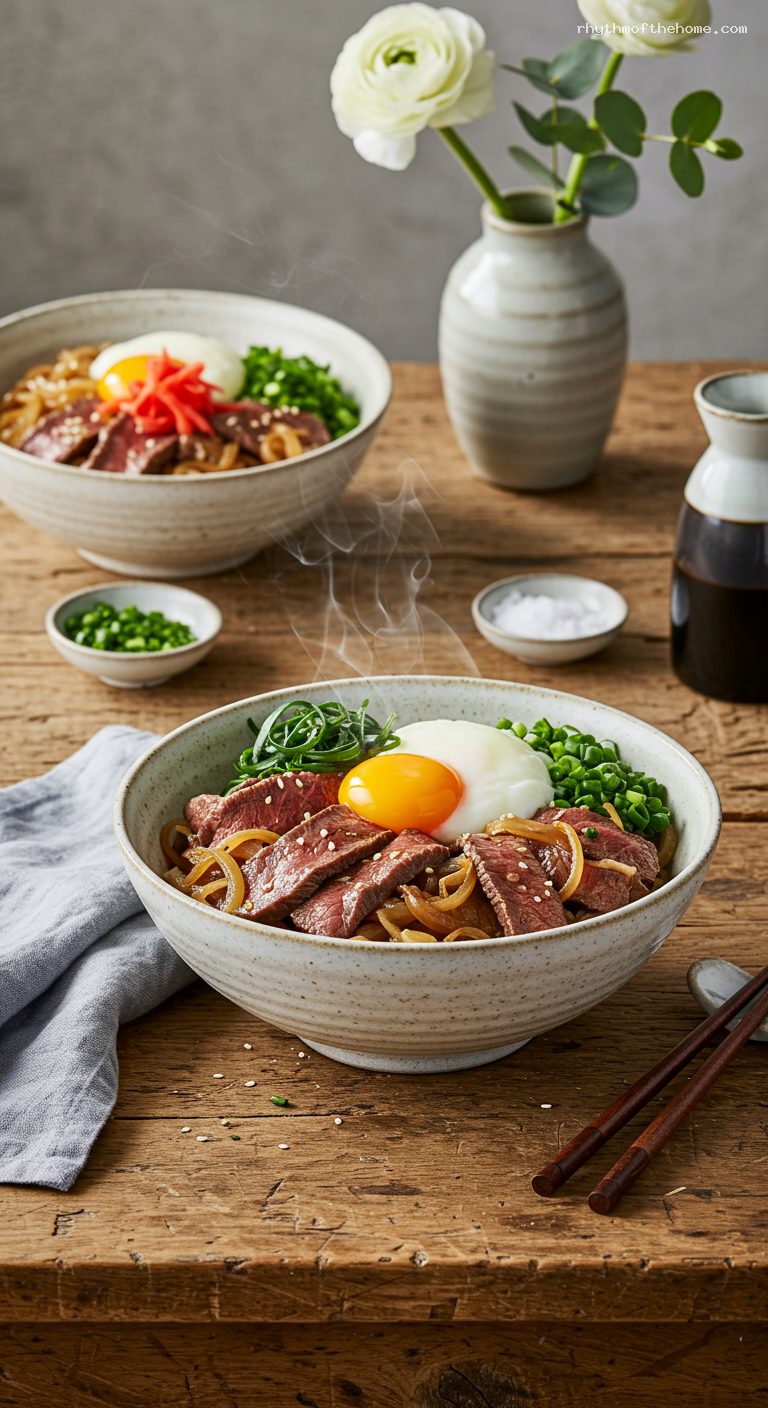
Quick Recipe Version (TL;DR)
Quick Ingredients
- 2 cups (380 g) Japanese short‑grain rice + 2 1/4 cups (540 ml) water
- 1 lb (450 g) paper‑thin beef (ribeye or chuck)
- 2 medium yellow onions, thinly sliced
- 1 1/2 cups (360 ml) dashi (or 1 1/2 cups hot water + 1 tsp instant dashi granules)
- 3 tbsp soy sauce, 3 tbsp mirin, 2 tbsp sake, 1 tbsp sugar
- 4 large eggs (for poaching), 1 tsp white vinegar (optional)
- 1/2 cup beni shoga (red pickled ginger)
- 2 scallions, thinly sliced; shichimi togarashi (optional)
Do This
- 1. Rinse rice until water runs mostly clear; cook with 2 1/4 cups water. Rest 10 minutes.
- 2. Slice onions thin; keep beef very thin (freeze 15 minutes if slicing at home).
- 3. In a wide pan, combine dashi, soy, mirin, sake, sugar; bring to a gentle simmer.
- 4. Add onions; simmer 6–8 minutes until tender. Skim any foam.
- 5. Add beef in a loose layer; simmer 2–3 minutes just until no longer pink.
- 6. Poach eggs in 190°F/88°C water 2 1/2–3 minutes. Serve beef and broth over hot rice; top with egg, beni shoga, and scallions.
Why You’ll Love This Recipe
- Weeknight‑fast: 30 minutes, start to finish.
- Classic gyudon flavor: sweet‑savory dashi, soy, and mirin with tender beef and silky onions.
- Crowd‑pleasing and customizable: add spice, extra onions, or swap in mushrooms.
- Comfort in a bowl: hot rice, glossy beef, and a soft egg that makes its own sauce.
Grocery List
- Produce: 2 yellow onions, 2 scallions
- Dairy: None
- Pantry: Japanese short‑grain rice, soy sauce, mirin, sake (or dry sherry), sugar, instant dashi granules (or premade dashi), beni shoga, shichimi togarashi (optional), white vinegar (optional)
Full Ingredients
Rice
- 2 cups (380 g) Japanese short‑grain rice
- 2 1/4 cups (540 ml) water
Beef & Onions
- 1 lb (450 g) paper‑thin sliced beef (ribeye or chuck; “shabu shabu” or “yakiniku” cut)
- 2 medium yellow onions (about 500 g), halved and sliced 1/4‑inch (6 mm) thick
Gyudon Broth
- 1 1/2 cups (360 ml) dashi (or 1 1/2 cups hot water + 1 tsp instant dashi granules)
- 3 tbsp (45 ml) soy sauce
- 3 tbsp (45 ml) mirin
- 2 tbsp (30 ml) sake (or dry sherry)
- 1 tbsp (12 g) sugar
Eggs
- 4 large eggs
- 1 tsp white vinegar for poaching water (optional)
To Serve
- 1/2 cup (60 g) beni shoga (red pickled ginger)
- 2 scallions, thinly sliced
- Shichimi togarashi and toasted sesame seeds (optional)
Step-by-Step Instructions
Step 1: Cook the rice
Rinse the rice under cool water, swishing and draining 3–4 times until the water runs mostly clear. Combine 2 cups (380 g) rice and 2 1/4 cups (540 ml) water in a medium pot. Bring to a boil over medium heat, cover, then reduce to low and simmer 18 minutes. Remove from heat and rest, covered, 10 minutes. Fluff with a rice paddle. A rice cooker works perfectly with the same ratios.
Step 2: Prep onions and beef
Halve onions and slice into 1/4‑inch (6 mm) crescents. If slicing beef at home, place the meat in the freezer for 15–20 minutes to firm, then slice very thinly across the grain. Keep beef loosely separated so it cooks evenly.
Step 3: Build the broth
In a wide saucepan or sauté pan (10–12 inches), combine dashi, soy sauce, mirin, sake, and sugar. Bring to a gentle simmer over medium heat. Taste: it should be savory with a soft sweetness; adjust with a pinch more sugar or a splash of soy if needed.
Step 4: Soften the onions
Add the sliced onions to the simmering broth. Cook at a gentle simmer (tiny bubbles) for 6–8 minutes until the onions are translucent and tender but not falling apart. Skim any foam for a clear, clean broth.
Step 5: Cook the beef briefly
Spread the beef slices over the onions in a single, loose layer. Simmer just until the meat turns from pink to brown, 2–3 minutes. Avoid stirring vigorously; gentle nudges keep the slices intact and tender. Turn heat to low to keep warm.
Step 6: Poach soft eggs
Bring 2–3 inches of water to a bare simmer (190°F/88°C). Add 1 tsp vinegar if you like. Crack each egg into a small bowl, swirl the water into a gentle vortex, and slide in an egg. Poach 2 1/2–3 minutes for set whites and a runny yolk. Transfer to paper towel with a slotted spoon. Repeat with remaining eggs.
Step 7: Assemble the gyudon
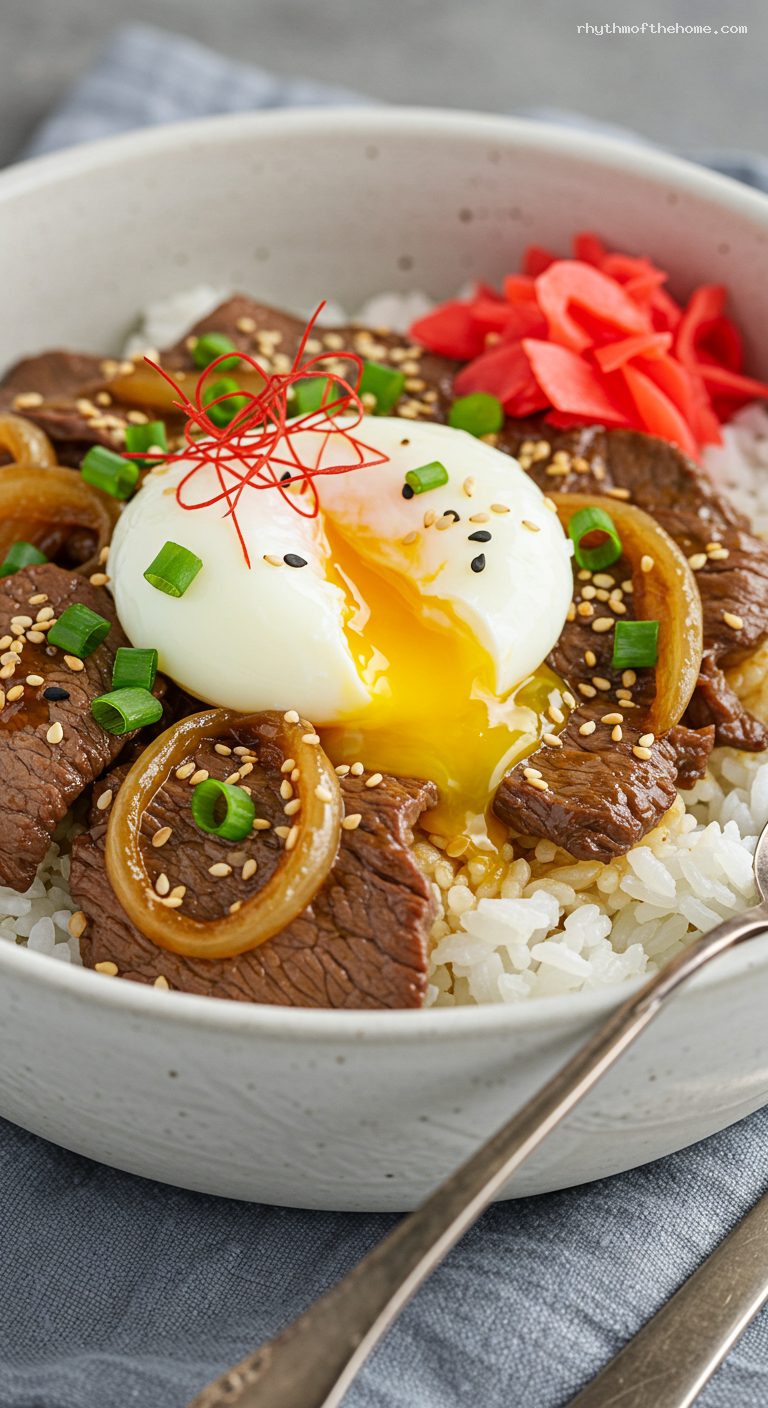
Divide hot rice among 4 bowls. Spoon beef and onions over rice, drizzling each bowl with a few spoonfuls of broth. Crown with a poached egg. Garnish with beni shoga and scallions. Add shichimi togarashi and sesame seeds if you like. Eat hot, breaking the egg to make a silky sauce.
Pro Tips
- Ultra‑thin beef matters. Ask the butcher for “shabu shabu” slices or partially freeze and slice across the grain with a sharp knife.
- Keep the simmer gentle. A rolling boil toughens beef; tiny bubbles keep it tender.
- Skim as you go. Removing foam makes a cleaner, more restaurant‑clear broth.
- Balance the sauce. Classic ratio is roughly dashi:soy:mirin:sake = 12:1:1:0.7 by volume; adjust sweetness with sugar to taste.
- Warm bowls. Hot bowls help the egg stay silky and the rice steamy on the table.
Variations
- Onsen‑style egg: Cook eggs at 145°F/63°C for 45 minutes in a sous‑vide bath; crack one onto each bowl.
- Mushroom gyudon: Add 6 oz (170 g) sliced shiitake or shimeji with the onions for umami and extra texture.
- Shirataki boost: Add 7 oz (200 g) shirataki noodles (rinsed, drained, and cut) to the broth with the onions.
Storage & Make-Ahead
Beef and onion mixture keeps 3 days refrigerated in an airtight container; reheat gently on the stovetop until steaming. Freeze up to 2 months; thaw overnight and reheat in a splash of water or dashi. Cooked rice is best day‑of but can be refrigerated up to 2 days; reheat covered with a sprinkle of water. Poached eggs are best fresh; onsen‑style eggs can be made up to 3 days ahead and chilled in their shells.
Nutrition (per serving)
Approximate: 650 kcal; 35 g protein; 23 g fat; 56 g carbohydrates; 2 g fiber; 900 mg sodium. Values will vary based on beef cut, soy sauce brand, and rice portion.

Leave a Reply