

Dogs don’t eat grass. Or plants. Right?
Wrong. Turns out that your pooch will go for the green from time to time because it’s in his DNA. Dogs are not true carnivores; their ancestors were omnivores and fed off various foods, including berries off the forest floor. If you’re wondering why your civilized, well-bred, high pedigree hound you’re feeding high-class gourmet meals is sneaking off to chew plants, here are a few factoids.
Statistically, dogs do eat the green stuff, but mostly grass. Maybe they like the taste or texture. You could equally ask why do humans eat celery? If you catch your pet occasionally munching a plant or a flower, don’t have a panic attack — it’s probably just boredom. However, if your dog soon exhibits symptoms of illness like diarrhea, vomiting or tremors, don’t lose time — head for the vet.
Just FYI, here are a few human favorites you should never, ever feed your dog — grapes, onions, coffee or tea, candy, chocolate, fat trimmings and cooked bones, peaches, raw fish, raw meat, salt, dairy products and bacon.
Meanwhile, here’s a list of 10 plants and shrubs that dogs will steer clear of, so if you’re planning a dog-friendly garden, these should be on your list.
1. Marigolds

In some parts of the world, this flower is considered culinary and even eaten raw. This was the flower the devout offered up to Mary, mother of Jesus, in place of gold. Mary’s Gold became marigold, a beautiful and beloved bloom — but only if you happen to be human. If you were born a dog, the marigold is nothing but bad news. Your curious puppy might eat up a few flowers, but he doesn’t have the enzymes to digest it, so he’ll pay the price with diarrhea.
There are two genera of marigolds, Calendula and Tagetes, and the good news is that the former is entirely non-toxic for dogs. However, the Tagetes species look exactly like the Calendulas but contain phytotoxic thiophene derivates, which can give your canine a case of dermatitis. Buy carefully.
2. Azaleas
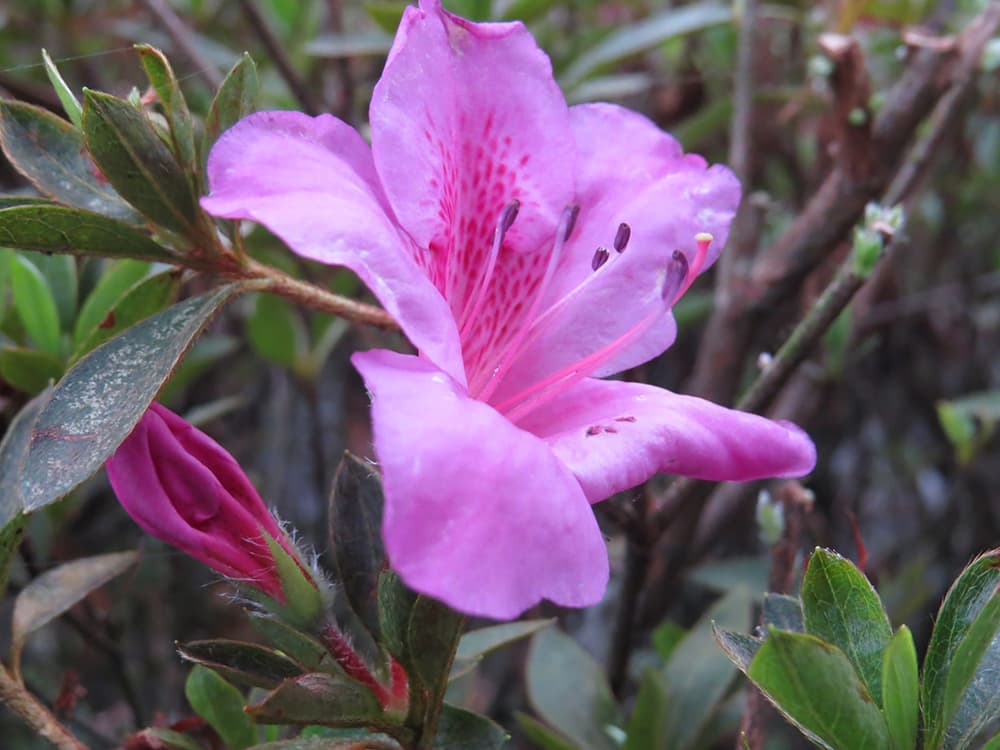
It’s so toxic that honey made from its flowers is known as ‘mad honey’. The Greek warrior-writer Xenophon noted back in 401 BC that soldiers got all weird after eating honey made from azaleas (Ericaceae) and other flowers of the rhododendron family. They “suffered from vomiting and diarrhea, and not one of them could stand up, but those who had eaten a little were like people exceedingly drunk, while those who had eaten a great deal seemed like crazy”.
The lethal poison present in the plant’s leaves, flowers and nectar is a grayanotoxin. Horticulturists will tell you that even bees seem to steer clear of azaleas — which, with over 10,000 varieties and a spectrum of unique, vibrant colors, is one of the most widely bred flowering shrubs in the world.
A 30-pound dog would become very sick indeed by eating just half an ounce of azalea parts — that 0.2% of its body weight. Needless to say, like bees, dogs know to stay away.
3. Oleander
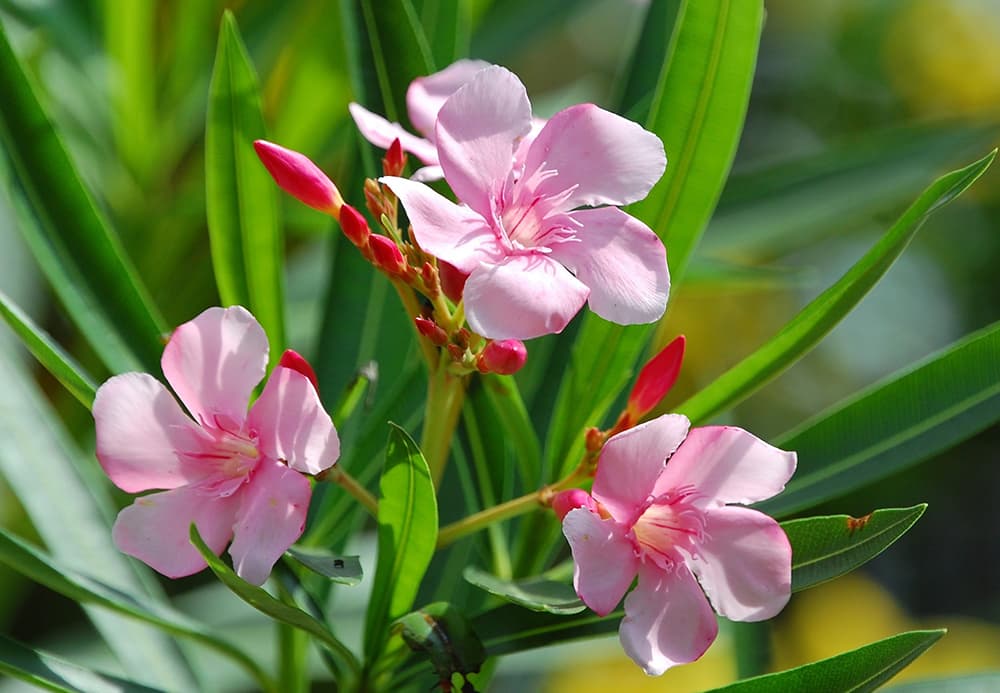
There are urban legends of entire families perishing after using oleander sticks in their BBQ. It’s not quite that poisonous, but no good will come if your dog decides to munch any part of an Oleander plant.
Oleandrin is the name of the toxin that makes this plant not suitable for dogs to eat. All parts of the plants are toxic and small quantities could make your pet pretty sick. Symptoms include drooling and heart rate abnormalities. Rush to the vet if your pooch has accidentally ingested any part of this plant. He may have to take extreme measures like putting it on an IV drip.
There are way too many stories of the oleander got its name but the most charming one is of a Greek maiden wooed by the handsome Leander, who swam the Hellespont nightly to see his darling. However, one night he drowned in a storm and his body washed up on the sands. His girlfriend searched for him, crying out, “Oh, Leander! Oh, Leander!” She found his body eventually, with a flower clutched in his hand. And that’s how oleander became oleander.
4. Castor Bean
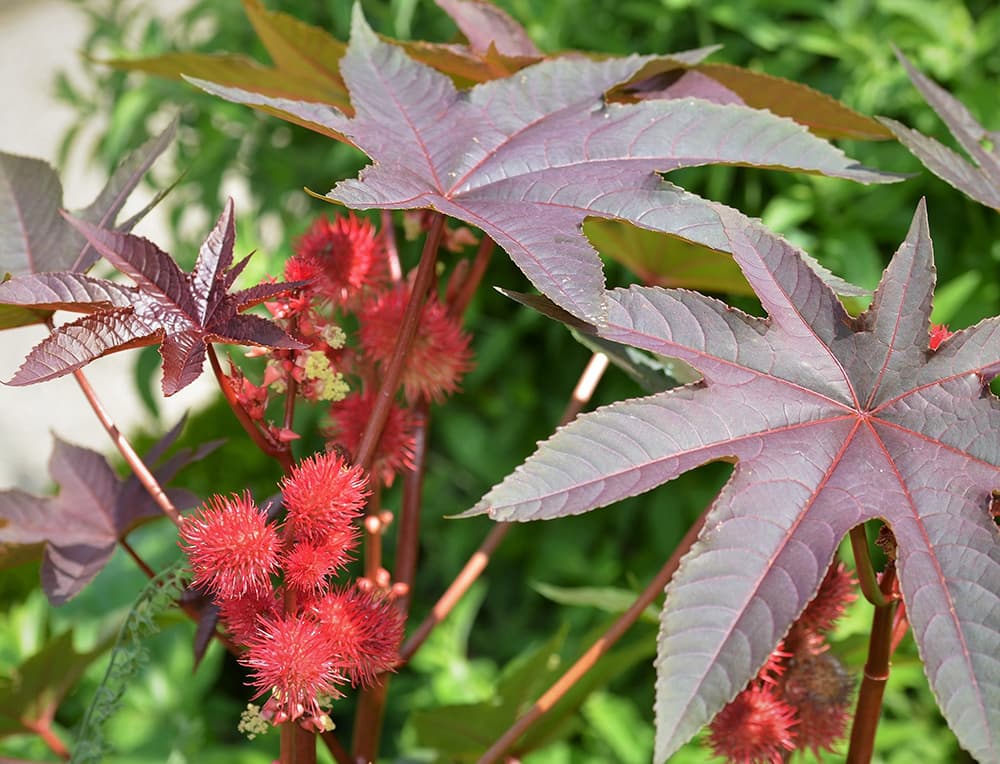
Just 500 micrograms of a powder extracted from the waste products of castor oil manufacturing are sufficient to cause human death when injected or inhaled. The powder is called ricin, and if you’re suddenly remembering stories of people mailing ricin in packets to the White House, that’s a bingo. Ricin has been listed as a weapon of mass destruction. So, you know, best you keep dog away from castor beans.
The castor bean (Ricinus communes) is the seed (note, not a legume) from which the oil, ricin powder and a host of other products good and nefarious are extracted. It has a history and notoriety as old the pyramids. Cleopatra is supposed to have used it to brighten the whites of her eyes, while her subjects used the oil to ensure a good morning’s poop.
What are the chances of your pet eating a few castor beans? Reasonably high since this pretty-looking plant is decorative and often found in parks and public spaces. Symptoms, including drooling, hypotension, trembling, and sudden collapse, can start in six to 42 hours, so don’t wait to take Fido to the vet.
5. Foxglove
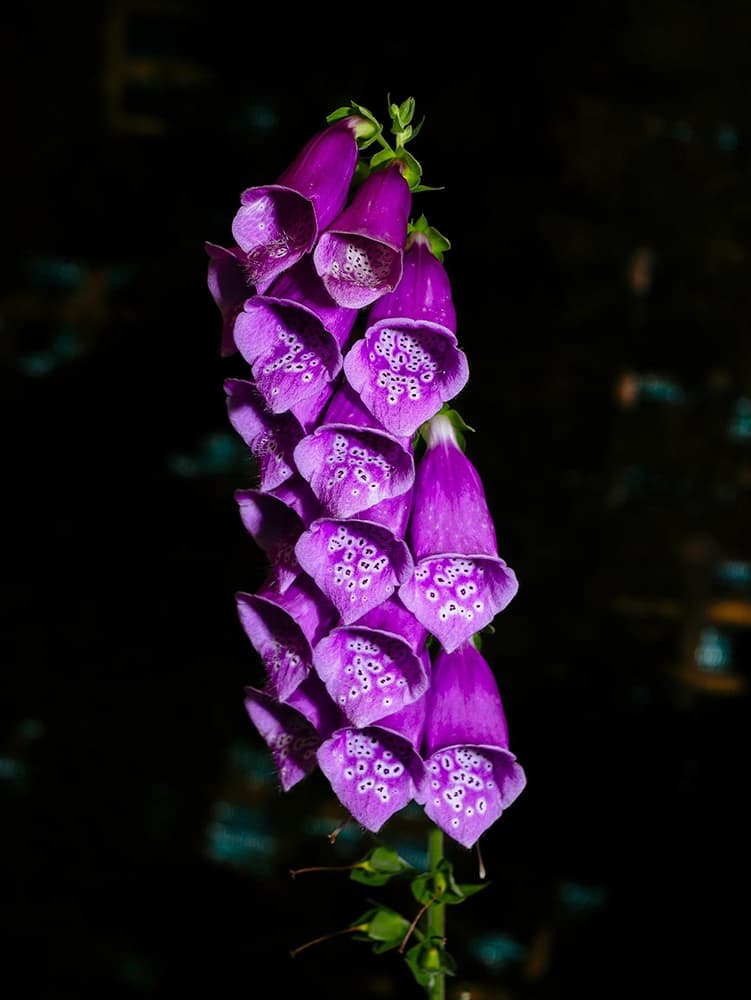
One dubious but delightful story about van Gogh says that when he was going through his ‘Yellow Period’, he was probably under treatment with digitalis, an extract of the Foxglove plant believed to cure epilepsy. A notorious side effect of the Foxglove is xanthopsia — unusual color visions, particularly yellow. Fortunately, van Gogh was not seeing in yellow but painting in yellow.
The toxin in Foxglove (Digitalis purpurea), popular in gardens because of its colors and gorgeous bell-like flowers, is called digitalin. Approved by the US Food and Drug Administration for its host of beneficial cardiac effects, it is nonetheless not at all good for your pooches. Symptoms in canines — and their human masters — can include weakness, excessive drooling, vomiting, dilated pupils and seizures, among others.
6. Cyclamen (Sowbread)

Pigs eat them so they’re called sowbread or swinebread, but the lovely and popular Cyclamen (Primulaceae) is definitely no good for your hound if it eats the flowers, stems or leaves. But if it manages to dig up and eat up the tubers, which contain toxic saponins, then you might want to take medical action right away.
Artists and creative souls were especially fond of Cyclamens. Look at any of da Vinci’s manuscripts — he used to doodle cyclamens all over the margins.
Other less scary myths around Cyclamens hold that it can cause an abortion in a pregnant woman who walks over them. Or that it can make you fall headlong in love if you eat cakes made with bits of Cyclamen. More specifically, you would fall in love with the baker herself if she made small cakes with flour pounded from roasted Cyclamen roots.
Symptoms vary on which part of the plant your dog ate and how much, but if it was the tuber, there’s no need to wait for symptoms. Just head for the animal hospital.
7. Asparagus Fern
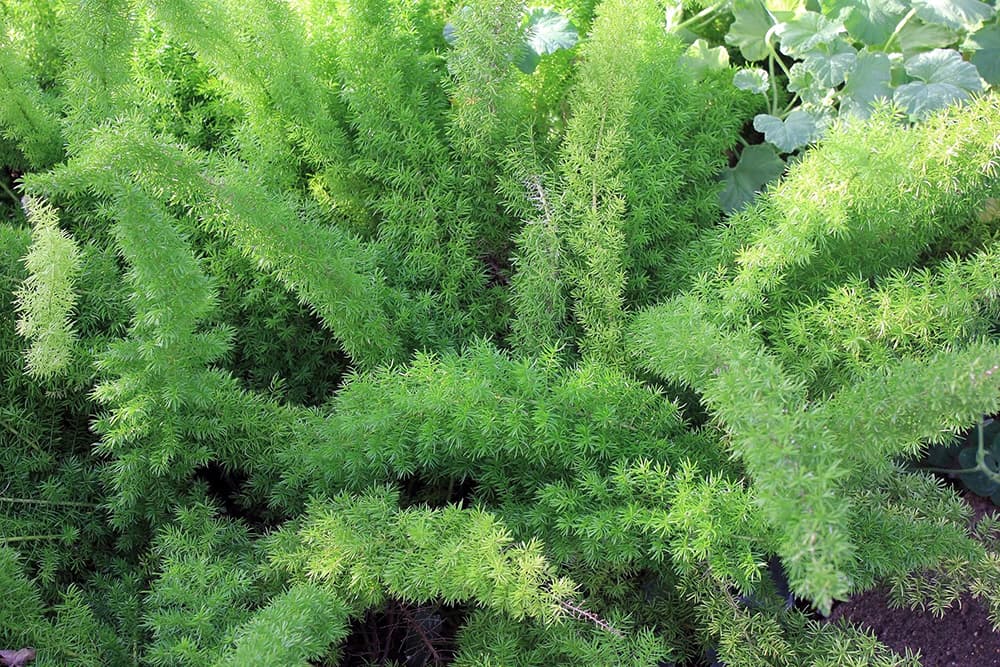
It doesn’t produce anything edible like its cousin, the beloved cooking asparagus (Asparagus officials). It’s also not a true fern though that’s in the name too. The so-called Asparagus Fern (Asparagus aethiopicus) is a fern-like ornamental plant and is quite talented at looking pretty. Touch it or its sap and you — or your dog — might find that you have developed an unpleasant rash.
When spring has sprung, white flowers and tiny red berries appear on the Asparagus Fern. Watch out for the berries — or make sure your dog does — because they contain a concentration of the poison sapogenin. Eating the berries will give your dog a bad case of the trots, requiring veterinary attention.
8. Elephant Ear (Calladium)
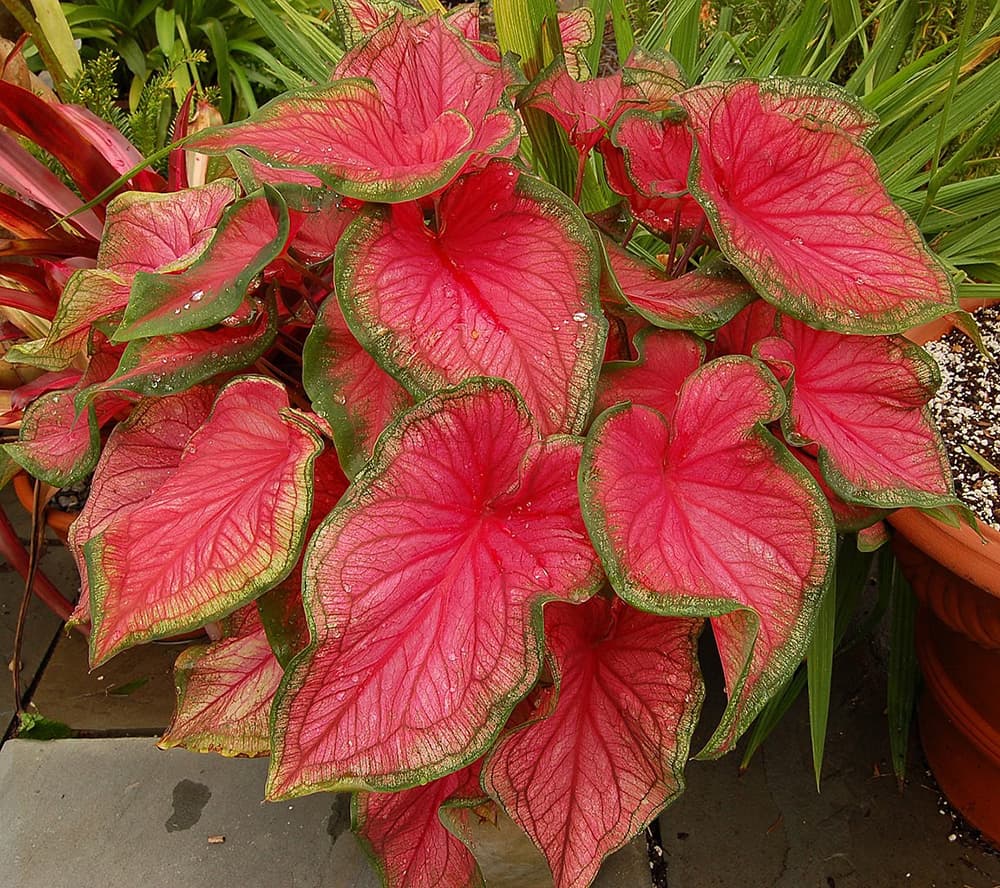
If you find your dog pawing at his face and mouth, foaming and drooling, chances are you’d conclude there was a problem. The Caladium (Araceae) plant, better known as Elephant Ear for apparent reasons, has that effect when it’s eaten. All parts of the plant are poisonous but an excruciating tweak comes from the chemical present throughout the plant, calcium oxalates. They contain needle-like crystals, and eating them is a little like swallowing a handful of nano-needles. They can cause a thousand tears on the soft flesh of your mouth, throat and guts.
The Caladium plant has over a thousand species. None of them has been known to cause death, but expect irritation, redness and swelling around the mouth, difficulty swallowing, drooling and breathing problems. If not treated rapidly, they could prove lethal for your pet
9. Ivy (Hedera Helix)

Who hasn’t seen the common ivy (Hedera helix), with its distinctive leaves, clinging to stone walls of universities and venerated buildings? Wreaths of ivy were used to crown poets and emperors in Roman times, and newlyweds wore them as signs of fidelity. Charles Dickens even wrote a medium-sized poem about the ivy.
But dogs don’t care about all that. For them, the ivy is just a plant with berries they had best avoid. Ivys contain a naturally occurring steroid called sapogenin and several polyacetylene compounds, found throughout the plant but concentrated within the leaves. Dogs avoid them because they taste yucky but should your pet accidentally munch up a few leaves and start showing symptoms of distress, give him a few ice cubes right away to ease his pain and take him to his favorite vet asap.
10. Lilies
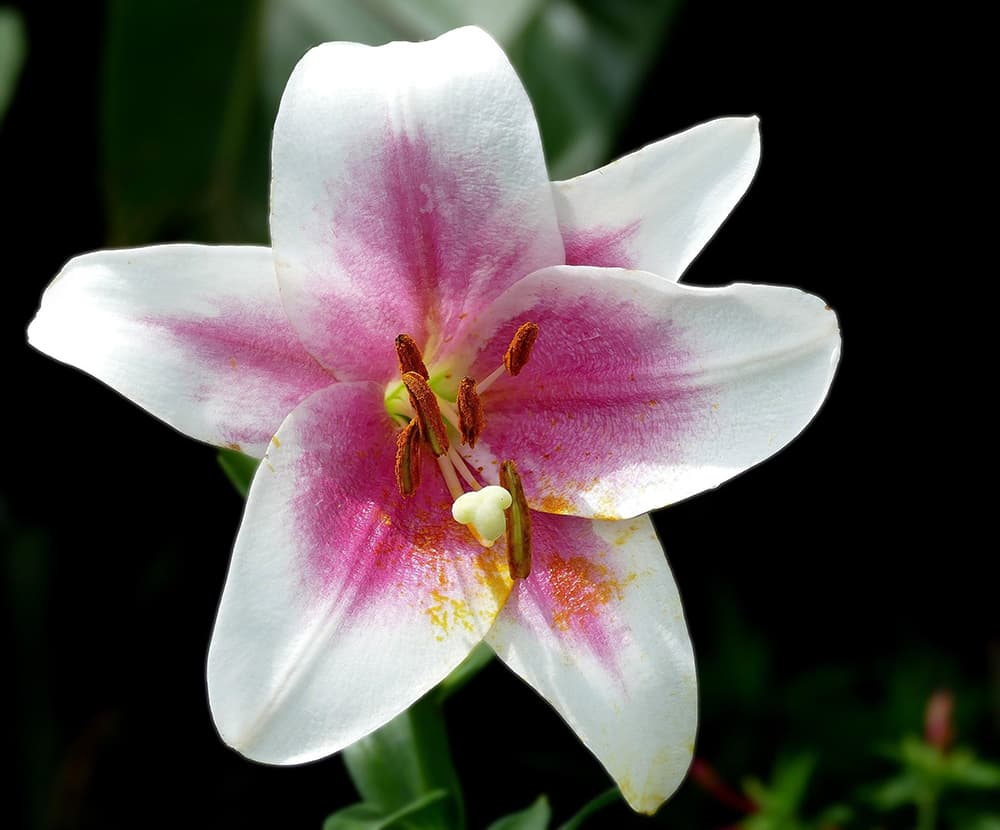
In general, lilies are lovable. It’s only a handful that spells trouble for your dogs.
They have a history going back to well before biblical times. The first picture of a lily, found in Crete, was carbon-dated back to around 1580 BC. Easter lilies (Lilium longiflorum) are symbols of Christ’s resurrection. Some Christians believe these flowers grew out of the spots where Christ’s blood fell as he hung on the cross.
But four lilies in particular — the Prairie Lily or Rain Lily, the Lily of the Valley, the Peace Lily and the Calla Lily — are the baddies in the family as far as being toxic to dogs goes. The Prairie Lily’s bulbs will make your puppy poop soup. The Lily of the Valley contains cardio glycosides which irritate the intestines. The Calla Lilly and the Peace Lily are anything but peaceful, thanks to their calcium oxalate crystals which can do a lot of nano-damage to your dog’s mouth and throat.

Leave a Reply