
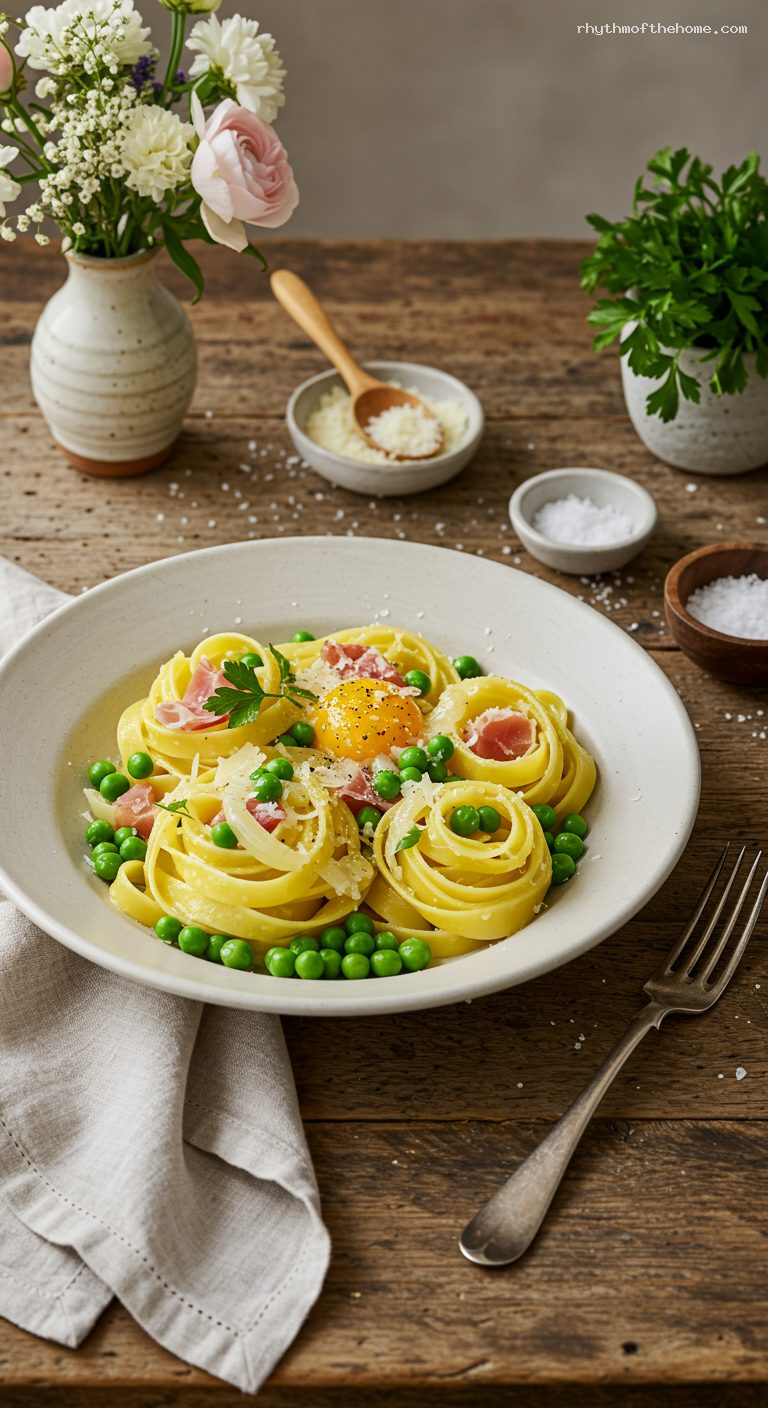
Quick Recipe Version (TL;DR)
Quick Ingredients
- 12 oz (340 g) dried tagliatelle
- 2 large eggs + 2 large egg yolks, room temperature
- 1 cup (80 g) finely grated Parmigiano Reggiano
- 1/2 tsp freshly ground black pepper, plus more to finish
- 3 tbsp unsalted butter
- 1 tbsp extra-virgin olive oil (optional)
- 1 small yellow onion, finely diced (about 1 cup/150 g)
- 4 oz (120 g) prosciutto, cut into thin ribbons
- 1 cup (150 g) frozen peas
- 2 tbsp dry white wine (optional)
- Kosher salt, to season pasta water
Do This
- 1. Bring 4 quarts (3.8 L) water to a boil; salt with 2 tbsp kosher salt.
- 2. Whisk eggs, yolks, Parmigiano, and 1/2 tsp pepper into a smooth, thick emulsion; set aside.
- 3. In a wide skillet, melt butter with olive oil over medium-low; sweat onion 8–10 minutes until translucent. Deglaze with wine, 30 seconds.
- 4. Add prosciutto; warm 30–60 seconds. Stir in peas; cook 2 minutes. Turn heat to low.
- 5. Cook tagliatelle to al dente (8–10 minutes); reserve 1 1/2 cups pasta water.
- 6. Off heat, toss pasta with onion-prosciutto-pea mixture and 1/2 cup hot pasta water.
- 7. Off heat, stream in egg-Parm emulsion, tossing vigorously; add more pasta water until glossy and silky. Serve with extra Parm and pepper.
Why You’ll Love This Recipe
- Cozy Roman riff on carbonara: silky egg-and-Parmigiano sauce without any cream.
- Balanced flavors: sweet peas and butter-soft onions meet savory prosciutto.
- Weeknight-friendly yet dinner-party elegant in under 40 minutes.
- Foolproof emulsion technique that stays glossy, not scrambled.
Grocery List
- Produce: 1 small yellow onion, 1 cup frozen peas, flat-leaf parsley (optional, for garnish)
- Dairy: 2 large eggs, 2 large egg yolks, Parmigiano Reggiano, unsalted butter
- Pantry: Dried tagliatelle, extra-virgin olive oil, dry white wine (optional), kosher salt, black pepper
Full Ingredients
Egg-and-Parmigiano Emulsion
- 2 large eggs, room temperature
- 2 large egg yolks, room temperature
- 1 cup (80 g) finely grated Parmigiano Reggiano
- 1/2 tsp freshly ground black pepper, plus more to finish
- 1 tbsp cool water (to loosen), optional
- Pinch fine sea salt (optional; taste as you go—prosciutto and Parm are salty)
Pan Base
- 3 tbsp unsalted butter
- 1 tbsp extra-virgin olive oil (optional, helps prevent scorching)
- 1 small yellow onion, finely diced (about 1 cup/150 g)
- 4 oz (120 g) prosciutto, thinly sliced and cut into ribbons
- 1 cup (150 g) frozen peas (no need to thaw)
- 2 tbsp dry white wine (optional)
Pasta
- 12 oz (340 g) dried tagliatelle
- 2 tbsp kosher salt (for 4 quarts/3.8 L pasta water)
To Finish
- Additional finely grated Parmigiano Reggiano, for serving (about 1/4 cup)
- Freshly ground black pepper
- Chopped flat-leaf parsley (optional)
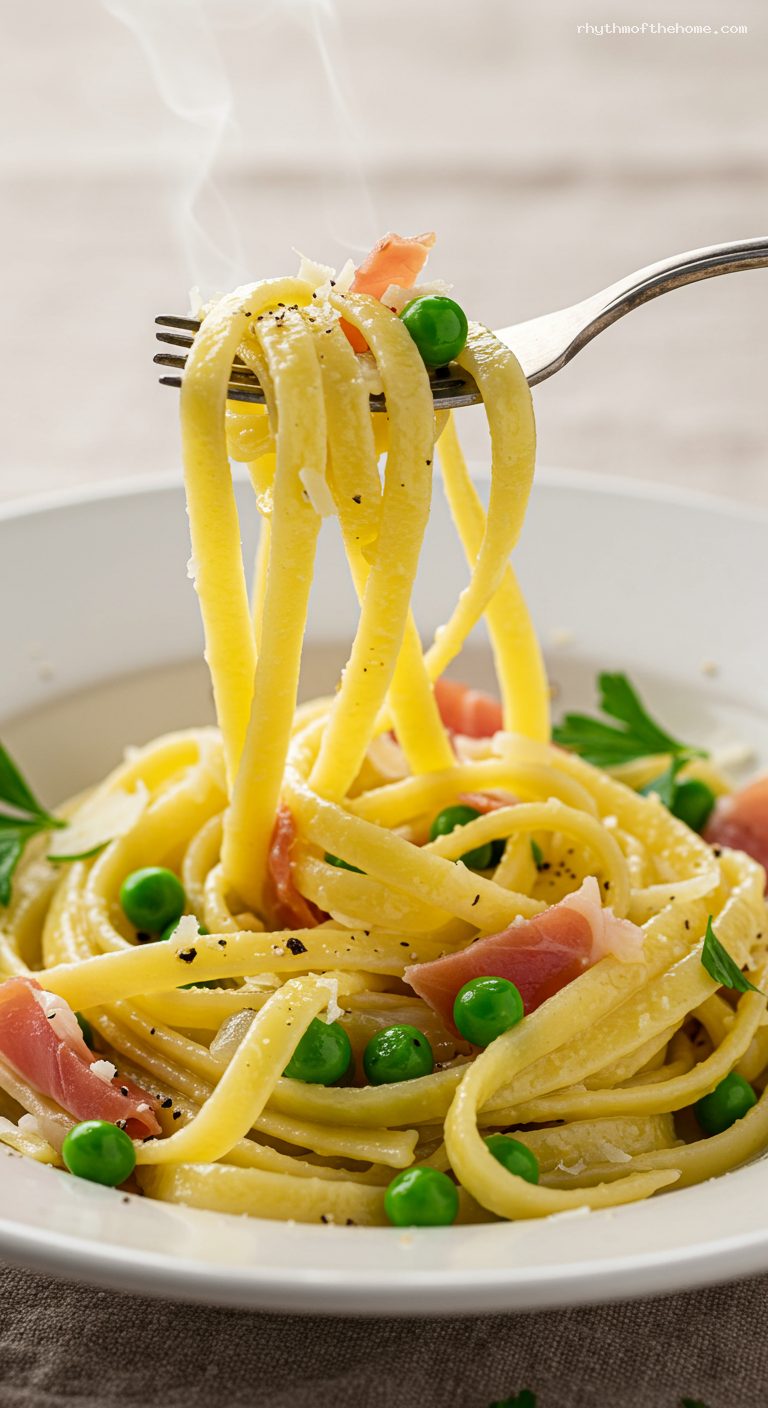
Step-by-Step Instructions
Step 1: Set up your pot and prep
Bring 4 quarts (3.8 L) of water to a boil in a large pot. Add 2 tablespoons kosher salt. Meanwhile, finely dice the onion, cut the prosciutto into ribbons, measure out the peas, and grate the Parmigiano if not pre-grated. Keep the eggs and yolks at room temperature to prevent the sauce from tightening too fast.
Step 2: Make the egg-and-Parmigiano emulsion
In a medium bowl, whisk the eggs, yolks, Parmigiano, and 1/2 teaspoon black pepper until very smooth and thick, 30–60 seconds. If it seems very stiff, whisk in 1 tablespoon cool water to loosen slightly. Set aside at room temperature. This base should be glossy and lump-free.
Step 3: Sweat the onion low and slow
In a wide 12-inch (30 cm) skillet, melt the butter with the olive oil over medium-low heat. Add the onion and a small pinch of salt; cook, stirring occasionally, until soft, sweet, and translucent without browning, 8–10 minutes. If using, add the white wine and simmer 30 seconds to cook off the alcohol. Keep the heat gentle—no color on the onions.
Step 4: Warm the prosciutto and peas
Add the prosciutto ribbons and toss just until they blush and become supple, 30–60 seconds. Stir in the peas and cook until hot and bright green, about 2 minutes. Reduce heat to low to keep the mixture warm but not sizzling.
Step 5: Cook the tagliatelle and reserve pasta water
Add tagliatelle to boiling water and cook until al dente (8–10 minutes for dried; check package and taste). Before draining, reserve 1 1/2 cups hot pasta water. Drain the pasta well.
Step 6: Emulsify off heat for a silky sauce
Take the skillet completely off the heat. Add the drained pasta to the onion–prosciutto–pea mixture with 1/2 cup hot pasta water. Toss 30–60 seconds so the pasta absorbs flavors and the pan cools slightly. Stream in the egg-and-Parmigiano emulsion while tossing vigorously with tongs. Add more hot pasta water, a splash at a time (2–4 tablespoons), until the sauce becomes glossy and coats the noodles like silk. Keep the pan off direct heat to avoid scrambling; aim for a sauce temperature of about 150–155°F (66–68°C) if using a thermometer.
Step 7: Finish and serve immediately
Taste and adjust with pepper and salt only if needed. Swirl the pasta into bowls, top with more Parmigiano, an extra grind of black pepper, and parsley if using. Serve at once while the sauce is fluid and glossy.
Pro Tips
- Room-temperature eggs emulsify more smoothly and are less likely to curdle.
- Keep it off heat when adding the egg mixture. If it thickens too fast, loosen with more hot pasta water.
- Finely grate the Parmigiano (microplane or very fine rasp) so it melts seamlessly into the sauce.
- Slice prosciutto into ribbons just before cooking; aim to warm it gently, not crisp it.
- Rescue plan: if the sauce looks streaky or slightly curdled, toss in 1–2 tablespoons cool water and whisk vigorously off heat.
Variations
- Speck or Pancetta: Swap prosciutto for speck or mild pancetta. If using pancetta, render it gently before adding onion, and adjust salt.
- Vegetarian Papalina: Omit prosciutto; sauté 6 oz (170 g) sliced cremini mushrooms with the onions and add a teaspoon of white miso for savory depth.
- Spring Greens: Replace peas with 1 cup (135 g) thinly sliced asparagus tips; cook 2–3 minutes until crisp-tender.
Storage & Make-Ahead
This dish shines fresh and does not hold long once sauced. You can, however, prepare components ahead: sweat the onions up to 2 days in advance and refrigerate; bring to a gentle warm before proceeding. Leftovers keep 1 day in an airtight container; reheat gently in a skillet over low heat with a splash of water to re-loosen the sauce. Expect the texture to be less silky than fresh.
Nutrition (per serving)
Approximate: 660 calories; 68 g carbohydrates; 33 g protein; 27 g fat (13 g saturated); 4 g fiber; 5 g sugars; 950 mg sodium. Estimates will vary based on brands and salt level.

Leave a Reply