
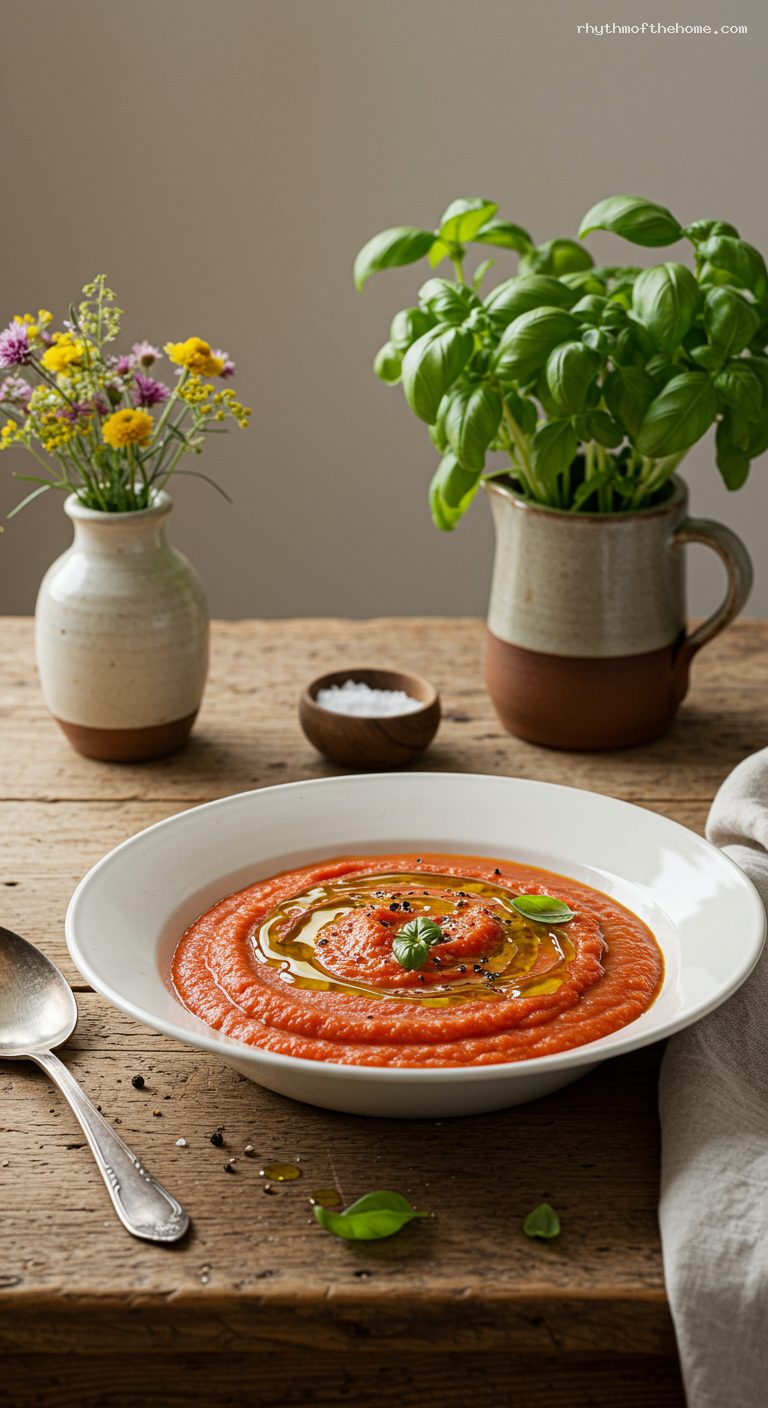
Quick Recipe Version (TL;DR)
Quick Ingredients
- 1/4 cup (60 ml) extra-virgin olive oil, plus 2 tbsp for finishing
- 4 large garlic cloves, thinly sliced
- 1 (28-oz/800 g) can whole peeled tomatoes, crushed by hand, or 1.2 kg ripe tomatoes, peeled and chopped
- 300 g stale country-style bread, torn into bite-size pieces
- 3 cups (720 ml) low-sodium vegetable broth or water
- 1 tightly packed cup (about 30 g) fresh basil leaves, torn
- 1 1/2 tsp kosher salt, plus more to taste
- 1 tsp freshly cracked black pepper, plus more to finish
- Pinch of sugar (about 1/2 tsp), optional
- 1/2 tsp red pepper flakes, optional
Do This
- 1. Prep: Crush canned tomatoes or peel and chop fresh. Tear stale bread.
- 2. Warm 1/4 cup oil in a pot over medium heat; gently cook garlic (and red pepper flakes, if using) 1–2 minutes.
- 3. Add tomatoes, 1 tsp salt, and optional sugar; simmer 10–12 minutes to break down.
- 4. Stir in 3 cups broth and the bread; reduce heat to medium-low.
- 5. Simmer 15–20 minutes, stirring and mashing, until thick, silky, and spoonable.
- 6. Stir in basil, remaining 1/2 tsp salt, and 1 tsp pepper; rest 10 minutes.
- 7. Serve warm with a generous drizzle of olive oil and extra cracked pepper.
Why You’ll Love This Recipe
- Comfort in a bowl: silky, spoonable tomato-bread goodness with a lush olive oil finish.
- One-pot and pantry-friendly: a smart way to revive stale bread into a Tuscan classic.
- Big flavor, simple ingredients: ripe tomatoes, garlic, and basil do the heavy lifting.
- Naturally vegan and weeknight-easy, yet dinner-party worthy.
Grocery List
- Produce: Garlic, fresh basil, ripe tomatoes (if not using canned)
- Dairy: None
- Pantry: Extra-virgin olive oil, canned whole peeled tomatoes (optional if not using fresh), vegetable broth or water, kosher salt, black pepper, red pepper flakes (optional), sugar (optional), country-style bread
Full Ingredients
Tomato Base Options (use one)
- Option A: 1 (28-oz/800 g) can whole peeled tomatoes, crushed by hand
- Option B: 1.2 kg ripe tomatoes, peeled (blanch and slip skins) and chopped
Soup Base and Bread
- 1/4 cup (60 ml) extra-virgin olive oil
- 4 large garlic cloves, thinly sliced
- 300 g stale country-style or Tuscan bread, crust trimmed if very hard, torn into bite-size pieces
- 3 cups (720 ml) low-sodium vegetable broth or water
- 1 1/2 tsp kosher salt, divided
- 1 tsp freshly cracked black pepper, plus more for serving
- Pinch of sugar (about 1/2 tsp), optional to balance acidity
- 1/2 tsp red pepper flakes, optional
Finishing
- 1 tightly packed cup (about 30 g) fresh basil leaves, torn
- 2 tbsp extra-virgin olive oil, for drizzling
- More cracked black pepper, to taste
Step-by-Step Instructions
Step 1: Prepare tomatoes and bread
If using canned tomatoes, pour into a bowl and crush by hand into small pieces. If using fresh tomatoes, score an X on the bottoms, blanch 30–45 seconds, shock in ice water, slip off skins, and chop. Tear stale bread into bite-size pieces; if it is very soft, spread on a sheet pan and dry in a low oven at 250°F (120°C) for 10 minutes to firm it up.
Step 2: Gently cook the aromatics
Warm 1/4 cup (60 ml) olive oil in a heavy pot over medium heat. Add sliced garlic and, if using, red pepper flakes. Cook, stirring, until fragrant and just turning pale gold, 1–2 minutes. Do not brown the garlic.
Step 3: Build the tomato base
Add the prepared tomatoes, 1 tsp of the salt, and the optional pinch of sugar. Stir and bring to a lively simmer over medium heat. Cook 10–12 minutes, stirring occasionally, until the tomatoes break down and look saucy and glossy.
Step 4: Add bread and liquid
Pour in the broth (or water) and add the torn bread. Stir well to ensure all bread is moistened. Reduce heat to medium-low so the mixture bubbles gently.
Step 5: Simmer to a silky porridge
Simmer 15–20 minutes, stirring frequently and pressing/mashing the bread with the back of a spoon or a whisk. The bread should dissolve into the tomatoes, creating a thick, spoonable, glossy porridge. If it becomes too thick, add hot water or broth a splash at a time to loosen.
Step 6: Season and finish with basil
Stir in the torn basil, remaining 1/2 tsp salt, and 1 tsp cracked black pepper. Taste and adjust seasoning. Drizzle in 1 tbsp olive oil and stir for sheen.
Step 7: Rest and serve
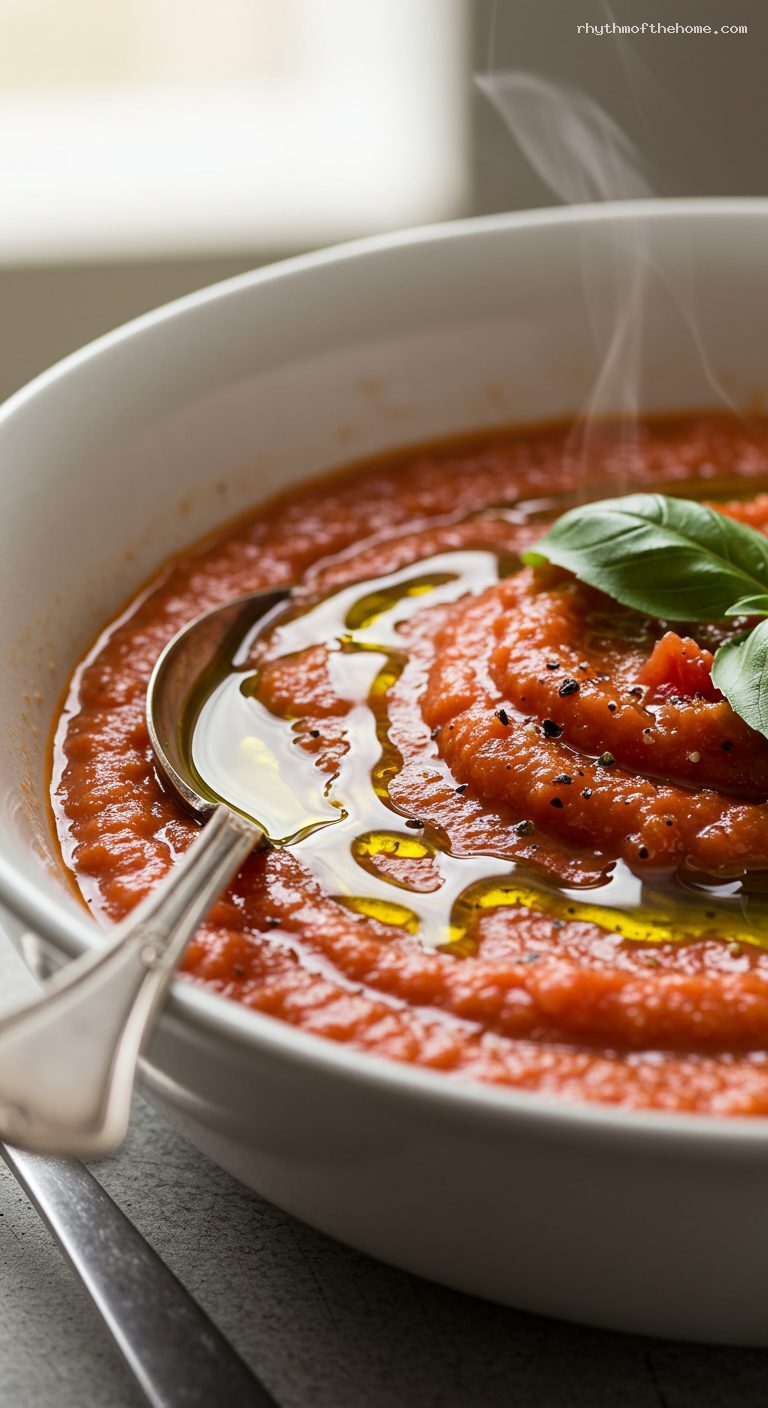
Take the pot off the heat and let the pappa rest for 10 minutes to thicken and marry flavors. Ladle into warm bowls, finish with the remaining 1 tbsp olive oil, and top with extra cracked pepper and a few basil leaves.
Pro Tips
- Best bread: Country-style, rustic loaves with an open crumb (like Tuscan, ciabatta, or sourdough) dissolve into a silky texture without turning gluey.
- Control thickness: The dish should be thick yet spoonable. Add hot water or broth a splash at a time to reach your preferred consistency.
- Mind the salt: Tuscan bread is traditionally unsalted. If your bread is salted and your broth is not low-sodium, reduce the added salt and adjust at the end.
- Olive oil matters: A good extra-virgin olive oil brings signature fruitiness—use it both in the pot and as a generous final drizzle.
- Make it mellow: If your tomatoes are very acidic, the optional pinch of sugar smooths the edges without making the dish sweet.
Variations
- Roasted Tomato Pappa: Roast fresh tomatoes at 425°F (220°C) with olive oil and salt for 25–30 minutes, then proceed. Deeper, caramelized flavor.
- Smoky Summer Twist: Grill thick slices of bread until lightly charred, then tear and use as directed. Adds subtle smoke.
- Spicy Calabrian Style: Stir in 1–2 tsp chopped Calabrian chiles with the garlic for a friendly kick.
Storage & Make-Ahead
Refrigerate leftovers in an airtight container for up to 4 days. The flavor improves by day two. Reheat gently on the stovetop over low heat, adding a splash of water or broth to loosen. Freeze up to 2 months; thaw overnight in the refrigerator and reheat as above. Add fresh basil and a fresh olive oil drizzle after reheating.
Nutrition (per serving)
Approximate: 420 calories; 22 g fat (3 g saturated); 45 g carbohydrates; 8 g protein; 5 g fiber; 8 g sugars; 850 mg sodium. Values will vary with broth, bread, and oil used.

Leave a Reply