
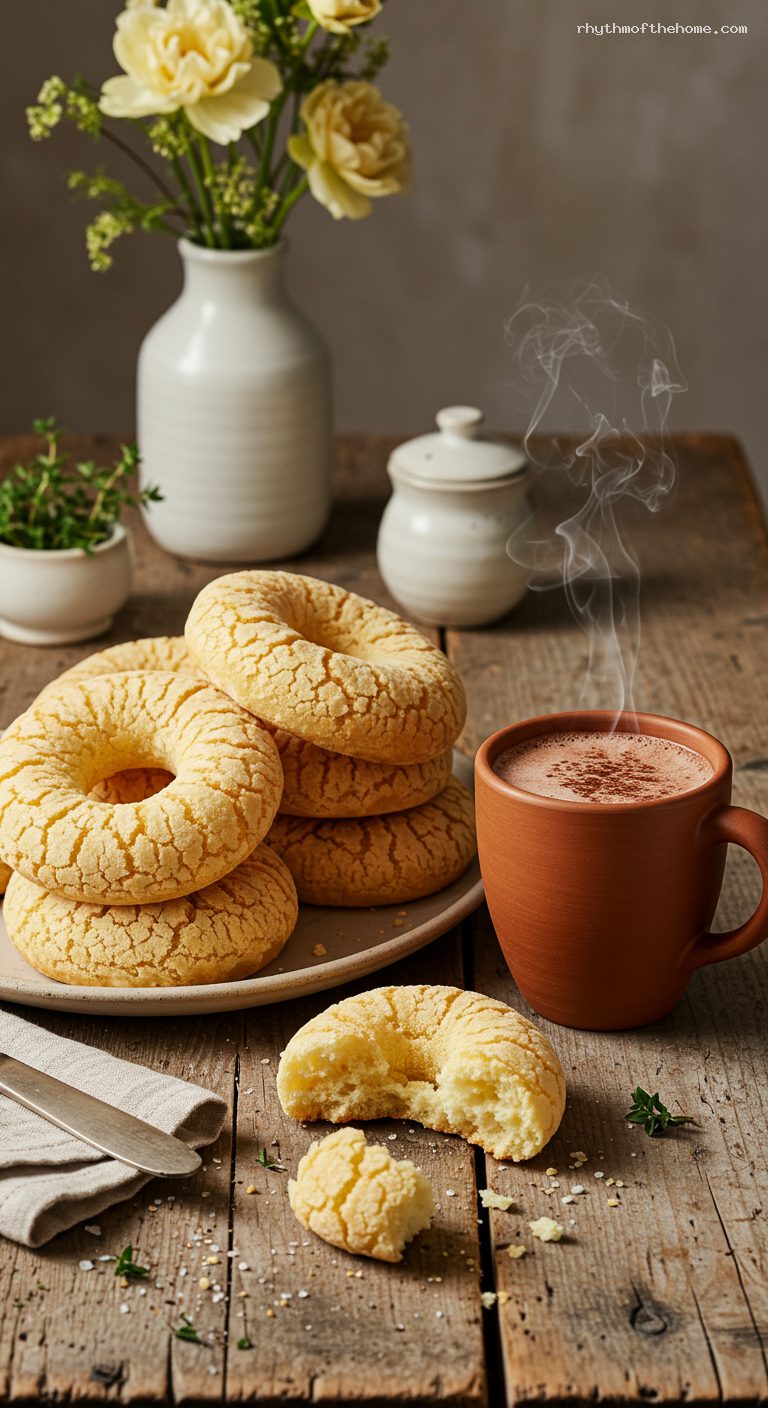
Quick Recipe Version (TL;DR)
Quick Ingredients
- 500 g sour cassava starch (almidón agrio) (about 4 cups + 2 tbsp)
- 350 g queso campesino or queso fresco, grated/crumbled (about 2 3/4 cups)
- 60 g unsalted butter (4 tbsp)
- 180 ml whole milk (3/4 cup)
- 2 large eggs (about 100 g), room temp
- 2 tbsp sugar
- 3/4 tsp fine sea salt (reduce to 1/2 tsp if cheese is very salty)
- 1 tsp baking powder
- Optional: 1 tsp white vinegar if starch is not very sour
Do This
- 1. Heat oven to 230°C/450°F; line 2 baking sheets with parchment.
- 2. Warm milk and butter until steaming; do not boil.
- 3. Whisk starch, sugar, salt, baking powder; pour in hot milk-butter; stir to hydrate.
- 4. Add cheese, eggs (and vinegar if using); knead until smooth, 2–3 minutes.
- 5. Rest dough 10 minutes; divide into 16 pieces.
- 6. Roll each into a 15 cm rope, join ends into rings; bake 12–15 minutes until lightly golden.
- 7. Serve warm, ideally with hot chocolate.
Why You’ll Love This Recipe
- Authentic Nariño-style pandeyucas with that characteristic gentle tang from sour cassava starch.
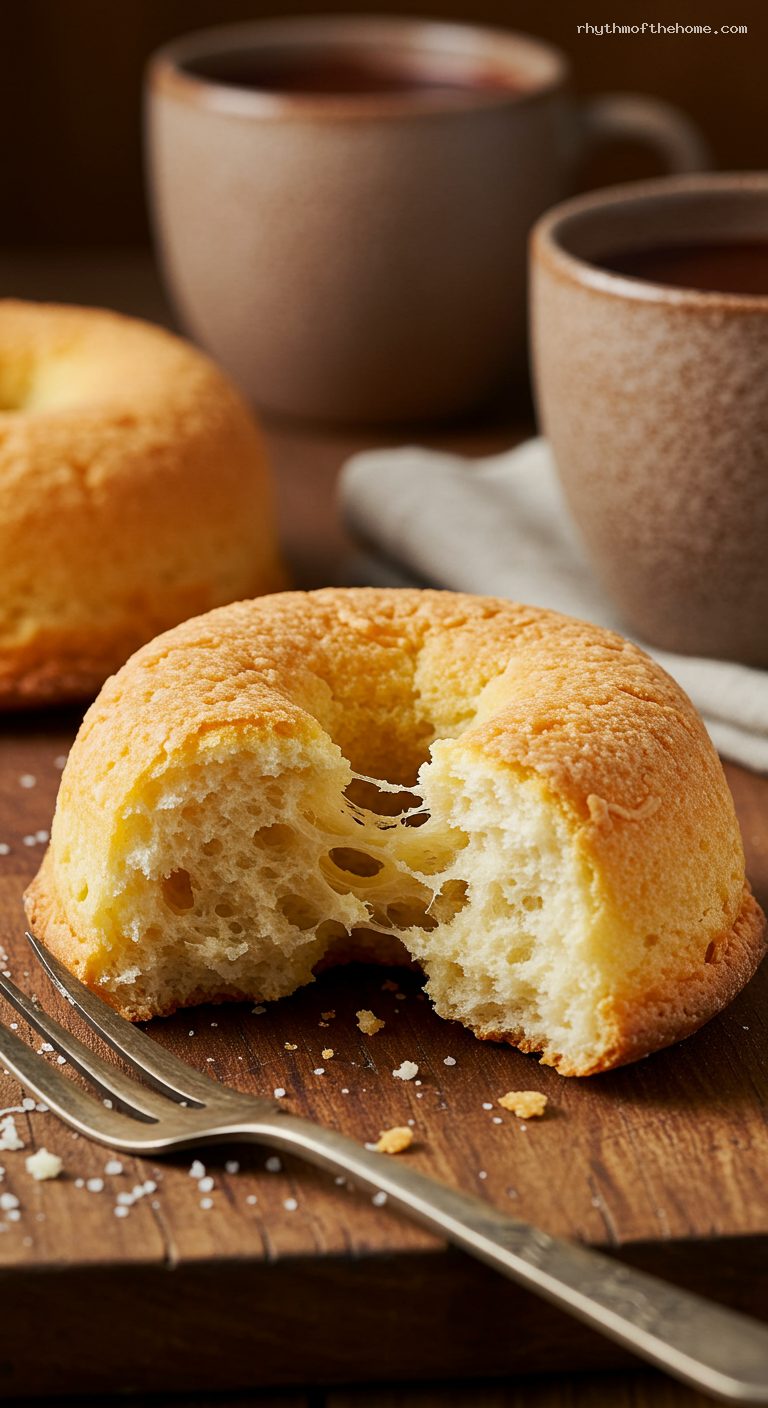
- Cheesy, springy crumb and a delicate, lightly golden exterior—perfect straight from the oven.
- No yeast and naturally gluten-free; ready in under an hour.
- Ideal with a steaming cup of hot chocolate for a true Colombian pairing.
Grocery List
- Produce: None required
- Dairy: Queso campesino or queso fresco (or mozzarella + feta mix), unsalted butter, whole milk, eggs
- Pantry: Sour cassava starch (almidón agrio), sugar, fine sea salt, baking powder, optional white vinegar
Full Ingredients
For the Dough (Traditional Nariño-Style)
- 500 g sour cassava starch (almidón agrio) (about 4 cups + 2 tbsp; weight highly recommended)
- 350 g queso campesino or queso fresco, grated/crumbled (about 2 3/4 cups)
- 60 g unsalted butter (4 tbsp)
- 180 ml whole milk (3/4 cup)
- 2 large eggs (about 100 g), at room temperature
- 2 tbsp sugar (about 25 g)
- 3/4 tsp fine sea salt (reduce to 1/2 tsp if using a very salty cheese)
- 1 tsp baking powder
- Optional: 1 tsp white vinegar if your sour starch is very mild
If You Cannot Find Sour Cassava Starch (Suggested Cheese Blend)
- Instead of queso campesino, use 250 g low-moisture mozzarella + 100 g feta (for salt and tang)
Step-by-Step Instructions
Step 1: Preheat and prepare your pans
Place a rack in the middle of the oven and preheat to 230°C/450°F. Line two baking sheets with parchment paper. If you have a baking stone or an inverted preheated baking sheet, use it to encourage quick lift and even browning.
Step 2: Warm the milk and butter
In a small saucepan, combine the milk and butter. Heat over medium until the butter melts and the mixture is steaming but not boiling (about 80–85°C / 175–185°F). Turn off the heat.
Step 3: Scald the starch and form a base dough
In a large bowl, whisk together the sour cassava starch, sugar, salt, and baking powder. Make a well and pour in the hot milk-butter mixture. Stir with a sturdy spoon until the starch is evenly moistened and clumpy. This hot liquid “scalds” the starch, giving pandeyucas their signature springy bite.
Step 4: Add cheese and eggs, then knead
Add the grated/crumbled cheese and the eggs (plus the vinegar if your sour starch is mild). Mix with your hand until a cohesive dough forms, then knead in the bowl 2–3 minutes. The dough should feel soft, smooth, and slightly tacky. If too dry and cracking, add milk 1 teaspoon at a time. If sticky, dust in 1–2 tablespoons more sour starch.
Step 5: Rest the dough briefly
Cover and let the dough rest for 10 minutes. This short rest allows the starch to fully hydrate and makes shaping easier and cleaner.
Step 6: Portion and shape the classic rings
Divide the dough into 16 equal pieces (about 40 g each). Roll each piece into a smooth rope about 15 cm long and 1.2–1.5 cm thick. Overlap the ends by 1 cm and pinch well to seal, forming neat rings. Arrange on the prepared sheets, spacing them at least 3 cm apart.
Step 7: Bake until lightly golden and serve warm
Bake 12–15 minutes until the rings are puffed with tiny fissures and light golden patches on top; the bottoms should be just turning golden. Internal temperature should be around 93°C/200°F. For a hint more color, broil for 30–60 seconds, watching closely. Serve immediately—pandeyucas are at their very best warm, ideally with hot chocolate.
Pro Tips
- Use sour cassava starch (almidón agrio) for authentic tang and spring. Sweet tapioca starch will not taste the same.
- Weigh your starch if possible. It’s fluffy and easy to overpack with cups.
- Cheese matters: a semi-crumbly, fresh cheese (queso campesino or fresco) gives body. A blend of mozzarella (stretch) and feta (salt/tang) is a solid backup.
- Seal the ring ends well to prevent them from popping open in the oven.
- Do not overbake; they should be just set and lightly golden to stay moist and springy inside.
Variations
- Extra-tang Nariñense: Replace 2 tbsp of the milk with plain yogurt and add the optional 1 tsp vinegar. Rest the dough 20–30 minutes before shaping.
- Herb and Chile: Knead in 2 tbsp finely chopped scallions and 1 tbsp minced mild chile (ají dulce or jalapeño) for a savory twist.
- Mini Pandeyucas: Shape into 24 small rings (about 26–28 g each). Bake 9–12 minutes.
Storage & Make-Ahead
Best enjoyed warm the day they are baked. Store leftovers airtight at room temperature for up to 24 hours. Reheat at 180°C/350°F for 5–7 minutes. To freeze unbaked, shape rings and freeze on a tray until solid; transfer to a bag and keep up to 2 months. Bake from frozen at 230°C/450°F for 14–17 minutes. Baked leftovers can also be frozen up to 1 month; reheat at 180°C/350°F for 8–10 minutes.
Nutrition (per serving)
Approximate per ring (1/16 of recipe): 215 calories; 30 g carbohydrates; 8 g fat; 5 g protein; 250 mg sodium. Values will vary with cheese and salt.

Leave a Reply