
Quick Recipe Version (TL;DR)
Quick Ingredients
- 3 cups (555 g) Japanese short‑grain rice
- 3 1/4 cups (780 ml) water
- 8 oz (225 g) salmon fillet + 1 tsp kosher salt
- 1 can (5 oz/142 g) tuna, drained
- 2 tbsp (30 g) Japanese mayonnaise, 1 tsp soy sauce, 1 tsp rice vinegar
- 4 umeboshi (pickled plums), pitted
- 6 full sheets nori, cut in half (12 pieces)
- Fine sea salt, to season rice
- 2 tbsp toasted sesame seeds or furikake
- For shaping: 1 cup (240 ml) water + 1 tsp fine sea salt
Do This
- 1) Rinse rice until nearly clear; soak 20 minutes, then drain.
- 2) Cook rice with 3 1/4 cups water: simmer 18 minutes covered, rest 10 minutes off heat.
- 3) Salt salmon (1 tsp), rest 10 minutes; broil 7–9 minutes at 500°F/260°C; flake.
- 4) Mix tuna, mayo, soy, and vinegar; pit umeboshi; cut nori sheets in half.
- 5) Season cooked rice with 1/2–3/4 tsp fine salt; keep warm. Wet hands with salted water.
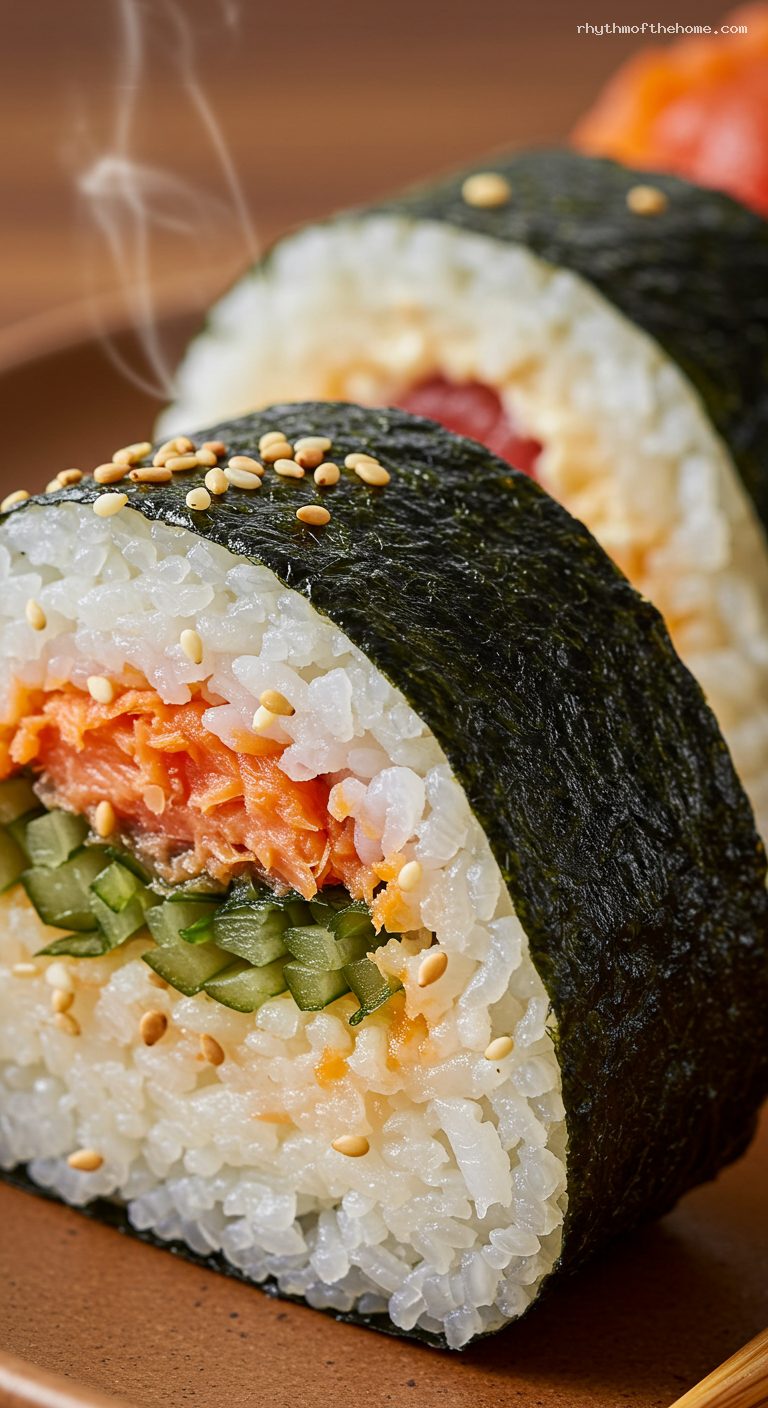
- 6) Make 12 onigiri: enclose salmon, tuna‑mayo, or an umeboshi; shape triangles; wrap with nori; dust with sesame or furikake.
Why You’ll Love This Recipe
- Three classic fillings—salty salmon, tangy umeboshi, and creamy tuna‑mayo—cover every craving.
- Hand‑pressed rice with crackly nori delivers perfect texture and portability.
- Step‑by‑step shaping guidance keeps rice from sticking and ensures tidy triangles.
- Ideal for lunchboxes: easy to make ahead, pack, and eat at room temperature.
Grocery List
- Produce: Scallion (optional), umeboshi (pickled plums), shiso leaves (optional)
- Dairy: None
- Pantry: Japanese short‑grain rice, nori sheets, canned tuna, Japanese mayonnaise, soy sauce, rice vinegar, sesame seeds or furikake, kosher salt, fine sea salt, salmon fillet
Full Ingredients
Rice
- 3 cups (555 g) Japanese short‑grain rice
- 3 1/4 cups (780 ml) cold water
- 1/2–3/4 tsp fine sea salt, to season cooked rice
Filling: Salted Salmon (Shiozake)
- 8 oz (225 g) salmon fillet, skin on or off
- 1 tsp kosher salt
Filling: Tuna–Mayo
- 1 can (5 oz/142 g) tuna, well drained
- 2 tbsp (30 g) Japanese mayonnaise (Kewpie preferred)
- 1 tsp soy sauce
- 1 tsp rice vinegar
- 1 tbsp finely minced scallion (optional)
- Pinch white pepper (optional)
Filling: Umeboshi
- 4 medium umeboshi (pickled plums), pits removed
- Optional: 2–3 shiso leaves, finely sliced
To Assemble
- 6 full sheets nori, cut in half to make 12 rectangles
- 2 tbsp toasted sesame seeds or furikake, for dusting
- For hands: 1 cup (240 ml) water mixed with 1 tsp fine sea salt
Step-by-Step Instructions
Step 1: Rinse and soak the rice
Place the rice in a bowl, cover with cold water, and swish gently. Drain and repeat 3–4 times until the water is mostly clear. Cover the rinsed rice with fresh cold water and soak for 20 minutes. Drain well in a sieve for 1–2 minutes.
Step 2: Cook the rice (stovetop or cooker)
Stovetop: Add the drained rice and 3 1/4 cups (780 ml) water to a medium pot with a tight lid. Bring to a boil over medium heat, then immediately reduce to low, cover, and simmer for 18 minutes. Turn off the heat and rest, covered, for 10 minutes. Rice cooker: Add rice and 780 ml water, cook on the white rice setting, then let rest 10 minutes.
Step 3: Cure and cook the salmon
Pat the salmon dry and sprinkle both sides with 1 tsp kosher salt. Rest at room temperature for 10 minutes. Set an oven rack 6 inches from the broiler and preheat broiler to 500°F (260°C). Place salmon on a foil‑lined tray and broil 7–9 minutes until just cooked and lightly browned at the edges. Cool slightly, remove skin and any pin bones, and flake into small pieces.
Step 4: Mix tuna–mayo and prep umeboshi and nori
In a small bowl, combine drained tuna, mayonnaise, soy sauce, rice vinegar, and scallion and white pepper if using. Pit the umeboshi. Cut the nori sheets in half to make 12 rectangles. Keep nori in a dry place so it stays crisp.
Step 5: Season and set up for shaping
Transfer the hot cooked rice to a wide bowl. Sprinkle evenly with 1/2–3/4 tsp fine sea salt and gently fold with a rice paddle to distribute without crushing the grains. Cover with a damp towel to keep warm. Prepare a small bowl of salted water (1 cup water + 1 tsp salt) to wet your hands; this prevents sticking and lightly seasons the rice.
Step 6: Shape the onigiri (triangles or rounds)
Divide rice into 12 equal portions (about 1/2 cup or 90–110 g each). Working one at a time, wet your hands with salted water. Lightly press one portion into a shallow bowl in your palm, make a small well, add a heaping teaspoon of filling (salmon flakes, a spoon of tuna–mayo, or one umeboshi), then cover with a little more rice if needed. Using gentle but firm pressure, shape into a triangle by pressing three sides between your hands, rotating as you go. Aim for compact but not dense—about 6–8 gentle presses per side.
Step 7: Wrap with nori and finish
Place a nori rectangle shiny side out, rough side toward the rice. Center the onigiri and fold the nori up and around to create a neat band or full wrap. Dust the exposed rice with toasted sesame seeds or furikake. Repeat to make 4 salmon, 4 umeboshi, and 4 tuna–mayo onigiri. Serve warm or at room temperature.
Pro Tips
- Warm rice shapes best. If it cools, microwave briefly (10–15 seconds) covered with a damp towel to re‑soften.
- Keep hands damp and lightly salted to prevent sticking and to season the surface of the rice.
- Rough side of nori goes against the rice; shiny side faces out for a crisp bite and prettier look.
- Do not overpack the filling—about 1 teaspoon per onigiri prevents splitting.
- For ultra‑neat triangles, shape inside a square of plastic wrap, then unwrap and add nori just before eating.
Variations
- Grilled yaki onigiri: Brush finished onigiri with a light soy–mirin mixture and grill in a skillet until the surface is golden and crisp; add nori after grilling.
- Vegan miso–shiitake: Sauté chopped shiitake with a teaspoon of miso and a splash of mirin until glazed; use in place of fish.
- Spicy tuna–mayo: Add 1–2 teaspoons sriracha or togarashi to the tuna mixture for gentle heat.
Storage & Make-Ahead
Best the day made. For lunchboxes, assemble in the morning and keep cool. Pack tuna–mayo onigiri with an ice pack and eat within 4–6 hours; for longest nori crispness, wrap nori separately and apply just before eating. Refrigeration dries rice; if you must chill, wrap tightly and rewarm 10–15 seconds in the microwave to soften before eating. Umeboshi and salted salmon onigiri hold at cool room temperature up to 4 hours; tuna–mayo should be kept below 40°F/4°C. Onigiri freeze acceptably without mayo fillings; thaw at room temperature, then refresh briefly in the microwave and add nori.
Nutrition (per serving)
Per onigiri (average across the trio): about 200 kcal; 32 g carbs; 6 g protein; 5 g fat; 450 mg sodium. Values vary by filling and garnishes.

Leave a Reply