

Quick Recipe Version (TL;DR)
Quick Ingredients
- 12 oz (340 g) spaghetti or linguine
- 4 cups (960 ml) low-sodium vegetable or chicken broth
- 1 cup (240 ml) water
- 1 tbsp olive oil
- 3 tbsp (42 g) unsalted butter, cut into pieces
- 1 cup (100 g) finely grated Parmesan, plus more for serving
- 1 cup (150 g) frozen peas
- 1 tbsp lemon zest (from 1 large lemon)
- 3 tbsp (45 ml) fresh lemon juice (from 1 large lemon)
- 3/4 tsp kosher salt, plus more to taste
- 1/2 tsp freshly ground black pepper, plus more to finish
- 1/4 cup (10 g) chopped fresh parsley or basil
Do This
- 1. In a large deep skillet, bring broth, water, olive oil, salt, and pepper to a boil over medium-high heat.
- 2. Add pasta (break in half if needed), stir, and reduce to a lively simmer.
- 3. Simmer 10–12 minutes, stirring often, until pasta is just shy of al dente and liquid is reduced.
- 4. Stir in frozen peas and cook 2 minutes, until bright green and hot.
- 5. Remove from heat; add butter, Parmesan, lemon zest, and lemon juice. Toss vigorously until glossy and creamy.
- 6. Finish with herbs and lots of black pepper; loosen with a splash of hot water or broth if needed. Serve with extra Parmesan.
Why You’ll Love This Recipe
- One pan, minimal cleanup, and no separate pot of boiling water.
- The pasta starch and Parmesan create a glossy, creamy sauce without heavy cream.
- Bright lemon and sweet peas keep it fresh and weeknight-friendly.
- Easy to customize with herbs, proteins, or extra vegetables.
Grocery List
- Produce: 1 large lemon, fresh parsley or basil
- Dairy: unsalted butter, Parmesan cheese
- Pantry: spaghetti or linguine, low-sodium broth (vegetable or chicken), olive oil, kosher salt, black pepper
Full Ingredients
Pasta & Simmer Base
- Pasta: 12 oz (340 g) spaghetti or linguine
- Broth: 4 cups (960 ml) low-sodium vegetable or chicken broth
- Water: 1 cup (240 ml) water
- Olive oil: 1 tbsp
- Kosher salt: 3/4 tsp (use 1/2 tsp if your broth is saltier)
- Black pepper: 1/2 tsp freshly ground
Finishers (Make the Sauce)
- Frozen peas: 1 cup (150 g), straight from the freezer
- Unsalted butter: 3 tbsp (42 g), cut into small pieces
- Parmesan: 1 cup (100 g) finely grated, plus 2–4 tbsp for serving
- Lemon zest: 1 tbsp (zest of 1 large lemon)
- Lemon juice: 3 tbsp (45 ml), freshly squeezed
To Serve
- Fresh herbs: 1/4 cup (10 g) chopped parsley or basil (or a mix)
- Black pepper: more to taste (this dish loves a generous grind)
- Optional: extra lemon wedges for squeezing at the table
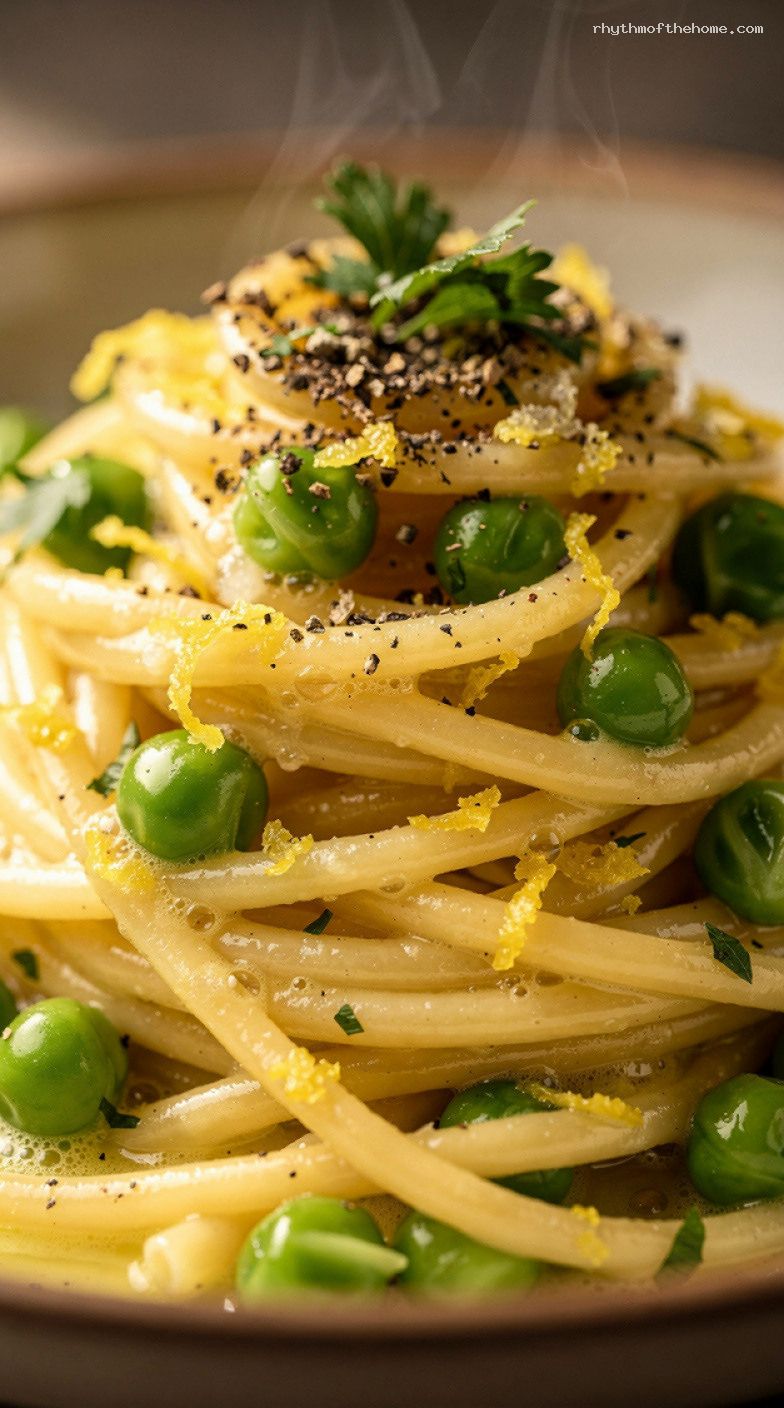
Step-by-Step Instructions
Step 1: Set up your pan and prep the lemon and cheese
Grab a large, deep skillet or sauté pan (12-inch is ideal) with straight sides, plus tongs or a spoon for stirring. Zest the lemon first, then juice it (you’ll need 3 tbsp). Finely grate the Parmesan so it melts smoothly into the sauce.
Step 2: Bring the simmer base to a boil
Add the broth, water, olive oil, kosher salt, and 1/2 tsp black pepper to the skillet. Set over medium-high heat and bring to a full boil, about 3–4 minutes depending on your stove.
Step 3: Add the pasta and simmer, stirring often
Add the spaghetti or linguine. If your skillet is shorter than the pasta, break the noodles in half so they fit neatly. Stir right away to separate strands, then reduce heat to medium to maintain a lively simmer (small, steady bubbles).
Cook for 10–12 minutes, stirring every 30–60 seconds. The goal is for the pasta to be almost tender (just shy of al dente) and for the liquid to reduce so you have a shallow layer of starchy broth left in the pan.
Step 4: Stir in the peas
Stir in the frozen peas and continue simmering for 2 minutes, stirring to keep the pasta moving. The peas should turn bright green and heat through, and the pasta should reach al dente.
Step 5: Turn off the heat to prevent a clumpy sauce
Remove the skillet from the heat completely. This is important: Parmesan can clump or turn grainy if the liquid is boiling hard when you add it.
Step 6: Build the glossy lemon-Parmesan sauce
Add the butter pieces, Parmesan, lemon zest, and lemon juice. Toss and stir vigorously for 45–60 seconds. The butter will emulsify with the starchy cooking liquid and melted Parmesan, forming a creamy, glossy sauce that coats every strand.
If the sauce looks too thick, add 1–3 tbsp hot water or hot broth and toss again. If it looks too thin, keep tossing for another 30 seconds; it will tighten as it cools slightly.
Step 7: Finish with herbs and black pepper, then serve
Stir in the chopped herbs. Taste and adjust with more salt (often 1/8–1/4 tsp is plenty, depending on your broth and cheese). Finish with a generous grind of black pepper.
Serve immediately in warm bowls with extra Parmesan and, if you like, a wedge of lemon for an extra bright squeeze.
Pro Tips
- Grate your own Parmesan: Pre-shredded cheese often contains anti-caking agents that don’t melt as smoothly, which can dull the sauce.
- Stir often during the simmer: This prevents sticking and helps release starch, which is what makes the sauce creamy.
- Add Parmesan off the heat: This keeps the sauce silky instead of grainy.
- Control the thickness: Keep a little extra hot water or broth nearby; a tablespoon or two can revive the sauce instantly.
- Use fresh lemon: Bottled juice tastes flatter here; fresh zest and juice are the whole “spark” of the dish.
Variations
- Add protein: Stir in 2 cups shredded rotisserie chicken or 1 (5 oz) can of drained tuna at the end (after turning off the heat).
- Make it extra green: Add 2 packed cups baby spinach in Step 6; toss until just wilted.
- Change the flavor profile: Swap parsley for dill or mint for a brighter, springy twist; add 1/4 tsp red pepper flakes for gentle heat.
Storage & Make-Ahead
This pasta is best right after cooking, when the sauce is glossiest. If you have leftovers, cool and refrigerate in an airtight container for up to 3 days. Reheat gently in a skillet over medium-low heat with 2–4 tbsp water or broth, stirring frequently until creamy again (about 3–5 minutes). For make-ahead prep: zest and juice the lemon, grate the Parmesan, and chop herbs up to 24 hours in advance; store separately in the fridge.
Nutrition (per serving)
Approximate, based on 4 servings: 560 calories, 20 g protein, 75 g carbs, 20 g fat, 8 g saturated fat, 5 g fiber, 650 mg sodium (varies by broth and Parmesan).

Leave a Reply