
Quick Recipe Version (TL;DR)
Quick Ingredients
- Soft butter + fine breadcrumbs or flour for a 10–12 cup (2.4–2.8 L) Bundt pan
- 5 large eggs, room temperature
- 250 g (1 1/4 cups) granulated sugar
- 1 tsp vanilla extract, 1/4 tsp fine salt, optional zest of 1 lemon
- 200 ml neutral oil (about 3/4 cup + 1 tbsp)
- 250 ml Eierlikör (1 cup), room temperature
- 250 g all-purpose flour (2 cups, spooned and leveled)
- 75 g cornstarch (2/3 cup) + 2 1/2 tsp baking powder
- 150 g powdered sugar (1 1/4 cups) + 3–4 tbsp Eierlikör for glaze
Do This
- 1. Preheat oven to 175°C / 350°F. Generously grease and breadcrumb (or flour) a 10–12 cup Bundt pan.
- 2. Whisk together flour, cornstarch, baking powder, and salt; set aside.
- 3. Beat eggs and sugar with vanilla (and lemon zest, if using) until very pale, thick, and fluffy (about 5–7 minutes).
- 4. On low speed, slowly mix in oil, then Eierlikör, just until smooth.
- 5. Gently fold in dry ingredients in 2–3 additions until no dry streaks remain. Do not overmix.
- 6. Pour batter into pan, smooth top, and bake 40–50 minutes, until golden and a skewer comes out clean or with moist crumbs.
- 7. Cool 15 minutes in pan, then invert onto a rack and cool completely. Whisk powdered sugar with Eierlikör to a thick glaze and drizzle over cake.
Why You’ll Love This Recipe
- Beautifully moist, tender crumb thanks to oil, Eierlikör, and a touch of cornstarch.
- Gentle vanilla-custard aroma from the German egg liqueur without harsh alcohol flavor.
- Simple, one-bowl batter with everyday pantry ingredients plus a bottle of Eierlikör.
- Perfect for holidays, birthdays, or coffee time and keeps wonderfully soft for days.
Grocery List
- Produce: 1 untreated lemon (for optional zest)
- Dairy: 5 large eggs; a splash of milk or cream (optional, for adjusting glaze)
- Pantry: Eierlikör (German egg liqueur); all-purpose flour; cornstarch; baking powder; fine sea salt; granulated sugar; powdered sugar; neutral oil (sunflower or canola); vanilla extract or vanilla sugar; fine dry breadcrumbs or extra flour for dusting pan
Full Ingredients
For Preparing the Bundt Pan
- 1–2 tbsp soft butter or neutral oil, for greasing
- 2–3 tbsp fine dry breadcrumbs or all-purpose flour, for dusting
For the Eierlikör Bundt Cake
- 5 large eggs, room temperature
- 250 g granulated sugar (1 1/4 cups)
- 1 tsp pure vanilla extract or 1 packet vanilla sugar (about 8 g)
- 1/4 tsp fine sea salt
- Optional: finely grated zest of 1 untreated lemon (adds a light, fresh note)
- 200 ml neutral vegetable oil, such as sunflower or canola (about 3/4 cup + 1 tbsp)
- 250 ml Eierlikör (German egg liqueur), room temperature (1 cup)
- 250 g all-purpose flour (2 cups, spooned and leveled)
- 75 g cornstarch (cornflour) (2/3 cup, spooned and leveled)
- 2 1/2 tsp baking powder (about 10 g)
For the Eierlikör Glaze (Optional but Recommended)
- 150 g powdered sugar (1 1/4 cups), sifted
- 3–4 tbsp Eierlikör, plus more as needed for consistency
- Optional: 1–2 tsp milk or cream, to thin if you prefer less alcohol in the glaze
- Optional: extra powdered sugar for light dusting after the glaze sets
Step-by-Step Instructions
Step 1: Prep the oven and pan
Preheat your oven to 175°C / 350°F, with a rack in the middle position. Choose a 10–12 cup (2.4–2.8 L) Bundt pan. To prevent sticking, coat every nook and cranny very generously: use a pastry brush or your fingers to spread soft butter or oil in a thin, even layer over the entire inside surface of the pan, including the center tube.
Add 2–3 tablespoons of fine dry breadcrumbs or all-purpose flour to the pan. Tilt and tap the pan so the coating sticks to the grease and lightly covers all surfaces. Tap out any excess into the sink. Set the pan aside while you make the batter.
Step 2: Combine the dry ingredients
In a medium mixing bowl, whisk together the flour, cornstarch, and baking powder. If you are using vanilla sugar instead of vanilla extract, whisk it in now. This helps distribute the leavening and starch evenly so the cake rises uniformly and bakes with a fine, tender crumb.
For an extra delicate texture, you can sift this mixture once or twice. Set the bowl aside.
Step 3: Beat eggs and sugar until pale and fluffy
In a large mixing bowl (or the bowl of a stand mixer fitted with the whisk attachment), add the eggs, granulated sugar, salt, and lemon zest if using. Beat on medium-high speed for 5–7 minutes, until the mixture is very pale, thick, and has increased noticeably in volume.
When you lift the whisk, the mixture should ribbon back into the bowl and sit on the surface for a moment before sinking in. This step incorporates air and is key to getting a light, tender cake even though we use rich ingredients like oil and Eierlikör.
Step 4: Add oil, Eierlikör, and flavorings
Reduce the mixer speed to low. With the machine running, slowly stream in the neutral oil. Pour in a thin, steady stream so it emulsifies nicely with the egg mixture.
Next, add the Eierlikör and vanilla extract</strong) (if you did not use vanilla sugar earlier). Mix just until the batter is smooth and homogenous. Scrape down the sides and bottom of the bowl with a spatula to make sure everything is evenly combined. Do not overbeat at this stage; you want to preserve the air you whipped into the eggs.
Step 5: Fold in the dry ingredients gently
Sprinkle about one third of the flour mixture over the wet ingredients. Using a spatula or the mixer on its very lowest speed, fold or mix just until the dry ingredients are mostly incorporated. Repeat twice more with the remaining flour mixture.
Stop as soon as you no longer see dry streaks of flour. Overmixing at this stage can develop gluten and make the cake tough. The batter should be smooth, slightly thick, and pourable, with a glossy sheen from the Eierlikör and oil.
Step 6: Fill the pan and bake
Pour the batter into your prepared Bundt pan, scraping out the bowl well with a spatula. Gently smooth the top. Firmly tap the pan once or twice on the counter to release any large air bubbles, which helps the cake bake evenly and hold the definition of the Bundt design.
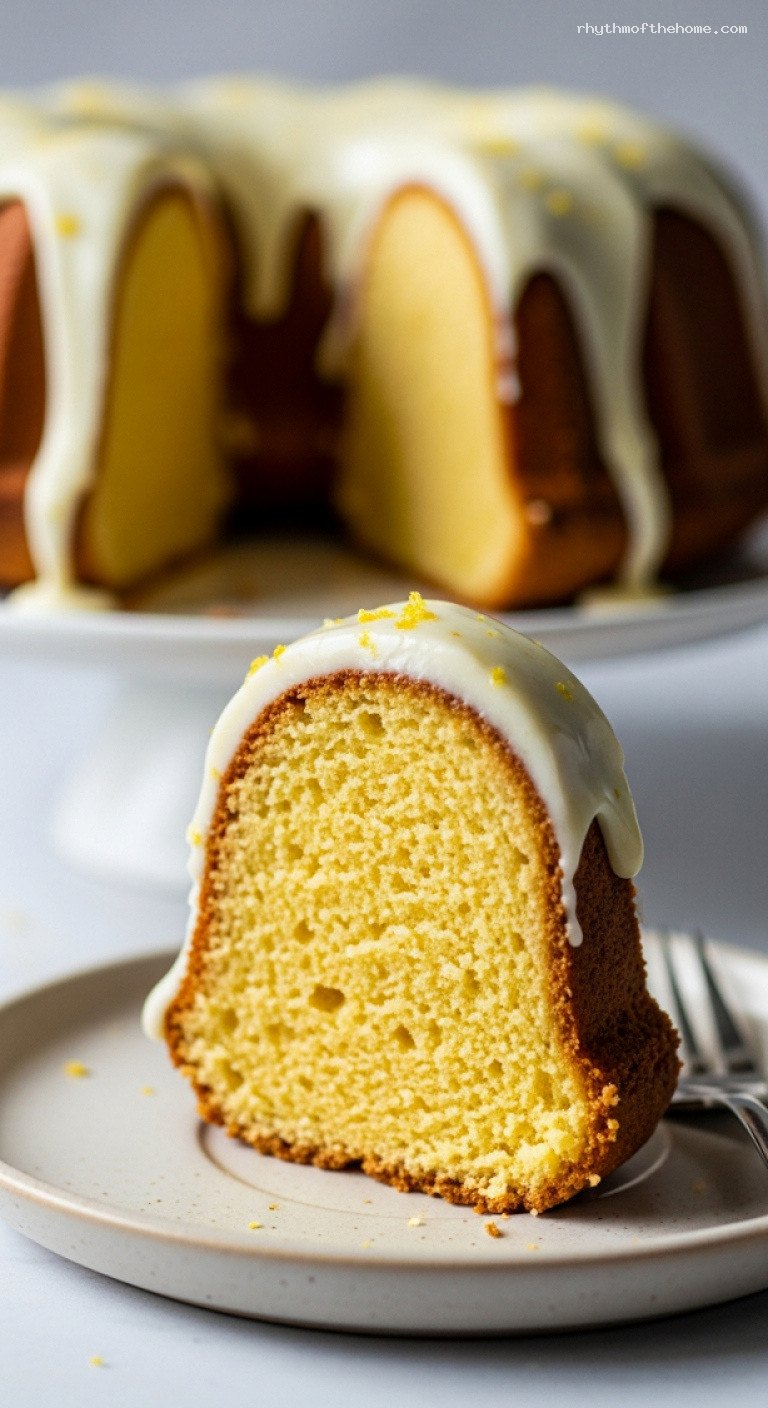
Transfer the pan to the oven and bake for 40–50 minutes. Start checking at about 40 minutes. The cake is done when it is a deep golden yellow, pulls slightly away from the sides, springs back when lightly pressed, and a wooden skewer inserted into the center comes out clean or with just a few moist crumbs (no wet batter).
Step 7: Cool, glaze, and serve
Set the baked cake on a wire rack and let it cool in the pan for 15 minutes. This allows the structure to set so it unmolds cleanly. After 15 minutes, carefully run a thin spatula or plastic knife around the outer edge and the center tube if needed. Place the rack upside down over the pan, then flip them together to invert the cake onto the rack. Lift off the pan.
Let the cake cool completely, about 45–60 minutes, before glazing.
To make the glaze, add the powdered sugar to a small bowl. Whisk in 3 tablespoons of Eierlikör, adding more Eierlikör or a teaspoon or two of milk/cream as needed until you have a thick but pourable glaze that slowly ribbons off a spoon. If it becomes too thin, whisk in a bit more powdered sugar.
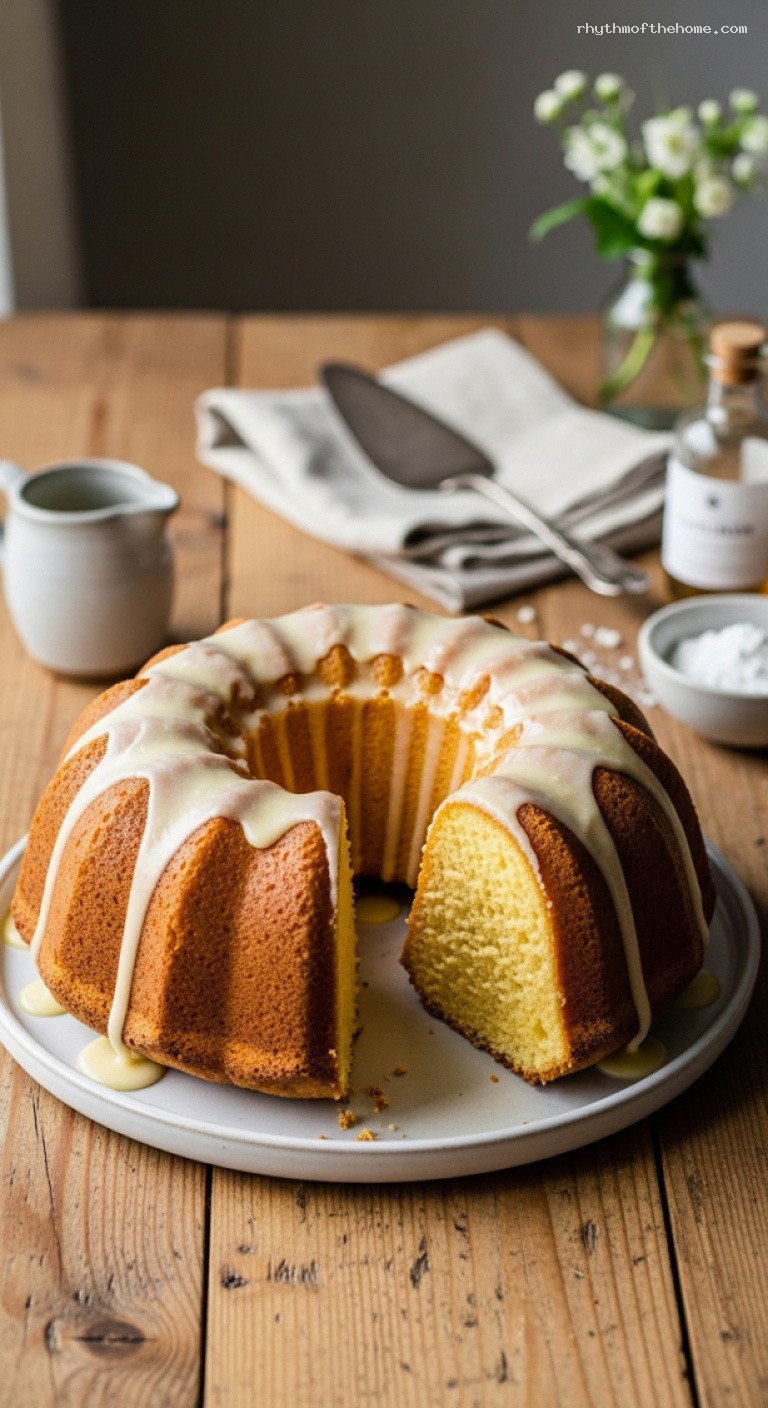
Place the cooled cake (still on the rack) over a tray or parchment to catch drips. Drizzle the glaze generously over the top of the Bundt cake, letting it run down the ridges. Allow the glaze to set for about 15–20 minutes. Slice and enjoy.
Pro Tips
- Use room temperature ingredients: Let eggs and Eierlikör sit out for 20–30 minutes before baking. This helps the batter emulsify properly and gives a finer crumb.
- Grease the Bundt pan meticulously: Any bare spot is a potential sticking point. Use a brush or your fingers to get into all the details, then coat with breadcrumbs or flour for a reliable non-stick layer.
- Do not skimp on beating the eggs and sugar: Those 5–7 minutes of whipping are what make the cake soft and light instead of dense.
- Avoid overbaking: Check early. If your oven runs hot, the cake may be done closer to 40 minutes. A slightly moist crumb is better than a dry, overbaked cake.
- Alcohol note: Some alcohol from the Eierlikör will bake off, but not all. For a milder finish, use milk or cream instead of Eierlikör in the glaze, or keep the glaze very thin.
Variations
- Chocolate Eierlikörkuchen: Replace 40 g (about 1/3 cup) of the flour with unsweetened cocoa powder and sift it with the dry ingredients. Add 75–100 g (1/2 cup) finely chopped dark chocolate or mini chocolate chips to the batter just before baking.
- Almond Eierlikörkuchen: Replace the 75 g cornstarch with 75 g (about 3/4 cup) finely ground blanched almonds. Add 1/4 tsp almond extract along with the vanilla for a lovely marzipan aroma.
- Lighter citrus version: Increase lemon zest to 2 lemons and make the glaze with lemon juice and a bit of water instead of Eierlikör for a fresh, alcohol-light take.
Storage & Make-Ahead
Once the glaze is fully set, store the cake in an airtight container or well-wrapped at cool room temperature for up to 3–4 days. The oil and Eierlikör help it stay moist and tender, and many people find it tastes even better on day two.
For longer storage, wrap individual slices tightly in plastic wrap, then place in a freezer bag or airtight container. Freeze for up to 2–3 months. Thaw slices at room temperature (20–30 minutes) before serving.
You can comfortably bake the cake a day in advance and glaze it the same day or the next day. The batter itself is best baked immediately after mixing; it is not ideal to prepare the raw batter far ahead because the baking powder begins working as soon as it is moistened.
Nutrition (per serving)
Approximate values per slice (1 of 12, including glaze): about 450 calories, 21 g fat, 55 g carbohydrates, 6 g protein, 0.8 g fiber, and 32 g sugars. These values are estimates and will vary based on exact ingredients and portion sizes.

Leave a Reply