
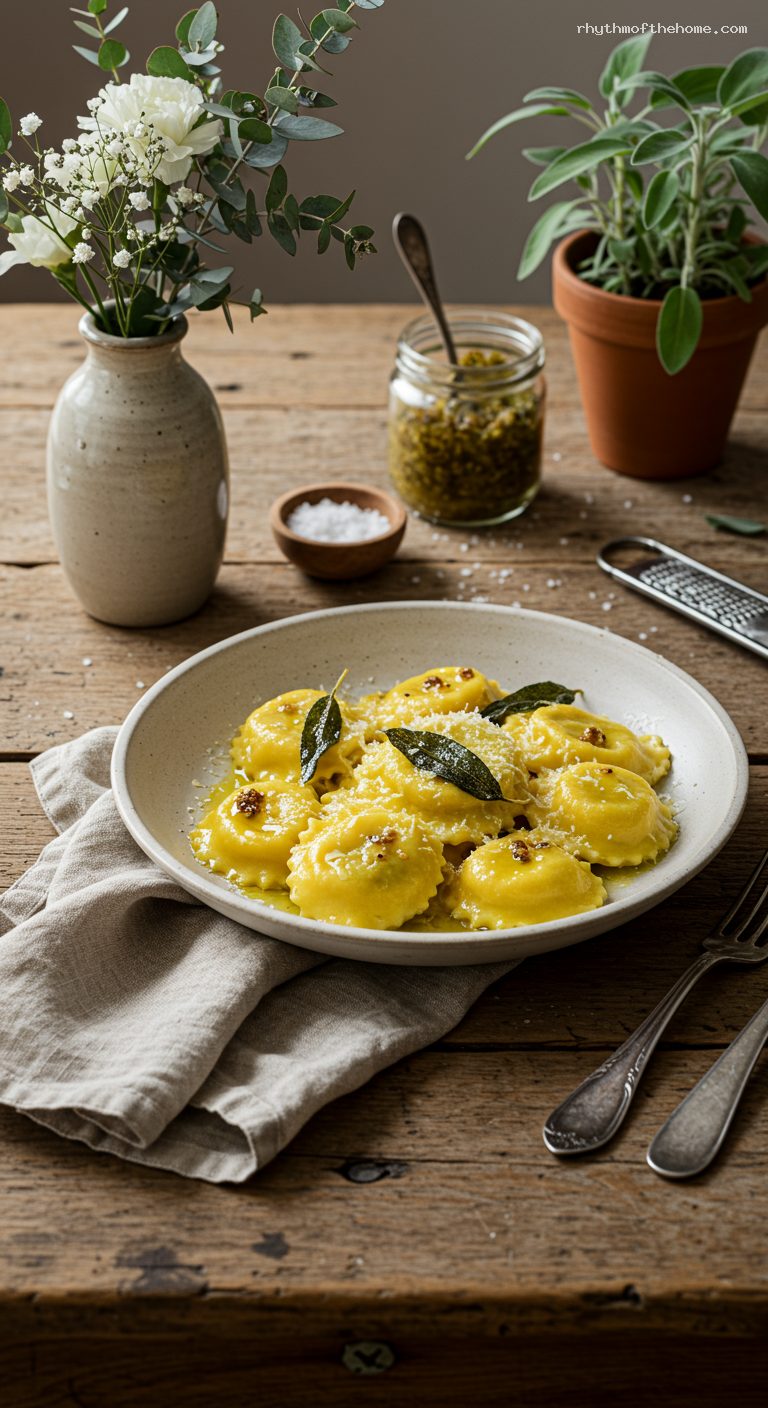
Quick Recipe Version (TL;DR)
Quick Ingredients
- Pasta dough: 300 g 00 flour (about 2 1/2 cups), 3 large eggs, 1 tbsp olive oil, 1/2 tsp fine sea salt
- Filling: 500 g roasted pumpkin puree (from about 1.2–1.5 kg pumpkin), 60 g finely grated Parmigiano Reggiano (about 3/4 cup), 60 g amaretti cookies, finely ground (about 2/3 cup crumbs), 2 tbsp Mantuan mostarda, finely chopped, plus 2 tsp syrup, 1 egg yolk, 1/4 tsp freshly grated nutmeg, 1/2 tsp fine sea salt, pinch black pepper
- Sauce & finishing: 90 g unsalted butter (6 tbsp), 12–16 fresh sage leaves, 30 g finely grated Parmigiano (about 1/3 cup), flaky sea salt, black pepper
Do This
- 1) Roast pumpkin at 400°F/200°C until tender and lightly caramelized, 40–50 minutes; mash and dry to a thick puree.
- 2) Mix filling ingredients until cohesive; chill 30 minutes.
- 3) Knead flour, eggs, oil, and salt 8–10 minutes; rest 30 minutes.
- 4) Roll dough to thin sheets (0.8–1 mm); place small mounds of filling, cover with a second sheet, seal, and cut into 5×6 cm fluted pillows.
- 5) Boil in well-salted water until they float and turn tender, 2–3 minutes.
- 6) Brown butter with sage until nutty and leaves crisp, 3–5 minutes; splash in 2 tbsp pasta water.
- 7) Toss tortelli with sage brown butter; serve with a generous shower of Parmigiano.
Why You’ll Love This Recipe
- Authentic Mantuan balance of sweet pumpkin, fragrant amaretti, and zippy mostarda with savory Parmigiano.
- Silky, tender pasta pillows finished in aromatic sage brown butter.
- Clear, home-cook friendly steps, with make-ahead and freezing guidance.
- Perfect for a cozy dinner party or an elegant weekend project.
Grocery List
- Produce: 1 small sugar pumpkin (Delica, kabocha, or butternut), fresh sage
- Dairy: Parmigiano Reggiano, unsalted butter, eggs
- Pantry: 00 flour, olive oil, amaretti cookies, Mantuan mostarda with syrup, nutmeg, fine sea salt, black pepper
Full Ingredients
For Roasting the Pumpkin
- 1 small sugar pumpkin (Delica, Mantovana, or kabocha), 1.2–1.5 kg (yields about 500 g puree)
- 1 tbsp olive oil
- Pinch fine sea salt
For the Pumpkin Filling
- 500 g roasted pumpkin puree (see above)
- 60 g amaretti cookies, finely ground (about 2/3 cup crumbs)
- 60 g Parmigiano Reggiano, finely grated (about 3/4 cup)
- 2 tbsp Mantuan mostarda, finely chopped, plus 2 tsp syrup from the jar
- 1 large egg yolk
- 1/4 tsp freshly grated nutmeg
- 1/2 tsp fine sea salt, plus more to taste
- Pinch freshly ground black pepper
For the Pasta Dough
- 300 g 00 flour (about 2 1/2 cups), plus extra for dusting
- 3 large eggs
- 1 tbsp olive oil
- 1/2 tsp fine sea salt
For the Sage Brown Butter & Serving
- 90 g unsalted butter (6 tbsp)
- 12–16 fresh sage leaves
- 30 g Parmigiano Reggiano, finely grated (about 1/3 cup), plus more to taste
- 2–3 tbsp pasta cooking water
- Flaky sea salt and black pepper, to finish
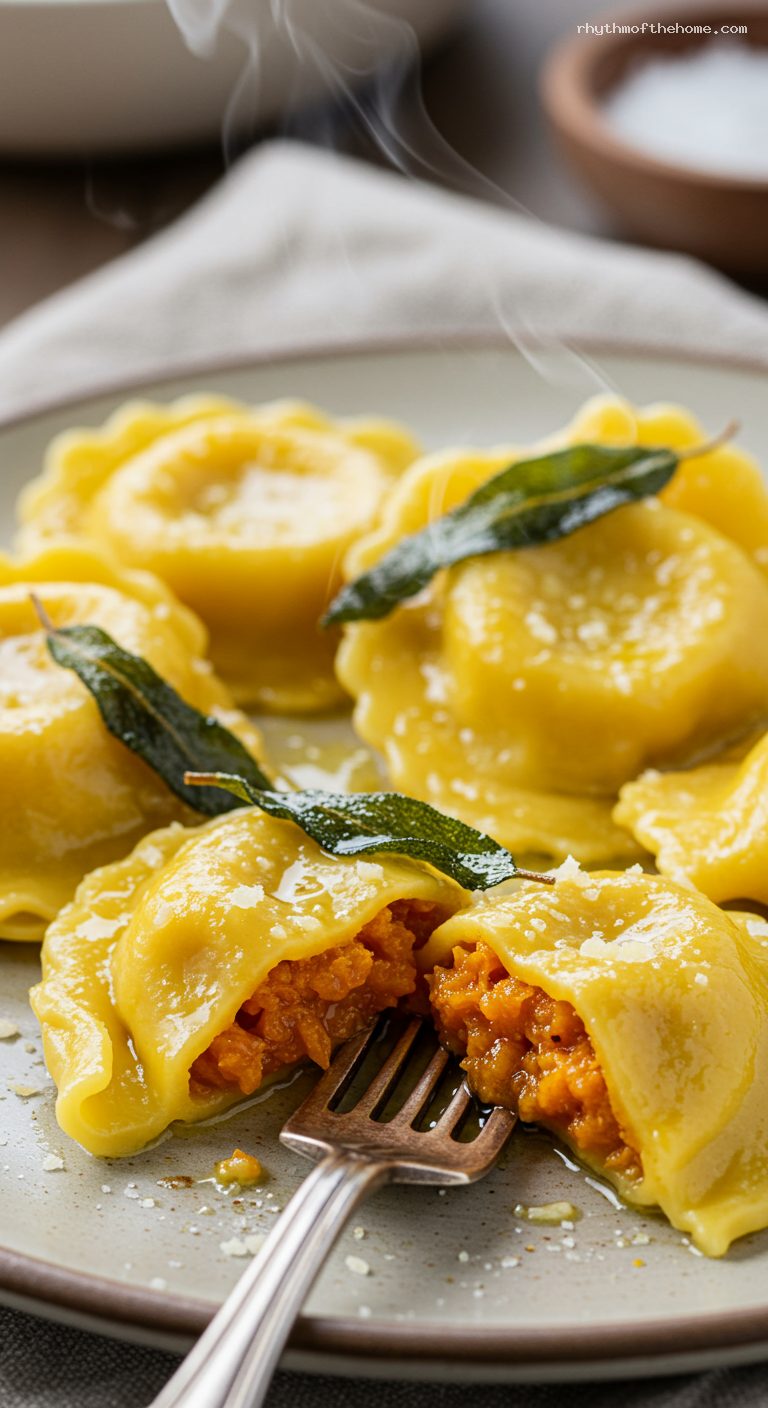
Step-by-Step Instructions
Step 1: Roast and dry the pumpkin
Heat the oven to 400°F (200°C). Halve and seed the pumpkin, then cut into large wedges. Toss with olive oil and a pinch of salt, spread on a parchment-lined sheet, and roast until very tender and lightly caramelized at the edges, 40–50 minutes. Scoop the flesh into a bowl and mash well. If the puree seems moist, return it to the oven in a thin layer for 10–15 minutes to drive off excess water, or drain in a fine sieve. You want a thick, spoonable puree (about 500 g).
Step 2: Mix the filling until cohesive
While the pumpkin is warm, pass it through a potato ricer or mash until smooth. Stir in the amaretti crumbs, Parmigiano, chopped mostarda plus 2 tsp of its syrup, egg yolk, nutmeg, salt, and a pinch of pepper. Taste and adjust: the filling should be sweet-salty with gentle heat from the mostarda. Cover and chill 30 minutes to firm. Transfer to a piping bag or keep covered in the bowl.
Step 3: Make and rest the egg pasta dough
On a work surface or in a bowl, combine the flour and salt. Make a well, add the eggs and olive oil, and whisk the eggs with a fork, gradually incorporating flour until a shaggy dough forms. Knead 8–10 minutes until smooth and elastic, adding pinches of flour if sticky. Wrap and rest at room temperature for 30 minutes.
Step 4: Roll the dough into thin sheets
Divide the dough into 4 pieces; keep covered. Working with one piece at a time, roll through a pasta machine from the widest setting down to thin (about 0.8–1 mm; typically setting 6–7). Dust lightly with flour as needed. Aim for long, even sheets. Cover rolled sheets with a towel so they do not dry out.
Step 5: Fill, seal, and cut tortelli
Lay one sheet on a lightly floured surface. Pipe or spoon 2-teaspoon mounds of filling, spacing them 5–6 cm apart. Lightly brush around the filling with water. Place a second sheet over the top, pressing firmly around each mound to seal and push out air. Using a fluted pasta wheel, cut into rectangles about 5×6 cm (2×2 1/2 inches). Press edges again to ensure a tight seal and set on a semolina-dusted tray. Repeat with remaining dough and filling.
Step 6: Boil the tortelli
Bring a large pot of water to a rolling boil and salt generously (about 2 tbsp kosher salt per 4 L). Slide in the tortelli and cook until they float and the pasta is tender but still has a little bite, 2–3 minutes. Reserve 1/3 cup pasta water and drain gently with a spider.
Step 7: Brown the butter with sage
While the pasta cooks, melt the butter in a wide skillet over medium heat. Add the sage leaves and cook, swirling, until the milk solids turn deep golden and the sage is crisp, 3–5 minutes. Off the heat, add 2–3 tbsp pasta water to stop the butter from over-browning and to form a silky sauce.
Step 8: Toss and serve
Add the drained tortelli to the skillet and toss gently to coat. Season with a pinch of flaky salt and pepper. Plate immediately and finish with a generous dusting of finely grated Parmigiano. Serve hot, with extra cheese at the table.
Pro Tips
- Dry pumpkin equals great filling. If your puree is wet, bake it briefly or reduce it in a dry pan to avoid soggy tortelli.
- Balance the sweetness. If the filling tastes too sweet, add a bit more Parmigiano and a pinch of salt; if too savory, a touch more mostarda syrup brings it into balance.
- Keep the dough covered. Pasta sheets dry quickly; cover with a towel while you work to ensure easy sealing.
- Remove air pockets. Press firmly around filling before cutting to prevent bursting during cooking.
- Butter should be brown, not black. Watch for a toasty hazelnut aroma and golden specks, then stop with a splash of pasta water.
Variations
- Ferrara-style cappellacci: Skip the mostarda and amaretti; use extra Parmigiano and nutmeg. Fold into big hat-shaped cappellacci and serve with butter and sage.
- Gently sweeter finish: Dust the plated tortelli with a whisper of extra-fine amaretti crumbs along with the Parmigiano.
- Gluten-free dough: Use a good gluten-free pasta flour blend plus 1/4 tsp xanthan gum; expect slightly more delicate handling.
Storage & Make-Ahead
Filling keeps refrigerated up to 3 days. Pasta dough can rest, wrapped, up to 24 hours in the fridge (bring to room temp before rolling). Shape tortelli, place on semolina-dusted trays, and freeze until solid, then transfer to bags up to 2 months; boil from frozen 3–4 minutes. Cooked leftovers keep 3 days; rewarm gently in butter with a splash of water. Brown butter can be made ahead and reheated; fry fresh sage leaves just before serving for crispness.
Nutrition (per serving)
Approximate per main-course serving (1/4 recipe): 780 kcal; Carbohydrates 83 g; Protein 28 g; Fat 40 g; Fiber 5 g; Sodium 880 mg.

Leave a Reply