
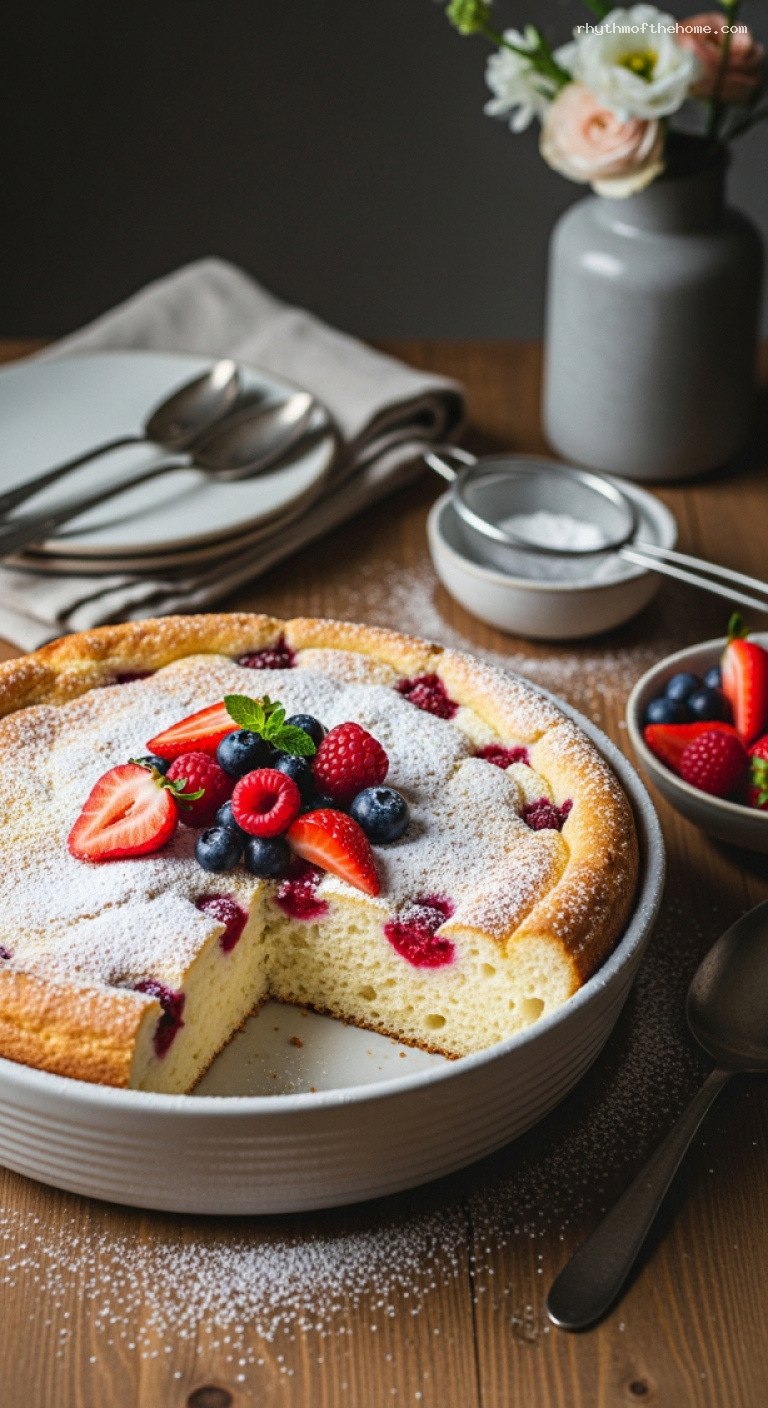
Quick Recipe Version (TL;DR)
Quick Ingredients
- 500 g quark (about 2 cups), preferably 20% fat, well drained
- 4 large eggs, separated
- 90 g granulated sugar, divided (about 7 tbsp)
- 40 g fine semolina (about 1/4 cup)
- 60 ml milk or cream (1/4 cup)
- 40 g unsalted butter, melted (about 3 tbsp)
- Finely grated zest of 1 lemon
- 1 tsp pure vanilla extract
- Pinch of fine salt
- Butter and 1 tbsp breadcrumbs or semolina for the dish
- Fresh berries and powdered sugar, for serving
Do This
- 1. Preheat oven to 180°C / 350°F. Generously butter a 20 × 30 cm (8 × 12 inch) baking dish and dust with breadcrumbs or semolina.
- 2. In a large bowl, whisk quark, egg yolks, 60 g sugar, semolina, milk, melted butter, lemon zest, vanilla, and a pinch of salt until smooth.
- 3. In a clean bowl, beat egg whites to soft peaks, then slowly add remaining 30 g sugar and beat to glossy, stiff peaks.
- 4. Fold one-third of the egg whites into the quark mixture to loosen, then gently fold in the rest just until no streaks remain.
- 5. Pour batter into the prepared dish, smooth the top, and bake 30–35 minutes until puffed, golden, and just set with a slight wobble in the center.
- 6. Let rest 5–10 minutes. Dust generously with powdered sugar and serve warm with fresh berries.
Why You’ll Love This Recipe
- Light and airy like a soufflé, but much easier and more forgiving to make.
- Delicate vanilla and lemon flavor that feels special but not fussy.
- Uses simple, affordable ingredients you may already have on hand.
- Comforting enough for a cozy weekend, elegant enough for guests.
Grocery List
- Produce: 1 lemon, 200–250 g fresh berries (e.g., raspberries, strawberries, blueberries)
- Dairy: 500 g quark, 4 large eggs, unsalted butter, milk or cream
- Pantry: Granulated sugar, powdered sugar, fine semolina, vanilla extract, fine salt, breadcrumbs or extra semolina (for the dish), optional raisins
Full Ingredients
For the quark mixture
- 500 g quark (about 2 cups), preferably 20% fat, well drained
- 4 large eggs, separated, at room temperature if possible
- 90 g granulated sugar, divided (about 7 tbsp; 60 g for yolks, 30 g for whites)
- 40 g fine semolina (about 1/4 cup); cream of wheat or fine durum semolina both work
- 60 ml whole milk or cream (1/4 cup)
- 40 g unsalted butter, melted and cooled slightly (about 3 tbsp)
- Finely grated zest of 1 untreated (unwaxed) lemon
- 1 tsp pure vanilla extract, or seeds from 1/2 vanilla pod
- 1 small pinch fine sea salt
- Optional: 40 g raisins (about 1/4 cup), briefly soaked in hot water, rum, or apple juice and drained
For the baking dish and serving
- 1 tsp unsalted butter, for greasing the dish
- 1 tbsp fine breadcrumbs or semolina, for dusting the dish
- 2–3 tbsp powdered sugar, for dusting before serving
- 200–250 g fresh mixed berries (about 2 cups), or berry compote, for serving
Step-by-Step Instructions
Step 1: Prep the oven and baking dish
Preheat your oven to 180°C / 350°F with a rack in the middle position. Choose a baking dish of about 20 × 30 cm (8 × 12 inches) or a round dish about 22 cm (9 inches) across and at least 5 cm (2 inches) deep. This size gives the quarkauflauf enough depth to rise nicely without overflowing.
Generously butter the dish, making sure to coat the corners and sides well so the mixture can climb as it bakes. Sprinkle in the breadcrumbs or semolina and tilt the dish around until the entire inside is lightly coated. Tap out any excess. This thin “crust” helps the airy batter grip the sides and rise evenly.
If your quark looks very wet or watery, place it in a fine-mesh sieve set over a bowl and let it drain for 10–15 minutes while you prepare the other ingredients. A slightly drier quark makes the casserole lighter and less soggy.
Step 2: Mix the quark base
In a large mixing bowl, whisk together the egg yolks and 60 g of the sugar (about 4 1/2 tbsp) until they look a bit paler and creamy. This does not have to be super fluffy; 30–60 seconds by hand is enough.
Add the drained quark, semolina, milk or cream, melted butter, lemon zest, vanilla, and a pinch of salt. Whisk until the mixture is smooth and no dry spots of semolina remain. It will be fairly thick at this stage.
If you are using raisins, soak them in very hot water, rum, or apple juice for about 5 minutes to plump them, then drain and gently pat dry. Stir the raisins into the quark mixture. Set the bowl aside while you whip the egg whites; the semolina will start to hydrate and slightly thicken the base.
Step 3: Whip the egg whites to glossy peaks
Place the egg whites in a clean, dry mixing bowl. Using an electric hand mixer or a stand mixer with the whisk attachment, begin beating on medium speed until the whites look foamy.
Increase the speed to medium-high and continue beating until the whites reach soft peaks (when you lift the beaters, the tips should curl over softly). At this point, slowly sprinkle in the remaining 30 g sugar (about 2 1/2 tbsp) in a steady stream while continuing to beat.
Beat until the whites are glossy and hold stiff peaks that stand up straight when you lift the whisk, but still look smooth and moist, not dry or clumpy. Properly whipped whites are key to giving your quarkauflauf its light, soufflé-like texture.
Step 4: Gently fold the whites into the quark mixture
Give the quark base a quick stir to loosen it. Using a large spatula, add about one-third of the beaten egg whites to the quark mixture. Fold them in gently, scooping from the bottom of the bowl and turning the mixture over on itself. This first addition can be mixed a bit more vigorously to lighten the batter.
Now add the remaining egg whites in two more additions, each time folding slowly and carefully until just combined. Rotate the bowl as you fold, and stop as soon as no obvious streaks of white remain. It is better to leave a few tiny streaks than to overmix and deflate the batter.
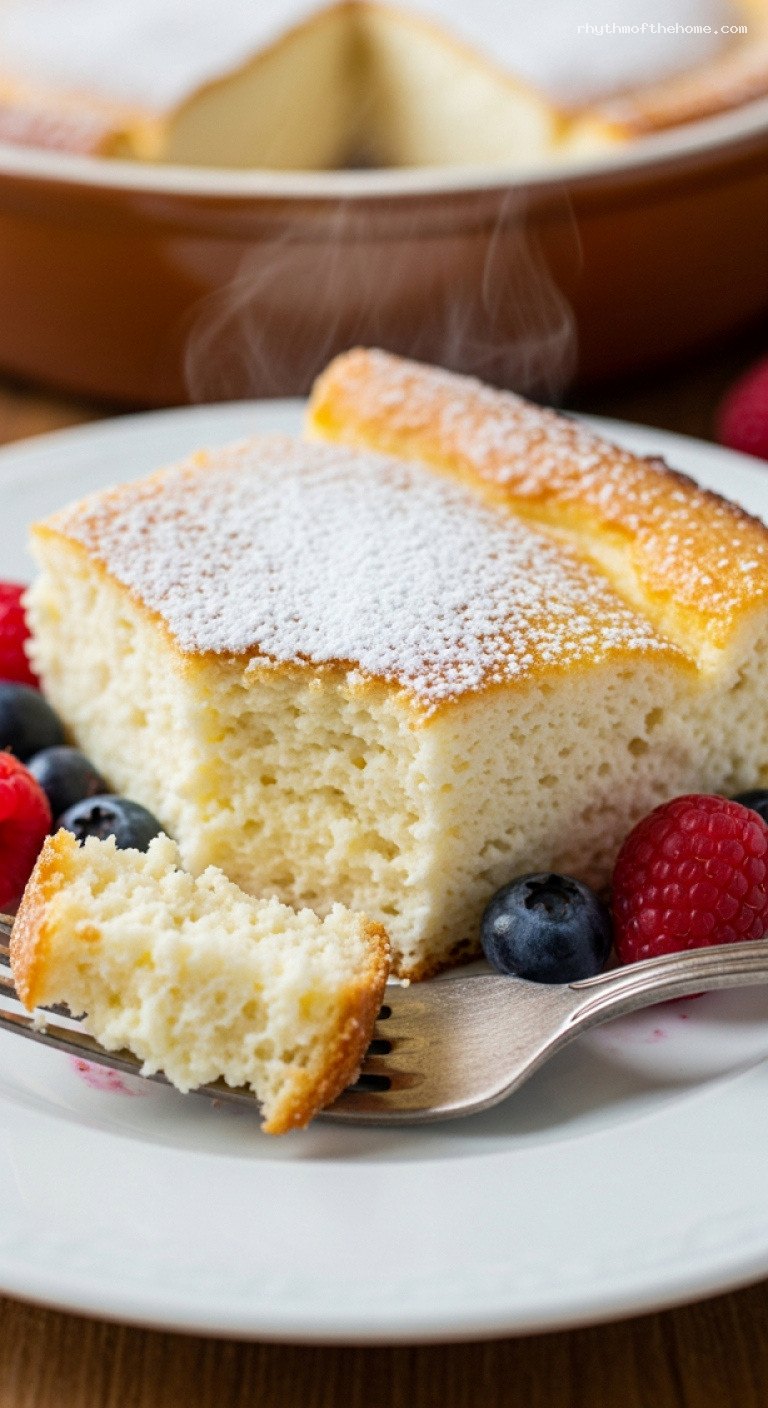
The finished mixture should feel light, airy, and pourable but not runny, with a slightly billowy texture.
Step 5: Bake until puffed and golden
Pour the batter into the prepared baking dish and gently smooth the top with a spatula. If you like, you can sprinkle a teaspoon of sugar over the surface to promote extra browning.
Place the dish on the middle rack of the preheated oven and bake for 30–35 minutes, until the top is deeply golden and the quarkauflauf has risen noticeably. Try not to open the oven door during the first 20 minutes, as sudden temperature changes can cause it to collapse prematurely.
The center should still have a very slight wobble when you gently jiggle the dish, but should not look liquid. If you have an instant-read thermometer, the center should measure about 70–75°C / 160–170°F. If the top is browning too quickly, loosely tent with foil for the last 5 minutes.
Step 6: Rest briefly and serve warm with berries
Remove the quarkauflauf from the oven and let it stand for 5–10 minutes. It will start to deflate a little as it cools, which is completely normal for this type of baked quark casserole.
Dust the top generously with powdered sugar. Spoon or cut portions while still warm and serve with a handful of fresh berries or a spoonful of berry compote on the side. The contrast between the warm, fluffy, lemony quark and the cool, tart berries is especially lovely.
This dish is at its very best shortly after baking, when the texture is still cloud-like and delicate, but it is also delicious at room temperature.
Pro Tips
- Drain watery quark: If your quark contains visible liquid, drain it briefly in a sieve. Too much moisture can make the casserole dense or watery instead of light and fluffy.
- Use room temperature eggs: Egg whites at room temperature whip up more quickly and to greater volume, helping your quarkauflauf rise higher.
- Fold, do not stir: When combining the egg whites with the quark base, use slow, gentle folding motions. Stirring vigorously will knock out the air and give you a flatter, denser result.
- Avoid overbaking: Pull the casserole out when the center still has a slight wobble. Overbaking can make it dry and curdled instead of softly set.
- Serve immediately for maximum fluffiness: Like a soufflé, this dish gradually settles as it cools. Plan to have everyone at the table soon after it comes out of the oven.
Variations
- Berry-studded quarkauflauf: Gently fold 100–150 g (about 1 cup) fresh berries (blueberries work especially well) into the finished batter before baking. Add them at the very end and fold lightly so they do not crush and streak the mixture too much.
- Classic raisin and rum: Soak 40–60 g (1/4–1/3 cup) raisins in warm rum or apple juice for at least 15 minutes. Drain well and stir into the quark base in Step 2 for a very traditional Central European flavor.
- Extra citrus and vanilla bean: For a more aromatic version, use the seeds from a whole vanilla bean instead of extract, and add the zest of an extra half lemon or a small orange.
Storage & Make-Ahead
Leftover quarkauflauf should be cooled to room temperature, then covered tightly and stored in the refrigerator for up to 3 days. It will lose some of its initial fluffiness but still tastes wonderful.
To reheat, place portions in an oven-safe dish, cover with foil, and warm at 150°C / 300°F for about 10–15 minutes until heated through. You can also gently reheat in the microwave at low power in short bursts, though the texture will be softer.
For partial make-ahead, you can mix the quark base (without the egg whites) up to 8 hours in advance and keep it covered in the refrigerator. When ready to bake, let the base sit at room temperature for about 15 minutes, then whip the egg whites and fold them in just before baking.
Freezing is possible but not ideal for this light, soufflé-like texture. If you must, freeze well-wrapped individual portions for up to 2 months and reheat gently in the oven from thawed.
Nutrition (per serving)
Approximate values per serving (1/6 of the recipe, without toppings): about 300 kcal, 15 g protein, 25 g carbohydrates, 12 g fat, and a small amount of fiber from the semolina. With berries and a dusting of powdered sugar, add roughly 20–40 kcal per serving. These numbers are estimates and will vary based on the exact ingredients you use.

Leave a Reply