
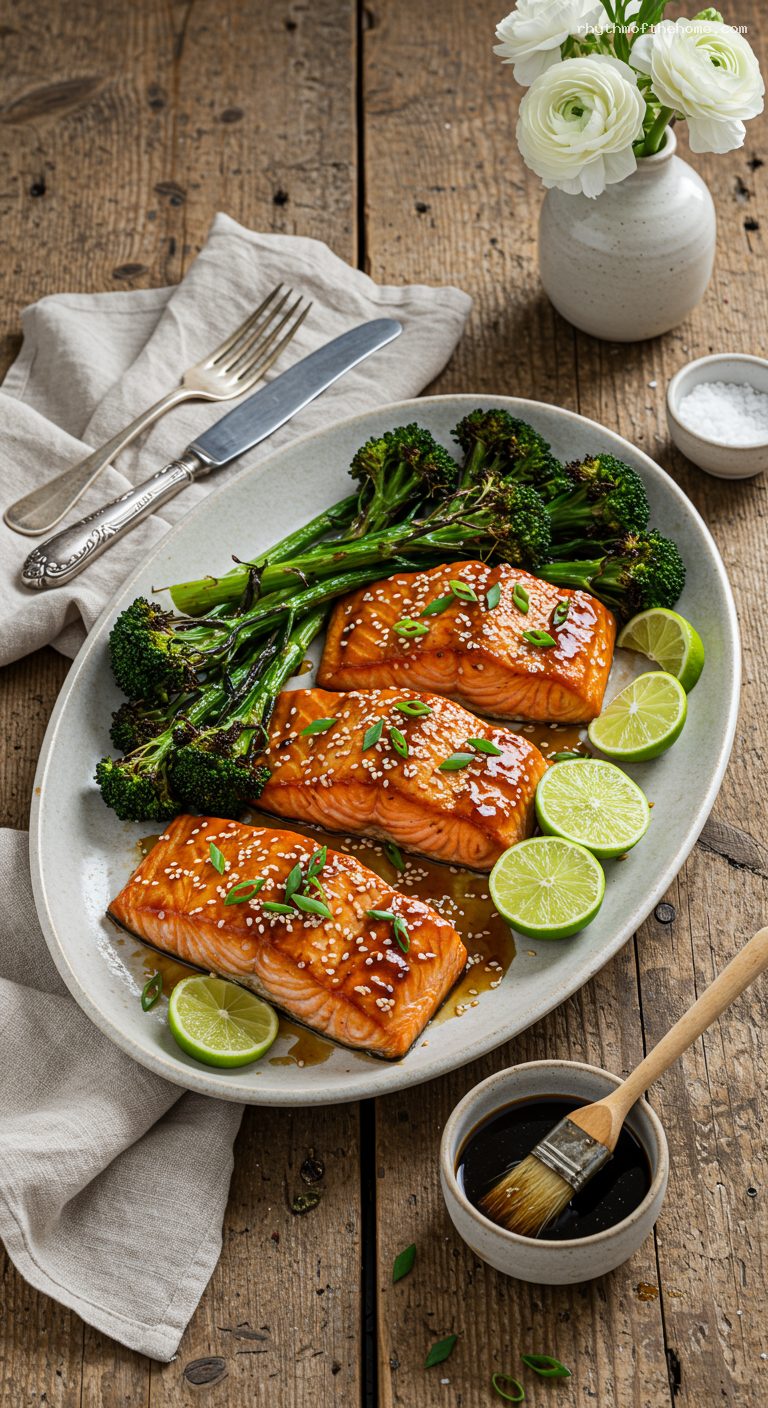
Quick Recipe Version (TL;DR)
Quick Ingredients
- 4 skin-on salmon fillets (6 oz/170 g each)
- 1 lb (450 g) broccoli florets
- 1 1/2 tbsp neutral oil (avocado or canola)
- 1/4 cup low-sodium soy sauce
- 3 tbsp honey
- 1 tbsp rice vinegar or lime juice
- 2 tsp toasted sesame oil
- 3 garlic cloves, finely minced
- 1 tbsp fresh ginger, finely grated
- 1/4 tsp red pepper flakes
- Kosher salt and black pepper
- 1 tbsp toasted sesame seeds; 2 scallions, thinly sliced; lime wedges (to serve)
Do This
- 1. Heat oven to 425°F (220°C). Line a rimmed sheet pan with foil and parchment.
- 2. Whisk soy, honey, vinegar, sesame oil, garlic, ginger, and red pepper flakes. Set aside 1/3 cup for glazing.
- 3. Marinate salmon in remaining sauce for 10 minutes while oven heats.
- 4. Toss broccoli with neutral oil, 1/2 tsp salt, and pepper; spread on pan, leaving space for salmon.
- 5. Simmer reserved sauce 2–3 minutes until syrupy.
- 6. Add salmon to pan. Bake 10–12 minutes (1-inch thick fillets take ~10). Brush with syrupy glaze.
- 7. Broil 1–2 minutes to lacquer. Finish with sesame seeds and scallions; serve with lime.
Why You’ll Love This Recipe
- Restaurant-worthy glossy glaze with simple pantry staples.
- One sheet pan: salmon and broccoli roast together for easy cleanup.
- Balanced flavors: sweet honey, salty soy, warm ginger, and garlicky depth.
- On the table in about 30 minutes—weeknight-friendly.
Grocery List
- Produce: Broccoli (about 1 lb), garlic, fresh ginger, scallions, lime
- Dairy: None
- Pantry: Salmon fillets, low-sodium soy sauce, honey, rice vinegar, toasted sesame oil, neutral oil, red pepper flakes, toasted sesame seeds, kosher salt, black pepper
Full Ingredients
Salmon & Veggies
- 4 skin-on salmon fillets (6 oz/170 g each, about 1 inch thick)
- 1 lb (450 g) broccoli florets
- 1 1/2 tbsp neutral oil (avocado or canola)
- 1/2 tsp kosher salt, plus more to taste
- 1/4 tsp freshly ground black pepper
Honey–Soy Glaze
- 1/4 cup (60 ml) low-sodium soy sauce
- 3 tbsp (63 g) honey
- 1 tbsp (15 ml) rice vinegar or fresh lime juice
- 2 tsp toasted sesame oil
- 3 garlic cloves, finely minced
- 1 tbsp finely grated fresh ginger
- 1/4 tsp red pepper flakes (optional, for heat)
To Finish
- 1 tbsp toasted sesame seeds
- 2 scallions, thinly sliced on a bias
- Lime wedges, for serving
Step-by-Step Instructions
Step 1: Preheat and prepare the pan
Heat the oven to 425°F (220°C) with a rack in the center. Line a large rimmed sheet pan with aluminum foil for easy cleanup, then place a sheet of parchment on top to prevent sticking.
Step 2: Whisk the honey–soy sauce
In a medium bowl, whisk together the soy sauce, honey, rice vinegar (or lime juice), toasted sesame oil, minced garlic, grated ginger, and red pepper flakes until the honey dissolves. Transfer 1/3 cup of this mixture to a small saucepan and set it aside for glazing. The remainder will be used to briefly marinate the salmon.
Step 3: Marinate the salmon and reduce the glaze
Pat the salmon dry with paper towels and place it in a shallow dish. Pour the remaining sauce over the salmon and marinate at room temperature for 10 minutes. While it marinates, bring the reserved 1/3 cup sauce to a simmer over medium heat. Cook, stirring occasionally, until slightly thick and syrupy, 2 to 3 minutes. Remove from heat; it will thicken a bit more as it cools.
Step 4: Season the broccoli and arrange the pan
On the prepared sheet pan, toss the broccoli florets with the neutral oil, 1/2 teaspoon kosher salt, and 1/4 teaspoon black pepper. Spread into an even layer, leaving a space down the center for the salmon. Lift the salmon from its marinade, letting excess drip off, and nestle the fillets skin-side down on the pan. Discard any marinade that touched the raw fish.
Step 5: Roast until nearly done
Roast for 10 minutes for 1-inch thick fillets (12 minutes if 1 1/4 inches thick). The broccoli tips should be just starting to char, and the salmon should be mostly opaque with the centers still slightly translucent. Internal temperature at this stage will be around 120°F (49°C).
Step 6: Lacquer under the broiler
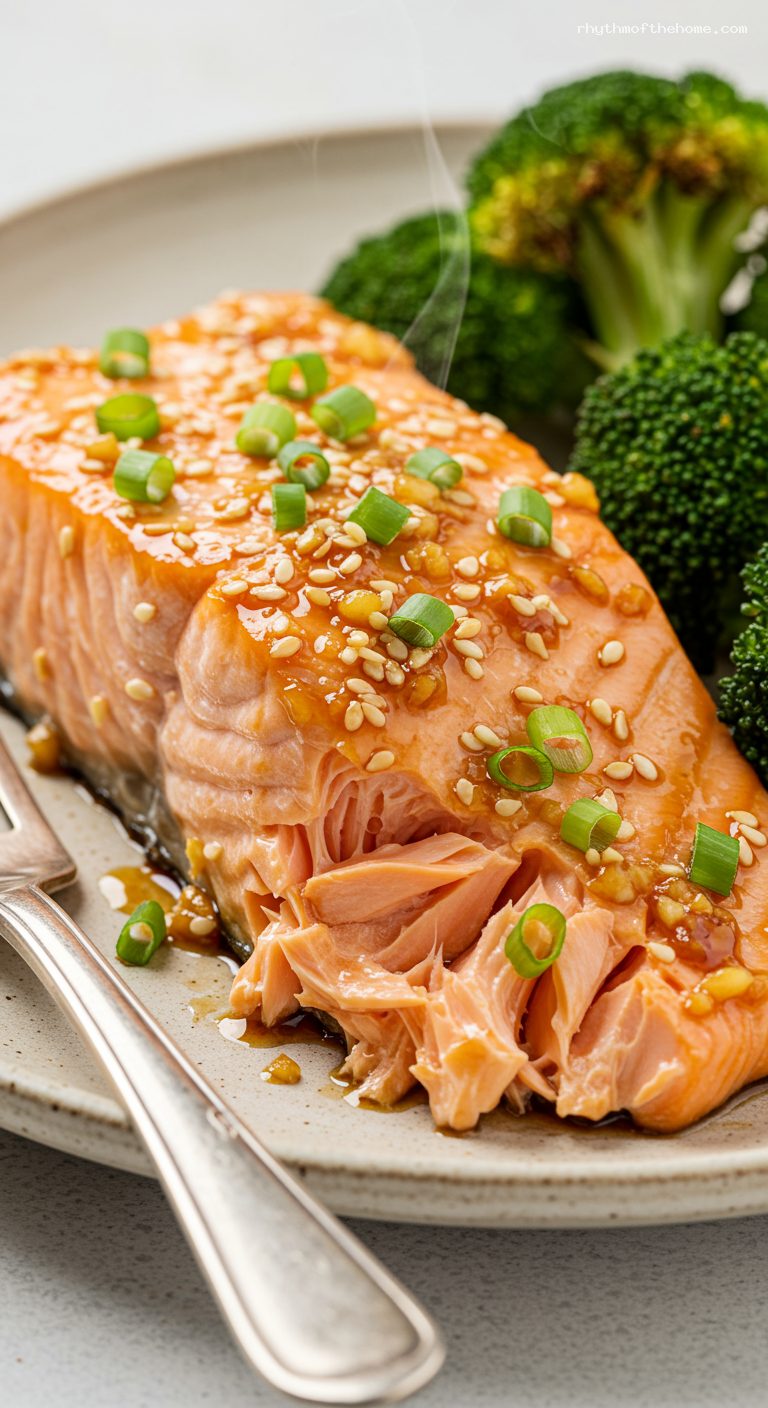
Switch the oven to broil. Brush the reduced glaze generously over the salmon. Broil 1 to 2 minutes, watching closely, until the glaze bubbles and turns glossy and the salmon reaches 125°F to 130°F (52°C to 54°C) for medium. The edges may lightly caramelize—that’s the lacquered finish you want.
Step 7: Finish and serve
Transfer the salmon and broccoli to plates or a warm platter. Sprinkle with toasted sesame seeds and sliced scallions. Serve immediately with lime wedges for squeezing over the fish and broccoli.
Pro Tips
- For juicy salmon, aim for 125°F to 130°F (52°C to 54°C) in the thickest part; it will rise a few degrees as it rests.
- Divide the sauce before marinating so the glaze never touches raw fish—safer and simpler.
- If your glaze reduces too much, whisk in 1 to 2 teaspoons hot water off heat to loosen.
- Broilers vary: keep the pan 6 inches from the element and watch constantly to avoid scorching.
- Dry the salmon well before marinating so the glaze clings rather than sliding off.
Variations
- Miso boost: Whisk 1 tablespoon white miso into the sauce for extra savory depth.
- Spicy-sweet: Add 1 to 2 teaspoons sriracha or gochujang to the glaze and finish with cilantro.
- Veggie swap: Use broccolini, asparagus, or snap peas; adjust roasting time (asparagus needs 8–10 minutes total).
Storage & Make-Ahead
Marinate the salmon up to 8 hours in advance in the refrigerator (cover, and keep the reserved glaze separate). Cooked salmon keeps 2 days in an airtight container; reheat gently at 275°F (135°C) for 10 minutes or microwave in short bursts under a damp paper towel. The glazed salmon is also delicious cold, flaked over rice bowls or salads. Cooked salmon can be frozen up to 2 months; thaw overnight in the refrigerator.
Nutrition (per serving)
Approximate: 520 calories; 34 g protein; 20 g carbohydrates; 31 g fat; 2 g fiber; 800 mg sodium (varies by soy sauce brand and added salt).

Leave a Reply