
Quick Recipe Version (TL;DR)
Quick Ingredients
- 3/4 cup (120 g) raisins
- 1/3 cup (80 ml) dark spiced rum, plus 1–2 tsp extra for glaze (optional)
- 1/2 cup (120 ml) warm whole milk (about 110°F / 43°C)
- 1/4 cup (60 ml) warm water (about 110°F / 43°C)
- 3 cups (360 g) all-purpose flour, plus up to 1/4 cup (30 g) more for kneading
- 1/4 cup (50 g) granulated sugar
- 2 1/4 tsp (7 g) active dry or instant yeast
- 1 tsp fine sea salt
- 1 tsp ground cinnamon
- 1/2 tsp ground nutmeg
- 1/4 tsp ground allspice (optional)
- 1/4 cup (60 ml) dark spiced rum (from soaking liquid)
- 1 large egg, room temperature
- 4 tbsp (56 g) unsalted butter, very soft
- 1 cup (120 g) powdered sugar
- 2–3 tbsp milk or cream
- 1 tsp vanilla extract
- 1/2 cup (75 g) mixed candied fruit, finely chopped
- Pinch of fine salt for glaze
Do This
- 1. Soak raisins in 1/3 cup rum for at least 30 minutes (or up to overnight).
- 2. Warm milk and water; stir in yeast and a pinch of sugar. Let stand until foamy, 5–10 minutes.
- 3. Mix flour, sugar, salt, cinnamon, nutmeg, and allspice. Add yeast mixture, egg, 1/4 cup rum, and soft butter; knead until smooth and elastic, then knead in drained raisins.
- 4. Let dough rise in a greased bowl, covered, until doubled, about 60–75 minutes.
- 5. Shape into a loaf, place in greased 9×5 in (23×13 cm) pan, cover, and let rise until puffy, 35–45 minutes.
- 6. Bake at 350°F (175°C) for 30–35 minutes, until deep golden and 190–195°F (88–90°C) inside. Cool completely.
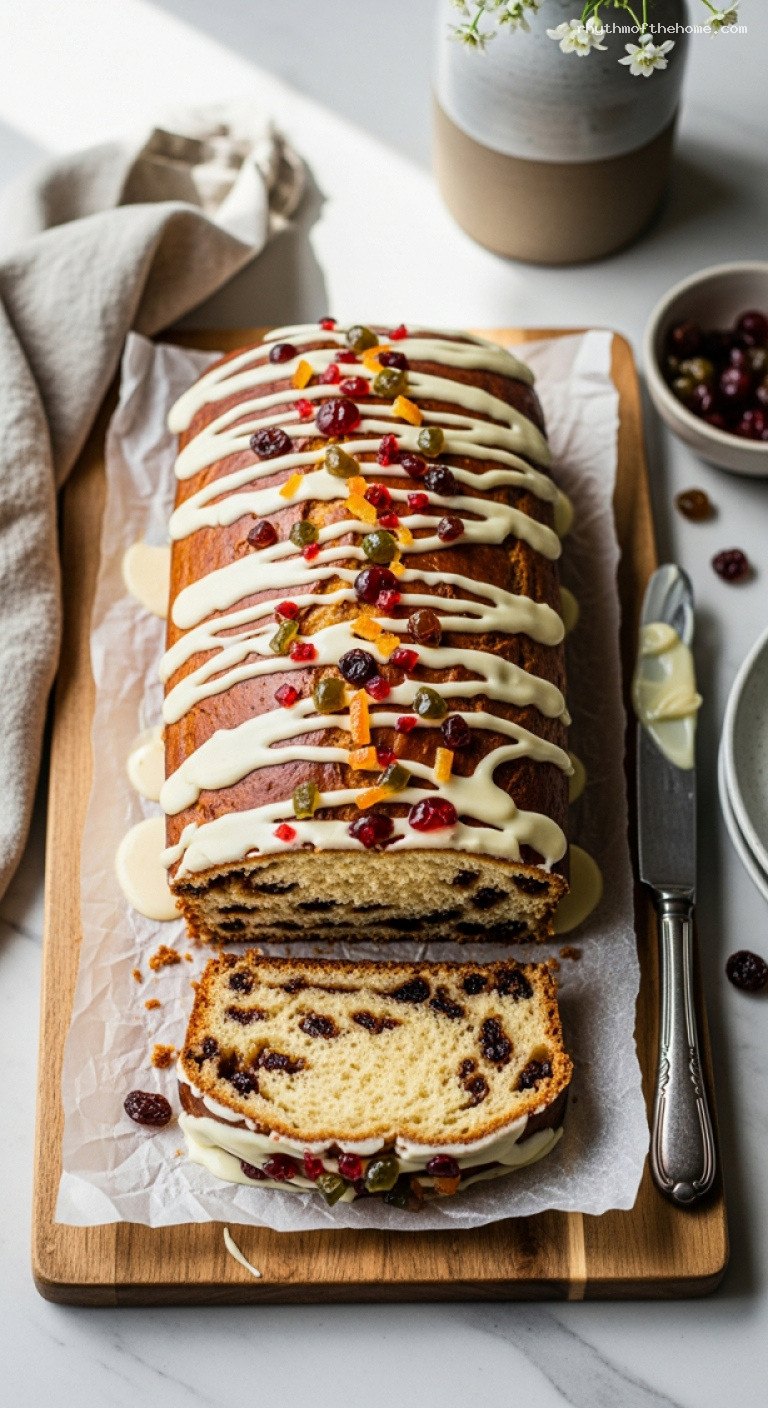
- 7. Whisk powdered sugar, vanilla, milk/cream, pinch of salt, and a little rum (optional). Drizzle over cooled loaf and top with chopped candied fruit.
Why You’ll Love This Recipe
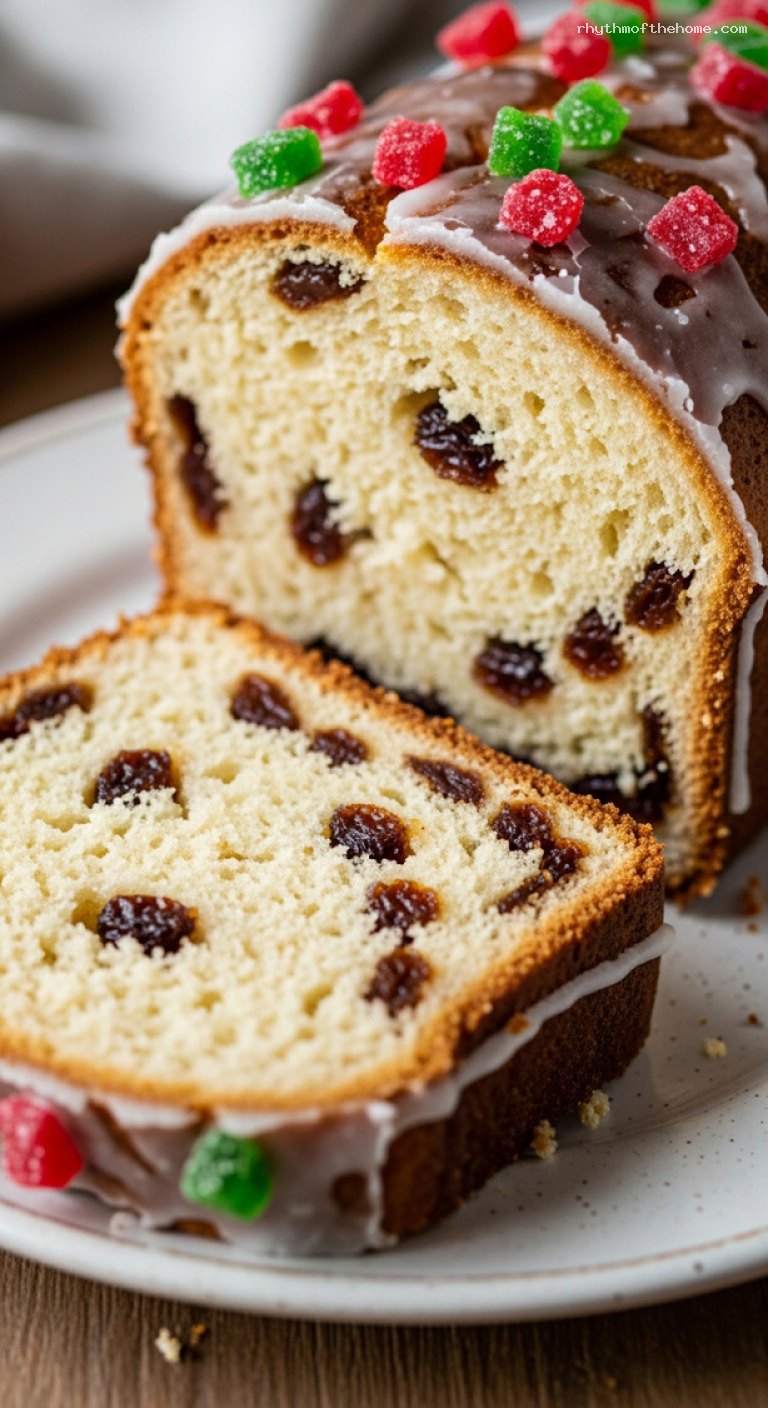
- Soft, tender, bakery-style loaf that tastes like a cozy holiday in every slice.
- Warm spices, dark rum, and plump raisins add rich, grown-up flavor without being heavy.
- A simple vanilla glaze and jewel-toned candied fruit make it look festive with very little effort.
- Perfect for gifting, brunch tables, or serving lightly toasted with butter on chilly mornings.
Grocery List
- Produce: None required (optional: 1 orange for zest, if you want a citrus note).
- Dairy: Whole milk, unsalted butter, 1 large egg, milk or heavy cream (for glaze).
- Pantry: All-purpose flour, granulated sugar, powdered sugar, fine salt, active dry or instant yeast, dark spiced rum, raisins, mixed candied fruit, ground cinnamon, ground nutmeg, ground allspice (optional), vanilla extract, cooking spray or oil for greasing.
Full Ingredients
Rum-Soaked Raisins
- 3/4 cup (120 g) raisins
- 1/3 cup (80 ml) dark spiced rum
- 2 tbsp hot water (only if needed to just cover the raisins)
Spiced Rum Bread Dough
- 1/2 cup (120 ml) whole milk, warmed to about 110°F (43°C)
- 1/4 cup (60 ml) water, warmed to about 110°F (43°C)
- 2 1/4 tsp (7 g) active dry or instant yeast (1 standard packet)
- 1/4 cup (50 g) granulated sugar
- 3 cups (360 g) all-purpose flour, plus more as needed
- Up to 1/4 cup (30 g) additional all-purpose flour for kneading, if the dough is very sticky
- 1 tsp fine sea salt
- 1 tsp ground cinnamon
- 1/2 tsp ground nutmeg
- 1/4 tsp ground allspice (optional, but lovely for extra holiday warmth)
- 1/4 cup (60 ml) dark spiced rum (use the soaking liquid from the raisins; top up with fresh rum if needed)
- 1 large egg, at room temperature
- 4 tbsp (56 g) unsalted butter, very soft (cut into small pieces)
- All of the rum-soaked raisins, drained well
Vanilla Rum Glaze
- 1 cup (120 g) powdered sugar, sifted if lumpy
- 2–3 tbsp milk or heavy cream (start with 2 tbsp; add more to thin as needed)
- 1 tsp pure vanilla extract
- 1–2 tsp dark spiced rum (optional, for extra flavor)
- 1 small pinch fine sea salt (balances the sweetness)
Candied Fruit Topping
- 1/2 cup (75 g) mixed candied fruit, finely chopped (red and green cherries, orange peel, or your favorite mix)
- Optional: extra raisins or chopped toasted nuts for sprinkling
Step-by-Step Instructions
Step 1: Soak the raisins in rum
Place the raisins in a small bowl. Pour 1/3 cup (80 ml) dark spiced rum over them. If the raisins are not quite covered, add up to 2 tbsp hot water to just submerge them. Stir, cover the bowl, and let sit for at least 30 minutes at room temperature, or up to overnight. This makes the raisins plump and juicy and infuses them with warm rum flavor. When ready to use, drain the raisins very well, reserving the soaking liquid to use in the dough and glaze.
Step 2: Proof the yeast
In a small bowl or measuring jug, combine the warm milk (110°F / 43°C), warm water, yeast, and a pinch of the 1/4 cup (50 g) sugar. Stir gently and let it sit for 5–10 minutes. The mixture should become foamy and slightly creamy on top. If it does not foam, your yeast may be inactive or the liquids were too hot or too cold; start again with fresh yeast before proceeding.
Step 3: Mix and knead the dough
In a large mixing bowl (or the bowl of a stand mixer), whisk together the flour (3 cups / 360 g), remaining sugar, salt, cinnamon, nutmeg, and allspice until well combined. Make a well in the center. Add the foamy yeast mixture, the 1/4 cup (60 ml) rum from the raisin soaking liquid, and the egg. Stir with a sturdy spoon or the dough hook attachment on low speed until a shaggy dough forms.
Add the very soft butter pieces and continue mixing. The dough will look messy at first, but it will come together. Knead by hand on a lightly floured surface or with a stand mixer on medium-low speed for about 8–10 minutes, adding only as much extra flour as needed (up to 1/4 cup / 30 g) so the dough is soft and slightly tacky but not gluey. You are aiming for a smooth, elastic dough that stretches without tearing easily.
Pat the drained raisins dry with a paper towel if very wet. Gently knead them into the dough in the last 1–2 minutes, just until evenly distributed.
Step 4: Let the dough rise (first rise)
Lightly oil a clean bowl. Shape the dough into a smooth ball and place it in the bowl, turning once to coat it lightly with oil. Cover the bowl with plastic wrap or a clean, damp kitchen towel. Let the dough rise in a warm, draft-free place for about 60–75 minutes, or until doubled in size. The dough is ready when you gently press a fingertip into it and the indentation springs back slowly but does not disappear completely.
Step 5: Shape the loaf and second rise
Grease a 9×5 in (23×13 cm) loaf pan with butter or cooking spray. Gently turn the risen dough out onto a lightly floured surface, trying not to deflate it too harshly. Press it into a rough rectangle about 8×12 in (20×30 cm). Roll it up tightly from the short side into a log, tucking the ends under slightly to fit the pan. Place the loaf seam-side down in the prepared pan.
Cover the pan loosely with plastic wrap or a lightly greased piece of parchment. Let the loaf rise again in a warm place for 35–45 minutes, until puffy and risen about 1 inch (2.5 cm) above the rim of the pan. Toward the end of this rise, preheat your oven to 350°F (175°C), positioning a rack in the center.
Step 6: Bake the bread
Once the loaf is well risen, uncover it and place it in the preheated oven. Bake at 350°F (175°C) for 30–35 minutes, until the top is a deep golden brown. If the top is browning too quickly after about 20 minutes, tent it loosely with foil for the remaining baking time.
The bread is done when it sounds hollow if you tap the top, or when an instant-read thermometer inserted into the center of the loaf reads 190–195°F (88–90°C). Remove the pan from the oven and let the bread cool in the pan for 10–15 minutes. Then carefully turn the loaf out onto a wire rack and let it cool completely, at least 1 hour, before glazing. Glazing while hot will cause the glaze to melt and disappear.
Step 7: Glaze and decorate
In a small bowl, whisk together the powdered sugar, 2 tbsp milk or cream, vanilla, pinch of salt, and 1–2 tsp of the reserved rum (if using). Adjust the consistency by adding more milk/cream a few drops at a time until you have a thick but pourable glaze that ribbons off the spoon.
Place the completely cooled loaf on a wire rack set over a sheet of parchment or a tray (to catch drips). Slowly drizzle the glaze over the top of the loaf, letting it run slightly down the sides. While the glaze is still wet, sprinkle the finely chopped candied fruit generously over the top so it adheres. Allow the glaze to set for 15–20 minutes before slicing and serving.
Pro Tips
- Keep the dough soft: Resist the urge to add too much extra flour. A slightly tacky dough bakes into a much softer, fluffier loaf.
- Mind your temperatures: Liquids that are too hot can kill yeast; aim for warm but not hot (about 110°F / 43°C feels like a warm bath).
- Use the rum twice: The raisin soaking liquid adds loads of flavor to the dough and glaze, so do not discard it unless it tastes bitter or burnt (it should not).
- Check doneness with a thermometer: Enriched doughs brown faster; using a thermometer (190–195°F / 88–90°C inside) avoids underbaked centers.
- For neat slices: Let the glaze fully set and use a serrated bread knife with a gentle sawing motion.
Variations
- Alcohol-free version: Soak the raisins in hot apple juice, orange juice, or strong black tea instead of rum. Use the soaking liquid in the dough and glaze as written.
- Citrus-holiday loaf: Add 1–2 tsp finely grated orange zest to the dough with the spices, and scatter extra thin strips of candied orange peel over the glaze with the candied fruit.
- Mini gift loaves: Divide the dough into 3–4 equal portions and bake in mini loaf pans, reducing the bake time to about 20–25 minutes. Glaze and decorate individually for gifting.
Storage & Make-Ahead
Store the cooled, glazed loaf at room temperature, well wrapped or in an airtight container, for up to 3 days. For longer storage, slice the loaf, wrap the slices tightly in plastic wrap, and freeze in a freezer bag for up to 2 months. Thaw at room temperature or toast directly from frozen.
To make ahead, you can prepare the dough through the first rise, then refrigerate it (well covered) overnight. The next day, let it sit at room temperature for about 30 minutes, shape it, and proceed with the second rise and baking. The glaze can be mixed up to 3 days in advance, stored covered in the refrigerator; thin with a few drops of milk if it thickens.
Nutrition (per serving)
Approximate values per slice (1/10 of the loaf): about 320 calories; 9 g fat; 5 g saturated fat; 50 g carbohydrates; 28 g sugar; 1 g fiber; 5 g protein; 200 mg sodium. These numbers are estimates and will vary based on exact ingredients and portion sizes.

Leave a Reply