
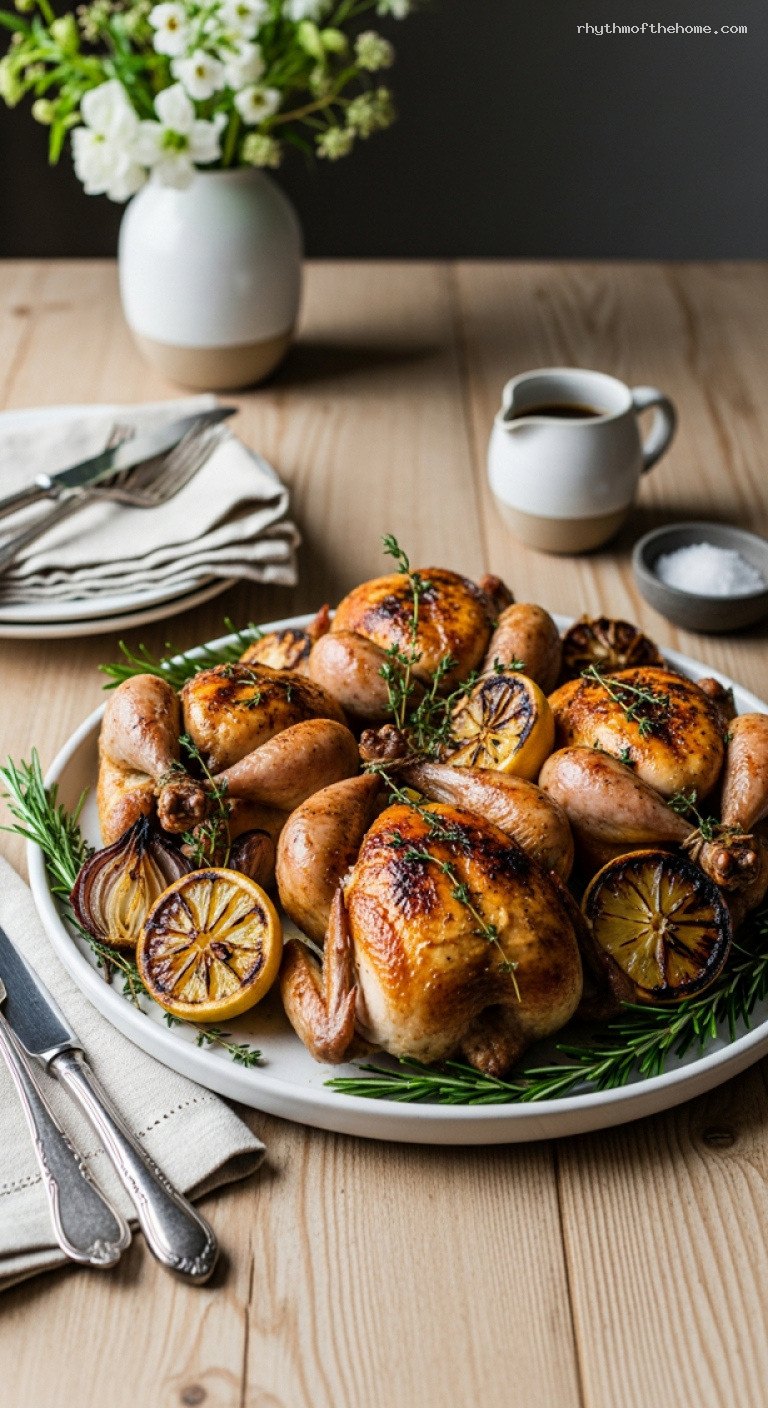
Quick Recipe Version (TL;DR)
Quick Ingredients
- 4 Cornish game hens (1 to 1¼ lb each), patted dry
- 3 tbsp olive oil
- 3 tbsp unsalted butter (2 tbsp melted for rub, 1 tbsp for pan jus)
- 3 lemons (2 for zest and juice, 1 cut into wedges)
- 4 garlic cloves, minced, plus 1 head garlic, halved
- Fresh thyme and rosemary (chopped leaves and whole sprigs)
- 1 small yellow onion, thickly sliced
- ½ cup dry white wine (or more broth)
- 1 cup low-sodium chicken broth
- Kosher salt, black pepper, Dijon mustard, honey (optional)
Do This
- 1. Preheat oven to 425°F (220°C). Pat hens very dry. Scatter onion slices, halved garlic head, lemon wedges, and herb sprigs in a roasting pan.
- 2. Whisk olive oil, 2 tbsp melted butter, lemon zest and juice, minced garlic, chopped thyme and rosemary, salt, pepper, Dijon, and honey into a loose paste.
- 3. Rub herb mixture all over hens, including under breast skin if possible. Place hens on top of aromatics, breast-side up, and tuck wing tips.
- 4. Roast 25 minutes. Baste with pan juices, rotate the pan, and roast another 25–30 minutes, until skin is deep golden and thigh meat reaches 165°F (74°C).
- 5. Transfer hens to a platter, tent loosely with foil, and rest 10–15 minutes. Pour pan juices into a measuring cup and skim off excess fat.
- 6. Deglaze roasting pan with wine, then add broth and lemon juice. Simmer to reduce, whisk in 1 tbsp butter, season to taste, and serve hens with warm pan jus.
Why You’ll Love This Recipe
- Individually portioned Cornish hens feel special and elegant, but are easy enough for a weeknight.
- Bright lemon, thyme, and rosemary give you classic roast chicken flavor with a fresh twist.
- High-heat roasting delivers beautifully crisp, golden skin and juicy, tender meat.
- A quick pan jus made right in the roasting pan turns simple drippings into a restaurant-style sauce.
Grocery List
- Produce: 3 lemons, 1 small yellow onion, 1 head garlic plus 4 extra cloves, fresh thyme, fresh rosemary.
- Dairy: Unsalted butter.
- Pantry: 4 Cornish game hens (1 to 1¼ lb each), olive oil, kosher salt, black pepper, Dijon mustard, honey (optional), dry white wine, low-sodium chicken broth.
Full Ingredients
For the Cornish hens
- 4 Cornish game hens (1 to 1¼ lb each), giblets removed, patted very dry
- 1 small yellow onion, thickly sliced
- 1 head garlic, halved crosswise
- 1 lemon, cut into 8 wedges
- 8 fresh thyme sprigs
- 4 fresh rosemary sprigs
For the herb-lemon rub
- 3 tbsp olive oil
- 2 tbsp unsalted butter, melted and slightly cooled
- Zest of 2 lemons (about 2 tbsp finely grated)
- 3 tbsp freshly squeezed lemon juice (from the zested lemons)
- 4 garlic cloves, finely minced
- 2 tbsp fresh thyme leaves, finely chopped
- 1 tbsp fresh rosemary leaves, finely chopped
- 1½ tsp kosher salt (use less if your birds are pre-brined)
- 1 tsp freshly ground black pepper
- 1 tsp Dijon mustard
- 1 tsp honey (optional, for subtle sweetness and extra browning)
For the simple pan jus
- ½ cup dry white wine (such as Sauvignon Blanc), or use more chicken broth
- 1 cup low-sodium chicken broth, divided
- 1 tbsp freshly squeezed lemon juice, or to taste
- 1 tbsp unsalted butter, cold
- Kosher salt and freshly ground black pepper, to taste
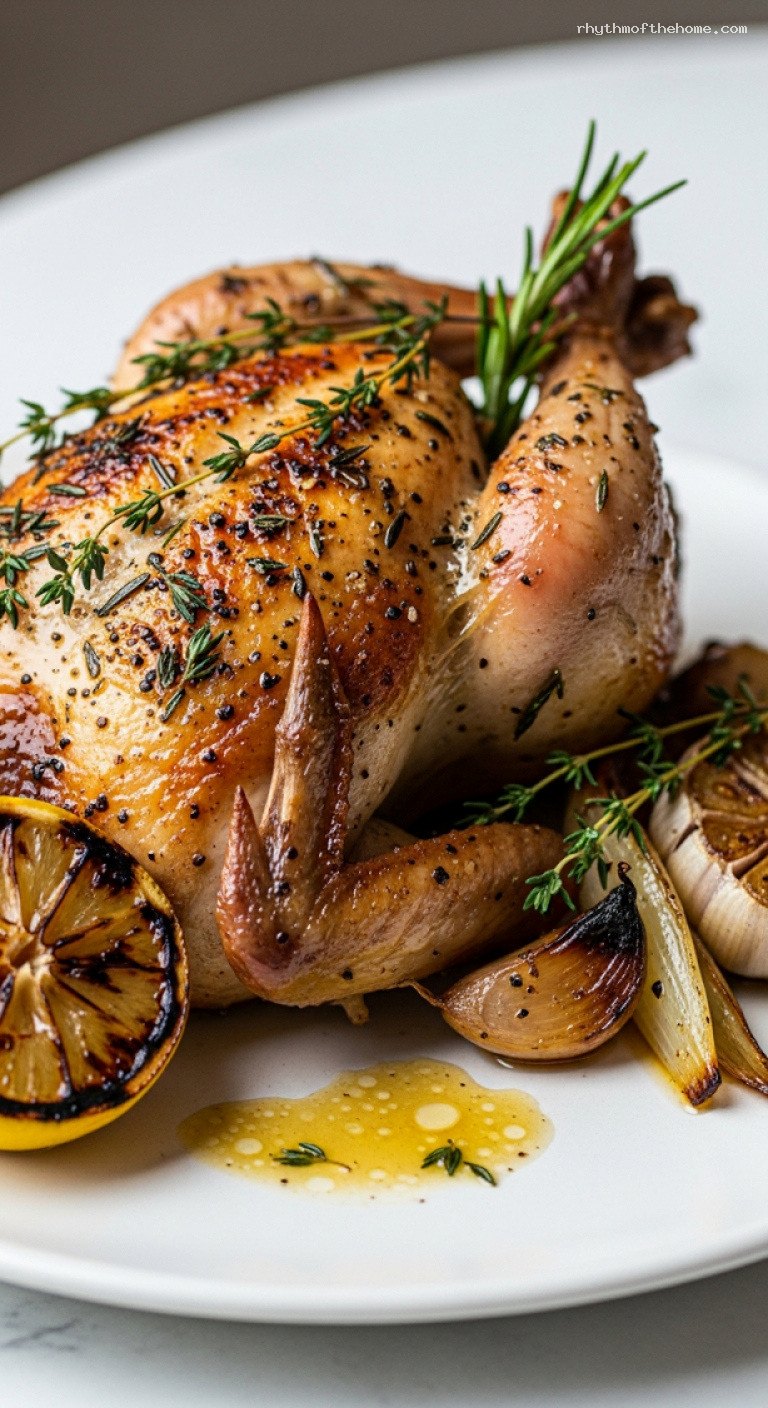
Step-by-Step Instructions
Step 1: Preheat the oven and prepare the pan
Position a rack in the center of your oven and preheat to 425°F (220°C). High heat is key for crisp, golden skin.
Choose a sturdy roasting pan or a large, heavy rimmed baking sheet with enough room to hold all four hens without crowding. Scatter the sliced onion, halved garlic head, lemon wedges, thyme sprigs, and rosemary sprigs evenly over the bottom of the pan. These aromatics will perfume the hens and flavor the pan jus.
Pat the Cornish hens very dry with paper towels, inside and out. The drier the skin, the crisper it will become. Place the hens on a tray or board while you make the herb rub.
Step 2: Make the herb-lemon rub
In a medium bowl, whisk together the olive oil and melted butter. Add the lemon zest, lemon juice, minced garlic, chopped thyme, chopped rosemary, kosher salt, black pepper, Dijon mustard, and honey (if using).
Whisk until the mixture forms a slightly thick, emulsified paste. Taste a tiny bit; it should be bright, salty, and garlicky. Adjust with a pinch more salt or lemon juice if needed. This concentrated rub will season the hens all the way through while helping the skin brown.
Step 3: Season and arrange the hens
Place the hens breast-side up on your work surface. If you like, gently loosen the skin over the breasts with your fingers to create a pocket, being careful not to tear it. Spoon a little of the herb mixture under the skin of each breast and smooth it out so it spreads evenly.
Rub the remaining herb-lemon mixture all over the hens: on the breasts, legs, thighs, and into the cavity. Make sure every surface is lightly coated.
Transfer the hens to the roasting pan, setting them on top of the bed of onions, garlic, lemons, and herbs. Tuck the wing tips under each bird to prevent burning. If you like a neater presentation, you can loosely tie the legs of each hen together with kitchen twine, but this is optional.
Step 4: Roast until crisp-skinned and cooked through
Place the roasting pan in the preheated oven. Roast for 25 minutes without opening the door. This initial blast of heat helps the skin start to crisp and turn golden.
After 25 minutes, carefully pull out the pan. Use a spoon or baster to scoop up the flavorful juices and drizzle them over the hens. Rotate the pan front to back for even browning, then return it to the oven.
Continue roasting for another 25 to 30 minutes, basting once more if the pan looks dry. The hens are done when the skin is deep golden brown and an instant-read thermometer inserted into the thickest part of the thigh (without touching bone) registers 165°F (74°C). Total roasting time is usually 50 to 55 minutes.
Step 5: Rest the hens
When the hens are cooked, transfer them carefully to a platter or cutting board. Tip each bird slightly as you lift it so the juices in the cavity run back into the roasting pan; these will enrich your jus.
Tent the hens loosely with aluminum foil and let them rest for 10 to 15 minutes. Resting allows the juices to redistribute so the meat stays moist when you carve or serve.
Step 6: Make the pan jus
While the hens rest, pour the pan juices and all the browned bits and aromatics into a heatproof measuring cup or bowl. Let the fat rise to the top for a minute, then spoon off most of the clear fat, leaving about 1 to 2 tablespoons for flavor. Return the de-fatted juices and the browned bits back to the roasting pan or into a wide skillet.
Set the pan over medium heat on the stovetop. Add the white wine and use a wooden spoon to scrape up any stuck-on bits. Simmer for 2 to 3 minutes until the wine is reduced by about half.
Pour in ¾ cup of the chicken broth and bring to a gentle simmer. Let the liquid reduce for 4 to 6 minutes, stirring occasionally, until slightly thickened and flavorful. If you prefer a looser jus, add the remaining ¼ cup broth as needed.
Stir in the lemon juice, then turn off the heat. Add the cold butter and swirl or whisk until it melts and the jus becomes glossy. Taste and season with additional salt and pepper as needed. If you prefer a smoother sauce, strain it through a fine-mesh sieve into a small pitcher or gravy boat.
Step 7: Serve and enjoy
You can serve each guest a whole hen for a generous individual portion, or use kitchen shears to cut each hen in half along the backbone and breastbone for smaller servings.
Arrange the hens on a warm platter, spoon some of the pan jus over the top, and garnish with a few fresh thyme or rosemary sprigs and extra lemon wedges. Serve the remaining jus on the side so everyone can add more at the table. Pair with simple sides like roasted potatoes, buttered green beans, or a crisp salad.
Pro Tips
- Dry skin equals crisp skin. Take an extra minute to really pat the hens dry before seasoning. If you have time, leave them uncovered in the fridge for a few hours to air-dry for even better browning.
- Do not overcrowd the pan. The hens need space around them so hot air can circulate. If they are jammed together, they will steam instead of roast.
- Use a thermometer, not guesswork. Cornish hens can go from juicy to dry quickly. Check for 165°F (74°C) at the thigh and pull them as soon as they reach it.
- Adjust salt for pre-brined birds. Some packaged hens are already injected with a salty solution. If yours are, reduce the salt in the rub to about 1 teaspoon.
- Keep the jus light, not thick. This is a pan jus, not a heavy gravy. Aim for a thin, glossy sauce that lightly coats a spoon.
Variations
- Garlic and herb only: Skip the lemon zest and juice, and use 2 extra tablespoons of chicken broth in the rub instead. Add a few smashed garlic cloves to the cavity for a deeper, more savory flavor.
- Herb and spice roast: Add 1 teaspoon smoked paprika and ½ teaspoon crushed red pepper flakes to the herb-lemon rub for a gently smoky, slightly spicy profile.
- Mediterranean style: Swap rosemary for oregano, add 2 tablespoons chopped fresh parsley, and toss a handful of pitted olives into the roasting pan during the last 15 minutes of cooking.
Storage & Make-Ahead
Leftover roasted Cornish hens keep well. Let them cool to room temperature, then store in an airtight container in the refrigerator for up to 3 to 4 days. Keep the pan jus in a separate container.
To reheat, place the hens in a baking dish, add a splash of chicken broth, cover tightly with foil, and warm in a 325°F (165°C) oven for 15 to 20 minutes, or until heated through. Reheat the jus gently on the stovetop over low heat, adding a spoonful of water or broth if it has thickened.
For make-ahead prep, you can season the hens with the herb-lemon rub up to 24 hours in advance. Arrange them on a tray, cover loosely, and refrigerate. For the crispiest skin, uncover them for the last 1 to 2 hours in the fridge to dry the surface slightly, then roast directly from cold, adding just a few extra minutes to the cooking time.
Nutrition (per serving)
Approximate values for one serving (one small hen with some skin and a portion of jus): about 620 calories; 42 g protein; 46 g fat; 8 g saturated fat; 4 g carbohydrates; 0 g fiber; 2 g sugar; 520 mg sodium. Actual values will vary based on the exact size of the hens, how much skin is eaten, and how much jus is consumed.

Leave a Reply