
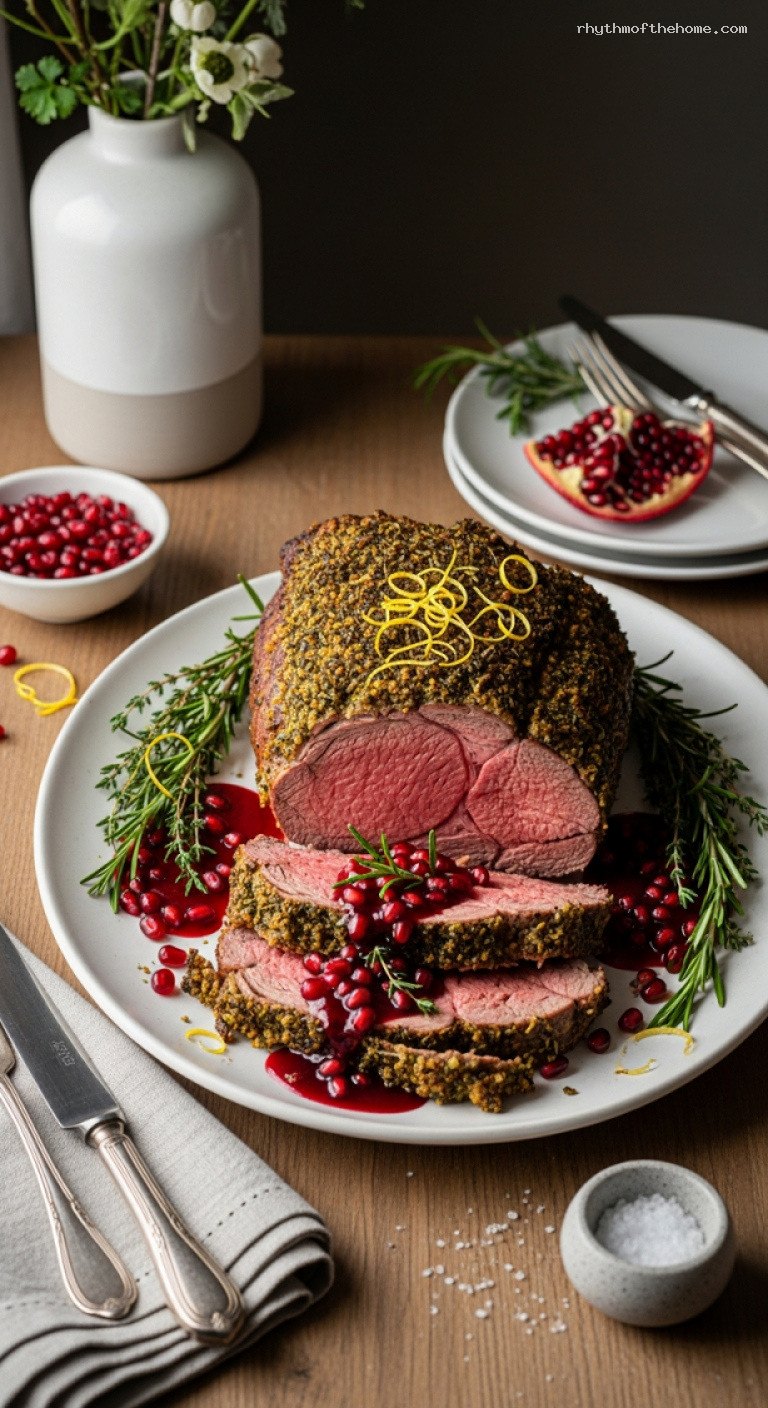
Quick Recipe Version (TL;DR)
Quick Ingredients
- 1 bone-in leg of lamb (4–5 lb / 1.8–2.3 kg), trimmed
- 1/4 cup extra-virgin olive oil, plus 2 tbsp for crust
- 8 cloves garlic, minced
- 3 tbsp fresh rosemary, minced (divided)
- 2 tbsp fresh thyme leaves (divided)
- Zest of 1 lemon + zest of 1 orange, 2 tbsp lemon juice
- 2 tsp kosher salt, 1 1/2 tsp black pepper (plus more to taste)
- 1/2 cup fresh breadcrumbs (panko or rustic bread)
- 3 tbsp chopped fresh parsley
- 2 tsp Dijon mustard
- 2 cups 100% pomegranate juice
- 1/3 cup dry red wine (or extra pomegranate juice)
- 2 tbsp honey, 1 tbsp balsamic vinegar
- 1 small shallot, finely minced, 1 rosemary sprig
- 1 tsp unsalted butter (optional, to finish sauce)
- Pomegranate arils and extra herbs for garnish (optional)
Do This
- 1. Score lamb fat in a crosshatch. Blitz or mix oil, garlic, rosemary, thyme, citrus zest and juice, salt, and pepper into a paste; rub all over lamb. Marinate 12–24 hours in the fridge.
- 2. Bring lamb to room temperature for 45–60 minutes. Preheat oven to 450°F (230°C).
- 3. Mix breadcrumbs, parsley, remaining herbs, Dijon, and olive oil with a pinch of salt and pepper. Pat onto the top and sides of the lamb to form a herb crust.
- 4. Roast lamb at 450°F (230°C) for 15 minutes, then reduce oven to 325°F (165°C) and roast 60–75 minutes more, until 130–135°F (54–57°C) for medium-rare.
- 5. While lamb roasts, simmer pomegranate juice, wine, honey, balsamic, shallot, rosemary, and salt until reduced to about 3/4 cup; whisk in butter if using.
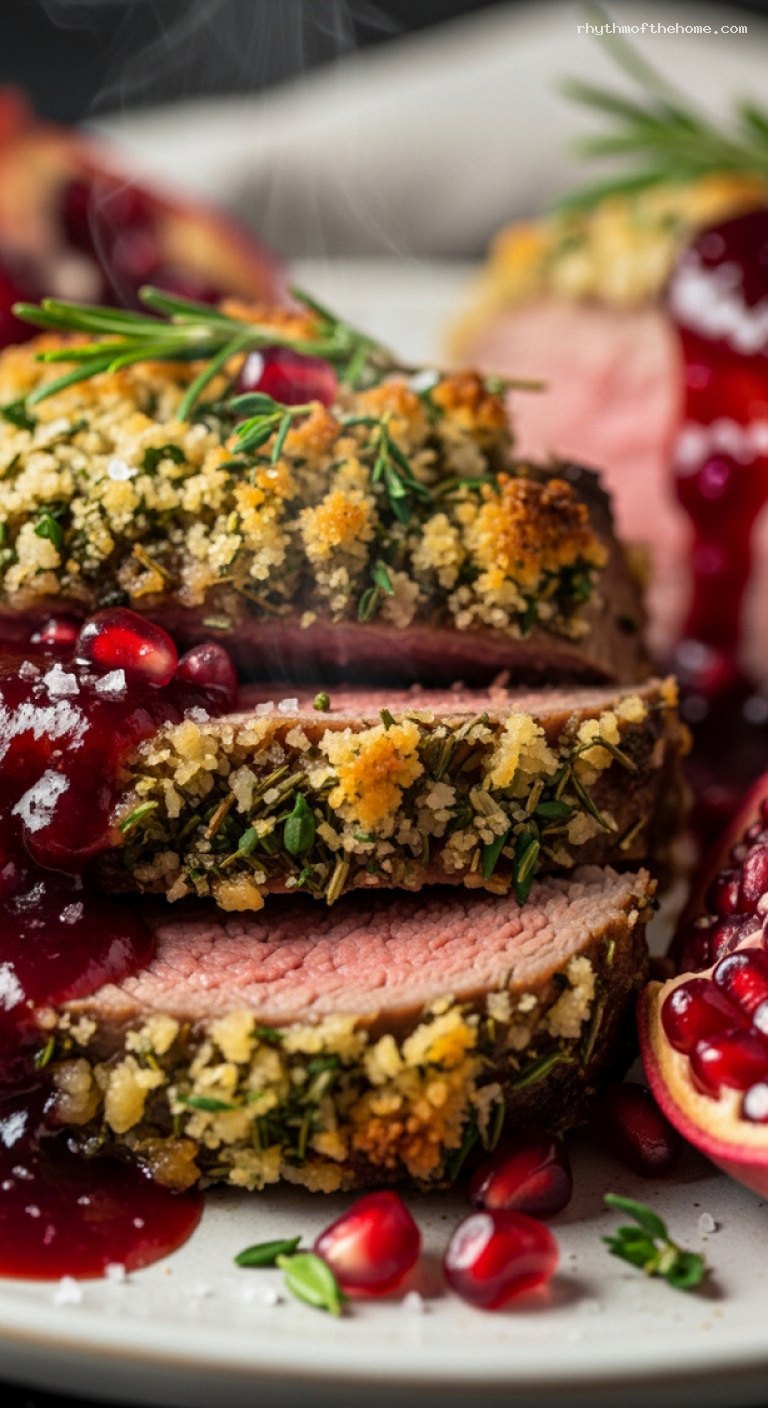
- 6. Rest lamb 20 minutes. Slice against the grain, drizzle with warm pomegranate reduction, and garnish with pomegranate arils and herbs.
Why You’ll Love This Recipe
- A show-stopping centerpiece: rosy slices of lamb with a crisp green herb crust and jewel-toned pomegranate glaze look stunning on a holiday table.
- Bright, balanced flavors: garlic, rosemary, and citrus keep the rich lamb tasting fresh, while the sweet-tart reduction cuts through the richness.
- Mostly hands-off: you marinate ahead, then the oven and stovetop do most of the work.
- Flexible doneness: easy to adjust for guests who prefer medium-rare or more cooked slices.
Grocery List
- Produce: Garlic, fresh rosemary, fresh thyme, fresh parsley, 1 lemon, 1 orange, 1 small shallot, pomegranate arils (or 1 whole pomegranate to seed yourself).
- Dairy: Unsalted butter (optional, for finishing the sauce).
- Pantry: Bone-in leg of lamb (4–5 lb), extra-virgin olive oil, kosher salt, black pepper, Dijon mustard, fresh breadcrumbs or panko, 100% pomegranate juice, dry red wine (or extra pomegranate juice), honey, balsamic vinegar.
Full Ingredients
Lamb and Marinade
- 1 bone-in leg of lamb, 4–5 lb (1.8–2.3 kg), trimmed of excess surface fat and silverskin
- 1/4 cup extra-virgin olive oil
- 6 cloves garlic, minced or pressed
- 2 tbsp fresh rosemary, finely minced
- 1 tbsp fresh thyme leaves
- 1 tbsp finely grated lemon zest (from about 1 lemon)
- 1 tbsp finely grated orange zest (from about 1 orange)
- 2 tbsp fresh lemon juice
- 2 tsp kosher salt (use 1 1/2 tsp if using fine sea salt)
- 1 tsp freshly ground black pepper
Herb Crust
- 1/2 cup fresh breadcrumbs (from rustic bread) or plain panko
- 3 tbsp fresh flat-leaf parsley, finely chopped
- 1 tbsp fresh rosemary, finely minced
- 1 tbsp fresh thyme leaves
- 2 tsp Dijon mustard
- 2 tbsp extra-virgin olive oil
- 1/2 tsp kosher salt
- 1/4 tsp freshly ground black pepper
Pomegranate Reduction
- 2 cups 100% pomegranate juice (not from concentrate if possible)
- 1/3 cup dry red wine (or substitute 1/3 cup additional pomegranate juice)
- 2 tbsp honey (add a bit more if you prefer a sweeter sauce)
- 1 tbsp balsamic vinegar
- 1 small shallot, very finely minced
- 1 small sprig fresh rosemary
- 1/4 tsp kosher salt, plus more to taste
- 1 tsp unsalted butter (optional, for a glossy, richer sauce)
For Serving (Optional but Recommended)
- 1/2–3/4 cup fresh pomegranate arils
- Extra chopped fresh parsley, rosemary, and thyme
- Extra strips of lemon or orange zest for garnish
Step-by-Step Instructions
Step 1: Prep the lamb
Pat the leg of lamb very dry with paper towels. Use a sharp knife to trim off any thick, hard pieces of surface fat and obvious silverskin, leaving a thin, even layer of fat to baste the meat as it roasts.
Flip the lamb so the fat side is up. Lightly score the fat in a shallow crosshatch pattern, making cuts about 1/4 inch (6 mm) deep and 1 inch (2.5 cm) apart. This helps the marinade penetrate and gives the fat a beautiful, crisp finish.
Step 2: Make the garlic-herb citrus marinade
In a small bowl, combine the olive oil, minced garlic, minced rosemary, thyme leaves, lemon zest, orange zest, lemon juice, kosher salt, and black pepper. Stir into a thick, fragrant paste. You can also pulse everything in a small food processor to create a smoother rub.
Place the lamb in a large resealable bag or a snug baking dish. Rub the marinade all over the lamb, working it into the scored cuts and the underside. Make sure every surface is well coated.
Step 3: Marinate the lamb
Seal the bag (pressing out excess air) or cover the baking dish tightly. Refrigerate for at least 4 hours, but ideally 12–24 hours for the deepest flavor. Turn the lamb once or twice during marinating if you can, to help the seasoning distribute evenly.
About 45–60 minutes before you plan to roast, remove the lamb from the refrigerator. Uncover it and let it sit at room temperature. This helps it cook more evenly and prevents the outside from overcooking before the center is done.
Step 4: Make the herb crust
Preheat your oven to 450°F (230°C). Line a roasting pan or a large, sturdy baking sheet with foil for easy cleanup, and set a roasting rack on top if you have one.
In a medium bowl, mix the breadcrumbs, parsley, rosemary, thyme, Dijon mustard, olive oil, salt, and pepper until the crumbs are evenly coated and slightly clumpy. The mixture should hold together when pressed between your fingers. If it seems dry, drizzle in a bit more olive oil.
Pat the lamb dry again very lightly with a paper towel if it looks very wet (you do not want to remove all the marinade, just excess moisture). Place the lamb fat side up on the rack. Gently press the herb crumb mixture over the top and sides of the lamb, forming an even crust. It is fine if some crumbs fall onto the pan.
Step 5: Roast the lamb
Place the lamb into the preheated 450°F (230°C) oven and roast for 15 minutes to set the crust and brown the surface. Then, without opening the oven door for too long, reduce the oven temperature to 325°F (165°C).
Continue roasting for about 60–75 minutes, depending on the size of your leg and your preferred doneness. As a guideline, plan on roughly 12–15 minutes per pound after the initial high-heat phase.
Begin checking the internal temperature with an instant-read thermometer 15–20 minutes before you think it will be done. Insert the thermometer into the thickest part of the meat, avoiding the bone. Aim for:
- 125–130°F (52–54°C) for rare
- 130–135°F (54–57°C) for medium-rare (recommended)
- 135–140°F (57–60°C) for medium
Remember the temperature will rise about 5°F (3°C) as the lamb rests.
Step 6: Make the pomegranate reduction
While the lamb roasts, prepare the sauce. In a medium saucepan, combine the pomegranate juice, red wine (or extra pomegranate juice), honey, balsamic vinegar, minced shallot, rosemary sprig, and salt.
Bring to a gentle boil over medium heat, then reduce the heat to medium-low and simmer, uncovered, stirring occasionally, until the liquid has reduced to about 3/4 cup. This will take roughly 20–25 minutes, depending on your pan and stove. The sauce should be glossy and coat the back of a spoon.
Remove the rosemary sprig. Taste and adjust for sweetness or acidity with a little more honey or balsamic if needed. For extra richness, whisk in the butter off the heat until melted and smooth. Keep the reduction warm on the lowest heat setting, or rewarm gently before serving.
Step 7: Rest, carve, and serve
When the lamb reaches your target temperature, transfer it to a cutting board with a groove (to catch juices). Loosely tent with foil and let it rest for at least 20 minutes. Resting is essential for juicy meat and easier carving.
To carve, stand the leg so the bone runs horizontally. Slice thick or thin slices across the grain, starting at the widest part of the roast. Rotate the bone as needed to keep cutting against the grain. Arrange slices on a warm platter.
Drizzle some of the warm pomegranate reduction over the lamb and serve the rest in a small jug or bowl on the side. Scatter fresh pomegranate arils and chopped herbs over the top, and garnish with a few strips of citrus zest if you like. Serve immediately.
Pro Tips
- Let it marinate overnight: The difference between a 4-hour and 24-hour marinade is noticeable. Overnight marinating gives the lamb a deeper garlic-herb flavor and a more fragrant citrus note.
- Use a thermometer: Lamb can go from perfect to overcooked quickly. An instant-read thermometer takes the guesswork out and ensures a rosy, tender center.
- Control the crust: If the herb crust starts to brown too deeply before the lamb is done, loosely tent the top with foil for the remainder of the cooking time.
- Reduce the sauce enough: The pomegranate reduction should be slightly syrupy. If it is too thin, keep simmering; if it becomes too thick, whisk in a tablespoon or two of water to loosen.
- Warm platter, happy lamb: Serve the sliced lamb on a warm platter so the meat stays at a pleasant temperature while people help themselves.
Variations
- Garlic-mint crust: Replace half the parsley in the herb crust with finely chopped fresh mint, and add 1 extra clove of garlic for a brighter, more traditional lamb flavor profile.
- Spiced pomegranate glaze: Add a small cinnamon stick and 2–3 whole cloves to the pomegranate reduction while it simmers, then remove them before serving for a warmly spiced, holiday-style sauce.
- Boneless lamb roast: Use a 3–3.5 lb (1.4–1.6 kg) boneless leg of lamb, tied. Marinate and crust as directed, but reduce roasting time; start checking temperatures after 45–50 minutes at 325°F (165°C).
Storage & Make-Ahead
You can marinate the lamb up to 24 hours in advance, and even apply the herb crust up to 4 hours before roasting. Keep it covered in the refrigerator and let it come to room temperature before putting it in the oven. The pomegranate reduction can be made up to 3 days ahead; cool, cover, and refrigerate, then reheat gently over low heat, thinning with a spoonful of water if needed.
Leftover lamb keeps well. Store cooled slices in an airtight container in the refrigerator for up to 3–4 days. Reheat gently, covered, in a 300°F (150°C) oven or in a covered skillet with a splash of water or stock until warmed through. The sauce will keep in a separate airtight container in the fridge for up to 5 days. You can also freeze leftover lamb (well wrapped) for up to 2 months, though the texture is best when enjoyed fresh.
Nutrition (per serving)
Approximate values for 1/8 of the roast with a spoonful of sauce (will vary based on exact size and trimming): about 450 calories; 35 g protein; 32 g fat; 7 g carbohydrates; 0–1 g fiber; 5 g sugars; 580 mg sodium. The pomegranate reduction adds some natural sugars but is used in relatively small amounts per serving.

Leave a Reply