
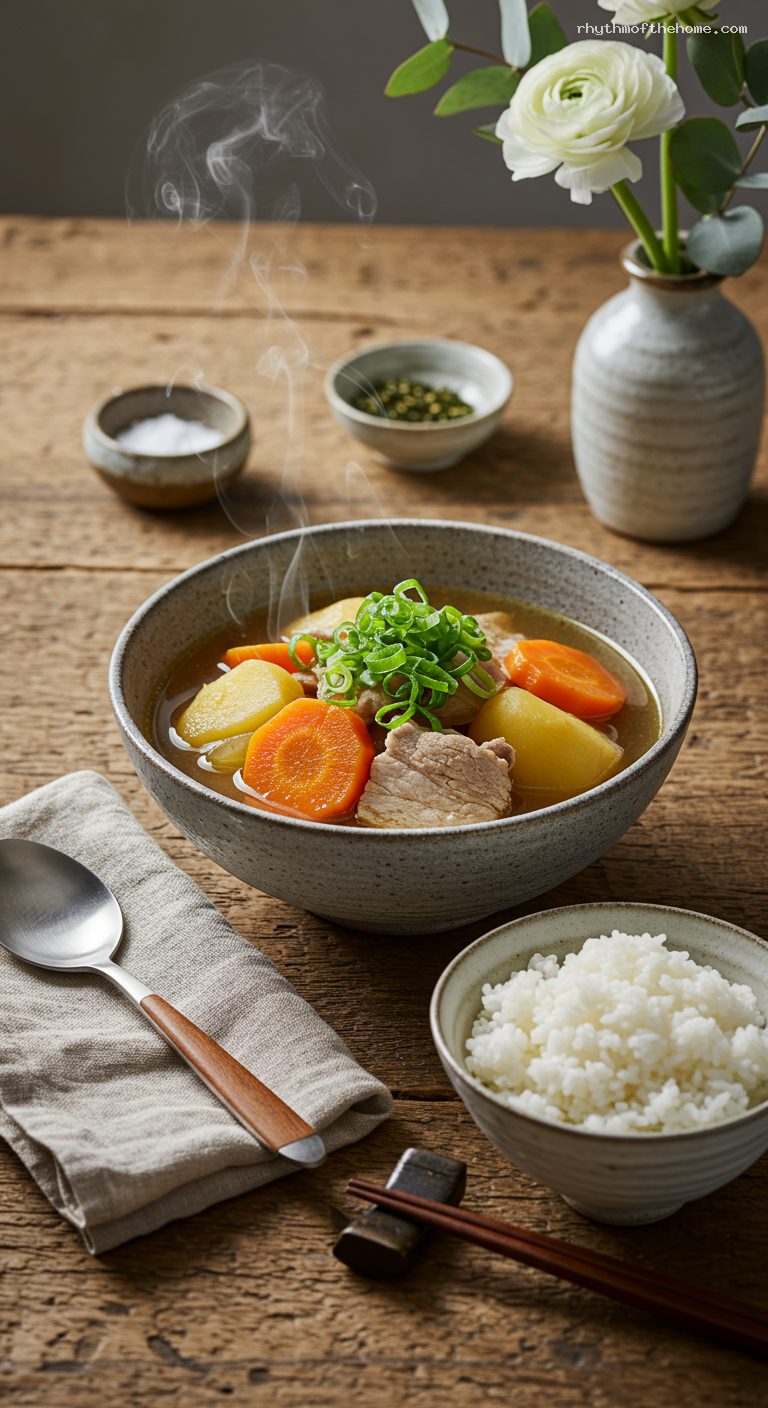
Quick Recipe Version (TL;DR)
Quick Ingredients
- 5 cups (1.2 L) dashi stock (homemade or from granules)
- 250 g (9 oz) thin-sliced pork belly or shoulder
- 250 g (9 oz) daikon, peeled and thinly sliced
- 1 medium carrot (120 g), peeled and sliced
- 300 g (10.5 oz) waxy potatoes or 250 g (9 oz) taro, peeled and chunked
- 200 g (7 oz) konnyaku, torn or sliced
- 5 Tbsp (75 g) miso paste (mix of white and red, to taste)
- 1 Tbsp sesame oil
- 2 Tbsp sake (or dry sherry)
- 1 tsp soy sauce (optional)
- 2–3 scallions, thinly sliced
- 1/2 tsp kosher salt (for rubbing konnyaku)
- Cooked short-grain rice, for serving
Do This
- 1. Prep: Cut daikon and carrot into 5 mm slices; chunk potatoes/taro; slice scallions.
- 2. Konnyaku: Rub with 1/2 tsp salt, rinse, then blanch 1–2 minutes; drain.
- 3. Heat 1 Tbsp sesame oil in a pot; sauté pork until just opaque, 2–3 minutes.
- 4. Add daikon, carrot, potatoes/taro; stir 2 minutes. Splash in 2 Tbsp sake.
- 5. Pour in 5 cups hot dashi; bring to a boil, skim, add konnyaku; simmer gently 12–15 minutes at 90–95°C (194–203°F) until tender.
- 6. Turn heat low; dissolve 5 Tbsp miso in a ladle of hot broth, then stir back in. Do not boil.
- 7. Finish with 1 tsp soy (optional); ladle into bowls, top with scallions, serve with rice.
Why You’ll Love This Recipe
- Deep, savory miso broth balanced by sweet root vegetables and tender pork.
- Classic Japanese comfort food that feels hearty yet weeknight-easy.
- Konnyaku and daikon add satisfying texture without heaviness.
- One-pot meal that pairs perfectly with a simple bowl of steamed rice.
Grocery List
- Produce: Daikon, carrot, potatoes or taro, scallions, konnyaku (yam cake)
- Dairy: None
- Pantry: Miso paste, dashi (granules or kombu/bonito), sesame oil, sake (or dry sherry), soy sauce, rice, kosher salt
Full Ingredients
Broth Base
- 5 cups (1.2 L) dashi stock
- Option A (quick): 5 cups (1.2 L) hot water + 2 tsp (8 g) dashi granules
- Option B (homemade): 10 g kombu + 20 g katsuobushi simmered in 5 cups (1.2 L) water, strained
- 5 Tbsp (75 g) miso paste (blend of white/shiromiso and red/akamiso recommended)
Pork and Vegetables
- 250 g (9 oz) thin-sliced pork belly or shoulder, cut into 5 cm (2 in) pieces
- 250 g (9 oz) daikon, peeled, cut into half-moons 5 mm (1/4 in) thick
- 1 medium carrot (120 g), peeled, sliced into 5 mm (1/4 in) coins
- 300 g (10.5 oz) waxy potatoes (Yukon Gold) or 250 g (9 oz) taro (satoimo), peeled and cut into 2 cm (3/4 in) chunks
- 200 g (7 oz) konnyaku, torn or sliced; see prep below
Seasoning & Garnish
- 1 Tbsp toasted sesame oil
- 2 Tbsp sake (or dry sherry)
- 1 tsp soy sauce (optional, for depth)
- 1/2 tsp kosher salt (for rubbing konnyaku) + additional salt to taste if needed
- 2–3 scallions, thinly sliced on the bias
- Shichimi togarashi (optional, for serving)
To Serve
- 4 small bowls steamed Japanese short-grain rice (about 150 g each), cooked from 1.5 cups (285 g) uncooked rice
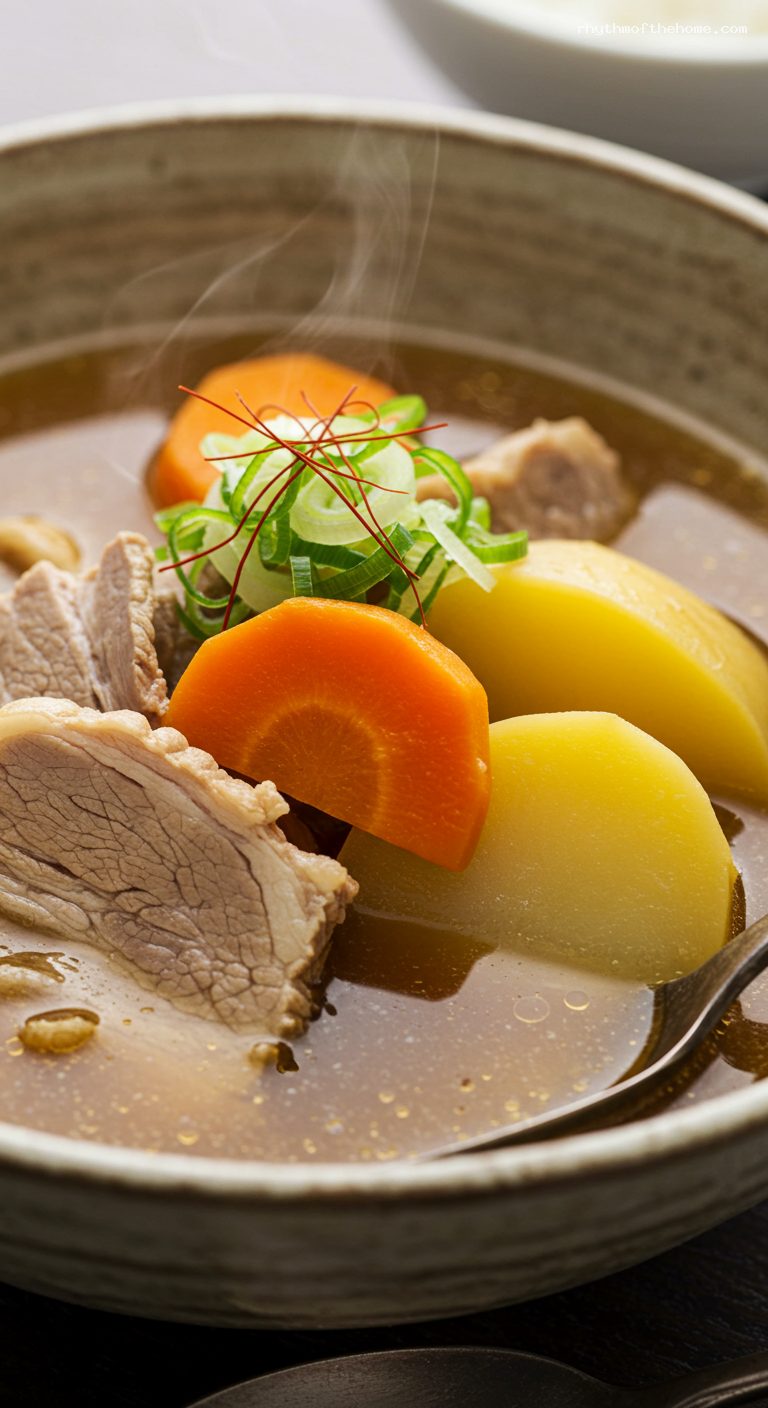
Step-by-Step Instructions
Step 1: Prep and cut the vegetables
Peel the daikon and carrot. Slice the daikon into half-moons about 5 mm (1/4 in) thick and the carrot into 5 mm (1/4 in) rounds. Peel the potatoes (or taro) and cut into 2 cm (3/4 in) chunks. If using potatoes, rinse in cold water for 1 minute to wash away excess starch; drain well. Thinly slice the scallions and reserve for garnish.
Step 2: Treat the konnyaku for best texture
Rinse the konnyaku. Rub its surface with 1/2 tsp kosher salt and let sit 5 minutes to draw out odor. Rinse again, then tear into bite-size pieces with your hands (jagged edges grab flavor) or slice into 1 cm (3/8 in) pieces and score lightly with a knife. Blanch in boiling water for 1–2 minutes, drain, and set aside.
Step 3: Make or heat the dashi
If using granules, dissolve 2 tsp (8 g) dashi granules in 5 cups (1.2 L) hot water. For homemade, steep 10 g kombu in 5 cups (1.2 L) water at 60–70°C (140–158°F) for 30 minutes, bring just to a simmer, remove kombu, add 20 g katsuobushi, steep 5 minutes, then strain. Keep the dashi hot.
Step 4: Sauté the pork and vegetables
In a heavy pot (4–5 L capacity) over medium heat, add 1 Tbsp sesame oil. Add the pork and cook, stirring, until just opaque and lightly browned in spots, 2–3 minutes. Add the daikon, carrot, and potatoes (or taro); stir-fry 2 minutes until glossy and fragrant. Splash in 2 Tbsp sake and cook 30 seconds to reduce.
Step 5: Simmer gently until tender
Pour in 5 cups (1.2 L) hot dashi. Bring to a full boil, skim any foam, then add the prepared konnyaku. Reduce to a gentle simmer and cook uncovered 12–15 minutes at about 90–95°C (194–203°F), until the potatoes/taro are just tender and the daikon is translucent.
Step 6: Dissolve the miso off the heat
Reduce the heat to low. Ladle some hot broth into a small bowl, whisk in 5 Tbsp (75 g) miso until smooth, then return it to the pot. Stir gently and keep the soup below a simmer (boiling dulls miso’s aroma). Taste and adjust with up to 1 tsp soy sauce and a pinch of salt if needed.
Step 7: Garnish and serve with rice
Ladle the tonjiru into warmed bowls. Scatter generously with sliced scallions and, if you like, a pinch of shichimi togarashi. Serve immediately with hot steamed short-grain rice on the side.
Pro Tips
- Dissolve miso off the heat to preserve its aroma and nuanced flavor.
- Tearing or lightly scoring konnyaku helps it grip the broth for better taste.
- Keep the soup at a bare simmer after adding miso; do not boil.
- Use a blend of white and red miso for balance: white for sweetness, red for depth.
- Rinsing potato chunks reduces surface starch so the broth stays clear and light.
Variations
- Taro version: Swap potatoes for 250 g taro (satoimo) for a silkier, less mealy texture that reheats better.
- Mushroom boost: Add 150 g sliced shiitake or shimeji with the vegetables for extra umami.
- Vegetarian: Replace pork with firm tofu (250 g, cubed) and use kombu-only dashi; finish with a touch of soy and extra sesame oil.
Storage & Make-Ahead
Refrigerate cooled tonjiru in an airtight container for up to 3 days. Reheat gently over low heat, keeping it below a boil to protect the miso’s fragrance. For best results, add the scallion garnish just before serving. Freezing is possible for up to 2 months, but potatoes may turn mealy; taro holds up better. For make-ahead, simmer everything without miso, cool and refrigerate up to 2 days; reheat, then dissolve in miso right before serving.
Nutrition (per serving)
Approximate values (including 150 g cooked rice): 380 kcal; 20 g protein; 16 g fat; 35 g carbohydrates; 3 g fiber; 1250 mg sodium. Values will vary with miso type and added soy.

Leave a Reply