
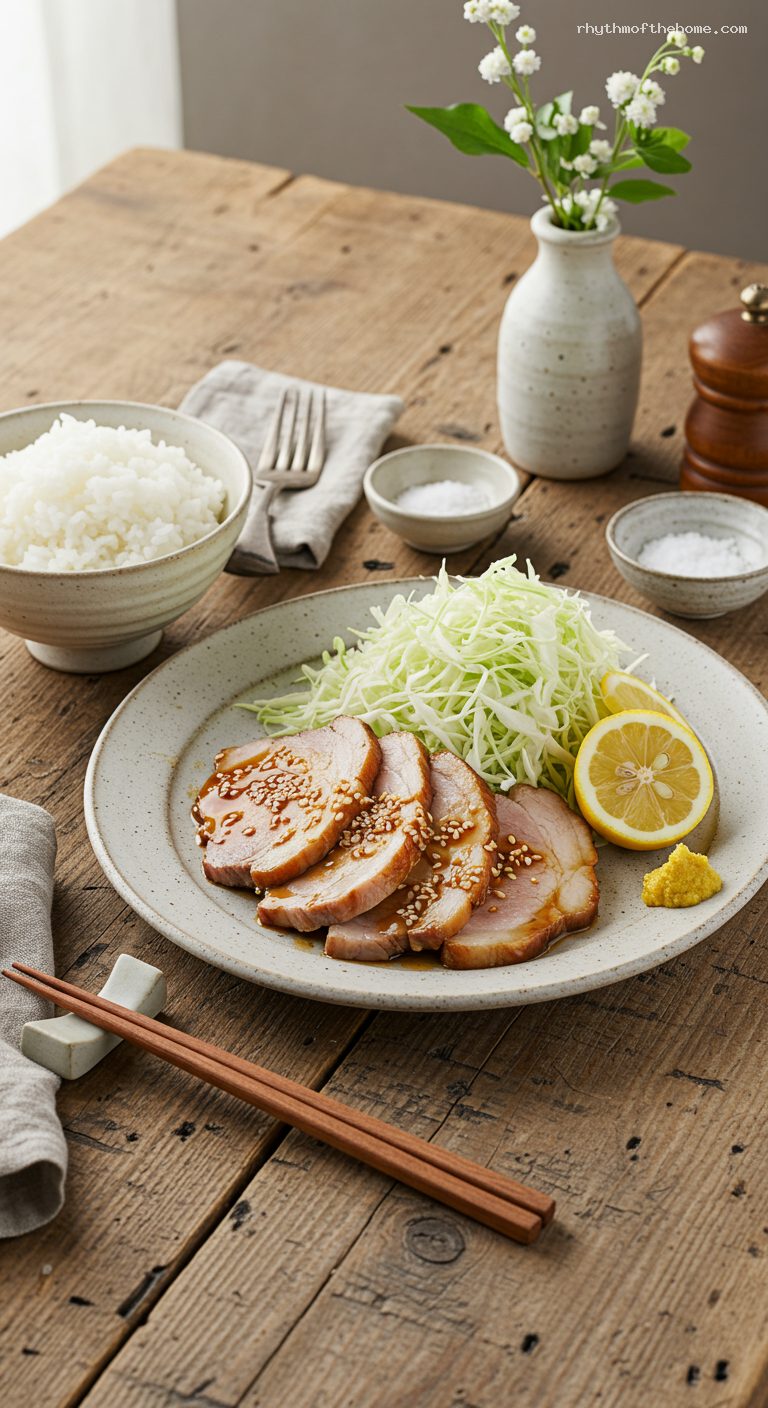
Quick Recipe Version (TL;DR)
Quick Ingredients
- 500 g thin-sliced pork loin or shoulder
- 3 tbsp soy sauce
- 3 tbsp sake
- 2 tbsp mirin
- 1 tbsp sugar
- 1 1/2 tbsp freshly grated ginger, divided
- 1 tbsp potato starch or all-purpose flour
- 1 tbsp neutral oil
- 3 cups finely shredded green cabbage
- 3 cups hot cooked Japanese short-grain rice
- Karashi mustard, to taste; lemon wedges and toasted sesame (optional)
Do This
- 1. Whisk soy sauce, sake, mirin, sugar, and 1 tbsp ginger until dissolved; reserve 1/2 tbsp ginger.
- 2. Pat pork dry; lightly dust with potato starch. Shred cabbage and keep rice hot.
- 3. Heat a 12-inch skillet over medium-high until very hot (surface 400–425°F / 205–220°C); add oil.
- 4. Sear pork in 2 batches, 45–60 seconds on the first side and 30–45 seconds on the second; transfer to a plate.
- 5. Return all pork to the pan; pour in sauce and boil 60–90 seconds until glossy. Stir in reserved 1/2 tbsp ginger.
- 6. Plate pork with cabbage and hot rice; add a small dab of karashi. Garnish with sesame and a lemon wedge if desired.
Why You’ll Love This Recipe
- Lightning-fast: dinner on the table in under 30 minutes.
- Big flavor from a small pantry: soy, sake, mirin, and ginger create a shiny, savory-sweet glaze.
- Restaurant-style gloss and tenderness thanks to a quick starch dusting and high-heat sear.
- Balanced plate: crisp cabbage, fluffy rice, and a dab of karashi for a clean, bright finish.
Grocery List
- Produce: Fresh ginger, green cabbage, lemon (optional), scallions (optional)
- Dairy: None
- Pantry: Thin-sliced pork loin or shoulder, soy sauce, sake, mirin, sugar, potato starch or all-purpose flour, neutral oil (canola/vegetable), Japanese short-grain rice, karashi mustard, toasted sesame seeds (optional), shichimi togarashi (optional)
Full Ingredients
Pork and Sauce
- 500 g thin-sliced pork loin or shoulder (1/16–1/8 inch thick; shabu-shabu style is perfect)
- 3 tbsp soy sauce (45 ml)
- 3 tbsp sake (45 ml)
- 2 tbsp mirin (30 ml)
- 1 tbsp sugar (12 g)
- 1 1/2 tbsp freshly grated ginger, with juices (about 20 g), divided
- 1 tsp rice vinegar (optional, for brightness)
To Cook
- 1 tbsp potato starch or all-purpose flour (for light dusting)
- 1 tbsp neutral oil (canola, vegetable, or rice bran)
For Serving
- 3 cups finely shredded green cabbage (about 150 g)
- 3 cups hot cooked Japanese short-grain rice
- Karashi mustard, to taste (start with 1/4 tsp per plate)
- Lemon wedges, toasted sesame seeds, thinly sliced scallions (all optional)
Step-by-Step Instructions
Step 1: Make the gingery sauce
In a small bowl, whisk together the soy sauce, sake, mirin, and sugar until the sugar dissolves. Stir in 1 tablespoon of the grated ginger (with its juice). Reserve the remaining 1/2 tablespoon ginger for finishing the dish. If you like a touch more brightness, add the optional rice vinegar. Set the sauce aside.
Step 2: Prep the pork and cabbage
Pat the pork slices dry with paper towels. If any pieces are very large, cut them into 2–3 inch strips for easy eating. Sprinkle the potato starch evenly over the pork and toss gently to coat; shake off any excess so only a whisper-thin layer remains. Finely shred the cabbage, rinse briefly in very cold water to crisp, and drain well. Keep your cooked rice hot.
Step 3: Heat the pan properly
Set a 12-inch stainless steel or cast-iron skillet over medium-high heat until very hot, 2–3 minutes. Add the oil and heat until it shimmers. If you have an infrared thermometer, aim for a pan surface temperature of 400–425°F (205–220°C). Proper preheating ensures quick browning without overcooking.
Step 4: Sear the pork in batches
Add half the pork in a single, uncrowded layer. Sear for 45–60 seconds until the edges look opaque and the underside has light golden spots. Flip and cook another 30–45 seconds until just cooked through. Transfer to a plate and repeat with the remaining pork, adding a touch more oil if the pan looks dry.
Step 5: Glaze with the sauce
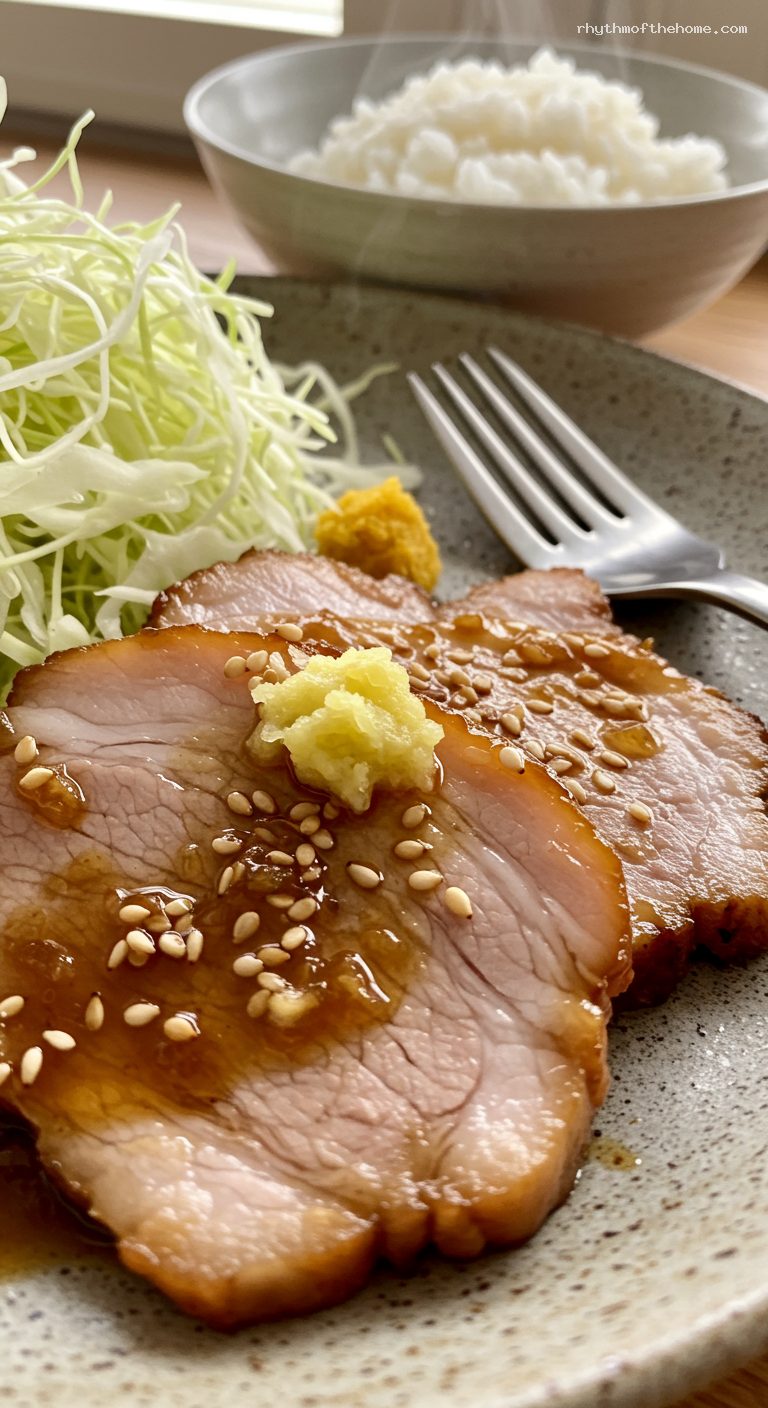
Return all the pork (and any juices) to the pan. Stir the sauce and pour it in. Bring to a lively boil, scraping up any browned bits, and cook, tossing constantly, for 60–90 seconds until the liquid thickens, turns glossy, and clings to the meat. Stir in the reserved 1/2 tablespoon ginger during the final 15 seconds for a fresh aromatic pop. The glaze should be syrupy, not sticky; if it tightens too much, add 1–2 tablespoons water to loosen.
Step 6: Plate with cabbage, rice, and karashi
Arrange a mound of hot rice and a generous pile of shredded cabbage on each plate. Spoon the pork and its gingery soy–sake glaze alongside (or slightly over) the rice, letting some sauce pool onto the plate. Add a small dab of karashi mustard on the side. Finish with toasted sesame seeds, sliced scallions, and a lemon wedge if you like.
Step 7: Serve immediately
Buta no shōgayaki is best hot off the pan, when the pork is tender and the glaze is at peak gloss. Serve and enjoy right away.
Pro Tips
- Cut choice: Pork shoulder is juicier and more forgiving; loin is leaner and cooks even faster. Either works if sliced thin.
- Shine factor: A light starch dusting helps the glaze cling and creates that lacquered look without deep sweetness.
- Ginger matters: Grate ginger very finely and include its juice for maximum flavor. Add half at the end to keep the aroma bright.
- Pan heat: High heat and quick batches prevent steaming and keep the pork tender.
- Cabbage crunch: Soak shredded cabbage in ice water for 3–5 minutes, then drain well for extra crispness.
Variations
- Onion lovers: Sauté 1/2 thinly sliced onion in 1 tsp oil until lightly browned before searing the pork; proceed with the recipe.
- Miso twist: Replace 1 tbsp of the soy sauce with 1 tbsp white miso; whisk thoroughly to dissolve before cooking.
- Spicy kick: Add 1/2 tsp ichimi togarashi or a few drops of chili oil to the sauce, and finish with shichimi togarashi.
Storage & Make-Ahead
Whisk the sauce up to 3 days ahead and refrigerate. Shredded cabbage can be washed, spun dry, and chilled in a sealed container with a paper towel for up to 2 days. Cooked shōgayaki is best fresh but will keep 3 days in the refrigerator; reheat gently in a skillet over low heat with a splash of water to loosen the glaze. For longer storage, freeze the cooked pork in its sauce for up to 1 month; thaw overnight and rewarm gently. Rice and cabbage are best made fresh the day you serve.
Nutrition (per serving)
Approximate values: 560 calories; 30 g protein; 43 g carbohydrates; 18 g fat; 2 g fiber; 800 mg sodium.

Leave a Reply