
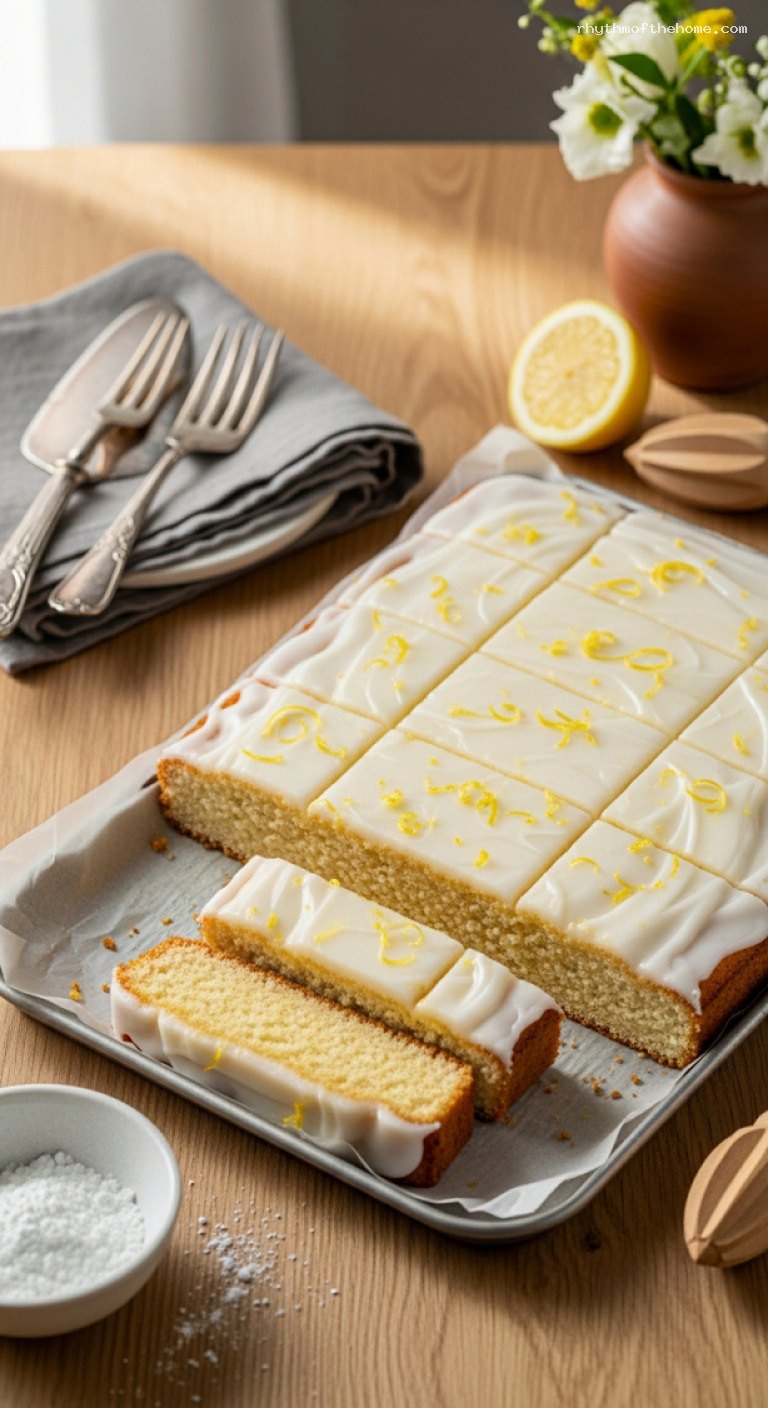
Quick Recipe Version (TL;DR)
Quick Ingredients
- 250 g unsalted butter, soft
- 250 g granulated sugar
- 5 large eggs (room temperature)
- Finely grated zest of 3 unwaxed lemons
- 350 g all-purpose flour
- 3 tsp baking powder
- 1/2 tsp fine salt
- 150 g sour cream or Greek yogurt (10% fat)
- 80 ml milk
- 120 ml freshly squeezed lemon juice (for syrup)
- 80 g granulated sugar (for syrup)
- 250 g powdered sugar (for glaze)
- 4–6 tbsp freshly squeezed lemon juice (for glaze)
Do This
- 1. Preheat oven to 180°C top/bottom heat (160°C fan) and line a baking sheet (about 30 × 40 cm) with baking paper.
- 2. Cream butter and sugar until pale and fluffy. Beat in eggs one by one, then add lemon zest.
- 3. Whisk flour, baking powder, and salt. Mix sour cream with milk. Fold dry ingredients into the batter alternately with the sour cream mixture.
- 4. Spread batter evenly on the sheet and bake 20–25 minutes until lightly golden and a skewer comes out clean.
- 5. While baking, gently heat lemon juice and sugar for the syrup until the sugar dissolves. Set aside.
- 6. While the cake is still hot, poke the surface all over with a skewer and slowly spoon or brush the warm lemon syrup on top. Let cool until just slightly warm.
- 7. Mix powdered sugar with enough lemon juice to form a thick but pourable glaze. Spread over the cooled cake, let set, then cut into squares and serve.
Why You’ll Love This Recipe
- Classic German-style lemon sheet cake: soft, fluffy, and beautifully soaked with bright lemon syrup.
- Perfect for parties, school events, and coffee gatherings: one pan makes up to two dozen pieces.
- Stays moist for days thanks to sour cream in the batter and the light lemon soak.
- Big, clear lemon flavor from zest in the batter, juice in the syrup, and a zesty lemon glaze on top.
Grocery List
- Produce: 5–6 unwaxed lemons (you need zest of 3 and plenty of fresh juice)
- Dairy: Unsalted butter, sour cream or Greek yogurt (10% fat), milk, eggs
- Pantry: All-purpose flour, granulated sugar, powdered sugar, baking powder, fine salt, vanilla extract or vanilla sugar (optional)
Full Ingredients
For the Lemon Sheet Cake
- 250 g unsalted butter, very soft but not melted
- 250 g granulated sugar
- 1 packet vanilla sugar (about 8 g) or 1–1.5 tsp vanilla extract (optional but recommended)
- 5 large eggs, at room temperature
- Finely grated zest of 3 unwaxed lemons (only the yellow part)
- 350 g all-purpose flour (Type 405 or similar)
- 3 tsp baking powder (about 12 g)
- 1/2 tsp fine salt
- 150 g sour cream or Greek yogurt, 10% fat, at room temperature
- 80 ml milk, at room temperature (whole or semi-skimmed)
For the Lemon Syrup (Soak)
- 120 ml freshly squeezed lemon juice (about 3–4 lemons)
- 80 g granulated sugar
- 2 tbsp water (optional, for a slightly milder syrup)
For the Lemon Glaze
- 250 g powdered sugar, sifted
- 4–6 tbsp freshly squeezed lemon juice (start with 4, add more as needed)
- 1–2 tbsp milk or water, only if needed to adjust consistency
Optional Garnish
- Finely grated lemon zest (from 1 extra lemon)
- Very thin lemon slices or half-moons, well dried
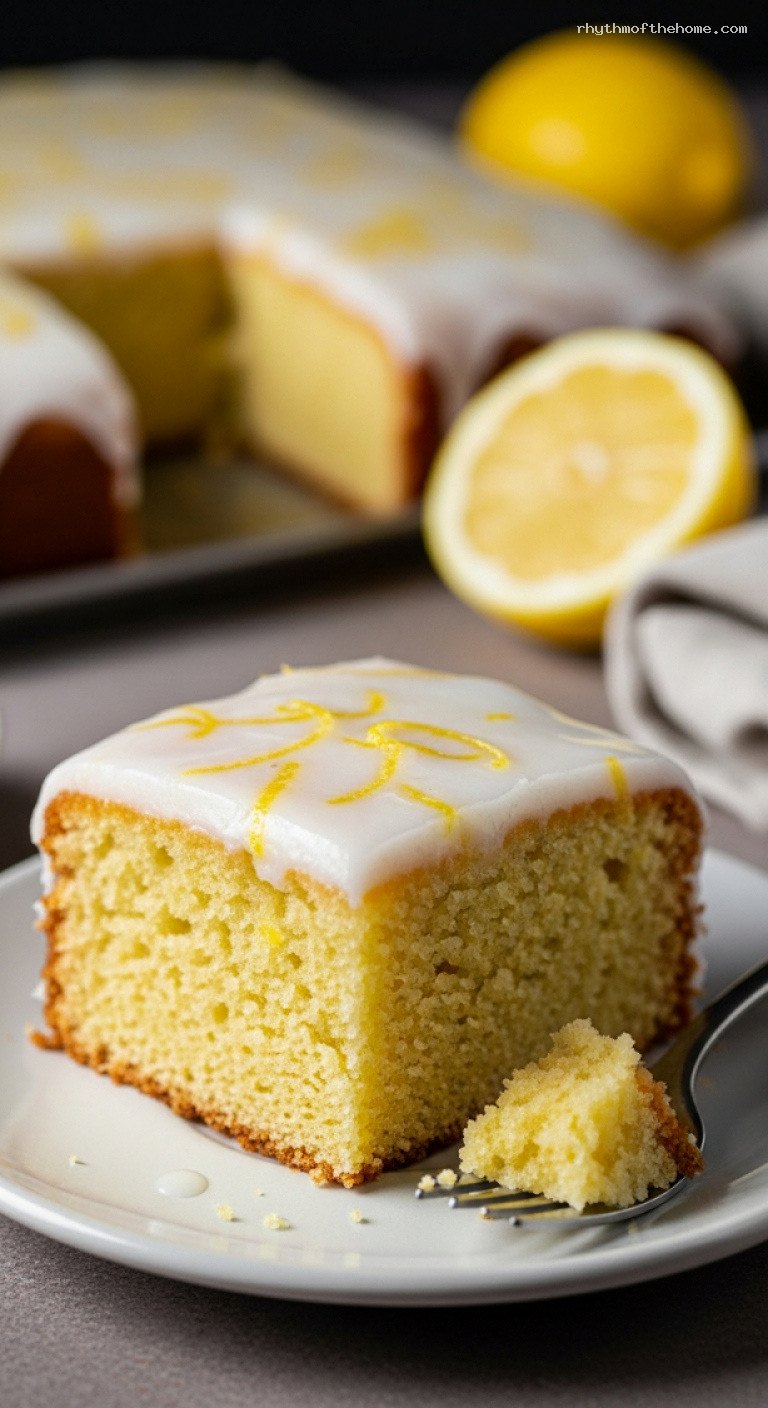
Step-by-Step Instructions
Step 1: Prepare the pan and preheat the oven
Preheat your oven to 180°C top/bottom heat (or 160°C fan / convection). Line a standard baking sheet of about 30 × 40 cm with baking paper. If your sheet is very shallow or old, lightly grease it first so the paper sticks and does not slide around.
Make sure your butter, eggs, sour cream, and milk are at room temperature. This helps the batter come together smoothly and gives you a more even, tender crumb.
Step 2: Make the lemony cake batter
In a large mixing bowl, beat the soft butter, granulated sugar, and vanilla sugar or extract with a hand mixer or stand mixer for about 3–5 minutes, until the mixture is very light, fluffy, and a bit paler in color.
Add the eggs one at a time, beating well after each addition. Scrape down the sides of the bowl as needed so everything is well mixed. The batter should be smooth and slightly thick.
Finely grate the zest of 3 lemons directly into the bowl so you capture all the fragrant oils. Mix briefly to distribute the zest evenly.
Step 3: Combine dry and wet ingredients
In a separate bowl, whisk together the flour, baking powder, and salt so the leavening is evenly distributed.
In a small jug or bowl, stir together the sour cream (or Greek yogurt) and milk until smooth.
Now add the dry ingredients to the butter-egg mixture in three portions, alternating with the sour cream mixture. For example: dry, wet, dry, wet, dry. Mix on low speed only until just combined after each addition. Do not overmix at this stage; you want a thick, smooth batter without streaks of flour, but you do not want to beat extra air into it now.
Step 4: Spread and bake the cake
Scrape the batter onto the prepared baking sheet. Using a spatula or offset palette knife, spread it out evenly into all corners. Take your time to get the surface as level as possible; this helps the cake bake evenly and makes glazing easier later.
Bake in the preheated oven for 20–25 minutes. The cake is done when it is lightly golden on top, springs back gently when pressed in the center, and a skewer inserted into the middle comes out clean or with just a few moist crumbs.
While the cake is baking, continue with the lemon syrup.
Step 5: Cook the lemon syrup
In a small saucepan, combine the lemon juice, granulated sugar, and, if using, the water. Heat gently over medium-low heat, stirring occasionally, until the sugar is completely dissolved and the syrup is clear. This usually takes about 3–5 minutes. Do not let it boil hard or reduce too much; you want a thin, pourable syrup.
Remove the pan from the heat and keep the syrup warm. If it cools and thickens slightly, just re-warm it gently before using.
Step 6: Soak the warm cake with lemon syrup
As soon as the cake is done baking, remove it from the oven and place the pan on a wire rack. While the cake is still hot, use a skewer, toothpick, or thin knitting needle to poke small holes all over the surface, going almost but not quite to the bottom. Make many holes so the syrup can sink in evenly.
Slowly spoon or brush the warm lemon syrup over the cake. Go gradually so it can absorb: pour a thin layer, let it soak in, then add more until you have used all the syrup. Focus a little extra on the edges; they tend to dry out faster and will benefit from more moisture.
Let the cake cool on the rack until it is just slightly warm or at room temperature before glazing. If it is too hot, the glaze will melt and run off; if it is stone cold, the glaze may not set as nicely.
Step 7: Glaze, garnish, and slice
In a medium bowl, whisk the powdered sugar with 4 tbsp lemon juice until smooth and thick. Add more lemon juice, a teaspoon at a time, until you get a thick but pourable consistency that slowly runs off the spoon in a ribbon. If it becomes too thin, add a little more powdered sugar. For a slightly milder glaze, you can replace part of the lemon juice with milk or water.
Pour the glaze over the cooled (or just slightly warm) cake and spread it gently with a spatula or the back of a spoon to cover the surface in an even layer. If you like, sprinkle immediately with a little fresh lemon zest so it sticks to the wet glaze.
Let the glaze set completely for at least 20–30 minutes before cutting. Then cut the cake into 20–24 squares or rectangles, depending on how large you want the pieces. Serve at room temperature.
Pro Tips
- Room temperature ingredients: Cold butter or eggs can cause the batter to curdle and bake unevenly. Take them out of the fridge 30–45 minutes ahead.
- Do not overbake: Start checking the cake around 18–20 minutes. It is better to be just baked and moist than dry and overdone.
- Fine lemon zest only: Use a microplane grater and avoid the bitter white pith. The zest is what gives the cake its fragrant lemon aroma.
- Control the syrup soak: If you like a very moist, almost pudding-like cake, use all the syrup. For a lighter soak, reserve a few tablespoons and do not pour every drop on.
- Glaze thickness matters: A thick glaze gives that classic white, opaque German Zitronenkuchen look. If it is too thin, add more powdered sugar before spreading.
Variations
- Poppy seed lemon sheet cake: Fold 3–4 tbsp blue poppy seeds into the finished batter before spreading on the tray. The tiny specks look beautiful against the pale crumb and add a gentle nutty flavor.
- Lemon-lime twist: Replace half of the lemon juice and zest with lime. Finish with a mix of lemon and lime zest on top of the glaze for a two-tone citrus look.
- Lemon berry topping: After the glaze sets, decorate the cake with fresh raspberries, blueberries, or sliced strawberries just before serving for a fruity, colorful touch.
Storage & Make-Ahead
This Zitronenkuchen vom Blech keeps very well. Thanks to the sour cream in the batter and the lemon syrup soak, it stays moist for several days.
Once completely cool and the glaze has set, cover the cake (whole or sliced) in an airtight container or wrap the tray well with foil. Store at room temperature for up to 3 days. For longer storage, you can refrigerate it for up to 5 days, but bring slices back to room temperature before serving for the best texture and flavor.
The cake also freezes nicely: cut into pieces, wrap each piece tightly in plastic wrap, then place in a freezer bag or container. Freeze for up to 2 months. Defrost at room temperature (still wrapped) for a few hours, then serve.
For parties, you can easily bake the cake the day before, soak with syrup, and glaze once it is cool. The glaze will set overnight and the cake will be perfectly moist the next day.
Nutrition (per serving)
Approximate values per serving (1 of 20 pieces): about 310 kcal, 5 g protein, 12 g fat, and 47 g carbohydrates. These numbers will vary slightly depending on exact slice size and the amount of syrup and glaze used.

Leave a Reply