
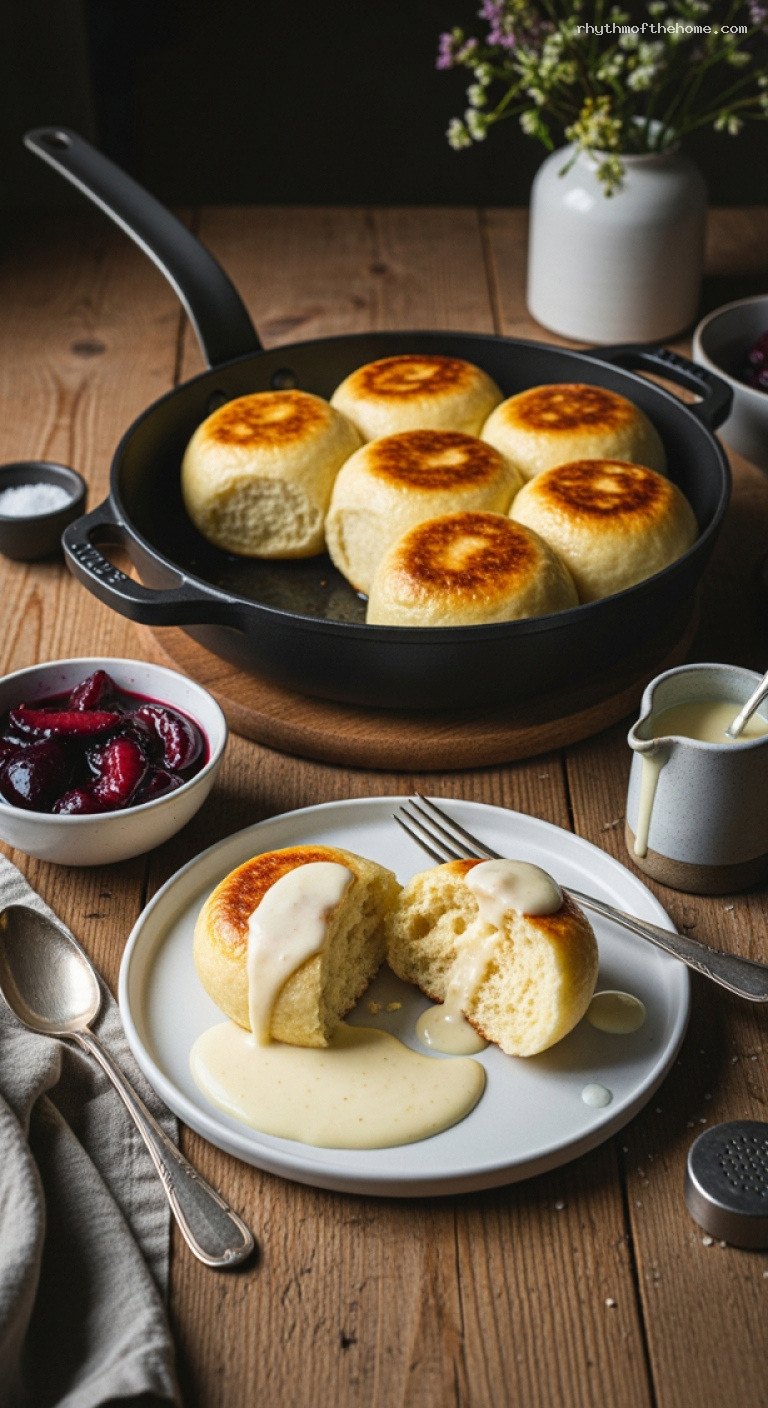
Quick Recipe Version (TL;DR)
Quick Ingredients
- 250 ml lukewarm milk (for dough)
- 7 g active dry yeast (2 1/4 tsp)
- 50 g sugar (1/4 cup) + 60 g (1/3 cup) for pan
- 500 g all-purpose flour (about 4 cups)
- 1 large egg
- 140 g unsalted butter total (10 tbsp), divided
- 3/4 tsp fine salt, divided
- 1 tsp lemon zest (optional, for aroma)
- 250 ml milk for pan (1 cup)
- 500 ml milk + 150 ml cream for vanilla sauce
- 3 egg yolks, 60 g sugar, 2 tsp vanilla, 2 tsp cornstarch (for sauce)
- 500 g plums or berries, 50–70 g sugar, 1 tbsp lemon juice (optional compote)
Do This
- 1. Bloom yeast in lukewarm milk with a pinch of sugar, then mix with flour, egg, sugar, melted butter, salt, and lemon zest to form a soft dough.
- 2. Knead until smooth and elastic, cover, and let rise until doubled, about 1 hour.
- 3. Divide into 8 pieces, shape into smooth balls, place on a floured tray, cover, and let rise again 20–30 minutes.
- 4. In a wide, lidded pan, melt butter with milk, sugar, and salt. Arrange risen buns in the pan, leaving slight gaps.
- 5. Cover tightly and cook over low heat about 20 minutes until the liquid is mostly absorbed and the buns are puffed and steamed through.
- 6. Uncover, increase heat slightly, and cook until the bottoms caramelize and turn golden-brown; serve hot with warm vanilla sauce and optional fruit compote.
Why You’ll Love This Recipe
- Soft, fluffy, cloud-like yeasted buns with a deeply caramelized, slightly crisp bottom.
- Classic German comfort food that feels special but uses simple pantry ingredients.
- One-pan cooking: the buns steam and brown in the same buttery sugar-milk mixture.
- Perfectly paired with silky homemade vanilla sauce and a bright fruit compote.
Grocery List
- Produce: 1 lemon, 500 g plums or mixed berries (fresh or frozen, optional for compote).
- Dairy: Whole milk, heavy cream, unsalted butter, eggs.
- Pantry: All-purpose flour, active dry yeast, granulated sugar, salt, vanilla extract or vanilla bean, cornstarch, ground cinnamon (optional for compote).
Full Ingredients
For the Dampfnudeln (Yeast Dough)
- 250 ml whole milk, lukewarm (about 1 cup; 38–40 °C / 100–105 °F)
- 7 g active dry yeast (2 1/4 teaspoons)
- 50 g granulated sugar (1/4 cup)
- 500 g all-purpose flour (about 4 cups, spooned and leveled)
- 1 large egg, at room temperature
- 80 g unsalted butter, melted and slightly cooled (about 6 tablespoons)
- 1/2 teaspoon fine salt
- 1 teaspoon finely grated lemon zest (optional but lovely)
- Extra flour for dusting
For the Buttery Sugar-Milk Cooking Base
- 250 ml whole milk (1 cup)
- 60 g granulated sugar (about 1/3 cup)
- 60 g unsalted butter (about 4 tablespoons)
- 1/4 teaspoon fine salt
For the Vanilla Sauce (Vanillesauce)
- 500 ml whole milk (2 cups)
- 150 ml heavy cream (2/3 cup)
- 3 large egg yolks
- 60 g granulated sugar (about 1/3 cup)
- 2 teaspoons cornstarch
- 2 teaspoons pure vanilla extract or 1 vanilla bean (split and scraped)
- Pinch of fine salt
Optional Quick Fruit Compote
- 500 g plums (pitted and sliced) or mixed berries, fresh or frozen (about 4 cups)
- 50–70 g granulated sugar (1/4–1/3 cup, to taste and depending on fruit sweetness)
- 1 tablespoon fresh lemon juice
- 1–2 tablespoons water (only if needed to get it started)
- 1/4 teaspoon ground cinnamon (optional, especially nice with plums)
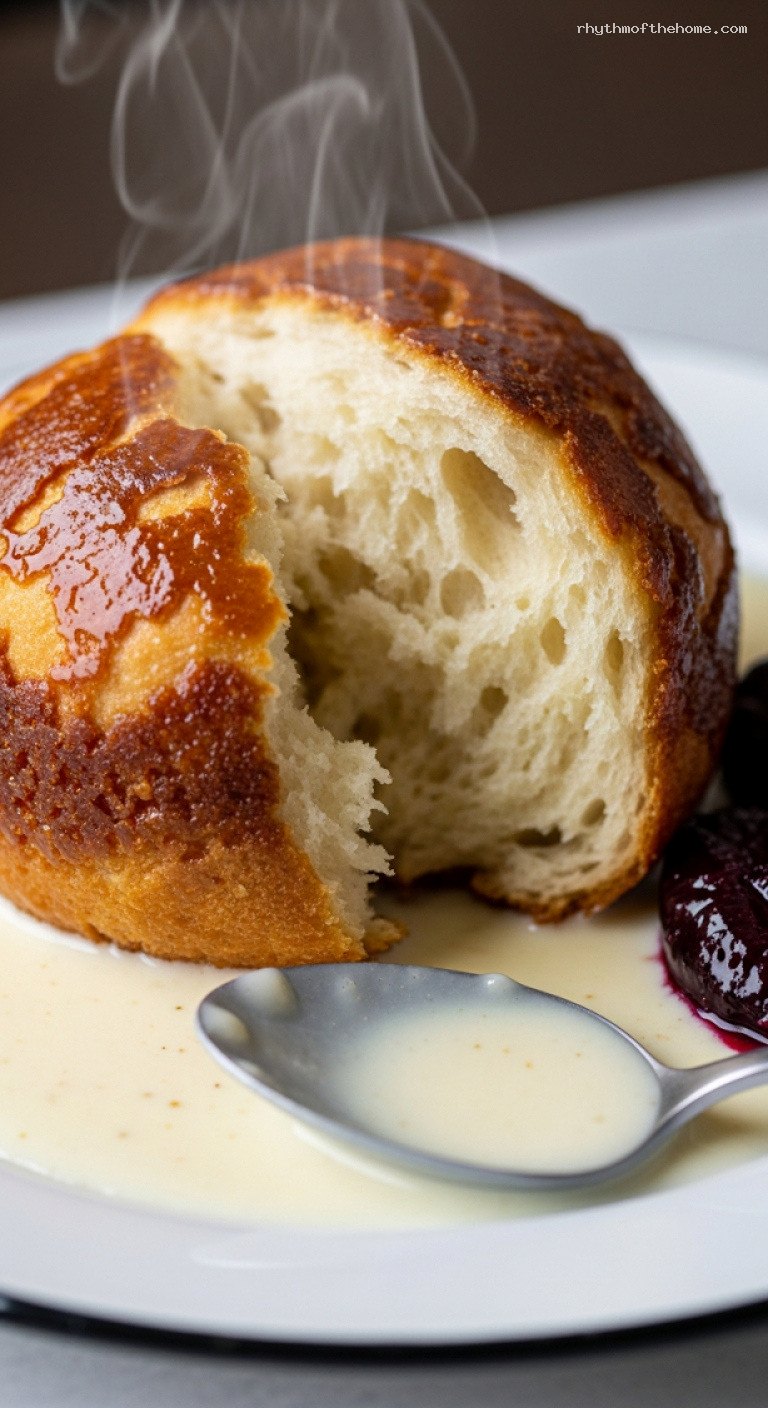
Step-by-Step Instructions
Step 1: Activate the yeast and start the dough
In a small bowl or measuring jug, combine the 250 ml lukewarm milk, 7 g active dry yeast, and 1 teaspoon of the 50 g sugar (from the dough ingredients). Stir gently and let sit for 5–10 minutes, until the mixture turns foamy on top. If it does not foam, your yeast may be inactive; start again with fresh yeast.
In a large mixing bowl, whisk together the remaining sugar, 500 g flour, and 1/2 teaspoon salt. Make a well in the center. Pour in the foamy yeast mixture, the melted butter, the egg, and the lemon zest</strong) if using. Stir with a wooden spoon or spatula until the dough just comes together and most of the flour is incorporated. It will be soft and a bit sticky at this stage; that is perfect.
Step 2: Knead and let the dough rise
Turn the dough out onto a lightly floured surface. Knead for about 8–10 minutes, dusting lightly with flour only as needed to keep it from sticking, until the dough is smooth, elastic, and only slightly tacky. You can also knead with a stand mixer fitted with the dough hook on medium speed for about 6–8 minutes.
Shape the dough into a ball and place it in a lightly greased bowl. Cover the bowl with a clean kitchen towel or plastic wrap. Let the dough rise in a warm, draft-free spot until doubled in size, about 60 minutes. The dough should feel very puffy and airy when gently pressed.
Step 3: Shape the Dampfnudeln and proof again
Once the dough has doubled, gently punch it down to deflate. Turn it onto a lightly floured surface and pat into a rough rectangle. Using a scale if possible, divide the dough into 8 equal pieces (each about 95–100 g). For each piece, pull the edges of the dough toward the center, pinch to seal, then flip it seam-side down and roll under your cupped hand to form a smooth, tight ball.
Place the balls on a lightly floured tray or baking sheet, leaving a little space between them. Cover loosely with a clean kitchen towel and let rise again in a warm place until puffy, 20–30 minutes. They should look slightly larger and feel very light when you lift one gently.
Step 4: Prepare the buttery sugar-milk base
Choose a wide, heavy-bottomed pan or shallow Dutch oven (about 26–28 cm / 10–11 inches in diameter) with a tight-fitting lid. The pan should comfortably hold all 8 buns in a single layer with slight gaps between them.
In the pan, combine 250 ml milk, 60 g butter, 60 g sugar, and 1/4 teaspoon salt. Heat gently over low to medium-low heat until the butter has melted and the sugar is dissolved, stirring occasionally. Do not let it boil hard. Once melted, turn the heat down to low.
Carefully transfer the risen dough balls into the pan, seam-side down, spacing them evenly. The liquid should come up to about 5–8 mm (about 1/4 inch) up the sides of the balls, not submerge them. If needed, add a splash more milk, but do not cover the buns with liquid.
Step 5: Steam the buns until fluffy
Cover the pan with the lid, making sure it is tightly closed to trap the steam. Cook over low heat for about 18–22 minutes. During this time, do not lift the lid; the trapped steam is what makes the Dampfnudeln rise and become pillowy. The liquid will gently simmer, the buns will steam and expand, and most of the milk mixture will be absorbed into the dough.
After about 18 minutes, you may quickly lift the lid just once to check: the buns should be puffy and no longer look doughy on the sides. If they still seem raw, cover again and steam for another 3–5 minutes. Try to keep the lid off for as short a time as possible so you do not lose too much steam.
Step 6: Caramelize the bottoms and make the sauces
When the Dampfnudeln are steamed through and the liquid is mostly gone, remove the lid. Increase the heat to medium and cook uncovered for another 5–8 minutes, watching closely. You will hear more pronounced sizzling as the remaining butter and sugar caramelize. Gently lift a bun with a spatula to peek at the bottom; you are aiming for an even, deep golden-brown crust with some caramelized spots. If they begin to darken too quickly, reduce the heat.
While the buns steam and brown, prepare the vanilla sauce: In a saucepan, whisk together the egg yolks, 60 g sugar, 2 teaspoons cornstarch, and a splash of the milk until smooth. Add the remaining milk, the cream, vanilla, and a pinch of salt. Cook over low to medium-low heat, stirring constantly with a spatula or whisk, until the sauce thickens enough to coat the back of a spoon, 6–10 minutes. Do not let it boil. Remove from heat; if using a vanilla bean, remove the pod. Keep warm.
For the optional fruit compote, combine the fruit, sugar, lemon juice, cinnamon (if using), and a tablespoon or two of water in a small saucepan. Simmer over medium-low heat for 8–12 minutes, stirring occasionally, until the fruit is soft and the juices are slightly syrupy. Adjust sweetness and lemon to taste.
Once the Dampfnudeln have caramelized bottoms, remove the pan from heat. Serve the buns immediately, with the golden side facing up or down as you like, generously spooned with warm vanilla sauce and a side of fruit compote.
Pro Tips
- Heat control is everything: Keep the heat low while steaming so the milk does not scorch before the buns are cooked through. Increase the heat only at the end to caramelize the bottoms.
- Do not peek during steaming: Opening the lid too early releases steam and can make the Dampfnudeln collapse or cook unevenly.
- Use a snug pan: The buns should almost touch after they rise in the pan. This encourages them to grow up, not out, giving you tall, fluffy buns.
- Check the caramel carefully: Once the liquid is gone, the sugar can go from golden to burnt quickly. Peek under one bun every minute or so.
- Weigh your dough pieces: Using a scale to portion the dough ensures all Dampfnudeln cook at the same rate.
Variations
- Cinnamon-sugar Dampfnudeln: Add 1 teaspoon ground cinnamon to the dough and another 1/2 teaspoon to the sugar in the cooking base for a warm, spiced version.
- Jam- or fruit-filled: Flatten each dough piece slightly and place a teaspoon of thick jam or stewed fruit in the center. Pinch the dough well to seal before shaping into balls, then cook as directed.
- Savory Dampfnudeln: Reduce the sugar in the dough to 1 tablespoon, omit the sugar in the cooking base, and increase the salt slightly. Serve with creamy mushroom sauce or braised cabbage instead of vanilla sauce.
Storage & Make-Ahead
Leftover Dampfnudeln keep well. Let them cool completely, then store in an airtight container in the refrigerator for up to 3 days. Reheat gently in the microwave (covered with a damp paper towel) or in a covered dish in a 150 °C / 300 °F oven for 10–15 minutes, adding a small splash of milk or water if they seem dry. You can also freeze the cooked, cooled buns for up to 2–3 months; thaw overnight in the fridge before reheating.
The vanilla sauce can be made up to 2 days ahead. Cool it, press plastic wrap directly onto the surface to prevent a skin, and refrigerate. Rewarm gently over low heat, whisking and adding a splash of milk if it has thickened too much. The fruit compote also keeps well in the fridge for 3–4 days and tastes great cold or warm.
Nutrition (per serving)
Approximate values for 1 serving (2 Dampfnudeln with vanilla sauce): about 650 kcal, 24 g fat, 90 g carbohydrates, 17 g protein, 3 g fiber, 33 g sugars, 420 mg sodium. These numbers are estimates and will vary based on exact ingredients, portion sizes, and whether you include fruit compote.

Leave a Reply