
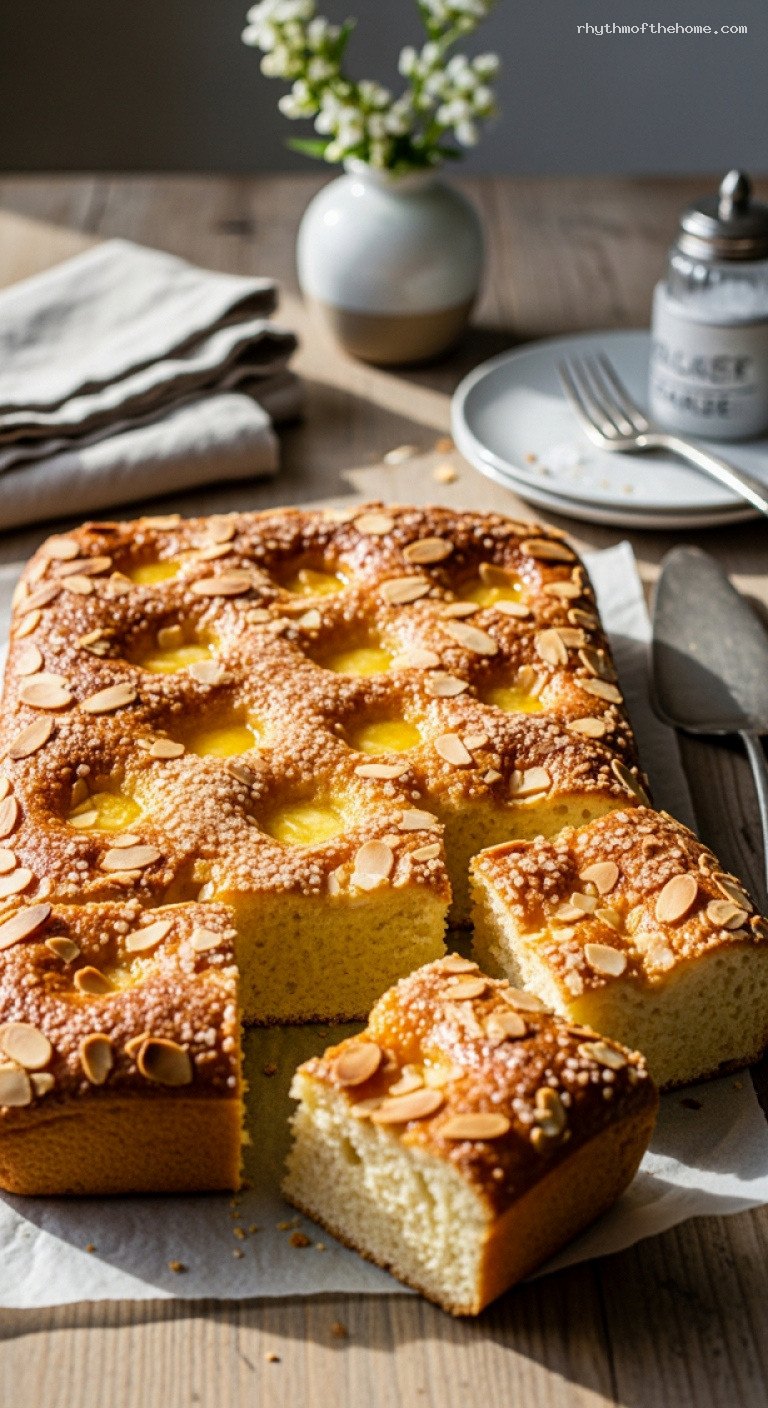
Quick Recipe Version (TL;DR)
Quick Ingredients
- 4 cups (500 g) all-purpose flour
- 1 cup (250 ml) whole milk, lukewarm
- 1 packet (7 g / 2¼ tsp) instant or active dry yeast
- 1/3 cup (70 g) granulated sugar (for dough)
- 6 tbsp (85 g) unsalted butter, softened (for dough)
- 1 tsp fine salt
- 1 large egg, room temperature
- 1 tsp vanilla extract (optional)
- 2/3 cup (150 g) unsalted butter, cold, cut in small cubes (for topping)
- 2/3 cup (130 g) granulated sugar (for topping)
- 3/4 cup (70 g) sliced almonds
- 1/2 cup (120 ml) heavy cream, room temperature (optional, for extra tender cake)
Do This
- 1. Grease or line a rimmed baking sheet. Warm milk until just lukewarm (not hot).
- 2. Mix milk, yeast, and sugar. Add flour, egg, softened butter, salt, and vanilla. Knead 8–10 minutes until smooth and elastic.
- 3. Let dough rise in a covered bowl in a warm spot until doubled, about 60–75 minutes.
- 4. Press dough evenly into prepared pan. Let rise again until puffy, 20–30 minutes. Preheat oven to 200°C (400°F).
- 5. Dimple dough with fingertips. Tuck cold butter cubes into dimples, then sprinkle evenly with sugar and sliced almonds.
- 6. Bake 18–22 minutes until golden. Optionally, drizzle heavy cream over the cake after 10 minutes of baking. Cool slightly, slice into squares, and serve warm.
Why You’ll Love This Recipe
- Classic German bakery flavor at home: soft, airy yeast cake with a crisp, caramelized top.
- Simple ingredients you likely already have in your pantry and fridge.
- Perfect for coffee breaks, brunch, or afternoon guests; easy to cut into many small squares.
- Flexible recipe: add almonds, cream, or keep it plain for different styles of Butterkuchen.
Grocery List
- Produce: None needed.
- Dairy: Whole milk, unsalted butter, 1 large egg, heavy cream (optional).
- Pantry: All-purpose flour, instant or active dry yeast, granulated sugar, sliced almonds, fine salt, vanilla extract (optional), neutral oil or extra butter for greasing the pan.
Full Ingredients
For the yeast dough
- 4 cups (500 g) all-purpose flour
- 1 cup (250 ml) whole milk, lukewarm (about 35–38°C / 95–100°F)
- 1 packet (7 g / 2¼ tsp) instant or active dry yeast
- 1/3 cup (70 g) granulated sugar
- 6 tbsp (85 g) unsalted butter, softened but not melted
- 1 large egg, at room temperature
- 1 tsp fine sea salt or table salt
- 1 tsp vanilla extract (optional, but delicious)
- Neutral oil or a little softened butter, for greasing the bowl and pan
For the butter-sugar-almond topping
- 2/3 cup (150 g) unsalted butter, cold and cut into small cubes or thin slices
- 2/3 cup (130 g) granulated sugar
- 3/4 cup (70 g) sliced almonds
Optional finishing touch (for extra moist Butterkuchen)
- 1/2 cup (120 ml) heavy cream, at room temperature, to drizzle over the cake partway through baking
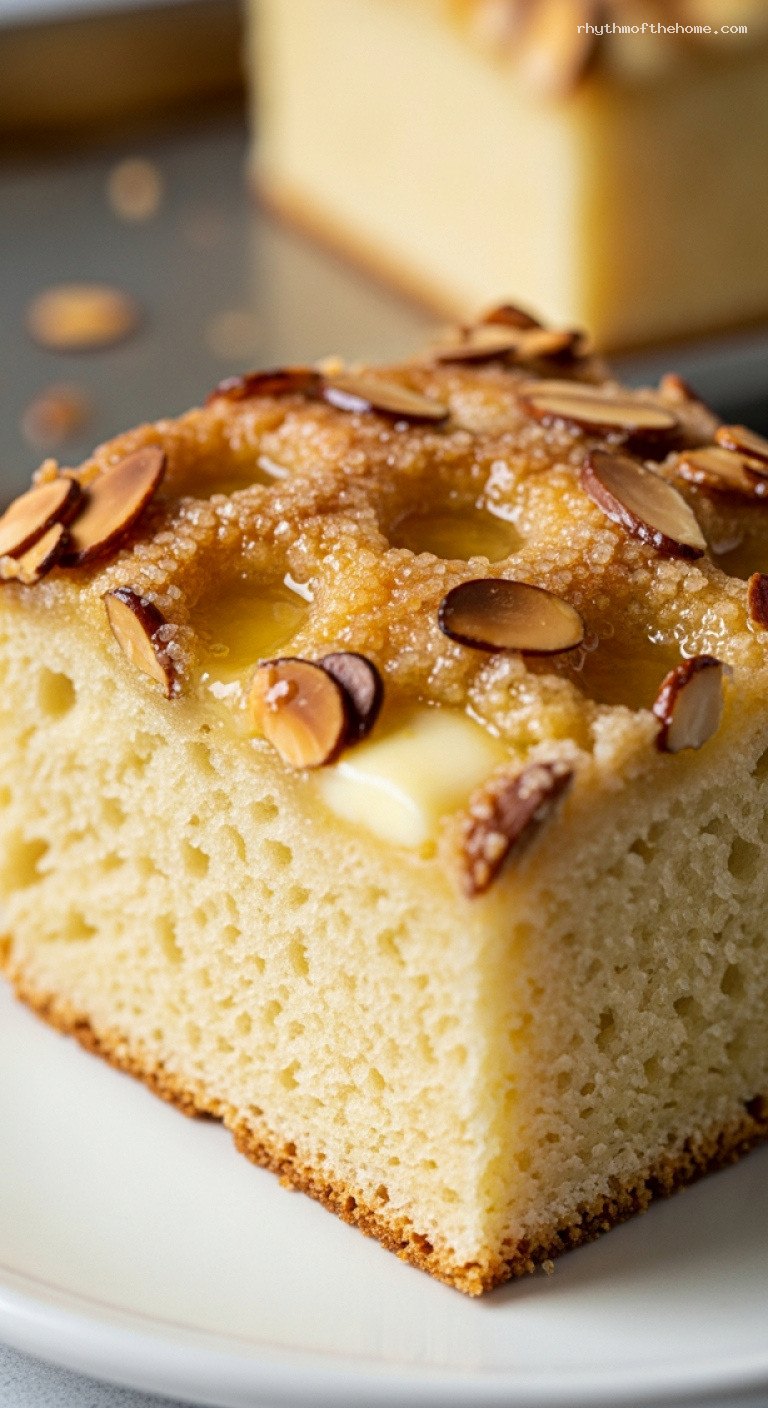
Step-by-Step Instructions
Step 1: Prepare your pan and warm the milk
Lightly grease a rimmed baking sheet (about 30 x 40 cm / 13 x 18 in) with butter or oil, or line it with parchment paper. Make sure the parchment goes up the sides a little to help contain the buttery topping.
Pour the milk into a small saucepan or microwave-safe jug and gently warm it until just lukewarm, about 35–38°C (95–100°F). It should feel warm to the touch but never hot; if it feels hot, let it cool for a few minutes so it does not harm the yeast.
Step 2: Make the yeast dough
In a large mixing bowl (or the bowl of a stand mixer), combine the lukewarm milk, yeast, and sugar. Stir briefly. If you are using active dry yeast, let this mixture stand for 5–10 minutes until it looks foamy on top. If you are using instant yeast, you can continue immediately.
Add the flour, softened butter, egg, salt, and vanilla extract (if using). Mix with a wooden spoon until a shaggy dough forms, or use the dough hook on low speed to bring everything together.
Knead the dough for about 8–10 minutes by hand on a lightly floured surface, or 5–7 minutes with a stand mixer on medium-low speed, until it is smooth, slightly tacky, and elastic. If the dough is very sticky, add 1–2 tablespoons of flour at a time; if it feels dry or crumbly, sprinkle in 1–2 teaspoons of milk. A slightly soft dough will give you a lighter cake.
Step 3: First rise (let the dough double)
Shape the dough into a smooth ball. Lightly grease a clean bowl with a little oil or butter and place the dough inside, turning it once to coat the surface lightly. This prevents drying out.
Cover the bowl with a clean kitchen towel, plate, or plastic wrap. Let the dough rise in a warm, draft-free spot until doubled in size, about 60–75 minutes. The exact time depends on room temperature; in a cooler kitchen, it may take closer to 90 minutes. The dough is ready when a finger gently pressed into it leaves an indentation that does not spring back completely.
Step 4: Shape the dough on the baking sheet and let it rise again
Once the dough has doubled, gently punch it down to release excess gas. Turn it out onto a lightly floured surface and form it into a rough rectangle.
Transfer the dough to the prepared baking sheet. Using your fingertips and palms, gently press and stretch the dough to fill the pan in an even layer, all the way to the corners. If it springs back, let it rest for 5 minutes and continue stretching.
Cover the pan loosely with a kitchen towel or lightly greased plastic wrap. Let the dough rise again until slightly puffy, about 20–30 minutes. During this time, preheat your oven to 200°C (400°F), with a rack in the middle position.
Step 5: Dimple the dough and add butter, sugar, and almonds
When the dough looks puffy, use your fingertips to press deep dimples all over the surface, spacing them about 2–3 cm (1 in) apart. Press almost down to the pan without tearing the dough; these pockets will hold the butter and sugar.
Scatter the cold butter cubes or slices evenly, tucking pieces into the dimples so that each dimple gets a bit of butter. Try to distribute the butter as evenly as possible for uniform flavor.
Sprinkle the granulated sugar evenly over the entire surface of the dough, followed by the sliced almonds. Gently press the almonds into the dough so they stick slightly. Let the topped dough rest for another 5–10 minutes while the oven finishes preheating.
Step 6: Bake until golden and caramelized
Place the baking sheet in the preheated oven and bake for 18–22 minutes, or until the Butterkuchen is a rich golden color, the sugar has melted, the almonds are lightly toasted, and the edges look slightly crisp. The center should feel set but still soft and springy when pressed.
If you are using the optional heavy cream, quickly slide the oven rack out after about 10 minutes of baking and drizzle the cream evenly over the surface of the cake. Work swiftly to avoid losing too much heat, then push the rack back in and close the oven door. The cream will soak in and make the cake extra tender and moist.
Do not overbake: Butterkuchen should remain soft and fluffy inside.
Step 7: Cool slightly, slice, and serve
Remove the pan from the oven and place it on a cooling rack. Let the cake cool in the pan for at least 10–15 minutes. The topping will still be bubbling and very hot at first, so allow it to settle.
Using a sharp knife or bench scraper, cut the Butterkuchen into 16 squares (4 x 4 grid), or smaller rectangles if serving a crowd. Serve slightly warm or at room temperature, ideally on the day it is baked when the crumb is at its lightest and the top is at its crispiest.
Enjoy with coffee or tea, just as it is often served in Germany.
Pro Tips
- Mind the milk temperature: Lukewarm milk is crucial. Too hot and it can kill the yeast; too cold and the dough will rise slowly and may stay dense.
- Soft but not sticky dough: Aim for a smooth, elastic dough that is slightly tacky but not wet. Resist adding too much extra flour, or the cake will be heavy.
- Use cold butter for the topping: Cold cubes hold their shape in the dimples and melt slowly in the oven, creating those signature buttery pockets and caramelized edges.
- Do not skimp on the dimples: Press your fingers in quite deeply. The dimples are what catch the melted butter and sugar, giving Butterkuchen its characteristic look and flavor.
- Watch the bake at the end: Ovens vary. Start checking around 17 minutes. You want deep golden edges and a light golden center, not dark brown.
Variations
- Cinnamon-sugar Butterkuchen: Mix 1–2 tsp ground cinnamon into the topping sugar before sprinkling. This gives a warm, fragrant twist without changing the texture.
- Raisin Butterkuchen: Soak 1/2 cup (70 g) raisins in warm water (or rum) for 10–15 minutes, drain well, and scatter them on the dough before adding the butter and sugar. Press in lightly.
- Nut-free version: Simply omit the sliced almonds. You can replace them with coarse sugar (like pearl sugar) for extra crunch, or leave the top plain butter-and-sugar.
Storage & Make-Ahead
Butterkuchen is best enjoyed fresh on the day you bake it, when the crumb is soft and the topping is crisp. To store leftovers, let the cake cool completely, then cover the pan tightly or transfer pieces to an airtight container. Keep at room temperature for up to 2 days.
To rewarm, place pieces on a baking sheet and heat in a 160°C (325°F) oven for 5–8 minutes, just until warmed through. This refreshes the texture nicely.
For longer storage, wrap individual pieces well and freeze for up to 2 months. Thaw at room temperature, then rewarm as above.
To make ahead, you can prepare the dough the day before: let it rise once, press it into the pan, cover tightly, and refrigerate overnight. The next day, let it come to room temperature and puff up (about 45–60 minutes), then add the topping and bake.
Nutrition (per serving)
Approximate values for 1 of 16 pieces (without optional cream): about 390 calories; 6 g protein; 50 g carbohydrates; 18 g fat; 11 g sugar; 1 g fiber; 230 mg sodium. Adding the cream will increase the fat and calorie content slightly. These numbers are estimates and will vary with specific ingredients and portion sizes.

Leave a Reply