
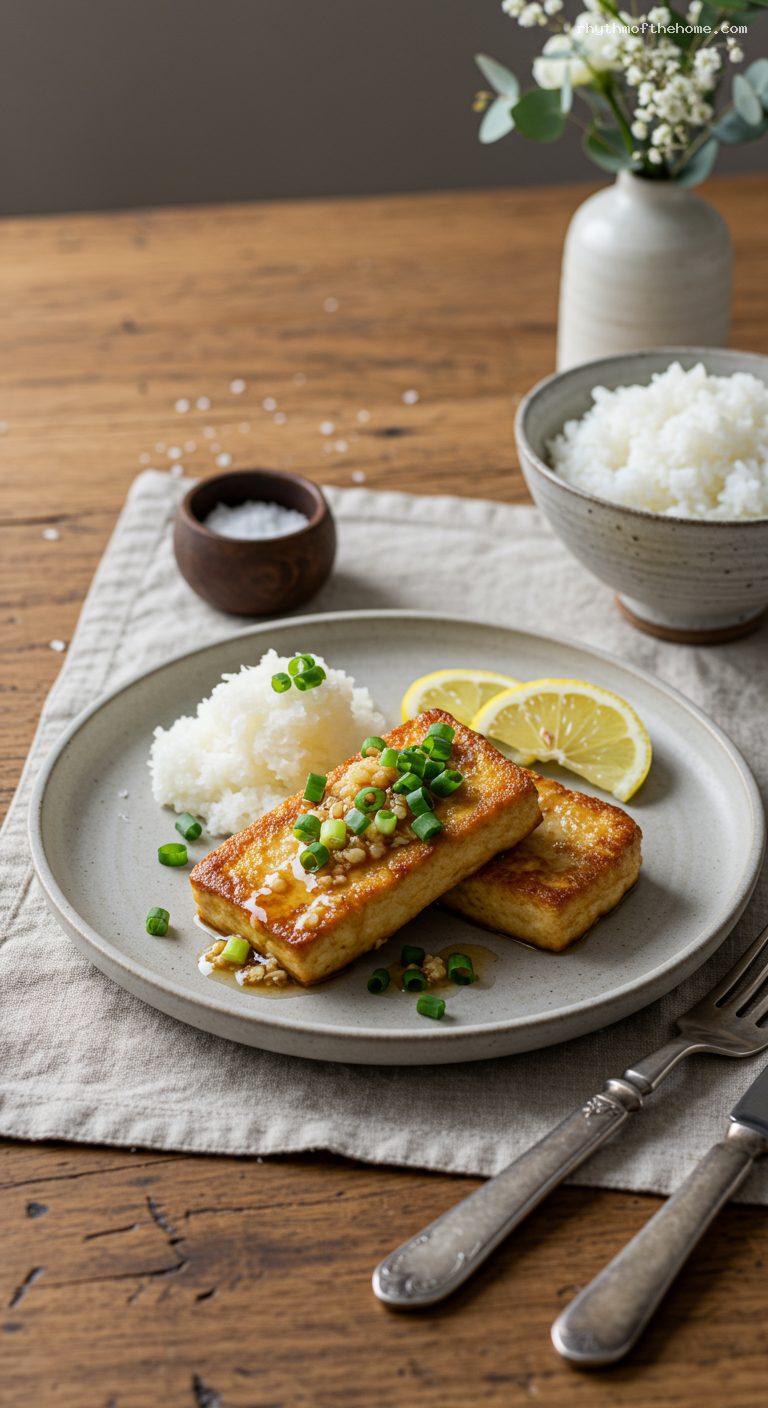
Quick Recipe Version (TL;DR)
Quick Ingredients
- 14–16 oz extra-firm tofu, drained and pressed
- 2 tbsp cornstarch + 1 tbsp rice flour (or all-purpose flour)
- 1/4 tsp kosher salt + 1/8 tsp black pepper
- 1 1/2 tbsp neutral oil (e.g., canola or avocado)
- 2 tbsp unsalted butter
- 3 garlic cloves, minced
- 3 tbsp low-sodium soy sauce
- 3 tbsp water + 1 tbsp mirin (or 1 tsp sugar)
- 2 tsp fresh lemon juice, plus wedges
- 1 cup grated daikon (daikon oroshi)
- 2 scallions, thinly sliced
- Pinch red pepper flakes or shichimi togarashi (optional)
Do This
- 1. Press tofu 15–20 minutes; cut into two 3/4-inch-thick slabs.
- 2. Grate daikon; squeeze gently to remove excess moisture. Slice scallions.
- 3. Mix cornstarch, rice flour, salt, and pepper; lightly dredge tofu, shaking off excess.
- 4. Heat oil in a skillet over medium-high (pan surface ~375°F). Sear tofu 3–4 minutes per side until deeply golden.
- 5. Reduce heat to medium. Add butter and garlic; cook 30 seconds. Stir in soy, water, and mirin; simmer 45–60 seconds to glossy.
- 6. Off heat, add lemon juice. Spoon sauce over tofu. Serve with grated daikon, scallions, and lemon wedges.
Why You’ll Love This Recipe
- Golden, crisp-edged tofu with a tender interior, achieved by a quick, light dredge.
- Restaurant-level garlic–soy–butter sauce you can make in 2 minutes.
- Bright citrus and cool grated daikon balance the richness perfectly.
- Weeknight-friendly: minimal prep, one pan, big flavor.
Grocery List
- Produce: Daikon radish, garlic, scallions, lemon (or yuzu/lime)
- Dairy: Unsalted butter
- Pantry: Extra-firm tofu, cornstarch, rice flour (or all-purpose flour), neutral oil, low-sodium soy sauce, mirin (or sugar), kosher salt, black pepper, red pepper flakes or shichimi (optional)
Full Ingredients
Tofu Steaks
- 1 block (14–16 oz) extra-firm tofu, drained
- 2 tbsp cornstarch
- 1 tbsp rice flour (or all-purpose flour)
- 1/4 tsp kosher salt
- 1/8 tsp freshly ground black pepper
- 1 1/2 tbsp neutral oil (canola, grapeseed, or avocado)
Garlic–Soy–Butter Sauce
- 2 tbsp unsalted butter
- 3 garlic cloves, finely minced
- 3 tbsp low-sodium soy sauce
- 3 tbsp water (or unsalted vegetable broth)
- 1 tbsp mirin or 1 tsp sugar
- 2 tsp fresh lemon juice (plus more to taste)
- Pinch red pepper flakes or shichimi togarashi (optional)
To Serve
- 1 cup grated daikon (about 6 oz; daikon oroshi), lightly squeezed
- 2 scallions, thinly sliced
- Lemon wedges, for serving
- Cooked rice or steamed greens (optional, on the side)
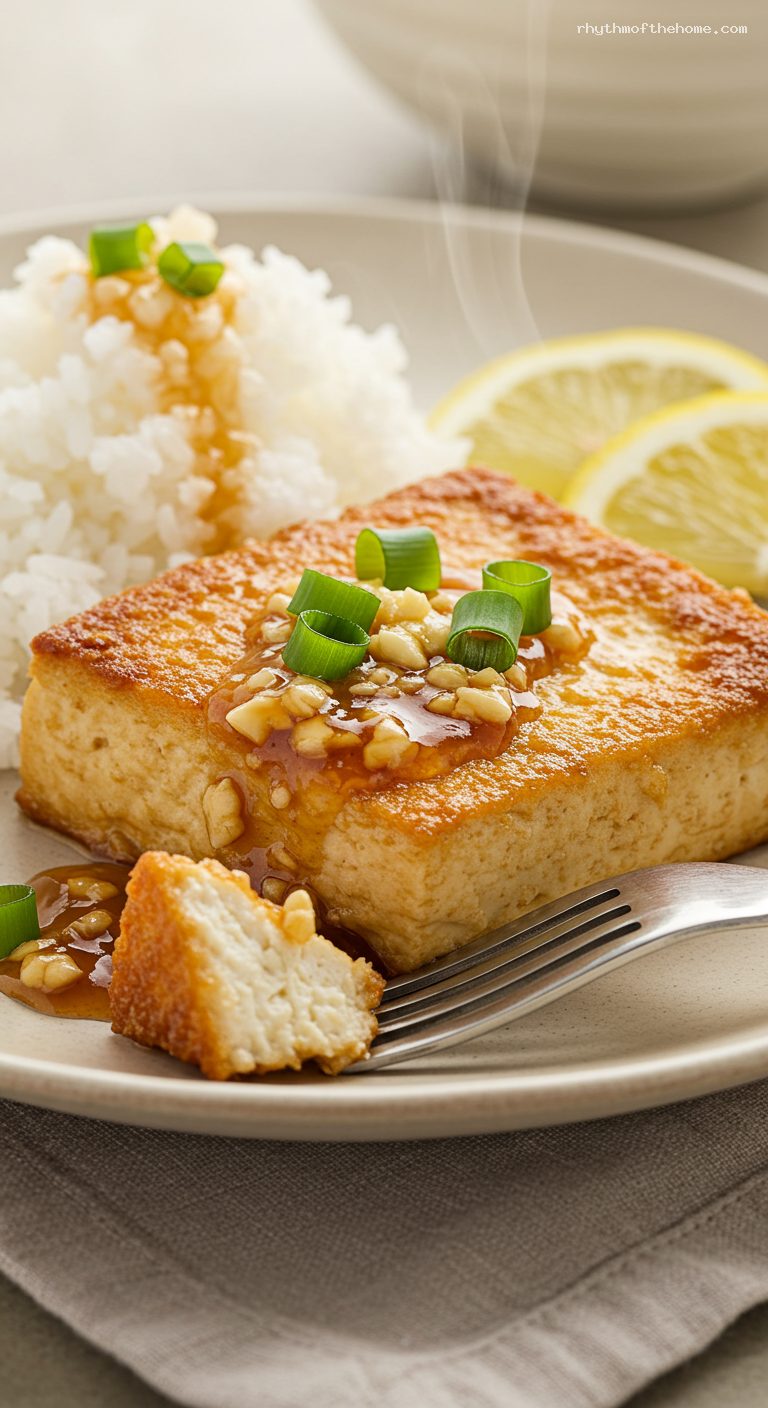
Step-by-Step Instructions
Step 1: Press and cut the tofu
Drain the tofu, wrap it in a clean kitchen towel or several paper towels, and set a small sheet pan or plate with a 2–3 lb weight (like a skillet or cans) on top. Press for 15–20 minutes to remove excess water. Unwrap and cut into two thick slabs, each about 3/4 inch thick. Pat the surfaces very dry; dry tofu equals better browning.
Step 2: Prep daikon and aromatics
Peel and coarsely grate the daikon using the large holes of a box grater. Gently squeeze by hand to remove excess liquid—you want it juicy but not watery. Mince the garlic and slice the scallions. Cut a lemon into wedges and set aside.
Step 3: Mix the light dredge
In a shallow dish, combine the cornstarch, rice flour, salt, and pepper. Lightly coat both sides of each tofu slab, tapping off any excess. The dredge should look like a thin dusting, not a heavy crust.
Step 4: Sear until deeply golden
Heat a large nonstick or well-seasoned skillet over medium-high heat for 2 minutes. Add the neutral oil and heat until it shimmers (pan surface about 375°F if using an infrared thermometer). Lay in the tofu and cook undisturbed for 3–4 minutes per side, until the crust is crisp and evenly golden. Transfer the tofu to a warm plate.
Step 5: Build the garlic–soy–butter sauce
Reduce heat to medium. Add the butter to the skillet. When melted and foamy, add the garlic and cook, stirring, for 30 seconds until fragrant but not browned. Stir in the soy sauce, water, and mirin (or sugar). Simmer 45–60 seconds, swirling, until slightly thickened and glossy. If using, add a small pinch of red pepper flakes.
Step 6: Finish with citrus and nap the tofu
Remove the pan from heat and stir in the lemon juice. Taste and adjust: add a splash more lemon for brightness or a teaspoon of water if too salty. Return the tofu to the pan and spoon the sauce over to coat, or plate the tofu and pour the sauce generously over the top.
Step 7: Plate with grated daikon and serve
Divide the tofu between plates. Add a fluffy mound of grated daikon on the side. Sprinkle scallions over everything and serve immediately with lemon wedges. Excellent with steamed rice or simply blanched greens.
Pro Tips
- Press well and dry thoroughly: moisture is the enemy of browning.
- Use rice flour with cornstarch for an ultra-thin, delicate crisp that doesn’t taste floury.
- Preheat the pan fully and resist moving the tofu early; it will release naturally when properly seared.
- For a silky, emulsified sauce, add lemon off heat and swirl rather than whisk vigorously.
- Daikon oroshi is best lightly squeezed—too dry and it loses its refreshing, cooling effect.
Variations
- Gluten-free: Use tamari instead of soy sauce and stick to cornstarch + rice flour.
- Miso–Butter: Whisk 1 tsp white miso into the melted butter before adding soy; reduce soy by 1 tsp.
- Yuzu Kosho Heat: Stir 1/2 tsp yuzu kosho into the finished sauce for citrusy spice.
Storage & Make-Ahead
Press and cut tofu up to 24 hours ahead; store on a paper towel–lined plate, covered, in the fridge. Mix the sauce components (soy, water, mirin/sugar) in a jar up to 3 days ahead; add butter, garlic, and lemon only when cooking. Leftover tofu (sauced) keeps 2 days refrigerated; the crust will soften. Reheat gently in a nonstick skillet over medium heat with a splash of water until warmed through, then refresh with a squeeze of lemon. Grated daikon is best fresh but can be prepped up to 6 hours ahead; store covered and drain before serving.
Nutrition (per serving)
Approx. 430 calories; 21 g protein; 17 g carbohydrates; 27 g fat; 3 g fiber; 980 mg sodium. Nutrition will vary based on oil absorption and specific brands.

Leave a Reply