
45 Spectacular English Homes
1. Cotswold Stone Cottage
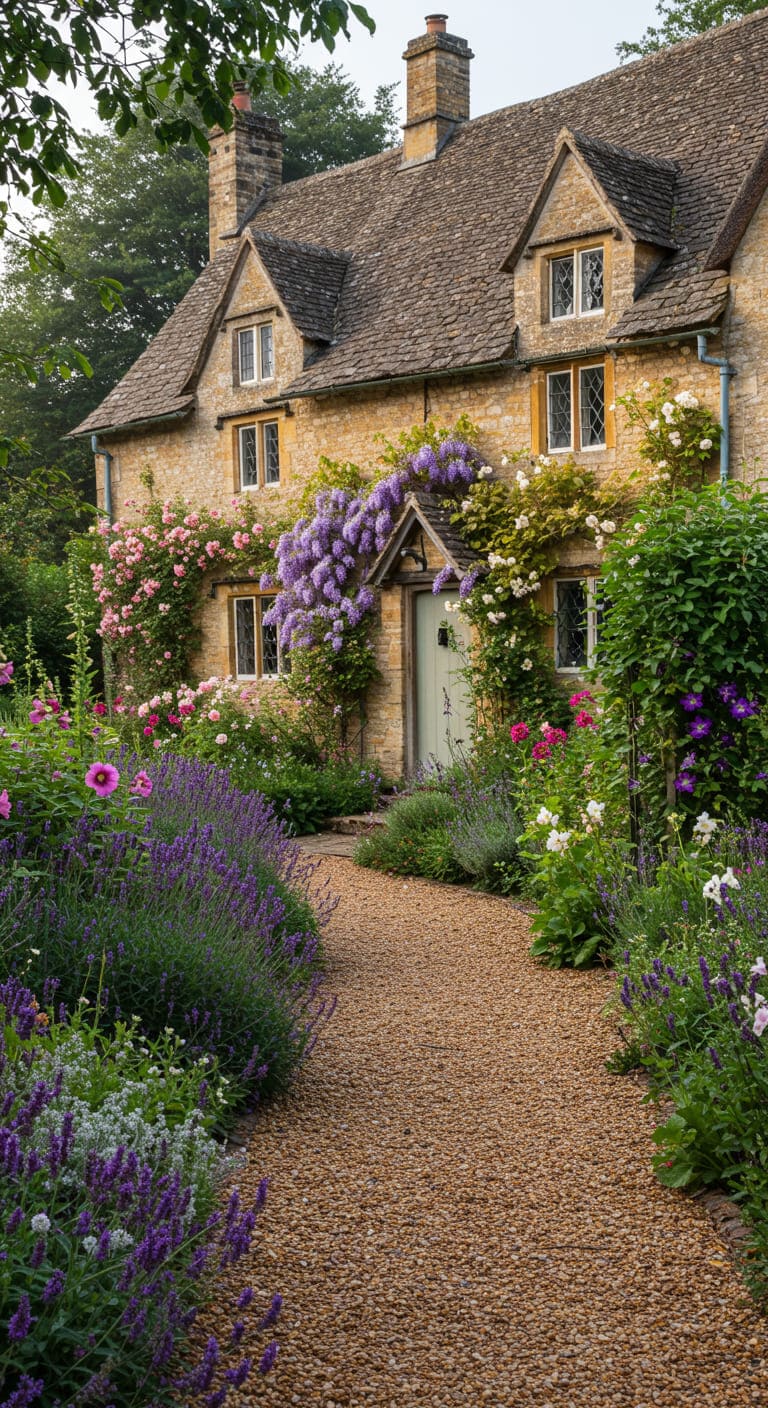
This honey-colored Cotswold stone cottage showcases the timeless charm of traditional English architecture. The deep thatched roof with its organic curves contrasts beautifully against the perfectly imperfect stone walls. Morning light illuminates climbing roses and wisteria that frame the entrance, while a thoughtfully designed cottage garden features classic English plantings—hollyhocks, foxgloves, and borders of fragrant lavender. The gravel path and wooden gate covered in clematis complete this quintessentially English country scene.
2. Georgian Red Brick Estate
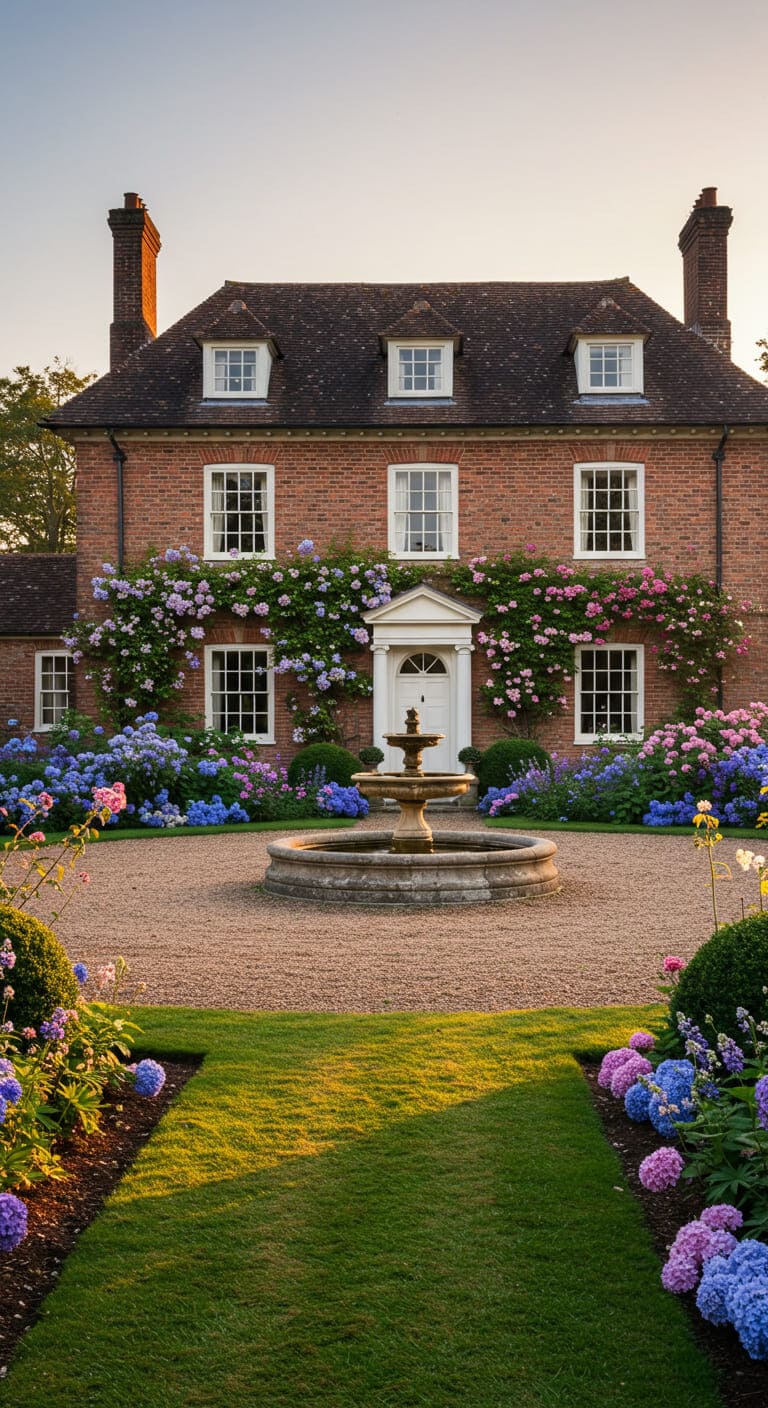
This elegant Georgian country home exemplifies perfect classical proportions and symmetry. The warm red brick façade with crisp white window frames showcases the refined architectural style of the period. The formal approach features a circular gravel driveway surrounding a central fountain, while perfectly trimmed topiary creates structure year-round. The climbing hydrangeas in complementary blue and pink tones soften the façade, demonstrating how traditional English gardens balance formality with natural abundance.
3. Victorian Gothic Revival
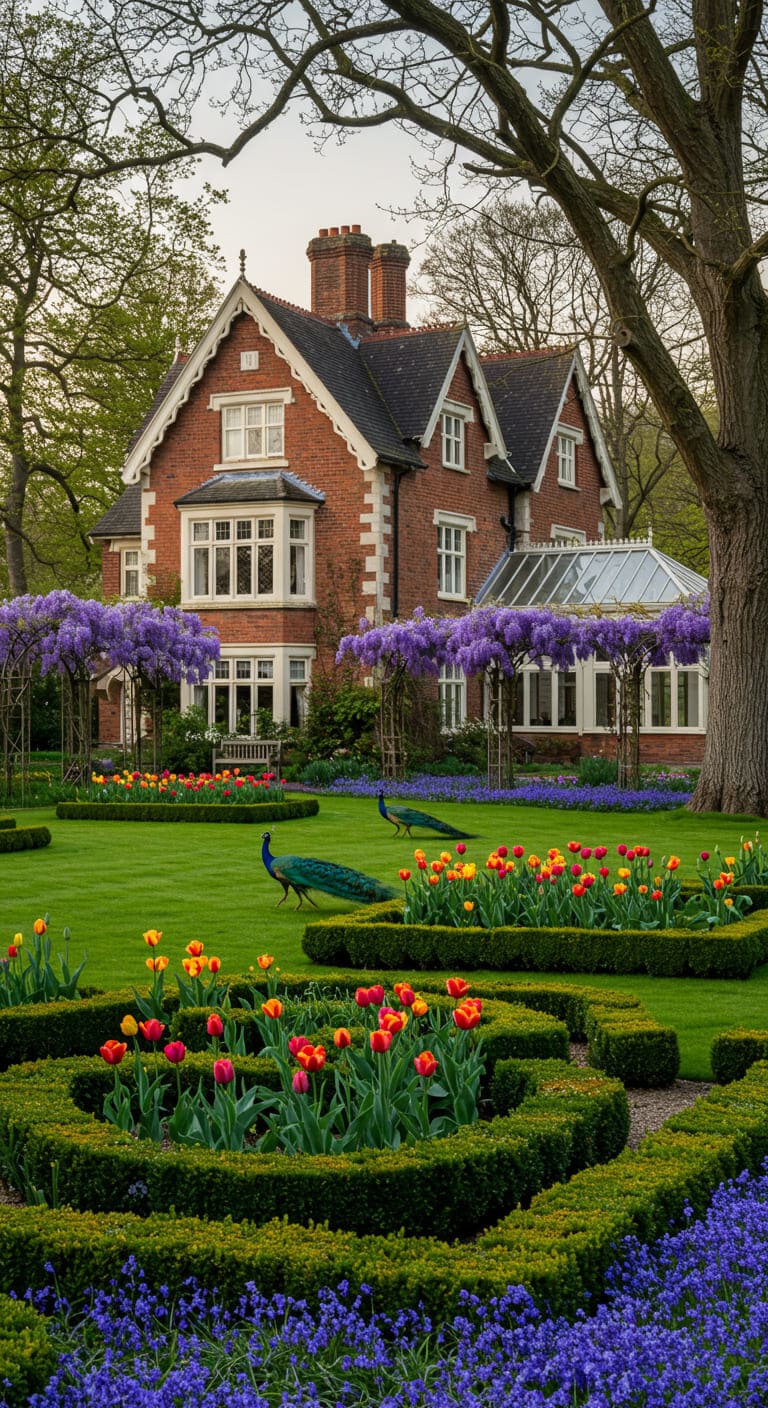
This spectacular Victorian country estate displays the exuberant architectural confidence of its era. The distinctive gables and ornate brickwork showcase masterful craftsmanship, while the conservatory wing demonstrates the Victorian passion for horticulture. The gardens balance formal geometric parterres with vibrant seasonal plantings, creating outdoor rooms defined by precise boxwood hedging. The ancient oak trees and carpet of bluebells link the designed landscape to the English countryside beyond.
4. Modern Barn Conversion
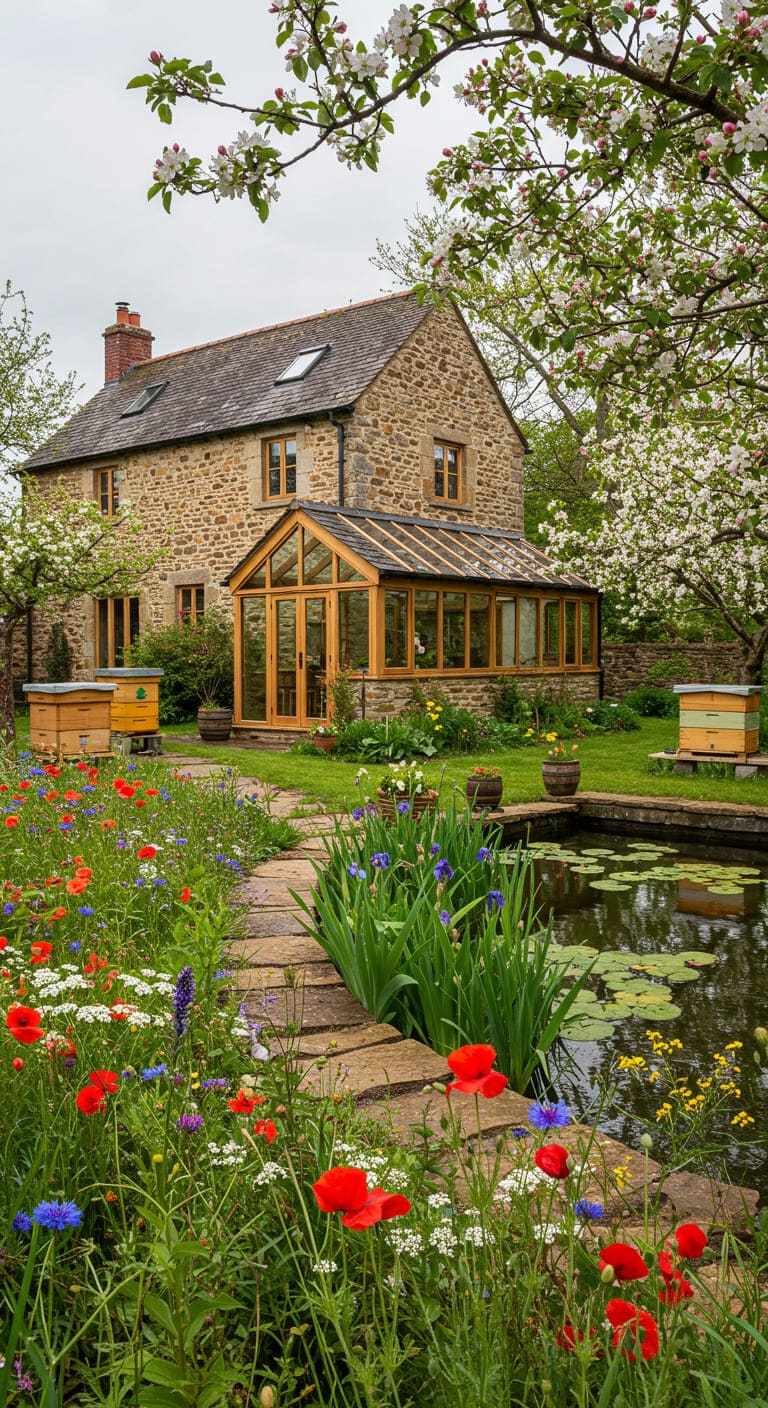
This converted stone barn brilliantly marries traditional vernacular architecture with contemporary glass extensions. The weathered stone walls tell the story of agricultural heritage, while clean-lined modern additions create light-filled living spaces with connections to the landscape. The surrounding wild meadow gardens represent contemporary English garden design at its best—celebrating native species while creating habitat for pollinators. The natural swimming pond demonstrates sustainable water management with aesthetic appeal.
5. Tudor Timber-Frame Manor
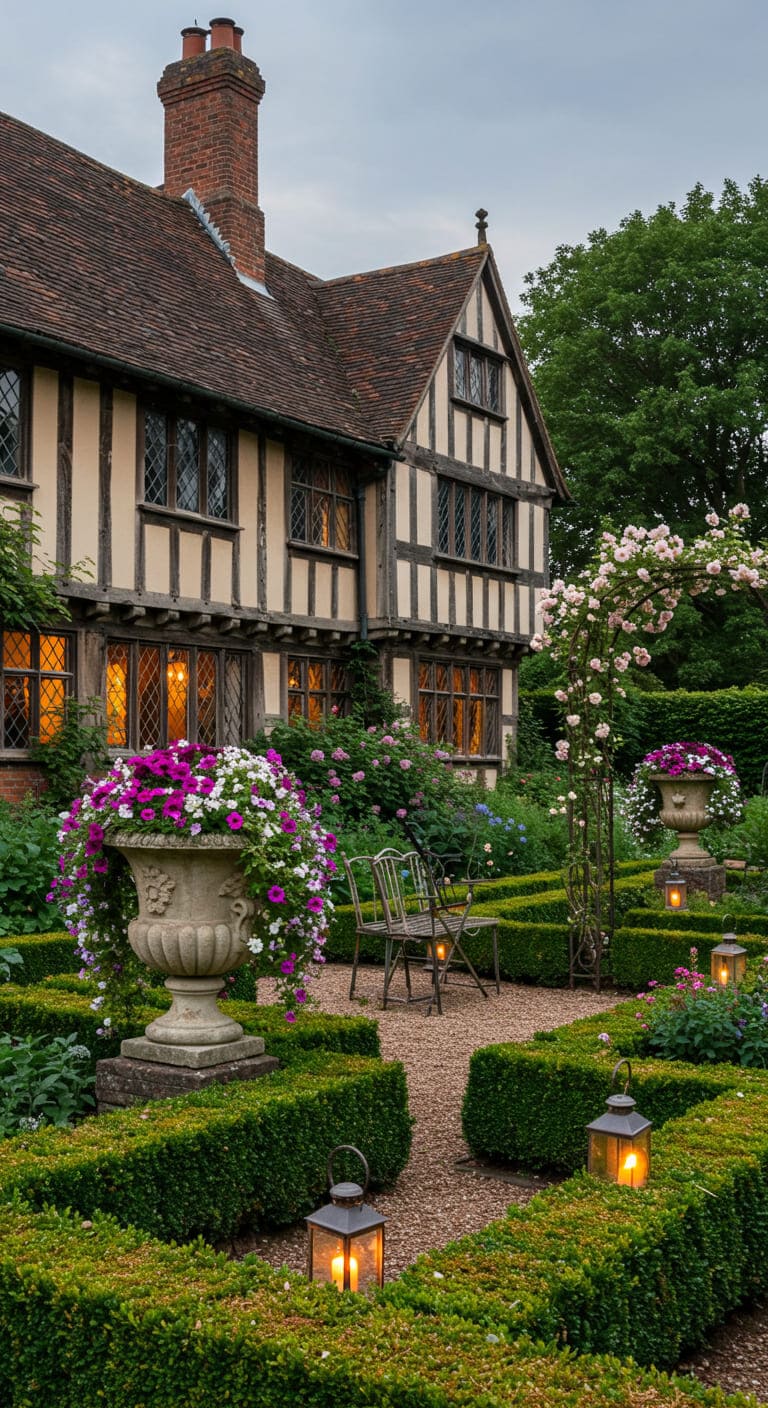
This magnificent timber-framed Tudor residence showcases the distinctive black-and-white aesthetic that defines this architectural period. The leaded windows and decorative chimney pots speak to historical craftsmanship, while the interior layout reveals the evolving lifestyle of English country living. The garden’s series of outdoor rooms divided by yew hedges reflects Tudor garden design principles, while the central herb garden arranged in a traditional knot pattern connects to historical medicinal and culinary traditions.
6. Riverside Stone Cottage
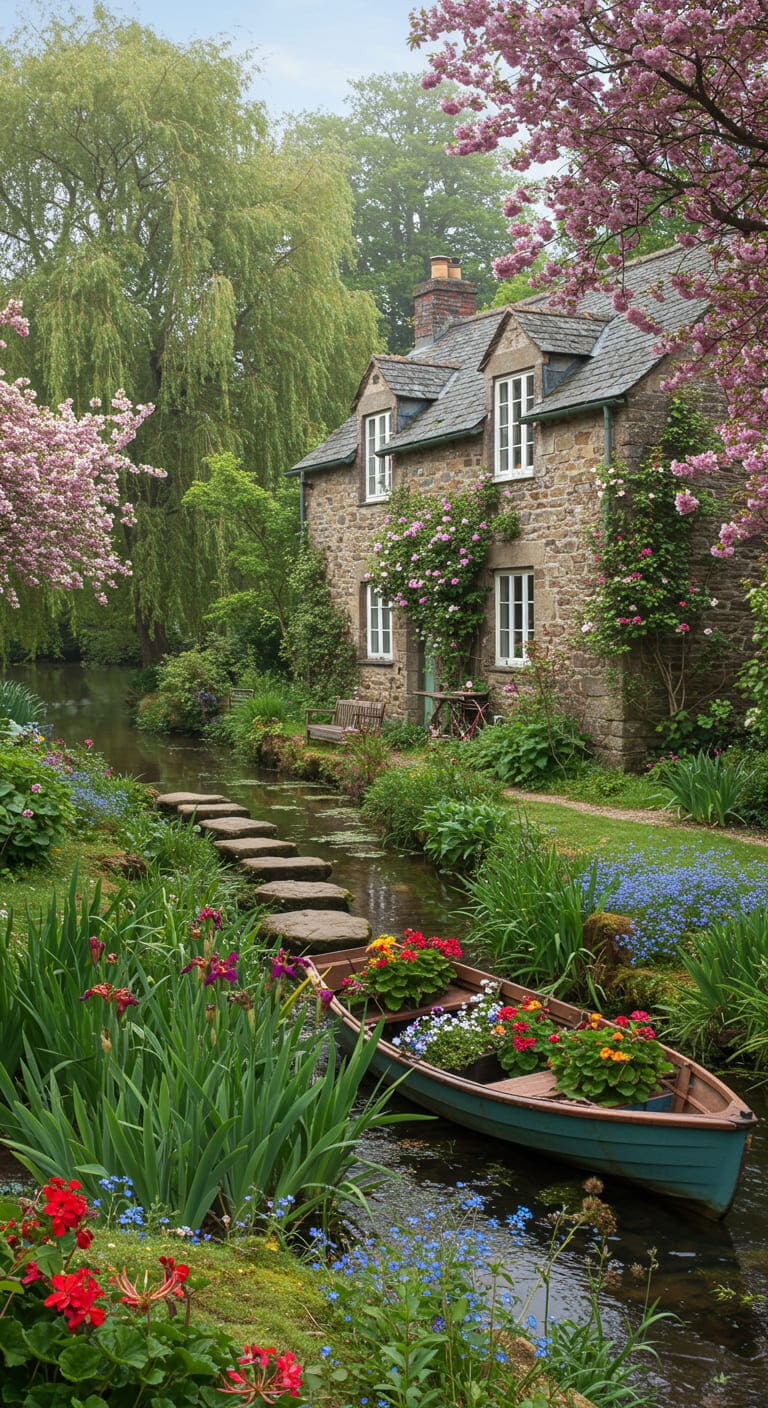
This charming riverside cottage demonstrates how English vernacular architecture responds to its specific setting. The weathered stone walls and slate roof have withstood generations of seasonal change, while the waterside setting creates a uniquely tranquil atmosphere. The garden seamlessly integrates with the natural water features, incorporating stepping stones and native riparian plants that blur the boundaries between cultivated and wild landscapes—a distinctly English garden tradition.
7. Arts and Crafts Movement House
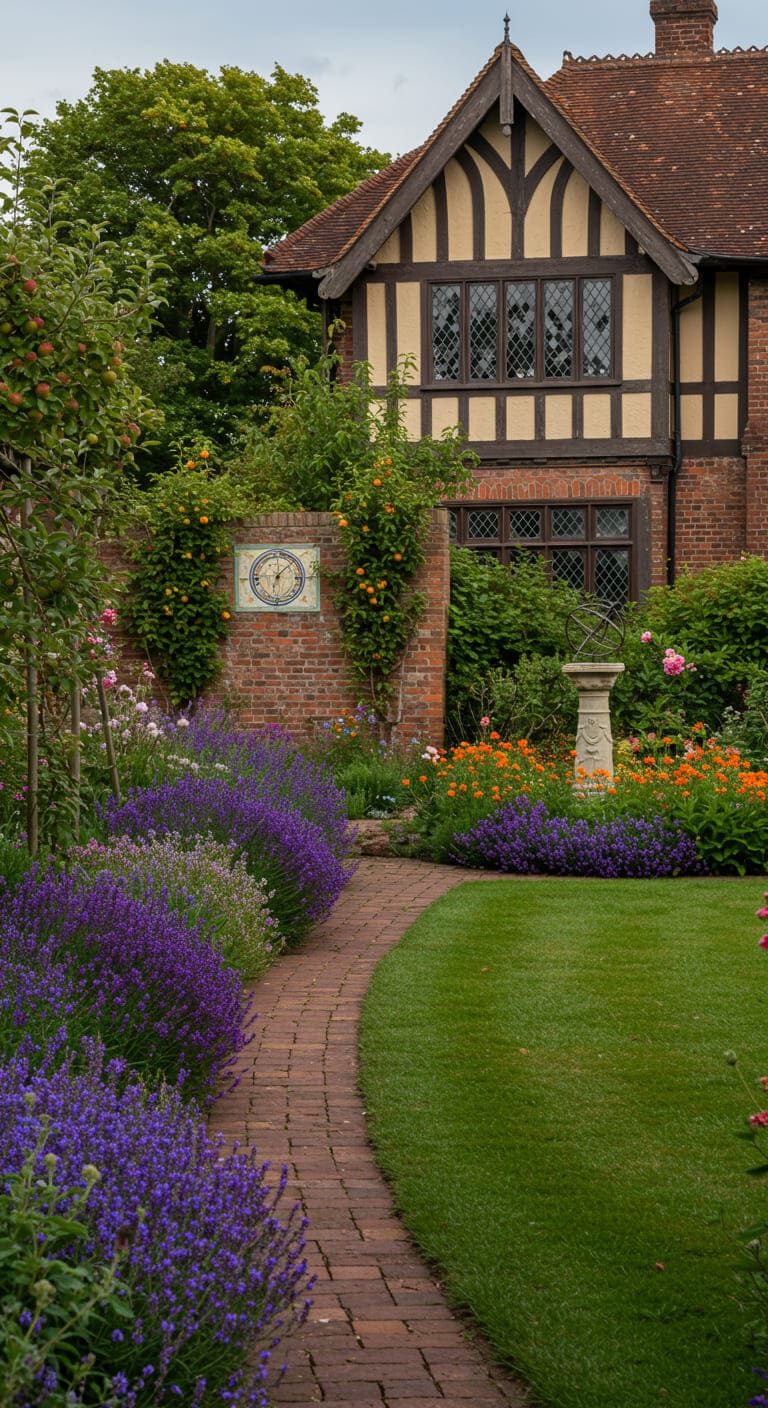
This distinctive Arts and Crafts movement house epitomizes the early 20th-century reaction against industrialization. The characteristic tile-hanging and mullioned windows showcase the movement’s emphasis on traditional craftsmanship and honest materials. The garden follows Gertrude Jekyll’s revolutionary design principles with color-themed borders that transition through a carefully orchestrated palette. The espalier fruit trees against warm brick walls demonstrate how productive and ornamental elements were harmoniously combined in this influential design movement.
8. Historic Stone Farmhouse
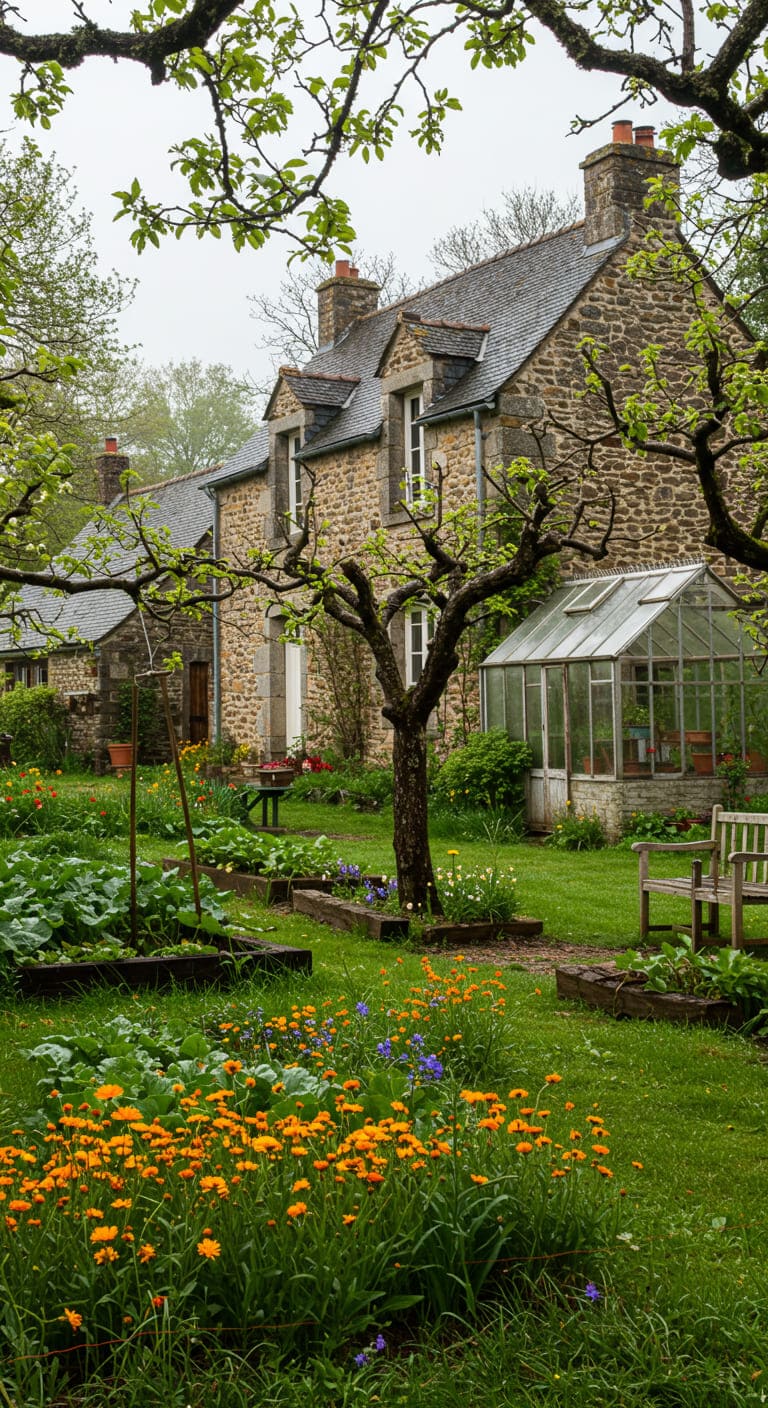
This substantial stone farmhouse reveals centuries of organic development through its various additions and alterations. The kitchen garden with its neat rows of vegetables and companion flowers represents traditional English practical gardening wisdom. The espaliered fruit trees demonstrate historic space-saving techniques, while the weathered wooden benches beneath gnarled apple trees create contemplative spaces that celebrate the patina of age—a distinctly English aesthetic preference.
9. Queen Anne Manor House
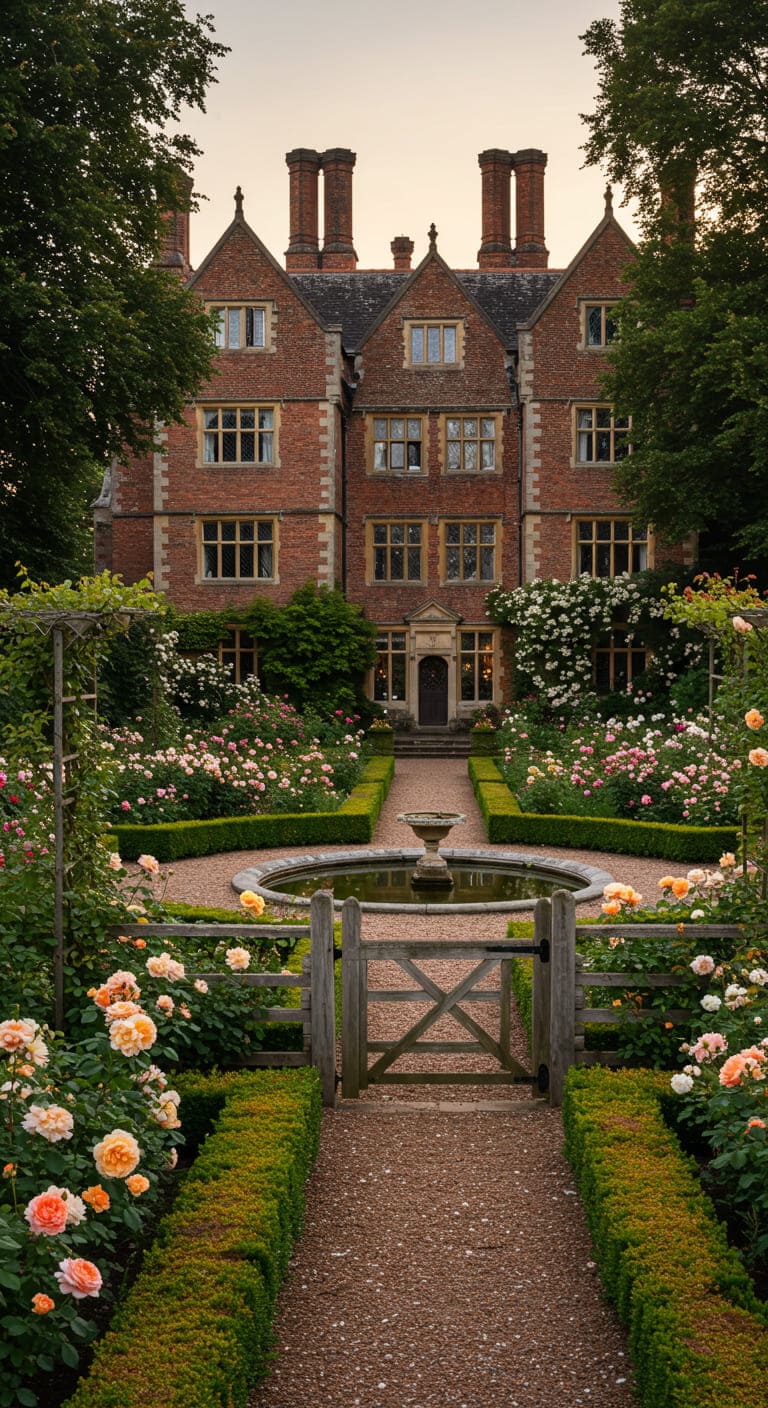
This symmetrical Queen Anne manor house exemplifies refined English country architecture with its balanced proportions and elegant details. The mellow red brick harmonizes beautifully with Portland stone accents, while tall chimneys create a distinctive silhouette. The reflecting pool centered within a formal parterre garden demonstrates classic English garden design principles. The mature copper beech trees provide the perfect architectural backdrop, while borders of English roses in sophisticated apricot and cream tones complete this timeless scene.
10. Rustic Flint Cottage
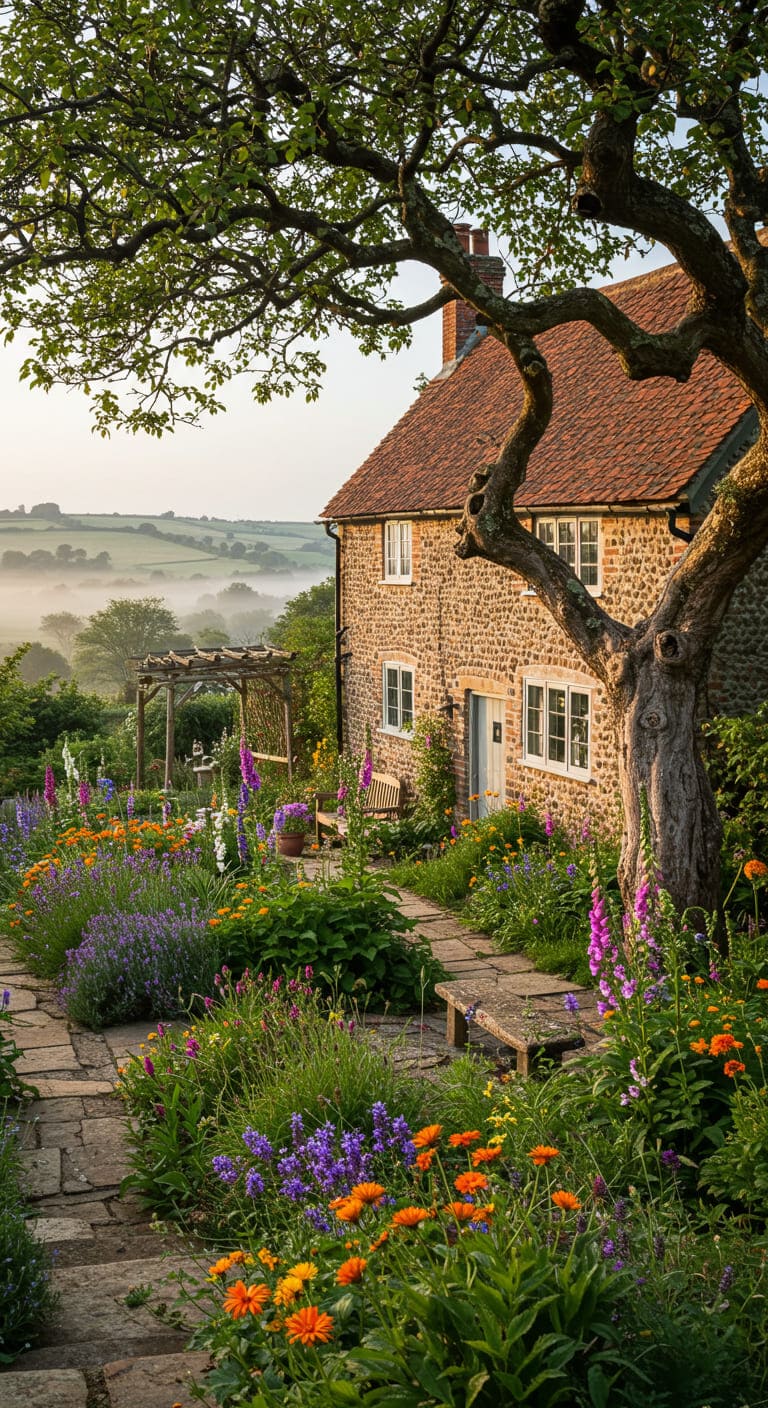
This distinctive flint cottage showcases regional vernacular architecture at its most charming. The rustic flint walls with clay tile roof reflect the ingenious use of local materials, while original leaded windows preserve historic character. The profusion of English cottage classics—foxgloves, delphiniums, and campanulas—creates the archetypal country garden scene. The ancient apple tree with its gnarled, twisted form demonstrates how English gardens celebrate the beauty of maturity and imperfection.
11. Jacobean Country House
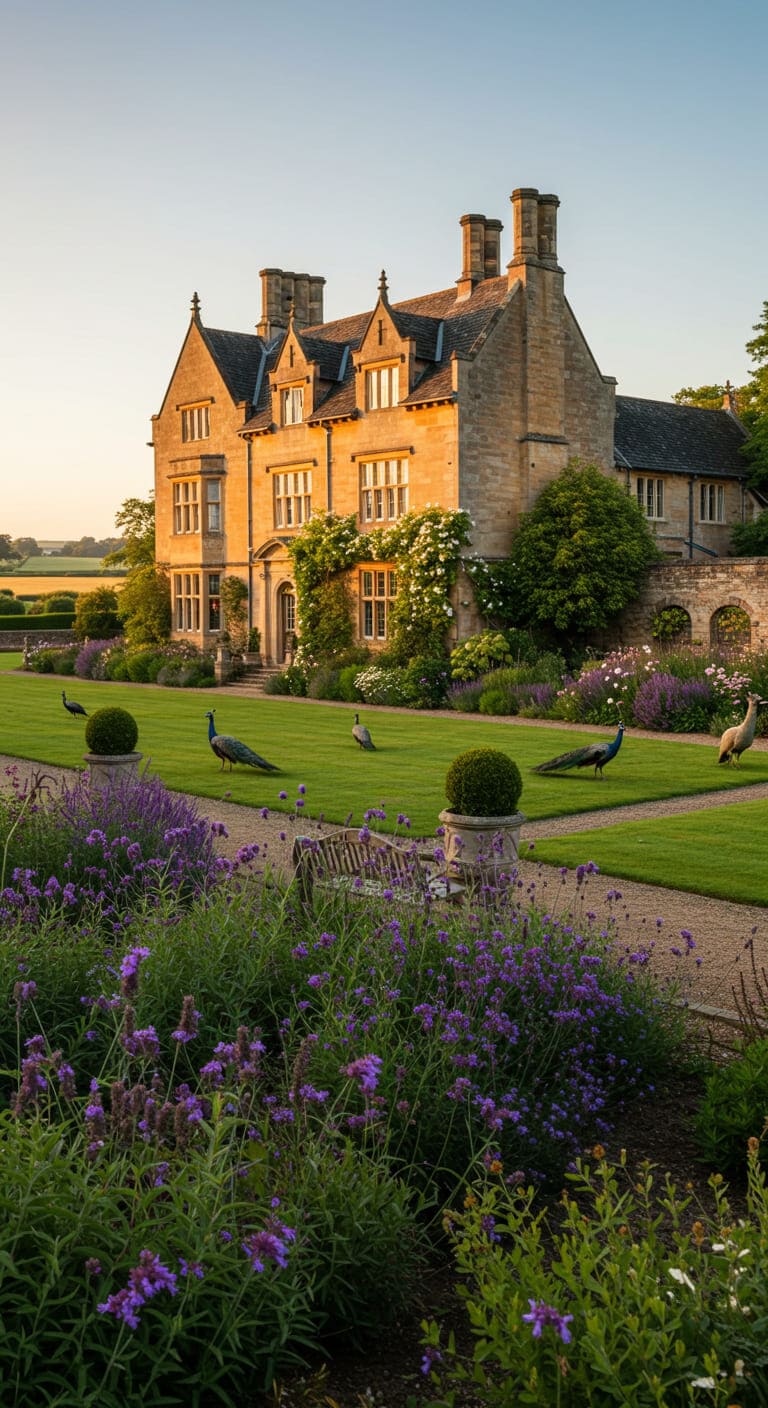
This impressive Jacobean country house displays the distinctive Dutch gables and mullioned windows characteristic of early 17th-century English architecture. The warm local sandstone glows in the afternoon light, showcasing regional building traditions. The formal topiary animals represent historic garden whimsy, while relaxed borders of pollinator-friendly plants demonstrate contemporary ecological awareness. The ha-ha boundary seamlessly connects the cultivated garden to pastoral landscapes beyond—a quintessentially English landscape design innovation.
12. Converted Oast House
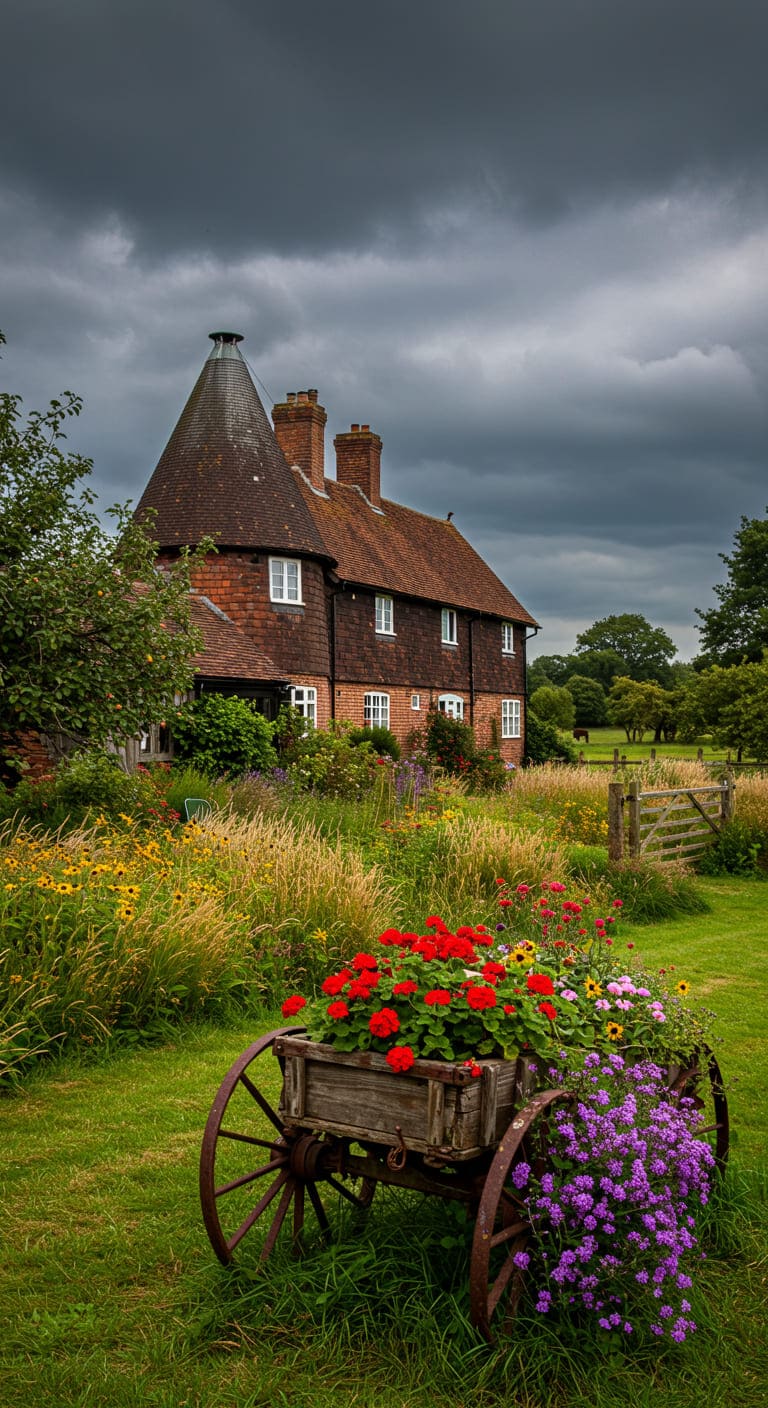
This spectacular converted oast house celebrates distinctive regional agricultural architecture. The conical towers that once dried hops create a uniquely sculptural silhouette, while the weathered timber cladding speaks to rural craft traditions. The surrounding apple and cherry orchards maintain historical productive landscapes, while informal gardens with ornamental grasses and late-flowering perennials demonstrate contemporary English planting design. The repurposed farm cart as a container garden represents creative adaptive reuse of agricultural artifacts.
13. Medieval Hall House
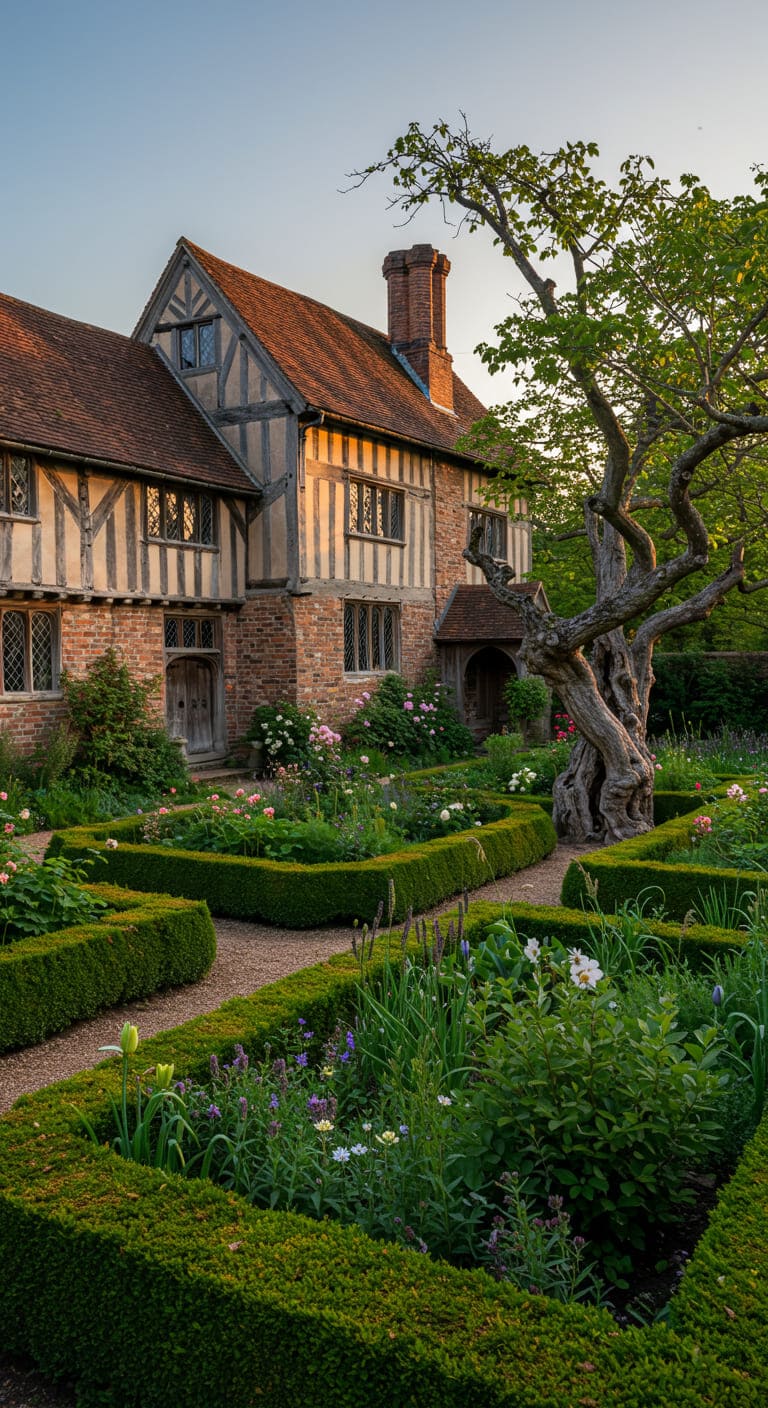
This remarkable medieval hall house represents the earliest form of sophisticated English domestic architecture. The exposed timbers and brick nogging reveal construction techniques dating back centuries, while the central great hall demonstrates historical social hierarchies. The series of garden rooms defined by yew hedges creates intimate spaces on a human scale, while the ancient mulberry tree provides a living link to historical garden traditions. The central knot garden with aromatic and medicinal herbs connects to medieval monastic garden design.
14. Lutyens-Inspired Arts and Crafts
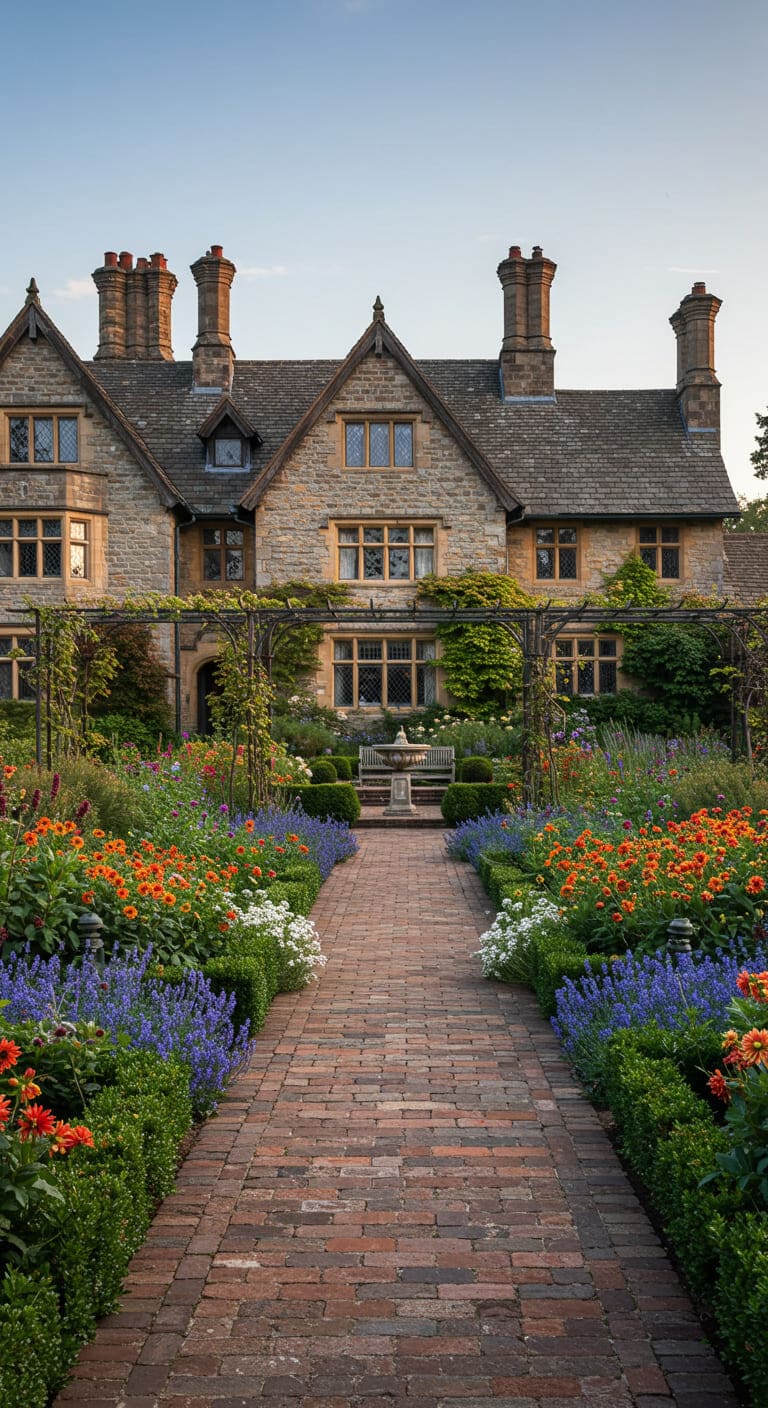
This Lutyens-inspired country house demonstrates how early 20th-century architects reimagined English vernacular traditions for modern living. The multiple gables and tall chimneys create a dynamic roofline, while local stone and tile hanging root the building in regional traditions. The color-themed borders following Jekyll design principles showcase how English garden design was revolutionized during this period. The wrought-iron pergolas supporting climbing roses create architectural garden rooms that extend the living space outdoors.
15. Gothic Revival Rectory
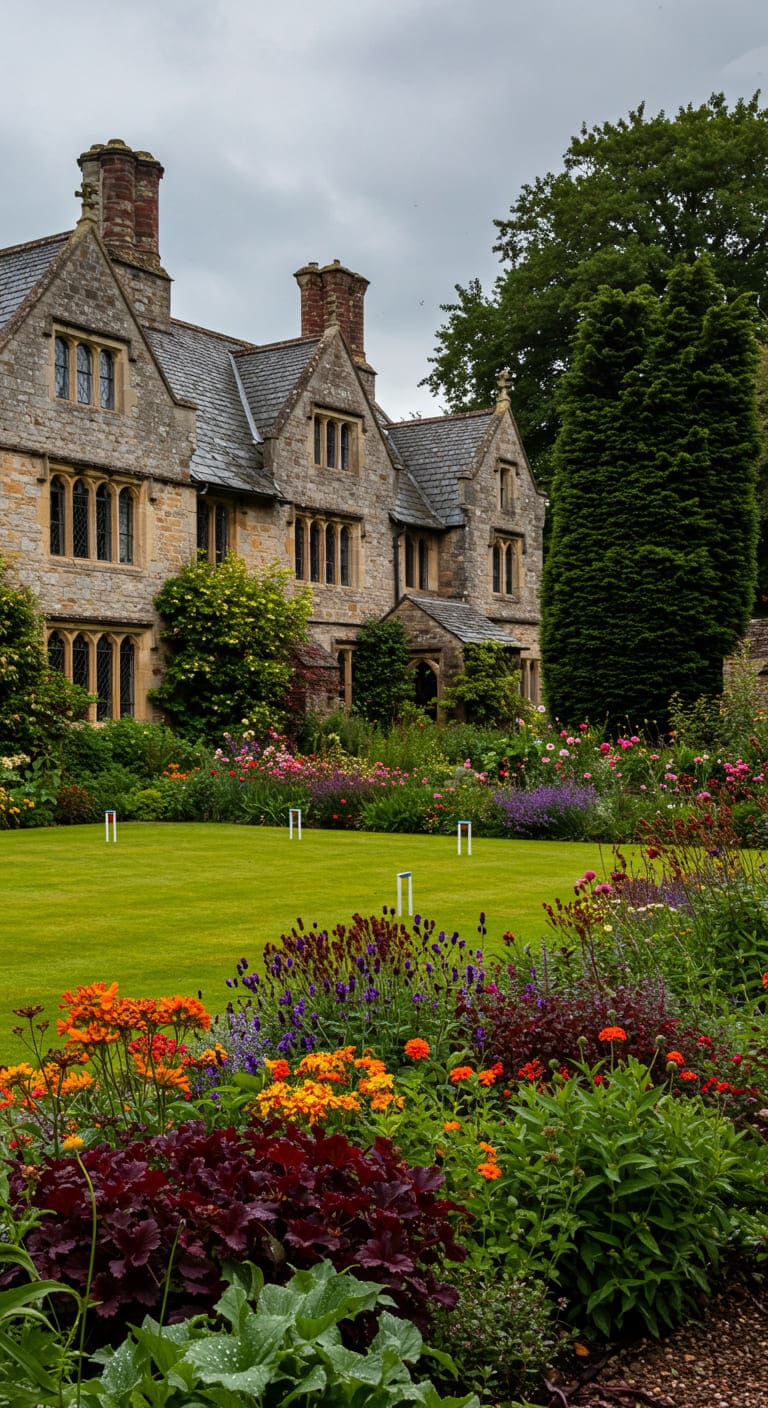
This stone-built former rectory showcases the Gothic revival’s romantic reinterpretation of medieval architectural elements. The pointed arches and decorative bargeboards demonstrate Victorian architectural exuberance, while leaded glass windows filter light beautifully. The croquet lawn bordered by perennial plantings in jewel tones reflects traditional English leisure activities. The walled kitchen garden with neat rows of vegetables interspersed with cut flowers demonstrates the English talent for combining productivity with beauty.
16. Thatched Longhouse
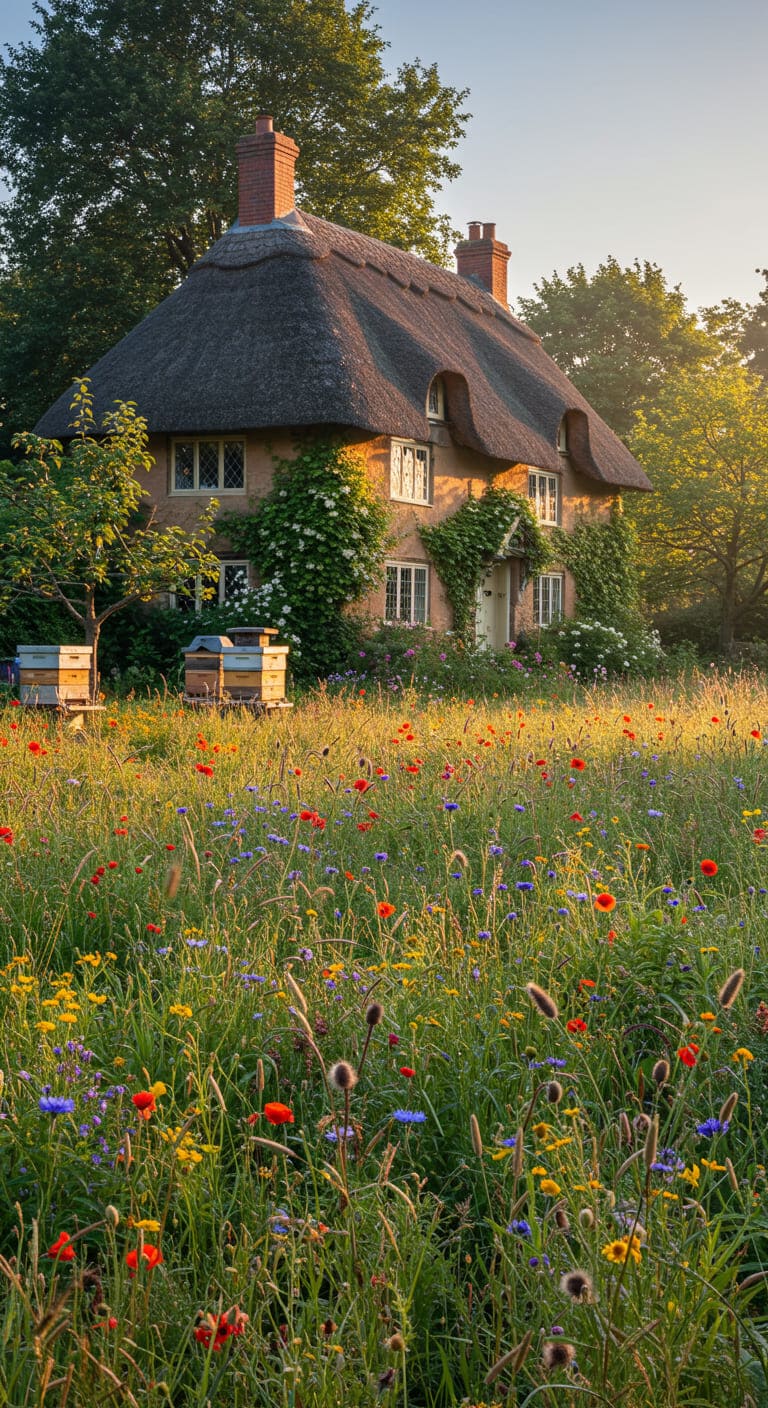
This traditional thatched longhouse built of cob and stone represents centuries-old vernacular building techniques perfectly adapted to local conditions. The small-paned windows and climbing plants create a picturesque façade with organic charm. The surrounding wildflower meadow showcases contemporary ecological gardening principles while celebrating native English flora. The twisted apple trees and stone beehives connect to traditional rural self-sufficiency, creating a scene that feels timeless yet thoroughly contemporary.
17. Victorian Shooting Lodge
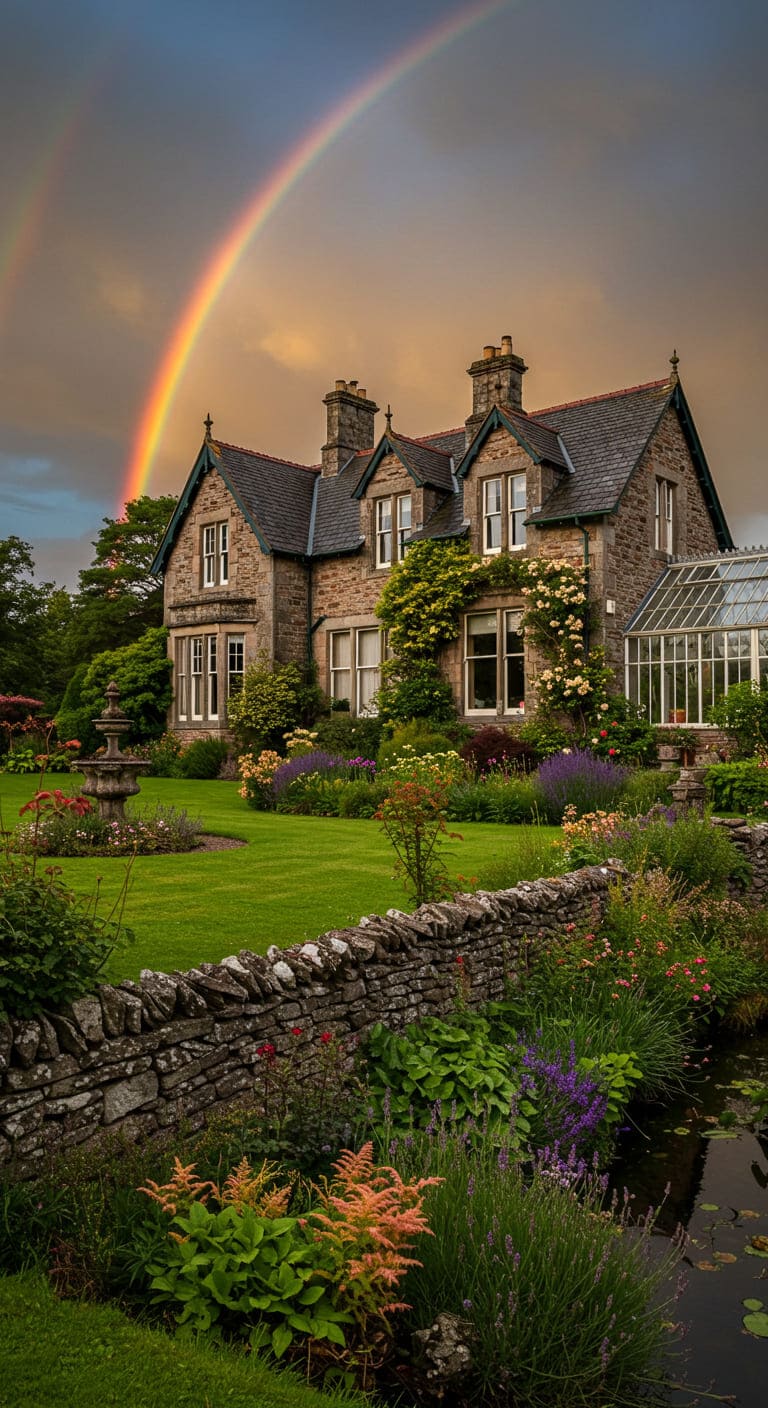
This characterful Victorian shooting lodge displays the distinctive gingerbread trim and bay windows typical of its era. The local stone construction with slate roofing anchors the building in regional traditions while showcasing Victorian craftsmanship. The garden brilliantly blends formal elements with naturalistic planting, featuring a sunken rose garden surrounded by lavender hedges. The Victorian-style glasshouse demonstrates period horticultural enthusiasm, while thoughtful microclimates from dry stone walls to bog gardens showcase sophisticated plant knowledge.
18. English Rectory
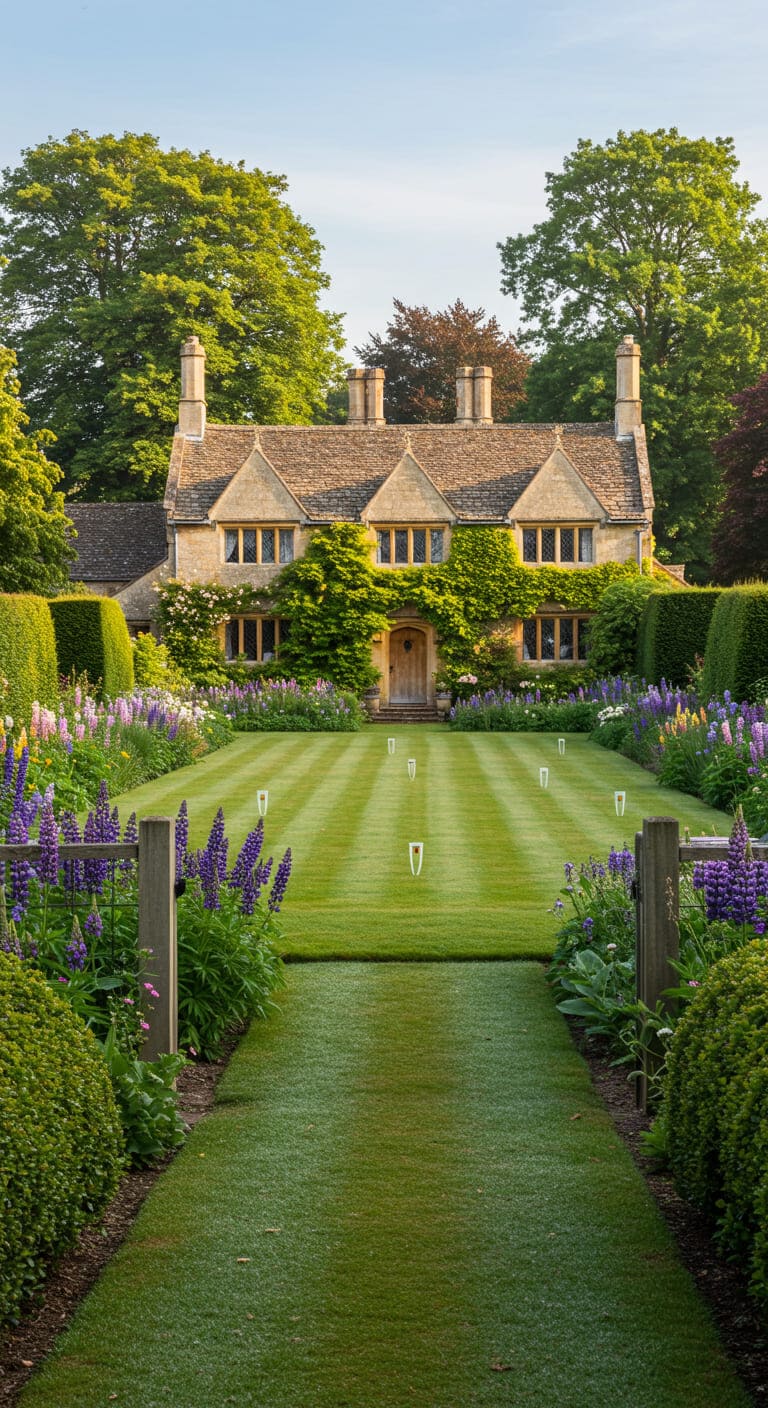
This classic Cotswold stone rectory exemplifies the dignified simplicity of traditional clerical residences. The honey-colored stone façade with mullioned windows creates a warm, welcoming presence, while climbing ivy adds texture without overwhelming architectural details. The quintessentially English herbaceous borders showcase the Sissinghurst influence with their carefully orchestrated drifts of lupins, delphiniums, and campanulas. The croquet lawn and ancient English oaks demonstrate how formal and natural elements harmonize in traditional English garden design, while the lychgate entrance references ecclesiastical connections.
19. Suffolk Longhouse
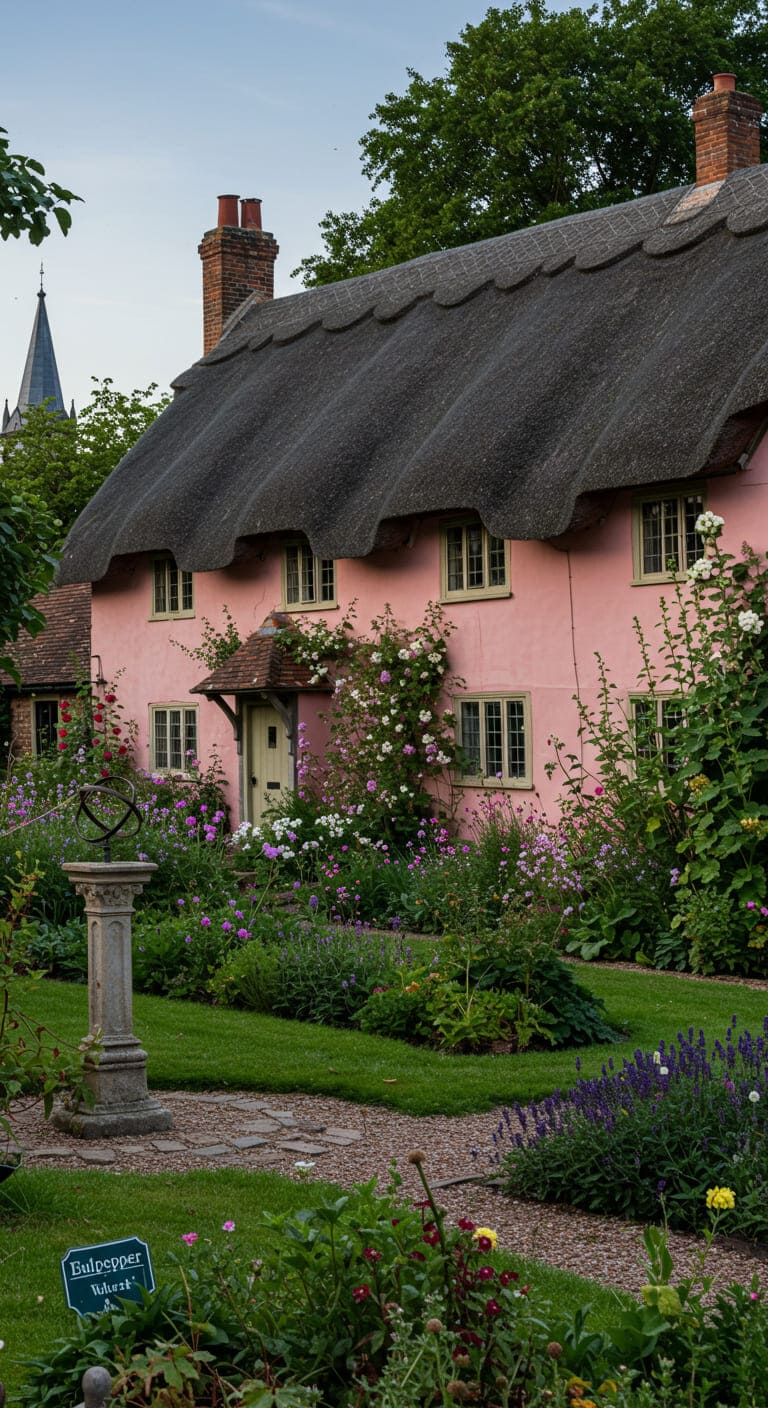
This thatched Suffolk longhouse with its distinctive pink lime-wash walls represents regional vernacular architecture at its most charming. The exposed timber beams create a rhythmic pattern across the façade, while the deep thatched roof provides protection against East Anglian weather. The informal cottage garden epitomizes the English genius for controlled chaos—towering hollyhocks, sweet William, and Canterbury bells create a tapestry of color and texture. Traditional English fruit trees and the central sundial in the herb knot garden connect to historical self-sufficient living traditions.
20. Georgian Manor House
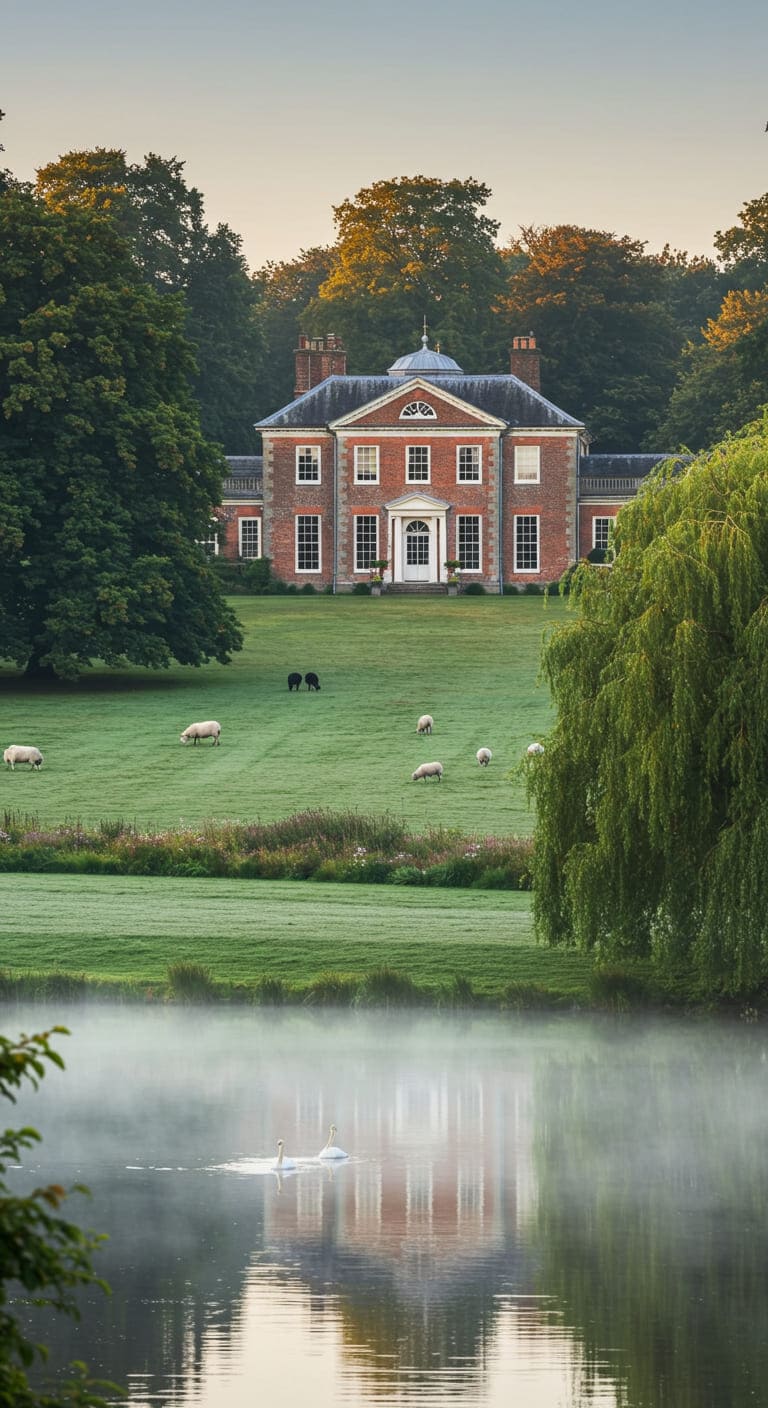
This magnificent Georgian manor house showcases the refined classical proportions that define 18th-century English architecture. The mellow London stock brick with Portland stone dressings creates a dignified façade with perfect symmetry. The landscape follows Capability Brown principles—sweeping lawns, strategically placed specimen trees, and a serpentine lake create the illusion of natural perfection. The ha-ha boundary ingeniously separates cultivated gardens from grazing livestock without interrupting views, demonstrating the English innovation in landscape design that influenced gardens worldwide.
21. Victorian Gothic Revival
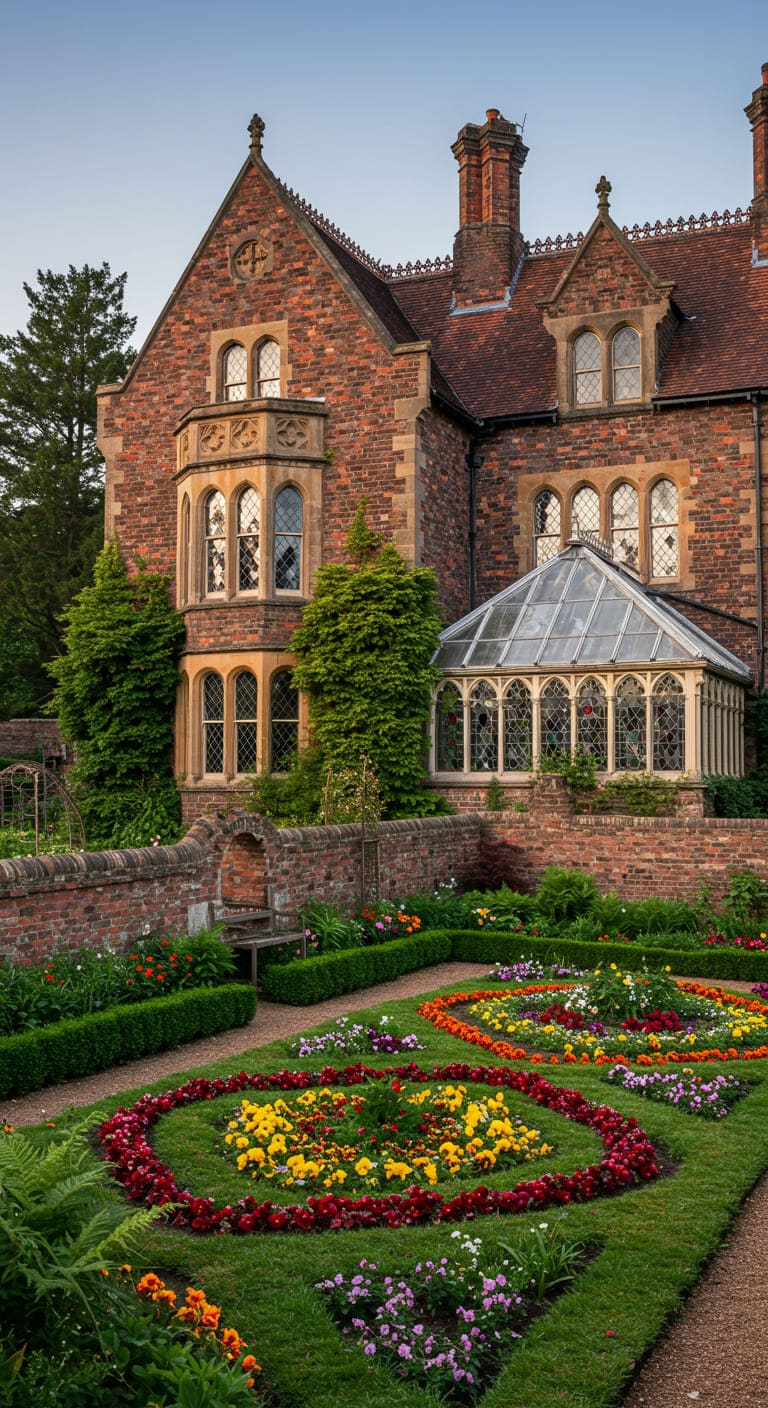
This polychromatic Victorian Gothic revival country house displays the architectural confidence and eclecticism of its era. The decorative brickwork patterns, ridge tiles, and pointed arch windows demonstrate Victorian craftsmanship and technological innovation. The elaborate carpet bedding displays showcase period horticultural fashion, while the fernery celebrates Victorian plant collecting enthusiasm. The kitchen garden with traditional Victorian cloches and espaliered heritage fruit trees connects to the period’s interest in productive gardening techniques.
22. Kentish Oast House
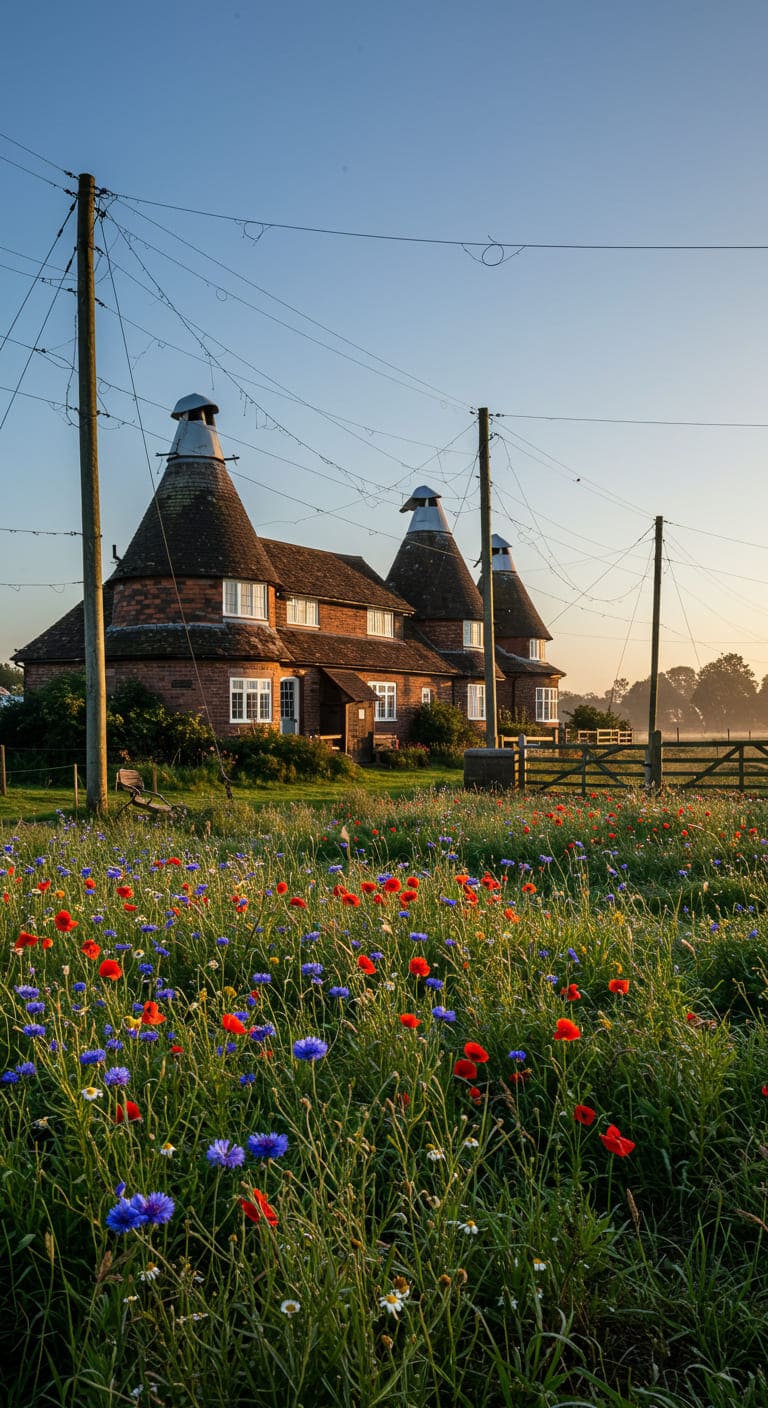
This distinctive Kentish oast house conversion celebrates regional agricultural heritage through thoughtful adaptive reuse. The white-cowled roundels and weatherboarded façades create a sculptural silhouette unique to this region, speaking to Kent’s hop-growing traditions. The surrounding English native wildflower meadow demonstrates contemporary ecological gardening principles while honoring indigenous flora. The traditional English orchard containing heritage apple varieties connects to historical productive landscapes, while the Shire horses in adjacent paddocks complete this quintessentially English rural scene.
23. Tudor Manor House
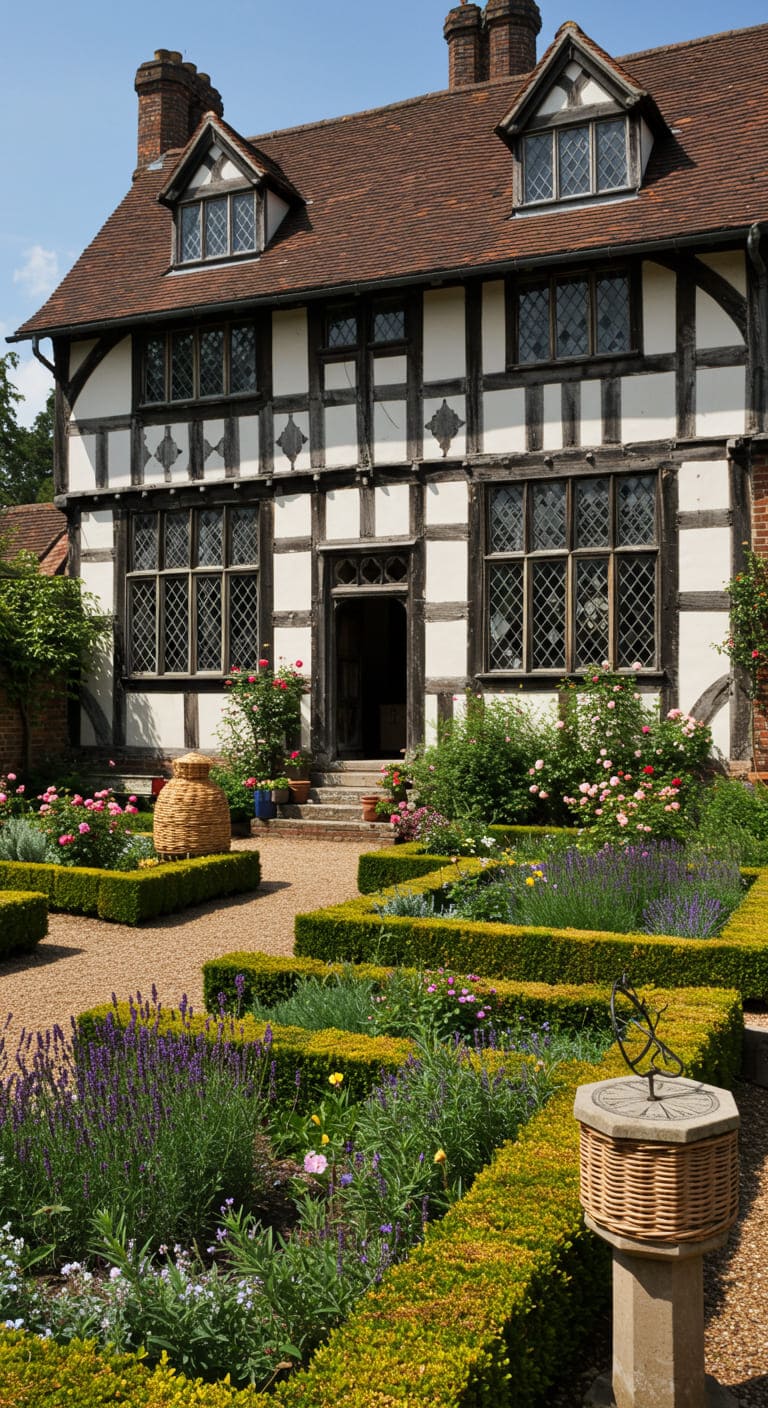
This spectacular black-and-white Tudor manor house showcases the distinctive timber-frame construction that defines this architectural period. The herringbone brick infill and leaded diamond-pane windows demonstrate period craftsmanship, while the imposing structure speaks to Tudor prosperity. The knot garden follows authentic 16th-century designs documented at Hampton Court, while traditional English bee skeps and heritage roses mentioned in Shakespeare create living connections to Tudor England. The central sundial marks the garden’s heart, reflecting period interests in astronomy and the measuring of time.
24. English Palladian House
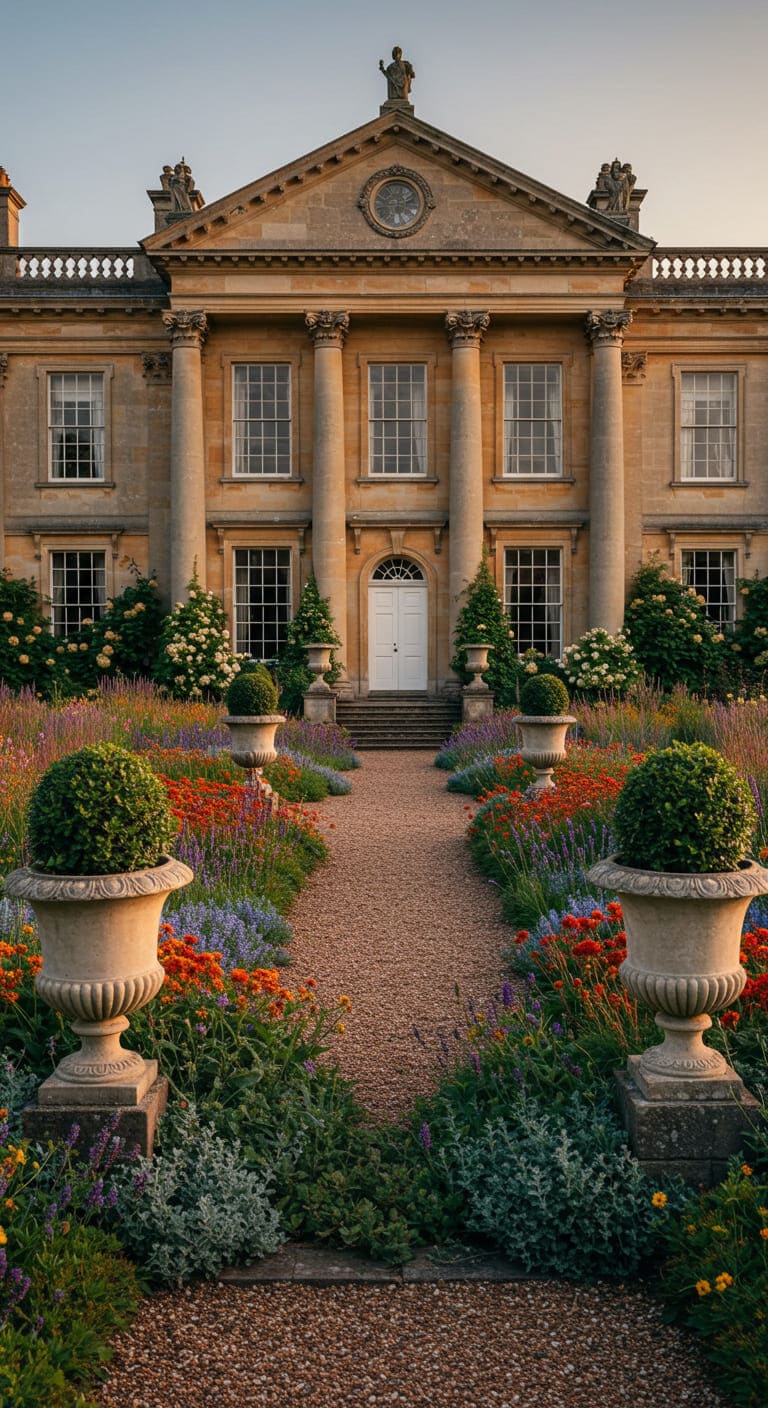
This perfect example of English Palladian architecture demonstrates how classical principles were adapted for the English landscape and climate. The symmetrical Bath stone façade with central portico creates a commanding presence, while the flanking wings demonstrate classical proportional relationships. The garden follows Gertrude Jekyll’s revolutionary color theories with borders flowing from cool silvers and blues to warm oranges and reds. Traditional English elements like the dovecote and kitchen garden growing vegetables according to 16th-century almanac recommendations connect this classical architecture to distinctly English rural traditions.
25. Lakeland Farmhouse
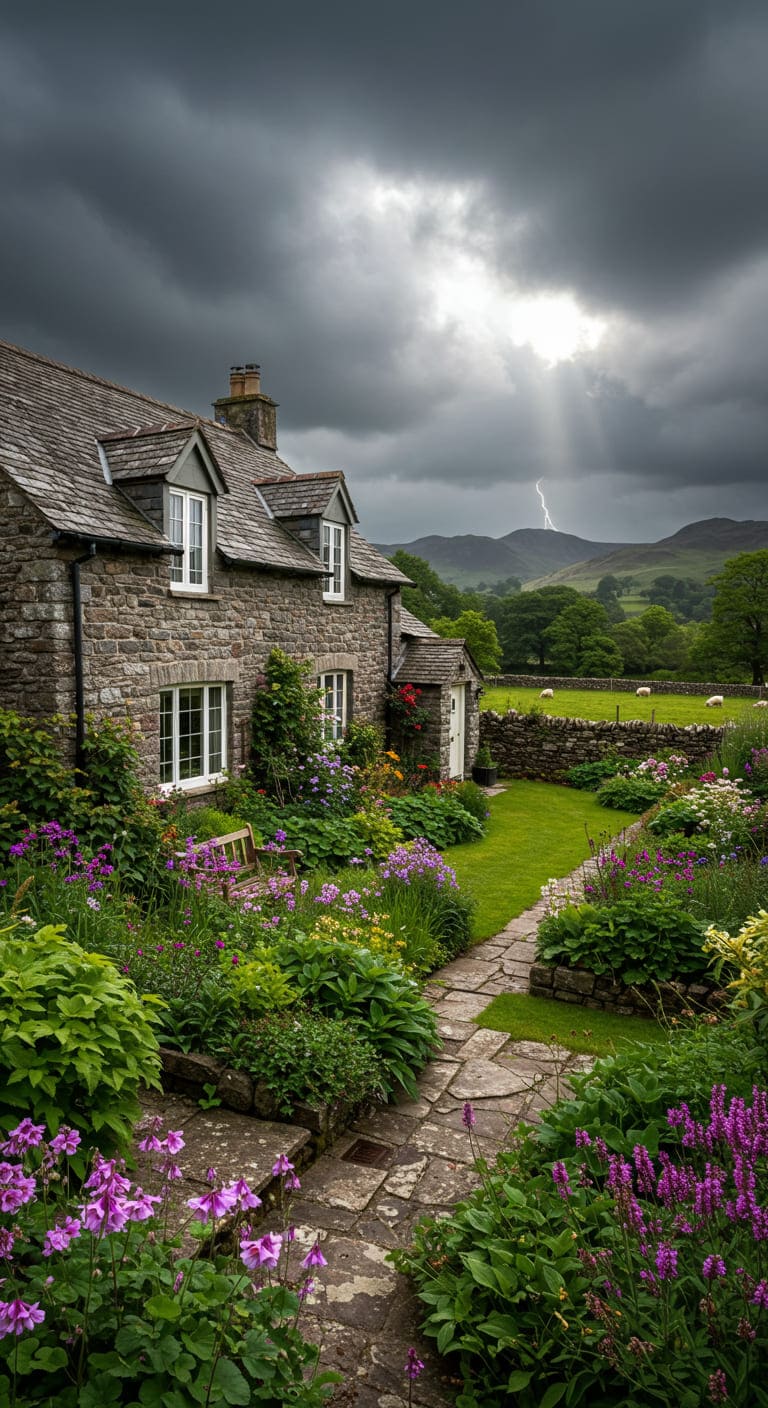
This robust Lakeland farmhouse built from local slate and stone demonstrates how regional vernacular architecture responds perfectly to challenging Cumbrian weather conditions. The small mullioned windows minimize heat loss while the substantial construction withstands harsh mountain weather. The garden embraces English cottage style with digitalis, aquilegia, and hardy geraniums spilling onto paths. The authentic dry stone walls, built using techniques unchanged for centuries, create microclimates for plants while connecting to the broader landscape tradition of the Lake District.
26. Arts and Crafts Movement House
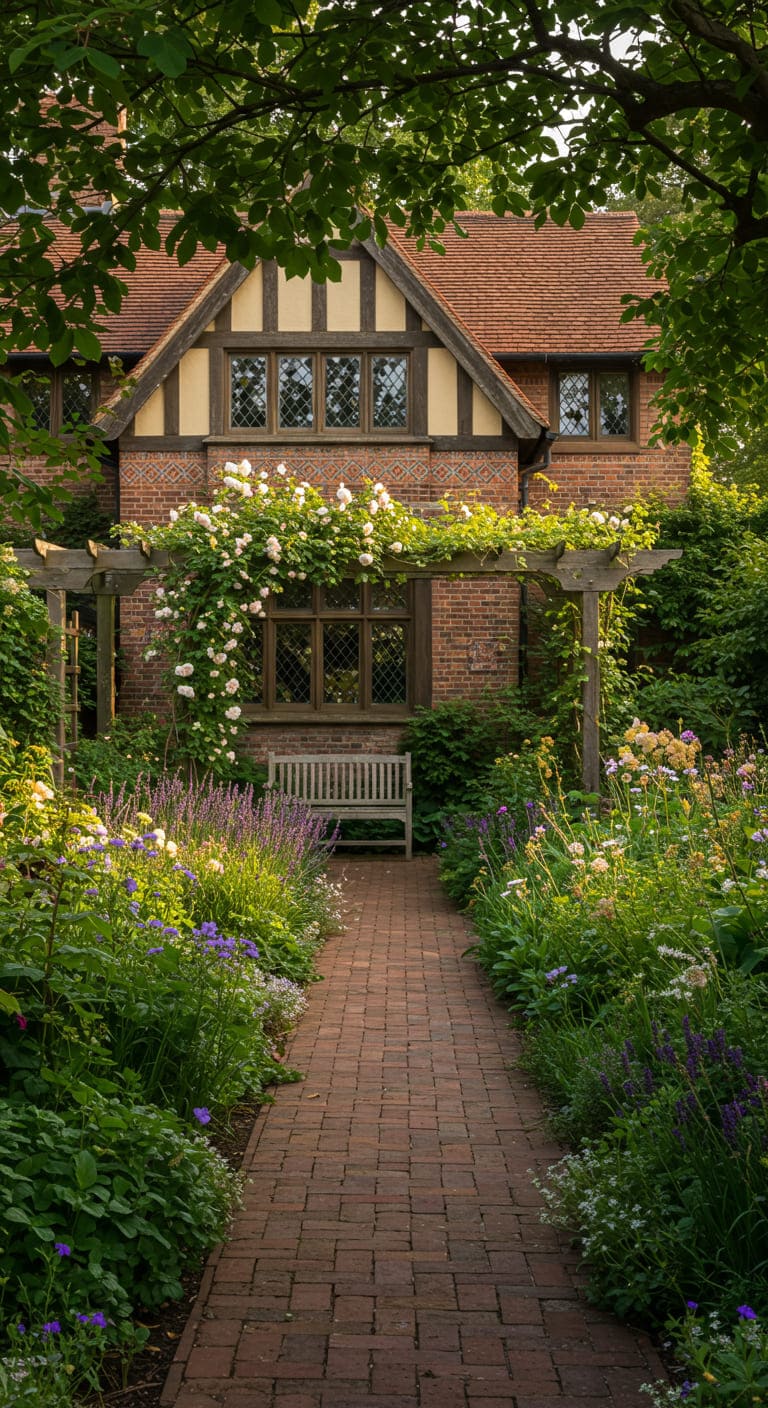
This exceptional Arts and Crafts movement house exemplifies the English vernacular revival that revolutionized domestic architecture. The patterned brickwork, tile hanging, and deep eaves demonstrate the movement’s emphasis on craftsmanship and honest materials. The garden follows William Robinson’s wild gardening principles—naturalistic drifts of traditional English cottage plants create seemingly effortless beauty. The traditional English rose garden containing only historic varieties honors horticultural heritage, while hand-crafted English oak garden furniture showcases period craftsmanship ideals.
27. Victorian Gothic Revival Vicarage
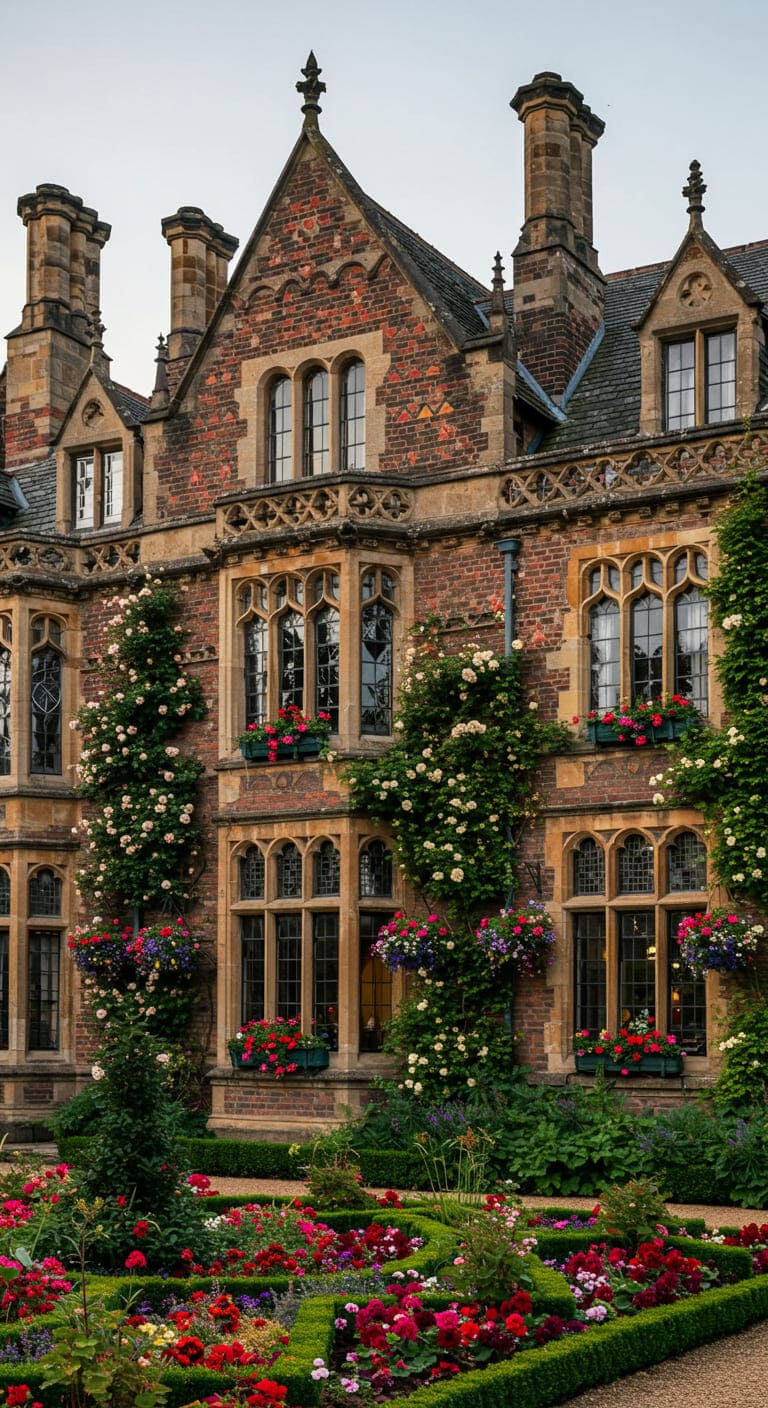
This striking Victorian Gothic revival vicarage showcases the period’s architectural confidence through its polychromatic brickwork creating bold patterns across the façade. The brick laid in alternating red, buff, and blue-gray bands demonstrates Victorian material innovation, while elaborate stone window tracery and carved wooden bargeboards display extraordinary craftsmanship. The traditional Victorian knot garden with geometric patterns formed by clipped boxwood hedges reflects period garden design principles, while heritage English flower varieties arranged according to Victorian color theories create historical authenticity. The wrought iron trellises supporting climbing roses demonstrate the Victorian fondness for ornamental metalwork.
28. English Cruck Frame Cottage
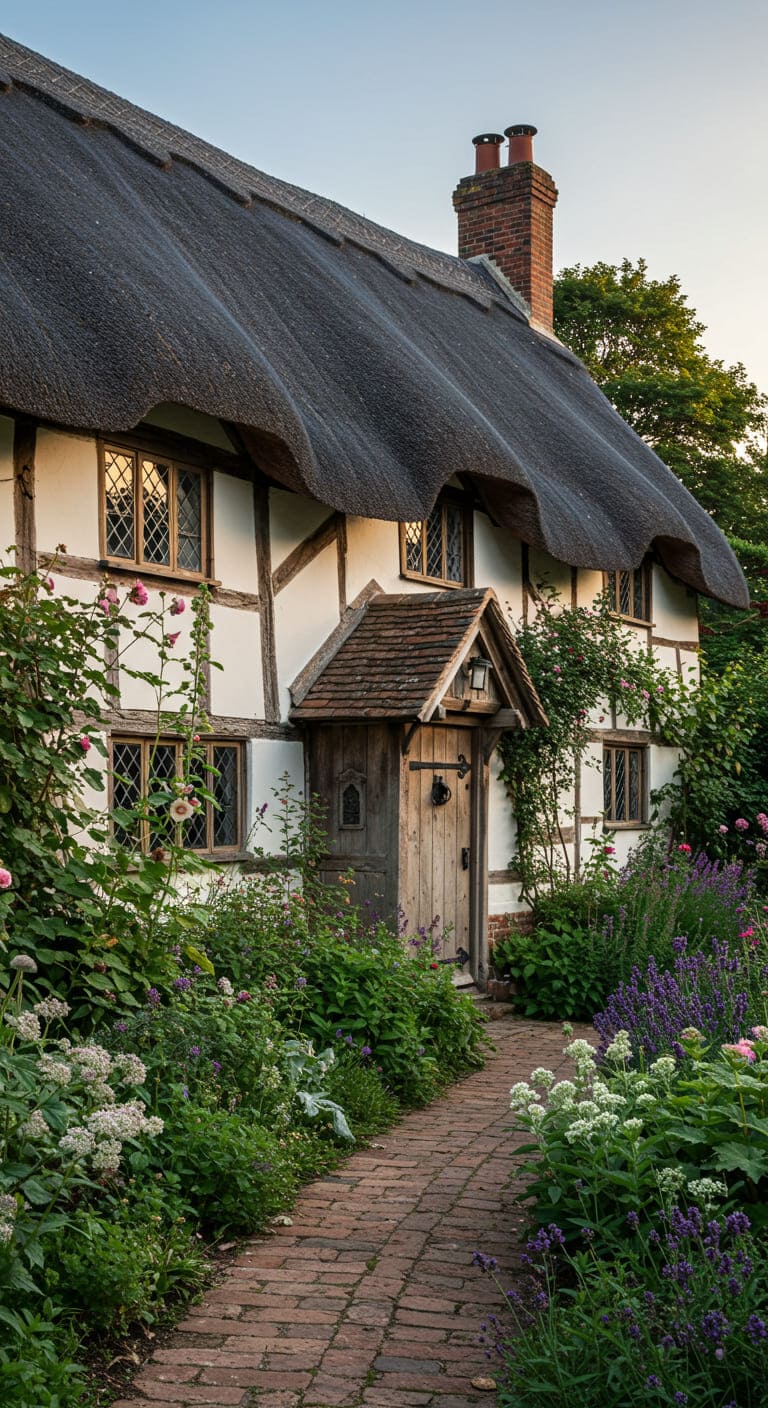
This picture-perfect English country cottage reveals ancient cruck frame construction—one of England’s oldest timber building techniques. The whitewashed cob walls and deeply overhanging thatched roof with distinctive decorative ridge patterns showcase vernacular building methods perfected over centuries. The uneven rooflines, slightly crooked windows, and walls that have settled over generations create the organic charm that defines authentic English cottages. The traditional cottage garden plants—hollyhocks, old-fashioned English roses, and lavender—create the quintessential cottage garden aesthetic, while the worn brick path bordered by billowing catmint and lady’s mantle demonstrates how English gardens embrace controlled informality.
29. Edwardian Country House
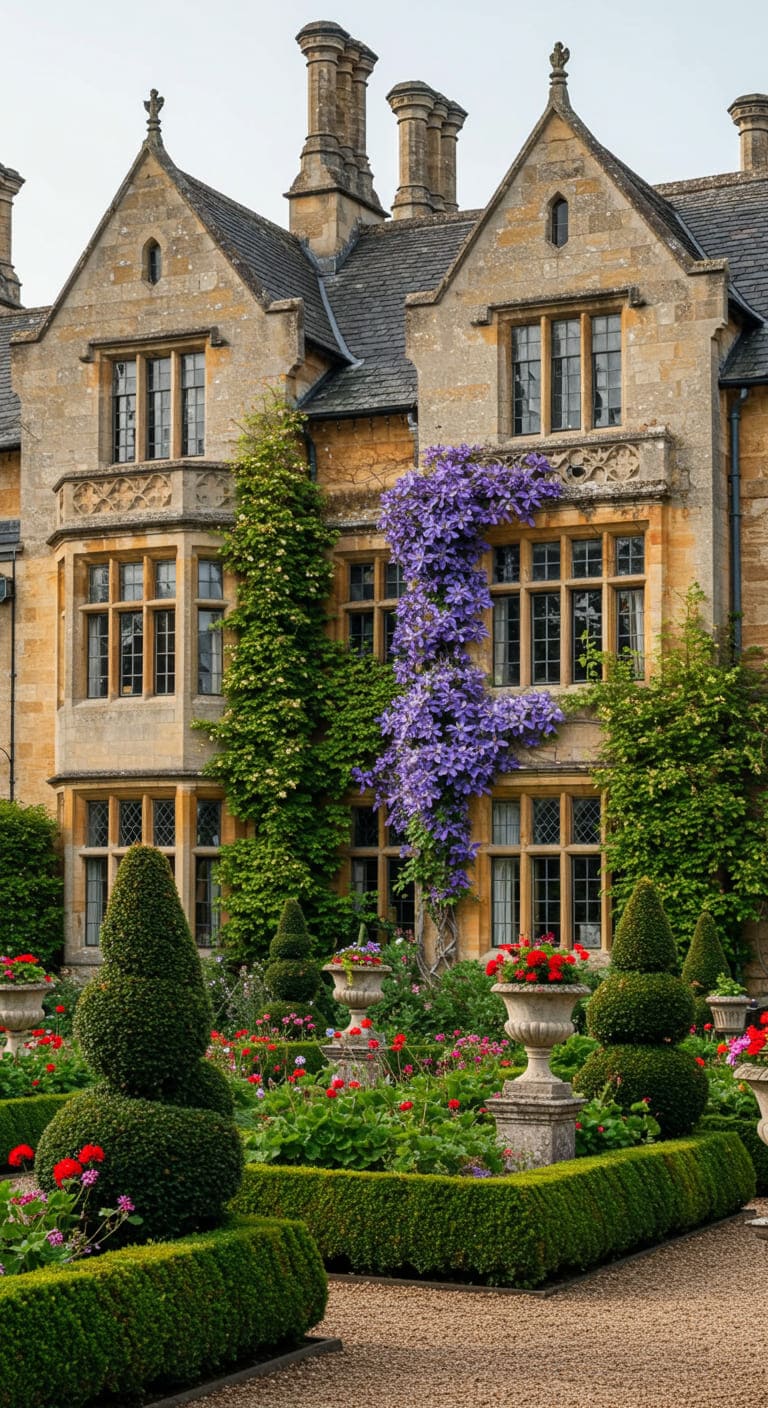
This magnificent Edwardian country house constructed from local limestone represents the last flowering of grand English country house architecture before World War I. The elaborate period details—stone mullioned bay windows, ornate carved stone balconies, and decorative chimney stacks—showcase Edwardian craftsmanship at its finest. The formal gardens with perfectly executed topiary yews demonstrate traditional English garden structure, while herbaceous borders planted in classic Gertrude Jekyll style create waves of color following her revolutionary design principles. The gravel paths and stone urns overflowing with red geraniums and trailing ivy maintain classic English garden traditions.
30. Strawberry Hill Gothic
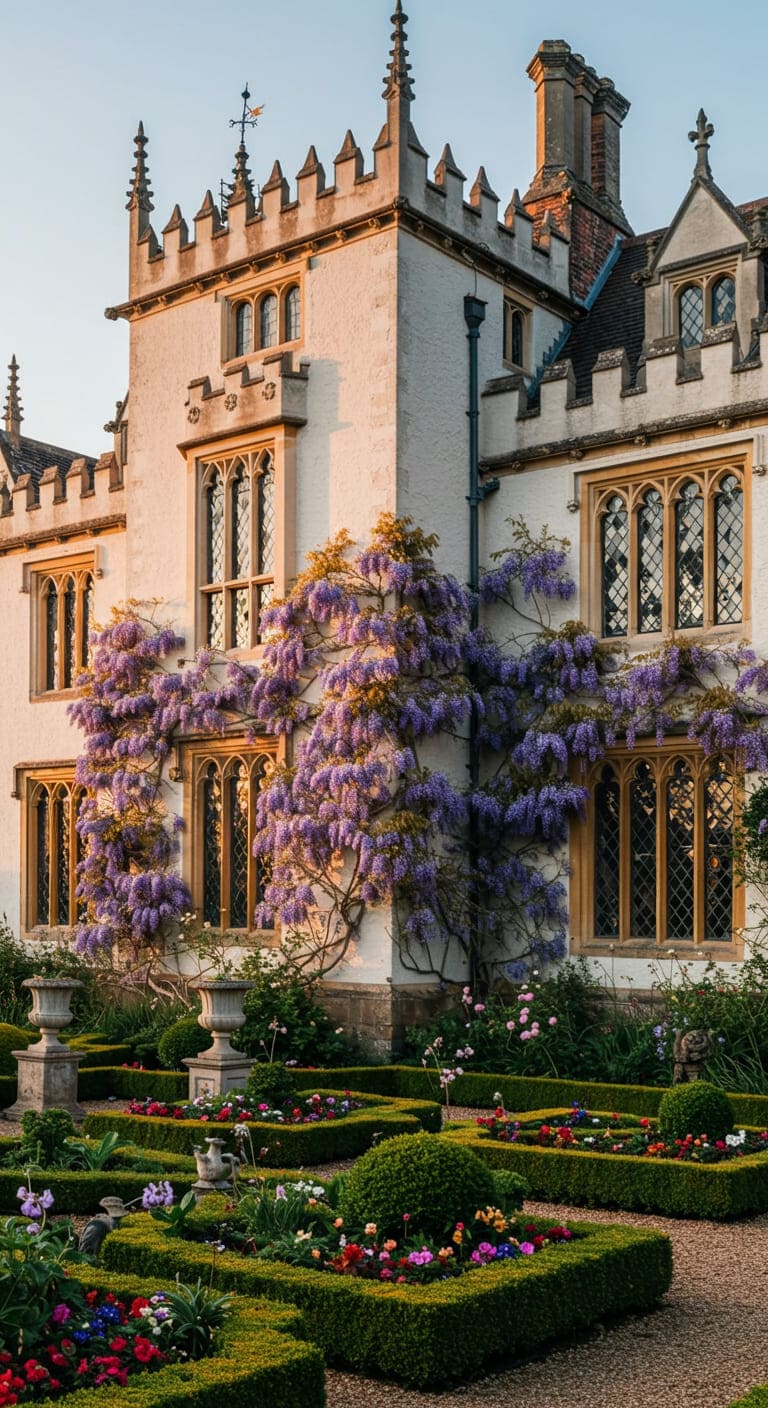
This exquisite Strawberry Hill Gothic country house exemplifies the 18th-century Gothic revival that transformed English architectural taste. The white stucco façade adorned with Gothic revival details—pointed arch windows, pinnacles, and castellated parapets—demonstrates how medieval elements were romantically reinterpreted. The geometric formal gardens laid out according to 18th-century principles create appropriate historical context, while the ancient wisteria with gnarled stems adds the patina of age that English gardens celebrate. The precisely clipped boxwood parterres containing vibrant bedding plants showcase traditional English garden structure.
31. Cotswold Stone Manor House
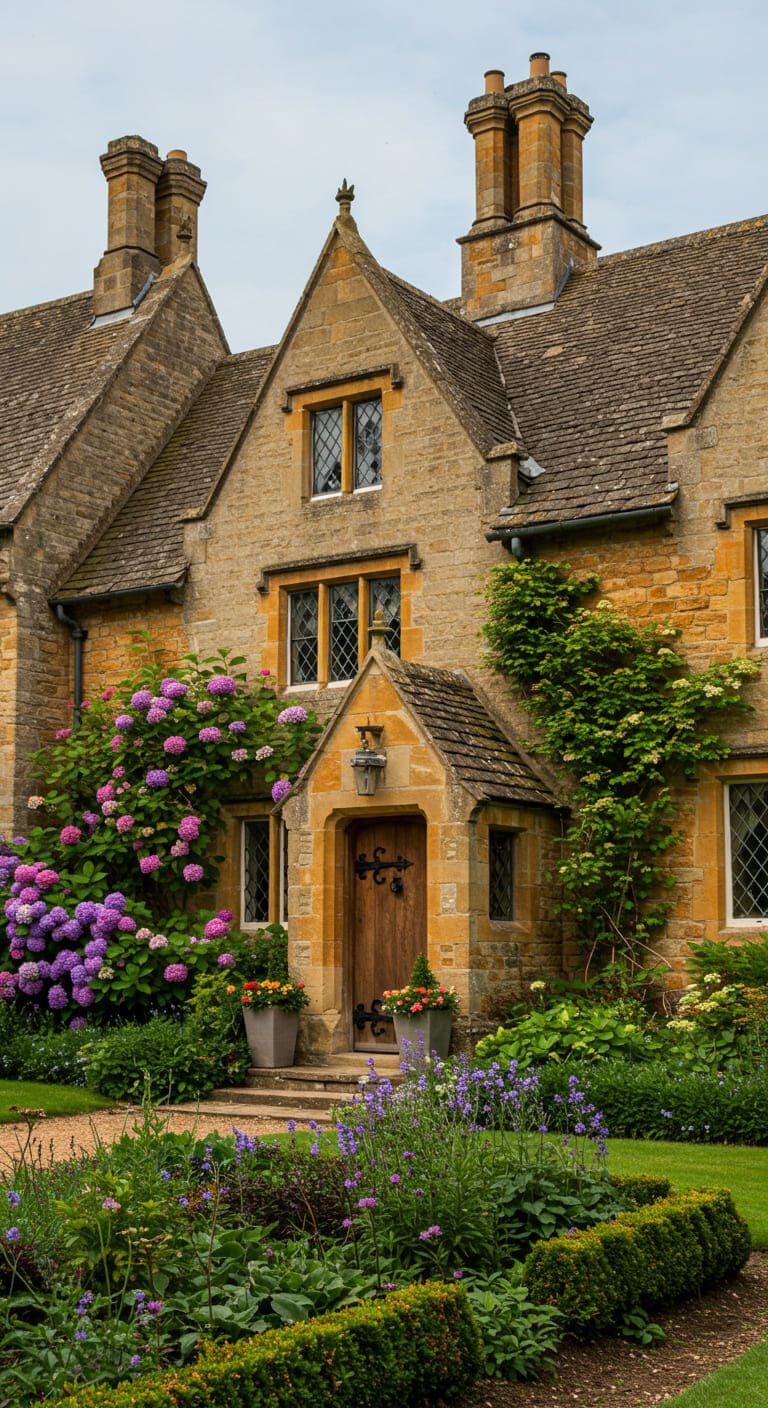
This quintessential Cotswold stone manor house demonstrates how regional building traditions create architecture perfectly integrated with its landscape. The honey-colored limestone façade, projecting gables with stone mullioned windows, and stone slate roof with graduated sizing showcase sophisticated vernacular techniques. The traditional English herbaceous borders containing cottage garden favorites edged with precisely clipped lavender hedges demonstrate the English genius for combining formal structure with abundant planting. The centuries of weathering that has created the stone’s rich patina exemplifies the English appreciation for the beauty that comes with age.
32. Jacobean Prodigy House
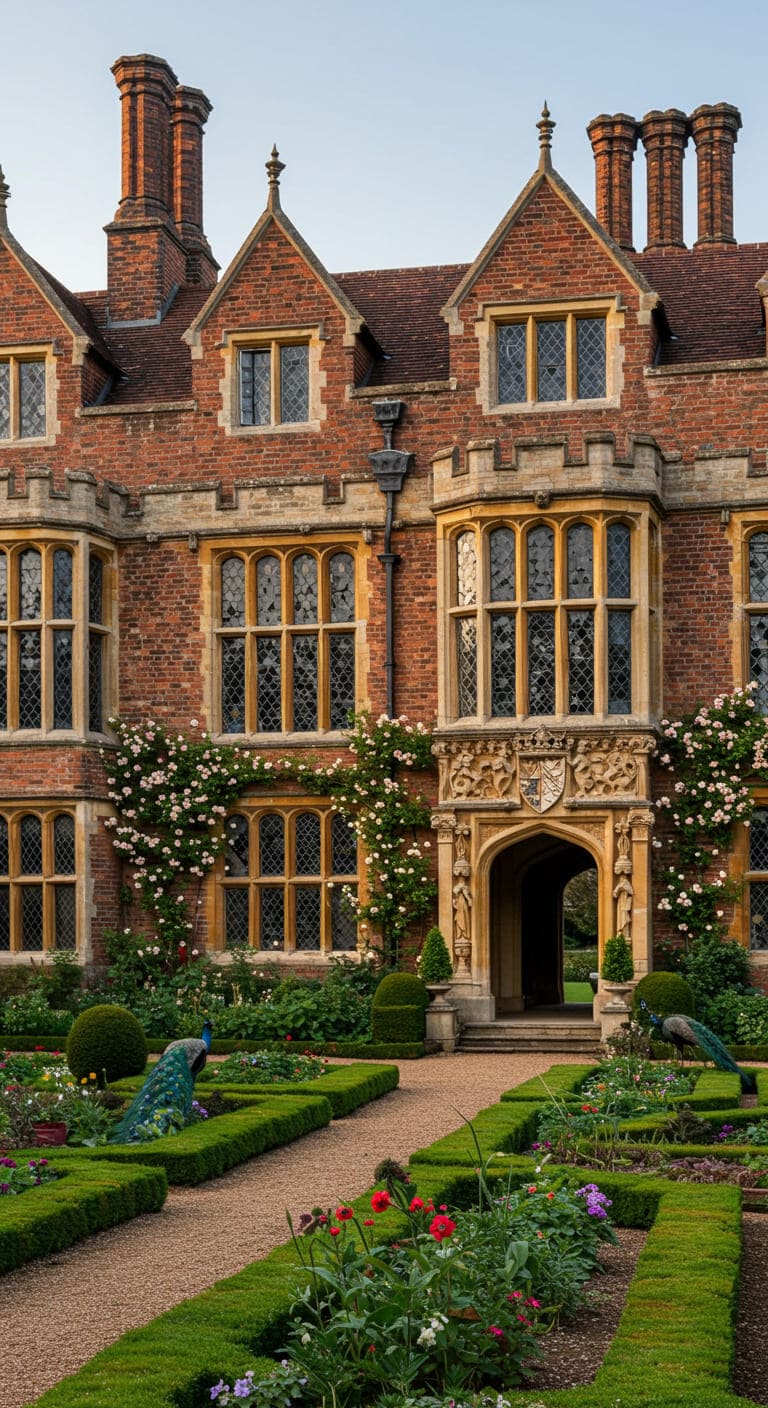
This spectacular Jacobean prodigy house with its distinctive E-shaped floor plan represents the architectural ambition of early 17th-century England. The decorative Dutch gables, ornate stone mullioned windows, and elaborate chimney stacks with twisted details showcase period craftsmanship. The weathered red brick with decorative patterns in contrasting buff brick demonstrates sophisticated bricklaying techniques. The authentic recreations of 17th-century knot gardens with geometric patterns formed by aromatic herb borders connects to historical garden traditions documented in period herbals and plant catalogs.
33. Suffolk Pink Farmhouse
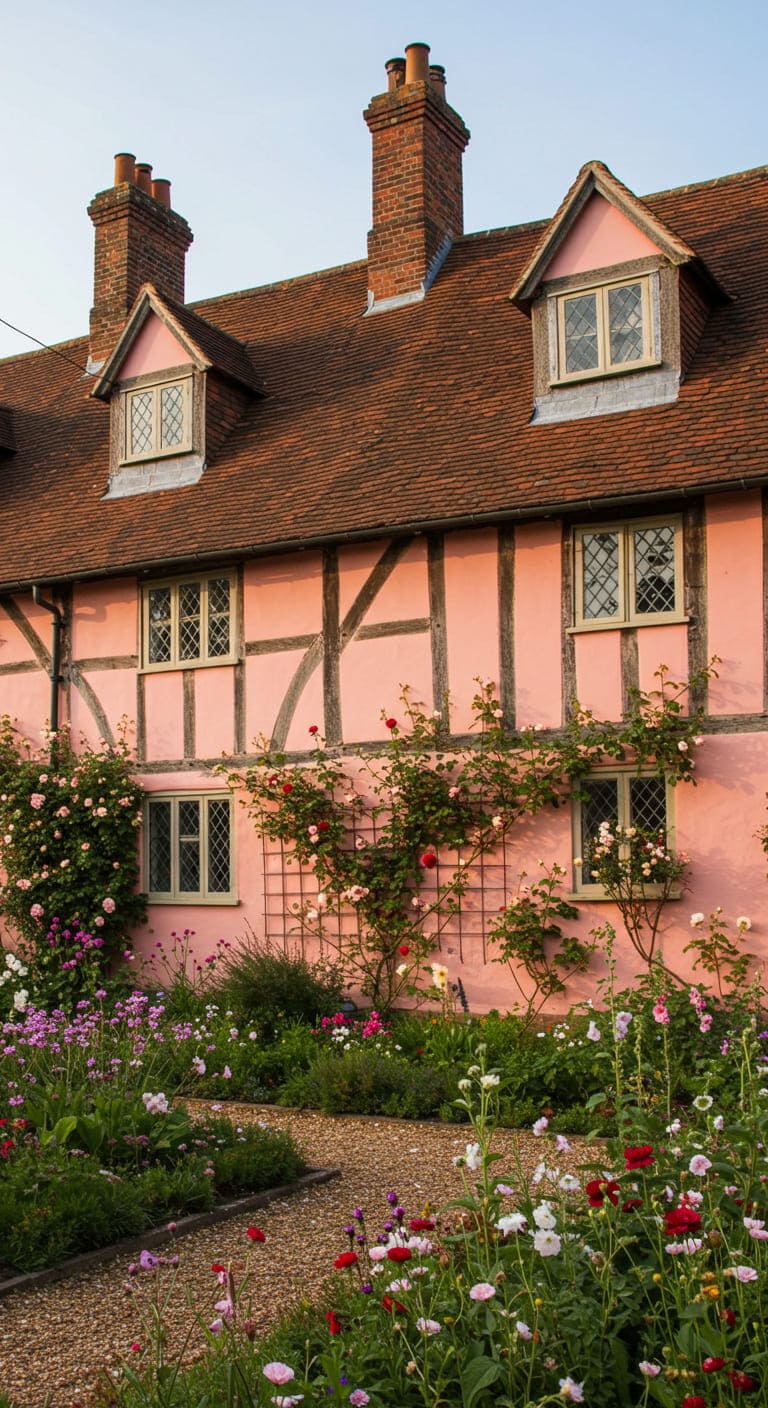
This distinctive Suffolk pink farmhouse showcases regional vernacular architecture at its most characterful. The traditional limewash mixed with pig’s blood or ochre creates the iconic pink façade that defines this regional style. The decorative pargeting with floral motifs adorning the upper stories demonstrates East Anglian craft traditions, while the closely spaced timber framing creates rhythmic patterns across the façade. The traditional cottage garden with informal beds overflowing with old-fashioned roses, foxgloves, and campanulas creates the quintessential English country garden aesthetic—seemingly effortless abundance contrasting with the architectural formality.
34. Queen Anne Country House
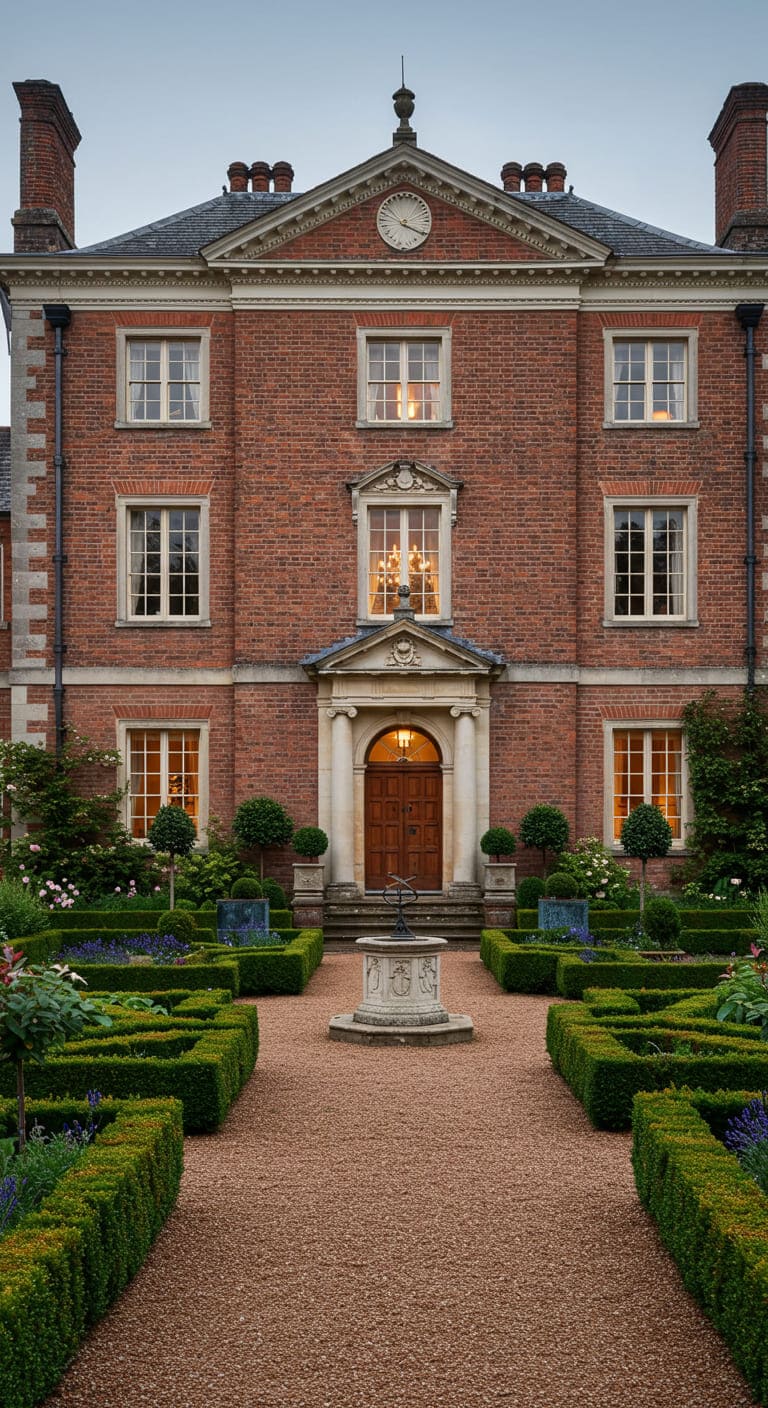
This magnificent English Queen Anne country house exemplifies the refined architectural style that defined early 18th-century prosperity. The perfectly balanced façade with red brick laid in Flemish bond demonstrates sophisticated bricklaying techniques, while rubbed brick detailing around windows showcases extraordinary craftsmanship. Portland stone quoins and the central entrance with carved stone pediment featuring a shell motif add classical elegance. The formal parterre gardens with low box hedges forming intricate patterns around a central sundial follow period garden design principles, while traditional English herbaceous borders containing heritage perennials maintain historical authenticity.
35. English Butterfly House
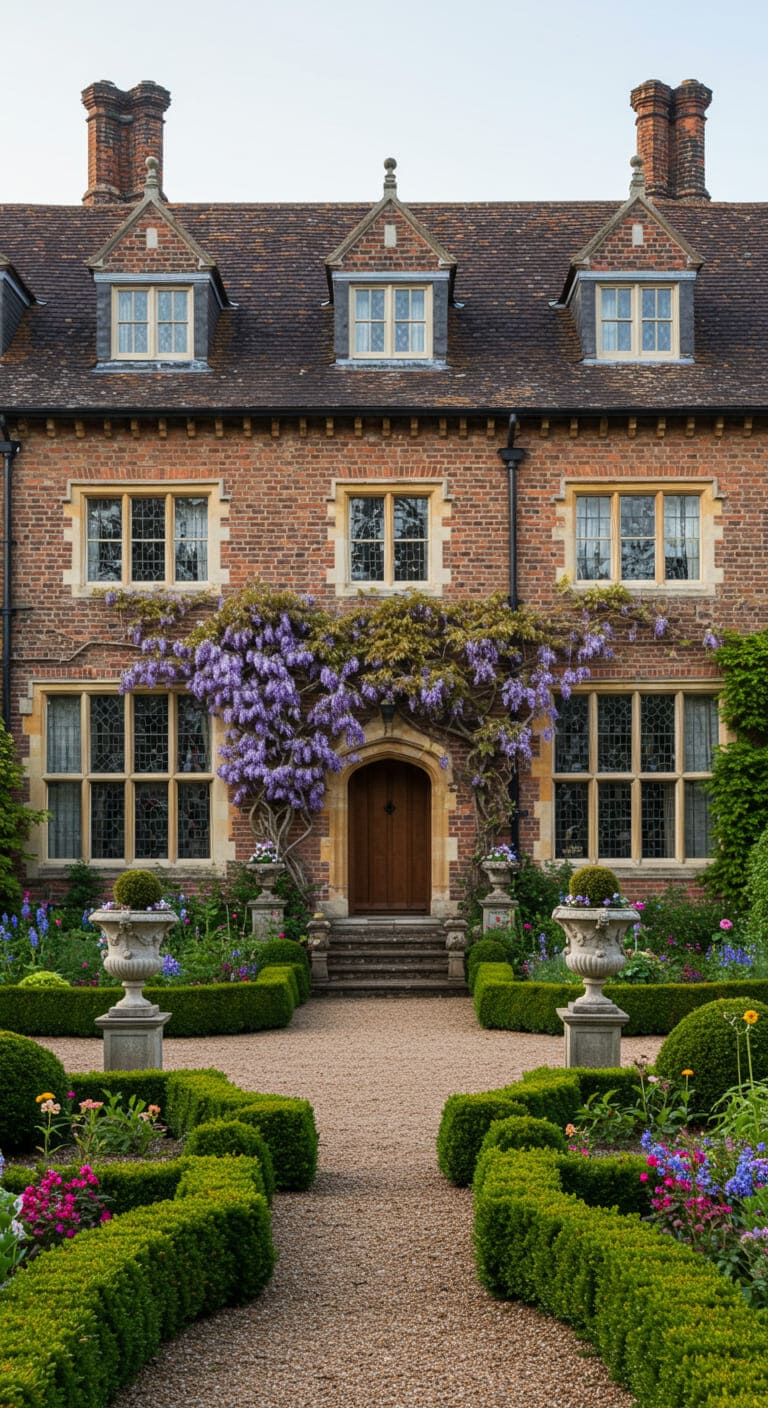
This distinctive English Butterfly house showcases a rare architectural form characterized by symmetrical wings projecting forward from the central block. The tall sash windows arranged symmetrically across the façade demonstrate classical proportions, while ornate Dutch gables crowning each projecting wing show continental influences on English architecture. The formal garden layout with geometric patterns formed by clipped boxwood enclosing color-themed planting schemes creates period-appropriate context. The stone urns on pedestals marking key intersections of gravel paths follow traditional English garden design principles of creating focal points and guiding circulation.
36. English Restoration Country House
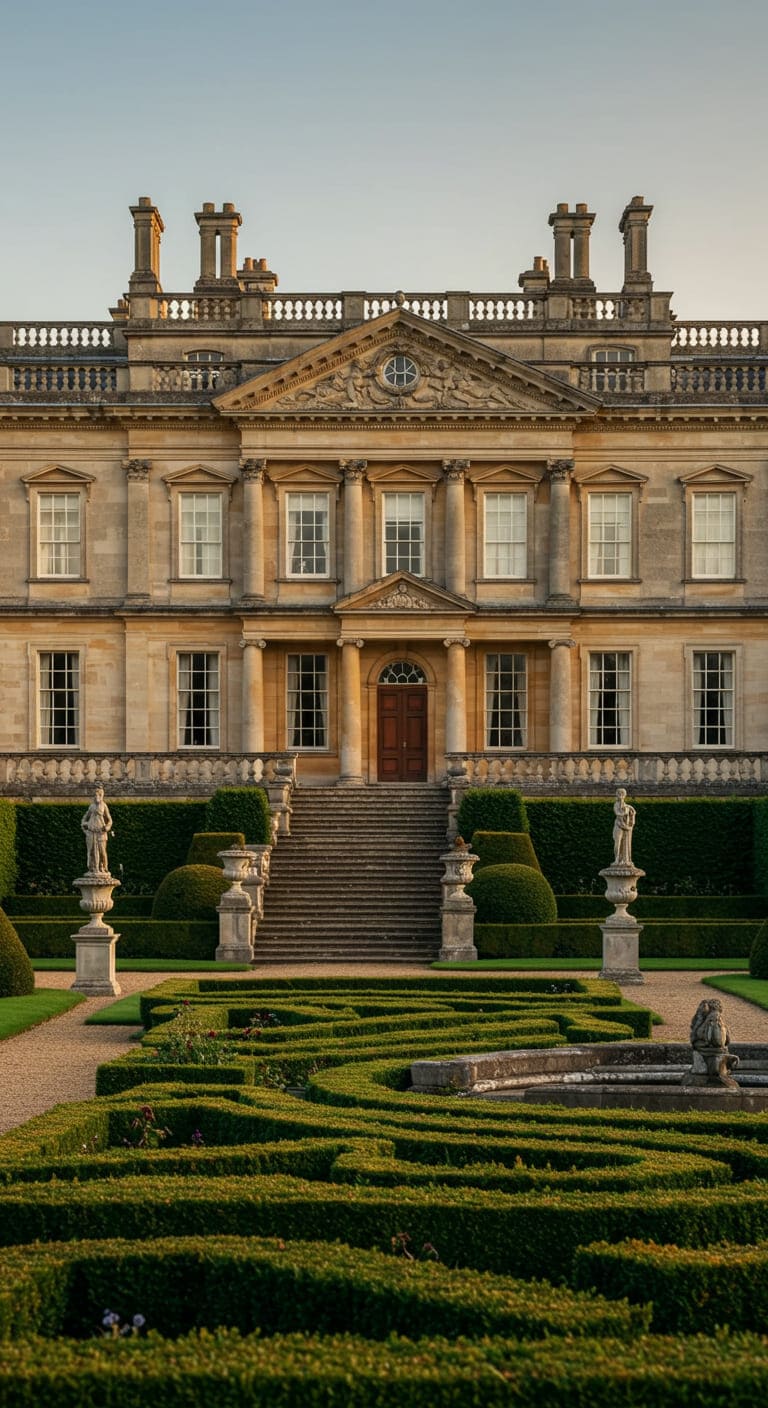
This spectacular Restoration period country house demonstrates how classical architecture was reinterpreted following the English Civil War. The perfect symmetry with projecting central and end pavilions showcases classical proportional systems, while ornate stone balustrades along the roofline create an elegant silhouette. Elaborate carved stone swags and garlands decorating window surrounds demonstrate period craftsmanship, while the grand entrance portico supported by classical columns creates an impressive focal point. The grand formal gardens laid out on axis with the house follow period design principles, creating significant architectural spaces outdoors that complement the building’s grandeur.
37. Elizabethan Manor House
This magnificent Elizabethan manor house with its distinctive E-shaped floor plan honors Queen Elizabeth I through architectural form. The intricate herringbone brickwork patterns, ornate chimney stacks, and mullioned bay windows with hundreds of leaded glass panes demonstrate the sophisticated craftsmanship of the period. The traditional English knot garden with aromatic herbs and Tudor flowers arranged in intricate geometric patterns recreates authentic period garden design. The perfectly trimmed topiary peacocks flanking the entrance path showcase the English fondness for whimsical garden elements, while the climbing roses on ancient iron trellises demonstrate how English gardens soften architectural formality.
38. English Palladian Villa
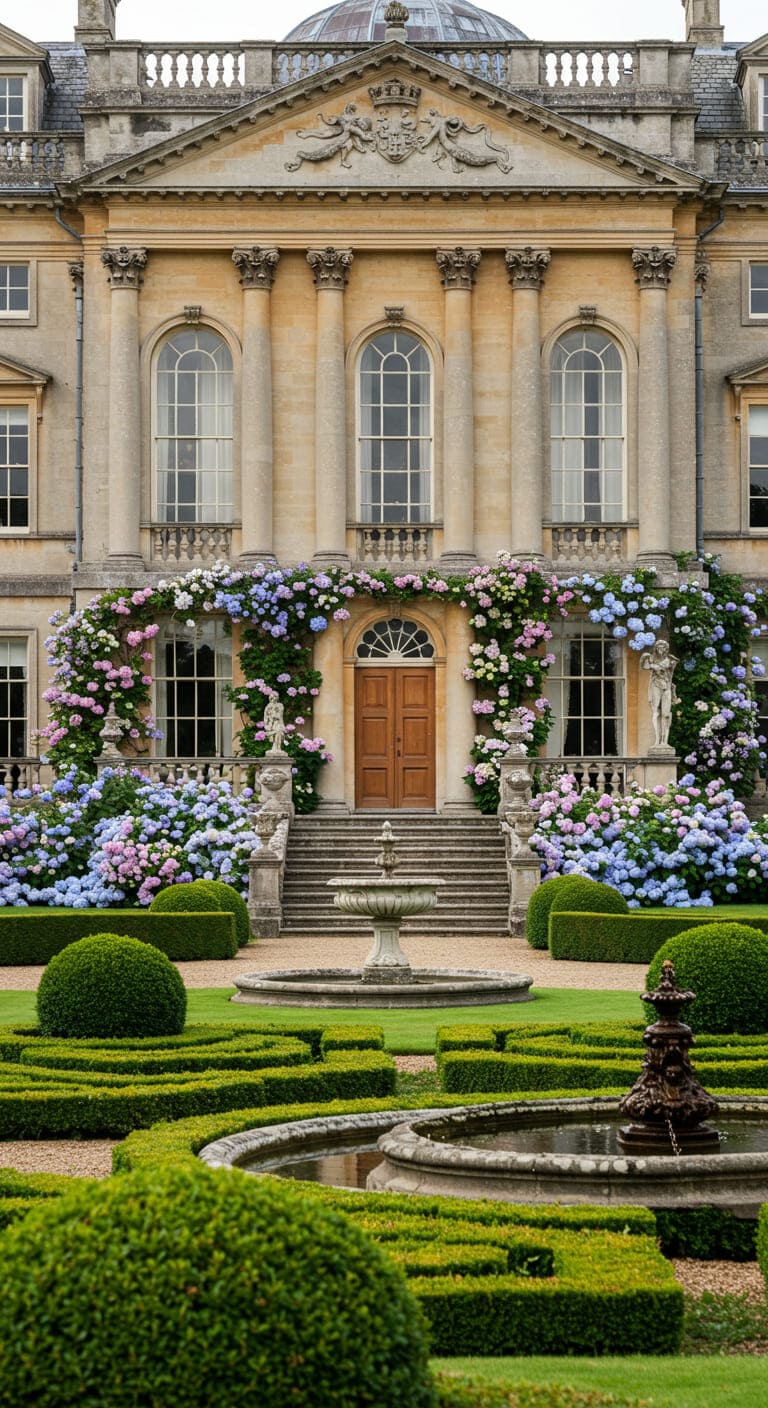
This classic English Palladian villa demonstrates how Italian classical principles were adapted for the English landscape and climate. The perfect symmetry and elegant proportions create a commanding presence, while exquisite limestone detailing—fluted pilasters, decorative pediments, and Ionic columns—showcase period craftsmanship. The geometrically arranged box parterres containing fountains and classical statuary create appropriate historical context, while formal lawns punctuated with perfect spheres of clipped boxwood demonstrate traditional English garden structure. The climbing hydrangeas framing ground floor windows exemplify the English talent for softening architectural formality with carefully placed plantings.
39. Regency Cottage Orné
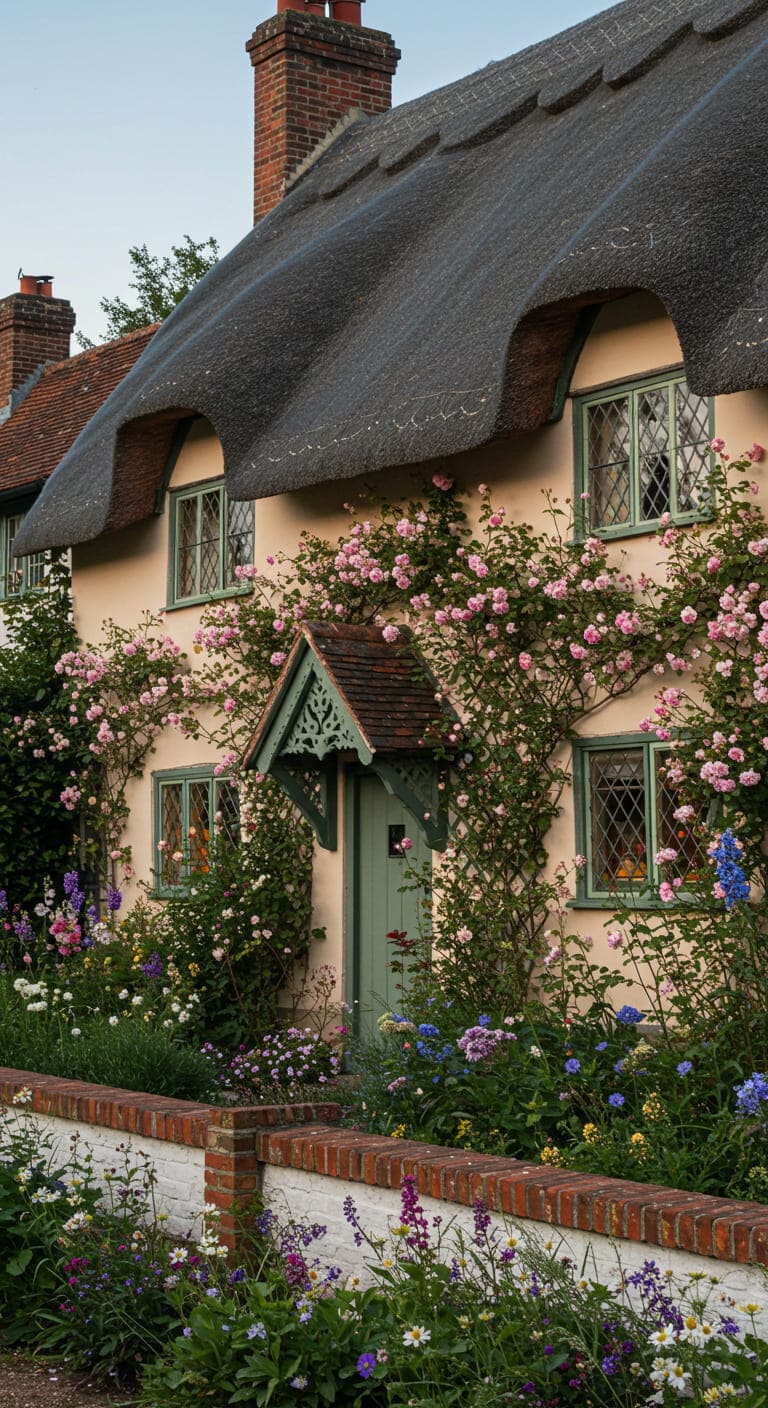
This picturesque Regency cottage orné represents the early 19th-century fashion for romantic rusticity among the wealthy. The distinctive decorative bargeboards, latticed windows, and thatched roof with ornamental ridge demonstrate the period’s picturesque aesthetic ideals. The carved wooden finials, decorative chimney pots, and veranda with intricate trellis-work showcase the attention to detail characteristic of the style. The romantic cottage garden with traditional English flowers creates a deliberately artful rusticity, perfect for a style that sought to create idealized rural scenes for sophisticated owners.
40. Yorkshire Dales Farmhouse
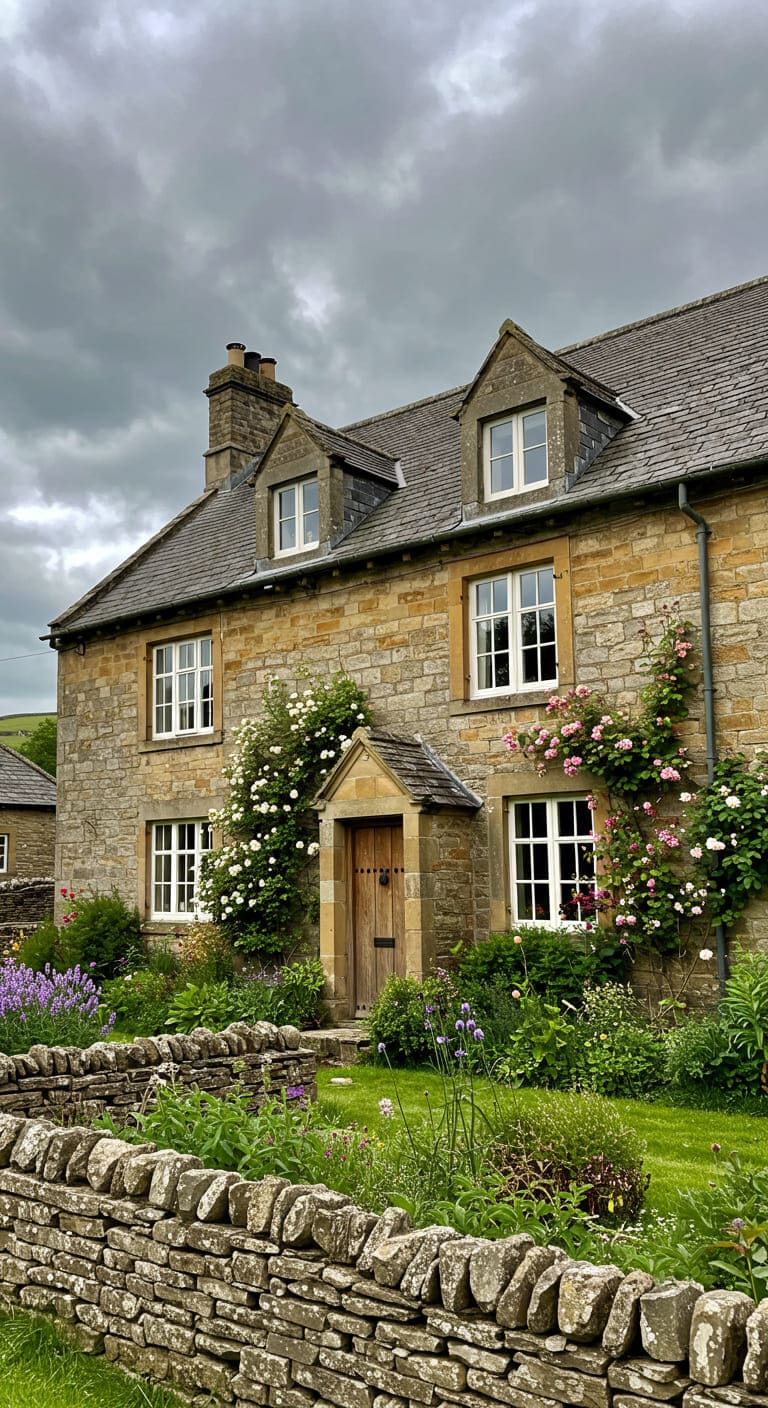
This substantial Yorkshire Dales farmhouse demonstrates how regional vernacular architecture responds perfectly to challenging northern conditions. The weathered limestone façade and distinctive slate roof create a building that seems to grow from the landscape, while massive stone lintels and traditional Yorkshire sash windows showcase regional building traditions. The dry stone walls built using ancient techniques demonstrate sophisticated engineering without mortar, while the cottage garden borders filled with drought-tolerant English perennials show ecological adaptation. The dramatic northern light breaking through gathering storm clouds creates the atmospheric quality that defines the Yorkshire Dales landscape.
41. Cheshire Timber-Framed Manor
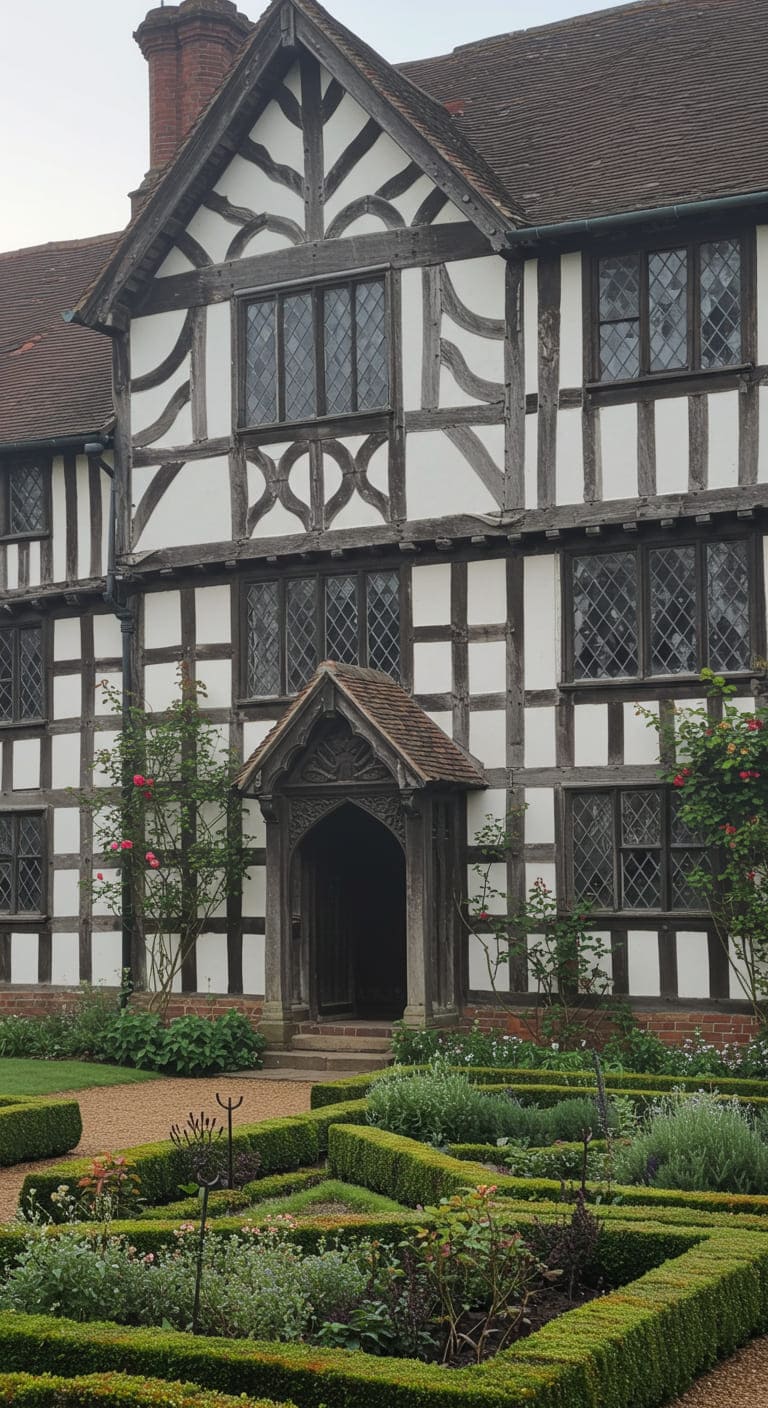
This quintessential black-and-white timber-framed Cheshire manor house showcases the distinctive regional interpretation of medieval building techniques. The elaborate exposed timberwork in complex patterns demonstrates sophisticated carpentry skills, while the jettied upper stories create architectural interest through three-dimensional projection. The carved bressumers and ornate corner posts showcase exceptional craftsmanship, while leaded casement windows with diamond panes filter light beautifully. The traditional English box-edged parterre gardens containing historical herbs create period-appropriate context for this exceptional example of regional vernacular architecture.
42. Cornish Granite Longhouse
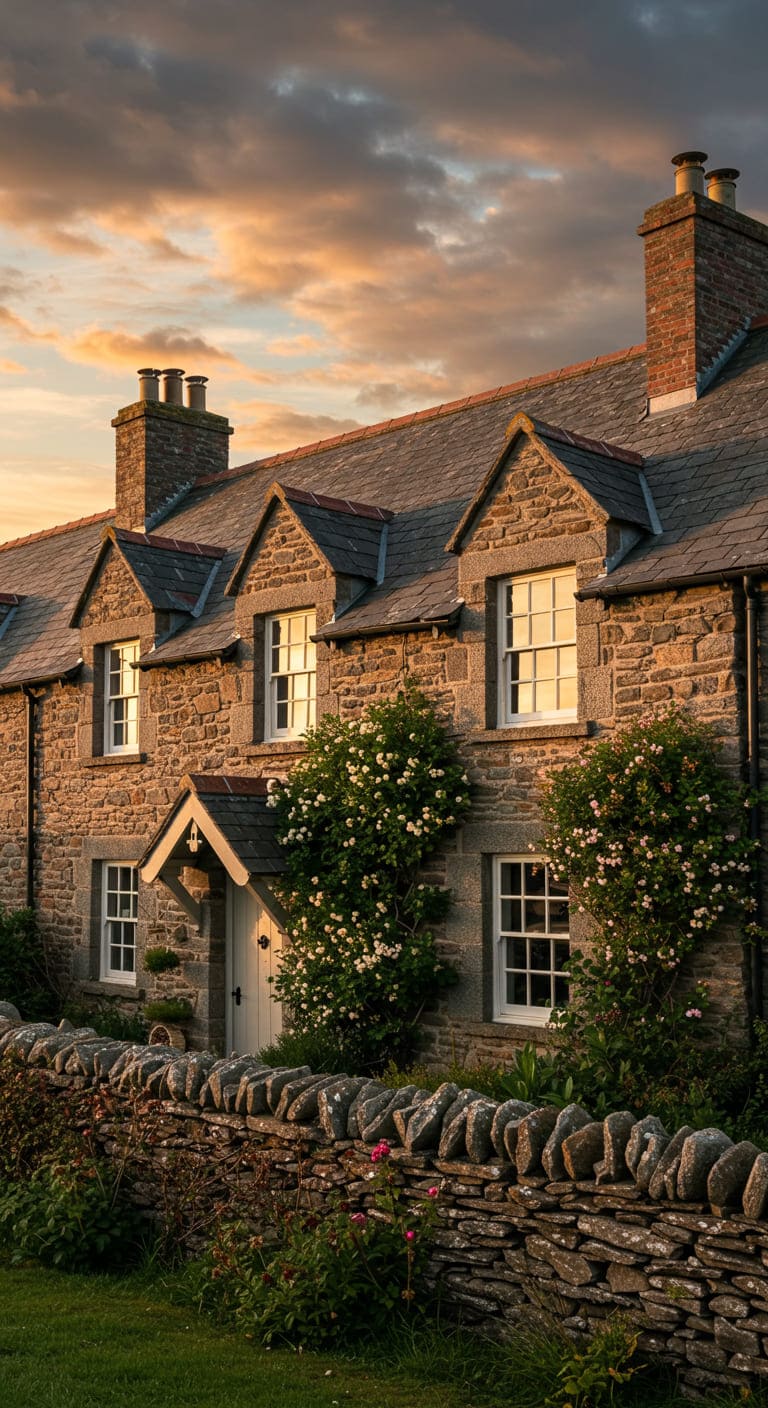
This robust Cornish granite longhouse demonstrates how regional vernacular architecture responds to the challenging Atlantic coastal environment. The massive granite lintels and deep-set windows designed to withstand Atlantic gales showcase practical regional building wisdom, while substantial chimney stacks with traditional stone ridge tiles create a distinctive roofline. The traditional Cornish hedge—a stone-faced earth bank topped with native flowering shrubs—demonstrates indigenous landscape engineering techniques developed over centuries. The hardy English climbing plants adapted to coastal conditions soften the granite façade while maintaining the building’s defensive character against harsh maritime weather.
43. Suffolk Pink Brick Rectory
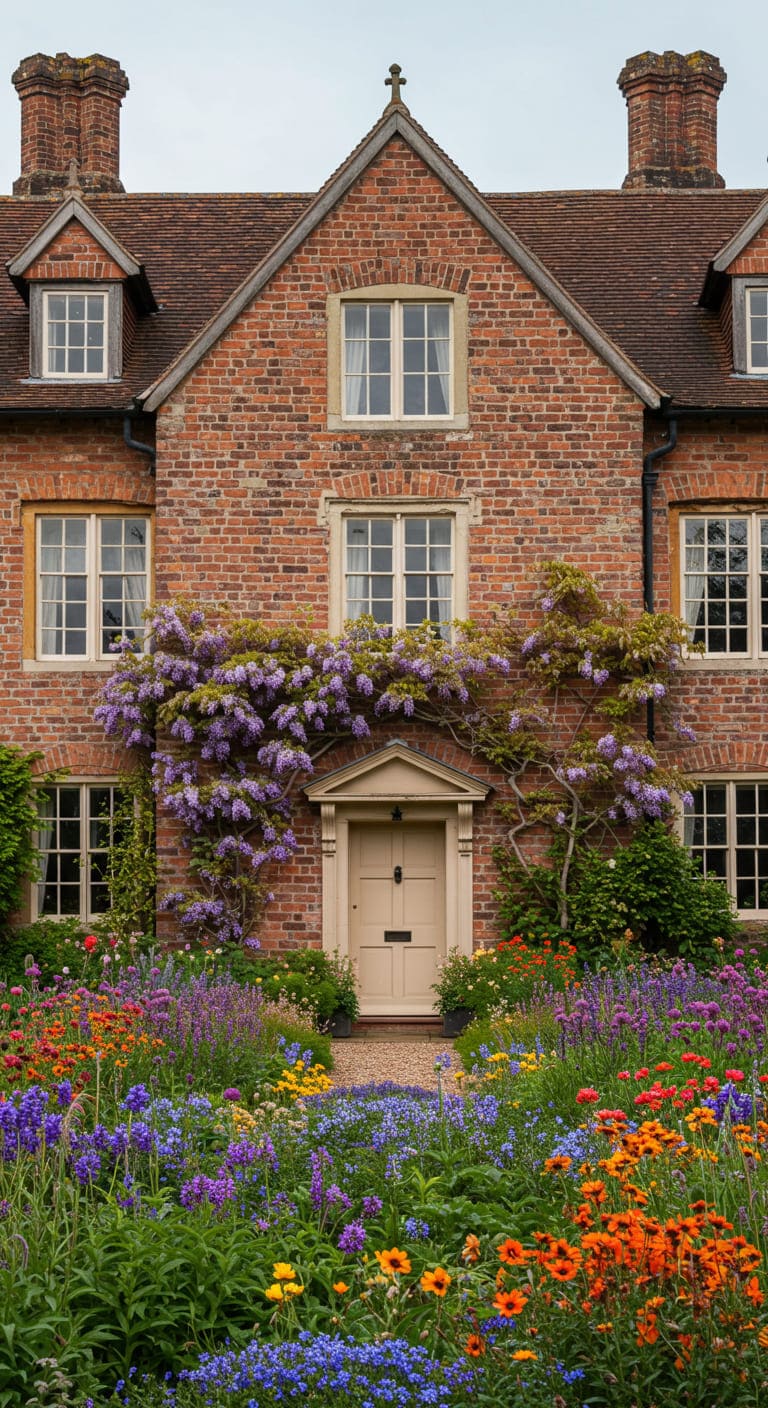
This classic English rectory built from mellow Suffolk pink brick demonstrates the dignified architectural character appropriate for clerical residences. The perfectly symmetrical façade with sash windows diminishing in size with each floor showcases Georgian architectural principles, while decorative rubbed brick arches over windows display sophisticated bricklaying techniques. The climbing English wisteria frames the entrance with its ancient woody stems speaking to the building’s long history. The classic English herbaceous borders planted according to Gertrude Jekyll principles create waves of color that complement the distinctive pink tone of the centuries-old brickwork.
44. Kentish Medieval Hall House
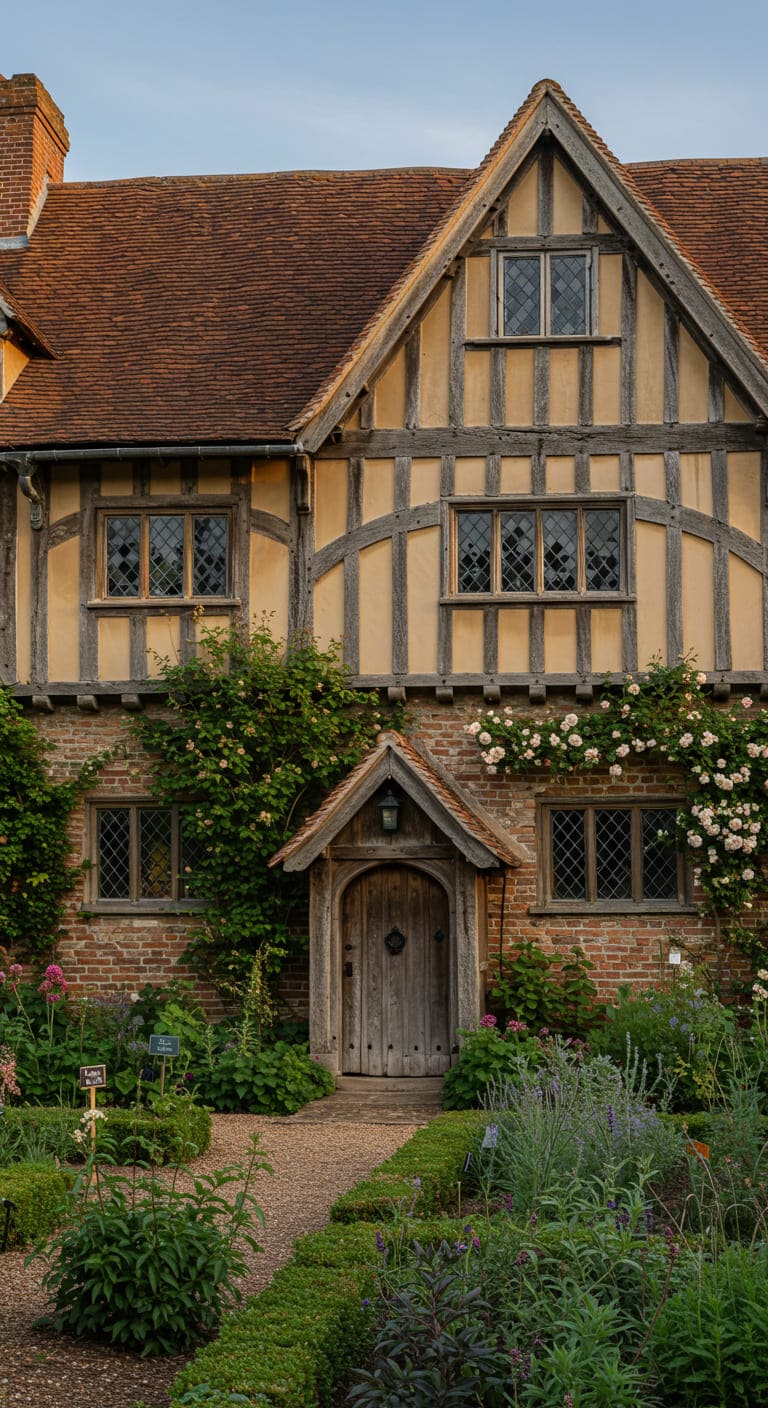
This remarkable medieval hall house displays the timber frame construction techniques that defined English domestic architecture for centuries. The original medieval hall with later Tudor and Georgian additions tells the story of evolving English architectural history through a single building. The curved braces and close-set studs demonstrate sophisticated medieval carpentry, while small leaded casement windows reflect period glazing technologies. The traditional English physic garden with sections devoted to culinary, medicinal, and aromatic herbs connects to medieval monastic traditions that influenced English garden design for centuries.
45. Arts and Crafts Movement House
This distinctive Arts and Crafts movement country house demonstrates how early 20th-century architects reimagined English vernacular traditions. The asymmetrical composition, multiple projecting gables, and prominent chimney stacks create a dynamic silhouette, while handmade local brick showcases the movement’s emphasis on honest materials and craftsmanship. The windows featuring leaded glass with distinctive Arts and Crafts motifs demonstrate the integration of decorative arts with architecture. The informal English herbaceous borders filled with architectural perennials arranged in naturalistic drifts follow William Robinson’s revolutionary wild garden principles that transformed English garden design.

Leave a Reply