
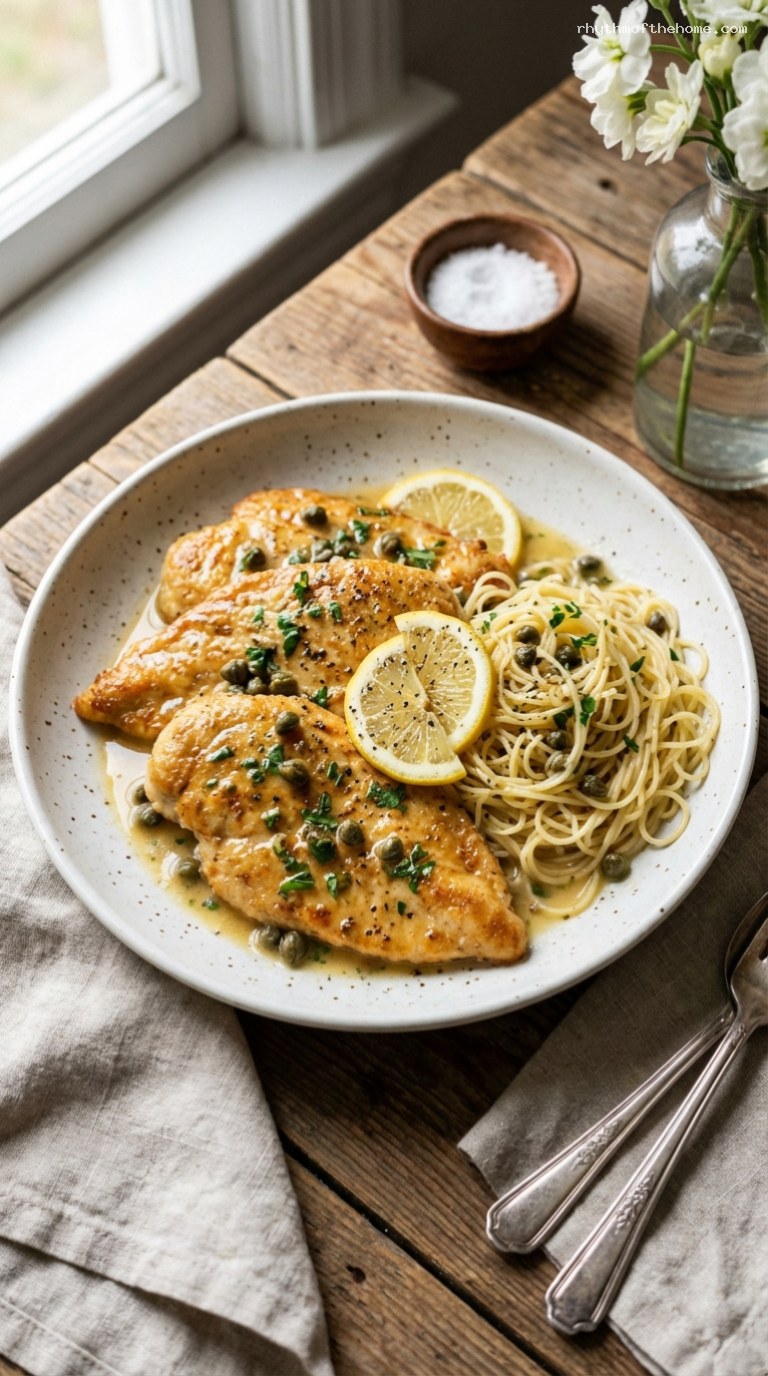
Quick Recipe Version (TL;DR)
Quick Ingredients
- 4 small boneless, skinless chicken breasts (about 1 1/2 lb total)
- 1/2 cup all-purpose flour
- 1 1/4 tsp kosher salt, divided
- 3/4 tsp freshly ground black pepper, divided
- 3 tbsp olive oil
- 3 tbsp unsalted butter, divided
- 3 cloves garlic, minced
- 1/2 cup dry white wine (or extra broth)
- 3/4 cup low-sodium chicken broth
- 1/3 cup fresh lemon juice (about 2 lemons)
- 2 tbsp capers, drained
- 2 tbsp chopped fresh parsley
- Cooked pasta or roasted veggies, for serving
Do This
- 1. Pound chicken to 1/4-inch thickness; season with 1 tsp salt and 1/2 tsp pepper, then lightly dredge in flour, shaking off excess.
- 2. Heat 2 tbsp olive oil and 1 tbsp butter in a large skillet over medium-high; sear chicken 3–4 minutes per side until golden and cooked through. Transfer to a plate and tent with foil.
- 3. Add remaining 1 tbsp olive oil to skillet if needed; sauté garlic 30 seconds.
- 4. Deglaze with white wine, scraping browned bits; simmer 2 minutes. Add broth, lemon juice, remaining 1/4 tsp salt and 1/4 tsp pepper; simmer 3–4 minutes to slightly reduce.
- 5. Stir in capers and remaining 2 tbsp butter until melted and glossy.
- 6. Return chicken (and juices) to pan; spoon sauce over and simmer 1–2 minutes to warm through.
- 7. Sprinkle with parsley; serve immediately over simple pasta or alongside roasted vegetables, with extra sauce spooned over top.
Why You’ll Love This Recipe
- Thin, tender chicken cutlets cook quickly and stay juicy.
- The bright lemon-caper butter sauce is rich but still fresh and light.
- Uses simple, everyday ingredients but feels like a restaurant-quality dinner.
- Pairs beautifully with pasta, rice, mashed potatoes, or roasted veggies.
Grocery List
- Produce: Garlic, lemons, fresh parsley (plus optional fresh thyme and veggies/potatoes for serving).
- Dairy: Unsalted butter, grated Parmesan cheese (optional, for serving with pasta).
- Pantry: Boneless skinless chicken breasts, all-purpose flour, olive oil, kosher salt, black pepper, low-sodium chicken broth, capers, dry white wine (or extra broth), dried pasta (if serving).
Full Ingredients
For the Chicken
- 4 small boneless, skinless chicken breasts (about 6 oz / 170 g each; 1 1/2 lb / 680 g total)
- 1/2 cup (60 g) all-purpose flour, for dredging
- 1 tsp kosher salt
- 1/2 tsp freshly ground black pepper
- 2 tbsp olive oil
- 1 tbsp unsalted butter
For the Lemon-Caper Sauce
- 1 tbsp olive oil (only if pan looks dry)
- 2 tbsp unsalted butter, cold and cut into small cubes
- 3 cloves garlic, minced (about 1 tbsp)
- 1/2 cup (120 ml) dry white wine (such as Pinot Grigio or Sauvignon Blanc), or use extra broth
- 3/4 cup (180 ml) low-sodium chicken broth
- 1/3 cup (80 ml) freshly squeezed lemon juice (about 2 medium lemons)
- 1–2 tsp finely grated lemon zest (from 1 lemon)
- 2 tbsp capers, drained and rinsed
- 1/4 tsp kosher salt (plus more to taste)
- 1/4 tsp freshly ground black pepper
- 2 tbsp chopped fresh flat-leaf parsley, plus extra for garnish
- Optional: 4–6 thin lemon slices, for garnish in the pan
For Serving
- 8 oz (225 g) thin pasta such as angel hair, spaghetti, or linguine, cooked al dente
- or 4 servings roasted vegetables (such as broccoli, asparagus, or green beans)
- Optional: Freshly grated Parmesan cheese for pasta
Step-by-Step Instructions
Step 1: Prep and Pound the Chicken
Place the chicken breasts on a cutting board. If they are thick, slice them horizontally to make 2 thinner cutlets from each breast, or use the flat side of a meat mallet to pound each breast between two sheets of plastic wrap or parchment paper to about 1/4-inch (6 mm) thickness. Even thickness is key for quick, even cooking.
Pat the chicken dry with paper towels. Season both sides evenly with 1 tsp kosher salt and 1/2 tsp black pepper. Dry chicken browns better, so do not skip patting it dry.
Step 2: Dredge the Cutlets in Flour
Place the 1/2 cup flour in a shallow dish or pie plate. Working one piece at a time, lightly coat each chicken cutlet in flour, pressing gently so it adheres. Shake off any excess flour; you want a thin, even coating, not a thick batter. Set the floured cutlets on a plate, separating layers with parchment if needed. This light dredge helps create a delicate crust that grabs onto the lemon-caper sauce.
Step 3: Sear the Chicken Until Golden
Heat 2 tbsp olive oil and 1 tbsp butter in a large skillet (10–12 inch) over medium-high heat. When the butter is melted and the fat is shimmering but not smoking, add the chicken in a single layer without crowding. You may need to cook in two batches; if so, divide the fat between batches.
Sear the chicken for 3–4 minutes on the first side, without moving it, until the underside is deep golden. Flip and cook another 2–3 minutes, or until the chicken is just cooked through (internal temperature 165°F / 74°C). Transfer the cooked chicken to a plate and tent loosely with foil to keep warm. If there is excessive browned flour in the pan, carefully wipe out any blackened bits with a folded paper towel, leaving the flavorful golden bits behind.
Step 4: Build the Flavor Base with Garlic and Wine
If the pan looks very dry, add up to 1 tbsp olive oil. Reduce the heat to medium. Add the minced garlic and sauté for about 30 seconds, just until fragrant; do not let it brown or it will turn bitter.
Immediately pour in the 1/2 cup dry white wine. It should sizzle as it hits the pan. Use a wooden spoon or spatula to scrape up all the browned bits from the bottom of the skillet; this is where much of the flavor lives. Let the wine simmer briskly for 2–3 minutes, reducing by about half. This cooks off the alcohol and concentrates the flavor.
Step 5: Add Broth, Lemon, and Capers
Pour in the chicken broth, lemon juice, and lemon zest. Stir in the 1/4 tsp salt and 1/4 tsp pepper. Bring the mixture to a lively simmer over medium heat and let it cook for 3–4 minutes, or until it reduces slightly and smells bright and aromatic.
Stir in the capers. If you like, nestle a few thin lemon slices into the sauce for a pretty look and a gentle lemon aroma. Taste the sauce and adjust seasoning as needed; if it tastes dull, add a pinch more salt or an extra squeeze of lemon.
Step 6: Finish the Sauce with Butter and Parsley
Reduce the heat to low. Add the cold butter cubes, a few at a time, whisking or stirring constantly until the butter melts into the sauce and it becomes glossy and slightly thicker. This classic technique, called mounting with butter, gives the sauce a silky, restaurant-style finish.
Stir in the chopped fresh parsley. The herbs should look vibrant and green, not cooked down. If you are serving the dish with pasta, you can add a splash of the hot pasta cooking water to the sauce (1–2 tbsp) to help it cling to the noodles.
Step 7: Return the Chicken and Serve
Return the seared chicken (and any accumulated juices on the plate) to the skillet, nestling the pieces into the sauce. Spoon some of the lemon-caper mixture over each cutlet. Simmer gently over low heat for 1–2 minutes, just until the chicken is heated through and infused with the sauce. Do not overcook at this stage or the chicken may dry out.
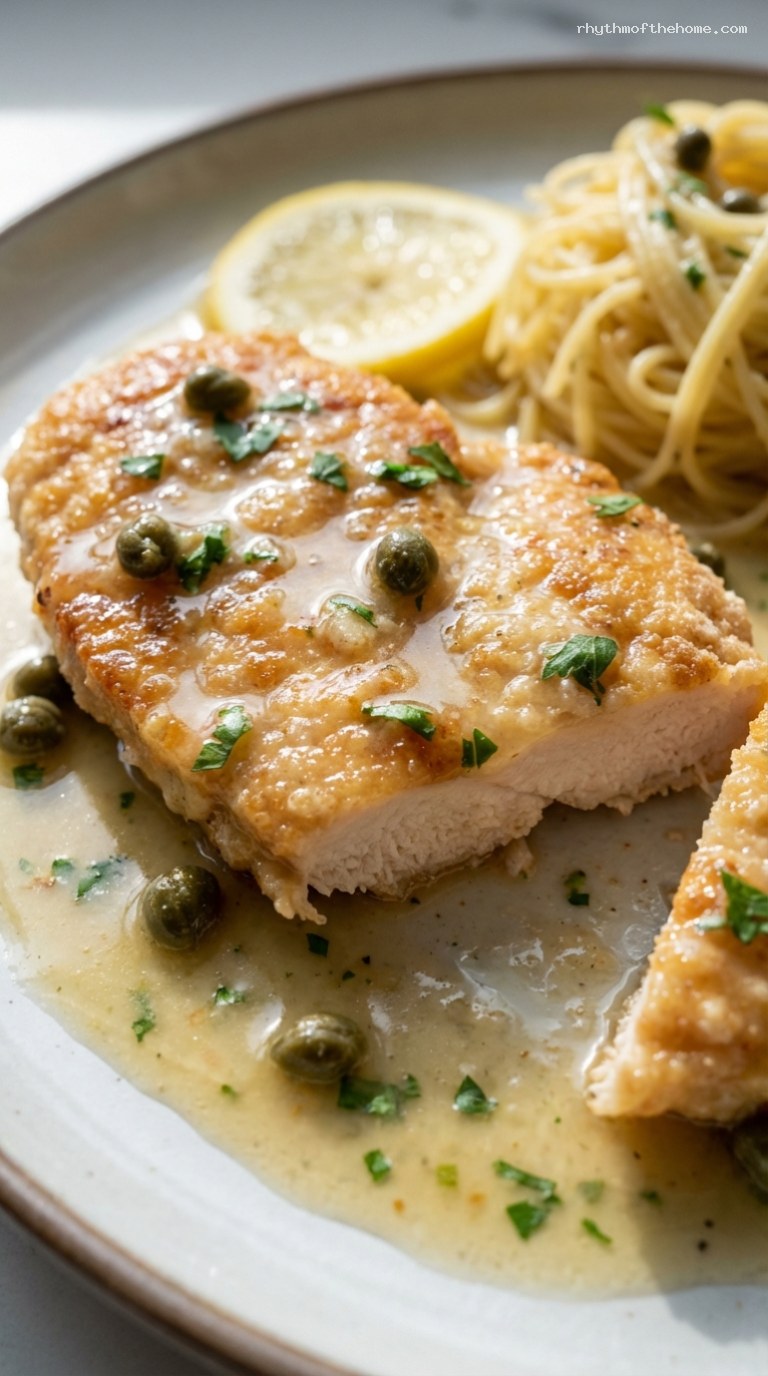
To serve, place chicken cutlets on warm plates or over a bed of al dente pasta or alongside roasted vegetables. Spoon plenty of sauce, capers, and any lemon slices over the top. Garnish with extra parsley and, if serving with pasta, a light sprinkle of grated Parmesan. Serve immediately while hot and glossy.
Pro Tips
- Thin, even cutlets cook best: Aim for 1/4-inch thickness so the chicken cooks quickly without drying out and gets a beautiful golden crust.
- Do not crowd the pan: If you stack the chicken, it will steam instead of sear. Cook in batches for the best browning.
- Use fresh lemon juice: Bottled juice lacks the bright, clean flavor that makes piccata shine. Freshly squeezed is worth the tiny bit of extra effort.
- Adjust tartness to taste: For a softer lemon flavor, start with 1/4 cup lemon juice and add more at the end. For extra zing, finish with an extra squeeze right before serving.
- Keep the butter cold: Adding cold butter at the end helps emulsify and slightly thicken the sauce instead of having the fat separate.
Variations
- Creamy Chicken Piccata: After reducing the broth and lemon, stir in 1/4–1/3 cup heavy cream and simmer 2–3 minutes before adding the butter. This gives you a richer, velvety sauce that is fantastic over mashed potatoes.
- Fish Piccata: Swap the chicken for firm white fish fillets such as cod, halibut, or tilapia. Dredge lightly in flour and pan-sear 2–3 minutes per side, then finish in the same lemon-caper sauce.
- Herb-Forward Piccata: Add 1 tsp fresh thyme leaves or 1/2 tsp dried oregano along with the garlic for a more herbaceous profile, and finish with extra chopped parsley and chives.
Storage & Make-Ahead
Store leftover chicken piccata in an airtight container in the refrigerator for up to 3 days. For best results, keep the chicken and sauce together so the meat stays moist. Reheat gently in a covered skillet over low heat, adding a splash of water or broth if the sauce has thickened too much. Avoid boiling, which can toughen the chicken and cause the sauce to separate.
You can also prep parts ahead: pound and season the chicken up to 1 day in advance and refrigerate tightly covered. You can mix the lemon juice, zest, and broth together in a jar and keep it chilled as well. When ready to cook, dredge the chicken in flour, sear, and quickly finish the sauce. This makes it a great option for a fast but special weeknight dinner.
Nutrition (per serving)
Approximate values for 1 serving (1/4 of the recipe, without pasta or sides): about 420 calories; 23 g fat; 9 g saturated fat; 12 g carbohydrates; 1 g fiber; 2 g sugar; 36 g protein; 640 mg sodium. Values will vary depending on exact ingredients used and any sides served.

Leave a Reply