
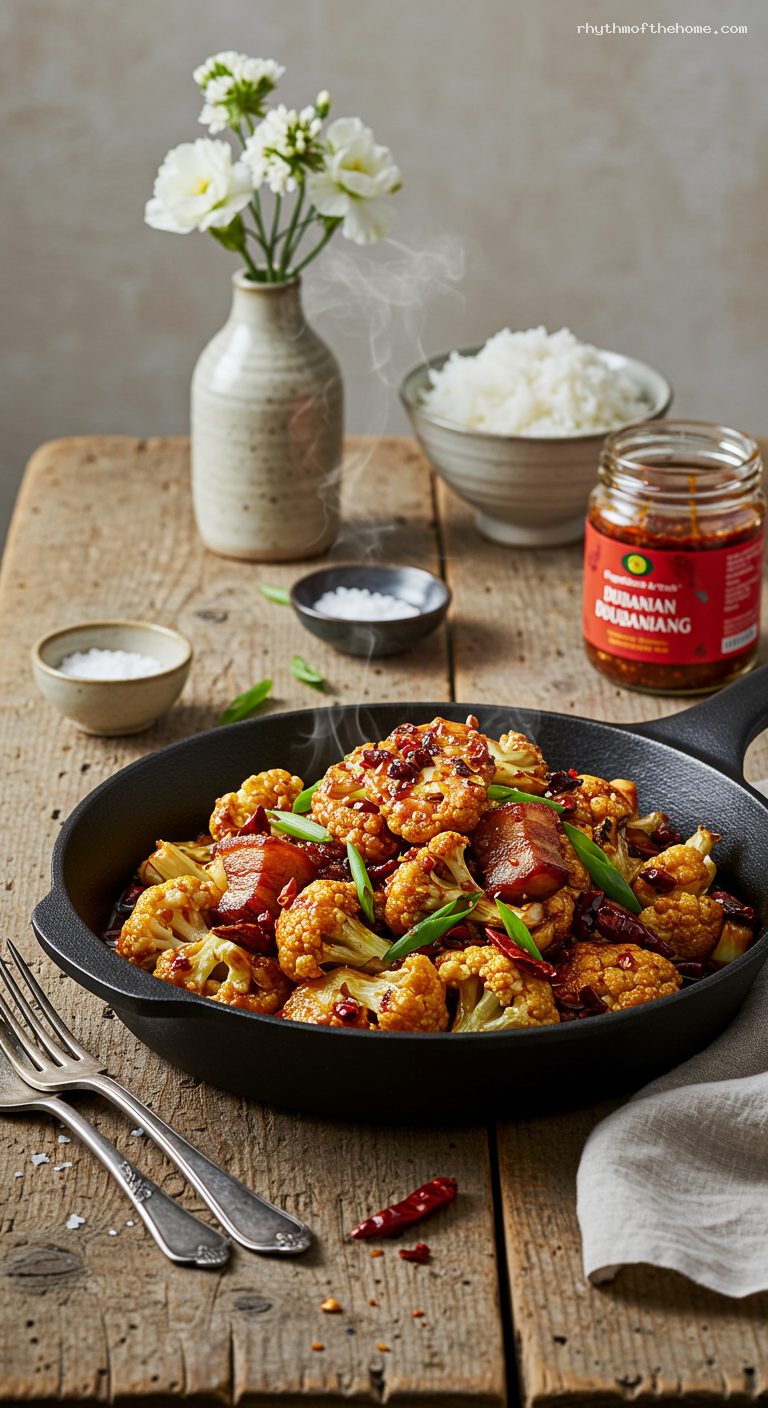
Quick Recipe Version (TL;DR)
Quick Ingredients
- 1 large head cauliflower (about 1.75 lb / 800 g), cut into 1.5-inch florets
- 6 oz (170 g) pork belly or thick-cut bacon, sliced 1/4 inch
- 12 dried red chilies, cut into 1-inch pieces (seeds shaken out for less heat)
- 1 tsp Sichuan peppercorns, lightly crushed
- 4 garlic cloves, thinly sliced
- 4 scallions, cut into 1-inch pieces (whites and greens separated)
- 1.5 tbsp Pixian-style doubanjiang (chili broad bean paste)
- 1 tbsp light soy sauce + 1 tbsp Shaoxing wine
- 1 tsp sugar + 2 tbsp water
- 2 tbsp neutral oil, 1/4 tsp kosher salt, 1 tsp rice vinegar (finish)
Do This
- 1. Heat oven to 475°F (246°C). Toss cauliflower with 1 tbsp oil and 1/4 tsp salt; roast 12–15 minutes until charred on edges.
- 2. Stir together doubanjiang, soy sauce, Shaoxing wine, sugar, and water; set aside.
- 3. Heat a wok or large skillet over high. Cook pork belly/bacon 3–4 minutes until crisp; remove, reserving 2 tbsp fat in the pan.
- 4. Lower to medium-high; add 1 tbsp oil if needed. Bloom chilies and Sichuan peppercorns 30–45 seconds until fragrant.
- 5. Add garlic (and scallion whites); stir 20 seconds. Add doubanjiang mixture; stir-fry 45–60 seconds until shiny.
- 6. Add roasted cauliflower; toss 2 minutes to coat and char. Return pork, add scallion greens and vinegar; toss 10 seconds and serve.
Why You’ll Love This Recipe
- Big wok-hei flavor at home: oven-charred florets plus a quick, high-heat toss deliver that smoky “dry-pot” character.
- Balanced heat: dried chilies and Sichuan peppercorns give a warm burn and citrusy tingle without overwhelming.
- Punchy umami: a small amount of doubanjiang turns savory pork drippings into a glossy, deeply flavorful coating.
- Weeknight-friendly: minimal chopping, 1 pan plus a sheet tray, dinner in under 40 minutes.
Grocery List
- Produce: 1 cauliflower, 4 garlic cloves, 4 scallions, 1-inch piece ginger (optional)
- Dairy: None
- Pantry: Pork belly or thick-cut bacon, dried red chilies, Sichuan peppercorns, doubanjiang, light soy sauce, Shaoxing wine, sugar, rice vinegar, neutral oil, kosher salt
Full Ingredients
Cauliflower and Pork
- 1 large head cauliflower (about 1.75 lb / 800 g), cut into 1.5-inch florets, thicker stems halved
- 6 oz (170 g) pork belly or thick-cut bacon, sliced 1/4 inch thick
- 2 tbsp neutral oil (peanut, canola, or grapeseed), divided
- 1/4 tsp kosher salt (for roasting cauliflower)
Aromatics
- 12 dried red chilies (Facing Heaven or árbol), cut into 1-inch pieces; shake out most seeds for moderate heat
- 1 tsp Sichuan peppercorns, lightly crushed
- 4 garlic cloves, thinly sliced
- 4 scallions, cut into 1-inch pieces; whites and greens separated
- 1 tsp finely minced fresh ginger (optional)
Sauce (Dry-Pot Paste)
- 1.5 tbsp Pixian-style doubanjiang (chili broad bean paste), chopped if chunky
- 1 tbsp light soy sauce
- 1 tbsp Shaoxing wine
- 1 tsp sugar
- 2 tbsp water (just to loosen the paste; it will cook off)
- 1 tsp rice vinegar (added at the end to brighten)
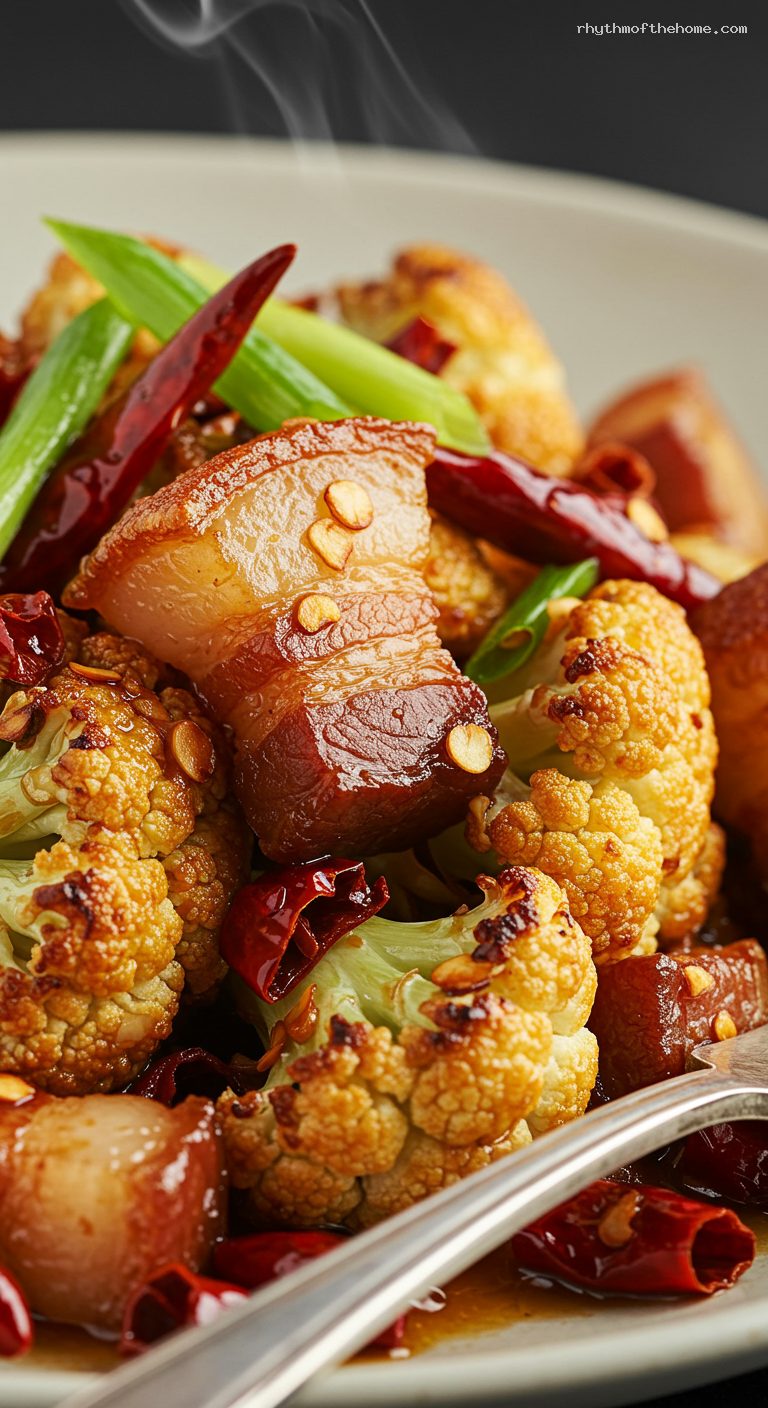
Step-by-Step Instructions
Step 1: Heat the oven and prep the cauliflower
Preheat the oven to 475°F (246°C) with a rack in the upper third. Cut the cauliflower into 1.5-inch florets and halve any thick stem pieces so everything cooks evenly. Pat the florets dry with a clean towel to remove surface moisture—this helps them char instead of steam.
Step 2: Char the cauliflower in the oven
Toss the florets with 1 tbsp neutral oil and 1/4 tsp kosher salt. Spread in a single layer on a sheet pan, cut-sides down. Roast for 12–15 minutes, flipping once at the 8-minute mark, until browned at the edges and just tender-crisp in the center. This step concentrates flavor and keeps the final stir-fry “dry.”
Step 3: Make the dry-pot sauce paste
In a small bowl, stir together the doubanjiang, light soy sauce, Shaoxing wine, sugar, and water until smooth. Keep the rice vinegar aside for finishing. Set the bowl near the stove so you can add it quickly when the wok is hot.
Step 4: Render and crisp the pork
Heat a wok or large heavy skillet over high heat until lightly smoking. Add the pork belly or bacon and stir-fry 3–4 minutes until some fat renders and the edges turn golden and crisp. Scoop the pork to a plate, leaving about 2 tbsp fat in the pan. If you don’t have enough fat, add up to 1 tbsp neutral oil.
Step 5: Bloom the chilies and Sichuan peppercorns
Reduce the heat slightly to medium-high. Add the dried chilies and crushed Sichuan peppercorns. Stir-fry 30–45 seconds until the chilies deepen in color and smell toasty—avoid blackening. Add the garlic (and ginger, if using) and the scallion whites; toss for 20–30 seconds until fragrant.
Step 6: Fry the doubanjiang, then toss in the cauliflower
Pour in the prepared doubanjiang mixture. Stir-fry 45–60 seconds until the paste is glossy, brick-red, and clings to the aromatics. Add the roasted cauliflower and the crisped pork. Toss vigorously for 2 minutes so the florets pick up char, the sauce reduces to a shiny coating, and everything smells smoky and savory.
Step 7: Finish and serve sizzling
Turn off the heat. Splash in the rice vinegar and add the scallion greens; toss 10 seconds. Transfer immediately to a warm platter, shallow clay pot, or cast-iron skillet to help keep it sizzling. Serve hot with steamed rice.
Pro Tips
- High heat is key: preheat your wok until it lightly smokes for true wok-hei and a “dry” finish.
- Control the heat level by shaking out chili seeds before cooking; add more chilies for extra kick.
- Don’t rush the doubanjiang: a short fry in fat deepens color and releases its aroma—stir constantly to prevent scorching.
- Roast first, stir-fry second: this home-cook-friendly combo ensures char without overcooking.
- If using bacon, taste before salting—doubanjiang and bacon are both salty.
Variations
- Vegetarian smoky version: replace pork with 7 oz (200 g) firm smoked tofu, cubed and pan-seared in 1 tbsp oil until golden, then proceed with the stir-fry.
- Extra veggie power: toss in 4 oz (115 g) thinly sliced shiitakes with the garlic for an earthy boost.
- Lean pork option: use 6 oz (170 g) pork shoulder, thinly sliced and briefly marinated in 1 tsp soy + 1 tsp Shaoxing; add 1 tbsp oil to start the stir-fry.
Storage & Make-Ahead
This dish is best right off the wok. Refrigerate leftovers in an airtight container for up to 3 days. Reheat in a hot skillet over medium-high heat 2–3 minutes to revive the char, or under a preheated broiler for 1–2 minutes, watching closely. To make ahead, roast the cauliflower up to 1 day in advance and refrigerate; bring to room temp while you prep aromatics, then stir-fry as directed.
Nutrition (per serving)
Approx. 330 calories; 24 g fat; 12 g carbohydrates; 4 g fiber; 13 g protein; 980 mg sodium. Nutrition will vary based on pork cut, brand of doubanjiang, and how much fat remains in the pan.

Leave a Reply