
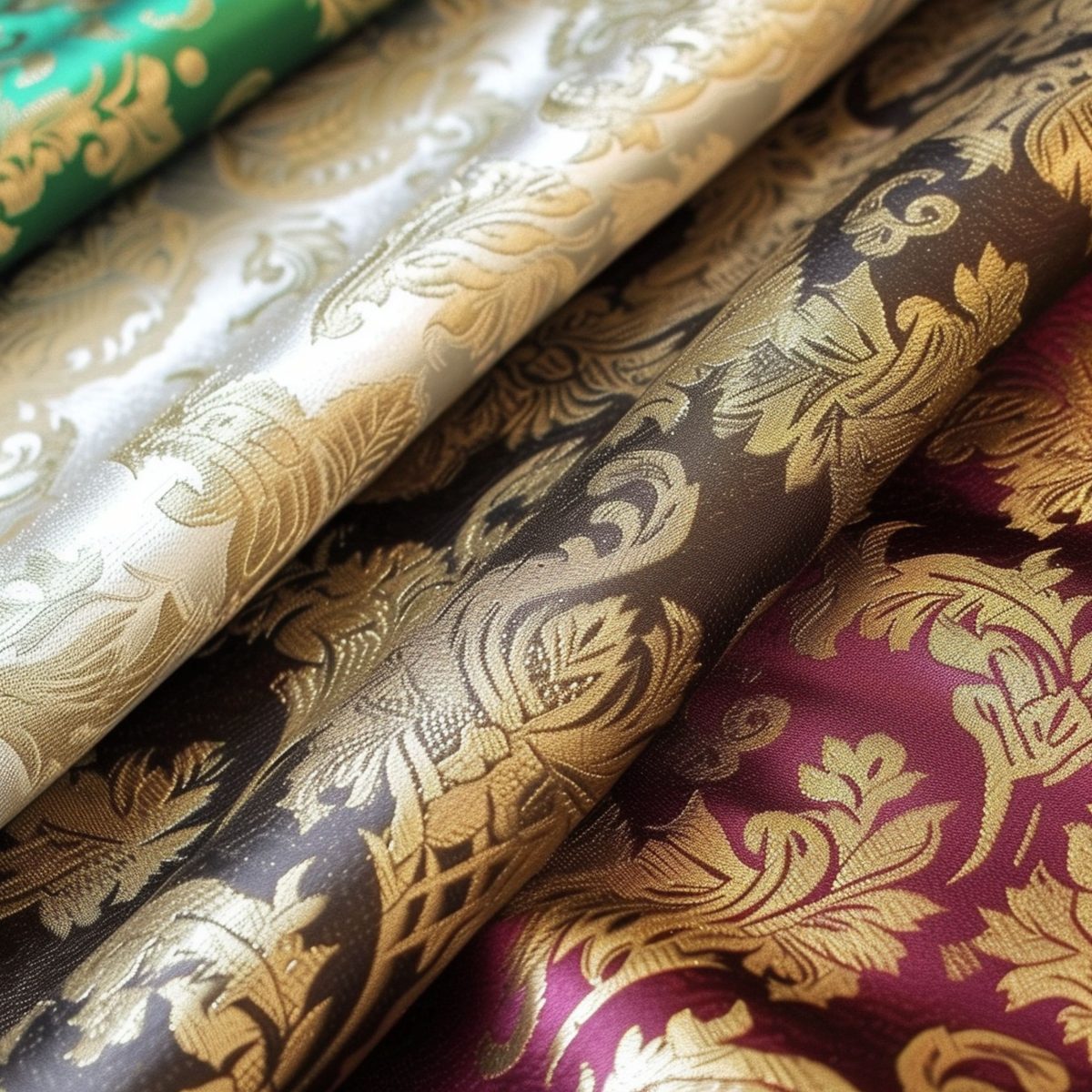
Tracing back its origins to Damascus, this fabric stands out thanks to its ornate designs based on reversible patterns. Damask is produced by weaving the patterns into the fabric using a combination of distinct techniques. The background relies on a simple weave while the design makes use of a satin weave. Damask fabrics are traditionally produced using natural materials such as silk or cotton, but synthetic options are also popular in modern times.
The elegant style of Damask fabrics can be successfully incorporated for a wide range of applications such as furniture upholstery, curtains, and clothing items. Warp threads are used to design the pattern of the fabric while the weft produces the background for weaving the warp threads. Thanks to the advent of modern textile machines, Damask fabrics featuring complex patterns are more affordable than ever.
1. History of Damask Fabric
The Damask weaving techniques developed in the early Middle Ages but historians believe the fabric style dates from 300 B.C.E. Although the fabric originates from Damascus in Syria, the Byzantine region became more renowned for the production of this unique fabric. Damask was initially woven by hand making the fabric very prohibitive in terms of costs. All those intricate patterns are challenging to create by hand and time-consuming. This is why only the very wealthy could afford items designed with Damask fabrics.
The invention of the Jacquard loom in the 18th century helped to popularize the fabric to the masses. Damask was no longer relegated to royalty or nobility. It was now accessible enough to be used for more applications such as draperies and clothing found in the houses of the emerging middle class. Nowadays, Damask fabrics rely on computerized manufacturing techniques that brought the cost down significantly. Despite the modern technology used, the fabric still retains an antique aesthetic.
2. Essential Features of Damask Fabric
-
Beautiful Patterns
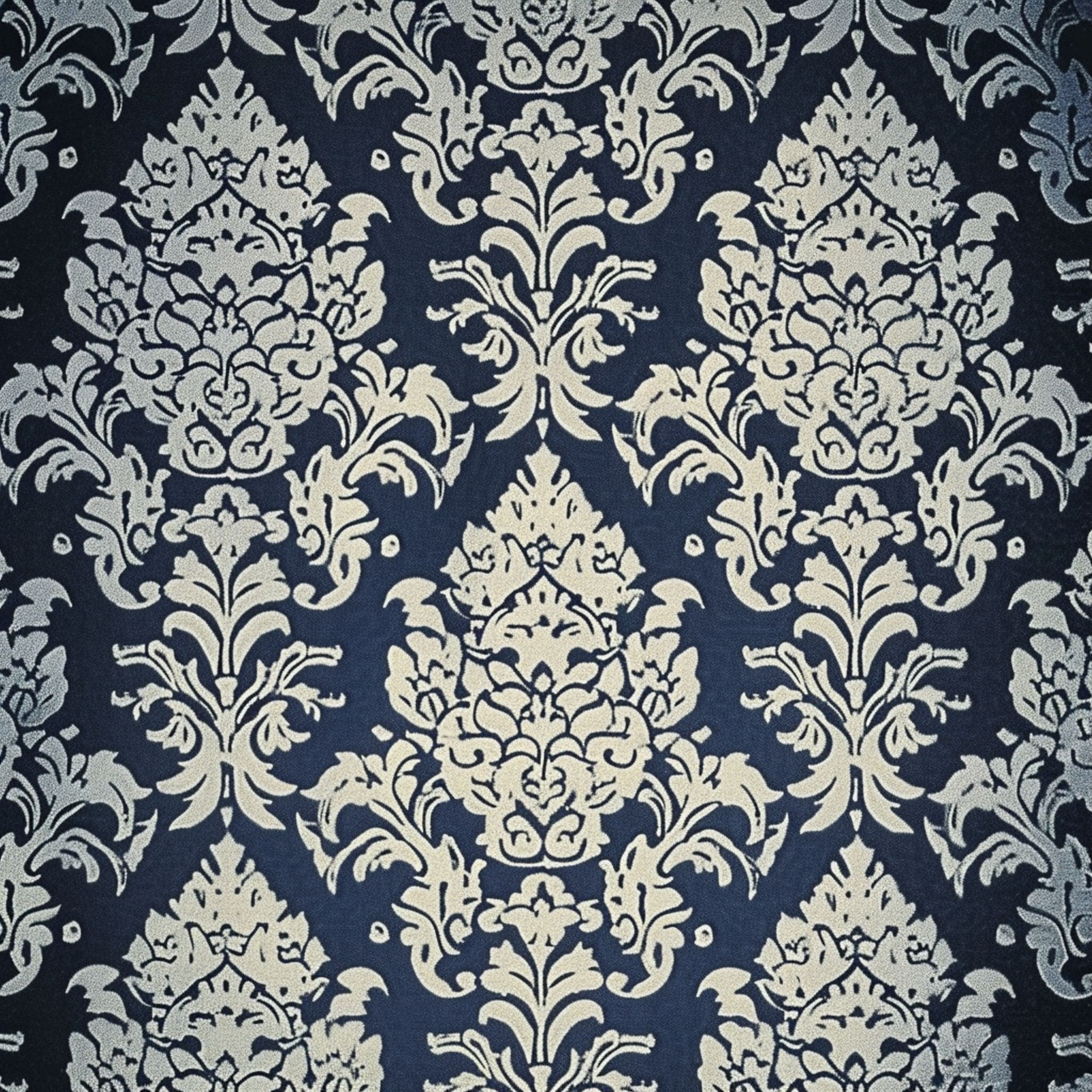
This type of fabric makes a bold statement through its elegant patterns. While there’s not a single pattern that appears consistently among Damask designs, the fabric reflects its Middle Eastern roots. It typically showcases floral and geometric patterns or abstract designs.
-
High Density
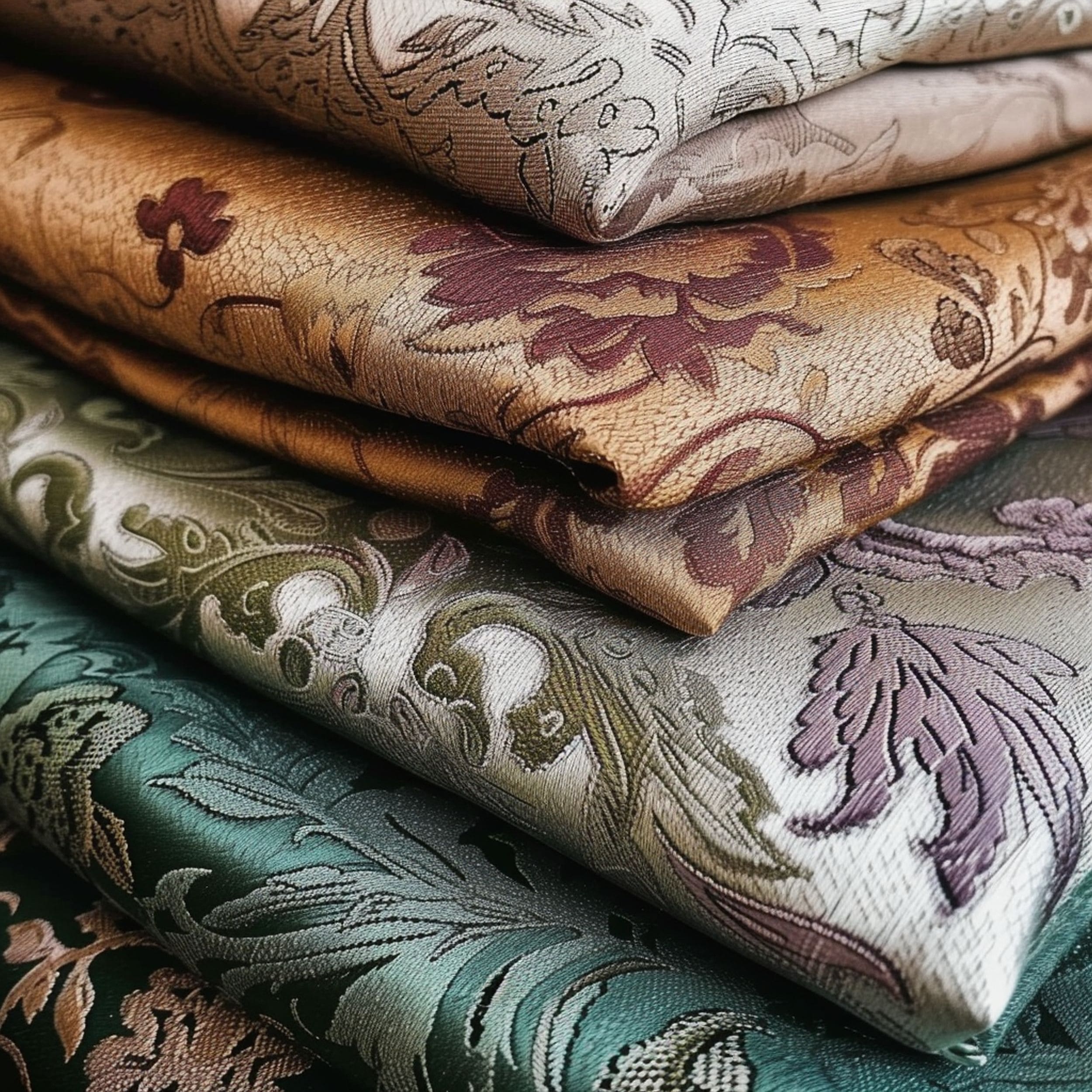
Damask fabrics are particularly thick and heavy. The reason for that is the use of a tight weave encompassing multiple layers of threads. That being said, not all Damask textiles are like this because the fiber content plays a role in the overall level of density. For example, wool Damask is significantly heavier than a synthetic option.
-
Reversibility
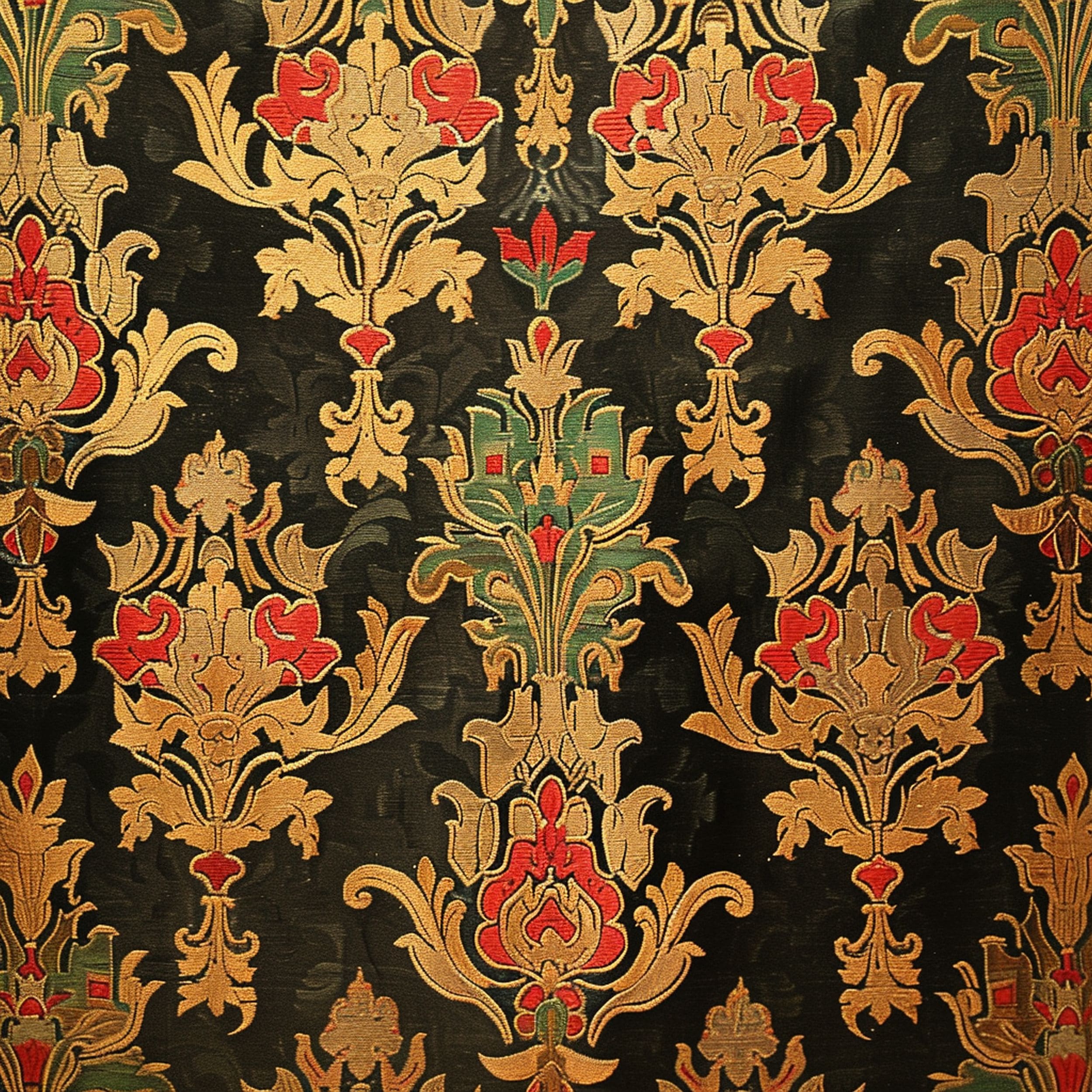
The fact that it’s reversible makes Damask fabric quite distinctive compared to other types. This means that you can enjoy beautiful patterns on either side of the fabric. That’s the advantage of designs that are woven directly into the fabric rather than printed on it. Keep in mind that not all Damask fabrics show the same level of attractiveness for the pattern on the other side.
-
Strong Durability
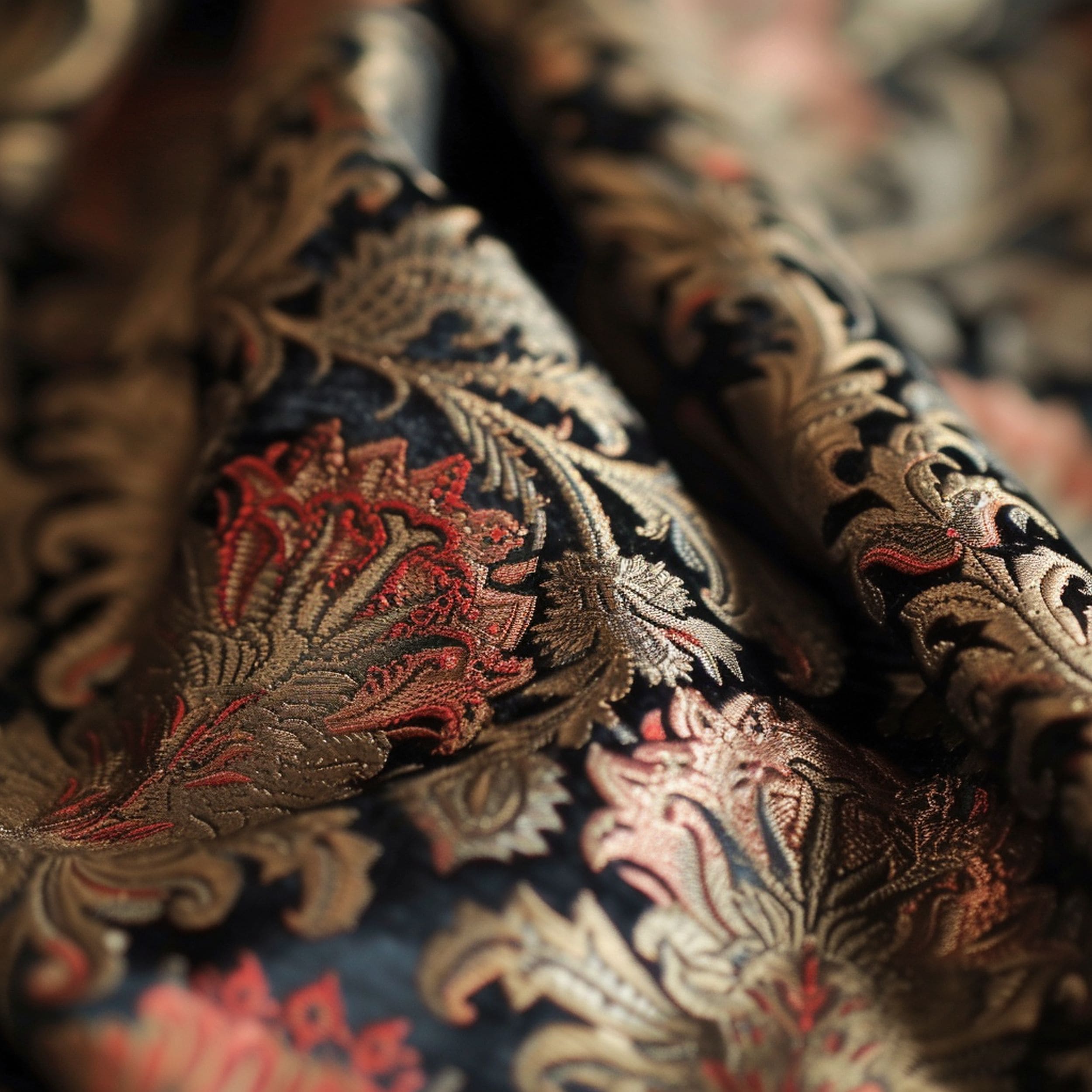
The weaving techniques involved in the production of Damask fabrics aren’t just reliable in terms of aesthetics. They’re also practical when it comes to durability reinforcement. Damask is characterized by excellent sturdiness making the fabric optimal for items that get a lot of use such as furniture upholstery.
-
Reflectiveness
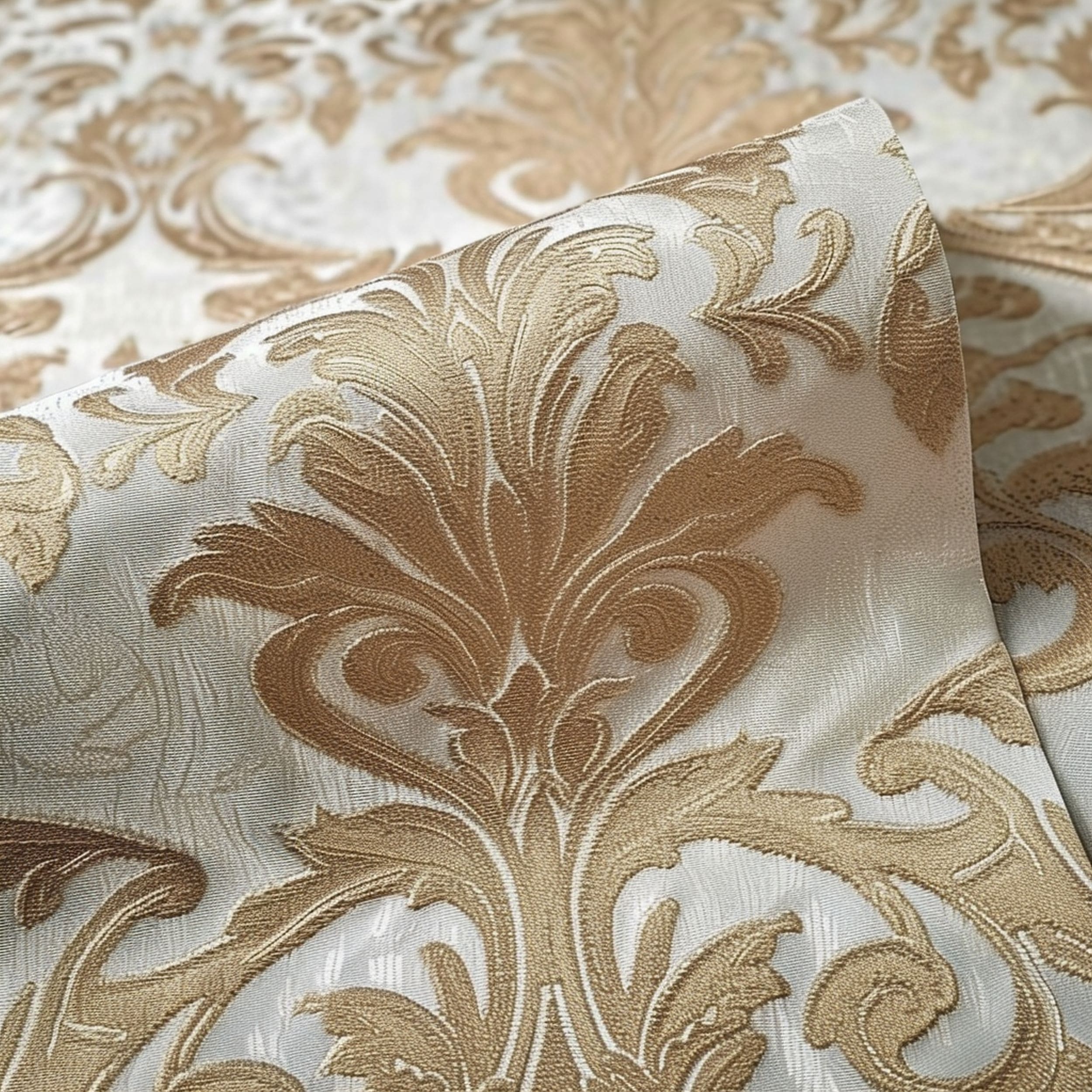
Many weaves used in the creation of Damask fabric feature shiny qualities. The high reflectiveness of this type of textile has some important advantages in terms of appearance. It allows the intricate patterns to contrast properly against the background. Depending on the source of light, the Damask item can look more lustrous.
3. How is Damask Fabric Used
-
Clothing and Accessories
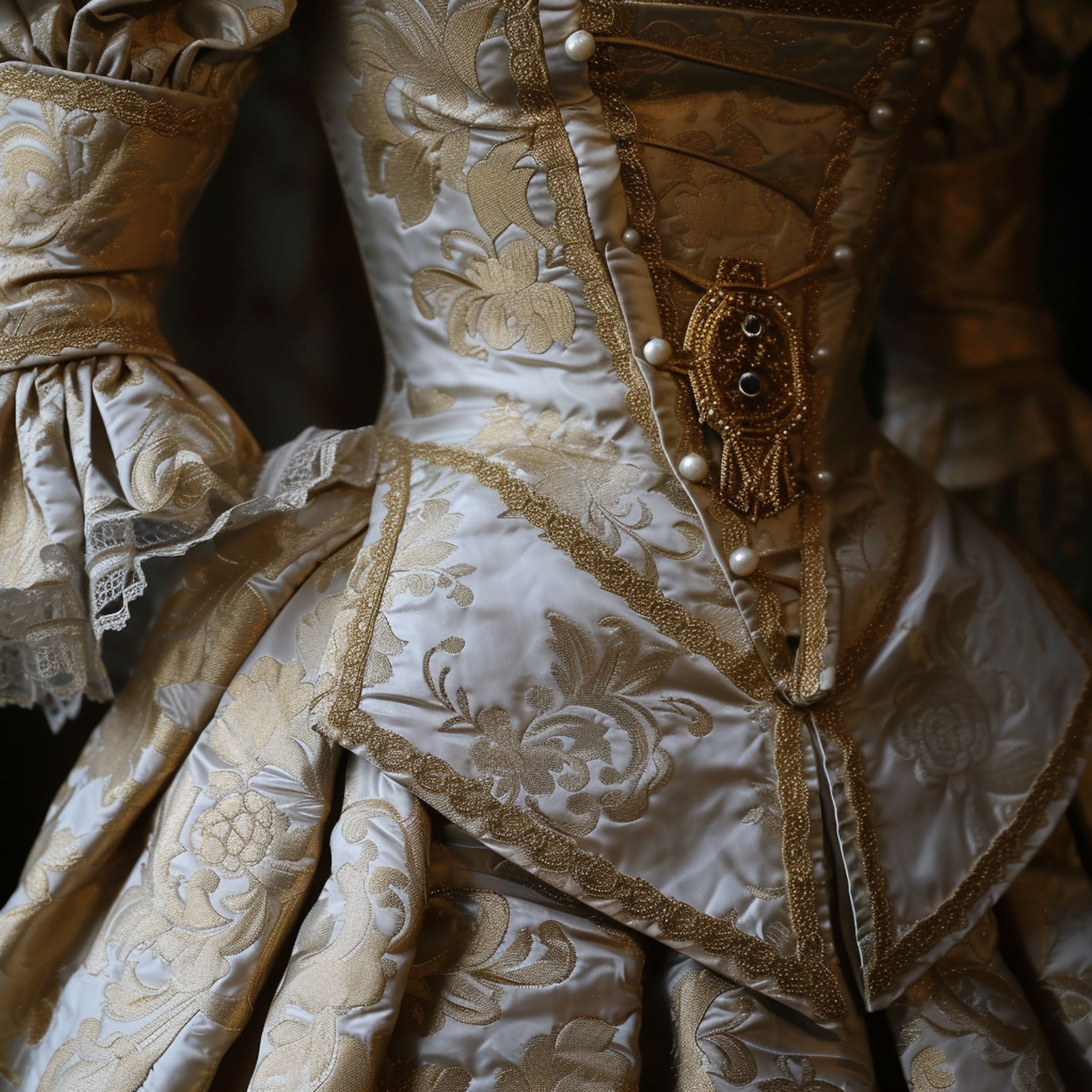
Damask fabric has many interesting applications. Clothing items and accessories are among the most popular. However, the fabric is mostly restricted to fashion items such as decorative jackets or luxurious handbags. Thanks to its characteristic durability, Damask works well for giving clothing a structured silhouette. The high level of stiffness makes the fabric less suitable for everyday casual wear.
-
Home Decor
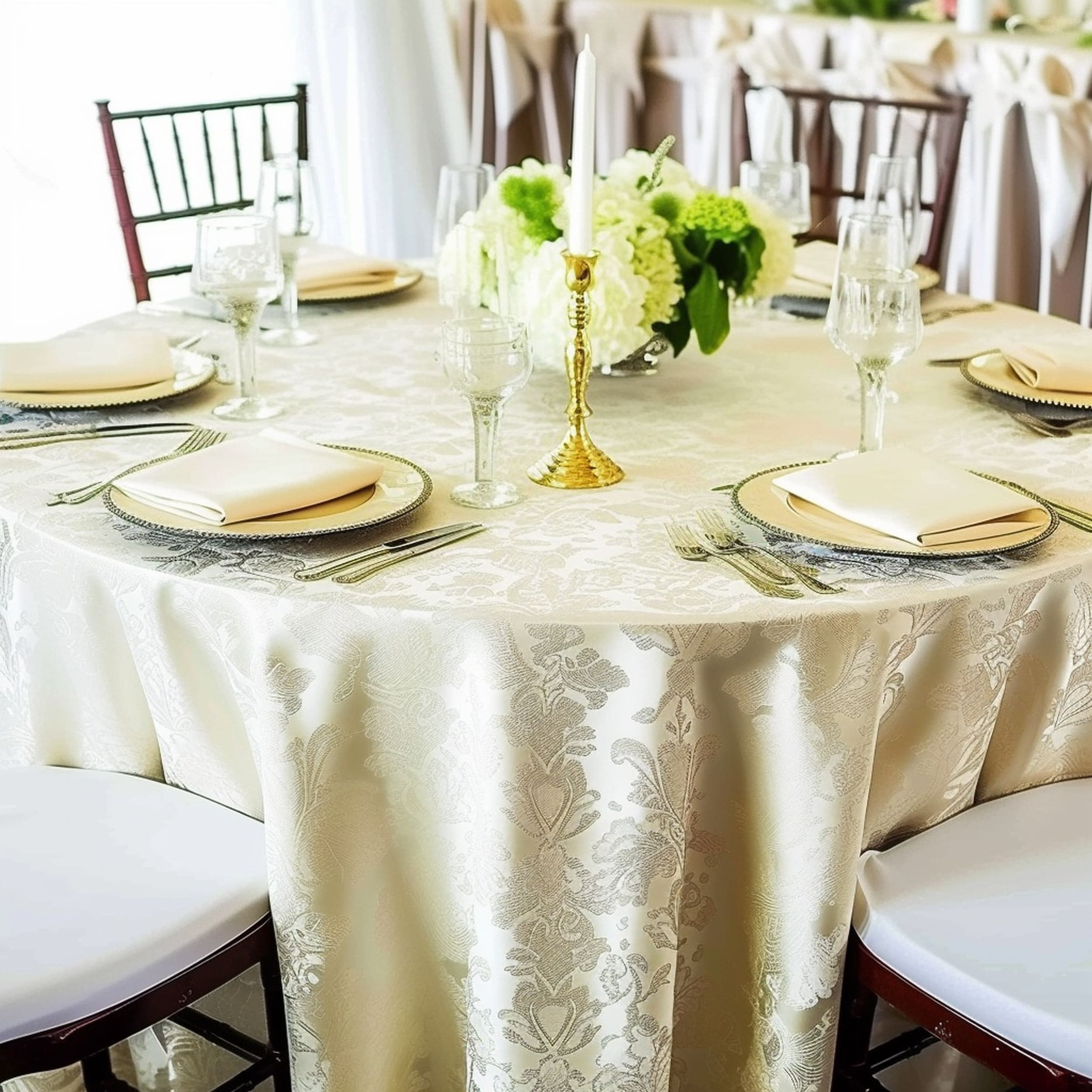
Considering the eye-catching patterns and colorful designs, it’s not surprising to find out that Damask is heavily used for home decor purposes. From table linens to curtains, lampshades, and comforters, there are all kinds of textile items that benefit from the beauty of Damask. The woven fabric may seem expensive compared to basic alternatives, but the combination of long-lasting durability and stylish aesthetics make it worth the investment.
-
Wallpaper and Other Items

Damask has great potential for decorating the walls. The fabric can be used as wallpaper but it can be quite challenging to mount it on the wall. Some of the heaviest Damask fabrics are used for wallets, luggage, and phone holders.
4. Difference Between Damask and Brocade
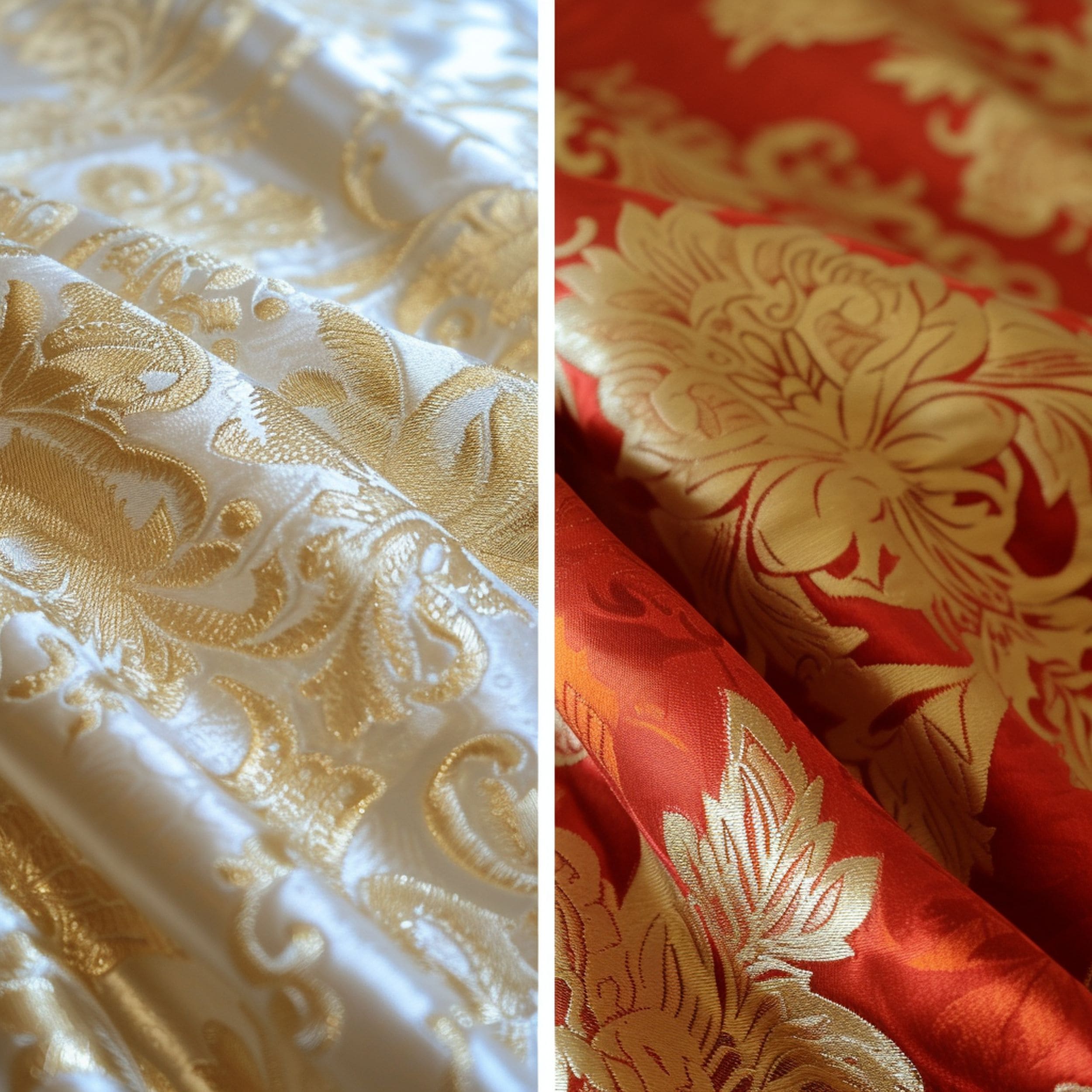
Due to their similar features and uses, damask and brocade fabrics can often be confused. However, there are some notable differences. Damask weaves are more durable and typically incorporate a single thread color. By comparison, brocade mixes different thread colors in its “looser” weave. Both fabric styles are produced using Jacquard looms. When it comes to appearance, brocade patterns seem raised compared to the flat design of Damask. This is also the reason why only Damask offers reversible patterns.
5. Caring for Damask Fabric
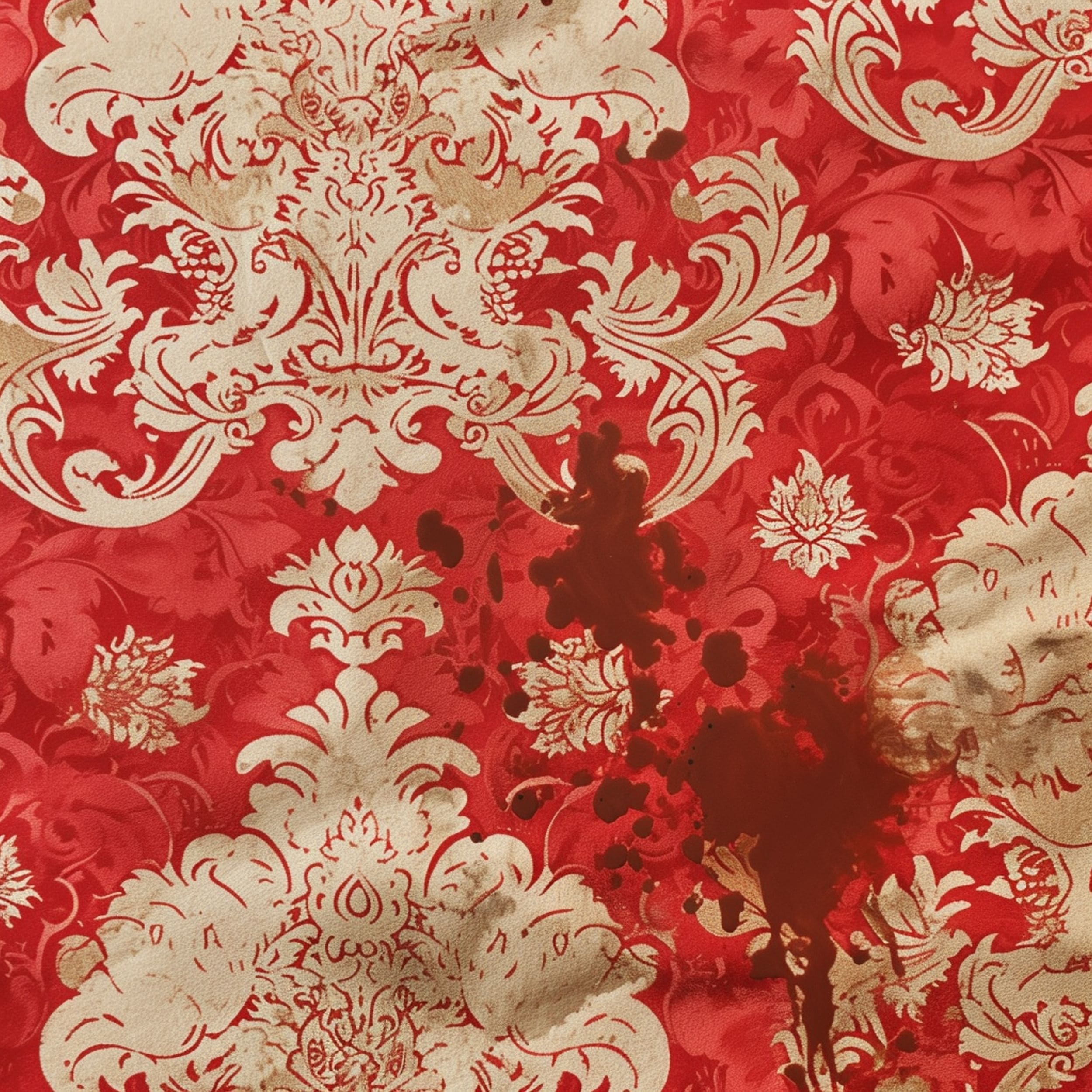
Damask fabrics have different care requirements depending on the type of fibers used. Always check the label of the item to figure out the optimal cleaning solutions. Silk Damask is highly sensitive to regular washing methods and should be dry cleaned only. However, other fabrics like cotton and polyester can be cleaned using more conventional methods. If the care label allows for machine washing, make sure you use a laundry mesh bag.
Despite its durability, extra care should be taken when cleaning a Damask fabric item. Spills or stains can be particularly challenging to remove unless they’re addressed swiftly after they happen. Soaking isn’t recommended for Damask to eliminate stains. Use a stain remover featuring a gentle formulation to protect the qualities of the fabric. When it comes to drying, it’s usually not a good idea to expose Damask items to machine dryers. Consider air-drying instead while paying close attention to how you place the garment to prevent wrinkles.

Leave a Reply