
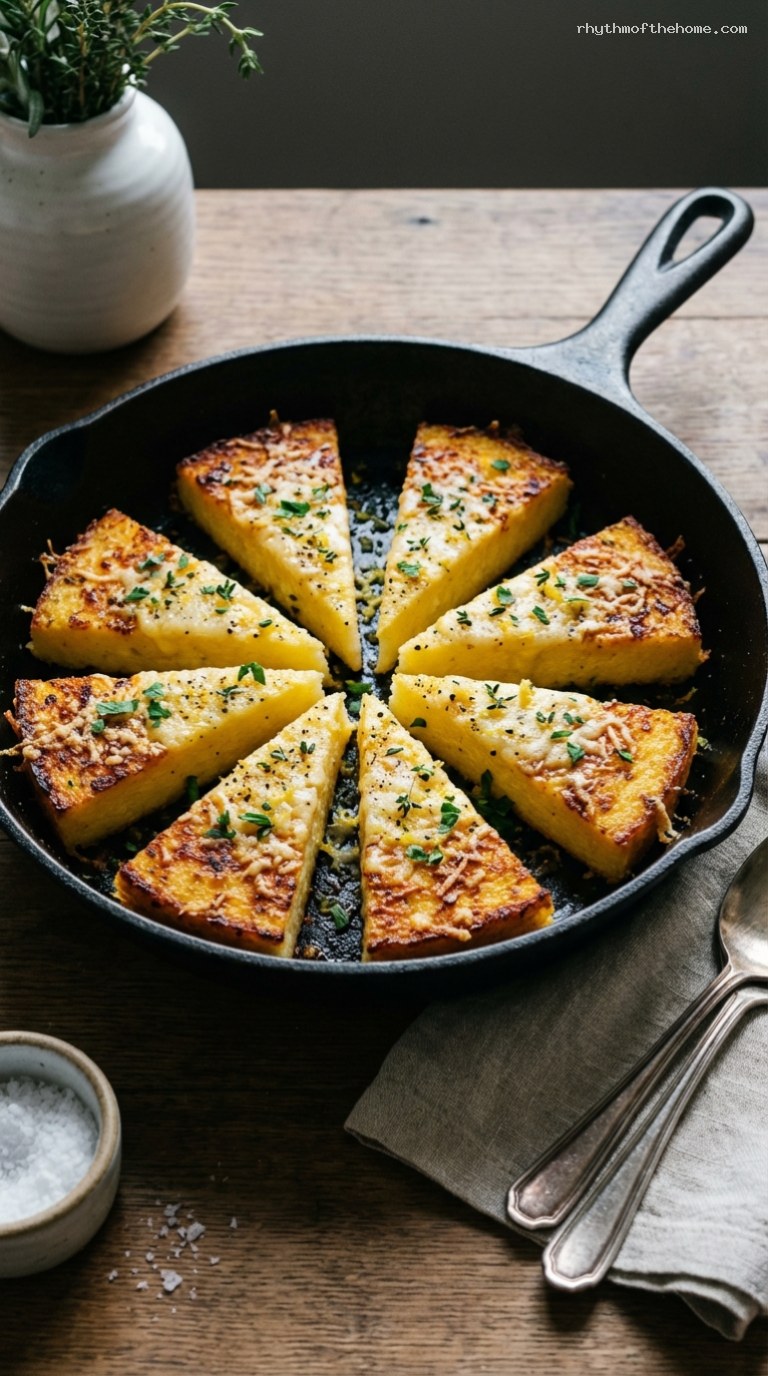
Quick Recipe Version (TL;DR)
Quick Ingredients
- 1 cup stone-ground polenta (not instant)
- 3 cups low-sodium chicken or vegetable broth
- 1 cup whole milk
- 1 1/4 tsp fine sea salt, divided
- 4 tbsp unsalted butter, divided
- 3/4 cup finely grated Parmesan cheese, divided
- 2 tbsp extra-virgin olive oil
- 1 garlic clove, minced
- 2 tbsp chopped fresh herbs (parsley, thyme, or chives)
- Freshly ground black pepper
Do This
- 1. Line a 9-inch round cake pan with parchment and lightly grease it.
- 2. Simmer broth, milk, and 1 tsp salt; whisk in polenta. Cook over low heat, stirring often, for 20–25 minutes, until thick and creamy.
- 3. Off heat, stir in 2 tbsp butter and 1/2 cup Parmesan. Spread into the pan, smooth top, cool, then chill until very firm, at least 2 hours.
- 4. Turn polenta out onto a cutting board and cut into 8 wedges.
- 5. Heat 2 tbsp olive oil and 2 tbsp butter in a large skillet over medium heat. Add wedges and cook 4–5 minutes per side until deep golden and crisp.
- 6. In the last minute, sprinkle remaining Parmesan, garlic, and herbs over the wedges; cook until cheese melts.
- 7. Serve hot straight from the skillet with extra herbs and black pepper.
Why You’ll Love This Recipe
- Creamy-on-the-inside, crispy-on-the-outside polenta wedges that feel special but are easy to make.
- Perfect for using up leftover polenta or for prepping ahead for stress-free entertaining.
- Budget-friendly ingredients that turn into a restaurant-worthy skillet meal or side.
- Flexible base for toppings: add eggs, sautéed mushrooms, roasted vegetables, or a simple salad.
Grocery List
- Produce: Garlic, fresh parsley, fresh thyme or chives, optional lemon (for zest), optional green onions or basil.
- Dairy: Whole milk, unsalted butter, Parmesan cheese (block for grating), optional ricotta or mascarpone for serving.
- Pantry: Stone-ground polenta (not instant), low-sodium chicken or vegetable broth, extra-virgin olive oil, fine sea salt, freshly ground black pepper, optional red pepper flakes.
Full Ingredients
For the Creamy Polenta Base
- 1 cup stone-ground polenta (not instant or quick-cooking)
- 3 cups low-sodium chicken broth or vegetable broth
- 1 cup whole milk
- 1 tsp fine sea salt (plus more to taste)
- 2 tbsp unsalted butter
- 1/2 cup finely grated Parmesan cheese (about 1 1/2 oz)
- Freshly ground black pepper, to taste
For Crisping and Finishing
- 2 tbsp unsalted butter
- 2 tbsp extra-virgin olive oil
- 1 small garlic clove, very finely minced or grated
- 1/4 cup finely grated Parmesan cheese (about 3/4 oz)
- 2 tbsp chopped fresh herbs (such as flat-leaf parsley, thyme leaves, and/or chives)
- 1/4 tsp fine sea salt (or to taste)
- Freshly ground black pepper, to taste
- Optional: pinch of red pepper flakes, for heat
- Optional garnish: extra herbs, flaky sea salt, a little lemon zest
Optional Serving Ideas
- Fried or poached eggs
- Sautéed mushrooms with garlic and thyme
- Slow-roasted tomatoes or a simple tomato sauce
- A crisp green salad with a bright vinaigrette
Step-by-Step Instructions
Step 1: Prepare the pan for chilling
Line a 9-inch round cake pan (or springform pan) with a circle of parchment paper. Lightly grease the parchment and sides of the pan with a bit of butter or olive oil. This will make it easy to release the polenta once it is chilled and firm. Set the pan aside but keep a clear spot in your refrigerator so you can slide it in later without spilling.
Step 2: Cook the creamy Parmesan polenta
In a medium saucepan (at least 3-quart), combine the broth, milk, and 1 teaspoon fine sea salt. Bring to a gentle simmer over medium heat, stirring occasionally to prevent a skin from forming. Once it is just starting to bubble, slowly whisk in the polenta in a thin stream. Whisk constantly as you pour to avoid lumps.
Reduce the heat to low. Switch to a wooden spoon or heatproof spatula and cook, stirring frequently and scraping the bottom and corners of the saucepan, until the polenta is thick, smooth, and pulls away slightly from the sides, 20–25 minutes. It should be creamy but quite thick, like loose mashed potatoes.
Remove from the heat and stir in 2 tablespoons butter and 1/2 cup Parmesan until melted and fully incorporated. Taste and adjust seasoning with a little more salt and freshly ground black pepper if needed. The polenta should be well-seasoned at this stage.
Step 3: Chill the polenta until firm
Immediately scrape the hot polenta into the prepared pan. Use a spatula to spread it evenly, pressing it into the edges and smoothing the top as much as you can; this will determine how neat your wedges look later. Let it sit at room temperature for about 20 minutes to release some steam.
Transfer the pan to the refrigerator and chill, uncovered, until the polenta is very firm and fully set, at least 2 hours and up to overnight. The longer it chills, the easier it will be to cut clean wedges that hold together as they fry.
Step 4: Cut the polenta into wedges
Once the polenta is firm, run a thin knife around the inside edge of the pan to loosen it. Invert a cutting board over the pan, flip both together, and gently lift off the pan. Peel away the parchment. You should have a smooth, firm polenta round.
Using a large sharp knife, cut the round into 8 equal wedges, like slicing a cake or pizza. If the knife sticks, wipe the blade with a warm, damp cloth between cuts. Arrange the wedges on the board with a little space between them so they are ready to transfer to the hot skillet.
Step 5: Pan-fry the wedges until crisp and golden
Place a large heavy skillet (cast-iron is ideal) over medium heat. Add 2 tablespoons olive oil and 2 tablespoons butter. When the butter is melted and the mixture is shimmering but not smoking, carefully add the polenta wedges in a single layer, leaving a bit of space between each piece. Depending on the size of your skillet, you may need to work in two batches.
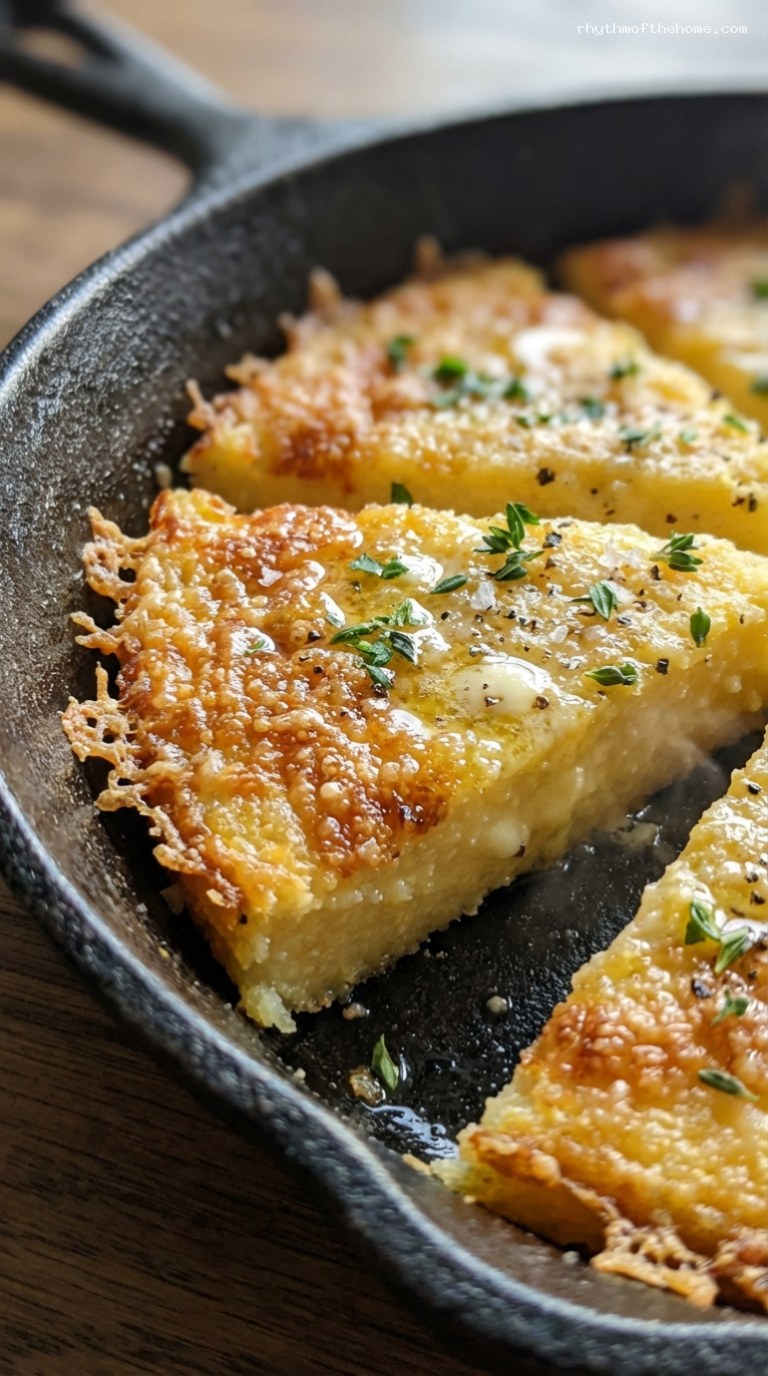
Cook without moving the wedges for 4–5 minutes, until the bottoms are deep golden brown and crisp. Carefully flip each wedge with a thin spatula. If the pan looks dry at any point, drizzle in a bit more olive oil. Cook the second side another 4–5 minutes, again until deeply golden and crisp. Reduce the heat slightly if the polenta is browning too quickly before it is heated through.
Step 6: Add garlic, herbs, and cheese
Scatter the minced garlic and a pinch of red pepper flakes (if using) around the pan, tucking a little onto each wedge. Cook for 30–60 seconds, just until fragrant but not browned. Immediately sprinkle the remaining 1/4 cup Parmesan evenly over the wedges. The residual heat will help it melt and form a lacy, savory coating on top.
Season with the remaining 1/4 teaspoon salt (or to taste) and plenty of freshly ground black pepper. Turn off the heat and let the wedges sit in the pan for 1–2 minutes so the cheese can fully soften and cling to the crispy surfaces.
Step 7: Finish and serve straight from the skillet
Sprinkle the chopped fresh herbs generously over the hot polenta wedges. If you like a bit of brightness, add a light shower of lemon zest. For extra flair, finish with a pinch of flaky sea salt.
Serve the wedges immediately, directly from the skillet at the table, or transfer them to a warm serving platter. They are wonderful on their own as a snack or appetizer, or topped with fried eggs, sautéed mushrooms, or a spoonful of slow-cooked tomatoes for a complete meal. Enjoy them while the outsides are still cracklingly crisp and the centers are soft and creamy.
Pro Tips
- Use the right polenta: Choose stone-ground or medium-grind polenta, not instant or quick-cooking. The texture and flavor will be much better and it will hold its shape nicely when fried.
- Do not rush the chill time: The polenta needs to be thoroughly cold and firm before you cut and pan-fry it. If it is still soft, the wedges are more likely to break or stick.
- Let the crust develop: Once the wedges are in the pan, resist the urge to move them around. Leaving them undisturbed allows a deep, even crust to form.
- Cast-iron is your friend: A well-seasoned cast-iron or heavy stainless-steel skillet gives the best crisp edges. Nonstick will work but might not brown quite as deeply.
- Season in layers: Taste the polenta after cooking, then adjust seasoning again after crisping. Cornmeal and cheese both benefit from generous but balanced salting.
Variations
- Garlic and herb overload: Stir roasted garlic and extra chopped herbs directly into the hot polenta before chilling, then finish with more herbs on top after crisping.
- Cheesy three-blend: Replace half the Parmesan with shredded fontina or mozzarella in the base, and sprinkle a mix of Parmesan and pecorino on top for a sharper flavor.
- Spicy skillet polenta: Add 1/2 teaspoon red pepper flakes and 1 teaspoon smoked paprika to the cooked polenta before chilling, and serve the crisp wedges with a spoonful of warm tomato sauce.
Storage & Make-Ahead
You can fully cook the polenta, spread it in the pan, and chill it up to 2 days ahead. Keep it tightly covered once it is fully cold. When ready to serve, simply cut into wedges and pan-fry as directed. Leftover fried wedges keep well in an airtight container in the refrigerator for up to 3 days. Reheat them in a lightly oiled skillet over medium heat for 3–4 minutes per side, or on a baking sheet in a 375°F (190°C) oven for 10–12 minutes, until hot and re-crisped. The texture is best freshly fried, but they reheat surprisingly well.
Nutrition (per serving)
Approximate values per serving (1/4 of recipe, without additional toppings): 360 calories; 20 g fat; 10 g saturated fat; 35 g carbohydrates; 2 g fiber; 4 g sugar; 11 g protein; 830 mg sodium. These numbers are estimates and will vary based on specific ingredients and brands used.

Leave a Reply